




Abstract
This study presents a secondary analysis of real-time data of mobile phone usage in Israel during two recent wars – with the Lebanese Hezbollah in 2006 and with the Palestinian Hamas in Gaza in 2008/9. The data, provided by Cellcom Israel, the country’s largest mobile operator, enabled an analysis of real behavior patterns rather than relying on memories of people who may have been under stress or traumatized during the hostilities, hence unable to accurately recollect this information later on. During both wars, significant changes were noted in the way people used their mobile phones: There was a substantial decrease of calls originating from within a 10-kilometer region along the Israel-Lebanon border and mobile users also made significantly longer calls. However, the decrease in calls during the Lebanon War was more than double that of the decrease in the comparable region along the Gaza border. There was no significant change in the calling patterns of Israelis living outside the directly affected regions. These supposed differences in reaction to a crisis situation (which are congruent with previous mobile phone usage studies following suicide bombings) are analyzed, and questions regarding the validity of the myth of solidarity and bonding among Israelis are raised.
Introduction
Describing his childhood in the Jerusalem of the 1940s, Israeli author Amos Oz details the preparations and excitement prior to phoning his Tel Aviv relatives: “We used to phone them every three or four months,” he reminisces in his novel A Tale of Love and Darkness, “even though we didn’t have a phone and neither did they” (Oz, 2004, p. 8). “[O]ur lives hung by a thread … they were not at all sure they would talk again … there might be a war, a terrible disaster” (p. 11).
Indeed, scenes in which the inaccessibility of information and communication technologies (ICTs) are coupled with everyday (and existential) worries that raise levels of anxiety to which the wireline telephone serves as a savior of sorts are in Israel things of the past. Two parallel narratives can describe what has transpired since. First, a technological narrative describes the pace of adoption of communication technologies – cable television to mobile phones – as one of the fastest growing in the world (Schejter & Lee, 2007; Schejter, 2006). It also describes their use – from the mobile phone in its earlier stage (Schejter & Cohen, 2002) to the number of friends acquired 1 and hours spent on the social networking site (SNS) Facebook 2 – being among, if not the most extensive in the world. The second is a social and economic narrative describing Israel in transition since the late 1970s from a “socialist-inspired, mixed, highly centralized, highly planned, state-centered, protectionist economy to a much more decentralized and internationally oriented neo-liberal one’’ (Aronoff, 2001). This transition has rendered Israel a more individualistic and hedonistic society in its values than before (Katz, Haas, & Gurevitch, 1997).
This study emanates from both narratives by demonstrating the role of the mobile phone in a present-day form during crises in Israeli society. The study uses real-time data on mobile phone usage provided by Cellcom, Israel’s largest mobile operator, regarding patterns of mobile usage by civilians in Israel during two recent conflicts with the Lebanese Hezbollah in 2006 (“The Second Lebanon War”) and the Palestinian Hamas in 2008/9 (“Operation Cast Lead” or “The Gaza War”). It paints a picture both of general human behavior and related mobile phone use during a crisis that emerges from military hostilities and questions whether the social cohesion and solidarity that is often seen as unique among Israelis, does indeed exist. It does so by analyzing the number, the location of initiation, and the length of the mobile phone calls during the two crises and the way they compare to mobile phone use before and after the events, both in the regions directly targeted by the violence and in the rest of the country.
Social cohesion, solidarity and crisis in Israel
Multiple and varied theoretical approaches have addressed the concept of “social cohesion.” Theory has undergone a transition from focusing on the totality of forces that tie an individual to a group in which he or she is a member to a focus that encompasses “any attitude or behavior that could be construed as indicative of a person’s attraction or attachment to a group … or to other members of a group” (Friedkin, 2004, p. 412). Recent scholarship has identified social cohesion as “instances where network members provided support or were supported by other members” (Gruzd, Wellman, & Takhteyev, 2011, p. 1311). Indeed, a national sense of solidarity does not require an interpersonal connection between the members of a nation; even, to the contrary, nationalism is more often than not an imagined perception (Anderson, 1991). Yet, many researchers have emphasized the extent of positive interpersonal ties among people as a basis for social cohesion (Friedkin, 2004, p. 417).
Israelis share a collective myth of unity that binds the Jewish sector of the Israeli population in a singular national identity. This identity is based on “solidarity from within” (Nuttman-Shwartz & Weinberg, 2002, p. 6) and on a strong ideologically oriented collective cohesion (Bar-On, 1997, p. 203). Building a Jewish national identity has been a major effort of the Zionist endeavor, which regards Israel as both a political entity and a “social and cultural integrating agent” (Kedar, 2002, p. 129). The transition of the Jewish nation from a diasporic people to sovereignty embodies a self-image of a transition from a focus on sectorial interests to a focus on the common good (Peled & Shafir, 2005, p. 38). In the process of building the emerging Israeli identity over the past century, a new unified self-image of the “Sabra” emerged, which embodied the “new Jew” (Almog, 2000).
International comparative research has placed Israel among nations with a high share of middle-class participation in the nation’s economy and a low share of ethno-linguistic fractionalization among its citizenry, thus it is among the “most cohesive” societies (Easterly, Ritzen, & Woolcok, 2006). However, “solidarity” among Israelis is more than a socio-economic or linguistic phenomenon, and has been identified by Katriel (1986) as one of the core elements of the meaning that characterizes the “Sabra” (Regev, 2003). Indeed, the common Israeli myth often implies unique solidarity among its citizenry emanating from the ongoing Israeli-Arab conflict (Bar-Tal, 1998). Could it be that this solidarity is only “imagined,” but when translated to an interpersonal solidarity is no more than a myth, no more than “a lovely fairy tale, flattering to the national ego, told to a million poor children before bedtime” (Sarid, 2011)?
One context in which the national/personal social cohesion divide can be tested is during times of crisis, as it is generally accepted that conditions of warfare increase national solidarity (Malesevic, 2011) and that “popular wars” in particular tend to increase the cohesion of societies engaging in them (Cohen, 1988, p. 909). Studies have demonstrated that the more threatening the perception of the security situation, the stronger the identification with the collective (Ben-Dor, Pedahzur, & Hasisi, 2002, p. 240). To that effect, Israel is no exception and security-related stress in particular is seen as increasing social solidarity in the short run (Landau, 1989). National, ethnic, religious, socio-economic, and ideological divisions have, however, weakened this sense of solidarity (Horowitz & Lissak, 1989). There is wide-ranging agreement that the consensus surrounding military conflicts until the 1973 Yom Kippur war has contributed to national cohesion and solidarity and that in more recent years that sense of unity has suffered (Cohen, 1988; Nuttman-Shwartz & Weinberg, 2002). Some have questioned this sense of unity, even prior to 1973, stating it may have been superficial, sweeping under the rug growing tensions and conflicts among different social groups and a burgeoning questioning of the collective Zionist identity dictated by the state’s founding Zionist leadership (Ya’ar & Shavit, 2003). In recent years, there are undisputed indications of a growing economic gap among Israelis, a deterioration of the middle class, and a rise in tension and friction between political right and left and between Jews and Arabs, and among secular and religious Jews.
Regardless of these growing social cleavages, Israelis love their mobile phones. The most recent figures show that in 2009, 91.8 percent of Israeli households possessed mobiles (Central Bureau of Statistics, 2011), 3 with 68.9 percent of total households possessing at least two mobiles. Indeed, since 2004 4 the number of mobiles exceeds that of the population. By the end of 2009 it was estimated that there were more than nine and half million mobiles, representing a penetration rate of 128 percent. 5 These data imply that there may be a growing transition from fixed-mobile or fixed-only households to mobile-only households (see Figure 1), particularly in the lower income deciles, which further suggests that there is no significant “mobile divide” in Israel (Cohen, Lemish & Schejter, 2008, pp. 28–29). Specifically, between 2000 and 2008 the number of households with at least one fixed line dropped from 94.4 percent to 83.6 percent while the share of households with at least one mobile rose from 63.5 percent to 90.7 percent. In the lowest income decile, however, the drop in fixed line ownership went from 83.1 percent to 64.6 percent, while the mobile adoption rate has more than doubled, rising from 38.1 percent to 80.3 percent 6 of households.
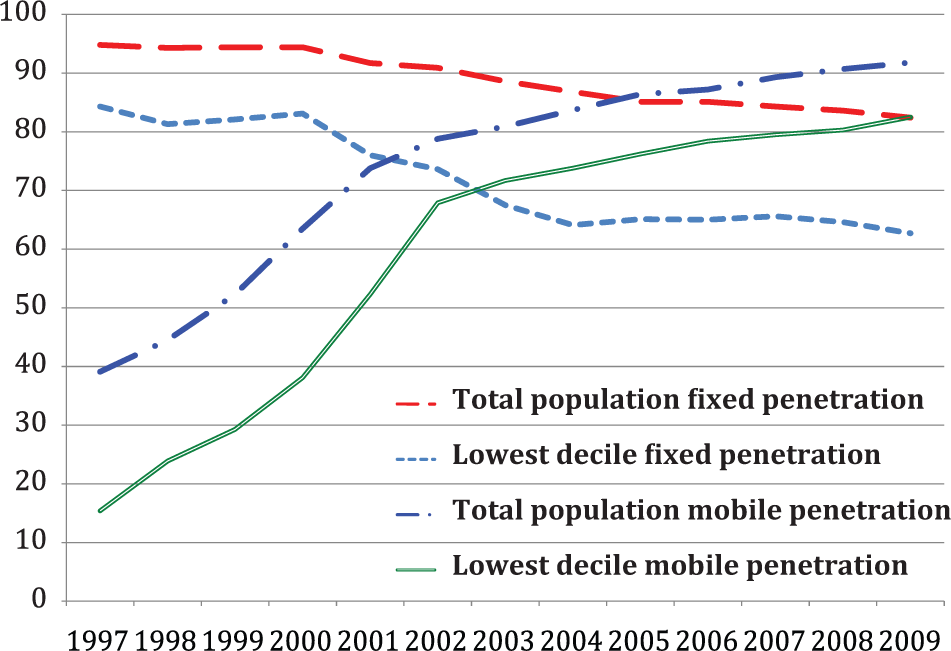
Fixed and mobile penetration for total population and lowest decile.
Obsessive use of the mobile became identified with stereotypical Israeli behavior in the 1990s (Schejter & Cohen, 2002). However, as previous studies have demonstrated, in countries with economies comparable to that of Israel – in terms of per capita gross domestic product on a purchasing power parity basis – minutes of mobile phone use either grew or stabilized during the 1990s while a dramatic drop in minutes of use occurred in Israel. This put Israel at par level with much of the western world (Schejter, 2006, pp. 23–24). The near universality of the mobile phone and its common use can thus provide insight into Israeli social behavior.
Mobile phones and crises
The mobile phone is a key component of the changing repertoire of information and communication technologies (ICTs) that people own around the world. A common theme in the widespread adoption of mobile technology, that has been widely documented, is the study of crises and how they are reflected in, and affected by, the use of mobile technologies (Bracken, Jeffres, Neuendorf, Kopfman, & Moulla, 2005; Katz & Rice, 2002; Spence, Lachlan, Burke, & Seeger, 2007; Spence, Lachlan, & Griffin, 2007; Wester, 2009; Cohen et al., 2008).
Ling and Yttri (2002) argue that people often purchase a mobile in order to serve their security needs; however, “instead of simply being a lifeline,” (p.142), it becomes an integral part of mundane everyday activities. While one would assume that in security-conscious Israel the balance between security-related uses and the mundane would tip toward the former, previous research has found that is not necessarily the case. In contrast to commonly held beliefs, Israelis have often rationalized their widespread adoption of the mobile as a security or safety need; however, real-time usage data in Israel reveal that in general there is relatively little or no evidence for the use of the mobile for safety or security needs (Cohen et al., 2008, p. 72).
Still, Cohen et al. (2008, p. 109) concluded that “[i]t may seem like a paradox, but it turns out that even the claim that one buys a phone ‘just in case’ can often materialize.” Following the 9/11 attacks, Katz and Rice (2002, pp. 248–251) observed in the United States that the mobile phone allowed intense immediacy, contact, and reassurance communications, transmission of vital information, and opportunity for demonstrating creativity across traditional media boundaries. In Israel, Cohen et al. (2008, pp. 109–157) demonstrated how, following terror attacks on civilians, the mobile phone served as an immediate means of communication; it increased the effectiveness of providing emergency services by first-responders; and it became an intrinsic component of the media narratives of such traumatic events.
Crises in Israel: From the borders to the home front
Israel’s history is fraught with violent encounters with its Arab neighbors. Since its establishment in 1948 amid a violent conflict, it has seen skirmishes and full-scale wars along its borders, as well as violent attacks within the country targeting civilians. Until 1991, all wars took place along Israel’s borders or across them inside neighboring Arab countries. Although Israel is a relatively small country, a direct impact of the violence on the home front and its civilian population had been limited to localized terrorist infiltrations or planting of bombing devices, with minimal, if any, movement of the population.
The first dramatic turn of events in this regard took place during the 1991 Gulf War. In retaliation for the US invasion of Iraq, the Iraqis launched nearly 40 Scud surface-to-surface long-range missiles targeting Israeli population centers, particularly the Tel Aviv region, Israel’s most densely populated urban center and home to its military headquarters. These attacks resulted in an unexpected mass flight of approximately 100,000 Israeli civilians to peripheral regions of the country, which were out of range of the missiles, and hence perceived to be less dangerous (Efrat, 1992, p. 199). This unprecedented type of warfare in the Middle East, as well as the unprecedented response of segments of the Israeli population, set the stage for Israel’s subsequent confrontations, as its enemies have identified the home front as its soft underbelly.
Beginning in the mid-1990s and intermittently until the mid-2000s Israelis experienced massive terrorist acts committed by suicide bombers, and targeting mostly civilians. This period served as the backdrop to an earlier study of mobile phone users’ behavior, described in more detail elsewhere (Cohen & Lemish, 2005; Cohen et al., 2008). That study revealed that “when the bombs go off the mobiles ring;” however, this was so only in a limited area. Using the same time of day one week prior to or one week following each attack as “control” periods, the data demonstrated a significant spike in the number of attempted phone calls within the immediate (2 kilometers) vicinity of six different terrorist attacks, when compared to the rest of the country. No significant change in mobile phone activity was noted in the rest of the country. It is this pattern of telephone activity that forms the backdrop of the current study.
The “Second Lebanon War”
In the summer of 2006, the Israeli-Lebanese border – which for six years was relatively quiet – erupted in violence. During 33 days of fighting that evolved into a renewed Israeli invasion of Lebanon, 43 Israeli civilians and hundreds of Lebanese were killed (Kalb & Saivetz, 2007, pp. 48-49). 7 The unexpected violence – later coined in Israel the “Second Lebanon War” – led to a massive flight of Israeli civilians to areas to the south, somewhat reminiscent of what took place in the 1991 Gulf war.
“Operation Cast Lead” or “The Gaza War”
Missile attacks on Israeli civilians have been adopted as a modus operandi since 2001 by Palestinian militants in the Gaza Strip, a densely populated narrow stretch of coastline bordering Israel and Egypt, which had been occupied by Israel from 1967 to 2005 (when Israel unilaterally withdrew from the area). The shelling of Israeli towns with short-range rockets became an almost daily occurrence, and according to official Israeli sources, in 2008 alone nearly 3000 rockets and mortars were fired (ITIC, 2009). In what it defined as “retaliation,” Israel launched a massive offensive on Gaza on December 27, 2008. The Israeli attack and the Hamas counterattack lasted for 22 days, and was named “Operation Cast Lead” (ITIC, 2009) or the “Gaza War.” During the three weeks of the encounter, Israeli civilian communities along the Gaza strip were the target of hundreds of additional rocket and mortar shells. Israeli civil casualties in this encounter, however, were minimal, in comparison to the Second Lebanon War, while according to Palestinian sources more than 1300 Palestinians were killed (UN, 2009).
Uniqueness of the present data
It is very difficult to obtain precise and valid retrospective behavioral data about what people actually did at previous points in time. Indeed, people have difficulty recalling their previous behavior in a veridical manner. This is true regarding mobile phone use as well: some researchers have highlighted the downside of self-reporting when studying mobile phone use (i.e. Walsh & White, 2007; Auter, 2007). Others have found that most people tend to overestimate the duration and underestimate the number of phone calls made via the mobile (Timotijevic, Barnett, Shepherd, & Senior, 2009, p. 664). A comparative international study of mobile user behavior conducted with the participation of 672 volunteers across 11 countries revealed that volunteer subjects recalled their recent phone use with moderate systematic error and substantial random error (Vrijheid, 2005, p. 242). The comparative study also found that error in recall of phone use varied between countries and that the level of systematic error is related to the level of phone use, as light users underestimated and heavy users overestimated their mobile use. This tendency was found in almost all countries.
Thus early research on mobile telephony in Israel (Cohen & Lemish, 2003; Cohen et al., 2008) used Interactive Voice Response (IVR) technology made available by Cellcom to obtain real-time data about several measures of a sample of subscribers’ phone usage. These real-time studies on the use of mobiles have demonstrated, amid methodological concerns, the usefulness of real-time measures and concluded that the benefits of obtaining such information “seem to be worth the effort” (Cohen & Lemish, 2003, p. 181).
In times of crisis, the problem of self-reporting about past behavior is probably even more apparent and studies of crisis behavior face methodological challenges (Kreps, 1984) and require methodological innovativeness in order to provide good answers (Spence & Lachlan, 2010).
For the purpose of this study, we gained access to real-time data provided by Cellcom, and conducted secondary analysis of certain usage patterns among mobile subscribers during the two wars. This enabled us to analyze real behavior patterns rather than to rely on peoples’ memory during the period being studied. These people were probably highly traumatized and under stress, which may have affected their ability to recall accurately later on. The two and a half year gap between the two wars could also have differentially affected the accuracy of recall.
The real-time data acquired directly from the switches of the telecom service provider are accurate and reliable. It might have been worthwhile to supplement these data with (in-depth) interviews with mobile users because secondary analysis of the real-time data cannot provide information about attitudes but only about actual behavior. Aware of this disadvantage, researchers must sometimes resort to relying on their expertise as well as on comparable attitudinal studies in order to interpret the behavior.
Methodology
The research design
The Lebanon war began on July 12, 2006 and lasted for 34 days. The Gaza war began on December 27, 2008, a unilateral ceasefire was announced by Israel on January 17, 2009, and the Israeli troops left Gaza by January 21, 2009. For each of the two wars we obtained data for three periods: 13 days before the war, the fighting period (34 and 22 days, respectively), and 13 days following the war. In a sense, the “before” and “after” periods served as control, although as noted, the beginning of the two wars took place under different circumstances. In addition, for each of the conflicts we divided the country into two regions: 8 the region adjacent to the relevant border and the rest of the country. Thus, for the Lebanon war the data were provided separately for a 10-kilometer-wide strip along the Israel-Lebanon border and the rest of the country, and for the Gaza war a 10-kilometer-wide region around the Gaza strip and the rest of the country.
We decided on this division assuming that the areas close to the border were the most affected by the fighting and hence would exhibit the most meaningful changes between the pre- and post-war periods and the actual wartime. We note, however, that in both cases some of the shelling from Lebanon and Gaza reached beyond those 10-kilometer regions.
Cellcom provided data on three measures for all three periods in both wars with a day-by-day resolution: 9
Number of calls
We examined the number of calls initiated each day during the three periods of both wars from the two geographic regions. 10
Subscribers initiating calls
For both wars, we also examined the number of subscribers per day in each region who initiated at least one call during the three periods. This measure is important since it suggests the physical presence or absence of people in the region during each day. 11
Duration of call
Finally, for both wars, we examined the duration (in seconds) of all the calls made per day in each time period and in both regions. This measure could provide data on whether or not the calls during the wars were shorter or longer in duration than the calls made in normal times.
The research questions
We designed our project in order to answer the following research questions: RQ1: Was there a change in the number of mobile phone calls and their duration in Israel during the Lebanon and Gaza wars compared with their respective pre- and post-war periods? RQ2: What impact did geographic proximity to the region of the hostilities have on the call-making patterns?
Findings
The data corresponding to the first research question – the daily mean number and duration of the calls – is presented separately for each of the two wars, as are the differences between the two regions: the one close to the border and the rest of the country; this relates to the second research question.
The Lebanon War
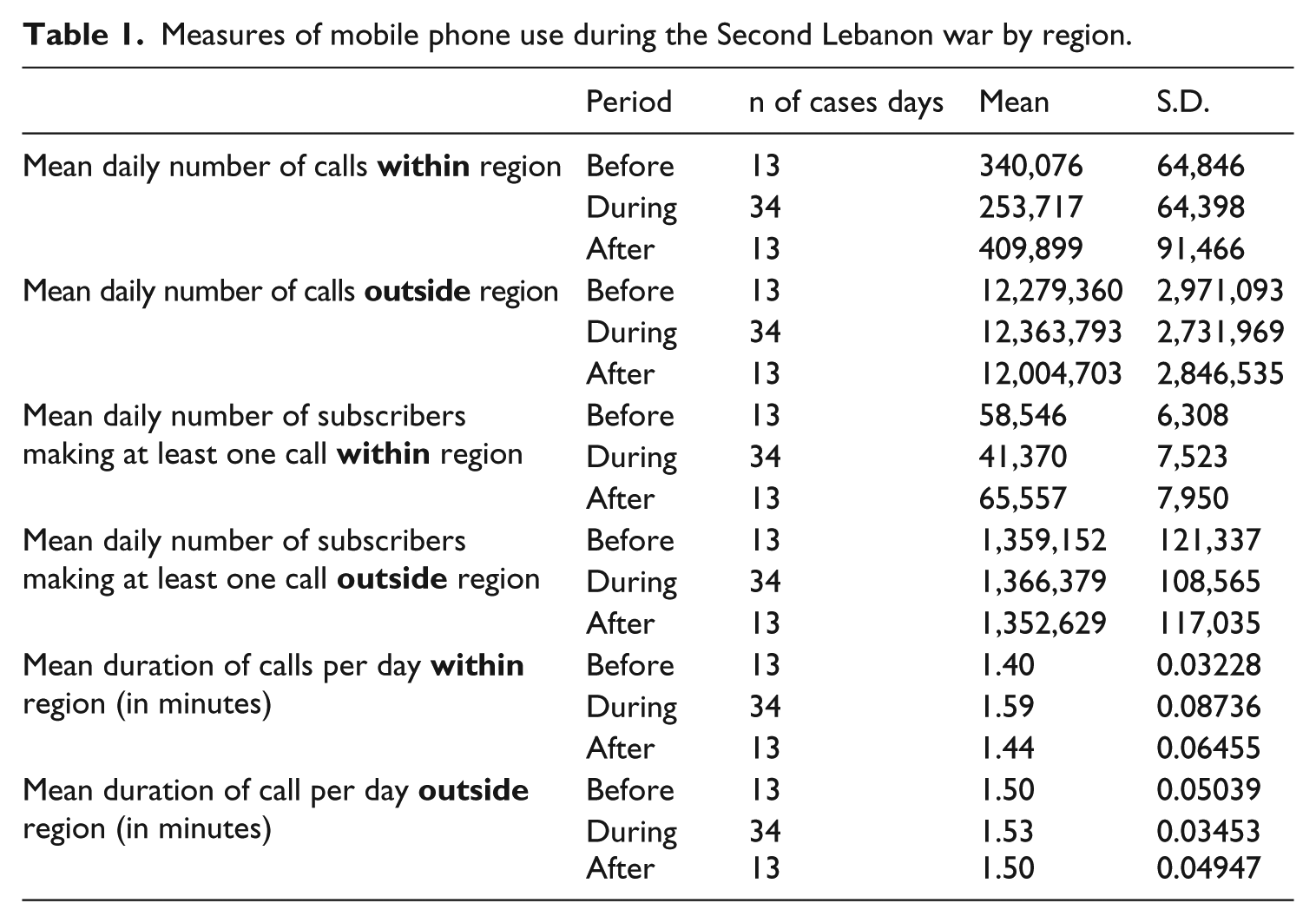
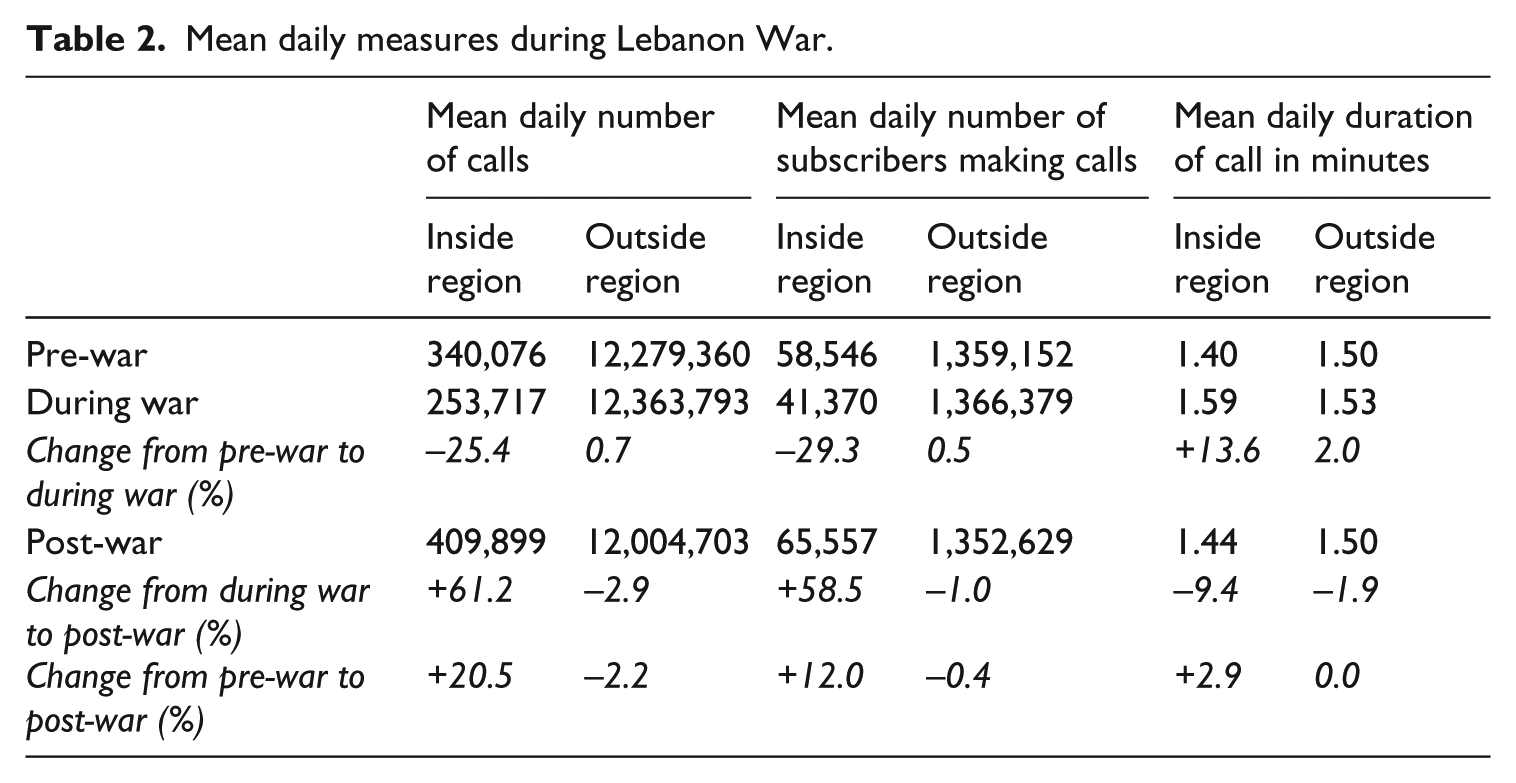
Table 1 presents the data regarding the Lebanon War while Table 2 presents measures of change among the three periods; Figures 2, 3 and 4 graphically present the daily trends.
Measures of mobile phone use during the Second Lebanon war by region.
Mean daily measures during Lebanon War.

Lebanon War: Mean number of calls per day by region. 12
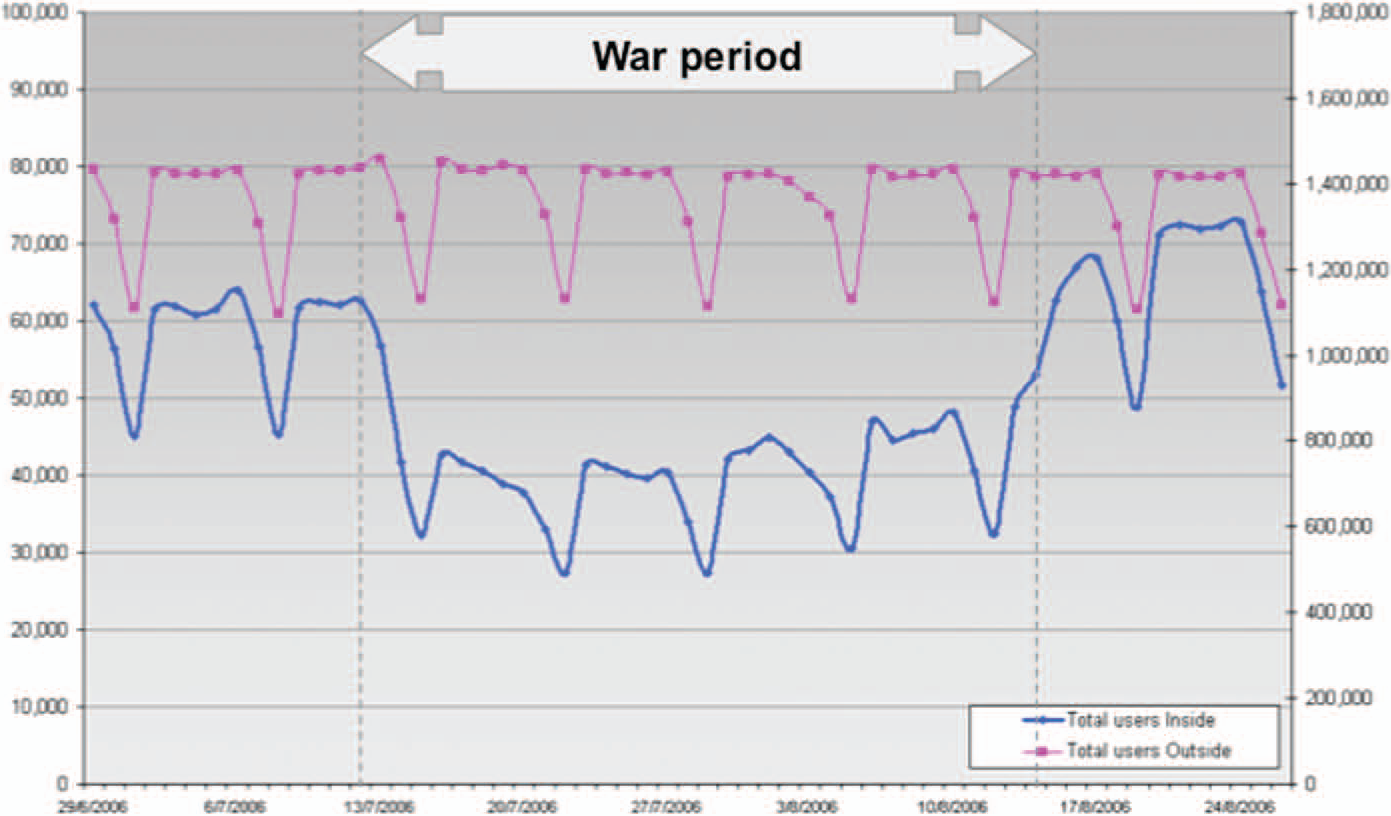
Lebanon War: Mean number of users initiating at least one call per day by region.
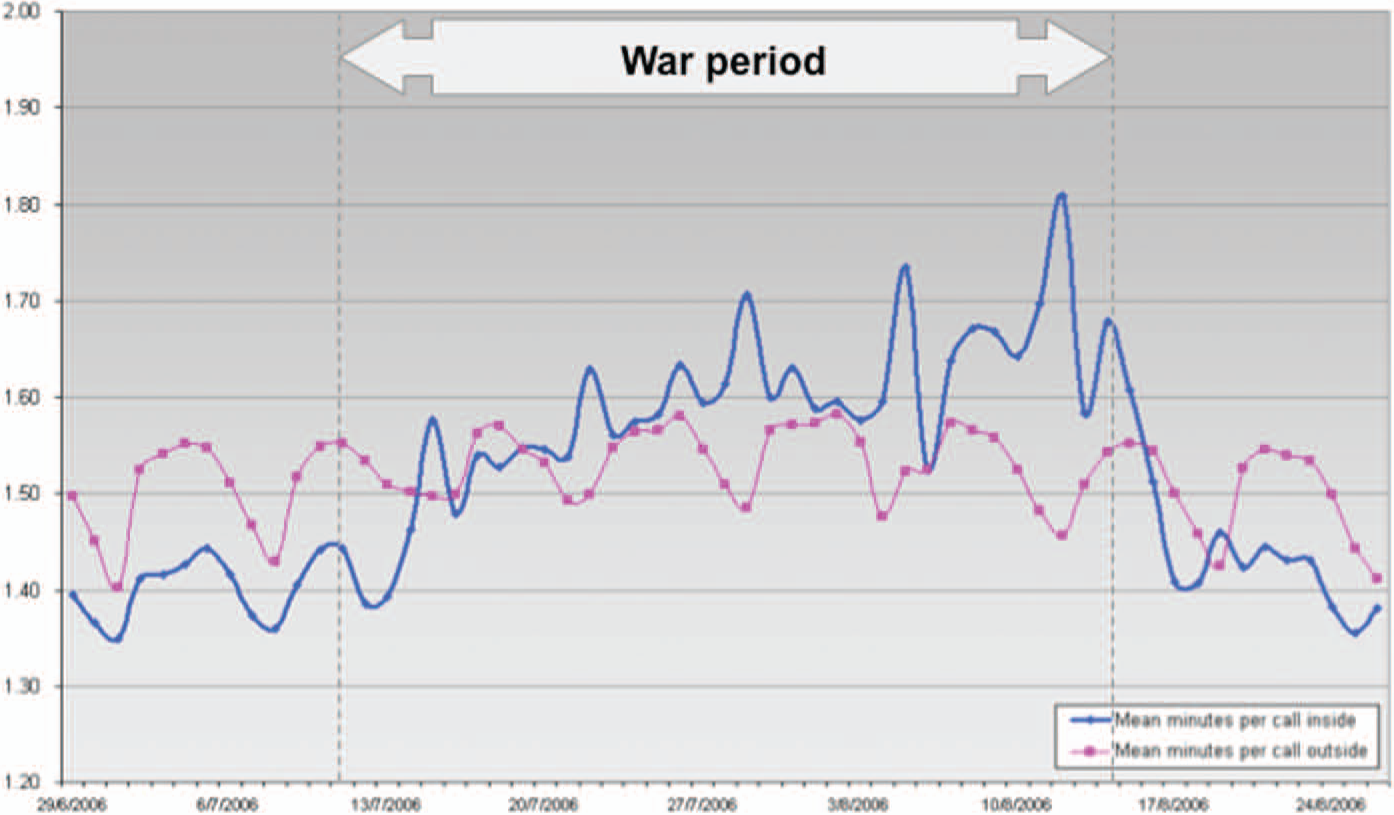
Lebanon War: Mean duration of calls per day by region.
As for the mean number of calls per day along the Lebanon-Israeli border (Figure 2), during the war there was a drop of 25.4 percent compared to the pre-war period while there was a minute increase of 0.7 percent in the rest of the country. In the post-war period, along the border the daily mean number of calls increased dramatically by 61.2 percent compared with the war period and decreased in the rest of the country by 2.9 percent. Finally, the mean daily number of calls in the post-war period was actually 20.5 percent higher than in the pre-war period along the border but was 2.2 percent lower in the rest of the country.
As for the mean number per day of subscribers in each region initiating at least one call (Figure 3), along the Lebanese-Israeli border the mean declined by 29.3 percent from the pre-war to the war period. Following the war there was an increase of 58.5 percent compared with the war period as well as an increase of 12 percent compared with the pre-war period. On the other hand, in the rest of the country, there was an increase of only 0.5 percent during the war compared with the pre-war period but a decline of 1.0 percent in the post-war compared with the war period and a decline of 0.4 percent in the post-war period compared with the pre-war period.
As for the third measure, the mean daily duration of the calls (Figure 4), in the area around the border there was an increase of 13.6 percent (from 84 seconds to 95 seconds per call) during the war compared to the pre-war period. In the other parts of the country, the increase was a mere 2.0 percent. After the war, there was a decline in the mean duration of the calls compared with the war period in both regions: 9.4 percent in the border region and only 1.9 percent in the rest of the country. Finally, there was a small increase (2.9 percent) in the mean duration when comparing the post-war to the pre-war periods along the border but no change for the rest of the country.
In order to test for the significance of the differences among the means of the three periods, we conducted one-way ANOVAs based on the data in Table 2 for each of the three measures in both regions. Along the border region, all three tests were significant: for the mean number of calls made, F=40.176, df=2,57, p<.001; for the mean number of subscribers making at least one call, F=24.603, df=2,57, p</001; and for the mean duration of the calls, F=60.802, df=2,57, p<.001. Outside the region (in the rest of the country), the only significant ANOVA was for the mean duration of the calls, F=4.094, df=2,57, p=.022.
The Gaza War
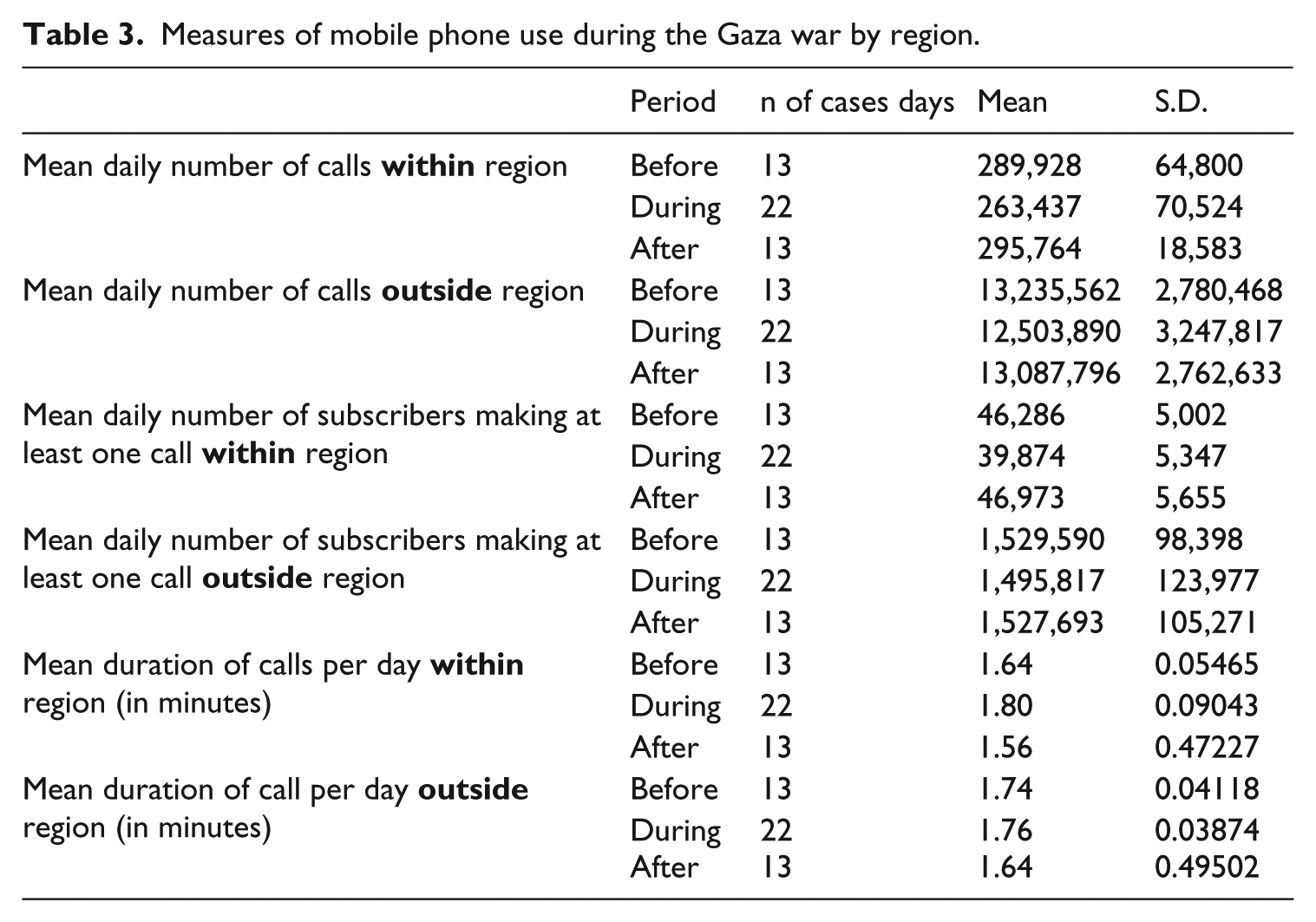
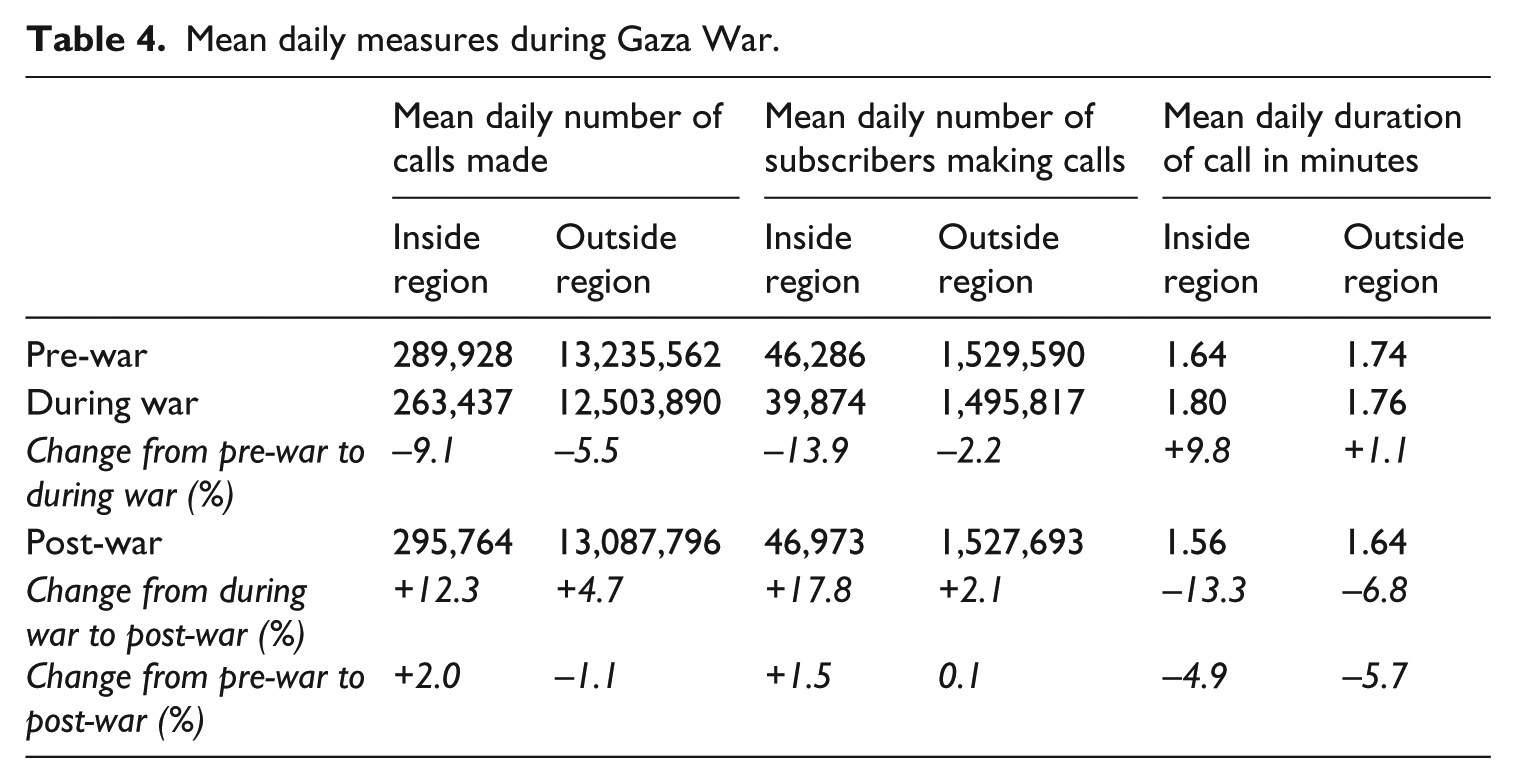
Given the circumstances of the Gaza war as explicated above, we found fewer differences among the three periods as could be expected since the war along the Gaza border was less unexpected by the population and followed an elongated period of hostilities, unlike the Lebanon War, which had erupted following a few years of calm. Table 3 presents the data regarding the Gaza War, Table 4 presents measures of change among the three periods while Figures 5, 6 and 7 graphically present the daily trends.
Measures of mobile phone use during the Gaza war by region.
Mean daily measures during Gaza War.
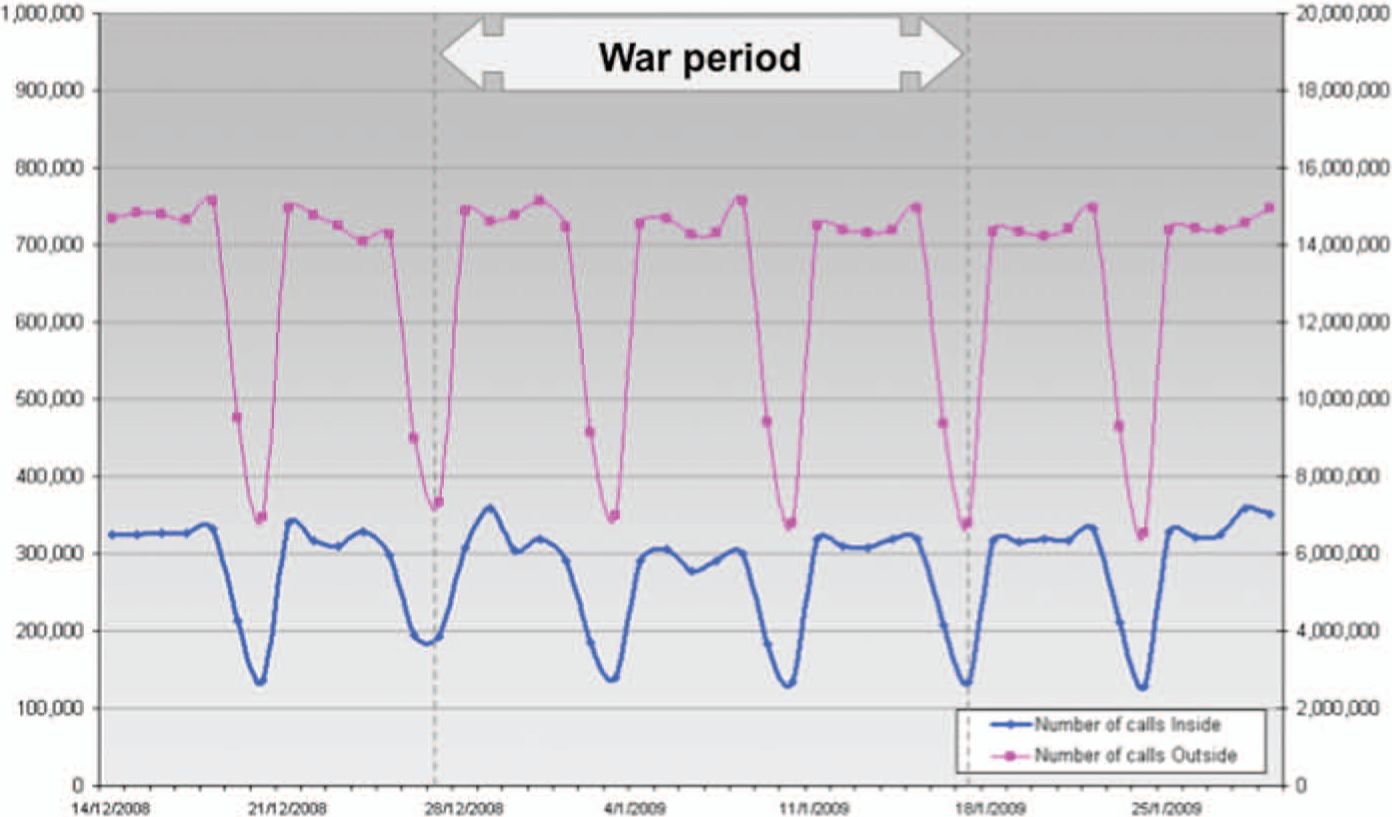
Gaza War: Mean number of calls per day by region.
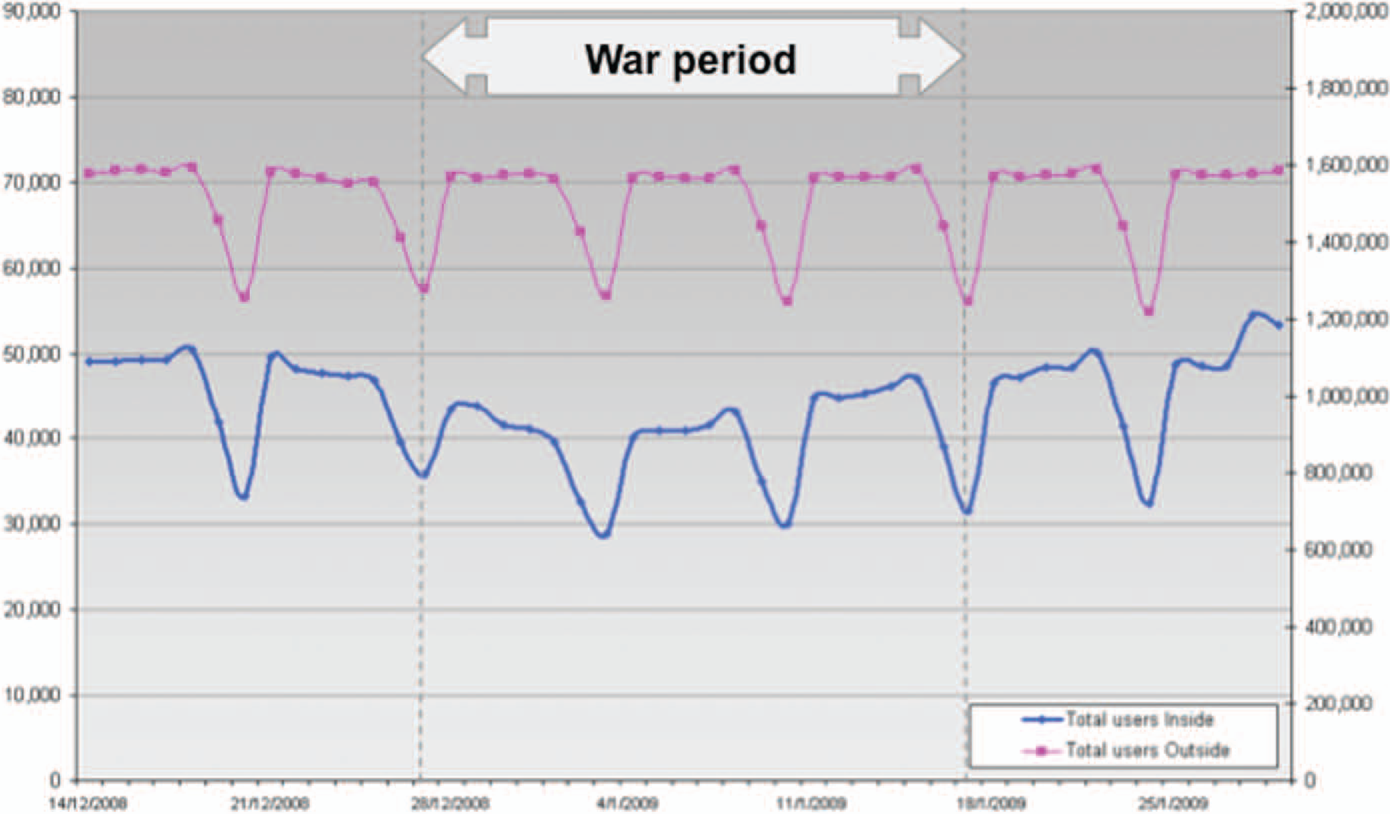
Gaza War: Mean number of users initiating at least one call per day by region.

Gaza War: Mean duration of calls per day by region.
Regarding the mean number of calls per day (Figure 5), along the Gaza border, there was a decrease of 9.1percent from the pre-war period to the war period vs. a 5.5 percent drop in the rest of the country. Along the border, the post-war mean number of calls rose by 12.3 percent compared to the war period and by 2 percent compared to the pre-war period. In the rest of the country, the comparable changes were an increase of 4.7 percent from war to post-war and a decline of 1.1 percent from pre-war to post-war.
As for the mean daily number of subscribers in each region who initiated at least one call (Figure 6), along the Gaza border the mean number of calls declined by 13.9 percent. Following the war there was an increase of 17.8 percent but only a 1.5 percent increase from the pre-war to the post-war period. In the rest of the country, there was a decrease of 2.2 percent from the pre-war period to the war period, an increase of 2.1 percent from the war period to the post-war period, and virtually no change (0.1 percent) from the pre-war period to the post-war period.
Finally, regarding the mean duration of the calls (Figure 7), in the region around the Gaza border there was an increase of 9.8 percent (from 98 to 108 seconds per call) during the war compared to the pre-war period. After the war, the mean duration of a call was 94 seconds, which was 4.9 percent higher than in the pre-war period, but 13.3 percent less than in the war period. Finally, in the rest of the country, there was a 1.1 percent increase during the war. Following the war, there was a 5.7 percent decrease compared with the pre-war time and a 6.8 percent decrease compared with the war period.
Here, too, we tested the differences among the means of the three periods by conducting one-way ANOVAs for each of the three measures in both regions (based on the data in Table 4). Along the border region, there were only two significant tests: for the number of subscribers making at least one call, F=9.582, df=2,45, p<.001; and for the mean duration of the calls, F=3.194, df=2,45, p=.027. Outside the border region (in the rest of the country) none of the tests were significant.
Discussion
Our study assumes that as the attributes of the mobile phone imply, people carry their mobile with them most of the time, especially in times of emergency. Indeed, while actual usage during emergencies is rare (as emergencies are rare) having the mobile in order to use in case of emergency has been cited, as noted above, as a major reason for acquiring it (Ling & Yttri, 2002; Lemish & Cohen, 2005).
Combining these two assumptions led us to identify two significant findings. Regarding RQ1 (Was there a change in the number of mobile phone calls and their duration), during both wars there was significant change in the way people used their mobile phones, expressed by a substantial decrease of calls originating from people within the 10-kilometer region along the border. However, during the Lebanon War the decrease was more than double that of the decrease during the Gaza War. Second, during both crises, mobile users made significantly longer calls. These findings reflect actual mobile use.
There could be at least two plausible explanations for the first finding. First, during the Lebanon war more people moved out of the region than during the Gaza war, hence the much lower number of initiated calls. This explanation is supported by reports indicating that some 250,000 civilians had indeed evacuated the area (Rubin, 2006). The second explanation can be that during the Lebanon war more people’s daily lives were affected, compared with the Gaza war, since people in the Gaza region were already accustomed to the frequent shelling that preceded the war. Thus, the phoning behavior changed, marked by less calls being made, and those that were made did not involve mundane daily “micromanagement” activities, as those were, due to the circumstances, brought to a halt.
This explanation may also imply a connection to the second significant finding, namely, that the calls made were longer. These two explanations of the first finding are not contradictory; in fact, they can be seen as complementing each other. Concerning the first explanation, one might speculate that having a mobile may have made the transition from the region to a safer place easier; people who left their homes for safer ground did so knowing that they could still use their mobiles to keep in touch with the rest of the world.
Regarding RQ2 (the impact that geographic proximity to the region of the hostilities has on the call-making patterns), the data demonstrate that the total number of calls did not change significantly during both wars in the respective non-combat regions of the country. In other words, civilians residing by the Lebanese border moved, with their mobiles, to areas they perceived as more secure, and civilians in both wars may have also changed their behavior and made less “micromanagement” calls when using their mobile phones. At the same time, during both wars residents in the rest of the country did not exhibit behavioral change vis-à-vis their mobiles.
The fact that the number of initiated calls in the rest of the country did not increase significantly allows us to speculate that to begin with people only changed their calling behavior but did not move out of the area. However, this alternative explanation cannot be derived directly from the data since the number of calls initiated in the region along the border was but a fraction of the total number of calls throughout the country, since the population along the borders is sparse compared to the dense population in the center of the country. Thus the actual movement of people from the border simply cannot register significantly in the total national count (to where they moved) but only in the regional count (from where they moved). It should be noted, that the mean number of subscribers initiating at least one call per day during the days prior to the war along the border was 58,546, while the mean number of subscribers initiating at least one call per day in the rest of the country was 1,359,132, which is more than 23 times larger. The “silent” subscribers during the war, slightly over 17,000, constitute close to 30 percent of the call-initiators along the border, but they represent only 1.1 percent of the total number of people initiating calls in the entire country.
Indeed there was a difference in population moves between the two wars. It is reasonable to assume that civilians living along the Gaza border had been desensitized by years of violent conflict and had been more prepared to continue conducting everyday life amidst the chaotic violence. In fact, the “desensitization hypothesis” concerning violence was raised previously in the context of terrorism in Israel (i.e. Keinan, Sadeh, & Rosen 2003).
The lack of change in telephoning behavior in the rest of the country, which appears regarding RQ2, seems, however, to make a further contribution to the study of Israeli society in general and during times of crisis in particular.
A common Israeli myth often implies unique solidarity among its citizenry. Indeed, one would expect that when a civilian population is targeted and hit, at a minimum people residing elsewhere would initiate calls to the affected population as well as talk about the issue among themselves. The interpersonal level of the social cohesion, as discussed above, would thus reflect the social level of cohesion. Had we been able to identify which individual mobiles had left the conflict area and had we been able to track their incoming calls we would have had a better indication for this phenomenon. Nonetheless, the fact that the total number of calls did not change leads to the conclusion that the total number of calls during the period both incoming and outgoing remained the same leading to the notion of less than anticipated interpersonal social cohesion reflecting a less than mythologized “imagined” community-level solidarity. In fact, people in the rest of the country may have used landlines or may have expressed their concern in face-to-face interaction. However, one would expect that their mobile behavior, which carries the highest probability of successfully contacting a person in the combat region, would also change at least as much, but this did not happen.
This apparent indifference to the crisis by the unaffected population is consistent with previous Israeli studies regarding behavior during terror attacks, in which significant changes in patterns of usage occurred only within the close vicinity to the event, while in the rest of the country business seemed to go on as usual (Cohen et al., 2008, p. 126). An interesting hypothetical question – for which unfortunately no data are available – is what would have been the case in earlier periods or during previous rocket attacks on the Gaza region? We suggest that it is quite likely that even more dramatic differences would have been found between the time the critical events occurred and their respective control periods, differences that would be more extended. Perhaps it would also have been possible to discern a pattern of desensitization over time, manifested by greater changes in mobile use patterns along the Gaza border during previous attacks as well as in total number of calls around the country. Indeed, it is reasonable to assume that over time Israelis have developed a certain amount of desensitization regarding attacks on civilians, whatever form they take.
The myth of cohesion and solidarity questioned over the years is backed this time by empirical real-time behavioral data. Arian (1995) concluded that “short term threats are grasped in a similar manner by most Israelis, while long-term matters are more amenable to political and factional interpretation” (p. 263). Landau (1989) observed that security-related stress in Israel actually increases social solidarity in the short run. However, even this skepticism or “short-term” acceptance of the myth seems questionable. Could it actually be that the “short term” threat instigates only superficial ideological cohesion, which does not suffuse beyond lip-service support to the military action and does not translate to actual behavior as reflected in caring for fellow citizens targeted during a short-term conflict?
Our second significant finding that during the crises mobile users made significantly longer calls raises a different set of hypotheses. There is no comparable data from previous Israeli studies or from studies done elsewhere, thus we do not have a comparative benchmark. However, this phenomenon was evident in both wars, as was the immediate drop in length of calls as the wars ended. While this behavior may also be characteristic of fixed line use, it is telling of the need for connecting and being in touch when endangered, and clearly, the availability of the mobile makes it the more likely technology to satisfy this need. Communicating in a crisis situation “aims at preventing or lessening the negative outcomes resulting from a crisis” (Spence et al., 2007, p. 541).
As noted above, the present study analyzed voice calls but not text messaging (SMS). Although we could not obtain real-time data on text messaging, there is no doubt that people used the technology during the wars, which of course they also use during normal times. We believe, however, that even if SMS data were available, and even if we could demonstrate that more messages were sent during the war compared with the control periods, such a finding would tell us little compared to what we have learned regarding voice calls. Text messages are typically brief, as the term “Short Message Service” implies. We could only tell how many messages were sent but nothing about their length (compared with the duration of voice calls). Relevant messages during the war might say “How are you?” or “Where are you?” or “Are you okay?” or “I’m ok,” whereas voice calls probably included details, expressed emotion, vented feelings, etc. Hence we believe that the mobile phone in wartime provided its most fundamental function of enabling people to hear the voices of their loved ones, which is clearly important under such circumstances. It is also more indicative of the existence of cohesion as understood by contemporary scholarship and discussed above.
This phenomenon also fits well with our previous hypothesis that during a time of crisis people tend to abandon “micromanaging” daily issues and focus more on issues of substance. It is impossible, at this time, to do more than speculate regarding this finding. Yet, the fact that the population under attack is under stress is indisputable, and the fact that the mobile creates a significant difference in its behavior, reflects a real need.
Conclusion
In sum, our data provides two observations: that mobile phone use can provide a coherent picture of how people use communication media in times of crisis, and that it is indeed a technology which individuals use more during such times. Given these observations, we are also able to question certain truisms or lend support to their previous questioning – in this case as we question the extent of national cohesion and solidarity among Israelis as reflected by their interpersonal cohesion patterns.
As has been previously suggested, part of the perception of the mobile is not only what it is in our lives, but also what it has the potential of becoming, even when it never does. In actual times of crisis, however, the mobile has become an important interpersonal communication device. Indeed, when crises such as war and terror do occur, the mobile is particularly useful due to its most elementary and obvious feature – mobility – that is, the ability to use it and reach people almost everywhere and at any time. This remains its most important quality despite the mobile’s many value-added features that have been developed and aggressively marketed in recent years.
The findings of this study also carry, we believe, policy implications. As the usefulness of the mobile in time of military conflict cannot be in doubt, one can assume that in this crisis-prone environment the population has learned to manage and maximize its use of the mobile when crises occur. Thus, the mobile has long ceased being a luxury and should instead be considered a necessity. Accordingly, policymakers should make sure that this crucial device is available, that is, affordable, to the population at large, in particular to those who reside in areas prone to hostilities. This does not necessarily imply the need for changes in universal access policies; in fact, in Israel all mobile operators are required to provide service to all across the whole country (Schejter, 2006). It does, however, pertain to maintaining public knowledge regarding the whereabouts of obtaining phones that break down in times of crisis or other support systems and to the maintenance of an emergency back-up network that can provide service if the existing operators fail to do so.
Footnotes
Acknowledgements
The authors would like to thank Itamar Bartov, Yossi Shoham and Fiana Drang of Cellcom for their invaluable assistance in making this study possible.
Funding
This research received no specific grant from any funding agency in the public, commercial, or not-for-profit sectors.