




Abstract
This study aims to construct an empirical model of user engagement with smart wearables, focusing on wrist-worn wearable devices. Using survey data of current smartwatch and smart fitness tracker users (N = 457), four factors—physical interaction, interface assessment, cognitive absorption, and digital outreach—were examined as the main components of user engagement. Results showed that the four concepts reliably constituted the measurement model of user engagement. The proposed user engagement scale showed convergent validity with user attitudes toward wrist-worn wearables and usage intention. In addition, the four aspects of user engagement consisted of a process model, where physical interaction predicted interface assessment, interface assessment predicted cognitive absorption, and cognitive absorption predicted digital outreach.
Keywords
Introduction
In recent years, smart wearables like smartwatches have been widely adopted for various purposes, ranging from monitoring health and fitness to creating smart living spaces (e.g., Gilmore, 2016; Verweij et al., 2017). The rising popularity and rapid development of smart wearables have attracted attention from academia and industry. As smartwatches and smart fitness trackers have only recently been commercialized, prior research mainly focused on identifying the key determinants, such as perceived usefulness and usability, leading to adoption of wearable technology (e.g., Chau et al., 2019; Chuah et al., 2016; Kim & Shin, 2015; Nascimento et al., 2018).
In the context of smart wearables, users can benefit from the technology only when they continuously interact with the devices and successfully integrate the devices into their routines. Whereas investigating the nature of user engagement with smart wearables is deemed to be an important agenda for current HCI (human-computer interaction) research, empirical research that illuminates the nature of user interaction with smart wearables is less common. Given that existing user engagement models were mainly developed for the context of human-website interaction (e.g., O’Brien & Toms, 2013; Oh et al., 2018), it is imperative to re-evaluate and adapt the existing user engagement models for the smart wearables context. Toward this end, this study proposes a measurement model by defining components of user engagement with smart wearables and examines the relationships among the defining factors.
Specifically, we re-examine and adapt an existing model of user engagement with interactive websites (Oh, Bellur, & Sundar, 2018) to develop the model of user engagement with smart wearables. Oh et al. suggested that user engagement with websites in a desktop setting is a multi-component and hierarchical construct, where physical interaction with and interface assessment of websites leads to absorbing interactions with their content, resulting in endorsement of the websites in digital platforms. However, interactions with smart wearables rely more on the technical features of the devices that track user data than the presence of specific media content. They also include subtle and undisclosed communications such as automatic monitoring of users’ movement and vital signs. Considering the mobility and pervasiveness of smart wearables, the current study set out to contribute to the body of UX (user experience) and HCI research by re-defining the previous four components of user engagement (Oh et al., 2018) and proposing a new scale to measure user engagement with smart wearables.
Literature review
Smart wearables and wrist-worn wearables
There are many terms that refer to the category of devices that include smartwatches and smart fitness trackers. The current study uses the term “smart wearables” since (a) “smart” refers to the capability of the devices that can track and transmit user data and either run on-device applications or be connected to the applications, and (b) “wearables” implies the type of mobile devices that can be worn on the body. In short, smart wearables in the current study refer to the broad category of devices worn on the body that collect and transmit user information using sensors and communicate with applications (Nascimento et al., 2018; Qiu et al., 2017).
Among many types of smart wearables, wrist-worn wearables, including smartwatches (e.g., Apple Watch or Samsung Gear) and smart fitness trackers (e.g., Fitbit), are most widely adopted in the market, reaching 34.3% and 30% market shares of all wearable devices, respectively (Perez, 2019). Smartwatches and smart fitness trackers can typically function as satellite devices of smartphones paired via Bluetooth or Wi-Fi connection (Kim & Shin, 2015). Recent smartwatch models with LTE capabilities (e.g., Apple Watch Series 3 or upper and Samsung Galaxy Watch) can also be standalone devices like smart phones.
Our study focuses on examining user engagement with these wrist-worn wearables and defines them as “communication and information devices designed to be worn on wrists and track user data that are capable of being wirelessly connected to other technological elements, transmitting and receiving user information to and from the connected systems such as smartphone app, cloud storage, computing system, smart objects, etc.” (Cecchinato et al., 2015; Kim & Shin, 2015; Qiu et al., 2017). In particular, we focus on the two most popular forms of wrist-worn wearables: smartwatches and smart fitness trackers (Henriksen et al., 2018).
The scope of our study is limited to the devices that are equipped with some types of user interface through which users can directly communicate with the devices by taking actions and receiving visual information from them. Some wrist-worn wearables have elaborate interfaces and operating systems of their own, such as Apple or Samsung smartwatches, while others like Fitbit Flex allow only minimal user actions with flashing lights as the only visual output. Whereas our study attempts to encompass these simple to elaborat user interfaces, we exclude the models that do not have their own interfaces to transmit visual information to users at all (e.g., fitness band like Jawbones).
The next section examines the factors that comprise user engagement with wrist-worn wearables and the process in which they form user engagement.
User engagement with interactive media
User engagement has been a popular concept in both academia and industry. Engagement is broadly defined as a psychological status where users feel deeply involved in a given task (O’Brien et al., 2018) or mediated content (Busselle & Bilandzic, 2009). It also includes a motivational or behavioral status where users are committed to involve in online/offline communities, brands, services, or organizations (Brodie et al., 2013; Dessart et al., 2015). Communication scholars have focused on explicating and understanding the phenomena, often resulted in multiple factors reflecting the complex nature of user engagement (e.g., Lefebvre et al., 2010; O’Brien & Toms, 2013, O’Brien et al., 2018; Oh et al., 2018). For instance, Ksiazek et al. (2016) conceptualized user engagement with online news as a continuum that begins with exposure to media content and subsequently moves on to more active involvement, such as commenting on the news and interacting with other readers.
However, these user engagement models that focus on content perceptions or user interaction with the mediated content often do not address the unique nature of interactive media technology; users can be engaged with not only the content of the website but also its interface design and interaction with the system. Bringing in a HCI perspective that addresses this issue, O’Brien and Toms (2013) identified a path model that explains the process of user engagement, where the aesthetics and novelty of the system functions as the initial factors that lead to focused attention and greater involvement in a given task, which enhances perceived usability and endurability of system usage. Grounded upon this work, O’Brien et al. (2018) later proposed four factors as the most significant indicators of user engagement in HCI: focused attention, reward, perceived usability, and aesthetics.
Combining both the HCI and communication perspectives, Oh et al. (2018)’s model of user engagement parsed out the factors of user engagement with new media interfaces: physical interaction, interface assessment, absorption, and digital outreach. The model demonstrated the hierarchical process of user engagement. As users start interacting with an interactive interface, they go through a quick evaluation of its features, assessing whether the interface is easy to use, intuitive, and natural to interact with. If the interface perceptions are positive, the favorable perceptions can encourage users to further interact with the website’s content, spending more time reading it and displaying more frequent clicking activity (conceptualized as physical interaction in the model). In their model, physical interaction and interface assessment also simultaneously reinforce each other: As users click more content embedded on the website, they continue to evaluate the property of interface; as they evaluate the intuitive and natural properties of the interface, they further explore the interface. If the interface successfully involves users in this beginning stage of exploration, users are likely to feel further absorbed into reading the website content. Ultimately, a heightened level of user engagement can manifest in digital outreach, which refers to the user’s voluntary participation in distributing the website’s content to their social network.
This study aims to re-examine and extend the four-factor model of user engagement proposed by Oh et al. (2018) in the context of smart wearables, focusing on smartwatches and smart fitness trackers. We chose this model for three reasons. First, Oh et al. (2018)’s model includes the components that can address both user engagement with mediated content and its interface and bridges the HCI and communication perspectives, whereas other models highlight either user engagement with interface and technology (e.g., O’Brien & Toms, 2013; O’Brien et al., 2018) or user engagement with content and information only (e.g., Brodie et al., 2013; Dessart et al., 2015; Ksiazek et al. 2016; Lefebvre et al., 2010).
Second, smartwatch and fitness trackers are designed to be embedded in everyday life of users, which suggests the importance of understanding their habituated engagement with the devices (Gilmore, 2016). Oh et al. (2018) proposed physical interaction with the interface as the beginning stage of user engagement. This idea aligns with the fact that wearing and physically interacting with wearable devices precedes user assessment to find values of using the devices that fit with their everyday life (Nascimento et al., 2018).
Third, whereas interface assessment and absorption in Oh et al. (2018)’s study largely overlap with O’Brien et al. (2018)’s dimensions of perceived usability and focused attention, digital outreach in Oh et al. (2018)’s model addresses a unique aspect of user engagement in the digital era. Contemporary user engagement metrics often take into account WOM (word-of-mouth) behavior, the voluntary sharing of content through social media platforms (Chu & Kim, 2011; Ksiazek et al., 2016). When users are engaged with their devices, one important indicator of the engaged status would be their explicit and voluntary endorsement of the devices or brands in online or offline relationships.
The next section elaborates on how the four factors proposed by Oh et al. (2018) can be applied to understanding user engagement of smart wearables.
Four factors of user engagement of smart wearables
Physical interaction with smart wearables
HCI literature showed that direct manipulation of user interface has been one of the most significant components of user engagement. For instance, Hutchins et al. (1986) defined engagement as the direct and observable user-system interactions (Hutchins et al., 1986, p. 137) because the directness of interactions constitutes “the qualitative feeling of engagement” for users. Prior literature also suggested that users have a tendency to treat machines and communication devices as if they are agentic entities, thus often developing attachment to desktop computers, speakers, and mobile phones (Kim, 2016; Vincent, 2005). In this perspective, how users physically and directly interact with the machine’s interface is often a more important indicator of engagement than what they do with its functions.
Following this perspective, we also define the direct physical interaction with wrist-worn wearables as one of the most rudimentary, but critical aspects of user engagement. Oh et al. (2018) defined physical interaction as “a behavioral experience that includes the many tangible ways in which users voluntarily interact with an interface” (Oh et al., 2018, p. 741) and operationalized it as the amount of observable activities of users with the interface. The examples of physical interaction in human–website interaction include scrolling, clicking, swiping, and zooming-in and -out, which are primarily based on mouse-based interactions. Whereas these types of physical interaction are equivalent to direct tapping on the screen in the context of wrist-worn wearables, the current study incorporates two more modes of direct interactions in addition to tapping: voice-based interaction and glancing behavior.
One distinctive way of interacting with smart wearables is voice-based interaction. Given that the size of the device and the screen has to remain small enough to be wearable, input methods commonly used for human-website interaction (e.g., keyboard or mouse) are not applicable to wrist-worn wearables. The voice command feature (e.g., Siri for Apple Watch, S Voice for Samsung Gear, and Alexa for Fitbit) significantly enhances the mobility and convenience of the wearable devices; tracking health-related information or searching for information can be efficiently controlled by voice commands in smart wearables.
Also, unlike interactions with websites, wrist-worn wearables are attached to the skin and track user information even when there is no direct command from the users. From time to time, users simply glance signals from the devices to check updates. This glancing behavior often initiates interactions with other synchronized applications and devices, such as smartphones or laptops. In fact, direct physical interaction with wearables is typically minimized so that it primarily functions as a motivator for further information-seeking on other platforms. Thus, this aspect of wrist-worn wearables points out the critical difference between the concept of physical interaction in Oh et al. (2018) and ours. Whereas physical interaction in Oh et al. (2018) was implied to be performed to retrieve information from the websites, physical interaction with wrist-worn wearables can be conducted to either directly receive information from the devices’ interface (e.g., from their screens or more limited displays) or motivate users to check other connected gadgets (e.g., check the walking distance on the smartphone after being notified by flashing lights). Thus, the current study defines physical interaction with wrist-worn wearables as: the extent to which the user is physically involved in a direct communication with the wrist-worn wearables that enable them to receive information or proceed to check other connected devices, such as tapping, using voice-commands, or visually checking its signals.
Interface assessment
Prior literature defined interface assessment as the user’s initial, heuristic evaluation of the interface, including its naturalness, intuitiveness, and easiness (Oh et al., 2018). Natural mapping (Wang & Sundar, 2018), intuitiveness (Blackler et al., 2005), and easiness (O’Brien & Toms, 2013; Venkatesh & Davis, 2000) have been found to be significant predictors of positive user attitudes toward technology. In the context of smart wearables, scholars have reported that perceived ease of use is positively associated with attitude toward and continued use of smart devices (Chau et al., 2019; Kim & Shin, 2015; Nascimento et al., 2018). Given that wrist-worn wearables are relatively new technology, the way users interact with the devices can feel more (or less) natural and intuitive, which prior research has referred to as an important determinant of task performance and user satisfaction (Chun et al., 2018).
Whereas smartwatches typically have their own operating systems and elaborate screens for users to control different apps (e.g., Apple watch or Samsung Galaxy/Gear watch), some smart fitness trackers with simpler displays (e.g., Fitbit Flex or Fitbit Charge) rely on mobile phone applications to further analyze and provide biometrics and physical activity data for users. This suggests that interface assessment of connected devices (e.g., smartphones) would be correlated with that of smart wearables. However, prior studies found that the basic features of smart wearables such as tracking and monitoring are still the most valued functions by users (Jia et al., 2018; Ridgers et al., 2018). In fact, having an accompanying smartphone app is a less important factor than the accuracy of these basic tools (Pfannenstiel & Chaparro, 2015), and the consistency and easiness of using the wearables themselves were found to be the most significant indicators of user satisfaction (Chun et al., 2018; Liang et al., 2018).
Thus, even though some fitness trackers have less elaborate interfaces than smartwatches, we suspect that how users perceive the simple to complex interface features of wrist-worn wearables would be critical to gauge the level of engagement. In short, we define interface assessment of wrist-worn wearables as: the degree to which the user perceives the multiple ways they control and interact with their wrist-worn wearables as natural, intuitive, and easy-to-use.
Absorption
Prior user engagement research defined absorption or focused attention to a specific task as an important aspect of engaging experience. For instance, O’Brien et al. (2018) proposed the degree to which users lost track of time and feel completely absorbed into the task as one dimension of user engagement. Similarly, Oh et al. (2018)’s model defined absorption as a stage of deeper involvement with website content where users pay complete attention to the mediated environment.
Whereas the immersive psychological status can occur as part of user experience with smart wearables, the object of focused attention is often unclear in this context. Smartwatches or smart fitness trackers are not designed to provide information-laden content; instead, they often function as satellite devices of existing information and communication technologies, allowing easier access to and tracking of information for users. Interaction with a wearable device is usually very brief (e.g., checking heart rate), which prompts further and prolonged interactions with other connected devices (e.g., checking fitness data analysis or reading social media posts on a smartphone) or involvement in other activity (e.g., exercise).
Considering that engagement with wrist-worn wearables is less content-driven than user engagement with websites, the current study focuses on the positive cognitive and affective status of interacting with the wrist-worn wearables in general, which does not refer to a specific task or content viewing. This status would include feelings of enjoyment, curiosity, and control while using smart wearables. For instance, users may feel that it is fun to be notified of how much calories they consumed every day; they may feel curious about the details of exercise and health statistics after glancing at the notifications; they may experience feelings of control as smart wearables assist them to be better informed of their health and activities. Prior literature identified that hedonic motivation was positively associated with continued use of smartwatches (Dehghani et al., 2018), and feeling in control while completing a task is an important aspect of perceived usability (Chun et al., 2018). Heightened enjoyment, curiosity, and control are also part of the absorption scale by Agarwal and Karahanna (2000), which has been widely applied to many HCI settings. Thus, we operationally define absorption with wearable technology as: the extent to which users perceive their interaction with wrist-worn wearables as enjoyable, and experience feelings of curiosities and control while interacting with the device.
Digital outreach
Digital outreach was defined as the last phase of user engagement featured by the behavioral indicators that share the content of interest or manage it for further usage, such as sharing the website with others in their social media platforms or bookmarking the webpage (Oh et al., 2018). Whereas the previous concept implies the presence of specific website content that users are interested in sharing or saving, engagement with wrist-worn wearables is often characterized by users’ positive perceptions of the devices themselves (Jung et al., 2016; Ridgers et al., 2018). Users of smartwatches and fitness trackers are known to be early adopters, and owning such new technologies is considered to be a “cool” behavior among current consumers (Hong et al., 2017).
Considering that smart wearables are designed to enhance the convenience and well-being of consumers as opposed to convey media content, we propose that digital outreach of smart wearables would be marked by users’ sharing of their everyday experience with the devices themselves. Communication studies showed that when individuals are emotionally engaged with certain information, they are likely to share it with others via interpersonal (Peters et al., 2009) or online platforms (Ksiazek et al., 2016). Research on WOM also suggested that sharing positive words about a brand via interpersonal networks is considered as involved consumer behavior driven by the motivations to repay the brand for the positive consumer experience (Mikalef et al., 2013).
With their unprecedented popularity, contemporary social media serve as convenient and powerful platforms for users to share their brand experiences. When satisfied with a brand, consumers often voluntarily advocate the brand on social media by clicking the “like” button to express their endorsement or following the brand’s social media pages. In particular, the adopters of smart wearables are likely to recommend their devices through their social media platforms to other users by sharing their daily activities (Talukder et al., 2019). In the context of using wrist-worn wearables, sharing positive stories about their devices on social media or recommending the devices to others through other available channels indicates the heightened phase of engagement.
We thus operationalize digital outreach, one of the dimensions of user engagement with a wrist-worn wearable device as: the degree to which users endorse their wrist-worn wearables through their social networks using digital platforms.
In sum, we hypothesize:
A process model of user engagement
Oh et al. (2018) constructed a continuum of user engagement with websites, which starts with two correlated factors: physical interaction and interface assessment. In the original model, these two components were hypothesized to fortify each other; more physical interaction with websites enables users to get familiar with the interface, leading to greater interface assessment, and greater perceptions of interface feedback lead to more physical interaction. In these stages, users quickly evaluate an interface mainly using sensory mechanisms and may not be fully immersed in the interactions. As users perform more physical interactions with smartwatches and find them more natural, easy, and intuitive to use, they can subsequently experience deeper engagement such as absorption and digital outreach—users may feel more in control and enjoy using the device, which can promote their intention to share such experience with others using various social media platforms.
Different from the user engagement continuum proposed by Oh et al. (2018), where physical interaction and interface assessment simultaneously comprise the first phase of user engagement with websites, this study posits that it is the physical interaction with smartwatches and smart fitness trackers that can predict users’ interface assessment of the devices. The use of wrist-worn wearables first requires the adoption and purchase of such devices, which are known to be motivated by many individual factors, such as consumer innovativeness, active lifestyle, or needs for frequent health monitoring (Chuah, 2019; Hong et al., 2017). In other words, simply the fact that the device’s interface is natural and intuitive is not likely to motivate the usage of wrist-worn wearables in the first place—only when users interact with the devices more often based on these individual characteristics or needs, physical interaction would increase. As users interact with their devices more often, they can figure out how the devices can fit into their everyday life and satisfy their needs. Prior literature on wearable technology also suggests that habituation is one of the important factors that predict continued usage (Nascimento et al., 2018), which implies the role of physical interaction as an antecedent of interface assessment and other factors of user engagement.
Physical interactions with smartwatches or smart fitness trackers have evolved into more natural forms. Unlike websites where user actions have to be mediated by a keyboard and mouse, users can interact with the smartwatches or smart fitness trackers through touchscreens based on haptic modality. For example, Park et al. (2011) showed that such direct and intuitive forms of interactions enabled by mobile touchscreens create intimate user experience with the devices, which determines user assessment of the affective quality of the devices. Hence, these richer forms of physical interactions would significantly influence how users evaluate the naturalness, easiness, and intuitiveness of the interfaces of smartwatches and fitness trackers. Thus, we propose:
Method
Data collection
An online survey with current users of smartwatches or smart fitness trackers residing in the U.S. was conducted, employing Qualtrics Data Panel service. Qualtrics Panel invited those who own a smartwatch or smart fitness tracker. After agreeing to the informed consent form, participants were asked about their general technology use, gender, and age. In this phase, they were also asked to provide the brand and model of the wearable device they use, and how often they interact with its interface as the measure for physical interaction. Then, they responded to the questions designed to assess user interaction and experience with wrist-worn wearables. In this phase, the other three components of user engagement with wrist-worn wearables—absorption, interface assessment, and digital outreach—and attitude toward the device and use intention were measured. Finally, they were asked about their ethnicity, income, and education. Respondents were compensated by Qualtrics in accordance with the company’s internal policy. The research procedure and questionnaire have been reviewed and approved by the Institutional Review Board at Nanyang Technological University.
Respondents
From the initial sample of 529 respondents, we first screened out those who failed to provide the brand and model of their smartwatch or smart fitness tracker and those who have used this type of device less than a month (n = 35). Respondents who use the models that do not have their own interfaces to transmit visual information to users (e.g., fitness band like Jawbones) (n = 11) were excluded. Later in the data analysis, a respondent who reported zero for all physical interaction measures (n = 1) and univariate outliers of the three indicators of physical interaction (n = 25) were excluded. A total of 457 responses were used for analysis.
A total of 317 users (69.4%) reported using a fitness tracker such as Fitbit, and 266 users (58.2%) reported using a smartwatch such as Apple Watch or Samsung Galaxy Gear, with 126 (27.65%) users owning both. The average age was 35.94 (SD = 12.95, Min = 18, Max = 76). The sample included 213 males (46.6%), 243 females (53.2%), and one in the other category. The median education level was college graduate, and median household income was USD$50000–USD$59999. The majority of the sample was Caucasian (58.2%) and Hispanic (14.9%). A total of 62.8% of users reported wearing their device almost every day. Tracking the distance of running and the amount of exercise, monitoring heart rate, managing fitness goals were the most frequently used features (M = 5.15 on a 7-point scale of never = 1 to very frequently = 7). Monitoring sleep and calories consumed (M = 4.61) was the next popular feature of wearable devices.
Measurement
Four components of user engagement
Physical interaction with wrist-worn wearables was measured using three self-reported items that tapped into some of the most common ways to interact with wrist-worn wearables. Respondents were asked to enter how many times on average they check their device’s screen per day (PI1; M = 10.39, SD = 9.58, Min = 0, Max = 70), how many times they actually tap things on the device’s screen per day (PI2; M = 10.37, SD = 10.52, Min = 0, Max = 100), and how many times they say things to the device per day (PI3; those who do not own a voice-activated device were asked to enter zero for this item; M = 3.57, SD = 5.64, Min = 0, Max = 45).
Interface assessment was measured by respondents’ agreement with the following items (Oh et al., 2018) on a 7-point Likert scale: “The way that I use to control my [device name] feels natural (IA1),” “My interaction with [device name] is intuitive (IA2),” and “My [device name] is easy to use (IA3)” (M = 5.51, SD = 1.24, Cronbach’s α = .79). Cognitive absorption was measured by five items that reflect heightened enjoyment, user control, and curiosity dimensions of the original scale by Agarwal and Karahanna (2000) 1 : “I have fun interacting with my [device name] (AB1),” “Using my [device name] provides me with a lot of enjoyment (AB2),” “I enjoy using my [device name] (AB3),” “When using my [device name], I feel in control (AB4),” and “Interacting with my [device name] makes me curious (AB5)” (M = 5.25, SD = 1.36, Cronbach’s α = .88). Digital outreach was measured by three items (Mikalef et al., 2013): “I would say positive things through social media about my [device name] (DO1),” “I would recommend my [device name] to my acquaintances (DO2),” and “If I see my [device name] on social media, I would use “Like” or other endorsement features to show my appreciation (DO3)” (M = 5.59, SD = 1.32, Cronbach’s α = .84).
Correlates of user engagement
In order to examine the convergent validity of user engagement, the current study measured the respondents’ attitudes toward their wrist-worn wearables (Ivaldi et al., 2017; Oh et al., 2018) and their intention to keep using the devices (Agarwal & Karahanna, 2000; O’Brien & Toms, 2013). Attitudes toward wrist-worn wearables were measured by two items on a 7-point Likert scale: “I like the idea of using [device name],” “Overall, I have a positive attitude towards [device name]” (M = 5.91, SD = 1.25, Pearson’s r = .79; Chuah et al., 2016). Intention to keep using the devices was measured by three items: “I feel like using [device name] again in the future, as I felt comfortable using it,” “I plan to continue using [device name],” and “I will continue using [device name] in the next six months” (M = 5.95, SD = 1.24, Cronbach’s α = .91; Shin & Biocca, 2017).
Results
Data analysis
The skewness and kurtosis of all variables were univariately checked in the data. All variables showed skewness and kurtosis between -2.0 and +2.0, except for items measuring physical interaction. Univariate outliers of the three indicators of physical interaction (n = 25) and those who reported zero for all physical interaction measures were excluded (n = 1). Given that the three indicators were moderately reliable for a developing scale (Cronbach’s α = .60; Taber, 2018), the scores of the three items were standardized and averaged for analysis (M = -.13, SD = .28, Min = -.48, Max = .99, skewness = 1.45, kurtosis = 1.93). The average score was standardized and entered as a single indicator of physical interaction, and measurement error was corrected at 1- α multiplied by its variance (Bollen, 1989). All indicators of interface assessment, cognitive absorption, and digital outreach were also standardized for the analysis. Skewness scores ranged from -1.44 to 1.45, and kurtosis ranged from -.64 to 1.94 in the data set, which did not indicate any issue (Kline, 1998). Structural equation model analyses were used to estimate coefficients based on the maximum likelihood procedure for all measurement and path models presented below.
Measurement model of user engagement
We first tested internal reliability, convergent validity, and discriminant validity of the four factors of user engagement by a CFA (confirmatory factor analysis). All four variables (physical interaction, interface assessment, absorption, and digital outreach) in the model were specified as latent constructs. Modification indices suggested two pairs of errors to be correlated: IA3 and AB3 and IA2 and AB5 (see the measurement section for labels). Given that the significant correlation between ease of use and perceived enjoyment has been widely supported by cumulative research on the technology acceptance model (Davis, 1989), we allowed the two pairs to be correlated in the model. After correlating them, the measurement model showed acceptable fit indices: χ2 = 123.10 (df = 47, p < .001), root mean square error of approximation (RMSEA) = .060 (90% confidence interval [CI] = [.047, .073]), adjusted goodness-of-fit index (AGFI) = .93, comparative fit index (CFI) = .97, and Tucker–Lewis index (TLI) = .96. The factor loadings of individual items were all over .65, significant at p < .001 (Figure 1). The four factors were also significantly correlated to each other (Table 1).
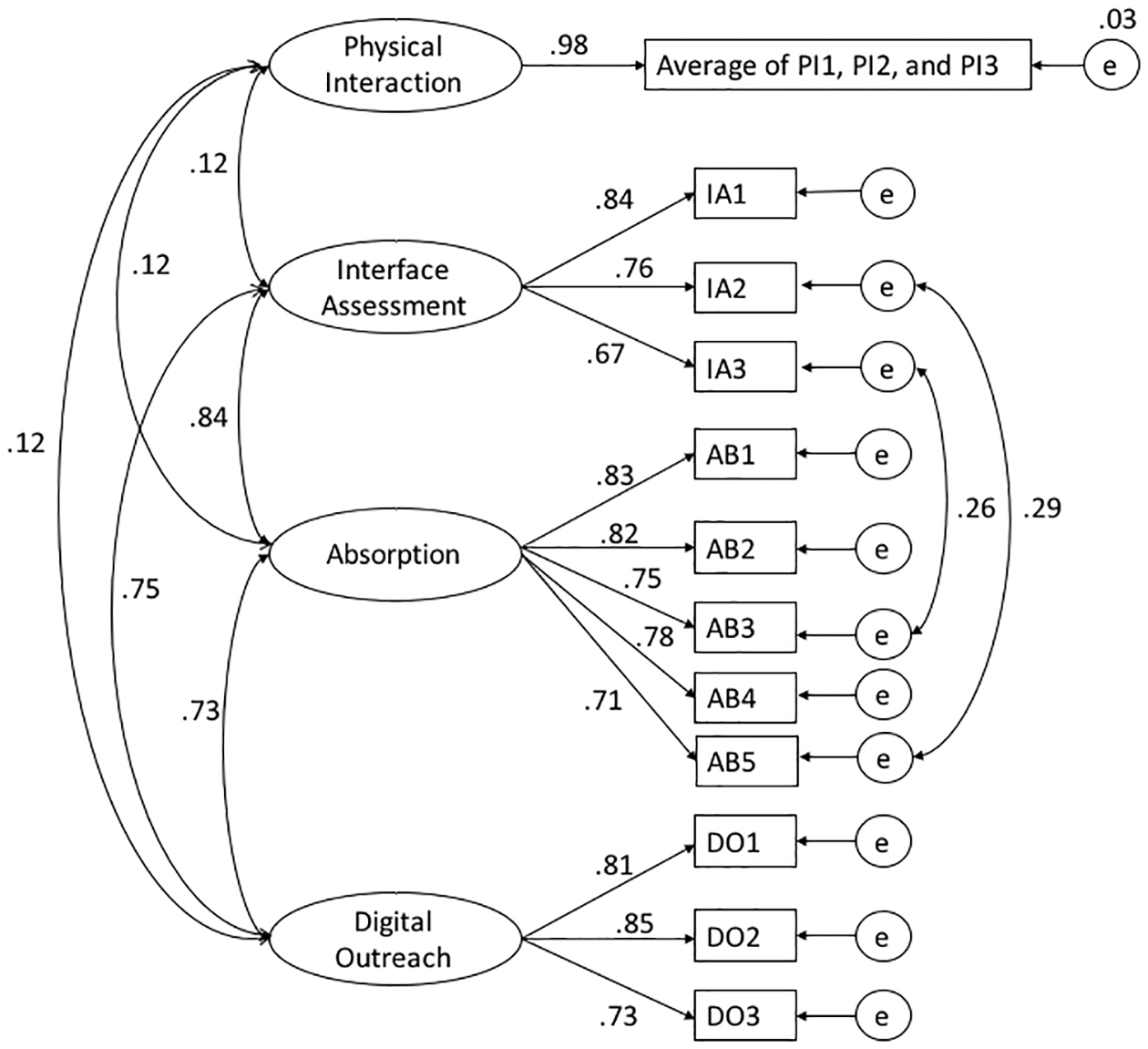
Measurement model of user engagement.
Correlations among the four factors in the measurement model.
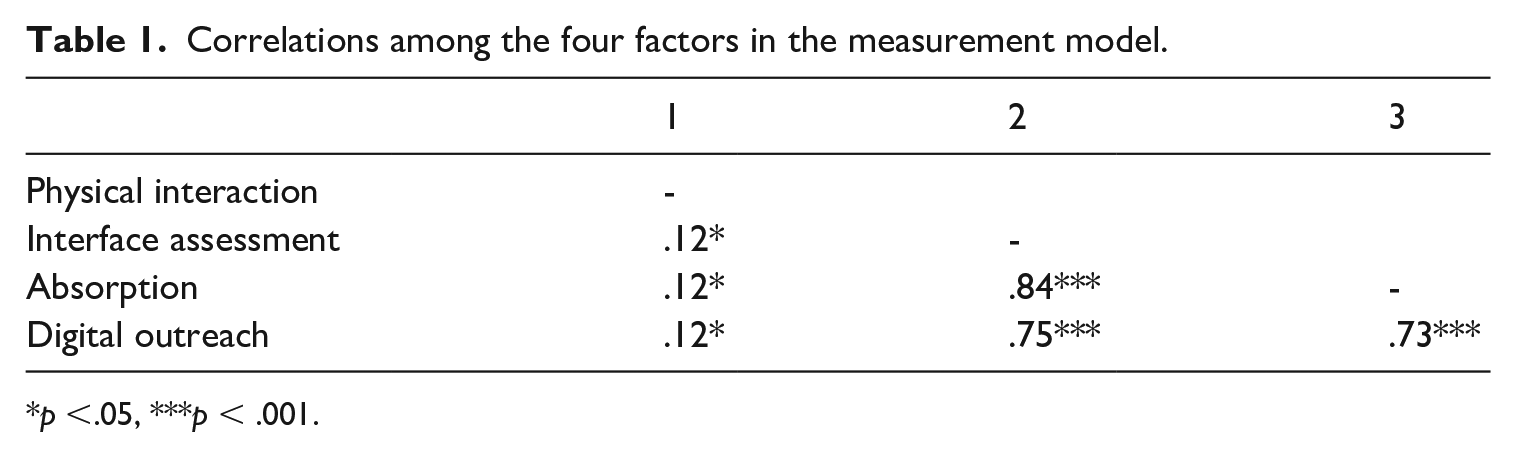
p <.05, ***p < .001.
Composite reliability (CR) was calculated for each factor except for physical interaction that was parceled to have a single indicator. All three latent variables showed CR greater than .80 (Table 2), demonstrating good reliability. Cronbach’s alphas for interface assessment, absorption, and digital outreach were .79, .87, and .84, respectively. The average variance extracted (AVE), maximum shared variance (MSV), and average shared variance (ASV) were calculated in order to assess convergent validity and discriminant validity of the four components (Hair et al., 2006).
Cronbach’s alpha, CR, AVE, MSV, and ASV of latent variables.

Note. CR = composite reliability; AVE = average variance extracted; MSV = maximum shared variance; ASV = average shared variance.
Overall, the factors showed good convergent validity but weak discriminant validity. As shown in Table 2, the CR scores for interface assessment, absorption, and digital outreach were all larger than their AVE scores. Their AVE scores were also all greater than .50. Thus, each latent variable had good convergent validity. For discriminant validity, the AVE scores of digital outreach was larger than both its MSV and ASV scores, suggesting that digital outreach has good discriminant validity and it is better explained by its own indicators than by other observed variables in the model. In contrast, the AVE scores of interface assessment and absorption were less than their MSV scores, suggesting high correlations among their indicators in the model, i.e., weak discriminant validity.
Four-factor model of user engagement
A second-order CFA was conducted to examine whether the four factors consist of a higher-order latent variable of user engagement. Two pairs of errors were allowed to be correlated based on the technology acceptance model, as in the measurement model. Goodness-of-fit tests showed an acceptable fit: χ2 = 123.26 (df = 49, p < .001), RMSEA = .058 (90% CIs = [.045, .070]), AGFI = .93, CFI = .97, and TLI = .97. All path coefficients were statistically significant at p < .001 except for the path from user engagement to physical interaction that was significant at p < .05 (Figure 2). Thus, the data supported the four-factor model of user engagement.
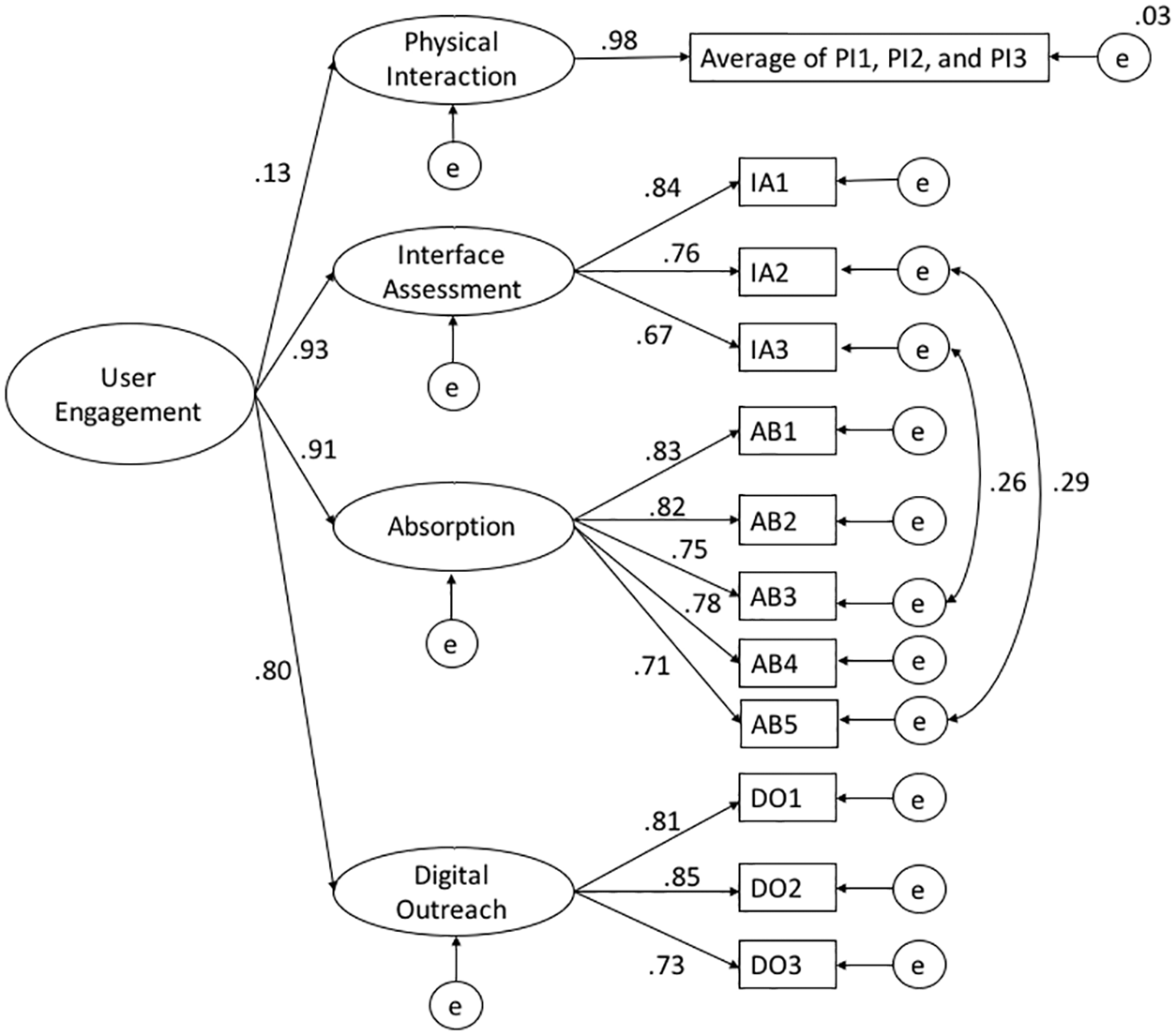
Four-factor model of user engagement.
Convergent validity of the user engagement scale
The indicators of four factors were standardized and averaged into a scale of user engagement (M = .72, SD = .46, Min = -1.12, Max = 1.54, skewness = -.83, kurtosis = .78). Both user attitudes and intention were significantly correlated with user engagement. User engagement was positively and strongly associated with user attitudes toward the wearable devices, Pearson’s r = .79, p < .001. The more users felt engaged with their wrist-worn wearables, the more positive attitudes they reported having toward the devices. User engagement was strongly correlated with usage intention as well, r = .71, p < .001. The more users felt engaged with their wrist-worn wearables, the more they reported continuing to use the devices in the future.
The process model of user engagement
First, we attempted to replicate the continuum of user engagement in Oh et al. (2018). Physical interaction and interface assessment entered as two exogenous variables that are correlated with each other; they jointly predicted absorption, which predicted digital outreach (Figure 3). We found an acceptable model fit: χ2 = 144.03 (df = 49, p < .001), RMSEA = .065 (90% CIs = [053, .078]), AGFI = .92, CFI = .97, and TLI = .96. Whereas the model fit was acceptable, the physical interaction factor turned out to be a non-significant predictor of absorption (β = .02, p = .50), even though it was significantly correlated with interface assessment (Pearson’s r = .12, p < .05).

The continuum of user engagement replicating Oh et al. (2018).
Next, we tested an alternative model where physical interaction leads to greater interface assessment, as we hypothesized. A bootstrapped analysis with 5000 samples was also conducted to examine all the indirect effects involved in the process model.
The process model showed a good model fit this time: χ2 = 114.58 (df = 49, p < .001), RMSEA = .054 (90% CIs = [.041, .067]), AGFI = .94, CFI = .98, and TLI = .97 (Figure 4). The model fit was obtained after one additional set of error terms was allowed to be correlated based on prior literature (Agag & El-Masry, 2016) and modification indices: the error terms of IA3 (ease of use) and digital outreach. Physical interaction was a positive predictor of interface assessment (β = .12, p < .05); interface assessment enhanced absorption (β = .86, p < .001); finally, absorption led to greater digital outreach (β = .75, p < .001).
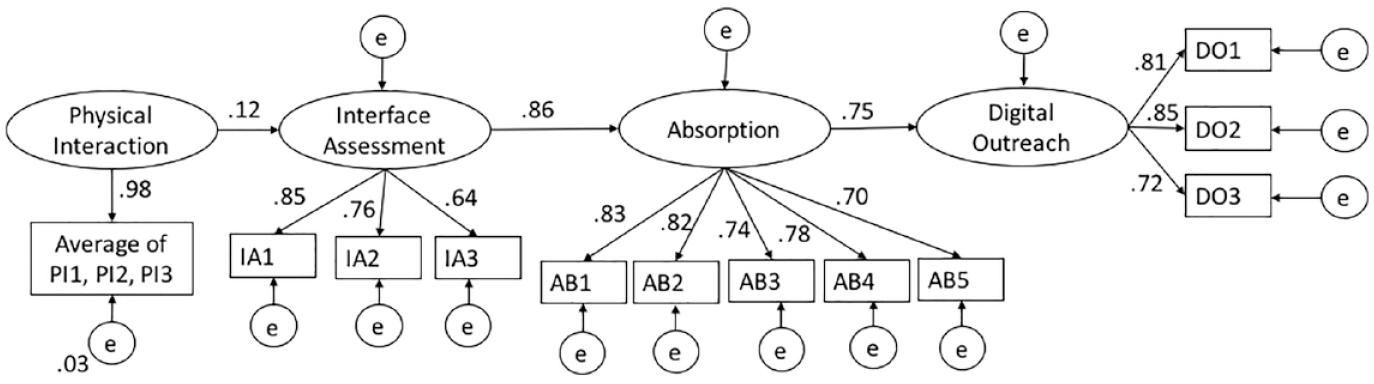
The process model of user engagement.
As a result, the indirect effect of physical interaction on absorption through interface assessment was significant (B = .11, SE = .04, 95% C.I. from .02 to .20), as well as its indirect effect on digital outreach through two serial mediators (B = .07, SE = .03, 95% C.I. from .02 to .13). In addition, the indirect effect of interface assessment on digital outreach through absorption was also significant, B = .72, SE = .08, 95% C.I. from .58 to .90. In short, the process model of user engagement fit the data well and fully supported the serial mediation relationships among the four factors as proposed in H2.
Discussion
Theoretical and practical implications
This study aimed to construct a model of user engagement in the context of wrist-worn wearables. Specifically, our study makes the following theoretical and practical contributions.
First, our study showed that the four factors (i.e., physical interaction, interface assessment, absorption, and digital outreach) reliably form a measurement model of user engagement. In addition, the latent construct of user engagement successfully explained the four factors, adapting the four-factor model of user engagement to a new context (Oh et al., 2018). Combining all four factors, the user engagement scale demonstrated strong convergent validity with two important indicators of positive user responses to wrist-worn wearables: positive attitudes toward the devices and greater intention to keep using the devices.
By applying the previous user engagement model to a new context, our study results contributes to explaining what constitutes engaging user experience with wrist-worn wearables: an engaged user (a) checks and taps the screen of her device more frequently and is likely to use the voice command feature more often when it is available (i.e., greater physical interaction); (b) is more likely to perceive the interface as easy to use, intuitive, and natural (i.e., greater interface assessment); (c) also experiences greater enjoyment while interacting with the device, feeling in control throughout the interaction (i.e., greater absorption); and (d) says positive things through social media about her device, actively recommending it to acquaintances and endorsing the brand more often in her social network (i.e., greater digital outreach).
Furthermore, we investigated how the four factors are correlated with each other. Deviating from the process model proposed by Oh et al. (2018), our results showed that the four factors can be aligned on a straight continuum, where physical interaction predicts interface assessment, interface assessment predicts absorption, and absorption predicts digital outreach. The result of our process model suggests the unique nature of user interaction with smart wearables, compared to other HCI settings such as human-website interaction. In Oh et al’s (2018) model, physical interaction and interface assessment together consisted of the beginning stage of user engagement with interactive interface, as intuitive or natural website design itself can encourage users to further engage with clicking, sliding, and zooming-in/out. Our study, however, demonstrated that after users actually interact with the devices and take advantage of their features, they are able to perceive its interface to be more natural, intuitive, and easy-to-use, leading to the subsequent stages of user engagement.
The difference between our process model and Oh et al’s (2018) user engagement continuum implies the significance of a motivational and behavioral aspect of using smart wearables. Our study results suggest that, in order to be engaging, a smartwatch or smart fitness tracker has to be frequently worn and used, thereby being integrated into the user’s daily life first (e.g., dictating when to exercise, channeling mobile phone communications). Natural and intuitive interfaces would also help increase the device’s usage, as there was a small but significant correlation found between physical interaction and interface assessment in our data. However, overcoming the initial barrier of frequent physical interactions requires more than perceiving the interface as easy and intuitive to use since it probably depends heavily on the motivational factors such as active lifestyle or needs for frequent health monitoring (Chuah, 2019; Hong et al., 2017). In short, our process model implies that as users interact with their devices more often, they can figure out the interface features and develop greater perceptions on their usability, which would stimulate feelings of control, curiosity, and enjoyment that promotes product endorsement.
The measurement and process models of user engagement also provide practical implications for designers and marketers of smartwatches and fitness trackers. One of the factors of engagement was cognitive absorption, referring to enjoyment and curiosity experience while using wrist-worn wearables. To interface designers, the predictive validity of cognitive absorption implies that design factors associated with cognitive absorption, such as curiosity-evoking messages from the system (e.g., “wanna know how much you achieved today?”) or gamification features that promote enjoyment (e.g., competing with friends for more exercise), would significantly boost user engagement.
Most importantly, the fact that interface assessment significantly mediated the effects of physical interaction on absorption and digital outreach suggests the important role of interface design, supporting the technology adoption model’s propositions on the impact of perceived ease of use. Perceived ease of use as well as the naturalness and intuitiveness reflected in the interface designs of smartwatches and fitness trackers are the essential prerequisites for greater enjoyment and curiosity that users would experience from the technology.
Nowadays, generating positive WOM is a crucial factor for successful marketing of products. The process model of user engagement identified in this study helps marketers to understand the process in which users develop intentions to share positive experience with others. Our model showed that the positive assessment of the wearables was indirectly associated with their intentions to socially advocate the device and its brand. This result implies that one of the best marketing strategies to promote WOM behavior among smartwatch and fitness tracker users can be the improvement of the interface’s usability and design; for example, more natural, intuitive voice interaction can lead to enjoyment of using the devices and users’ brand endorsement behaviors.
Future research and limitations
The process model of user engagement with wrist-worn wearables highlights how frequent physical interactions with the devices can transform user experience with communication and information technology. Apart from their needs for exercise and health monitoring or innovativeness that we mentioned earlier, future studies can delve into the individual and lifestyle factors that can fundamentally drive more frequent physical interactions with the devices. For instance, the compatibility of the device with the user’s body and lifestyle may be an additional factor to boost such physical interactions (Fang & Chang 2016).
Our study focused on the physical interaction with smart wearables only, which cannot take into account how other connected devices are used. For the fitness trackers that do not have their own operating systems, user interactions with the devices are inherently limited. Future research can devise a way to measure physical interaction with connected devices and integrate it in the model of user engagement. In addition, the way we measured physical interaction relied on respondents’ memory, which may not objectively capture the actual amount of physical interaction with devices. Future studies can use behavioral data or other observational methods for more reliable and accurate measurement of this concept and examine which type of physical interactions with the devices (e.g., tapping, motion detection vs. voice command for input) lead to a greater user engagement.
Whereas the three latent variables in the user engagement scale showed good convergent validity, interface assessment and absorption factors were highly correlated with each other, suggesting low discriminant validity. The correlations between error terms yielded the low discriminant validity between interface assessment and absorption. This result suggests that perceived naturalness and intuitiveness of a wearable device are very closely linked to the degree of absorbing experience. However, given that the causal path from ease of use to absorption has been established by the technology acceptance model, we would still argue that interface assessment and absorption are distinguishable factors. Future research should re-examine this hypothesis considering the unique context of wrist-worn wearables. Perhaps when the screen size is small, and when the device does not provide so many different modalities for users to operate it, ease of use may be significant enough to be equated with absorption in users’ mind.
Among the three items we measured digital outreach with, two questions specifically referred to social media platforms. Even though these measures are based on the significance of such platforms among early adopters to share their tech-savvy lives, they can compromise the validity of the concept since this operationalization cannot address those who are not active on social media in general. Future research ought to extend the operational definition of this concept and incorporate other tools and platforms of digital WOM.
Conclusion
The concept of user engagement has not been fully explicated in the context of smart wearables. Filling this gap, our study has adapted a prior model of user engagement in human-website interaction to the context of wrist-worn wearables and showed that physical interaction, interface assessment, cognitive absorption, and digital outreach reliably constituted the measurement model of user engagement with wrist-worn wearables. Findings of the current study imply that (a) integrating wrist-worn wearables into users’ routines and (b) designing an interface that promotes natural and intuitive interactions are significant to engaging users. As wearable technology evolves into forms that are more closely integrated into human bodies, this study’s results will contribute to our understanding of how and why users are engaged with smart wearables, and how we can further improve user experience that can ultimately enhance communication, self-care, and well-being assisted by the technology.
Footnotes
Funding
The author(s) disclosed receipt of the following financial support for the research, authorship, and/or publication of this article: The study has been supported by Hyunjin Kang’s (Second/Corresponding Author) Start-up Grant from Nanyang Technological University.
