




Abstract
This study discusses the ways in which power is negotiated, and dynamics are shaped through mobile media in Chinese families living in trans-local contexts. While traditional Chinese family values emphasize parental responsibility and moral guidance, the heavy reliance on connections made through digital media because of trans-locality introduces new tensions between involvement and the pursuit of independence by children. Drawing on panopticism and the typology of power, including power over, power with, and power to, this analysis establishes a relational framework for unpacking the processes of how authority, autonomy, and care are negotiated in digitally mediated parent–child interactions. Findings from digital diaries and interviews with 20 Chinese trans-local families suggest that the affordances provided by mobile media act as an infrastructure of power, enabling differentiated power schemes that restructure family dynamics. These schemes vary in intensity and consequence, from coercive compliance to negotiated cooperation and trust-based autonomy. Based on these schemes, the study further proposes a mobile media panoptic model to illustrate the dynamic processes of power negotiation in these mobile family interactions. Moving beyond behavioral accounts, this study provides a process-based analysis of how power is enacted and contested in mediated family life. It contributes to understandings of how digital technologies transform family dynamics in the context of mobility and cultural expectations.
Mobile media have created new forms of mediated communication between parents and their children, particularly when children live away from home (Tu, 2019). In turn, this phenomenon gives rise to trans-local families, a term that refers to members who are geographically separated but remain connected by mobile media (Greiner & Sakdapolrak, 2013). This is typically the case with students who leave their home in pursuit of education and employment. In China, education-driven mobility takes two main forms: one in which children move to the major cities in the country with better educational resources, and the other where children study across borders. Because of this mobility, several million trans-local families are created every year. For young adults, leaving their parents to live independently is an important milestone in their lives. At this stage, there is a desire among them to gain independence and take control of their lives, even though they have not yet taken on the long-term responsibilities of adulthood (Rudi et al., 2015; Lim, 2018). However, their parents are likely to feel out of place in the parenting process as they still try to maintain familiar parenting patterns (Koerner & Fitzpatrick, 2004), such as paying close attention to their child's behaviors and the people they interact with. Therefore, there is an underlying tension in parent–child interactions at this transition stage: emerging adults desire more privacy, freedom, and control over information sharing, while parents still maintain the perceived necessity to understand their children's lives and preserve a sense of connection and control.
While continuous connection by mobile media can be beneficial for maintaining family ties at a distance (Cabalquinto, 2022; Ling, 2008; Madianou, 2016; Nedelcu & Wyss, 2016), this benefit is not guaranteed in all cases. Parental demands for intimacy and presence often unintentionally conflict with children's aspirations for independence, thereby exacerbating relational tensions (Lim & Wang, 2024; Madianou, 2018). Among traditional Chinese family culture, parental involvement is given high importance, as parents are expected to fulfill family obligations and provide moral guidance to their children, with regulation and tutoring always emphasized in the parenting process (Yamamoto et al., 2022). Therefore, when facing physical separation, Chinese parents still actively seek ways to carry out their caring, guardianship responsibilities, which heavily rely on using mobile media (Chen, 2020). However, when this care is perceived as surveillance and intervention, children's resistance can still be triggered (Yu et al., 2017; Zhao, 2019). Therefore, the digital sphere constructed by these trans-local families reflects the structural contradiction between “care” and “control,” which inspired us to further consider how family power is constantly negotiated and reconfigured in such interactions while maintaining family ties.
This research is concerned with Chinese trans-local families resulting from education-driven mobility and the impact of power dynamics on their relationship maintenance. Given the prevalence of WeChat in the daily lives of Chinese families (Chen et al., 2018; Tencent, 2021), it serves as the main field for capturing parent–child interactions in this study. WeChat integrates multiple functions: beyond synchronous and asynchronous communication and social networking (Moments), it also incorporates payments, banking alerts, and fitness tracking with sharing (WeRun) (Figure 1), along with a wide range of other embedded features.
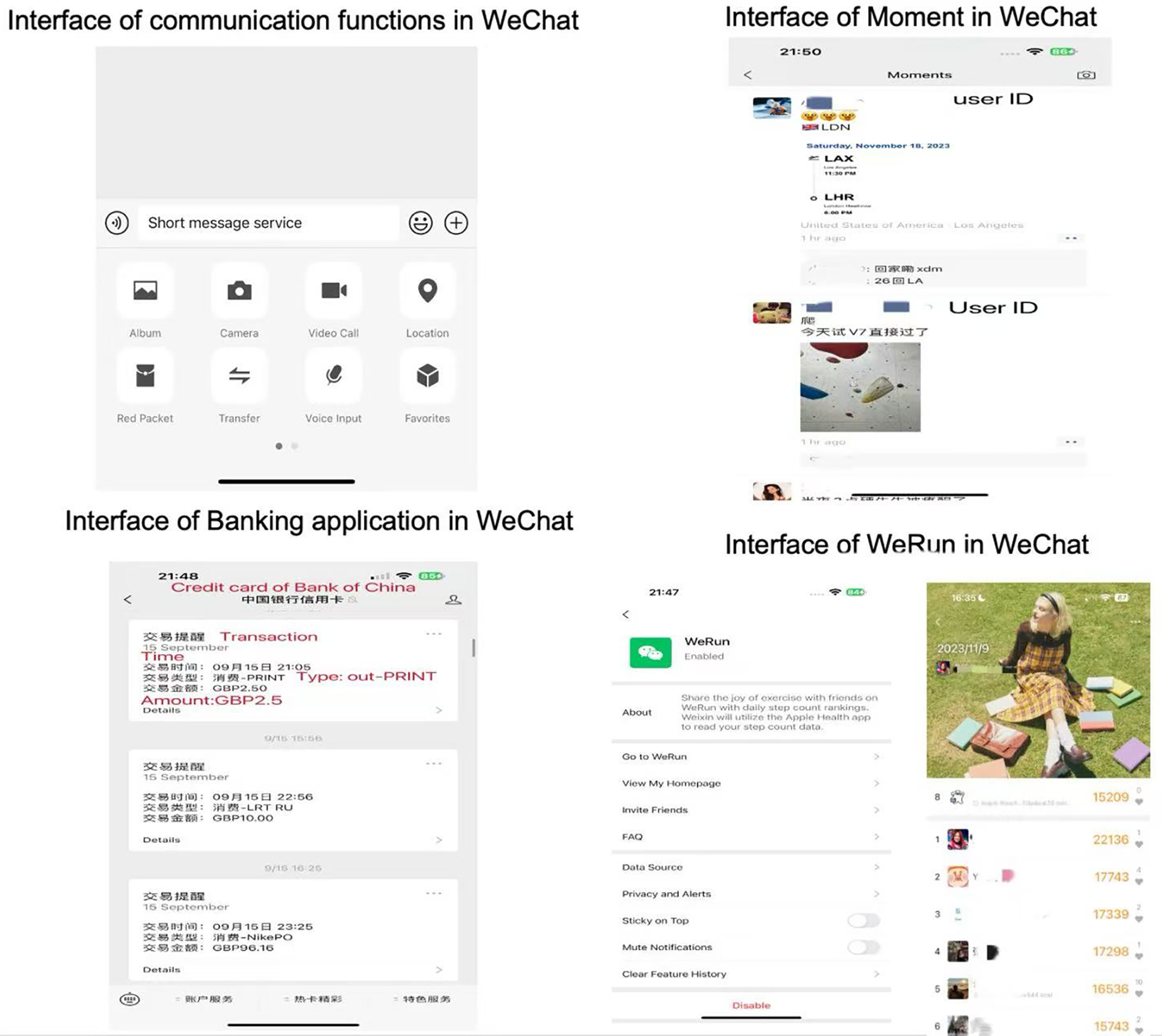
WeChat functionalities.
Two research questions are explored in this study:
How do Chinese trans-local families negotiate power through WeChat? How do these power dynamics in turn affect the functioning of these families?
Parents’ enduring sense of care and responsibility toward their children can drive them to continuously seek oversight of their children's lives. This dynamic resonates with Lyon's (2006) notion of the media panopticon, in which the affordances of digital technologies establish pervasive visibility structures that enable parental monitoring to be sustained across distance. Theoretically, this study therefore takes the panoptic structure (Foucault, 1977; Lyon, 2006) as the analytical context for understanding how visibility mechanisms constructed through mobile media shape parent–child interactions in the trans-local scenario. As the panoptic structure alone does not sufficiently capture the varied power negotiations that take place within this visibility structure, a power typology (Pansardi, 2011a, 2011b; Partzsch, 2015) is introduced to differentiate the multiple practices of power that operate beyond parental surveillance. Drawing on digital diaries and interviews with 20 Chinese trans-local families, we show that WeChat-enabled visibility is moralized as care within Chinese family cultural scripts, further legitimizing parental surveillance and making it harder for children to contest. We reconceptualize surveillance as a dynamic, relational process that shifts across three power schemes and formalize these mechanisms in a fine-grained media panopticon model that links visibility practices to family-functioning outcomes.
Related Work
Power Process in Family Settings
Contemporary theoretical perspectives conceptualize power in the family as a dynamic relational process that is continually shaped and negotiated through daily interactions. This challenges the traditional paradigm that describes parental authority as fixed, hierarchical, and unidirectional (Galvin et al., 2016). Power and autonomy are not statically distributed but are created via the continuous negotiations of relational practices, and are shaped by emotional ties, mutual expectations, and the context in which family interactions take place (Socha & Yingling, 2010). In parent-child relationships, these negotiations are particularly noticeable, as developmental transitions and evolving family roles create ongoing tensions between dependency, regulation, and the pursuit of autonomy (Russell et al., 2002).
A useful typology for unpacking power negotiation, power over, power with, and power to, has been widely discussed in the literature (Pansardi, 2011a, 2011b; Partzsch, 2015). While this is not tailored to family relationships, its relational and processual emphases provide a meaningful lens for studying the power process within the family sphere. Power over refers to a hierarchical form of enforcement control in which one actor introduces decisions and forces others to comply with them in a unilateral manner, typically through the imposition of sanctions or the withdrawal of resources. This type of power is usually associated with conflict dynamics and leads to destructive outcomes such as resistance or opposition (Avelino, 2021; Pratto et al., 2011). Power with describes a cooperative mode of exercising power, grounded in collective negotiation and shared decision-making, where relational consensus is prioritized while asymmetrical power relations often remain implicit. While it is always correlated with constructive outcomes, it can overshadow underlying tensions when apparent alignment hides internal resistances (Pratto et al., 2011). Power to, by contrast, emphasizes empowerment, enabling actors to exercise agency and self-determination without direct interference, often through the provision of resources and supportive conditions. This is closely aligned with constructive outcomes as it supports shared growth and autonomy (Pratto et al., 2011).
The heritage of Chinese Family Culture
Family systems are rooted in culture, values, and history (Galvin et al., 2016). In China, Confucianism has a significant impact on shaping family culture (Littlejohn, 2011), and filial piety is its core concept which emphasizes the expectation of power attribution in the family at the cultural level. Specifically, there is a structured power hierarchy between parents and children, with parents taking a dominant position. In daily family life, filial piety is manifested in children's respect and obedience to parental demands, without any resistance to parental authority (Leung et al., 2010). At the same time, traditional Chinese family values also define a clear role play between parents and children, the mentor and the mentee, which makes it natural for parents to take on the responsibility and obligation to discipline their children, and to demand that their children conform to social norms and behave in a self-disciplined manner (Lieber et al., 2006). Therefore, traditional Chinese family norms involve a top-down power process from parents to children, which leads to Chinese parenting styles often being described as “authoritative” and “controlling” (Li & Xie, 2017). This parenting style has given rise to the stereotype that Chinese parents will always try to influence and change their children's behaviors through control. However, parental control in this model is not normally perceived as coercion, but rather as a moral obligation linked to notions of care, protection, and collective wellbeing (Yan, 2021). “Governance”, as a core concept of traditional Chinese parenting, encapsulates this tension and integration by incorporating both the instrumental practice of regulation and the emotional investment rooted in responsibility and love (Li & Xie, 2017). To our current interest, Tu's research (2016) further indicates that this parenting logic is more prominently showcased in Chinese families when they face the challenges of physical distance.
Media Panopticon in Parenting
The extensive embedding of mobile media in family life can integrate parental affective engagement with surveillance practices, thereby routinizing the logic of “surveillance as caring” (Leaver, 2017). Previous studies have documented how parents take advantage of mobile technologies to extend their surveillance beyond geographic distances through practices such as location tracking, social media monitoring, and ongoing communication (Greyson et al., 2021; Lachance, 2019; Madianou, 2018). When children perceive that interactions involve surveillance and interference, they resist through a variety of strategies, such as regulating their privacy settings, changing communication behaviors, and even disconnecting (boyd, 2014; Pham and Lim, 2018; Wisniewski et al., 2015; Livingstone et al., 2019). These tensions also appear even in Chinese families where norms emphasize strong parental authority and children's obedience. Children were found to interact with their parents by strategically performing in interactions to diminish the effects of surveillance (Yu et al., 2017). In addition, these young people also employ strategic disconnection to reduce conflict while maintaining emotional ties with their parents, in ways that both highlight their digital agency and their cultural obligations and emotional responsibilities (Zhao, 2019). Existing studies have largely described how parents monitor and how children respond at the level of observable media practices. Yet these practices stem from ongoing negotiations over authority and autonomy, so a lens of family power yields a deeper insight into digitally mediated parent-child relationship.
The panopticon is a central concept for discussing power and visibility. First conceptualized by Bentham (1970) as an architectural model of centralized surveillance, it was subsequently extended by Foucault (1977) into a broader metaphor for disciplinary power. According to this metaphor, individuals internalize the possibility of being observed and discipline their behaviors accordingly. While Foucault's perspective has been applied more to institutional settings, the conceptual scope of panopticism has since been extended to include surveillance in a wider social context, including in the family sphere (Boesen et al., 2010). Lyon (2006) further extended this theory in the context of the developing media landscape, introducing the concept of the “media panopticon” and proposing a “panopticon spectrum” that explains digital surveillance practices as a continuum from overtly coercive control to more de-centralized, participatory, and voluntary forms. At the sharpest end of the spectrum, surveillance enforces behavioral norms through direct intervention and disciplinary mechanisms; at the softest end, it facilitates self-regulation through normative expectations and subtle relational influences. While this theory has made important contributions to the assessment of institutions and the public sphere, its application to private and intimate settings has been somewhat limited. However, the omnipresence of mobile media in trans-local families suggests a need to reconsider how digital surveillance operates, not only as a form of institutional control, but also as a subtle relational mechanism in everyday family life. This extension offers possibilities for understanding how power is negotiated through practices that swing between caring and controlling, voluntary participation and subtle coercion, dynamics that are at the core of parent–child relationships mediated by digital media. In this study, the panoptic structure serves as an analytical context for mapping parent–child interactions mediated by mobile media. While it highlights visibility and a top-down power process, it cannot capture the varied ways power operates during surveillance or its effects on family functioning. The power typology complements this by distinguishing different forms of power practice. This theoretical combination offers a more comprehensive perspective to unpack the power negotiation within these families’ interactions.
Study Design
Participants
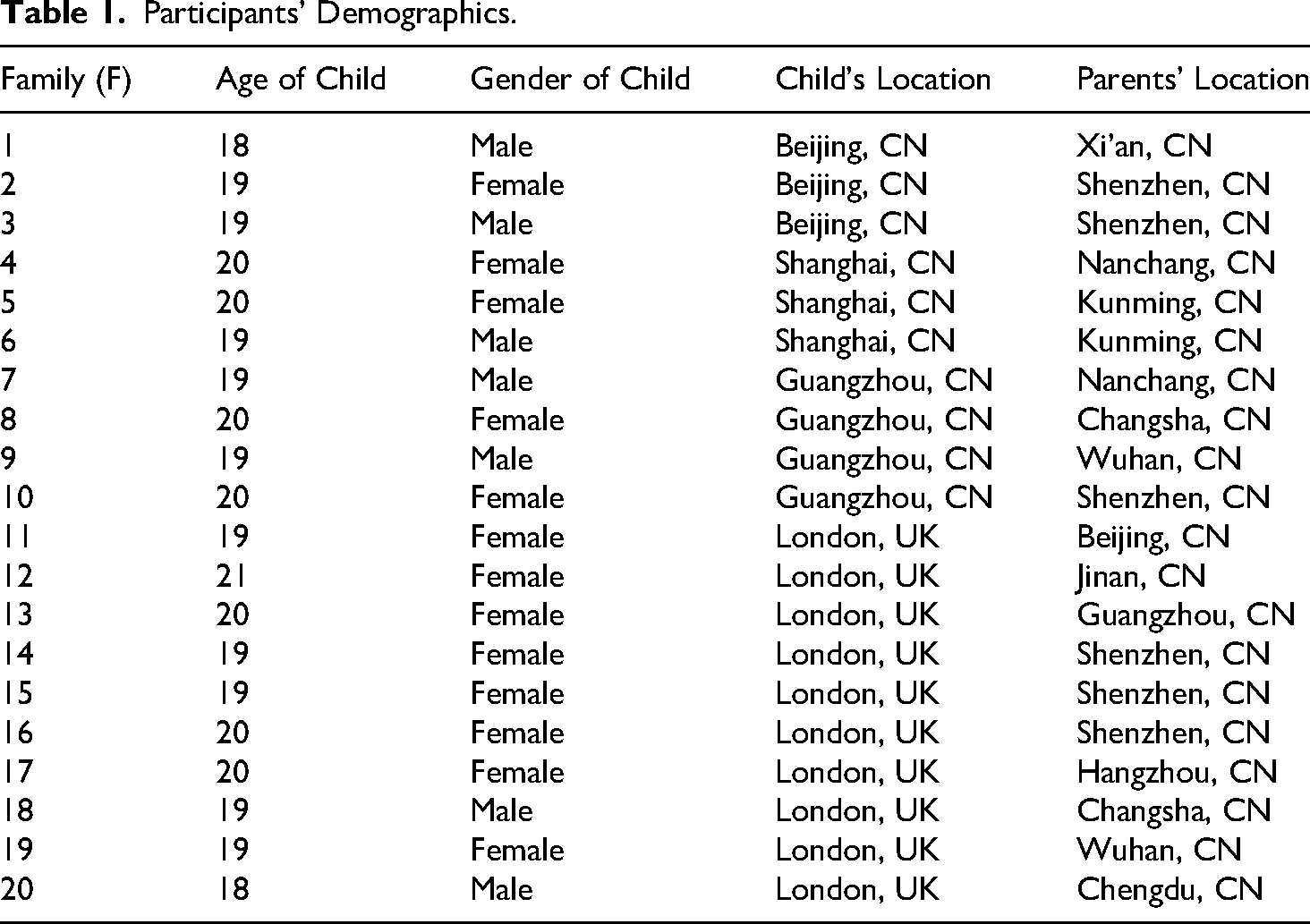
Fieldwork was conducted with 20 Chinese trans-local families, recruited through purposive sampling, including both parents and children, to present a comprehensive understanding of parent–child power dynamics. The sample of children focused on first-year university students, as this stage represents their initial experience of independent living when parental supervision and negotiation of autonomy are most intensive. Children attended both Chinese and UK universities to capture both domestic and transnational educational mobility contexts. Child recruitment was initiated in Beijing, Shanghai, Guangzhou, and London, where there is a large Chinese student population covering a wide range of geographical origins and social backgrounds. Both father and mother were required to participate, and after consent, children invited their parents to join. All participants provided informed consent prior to the study, and ethical clearance was granted by the university's research ethics committee, with all data anonymized and securely stored. Table 1 presents the demographic information of the participating families. The average age of the children was 19; 35% were male and 65% female, and their university residence was equally split between China and the UK.
Participants’ Demographics.
Research Procedures
Considering the difficulty of capturing everyday mobile media behaviors and the ethical risks associated with traditional ethnographic methods (O’Reilly, 2012; Oswald, Sherratt and Smith, 2014), this study employed digital diaries with post-diary interviews. Digital diaries refer to records made by participants using the affordances provided by mobile media (including text, images, audio, and video) on a real-time basis (Pink et al., 2016). The method also captures additional information beyond verbal communication, such as tone of voice, facial expressions, and interaction context, thereby providing alternative perceptions about the dynamics of the interaction. Meanwhile, participants maintain a high degree of autonomous control over what is shared (McCombie et al., 2024). Post-diary interviews then followed using this material to guide participants to elaborate on motivations, feelings, and power dynamics.
In What is the type of the interaction? What is the purpose? How is the interaction going? How do you feel during and after the interaction?
Participants were also encouraged to share screenshots, text, or short recording of their interactions to enhance context. After submission, the first author promptly reviewed them for quality and followed up to clarify ambiguities or obtain additional context if necessary. Although we did not explicitly ask participants to specify the device used, mobile phones use was consistently mentioned in both parent and children participants’ narratives, and all screenshots provided as diary entries showed mobile phone interface, which indicates that their WeChat interactions were primarily conducted via mobile phones.
In Phase 2, semi-structured interviews were carried out with parents and children separately over one week. To enable the participants to freely express themselves during the interviews, which was a concern for parent participants, sessions were conducted in Mandarin. Father and mother were interviewed together to capture their shared perspectives. Children were interviewed separately to minimize the impact of parental presence on their responses. The interviews started with a casual conversation to establish rapport. Next, each participant discussed their typical WeChat interactions. After this, they were invited to elaborate further on their diary entries, explaining the thoughts, emotions, and motivations behind their prior interactions. The interview questions for this part were designed based on the researchers’ preliminary analysis of their diaries, focusing on ambiguous, underdeveloped, or particularly revealing content. Finally, the interviews ended with questions about broader patterns of family interaction to avoid missing aspects not recorded in the weeklong diaries.
After the data collection, we conducted inductive thematic analysis (Braun & Clarke, 2023) to unpack the power negotiation process during mobile family interactions. Two co-authors independently reviewed the codes with collaborative discussions and revisions strengthening credibility (Nowell et al., 2017). We derived five main themes and 20 subthemes, organized into two overarching categories: (1) care and privacy between parents and children; and (2) power schemes operating during surveillance. Figure 2 summarizes the themes, with the panopticon perspective and power typology informing our interpretation.
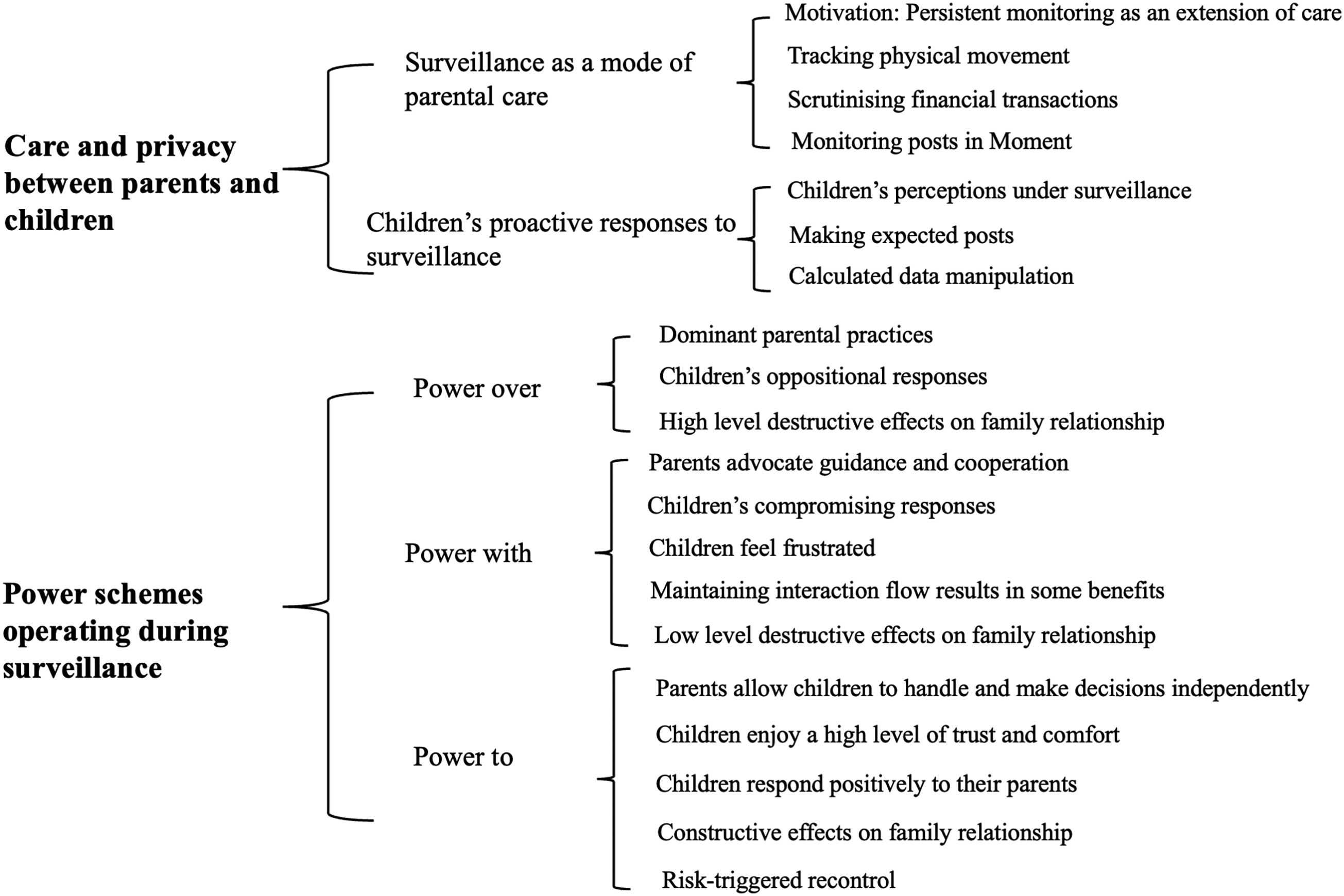
Thematic schema.
Findings
Care and Privacy Between Parents and Children
Surveillance as a Mode of Parental Care
Most parents experienced parenting challenges due to the physical separation with their children, which they addressed by consistently accessing information about their children's lives through WeChat. As described by F2's mother: The kid is the priority of our family. … We must know she is doing okey daily … through WeChat to know. (Interview)
A consistent pattern among parent interviewees was the need to know how their children were doing. While taken for granted as care and attention, in practice, it often became systematic information gathering and checking that their children perceived as surveillance. The reported “daily” frequency indicated that surveillance via WeChat was already embedded in everyday family interactions. Across all parents there was a concern that, without their guidance, their children might grow in the wrong direction or fail to develop well. The father from F9, for instance, framed his daily interactions with his daughter not merely as check-ins but as an effort to “make sure her values are on the right track.” His comment suggested that even when children live independently, parents still feel responsible for overseeing their personal and moral development. This parenting logic was more evident among families whose children studied abroad (F13, F14, F16, F17) due to cultural unfamiliarity and greater distance. As F16's father described: The distance between us and living in a bigger world means more risks, so we need to always keep an eye on our child. (Interview)
This description further illustrates that geographical distance is directly associated with perceptions of increased risk and uncertainty concerning children's wellbeing. Therefore, this constant “keeping an eye on” is considered a necessary and reasonable form of parenting when children are far away from home, rather than an exception. Four typical parental practices for achieving constant attention through WeChat emerged in the data: tracking physical movement, scrutinizing financial transactions, monitoring posts, and direct inquiries. The first involves using WeChat's fitness-tracking function, WeRun, to monitor the child's activity. As F5's mother described, I always check WeRun, every day… If the step count is low for a few days, I might think my child is sick and ask about it. (Diary)
This mother's testimony highlighted WeRun's ability to transform daily actions otherwise hard to capture into visual, comparable numbers and rankings. This allowed her to continually monitor her child's body rhythms without being physically present. The number of steps served as a measurable indicator of her child's physical condition and routine, allowing F5's mother to provide timely support. In addition, she expressed her attention on the publicly visible interface by liking her child's step count on the leaderboard (Figure 3). Another father (F13) noted that he could determine whether his daughter was traveling or engaging in activities from the sudden increase in her step count. This suggests that parents not only use these data for health concerns, but also to infer their children's movements and social activities, and to follow up when necessary. This practice was common among families with children in both China and the UK.
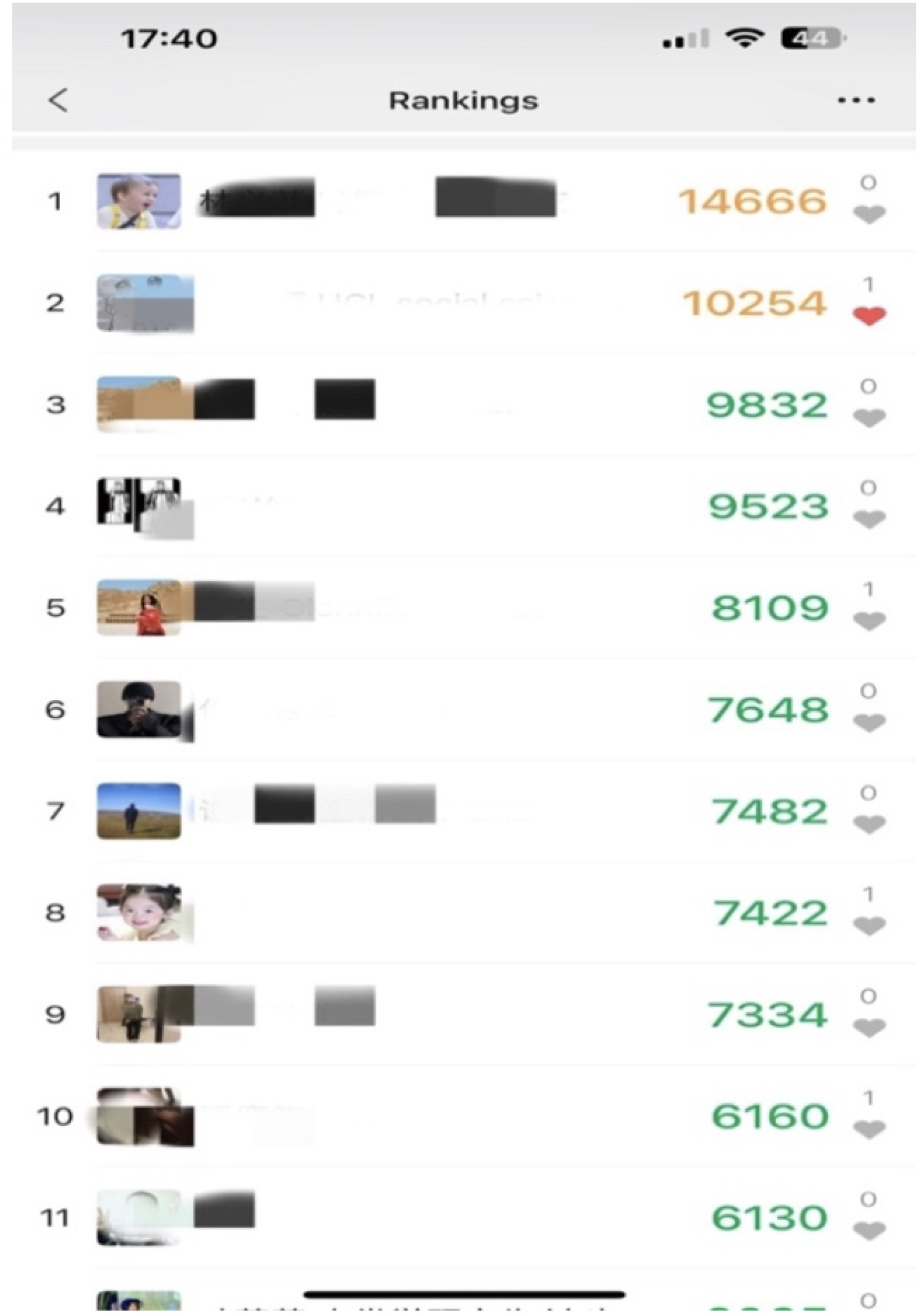
Screenshot of WeRun provided by F5's mother.
Financial scrutiny was another surveillance practice that emerged in several families. Although children were living independently, school fees and living expenses were still mainly covered by parents. Some children studying abroad could not apply for credit cards themselves, so their daily expenses in foreign currencies were paid with cards linked to their parents’ accounts. Therefore, parents connected their bank accounts to WeChat to monitor their children's spending records (F11, F12, F14, F15, F18, F19). In presenting this interface, F18's father explained: I am not familiar with the UK where my child now lives … this way I can probably get an idea of how much money I need to prepare for him each year. … If we see unusual activity, we will also know … Not like in China, where we know everything. (Interview)
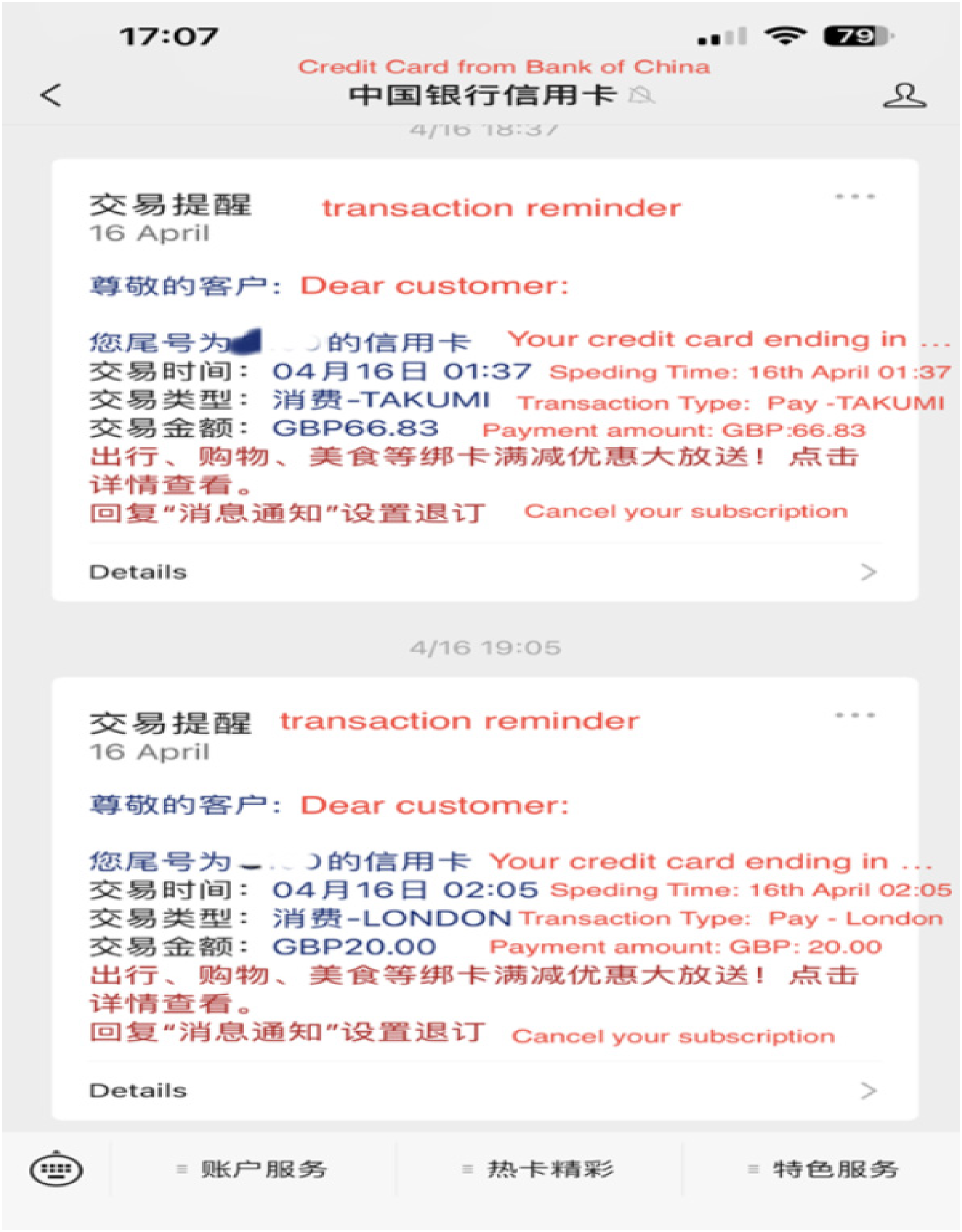
Screenshot of .ank notification on WeChat provided by F18's father.
As seen in the screenshot in Fig. 4, the chronological digital record of the child's financial activity offered visibility over the child and enabled parental surveillance. F18's father explained that this scrutiny of his child's spending records was intended to provide better financial support and was perceived as a form of care. However, his concern and sensitivity to unusual transactions reflected insecurity and a desire for control in a transnational context. The other five parents expressed similar sentiments. By contrast, most parents whose children studied in China noted that financial scrutiny was unnecessary because their children remained in a familiar environment and their expenses were broadly predictable.
The third parental surveillance practice is through the “Moments” feature on WeChat, to understand their children's daily lives. Parents in all families mentioned that they regularly check the photos and text included in their children's posts, which they considered an important channel for knowing what their children have been up to. As F5's mother said: When my child is far away from us, it is a good way to find out about her life, especially through her pictures. For example, where she went to play and who she went with. … is meaningful for me to know my child. (Interview)
In practice, F5's mother paid particular attention to the locations and people in her child’s photos to understand the environments her daughter attended and who she was hanging out with. Several other parents reported speculations about their children's study workload, pressure levels, and mental state based on their posting frequency, tone of text, and who appeared in their photos (F4, F7, F16). However, since such surveillance practices were entirely built upon children's voluntary self-disclosures through posting, parental awareness of their children's daily lives largely depended on whether the children consistently made themselves visible.
Lastly, the diary entries showed that parents often combined these three surveillance practices with direct inquiries through phone calls and messages. Parents typically presented these practices as “caring a bit more” or “feeling more reassured.” However, this combination not only reinforces children's visibility but also covertly reminds them of their parents’ constant presence to enhance self-regulation. Overall, these practices were driven by parental concern, yet they effectively functioned as surveillance. Because they were consistently articulated in the language of care, parents rarely interpreted them as surveillance.
Children's Proactive Responses to Surveillance
Children reported to perceive their parents’ attention and sensed they might be monitoring them, especially when their parents responded to their posts within Moment quickly and frequently (F2, F4, F6, F14, F17, F16, F20). According to F4's child: My mum reacted [to my posts] too quickly … She is always the first person to “like” my post. I know, she is watching me, she always knows what I’m doing. (Diary)
Perceiving these surveillance practices, one of the children (F16) reported adjusting their self-presentation in a subtle and careful way to avoid provoking further parental control. Relying on privacy settings to restrict parental visibility was perceived to be ineffective, as it could be easily detected by parents, as explained by six child participants (F2, F6, F10, F16, F18, F20). Therefore, children exercised limited use of privacy settings for some posts, whilst proactively disclosing content that aligned with their parents’ expectations. F16's child offered an example of this practice: I made a post about my grade that just came out, quite good. … my parents commented on it, and they felt happy, really! … I made it just for them because I knew they like to see this. … I never let them see posts about clubbing with friends. These are not for them. … They won’t control me too much when they know I am good. (Diary)
This curation strategy tended to reduce the risk of being further controlled, also confirmed in the testimony of F16's father. It also demonstrates that the child has learned to self-regulate within the logic of surveillance. Against the constant surveillance embedded in the family interactions, the child belonging to F16 is no longer just passively watched but is actively maintaining this order of visibility.
A similar move appeared in the context of activity tracking, whereby children made data disclosure adjustments. Upon realizing that parental surveillance was implemented through the fitness-tracking function, children did not directly resist but subtly regulated the digital data available to their parents. As F14's child shared: I turned it [WeRun] off for a while, then back on. So, my dad could only see a normal number. (Diary)
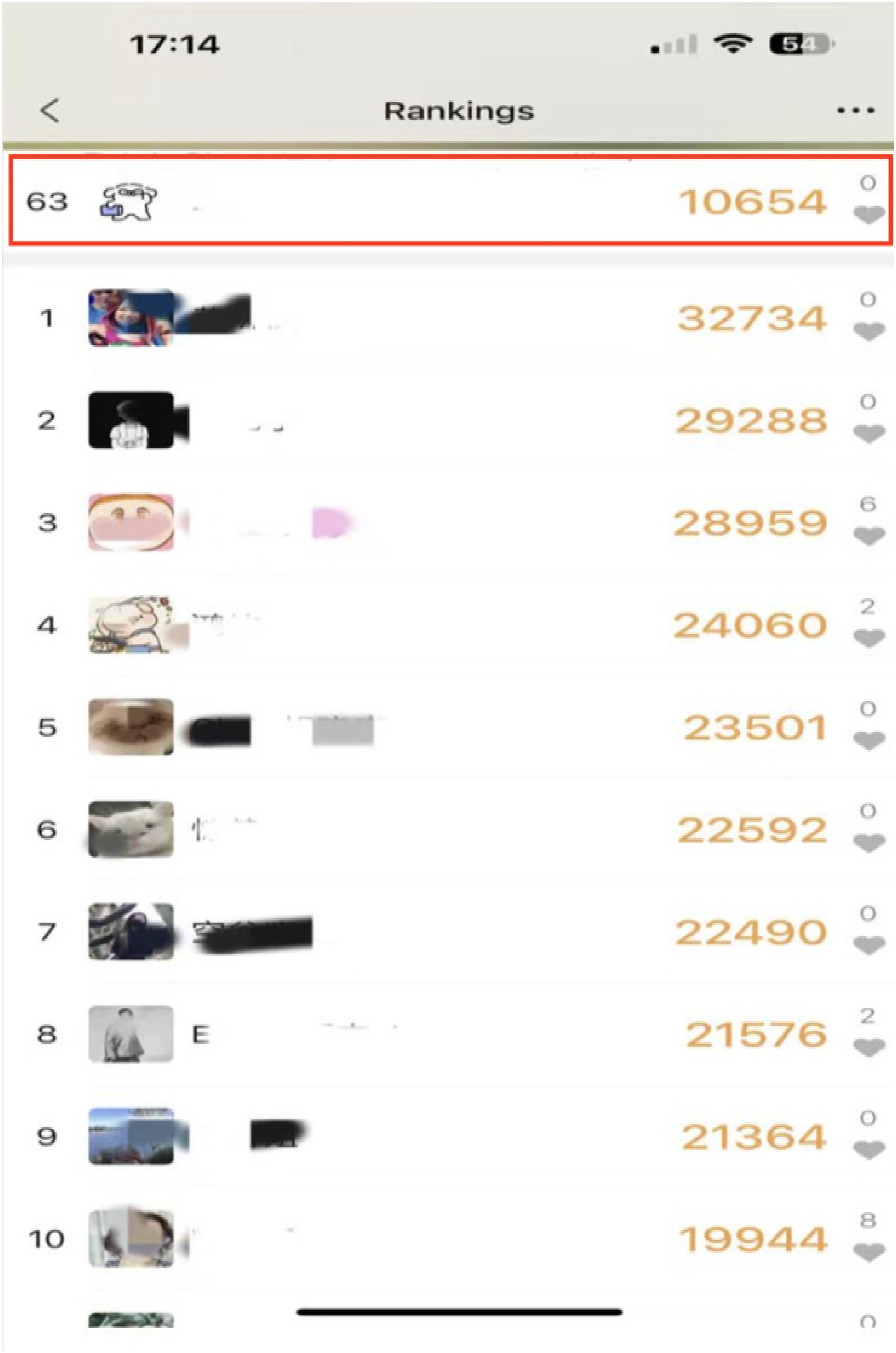
Screenshot of WeRun provided by F14's child.
Elaborating on the practices chronicled in the diary, the same child participant explained that the range between 10,000 to 12,000 steps reflected her average daily activity (evidenced in the screenshot in Fig. 5) and thus aimed to convey this normality to her father. Manipulating the data flow not only signified the child's internalization of surveillance, but also reflected a new type of agency that the child developed in the surveillance setting. It proved to be effective, as her father reported a high level of trust in the child's data presented by WeRun. In other words, children's perceived autonomy was based on the premise of being continuously watched.
Power Schemes Operating During Surveillance
In this section, we bring together surveillance strategies and child reactions through the prism of power. Our findings show support for all three power schemes (power over, power to, and power with), which equally operate in families with children in the UK and in China.
Power Over
Our findings show that when parental surveillance detected significant deviations between children's behavior and family expectations, parents often implemented authoritative interventions to influence their children's conduct. This reflects a “power-over” scheme (Pansardi, 2011a; Partzsch, 2015), in which parents assert authority through one-way control that prioritizes obedience over negotiation. The most frequent trigger was children's posts in Moment that conflicted with parental norms (F4, F7, F9, F11, F17, F18, F19). F4's father provided an example: I found this picture of her. It is not appropriate to post in a public space because she was wearing too little. … I sent her a message and asked her to remove it. … and she did delete the post. … Afterwards, I also called her to emphasise that she shouldn’t do this again. … but her attitude wasn’t good. (Diary)
Despite the child's initial resistance, she deleted the post following the parental threat of reprimand, illustrating the effectiveness of arbitrary interventions in securing immediate compliance. Nonetheless, this behavioral adjustment did not reflect a genuine internalization of parental expectations. In the words of F4's child: I was angry, of course, and didn’t want to talk to him. … This is my space. I can post whatever I want. … I deleted the post because I didn’t want to make him mad. I need to be more careful to post things after. … I never feel this [her father's actions] shows care for me. (Diary)
(Figure 6).
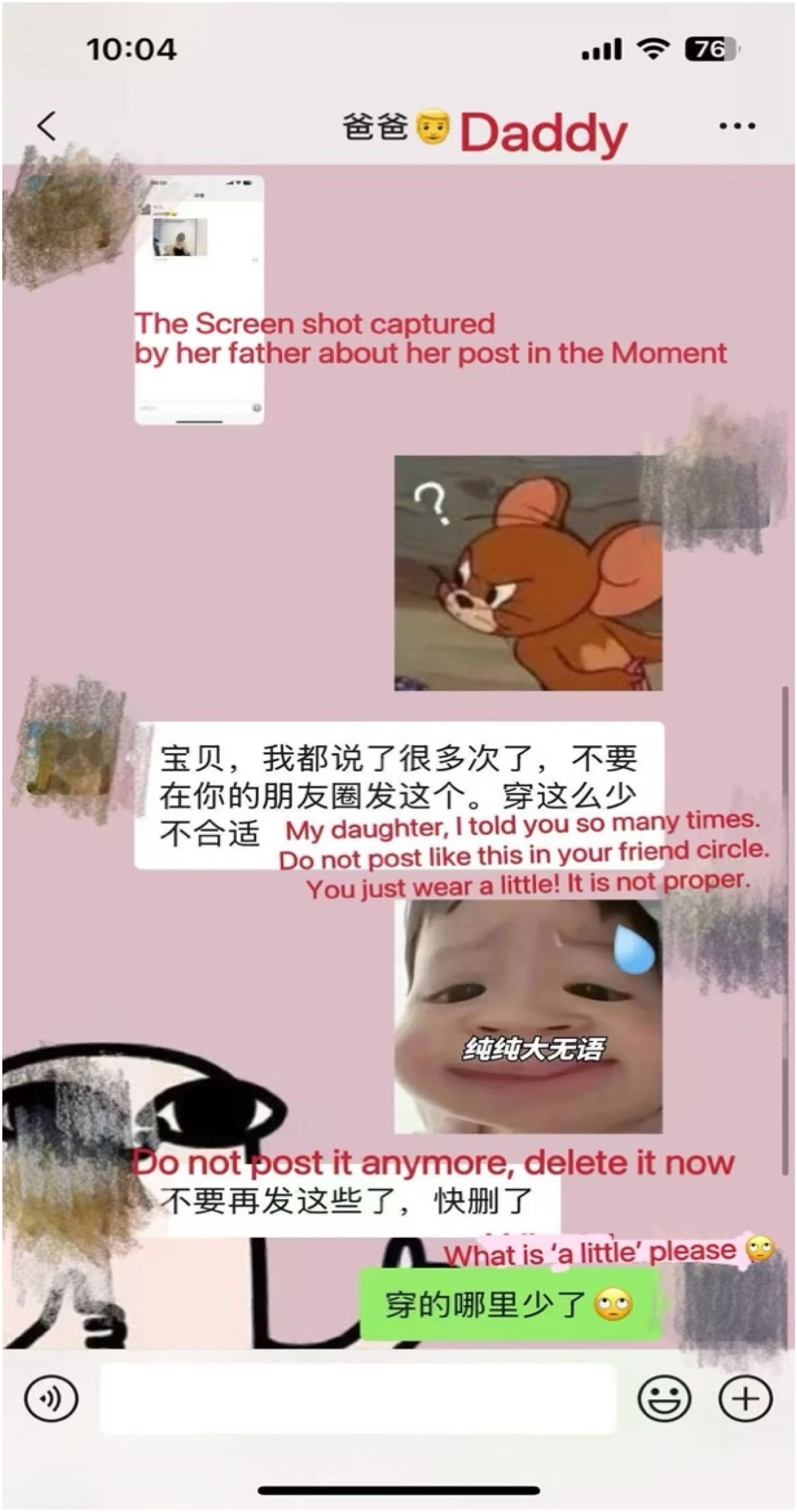
Screenshot of interaction after her father captured her post provided by F4's child.
When faced with her father's authoritative intervention, although F4's child expressed anger and dissatisfaction, she still maintained interaction with her father through two memes and short replies. The two memes subtly conveyed her discontent: the first communicates confusion at her father sending a screenshot of her post, and the second signals displeasure while complying with her father's request to delete her post. This coexistence of emotional resistance and behavioral cooperation is likely a compromise made under pressure to avoid further blame. Together with her emphasis on “this is my space” and her view that her father's request was not caring, this interaction could steer their parent–child communication into a low-trust, low-disclosure path, increasing the risk of later alienation. Such dynamics are widely considered to have a highly destructive impact on family relationships (Avelino, 2021; Pratto et al., 2011).
A similar power dynamic emerged when parents used financial scrutiny to identify unusual transactions that diverged from their expectations (F16, F17, F18). This also triggered expressions of dissatisfaction and subtle resistance from the children, which frequently brought the interaction to an unhappy close. Child participants consistently emphasised that authoritative, parent-dominated power structures disrupted the continuity of interaction and substantially heightened the risk of attachment alienation.
Power With
All the parents reported having frequent interactions involving their efforts to influence their children's decisions and behaviors through advice and cooperation. Such interaction was always triggered when parents noticed their children's proactive disclosure in WeChat about their schooling, living situation, and personal choices, which many parents prioritize as key concerns. As F12's father described: About her study and life, this is the most important … I definitely need to give my daughter advice when I call her, but not orders. If I control too much, she will be annoyed and stop talking to me. So, we discuss things and find an outcome that is acceptable to both of us. (Interview)
The phrases “definitely need to” and “advice” indicate that F12's father wished to maintain a conventional top-down parenting model of “guiding” his child from a distance, reflecting the views of six other parents (F1, F3, F6, F11, F14, F20). Meanwhile, he recognized that direct intervention could provoke resistance, so he shifted from issuing orders to framing discussion to keep this guidance going. During this process, he softened overt control with open talk and negotiated persuasion without giving up decision-making power, which aligns with the notion of “power with” (Pansardi, 2011b). Since her level of independence continued to match parental expectations, his daughter became increasingly aware of the implicit limits on her autonomy, as she explained: My dad always frames things as advice rather than a rule. But I know he's still trying to steer me in his direction. I can push back a little, but not too much. … it is ok, boring is better than making him mad. (Interview)
This testimony shows that instead of stating the request as an explicit “rule,” the father presented it as advice, yet the child still clearly recognized his intention to lead. Her remark that she could “push back a little, but not too much” indicates some room for expression and negotiation, but only within her father's tolerance. Importantly, her comment “boring is better than making him mad” shows a clear tendency to avoid conflict once she realized her father was trying to persuade her, even if that meant accepting a dull arrangement shaped by his preferences. Self-reports from several other families (F1, F3, F5, F14, F17, F18, F20) reveal a similar pattern: interactions presented as “advice” and “negotiation” helped maintain a surface appearance of harmony. Most parents felt that their engagement was open and worked well with their children. For the children, however, this did not remove the feeling of limited autonomy and likely reinforced frustration at their difficulty in securing more independence. Therefore, interactions based on the “power with” approach could still feel to children as undermining trust and closeness in their family relationships, even if they were less intense than “power over.”
Power To
In a smaller subset of participating families, a distinctly different type of interaction was observed (F3, F5, F13, F15). In these cases, parents still monitor their children's activities on WeChat but deliberately avoid using authority to enforce obedience, instead allowing them to make their own decisions. This process aligns with the concept of “power to” (Pansardi, 2011a; Partzsch, 2015), which emphasizes engagement that empowers children by affirming their capacity for self-governance while keeping parental presence as latent support rather than active control. An example comes from the father in F3: My son was feeling sick and went to the hospital this afternoon. I found this information by his post. … I was worried of course, but at that moment, I just directly sent him money by WeChat, and a message that said take care of your health! … I didn’t ask him anything until he got back to the university and called me. (Diary)
For his child, this action of trust carried significant relational weight. As he described: My dad didn’t blame me or tell me what to do. You know, he just supported me. That made me feel comfortable to tell him about my life … I told him all about this matter afterwards, yes, we had a long conversation. (Interview)
After learning about his child's situation, the father did not intervene directly but allowed the child to make decisions independently by offering financial support and care messages. This empowering approach resulted in the child experiencing a strong sense of trust, which facilitated his subsequent voluntary disclosure. This strategy reflects a softening of the family power dynamic, where the father maintains influence by “stepping back.” The apparent letting go is, in fact, a form of implicit governance, whereby children remain emotionally engaged and self-disciplined in their choices. This interaction allowed the father to receive more genuine feedback without resistance, while maintaining continuity in their family interaction. F15's father further explained the rationale for these “power to” practices: I can keep making him do what I say, but he will lose his ability to live independently … actually I didn’t realise that when he was at home. … For now, I think sometimes stepping back will allow my kid's independence to grow. (Interview)
Accordingly, choosing to step back should not be considered as an abandonment of parental responsibility but rather as a strategic exercise of authority aimed at cultivating independent agency. Although this approach appeared to foster higher levels of trust and mutual respect, it was still the least commonly practiced among the participating families. Even within the four families practicing “power to,” parents admitted that their willingness to step back was often contingent on their perceived level of risk. When concerns about their children's wellbeing escalated, some reverted to more directive forms of engagement. Nevertheless, outcomes related to “power to” were consistently constructive. All children from these families reported feeling trusted and respected in such interactions, which, in turn, encouraged voluntary disclosure and sustained emotional closeness. Moreover, this may lead to a greater willingness to seek help from their parents when they encounter difficulties, as noted by F15's child. These findings demonsstrate “power to” has the potential to facilitate an open and trusting interactive environment between parent and child in the trans-local setting.
Discussion and Concluding Remarks
This study reveals how surveillance is naturalized as a core mechanism of “caring” in the daily WeChat interactions of Chinese trans-local families, and it offers nuanced insights into the power dynamics between parents and children in this process. The persistent connectivity and multifunctional affordances of mobile media enable parents to establish substantial visibility over their distant children's lives. Interactionally, this visibility is continuously negotiated between parents and children, as each party seeks to manage their presence and engagement in ways that reflect their own relational needs. These dynamics combine to make mobile media a media panopticon (Lyon, 2006) that is actively navigated between both sides. This work not only responds to existing literature on mediated parenting and digital surveillance but also extends this work by foregrounding power negotiations in everyday family mobile interactions.
First, this study introduces the metaphor of “panopticon” from institutional spaces into the daily interactions of intimate family relationships. Through this lens, we portray the mobile interactions of trans-local families as a top-down parent-child order sustained by the constant visibility afforded by technology. Our analysis shows that parents typically rationalize the constant visibility over their distant children as part of familial responsibility, embedding surveillance practices within discourses of care. This process echoes the parenting logic of “surveillance as a necessary form of care” (Leaver, 2017). In practice, when wrapped in care and love, such surveillance has been proven to diminish the impact of control at an experiential level, which makes children less likely to recognize and challenge the power imbalances involved. Within the Chinese context, such surveillance is not perceived as externally imposed institutional control but rather as a moral obligation linked to the ethics of filial piety and governance concepts in the family (Li & Xie, 2017). In the trans-local setting, the experience of physical separation and heightened uncertainty further intensifies this sense of obligation, making surveillance appear even more necessary. Parental surveillance practices therefore attain additional legitimacy in these Chinese trans-local families, further narrowing the space for children to challenge it. Based on this, we contend that “mediatized familial power” concerns not only how mobile media reshapes parent–child interaction structures, but also how it carries and reproduces expectations of care and obedience deeply embedded in cultural scripts.
Next, this study demonstrates that the “media panopticon” constructed by parents is not a singular authoritarian apparatus (Yu et al., 2017). Parents not only use continuous visibility to check children's behaviors against family norms but also obtain supportive information about their children's emotional and academic status. Existing studies often present parental surveillance in mobile media as a linear process “from surveillance to conflict” (boyd, 2014; Pham and Lim, 2018; Wisniewski et al., 2015). However, by analyzing how parents exercise power during the surveillance process, our study finds that all three schemes proposed by the power typology are manifested in parent–child interactions (Pansardi, 2011a, 2011b; Partzsch, 2015), and that there are distinct correlations with family functioning: “power over” leads to compliance in the short term, but it tends to trigger implicit resistance and undermine trust; “power with” maintains interaction through negotiation, but still risks children's frustration; and “power to” facilitates children's agency and voluntary disclosure. Therefore, this research reframes digital surveillance from a singularly negative practice to a relational process shifting between control, collaboration, and empowerment. This further demonstrates that the same practices of “seeing” can be experienced as care or slide into oppression, which provides a more nuanced perspective for understanding parent–child intimacy and family dynamics in the digital age.
In addition, our study enriches existing knowledge of children's strategic responses to parental surveillance. Children's responses to parental surveillance go far beyond privacy settings (boyd, 2014; Livingstone et al., 2019), involving the careful tailoring of content presentation and the manipulation of data to meet parental expectations. Our analysis indicates that these strategies should be understood as ongoing adjustments to the boundary between dependence and autonomy under parental surveillance, rather than being simplistically categorized as compliance or resistance. Such practices highlight the ongoing negotiated nature of power (Galvin et al., 2016) and suggest that children's agency manifests more through fine-tuning and reinterpreting surveillance conditions and interaction rules than through overt subversion of the overall power structure within family. Rather than provoking parental displeasure, these subtle adjustments effectively managed parental oversight while preserving family relationships, corroborating previous research on children's strategic negotiation of visibility to sustain familial ties (Lim and Pham, 2018; Zhao, 2019). This points to a broader reconceptualization of children's agency in digitally mediated families, whereby mobile media serves not only as a surveillance infrastructure but also as a space through which children actively negotiate relational boundaries.
Based on a combined understanding of this visibility mechanism and the power negotiation that ensues within families using mobile media, we propose an explanatory “mobile media panoptic model” for parent–child mobile interactions (Figure 7). This model moves beyond the prevailing emphasis in prior research on media behaviors by adopting an alternative lens that focuses on the power dynamics to illuminate the functioning of mediated parenting. In contrast to the logic of “surveillance equals control,” this model emphasizes that mobile media not only reify the visible power of parents, but also provide a space for children to negotiate in the opposite direction in accordance with Yu et al. (2017).
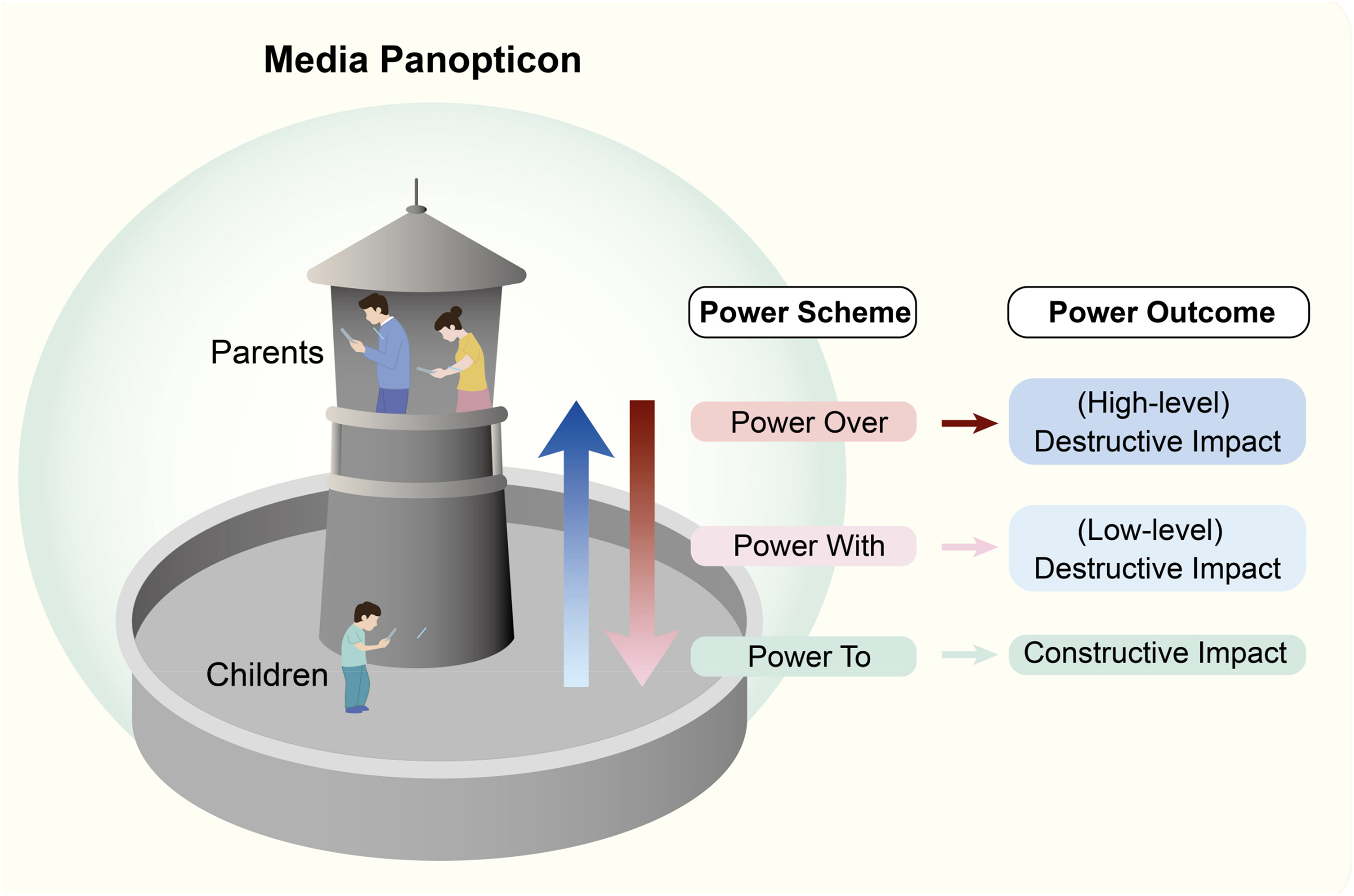
Mobile Media Panoptic Model within Parent-Child Mobile Interaction.
Finally, building on research showing that parents experience anxiety and surveillance tendencies when facing geographical separation (Lim and Pham, 2018; Madianou, 2016; Zhao, 2019), this study extends this exploration to broader mobility contexts by including families experiencing both domestic and transnational movements. Differences in distance do not undermine the remote parenting logic of “surveillance as care”; they mainly alter its intensity and methods. Compared with families living in the same country, the greater physical distance and cultural differences involved in the transnational context heighten parents’ perceived uncertainty. This triggers them to make greater efforts to ensure their children “stay on track,” which leads to increased surveillance behaviors, especially financial scrutiny. These strengthened surveillance tendencies among parents in transnational families, in turn, mirror their higher level of anxiety about “loss of control.”
Nevertheless, our findings arise from specific samples and contexts, and several limitations remain. The study focuses exclusively on first-year university students, which limits the discussion to a specific life stage. Moreover, while children's gender could influence parent–child interactions and power negotiations, we did not systematically compare this factor as it fell beyond the design of the present study. Future research could further test these findings in families with children at different life stages and systematically incorporate gender factors into the analysis. It is also necessary to undertake cross-cultural comparisons to explore how different cultural norms influence digitally mediated family relationships. Furthermore, research on digital platforms other than WeChat will help to further understand if and how different technological capabilities shape parent-child power dynamics.
Footnotes
Acknowledgments
I extend my sincere appreciation to the 20 parent–child pairs for their participation and valuable contributions, which were integral to this research.

Ethical Considerations
This study was approved by the UCL Research Ethics Committee (approval No. Z6364106/2020/04/109). Written informed consent was obtained from all participants, covering their agreement to participate in the study, the publication of findings, and the use of relevant data. All collected data have been securely stored in accordance with institutional protocols under the first author's institutional account and managed in compliance with ethical guidelines to ensure confidentiality and participant privacy. Access to the data is restricted to protect participant confidentiality.
Funding
The authors received no financial support for the research, authorship, and/or publication of this article.
Declaration of Conflicting Interests
The authors declared no potential conflicts of interest with respect to the research, authorship, and/or publication of this article.
Data Availability Statement
The data underlying this article will be shared on reasonable request to the corresponding author.