




Abstract
Romantic love is a social fact in the Muslim world. It is also a gender politics impinging on religious and patriarchal understandings of female modesty and agency. This paper analyzes the rise of love as a basis of mate selection in a number of Muslim-majority countries: Algeria, Egypt, Iran, Pakistan, Palestine, Tunisia, and Turkey where we have conducted Web-based anonymous surveys of Facebook users. Young people increasingly want love in their married lives, but they and the communities in which they live remain uncomfortable with the mating practices through which such love has traditionally been achieved in the Western world. The paper explores the religious contradictions and the gender politics of modern heterosexual love.
Romantic love has become a social fact in the Muslim world. Young people increasingly want love in their married lives, but they and the communities in which they live remain uncomfortable with the mating practices through which such love has been achieved in the West. We want to explore these contradictions and the religious and gender politics of modern heterosexual love. In this article, we explore love and courtship in seven Muslim-majority countries: Algeria, Iran, Egypt, Pakistan, Palestine, Tunisia, and Turkey, where we have conducted Web-based anonymous surveys of Facebook users. Our analysis uses statistical techniques to estimate a model of variation in intimate attitudes and behaviors.
The future of romantic love in the Muslim world is tied up with the politics of gender and God. At stake in the ongoing struggle over the place of Islam in all these nation-states is the question of the intimate agency of women. The new courtship practices associated with love as a basis of marriage depend on that agency. Women’s visibility, their ability to enter public spaces, and to interact with men, their capacity to recognize and act upon their attraction to single men, including the ability and the act of saying no—these are significant issues in the Muslim world, issues that animate the conflict over Islam’s proper political role.
The course of political and legislative struggles, the pronouncements and fatwas, even the changing moral teachings of the communities to which young people belong, do not tell us how individual young Muslims in these countries mediate between love, physical intimacy, and religion in their own lives. How does engagement with Islam by young women or young men shape the way they organize their intimate lives? In this article, we empirically examine the intimate behaviors of young Muslims in several Muslim-majority nations whose social media users we surveyed.
Following a discussion of the context that frames the issue of the status of love in modernity in the West and the Middle East and a discussion of the survey methods we employed, the analysis of the data we gathered proceeds in four steps: first, the extent to which people in these countries make love a criterion of mate choice; second, the several determinants of who makes love a criterion of mate choice; third, the extent to which those who make love a criterion for mate choice approve of new courtship practices that accompany romantic love and the determinants of that approval; and fourth, whether and why they actually engage in these courtship practices.
Modern love and its limits in the Muslim world
The yoking of romantic love and marriage is a modern phenomenon and indeed quite a recent one for women. In the United States, in a poll of college students in the 1960s, two-thirds of the women said they would consider marrying a man they did not love, if he met all their other criteria. It was late in the twentieth century, at a time when the rate of female participation in the labor force peaked at 60%, that a majority of American women said that love was the most important factor in choosing a partner (Coontz, 2005: 186). 1 Until that time, men were more willing and able than women to make mate choices based on romance (Illouz, 1997: 209). This fusion of emotional intimacy, erotic desire, and attachment as a basis of mate choice initially emerged in the West in the late eighteenth century, entailing a gradual dissociation of marriage from extended kinship networks (Coontz, 2005; Giddens, 1992). It involved a realignment in the gendering of affect and a legitimation of self-seeking and self-expression.
This passionate constellation of affect, category, and practice as a factor in marriage came to the Middle East through greater contact with the West, education in the Western literary canon; exposure to novels, film, television, and Western pop songs; and its deployment in the global marketing of consumer goods. However, the strong yearning for love was already present in the Middle Eastern and North African tradition. In the classical Arabic and Persian poetry and prose (from the ninth century through the fourteenth), one finds a robust literature on ishq (love), havā (lust), and muhabbat (affection) involving both heterosexual and same-sex relations and the sacrifices one must endure, including martyrdom, for true love. 2 A well-known prophetic hadith praised suffering for a chaste love: “he who loves and remains chaste and conceals his secret and dies, dies a martyr” (Giffen, 1971: 99). The idea that one should sacrifice one’s life for love was apparently an original contribution of Arabic poetry, fusing earlier Greek and Hellenistic notions of being a “victim of love” and a “lover and fighter as a soldier” (Gustav von Grunebaum cited in Giffen (1971: 106)). Yet, this love was experienced outside marriage, not within it.
One finds a fulsome treatment of romantic passion in Sufi mystical works of thinkers such as Ibn Arabi, the thirteenth-century Andalusian mystic, or poets such as Rumi. Loving another in the Sufi tradition is understood as a pathway and an exemplar of the way one loves Allah and a pathway to that love. It is through earthly love, eshq or ašk, a passionate love, that one finds oneself in nothingness and ultimately comes to also comprehend love for God. Aşk (eshq in Persian and ishq in Arabic), which conveys emotions of passion, also is the word one uses when one is referring to “falling in love” or “being in love.” Among some contemporary Turkish Sufis, sexual relations between husband and wife can be saturated with spiritual possibility. “To walk towards Allah, hand in hand,” Celmanur Sargut, the Turkish Sufi teacher, explained to us, “can be called real love.” Ibn Arabi, Sargut recounted, declared that the sexual relation between husband and wife “is a small sample” of the relation of love “between a human being and Allah.” 3
Romantic love is found everywhere today in the Muslim world: in the massive popularity of Turkish soap operas, in popular novels and poetry, in proliferating Arabic love songs, and on Muslim dating sites. Among Syrian youth in both Damascus and Amman, contemporary pious Muslims, too, a love-based marriage as the true Islamic tradition is promoted (Conklin and El-Dine, 2015). And Islamists, as Abu-Lughod (1998) showed with respect to the 1990s in Egypt, promote the ideals of a love-based marriage centered on the nuclear family. It is not the existence of such romantic passion, but the timing of its cultivation and its actionability as a basis of mutual spousal choice that is at issue in the Muslim world. The question is what degree of contact, including physical contact, can be accommodated within Islamic/Middle Eastern understandings of permissible contact between unmarried men and women and whether romantic passion emerges after marriage out of nonpassionate relations.
The emergence of romantic love as a basis of marriage not only undercuts the authority of parents, it is premised on a measure of female empowerment that runs counter to patriarchal authority, not just of fathers (and mothers) who guard the accessibility of their daughters, but of future husbands who must court their beloveds and countenance the women’s potential rejection. Mutual love requires a reciprocal liberty; it demands female choice. 4 This form of heterosexual love tends to contradict the traditional moral order of Middle Eastern cultures. Effected through new courtship practices, it demands an opportunity for young women and men to interact unsupervised outside the control of their parents, violating traditional modesty norms for women. 5
In the Middle East, single urban young women of respectable social classes historically had little contact with men, except for close male relatives, nor could they exercise much choice over whom they married. The tradition was built on patriarchal control of women, which required modesty of the woman. A respectable young woman was understood never to interact with unrelated men, and it was the responsibility of her father and brothers (and by proxy her mother), then her husband (and mother-in-law), and finally her sons to guard her chastity. The conduct of its women defined a family’s honor, damage to which had real consequences for the status and power of the men and other women in the family.
In her classic work Beyond the Veil, Moroccan sociologist Fatima Mernissi wrote: The idea of an adolescent unmarried woman is a completely new idea in the Muslim world, where previously you had only a female child and a menstruating woman who had to be married off immediately so as to prevent dishonorable engagement in premarital sex. The whole concept of patriarchal honor was built around the idea of virginity, which reduced a woman’s role to its sexual dimension: to reproduction within early marriage. (Mernissi, 1987: xxiv)
Love in spouse selection thus is a mark of modernity. As a result of imperialist, cultural, and commercial contacts with the West, love entered the elite and urban middle class Muslim world as a consideration in choosing a marital mate. Modernizers in many Muslim countries argued that men’s and women’s unhappiness in marriage stemmed from arranged marriages and the segregation of the sexes with which they were associated. If a man could choose his wife from among women he could see and talk with, this would lead to his having greater affection and love for her. Advocates of women’s rights promoted companionate marriage, and some even argued that traditional arranged marriages reduced women to objects of male sexual pleasure.
In Turkey, for example, critique of arranged marriages and the promotion of romantic love and couple-centered intimacy dates back to the Tanzimat reformers in the mid-nineteenth century who also promoted education for women (Göle, 1996: 30–31). The secular nationalist regime of Kemal Ataturk not only encouraged women to shed the veil, but also to dance with men and to make visits with their husbands to each other’s houses, violating segregation norms. A new civil code ended polygamy, the repudiation of wives, and introduced civil marriage (Göle, 1996: 61, 65).
As women’s education became more acceptable in the urban Middle East and secular schools for girls and boys opened up, new opportunities emerged for young men and women to observe each other and exchange glances or a few words in public spaces, streets, buses, stores, cafés, and parks. Starting in the post–World War II period, these interactions increased, and the longing for more companionate marriages grew.
These practices of intimacy violated the region’s norms of modesty. For more than a century, the actual or potential intimacy between young women and men that romantic love entails and the visibility, accessibility, and agency of young women associated with it have been the target of those religious political forces that believe that traditional sexual morals are essential not only to a pious society, but also to the maintenance of social order and the sustenance of an authentic indigenous culture that does not slavishly mimic the mores of the West.
In Turkey, to take just one example, the Kemalist repression of Islam in the public sphere—its promotion of a secularized, state-controlled Islam, its closure of Sufi lodges, its insistence that all clerics be state employees, and its discrimination against pious Turks in labor markets and government service—led more pious Muslims and the variously clandestine Islamic networks to emphasize the familial home as a bastion of Islamic morality and ethics (Yavuz, 2003: 56). As millions of Turks streamed into the cities in search of jobs, where anonymity was easy, contact with the opposite sex unavoidable, and the age of marriage delayed as mass education exploded, a string of Islamist nationalist parties politically mobilized their constituencies around the defense and promotion of female modesty in dress, typically linking the violability of the physiological body of a woman to the territorial body of the nation-state (White, 2013). In 1995, a columnist for Milli Gazete, an Islamist newspaper linked to the National Salvation Party, declared: “the headscarf, like the boundaries of Turkey, is not open to disputation. It is the boundary set by God and cannot be discussed” (Yavuz, 2003: 198).
Promotion of female modesty and sexual morality has been central to the rise of Tayyip Erdogan’s Islamist AKP, the Adalet ve Kalkinma Partisi, or Justice and Development Party, which has governed Turkey since he was became prime minister in 2003. Erdogan not only reversed the long-standing prohibition against the public employment and school attendance of head-scarved women, he also promoted the notion that a woman’s proper role and her first obligation is as a mother, encouraging women to have at least three children. This put him into conflict with younger, more secular Turks, among whom support for and participation in premarital physical intimacy had begun to rise in the 1980s alongside the feminist movement. Turkish feminists refused the notion that a woman’s virginity is a property that belongs to the family or that it defines the family’s honor. A woman’s body belongs to her, and hence control of her virginity is an individual human right (Ozyegin, 2009). For many young people, erotic intimacy had become a mark of modernity. Young secular women sought to justify their sexual activities to themselves and their peers morally by confining, or appearing to confine, them to romantic relationships, particularly those likely to lead to marriage.
The AKP has fought against both feminism and premarital intimacies. In 2011, Premier Erdogan eliminated the ministry dedicated to the promotion of women’s rights and substituted for it one dedicated to supporting the family. Condemnations of premarital sexuality have been a central component of Erdogan’s political rhetoric. He is a strong opponent of the liberalization of intimate life, which he links to pernicious Western influences (White, 2013: 151). When the Gezi Park protests exploded in 2013, quickly morphing from an ecological and antiurban development to a protest against the Islamist government’s increasingly intrusive regulation of Turks’ private lives, women constituted the majority of the participants (Kalaycioglu, 2013). The dominant slogan was “stay out of my lifestyle.” Erdogan and the media supporting his regime condemned the protestors for their sexual immorality, immodesty, drinking, and their alleged intimacies even in the mosques where they took refuge from the teargas. They also claimed that the protestors had molested young head-scarved Muslim women.
Sampling intimate behaviors in the Muslim world
Despite widespread recognition of such cultural tensions and political upheavals in the Muslim nations of the Middle East, there is very little information about the sexual and romantic behavior of contemporary young Muslims. Intimate contact, particularly any kind of sexual contact, before marriage is not only socially disapproved, but it is often also illegal as a result of laws enacted in the late twentieth century. These interactions are also subject to sanction, in some societies up to and including so-called honor killings, by outraged parents and siblings who believe their honor has been impugned. 6
In 2012 and 2013, we tried an alternative vehicle by which to gain access to young Muslims: we used Facebook advertisements to attract respondents in six different Muslim-majority countries with which they self-identified by signing up for Facebook under that country as such: Algeria, Egypt, Pakistan, Palestine, Tunisia, and Turkey. We were not sampling young people; we were sampling young national Facebook users. This meant that respondents were sampled from those who had registered themselves under a nation’s Facebook service with which they identified; it did not necessarily mean that they lived there. We were able to code if our respondents were born and/or lived in the country of their Facebook affiliation. Facebook posted our banner advertisements on samples of Facebook users from these country pages. The survey was fielded in Arabic, Persian, Turkish, and Urdu, with translation and back-translation by native speakers.
“How do you love?” the banner ad asked, here in Turkish. Word choice, of course, is a complex matter. At this initial point of contact we used the Turkish root word sevgi, which refers to the kind of love that exists between family members and friends, but also is the word a member of a couple would use when he or she says “I love you” to his/her partner. It is also the word one would use when referring to God’s love of humanity. 7

We would suggest that our survey is more reliable in gauging intimate behaviors of those who respond, compared with paper questionnaires administered to convenience samples in university and professional school contexts. Surveying sexual behaviors in Muslim-majority countries, particularly for unmarried persons, is enormously delicate. Little survey work has been done for this reason. Sexual surveys in Muslim-majority nations have typically been done based on convenience samples in institutions of higher education using paper surveys administered after obtaining informed-consent forms. These surveys typically find very low levels of intimate female behavior. The fact that one has taken such a survey is visible to others, there is a personally identifiable record of one’s participation, and there is the possibility that someone can see one’s response to sensitive items when filling out the survey or when handing in the questionnaire. All of these visibilities are eliminated through an online anonymous survey such as the one we used, where not even an IP address was collected, so that no survey could be linked to a specific computer.
The social media sources we used are not equivalent. The most distinctive is the Iranian blogosphere, which differentially attracts regime opponents because of government censorship and monitoring. But there are also major differences between Facebook populations from which these respondents are sampled. Facebook usage varies by country. We sampled these countries in 2012 and 2013. The percentage of the entire population that uses Facebook—known as the penetration rate—varies dramatically by country (Figure 1). Algeria, Egypt, and Pakistan have the lowest penetration rates, while Turkey, Palestine, and Tunisia have greater penetration rates.
Gender distribution, Facebook and the survey sample 2012.
19
Gender of Facebook users and penetration ratios were taken from the Dubai School of Government (2012), Intel (2012), Internet World Stats (ND), and the Pakistan Advertisers’ Society (2013).
This, of course, is not a sample of the population of these countries, only of its young social-network users, who are wealthier and more educated than the overall population. Moreover, social media itself are used as a vehicle for otherwise forbidden social interactions between young women and men. 8 The sample is not meant to provide prevalence estimates for the population as a whole. However, we do hope that it is a representative sample of the population who use social media. Nevertheless, there are potential sources of bias here. Although Internet surveys offer greater privacy to reveal intimate behaviors, opt-in surveys on sex and romance such as this one tend to attract people who are more sexually and romantically active and interested (Erens et al., 2014; Paik, 2015). 9 While the prevalence estimates (what percentage of single people have held hands, for example) in the sample may be inflated relative to the population of Facebook users, and estimates of this tendency vary (Erens et al., 2014; Paik, 2015), we have no reason to believe that the relationship between variables is systematically biased. (See, e.g., Armstrong et al.’s (2012) analyses of college student sexual behaviors based on course-based convenience samples.) Nonetheless, the reader should take both our estimates of attribute levels and the relationship between attributes as exploratory.
Consider the case of gender, a potential source of selection bias in the Facebook sample. Country-specific demographic data for Facebook users is proprietary information. The only publicly available attribute is gender. There is a large Internet gender gap in the Muslim world, and this holds true for social media such as Facebook. Moreover, young women are more likely to access the Internet at home, whereas young men can access the Internet outside (El-Feki, 2013: 101). Given the sanctions to which women are subject for nonnormative attitudes and behaviors, we worried that we would not get many women due to the risks of revealing any immodesty. The opposite occurred. As can be seen in Figure 1, the extent to which women are underrepresented and overrepresented in our Facebook samples relative to all Facebook users varies by country. In Egypt, Tunisia, and Turkey, women are overrepresented in our sample compared with all Facebook users. In Pakistan and Palestine, in contrast, they are underrepresented, and in Algeria, their percentage is more or less the same. We were also concerned that there would be sample selection bias by gender, even among those who took our survey—that given the sensitive questions included in the survey, women would be much more likely to withdraw from the survey and not complete it. In fact, surprisingly, given the sensitivity of the questions, there were no gender differences in completion ratios, (with the exception of Palestine, where women were 5% more likely than men to not complete the survey). Nor were there large age differences in completion ratios. In addition, respondents who lived in the Middle East, as opposed to elsewhere, were—unexpectedly—more likely to complete the survey.
Fifty-five thousand respondents made their way to the survey start page from the banner ad. Of those, seventeen thousand completed the survey, getting to the end and hitting the submit button (n = 17,849). Of the 37,662 people remaining, twenty-three thousand did not even start the survey. And the remainder, 14,905, started the survey, but did not get to the end. Dropout rates did not vary significantly by country, with the exception of Iran, uniquely conducted through the blogosphere, where the completion rate was 15% higher than other countries.
The response biases that most concerned us were the questions about intimate behaviors. The header to that section in the survey explained that the following section would be dedicated to “intimate sexual relationships and gender attitudes” whose items were “initially developed for Western audiences” and would include “sexually explicit questions.” Respondents were also informed: “If you do not wish to answer any of the questions, please feel free to skip that particular question.” Just under 10% of the respondents skipped these questions. Nonrespondents to this battery were 13% less likely to complete the survey. Surprisingly, there was no gender difference in skipping intimate questions. With regard to questions about intimate behavior reported here—being alone and kissing, in this case—almost nobody who had begun the section skipped these questions, although 12% chose the option “prefer not to respond.”
Demographic characteristics of Our Facebook samples.

Metropolitan size was based on the respondent’s own estimation, not on our coding of an actual physical location.
Egypt was the first country surveyed, and we did not ask this question at that time.
Love and mate selection
We asked our respondents whether love would be or was an important criterion for mate selection. Love, understood in romantic terms, mattered as a criterion for mate choice for married couples in all the countries surveyed (see Figure 2 For Married Muslims: Was Love Important as a Basis of Your Mate Choice?). We began with the Western category of romantic love, which we had native speakers translate into Arabic, Turkish, Persian, or Urdu and then back-translated by others to see if we came up with the same terms. If the category predicts the same behavioral repertoires with which it is associated in the West, it will suggest that it has validity as a criterion. However, we do not mean to imply that making love a criterion excludes other criteria, whether family approval or piety, and we have studied this separately using Latent Class Analysis (Sotoudeh et al., 2016).
For married Muslims: was love important as a basis of your mate choice?.
Majorities of married people in most countries say they made love a criterion of choice in their marriages, varying from a high of 67% in Iran to a low of 40% in Palestine. Our results reflect the dramatic generational change that has taken place in mate selection in the Near East. Families have traditionally counseled their youth to submit to an arranged marriage, claiming that love develops in the course of the marriage. Until the diffusion of the notion that one “falls” in love in the nineteenth century, the dominant Western understanding was likewise that love emerges organically from having chosen an appropriate mate (Coontz, 2005: 178).
Looking across the age distribution (see Figure 3: Love As Criterion of Marriage by Age, Married and Single) for both single and married individuals, the results indicate that older individuals are progressively less likely to have made love a basis of mating, and younger people are more likely either to want to make or to have made it a basis of mate choice. Whether this is a consequence of the greater likelihood of older people being married and thus to have had to adapt to social constraints, or whether older people are just less likely—due to reality principles—to have made love important at the time they married will reveal itself in the regression analyses where we control for both age and marital status.
Love as a criterion of marriage by age, married, and single.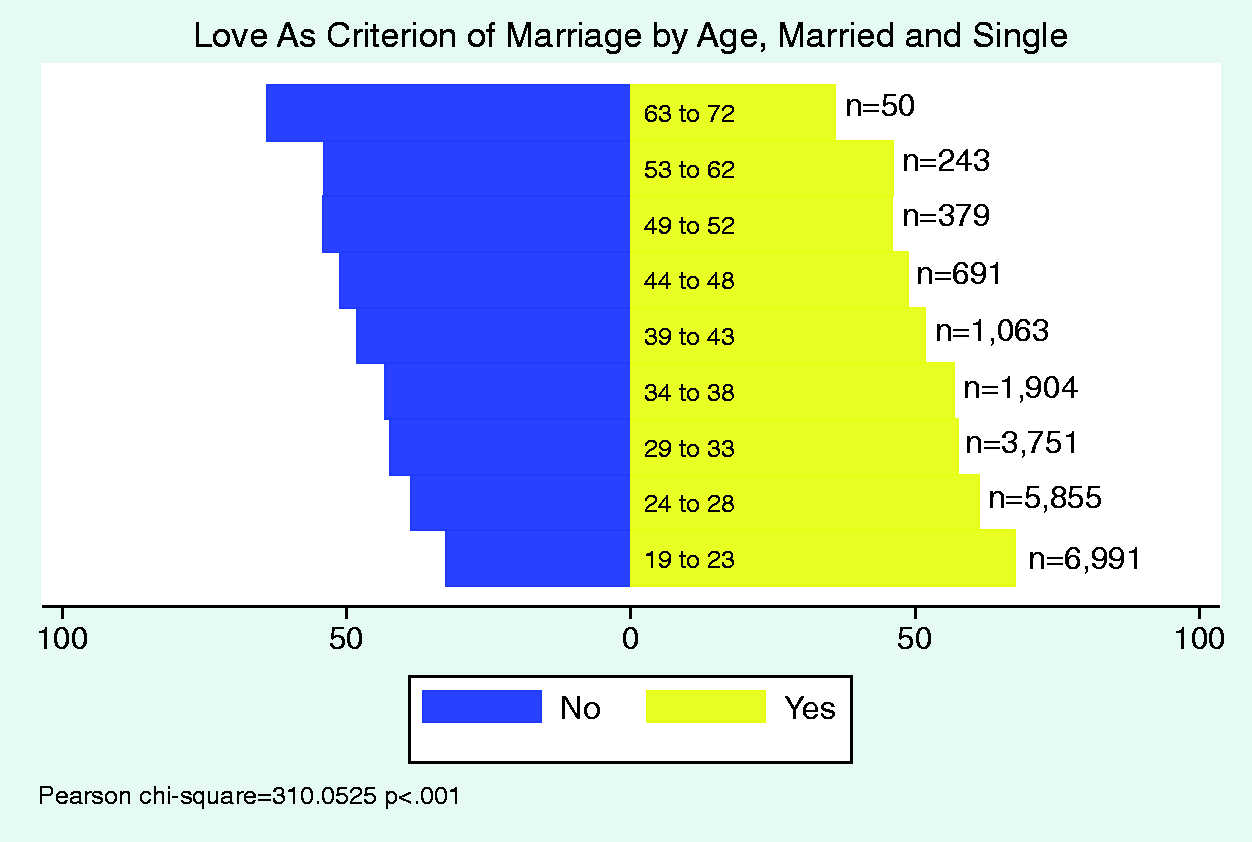
Are those who married for love more likely to be in love now?

Pearson chi2 = 450; Pr = 0.000.
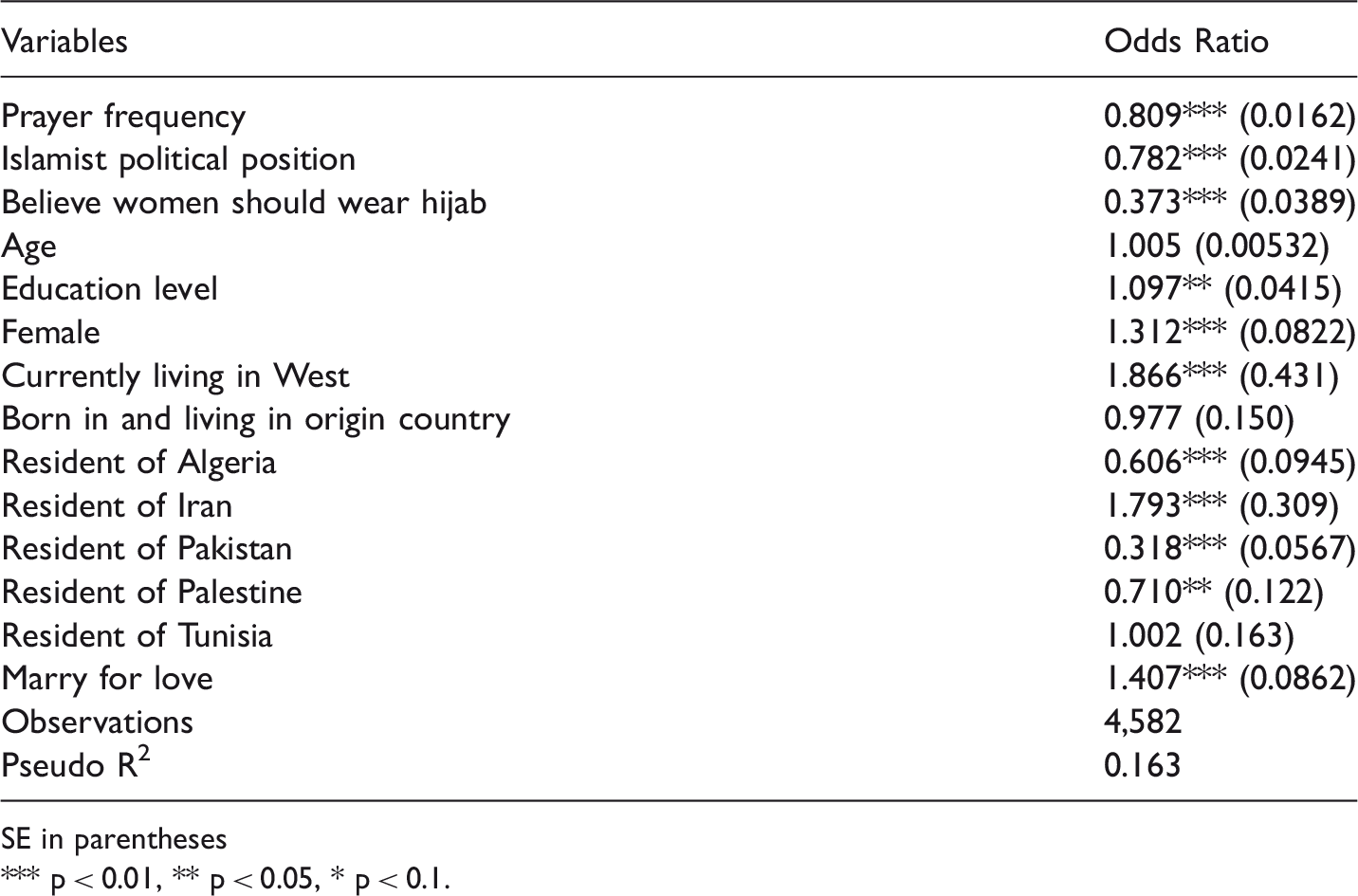
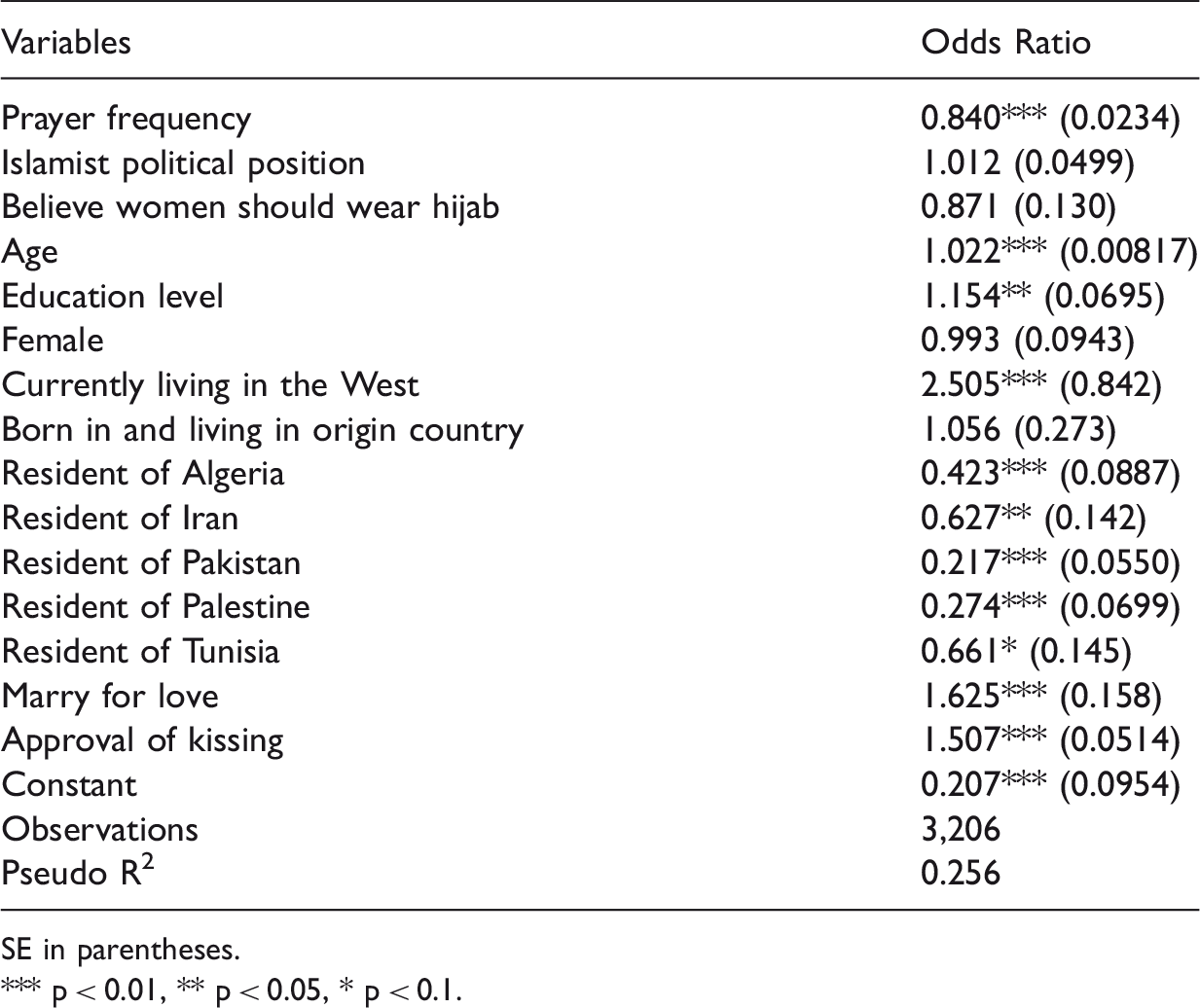
Who chooses love as a basis of their marriage? We used a logistic regression model to examine the effect of two clusters of variables: religiosity and demographics, controlling for the country for married heterosexual Muslims. 11 (See Table 3: Who marries for love, a logistic regression, married respondents.) For married people, we asked whether love was an important factor in their mate choice; in other analyses when we analyzed unmarried people, we asked whether love would be an important factor for them. We include binary variables for each country, coded 1 if the person is from that country, zero if not. These “dummy variables” allow us to control for country-specific historical dynamics or attributes such as oil dependence, family structure, the civil rights of women, family law, or even country-specific uses to which Facebook is put. The effect of being from a country is measured as a difference from the left-out country. In our analyses, Turkey is the left-out country, which—as the zero point—is therefore not included in the regression tables.
Who marries for love, a logistic regression, married respondents.

SE in parentheses.
p < 0.01, ** p < 0.05, * p < 0.1.
We looked at three different aspects of religious practice and belief. First, how ritually observant is the person in his/her own frequency of prayer? Second, does the person think that the hijab should be obligatory for Muslim women? Third, does the person support shari’a as a basis or the basis of national law? 12
A Muslim individual’s religious practice and belief is not per se an impediment to making love a basis of spousal choice in marriage for those who have actually married. There are no significant differences in the odds of making love a basis of marriage among those who pray more frequently. This is despite fears among religious respondents that such orientations are dangerous. In Ozyegin’s work on Turkish university students, pious women spoke about the dangers of passionate love, aşk, as a basis of choosing a potential spouse because of its link to the difficulty of “disciplining the cravings of the flesh” (nefis terbiyesi). They preferred to base mate choice on sevgi, on an altruistic care, leaving the other sensuous love as something fantastic, antirational, and unrealizable (Ozyegin, 2015: 206–207).
It is the conjunction of politics and religion that makes a difference, not religious practice and belief per se. The odds of making love a basis of marriage decline by 12% for each step increase in the scale of political Islamism. Islamists, those who want to make shari’a a basis or the basis of state law, are much less likely to marry for love. 13 The process and causal order between these two might take different pathways. On the one hand, Islamists may be more patriarchal and more traditional in ways that make new courtship practices associated with romance less actionable, or perhaps Islamist men may be less likely to grant women the liberty necessary for the mutual consent that love implies. On the other hand, those for whom, for whatever reason, love is not actionable—because of lack of resources, for example—might tend to migrate to more Islamist positions.
But what is more remarkable is that Muslims who believe that women must wear the hijab are no less likely to be love seekers. The hijab is not only a public signal of modesty, and hence a rejection of touching, talking, or being alone with men outside the family, but also a means—as in Saba Mahmood’s work (Mahmood, 2005)—of the praxis of piety, of cultivating a modest self. The hijab is typically read by Westerners as an index of female subordination. The ethnographic and interview work suggests that the adoption of the hijab by young women is sometimes quite the contrary—an expression of female agency sometimes against the wishes of parents, teachers, and the state, adopted with a multitude of purposes, from the cultivation of modesty and becoming closer to God to an ability to maneuver in public space, including to go on for higher education and a career, to avoid sexual harassment, and to signal piety as a basis of marriageability (Ahmed, 2011: 87–88; Ozyegin, 2015: 185–186). Not surprisingly then, support for this marker of modesty has no effect on love seeking.
Educated people are significantly more likely to have made love the basis of their marriages, given that education exposes people to more liberal values and greater interaction with the opposite sex at the university and provides more opportunity to make choices, and for unsupervised contact. Age has a very large effect: additional year in age reduces the odds of making love a basis of marriage love by 4%.
Women are significantly less likely to have made love a foundation for their marriages. Being a woman reduces the odds of having chosen romantic love by 32% for married respondents. Why would women be less likely to marry based on love? One would imagine that such love empowers women, in that it both allows and requires them to make their own mate choices based on their own physical and intimate desires independent of the wishes and marital plans of their families.
But love also can endanger women. First, in a patriarchal society in which female modesty is a basis of male honor, such love is less actionable for women who are under the watchful control of their male relatives. Muslim women may be less likely to marry for love because these women have fewer opportunities to meet unsupervised with members of the opposite sex. Second, in a society where most women do not work outside the home and where female participation rates in the labor force are very low, women must take their partner’s financial and social standing into account, subordinating romantic considerations in order to avoid poverty. Third, women who do look for love risk paying a high price in the event of failure. Engaging in immodest courtship behaviors before marriage makes one less marriageable in the eyes of the pool of available Muslim men in the event the romance does not result in a marriage. This, in turn, gives enormous power to women’s potential male mates—a power that the woman cannot be sure will not be used against her either before or during courtship and marriage. Fourth and finally, romantic marriages conducted against the wishes of a family risk losing the possibility of material support in the event the marriage fails. Thus, it should not surprise us that the married Muslim women in our survey were much less likely to have married for love.
However, when we analyze single people only (results not shown), women are no less likely to intend to make love a basis of spousal choice. Given that we control for age, which continues to have a large effect, this is not due to the relative youth of single respondents. The same holds true for education, which has no effect. While there may be important attributes of single people not included in our model, the result is likely due to the difference between what individuals want and imagine they will do and what they are actually able to enact—what they end up doing. The data suggest that young women want to marry for love just as much as men do, but that when it comes time to marry, many are unable to act on those desires.
There are significant country differences when demography and religious practice and belief are controlled. Married Algerians, Egyptians, Iranians, Pakistanis, and Palestinians were significantly less likely to have taken love into consideration, compared with the Turks, the left-out category to which people from the other countries are compared. And those respondents living in the West were twice as likely to have based their marriages on love. Whether this is due to the differential migration patterns or to socialization through contact with Western norms, we cannot determine.
What makes love a choice?
What are the determinants of unmarried individuals’ attitudes toward intimate behaviors associated with courtship? Here, we consider the determinants of attitudes about such behaviors—determinants that operated despite considerable disapproval of modern courting practices.
In our modern world, marrying for love requires some measure of courtship before marriage in order to develop and to test that love. Of course, before the introduction of modern courtship practices, people certainly fell in love. Sources, including our own interviewees, indicate that attraction was and continues to be gauged and expressed in public places, particularly at familial and community social gatherings. Particularly since unveiling began in the 1920s and 1930s, young men and women have been able to observe each other in public and have fallen in love. However, very few of these mutual attractions led to physical contact, let alone marriage. Flirtation and courtship have historically taken place in public, without physical contact—at weddings, mourning ceremonies, and religious festivals. A good example of this is captured in Maryam Keshavarz’s documentary The Color of Love (2004). The film shows that the annual mourning rituals of Muharram in Iran, traditionally a time of grieving and lamentation, are also erotically charged events, when at night, large crowds of young men and women hold candlelight vigils, secretly hoping to find love through chance encounters.
Approval for an unmarried woman to be alone, unaccompanied with a man in a public place, all respondents, by country.
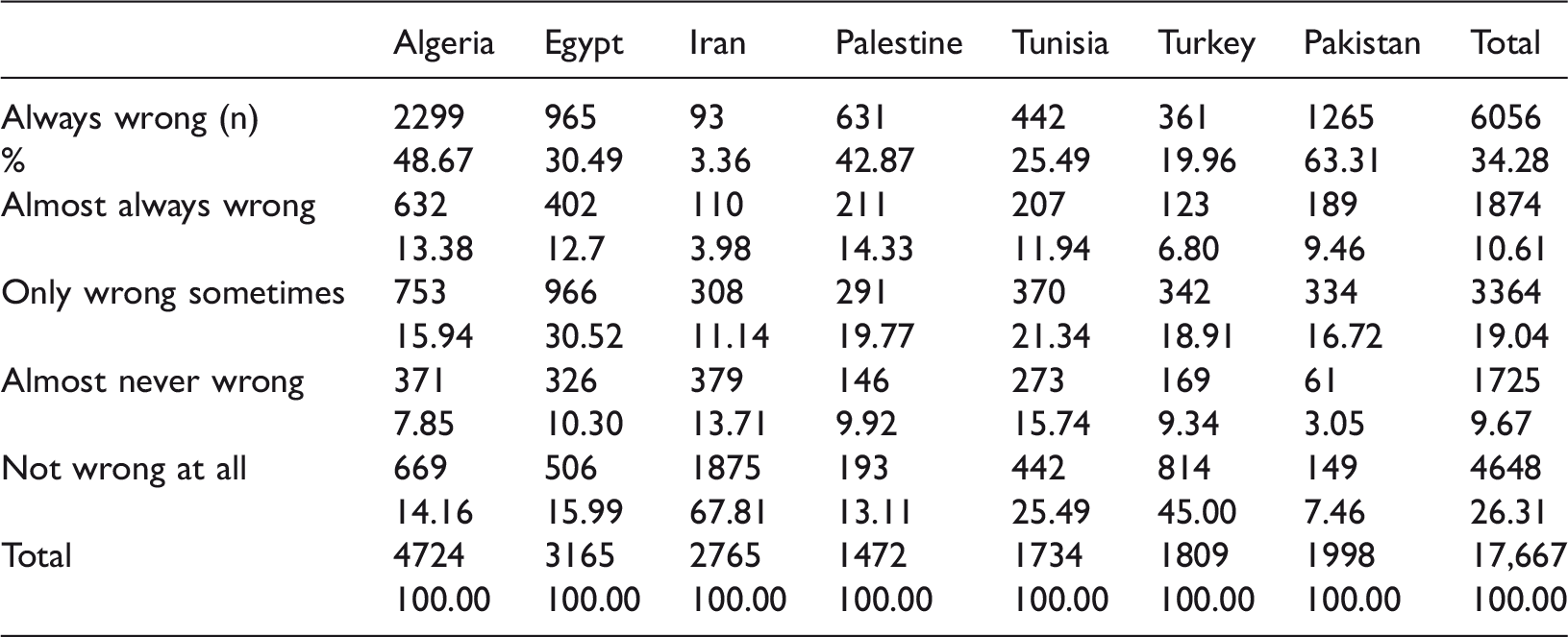
Approval for an unmarried woman to engage in amorous kissing, all respondents, by country.

However, we found that our respondents did not approve of unmarried couples engaging in modern courtship behaviors (See Table 4: Approval for an unmarried woman to be alone, unaccompanied with a man in a public place and Table 5: Approval for an unmarried woman to engage in amorous kissing). Forty-five percent of our respondents – including both married and unmarried – considered it always or almost always wrong for a young unmarried couple just to be alone together in a public place. Kissing was even less acceptable. Sixty percent thought it always or almost always wrong for an unmarried couple to kiss. Even in Turkey, where disapproval rates are much lower than elsewhere, kissing in public is fraught and likely to cause embarrassment and even outrage (See Figure 4: Turkish Cartoon on Kissing).
“Someone is kissing, but because I am modern, I do not look.” The man smoking a cigarette: “I am modern.” The man with a mustache: “I am very modern.” And the man looking upward: “The future is in the skies,” a well-known catchphrase used by Ataturk. The cartoon is by Serkan Yilmaz and used with his permission.
Determinants of approval for being alone, ordered logit, singles only.
SE in parentheses
p < 0.01, ** p < 0.05, * p < 0.1.
Determinants of approval for kissing, ordered logit, singles only.

SE in parentheses
p < 0.01, ** p < 0.05, * p < 0.1.
Love seeking translates into support for the legitimacy of this courtship practice. Those singles who say that love will be an important basis of their mate choice are significantly more likely—the odds increase by 41% of being in a higher approval category—to approve of a young couple being alone together.
We have already seen that the desire for love in marriage crosses the secular and religious divide. Observant and pious Muslims want love almost as much as their secular fellow citizens. Religious belief may not have much effect on wanting love. However, every form of adherence to the norms of religious doctrine has a significant and much larger negative effect on approval of a man and a woman being alone together. Individuals who pray frequently are significantly less likely to approve of young people being together unaccompanied in a public space, a 20% drop in the odds for each increase in level of prayer frequency. Those who want Islam to be the basis of state law are even less likely to approve, a 22% decline in the odds for each increase on the scale of Islamism. And those who endorse the wearing of the hijab for women are the least likely to approve. Indeed, commitments to these modesty rules, which had no effect on love seeking, are the biggest obstacle to approval of such interactions. Belief in the obligation of hijab reduces the odds of moving up a level of approval by 63%!!!
Young people who live in the West are much more likely to approve these behaviors. Women may be less likely to want to marry for love, but they are much more likely to approve of new courtship behaviors associated with romantic love, a 31% increase in the odds compared with men. We will return to this later. The results are the same for attitudes about kissing (See Table 7: Determinants of approval for kissing).
Being alone and approval of being alone.
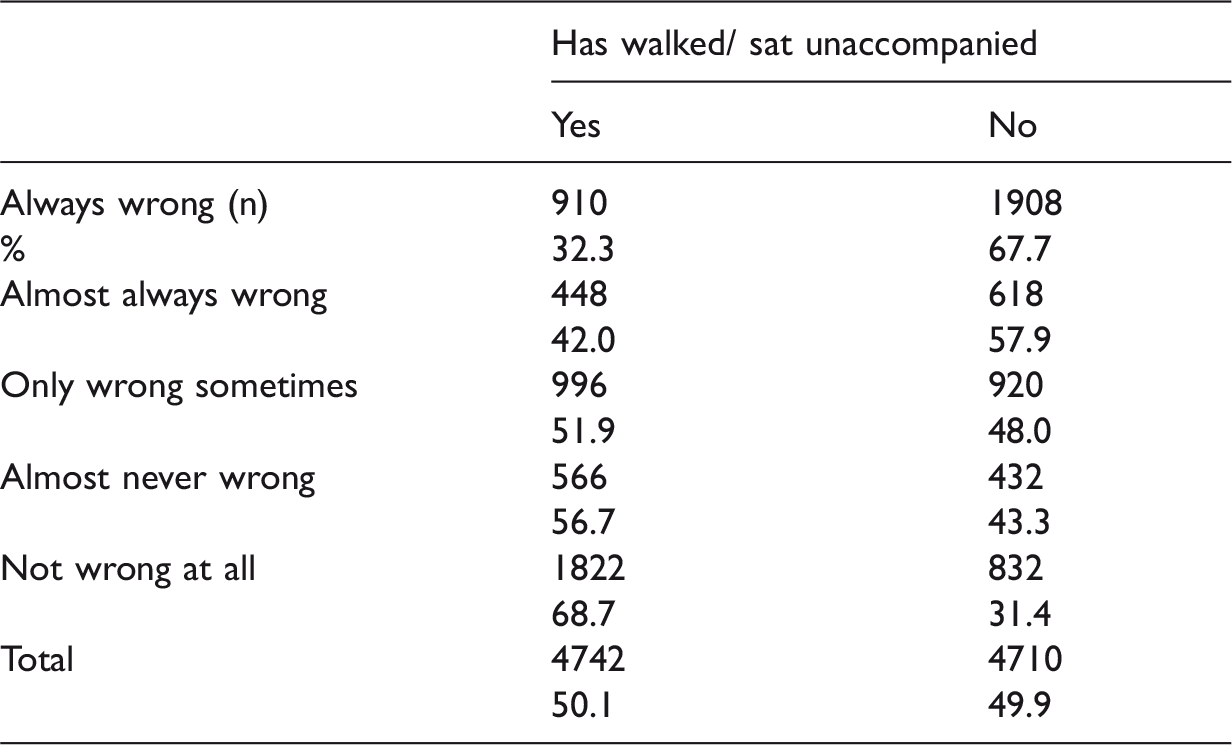
Norms and behavior are, of course, highly correlated: those who disapprove are less likely to have engaged in these behaviors. However, large percentages of singles who disapproved of these behaviors have nonetheless engaged in them. So, for example, 32% of those who said it is always wrong for a couple to be alone have actually been alone. Nineteen percent of those who say amorous kissing between unmarried couples is always wrong have, in fact, kissed.
Intimate behaviors are associated with, but not completely determined by personal morality. We have already established that a person’s moral attitudes are shaped by his or her religion. Now the question is whether religion affects behavior primarily through its effects on these attitudes or whether it has an effect on behavior independent of these attitudes. How might this effect operate? A person who is invested in the three forms of religious practice and belief that we measure—prayer frequency, support for the hijab, and support for an Islamist government—might avoid these nonnormative behaviors simply because the community disapproves or would sanction them, even though they themselves do not hold these beliefs about intimate behavior. They could, for example, avoid the behaviors simply because they value their membership in these communities and all the tangible and intangible benefits they derive from them. Or people may support the hijab, for example, because it is what women are supposed to do in their community, not because they themselves intend to refrain from what are understood by the religious community to be immodest behaviors. People may engage in modest behaviors simply because the community thinks they are right, not because they are particularly religious. To tease out these various possibilities, we control for religious and moral attitudes at the same time to see which matters in explaining behavior once you control for the other.
Determinants of having ever been alone with a person of opposite sex, a logistic regression, singles only.

SE in parentheses.
p < 0.01, ** p < 0.05, * p < 0.1.
Determinants of having ever kissed, a logistic regression, singles only.
SE in parentheses.
p < 0.01, ** p < 0.05, * p < 0.1.
Attitudes are consequential: Singles who approved of being alone with a member of the opposite sex were more likely to have engaged in it. 14 But do these three forms of religious belief and practice matter above and beyond the effect of the attitudes that religion encourages? Those who prayed more frequently were less likely ever to have been alone with somebody of the opposite sex, even when we control for their attitudes about such behavior. Prayer frequency, controlling for Islamism, is probably a good measure of adherence to traditional moral values, which involve modesty rules. Younger people who live in such a milieu are subject to sanction for their behavior, whether or not they personally adhere to these values.
However, controlling for their attitudes about its permissibility, young Islamists were just as likely to have been alone with a member of the opposite sex as those who were not Islamists. How is this possible? Compared with young people from traditional patriarchal families, young members of Islamist organizations actually have more opportunities to interact unchaperoned in public spaces, whether as teachers, volunteers, or social workers in Islamist organizations or in meetings and demonstrations. Moreover, sources from both Iran and Turkey, for example, point to the ways in which Islamist organizations provide mechanisms for their young members to court and to engage in a kind of assortative mating, behaviors that are sometimes legitimated by the leadership independently of what the young person’s parents may want. Members of Islamist movements may have less “need” to be “alone,” in the Western romantic sense, given these opportunities.
Strikingly, those single people who believe the hijab is obligatory for women are just as likely to have been alone with an unrelated member of the opposite sex, once you control for their beliefs about the morality of doing so. At one level, this result is remarkable, given that one of the main purposes of the modern hijab is to signal one’s modesty. However, there are many reasons why a single woman might wear the hijab. In Egypt, for example, the common reasons women gave for observing the hijab included to live a more authentic life, to move away from commercialism, to reject revealing Western fashion, to create an indigenous sense of style, to protect themselves against sexual harassment, and to make it legitimate to work and study while affirming one’s adherence to one’s community (Macleod, 1993; Zuhur, 1992). Young women who take on the hijab carry the markers of modesty from the private domain to the public and may feel freer to interact with members of the opposite sex unchaperoned. Perhaps this mark of modesty is instrumental for some women, providing them with greater freedom to pursue their education or a career and positioning them for a more socially desirable mate by signaling a certain piety. Their observance of the hijab signals their adherence to modesty rules and makes those interactions that do take place more legitimate. Perhaps it just signals conformity to social norms and has nothing to do with how many individual women or men actually feel that women should comport themselves. Whatever the source, the results suggest considerable deviance by pious Muslims from the Islamic norms they themselves espouse.
Women were just as likely to have engaged in this behavior as men were. We saw that marrying for love was more problematic for married women than for men, but that single women were just as likely as men to want to marry for love. Now we see that women are just as likely as men to engage in intimate premarital interactions of which their parents and their communities do not approve. The absence of a gender effect is extraordinary, given the risks of discovery, from ruining one’s marital prospects to ostracism, beatings, and even death, because the risks in premarital interactions are much greater for women than for men.
Depending on one’s perspective, living in the West can be said to have a liberalizing or immoralizing impact. As with attitudes about being alone, so with behaviors: those who live in the West are much more likely to have engaged in such behaviors—indeed, there is a 99% increase in the odds of having done so. Here, exposure to émigré behavior likely reinforces traditionalist and Islamist fears of Western influence. The results for amorous kissing, although a less prevalent behavior, were more or less the same.
Who kisses? (See Table 10: Determinants of having ever kissed) Looking at single, never-married individuals, we found that those who approved of kissing were much more likely to have done so. Moral views again significantly predict behavior. But even controlling for those attitudes, those single people looking for love were much more likely to have kissed somebody.
Only one form of religious piety—prayer frequency—impedes kissing beyond those attitudes. Single Muslims who pray regularly are less likely ever to have kissed. Neither commitment to Islamism nor support for the hijab had a net negative effect on kissing. That the level of religious belief and adherence to religious norms had no net effect either on young people being alone with a member of the opposite sex or kissing is striking, given that on the one hand, the Islamist program centers on sexual immorality and immodesty, which are understood to be symptoms of a falling away from Islam and exposure to the West’s decadent norms, and on the other, that behavioral deviance by members of Islamist movements is likely to be severely sanctioned.
Support for the hijab had far and away the largest negative effect on the permissibility of being alone with another, holding hands, and kissing. The hijab is presumably a device to signal modesty and piety and to promote gender segregation. Yet, the belief that Muslim women should wear the hijab had no net effect on the probability that somebody had kissed. This result is astonishing when coupled with the absence of a gender effect on the odds of kissing. Single women were just as likely to have kissed somebody as men.
Do single women who believe the hijab is obligatory kiss?

Pearson chi2 = 450; Pr = 0.000.
Islamism and belief in norms of female modesty have large effects on the moral acceptability of being alone and kissing. These moral beliefs do suppress such behaviors. But once we control for moral acceptability, Islamism and belief in female modesty do not additionally impede the actual pursuit of passionate intimacy. We found support for the hijab or Islamism had no net effect on the odds of a single person having kissed, which can never be legitimated by a head scarf or working together for a Muslim cause. One would suppose that beyond an individual’s attitudes about its permissibility, communities of the pious would be contexts that would socially control such behaviors. The result thus poses a conundrum. It may even suggest that Islamist and pious settings provide opportunities for heterosexual contact that lead to forbidden behavior.
Approving and practicing courtship
The diffusion of modern love in the Muslim world is a development of profound significance. Majorities of young people in the Muslim world want love in their marriages. However, there is a contradiction at the heart of love. Making love a basis of marriage implies an ability to participate in new courtship practices that violate Middle Eastern norms about modesty and sexual segregation. Indeed, the rise of romantic love has coincided with and indeed likely helped provoke the rise of conservative religious movements that have sought to erode women’s rights in every part of the Middle East.
Many young people want to marry for love, but morally reject the practices necessary to accomplish it—a rejection that reduces their willingness to engage in them. Adherence to religious beliefs and practices of every sort is associated with the moral condemnation of such practices. Yet many pious Muslims not only seek love, but they also dare to participate in courtship practices that are haram, forbidden. 15 Those who seek love as a basis of mate choice are more likely to approve of such transgressions, and they are also more likely to engage in them. Love seekers are much more likely to court illicitly, while controlling for their religious engagement and their moral sense that such behaviors are wrong. Love seeking promotes forbidden intimate contact—being alone, holding hands, and kissing—as much as Islamist commitments reduce them. The effect of love seeking is greater than any other nonlocational variable. The strength of the net effect, of its behavioral entailments, gives us some confidence that the term “love” is a meaningful one for this sample.
Pious Muslims are both repudiating Western patterns of premarital physical contact and seeking to push the boundaries of acceptable contact through new patterns of chaste heterosexual socialization, and, of course, through contacts via social media of various kinds, from Facebook Messenger to Snapchat. They are creating new kinds of places, such as religious cafés in Istanbul, where single women and men consider being together, including during Ramadan, a legitimate or hallal form of social interaction, or such as large shopping malls in the Emirates, where groups of young men and young women sit separately at cafés while glancing at each other and chatting via cell phone. They are also utilizing defunct premodern practices, such as the very old tradition of engaging in sex after the signing of the marriage contract and before the wedding ceremony takes place, but taking it a step further. In Iran, for example, rural couples who have signed the contract might go away to another city and openly stay in a hotel together. 16
Love is a form of gender politics. As we have noted, in our analyses married women were less likely than men to have married for love. Yet single women were no less likely to want to marry for love, and were more likely than single men to approve of being alone and kissing, new practices associated with courtship. And women were just as likely as men to engage in these practices. The data are consistent with the hypothesis that young women may want to experience the pleasures of romantic courtship, of passion, but realize that love cannot be a criterion for mate selection because of the risks entailed. They also align with ethnographic work that suggests that for young, single Muslim women, feeling and acting upon sensuous desires is a major form through which they express a rejection of the selflessness that they saw in their mothers (Ozyegin, 2015: 143). There are undoubtedly many byways, but the results suggest that in these countries, young Muslim women, who are often subject to masculine control, are leading the way in the liberalization of intimate life.
Forbidden activity by those who support the hijab, single Muslims.

The fact that overall, women are just as likely as their male counterparts to engage in such behaviors reflects their enormous daring as they act in ways that have far greater consequences for them than they do for men. The actionability of love depends on female agency, on the capacity of a woman to know and act based on her own desires. By expressing their approval of these transgressive behaviors and actually engaging in them—even against what they understand to be correct behavior—women are making decisions about their own lives. These women’s preferences and acts undermine the patriarchal norms of their societies and directly challenge Islamist parties that have put the defense of those norms at the center of their political programs.
The ordering of intimacy is at the center of the political-theological struggles that have been shaking the Muslim world for a half century. The rise of romantic love may indeed empower women and eventually lead to the erosion of support for the dominant forms of political Islam. But there are numerous obstacles in the way. The Middle East and North Africa (MENA) continue to have the lowest employment-to-population ratio for women. Whereas around 50% of women in developing countries are either employed or actively looking for jobs, in MENA, the figure is 25%. If a single woman cannot earn a living, she must depend on the income of a prospective spouse. Under these conditions, it is difficult to make love a necessary condition for marriage. Without the ability to secure employment, a divorced woman’s options are limited: to return to her family of origin, where she assumes a shadowy existence, or to seek a customary marriage that lacks the legal rights and respect associated with a formal marriage, reducing the woman to the status of a concubine. Indeed, such customary marriages are frequently an option for divorced women with limited prospects of employment.
While we believe that the growth in romantic love can be a critical resource for democratization, leading to greater recognition of the individual rights of women and men in predominantly Muslim societies, with the potential to alter existing gender, social, ethnic, and religious hierarchies, such marriage reforms need to be combined with major economic, social, and legal reforms that address women’s concerns. There is no reason to believe that the rise of romantic love will not result, as in the West, in more fragile marriages. In the United States, at least, scholars have connected the feminization of poverty to the fragility of love-based marriage and a morally unregulated empowerment of men. These are the very processes likely to reinforce support for Islamist politics.
Our private love lives have public political significance. Jean-Jacques Rousseau, who made the turn to passionate romantic love the original referent for the political turning we now know as a revolution, would have understood these empirical regularities that the social sciences these days—increasingly concerned with instrumental rationalities—do not. 17
It was not just Rousseau, the Calvinist philosopher, but Nizar Qabbani, the Sunni Syrian Arab nationalist poet, who understood love as a political force. Qabbani, devastated by the Arab defeat in 1967 and by the repressive Arab autocracies that seemed impotent against Israel and the West, repeatedly singled out the subordination of women, the suppression of desire, and the impoverishment of love as sources of the political weakness of the Arab nations.
In his 1969 speech to the American University of Beirut, Qabbani declared: We are an unhealthy society because we do not know how to love. We chase love with axes, hammers, and ancient Ottoman guns … Who thinks that the defeat of June [1967] was only a military defeat is mistaken. It was a defeat for the Arab body too … Each new Arab revolution should put into consideration reestablishing the natural dialogue between us and our bodies and return love to its original place as a humanly, creative, and ingenious activity, not like a thief, an outlaw sought by the police of public morals and police dogs. Unless we open the green light in front of love, we will remain confused, complex and hemiplegic on the ground, like a car whose battery is running out.
18
Footnotes
Acknowledgments
This is our first scholarly article based on our comparative survey work. We are grateful for the support of New York University Abu Dhabi and the Duncan and Susan Mellichamp Fund. We are also grateful to a large number of people including Hissa Al-Mohannadi, Ates Altinordu, Kevin Anderson, Yesim Arat, Nur Yasemin Bavbek, Nancy Gallagher, Shahla Haeri, Hafsa Hariga, Mary Hegland, and Helga Tawil Souri who served as informants or advised us on this work, and to Nia Gordon, Maxamilian Stiefel, Leva Zand, Christopher Seaman, Mir Yarfitz, Tiffany Sara Neman, Elizabeth Kreutlein-Astles, Bud Bynack, and Meredith Lee who provided technical and editorial assistance, and those who helped with various aspects of the survey: Magda Campo, Ahmad Ahmad, Mustafa Abdulhamid Ahmad, Kendra Serna, Ouidyane Elouardaoui, Munther Al-Sabbagh (for Egypt). Emek Yildiz Istanbul and Nesrin Unlu (for Turkey), Nare Avanesian, Shohreh Shahani, Jasmine Afshar, Ariana Kashani, Shahab Mirzaei, Touraj Rahimi (for Iran), and several other anonymous researchers and students from various countries. We also thank the three anonymous reviewers for their critiques and suggestions.