



Abstract
Background
Since medical access to medicinal cannabis (MC) was legalised in Australia in 2016, numbers of people prescribed MC have increased exponentially. There is a need for safety and effectiveness data on the longer-term use of MC in real-world settings. This paper describes the methodology of Project Twenty21 Australia, an observational study that commenced early in 2022 and its preliminary findings.
Method
This study tests whether medicinal cannabis is effective in four primary conditions: chronic pain, anxiety, posttraumatic stress disorder and multiple sclerosis (MS). Participants are prescribed MC from within a Project Formulary, completing questionnaires at baseline then 3 monthly for up to 12 months.
Results
Between the start of the study in February and 30 August 2022, 278 participants had been recruited into the study: 50.7% female, 48.2% male and 1.1% non-binary with average age 39.2 years (18–77). Patients reported a low quality of life and high levels of co-morbidity. Three-month data, available for 71 participants, indicate that MC was associated with substantial improvements in self-reported quality of life, general health, mood/depression and sleep with standardised effect size estimates ranging from 0.57 to 0.93. Three adverse reactions were reported.
Conclusions
This paper describes the protocol used for an observational study conducted in Australia assessing the effectiveness of MC in four main conditions. We have established the feasibility of collecting real-world data on symptoms and quality of life in people receiving treatment with MC. Preliminary evidence suggests that MC may be effective in improving quality of life, general health, mood and sleep.
Keywords
Introduction
Cannabis in Australia
The increasing popularity of medicinal cannabis (MC) is evidenced by increasing legalisation of its medical use in many countries throughout the world. For example, medically prescribed cannabis is now legal in 38 states of the US, and medical use was legalised in the UK in 2018. Medically prescribed cannabis was legalised in Australia in 2016. According to the Australian Therapeutic Goods Administration (TGA) data, the number of regulatory applications via the Special Access Scheme B by doctors has increased from 231 in 2017 to 122,490 in 2021 (Lintzeris et al., 2022; TGA, 2021).
MC products on the legal Australian market are subject to strict quality assurance controls under the TGA, the government body which regulates medicines and complementary medicines. MC products are largely (with two exceptions) considered ‘unapproved medicines’, and consequently a complicated process for prescribing them is required. The two exceptions are nabiximols (a Schedule 8 controlled drug) and Epydiolex (Schedule 4 Prescription Only medicine) which are registered medicines on the Standard for the Uniform Scheduling of Medicines and Poisons (SUSMP). The SUSMP is essentially Australia's national medicines and poisons code; the higher the number of the schedule within the SUSMP, the greater the level of restriction.
Most high cannabidiol (CBD) medicines are Schedule 4 (Prescription Only medicines): the key criterion is that CBD must comprise 98% or more of the total cannabinoid content (CBD being one of the main phytocannabinoids found in cannabis). Most tetrahydrocannabinol (THC) containing cannabis medicines fall under Schedule 8 of the SUSMP as Controlled Medicines (unless they fall under S4). In 2020, a new entry for CBD was added to the SUSMP. High CBD products containing 98% or more CBD (total cannabinoid content) and less than 1% THC with a maximum recommended daily dosage of 150 mg CBD may be included in Schedule 3 (Pharmacy Only medicines). This means that a customer could buy their CBD product directly from the pharmacist without a prescription. However, no companies hold scientific data of efficacy for a particular clinical indication for any of the CBD products that might fulfil these criteria and currently S3 contains no CBD products.
Currently, doctors and in some states/territories, nurse practitioners, are able to prescribe MC (Chinese medicine practitioners and western herbalists may not). Doctors can prescribe it under two main schemes that are administered by the TGA: the Special Access Scheme B, and the Authorised Prescriber Schemes. In general, it is expected that patients have tried other registered medicines before MC is prescribed (the TGA does not consider cannabis to be a first-line therapy). Patients must pay the cost of their cannabis medicines (no government subsidy exists) and they may or may not receive a Medicare rebate on the doctor consultation fee. A recent survey of 1600 Australians using cannabis for a self-identified medical reason in the past year indicates that cost of MC and difficulties finding medical practitioners to prescribe it remain significant barriers to MC access, and that the majority (63% of 471 individuals using prescribed MC and 87% of 801 individuals using illicit cannabis) disagreed or strongly disagreed that the current existing model for accessing MC was ‘straightforward and easy to navigate’ (Lintzeris et al., 2022).
Need for real-world data
The evidence base for the safety and efficacy of cannabis and cannabinoids is increasing yearly. Whilst there is substantial preclinical evidence for its potential, there is less clinical evidence. However, with improved access to cannabis for researchers the number of randomised controlled trials (RCTs) is steadily growing. Surveys indicate that people are using cannabis for a range of health conditions, with chronic pain, anxiety, depression, posttraumatic stress disorder (PTSD) and sleep disorders being key ones (Lintzeris et al., 2018, 2022; Sexton et al., 2016). RCTs are highly controlled with strict inclusion and exclusion criteria, often conducted over short timeframes and typically use fixed dosing regimes. There is a need for real-world data (RWD) which can assess effectiveness and safety of MC over more extended time periods, reflecting its real-world use which includes individualisation of dosage, and often the use of multiple products and/or concurrent western medicines and complementary medicines. As pointed out by Banerjee and colleagues (2022), RWD can provide information or evidence about the immediate impact on clinical care as well as inform RCTs.
There are several observational-type studies published in recent years investigating MC. For example, there are several studies in the UK, many described as cannabis registries (e.g. Ergisi et al., 2022a, 2022b; Erridge et al., 2021; Harris et al., 2022; Kawka et al., 2021; Nimalan et al., 2021; Sakal et al., 2021) and at least one other study being conducted in Australia (e.g. Vickery et al., 2022). All of these studies will help build a greater evidence base of the real-world effectiveness and safety of MC that, in addition to RCTs and other types of studies, will ultimately provide a more robust picture in relation to MC that can help guide clinicians.
Project Twenty21 UK and Australia
Despite MC being available under the UK National Health Service (NHS), there have been few MC products actually prescribed under the NHS (Sakal et al., 2021). It is estimated that over one million people in the UK self-medicate with illicit cannabis (Couch, 2020). In the UK, unlike in Australia, only medical specialists can prescribe medicinal cannabis (Sakal et al., 2021). Project Twenty21 was initiated in the UK by Drug Science Org and has been operational for 2 years. It is the first UK registry seeking to develop RWD on the safety and effectiveness of medicinal cannabis. Originally it focused on gathering data on seven main clinical conditions, however, it has now been extended to include any clinical condition that medical cannabis is prescribed for. Patients are followed up for a maximum of 4 years.
Project Twenty21 Australia follows the same protocol as the UK study, with a few differences. Firstly, it focusses on four conditions only: chronic pain, anxiety, PTSD and multiple sclerosis (MS). Secondly, the collection of additional safety data in the form of blood pathology tests has been added to the protocol. Thirdly, the study will follow participants for a maximum of 12 months. Fourthly, the Australian study does have inclusion and exclusion criteria that must be observed in recruitment of participants (the UK study does not have inclusion/exclusion criteria). Lastly, patients may only be included if they are prescribed at least one cannabis product from within the project formulary (in the UK study, patients prescribed products from outside the formulary are still able to participate in the study).
This paper
This paper describes the methodology of Project Twenty21 Australia that commenced early in 2022, and some of its preliminary findings. Specifically, it will describe participant demographics for those enrolled in the first 6 months of the study, and report initial, preliminary data on quality of life, general health, mood/ depression and sleep assessed at 3 months for the first patients.
Methods
Study design
Project Twenty21 Australia study is an open-label, prospective observational cohort study. The study design could also be described as a Phase IV study as it is collecting data on patients who have already been prescribed cannabis for up to 12 months. It is a ‘real-world’ study in the sense that the effectiveness of MC in alleviating symptoms of the four clinical conditions (chronic pain, anxiety, PTSD and multiple sclerosis MS) will be measured over an extended time-period of up to 12 months and the MC products will be individualised to the participants as is done in clinical practice.
Participants complete various assessments (described later) at baseline then 3-monthly for up to 12 months. They are encouraged to attend a face-to-face appointment with their doctor at the 3-monthly follow-up visits, however, their doctor may see them at other times as per normal clinical practice.
Ethics approval
Approval from the National Institute of Integrative Medicine (NIIM) Human Research Ethics Committee (HREC) was granted on 20 December 2021. The study is registered on the Australia and New Zealand Clinical Trials Registry (ANZCTR) and was also approved by the TGA.
Recruitment and consent
Participants are patients who have consulted doctors at Releaf Clinics within Australia, have indicated interest in participating in the study and have one of four conditions (chronic pain, anxiety, PTSD and MS). Information about the study is available on the Releaf Clinic website where potential patients can indicate interest in participating. Posters in the waiting rooms with QR codes also direct those interested to the website of the Australasian College of Cannabinoid Medicine (ACCM) for information about the study. Screening for eligibility is conducted by the Study Coordinator, a registered nurse with research experience. Potential participants who indicate interest in the study are phoned by the Study Coordinator, who explains the study protocol and answers questions about the study. The patient is emailed the Participant Information Form and Informed Consent form for electronic signature. A copy of the Informed Consent form is provided to the patient. The patient is booked in for their appointment and the doctor alerted that the patient has enrolled in the study. Doctors are also able to recruit participants within the initial consultation.
Study aim
The overall goal of T21 Australia is to generate RWD on the safety, tolerability and effectiveness of MC.
Study objectives
The primary objectives of Project Twenty21 Australia are to investigate whether:
MC as a whole and individual subcategories of oil (high CBD oil, balanced CBD/THC oil and high THC oil), cannabis flower (high THC) and cannabis tablets (high CBD, high THC) alleviate (a) chronic pain, (b) anxiety, (c) PTSD and (d) symptoms associated with MS? MC and individual subcategories of oil (high CBD oil, balanced CBD/THC oil and high THC oil), flower (high THC) and tablets (high CBD, high THC) are safe and tolerable in patients with chronic pain, anxiety, PTSD and MS when used over an extended (up to 12 months) time-period? MC as a whole and individual subcategories of oil (high CBD oil, balanced CBD/THC oil and high THC oil), cannabis flower (high THC) and cannabis tablets (high CBD, high THC) improve quality of life, sleep and depression/mood for patients with (a) chronic pain, (b) anxiety, (c) PTSD and (d) MS. Study participants in each of the condition groups (chronic pain, anxiety, PTSD, MS) perceive a change in their condition associated with medicinal cannabis as a whole and individual subcategories of oil (high CBD oil, balanced CBD/THC oil and high THC oil), cannabis flower (high THC) and cannabis tablets (high CBD, high THC)?
The secondary objectives are to investigate whether:
There are five companies supporting the conduct of this study. For each company, the relevant objectives listed above will also be applied to their specific products.
Hypotheses
The study null hypotheses are as follows:
MC as a whole and individual subcategories of oil, tablets and flower do not alleviate (a) chronic pain, (b) anxiety, (c) PTSD and (d) symptoms associated with MS. MC as a whole and individual subcategories of oil, tablets and flower do not improve quality of life, sleep and depression/mood for patients with (a) chronic pain, (b) anxiety, (c) PTSD and (d) MS. MC as a whole and individual subcategories of oil, tablets and flower are not safe and tolerable.
Inclusion/exclusion criteria
Inclusion and exclusion criteria are set out in Table 1.
Study inclusion and exclusion criteria.

Project formulary: MC products
Project Twenty21 Australia is supported by five MC companies. The Formulary contains a total of 20 MC products with a range of oils, tablets and flower. There are two high CBD oils, three balanced (approximately equal ratio CBD:THC) oils and three high THC oils; nine flower products (all high THC with varying ratios of THC from 15% to 25% THC) and three tablet products (two high CBD and one high THC). A condition for enrolment in the study is that products from within the Project Formulary are prescribed. A participant may have additional cannabis products prescribed outside of the formulary, however, they must be taking at least one product from within the Project Formulary to be included and remain in the study.
Measures (outcome variables)
Each study participant completes one (in the case of those with chronic pain, anxiety, PTSD) or two (for those with MS) condition-specific questionnaires which measure the primary outcome variables of the study, and six questionnaires common to all participants which address the secondary outcome variables of the study.
The condition-specific questionnaires are administered at the following time-points of the study: baseline, and thereafter 3 monthly up to a maximum of 12 months (those enrolled in 2022) or 6 months (those enrolled in 2023). The common questionnaires measure the secondary outcome measures of this study. There are three questionnaires that will be conducted at each of the five study time-points (baseline, then every 3 months): a health-related quality of life questionnaire, a sleep questionnaire and a depression/mood questionnaire. Three additional questionnaires are conducted at the follow-up visits only: a questionnaire which measures global impression of change, a cannabis-based medicines questionnaire (CBMQ) and a symptom questionnaire which both collect data on symptoms, adverse effects and behavioural changes associated with medicinal cannabis. Blood pathology tests (safety data) are measured at baseline, 6 months and for those enrolled in 2022, also 12 months.
Condition-specific questionnaires
Pain questionnaire (BPI-SF): for participants with chronic pain
The primary outcome measure for patients with chronic pain is the Brief Pain Inventory Short Form (BPI-SF). This questionnaire is one of the most commonly used measurement tools for evaluating chronic pain, including pain severity and interference of pain on feeling and function (Cleeland, 2009). It has been validated for use in patients with non-cancer related as well as cancer-related pain (Keller et al., 2004).
Anxiety questionnaire (GAD-7): for participants with anxiety
The primary outcome measurement tool for participants with anxiety is the Generalised Anxiety Disorder 7-item Scale (GAD-7), one of the most commonly used, validated self-reported Questionnaires (Spitzer et al., 2006). It is used to screen for, diagnose and assess severity of generalised anxiety disorder (Jordan et al., 2017). It asks respondents how often, over the last 2 weeks, have they been bothered by seven different aspects of anxiety and asks them to choose from one of four possible responses: not at all (score = 0); several days (score = 1); more than half the days (score = 2) and nearly every day (score = 3).
Anxiety severity is calculated by adding the scores for the seven response categories with total score interpreted as follows (https://adaa.org/sites/default/files/GAD-7_Anxiety-updated_0.pdf) :
0–4: minimal anxiety 5–9: mild anxiety 10–14: moderate anxiety 15–21: severe anxiety
PTSD questionnaire (PLC-C): for participants with PTSD
The primary outcome measurement tool for participants with PTSD is the Posttraumatic Stress Disorder Checklist-Civilian Version (PLC-C). The PLC-C is a reliable and validated tool which is widely used to assess self-reported change in PTSD symptoms. It is also a tool used for provisional PTSD diagnosis (Conybeare et al., 2012). There are 17 questions and respondents are asked to choose from one of five responses describing how much they have been bothered by a particular problem in the last month (1 = not at all; 2 = a little bit; 3 = moderately; 4 = quite a bit; 5 = extremely). The score may be added to provide a total severity score (maximum score 85) (https://www.mirecc.va.gov/docs/visn6/3_ptsd_checklist_and_scoring.pdf).
MS questionnaires (BPI-SF and MSRS-R): for participants with MS
The primary outcome measurement tools for participants with MS are one for pain associated with MS (the BPI-SF described earlier) and one measuring progression of MS: the Multiple Sclerosis Rating Scale-Revised (MSRS-R) (Wicks et al., 2012).
The MSRS-R is a validated, multidimensional measurement tool for MS that is patient-centric, that is, the questionnaire is completed by patients rather than doctors (unlike the Expanded Disability Status Scale; Meyer-Moock et al., 2014).
The MSRS-R has the following 8 domains: walking, using arms/hands, vision, speaking clearly, swallowing, bowel/bladder, thinking/memory/cognition, numbness/tingling/burning sensation/pain (Wicks et al., 2012). Respondents are asked to indicate whether they have no symptoms (scored = 0), some symptoms but no disability (score = 1), mild disability (score = 2), moderate disability (score = 3) or severe disability (score =4) for each of these domains. The maximum possible score on the MMSRS-R is 32 (Wicks et al., 2021).
Research indicates it has high internal consistency (Cronbach's Alpha 0.86) (Wicks et al., 2012). The MSRS-R walking item was found to be highly correlated with other walking measures (PDDS, ρ = 0.84; MSWS-12, ρ = 0.83; NARCOMS mobility question, ρ = 0.86) and it correlated well with comparison instruments, as well as differentiated between known groups by PDDS disease stage and relapse burden in the past 2 years (Wicks et al., 2012).
Common questionnaires (all participants)
All participants, regardless of primary condition, completed the following questionnaires.
Health-related quality of life questionnaire: EQ-5D-5L
The Euro Quality of Life 5 Dimensions (EQ-5D-5L) is a widely used, validated, reliable health-related quality of life tool that measures quality of life through assessment of severity of five dimensions: mobility, self-care, usual activities, pain/discomfort and anxiety/depression.
Each of these items is assessed on a five-point Likert scale (1–5): no problems (score = 1), slight problems (score = 2), moderate problems (score = 3), severe problems (score = 4) and extreme problems (score = 5). The responses for each dimension can be combined into a 5-digit code that describes the respondent's health state, for example, 21111 means slight problems in the mobility dimension and no problems in any of the other dimensions (EuroQol Research Foundation, 2019).
The EQ-5D-5L Summary Index is a summary score which is derived from the individual dimension scores by applying a formula that attaches values or weights to each of the levels in each dimension. The index is calculated by deducting the appropriate weights from 1, the value for full health (i.e. state 11111). These values or weights are typically country-specific (they may differ from country to country) and have been obtained by consensus, from a standardised valuation exercise whereby a representative sample of the general population is asked to place a value on the EQ-5D health states (EuroQol Research Foundation, 2019). The maximum score is 1.0 indicating the best health state (Schrag et al., 2000).
The EQ-5D-5L also contains a visual analog scale (VAS) which is a measure of perceived overall or general health. It asks individuals to rate, on a visual scale from 0 to 100, their current health, with 0 representing the worst health imaginable and 100 representing the best health imaginable (EuroQol Research Foundation, 2019).
Depression/mood questionnaire: PHQ-9 questionnaire
Depression or mood is measured with the Patient Health Questionnaire (PHQ-9; Kroenke et al., 2001). It is a reliable and valid measure of depression severity, that has been validated in general populations, medical populations and psychiatric populations (Rancans et al., 2018). The PHQ-9 is a nine item self-rating scale that assesses the frequency of depressive symptomatology during the previous 2 weeks on a four-point Likert scale (0 = not at all; 1 = several days; 2 = over half the days; 3 = nearly every day; Rancans et al., 2018). These items are summed to form an overall measure of severity of depressive symptomatology (total maximum score 27). The interpretation of the total score is as follows (Kroenke et al., 2001):
1–4 Minimal depression 5–9 Mild depression 10–14 Moderate depression 15–19 Moderately severe depression 20–27 Severe depression
Sleep questionnaire
The sleep questionnaire used in this study has been adapted from the widely used Pittsburgh Sleep Quality Index (Buysee et al., 1989). There are four items, each assessed on a five-point scale.
The first item asks: How much sleep patterns are interfering with daily activities (1 = not at all, 2 = a little, 3 = somewhat, 4 = much, 5 = very much)? The other three items assess: difficulties falling asleep, difficulties staying awake and waking up too early, each on a five-point scale (1 = none, 2 = mild, 3 = moderate, 4 = severe, 5 = very severe). An overall score is computed by adding the scores for each of the four items (maximum score 20), with higher scores indicating worse sleep quality.
Patients’ global impression of change (PGIC)
At each of the four follow-up visits, participants are asked: Do you believe your prescribed medicinal cannabis has been adequate in treating their particular condition? (yes/no answer). Participants will also compete the Patients’ Global Impression of Change (PGIC), a validated instrument that assesses impact of treatment (Scott and McCracken, 2015).
Safety and tolerability outcome measures
Safety and tolerability data is collected via a Symptom Questionnaire and the CBMQ as part of the follow-up visits. Objective safety data is collected in the form of results of blood tests.
Symptom questionnaire
Side effects will be recorded on a Symptom Questionnaire which includes a drop-down menu of positive side effects and also asks the participant to state if they have had an adverse effects and to list those.
Cannabis-based medicines questionnaire
The CBMQ asks eight questions about side effects and behavioural consequences of the use of cannabis medicines.
Blood tests
To assess the safety of MC, blood pathology tests are conducted at baseline (within 3 days of initial medicinal cannabis consultation) and at the 6 and 12 month time-points, in line with regular clinical practice. Blood tests taken include full blood exam, urea and electrolytes and liver function tests. Participants enrolled into the study are given a pathology slip and instructed to complete it before commencing their cannabis medicines (baseline). Participants complete the same blood tests at 6 months and 12 months (assuming they are still taking medicinal cannabis at these time-points and are still enrolled in the study).
Reporting of adverse events
All participants are instructed by their treating clinicians to contact them if they do have any side effects, in particular those which may be more serious in nature, as part of the regular/normal patient care at Releaf Clinics. Should a study participant experience an adverse event or serious adverse event, all participating clinicians are instructed to contact the Study Coordinator immediately.
MC is a considered an unapproved medicine in Australia. All doctors are required to report adverse events associated with medicines and complementary medicines in Australia to the TGA. In relation to the study, for any adverse events associated with MC, doctors are asked to complete an Adverse Event Report form and submit this to the NIIM HREC as well as report the adverse event to the TGA.
Statistical analysis
In this report, we describe the health status of all the participants enrolled into the study during its first 6 months of operation, to 31 August 2022. Specifically, we describe:
The sociodemographic characteristics and primary presenting conditions of these participants Their health status were assessed using the EQ-5D-5L, PHQ-9 and sleep quality questionnaires. The range of characteristics of cannabis-based medicines prescribed in these participants
We will also present an initial analysis of the quality of life (Health-Related Quality of Life Questionnaire: EQ-5D), general health, mood/ depression and sleep measures comparing baseline and 3 months in those participants who have completed their 3-month assessment. Paired sample t-tests are used to compare mean ratings at baseline and 3 months with Cohen's d reported to assess the effect size. We use descriptive statistics (means, proportions) generated in SPSS.
Results
Sample characteristics
As of 31 August 2022, a total of 278 individuals who sought treatment from a Releaf Clinic were recruited into the study. However, most of the data was missing for one participant, so figures in Tables 2 and 3 (following) are based on 277 individuals.
Proportions of participants per rating category of the EQ-5D-5L dimensions at baseline (n = 277).

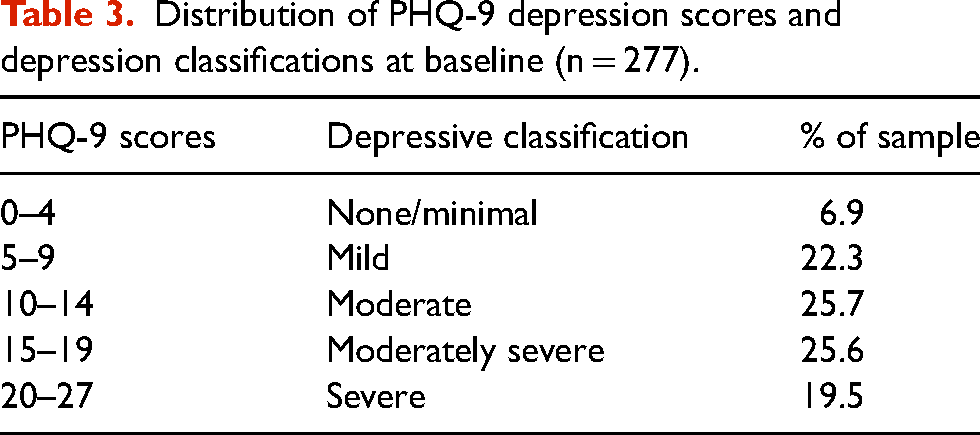
Distribution of PHQ-9 depression scores and depression classifications at baseline (n = 277).
About 50.7% of this sample were female, 48.2% were male and 1.1% reported being non-binary. The average age of this sample was 39.2 years (range = 18–77). Chronic pain (42.4%) and anxiety disorders (42.1%) were the two most commonly reported primary conditions while 10.8% reported PTSD and 1.4% reported MS. 3.2% were classified as ‘other’ (6 of these reported major depression and 3 people did not specify their condition).
In addition, 85.3% of the sample reported at least one additional comorbid or secondary condition and the mean number of comorbid conditions reported across the entire sample was 2.7 (range = 0–19). 28.4% of the sample reported one comorbid condition, 36.0% reported two to four and 20.9% reported five or more (comorbid) secondary conditions. The most commonly reported secondary conditions were: back and/ or neck pain (24.5%), generalised anxiety disorder (18.3%), insomnia (23.4%) and stress (28.4%).
Baseline quality of life
The EQ-5D-5L contains five items, each assessed on a five-point scale, and responses to these questions in the current sample are summarised in Table 2. The number of people reporting no problems ranged from 15.4% (for anxiety/ depression) to 66.2% (for self-care) while relatively few people reported severe problems on these dimensions (0–3.8%).
Ratings on each of these five health categories is reduced to a single score, the EQ-5D-5L Index score or value, using weighted scores derived from (country-specific consensus judgements of the relative desirability of each of these disease states. For these analyses, we calculate Index Values using values from Devlin et al. (2016). The maximum score/value is 1.0 representing best perceived health. At baseline, the mean EQ-5D-5L Index score was 0.70 (std dev 0.23).
The mean rating of perceived health on the 0–100 scale VAS (part of the EQ-5D-5L instrument) at baseline was 53.21 (std dev. 20.5).
Baseline depression rating
Depression was assessed using the PHQ-9 questionnaire. The mean rating for the PHQ-9 out of a maximum total score of 27 at baseline for n = 277 participants was 13.69 (std. dev. 6.18). The reliability of this scale in the current sample was excellent (α = 0.86). The distribution of the PHQ depression scores and depressive classification for 277 participants is set out in Table 3.
Baseline sleep quality
Reports of sleep quality were available for 277 individuals at treatment entry and the mean score on the four-item scale was 12.75 (std. dev. = 3.69) out of a possible score of 20 (indicating the worst possible sleep). Cronbach's alpha coefficient α = 0.80 indicating excellent reliability.
At baseline, many reported severe problems with sleep: 57.4% reported that their sleep patterns interfered with their daily activities ‘much’ or ‘very much’, while 36.8% reported ‘severe’/‘very severe’ problems falling asleep, 38.2% experienced ‘severe’/‘very severe’ problems staying asleep and 36.8% reported ‘severe’/‘very severe’ problems waking up too early.
Cannabis product characteristics
As of 1 September 2022, the formulary of products included in this study included a total of 20 products varying in the route of administration (oil vs. flower) and concentrations of THC and CBD: there were eight oils (two CBD dominant, three balanced and three THC dominant), nine flower products (all THC dominant) and three tablets (one THC dominant, two CBD dominant). Prescription data were available for 223 individuals who received prescriptions for a total of 321 products: 49.3% received one product, 26.3% received two products and 24.4% received three or more products. The majority of products prescribed were oils (65.1%) with the most frequently prescribed oils being classified as CBD dominant (76.6% of oils; 49.8% of all prescriptions), while the remaining prescriptions were classified as THC dominant flower.
Health-related outcomes at 3-month follow-up
By 1 September 2022, 3-month follow-up data were available for 71 individuals (25.5% of all patients) enrolled in this study. The characteristics of this subset were broadly similar to those for the whole sample: 49.3% were male, 49.3% female and one individual identified as non-binary. Their average age was 40.7 years (range = 20–76). About 49.3% reported a primary medical condition of chronic pain, 32.4% anxiety, 11.3% PTSD, 2.8% MS and 4.2% ‘other’.
Table 4 summarises mean scores for measures of quality of life (EQ-5D-5L Index), perceived health (EQ-5D-5L VAS), mood/depression (PHQ-9) and sleep quality (sleep 4-item scale) at baseline and at 3-month follow-up. Differences between these scores at baseline (treatment entry) and at 3-month follow-up were assessed using a paired t-test and the results of these analyses are summarised in Table 4. Effect sizes, assessed using Cohen's d, ranged from 0.57 to 0.95 and in all cases indicated a substantial improvement in general health, quality of life, mood and sleep.
Comparison of mean ratings of general health, quality of life, mood/depression and sleep quality at baseline and 3-month follow-up (n = 71).

Safety
There were three adverse reactions over the time period of February to end of August 2022. Two of these were considered mild and one moderate in terms of level of severity by the treating doctors. None of these are considered serious adverse reactions in accordance with the definitions provided by the National Health and Medical Research Council (NHMRC, 2016).
One patient, a 34-year-old female, who was prescribed a high THC flower (THC 22% [w/w]: CBD <1% [w/w]; dosage 0.3 g PRN, maximum dosage TDS) reported increased anxiety 10–15 min after use of the medicine a week after starting MC. The anxiety lasted a few hours then resolved, with no further issues with anxiety after cessation of the MC. The patient discontinued MC use and did not continue in the study.
Another patient, a 43-year-old male who was prescribed a high THC flower product (THC 20% [w/w]: CBD <1% [w/w]; dosage up to 0.5g daily), reported increased anxiety with some paranoid features, and difficulty moving due to muscle heaviness 3 weeks after initially starting MC. The symptoms lasted for 2 hours. This was a one-off episode. At the follow-up visit with his doctor, his cannabis prescription was subsequently altered to two different THC-dominant flowers and CBD oil.
A third adverse reaction, considered moderate in terms of level of severity by his treating doctor, was reported in an 18-year-old male who was prescribed high THC oil for use at night (dosage 0.1 ml, product containing THC 26 mg/ml: CBD <1 mg/ml, plus MCT oil) and a high CBD oil (100 mg/ml, dosage 0.2–0.3 ml/day) for use during the day. Six days after starting on MC, he developed tachycardia, shortness of breath and headaches that lasted a day, with symptoms resolving the next day. He stopped taking the THC MC product the next day. He returned for a doctor consultation 4 weeks later. He remained on the CBD oil with no further problems and continues in the study.
Discussion
In this paper, we have described the study methodology for Project Twenty21 Australia, an observational study that commenced early in 2022. The study is focused on obtaining RWD on safety and effectiveness of MC in patients suffering from four main complaints: chronic pain, anxiety, PTSD or MS. We have also described the baseline characteristics of the 277 participants enrolled in the study by the end of August 2022, and present some early, preliminary data, an analysis of changes in measures of general health, sleep and mood after 3 months of treatment for 71 participants.
Baseline characteristics
Overall, a feature of this cohort is their relatively poor health, in relation to quality of life (including many of its dimensions), level of mood and sleep quality and comorbidities. The majority of the sample (85.3%) reported at least one additional comorbid or secondary condition and the mean number of comorbid conditions reported across the entire sample was 2.7 (range = 0–19), with one-fifth reporting five or more (comorbid) secondary conditions. The most commonly reported secondary conditions were: back and/ or neck pain (24.5%), generalised anxiety disorder (18.3%), insomnia (23.4%) and stress (28.4%). It is known that chronic pain, anxiety, depression and insomnia can be comorbid (Arrow et al., 2006; Baglioni et al., 2011; Finan and Smith, 2013; Khurshid, 2018; O’Brien and Blair, 2021; Pollack, 2005; Russo et al., 2007; Taylor et al., 2005; van Mill et al., 2010). For example, compared with the general population, people suffering from chronic pain are up to four times more likely to meet diagnostic criteria for mood and anxiety disorders (Arrow et al., 2006). Our findings, then, are not surprising.
Quality of life
The EQ-5D-5L quality of life instrument asks participants to rate the extent of their problems across five dimensions (mobility, self-care, usual activities, pain/discomfort, anxiety/depression). The relatively high proportions of participants who responded that the extent of their problems were ‘moderate’, ‘severe’ or ‘extreme’ (47.9% for usual activities, 58.8% for pain/discomfort and 73.3% for anxiety/depression and 24.9% for mobility) indicates that the study sample are substantially impacted in daily life. Around 35.8% of respondents indicated their anxiety/depression was severe or extreme, whilst 22.0% indicated their pain was severe or extreme on the EQ-5D-5L. Given that this cohort is focused on four conditions: chronic pain, anxiety, PTSD and MS (chronic pain is a feature of MS), again these figures are not surprising.
The EQ-5D-5L Index is a summary derived by reducing ratings on each of the five health categories to a single overall score, using consensus judgements of the relative desirability of each of these disease states. McCaffrey et al. (2016) have previously applied the weights reported by Devlin et al. (2016) to a sample of over 2900 respondents in South Australia and it is, therefore, possible to compare ratings in the current sample with population-based norms for (South) Australia. Several features of these comparisons are noteworthy: firstly, the maximum score (1.00) representing no problems in any of the five dimensions was reported by 42.8% of the Australian normative sample but only 1 respondent in the current sample. Secondly, the mean rating on this utility score for our study sample was 0.70 compared with 0.91 for the normative South Australian sample, indicating that the study sample have a poorer quality of life compared with the Australian general population.
General health rating
The EQ-5D-5L contains a visual analog scale which asks individuals to rate their health today from 0 (the worse health they can imagine) to 100 (the best health they can imagine). Mean score on this scale, across the entire sample (n = 277), was 53.2 (std dev 20.5, compared with a mean rating of 78.6 for the general population (McCaffrey et al., 2016), again reinforcing the finding that quality of life of the sample of patients seeking treatment with MC is lower than the normal Australian population.
Depression
Results from the EQ-5D-5L and PHQ-9 at baseline are consistent and indicate that anxiety and depression is a feature of those enrolled in the study. That in itself is not necessarily remarkable as the study is targeting patients prescribed MC for anxiety, PTSD, chronic pain and MS, and these conditions can be comorbid. Research indicates that anxiety and depression are often comorbid (Pollack, 2005), and so too is chronic pain and depression (Arrow et al., 2006). In MS, depression and pain are very prevalent and often co-occur (Alschuler et al., 2013).
Results of the EQ-5D-5L indicate that 73.3% of the overall study cohort rated anxiety/depression as moderate or severe or extreme (Table 2). Results of the PHQ-9 depression questionnaire at baseline indicated that only 6.9% of the sample had none or minimal depression, whilst the majority of the sample would be classified as mild to severe: mild (22.3% respondents), moderate (25.7% respondents), moderately severe (25.6% respondents) or severe (19.5%) in terms of depressive classification (Table 3). Average baseline PHQ-9 score across the sample cohort was 13.69 (std dev 6.18) indicating a ‘moderate’ depressive classification.
Sleep
Finally, the overall score on the 4-item sleep quality questionnaire was 12.75 at baseline, out of a maximum possible score of 20, indicating sub-optimal sleep quality. Insomnia is often co-morbid with chronic pain (Finan and Smith, 2013; Russo et al., 2007), anxiety and depression (Baglioni et al., 2011; Finan and Smith, 2013; Khurshid, 2018; Taylor et al., 2005) and has been found to be a feature of MS (Drerup et al., 2021). Given that this cohort are those with chronic pain, anxiety, PTSD and MS, it is expected that sleep quality would be sub-optimal.
Changes over 3 months: preliminary findings for quality of life
Our preliminary results for 71 participants who had completed their 3-month follow-up by the end of August 2022 are promising. They indicate that MC use over a 3-month period was associated with statistically significant improvements in quality of life (as measured by the EQ-5D-5L index), perceived general health (as measured by the EQ-5D-5L VAS), mood/depression (as measured by the PHQ-9) and sleep quality (as measured by the 4-item sleep questionnaire). Effect sizes, assessed using Cohen's d, ranged from 0.57 to 0.95 and in all cases indicated a substantial improvement in general health, quality of life, mood and sleep (Table 4).
In our study, the mean change in the EQ-5D-5L VAS scale describing overall perceived quality of health was 11.2. This is not dissimilar to the finding in a New Zealand audit of patients prescribed CBD oil: in 253 patients followed up, there was a mean increase of 13.6 points on the EuroQol-VAS scale describing overall quality of health (p < 0.001) (Gulbransen et al., 2020). That study also found that 12.3% reported improved sleep (Gulbransen et al., 2020).
Adverse events or reactions
According to the Australian National Health and Medical Research Council, an adverse reaction is defined as ‘Any untoward and unintended response to an investigational medicinal product related to any dose administered’ and further, that ‘All adverse events judged by either the reporting investigator or the sponsor as having a reasonable possibility of a causal relationship’. In contrast, an adverse event is defined as ‘any untoward medical occurrence in a patient or clinical trial participant administered a medicinal product and that does not necessarily have a causal relationship with this treatment’ (NHMRC, 2016).
Much of the research into adverse effects of cannabis relate to ‘recreational use’ or ‘adult use’. Recreational/adult use is typically related to smoking of (high THC cultivars of) cannabis. For example, a US survey of 999 undergraduate students who were predominantly (>90%) recreational cannabis users found the following to be the top four acute adverse reactions: coughing fit (prevalence 62.23%), anxiety (53.19%), paranoia (50.30%) and off-balance/unsteady (48.88%). The prevalence of headache was 21.12%, tachycardia (38.16%), trouble breathing (23.06%) (La France et al., 2020).
RWD collected on prescribed cannabis products, in its various forms, is needed to inform clinical practice. Our study to date indicates that the reported adverse reaction rate is relatively low: three out of 278 participants experienced adverse reactions over the February to end of August 2022 time period for which we are reporting, and these were judged by their treating doctors to be associated with their cannabis medicine. Two were related to vaporising of high THC flower and one was related to high THC oral oil. These were either mild (two) or moderate (one) in terms of level of severity as determined by their treating doctor, and all resolved in a relatively short time frame. The symptoms reported included headache, muscle heaviness, increased anxiety, tachycardia and shortness of breath. Most of these are known adverse side effects of cannabis and THC (the main phytocannabinoid in cannabis associated with potentially euphoric effects) (La France et al., 2020; MacCallum and Russo, 2018).
The three adverse reactions occurred within the first month of starting MC products containing THC (two within the first week, another within 3 weeks). Often MC adverse reactions/events are related to dosage; it is possible that these adverse reactions were related to beginning on a dosage that was simply too high for these three participants. This does bring home some important points. Firstly, some individuals may be more sensitive than others to MC, and in particular to THC. Secondly, because of individual differences in relation to endocannabinoid system functioning, MC needs to be individualised to the patient, and there is an element of trial and error associated with the dosing of cannabis – what is an effective dosage for one person may not be effective for another. Thirdly, MC is not suitable for everyone, in particular as there can be adverse/side effects (dose-dependent) associated in particular with THC. Side effects can also be found with CBD.
The New Zealand study mentioned previously found that adverse effects were reported in 9.9% of 253 patients prescribed CBD and these were not serious; the most common ones being sedation (2.0%) and vivid dreams (2.0%). Positive effects were reported in 15.1% of participants (improved sleep 12.3%, improved appetite 2.8%) (Gulbransen et al., 2020).
Limitations
There are several limitations to the results reported in this paper. The observational nature of this study means there is no control group and the participants and observers are unblinded. This clearly introduces bias. We report preliminary 3-month follow-up results for quality of life for a small number of participants only and we have aggregated all data to report simply on effectiveness of MC as a whole across the whole cohort of participants. These results simply give some indication of whether MC might improve quality of life in a very broad sense, across this cohort. At this point, we have not stratified the data according to main category of condition, nor investigated whether oils or flower, or particular categories of oils (high CBD, balanced or high THC oils) might be more effective, and at what dosage. MC products differ in their active ingredients (including types and amounts of phytocannabinoids and terpenes) and dosage impacts on effectiveness. The dosage generally must be individualised to the patient. Thus, some caution should be taken in the interpretation of these preliminary results.
These more specific issues will be addressed in later analyses, when there are greater participant numbers and therefore a larger data set.
Nonetheless, we have established the feasibility of conducting an observational study investigating the effectiveness of MC in an Australian population.
Conclusion
Despite barriers, including price, substantial numbers of Australians are seeking MC. From our data, those Australian patients seeking MC for chronic pain, anxiety, PTSD or MS have substantially reduced quality of life compared with the general population and are likely to report a number of secondary or comorbid conditions. Early, preliminary evidence from this observational study suggests that people receiving MC experience substantial improvements in quality of life and general health, as well as sleep and mood. Estimated effect sizes are large and consistent with those from other observational studies. We have established the feasibility of collecting observational data from MC users in Australia.
Given the widespread and growing use of MC and relatively few clinical trials, findings from observational studies such as this one will become increasingly important and should be more readily accepted as the basis for decisions about availability and access to these products, including funding.
Footnotes
Acknowledgements
Project Twenty21 Australia is conducted by the Australasian College of Cannabinoid Medicine (ACCM), a subsidiary of Releaf Group Ltd, with study participants recruited from Releaf Clinics in Victoria and Queensland, Australia, also part of Releaf Group Ltd Project Twenty21 Australia is supported by the following Australian medicinal cannabis companies: Adelaide Compounding Pharmacy (Int) Pty Ltd, Beacon Medical Australia Pty Ltd, Cann Global Pty Ltd and Levin Health Ltd Statistical analysis of the de-identified study data was conducted by Professor Michael Lynskey (UK, Drug Science Org).
Declarations
Kylie O’Brien PhD was the Chief Scientific Officer for Releaf Group Ltd and Mihindu Jayasuriya MBBS is the Chief Medical Officer for Releaf Group Ltd. Dr Jayasuriya is one of the clinicians involved in prescribing MC for patients involved in Project Twenty21 Australia (he is one of over 10 doctors who have been involved in prescribing MC for patients enrolled in Project Twenty21 Australia). They both own shares in Releaf Group Ltd. Three of the products contained within the Project Formulary are medicinal cannabis products of Releaf Dispensaries Ltd, a subsidiary of Releaf Group Ltd. All participants in Project Twenty21 Australia are patients who have been prescribed MC through Releaf Clinics in Australia, and in most cases, dispensed through Releaf Dispensaries.
Declaration of conflicting interests
The authors declared no potential conflicts of interest with respect to the research, authorship, and/or publication of this article.
Funding
The authors received no financial support for the research, authorship, and/or publication of this article.