



Abstract
Background
Statins are perceived as potential etiological factors for acute pancreatitis (AP), but recent evidence suggests the opposite. Our aim was to evaluate the association between statin use and risk of AP in observational studies.
Methods
Medline, Scopus, and Web of Science were searched for cohort (C) and case-control (CC) studies evaluating statins as intervention and AP as outcome. Pooled adjusted odds ratios (ORs) with corresponding 95% confidence intervals (CIs) were calculated.
Results
Thirteen studies (seven CC, six C) with 34,899 AP patients and 5,377,894 controls were included. Prevalence of statin use was 9.8% among AP patients and 25% among controls. Pooled adjusted OR was 1.00 (95% CI = 0.63 to 1.59) with considerable heterogeneity (I2 = 98%). CC studies were associated with increased AP risk (OR = 1.33; 95% CI = 1.20 to 1.47), unlike C studies (OR = 0.69; 95% CI = 0.37 to 1.31). No association with increased risk was found for studies from Western countries (OR = 0.90; 95% CI = 0.52 to 1.56), unlike for studies conducted in Asia (OR = 1.39; 95% CI = 1.10 to 1.75).
Conclusion
Statin use is not associated with increased risk of AP. Increased risk was limited to CC studies, which are more prone to bias, while C studies showed no global effect. Further research is needed to clarify whether statin type, dosage, treatment duration or AP etiology might account for this difference.
Key summary
Statins are widely perceived as risk factors for developing acute pancreatitis (AP), but this is mainly based on weak scientific evidence. Recent evidence suggests that pleiotropic effects of statins, such as anti-inflammatory, may have a protective role against AP. Data from observational studies do not confirm a significant association between statins and risk of developing AP. Additional research designed in a prospective fashion is needed to clarify whether the type of statins used, dosage, duration of treatment and other characteristics have any effects on this association.
Introduction
Acute pancreatitis (AP) is a common inflammatory gastrointestinal disease 1 with rising incidence that is most frequently caused by gallstone disease or alcohol consumption. A variety of other etiological factors have been reported, with medications being a relatively uncommon cause accounting for approximately up to 2% of cases.2,3 A vast number of different drugs have been reported to be associated with AP. However, given the rather low incidence of drug-induced pancreatitis, as well as evidence being frequently based on single case-reports and case-series studies with lack of adequate epidemiological studies, these associations are mostly uncertain and the extent of risk for disease remains unknown.
Statins have historically been perceived as drugs that increase the risk of AP.4,5 Statins are widely used in various indications both for primary and secondary prevention of cardiovascular diseases as lipid-lowering agents that act by inhibiting the enzyme 3-hydroxy-3-methyl-glutarl-coenzyme A reductase (HMG-CoA reductase). More recent evidence from observational studies supported by a meta-analysis of randomized controlled trials suggests that statins may instead reduce the risk of AP.6–8 A large prospective cohort study published in 2013 showed that statin use may be associated with a less severe course of disease and may even decrease mortality. 6 These findings are supported by both basic and clinical research findings pointing to different aspects of statin activity. Besides lowering the concentration of low-density lipoprotein cholesterol, statins also show important anti-inflammatory, anti-thrombotic, antioxidant, and anti-apoptotic effects.9–11 These anti-inflammatory properties are mainly acquired through decreased production of proinflammatory cytokines, such as interleukin 1, interleukin 6, and tumor necrosis factor alpha. 12 Pathophysiologic processes during AP are based on the same mechanisms with local ischemia and inflammation being responsible for development of pancreatic necrosis and excessive cytokine release leading to systemic inflammatory response syndrome and organ failure, which ultimately define disease severity and mortality.13,14 Therefore, one might speculate that statin users may benefit from the described pleiotropic effects by reducing the risk of AP and improving clinical outcomes once AP is established. 15
The inconsistency of available data on the use of statins and risk of AP, as well as the perception of statins being adversely related to AP by most clinicians, justify our aim to perform a systematic review of the literature and meta-analysis of observational studies to assess the association between the use of statins and the risk of developing AP. This project was developed as part of the Pancreas 2000 Research Program.
Materials and methods
We included cohort (C) and case-control (CC) studies irrespective of language and publication status with available data for a quantitative synthesis. Identified studies had to: (1) evaluate exposure to statins in a cohort or population that included internal controls; (2) evaluate the occurrence or diagnosis of AP; and (3) report the relative risk (RR) or odds ratio (OR) with confidence interval (CI), or original raw data sufficient to evaluate the hypothesized effect. The outcome measured was the diagnosis of AP. The exposure assessed included the use of statins regardless of the type, dosage and length of exposure.
We conducted electronic searches of Medline, Web of Science and Scopus from inception to April 2017. The specific search strategies are detailed in Appendix 1. Two authors independently screened titles of identified studies to ascertain their relevance. Abstracts and/or full texts of selected potentially relevant articles were further assessed for inclusion and exclusion criteria. Reference lists of the identified relevant articles were hand-searched to look for additional studies. Disagreements regarding study inclusion were solved by consulting a third review author.
Two review authors extracted and validated data independently using extraction sheet forms designed specifically for this purpose. For studies reported in more than one publication, the one with the most complete data was used. Potential disparities within the extracted data were resolved by discussion and consultation with a third author. The following data from included studies were extracted: (1) study: year of publication, language, study accrual period, and study design; (2) cases: number, gender, age, definition (i.e. patient records, clinical charts, or other means), and severity of acute pancreatitis; (3) controls: number, source, and matching design; (4) exposure: definition, type, dosage, and length; and (5) type of outcome measure. Quality assessment was performed using the Newcastle-Ottawa scale for CC and C studies. Studies achieving a score > 6 were defined as studies of high methodological quality and low risk of bias, while studies with a lesser score were categorized as low quality and high risk of bias studies.
A meta-analysis of included studies was performed using the software package Comprehensive Meta-Analysis (Biostat, Englewood, NJ, USA). Calculations of the pooled estimates (OR with 95% CI) were performed using the DerSimonian-Liard method and a random-effects model. In addition to within-study variance, the random-effects model considers heterogeneity among studies and gives more conservative estimates. The quantity of heterogeneity was assessed by means of the I2 value. The I2 describes the percentage of total variation across studies that is caused by heterogeneity and not by chance. An I2 value of 25% or lower was considered as trivial heterogeneity, and an I2 value of 75% or higher as important heterogeneity. A p value < 0.05 was accepted as statistically significant. Planned sensitivity analyses were performed regarding type of study (CC vs C), country of origin (Western countries vs Asian countries), and quality assessment (high vs low quality). We assessed reporting bias by using the Begg and Mazumdar test. On a post-hoc basis a sensitivity analysis among C studies was performed by exclusion of the Wu et al. 16 study based on a largely different effect estimate and high heterogeneity among included studies.
Results
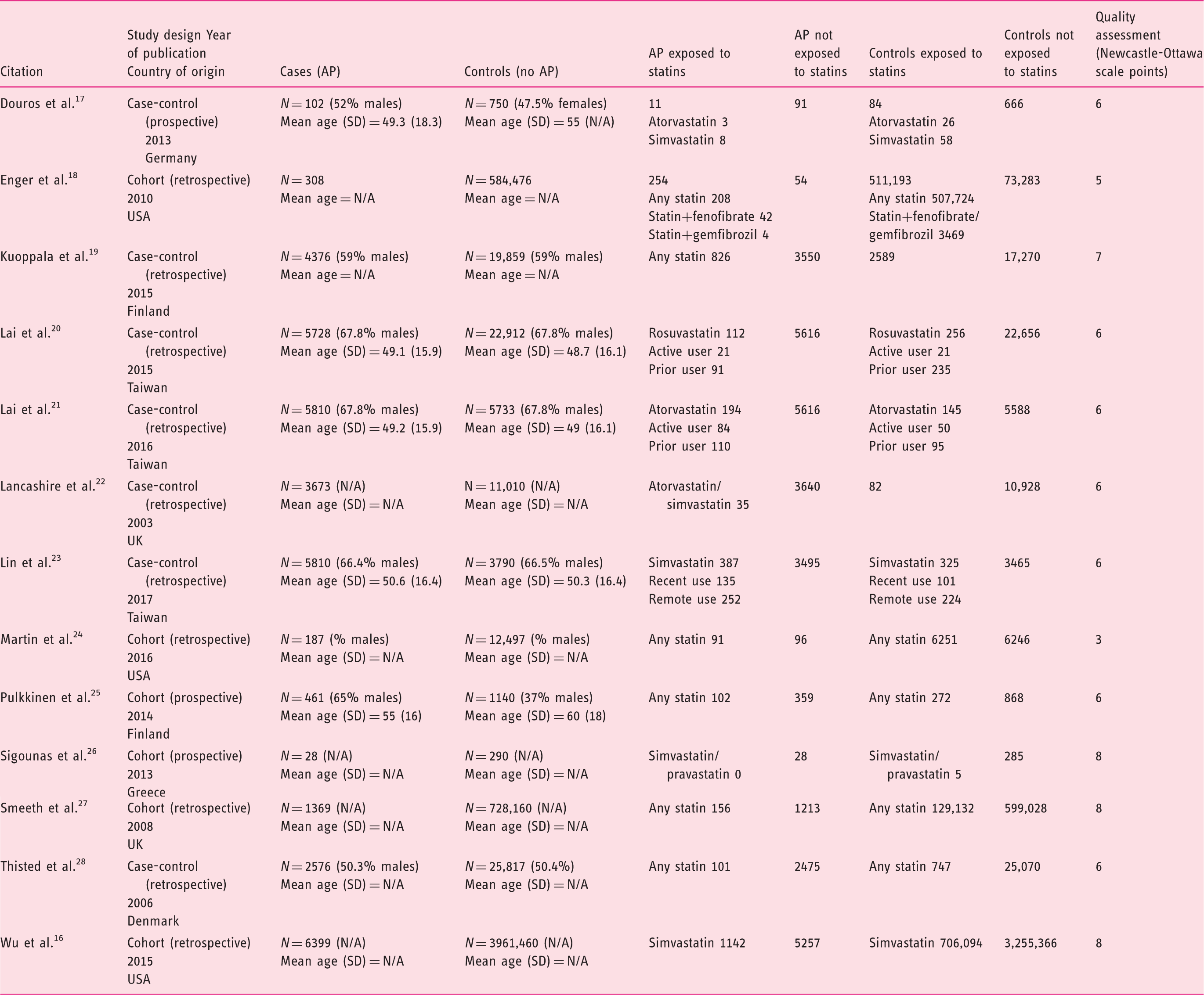
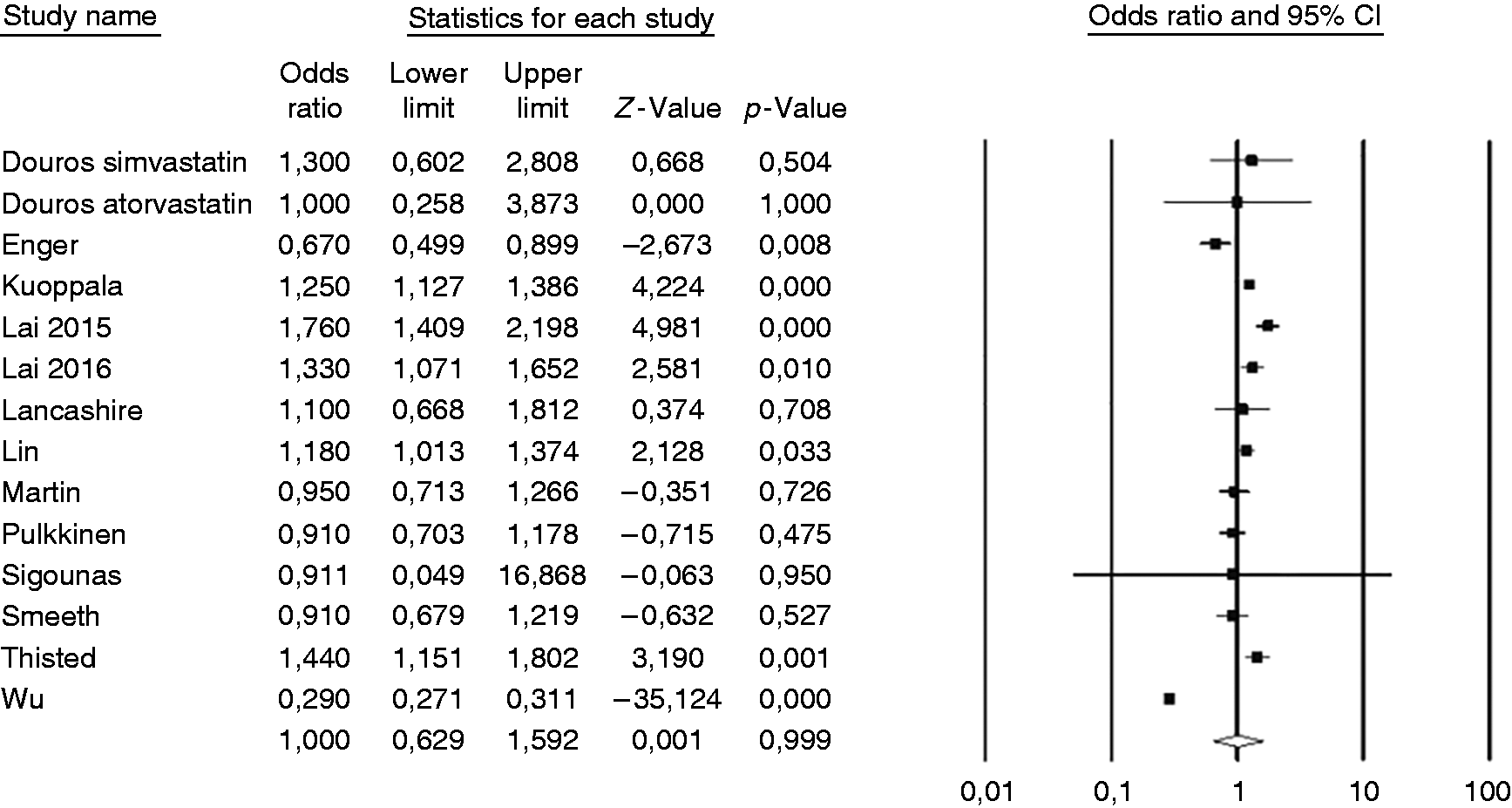
A total of 1796 records were identified through electronic database search. We excluded 1716 duplicates or clearly irrelevant studies by reading titles and abstracts. The remaining 80 records were assessed for eligibility and an additional 67 studies were excluded because they did not meet inclusion criteria. Of the remaining 13 studies that contributed to the final meta-analysis, seven were CC studies and six were C studies (Figure 1). A total of 34,899 patients with AP and 5,377,894 controls were included. A summary of included studies with study information, baseline population characteristics, type of exposure, data synthesis and quality assessment scores are provided in Table 1. The pooled prevalence of statin use was 9.8% (3411/34,899) among AP patients and 25% (1,357,175/5,377,894) among controls. The overall analysis showed no significant effect of statins on the occurrence of AP with a pooled OR 1.00 (95% CI 0.63 to 1.59) and extremely high heterogeneity across studies (I 2 = 98.6%) (Figure 2). However, when separating the analysis according to study design, CC studies confirmed a significant difference, with a 32.6% increased risk of AP among statin users. Out of 26,147 cases of AP, statins were used by 1666 patients compared to 4228 statin users among 89,871 controls (OR 1.33; 95% CI 1.99 to 1.47; p < 0.0001; I 2 = 34.5%). C studies, on the other hand, showed a nonsignificant 31% risk reduction for AP among patients taking statins with 1745 out of 8752 cases of AP taking statins compared to 1,352,947 out of 5,288,023 controls (OR 0.69; 95% CI 0.37 to 1.31; p = 0.26; I 2 = 97.3%). A post-hoc analysis of cohort studies with exclusion of the Wu et al.
16
study showed a significant reduction in the incidence of AP with OR 0.86 (95% CI 0.75 to 0.99; p = 0.03) and no heterogeneity (I 2 = 0%).
Database search and selection of studies. Summary of included studies. AP: acute pancreatitis; N/A: not available; SD: standard deviation; UK: United Kingdom; USA: United States of America. Overall analysis with pooled odds ratio (OR) showing no significant influence of statins on occurrence of acute pancreatitis (AP), with 3411 of statin users among 34,899 cases of AP compared to 1,357,175 out of 5,377,894 controls (OR 1.00; 95% confidence interval (CI) 0.63 to 1.59; p = 0.99; I 2 = 98.6%).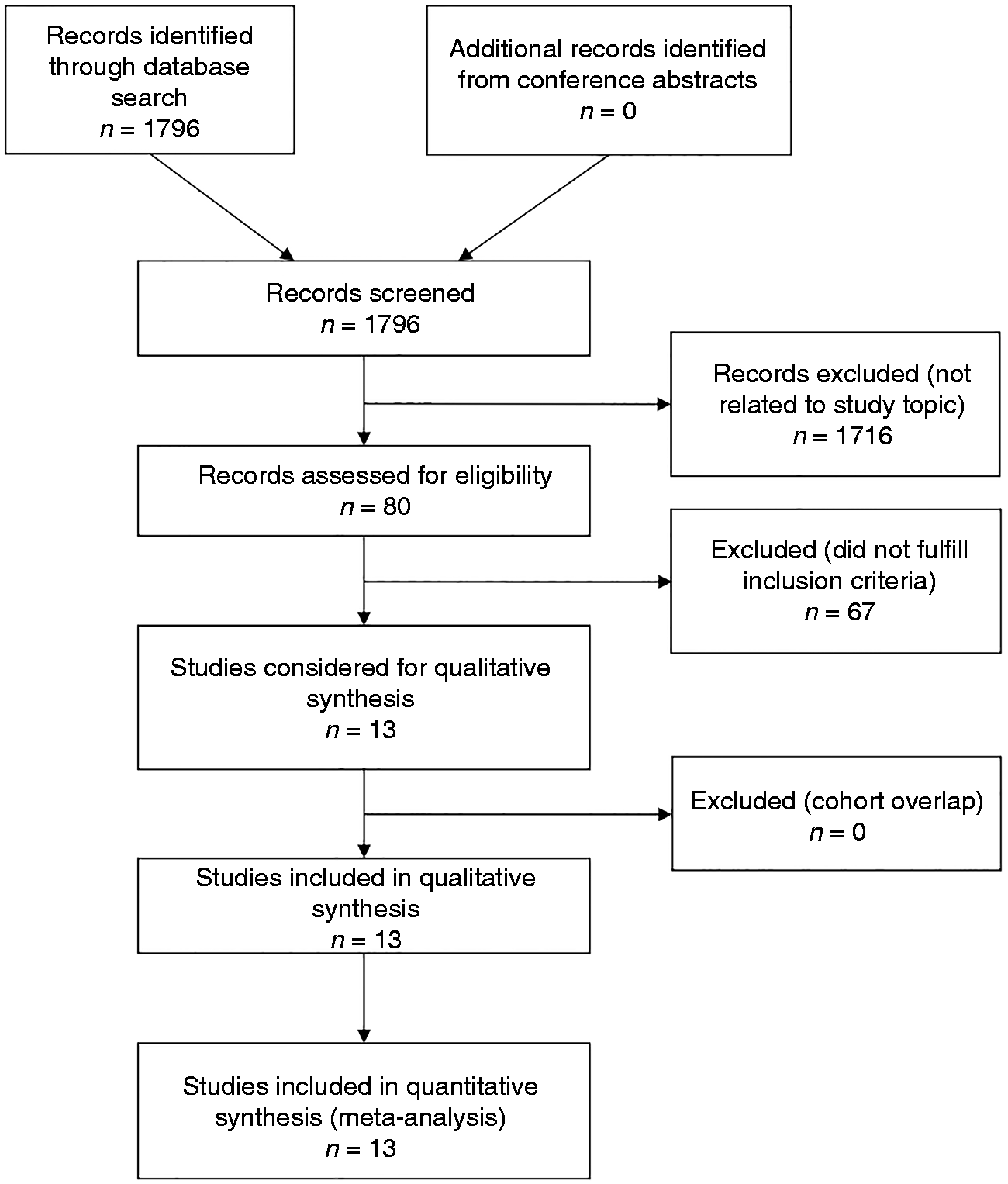
Subgroup analysis based on country of origin showed an increased risk of AP associated with the use of statins within studies performed in Asian countries with an OR 1.39 (95% CI 1.10 to 1.75; p = 0.006) (Figure 3). This analysis is based on three studies with rather high heterogeneity (I 2 = 76.3%). Ten studies originating from Western European and North American countries proved no significant difference of occurrence of AP between statin users and non-users OR 0.90 (95% CI 0.52 to 1.56; p = 0.71), again showing high heterogeneity between the included studies (I 2 = 98.5%) (Figure 4).
Subgroup analysis of studies from Asian countries indicating that use of statins significantly increases the risk of acute pancreatitis (693/15,420 cases vs 726/32,435 controls). CI: confidence interval; OR: odds ratio. Forest plot showing results of subgroup analysis performed on studies originating from Western European and North American countries. Meta-analysis showed no significant influence of statins on occurrence of acute pancreatitis. We compared 2718/19,479 cases vs 1,356,449/5,345,459 controls receiving statin treatment. CI: confidence interval; OR: odds ratio.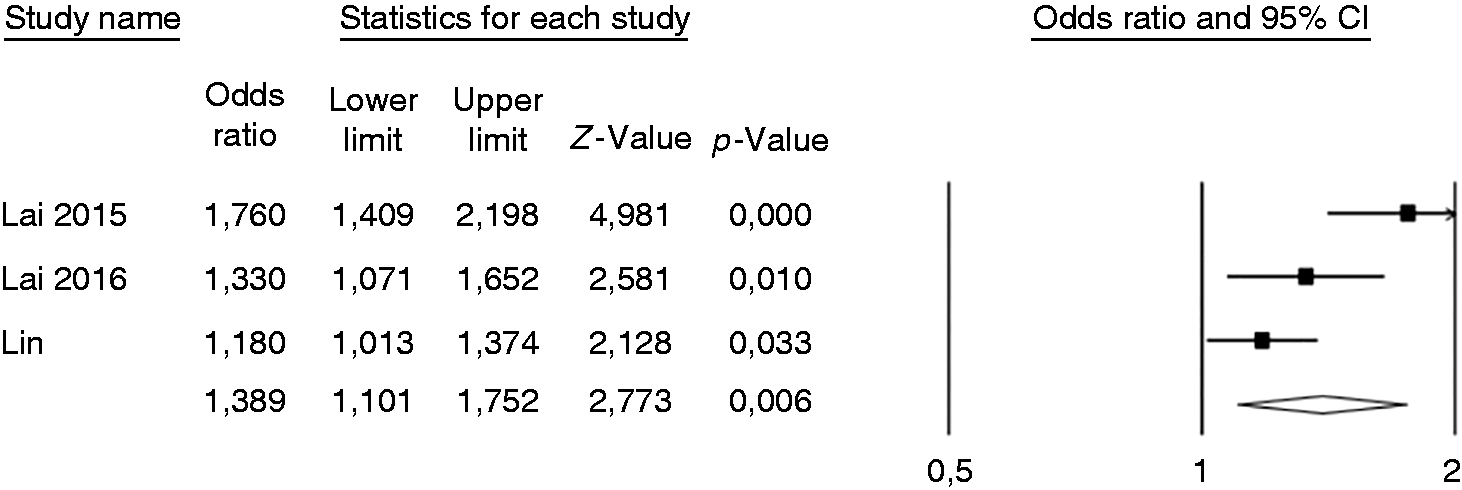

Four studies16,19,29,30 were assessed as high quality, and meta-analysis of this subgroup showed no significant effect of statins on risk of AP (OR 0.71; 95% CI 0.24 to 2.05; p = 0.52) and extreme heterogeneity (I2 = 99%). The rest of the included studies were judged as of lower quality and with higher risk of bias. No significant difference in occurrence of AP between statin users and non-users was noted either (OR 1.14; 95% CI 0.95 to 1.38; p = 0.16), with heterogeneity being high (I2 = 75%).
There was evidence of a publication bias, with studies reporting an increased risk of AP associated with the use of statins more likely to be published than studies with negative results (Kendall’s tau = –0.55: p = 0.006) (see funnel plot in Figure 5).
Funnel plot for sensitivity analysis assessing publication bias indicating that studies showing an increased risk of acute pancreatitis among statin users were more likely to be published than studies showing no association (Kendall’s tau = –0.55: p = 0.006).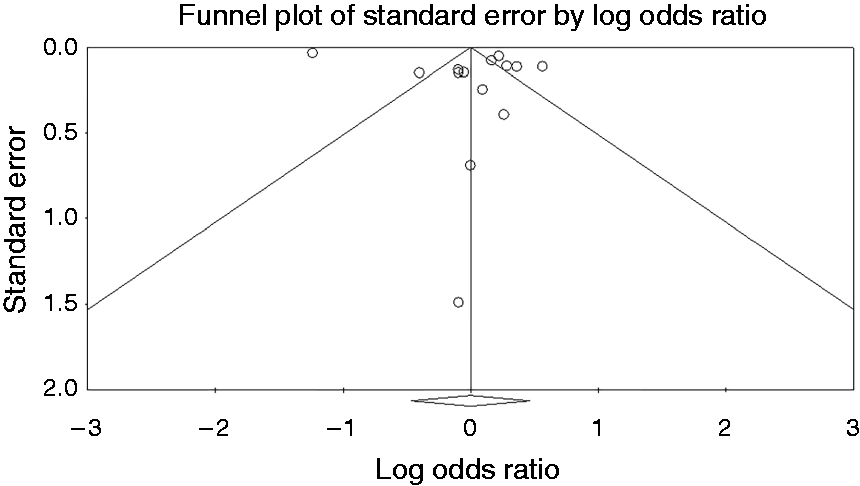
Discussion
This is the first meta-analysis of observational studies analyzing the association between the use of statins and the risk of developing AP. The present results do not suggest a significant association between statin use and the risk of AP. Our results of an apparent risk limited to CC studies, with a trend toward a possible protective effect in C studies, might be related to the fact that CC studies are more prone to bias. Based on the present findings, and on available conflicting results of previously published research, it is not possible to determine whether statins act as risk factors for AP or have a protective role.
As anticipated, tests for heterogeneity showed an extremely high percentage of total variation across studies, despite using a random-effects model. We tried to investigate this heterogeneity by performing different pre-planned sensitivity analyses. When dividing the studies based on design, a high heterogeneity persisted among C studies. Most C studies reported no significant difference between the compared groups, except for the Wu et al. 16 study, which demonstrated a significant risk reduction of AP among statin users. Therefore, we made a post-hoc sensitivity analysis by excluding the Wu et al. 16 study. Such meta-analysis showed a significant reduction of the incidence of AP among statin users. This can be explained by null heterogeneity among studies and consequent use of the fixed-effect model of meta-analysis in contrast to the original meta-analysis of C studies that was affected by high heterogeneity and a random-effects model had to be used. Besides the clear differences in methodological quality, there are substantial differences in study populations as well. In the Smeeth et al.30 study, a population-based cohort is compared to controls from large randomized trials, while the Pulkkinen et al. 28 study used only symptomatic gallstone patients as controls. Other studies based their analysis on data obtained from various health care system registries.
Sensitivity analysis according to country of origin showed that in studies performed in Asian countries the use of statins is associated with an increased risk of AP. However, this result is based on only three CC studies with potential high risk of bias. All other included studies originating from Western European and North American countries confirmed no specific association between the use of statins and risk of AP. However, this sensitivity analysis does not contribute to the explanation of the observed heterogeneity, which was still important in these subgroups.
Indeed, as the performed sensitivity analyses only partly explain the high heterogeneity between studies, other potential confounding factors could have affected the results including type and dosage of statin used, duration and compliance with treatment, definition and etiology of AP, missing data, comorbidities and other risk factors affecting clinical outcomes of included participants.
Among these factors, the definition of AP might represent a critical limitation of some studies, as an increase of circulating levels of pancreatic enzymes might have been erroneously associated with the diagnosis of AP in some instances, especially in retrospective studies based in registries.
Notably, most of the included studies have been assessed as being of low methodological quality. In most instances, the studies failed to report an adequate definition of cases and to clarify the representativeness of the exposed cohort. Furthermore, lack of adequate outcome assessment and ascertainment of exposure was present in most of the included studies.
Our results do not support the findings from two previous systematic reviews and meta-analyses. Singh and Loke 5 showed an association between statin use and an increased risk of AP, but their results were based mainly on individual case reports and only two observational studies. On the contrary, a more recent meta-analysis of randomized controlled trials showed a protective role of statins regarding the risk of AP. 7 Whether randomized trials are the best option and source of data to assess this association is debatable, since patients are carefully selected and often do not reflect actual real-life circumstances. Furthermore, randomized trials are usually not designed to assess adverse events, especially not rare ones and these are often not adequately reported, which may lead to potentially biased results.
In conclusion, this meta-analysis of observational studies is the largest performed to date showing that available data do not confirm a significant association between the use of statins and the risk of AP. Statins are probably less hazardous than thought in the past, especially because evidence on which such perceptions were based was of very low quality. Further research designed to prospectively evaluate the occurrence of AP among statins users is needed to clarify potential beneficial or harmful effects of statins and to adequately assess whether the type of statins used, dosage, duration of treatment and other characteristics have any effects on this association. In this regard, the ongoing Simvastin in the Prevention of Recurrent Acute Pancreatitis, a Triple-Blind Randomized Controlled Trial (SIMBA) will help to ascertain the role of statins in inflammatory pancreatic disease; SIMBA is a multicenter, randomized, triple-blind trial aiming to compare the incidence of new episodes of AP among patients consuming simvastatin vs placebo. 15
Footnotes
Acknowledgments
This study was conducted through Pancreas 2000, which is a European educational and scientific pancreatology research program initiated by the Karolinska Institutet in Stockholm, Sweden, and the European Pancreatic Club and is supported by United European Gastroenterology.
Declaration of conflicting interests
None declared.
Funding
This research received no specific grant from any funding agency in the public, commercial, or not-for-profit sectors.
Ethics approval
Since this is a meta-analysis, ethical approval was not required.
Informed consent
Since this is a meta-analysis, we didn’t require informed consents to be signed. Therefore, this is not applicable.