




Abstract
Several blogs and websites with a focus on social media marketing suggest that brands can benefit from fostering their Instagram account followers’ fear of missing out (FoMO) by posting ephemeral content. Relying on an online survey with 550 followers of Instagram brand accounts and a scenario-based experiment with 535 participants, this article shows that content ephemerality triggers followers’ FoMO, which increases brand account engagement and brand account fatigue. Brand account engagement (fatigue), in turn, positively (negatively) relates to brand attitude and brand attachment. Further analyses reveal that the total effect of followers’ FoMO on brand attachment is positive and significant, while the total effect of FoMO on brand attitude is not significant. Moreover, content ephemerality has a negative and significant total effect on brand attitude. A key implication of these findings is that it is not beneficial for brands to foster their Instagram account followers’ FoMO by posting ephemeral content.
Keywords
Introduction
Several blogs and websites with a focus on social media marketing include content with headlines such as “Use FOMO in Your Social Media Marketing to Keep Audiences Curious” (Day, 2019). The authors of these articles often encourage social media marketers to increase followers’ fear of missing out (FoMO) and to foster “a sense of urgency” to seize the “potential to generate more traffic or engagement” (Fisher, 2018). Anecdotical evidence further suggests that the publication of ephemeral content engenders FoMO (e.g. Day, 2019; Viral Access, 2019).
Accordingly, formats of ephemeral content now form part of the user experience on many social media platforms. This article focuses on Instagram, which counts more than two billion active accounts per month (Rodriguez, 2021), 90% of whom follow at least one business (Instagram, 2022). Many brands are now “Instagrammable” (Arnould and Dion, 2018: 2) and draw on content formats with different levels of ephemerality to engage their followers. In this article, we define ephemeral content as any communication artifact (e.g. text, picture, video) that provides a time-limited exposure to a message (Chen and Cheung, 2019; Flecha-Ortíz et al., 2021). For example, Instagram allows its users to publish or consume persistent content in the form of posts that remain visible in the long run. Instagram stories, by contrast, represent a form of ephemeral content and disappear after 24 hours unless they are added as a highlight.
Although ephemeral content “has the potential to raise users’ FOMO” (Chen and Cheung, 2019: 68), whether fostering followers’ FoMO through the publication of ephemeral content on Instagram is indeed beneficial for brands is unclear. On the one hand, research has tied FoMO to higher social media engagement (Przybylski et al., 2013). FoMO triggered by content ephemerality could thus strengthen brand followers’ account engagement, which should positively foster their brand attachment and brand attitude (Kumar and Nayak, 2019; McClure and Seock, 2020). On the other hand, research has linked FoMO to adverse consequences, which may negatively affect followers’ brand-related judgments. Bright and Logan (2018), for example, provide evidence for a positive relationship between FoMO and social media fatigue. From a marketing perspective, fostering followers’ FoMO by posting ephemeral content may thus represent a double-edged sword.
Against this background, we aim to answer two research questions: (1) Does the FoMO of brand account followers on Instagram mediate the effect of content ephemerality on followers’ brand account engagement and brand account fatigue? and (2) How do the ephemerality of a brand’s Instagram content and followers’ FoMO ultimately affect followers’ brand attachment and brand attitude? By addressing these research questions, this article extends the literature in three ways.
First, the literature has mostly conceptualized FoMO as a predisposition that is based on general everyday experiences and reflects “a pervasive apprehension that others might be having rewarding experiences from which one is absent” (Przybylski et al., 2013: 1841). This article adopts a narrower perspective on FoMO by considering it a state of mind that is linked to a specific brand and refers to the pervasive apprehension of the brand’s followers of missing out on rewarding experiences on the brand’s Instagram account. This conceptualization is compatible with the view that different sources can trigger FoMO appeals (Hodkinson, 2019). Drawing on Hodkinson’s (2019) taxonomy of external FoMO appeal initiation, we view Instagram brand accounts as impersonal commercial sources through which a brand can influence its followers’ FoMO and, thus, their experiences with and perceptions of the brand on Instagram. This lens on FoMO extends the current literature, which has so far mostly focused on how FoMO affects users’ well-being and relationship with social media at large (for an overview, see Tandon et al., 2021). Specifically, our conceptualization enables us to better understand the brand-related implications of FoMO for brand accounts and fan pages, which nowadays represent a powerful customer relationship management tool (Kefi and Maar, 2020).
Second, although prior studies have shown that brand content can contribute to cultivating the follower–brand relationship on social networking sites (Jahn and Kunz, 2012), research has not yet fully addressed how and to what extent content ephemerality on brand accounts ultimately affects brand-related outcomes. This is striking, because digital content marketing has become a major building block of relationship marketing (Hollebeek and Macky, 2019). This article thus responds to the call of Campbell et al. (2021) for further research on how ephemerality affects outcomes such as brand attitude, thereby highlighting the key role of followers’ FoMO in this regard.
Third, this article shows that followers’ FoMO mediates the positive effect of content ephemerality on followers’ brand account engagement and brand account fatigue. Brand account engagement (fatigue), in turn, positively (negatively) relates to brand attitude and brand attachment. Further analyses reveal that the total effect of followers’ FoMO on brand attachment is positive and significant, while the total effect of FoMO on brand attitude is not significant. In addition, content ephemerality has a negative and significant total effect on brand attitude across the studies.
Taken together, the findings provide a better understanding of the roles of content ephemerality and FoMO in shaping key outcomes that relate to the experiences and perceptions of brand account followers on Instagram. The results also imply that it is not beneficial for brands to foster their Instagram account followers’ FoMO by posting ephemeral content. In addition to this key managerial implication, we draw on the findings of this article to formulate concrete theoretical contributions and avenues for future research.
Theoretical background and hypotheses development
Uses and gratifications theory
Uses and gratifications theory is a media use paradigm that emerged from communication research (Katz, 1959; Katz et al., 1973, 1974). During the past decade, studies have adopted uses and gratifications theory to examine major phenomena in the digital and social media marketing fields, such as electronic word of mouth (Abrantes et al., 2013), influencer marketing (Farivar et al., 2021), different forms of engagement (Dolan et al., 2016; Hollebeek and Macky, 2019), or brand fan page usage intensity (Jahn and Kunz, 2012).
Uses and gratifications theory suggests that the active use of media can help individuals satisfy certain needs through gratifications (Katz et al., 1973). In this respect, gratifications relate to the perceived fulfillment of a need through an activity that an individual performs in a specific context (Palmgreen, 1984; Wang et al., 2012). For example, the consumption of brand content on social networking sites can address a follower’s need to learn more about a brand (Hollebeek and Macky, 2019; Kefi and Maar, 2020). Prior studies have thus repeatedly put forth that the consumption of brand and user content on social media is associated with gratifications (Jahn and Kunz, 2012; Lin, 2022). Ephemeral content or communications can, for instance, evoke excitement (Chen and Cheung, 2019) or the feeling of being “in the moment” (Kivetz and He, 2017: 6).
Overview of the research framework and construct definitions
Table 1 defines and contextualizes the constructs that we include in our research framework (Figure 1). Drawing on uses and gratifications theory and the notion that brand account followers associate content ephemerality with gratifications, we argue that followers’ FoMO mediates the expected positive effects of content ephemerality on their brand account engagement and brand account fatigue. We further expect followers’ brand account engagement (fatigue) to be positively (negatively) associated with the considered brand-related outcomes (i.e. brand attachment and brand attitude).
Construct definitions.
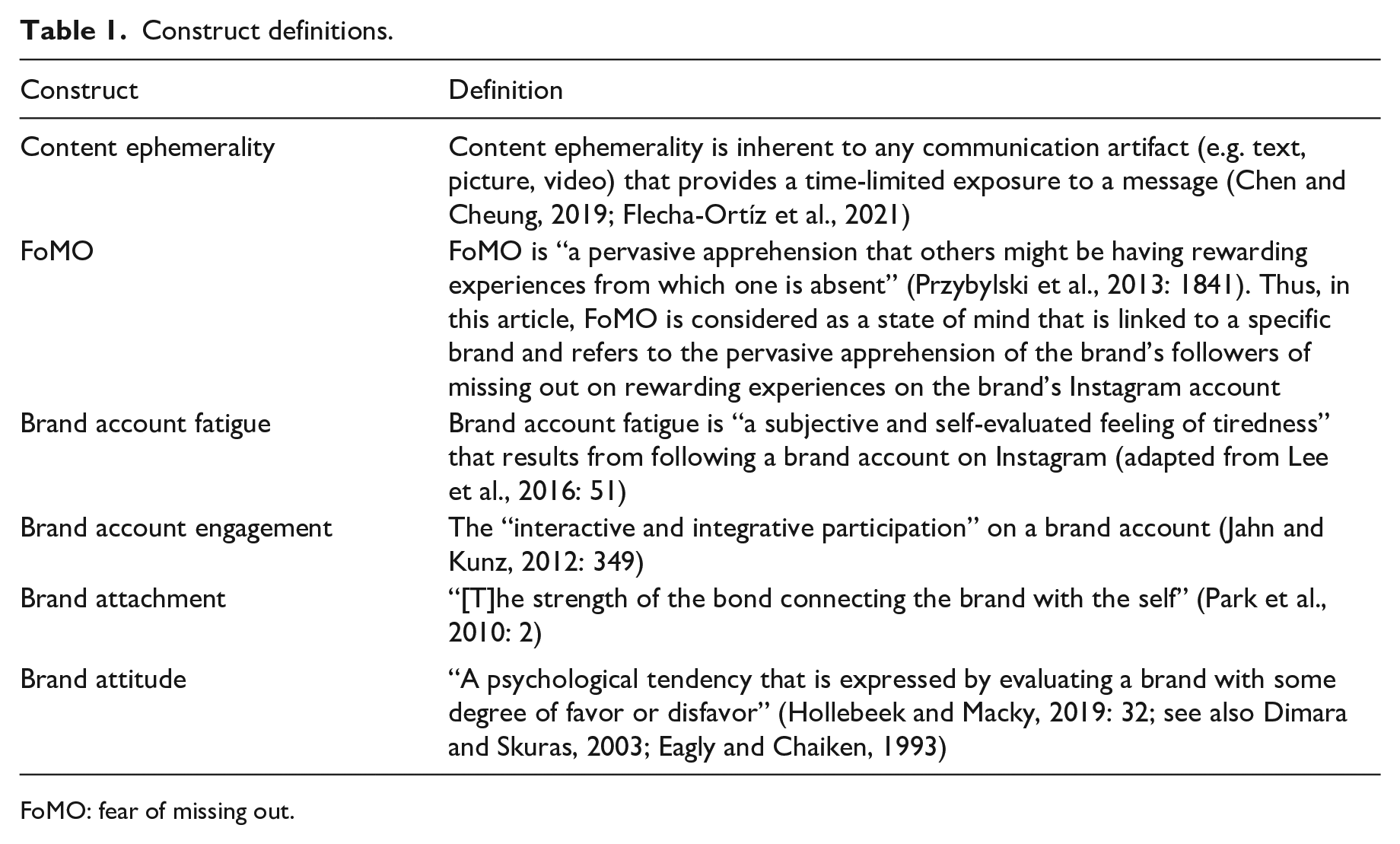
FoMO: fear of missing out.
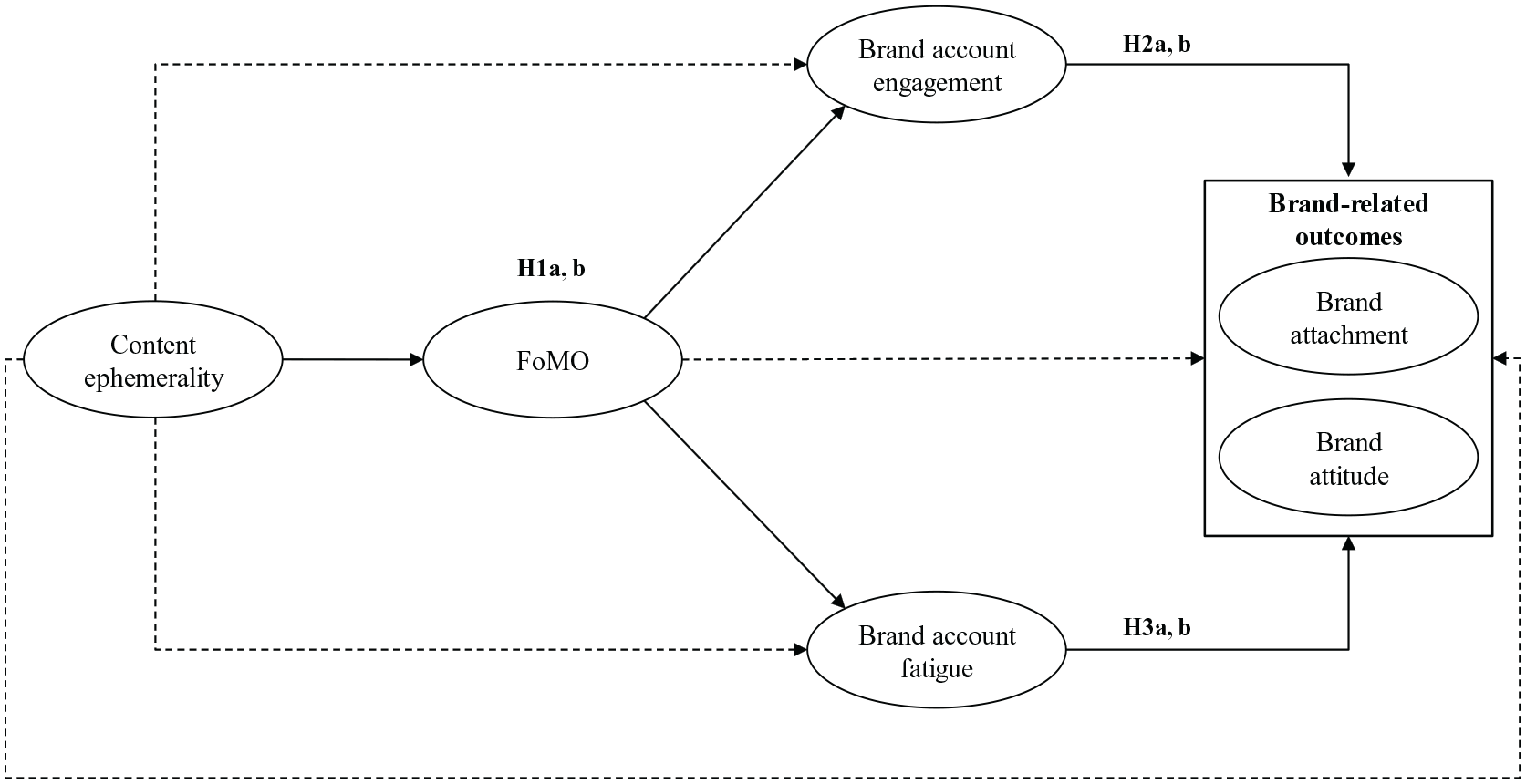
Research framework.
This article thus aims to extend the related literature by introducing followers’ FoMO as a key mediator that provides a more nuanced understanding of how content ephemerality affects brand account engagement and brand account fatigue. Considering prior studies in the field, our research framework (Figure 1) also controls for the direct effects of content ephemerality on followers’ brand account engagement and brand account fatigue. On the one hand, Flecha-Ortíz et al. (2021) conclude that “ephemeral content creates gratification that drives an increased involvement with brands” (p. 800). In the same vein, Lopez et al. (2021) show that the ephemeral content on Snapchat positively affects the platform’s intensity of use. In addition, fan page usage intensity is positively associated with fan page engagement (Jahn and Kunz, 2012). On the other hand, Bright and Logan (2018) argue that “brands must figure out how to balance their communication efforts with consumers” (p. 1216) and suggest that the content on social media has the potential to overwhelm consumers and can lead to social media fatigue. This reasoning should particularly apply to ephemeral brand content. In an advertising context, Campbell et al. (2021) show that ephemeral content requires a higher processing effort than persistent content. Moreover, users of social networking services experience feelings of fatigue when they are exposed to too much communication or information (Lee et al., 2016).
Finally, the research framework (Figure 1) also accounts for the direct effects of content ephemerality and FoMO on followers’ brand attachment and brand attitude. According to Hudson et al. (2016), “interacting with a brand via social media can (. . .) foster an emotional attachment” (p. 29). Hollebeek and Macky (2019) further claim that digital content marketing ultimately contributes to the formation of brand attitude perceptions.
Effects of content ephemerality on brand account engagement and brand account fatigue: The mediating role of FoMO
According to Przybylski et al. (2013), FoMO arises “from situational or chronic deficits in psychological need satisfactions” (p. 1842). This view is compatible with the brand-related uses and gratifications perspective on FoMO that we adopt in this article. Specifically, brand followers should fear missing out on gratifications that are associated with ephemeral content and can contribute to satisfying their needs. For example, prior studies suggest that consumers who are exposed to ephemeral communications tend to feel “in the moment” or “present” (Kivetz and He, 2017: 6) and should perceive their social media experience as particularly “authentic, exciting, and lively” (Chen and Cheung, 2019: 68). Brand followers on Instagram should thus associate a higher FoMO with brands that regularly publish Instagram content in ephemeral formats. Accordingly, Chen and Cheung (2019) argue that content of an ephemeral nature “has the potential to raise users’ FOMO” (p. 68).
Prior research further provides evidence for a positive relationship between FoMO and social media fatigue (Bright and Logan, 2018). Moreover, FoMO increases social media engagement (Przybylski et al., 2013) and is positively associated with the time users spend on social media (Baker et al., 2016). Although we adopt a narrower perspective by focusing on FoMO that relates to a brand’s Instagram account rather than on social media at large, we expect to find effects consistent with these findings.
Overall, the literature suggests that followers’ FoMO should not only be triggered by ephemeral content but also positively affect their brand account engagement and brand account fatigue. We thus argue that followers’ FoMO represents a mediator that helps provide a nuanced understanding of how content ephemerality relates to brand account engagement and brand account fatigue. Thus:
Effects of brand account engagement and brand account fatigue
According to Hollebeek et al. (2014), cognitive processing represents a key dimension of consumer brand engagement in social media. High brand account engagement should thus increase the extent with which followers consume the content on a brand’s Instagram account. Brand account fatigue, by contrast, is closely tied to the broader concept of social network fatigue, which can entail a more moderate use of social media or even result in the discontinuity of social media use (Ravindran et al., 2014).
Brands rely on their Instagram accounts to share content that puts them in a positive light (Casaló et al., 2021). Considering that brand account engagement (fatigue) should foster (inhibit) the consumption of brand content, we thus expect followers to be more (less) aware of a brand’s benefits as their level of brand account engagement (fatigue) increases. This higher (lower) awareness for the brand’s benefits should result in a more (less) favorable brand attitude and brand attachment (Cheung et al., 2021; Keller, 2010).
The relationship between brand account fatigue and brand attachment or brand attitude has so far not been analyzed empirically. By contrast, prior studies have provided evidence for the positive effect of different types of engagement on brand-related attitudes (Cheung et al., 2021; McClure and Seock, 2020) and brand attachment (Kumar and Nayak, 2019). Thus:
Study 1: Survey-based evidence
Data collection and sample
We tested our research framework (Figure 1) with an online survey with 550 US users of the platform Prolific. All respondents received monetary compensation and had to follow at least one official brand account on Instagram to qualify for survey participation. We asked respondents to think of one of these accounts and to indicate both the respective brand name and the brand’s category. Respondents subsequently evaluated the items of our construct measures on the considered brand and its Instagram account.
The sample consists of 175 (31.8%) male and 375 (68.2%) female respondents. Respondents’ average age was 35 years (median: 33 years), and 64.7% indicated having completed a bachelor’s, master’s, MBA, or doctoral degree. The daily Instagram use was less than 30 minutes for 46.0% of the respondents, and 71.8% of the respondents based their evaluations on a brand account they had been following for at least 1 year. Respondents’ evaluations referred to brands from the following categories: apparel and clothing (37.1%); beauty, cosmetics, and personal care (16.6%); food and beverages (15.5%); fitness and sports (14.0%); or another category (16.9%).
Measures and control variables
The measurement properties of all multi-item measures and the fit of the overall measurement model are acceptable (Table 2). We find no problems regarding discriminant validity (Fornell and Larcker, 1981; Tables 2 and 3).
Scale items for construct measures.
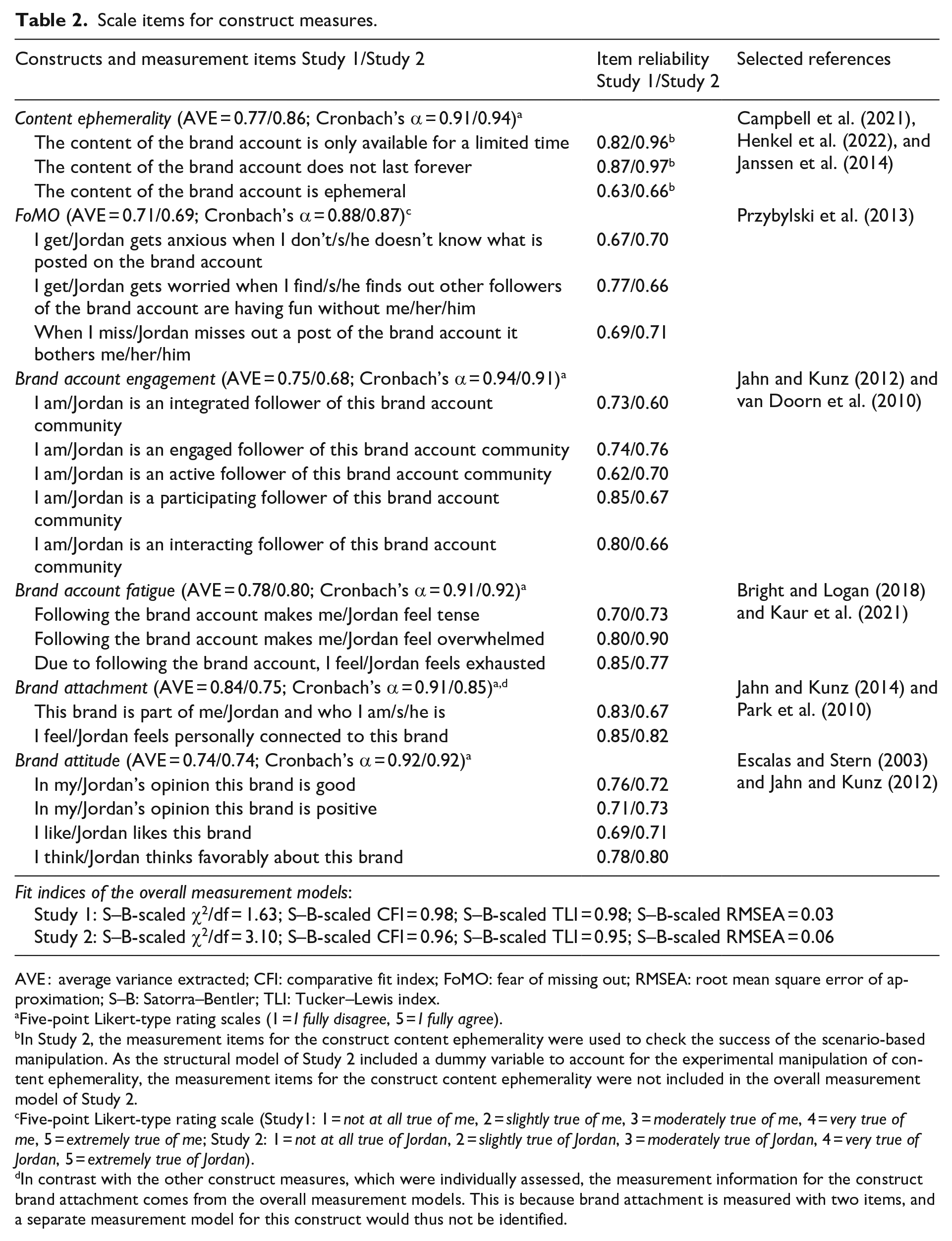
AVE : average variance extracted; CFI: comparative fit index; FoMO: fear of missing out; RMSEA: root mean square error of approximation; S–B: Satorra–Bentler; TLI: Tucker–Lewis index.
Five-point Likert-type rating scales (1 = I fully disagree, 5 = I fully agree).
In Study 2, the measurement items for the construct content ephemerality were used to check the success of the scenario-based manipulation. As the structural model of Study 2 included a dummy variable to account for the experimental manipulation of content ephemerality, the measurement items for the construct content ephemerality were not included in the overall measurement model of Study 2.
Five-point Likert-type rating scale (Study1: 1 = not at all true of me, 2 = slightly true of me, 3 = moderately true of me, 4 = very true of me, 5 = extremely true of me; Study 2: 1 = not at all true of Jordan, 2 = slightly true of Jordan, 3 = moderately true of Jordan, 4 = very true of Jordan, 5 = extremely true of Jordan).
In contrast with the other construct measures, which were individually assessed, the measurement information for the construct brand attachment comes from the overall measurement models. This is because brand attachment is measured with two items, and a separate measurement model for this construct would thus not be identified.
Descriptive statistics and correlations.

FoMO: fear of missing out; SD: standard deviation.
Study 2 included a dummy variable to account for the experimental manipulation of content ephemerality (high content ephemerality (coded as 1) vs low content ephemerality (coded as 0)). For this dummy variable, we only report the correlations with the construct measures but no mean value or standard deviation.
p < 0.05; ***p < 0.01.
Consistent with Kefi and Maar (2020), we controlled for respondents’ age, gender, and the duration they had been following the considered brand on Instagram. We further used dummy-coded variables to control for respondents’ educational background, their daily Instagram use, and the various brand categories they considered.
Common method bias
Given the cross-sectional nature of the data, we used procedural and statistical remedies to account for common method variance. First, the introductory note in the questionnaire stressed that there were no right or wrong answers to the statements (Podsakoff et al., 2003). Second, we used the second-smallest positive correlation between the manifest indicators of our construct measures as a conservative estimate to control for common method variance (Lindell and Whitney, 2001; Malhotra et al., 2006). These analyses revealed no concerns.
Results
We used structural equation modeling with Stata 14 to test our research framework (Figure 1). We relied on a maximum likelihood estimator with Satorra–Bentler (S–B) adjustments to account for non-normality in the data (Satorra and Bentler, 1994). The model fits the data well. Figure 2 shows the results of the model estimation of Study 1 and the model fit indices.

Model estimation (Study 1).
The findings indicate that content ephemerality positively relates to followers’ FoMO (γ11 = 0.11, p < 0.05), which in turn positively relates to their brand account engagement (β21 = 0.28, p < 0.01) and brand account fatigue (β31 = 0.40, p < 0.01). To further analyze the mediating role of FoMO, we estimated the respective indirect effects with standard errors and 95% confidence intervals (CIs) based on 1,000 bootstrap samples (Hayes, 2018). As Table 4 shows, FoMO mediates the effect of content ephemerality on followers’ brand account engagement (β = 0.03, 95% CI [0.01, 0.06]) and brand account fatigue (β = 0.05, 95% CI [0.01, 0.10]). These results provide support for H1a and H1b. In addition, content ephemerality has a significant direct effect on followers’ brand account fatigue (γ31 = 0.14, p < 0.01) but not on followers’ brand account engagement (γ21 = −0.04, p > 0.10).
Indirect effects of content ephemerality on brand account engagement and brand account fatigue(Studies 1 and 2).
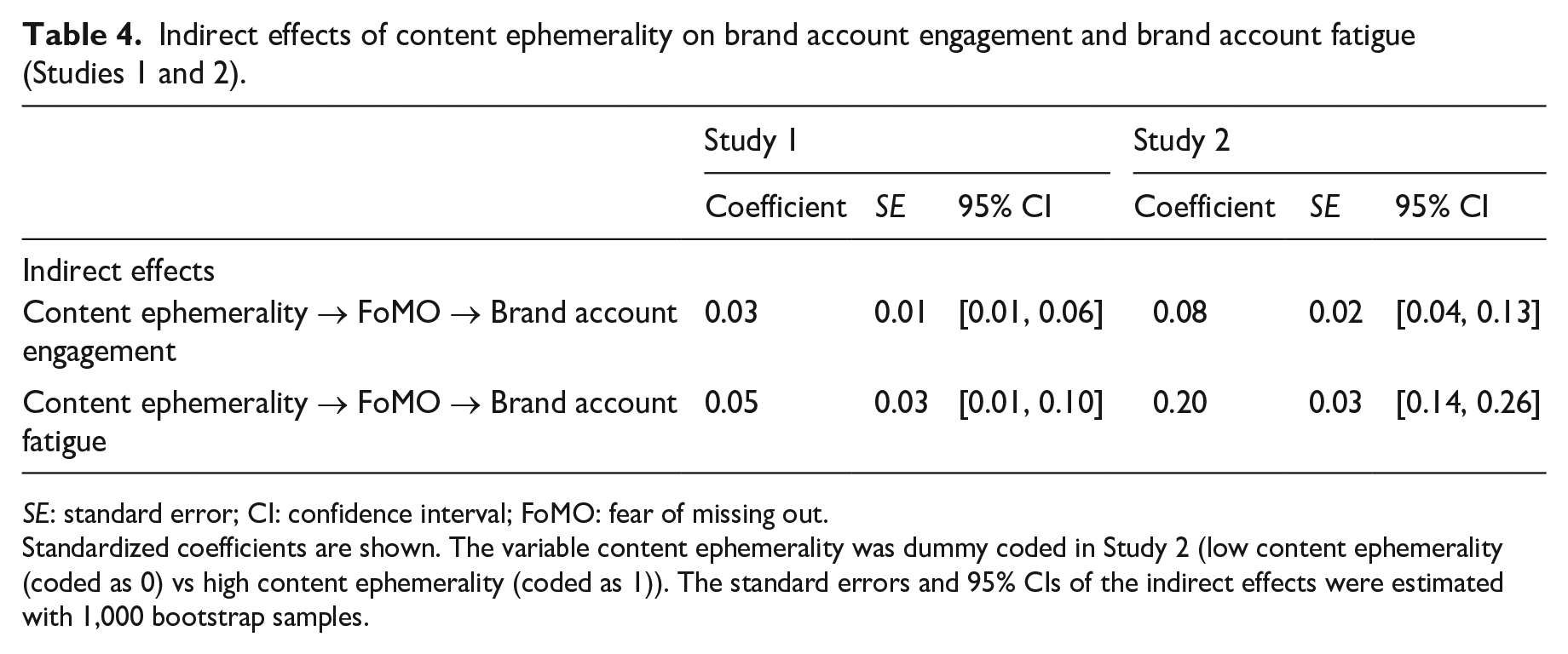
SE: standard error; CI: confidence interval; FoMO: fear of missing out.
Standardized coefficients are shown. The variable content ephemerality was dummy coded in Study 2 (low content ephemerality (coded as 0) vs high content ephemerality (coded as 1)). The standard errors and 95% CIs of the indirect effects were estimated with 1,000 bootstrap samples.
Consistent with H2a and H2b, the findings also reveal positive effects of followers’ brand account engagement on their brand attachment (β42 = 0.61, p < 0.01) and brand attitude (β52 = 0.38, p < 0.01). H3a and H3b are supported as well: followers’ brand account fatigue negatively relates to their brand attachment (β43 = −0.07, p < 0.10) and brand attitude (β53 = −0.36, p < 0.01). We further find a significant direct effect of followers’ FoMO on brand attachment (β41 = 0.14, p < 0.01) but not on brand attitude (β51 = 0.04, p > 0.10). The direct effects of content ephemerality on brand attachment (γ41 = −0.00, p > 0.10) and brand attitude (γ51 = −0.03, p > 0.10) are not significant.
Regarding the control variables, male (vs female) respondents show a higher level of FoMO (γ = 0.11, p < 0.05). Furthermore, respondents’ age is positively associated with their brand account engagement (γ = 0.13, p < 0.01) and brand attitude (γ = 0.07, p < 0.10). In addition, respondents with a bachelor’s, master’s, MBA, or doctoral degree have a more favorable brand attitude (γ = 0.07, p < 0.10) than the other respondents. Respondents who use Instagram daily for less than (vs at least) 30 minutes have lower levels of FoMO (γ = −0.10, p < 0.01) and brand account engagement (γ = −0.17, p < 0.01). Moreover, respondents who have followed the considered brand on Instagram for less than (vs at least) 1 year show higher brand account fatigue (γ = 0.08, p < 0.10) but lower brand account engagement (γ = −0.10, p < 0.05). Finally, most of the dummy-coded variables included to control for the brand categories are not significant.
Additional analyses and robustness checks
We conducted additional analyses to assess the standardized total effects of content ephemerality and followers’ FoMO on followers’ brand attachment and brand attitude. The results reveal no significant total effect of content ephemerality on followers’ brand attachment (β = −0.01, p > 0.10) but a significant negative total effect of content ephemerality on followers’ brand attitude (β = −0.10, p < 0.05). In addition, the total effect of followers’ FoMO on their brand attachment is significant and positive (β = 0.28, p < 0.01). By contrast, we find no significant total effect of followers’ FoMO on their brand attitude (β = −0.00, p > 0.10). As shown in Appendix 1, we also conducted several analyses that confirm the robustness of our findings.
Study 2: Experimental evidence
Overview
Study 2 aimed to strengthen the internal validity of our research by providing further evidence for the results of Study 1 based on an experimental approach. Moreover, we intended to manipulate the level of content ephemerality by referring to two established content formats that brands regularly use on Instagram: (1) Instagram posts, which remain visible in the long run, and (2) Instagram stories, which disappear after 24 hours unless they are added as a highlight.
Participants, experimental design, and measures
Study 2 is based on data from 535 US users of the platform Prolific. Consistent with Study 1, the participants received monetary compensation and had to follow at least one official brand account on Instagram to qualify for survey participation. The sample consists of 215 (40.2%) male and 320 (59.8%) female participants. Participants’ average age was 32.5 years (median: 31 years), and 56.3% indicated having completed a bachelor’s, master’s, MBA, or doctoral degree. The daily Instagram use was less than 30 minutes for 34.2% of the participants.
Study 2 relied on a two-cell, one-way (content ephemerality: high vs low) between-subjects design. We randomly assigned each participant to one of the experimental conditions. Table 5 reports the means and standard deviations of the dependent variables for the two experimental conditions.
Experimental conditions, means, and standard deviations (Study 2).

FoMO: fear of missing out.
Means with standard deviations in parentheses. All dependent variables were measured with 5-point Likert-type rating scales (see the footnotes of Table 2 for further information).
Inspired by Bui et al. (2022), the scenarios referred to a fictive person named Jordan. In the high (low) content ephemerality condition, we told the participants that Jordan follows the Instagram account of a consumer brand that regularly publishes content in the form of Instagram stories (posts) that disappear after 24 hours (remain visible in the long run). Appendix 2 includes the scenario descriptions.
After reading the scenario, each participant evaluated the scale items of the construct measures (Table 2). In line with the scenario descriptions, the participants indicated what perceptions and feelings Jordan may have regarding the brand and its brand account. To ensure a high level of consistency with Study 1, we kept the items’ wording as similar as possible. The measurement properties of all multi-item measures are acceptable, and the overall measurement model shows an adequate fit (Table 2).
Manipulation and realism checks
We relied on the content ephemerality items (Table 2) to check for the success of the scenario-based manipulation. As expected, the participants rated the perceived ephemerality of the content significantly lower in the low (vs high) content ephemerality condition (Mlow_ephemerality = 1.79, Mhigh_ephemerality = 4.56; t(533) = −38.14, p < 0.01).
We also adapted an item from Liao (2007) to check for the realism of the scenario descriptions (“I believe the situation described in the scenario could happen in real life,” rated on a 5-point Likert-type scale anchored by 1 = I fully disagree and 5 = I fully agree). Most participants perceived the scenarios as quite realistic (M = 4.23, SD = 0.89).
Results
Consistent with Study 1, we used structural equation modeling with Stata 14 and a maximum likelihood estimator with S–B adjustments to analyze the data. The possibility to account for measurement errors is a key advantage of using structural equation modeling when analyzing experimental data (Bagozzi and Yi, 2012).
Figure 3 shows the results of the model estimation and the model fit indices. Table 4 provides further insights into how FoMO mediates the effects of the content ephemerality manipulation on followers’ brand account engagement and brand account fatigue. Overall, the model shows an adequate fit to the data and the results are largely consistent with the findings of Study 1. We again find support for all the hypotheses (Figure 3, Table 4). Appendix 3 describes the results of Study 2 in greater detail.

Model estimation (Study 2).
Discussion
Theoretical contributions
Previous research has often considered FoMO a predisposition that relates to everyday experiences and affects users’ well-being and relationship with social media at large (Tandon et al., 2021). This article introduces the concept of FoMO to the marketing literature on brand accounts and brand pages on social networking sites (e.g. Casaló et al., 2021; Jahn and Kunz, 2012). In so doing, we extend prior research by developing a new perspective on FoMO. Specifically, we focus on analyzing FoMO as a follower’s state of mind that directly relates to a brand and refers to the pervasive apprehension of the brand’s followers of missing out on rewarding experiences on the brand’s Instagram account.
Although followers’ FoMO exerts a positive total effect on brand attachment, our results reveal that FoMO represents a double-edged sword for marketers. This is because followers’ FoMO mediates the positive effect of content ephemerality on their brand account engagement and brand account fatigue. Consistently, prior research has shown that FoMO relates not only to beneficial outcomes, such as social media engagement (Przybylski et al., 2013), but also to adverse outcomes, such as social media fatigue (Bright and Logan, 2018).
By focusing on analyzing the mediating role of FoMO, this article further contributes to addressing prior calls for research on “how FOMO guides the consumer/brand relationship in the social media context” (Bright and Logan, 2018: 1223) and on how ephemerality affects “downstream measures such as brand attitude” (Campbell et al., 2021: 103). Conceptualizing content ephemerality as an antecedent of followers’ FoMO also responds to Kim et al.’s (2020) call for research that identifies “factors influencing the stimulation of FOMO” (p. 15).
Finally, the results of the two studies consistently indicate that content ephemerality exerts a significant negative total effect on followers’ brand attitude. This finding extends those of prior studies on brand fan pages, which have treated brand content and its inherent gratifications as something that is favorable from a marketing perspective and can contribute to strengthening the follower–brand relationship (e.g. Jahn and Kunz, 2012; Kefi and Maar, 2020). Similarly, research has tied content ephemerality to beneficial gratifications, such as an authentic or exciting experience (Chen and Cheung, 2019). The present article, by contrast, demonstrates that content ephemerality has a “dark side” and can ultimately have a negative impact on brand outcomes.
Managerial implications
From a managerial perspective, our results imply that it is not beneficial for brands to foster their Instagram account followers’ FoMO by posting ephemeral content. We thus answer the question raised in the title of this article with a clear “no.”
A key result of this research is that ephemeral content has a negative total effect on followers’ brand attitude. This is striking, because many blog articles on the web adopt a positive view on ephemeral content formats and highlight their potential to foster followers’ engagement (e.g. Beaulac, 2022; Harper, 2018). Similarly, according to Instagram (2017), the use of stories “is contributing to more content and engagement.” Although our results confirm that content ephemerality does indirectly foster followers’ brand account engagement through the stimulation of FoMO, we also show that content ephemerality leads to brand account fatigue and has a significant negative total effect on brand attitude. Brands should thus refrain from considering ephemerality as a form of content that is beneficial per se. Actively signaling to followers that important brand account content will remain available in the long run should contribute to reducing followers’ FoMO and brand account fatigue. Brands could, for instance, systematically add stories with important information to a highlight album.
As followers’ FoMO increases not only their brand account engagement and brand attachment but also their brand account fatigue, stimulating FoMO through content ephemerality may negatively affect followers’ well-being. Accordingly, Dhir et al. (2018) provide evidence for a positive relationship between social networking site fatigue and signs of anxiety or depression. Employing FoMO as a social media marketing technique is thus problematic from an ethical standpoint. This underscores once again that brands should refrain from undertaking attempts to actively increase their followers’ FoMO.
Finally, our results imply that brands should not try to boost follower engagement at all costs, though consumer brand engagement on social media is nowadays a major “metric for gaging brand performance” (Hollebeek et al., 2014: 150). We show that two popular strategies to cultivate engagement on social media are less beneficial than often suggested: both content ephemerality and the stimulation of followers’ FoMO lead to an adverse consequence (i.e. brand account fatigue), which negatively affects key brand-related outcomes (i.e. brand attachment and brand attitude).
Limitations and avenues for research
We encourage future research to extend the framework (Figure 1) of this article. In this regard, a fruitful avenue could be to identify and test moderators that may simultaneously strengthen the beneficial and weaken the adverse consequences of content ephemerality and followers’ FoMO. One such moderator could be the interactivity on a brand account (Tajvidi et al., 2021). Specifically, higher levels of brand or follower interactivity may stimulate the positive effect of FoMO on brand account engagement (e.g. because followers may fear missing out on partaking in conversations with the brand or other followers) while mitigating the positive effect of FoMO on brand account fatigue (e.g. because followers may know that they can easily catch up with the brand or other followers in case they missed out on something). Similarly, the length of time a person has followed a brand account could be an interesting (moderating) variable to consider. Respondents who had been following a brand account for less than (vs at least) 1 year showed higher brand account fatigue but lower brand account engagement in Study 1.
Another avenue for research is to analyze the mechanism underlying the direct positive effect of followers’ FoMO on their brand attachment. As brand attachment can be fueled by “anxiety from brand-self separation” or the brand’s relevance regarding “personal concerns” (Park et al., 2010: 2), the positive relationship between followers’ FoMO and their brand attachment could be driven by a toxic mechanism that may ultimately backfire.
In addition, future studies might investigate how the alternation of ephemeral and non-ephemeral content formats or of content with higher or lower levels of ephemerality (e.g. posts, stories, stories added to a highlight album) affects followers’ brand account experience. A potential explanation why we find significant direct effects of content ephemerality on brand attachment and brand attitude in Study 2 but not in Study 1 is that we manipulated content ephemerality in Study 2. On average, the participants in Study 2 perceived the level of ephemerality as very different, depending on the experimental condition they were assigned to.
Furthermore, followers’ perception of ephemerality could also depend on the gratifications (e.g. functional, hedonic) that are inherent to brand content (e.g. Hollebeek and Macky, 2019; Jahn and Kunz, 2012). For example, sharing content with critical functional (uncritical hedonic) information in an ephemeral format may entail more (less) negative follower perceptions and evaluations. Moreover, followers’ reactions to ephemeral content formats could differ between platforms they associate more (e.g. Snapchat) or less (e.g. Facebook) with the concept of content ephemerality. Uncovering such differences represents another promising avenue for future research.
Finally, a limitation of this article is that it relies on cross-sectional data to test the research framework (Figure 1). Time, however, is a situational factor that could further enhance the understanding of how brands can effectively post content and manage followers’ FoMO on their brand accounts. According to Milyavskaya et al. (2018), FoMO is more saliently experienced later in the day and later in the week. Future research might thus adopt a longitudinal approach to capture the dynamic nature of FoMO.
