




Abstract
This article aims to examine food accessibility for college students who moved away from their parents’ home, focusing on both objective and perceived perspectives. It considers all the food options surrounding them in the city where they lived for their studies. Using a qualitative methodology based on interviews with 24 students living away from their parents’ home, local stakeholders, heads of university organizations, and field observations, this research shows a gap between objective accessibility (OA) and perceived accessibility (PA) of the supply of food shops, whereas a greater convergence is observed for offers of meals taken away from home. The results show that food options that are available close to where college students live (study, home, commute) are not often included in their set of consideration. Furthermore, they experience conflicts between the three dimensions of PA (price, distance, and cognitive). College students react to these conflicts with different coping strategies depending on their level of food and urban literacy. To improve food accessibility, it is necessary to adopt an integrated approach according to the types of literacy.
Introduction
“They tell us to shut up because university catering ‘isn’t expensive’ … but in fact, even for that price it’s indecent!” 1 This tweet from a student union, accompanied by a photo of a chicken sandwich with very little filling, is indicative of the current controversy surrounding the €1 meal for college students on scholarship. Indeed, while this emergency measure aims to respond to the distress of college students in precarious situations – amplified since the COVID crisis – it solves neither the immediate problem of accessibility of healthy, high-quality food for certain college students (non-scholarship holders or foreigners) nor the long-term problem of food accessibility for all college students.
Marketing research has only recently turned its attention to the student population (Gourmelen et al., 2022; Sadoun et al., 2016, 2021), as a response to the recent media spotlight on the precariousness experienced by some of them, illustrated by the queues for food distributions. 2 College students, for whom food represents on average 20% of the budget (DREES, 2018), are in fact identified as a group particularly exposed to food insecurity (Beacom et al., 2021; Galland, 2023; Nikolaus et al., 2020), defined as limited access to adequate food due to a lack of resources (Gundersen and Ziliak, 2015). However, the diet of college students is a major issue due to its short-term impact on their academic performance and long-term impact on their health (Marquis et al., 2019). Although the Obépi-Roche study (Fondbonne et al., 2023) does not deal specifically with college students, it shows that French people aged 18–24 are the part of the population in which obesity has increased the most, rising from 5.4% to 9.2% from 2012 to 2020.
Dealing with food accessibility, that is, the ease of access to healthy food 3 (Calise et al., 2019), makes it possible to explore how college students living away from parents’ home organize themselves daily to eat (Dyen et al., 2018). This approach enables us to understand how they manage their food within the cities where they reside as students. The urban environment and its influence on eating behavior is the subject of much work in geography and health but remains little addressed in marketing. Research has focused mainly on the objective accessibility (OA) of populations targeted by urban players, such as children, families, and the elderly. This work has focused on the implementation of improvement schemes, notably the subsidized establishment of supermarkets in areas with limited food retailing (Elbel et al., 2015; Ghosh-Dastidar et al., 2017). However, college students, who live mainly in cities, do not necessarily benefit from these schemes.
Moreover, Rodier et al. (2017) question this focus on the geographical nature of accessibility and claim an open approach to individual experience. Perceived accessibility (PA) is therefore about understanding the experience of a specific target.
The aim of this research is to gain a better understanding of college students’ food accessibility in the French context, considering both objective and perceived perspectives. Specifically, we explore how college students living away from their parents’ home perceive food accessibility in their city of study. Is there a gap between their PA and their OA? What strategies do they employ to address any conflicts they encounter?
To answer these questions, we conducted a study in a city – Montpellier – that ranks among the top five French student cities, with a student population of around 18%. Using a qualitative methodology comprising 24 interviews with college students living away from their parents’ home, interviews with local and managers from the Centre Régional des Œuvres Universitaires et Scolaires 4 (CROUS), and field observations, we show that the concept of accessibility needs to be enriched beyond the availability of food and catering in a physically delimited space. To gain a better understanding of food accessibility through the lens of lived experience, we identify all the sources from which college students obtain food, including those outside the city under study. The student sourcing strategies identified highlight the need to understand the subjective, complex, and dynamic nature of the notion of accessibility.
This research is structured around a literature review devoted to: (1) accessibility, distinguishing between OA and PA and (2) adapting the concept of food accessibility to the student population. Field observations and semi-directive interviews with college students living away from their parents’ home, territorial managers, and CROUS officials are then presented. Finally, the results are presented and discussed, and the conclusion highlights the contributions, limitations, and future directions of this research.
Literature review: Two visions of food accessibility
The objective perspective of food accessibility
The OA of food has been identified as a means of guiding food policy decisions at the territorial level (Allcott et al., 2019). It can be used to characterize the food environment of a given geographical space by identifying imbalances in supply that manifest through scarcity effects – such as food deserts, where residents lack access to healthy, affordable food (Cummins and Macintyre, 2002; Grier and Davis, 2013; Swinburn et al., 2004) – or overabundance of poor-quality offerings – “food swamps,” where fast-food offerings are overly prevalent (Cooksey-Stowers et al., 2017).
The OA of food is based on the identification and counting of food offerings in a physical space. This involves collecting and analyzing data on availability (number of outlets per unit area), and/or proximity by assessing distance in different units of measurement (kilometer, time) (Charreire et al., 2010). Various methods exist (Appendix 1), although they are not always very detailed in academic work (Wilkins et al., 2017). OA is also challenged conceptually and methodologically regarding the classification of certain stores, particularly supermarkets (Wilkins et al., 2017). Indeed, the assortments and availability of the food offer can differ between stores in the same category (Caspi et al., 2012; Chaix et al., 2012). Two approaches exist: (1) a categorization defined a priori and extramural, consisting in considering certain sources of supply from a typical store as healthy or unhealthy (Hallum et al., 2020; Michimi and Wimberly, 2010; Morland et al., 2006); (2) a posteriori and intramural categorization, enabling a finer assessment thanks to indicators such as the share occupied by healthy foods (fruit and vegetables) and non-healthy foods (processed products) in linear meter (Adjei et al., 2022). Furthermore, Mahendra et al. (2017) point out that ultra-processed foods can be purchased from retailers in the healthy offer category (e.g. supermarkets), while healthy, minimally processed foods can be purchased from retailers whose offer is predominantly “unhealthy” (e.g. mini-markets, fast-food outlets sometimes offering fruit and vegetables). The authors add, however, that there are more opportunities to eat healthily by shopping in a supermarket than in a fast-food restaurant. For instance, a study carried out by Interfel 5 reveals that 61% of fruit and vegetable purchases by French households occur in supermarkets including hypermarkets, supermarkets, and discount stores. For the purposes of this research, we refer to an a priori and extramural classification used by the US Chronic Disease Center 6 to assess the quality of the food environment by including retail outlets and on-site or takeaway catering options (Table 1). As this study targeted French college students, collective catering was classified in the “healthy” category, as nutritional recommendations are particularly well respected in this type of restaurant 7 according to ANSES (Agence Nationale de Sécurité Sanitaire de l’Alimentation, de l’Environnement et du Travail).
Classification of food supply sources according to the predominantly healthy or unhealthy nature of the supply (literature synthesis).
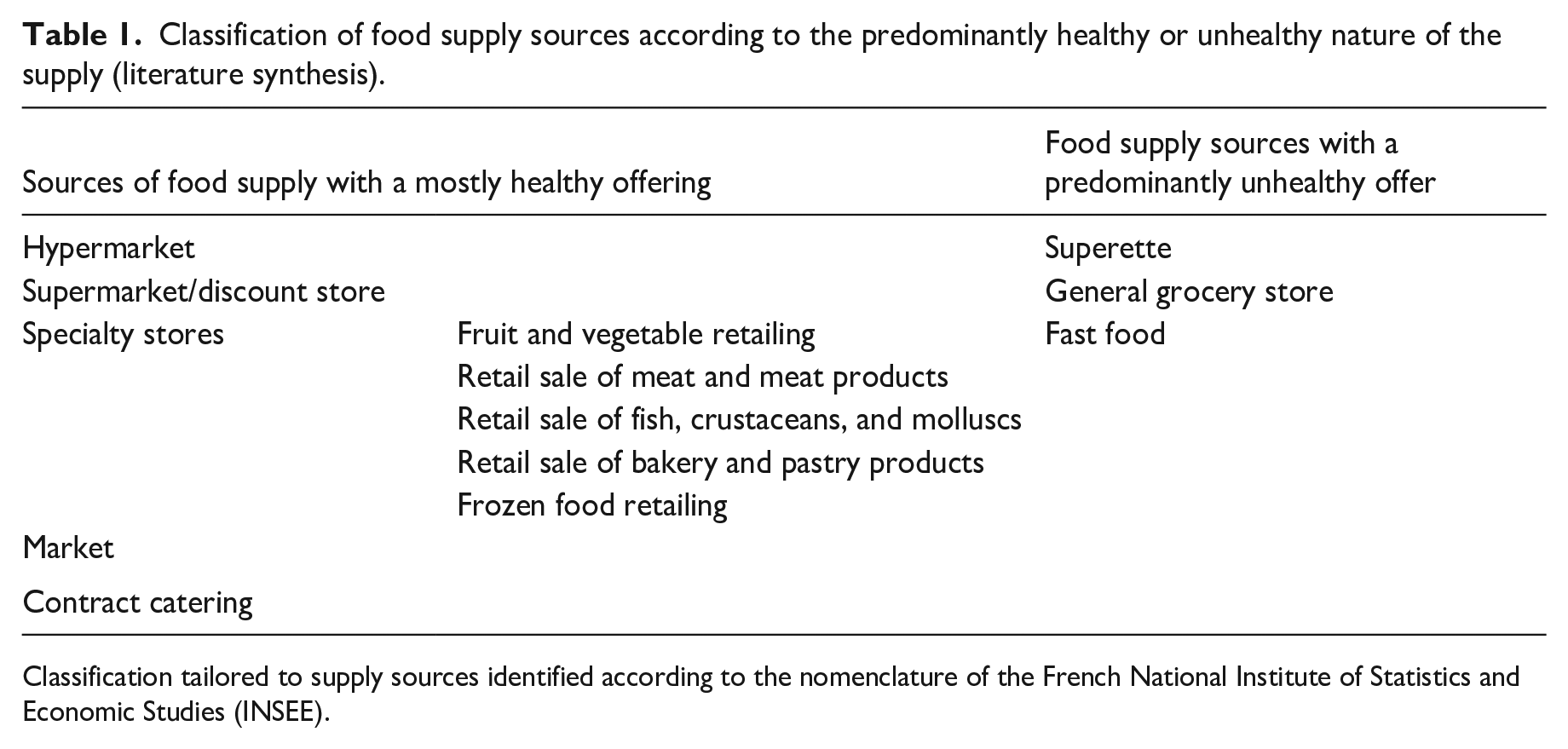
Classification tailored to supply sources identified according to the nomenclature of the French National Institute of Statistics and Economic Studies (INSEE).
Finally, measuring objective food accessibility involves delimiting a zone around a specific location or spatial entity (home, neighborhood, place of business, school, etc.) in which the number of stores and/or restaurants will be estimated (Charreire et al., 2010). This zone typically has been defined with a radius between 100 and 2,500 m. The challenge lies in identifying the points of origin and destination to accurately define this zone. Proximity is measured by the distance, either in time or metric units, between these reference points. A significant risk is assessing the food supply of a geographical area without considering individuals’ actual experience (Wilkins et al., 2017) and failing to apprehend its influence on eating behaviors.
PA and the value of the target’s experience
Consumers form their perceptions of the food available based on cultural influences, personal preferences, and their knowledge of health and nutrition. PA delves into how individuals perceive their ability to access healthy food, focusing on their subjective experience rather than just objective measures. Previous research, comparing OA and PA, emphasizes the importance of the latter, as eating behaviors appear to be more related to PA than to OA (Recchia et al., 2023; Vitman-Schorr et al., 2019; Wang et al., 2015; Yamaguchi et al., 2019). For instance, Gustafson et al. (2011) showed a discrepancy between the actual food supply in-stores and low-income women’s perceptions of food availability in their neighborhoods. Similarly, Caspi et al. (2012) found that residents of public housing in the United States, despite having objective access to fruit and vegetables, did not consume them frequently. These findings suggest that mere physical access to a diverse diet is not enough to foster healthy eating habits. Understanding the perceived food environment requires considering factors like the perceived time and effort needed to obtain food. Widener (2018) emphasizes the importance of evaluating perceived distance and the effort involved in purchasing food to fully grasp PA.
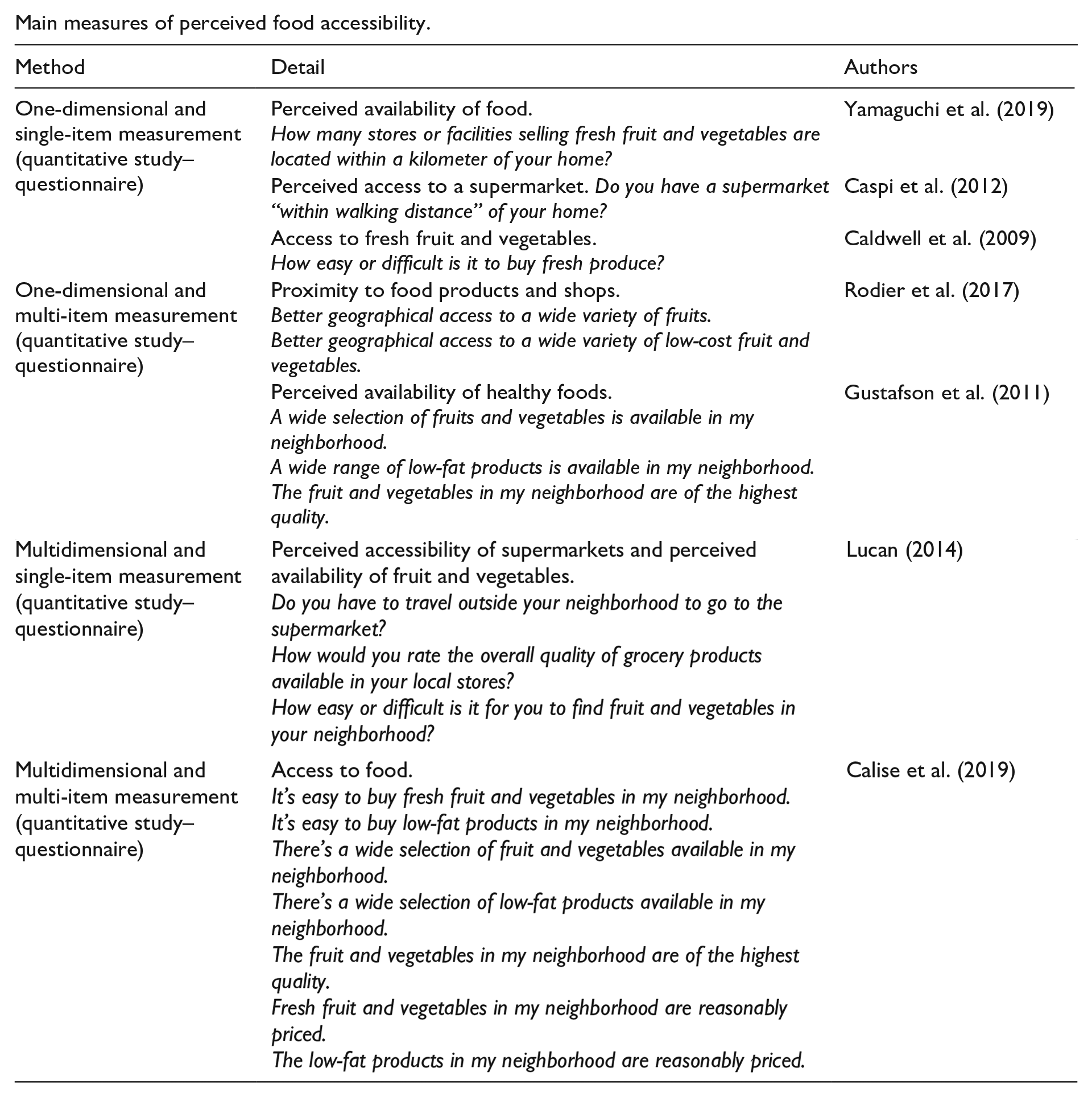
From a marketing perspective, analyzing food offers in terms of price, assortment, and acceptability is essential to meet consumer expectations (Caraher et al., 2010). PA can also be influenced by factors not directly related to food, such as feelings of safety or the pleasure of walking to stores (Wang et al., 2015), or by individual material resources like car ownership, kitchen features, and culinary knowledge (Caspi et al., 2012). However, methodologically, current PA measures remain succinct (Appendix 2). Often mono item, these measures do not fully capture the complexity of the food environment (Caldwell et al., 2009; Lucan et al., 2014; Rodier et al., 2017), or the subjectivity of its accessibility (Baumgartner and Homburg, 1996).
Individual needs and behaviors vary according to age and profession, so PA must be tailored to specific targets. Delving deeper into the daily experiences of target groups is a starting point for identifying perceived benefits and barriers (Kotler and Lee, 2008) to modifying college students’ eating behaviors from a social marketing perspective.
Considering the college student population to enrich the concept of food accessibility
The concept of PA needs significant modification to reflect the context of the population under study. Only by considering consumers’ actual day-to-day food shopping experiences and habits can PA be properly understood.
College students’ nutrition at the heart of empowerment
For college students living away from their parents’ home, this time in their lives is defined by the onset of autonomy as they move out of the family household. For the first time, they can decide where, when, and what to eat (Racine et al., 2022). This period is critical for developing healthy eating behaviors. Indeed, among different populations, college students tend to have one of the highest frequencies of visits to fast foods (Zilloniz, 2009) and, at the same time, a low consumption of fruit and vegetables (CREDOC, 2017). They also tend to consume more alcohol (Forleo et al., 2017), snacks, and cookies (Beasley et al., 2004). Conversely, these college students consume less meat and dairy products than their counterparts living with their parents (Forleo et al., 2017). The poor quality of food consumed by college students is thought to be partly due to the various stressful moments they experience, leading them to neglect meal preparation and buy low-quality food. This is especially true for students living away from home (Garabuau-Moussaoui, 2002; Gourmelen and Rodhain, 2016; Sadoun et al., 2016) and those with low financial resources (Marquis et al., 2019). However, other factors can be investigated, including the accessibility of healthy food.
Student housing and place of study as determinants of accessibility
The choice of accommodation for a student is often based on proximity to the place of study (Séné and Cordazzo, 2014). Despite numerous initiatives in France, such as the creation of social food stores since 2011 by the general association of students (Fédération des Associations Générales Étudiantes), or the introduction of organic fruit and vegetable baskets initiated since the Covid-19 crisis by university foundations, many disparities are observed related to the accessibility to healthy food. According to Doherty et al. (2011), the lack of healthy food in and around campuses could explain the low nutritional quality of food products consumed by college students. Hannah (2014) also highlighted the difficulty of getting to food stores as a factor contributing to the food insecurity experienced by some college students. Nevertheless, the accessibility of healthy food for students living away from home remains to be investigated further, as disparities are evident in this area. College students are adults in the making, and no research has yet been conducted on their PA to healthy food.
Research objectives
To study how students living away from home perceive their food accessibility in the context of a French city, we define each student’s OA and compare it with his or her PA to determine whether there are any gaps between these two types of accessibility (Figure 1).
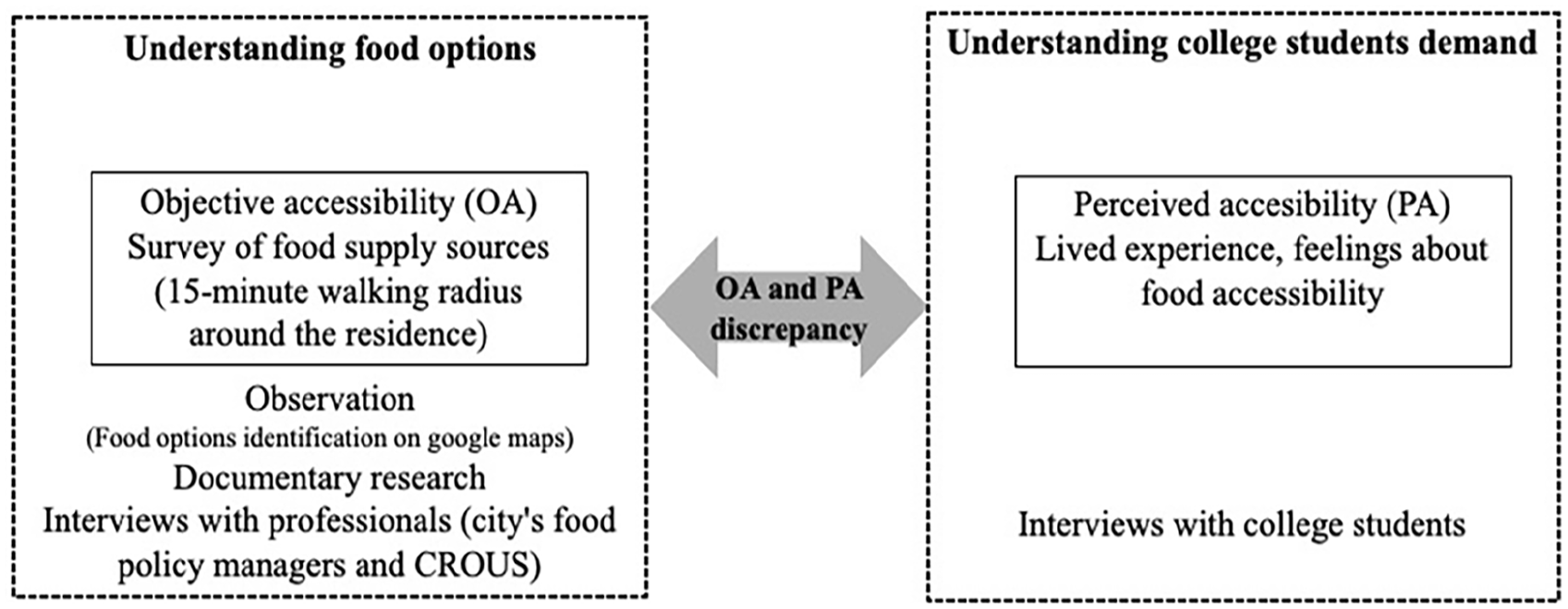
Research objectives operationalization.
Methodology
To understand OA, it is necessary to have a thorough understanding of the food supply in the geographical area under study. To this end, interviews were conducted with four individuals in charge of the city’s food policy (director of the city’s food policy: individual interview 1 hour, project manager for solidarity, project manager for innovative food projects, project manager for food accessibility in the metropolis: group interview 55 minutes) and with three people in charge of the CROUS (director, deputy director and Quality-Nutrition manager: group interview 1 hour 15 minutes). We also conducted observations of all the food outlets located along student pedestrian routes (from tramway stop exits to university entrances).
OA study
To assess OA, we identified all food offers accessible within a 15-minute walk from the homes of the students interviewed. This criterion was chosen because previous studies (Caspi et al., 2012) refer to 1 km, equivalent to a 15-minute walk. Furthermore, this limit aligns with the objective of a growing number of cities to make all services accessible on foot within 15 minutes (Moreno et al., 2021).
Discovering the dimensions of PA
To address PA, 24 semi-structured interviews were conducted with college students living away from home. Given the heterogeneity of the student population (Ellison et al., 2021), we ensured a variety of profiles among participants (age, gender, level of education, field of study, neighborhood, and type of housing) (Appendix 3). The convenience sample was drawn by proxy, ensuring one to two people between interviewer and interviewee. The interview guide (Appendix 4) was divided into five parts, covering the notion of accessibility in terms of food supplies, food products, the kitchen, and the neighborhood, followed by the theme of accessibility to healthy food. As the first wave took place during a period of lock-down (16 interviews conducted from March to May 2020), we again favored this mode of data collection during the second wave of interviews (8 interviews from April to May 2023). Thus, all interviews were conducted remotely via videoconferences using Zoom software, whose relevance in this context has been highlighted by Archibald et al. (2019). Interviews lasted between 30 minutes and 2 hours. They were fully transcribed (372 pages).
Analysis of PA data
As the data were diverse, they were analyzed both horizontally and vertically. For the vertical analysis, the student cases were divided among the co-authors to gain an in-depth understanding, using a summary on all sourcing locations, foods consumed, perception of the neighborhood, perception of healthy eating, resources available, and the student’s relationship to the parental home. The co-authors compared their summaries to highlight similarities and differences between the cases.
For the horizontal analysis, the interviews were coded and analyzed using Nvivo 12 software, which facilitates and systematizes the processing of qualitative data based on a large volume of discourse (Nowell et al., 2017). In view of the research objective, we opted for a posteriori coding, that is, based on field data.
Case study: A university town
Before presenting the results, which are structured around conflicts between dimensions of accessibility and the disparities between OA and PA for provisioning and catering, as well as students’ food strategies based on their type of literacy, it is essential to contextualize the food environment of the studied city. This city boasts an almost millennial university history, with students constituting 18% of its population.
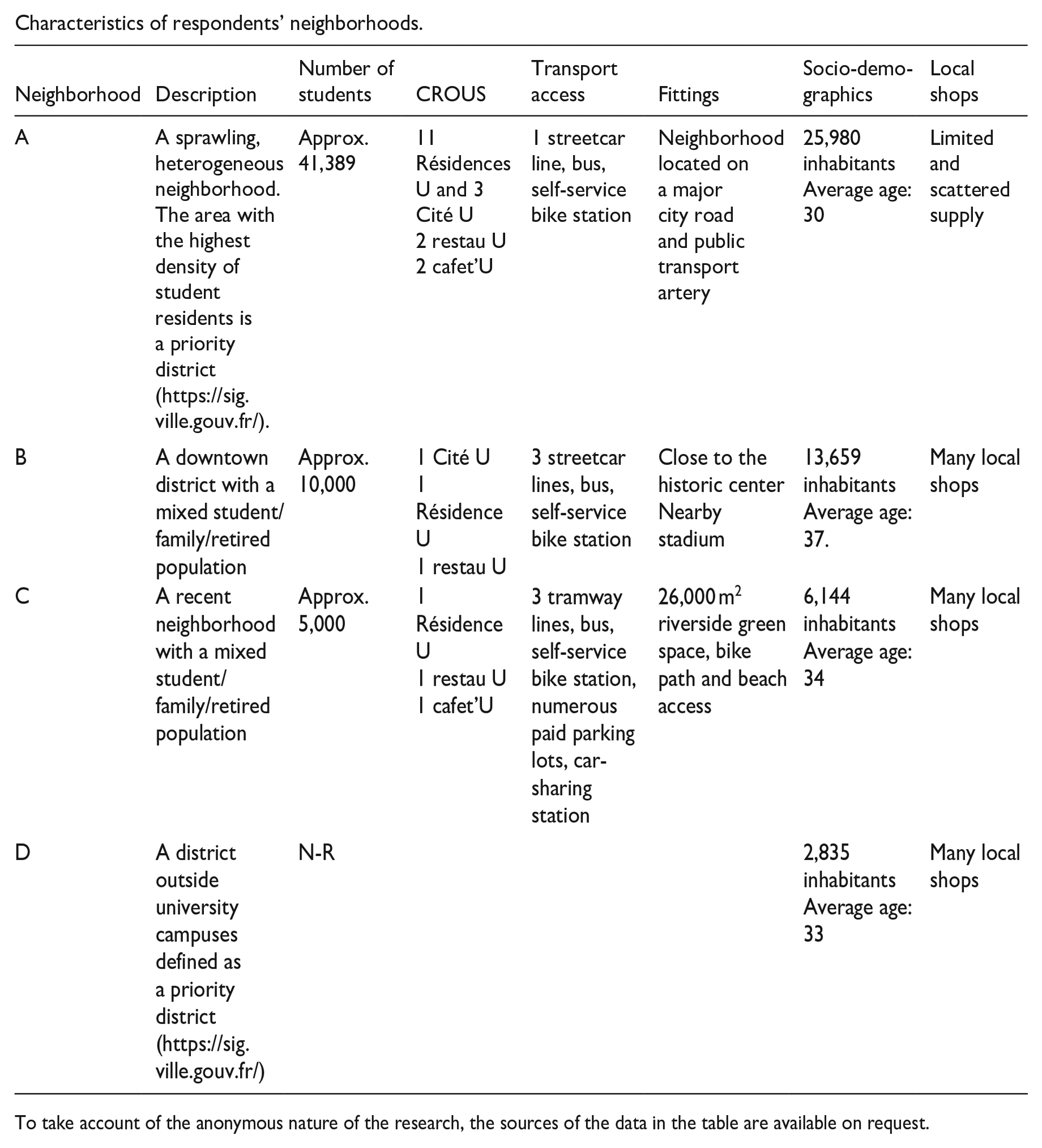
Over the last century, the city has experienced the somewhat unplanned expansion of multiple university sites across its four cardinal points. Today, the main university area (Area A) 8 comprises two adjoining universities dating from the 1960s. Around these campuses, student residences (first public, then private) have steadily increased to keep pace with the increasing number of students. In the 1990s, a second, smaller university site (Area C) was built at the other end of town. Other, smaller sites are scattered throughout the historic center (Area B) and the outlying districts (Area D). Except for Area A, university sites and student residences are dispersed throughout the city, blurring the boundaries between campus and urban space.
Although the city has not yet implemented initiatives specifically aimed at students, it is propelled by strong political, institutional, and academic momentum on food issues (Michel and Soulard, 2019). It is recognized for its innovations in the field of sustainable food systems. This recognition stems from the adoption of a systemic approach implemented in the city’s school canteens, which today serves as a model on a national and international scale. At the same time, the town is involved in an ongoing experiment focusing on the challenges of food democracy.
A food offering close to the food swamp – OA approach for college students
A look at the pedestrian routes from the tramway exits to the entrances of the university sites reveals a food offer characteristic of a food swamp. The few grocery stores (with a limited range of fresh produce) are overshadowed by a concentration of fast-food outlets: tacos, kebabs, pizzas, and sandwich shops offering a few salads (see Appendix 3). Downtown sites are surrounded by a variety of catering and supply options, while those on the outskirts suffer from a lack of options. Consequently, the CROUS offer constitutes a healthy food island within the campuses, surrounded by unhealthy choices.
An ongoing study of the food supply, carried out by the metropolis and the city, has also identified priority neighborhoods as veritable food swamps (mostly located in Area A). Although these managers have chosen college students as one of their priority groups since the COVID-19 crisis (VerbVille1), 9 they have no specific prerogative over them, unlike the city’s 10 public school pupils. The strategy is therefore to target college students in a socially mixed context (VerbVille2).
However, college students constitute the CROUS’s priority target, for the catering offer only, as they consider that grocery shopping is not their responsibility (VerbCrous3). Even though they emphasize that students can choose whether to eat healthy food in their restaurants (VerbCrous4 and 5), CROUS staff have implemented an information system based on the nutritional quality of their products (VerbCrous6) and are considering guiding college students toward the healthiest alternative. Currently in the process of obtaining the “Resto Responsable” label for the entire offer, the quality of supplies continues to improve. Although the “social” offer (at €1 11 for scholarship holders and €3.30 for others) only includes healthy desserts (yogurts or fruit) excluding drinks, the CROUS notes that students take advantage of the low cost of the meal to treat themselves to extras (drinks, cookies, etc.). However, field observation of cafeterias reveals a strong emphasis on unhealthy options (sweets, snacks). As for €1 meals for scholarship holders, while in cafeterias this offer has led to a drop in sales of the better-quality “premium” offer (VerbCrous7 and 8), in restaurants it poses a problem of accessibility other than price: that of time spent in queues (VerbCrous9).
An examination of the food offerings on and around campuses shows that, while the CROUS makes healthy food available to all students on the main campuses, less healthy options are nonetheless abundant and highly visible. 12
Observation of the OA around the place of residence of the college students interviewed (Appendix 3) reveals major individual disparities, particularly between some Area A residents and other college students. While every college student in this area has at least one grocery store or mini-market within a 15-minute walk of their place of residence, the supply of fresh produce, especially fruit and vegetables, is often absent, limited, or hidden behind the mainstay products (breakfast cereals, confectionery, cookies, snacks, and alcohol), except for national chain mini-markets with better fruit and vegetable stocks. Conversely, no area within the city qualifies as a food desert. The city has 4 food markets and 23 open-air markets.
The out-of-home catering options available within a 15-minute walk from of the residences of the interviewed college students predominantly consist of services provided by the CROUS and various fast-food establishments, particularly in Area A. The restaurants, most of which are only open for lunch on weekdays, primarily serve unhealthy dishes such as pizzas, burgers, and bagels, except for a few traditional brasseries that offer daily specials. Outside of Area A, college students have a more diverse range of choice. However, except for the city center, fast-food outlets outnumber traditional restaurants. For instance, in Area D, Inès has access to 14 fast-food outlets, 3 salad bars, and 5 restaurants (two of which are pizzerias and burger joints) in her area.
College student accessibility
College students report between 1 and 11 different food sources (Appendix 7), at varying distances from their homes and places of study. For food to be considered accessible, it must be both healthy and available at a price college students perceive as affordable. In addition, the location must be easy to reach, and it should be simple for college students to differentiate between healthy and unhealthy food options.
The affordability of food shopping is crucial for students, regardless of their income level. Some financially needy students, like Anthony, minimize their expenses by systematically collecting food baskets from Resto du Cœur to avoid seeking help from their parents. Others opt to reduce their food budget to save for other discretionary purchases (Verb10). 13 For instance, Tania, who frequently mentions the importance of price, accumulates CROUS meals at 1€ to save money, enabling her to dine out occasionally (Verb11). While price is a primary consideration for regular grocery shopping and CROUS meals, it becomes less significant for meals taken outside or for meal deliveries, where the hedonic aspect takes precedence.
Physical accessibility is equally important. More than mere distance, the practicality of access is paramount, even more so than travel time. Public transportation, particularly the tramway (Verb12), is essential, especially for college students without a car (Verb13). However, the journeys can be long (in distance and time) and may require complex organization (Verb14). For walking, the pleasantness of the journey is a key factor. Marie, for instance, enjoys a shaded path lined on her way to the store, which she praises (Verb15). In contrast, Victoire, following a traumatic experience of being robbed, no longer feels safe walking to nearby shops (Verb16). When college students do use a car, it is typically to reach the nearest supermarket, often opting for carpooling (Verb17). Thus, the concept of geographical proximity varies depending on the store size and mode of travel.
Cognitive accessibility is also a critical component. Access to a healthy diet also presupposes that college students possess the necessary information to distinguish between healthy and unhealthy foods. However, some college students regret their lack of solid knowledge in this area. This requires an investment of effort, a certain level of mindfulness while shopping (Verb18), and prior knowledge, either from family or university education (Verb19).
Results relating to conflicts between dimensions and the gap between OA and PA (Appendix 9)
Students face two primary conflicts between the dimensions of accessibility, requiring them to make trade-offs: (1) between perceived affordability and physical accessibility for shopping and (2) between physical accessibility and wholesomeness for dining. These conflicts are underscored by the discrepancies identified between OA and PA.
Existing food shopping conflicts
College students often complain that the shops nearest to their homes are the most expensive (Verb20). Many students feel exploited by national chains, which vary their prices based on store size and location. Aside from free food distribution for college students living in university halls of residence, and a social grocery store for low-income students, stores located further away tend to be perceived as cheaper (Figure 2). Within a 15-minute walk from college student residences, convenience stores are often criticized for price gouging. Consequently, respondents rarely patronize these stores, or avoid them altogether, due to perceptions of exorbitant prices, sometimes exaggerated, relative to observations (Verb21, Verb22). In addition to high prices, some college students lament the lack of diversity and of fresh produce (Verb23). Specialized stores also suffer from a reputation for high prices, like Anthony, who says he was surprised by a friend who bought meat in a butcher’s shop and praised its value for money (Verb24). Supermarkets within a 15-minute walk are used for convenience shopping but are also criticized for their high prices (Verb25). Within the radius close to their homes, there are no stores that respondents would deem entirely suitable for shopping.

Summary of conflicts between perceived price and distance for food shopping.
Gap between OA and PA for food shopping
The discrepancy between OA and PA in food shopping underscores a significant gap resulting from inadequate consideration of local shop availability. Consequently, hypermarkets or discount stores offering the easiest access are often deemed the “nearest” option, evaluated primarily in terms of convenience and time rather than geographical distance, despite practical inconveniences (Verb14, Verb26). For instance, Medhi (A) predominantly shops at a hypermarket “because it’s the nearest thing,” despite its location along a ring road more than 3 km from his residence. This choice necessitates planning his shopping every 6–8 weeks, and seeking assistance from a friend for help, despite the presence of 39 closer supply 14 sources, including a large supermarket 1 km away, which he overlooks. Similarly, Olivia (A) visits the nearest discount store approximately twice a month, although it is also over 3 km from her home and requires intricate logistical arrangements (Verb27). Although the options within a 15-minute walk from Olivia’s residence are limited, she does have access to three general food stores and a supermarket.
Observations conducted within a 15-minute walking radius of the residences of the 24 college students interviewed 15 reveal a notable disparity between the objectively available supply options and their PA. For instance, Estelle (A) has access to two grocery stores, a butcher’s shop, and a bakery within this radius, yet she does not consider any of these establishments.
These options are regarded as the “closest” choices, as only hypermarkets and discount stores are typically included in the college students’ consideration set, perceived as the more often affordable alternatives. This finding underscores the inadequacy of physically accessible options in meeting the needs of students. Such perceptions often stem not from direct experience, but from a heuristic belief that smaller stores inherently charge higher prices. Indeed, their feedback reflects a certain degree of hesitancy, indicating unfamiliarity with local offerings (Verb28, Verb29). The initial narrow scope of consideration upon their arrival in the city (Verb30) has persisted over time, as there has been little proactive effort on their part to explore additional options (Verb31).
Figure 2 exhibits a comprehensive overview of the supply sources mentioned by respondents in terms of perceived price and distance from their homes, illustrating the conflict between both perceived affordability and distance. It is noteworthy that two extreme situations mitigate this conflict: college students living in university halls of residence and benefiting from food distribution, and those heavily reliant on parental provisioning.
Existing conflicts in out-of-home dining
The conflict centers on the juxtaposition of access to nutritious dining options and physical proximity, where nearby restaurant choices are often perceived as lacking in healthfulness (Figure 3). Primarily utilized for the consumption of unhealthy food such as tacos, hamburgers, and pizza, home delivery services underscore this preference among students (Verb32). Observational data around their residences indicates a predominance of fast-food outlets (Verb33). Respondents express dissatisfaction with the necessity of traveling outside their immediate neighborhoods to access healthier dining alternatives (Verb34, Verb35). The proliferation of fast-food establishments near their homes and universities contributes to a constant temptation as mentioned by Émile (A), to opt for less nutritious options both on campus and elsewhere. The university restaurant (RU) emerges as the sole nearby venue widely regarded as very affordable and potentially offering healthy menu choices, depending on college student selections. However, CROUS officials acknowledge challenges following the introduction of the €1 meal initiative for scholarship holders, leading to substantial wait times during peak lunch periods and reducing accessibility for those with limited time to spare. It is noteworthy that while CROUS managers consider maintaining uniform quality across their services, college students observed differences in distinguishing between the university restaurant and cafeteria offerings. For instance, Estelle (A) favors the university restaurant, located more than a 15 minutes’ walk away over a closer cafeteria due to its perceived healthier options (Verb36). Beyond their immediate neighborhood, college students patronize diverse restaurant types ranging from fast-food to traditional establishments. Therefore, apart from the university restaurant, attaining a nutritious meal often necessitates venturing beyond students’ local neighborhoods. Figure 3 succinctly illustrates this clash between physical accessibility and healthy dietary choices. In addition, we classify parental provision of “home-cooked meals” as originating from a distance from the college student’s residence during their university period because, unlike home delivery services, college students need to return to their parental homes to access these meals. College students who partake in these dishes consider them healthier due to their greater variety and superior level of preparation (Verb37).

Conflicts between perceived healthiness and distance of catering choices.
Contextualizing the discrepancy between OA and PA
Absence of discrepancy between OA and PA in out-of-home catering
In the case of out-of-home catering, there is no significant discrepancy between students’ perceptions and actual observations. Except for the university restaurant, the college students’ neighborhoods in the city are dominated by fast-food outlets, creating what can be described as food swamps. College students frequently concede to the convenience of fast food due to time constraints or a lack of motivations to cook (Verb38). Thus, respondents underscore the need for a considerable willpower to adopt and maintain a healthy diet, given that it is not easily accessible in terms of cost, time (for cooking), and spatial convenience, while fast-food outlets, which meet the criteria of financial accessibility, minimal preparation time, and spatial convenience, present a particularly tempting alternative.
Tania encapsulates the perceived difficulty of maintaining a healthy diet amid the surrounding food environment: Because we’re young, we love going out. We love eating out. So, with all the possibilities that there are, whether it’s here or whether it’s in the city center, no. A lot of people eat out with a lot of food. A lot of people eat out and with UBER EATS, we prefer to indulge more often than we should, so no, it’s not easy. Between that, accessibility to fast food, between stores that are far away, prices that are high and all that, no it’s not easy (to have a healthy diet), especially in the long term. You really must have a lot of courage, a lot of mental strength, because … I managed it sometimes, but it didn’t last long.
The observed discrepancies between OA and PA in food offerings can be attributed to both objective and subjective factors. Objectively, the lack of visibility of fruit and vegetables, higher prices, and the prevalence of fast food contribute to these discrepancies. Subjectively, college students’ perceptions, influenced by their unfamiliarity with local options and heuristics that associate store size with price, further exacerbate the gap.
Student food strategy results by literacy level
While all students acknowledge between the conflicts between proximity/health and proximity/price, their responses to these conflicts vary based on their levels of food literacy.
Types of literacy observed among college students
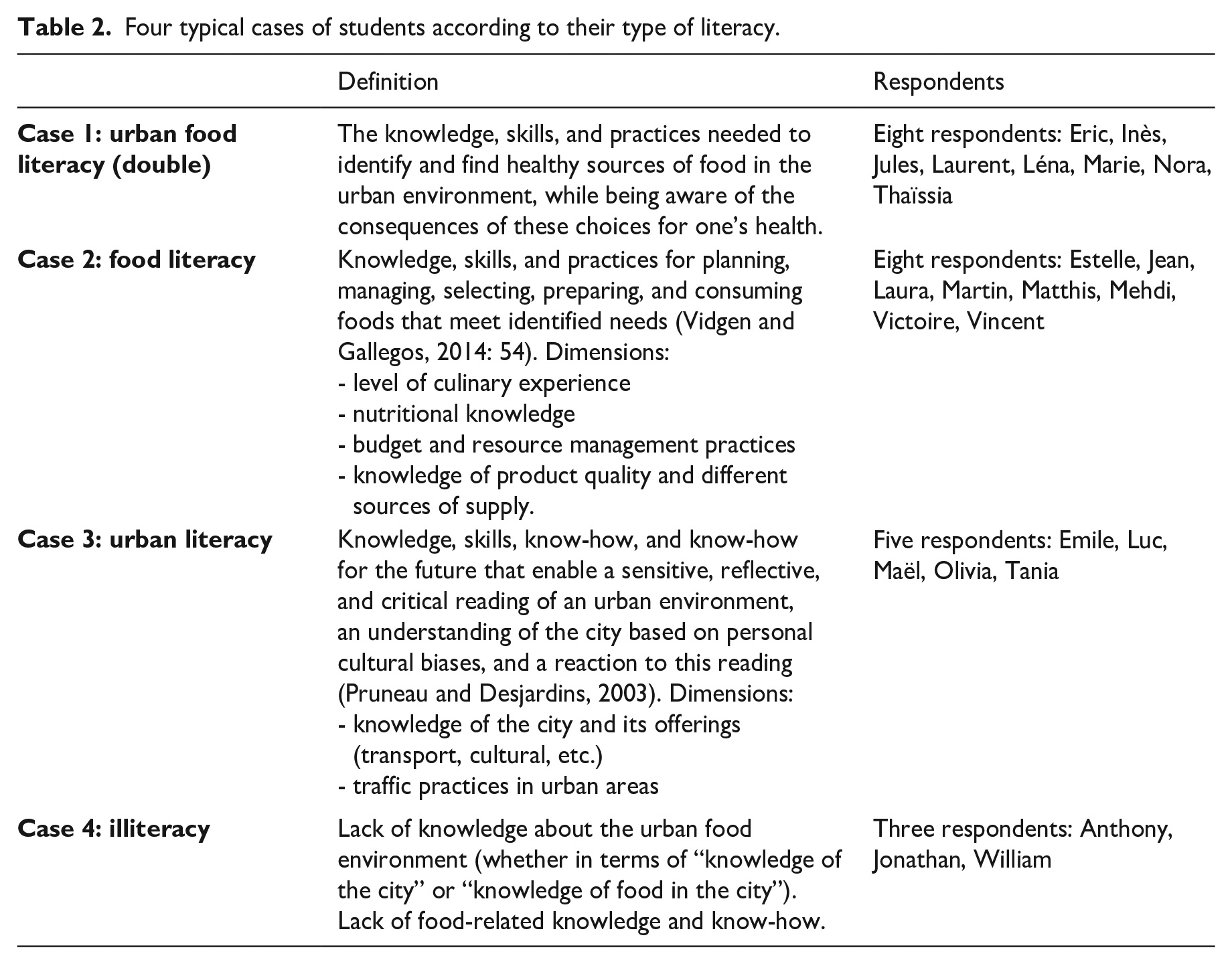
College students with higher levels of food literacy – defined as “a set of knowledge, skills and practices that enable them to plan, manage, select, prepare and consume food that meets their needs” (Vidgen and Gallegos, 2014: 54) – are more profoundly affected by food-related conflicts. These college students employ specific strategies to ensure the quality of their food supply. Those committed to long-term residence in the city often explore various neighborhoods, comparing and evaluating food options for both quality and price. This behavior exemplifies what we term “urban food literacy,” which is “a set of knowledge, skills and practices enabling one to identify and find healthy sources of food supply within the urban space, while being aware of the consequences of these choices for one’s health” (case 1, Table 2).
Four typical cases of students according to their type of literacy.
Strategies of dual-literate students
Two distinct strategies emerge among students who possess both food and urban literacy, contingent upon the resources available in their neighborhoods:
Diversification strategy. Students employing this strategy utilize a wide array of sources, leveraging the benefits of each. For instance, Marie, after 4 years of study in the city, has developed an expertise in resolving the price/proximity conflict, which she finds particularly frustrating (VerbMar1, Appendix 10). She strategically organizes her shopping across more than 11 different outlets, differentiating between “big purchases” made on the city’s outskirts with a functional logic, and purchases with a more emotional dimension, particularly fresh produce (VerbMar2 and VerbMar3), which she procures more frequently and ritualistically from local grocery stores, markets, and specialty shops. Her regular patronage of the university restaurant helps her address the healthy/proximity conflict, though she laments her rare visits to restaurants due to budget constraints (VerbMar4).
Enforced concentration strategy. This strategy involves the consolidation of shopping into essential sources due to constraints. For instance, Inès, an international student living in France for 3 years, lives in a neighborhood distant from her university. Despite her awareness of the variety of local offerings, which she has tested, she consolidates her shopping at two nearby supermarkets because other options are too costly. To manage the price/proximity conflict, she performs small, frequent shopping trips (VerbIn1) based on a pre-prepared list for a supermarket she knows well (VerbIn2), with local grocery stores visits reserved to exceptional situations (VerbIn3). Although far from the university restaurant, Inès visits it for lunch when she has classes, and sometimes takes food home for dinner. She occasionally opts for fast food due to its proximity to her home (VerbIn4). Inès adopts a frugal and deliberate approach tailored to her neighborhood and limited budget, a strategy born of necessity rather than choice, as she would prefer to diversify her options if her circumstances allowed.
College students with urban food literacy demonstrate no significant gap between OA and PA, because they have developed a thorough knowledge of their surrounding food options and adapt their strategies according to their neighborhood’s resources and financial means.
Students’ food literacy strategies
College students with a transient mindset, perceiving themselves more as visitors than residents in their university city, often do not exert the effort to explore their urban environment. Unlike college students with dual literacy, they possess only food literacy (case 2, Table 2). To access quality food without delving into the city to uncover good deals, they adopt two primary strategies based on their familial involvement:
Parental sourcing strategy. For instance, Mathis, during his 4 years of study, rarely shopped for food in his university town (VerbMat1), effectively sidestepping any conflicts related to food accessibility. Each weekend, he returns to his parents’ home to meticulously prepare and ration his weekly food supply with his mother’s assistance (VerbMat2). This preparation includes meals, snacks, and breakfasts, all neatly packed in airtight containers (VerbMat3). Mathis, thus, remains detached from the food supply dynamics of his university town and maintains a string emotional and logistical connection to his family and hometown, rendering him a stranger to his study town.
The avoidance strategy. This strategy is favored by more independent college students with sufficient financial resources who live outside student neighborhoods and rely on car for transportation. For instance, Victoire, an apprentice student in the city for just 1 year, chose to live in a district distant from her place of study to facilitate car travel. She frequents three hypermarkets for her regular shopping needs, remaining largely unaware of her neighborhood’s offerings due to lack of time and exploration (VerbVic1, VerbVic2). Although she aspires to shop only in small local stores, she envisions doing so only in adulthood when she will be more settled (VerbVic3). For lunch, she avoids the university restaurant and cafeteria, opting instead to bring her own meals or visit fast-food establishments.
College students possessing only food literacy demonstrate a significant gap between their OA and PA due to their unawareness of the local food options and often distorted perceptions. However, these students rarely express dissatisfaction as they have identified satisfactory food sources outside their immediate neighborhood for the duration of their studies.
Student strategies for urban literacy
Conversely, some students exhibit a lack of food literacy. With minimal interest in cooking and limited nutritional knowledge, these individuals consider food as a constraint in terms of time, financial resources, and personal engagement. Nevertheless, some students have developed urban literacy, defined as a blend of knowledge, interpersonal skills, practical know-how, and future-oriented capabilities that enable them to effectively navigate an urban environment (Pruneau and Desjardins, 2003) (Case 3, Table 2). These urban-literate students have adopted two primary least-effort strategies to minimize the time spent on procuring food supplies:
Transient supply strategy. For instance, Luc has become well acquainted with the city by traveling on foot, by scooter, streetcar, or car. Despite his extensive urban knowledge, he does not have the familiarity for food procurement. With little interest in his diet and a limited budget, he buys from convenient places he passes by and the simplest sources (VerbLuc1 and VerbLuc2). He frequently gets deliveries and often opts for unhealthy options (VerbLuc3).
Concentration strategy. Other urban-literate students, with lower incomes than Luc, like Olivia, focus their purchases on a single hypermarket or discount stores identified as the nearest (VerbOli1) and concentrate their catering on one location. In Olivia’s case, this is McDonalds, which is further away than the university restaurant (VerbOli2). Olivia, who has little interest in food, doesn’t experience conflict between healthy and proximity. Her low level of involvement means she makes no effort to seek out healthy food options. At various points, Olivia even admits not being interested in food issues (VerbOli3). We describe this as a chosen strategy, because these students use it to minimize the time spent on food shopping. Consequently, there is a significant gap between these students’ OA and PA, as their urban knowledge of the city is not focused on available and accessible food options. Nevertheless, they complain about the lack of healthy options in their neighborhood, which complicates their shopping experience, and express a preference for having a nearby supermarket (VerbOli4).
Student strategies for illiteracy
A subset of students demonstrates what we have termed “illiteracy” (Case 4, Table 2), which refers to an absence of knowledge and skills concerning both the city and food. These students exhibit a lack of interest in food-related issues and perceive their time in the city of study as temporary, thus they are unwilling to invest time in engaging with their surroundings. Among these illiterate students, two primary strategies have been identified:
Institutional dependence strategy. This strategy involves relying almost entirely on food aid and €1 meals provided by the CROUS. For instance, Anthony avoids purchasing almost anything in the city’s food shops (VerbAnt1), thereby resolving the price-proximity conflict. He prioritizes economy, subsisting on the bare minimum (VerbAnt2). However, as CROUS meals were deemed too frugal for his appetite, he experienced weight loss during his first year of study (VerbAnt3). Consequently, in the subsequent year, he changed his behavior, consuming his midday meal with food aid and his evening meal with two CROUS meals. It required him to adhere to a routinized daily organization (VerbAnt4). This strategy was designed to minimize food costs but resulted in the consumption of outdated food and meals with limited variety (VerbAnt5). Anthony’s approach bypasses conventional food models, which might otherwise encourage more diverse food choices or adherence to social norms. In addition, he resolves the conflict between physical accessibility and healthy eating by not patronizing restaurants outside CROUS.
Chosen concentration strategy mirrors the one previously discussed. This strategy involves concentrating purchases at a hypermarket or discount store perceived as the closest to his residence, even though it is located outside the neighborhood.
Students experiencing illiteracy exhibit a significant disparity between OA and PA, as they typically do not investigate available options in their neighborhood, whether for shopping or dining.
Discussion
From accessibility conflicts to student coping strategies
In alignment with previous work, this research showed that students’ PA to healthy eating is often misaligned with their OA (Caspi et al., 2012; Gustafson et al., 2011). This misalignment highlights the significance of PA in relation to OA (Vitman-Schorr et al., 2019; Vonthron, 2021; Wang et al., 2015; Wilkins et al., 2017; Yamaguchi et al., 2019). While this discrepancy is partly attributed to variables already identified in the literature, such as feelings of safety, the pleasantness of the journey and practicality of the journey (particular access by public transport) rather than distance or travel time (Calise et al., 2019; Wang et al., 2015), and available material resources including car ownership (Caspi et al., 2012), our interview analysis reveals that a significant portion of the surrounding food supply is not considered by respondents. Residing in an environment where PA variables are unmet (specifically, an affordable and nearby food offer), college students living outside their parents’ house face accessibility conflicts. This study expands on previous work by illustrating that the types of conflict between OA and PA differ between food shopping (price–proximity conflict) and out-of-home dining (healthy–proximity conflict). These conflicts arise partly from (1) the surrounding offer (OA), which aligns with the description of the food swamps, and (2) the students’ lack of knowledge about the available options (PA), leading them to rely on heuristics that associate nearby small shops with more expensive choices.
In the context of college students living away from home, OA relies on the decisions of both institutional players (such as CROUS, city, food aid associations) and the commercial sector (including retail and catering services). The CROUS, recognized as “one of the key operators in the student experience,” 16 assumes a regulatory role in the management and implementation of standards and procedures related to university services and social aid. However, it does not extend its influence on students’ access to food outside its scope. To date, municipal strategies have generally not included specific provisions for this specific target, primarily due to the territorial competences assigned by the French State. Consequently, despite their significant presence in urban spaces and their identification as a priority group, college students often lack dedicated facilities within city environments. Following de Certeau’s (1990) framework, the CROUS and municipal authorities can be considered isolable actors of power, functioning within defined boundaries where they pursue specific objectives. This leads to a fragmented approach within their respective domains of authority. In a constrained food supply context, college students adapt by employing everyday tactical practices (de Certeau, 1990). These students, who have moved away from their familial homes, design and implement innovative strategies to mitigate the limitations imposed by the accessible food supply, shaped by both institutional and market forces. They are not merely passive consumers of the objectively accessible food supply. Despite the uniformity of OA within a given neighborhood, our findings reveal a diverse array of adaptive strategies shaped by students’ types of literacy (Table 2), highlighting the complexity of food behaviors within this population. The level of literacy (food, urban, urban food, or illiteracy) serves as an individual characteristic that creates discrepancies between OA and PA and shapes a unique creative space for each student (de Certeau, 1990). Each student’s tactic reflects the heterogeneous nature of their practices. This heterogeneity underscores various ways of positioning oneself within the food environment and, consequently, of experiencing student life (Le Quéau, 2014). The diversity of college student practices aligns with Recchia et al.’s (2023) research on households, supporting the assertion that systemic rather than sequential actions on OA and PA are necessary, even for this specific population. This approach addresses the multifaceted nature of food access and usage, recognizing the complex interplay between institutional structures and individual practices.
Perceived high food prices
The perceived high cost of living, particularly regarding food prices, is a critical factor influencing accessibility for students (Pothin et al., 2022). This perception is intertwined with both spatial logics and status logics. College students, irrespective of their actual income levels, commonly perceive themselves as having limited financial resources due to their student status. In essence, while the perception of high prices is significant for the general population during inflationary periods, it is especially pronounced among college students, particularly in relation to food expenses. Discussions about the high cost of food are nearly ubiquitous among students. Students with constrained financial resources are naturally compelled to pay attention to food prices. Conversely, those with relative higher incomes remain price-sensitive to save money for other discretionary expenditures, such as clothing and social activities. In both cases, students justify their acute price sensitivity by their student’s status. For instance, the €1 social pricing offered by the university restaurant enhances the OA of healthy food options for scholarship holders. However, over time, this pricing can become a reference price (Hamelin, 2000; Zollinger, 1993), potentially distorting perceptions of the cost of healthy eating outside subsidized environments. The €1 price may in fact lead to a skewed perception of what it means to eat healthily outside the university restaurant. The disparity between a €1 ready-to-eat meal and the actual cost of raw ingredients reinforces misconceptions about the pricing of comparable, non-subsidized food options. Food shopping and dining to the university restaurant are perceived as utilitarian and as a routine in students’ life, yet they lack the pleasure and social dimensions, resulting in low perceived value. In contrast, fast food provides a more social and hedonic experience, where price is less of a deterrent. Consequently, the practicalities of daily food–related activities diminish the prioritizing of healthy eating, thereby reducing the perceived benefits relative to the effort required.
Furthermore, aligning with the findings of Bertrandias and Lapeyre (2017) and the more recent research of Pothin et al. (2022), compensatory mechanisms among college students are evident. For instance, some students may adopt a strategy of weekday deprivation, allowing them to allocate resources for shared moments of pleasure, underscoring the social dynamics of their consumption behavior.
Dissociated students versus integrated students
Our findings indicate that some of our respondents have not integrated themselves into the urban space, whether at the neighborhood level or within the broader city context. Even after several years, their student experience remains transient, echoing Bodin’s (1959) concept of temporariness. This lack of engagement with the city’s food landscape highlights a broader issue of disconnection from their place of study (Prohansky et al., 1970). Consequently, these students do not perceive their city of study as “home” (Carù and Cova, 2003). In addition, for college students, the degree of dependence on parental support can conflict with local commerce in their city of study. This phenomenon occurs when students do not actively engage with their city beyond the academic sphere. In contrast, our research reveals that students possessing food literacy who receive minimal parental assistance and lack access to a car tend to achieve greater autonomy within the city. These students, motivated by a willingness to practice healthy eating, make concerted efforts to navigate the urban environment (utilizing public transportation and seeking out food solutions), thereby exhibiting urban literacy. As a result, they emerge as a group with urban food literacy. In essence, the dichotomy between dissociated and integrated college students underscores the importance of engagement and self-sufficiency in fostering a sense of belonging and competence within the urban landscape. The present research contributes to our understanding by highlighting how college students living outside their parents’ home but with higher levels of food and urban literacy demonstrate greater adaptability and integration into their urban environments.
Managerial and societal implications
Considering public health challenges, economic pressures, and the need for solidarity, concerted actions to promote healthy eating among college students are imperative from public and private entities, as well as associations. Enhancing the OA around campuses and student residences is crucial, as is improving the PA, with adjustments tailored to the type of literacy of the target audience.
Designing a territorial strategy dedicated to students
Improving access to healthy food requires a thoughtful approach to public policy, incorporating social marketing actions to prevent the pitfalls of past initiatives. All too often, despite good intentions, municipal initiatives fall short of expectations due to ineffective communication and fail to induce significant behavioral changes. Active participation of target audiences in participatory approaches is essential for fostering long-term adhesion. A noteworthy example of a comprehensive holistic approach to food accessibility is the multi-partner agreement established in Lyon 17 in 2022. This initiative involved a financial scheme that distributed a monthly allowance in a complementary currency called La Gonette, 18 support from a local association promoting organic farming, and a gamification interface to assess the impact on students’ eating habits. Preliminary results indicate that economic autonomy, through complementary alternative currency, positively influences purchasing behaviors and attitudes toward healthy, sustainable, and locally sourced food. The impact is more pronounced when students receive training to raise awareness of these issues. This experiment – involving a diverse array of stakeholders, including universities, production associations, city and metropolitan authorities, as well as regional and state entities – fosters the development of a shared vision within the territory and effectively addresses the needs of students.
Enhancing OA
Partnerships between private and public entities are essential to enhance OA to healthy food options. In student areas, often described as food deserts, financial incentives should be provided to establish food shops and restaurants offering healthy options. This should be accompanied by process support and awareness campaigns directed at project developers. Initiatives such as TooGoodToGo could be specifically tailored for student populations. In addition, existing retail and catering businesses could benefit from awareness and training programs aimed at enhancing their current offerings. Beyond increasing the availability of healthy food, it is crucial to improve the overall atmosphere of these neighborhoods. These services should be seamlessly integrated into an urban design that prioritizes ease of movement and pleasant experiences for pedestrians and public transport users.
Regarding open-air markets, the potential of food cooperatives and short distribution channels is rarely mentioned, indicating a lack of awareness and/or interest in these structures. Private-sector players or associations could introduce flexible, mobile distribution systems (such as carts) along student routes (e.g. tramway stops, university entrances) to minimize the effort required for students to access healthy food options.
Improving PA
Communication campaigns promoting healthy eating among young people 19 are regularly implemented. However, these initiatives are often not localized and primarily focus on cognitive and/or financial accessibility. It is crucial to address all three components of food accessibility to ensure that the messages resonate more effectively with college students’ daily lives.
To enhance communication, it is essential to deconstruct the heuristic that students automatically associate the food on offer in specialized boutiques and small stores close to student neighborhoods with exorbitant prices. Shopkeepers should consider and promote differentiated pricing for healthy food aimed at students. Coordination between retailers’ associations and economic development policy could boost the visibility of such actions (e.g. labeling local shops offering student prices). Furthermore, healthy, low-cost initiatives should emphasize the “smart shopping” aspect rather than the “solidarity” aspect. Applications such as TooGoodtoGo exemplify this approach, avoiding stereotype about the precarious student contenting himself with the products that associations are willing to give him. Similarly, solidarity grocery stores and food donations by associations are often perceived as reserved for the highly precarious public residing in university halls. Public and association players should work on reshaping the perceived image of these supply methods to rethink the value proposition offered to students.
Moreover, it would be beneficial to draw up an educational note detailing the composition of the prices charged by the CROUS, even for its non-social services. This initiative would raise students’ awareness of the price components, facilitating a better understanding of the real cost of a healthy diet and the financial implications of a balanced meal. In addition, this would enhance the perceived value of a meal in the university restaurant.
In conclusion, it would be appropriate to rethink the segmentation of college students based on their level of literacy rather than solely on their status as scholarship holders or residents of university halls of residence. Priority should be given to improving the urban food supply for categories characterized by low “food literacy” and “urban literacy” (Appendix 11).
Limits and avenues of research
Several limitations of this study need to be mentioned to guide future research endeavors. First, the comparison between students’ OA and PA was restricted to the specific city of Montpellier. Consequently, the data should be interpreted within the physical, cultural, social, and economic context of that city. To enhance this approach, future research could develop a PA measurement tool that integrates a multidimensional and global perspective. This tool would aim to test the predictive capacity of PA on the quality of food choices and address the conceptual and methodological limitations identified in the literature. In addition, it is important to measure the influence of students’ individual characteristics (e.g. scholarship status, type of accommodation, type of study) on PA to identify profiles likely to encounter difficulties.
With regard to the definition of a healthy food supply, the classification system we designed to categorize food supply sources as predominantly healthy or unhealthy (Table 1), based on the US Chronic Disease Center and the National Institute of Statistics and Economic Studies (INSEE) nomenclature, does not always accurately reflect local realities. In the literature, convenience stores are generally considered to have predominantly unhealthy offerings (Hallum et al., 2020). However, our field observations indicated that the offerings of national superstores (e.g. Vival) appeared healthier than those of small, independent local superstores, which emphasized sweet and savory snacks more. While this finding does not affect our results, it raises the question of the relevance of local authorities setting up a Geographical Information System (GIS) to identify and characterize the entire food offer in the city according to health criteria.
At the methodological level, a complementary approach using the life-story method could provide an in-depth understanding of food accessibility trajectories in a dynamic way. The status of college students living away from their parents’ home is well suited to the life-story method (Bertaux, 2016). For this population, living away from home marks a transitional stage between adolescence and adulthood, representing a process of identity empowerment (Van de Velde, 2008), during which many significant changes occur. By conducting narrative interviews (Bertaux, 2016; Ozcaglar-Toulouse, 2009) with master’s and doctoral students, future research could focus on the meanings attributed to the transformations and actions undertaken to adapt to their environment. For instance, examining how college students appropriate the city could provide valuable insights. Thus, the identification of “turning points” (Abbott, 2009; Van de Velde, 2015) could be a major contribution of this work. Among the changes students face, it would be pertinent to identify those constituting sources of bifurcation in terms of experienced food accessibility and the ways in which their resources would then be mobilized and reorganized. The life-story method could thus elucidate to understand food accessibility in a temporal dynamic, as Garabuau-Moussaoui (2002) has done for young people’s culinary practices. Concurrently, observing respondents during commented tours of their neighborhoods, accompanied by verbal protocols (Miaux, 2008), would enrich our understanding of observed discrepancies. Finally, an in situ experiment or quasi-experiment, evaluating different types of stores in student neighborhoods, could provide additional insights.
Marketing research has largely overlooked the influence of geographical space (neighborhood or city) on the eating habits of its inhabitants. The theory of social practices applied to food, with its emphasis on the interaction between skills, meanings, and the material environment – including food outlet accessibility – (Innocent et al., 2023) highlights the importance of existing offerings and their perception on behavior. In a context where the obesity rate among 18- to 24-year-olds quadrupled between 1997 and 2020 (Fondbonne et al., 2023), investigating the role of the so-called “obesogenic” environment (Lake and Townshend, 2006; Pech, 2021) on the dietary practices of students and young people in general makes more sense than ever.
Footnotes
Appendix 1
Main measures of objective food accessibility.
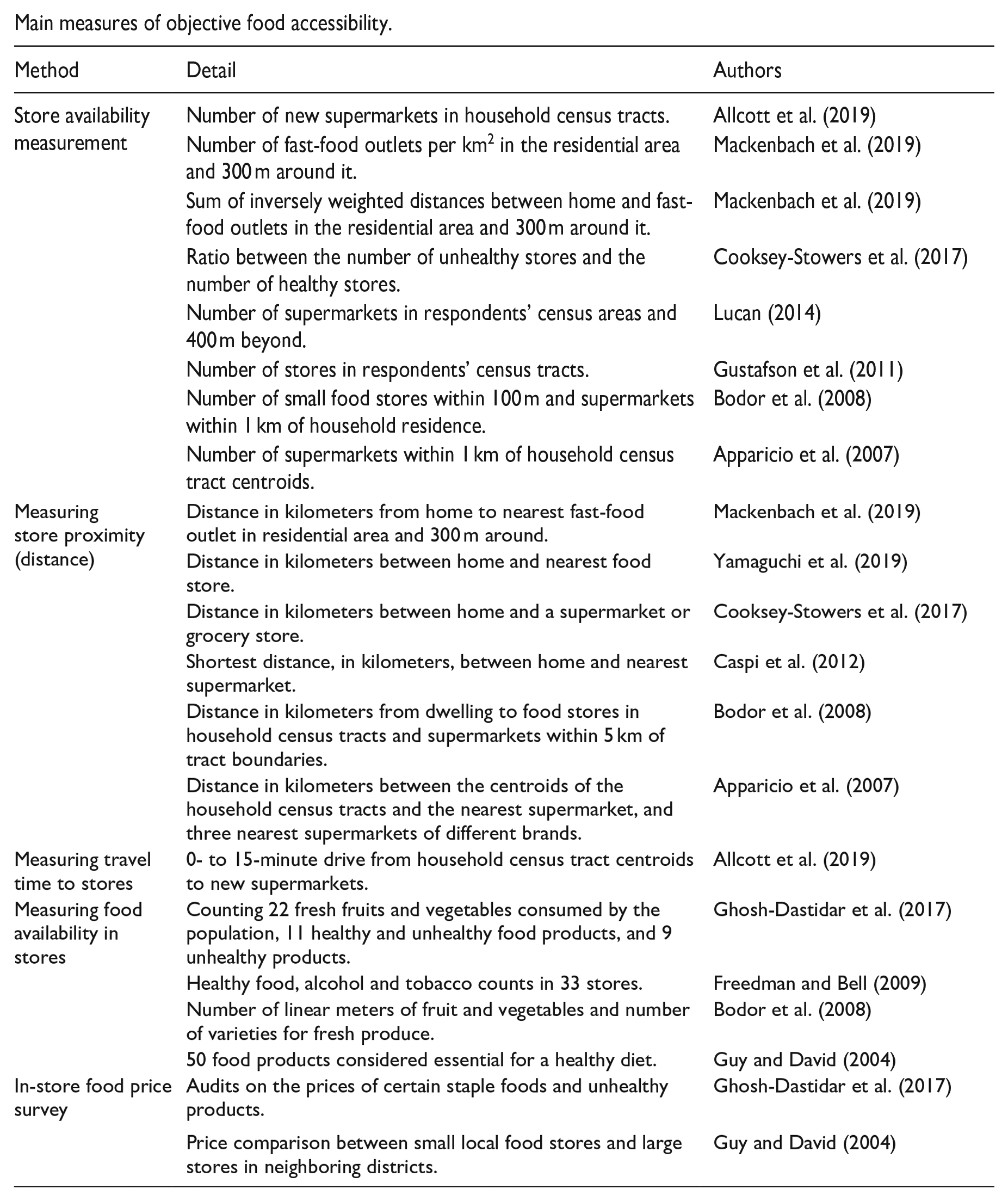
| Method | Detail | Authors |
|---|---|---|
| Store availability measurement | Number of new supermarkets in household census tracts. | Allcott et al. (2019) |
| Number of fast-food outlets per km2 in the residential area and 300 m around it. | Mackenbach et al. (2019) | |
| Sum of inversely weighted distances between home and fast-food outlets in the residential area and 300 m around it. | Mackenbach et al. (2019) | |
| Ratio between the number of unhealthy stores and the number of healthy stores. | Cooksey-Stowers et al. (2017) | |
| Number of supermarkets in respondents’ census areas and 400 m beyond. | Lucan (2014) | |
| Number of stores in respondents’ census tracts. | Gustafson et al. (2011) | |
| Number of small food stores within 100 m and supermarkets within 1 km of household residence. | Bodor et al. (2008) | |
| Number of supermarkets within 1 km of household census tract centroids. | Apparicio et al. (2007) | |
| Measuring store proximity (distance) | Distance in kilometers from home to nearest fast-food outlet in residential area and 300 m around. | Mackenbach et al. (2019) |
| Distance in kilometers between home and nearest food store. | Yamaguchi et al. (2019) | |
| Distance in kilometers between home and a supermarket or grocery store. | Cooksey-Stowers et al. (2017) | |
| Shortest distance, in kilometers, between home and nearest supermarket. | Caspi et al. (2012) | |
| Distance in kilometers from dwelling to food stores in household census tracts and supermarkets within 5 km of tract boundaries. | Bodor et al. (2008) | |
| Distance in kilometers between the centroids of the household census tracts and the nearest supermarket, and three nearest supermarkets of different brands. | Apparicio et al. (2007) | |
| Measuring travel time to stores | 0- to 15-minute drive from household census tract centroids to new supermarkets. | Allcott et al. (2019) |
| Measuring food availability in stores | Counting 22 fresh fruits and vegetables consumed by the population, 11 healthy and unhealthy food products, and 9 unhealthy products. | Ghosh-Dastidar et al. (2017) |
| Healthy food, alcohol and tobacco counts in 33 stores. | Freedman and Bell (2009) | |
| Number of linear meters of fruit and vegetables and number of varieties for fresh produce. | Bodor et al. (2008) | |
| 50 food products considered essential for a healthy diet. | Guy and David (2004) | |
| In-store food price survey | Audits on the prices of certain staple foods and unhealthy products. | Ghosh-Dastidar et al. (2017) |
| Price comparison between small local food stores and large stores in neighboring districts. | Guy and David (2004) |
Appendix 2
Main measures of perceived food accessibility.
| Method | Detail | Authors |
|---|---|---|
| One-dimensional and single-item measurement (quantitative study–questionnaire) | Perceived availability of food. How many stores or facilities selling fresh fruit and vegetables are located within a kilometer of your home? |
Yamaguchi et al. (2019) |
| Perceived access to a supermarket. Do you have a supermarket “within walking distance” of your home? | Caspi et al. (2012) | |
| Access to fresh fruit and vegetables. How easy or difficult is it to buy fresh produce? |
Caldwell et al. (2009) | |
| One-dimensional and multi-item measurement (quantitative study–questionnaire) | Proximity to food products and shops. Better geographical access to a wide variety of fruits. Better geographical access to a wide variety of low-cost fruit and vegetables. |
Rodier et al. (2017) |
| Perceived availability of healthy foods. A wide selection of fruits and vegetables is available in my neighborhood. A wide range of low-fat products is available in my neighborhood. The fruit and vegetables in my neighborhood are of the highest quality. |
Gustafson et al. (2011) | |
| Multidimensional and single-item measurement (quantitative study–questionnaire) | Perceived accessibility of supermarkets and perceived availability of fruit and vegetables. Do you have to travel outside your neighborhood to go to the supermarket? How would you rate the overall quality of grocery products available in your local stores? How easy or difficult is it for you to find fruit and vegetables in your neighborhood? |
Lucan (2014) |
| Multidimensional and multi-item measurement (quantitative study–questionnaire) | Access to food. It’s easy to buy fresh fruit and vegetables in my neighborhood. It’s easy to buy low-fat products in my neighborhood. There’s a wide selection of fruit and vegetables available in my neighborhood. There’s a wide selection of low-fat products available in my neighborhood. The fruit and vegetables in my neighborhood are of the highest quality. Fresh fruit and vegetables in my neighborhood are reasonably priced. The low-fat products in my neighborhood are reasonably priced. |
Calise et al. (2019) |
Appendix 3
Profile of respondents.

| First name changed | Age | Gender | Neighborhood | Studies | Returning home | Housing | Source of income | Means of transport | Objective accessibility | |
|---|---|---|---|---|---|---|---|---|---|---|
| Food shops | HD restoration | |||||||||
| Anthony | 21 | M | A | Bac + 2 physics | Once a month | 9 m2 U-city room | 150 euros grant | Streetcar | 4 convenience/general food stores (grocery stores) 2 bakeries 2 butchers 1 free food distribution 1 AMAP (fruit, vegetables, bread) |
5 fast food 8 restaurants 1 restau U |
| Emile | 20 | M | A | Bac + 3 Sciences | Every 2 weeks | Studio | Seasonal salary, APL | On foot, streetcar | 3 convenience/general food stores (grocery stores) 1 bakery 1 AMAP (fruit, vegetables, bread) |
6 fast food 6 restaurants 1 cafet U 2 restau U |
| Eric | 20 | M | A | Bac + 3 biology ecology | Vacations only | Chambre cité U 10 m2 (shared kitchen for 25 people) | 500 euros scholarship, seasonal work, little help from parents (very occasional) | On foot, by bike, streetcar | 4 convenience/general food stores (grocery stores) 2 bakeries 2 butchers 1 free food distribution 1 AMAP (fruit, vegetables, bread) |
5 fast food 8 restaurants 1 restau U |
| Estelle | 20 | F | A | Bac + 2 Commerce | All we | Room U | 250 euros grant | On foot, streetcar, car (at weekends) | 2 convenience/general food stores 1 butcher’s shop 1 bakery 1 free food distribution |
5 fast food 1 restaurant 2 cafet U 1 restau U |
| Inès | 22 | F | D (outside campus zone) | Bac + 3 marketing vente | Never | Studio in a private student residence | Parental assistance, APL | On foot, streetcar | 3 convenience/general food stores 3 supermarkets 5 butchers 5 bakeries 4 primeurs 1 frozen food store 1 fishmonger |
14 fast food 5 restaurants 3 salad bars |
| Jean | 21 | M | A | Bac + 2 biology | Rarely | Studio in a private student residence | 180 euros scholarship, parents 450 euros, APL | On foot, streetcar | 2 convenience/general food stores 1 butcher’s shop 1 bakery 1 AMAP (fruit, vegetables, bread) |
5 fast food 1 restaurant 1 cafet U 1 restau U |
| Jonathan | 22 | M | A | Bac + 3 Kiné-sithérapie | Every 2 weeks | Apartment | Seasonal salary, APL, parental assistance | Streetcar, car | 1 convenience/general food store (grocery) | 1 restaurant 2 fast food outlets 1 cafet U |
| Jules | 20 | M | A | Bac + 2 Sciences | Every 3 weeks | Apartment in cité U | Scholarship (amount not specified) | By foot, streetcar and bus, car | 3 convenience/general food stores (grocery stores) 1 bakery 1 free food distribution 1 AMAP (fruit, vegetables, bread) 1 open-air market |
6 fast food 6 restaurants 1 cafet U 1 restau U |
| Laura | 20 | F | D (outside campus zone) | Bac + 3 Commerce | Vacations only | 90 m2 flat sharing | Apprentice salary 985 euros, parents 200 euros, APL | Car, streetcar | 6 convenience/general food stores (grocery stores) 2 hard discount 5 bakeries 4 butchers |
8 fast food 3 restaurants |
| Laurent | 21 | M | C | Bac + 4 Management | Every 3 weeks | Roommate | Parental assistance, APL | On foot, by car | 14 convenience/general food stores (grocery stores) 2 supermarkets 1 hard discount 1 frozen food store 4 butchers 7 bakeries 1 fishmonger 1 open-air market |
22 fast food 54 restaurants 1 salad bar 1 cafet U 1 restau U |
| Léna | 27 | F | C | Bac + 5 Management | Every 2 weeks | Apartment | Work-study salary | On foot, public transport | 13 convenience/general food stores (groceries) 1 supermarket 1 hard discount 1 frozen food store 3 butchers 5 bakeries 1 fishmonger 1 open-air market |
20 fast food 26 restaurants 1 salad bar 1 cafet U 1 restau U |
| Luc | 20 | M | C | Bac + 2 Management | Every 2 weeks | Studio | Help from parents | Scooter, streetcar, on foot, car (rarely) | 14 convenience/general food stores (grocery stores) 2 supermarkets 1 hard discount 1 frozen food store 4 butchers 7 bakeries 1 fishmonger 1 open-air market |
22 fast food 54 restaurants 1 salad bar 1 cafet U 1 restau U |
| Maël | 22 | M | A | Bac + 3 biology | All WE | Apartment | 100 euros scholarship, parental assistance, student salary, paid internship | Car, streetcar | 1 convenience/general food store (grocery) 2 butchers 1 primeur 1 open-air market |
1 fast food 2 restaurants |
| Marie | 23 | F | B | Bac + 4 Lettres | Never | Studio | 450 euros grant | By foot, bike, streetcar | 14 convenience/general food stores (grocery stores) 5 butchers 5 bakeries 2 primeurs 1 grocery store 1 AMAP (fruit, vegetables, bread) |
17 fast food outlets 13 restaurants 3 cafet U 1 restau U |
| Martin | 18 | M | A | Bac + 1 STAPS | Rarely | 25 m2 studio apartment in a private student residence | 108 euros scholarship, APL, parental assistance (rent + 100 euros) | Streetcar, bike | 2 convenience/general food stores 1 butcher’s shop 1 bakery 1 AMAP (fruit, vegetables, bread) |
5 fast food 1 restaurant 1 cafet U 1 restau U |
| Matthis | 21 | M | C | Bac + 5 Management | All we | Apartment | Help from parents | By foot, car, streetcar | 14 convenience/general food stores (grocery stores) 2 supermarkets 1 hard discount 1 frozen food store 4 butchers 7 bakeries 1 fishmonger 1 open-air market |
22 fast food 54 restaurants 1 salad bar 1 cafet U 1 restau U |
| Mehdi | 18 | M | A | Bac + 1 Lettres | Every 3 weeks | Room U | Scholarship (amount not specified) and parental assistance | Streetcar, on foot | 2 convenience/general food stores 1 butcher’s shop 1 bakery 1 free food distribution 1 grocery store 1 AMAP (fruit, vegetables, bread) |
5 fast food 1 restaurant 2 cafet U 1 restau U |
| Nora | 23 | F | B | Bac + 4 Law | All WE | Apartment | 150 euros scholarship, spare cash (former student jobs) APL, occasional help from parents | Streetcar, on foot | 62 convenience/general food stores (groceries) 2 supermarkets 22 butchers 27 bakeries 12 primeurs 8 fishmongers 4 open-air markets |
146 fast food 310 restaurants 10 salad bars 1 cafet U |
| Olivia | 18 | F | A | Bac + 1 Lettres | Every 2 weeks | Room U | Scholarship (amount not specified) | Streetcar, bus, on foot | 3 convenience/general food stores (grocery stores) 1 bakery 1 free food distribution 1 grocery store 1 AMAP (fruit, vegetables, bread) 1 open-air market |
6 fast food 6 restaurants 1 cafet U 1 restau U |
| Tania | 23 | F | A | Bac + 5 Lettres | All we | Studio cité U 10 m² (10 m²) | 500 euros scholarship | On foot, streetcar | 3 convenience/general food stores (grocery stores) 1 bakery 1 free food distribution 1 grocery store 1 AMAP (fruit, vegetables, bread) 1 open-air market |
6 fast food 6 restaurants 1 cafet U 1 restau U |
| Thaïssia | 20 | F | C | Bac + 2 Management | Every 2 weeks | Studio | APL, parental assistance (rent) | On foot, streetcar, car (rarely) | 8 convenience/general food stores (grocery stores) 2 supermarkets 1 frozen food store 1 butcher’s shop 3 bakeries 1 fishmonger 1 primeur 1 open-air market |
23 fast food 36 restaurants 1 salad bar 1 cafet U 1 restau U |
| Victory | 25 | F | D (outside campus zone) | Bac + 3 Commerce | Vacations only | 50 m2 apartment | Apprentice salary 800 euros, prime d’activité, APL | Car | 7 convenience/general food stores (grocery stores) 6 bakeries 9 butchers 5 primeurs 1 open-air market |
12 fast food 5 restaurants |
| Vincent | 20 | M | A | Bac + 2 Mesures physiques | All WE | 18 m2 apartment | Parental assistance, APL | By foot, streetcar, car, bike | 1 convenience/general food store (grocery) 2 butchers 1 primeur |
1 fast food 2 restaurants |
| William | 18 | M | A | Bac + 1 IT |
Vacations only | Studio 18 m2 cité U | 571 euros scholarship, APL, 150 euros parental assistance | On foot, streetcar | 3 convenience/general food stores (grocery stores) 1 bakery 1 free food distribution 1 AMAP (fruit, vegetables, bread) 1 open-air market |
6 fast food 6 restaurants 1 cafet U 1 restau U |
Appendix 4: Interview guide
Appendix 5
Characteristics of respondents’ neighborhoods.
| Neighborhood | Description | Number of students | CROUS | Transport access | Fittings | Socio-demographics | Local shops |
|---|---|---|---|---|---|---|---|
| A | A sprawling, heterogeneous neighborhood. The area with the highest density of student residents is a priority district (https://sig.ville.gouv.fr/). |
Approx. 41,389 | 11 Résidences U and 3 Cité U 2 restau U 2 cafet’U |
1 streetcar line, bus, self-service bike station | Neighborhood located on a major city road and public transport artery | 25,980 inhabitants Average age: 30 |
Limited and scattered supply |
| B | A downtown district with a mixed student/family/retired population | Approx. 10,000 | 1 Cité U 1 Résidence U 1 restau U |
3 streetcar lines, bus, self-service bike station | Close to the historic center Nearby stadium |
13,659 inhabitants Average age: 37. |
Many local shops |
| C | A recent neighborhood with a mixed student/family/retired population | Approx. 5,000 | 1 Résidence U 1 restau U 1 cafet’U |
3 tramway lines, bus, self-service bike station, numerous paid parking lots, car-sharing station | 26,000 m2 riverside green space, bike path and beach access | 6,144 inhabitants Average age: 34 |
Many local shops |
| D | A district outside university campuses defined as a priority district (https://sig.ville.gouv.fr/) | N-R | 2,835 inhabitants |
Many local shops |
To take account of the anonymous nature of the research, the sources of the data in the table are available on request.
Appendix 6
Verbatims on the food offer in the city studied – from interviews with professionals.
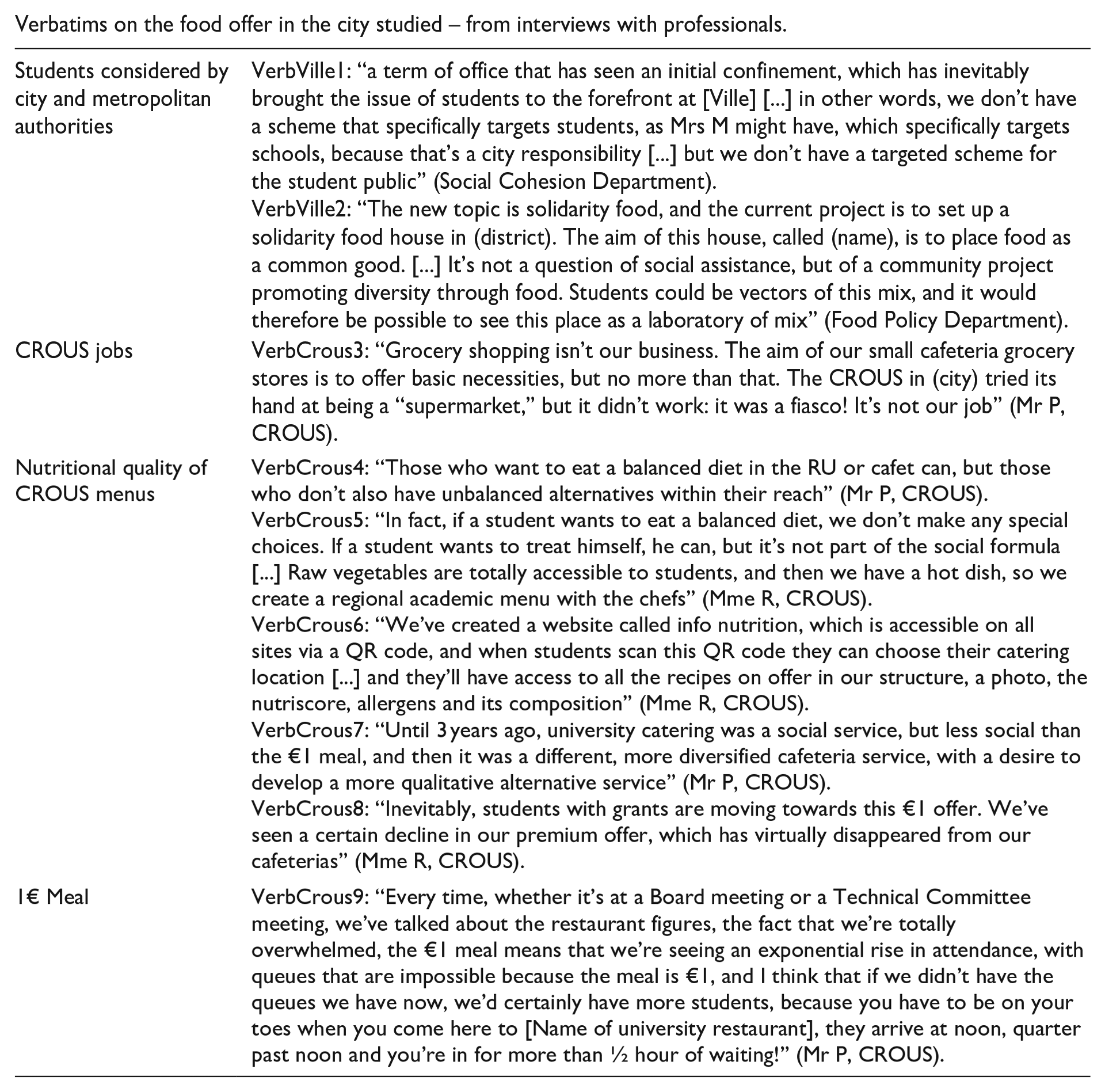
| Students considered by city and metropolitan authorities | VerbVille1: “a term of office that has seen an initial confinement, which has inevitably brought the issue of students to the forefront at [Ville] […] in other words, we don’t have a scheme that specifically targets students, as Mrs M might have, which specifically targets schools, because that’s a city responsibility […] but we don’t have a targeted scheme for the student public” (Social Cohesion Department). VerbVille2: “The new topic is solidarity food, and the current project is to set up a solidarity food house in (district). The aim of this house, called (name), is to place food as a common good. […] It’s not a question of social assistance, but of a community project promoting diversity through food. Students could be vectors of this mix, and it would therefore be possible to see this place as a laboratory of mix” (Food Policy Department). |
| CROUS jobs | VerbCrous3: “Grocery shopping isn’t our business. The aim of our small cafeteria grocery stores is to offer basic necessities, but no more than that. The CROUS in (city) tried its hand at being a “supermarket,” but it didn’t work: it was a fiasco! It’s not our job” (Mr P, CROUS). |
| Nutritional quality of CROUS menus | VerbCrous4: “Those who want to eat a balanced diet in the RU or cafet can, but those who don’t also have unbalanced alternatives within their reach” (Mr P, CROUS). VerbCrous5: “In fact, if a student wants to eat a balanced diet, we don’t make any special choices. If a student wants to treat himself, he can, but it’s not part of the social formula […] Raw vegetables are totally accessible to students, and then we have a hot dish, so we create a regional academic menu with the chefs” (Mme R, CROUS). VerbCrous6: “We’ve created a website called info nutrition, which is accessible on all sites via a QR code, and when students scan this QR code they can choose their catering location […] and they’ll have access to all the recipes on offer in our structure, a photo, the nutriscore, allergens and its composition” (Mme R, CROUS). VerbCrous7: “Until 3 years ago, university catering was a social service, but less social than the €1 meal, and then it was a different, more diversified cafeteria service, with a desire to develop a more qualitative alternative service” (Mr P, CROUS). VerbCrous8: “Inevitably, students with grants are moving towards this €1 offer. We’ve seen a certain decline in our premium offer, which has virtually disappeared from our cafeterias” (Mme R, CROUS). |
| 1€ Meal | VerbCrous9: “Every time, whether it’s at a Board meeting or a Technical Committee meeting, we’ve talked about the restaurant figures, the fact that we’re totally overwhelmed, the €1 meal means that we’re seeing an exponential rise in attendance, with queues that are impossible because the meal is €1, and I think that if we didn’t have the queues we have now, we’d certainly have more students, because you have to be on your toes when you come here to [Name of university restaurant], they arrive at noon, quarter past noon and you’re in for more than ½ hour of waiting!” (Mr P, CROUS). |
Appendix 7
Appendix 8
Verbatims dealing with the dimensions of accessibility – from interviews with students.

| Financial accessibility | Verb10: “Then there are the financial problems. I don’t have too many, it’s okay, I’m pretty lucky, I’m doing okay. I could afford to use more for food, it’s just by choice. And so what I say in terms of a limit, we’re not really there but I set myself a food budget limit because I’m saving money to buy and see a bit more in the long term to buy expensive things like my driving licence, things like that (…) in everything I have left, there’s saving or buying online games or subscriptions, NETFLIX for example.” (William, A) Verb11: “The CROUS distributes €1 meals, so since the beginning of my confinement, I haven’t done any shopping at all, since I only go to the CROUS to get something to eat in the morning and evening. After that, as I don’t eat much, I accumulate meals and that makes the weekend (…) I don’t eat much, I eat what the CROUS offers me, if they offer me a dish I generally eat half of it, so it’s always for the next day (…) before I used to go to a restaurant from time to time, as I was saving money with the CROUS.” (Tania, A) |
| Physical accessibility | Verb12: “And why Auchan? – Because it’s the closest, it’s the most convenient by streetcar. It’s also cheaper than the little market opposite (…) I sometimes go to Lidl too. It’s just a bit annoying on the bus. But it’s not too often.” (Anthony, A) Verb13: “So, most of the time, it’s Auchan because it’s accessible by streetcar and not far, I don’t have a car.” (Martin, A) Verb14: “I go to the LIDL closest to my house, it’s the one closest to the university because I live next door. – Right. And why did you choose that one? And why did you choose that one? – Because it’s the cheapest and the closest. If I wanted to go to a LIDL further away, the problem would be transport and again, it would take me a long time. It usually takes me at least 2 h – 2h30 to do the shopping, because from here to the stop it’s already 25 min, when I take the bus it’s about 20 – 25 min and so on. Knowing that the bus doesn’t come often, every hour, I really have to take a whole afternoon to go shopping every time.” (Tania, A) Verb15: “If you go there, it’s also because it’s not far from where you live? – Yes, and even the path is pleasant, you go through a street with trees …” (Marie, B) Verb16: “Actually, I did the test, I went … There was a GEANT not far from where I live. Except that I had a very bad experience there. So I’m not going back. You’re digressing, but basically, my cardholder was stolen, so I won’t be going back. So that’s it. So now, it doesn’t matter if I go far away, at least I know I’ll have everything I need, my wallet, all that, it’ll stay there.” (Victoire, D) Verb17: “When we really have big purchases, when there are several of us and we try to, for example, buy things in large quantities so that afterwards, 2 or 3 people can share the shopping, it’s more, it’s, it’s cheaper to buy in large quantities. Here, we drive to Carrefour.” (Vincent, A) |
| Cognitive accessibility healthy versus unhealthy | Verb18: “Overall, it’s really, you have to, you have to put a lot of effort into cooking to have something healthy, you have to, you have to know (…) Even, when you’re shopping, you don’t necessarily have the idea, you don’t realize that ok well it’s summer, tomatoes are in season, you’re going to eat tomatoes, you look at where it comes from, well you still, you still have to have a presence of mind when you’re shopping …” (Vincent, A) Verb19: “In general, I think we lack knowledge. We’re not that well informed about food either. I was able to because I was personally interested and because I had a subject at university that informed me a lot about nutrition. But generally speaking, I’d say we’re not trained in that either, because it’s still a private, family matter.” (Jean, A) |
Appendix 9
Verbatims dealing with conflicts between dimensions of accessibility – from interviews with students.

| Price-distance conflicts (18 students, 44 verbatims) | Verb20: “I’m not the only one who thinks so, I think it’s scandalous that the little Carrefour next to the university, well, that the prices are so expensive, it’s a scandal, the Carrefour isn’t that small and they know very well that only students go there … and the prices are unaffordable. So there’s a big difference with Carrefour Trifontaine. I never shop there even though I’m a 5-minute walk away, but you see, it’s much too expensive.” (Marie, A) Verb21: “But the main problem would be the price, because in general, convenience stores offer enough to live on, there’s not much choice, stuff, more exotic things, but the biggest problem in general with that is the price. The biggest problem with convenience stores in the neighborhoods is the price. So that’s what’s holding this kind of thing back quite a lot.” (William, A) Verb22: “ – there are Verb23: “Most of the stores are Carrefour City, Carrefour Market, spars of … How should I put it, local stores, I think they’re called? which are small, but generally much more expensive, and what’s also lacking is a fresh vegetable section, for example. I mean fresh, a section, a real vegetable section other than frozen.” (Eric, A) Verb24: “Oh yes, for example, I don’t go to all the little grocery stores because they’re too expensive. In fact, I don’t often go to the bakery and all that. I never go … Verb25: “Then I also look at the price, I could go to Carrefour Market which isn’t far, but it’s. Already, it’s a bit further, it’s not very big and it’s much more expensive than a supermarket a bit out of the way.” (Eric, A) Verb26: “Usually, I go in the afternoon, often at weekends because I have time, I don’t have classes and I take the streetcar with a bag, I have a backpack with a shopping bag and then I go to the LIDL which is about 3 kilometers from where I live, so that’s two metro lines to take, or rather the streetcar. So I go to a LIDL and I take about a course bag plus a shopping bag, the big canvas bags, that’s about it. It lasts me between a week and ten days, depending (…) – Verb27: “Well, usually my boyfriend goes with me because I try to do big shopping so I don’t have to go back … regularly and so I go to Lidl or Auchan (…) We go by streetcar, we don’t have a car and he helps me carry my bags because it’s heavy but we go by streetcar.” (Olivia, A) Verb28: “The grocery store, well I don’t really know the prices but it seems to me that it’s more expensive.” (Estelle, A) |
| Verb29: “So I know that (the butcher’s) it’s better for the food to go there but 1) I don’t necessarily think of going there and 2) I think it’s much more expensive, I’ve never looked into it but I think … it’s not the same price in my opinion.” (Olivia, A) |
|
| Healthy conflict-distance | Verb32: “Well, you just call and the food arrives. And often when you call, you don’t call for healthy food. Now it’s super fast, I find it just makes it easier to go for unhealthy food … than healthy food.” (Jules, A) |
Appendix 10
Verbatims on students’ eating strategies according to type of literacy.
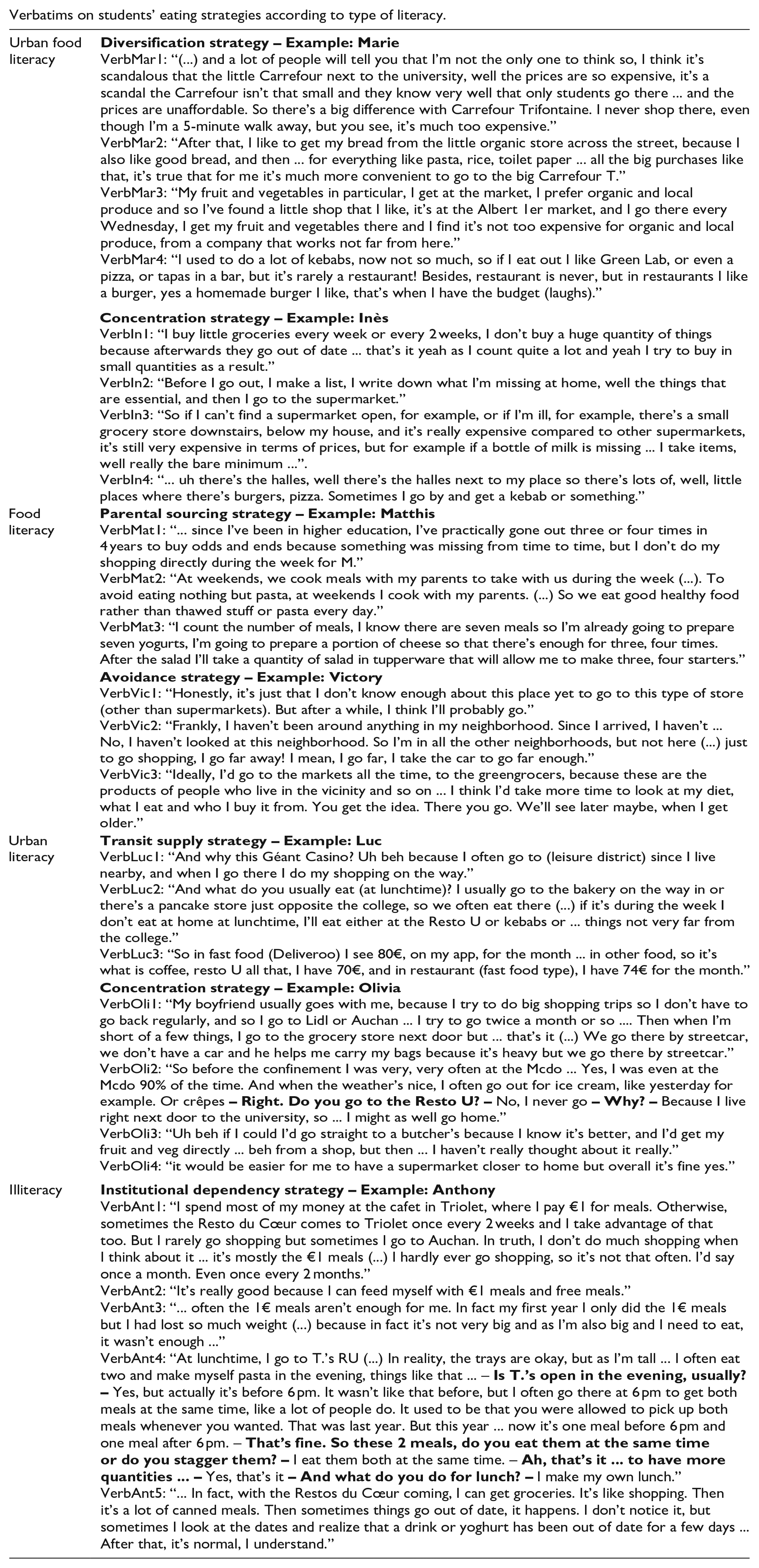
| Urban food literacy | VerbMar1: “(…) and a lot of people will tell you that I’m not the only one to think so, I think it’s scandalous that the little Carrefour next to the university, well the prices are so expensive, it’s a scandal the Carrefour isn’t that small and they know very well that only students go there … and the prices are unaffordable. So there’s a big difference with Carrefour Trifontaine. I never shop there, even though I’m a 5-minute walk away, but you see, it’s much too expensive.” VerbMar2: “After that, I like to get my bread from the little organic store across the street, because I also like good bread, and then … for everything like pasta, rice, toilet paper … all the big purchases like that, it’s true that for me it’s much more convenient to go to the big Carrefour T.” VerbMar3: “My fruit and vegetables in particular, I get at the market, I prefer organic and local produce and so I’ve found a little shop that I like, it’s at the Albert 1er market, and I go there every Wednesday, I get my fruit and vegetables there and I find it’s not too expensive for organic and local produce, from a company that works not far from here.” VerbMar4: “I used to do a lot of kebabs, now not so much, so if I eat out I like Green Lab, or even a pizza, or tapas in a bar, but it’s rarely a restaurant! Besides, restaurant is never, but in restaurants I like a burger, yes a homemade burger I like, that’s when I have the budget (laughs).” |
| Food literacy | |
| Urban literacy | |
| Illiteracy |
Appendix 11
Actions to be implemented according to student strategies.
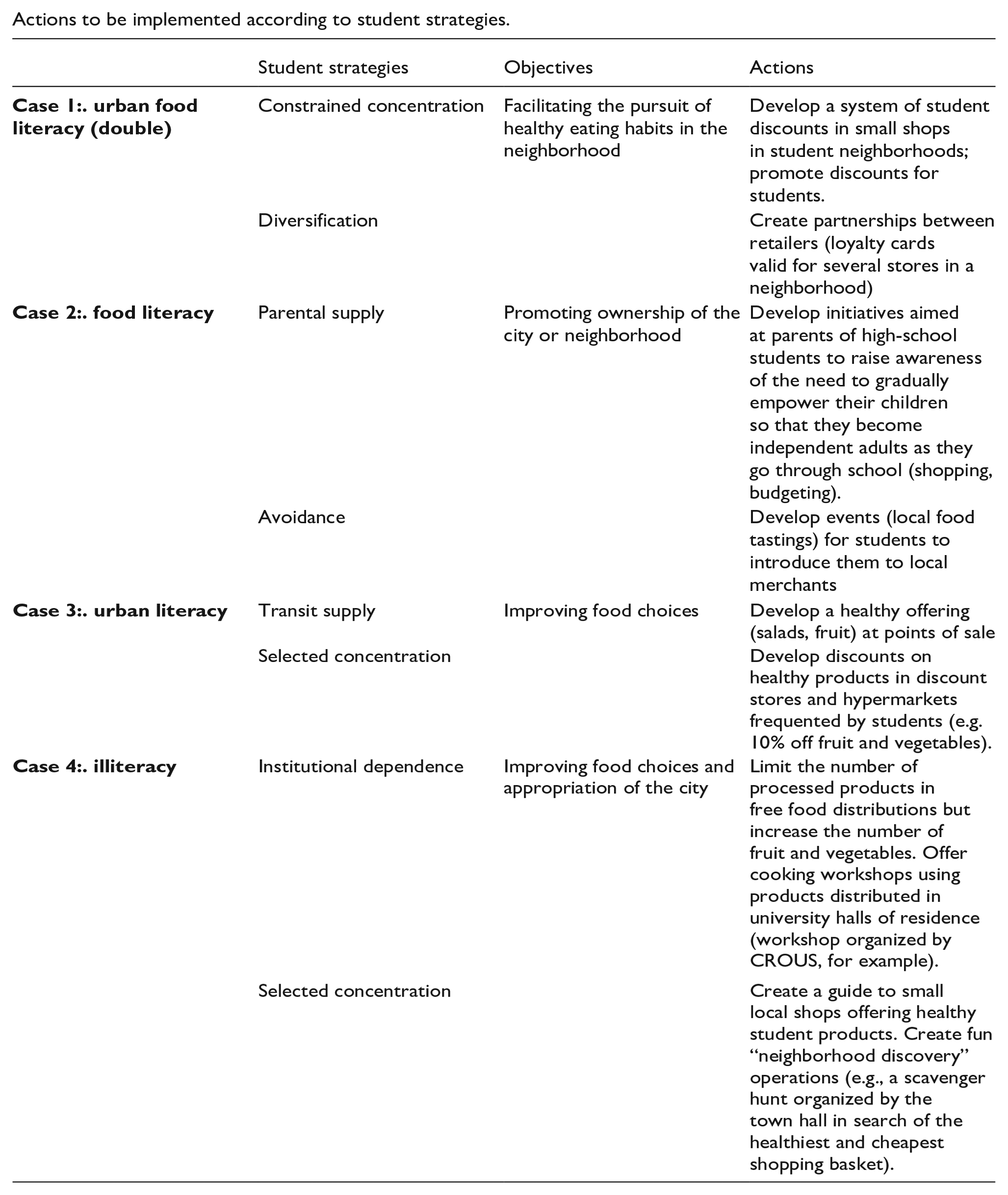
| Student strategies | Objectives | Actions | |
|---|---|---|---|
|
|
Constrained concentration | Facilitating the pursuit of healthy eating habits in the neighborhood | Develop a system of student discounts in small shops in student neighborhoods; promote discounts for students. |
| Diversification | Create partnerships between retailers (loyalty cards valid for several stores in a neighborhood) | ||
|
|
Parental supply | Promoting ownership of the city or neighborhood | Develop initiatives aimed at parents of high-school students to raise awareness of the need to gradually empower their children so that they become independent adults as they go through school (shopping, budgeting). |
| Avoidance | Develop events (local food tastings) for students to introduce them to local merchants | ||
|
|
Transit supply | Improving food choices | Develop a healthy offering (salads, fruit) at points of sale |
| Selected concentration | Develop discounts on healthy products in discount stores and hypermarkets frequented by students (e.g. 10% off fruit and vegetables). | ||
|
|
Institutional dependence | Improving food choices and appropriation of the city | Limit the number of processed products in free food distributions but increase the number of fruit and vegetables. Offer cooking workshops using products distributed in university halls of residence (workshop organized by CROUS, for example). |
| Selected concentration | Create a guide to small local shops offering healthy student products. Create fun “neighborhood discovery” operations (e.g., a scavenger hunt organized by the town hall in search of the healthiest and cheapest shopping basket). |
Acknowledgements
The authors would like to express their gratitude to the three anonymous reviewers for their valuable comments. They also warmly thank the three guest editors, Carolina O.C. Werle, Gaëlle Pantin-Sohier, and Lucie Sirieix, for their editorial support. In addition, they wish to acknowledge Montpellier Méditerranée Métropole, the city of Montpellier, and CROUS Occitanie for their enriching discussions that contributed to the development of this work. Finally, their appreciation extends to the members of the Marketing research group at Montpellier Research in Management, the cross-cutting axis on Agri-food Management in collaboration with UMR Moisa, and the international chair on Uses and Practices of the Smart City at Montpellier Management Institute for their invaluable support.