




Abstract
Objectives
To develop an evidence-informed, clinically aligned multimodal workflow framework for chronic wound assessment and to identify cross-study patterns in image-based artificial intelligence (AI) applications that inform its design.
Methods
We conducted a structured evidence mapping and synthesis of published studies on image-based AI for chronic wound assessment. Records were identified through a structured database search and a targeted supplementary search performed during revision. Studies were screened using predefined eligibility criteria, and data were extracted on wound types, image-acquisition approaches, task domains, model architectures, performance measures, and deployment-related characteristics. Cross-study patterns were then used to construct a conceptual workflow framework spanning wound localization, segmentation, clinical interpretation, and longitudinal monitoring.
Results
A total of 44 studies were included in the final analysis. The evidence base was dominated by diabetic foot ulcer and general chronic wound imaging studies, with more limited representation of pressure injury, venous or vascular wound, and postoperative wound contexts. Camera-based acquisition was the most common imaging approach, while device-based and mobile-based acquisition were less frequently represented. When mapped to workflow-relevant task domains, classification/clinical interpretation and segmentation/measurement were the most strongly represented components, whereas localization/detection and monitoring/prediction were less consistently developed. Cross-study patterns also showed increasing representation of clinically meaningful interpretation tasks, including wound grading, tissue characterization, and infection/ischaemia recognition, as well as emerging use of explainability methods in wound-image analysis. These patterns informed the development of a four-stage clinically aligned multimodal workflow framework for chronic wound assessment.
Conclusion
Current wound-AI evidence supports a workflow-oriented conceptual model in which wound localization, segmentation, clinical interpretation, and longitudinal monitoring can be organized into a clinically meaningful assessment pathway. The proposed framework is intended as an evidence-informed conceptual structure to guide future multimodal system development, translational research, and prospective validation in real-world wound care settings.
Keywords
Introduction
Chronic wounds—including diabetic foot ulcers, venous leg ulcers, pressure injuries, and postoperative complications—constitute a major and escalating global health burden.1,2 These wounds affect tens of millions of patients worldwide, are a leading cause of lower-limb amputation, and account for billions of dollars in annual healthcare expenditure. Accurate wound assessment is central to preventing complications, yet routine evaluation still relies on subjective visual inspection and manual measurement.1,2 This subjectivity leads to substantial inter-observer variability, delayed recognition of infection or deterioration, and inconsistent monitoring across clinical and community-care settings.3,4
Recent advances in digital health and computer vision have accelerated the development of artificial intelligence (AI) tools for wound detection, segmentation, tissue classification, and automated measurement.5–9 Deep learning architectures—including convolutional neural networks, U-Net variants, transformer-based models, and lightweight mobile detection systems—have shown promising technical performance across diverse wound types. Multimodal approaches integrating RGB, thermal, depth, hyperspectral data, and clinical metadata further enhance the capacity to capture physiologic wound characteristics that cannot be reliably assessed through traditional imaging alone.6,10,11
Yet despite considerable methodological progress, real-world deployment of wound-AI systems remains limited. Many published models are developed on relatively small or homogeneous datasets, which constrains generalizability across devices, lighting conditions, skin tones, and care settings. In addition, many systems remain task-specific rather than being integrated into clinically aligned workflows spanning detection, segmentation, interpretation, and longitudinal monitoring. Heterogeneous evaluation metrics, inconsistent reporting, and limited transparency further hinder cross-study comparability and translational uptake, while broader interoperability and routine integration into primary-care and remote-monitoring ecosystems remain underdeveloped.6,10,11
These challenges highlight a critical unmet need for an AI framework that is clinically aligned, interoperable, and better connected to the practical stages of wound assessment.6,10–12 To address this gap, we conducted a structured evidence mapping and revision-stage supplementary search to characterize recurrent design patterns across the wound-AI literature, resulting in a final evidence base of 44 included studies.3,5,6,8,9,12–50 Guided by these recurrent cross-study patterns, we inductively developed an evidence-informed conceptual multimodal workflow framework spanning wound localization, segmentation, clinical interpretation, and longitudinal monitoring.
This study makes three main contributions. First, it provides a structured cross-study characterization of wound-AI research across heterogeneous imaging conditions, task types, and deployment contexts, helping to clarify a field that remains fragmented and methodologically inconsistent.10,11 Second, it presents a clinically aligned conceptual workflow framework that shifts the perspective from isolated model development toward workflow-oriented integration of AI functions in wound assessment.6,10–12 Third, by linking recurring technical patterns to clinically meaningful stages of assessment, this study offers a conceptual foundation to guide future multimodal system development, prospective validation, and digital wound-care translation.
Methods
Study aim and design
This study was designed to develop an evidence-informed, clinically aligned multimodal workflow framework for chronic wound assessment through structured mapping and synthesis of the literature on image-based artificial intelligence (AI) applications. Rather than serving as a conventional summary of prior studies, the study aimed to identify recurring design patterns across wound-AI research and to translate these patterns into a conceptual workflow framework spanning wound localization, segmentation, clinical interpretation, and longitudinal monitoring.
All information used in this study was derived from publicly available publications and related digital health reports or study records, where relevant. No patient-identifiable data were collected, and no direct human-subject interaction was involved. Therefore, ethical approval was not required.
The study was guided by three objectives: (1) to characterize the major task types, imaging modalities, and technical design patterns represented in image-based AI studies of chronic wound assessment; (2) to identify recurrent cross-study features relevant to clinical deployment; and (3) to translate these mapped patterns into a clinically aligned conceptual workflow framework.
Literature identification and data sources
To support framework development, a structured literature search was conducted across Medline (PubMed), Embase, Scopus, Web of Science, CINAHL, ScienceDirect, IEEE Xplore, and Google Scholar. The original search strategy combined terms related to chronic wounds, wound imaging, artificial intelligence, machine learning, deep learning, detection, segmentation, classification, prediction, and remote wound monitoring, covering all available years through November 2025.
The original structured search retrieved 579 records. After title and abstract screening, 74 studies underwent full-text review, of which 34 were included in the initial-stage evidence mapping.
During revision, a targeted supplementary search was conducted to improve coverage of image-based wound classification, clinical interpretation, explainable artificial intelligence, and clinically meaningful subtype-recognition studies. This supplementary search was performed across core databases using additional terms related to wound classification, infection, ischaemia/ischemia, explainable AI, vascular wounds, venous leg ulcers, pressure ulcers, and wound-image analysis. The supplementary search identified 634 additional records. After deduplication within the supplementary search set, 403 records remained for screening, of which 371 were excluded after title and abstract review and 32 underwent full-text assessment. Of these, 21 were excluded and 11 additional studies were incorporated into the revised evidence mapping. Following reassessment of the initial set and supplementary inclusion, the final analysis comprised 44 studies.
Title and abstract screening was performed by two authors independently, followed by full-text review using the same eligibility criteria. Disagreements were resolved through discussion and consensus. The overall identification and selection process is shown in Figure 1 and was reported with reference to PRISMA principles, with a completed checklist provided as a supplementary file. Study identification, reassessment, and final inclusion process.
Eligibility criteria
Studies were considered eligible if they met all of the following criteria: 1. Applied machine learning or deep learning to chronic wound assessment; 2. Used image-based or imaging-augmented inputs, including RGB, depth, thermal, hyperspectral, or image-linked clinical metadata; 3. Reported at least one task relevant to wound assessment, such as detection, segmentation, classification, prediction, or monitoring; 4. Provided sufficient methodological detail to permit structured extraction of study characteristics and technical design features; 5. Published in English.
Studies were excluded if they focused on animal wounds, non-digital or non-imaging measurements, non-wound dermatologic conditions without a chronic wound context, conference abstracts lacking adequate methodological information, or studies in which the AI component could not be meaningfully mapped to the wound-assessment workflow of interest.
Evidence mapping and data extraction
For each included study, structured data extraction was performed using a predefined evidence-mapping template to characterize both technical design and clinical relevance. The extracted variables included wound type and clinical setting, imaging modality and acquisition environment, computational task, model architecture, training strategy, dataset characteristics, reported performance metrics, and deployment-related considerations such as device compatibility, point-of-care use, or remote monitoring potential.
Summary of included wound-AI studies (n = 44).
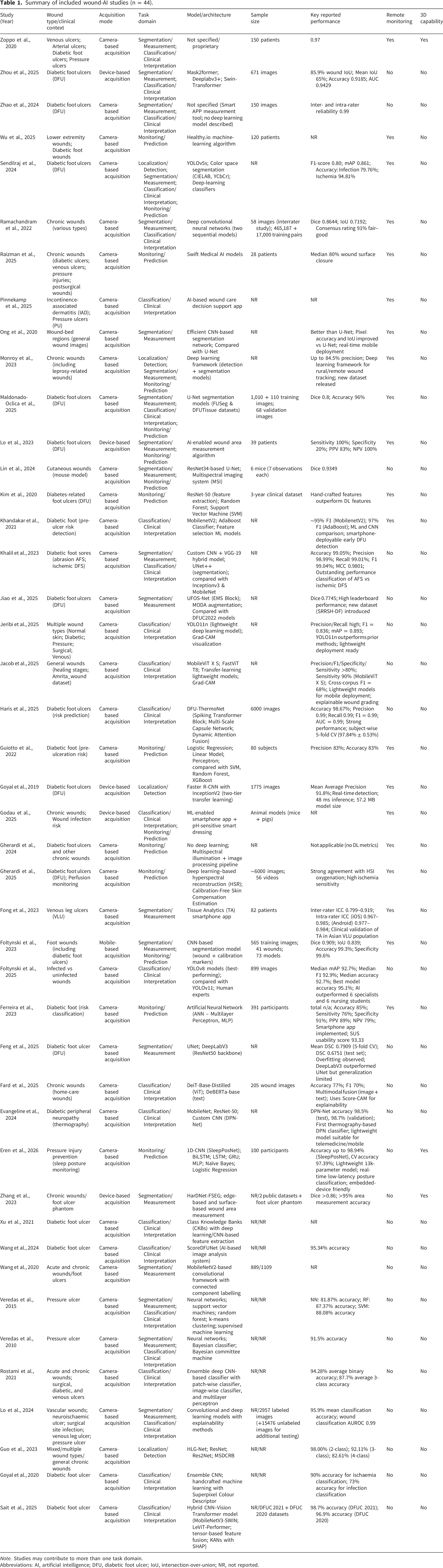
Note. Studies may contribute to more than one task domain.
Abbreviations: AI, artificial intelligence; DFU, diabetic foot ulcer; IoU, intersection-over-union; NR, not reported.
Framework derivation and conceptual modeling
Following structured evidence extraction, cross-study mapping was performed to identify recurrent patterns in task design, imaging modality, model family, and deployment orientation across the included studies. Particular attention was given to whether AI applications addressed isolated technical tasks or could be aligned with clinically meaningful stages of wound assessment. For framework derivation, extracted study features were reviewed in relation to their role in the practical wound-assessment process rather than as isolated algorithmic outputs. Candidate framework components were retained when they met three conditions: (1) recurrence across multiple included studies, (2) clear clinical interpretability within the wound-assessment pathway, and (3) applicability across heterogeneous imaging settings and deployment contexts. This mapping process highlighted repeated combinations of detection-oriented models, segmentation architectures, classification or interpretation modules, and emerging monitoring functions, while also revealing uneven maturity across these components.
On the basis of these mapped patterns, we constructed an evidence-informed conceptual workflow framework for chronic wound assessment consisting of four sequential components: (1) wound localization, (2) wound segmentation, (3) clinical interpretation, and (4) longitudinal monitoring. These components were selected because they represented the most recurrent and clinically relevant stages through which AI tools could contribute to practical wound assessment across different imaging conditions and care settings. The final stage structure was refined through iterative author discussion and consensus after repeated review of the mapped study characteristics and task relationships.
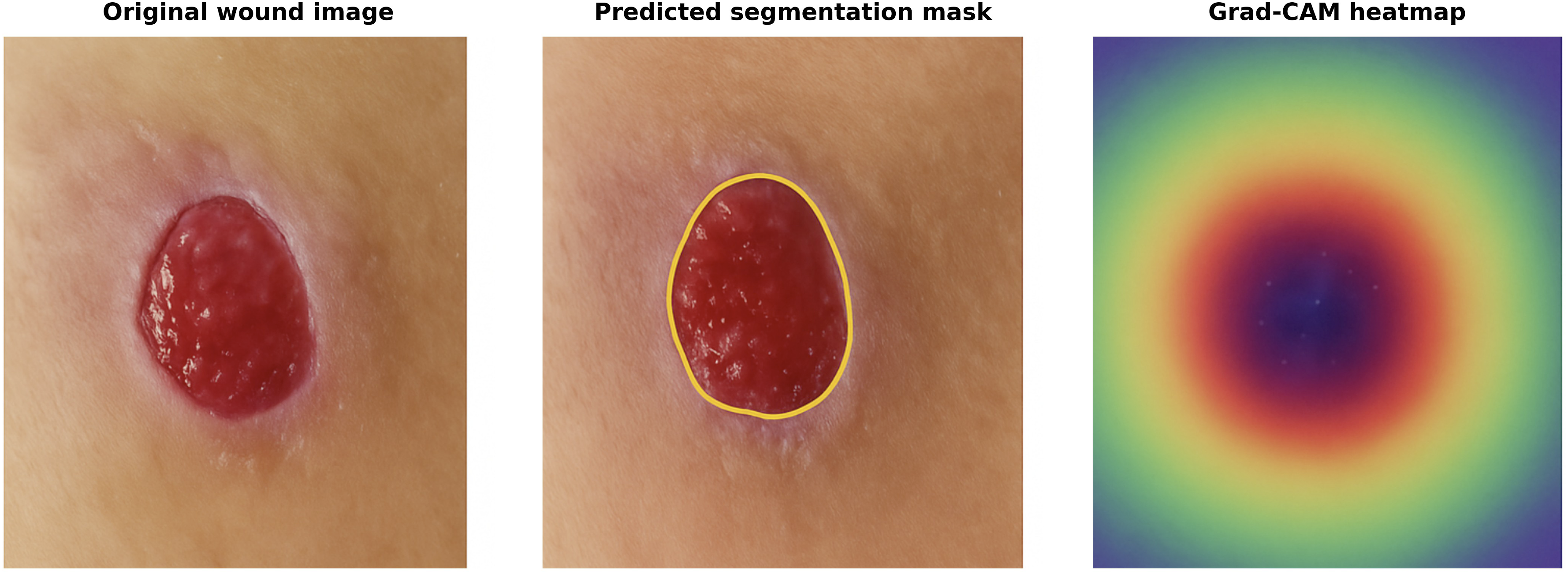
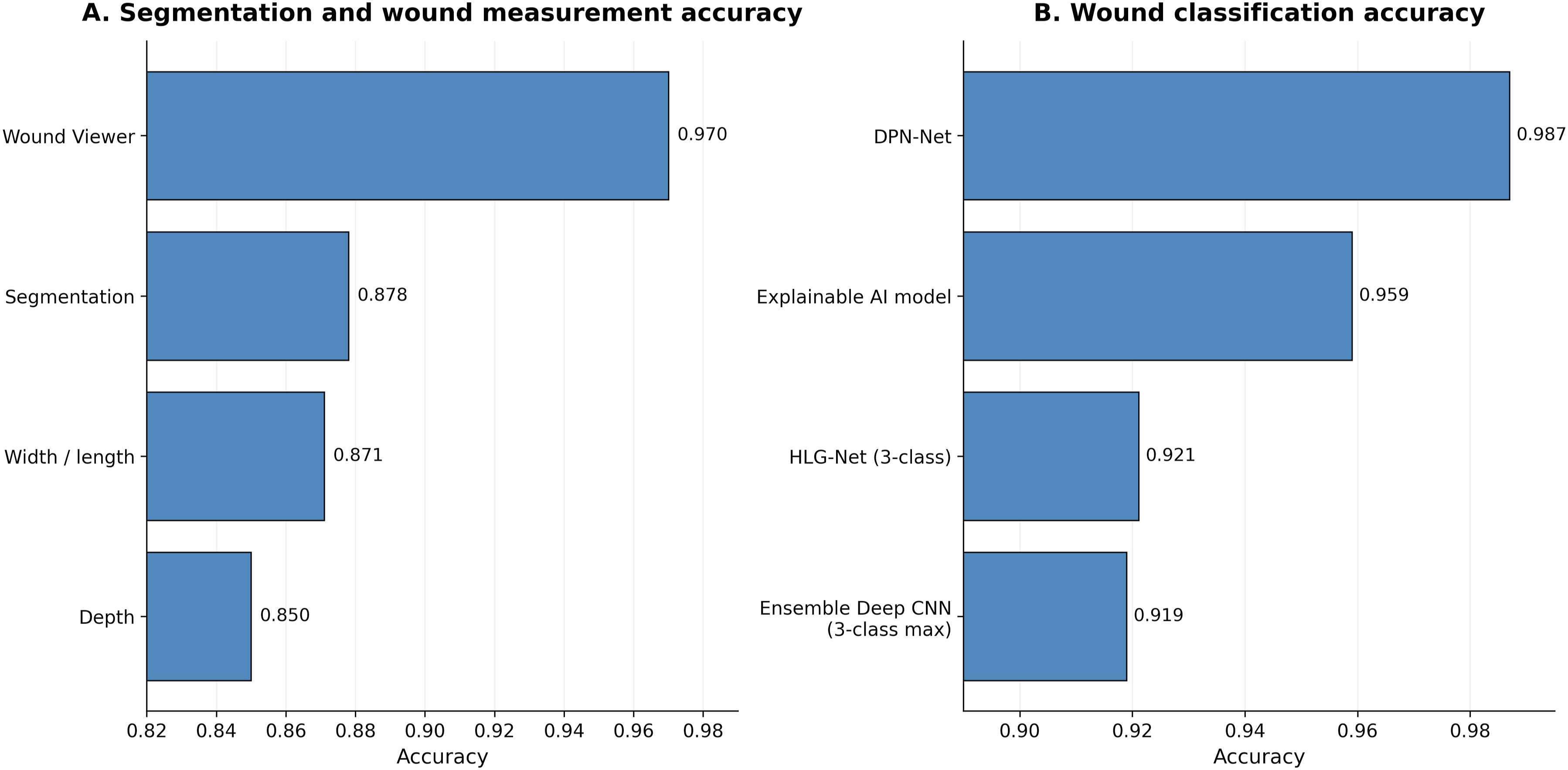
Within this framework, wound localization refers to the identification of the wound region within the acquired image; wound segmentation refers to pixel-level delineation of wound boundaries; clinical interpretation refers to model-assisted assessment of tissue composition, infection-related cues, wound severity, or risk features; and longitudinal monitoring refers to the temporal assessment of wound progression using repeated imaging and related contextual information. Figure 2 provides a schematic overview of how multimodal inputs are organized through feature encoding, fusion, and task-specific prediction modules to support the proposed workflow framework for chronic wound assessment. Figure 3 presents a representative example of model-based wound image analysis, including the original wound image, the predicted segmentation mask, and the corresponding Grad-CAM heatmap. Figure 4 provides a descriptive cross-study summary of representative reported model performance relevant to these framework components. Unified multimodal artificial intelligence framework for chronic wound assessment. Representative example of model-based wound image analysis. Representative reported model performance across selected wound-AI studies.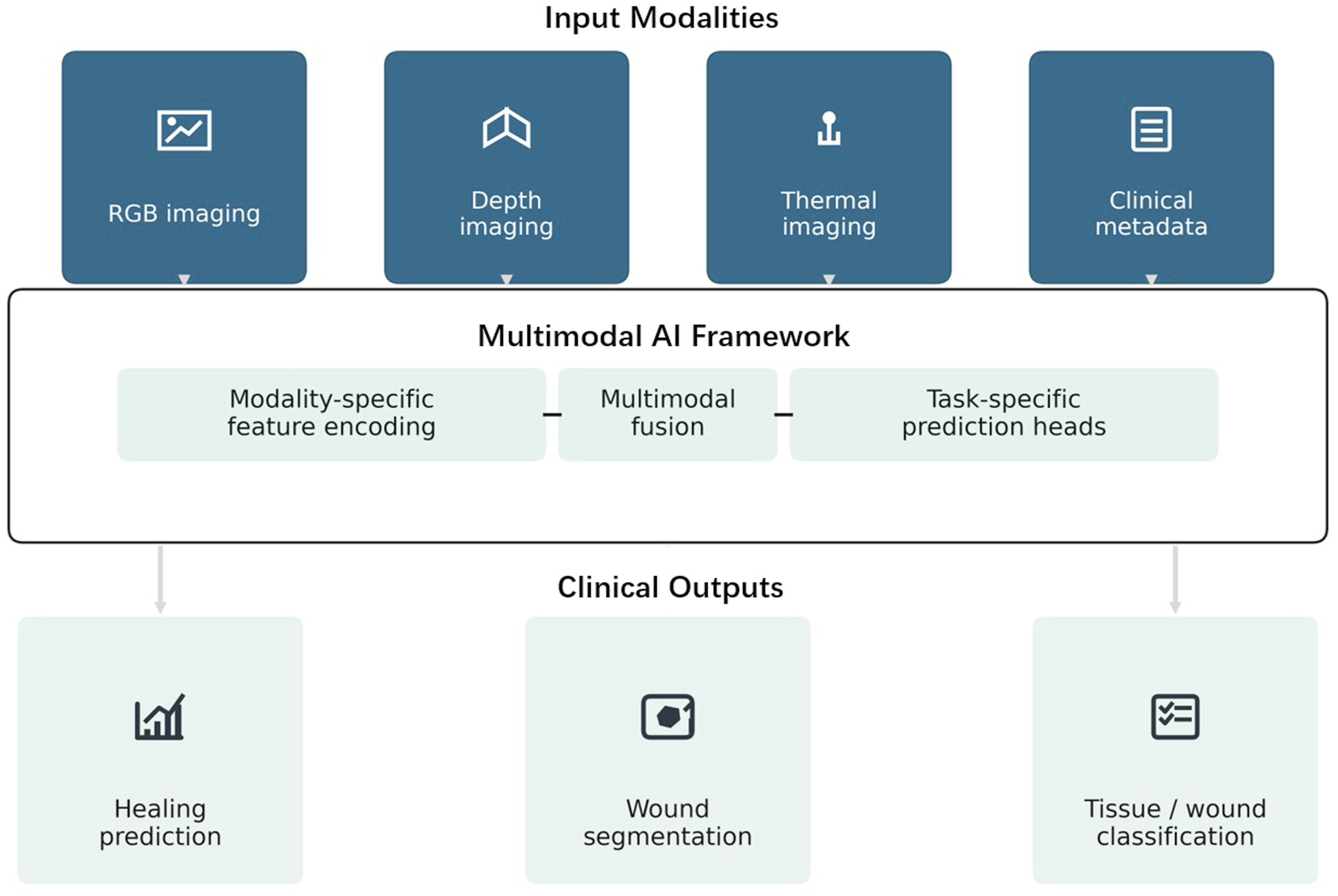
This framework was derived as an evidence-informed conceptual model intended to organize heterogeneous wound-AI evidence into a clinically aligned workflow structure, rather than as a fully implemented or prospectively validated integrated system.
Reported technical design features across included studies
Across the included studies, several recurring technical design features were identified in image preprocessing, model training, and data augmentation. Common preprocessing procedures included illumination normalization, color-constancy correction, artifact removal, resizing, and random cropping, although the exact combinations varied across datasets and tasks. Frequently reported training strategies included transfer learning with ImageNet-pretrained encoders, use of Adam or SGD optimizers, and task-specific loss functions such as cross-entropy loss, Dice loss, focal loss, and IoU-based loss.
Data augmentation was widely used to address limited dataset size and improve model robustness. Commonly reported augmentation methods included random rotation, scaling, flipping, color jittering, patch-based augmentation, and synthetic mask-related strategies. These technical features were not interpreted as components of a single implemented pipeline, but rather as recurrent design elements that informed the conceptual development of the proposed framework.
Descriptive performance and deployment assessment
To characterize the performance landscape of the included studies, reported outcome measures were descriptively summarized according to task type. Commonly used metrics included Dice coefficient and Intersection-over-Union for segmentation, accuracy, sensitivity, specificity, and area under the curve for classification, and mean average precision for detection. Because datasets, outcome definitions, and reporting practices varied substantially across studies, these metrics were interpreted descriptively rather than as directly comparable pooled estimates.
In addition to technical performance, deployment-related features reported in the literature were also examined, including inference speed, robustness under variable imaging conditions, compatibility with smartphone-grade hardware, and suitability for point-of-care or remote monitoring settings. Figure 4 presents a descriptive cross-study summary of representative reported model performance relevant to the major components of the proposed framework.
Ethical considerations
This study used only publicly accessible literature and openly available digital resources. No patient-level, identifiable, or newly collected human-subject data were involved. Therefore, institutional review board approval was not required.
Results
Study selection
The original structured search identified 579 records. Following title and abstract screening, 74 articles underwent full-text assessment, and 34 studies were included in the initial-stage evidence mapping. During revision, 1 initially included study was excluded after verification, leaving 33 studies from the initial set. A targeted supplementary search across core databases identified 634 additional records. After deduplication within the supplementary search set, 403 records remained for screening; 371 were excluded after title and abstract review, and 32 underwent full-text assessment. Of these, 21 were excluded and 11 additional studies met the eligibility criteria. The final analysis therefore included 44 studies. The earlier 34-study figure refers only to the initial-stage mapping prior to reassessment and supplementary inclusion. The study identification, reassessment, and final inclusion process are shown in Figure 1.
Characteristics of included studies
The 44 included studies were published between 2010 and 2026 and represented a heterogeneous but clinically relevant body of image-based wound-AI research. In terms of wound type, diabetic foot ulcer (DFU) was the most frequently represented category (19/44), followed by mixed or general chronic wound datasets (19/44), pressure ulcer or pressure injury studies (4/44), venous or vascular wound studies (1/44), and postoperative or surgical wound studies (1/44). This distribution indicates that the current evidence base remains strongly centered on DFU and general chronic wound imaging, with comparatively limited representation of venous, vascular, and postoperative wound contexts.
When mapped to workflow-relevant task domains, classification or clinical interpretation was the most frequently represented category (24/44), followed by segmentation or measurement (20/44), monitoring or prediction (15/44), and localization or detection (4/44). Because some studies contributed to more than one task domain, these categories were not mutually exclusive. Overall, the included literature showed a strong emphasis on wound classification, tissue-level interpretation, and segmentation-oriented quantification, whereas comparatively fewer studies addressed explicit localization or detection tasks.
With regard to acquisition mode, most studies relied on camera-based image acquisition (38/44), whereas device-based acquisition was less common (5/44), and only a small number of studies used clearly mobile-based acquisition approaches (1/44). Remote monitoring functionality was reported in 20 of 44 studies, while 24 did not include a remote-monitoring component. Three studies included explicit 3-dimensional capability, whereas 41 did not. Taken together, these characteristics suggest that the present evidence base is dominated by camera-acquired wound-image studies, with a smaller but meaningful subset exploring device-enabled imaging, measurement, and remote-care applications.
Cross-study patterns in model architecture and performance
Cross-study analysis of the 44 included studies identified several recurring patterns in model architecture, task orientation, and reported performance. Classification-oriented studies frequently employed convolutional neural networks, lightweight deep learning models, ensemble classifiers, and, in more recent studies, hybrid CNN–transformer architectures. Within this group, clinically meaningful interpretation tasks—such as tissue categorization, wound grading, and recognition of infection or ischaemia—were increasingly represented, indicating a shift beyond simple binary wound-versus-nonwound discrimination toward more decision-relevant image interpretation.
Segmentation- and measurement-oriented studies commonly relied on U-Net-derived or Mask R-CNN–based approaches, as well as lightweight semantic-segmentation frameworks optimized for practical wound-area delineation. These studies typically emphasized wound boundary extraction, tissue-region segmentation, and quantitative area or size estimation, and collectively represented one of the most methodologically mature domains in the current literature. A smaller subset incorporated RGB-D or other device-enabled imaging strategies to support wound measurement or geometric assessment, but such approaches remained less common than standard camera-based image analysis.
Localization and detection tasks were comparatively less frequent but were often linked to deployment-oriented objectives, including real-time diabetic foot ulcer localization and mobile-device implementation. Monitoring- and prediction-related studies were more heterogeneous, ranging from healing progression and remote wound follow-up to risk-oriented or longitudinal assessment tasks. However, these studies were less methodologically concentrated than segmentation and classification studies and were less consistently represented across wound contexts.
Reported performance remained heterogeneous because datasets, label structures, outcome definitions, and evaluation strategies varied substantially across studies. Nevertheless, several broad patterns were apparent. Segmentation studies commonly reported favorable Dice-based performance, often exceeding 0.80 in well-defined wound-boundary tasks, whereas classification studies frequently reported high accuracy or F1-based performance in restricted task settings, particularly for diabetic foot ulcer categorization. More recent studies also increasingly incorporated explainability or interpretability components, including Grad-CAM, SHAP, and related visualization-based methods, especially in wound grading, multiclass classification, and vascular or diabetic foot image interpretation. Overall, these patterns supported the use of a workflow-oriented synthesis in which segmentation/measurement and classification/clinical interpretation emerged as the most strongly represented components of the current wound-AI literature, while localization/detection and longitudinal monitoring remained comparatively less developed.
Evidence-informed development of the multimodal AI framework
Cross-study mapping of the included literature supported a workflow-oriented organization of wound-AI functions into four interrelated components: wound localization, wound segmentation, clinical interpretation, and longitudinal monitoring. The localization component was informed primarily by studies focusing on real-time wound detection or region-of-interest identification, particularly in diabetic foot ulcer applications. The segmentation component was supported by a larger body of studies addressing wound-boundary delineation, tissue-region segmentation, and wound-area measurement, including both camera-based and device-enabled approaches. The clinical interpretation component drew on classification-oriented studies that addressed wound type recognition, tissue categorization, severity grading, and clinically meaningful subtype interpretation such as infection or ischaemia. Finally, the longitudinal monitoring component was informed by studies that incorporated remote follow-up, healing progression assessment, or prediction-oriented wound tracking, although this remained the least consistently developed of the four components.
Taken together, these patterns supported a workflow-oriented conceptual structure in which localization and segmentation provide the technical basis for image analysis, clinical interpretation extends model outputs toward decision-relevant assessment, and longitudinal monitoring links repeated imaging to continuity of care over time. The overall framework is therefore presented as an evidence-informed conceptual model derived from structured cross-study mapping, rather than as a single implemented or prospectively validated integrated system.
Descriptive performance patterns relevant to framework components
The final evidence base suggested that different workflow components were supported by different levels of methodological maturity. Segmentation- and measurement-oriented studies were the most consistently developed, with multiple studies reporting favorable boundary-delineation performance and quantitatively acceptable wound-area estimation under controlled or semi-controlled image conditions. Classification and clinical-interpretation studies also showed substantial development, particularly in diabetic foot ulcer research, where multiclass categorization, wound grading, and infection/ischaemia recognition were increasingly represented. However, performance in these studies was often linked to task-specific datasets and relatively constrained label structures, which limits direct comparability across studies.
Localization and detection studies were fewer in number but were notable for their emphasis on real-time deployment and mobile-device feasibility. These studies suggested that rapid region-of-interest identification is technically achievable, particularly in diabetic foot ulcer settings, but remains less broadly represented than segmentation and classification tasks. Monitoring- and prediction-related studies were the most heterogeneous, including wound follow-up, healing progression assessment, and remote-monitoring applications. Although these studies supported the relevance of longitudinal assessment within the proposed workflow, they were less standardized in both methodological design and reported outcome measures.
Across the included literature, reported performance metrics varied substantially by task type. Segmentation studies most commonly used Dice coefficient and Intersection-over-Union, whereas classification studies more often reported accuracy, precision, recall, F1 score, sensitivity, specificity, or area under the receiver operating characteristic curve. Because datasets, task definitions, and evaluation frameworks were highly heterogeneous, these metrics were interpreted descriptively rather than as pooled or directly comparable estimates. Overall, the evidence supported the interpretation that segmentation/measurement and classification/clinical interpretation currently represent the strongest technical pillars of wound-AI development, while localization/detection and longitudinal monitoring remain comparatively less mature and less consistently represented.
Summary of evidence
Synthesis of the 44 included studies suggests that image-based wound-AI research is currently concentrated in a limited number of recurring technical and clinical directions. First, camera-based wound imaging remains the dominant acquisition mode, although a smaller subset of studies has explored device-enabled modalities such as RGB-D, thermographic, or other specialized image acquisition strategies. Second, the literature is most strongly represented by studies addressing segmentation/measurement and classification/clinical interpretation, whereas explicit localization/detection and monitoring/prediction functions are less frequently developed. Third, diabetic foot ulcer studies continue to dominate the field, with comparatively fewer studies focused on pressure injuries, venous or vascular wounds, and postoperative wound contexts. Fourth, clinically meaningful interpretation tasks—particularly wound grading, tissue characterization, and infection/ischaemia recognition—are increasingly represented, including a growing use of explainability methods to support transparency and clinical trust.
Taken together, these patterns provide an evidence-informed basis for the conceptual multimodal workflow framework presented in this study. Rather than suggesting that a single integrated system has already been established, the findings indicate that the current literature contains sufficiently recurrent and clinically relevant task components to support a structured workflow model spanning localization, segmentation, clinical interpretation, and longitudinal monitoring.
Discussion
Principal findings
This study mapped and synthesized evidence from 44 included wound-AI studies and identified recurrent patterns in wound type coverage, task orientation, acquisition mode, and model design across the current literature. Overall, the evidence base remained concentrated in diabetic foot ulcer and mixed/general chronic wound imaging and was most strongly represented by segmentation/measurement and classification/clinical interpretation tasks, whereas localization/detection and longitudinal monitoring were less consistently developed.
These cross-study patterns supported a clinically aligned workflow framework spanning wound localization, wound segmentation, clinical interpretation, and longitudinal monitoring. Rather than presenting a fully implemented integrated system, the present study organizes heterogeneous image-based wound-AI evidence into an evidence-informed conceptual structure intended to support future system development, translational research, and prospective validation.
Comparison with prior work
Most prior wound-AI publications have focused on individual technical tasks, particularly wound segmentation, diabetic foot ulcer classification, or narrow model-comparison exercises, often using single datasets and task-specific evaluation frameworks.18,19,33,50 Existing reviews have summarized model performance and emerging applications, but fewer studies have explicitly examined how heterogeneous image-analysis functions can be mapped onto clinically meaningful stages of wound assessment.10,11 The present study extends prior work by shifting the emphasis from model-centric description toward workflow-oriented synthesis. Unlike prior reviews that primarily summarized algorithmic performance in task-specific settings, our study emphasizes the translational pathway from algorithmic capability to clinically interpretable workflow utility.
This distinction is important because technical advances in wound-AI do not automatically translate into clinically usable systems. By integrating evidence from classification, segmentation, measurement, interpretation, and remote-monitoring studies into a single workflow-oriented structure, this study offers a more applied organizational perspective than task-isolated summaries alone. In addition, the revised evidence base more clearly captures clinically meaningful interpretation tasks, including infection/ischaemia recognition, wound grading, and explainable image-based classification, which strengthens the linkage between algorithm development and decision-relevant wound assessment.
Clinical and practical implications
The proposed framework provides a conceptual structure for aligning image-based AI functions with practical wound-assessment needs across clinic-based care, mobile image capture, and remote follow-up settings. In particular, segmentation and measurement studies support the feasibility of more objective wound quantification,18,19,33,50 while classification and interpretation-oriented studies indicate growing capability for clinically relevant tasks such as tissue assessment, wound grading, and infection/ischaemia recognition.18,23,25,42,49 These developments are especially relevant in diabetic foot ulcer care, where delayed recognition of clinically important changes may affect escalation of care, referral, and amputation risk.1,23,31,32
The framework also has practical implications for digital wound-care deployment. The predominance of camera-based acquisition suggests that many currently available approaches remain compatible with routine image capture workflows, whereas the smaller subset of device-enabled studies indicates opportunities for integrating RGB-D, thermographic, or other specialized imaging strategies where added physiologic information is useful. At the same time, the relatively limited number of localization/detection and longitudinal monitoring studies suggests that fully integrated end-to-end systems remain underdeveloped. Accordingly, the present framework should be interpreted as a translational scaffold for future system development rather than as evidence that a complete clinically deployable multimodal wound-AI system has already been achieved.
Methodological strengths of this study
This study has several methodological strengths. First, it used a structured identification, selection, and evidence-mapping process to characterize wound-AI studies across multiple imaging modalities, task types, and deployment contexts. Second, rather than limiting the analysis to model-level summaries, the study focused on cross-study design patterns that could inform a clinically aligned workflow structure. Third, the proposed framework was explicitly derived as an evidence-informed conceptual model, which helps clarify how heterogeneous technical advances may relate to the practical stages of wound assessment and digital health implementation.
Limitations
Several limitations should be acknowledged. First, although the revised study identification process incorporated a targeted supplementary search and resulted in a broader final evidence base, the included literature remained heterogeneous in wound type, dataset composition, imaging modality, task definition, and performance reporting. Second, this study was designed as an evidence-informed conceptual modeling study rather than a formal meta-analysis, and the reported performance patterns were therefore interpreted descriptively rather than pooled quantitatively. Third, although the final mapped dataset included a broader range of classification and interpretation-oriented studies, the evidence base still remained dominated by diabetic foot ulcer and camera-based image-analysis research, which may limit generalizability to less represented wound settings. Although the proposed framework is multimodal in structure, the current evidence base remains dominated by RGB or conventional camera-based imaging, with comparatively limited representation of device-enabled multimodal acquisition. The framework should therefore be interpreted as a clinically aligned architecture for future multimodal integration rather than as evidence that multimodal wound-AI systems are already mature in the current literature. In addition, limited reporting of skin-tone and ethnic diversity across datasets may introduce algorithmic bias and constrain generalizability across underrepresented populations.
Fourth, risk-of-bias assessment was not performed using a formal systematic-review appraisal tool, because the aim of the study was to derive a workflow-oriented conceptual framework from structured cross-study mapping rather than to perform comparative effectiveness synthesis. Finally, the proposed framework remains conceptual and has not been prospectively implemented or clinically validated as an integrated system. Future work will therefore need to examine whether the workflow structure proposed here can be operationalized across real-world datasets, care settings, and deployment environments.
Future directions
Future research should prioritize development of more diverse and clinically representative wound-image datasets, particularly for venous, vascular, pressure injury, and postoperative wound contexts that remain less represented than diabetic foot ulcer imaging.11,12 Greater methodological consistency in reporting task definitions, dataset composition, and evaluation metrics would also improve cross-study comparability. In addition, further work is needed to strengthen localization/detection and longitudinal monitoring components, which remain less consistently developed than segmentation and classification tasks in the current literature.5,6,20,22,34,40
From a translational perspective, future wound-AI systems should move beyond isolated task performance and toward clinically integrated, explainable, and workflow-aware deployment. This includes better support for remote follow-up, multimodal acquisition where appropriate, and prospective validation under real-world imaging conditions. More explicit attention to interpretability, robustness across datasets, and deployment feasibility will be essential if wound-AI tools are to evolve from task-specific research outputs into clinically usable decision-support systems.
Conclusion
This study mapped and synthesized evidence from 44 included wound-AI investigations and used these patterns to construct an evidence-informed conceptual workflow framework for chronic wound assessment. The final evidence base suggested that current wound-AI research is most strongly represented by segmentation/measurement and classification/clinical interpretation tasks, with more limited but relevant contributions from localization/detection and monitoring/prediction studies.
However, the generalizability of the proposed framework should be interpreted cautiously. The current evidence base remains dominated by diabetic foot ulcer and mixed/general chronic wound datasets and is heavily weighted toward RGB or conventional camera-based imaging, with comparatively limited representation of pressure injury, venous/vascular, postoperative wound contexts, and device-enabled or multimodal acquisition approaches.
The proposed framework organizes wound localization, segmentation, clinical interpretation, and longitudinal monitoring into a clinically aligned workflow structure intended to guide future multimodal system development and translational research. It should be interpreted as an evidence-informed conceptual model to support future development and prospective validation, rather than as evidence that a fully integrated multimodal wound-AI system is already ready for routine clinical deployment.
Supplemental material
Supplemental material - A clinically aligned multimodal workflow framework for chronic wound assessment: An evidence-informed conceptual modeling study
Supplemental material for A clinically aligned multimodal workflow framework for chronic wound assessment: An evidence-informed conceptual modeling study by Zhen Yu, Li Jiang, Han Zhang, Hui Chen, and Jinqing Li in DIGITAL HEALTH.
Supplemental material
Supplemental material - A clinically aligned multimodal workflow framework for chronic wound assessment: An evidence-informed conceptual modeling study
Supplemental material for A clinically aligned multimodal workflow framework for chronic wound assessment: An evidence-informed conceptual modeling study by Zhen Yu, Li Jiang, Han Zhang, Hui Chen, and Jinqing Li in DIGITAL HEALTH.
Footnotes
Acknowledgements
The authors thank the editor and reviewers for their constructive comments, which helped improve the manuscript.

Ethical considerations
This study uses only published and publicly available data.
Author contributions
Zhen Yu: Conceptualization, methodology, data extraction, manuscript drafting. Li Jiang: Data curation, validation, writing–review. Han Zhang: Visualization, figure preparation, technical assistance. Hui Chen: Literature review, editing, proofreading. Jinqing Li: Supervision, project administration, critical revision, corresponding author duties.
Funding
The authors received no financial support for the research, authorship, and/or publication of this article.
Declaration of conflicting interests
The authors declared no potential conflicts of interest with respect to the research, authorship, and/or publication of this article.
AI use disclosure
During the preparation and revision of this manuscript, the authors used ChatGPT (OpenAI) to assist with language refinement, text organization, figure-caption wording, and improvement of manuscript readability. The authors independently conducted the literature screening, eligibility assessment, data extraction, evidence mapping, interpretation of findings, and all final decisions regarding the content, figures, and conclusions. The authors reviewed and verified all AI-assisted outputs and take full responsibility for the accuracy and integrity of the manuscript.
Supplemental material
Supplemental material for this article is available online.
References
Supplementary Material
Please find the following supplemental material available below.
For Open Access articles published under a Creative Commons License, all supplemental material carries the same license as the article it is associated with.
For non-Open Access articles published, all supplemental material carries a non-exclusive license, and permission requests for re-use of supplemental material or any part of supplemental material shall be sent directly to the copyright owner as specified in the copyright notice associated with the article.
