



Abstract
As Christians, we are created to be in three important relationships: (i) with God, (ii) with people, and (iii) with creation. In this study, we investigated how pedagogy related to Christian practices of relationality impacted university students' prosocial tendencies. We exercised Christian practices of gratitude and intercessory prayer, together with pedagogical interventions, including class discussions, self-evaluation surveys, and reflection papers. Intervention classes were compared to control classes. Students who participated in Christian practices reported positive changes in prosocial tendencies. This study illustrates how Christian practices of gratitude and intercessory prayer can be used to honor God and promote relationality through greater prosocial tendencies in Christian university students.
Introduction
Christian practices, such as serving others in relationality, should be outgrowths of our Christian calling. Most Christian university educators assume that students who attend a Christian university are seeking to respond to God's call and are using their university experience to help them discern how best to exercise that call with the gifts and talents God has provided them. Christian practices help us live our lives according to God's call. Christian universities are in a unique position to transform secular views of human nature, engage our beliefs about human nature, and promote flourishing within our students (Glanzer et al., 2011), thereby exercising Christian practices.
How do we as Christian university educators seek to honor the Biblical human nature of our students, their calling of service to others, and our call for Christian practices? Are there ways that we as Christian university educators can enact Christian practices pedagogy that is true to our Biblical human nature and results in measurable outcomes of positive relationality in our students? Can we engage first-year students in Christian practice formation that results in a transformation leading to measurable changes in behavior and attitudes?
As a framework for understanding Christian practices, it is important to understand the foundation of human nature as derived from the Bible. In their book, Exploring Psychology and Christian Faith, Moes and Tellinghuisen (2014) describe five Biblical aspects of human nature, from which we can infer some Christian practices and consider how we may incorporate these practices into our pedagogy.
The first of these five aspects of human nature is that God created us in his image. God's image is triune, relational; therefore, we are created to be in relationship with God, with others, and his created work (Moes and Tellinghuisen, 2014). John Calvin said, “True and substantial wisdom consists almost entirely of two parts: the knowledge of God and of ourselves” (Calvin and Battles, 2001). Through others and creation, we can see God. Through God, we can see ourselves. However, this is not easy to do because of our own selfish desires.
Because of our sin, our originally designed, relational human nature has been damaged. The second aspect of our human nature states that we cannot succeed in making right our relationship with God and others without Christ's help (Moes and Tellinghuisen, 2014). Students often seek careers where they can help people. Although this is a Biblical pursuit, with humility we acknowledge that we all need Christ's help because of our sinfulness, and we should recognize our own brokenness within the context of helping others. Because Christ came down to earth, humbled himself, and put our needs before his own, we are redeemed in God's eyes and are entreated to extend God's love and care to others.
A third aspect of human nature is that God created us to be embodied bearers of his image (Moes and Tellinghuisen, 2014). The first thing we learn about the nature of God is that he works (Gen 1:1), and the first thing God says about humans after he creates them is that they have responsibility. As embodied image bearers of God, we are to work responsibly. The development of Christian practices enables us to work more effectively as God's agents of renewal on this earth.
A fourth element of our human nature is that we are responsible agents, making choices that impact ourselves and others. Although we are created in God's image, we are not God, and therefore we are limited in our agency (Moes and Tellinghuisen, 2014). While university students are in a self-contemplative life-stage, they do remarkable service work. This should not be surprising, as a characteristic of emerging adulthood is that hope and possibility flourish. These choices to serve others, whether assisting on a mission trip to a faraway land, or serving dinner at a soup kitchen, or helping tutor a fellow student, enable students to benefit not only others, but also themselves. By humbly serving others, approaching others with a spirit of reverent learning, students can cultivate the Christian practice of being God's boots on the ground, shifting the focus from self to Christ-like behavior in service of others (Wright, 2012).
The fifth component of our human nature is that God created us to seek meaning in our lives, surroundings, and experiences (Moes and Tellinghuisen, 2014). Meaning-making centers on the desire for a deity. Christian university educators tend to encourage deep, critical thinking about all areas of God's creation, including faith. This deep, critical thinking may result in strengthening students' love and desire for the divine, and the outgrowth of this love in the form of Christian practices.
Christian higher education characteristically includes in its aims and formative claims a focus on learning and growth that goes beyond utilitarian skills. These typically include a focus on the formation of Christian practices. The current assessment culture in higher education places pressure on educators to focus on the measurable, creating a challenge in terms of those educational foci that do not seem easily countable, such as Christian practices. David Smith (2017) nicely summarizes Dietrich Bonhoeffer's (2009) book Life Together as containing three assertions about Christian learning: (i) formation is more important than information and simple reflection on ideas; (ii) formation is more effective through shared communal practice; and (iii) formation occurs over time rather than in a one-off learning session. The overall context of this project centers on the understanding and efficacy of pedagogical tools that were used with a group of scholarship students (as compared to controls) which promoted the learning and application of Christian practices as relevant to our relational human nature. Furthermore, our project adhered to the premise that embodied practices of the Christian faith should be of vital concern in Christian education (Dykstra, 2005; Smith, 2017).
The Christian practices we decided to focus on were the relational practices of gratitude and intercessory prayer (prayer on the behalf of others). These two practices were ones that first-year students attending a Christian university should be familiar with. Rather than accentuating theological reasons for gratitude and prayer, we focused with the students on the aspects of relationality and service that these two practices elicit. Practices give meaning to our thoughts and behaviors (Smith DI, 2011), and therefore practices are relevant to our human nature as meaning-makers. Our hope was that gratitude and prayer would be approachable practices for first-year students, such that they would engage in the practice, think about the practice in a different way, and reflect on the meaning and impact the practice had on them and their faith as well as their community.
Many parents, especially Christian parents, socialize their children by training them to say “thank you” when people have done something for them. This socialization occurs through overt instruction as well as through reading of books (e.g. The Berenstain Bears Say Please and Thank You). Because of this early training in social practices of politeness and reciprocity, we might assume that expressing gratitude would be a common occurrence; it is not. A recent study (Floyd et al., 2018) reported that English language speakers replied with gratitude in 14.5% of the instances in which a request was fulfilled, and across all of the eight cultures studied the rate was only 5.5%.
Robert Solomon (2004) states that gratitude is one of the most neglected emotions and virtues. Although it is included in discussions of Christian practices, often directed explicitly toward God, it is vital to human relationality and goodwill. When we consider gratitude, we need to contemplate our indebtedness to others. However, indebtedness presents a conundrum, as we would rather attribute good things that happen to us to our own abilities rather than the assistance of others. In other words, in our gratitude, we need to admit that our agency is limited. Gratitude contains an element of reciprocity, contributes to social relationships, maintains a prosocial orientation, and acts as a moral barometer (McCullough and Tang, 2004). Additionally, we may feel gratitude but not show it, and we may express gratitude but not feel it; each of these instances illustrates how our human brokenness can permeate the practice of gratitude.
Research has shown (Lambert et al., 2009; Watkins, 2004) that gratitude can transform individuals by creating enhanced subjective well-being. Diener (1984) defines subjective well-being as consisting of three elements essential for the individual: (i) the individual's experience, (ii) the individual's positive affect, and (iii) the individual's ability to globally assess all the domains of their life. Subjective well-being benefits the individual, but this transformation can also benefit the greater community by inspiring the grateful individual to consider creative ways in which they can provide service to others. This transformation via new methods of expressing gratitude and repaying kindnesses can become a practice that is an integral development in the life of the individual (Fredrickson, 2004), allowing the individual to be, as God's image bearer, a better agent of renewal.
Previous studies, as reviewed by Watkins (2004), discuss how gratitude interventions can positively impact subjective well-being. These studies used interventions that primed undergraduate students to consider what they were grateful for, rather than requiring them to express gratitude directly to their benefactor. Although these studies demonstrated how an affective state of gratitude has a positive impact on mood in the moment, our study is concerned with the actual practice of gratitude and how this behavior can influence prosocial attitudes toward others after a space of time.
Prayer is about relationships, namely, a relationship with God. Prayer is about communication with God that changes us and the situation. Prayer should not only shape our contemplation of God, but also influence our commitment to transformative action (Smith JKA, 2011). Wright (2012) states that prayer is central to all Christian practice as it forces us to think about the fact that we live at the intersection between God's world and our life in the present world.
Intercessory prayer is given in service to another person regardless of whether the person is present or distant during the prayer. Likewise, the person may be aware or unaware of these prayers on their behalf. Research has examined the impact of intercessory prayer on the individual who prays as well as the recipient of those prayers. Distant prayers for those who are suffering from health issues were examined through a meta-analysis, and results showed that distant intercessory prayer did not have an impact on the health issues of the prayer recipient (Masters et al., 2006). On the other hand, studies examining the emotional and subjective well-being of the agent of prayer found a positive influence of prayers on higher self-esteem and lower levels of depression and anxiety (O'Laoire, 1997). Intercessory prayer allows us to serve with solidarity, love, and concern toward those for whom we pray (Wolterstorff, 2017), being responsible agents in our relationships with others.
Our investigation grew out of a desire to understand if a group of 83 first-year students would be positively impacted by relational Christian practices pedagogy. This led us to two broad questions. First, what are the individual characteristics, attitudes, beliefs, and perceptions of Christian university students who are more likely to serve others? Second, can we teach first-year students about Christian practices and character strengths and obtain a measurable change in self-rating of their growth in these areas?
Methods
Participants
We conducted this study at our faith-based, primarily undergraduate institution. The university has approximately 4000 students and is located in the American Midwest. The Admissions Department of our university selected eighty-three students from the incoming class to receive the Coram Deo Scholarship. Coram Deo scholarship students were selected based on their self-reported volunteer/service work. The scholarship consisted of financial, educational, and mentorship benefits. Students received $2,000 for their first year of university, and if they participated in the educational activities during that first year, the $2,000 would be renewed for the second year. These students were randomly assigned to one of four Coram Deo First Year Seminar (FYS) classes for fall semester. In these classes, students completed the typical FYS curriculum, with each class extended an extra 15–20 minutes for Christian practices pedagogy and discussion. Students continued with this same group and instructor for spring semester and their second year of university. During the spring semester and second year, students engaged in one-to-one meetings with their instructor, and participated in book discussions. The study also included four control groups of students that were selected because their instructor demographics matched the Coram Deo FYS instructor demographics: one female faculty, and one female and two male Student Life instructors. We matched the control groups to Coram Deo groups based on instructor demographics to control for pedagogy differences that could potentially result from gender differences or differences between faculty and staff. Our registrar's office, when assigning students to FYS courses, tries to randomly assign students to groups and evenly distribute genders and ethnicities, therefore we felt that the student groups were relatively similar on these demographic characteristics.
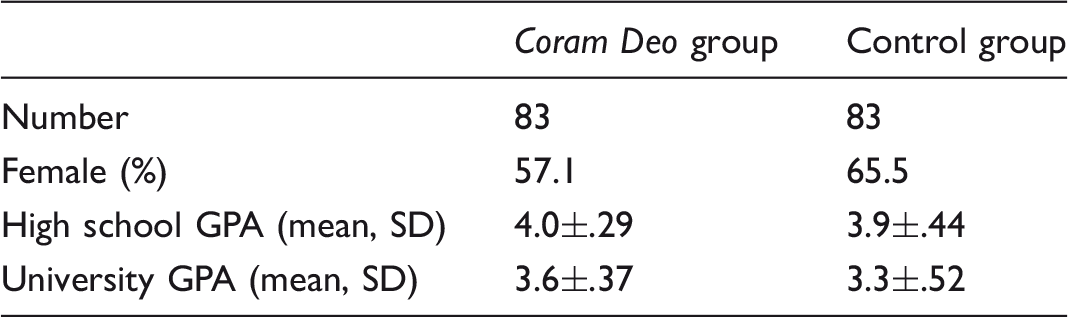
Participant characteristics
Christian practices pedagogy
Gratitude
According to Wolterstorff et al. (2002), gratitude should be the fundamental and permeating nature of Christian education. Therefore, we wanted to open the eyes of these first-year students to gratitude towards the university community, and compel them to think about all the people who do things for them every day, especially those they may not notice. We felt it was important for the university community to be acknowledged by students, for students to recognize the beneficence of others, and for the nature of gratitude to be foremost in their mind and practice. Students were encouraged to spend one week thanking someone who performed a service for them yet who they did not typically thank (e.g. dining hall or cleaning staff, professors, resident life staff, etc.). Our Christian pedagogy practice of gratitude would be considered “benefit-triggered gratitude” (Lambert et al., 2009).
At the end of the week, students posted their responses to the following questions: Why did you choose the person you did? How consistent were you in thanking them? How do you think the person felt? How did you feel? How will you respond now, based on this experience? How could this practice help develop gratitude in you? In class the subsequent week, we discussed their responses and reactions as well as reasons why we don't tend to thank others. Student responses to these questions ranged from “I am normally a thankful person, so this practice had little impact on me” to “I started the week not knowing this person who served me. Now I am taking the time to ask them questions and getting to know them which has been great.”
Prayer
The following week, we asked students to pray for someone they didn't know. Students were asked to spend a week praying for someone they routinely encountered but really didn't know (e.g. classmates, dorm residents, faculty or staff, etc.). When this assignment was announced in class, many students voiced hesitation, and concerns such as, “How will I know what to pray for them?” We discussed several examples. If you are praying for a classmate, you know your class assignments and you could pray that your classmate is able to complete and understand the assignments. If you are praying for a fellow dorm resident, you know what the activities are in the dorm and you could pray for their participation and/or sense of community in the dorm.
We discussed the selfish nature of most of our prayers. Even when we pray for someone that we know, the prayer often benefits us. For example, if I pray for my roommate to do well on her chemistry exam and she does well, she will be happier and easier to live with. If I pray for my dad to find a new job, that could benefit me and my family financially, etc. By praying for someone we don't know, yet see regularly, we are praying as service and communication with God, rather than with self-focus. This helps to develop us with God's character as his image bearers when we are concerned about all needs rather than just our own needs. In our class discussions, we posed these questions to the students: If we were to text to everyone you know the contents of your prayer requests, how would you feel? Would you feel self-centered or like you are praying to Santa Claus? We discussed how our self-focused prayers are often the result of our brokenness. At the end of the week, students posted their responses to the following questions. Why did you choose this person to pray for? How did this prayer impact you? What did you learn about your prayer life through this? In class the subsequent week, we discussed together their responses and reactions. Students' responses to these questions ranged from “It felt awkward to me” to “I have really realized how selfish my prayers are and I need to pray beyond myself.”
Questionnaires
During the first year, Coram Deo students were required to complete three surveys as part of their scholarship renewal for the second year. Ninety-five percent of the scholarship recipients completed all three surveys the first year. The control group was given an incentive of a random drawing for five $50 Amazon gift cards, and 55% completed all the surveys the first year. Both groups completed the first survey on their first day of class, while additional surveys were completed via an email link sent to both the Coram Deo and control students. The second year, the Coram Deo students were encouraged to complete the surveys in gratitude for their scholarship, with 30% of the students completing the final survey at the end of their sophomore year. Coram Deo and control students were similar in demographic characteristics (Table 1). All participants provided informed, voluntary consent for this IRB approved study.
Faith elements
Students completed measures of Intrinsic Religiosity and Spiritual Well-Being in the first survey. We wanted to compare the Coram Deo and control groups at the outset of their university career with respect to these faith elements.
Intrinsic religiosity
This measurement has been used extensively to measure internal acceptance of and motivations for religious beliefs and activities (Hoge, 1972). Based on a four-point Likert scale, students rated how much they agreed or disagreed with nine statements such as, “Nothing is as important to me as serving God as best I know how.”
Spiritual well-being
This measures satisfaction with one's spiritual life based on existential well-being as well as religious faith behaviors and relationship with God (Bufford et al., 1991). Students rank their agreement on a six-point scale for 20 statements such as, “My relationship with God contributes to my sense of well-being.”
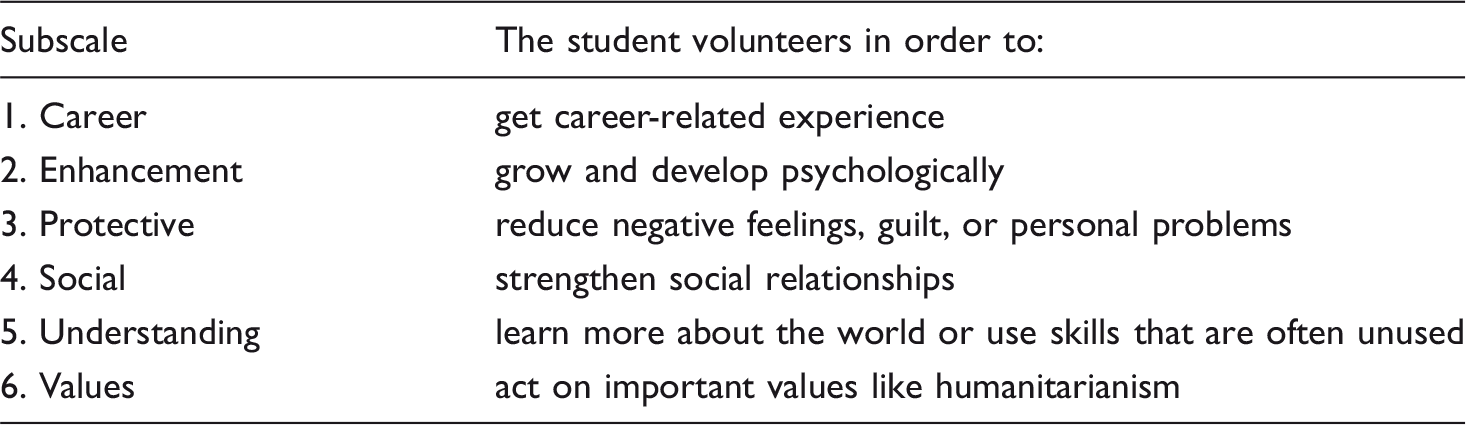
Motivations to volunteer
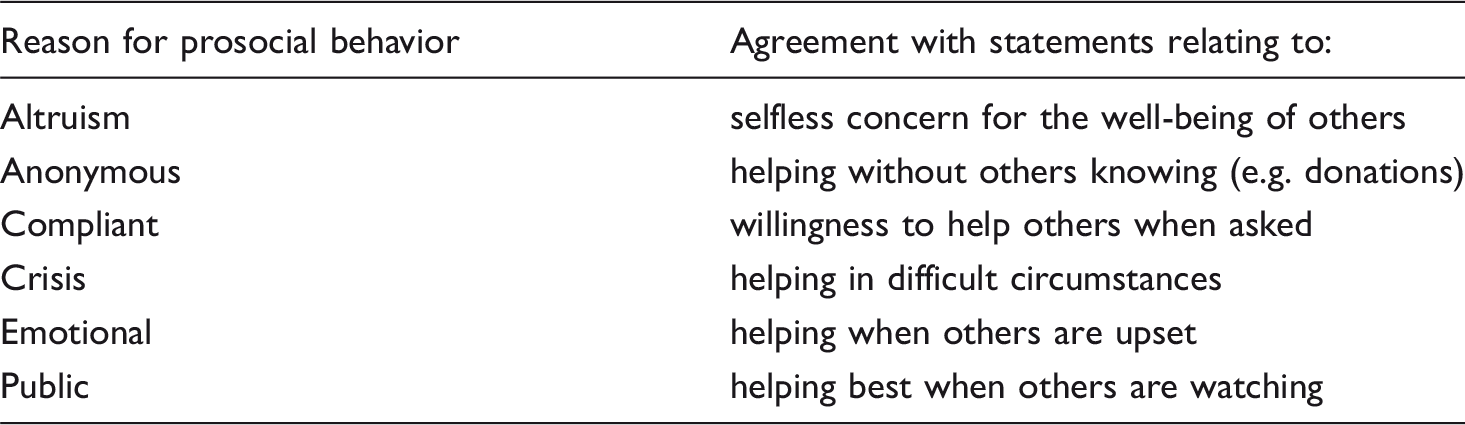
Prosocial tendencies
Results
All scale reliabilities were strong: Intrinsic Religiosity α = .86, Spiritual Well-being α = .91, Motivation to Volunteer α = .94, and Prosocial Tendencies, α = .77. Because we were comparing two groups, Coram Deo vs control, and we were examining how the pedagogy differences between the groups would impact multiple dependent or outcome variables, we used the statistical technique of a Multivariate Analysis of Variance.
We examined the differences between the two groups of students with respect to faith elements, namely, intrinsic religiosity and spiritual well-being when they began their university career. We ran a MANOVA to compare the two groups and found a significant difference overall between the groups, F(3, 98) = 5.80, p = .001, Λ = .85, pη2 = .15. There was not a significant main effect of intrinsic religiosity, but there was a significant main effect difference on spiritual well-being overall, F(1, 100) = 14.32, p = .001, pη2 = .13, and on two of the spiritual well-being subscales: existential, F(1, 100) = 5.98, p = .02, pη2 = .06, and religious, F(1, 100) = 17.53, p = .001, pη2 = .15, with the Coram Deo group reporting higher levels of spiritual well-being (Figure 1).
Religiosity and spiritual well-being.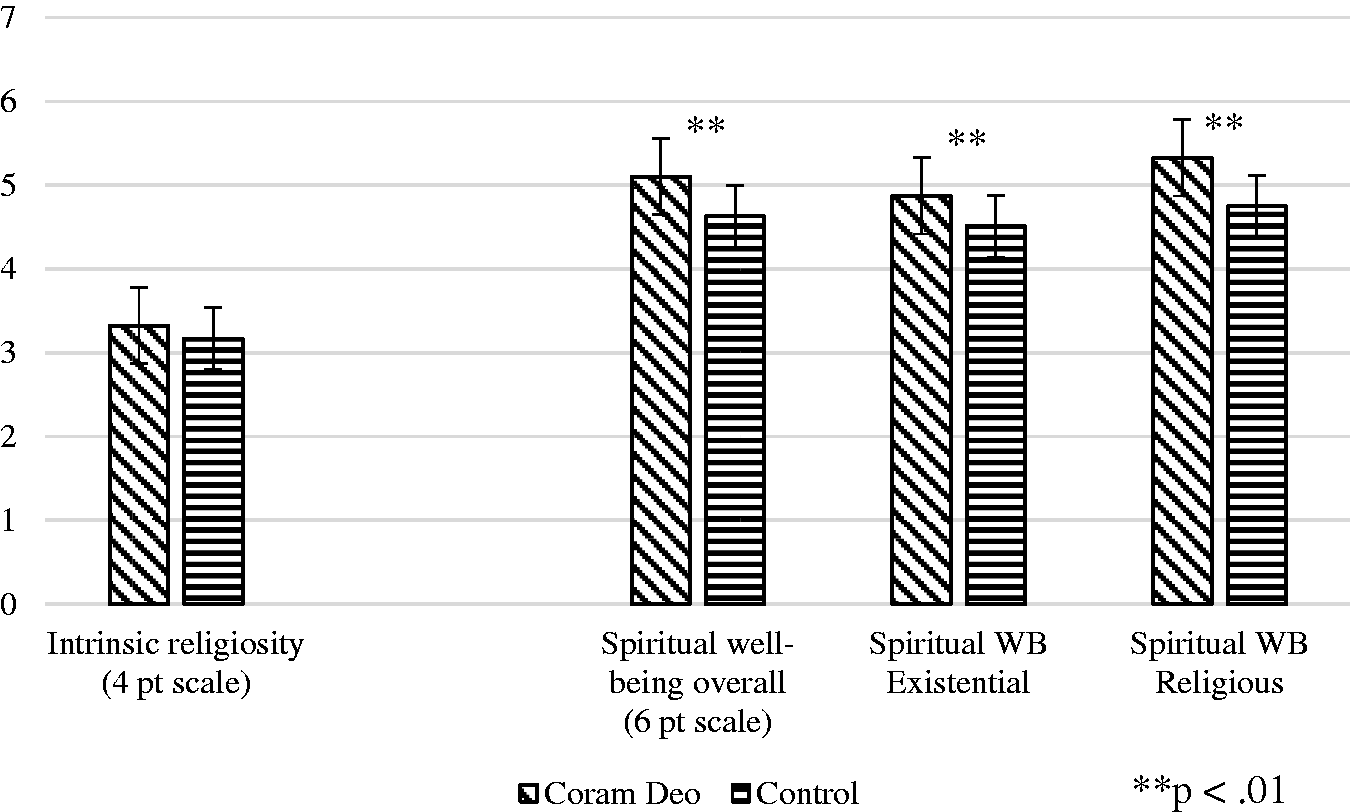
We measured their attitudes toward serving others when they entered university by using the Motivations to Volunteer questionnaire. In the MANOVA, we found a significant overall difference between the groups on motivations to volunteer, with the omnibus analysis revealing F(6, 140) = 4.23, p = .001, Λ = .85, pη2 = .15. There were significant differences, with the Coram Deo group scoring higher on two subscales: understanding F(1, 145) = 6.56, p = .01, pη2 = .04, and values, F(1, 145) = 8.52, p = .004, pη2 = .06 (Figure 2), although these effect sizes are small (Lakens, 2013). These results indicate that when Coram Deo students entered university, they were motivated to volunteer primarily because of their values as well as their search for understanding about the world and the place of their skills in the world. Taking the previous results of higher scores on spiritual well-being within the Coram Deo group, together with the differences on motivations to volunteer, we could postulate that the Coram Deo group experienced more spiritual well-being because they place a higher value on volunteering than did the control group.
Motivations to volunteer.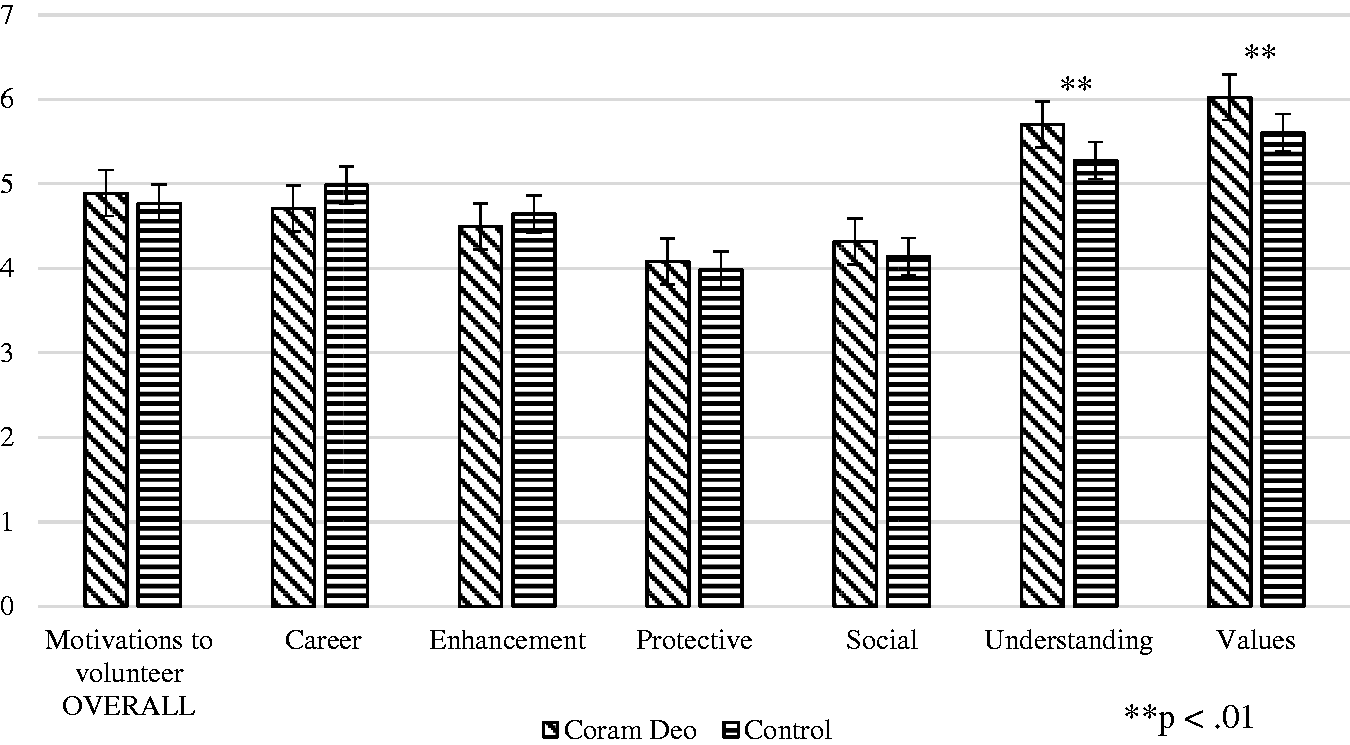
Our Christian practices pedagogy focused on relationality (expressing gratitude and prayer). We examined if this pedagogy made a measurable difference between the groups with respect to students' prosocial tendencies. Using a MANOVA, we found a difference between the groups, with the Coram Deo group scoring significantly higher on the Prosocial tendencies questionnaire overall, F(6, 104) = 3.74, p = .002, Λ = .82, pη2 = .18, and on the following subscales: altruistic, F(1, 109) = 2.28, p = .002, pη2 = .08; anonymous, F(1, 109) = 4.07, p = .05, pη2 = .04; compliant, F(1, 109) = 7.55, p = .007, pη2 = .07; crisis, F(1, 109) = 9.49, p = .003, pη2 = .08; and emotional, F(1, 109) = 7.20, p = .008, pη2 = .06. In addition, we found a tendency toward significance on the subscale of public, F(1, 109) = 3.62, p = .06, pη2 = .03 (see Figure 3).
Prosocial tendencies.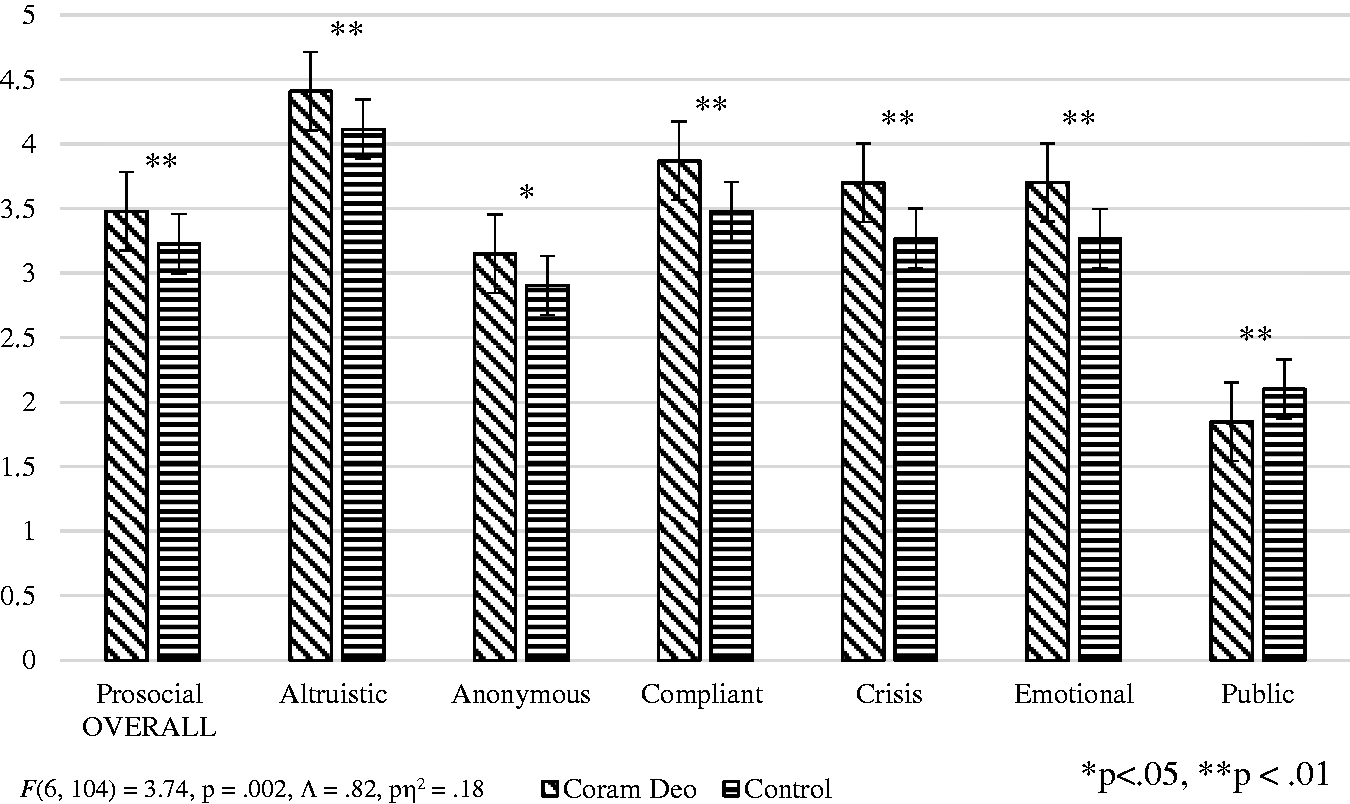
In order to understand if the Christian practices and pedagogy were driving the differences between the groups on prosocial tendencies, we statistically controlled for those items that were different between the groups at the outset of their university career, namely, motivations to volunteer and spiritual well-being. Because students who scored highly on motivations to volunteer at the beginning of their university career may also score highly on prosocial tendencies at the end of their first year, we statistically controlled for motivations to volunteer in our subsequent analyses. Even after statistically controlling for students' motivations to volunteer with a Multivariate Analysis of Co-Variance, MANCOVA, we found that the Coram Deo students scored significantly higher on prosocial tendencies overall, F(1, 93) = 10.55, p = .002, pη2 = .10, as well as on the subscales altruistic (p = .02), compliant (p = .013), crisis (p = .008), and emotional (p = .015).
Finally, we added into the model the control of Spiritual Well-Being, as this measure was different between the two groups at the outset of the study. We found that with control of both Motivations to Volunteer and Spiritual Well-Being, the differences in prosocial tendencies between the Coram Deo and the control group remained, although this difference was a tendency toward significance: F(1, 82) = 3.22, p = .076, pη2 = .04. These results allow us to more accurately assess the impact of the pedagogy because we controlled for variation within the groups on initial motivations to volunteer and spiritual well-being with which students entered university, and found that the Christian practices pedagogy had a positive impact on prosocial behavior.
Reflections on Christian practices
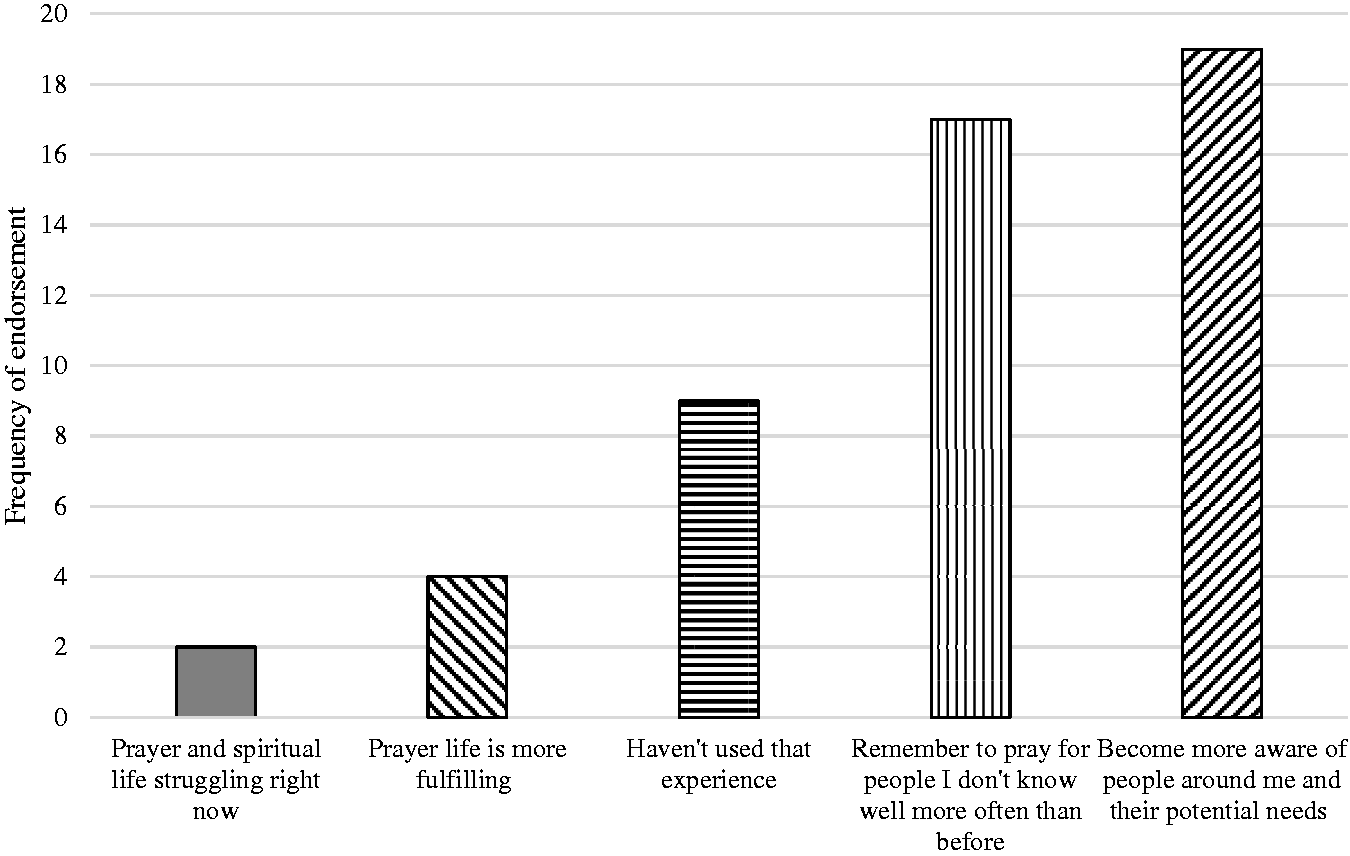
Students were asked to contemplate the impact of the thanking and prayer activities 18 months after they participated in these Christian practices. They were provided the opportunity to select as many responses as they felt were indicative of the impact the practices had on them. For both practices, gratitude and prayer, students endorsed statements that indicated a positive impact the experience had on them, such as “Become more aware of the people that serve me” and “Become more aware of the people around me and their potential needs” (Figures 4 and 5).
Student endorsement of gratitude. Student endorsement of prayer.
Gratitude
Students provided narrative responses to the question, “What has been the biggest impact on you from the thanking activity?” These responses were coded based on the tenor of their paragraphs: 1 = no impact, 2 = neutral impact, 3 = positive impact. We found that 7% of comments were coded as no impact, 25% neutral and 67% as positive impact. Below are sample responses of positive impacts: Being intentional about being thankful for a week taught me that I have so much to be thankful for and made me a more grateful person in general. Now I am thankful for the simple things in life, grass turning green, my socks without holes, my old comfy couch. I find myself more content with life when I think about all my blessings, and in continual prayer, telling God how great he is for the little things I'm appreciating. I tend to thank people habitually, and so I don't think that this activity made me thank people more frequently. One thing that it did do is help me thank people more consciously. It forced me to think about the person I was thanking, and to think about why I was thanking them, and how that fits into the bigger picture of a life of gratitude which I, as a redeemed person, am called to live each day. An impact would be how I thank people now. I saw how much the guy appreciated it when I thanked him last semester so I kept on doing it to other people. My friends, co-workers, and professors. Intentionally thanking someone to try and make their day better seems to also make my day better. I think it has made me realize what I can actually accomplish. If a simple thank you to someone can make them smile what can other actions accomplish? It has also made me realize that you never know where someone is in their walk of life or their faith walk, and we are in no place to judge. We can help lead people in the right direction but it should be done without judgement, especially if you know nothing about them. I think the thanking activity was the beginning of many other things throughout my year that challenged me to be thankful. I thanked the woman who always swiped me in at the dining hall, and it made me more conscious of intentionally being nice to people and to be more grateful in general. This has helped me form a habit. In fact, this has been such a theme in my life this year, I'm co-manager of Student Senate's “Gratitude Week” project currently.
Week of prayer
Similar to the gratitude practices questions, students were asked, 18 months later, to contemplate the impact of praying for one week for someone they didn't know. Students provided narrative responses to the question, “What has been the biggest impact on you from the prayer activity?” We found that 10% of comments were coded as no impact, 17% neutral, and 72% as positive impact. Below are some sample responses of positive impacts: I think it helped me out more than the person I was praying for. I can't prove this because I don't know what that person was going through, but as for me, someone who was and still is going through a rough patch in their faith, it allowed me to reconnect with God. It brought me back into a meaningful relationship with God. I think the biggest impact that this activity left on me was the extent to which I experienced my empathy and humility grow. I realized that I began to turn away from constantly being worried about my struggles, and I began to focus on and feel more for others who needed prayer or care. When I started that challenge, I chose some random girl on my floor who I kind of knew. I didn't know who else to do. Now, that girl is one of my best friends here at [X University]. She does not know that she was the one I prayed for, but I know that God used my prayers to draw me closer to her. I still see this person almost every day, so it's a nice reminder. I have taken on prayer as one way I serve my university. I have a group of people I pray for throughout the week. The praying activity last fall helped me discover another way I can serve my university community. Service doesn't have to be huge and known among others, and this was one way I could practice this. I started a prayer journal a few weeks after the activity in FYS. I wanted to be more intentional about my prayers and paying attention to the people around me. In university, it is easy to get caught up in your own little bubble. This activity reminded me that there are people around me going through struggles that I may be unaware of, just because they do not directly affect my life. Since this activity, I have become a lot more intentional and observant when it comes to my prayer life.
We also coded the students' narrative responses (3 = positive, 2 = neutral, 1 = no impact) based on the impact the practice had on them at the time they engaged in the practice. We further coded the impact of the practice on behavior and mental processes 18 months after engaging in the practice. As can be seen in Figure 6 of the average coded ratings, both gratitude and prayer had a more positive impact on the students at the time of the practice. According to a meta-analysis (Falchikov and Boud, 1989), first-year students are less able to retrospectively evaluate their learning abilities. Overall, the practice of prayer seemed to have a slightly more positive impact on the students than the practice of gratitude. Upon further examination of the students' comments about the practices' impacts, many students noted that gratitude was not as impactful because they were already thankful individuals or had been taught to be thankful. Society tends to socialize “saying thank you”, whereas we don't tend to socialize prayer to the same extent, even in Christian communities. Because the intercessory prayer activity was “out of the norm” for many students, it may have had more of a positive impact on the students themselves.
Comparison of impact between Christian practices activities.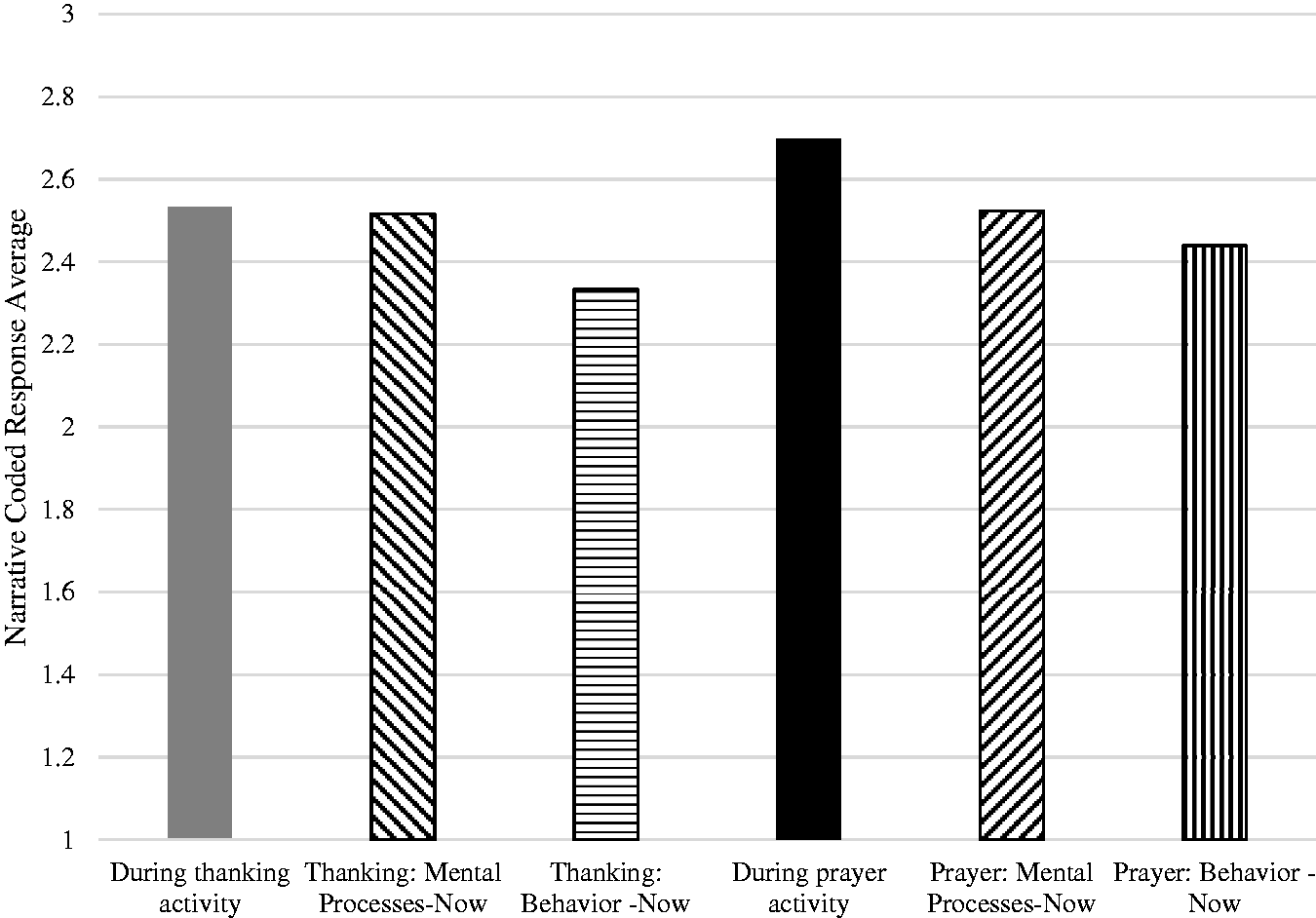
Discussion
We found that Christian university students who were required to spend a week thanking someone who served them and to pray for one week for a person they didn't know increased their prosocial attitudes and tendencies as compared to a control group. Even though our two groups of students, Coram Deo and control, differed at the outset of their first year in university on Motivations to Volunteer and Spiritual Well-Being, statistical control of these two measures allowed us to conclude that the Christian pedagogy and practice had an influence on prosocial attitudes and tendencies. Furthermore, retrospective impact reports from students indicated that the practice of intercessory prayer showed slightly more positive impact on the students themselves than did the practice of gratitude.
Our positive results of gratitude impacting prosocial tendencies is reflected in previous research. McCullough et al. (2001) have stated that gratitude stimulates two important outcomes in grateful persons: (i) a moral motive to behave prosocially, and (ii) a moral imperative to encourage and reinforce previous prosocial behavior. Research has shown (McCullough and Tang, 2004) that people who have practiced gratitude are more likely to behave prosocially, and gratitude tends to reinforce benevolent actions. Prosocial behavior has been predicted by gratitude in university students (Emmons and McCullough, 2004). Gratitude has also been reported to expand people's thoughts about how their agency could benefit others, which in turn helps to build societal resources (Fredrickson, 2004).
As we noted in the Introduction, about the five themes of Biblical human nature, two themes are especially integral to the practice of gratitude: relationality and limited agency. Because our agency is limited, we often require assistance from others to live our lives. We are indebted to others for our well-being and should therefore express gratitude. The relationality of our human nature also factors into gratitude because we need each other in order to function well in our lives. The reciprocal nature of gratitude indicates that we should show appreciation for what others have done for us, and return their kindness by expressing gratitude.
Gratitude can increase well-being (Frederickson, 2004; Watkins, 2004). At the outset of our research, we asked participants to report their levels of spiritual well-being. We found that students in the intervention group, who had been selected for a scholarship because of their volunteer service work, had higher levels of spiritual well-being. We statistically controlled for these characteristic differences between the groups when we examined prosocial tendencies. Even with statistical control of spiritual well-being, the influence of Christian practices pedagogy remained, with higher reported prosocial tendencies in the intervention group. Unlike previous studies (summarized in Watkins, 2004), we did not focus on thankful affect by classifying our students as grateful individuals or less grateful individuals. Therefore, our focus on the practice of gratitude rather than on feelings of thankfulness leads to the conclusion that Christian practices such as gratitude can have a positive impact on relationality with others as measured by prosocial tendencies.
Previous scientific research on the impact of intercessory prayer on the individual doing the praying is scant. Most research examines the influence of intercessory prayer on the prayer recipient, with a few studies examining the frequency of prayer as a coping mechanism for the individual praying, and the influence of types of prayers on the individual praying (Masters et al., 2006). Masters et al. (2006) suggest that intercessory prayer could be linked to volunteerism and enhanced empathy in the supplicant; they call for more studies on intercessory prayer and its influence on the intercessor's health and functioning. One study showed that individuals who pray more had increases in gratitude (Lambert et al., 2009). Wolterstorff (2017) states that intercessory prayer, especially for those not known to us, allows us to act as responsible agents of neighborly love, a love to which we are called as God's image bearer. David Smith (2017), in his course on Bonhoeffer's Life Together, asked students to pray for someone outside their usual relational groups. Students commented that this selfless prayer focused them into humility and God's bigger picture. The Christian practice of praying is a vital manifestation of our biblical human nature as responsible agents.
In the secular world, much emphasis is placed on an individual's self-understanding, yet the Bible is less interested in how we relate to self, rather placing emphasis on how we relate to each other (Moes and Tellinghuisen, 2014). To become what God fully intended for each of us to become as his image bearers, we need to reverently appreciate others as image bearers of God. This is where our Christian practices can be emphasized, taught, exercised and learned. “The practices of the community are all-important. The very fact that we call them by that name gives a hint: these are the things through which the community practices the habits of mind and heart which develop those corporate virtues” (Wright, 2012). Our study shows that we can intentionally teach and assign Christian practices for university students that have measurable changes in their prosocial attitudes and tendencies compared to students who did not experience these intentional practices in their first-year seminar course. Furthermore, these practices do not simply impact the one practicing during the activities; the benefits to the individual and others extend many months after the actual practice, as measured by the increases in prosocial tendencies and the positive self-reported impact and narratives.
There are limitations to our study. Although we tried to match the Coram Deo and control groups, finding no significant differences between them on a variety of measures, there may have been traits of the Coram Deo students that we were not able to control for, and these may have impacted our results. For example, more Coram Deo students could have had the character strengths of gratitude or spirituality, thereby making the Christian practices of thanking and praying easier for them. We statistically controlled for differences in motivations to volunteer between the two groups, and still found significant differences in prosocial attitudes at the end of their first year of university. On the other hand, we combined both gratitude and prayer in our study. We did not seek to discern the individual impact of these Christian practices. We do not know if both of these practices are required together to increase prosocial attitudes and tendencies, or if only one of these Christian practices could have an influence. Future research should examine the influence of a single Christian practice.
There could be some limitations of our study related to the traits of our participants. Peterson and Seligman (2004), in Character Strengths and Virtues, discuss a number of attributes of individuals who are grateful that specifically relate to our project. Persons who regularly attend religious services tend to be more grateful, acknowledging the interdependence of life and responsibility for others. They speculate, given all the evidence, that persons who have more intrinsic religiosity would also be more grateful. The capacity for self-reflection and contemplation, especially of positive experiences, may encourage gratitude. Individuals who claimed to practice their religion had higher amounts of gratitude when compared to non-religious individuals and compared to individuals who claimed a religion but did not practice their religion (Berthold and Ruch, 2014). Although our university students typically come from 29 Christian denominations, and both the Coram Deo and control groups scored highly on intrinsic religiosity (3.19 vs national average = 2.31), our results may not be entirely generalizable to other Christian institutions. We recommend that Christian high schools and universities embark on a similar pedagogical practice and measurement to examine the reproducibility of our results.
Conclusions
In response to the encouraging results described in this manuscript, one of the authors has implemented a variation of these Christian practices in an internship course. Each week, students are presented with a Christian practice challenge, a related Scripture verse, and a short definition and discussion of the practice. For example, in the gratitude week challenge, we discuss that in order to express thanks, we must also realize our indebtedness to someone. We then discuss the question, “what are some reasons why it is hard to realize our indebtedness?” Students (and the professor) then spend the week thanking someone who serves them whom they don't regularly thank. Students post their reflections to the gratitude questions. The following week in class, the professor summarizes student reflections and discusses how she practiced gratitude. These in-class discussions are typically 5–10 minutes and are easily incorporated into the regular course material. A research study is being conducted that will compare the fall semester internship course in which Christian practices pedagogy is implemented on the spring semester internship course taught by another instructor with no overt Christian practices pedagogy. Pre- and post-surveys of empathy and prosocial behaviors will be responded to by both groups, and narrative responses from the Christian practices group will be coded and analyzed. The internship course research should help us answer questions of reproducibility and application of the current study.
Overall, this study was aimed at helping students understand themselves better in relation to their lives of service as agents of renewal. Our experimental results as well as the narrative comments 18 months after the Christian pedagogy and practices demonstrate David Smith's (2011) claim that Christian practices are not just things we do; rather, they also do something to us. Christian practices increase prosocial attitudes and lead to positive retrospective comments on the practices' impact. Furthermore, this study also helped us evaluate pedagogies associated with the Christian practices of gratitude and prayer, finding that purposeful Christian pedagogy can have an effect on students' subsequent behavior and attitudes. We hope these results will guide others in their goals of intentional Christian practices pedagogy and learning in their students.
Footnotes
Acknowledgements
The authors would also like to thank Lois Konyndyke for her organization and the Center for Social Research for their assistance with the surveys.
Declaration of conflicting interests
The authors declared no potential conflicts of interest with respect to the research, authorship, and/or publication of this article.
Funding
The authors disclosed receipt of the following financial support for the research, authorship, and/or publication of this article: The authors would like to thank Mrs. Thelma Venema for her gracious donation of the Coram Deo scholarships and research support.