




Abstract
Exposure and engagement to the media coverage of Chinese brands among average consumers outside of the domestic Chinese market can serve as an important measure of China’s global influence. In this study, we analyzed the audience engagement of online articles about the top 20 Chinese brands from over 5000 web publishers around the world in a period of 5 months from October 2017 to February 2018. Specific results from our analyses point to a lack of sustained effort, careful coordination, and proper control in these companies’ public relations and crisis communication. The study also reveals a larger problem in China’s public diplomacy efforts. The top Chinese firms, despite their high market value, are yet to establish soft influence internationally. The global media engagements of Chinese companies are largely driven, passively, by special events and crises. Moreover, our study offers a new way of studying China and global media by leveraging large sets of industry data and adopting a set of audience matrices commonly used by media publishers to examine social science research questions.
Keywords
Introduction
Background and rationale
The rise of China as a global power is measured not only by its political, social, and economic might but also by how much attention it commands from the outside world. Similar to how we evaluate the reputation of an individual, measuring a nation’s global influence requires answers to questions such as “Are people talking about it?” “Who’s talking about it?” and “How are people talking about it.” Using the news media as a proxy for public and institutional attention, communication scholars have systematically examined foreign news coverage of “China” and “China-related events” to gauge the country’s evolving global image and its growing influence beyond its borders (cf. C. C. Lee et al., 2002; Paterson & Nothias, 2016; Rawan et al., 2018; Song & Lee, 2019).
While past research that focused on China-related coverage and content in foreign media can shed light on how China is viewed by journalists and media institutions, there are limitations to this approach.
First, knowing when, how, and how often the foreign press covers China does not offer us a full picture in a digital world. Content-focused media and journalism studies from the pre-digital eras tended to overlook audience reach and engagement. In the world of broadcast media and mass communication, academic researchers had a firm grasp of who consumed what media content from what channels when and how through data provided by audience research companies such as Nielsen. Facing a mass audience, by simply knowing about what is reported by the media, social researchers could rely on a rich body of theories and empirical findings from the effects research paradigm to estimate the broader social and behavioral impacts of media consumption. However, in the digital media era, the audience is fragmented, individualistic, and idiosyncratic. The same piece of media content could be consumed by a vastly diverse audience at different times on different devices in different locations. The traditional and widely accepted audience measures, such as “rating,” “share,” and “subscription,” are no longer reliable proxies of audience reach and attention.
Second, as people in the outside world becomes increasingly familiar with China, their images of the country will be less abstract and more detailed, and thus less homogeneous, than before. Millions of Chinese people work, study, and travel abroad each year; Chinese cuisines have become a staple in many parts of the world, and a majority of the world’s consumer goods are made in China. In such a world, social research on China and its media representations needs to shift its focus away from looking at the “country” as being a global construct. Instead, the image of China, as a nation, should be viewed as a mosaic, with each piece being a representation of concrete cultural, social and economic objects with which people frequently come into contact.
This research aims to address these limitations through a case study of how the global audience engaged online articles about Chinese corporations and brands during a period leading to the recent escalation of a trade war between the United States and China.
Research context
The role of private corporations in public diplomacy and nation branding has been the focus of growing scholarly attention (White, 2015). In addition to the traditional government-to-people approach to public diplomacy, scholars have observed that non-state actors, such as global corporations, not only can be affected by their home nation’s reputation but can also contribute to public diplomacy outcomes (Fitzpatrick, 2010; Goodman, 2006; Gregory, 2005; Reinhard, 2009; Wang, 2006; White, 2015). As China pivoted to a global and consumption-led economy in the last three decades, the most impressive financial performances have been posted by Chinese corporations. According to a recent analysis by WPP and Kantar Millward Brown, the Top 100 Most Valuable Chinese Brands hit record levels in 2017 to reach US$557.1 billion in terms of their values (Schept, 2017).
Despite the financial and market success, however, the global awareness and acceptance of Chinese corporations, brands, and products among average foreign consumers are harder to gauge. In recent years, top Chinese companies such as Huawei and ZTE have suffered major setbacks in the North American market because of an increasingly protectionist trade policy adopted by the US government. In 2012, for example, the House Intelligence Committee of the US Congress issued a bipartisan report against the two Chinese telecommunication companies for stealing American intellectual properties and potentially spying on the Americans (Schmidt et al., 2012). In March 2017, CTE was fined a record US$1.2 billion by the United States for breaching sanctions against Iran and North Korea (Vincent, 2017). In March 2018, US Department of Defense ordered retail outlets on US military bases to stop selling products from Huawei and ZTE (Woo & Lubold, 2018). Major US retailers, including Best Buy and AT&T, also stopped selling these products in their stores (Cheng, 2018). These political events were covered widely in the media. The media coverage intensified in May of 2018 after President Trump ordered and publicly tweeted about further sanctions against ZTE. The trade tension has escalated to a full-on trade war between the two countries after the United States imposed tariffs on US$200 billion worth of Chinese goods in September 2018.
Fair or not, the reputation of China as a nation brand is intimately linked to the reputations of its companies and products, and vice versa. To assess the level of global awareness and influence of the leading Chinese corporate brands against the backdrop of a looming trade war, we analyzed the audience engagement of online articles about the top 20 Chinese brands from over 5000 non-Chinese web publishers in a period of 5 months from October 2017 to February 2018.
We argue, from the perspective of public diplomacy, that the reputation of a country could be damaged or improved by its global corporations and brands as the “ambassadors.” At the same time, previous research has also shown that the consumers’ attitudes toward a commercial product or a brand were affected by their views on the country of its origin. Such a co-influence and the mutual dependency between a country’s national image and its corporations and brands provide a framework for our analysis.
Review of relevant literature
Our analyses are anchored by the literature from public diplomacy and the country-of-origin (COO) effect research.
Public diplomacy and nation branding
How a nation is perceived by the citizens of other countries forms a foundation for any diplomatic efforts. Public diplomacy refers to “a government’s process of communicating with foreign publics in an attempt to bring about understanding for its nation’s ideas and ideals, its institutions and culture, as well as its national goals and current policies” (Tuch, 1990, p. 3). The primary goal of public diplomacy is to communicate with the public of foreign countries and societies through official as well as private individuals and institutions (Wang, 2006).
The practice of public diplomacy has traditionally followed a “government-to-people” model of communication (Manheim, 1994). However, this model could no longer accurately reflect the rapid changes in the global public sphere. With the expansion of globalization and global information exchange and migration, countries are represented not only by their government entities but also by their corporations, products, immigrants, tourists, and cultures. As such, public diplomacy has gone beyond the unilateral or bilateral state-to-state and state-to-people communications to adopting a multilateral approach to include non-governmental organizations, such as media, corporations, and faith-based organizations (Hocking, 2004; Snow, 2006).
Instead of relying on state-sponsored formal communications, a holistic and multilateral understanding of public diplomacy sees a nation’s reputation as a brand that are built, shaped, and maintained through a variety of activities. To the average consumers and citizens, their perception of a foreign country is often shaped by their direct experiences and media exposures to the cultural and commercial goods from that nation. From this perspective, multinational corporations and commercial brands from that foreign country are “ambassadors” in public diplomacy.
The COO effect
A nation’s reputation affects its ability to pursue and achieve international political objectives and to attract an inflow of foreign investment as well as tourism. It may also influence consumer perceptions and purchase decisions with regard to products from certain countries of origin (Koubaa et al., 2015; Verlegh & Steenkamp, 1999; Wang, 2006). Over the past five decades, a robust body of literature on COO effects have accumulated, with scholars suggesting that origin effects are a central component of international marketing (see Kotler & Gertner, 2002; Magnusson et al., 2011; Tan & Farley, 1987).
The COO effect has been studied extensively with past experiments examining its occurrence, magnitude, and impacts for various products across multiple categories (e.g. Obermiller, 1993; Peterson & Jolibert, 1995; Schooler, 1965). Past research suggests that the origin effects on product evaluations are not uniform; the degree to which a product’s COO affects consumer judgments appears largely context-dependent (O’Shaughnessy & O’Shaughnessy, 2000). A brand’s COO, for instance, may bolster or undermine the brand’s perceived value depending on the product category. For example, consumers may generally perceive items originating from Columbia as less desirable, but when considering Columbian coffee, the same consumer’s image of Columbian products may elicit ideas of rich fields yielding rich coffee (Andéhn et al., 2016; Kotler & Gertner, 2002).
COO effect has also been found to correlate with a country’s perceived level of economic development (Andéhn et al., 2016; Martin et al., 2011; Verlegh & Steenkamp, 1999). As an example, products from highly developed countries with a long-standing history of quality products, such as Japan and Germany, are perceived more favorably than similar products from developing nations (Martin et al., 2011). Furthermore, in their meta-analysis on COO effects, Verlegh and Steenkamp (1999) conclude that differences in economic development underlie origin effects: products from economically wealthy nations tend to outperform products from countries in a transitionary state. Taken as a whole, these studies indicate the magnitude of the COO effects is generally contingent on factors or situations related to the product or brand (e.g. product category, economic development; Andéhn et al., 2016; Verlegh & Steenkamp, 1999).
Chinese brands as ambassadors of public diplomacy through the COO effect
While the traditional approach to public diplomacy tends to focus on the transmitter of public statements, a multilateral nation branding approach also pays attention to the recipient of relevant messages (D. Lee, 2012). An accumulation of more than half century of empirical research in mass communication and media effects has shown that media content could significantly influence the audience’s attitude, emotions, beliefs, values, and behavior (Bryant & Oliver, 2009; Nabi & Oliver, 2009). As such, a multilateral approach to public diplomacy must consider not only the impacts of deliberate and controlled government-to-people messages but also the impacts of the more general media coverage on the public perception of a targeted country.
Studies have shown that a country would benefit from media coverage to increase its power in the context of public relations investment (Gurgu & Aristide, 2016; S. Lee & Hong, 2012; S. Lee & Yoon, 2010; Rawnsley, 2015). With its quick rise in global influence, China has been gaining more and more attention from media outlets around the world. Such coverages are an important factor to consider in public diplomacy and nation-building as they might influence China’s nation brand by shaping the foreign public’s opinions, perceptions, and attitude.
While the COO may boost or impede the value of its exports, a country’s reputation, a brand of its own, can also be damaged or strengthened by the public perception of its people, culture, products, and brands. The concept of soft power, developed by Joseph Nye (2004), captures a country’s ability to influence other political entities through attraction based on the appeal of culture, values, and institutions, rather than through coercion or payments. Scholar recognizes soft power as a cultural resource when the concept associated with the approach of nation branding (Ying, 2008). Previous research shows that the creative industries and their output can significantly affect the soft power of a nation (Ahn & Wu, 2015). Other scholars also recognize soft power as a political product and it could be promoted by public diplomacy (Sun, 2008).
A healthy and wide appearance of Chinese brands in the global market would help promote the soft power of China as a nation. However, to date, there is very little research to systematically track the global reach and audience engagement of the media coverage about Chinese corporations and brands internationally. Our study is a first step toward filling this gap.
Method
Data acquisition
In this study, we are most interested in the non-domestic audience engagement of online articles about the top Chinese brands from foreign media sources. The data were collected by Chartbeat, a media analytics firm based in New York. The clients and partners of Chartbeat include thousands of web publishers in over 60 countries in all major languages, including English, Spanish, Protugues, German, and French. However, because Chartbeat are currently not working with any Chinese web publishers, its data set effectively excludes any articles, in any language, published by a Chinese media outlet. For confidentiality, Chartbeat does not disclose the full list of news outlets it has a partnership with. However, for promotional purposes, the company gained the permission to share the identity of some of its largest clients, including The Atlantic, The New York Times, The Washington Post, CNN, Le Monde, and The Telegraph.
There are only two major editorial analytics providers in the world, Chartbeat and Parse.ly, and major news outlets around the globe choose to use one over the other. Chartbeat, founded earlier than Parse.ly, has been a larger player in this sector and therefore its customers represent a good portion of the major outlets in the world. Like most web analytics tools, Chartbeat uses a piece of JavaScript code (Chartbeat, 2018) to collect data. This snippet is embedded in its clients’ web pages wherever the publishers want to gain insights into the readers’ behaviors. When a reader lands on a publisher’s web page, the Internet browsers can communicate with Chartbeat’s servers, sending relevant information around the visit, such as “referrer” (e.g. whether a visit was directed from a search result or a social media posting) and “location” (e.g. whether a visit is from Japan or Argentina).
For the purpose of our study, we examined several key audience engagement metrics of all online articles published by Chartbeat’s clients and partners that mentioned one of the top 20 Chinese brands at least twice between 1 October 2017 and 28 February 2018. Due to copyright and restrictions as specified in the data-sharing agreement, our data did not include information about the specific articles or the web publishers. Also, because Chartbeat tracks audience engagement, not the content, of online articles, we focused our analysis on the instances of audience engagement (i.e. each time an article is visited by a user), instead of the articles themselves, as the unit of analyses. In aggregate, our data set was generated from engagement metrics of all online articles published by more than 5000 major media outlets in North America, Western Europe, Latin America, and other emerging markets during the research period. This large sample, though not statistically representative, is a census of all qualified articles published by Chartbeat’s clients and partners around the world and their subsidiaries. We consider the sample a valid and robust representation of the global media landscape.
Key measures
We included the following digital audience engagement metrics in our analyses: (1) pageviews, (2) engaged concurrents, (2) search referral, (3) social media referral, and (4) geolocation.
Pageviews are the number of times a web page containing a relevant article is visited by a unique visitor during an aggregated time (e.g. a day, a week, or a month)
Engaged concurrents is a measure of real-time online traffic directed to a particular online article at any given moment. Each concurrent could be a new visitor lands on a web page containing the relevant online article or a visitor staying on the web page for longer than 15 seconds.
Search referrals are those engaged concurrents from users drawn to an article via search engines, such as Google and Bing. Social media referrals are those concurrents from users redirected from a social media post such as Facebook and Twitter. Whereas social and search concurrents are exclusive from each other, they both make part of the engaged concurrents.
Geolocation indicates the location from which an engaged reader was from. This is a useful proxy of the geo-influence of a brand.
Results
Total engagement
In the 5 months during our observation, the top 20 Chinese brands generated a total of 28,742,007 engaged concurrents from over 5000 web publishers globally (Table 1). Although this number seems to be staggering, there is a significant inequity across different brands. The four Chinese tech companies, Huawei, Alibaba, Tencent, and JD, attracted over 82% of the total engagement, other big domestic brands such as Yili, Mengniu, and China Life each only generated a few thousand engaged concurrents during the same period.
Monthly total engaged concurrents (15 seconds or more) of top 20 Chinese brands.
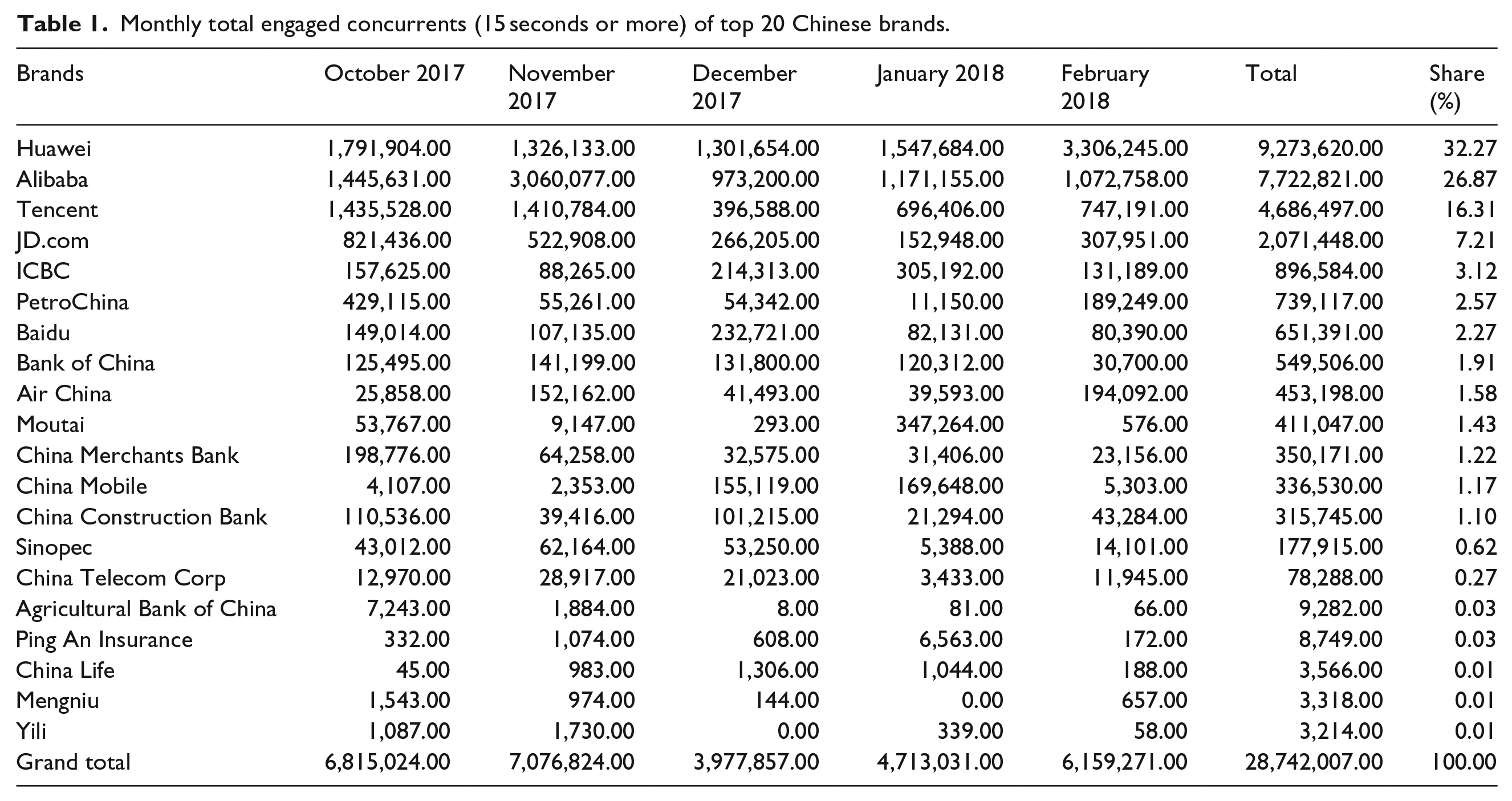
The disparity is not surprising since the products and the target consumers of high-value Chinese corporations are different. Tech firms such as Huawei and Alibaba are aggressive in pursuing global expansion, whereas companies such as Yili and Mengniu focused on the Chinese domestic market.
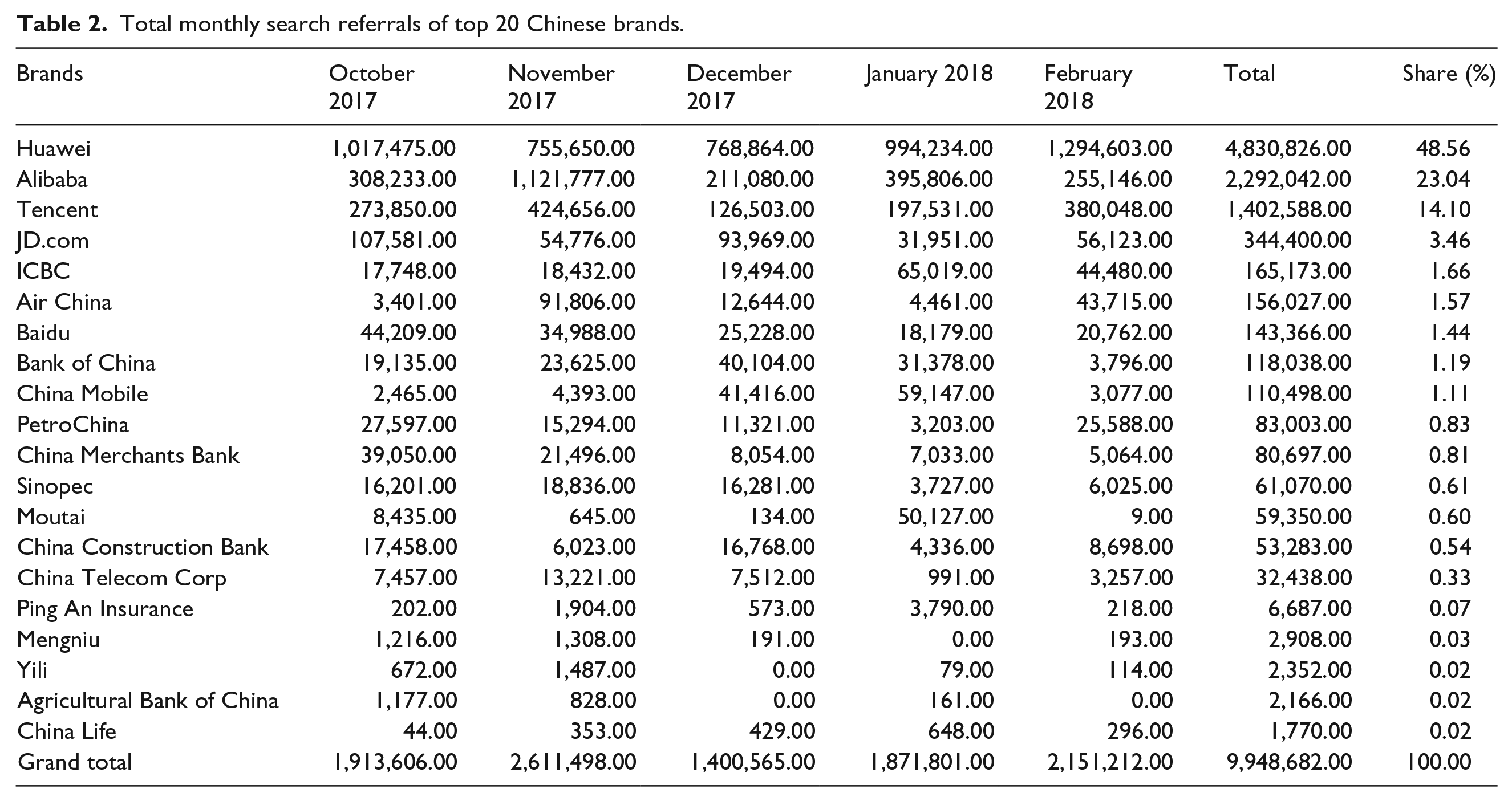
Looking at the referral data, more referrals are generated from social media than from search. More than 20 million concurrents were directed from social media sharing. It is more than twice those from the search engines (Tables 2 and 3). The same inter-brand differences were found in the social and search referrals. Again, the tech firms made up for a vast majority of audience engagement from search and social media channels.
Total monthly search referrals of top 20 Chinese brands.
Total monthly social media referrals of top 20 Chinese brands.
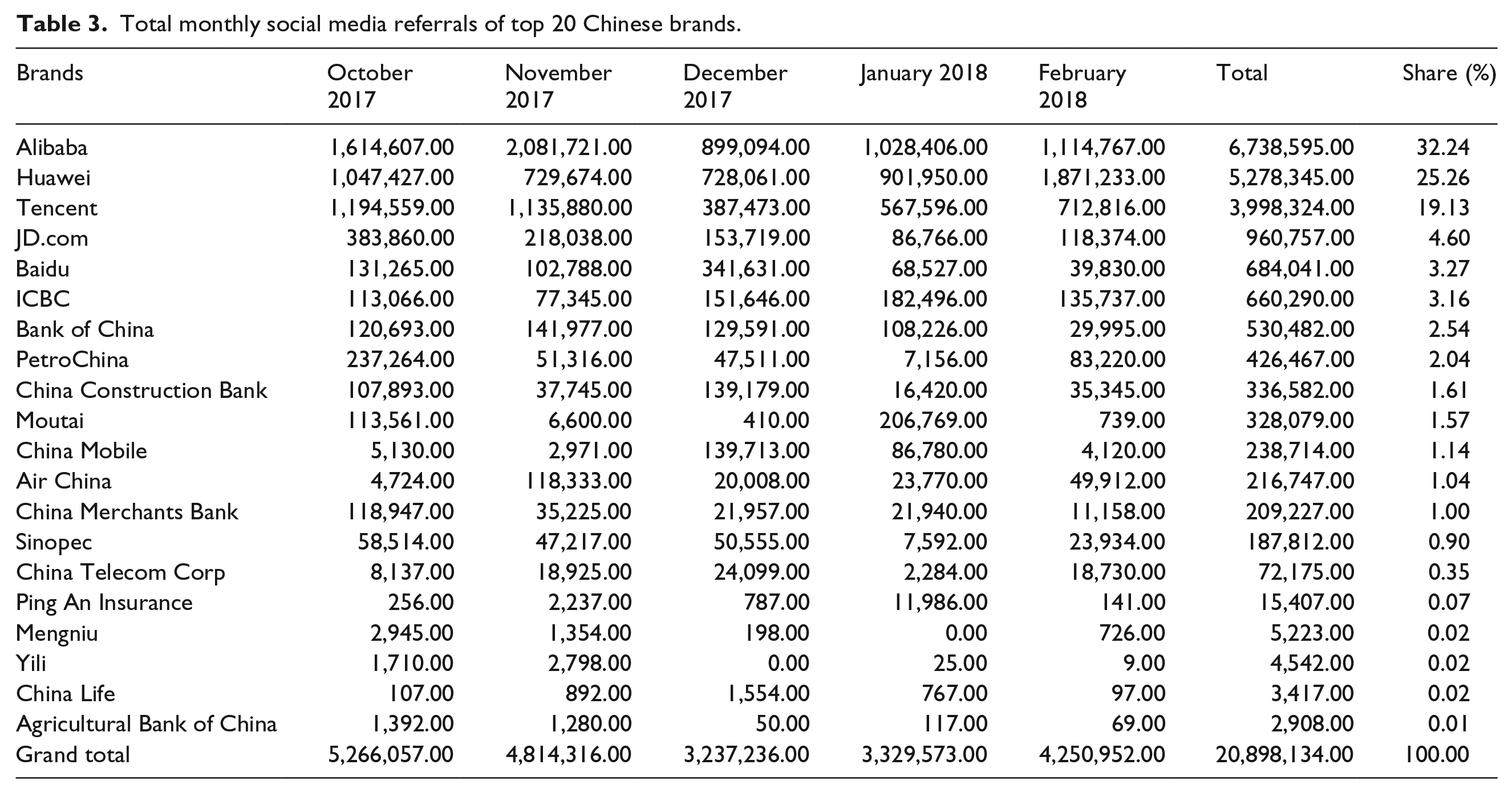
Among the top brands in our analysis, Huawei, Alibaba, and Tencent were by far the most influential Chinese companies globally. Interestingly, although Huawei had the most engaged concurrents and search referrals, Alibaba topped the search referral chart. Alibaba’s popularity on social media might have been boosted by its CEO, Jack Ma’s personal charisma.
Temporal fluctuations
We further analyzed the fluctuation in the levels of audience engagement for each of the top brands over time. Our results show that the temporal fluctuation varied significantly from brand to brand. While it is difficult to make attributions about the reason for such functions, we use the trade war as a natural context to help us interpret the results. Below, we present findings from analyses of the three major technology brands: Huawei, Baidu, and Alibaba.
Figure 1 shows two spikes in the total daily concurrents Huawei received during the 5-month research period, one in mid-October of 2017 and the other in mid-February of 2018. Upon further investigation, we found that the first surge in media engagement coincided with Huawei’s release of a new smartphone model. In contrast to this first spike in global engagement, likely from the marketing buzz generated by the product launch, the second spike in global media engagement with Huawei marked a bitter week when Huawei and ZTE were identified as security threats by the United States.

Daily concurrents of Huawei (1 October 2017 to 28 February 2018).
Further breaking down by referrer type, we can see the first spike was driven by both search and social, which indicates that people were both actively seeking information about Huawei’s new phone model and also passively exposed to the word-of-mouth information on social media. The second wave of engagement, however, was driven mostly by social media, which indicates that the articles became viral and echoing on social media. Taken together, the pattern depicted a crisis demanding immediate action for the company. Moreover, after the spike in the second wave of global engagement, search concurrents remained strong while social concurrents faded out, which implies that people’s curiosity lingered for weeks after an initial social media frenzy.
While Huawei experienced a quiet time around Christmas in 2017, Baidu saw a massive spike right before Christmas, mainly driven by social traffic (Figure 2). This spike was around the time when Baidu’s revealed a driverless car accompanied by a surge of the company’s stock price.
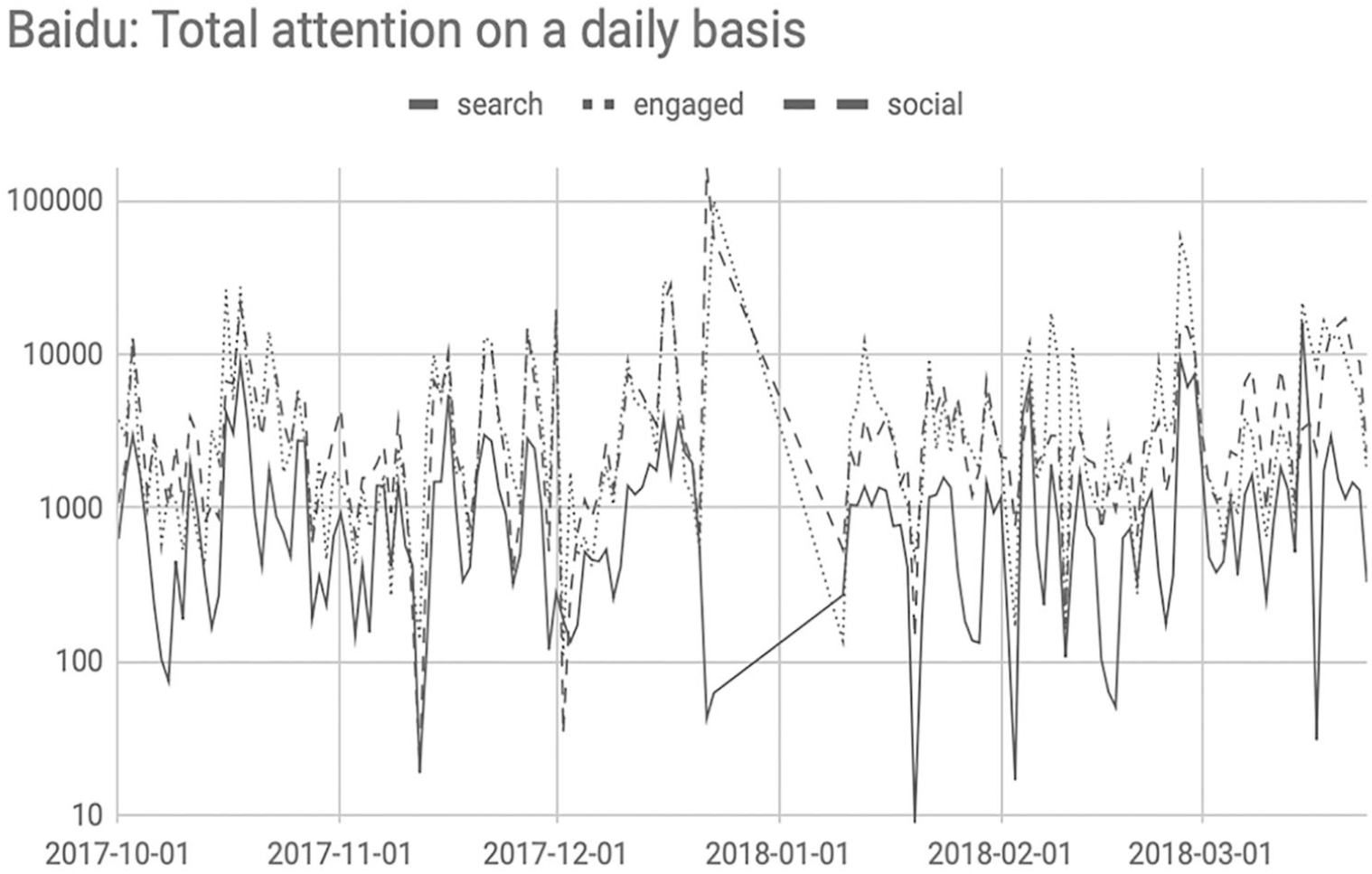
Daily concurrents of Baidu (1 October 2017 to 28 February 2018).
Unsurprisingly, Alibaba’s biggest spike appeared on 11 November 2017, its “Double 11” sales day (Figure 3), when it made a record of US$25 billion within 24 hours. Before the sales day on 10 October 2017, Alibaba became a viral word on social media after it announced its US$15 billion investment into research labs around the world with a focus on artificial intelligence. Its plan is well in line with Beijing’s vision and its scale stirred up some emotions among Americans on social media while its government shrank its investment into scientific research.

Daily concurrents of Alibaba (1 October 2017 to 28 February 2018).
Although we cannot make specific attributions based on the data set, the results suggest that the media engagements of the Chinese brands were driven not only by their corporate events but also by their social and political events.
Geo-influence
As different Chinese brands may target and penetrate different overseas markets, the media engagement metrics we collected revealed the global influence of the top Chinese brands in various regions. Below we present some notable findings.
For example, Figures 4 and 5 show cumulatively how many pageviews of articles related to China Mobile and China Telecom in different countries. China Mobile and China Telecom are the two largest mobile communication and Internet service providers in China. Both brands have reached people in South Africa, but China Telecom additionally reached Nigeria in Africa and Indonesia in Asia. The geographic distribution of media engagement may reflect and inform the marketing strategies of these companies.
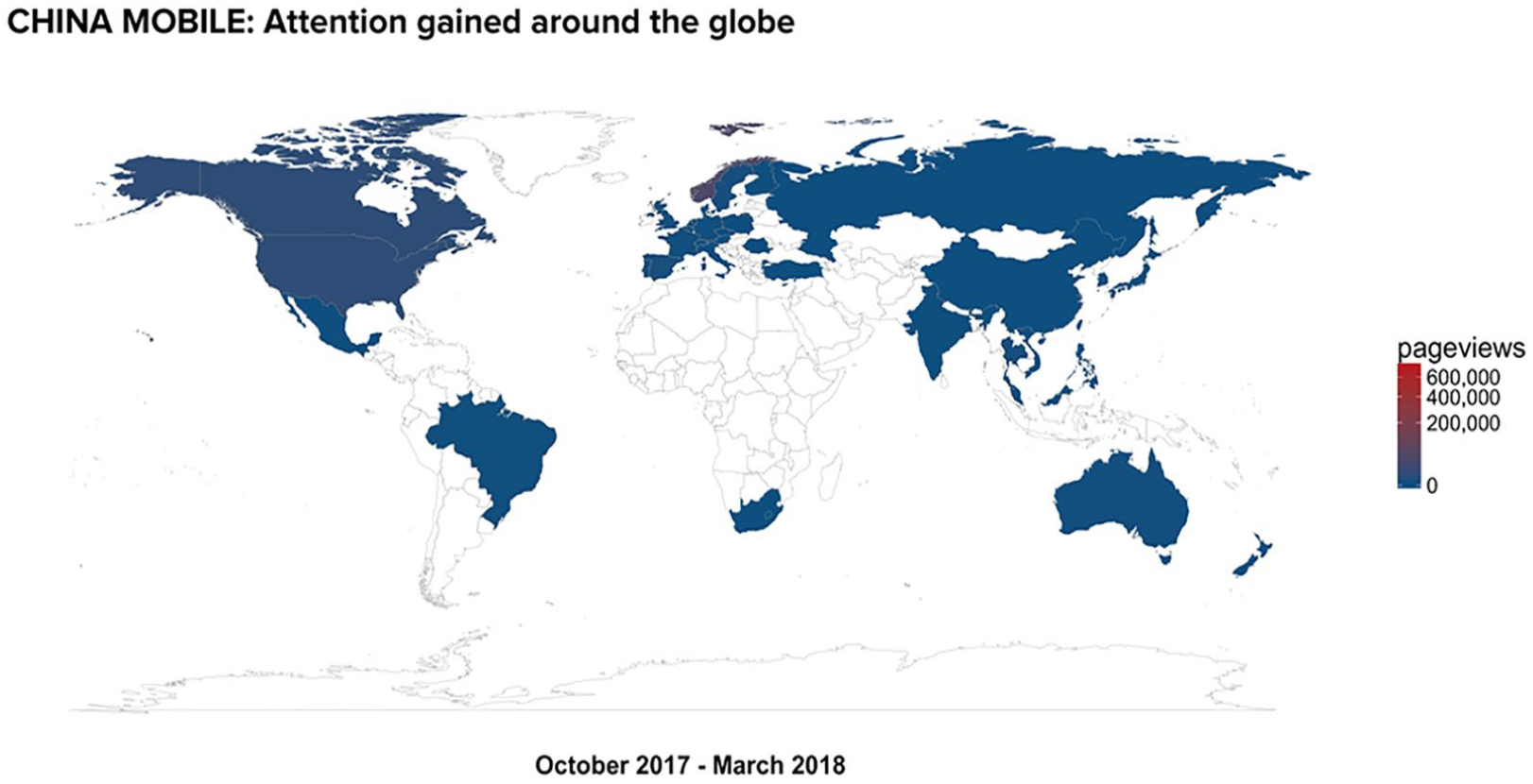
Global media engagement of China Mobile by pageviews and country.
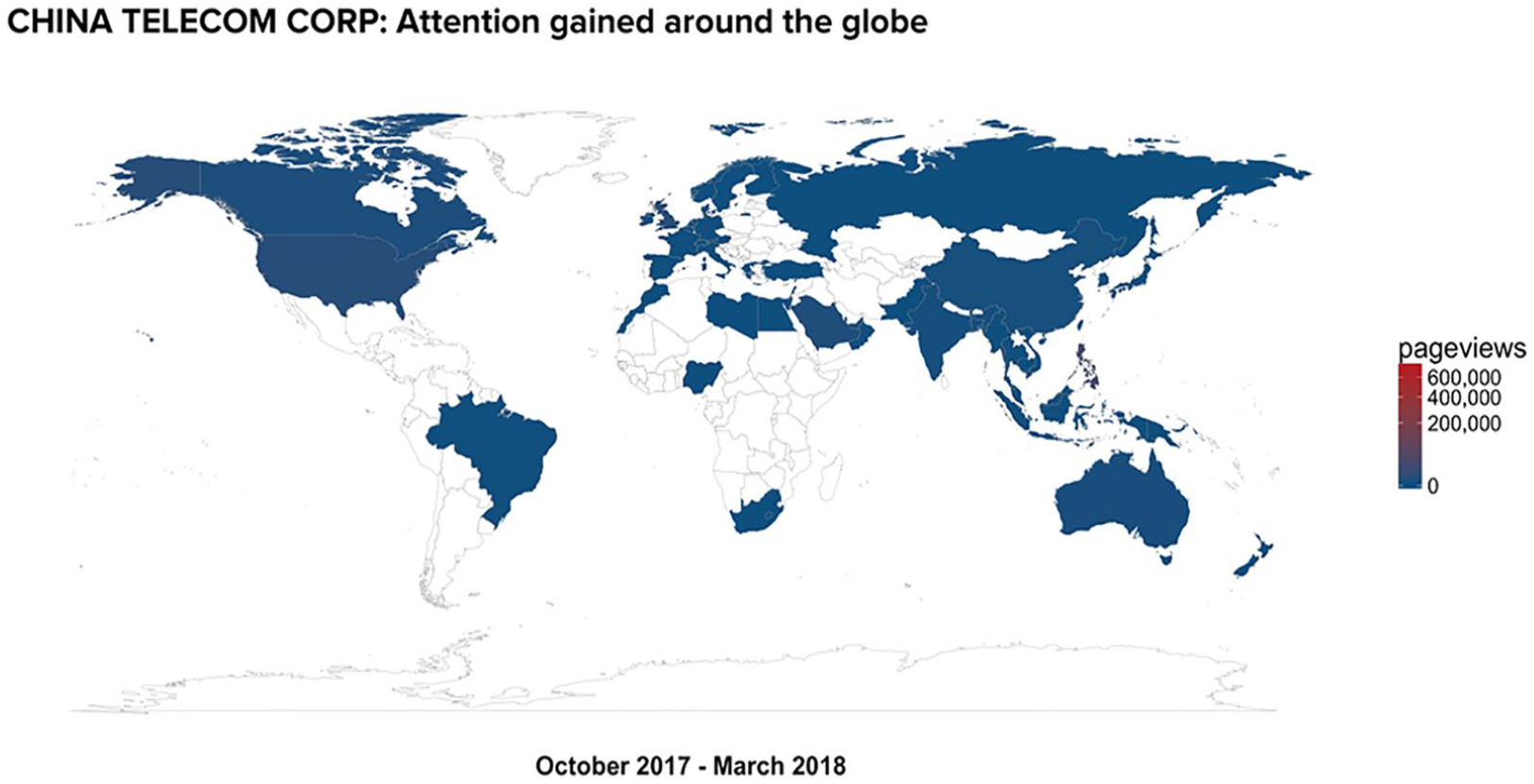
Global media engagement of China Telecom Corp by pageviews and country.
Similarly, Figures 6 and 7 of the total pageview articles mentioned Sinopec and PetroChina, respectively. While Sinopec had a sizable engagement in the United States and Argentina, PetroChina received far fewer visits in those two countries. However, PetroChina had a stronger media engagement in Canada.

Global media engagement of Sinopec by pageviews and country.
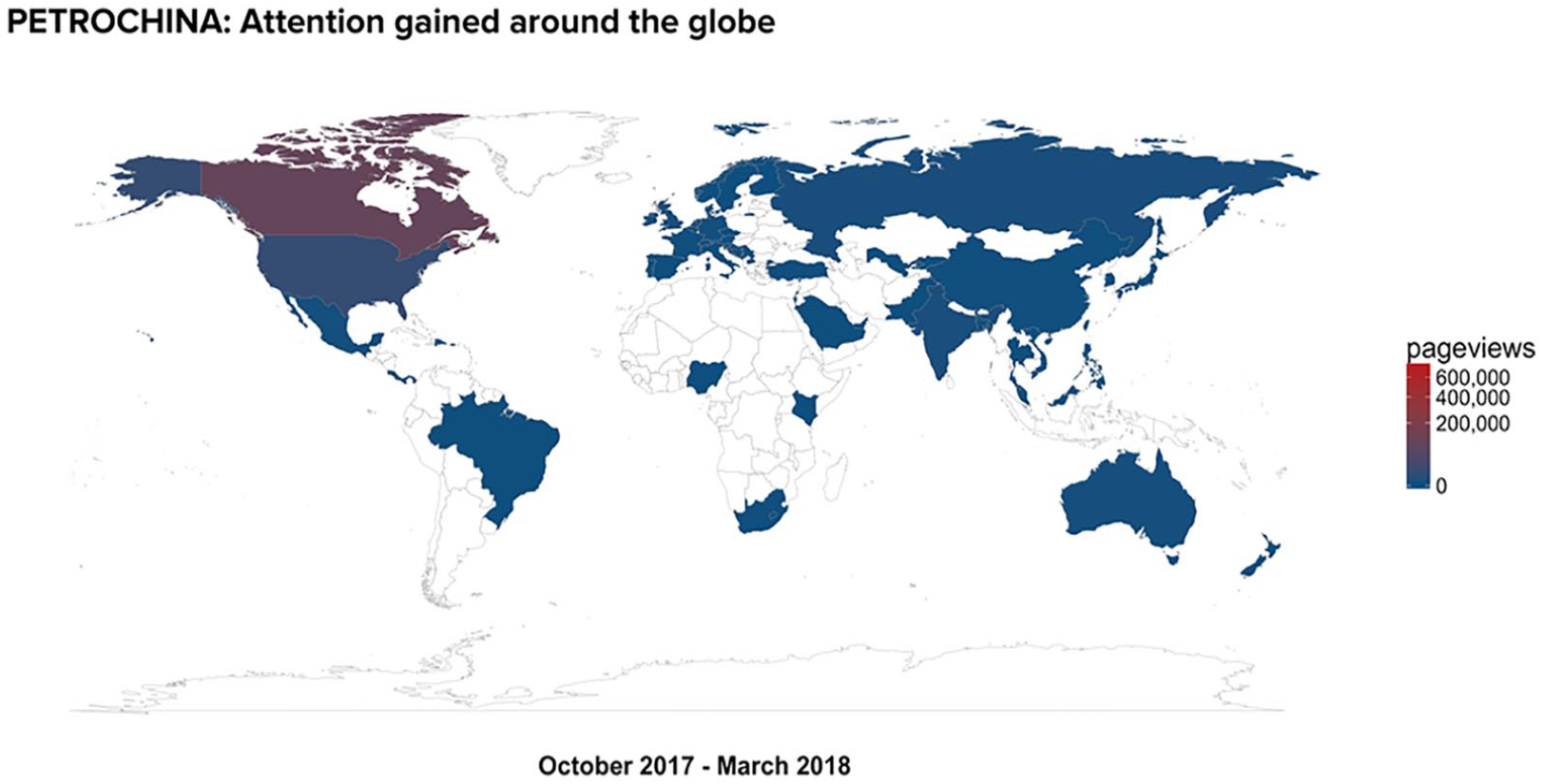
Global media engagement of PetroChina by pageviews and country.
Discussion
The results of our analyses revealed three major findings.
First, although the three top Chinese tech companies, Huawei, Alibaba, and Tencent, regularly attracted high levels of media engagement outside of China, the other top Chinese companies had very little influence overseas. Second, the global media engagements of Huawei during the research period seemed to have been largely driven by the political climate and tension. This is indicative of a lack of sustained effort, careful coordination, and proper control in these companies’ public relations and crisis communication. This finding is particularly worrisome because a weak brand presence and engagement can lead to catastrophic consequences in the face of a crisis. In such events, a company would have very little control over the media narrative, and it would not be able to turn to its loyal brand community for support. Third, the geo-influences of the top Chinese brands are inconsistent and uneven. The media engagement of these companies seemed to be linked to the product cycles as opposed to a coherent communication strategy.
Taken together, findings from our research point to the lack of a global communication strategy by major global Chinese corporations. The Chinese brands included in our analyses were comparable to their American counterparts such as Apple, Google, Coca Cola, and Amazon in terms of market capitalization and financial success. However, unlike their competitors, these global Chinese firms are yet to establish a strong media influence internationally. Even when they receive high media engagements, the attention may not always be positive. These brands have very little control over how their stories are told, let alone being an active and positive force in public diplomacy and nation branding.
The differences in the audience engagement of media coverage on Huawei and Alibaba are worth noting. Both Huawei and Alibaba have been covered extensively by overseas media outlets as examples of a rising Chinese economy and its growing global influence. However, the media mentions of Alibaba cover wider ranges of topics from the company’s financial performance to its founder, Jack Ma’s, personal lives. In contrast, the global media coverage of Huawei has been mostly political. The company appeared most frequently in political news on relations. From a public relations and brand communication perspective, Alibaba’s brand image is more dynamic and multidimensional, while Huawei lacks soft power to sustain the impacts of negative media coverage.
Amid the rising tension between the United States and China, it is particularly critical for Chinese corporations and brands to develop a global communication strategy that focuses on building their soft power by cultivating consumer trust. Previous research on the COO effects clearly shows the danger of not considering the impacts of consumer’s attitudes and perceptions toward a nation on their purchasing behavior. Although our analysis was largely descriptive, our findings suggest that global media coverage of large Chinese corporations tends to be closely linked to and framed within the context of “China rising.” From the public communication and public diplomacy perspectives, the fate of Chinese global brands is closely tied to how consumers view China as a nation and vice versa.
While our field has accumulated a wealth of theoretical knowledge about the effects of mass media exposure, much of the attention of past media effects research has been placed on the negative impacts of specific types of media content (e.g. violence and sex) and on individual-level processes (e.g. cognition and behavior). A natural follow-up to our study would be to investigate “how would exposure to global media coverage of China and Chinese companies affect people’s attitude and perception toward China and Chinese consumers?” Existing theories in media effects, such as cultivation and agenda-setting, could provide a conceptual framework and theoretical foundation for addressing this research question.
Methodologically, the web analytics tool developed by Chartbeat has been widely adopted by the media publishers around the world, but their utilities in media and communication research are yet to be fully explored. With access to data of high volume and refined granularity, marketing professionals, as well as communication researchers, are presented with new opportunities to explore relevant questions (Cherubini & Nielsen, 2016; Petre, 2015; Schlemmer, 2016). Our study applied several metrics commonly adopted by the publishing and media market research industries to examine a set of empirical questions. This could lead to the development of a protocol for industry and academia collaboration.
Despite the strengths and potential values that our study brings, there are a number of limitations. We have only scratched the surface of what our data can do. Other metrics should also have implications for marketers, such as device type and scrolling depth. In fact, some researchers have revealed more granular behavioral patterns. For example, beyond monolithic pageviews, Grinberg (2018) has categorized visits into six types, from scanning and extensive reading. In addition, Grusky et al. (2017) have established the relation between scrolling metrics and eye-tracking records and made it possible to use Chartbeat’s data alone to estimate whether people have possibly read the part of an article that journalists or marketers intend to convey. We hope to dive deeper into the granular levels of our data in the future.
Also, our research is descriptive. Although we can make inferences about how media engagements of a brand would influence their perceptions and attitudes toward its country of origin, future studies should link media engagement metrics to other measures such as audience attitudes, public opinions, article sentiment, stock prices, or companies advertising campaigns. We have already begun to develop a series of follow-up studies to this analysis by combining secondary and primary data sets collected from a variety of sources by adopting a mixed design approach.
To the best of our knowledge, this study is the first attempt to explore the interaction between media exposure and brand development and the feasibility of using content engagement metrics to gauge the roles of private corporations in nation branding. We believe this approach to examining the complex relationships between global media, international communication, and China is not limited to the commercial brands included in our analysis, it also offers a broader managerial implication to communication practitioners and brand managers while contributing to the related theoretical and empirical research.
Finally, the present research is a case study and should be treated as such. We do not attempt to test any specific theory, nor to extend any existing lines of research in a linear sense. Instead, we hope to make a contribution to the literature by offering an alternative way of studying China through the lenses of global media by performing a secondary analysis of audience data widely used by the media publishers but seldom used in media studies and communication research. The industries invest millions, if not billions of dollars, in creating and maintaining large amounts of data primarily for the purpose of growing their businesses. Media and communication scholars, through rigorous research, have generated a wealth of theoretical knowledge. Our study offers a glimpse into what can be learned if these resources are integrated.
Footnotes
Declaration of conflicting interests
The author(s) declared no potential conflicts of interest with respect to the research, authorship, and/or publication of this article.
Funding
The author(s) received no financial support for the research, authorship, and/or publication of this article.
