



Abstract
Social media influencers are emerging as a new force in shaping public discourse and raising public awareness of socio-political agendas in the digital space. This paper explores the role of influencers as part of the citizens group in nation branding by looking into their interactions with followers through the lens of authenticity. It analyzes the networked narratives generated by the influencers and followers, using the mixed methods of blending content analysis with social network analysis. The findings identify the potential of influencers evolving as a crucial force in contributing to a representative national brand informed through imbuing authenticity with engagement, featuring valued-based content, interactivity, creativity and intrinsic motivations within an ethical communication mechanism. It advances influencer studies in nation branding by underpinning the two-way construct of authenticity in generating influence; and informs the development of strategies for engaging citizens in nation branding through influencers using authenticity. Considering the central role of China in international economics, politics and culture, this article has significant domestic and regional implications.
Introduction
Social media influencers (abbreviated as influencers) comprise ordinary users of social media who thrive on a variety of mechanisms to grow popularity and influence in a social network (Abidin, 2015). A growing body of scholarship reveals influencers are emerging as a new force in shaping public discourse and raising public awareness of socio-political agendas in the digital public sphere (e.g. Abidin, 2019; 2021; Lewis, 2020). Within this, some YouTube influencers have demonstrated a strong attempt to create commentary that critiques social issues, politics and the state via the tactics of parody and satire videos (Abidin, 2021). This phenomenon is conceived of as often representing the voice of marginalized minorities in a society due to providing an alternative source of information that rivals the mainstream media, as well as cultivating a fertile ground for airing a reactionary political stance (Lewis, 2020).
Nation branding in the origin of place branding serves to raise a country’s global competitive advantage and international influence as well as boost nation building (Kania-Lundholm, 2016; Li, 2017; 2020; Li & Feng, 2021b). The critical tradition in nation branding research captures this practice as a powerful tool to develop a strong sense of national identity in exchange for social cohesion and support for domestic governance (Browning, 2015; Daniel, 2010; (Kaneva, 2011; Polese, Ambrosio, & Kerikmäe, 2020), cited in Li & Feng, 2021b). In reality, a group of stakeholders arising from the top managerial level (i.e. national or local government agents) dominates the steps of initiating, executing and monitoring the place brand management process (Goulart Sztejnberg & Giovanardi, 2017). This top-down approach is critiqued for neglecting needs of local communities (Goulart Sztejnberg & Giovanardi, 2017). It potentially leads to the identity of a nation’s brand being engineered by elites and excluding ordinary citizens (Volcic & Andrejevic, 2011).
The popularization of social media has transformed how message recipients engage with a nation’s brand. It has provided citizens with opportunities to co-produce the reality of a place (Hereźniak, 2017, p. 137). Their exchange of brand experience on social media (un)consciously enriches the content of brand narratives, reshaping brand meaning predominantly built by actors who are high-up on the institutional hierarchy (Pentina, Guilloux, & Micu, 2018). There is a wide agreement that influencers as individual citizens who commodify their fame are able to induce changes in perceptions and behaviours of an audience through the distribution of information and inspiration (Palazzo, Vollero, Vitale, & Siano, 2021). This group often embraces the mechanism of authenticity to grow their influence in a social network (Wellman, Stoldt, Tully, & Ekdale, 2020). Despite of the critical concern about authenticity becoming performative and manipulative acts for an audience (Lee & Eastin, 2021; Shtern, Hill, & Chan, 2019), influencers have the potential for influencing how a nation’s brand is reconstructed and perceived and to what extent it represents the people of a nation, especially in the construction of national identity.
Sports are one of the key methods of accomplishing the goals of nation branding. State actors use sports as a means to gain support for the legitimacy of domestic political institutions (Desatova, 2018), and to raise a nation’s soft power and diplomatic relations (Connell, 2018). In the case of China, soccer has emerged as a crucial vehicle to brand the country in the post-Olympic period (Li, 2017, 2020). The Chinese state mobilizes the use of digital technologies to gain public consensus on soccer development schemes (General Office of the State Council, 2015). However, the outcome of citizen participation in co-creating a nation’s brand representative of the people depends on whether the practices are operating within an communication mechanism that is ethical, inclusive and collaborative (Li & Feng, 2021a). Considering China’s heavy investment in internet censorship (Pöyry, Pelkonen, Naumanen, & Laaksonen, 2019), the role of influencers in making a contribution to a truthful national brand may be confined.
Ample empirical studies look at the roles of influencers in constructing the images of a destination (e.g. Johnstone & Lindh, 2018; Magno & Cassia, 2018; Palazzo et al., 2021). Comparatively, these research topics in nation branding are underexplored. A growing body of the literature in marketing unveils the construct of influencers’ authenticity from the perspectives of influencers and audience members (Audrezet, de Kerviler, & Guidry Moulard, 2020; Jun & Yi, 2020; Luoma-aho, Pirttimäki, Maity, Munnukka, & Reinikainen, 2019), as well as the relationships between the perceived authenticity of the influencers and the purchase intentions of followers (Lee & Eastin, 2021; Pöyry et al., 2019). However, limited attention has been devoted to studying what means influencers execute to engage followers in branding a place, its links to followers’ perceptions about and behaviours towards this place, and how this mediates the place’s brand meaning. Additionally, the existing studies (Li & Feng, 2021a; 2021b) reveal the Chinese state-owned media using a linear communication mode to communicate the China brand, leading to the discrepancy of brand interpretations between the government and the public. This calls for the need to give non-governmental actors a voice in creating a representative instead of a unified national brand.
Considering the existing research gaps, the aim of this study is to probe the role of influencers in nation branding within the context of sports. Further, the functionalities of sports in nation branding are magnified via the participation of a country in sports mega-events (Li, 2017). The event content circulated by influencers is conceived as being more organic which helps to evoke better engagement with potential audiences (Lou and Yuan, cited in Sun, Leung, & Bai, 2021). Accordingly, this article concentrates on investigating the ways influencers deploy the logic of authenticity to engage followers while navigating the internet ecosystem, and to what degree this underlying mechanism contributes to the creation of a nation’s brand that represents the citizens during major soccer sporting events. Aligning with the importance of understanding influencers’ influence from the perspective of followers (Sun et al., 2021) and authenticity as a social construct (Morhart, Malär, Guèvremont, Girardin, & Grohmann, 2015) in conjunction with the discussions above, we posit the following research questions (RQ): RQ1. Who are the dominant influencers in constructing the brand narratives of China during major soccer sporting events? RQ2. How do the influencers structure the narratives through the lens of authenticity? RQ3. How do the followers engage with the influencers’ attempts?
Bringing the expertise of diverse research streams from marketing and celebrity studies into nation branding research, this study contributes to the literature by illuminating mutual interactions between influencers and followers in the light of authenticity as well as the implications for building a truthful national brand. It enriches the theoretical work on authenticity by developing the linkage with authentic stakeholder engagement and extends the social impact of influencers to nation branding research. Delving into the two-way construct of authenticity, we assert influencers growing influence on co-creating a nation’s brand through followers centres around leveraging the authenticity principles through engagement, featuring the deployment of valued-based content, interactivity, creativity and intrinsic motivations within an ethical communication ecosystem. This China-focused study unveils the potential of influencers evolving as a crucial force in negotiating a national brand that could represent the voice of the citizens. It unmasks how influencers negotiate their roles to prevent from being influenced to be a state propaganda vehicle, while being in the search of progressing towards an influential actor who stands for the true identity of citizens in nation branding. The result sheds light on what extent the interplay of government and public expectations mediate the outcome of influencer authenticity. It provides an insight into the development of strategies for engaging citizens through influencers in nation branding initiatives informed by authenticity. Owing to China as a critical actor in geographical economy, politics and culture, this article has significant domestic and regional implications.
Influence of influencers through authenticity with engagement in nation branding
The recent turn towards a stakeholder-oriented perspective in place branding scholarship underpins the collaboration of public and private stakeholders in co-creating a place’s brand utilizing either of the approaches – top-down or bottom-up (Goulart Sztejnberg & Giovanardi, 2017). Compared with the aforementioned top-down approach, the bottom-up approach advocates for the central role of citizens and local communities in branding a place (Goulart Sztejnberg & Giovanardi, 2017). This adheres to the logic that identity building is at the core of nation branding (Dinnie, 2016; Volcic & Andrejevic, 2011), and the process of defining and spreading a national identity should involve both state and non-state or even non-political actors (Polese, Ambrosio, & Kerikmäe, 2020). As noted, the people of a place are crucial as their characteristics and behaviours constitute the essential meaning of a place brand, by acting as information providers giving credibility to the communication about a place brand (Kavaratzis, 2012), as advocates in developing and implementing the place brand strategy; as advisors to local government’s decision-making; and/or as creators of the place experience via participating in mega events (Eugenio-Vela, Ginesta, & Kavaratzis, 2020; Molinillo, Anaya-Sánchez, Morrison, & Coca-Stefaniak, 2019). Thus, the bottom-up approach with the focus of mobilizing citizen participation in shaping a place’s identity enhances the chance of building the ‘true identity’ of a nation (Govers & Go, cited in Knott, Fyall, & Jones, 2015, p. 47). This is understood as the representation of a diverse range of people in the nation, or of the selected groups agreed by the people in this nation (Govers & Go, 2009; Kahraman, 2016).
Influencers are known as third-party actors leveraging the content they post on blogs and social media platforms to build their online following and shape the attitudes and behaviours of followers through interactions in exchange for resources (Enke & Borchers, 2019; Sng, Au, & Pang, 2019). Their continuous meaning-making processes through publishing content relating to products, services, ideas and ideologies (Khamis, Ang, & Welling, 2017; Pöyry et al., 2019) have an impact on public understanding of an issue and the image and reputation of a brand (Sng et al., 2019). In place branding, the prefoliation of digital technologies gives rise to ‘citizen-generated media’, featuring bloggers as a form of influencers in branding a place (Dinnie, 2016, p. 250). The spatial experiences of places on social networks published by these bloggers shape the image of the destination (Palazzo et al., 2021). The reliance on influencers in marketing a place is recognized as having higher credibility, which can reflect authentic opinions and forge deeper engagement with prospective visitors and existing audiences (Femenia-Serra & Gretzel, 2020, p. 69). Moving beyond this, political influencers leverage micro-celebrity practices to discuss their personal political standpoint towards social justice movements (Lewis, 2020). It serves to offer entertainment for followers and express insubordination against hegemonic actions (Abidin, 2021). Compared with informational influencers who possess popularity and visibility with a less marked viewpoint, opinion leaders and activists exhibit clear political stance and their influence on political conversations is higher (Recuero, Zago, & Soares, 2019). Given the considerations of influencers’ involvement in political affairs, it is important to unpack their practices and influence in nation branding exercises, which are saturated with political and ideological debates.
The influence of influencers is conceptualized as their ability to affect others through engagement using proactive messaging (Stacks & Bowen, 2013). The first indicator of influence is reach, which means influencers own large social media followings, and can trigger a large secondary reach; while the second indicator is impact, which identifies the impact on the decision-making of followers (Hudders, De Jans, & De Veirman, 2021). This conceptualization draws attention to engagement with followers as a critical component of determining how much influence is wielded by influencers on how their followers interpret the world (Enke & Borchers, 2019). Engagement at an individual-level underpins the significance of eliciting citizen participation in nation branding projects, which enables the establishment of ‘an inclusive sense of national identity among the people’ (Li & Feng, 2021a). Individual-level engagement can be converted into social-level engagement, marked by a diverse range of stakeholders offering public support for nation branding initiatives, and taking collective actions to grow resources that facilitate social development in the exercise of pursuing nation branding goals (Li & Feng, 2021a). Hence, the purpose of engaging influencers in nation branding is that influencers drive followers to co-create a nation’s brand by aligning with the need of the citizens.
Influencer authenticity offers a robust basis to grow influencer-follower engagement. The definition of authenticity initially was built upon ‘intrinsic motivation, which values uniqueness, original expression, and independence from the market’, but now is oriented towards ‘external gratification’ determined by recognition and reward from others (Banet-Weiser 2012; cited in Khamis et al., 2017, p. 203). A review of the extant scholarship indicates that influencers nurture an air of authenticity through a set of micro-celebrity practices pertaining to content, intrinsic motivations, expression of integrity, self-disclosure, creativity and interactivity. 1 Their adherence to the ethical framework of authenticity, comprising the tenets of ‘being true to one’s self and brand’ and ‘being true to one’s audience’, allows them to build credibility and acquire social and cultural capital on social media (Wellman et al., 2020). Conversely, unauthentic actions, such as influencers purchasing fake followers, can result in public backlash (Tafesse & Wood, 2021). The promise of authenticity enables influencers to differentiate themselves from traditional celebrities, who are inclined to maintain distance from fans by creating hierarchical relationships through well-crafted fantasies that are barely lived experiences of regular people (Duffy, 2017; cited in Cotter, 2019). It allows influencers to develop the impression of ‘intimacy, accessibility, and relatability’, laying out the foundation for building an effective influencer-follower relationship (Abidin, 2015; Duffy, 2017; Marwick, 2013; 2015; cited in Cotter, 2019, p. 897).
The influence of influencers through engagement guided by authenticity is likely to be mediated by an audience. On the one hand, authenticity is viewed as social construct, depending on personal beliefs and perspectives rather than just a quality of an object (Morhart et al., 2015). On the other hand, the relational and affective aspects between the message receiver and sources are central to influencers’ practice of authenticity (Lee & Eastin, 2021). Influencers’ relationships with sponsoring brands, advertising agents, and local and global audiences can cause the misrepresentation of the influencer’s self (Shtern et al., 2019). Partnering with marketing firms, influencers are devoted to crafting an online version of themselves featuring higher social capital in an attempt to add value to their status and work (Duffy, cited in Shtern et al., 2019). Their focus is to create content that enables them to develop social bonds with their audiences rather than to reflect their personal voice and life (Abidin, citied in Shtern et al., 2019, p. 1941). Furthermore, the success of acquiring influence through engaging with an audience in an authentic way rests on the pursuit of the principles of the authentic stakeholder engagement framework. This means effective influencer-follower interaction is attributed to a two-way communication mechanism, featuring ‘ethical, inclusive and collaborative communication practice with the commitment to acquiring social development’ (Li & Feng, 2021a, p. 15). This mechanism helps to strengthen citizen engagement in nation branding exercises by minimizing the constraints on the disempowered caused by the asymmetrical power relationships between the government and citizens (Li & Feng, 2021a). Thereby, this article holds that influence of influencers is co-created with followers through engagement within an ethical communication mechanism, and authenticity plays a key part in this engagement process.
Influencers within the Chinese context
China ranked fifth among the countries with the fastest mobile internet speeds in 2021 (World Population Reviw, 2021). There were 1.01 billion internet users in June 2021 (Xinhua News, 2021), and 930.8 million social media users in January in 2021, equivalent to 64.6% of the total population (Kemp, 2021). The tremendous growth of the internet and the large amount of internet and social media users have implications for the brand meanings of China. For instance, the international popularity of Li Ziqi, who owns at least 14 million followers on YouTube, has prompted the state to re-evaluate the strength of state-led soft power schemes and redesign the strategies of conveying the stories of China abroad (Xu, Donnar, & Kishore, 2021). At home, local governments were advised by the Ministry of Culture and Tourism in 2020 to invest in internet celebrities to market rural regions and stimulate economic development (Shen, 2021)
In addition to the commonalities of influencers, Chinese influencers, known as ‘wanghong’, are expected to have social impact by performing as a role model to set the moral direction of society (Shan, Chen, & Lin, 2019; Xu, Reijnders, & Kim, 2021). This involves the fulfilment of work ethics and social responsibility, as well as the promotion of the core socialist values imposed by traditional Chinese culture, national goals and social goals, alongside the individual values of patriotism, dedication, integrity and friendship (M. Xu et al., 2021). In recent years, there has been a surge of Chinese influencers functioning as an independent agency or a government ambassador in promoting a place brand. In the first scenario, the influencers post content promoting Chinese food, landscape, products and culture without having the connection with the government (Shen, 2021). In the second scenario, the influencers are in partnership with Chinese authorities to build the brand of a place (Shen, 2021). The state is aware that the effectiveness of celebrities circulating political messages outweighs the tradition of relying on propaganda (Sullivan & Kehoe, 2019, p. 246). Entertainment celebrities symbolizing the public faces of the cultural and entertainment industries in China have become a powerful vehicle for spreading the Chinese Communist Party (CCP)’s political and ideological doctrines and earning public consent (Xu & Yang, 2021).
Regarding the communication mechanism, the Chinese authorities in recent years have adopted a hybrid mode of internet censorship via the integration of coercive with noncoercive means, and the agents of that have extended beyond state bureaucracies to civil society and non-state actors (Yang, 2018). The hard means referring to the Great Firewall is a nationwide electronic barrier that monitors and manages information flowing into and out of the Chinese internet (Navarria, 2016). Sina and Tencent – the largest local social media platform providers – employ thousands of employees to review and block sensitive and forbidden information on the platforms (Navarria, 2016), and a group of internet commentators acts as regular netizens to shape online discussions (Bandurski, cited in Stockmann & Luo, 2017). Celebrities touching on political taboos are banned from broadcasting platforms and can hardly return to public sight (Xu & Yang, 2021). The noncoercive trend of internet governance underpins the state’s tolerance of critical speech and its effort to channel the citizens to nurture speech that is in support of government agendas, the aim of which is to balance negative sentiments against the government (Yang, 2018). Resulting from this complex censorship system is a mixture of playfulness, humour, satire and jokes that penetrate Chinese web culture and politics (Yang & Jiang, 2015).
As discussed, influencers deriving from ordinary citizens grow their influence in a social network through content production and diffusion. The intimate relationship between influencers and followers in addition to the strategic incorporation of their influence can potentially engage the silent but salient citizen group in co-creating a nation’s brand. Following the line that ‘authenticity is negotiated based on social roles and participation’ (Shtern et al., 2019, p. 1941), and the complexity of China’s communication mechanism interweaved with politics, technology and culture, this study asks about how influencers in China navigate the relationships with the state and followers, while balancing the act between a state propaganda vehicle and an authentic actor speaking for the citizen group in the process of creating a nation’s brand.
Method
The methodological approach was composed of a combination of social network analysis and content analysis, which allowed for the analysis of the narratives posted by influencers surrounding 2018 FIFA Men’s World Cup, 2019 FIIA Women’s World Cup, and 2020 AFC Champion League. These soccer mega-events are regarded as the milestones on China’s path to becoming a world soccer superpower by 2050 (National Development and Reform Commission, 2016). Owing to social network analysis being useful to identify the important nodes and the relationship between the nodes in a social network (Li & Feng, 2021a), we employed this method to address RQ1. We then utilized the content analysis method to investigate networked narratives in response to RQ2 and RQ3. The qualitative measure of influence blending the examination of content and sentiment enables researchers to uncover the quality of the influence (Gräve, 2019).
Sina Weibo establishes a digital venue allowing for public discussions about political affairs in the country, and users can interact with others without becoming friends of them (Li & Feng, 2021a). Accounting for the aim of this study which is to explore the role of influencers in creating a truthful national brand, especially from the aspect of shaping national identity, we decided to examine posts published in Mandarin targeting domestic Chinese audiences. We applied the keywords of soccer (足球), World Cup (世界杯) and AFC Champion (亚冠) to source the posts generated by the dominant influencers on Weibo. The time frames were set 7 days prior to and after each of the soccer events. Crawling the data with a customized Python script, we produced three datasets: n = 56,854 posts for the 2018 Men’s World Cup between June 7 and July 22 in 2018; n = 70,625 posts for the 2019 Women’s World Cup between May 31 to July 14 in 2019; and n = 66,952 posts for the 2020 AFC Championship between November 11 to December 26 in 2020. We then created three retweet networks using Gephi 0.9.2 to locate the dominant influencers in each of the soccer events with reference to degree centrality, addressing RQ1. 2
As discussed, authenticity in influencers can be embodied through the following cues, including (a) content, (b) creativity, (c) self-disclosure, (d) intrinsic motivations, (f) expression of integrity, and (g) interactivity. Considering RQ2, we developed the coding scheme utilizing these six aspects. Regarding (a), we structured the posts deriving from the datasets into the dimensions of physical attributes (PA), functional attributes (FA), and personality traits (PT), and analyzed them closely, drawing upon the sports nation branding framework (Li & Feng, 2021b). 3 We then assessed the tone of each post, since tone gives an indication of influencers’ attitudes towards brand-related issues and can affect followers’ perception. Each post was a unit of analysis. 4 Table 1 shows the coding instrument.
Coding Instrument of authenticity.
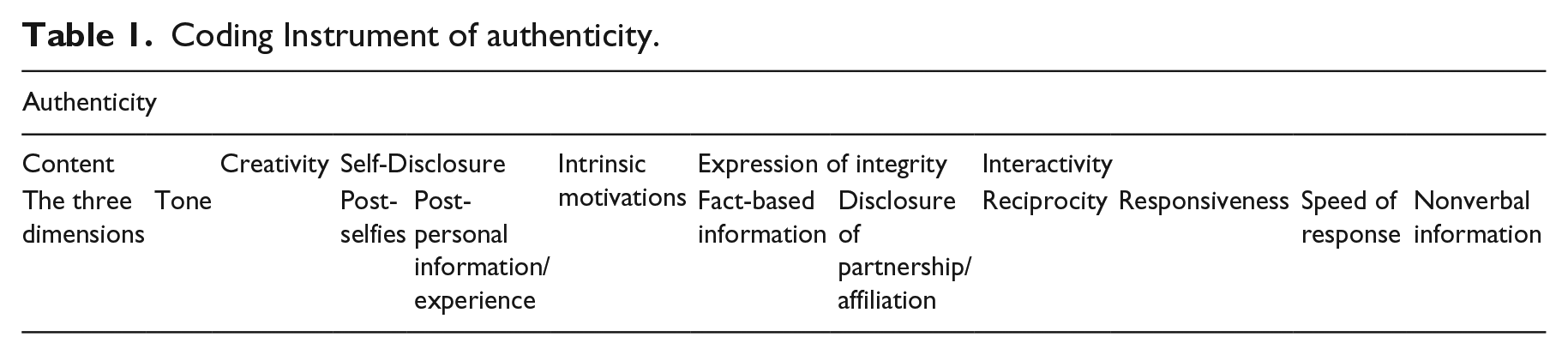
The evaluation of the influence of influencers was linked to their level of engagement with followers. According to Molinillo et al. (2019), the common indicators of that consist of ‘likes’, ‘shares’ and ‘comments’, which are in the representation of popularity (p), virality (V) and commitment (C) of the influencers’ posts, respectively. These scholars elaborate that p = ((Total number of likes/total number of posts)/(number of followers)) *1000; V = ((Total number of posts shared/total number of posts)/(number of followers))*1000; C = ((Total number of comments/total number of posts)/(number of followers))*1000; and E = p + V + C. We adopted this metric to look at RQ3.
Findings
RQ1 investigated who were the dominant influencers in constructing the brand narratives of China during major soccer sporting events. The findings showed that they included Guangzhou Frontier Xie Junhui (soccer commentator), Yan Wen Zi Jun (animation blogger) and British Bao Jie (freelance writer) in the 2018 network; Lai Qu Zhi Jian (web analysist), Shi Jie (freelance writer) and Women’s Soccer Those Things (soccer blogger) in the 2019 network; and Xu Jiang Storytelling (soccer journalist), Li Xuan R9 (sports journalist), and Asaikana (administrator of the TransferMarkt website) in the 2020 network. This suggested the coexistence of sports and non-sports influencers in this branding exercise. The sports influencers acquired professional sports knowledge/experience, while the non-sports influencers arose from the fields not relating to sports (e.g. animation, music, humour, game, literature and public affairs).
The analysis also disclosed the remarkable rise of sports influencers from 20% in 2018 and 30% in 2019 to 70% in 2020. This was based upon upon the observation of the top 10 influencers in each of the soccer events. The degree centrality of the sports influencers was valued higher than that of the non-sports influencers, except Lai Qu Zhi Jian. The prevalence of the sports influencers along with a greater degree centrality value affirmed expertise is one of the contributors to the influence. Expertise involving the specialized knowledge/experience of an influencer in a given area adds value to the popularity of influencers, especially when being merged with authenticity (Schouten, Janssen, & Verspaget, 2020).
Most of these dominant influencers were mega-influencers with a size of fan base over millions, except one micro-influencer – Women’s Soccer Those Things. However, the values of their degree centrality were lower than Women’ s Soccer Those Things, who had the smallest number of followers (21,636 fans). In light of Carter (2016), influencers who have fewer followers but serve as a bridge between various communities, are more influential. Table 2 outlined the profiles of the dominant influencers.
Profiles of the dominant influencers.

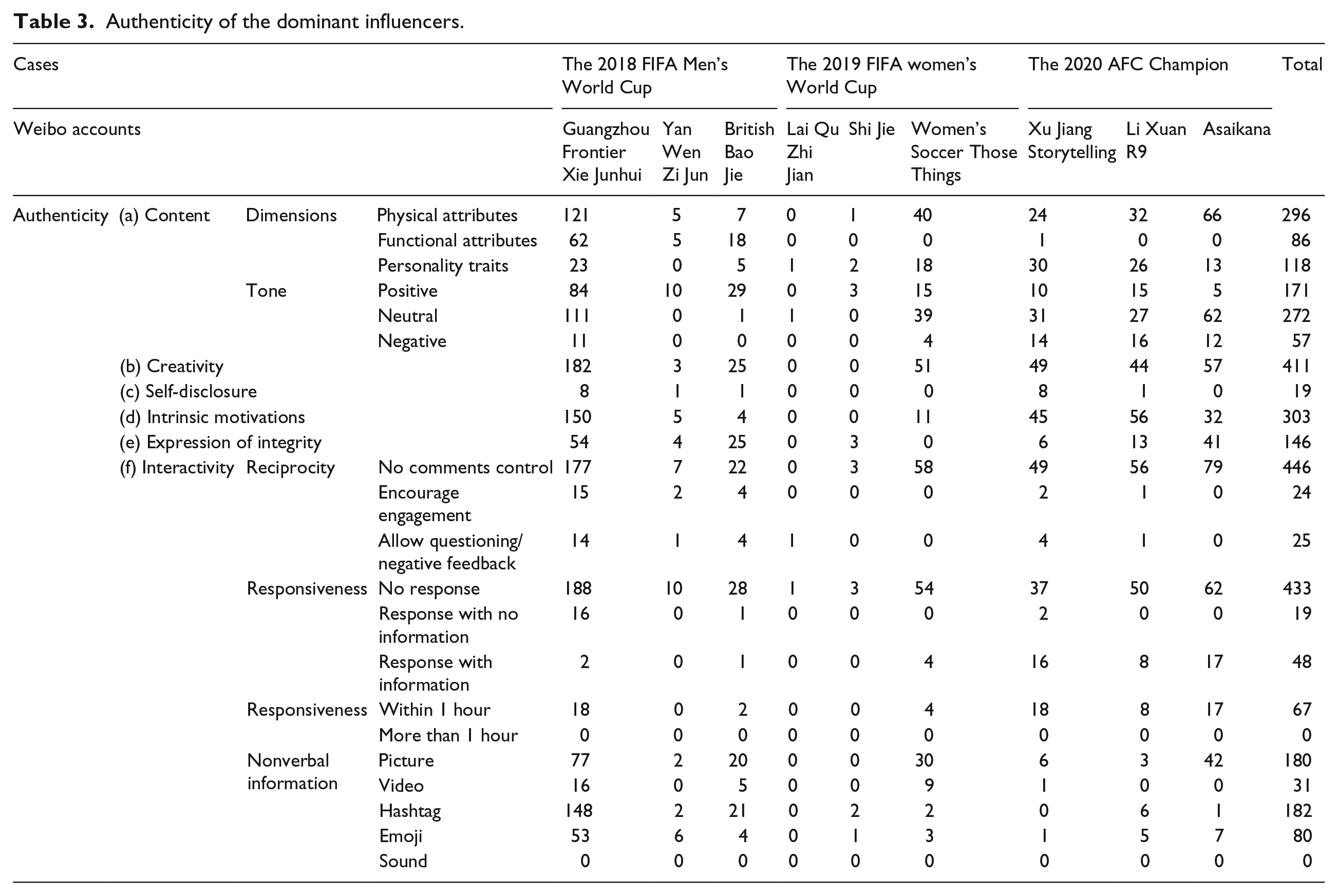
RQ2 explored how the influencers structured the narratives through the lens of authenticity. Regarding (a) content, the findings showed most of the dominant influencers, except Lai Qu Zhi Jian, Shi Jie and Xu Jiang Storytelling, concentrated on portraying the PA dimension (59.20%, n = 296). In this dimension, the influencers provided the followers with soccer match reports and analysis, as well as anecdotes of well-known soccer players, coaches and national teams. Compared with a limited amount of the posts contributing to the FA (17.20%, n = 86) and the PT (23.60%, n = 118) dimension, this PA focus implied most of the influencers were informational influencers rather than opinion leaders or activists. They paid more attention on spreading information instead of airing opinions about soccer-related issues.
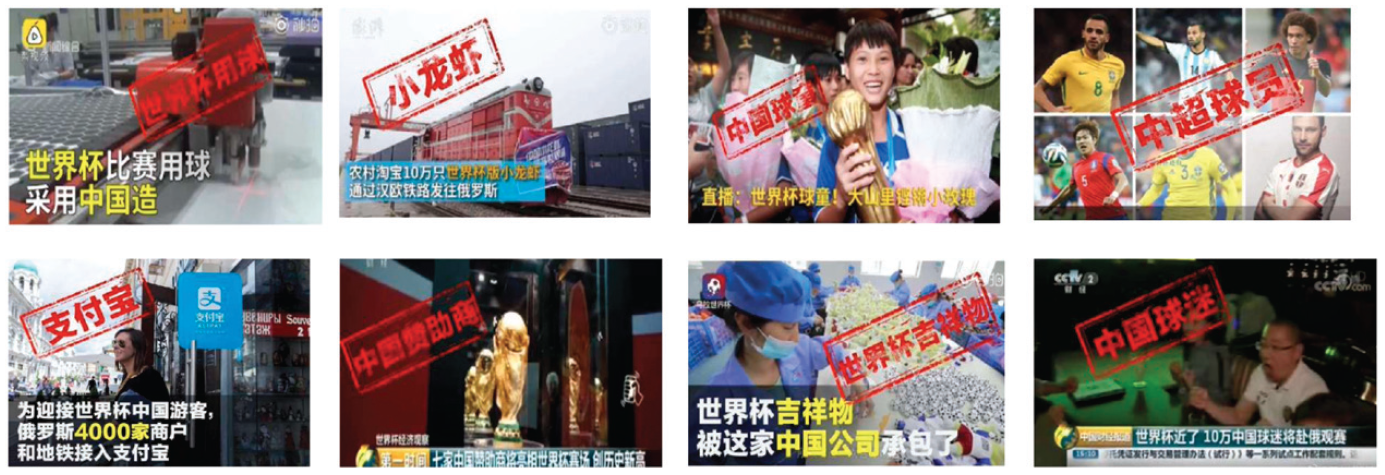
In the FA dimension, British Baojie and Yan Wen Zi Jun portrayed the economic contributions of Chinese firms and people to the soccer games, showing the attempt to seed local pride and national esteem. British Baojie (June 15, 2018) tweeted Team China in 2018 was formed by the World Cup match ball made in China; the 100,000 World Cup edition crayfish exported to Russia by the Chinese e-commence giant Taobao; the 100,000 Chinese fans travelling to Russia to watch the game; the World Cup ball kids coming from the rural area of China; the nine foreign players from the Chinese Super League; the services to Russian merchants and the subway provided by Alipay; the seven Chinese World Cup sponsors; and the World Cup mascots manufactured by Chinese companies. According to Knott (2017), boosting national pride through sports allows for connecting a nation’s brand with its people, contributing to social unity and national identity. See the images posted by British Baojie below.
The content relating to the PT dimension increased year on year, from 11.38% (n = 28) during the 2018 Men’s World Cup, and 33.87% (n = 21) during the 2019 Women’s World Cup, to 35.94% (n = 69) during the 2020 AFC Champion. The analysis diagnosed patriotic messages produced by Shi Jie and Women Soccer Those Things as an attempt to strike public support for the Chinese national women’s soccer team. Shi Jie (June 13, 2019) created the hashtags ‘sHero dares to shine (#sHero敢耀)’, ‘Women’s World Cup (#女足世界杯)’, ‘Shake up the World together (#一起撼动世界)’, and ‘Retweet a bonus to the Chinese national women’s soccer team (#转发微博给中国女足发奖金)’, describing the competition with the South African team as ‘crucial battle’ and ‘breakout from the group of death’. The use of hashtags not only raises the searchability and visibility of posts, but also stimulates the rapid formation of communities in response to particular social issues or current affairs (Kostygina et al., 2021).
The request for focussing on the purity of the soccer games through cultivating a healthy soccer culture was evident by the collaborative efforts between the influencers and followers. Guangzhou Winger Xie Junhui (June 16, 2018) urged the public not to be addicted to soccer betting but grow into a true soccer fan. Through storytelling, British Baojie (June 27, 2018; July 7, 2018) documented the experience of two enthusiastic but disabled soccer fans. With the assistance from friends and soccer players, they realized the dream to watch the World Cup. These true-life episodes that displayed the charm of soccer – friendship and solidarity (Li, 2020) – inspired the followers, as seen through 169 comments, 3371 likes, 728 shares given to the first soccer fan’s story; and 125 comments, 1758 likes, 709 shares to the second.
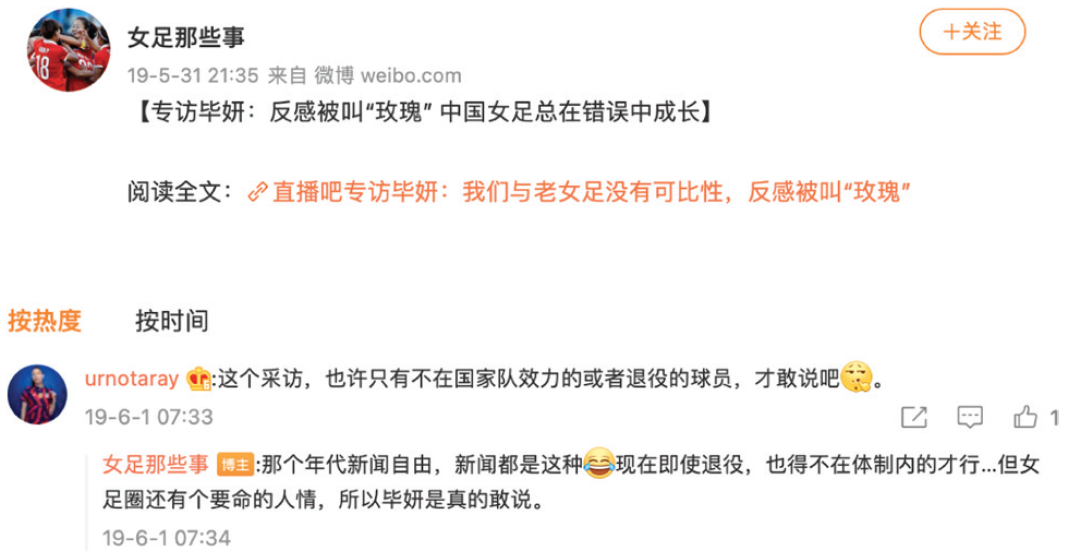
Some of the influencers hinted at the frustrations with government intervention in soccer management causing public misperception of soccer. Referring to the regulation that caused the reduction of soccer players’ wages, Xu Jiang Storytelling (December 17, 2020) commented ‘no more chatter about salary. Easy to touch the sore spot’. In the interview with Bi Yan (May 31, 2019), this retired national women’s soccer player remarked that the pressure from the government to win major soccer tournaments often resulted in poor performance of the national women’s soccer team at the games. One follower responded, ‘This [Bi Yan’s] commentary can only be made by a player who no longer plays for the national team or retires’. The influencer, Women Soccer Those Things, echoed, ‘You need to both retire and be out of the [government’s] administrative system. Bi Yan is brave to speak out.’ Observed by Li (2017), there has been a shift from the obsession with linking victories in international games to national glory towards the acknowledgement of performing to an athlete’s personal endeavour and viewing sports as a means to enhance public fitness. This context explained why this influencer’s post evoked interactive influencer-follower discussions – it addressed public belief of what soccer means to be – and thereby becoming authentic. See the original posts and commentary below.
The tone of the posts was predominantly neutral, represented by 45.31% in 2018, 62.90% in 2019 and 62.50% in 2020. However, the proportion of positive tweets decreased throughout the years, hitting a record low of 15.63% in 2020, comparing to that of negative ones reaching a recode high of 21.88% in 2020. These negative posts condemned the factors preventing the growth of Chinese soccer (e.g. unpaid wages and salary cuts for soccer players, underperformance of youth soccer players, incapable soccer coaching, and chaotic management of Chinese Football Association), in addition to unethical behaviours occurring during the soccer matches.
Furthermore, various rhetorical means were found in the portrayal of negative emotions. Xujiang storytelling and Li Xuan R9 were outspoken in their criticism against the sports governing bodies in China, using the curse words of ‘qnmlgb’ (go to hell), ‘stupid’, ‘dumb’,and ‘slapped on the face’. Most of these radical posts were blocked. In contrast, Guangzhou Frontier Xie Junhui adopted humour, irony and pinyin letters instead of Chinese characters to avoid being filtered by Weibo. In one of the posts, Guangzhou Frontier Xie Junhui re-aired the opinion from a soccer fan – ‘We don’t have soccer’ – to satirize the unsatisfactory performance of the Chinese national men’s soccer team (Xie, 2018). This reinforced the claim that political satire gains the popularity as a form of grassroots political expression to present critiques of power and popular mobilizations against power (Yang & Jiang, 2015).
The dominant influencers commonly captured the authenticity approaches of (b) creativity, (d) intrinsic motivations and (f) interactivity to craft their content. This was shown by 85.71% of the posts in 2018, 82.26% in 2019, and 78.13% in 2020, using (b). Regarding (d), the influencers conveyed personal passion for soccer, support for soccer teams, anger towards unsportsmanlike conducts and personal views on the issues setting back the soccer growth. This was supported by 64.90% in 2018, 17.74% in 2019 and 69.27% in 2020.
In relation to the sub-dimension of reciprocity within (f), the influencers opened the comment function on their homepages and occasionally motivated the followers to make comments. For instance, ‘Use one sentence to prove that you watched this year’s World Cup: ____’. Further, negative comments from the followers were not removed by the influencers, despite the fact that Weibo allows influencers to delete the comments at any time. The following tweet criticizing influencers buying fake comments serves as the example.
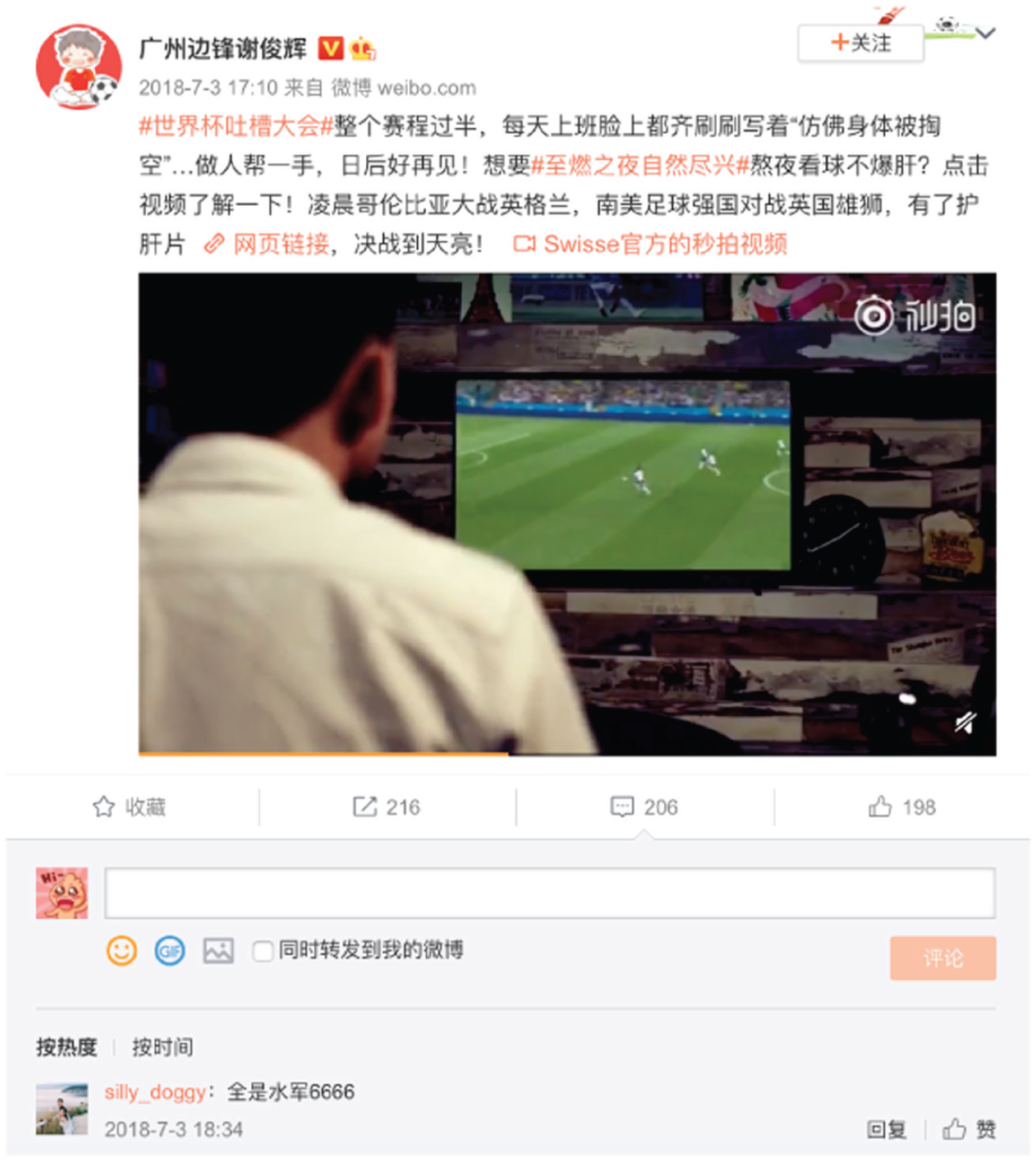
The next sub-dimension – nonverbal information – often appeared, including images, hashtags and emojis. In relation to responsiveness, a small number of the comments given by the followers received the swift responses from the influencers in less than 1 hour, shown by 8.16% in 2018, 6.45% in 2019 and 22.40% in 2020. A total of 15.00% of these influencer responses in 2018, 100.00% in 2019, and 95.35% in 2020 received substantial content, meaning the influencers addressed the followers’ concerns rather than simply inserted emojis or simple words (e.g. hahahaha). This implied that the influencers had become more involved in interacting with the followers since 2018.
In contrast, (c) self-disclosure and (e) expression of integrity were rarely used. None of the influencers posted selfies, except that Xu Jiang Storytelling uploaded eight and Li Xuan R9 one personal stories in 2020. The topics covered playing soccer in childhood, watching the soccer events, voting to support favourite soccer teams, and working as a soccer journalist. Regarding (e), a total of 31.25% of the posts in 2020 quoted data and news reports to comment on the performance of the soccer players and the lack of soccer ethics, compared with 2.45% in 2018 and none in 2019. This was likely attributed to the fact that the influencers in 2020 – Xu Jiang Storytelling and Li Xuan R9 – were former soccer journalists, who were trained to make fact-based coverage. Further, Guangzhou Frontier Xie Junhui disclosed the sponsorships, using ‘@ collaborators’ rather than marking the content as ‘sponsored’. Table 3 outlines the result.
Authenticity of the dominant influencers.
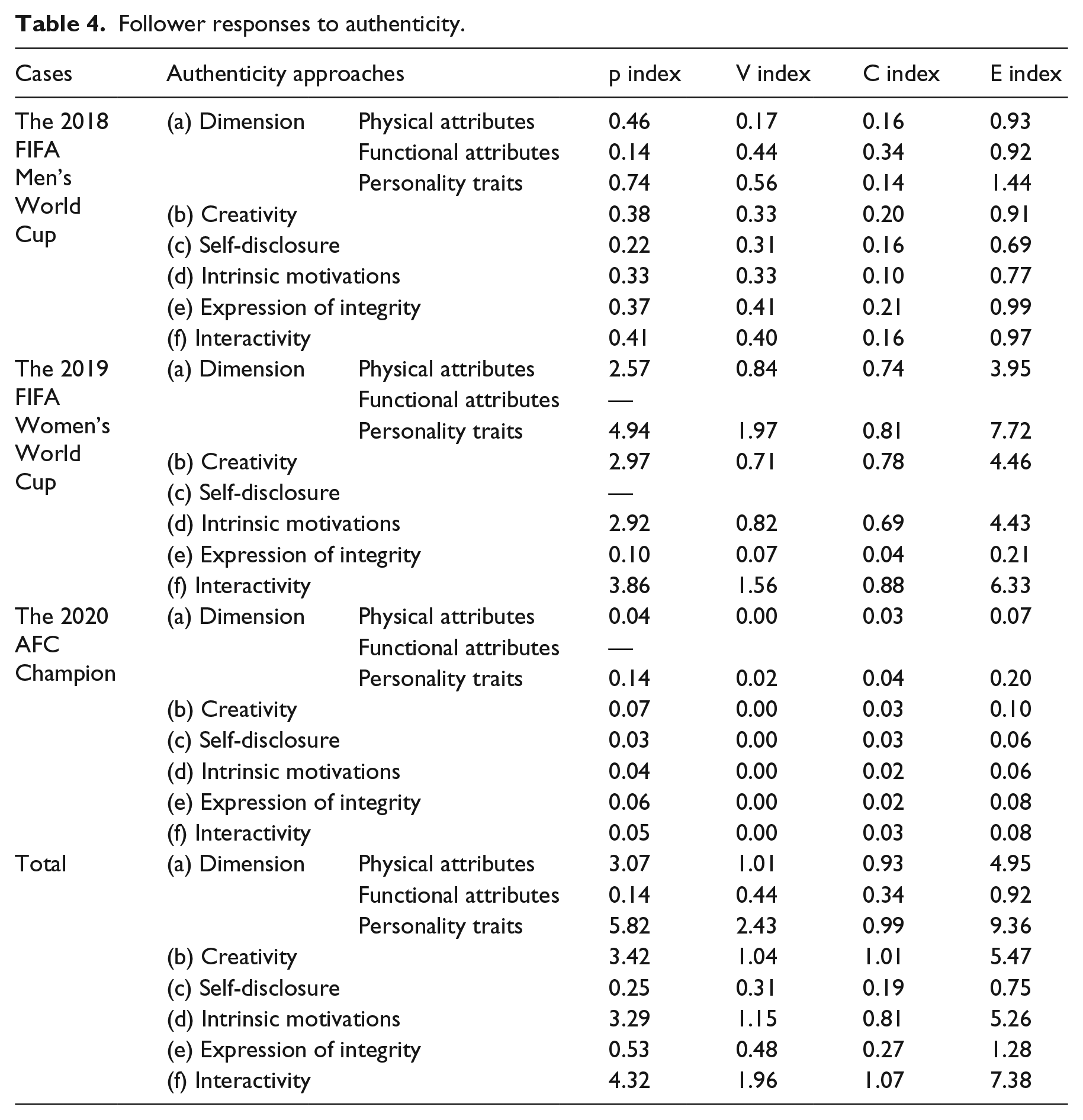
RQ3 explored how the followers engaged with the influencers’ attempts. The analysis revealed that the followers resonated with the posts well when the influencers applied the authenticity approaches of (a) content, (f) interactivity, (b) creativity and (d) intrinsic motivations. However, the posts infused with the techniques of (c) self-disclosure and (e) expression of integrity stimulated limited responses from the followers.
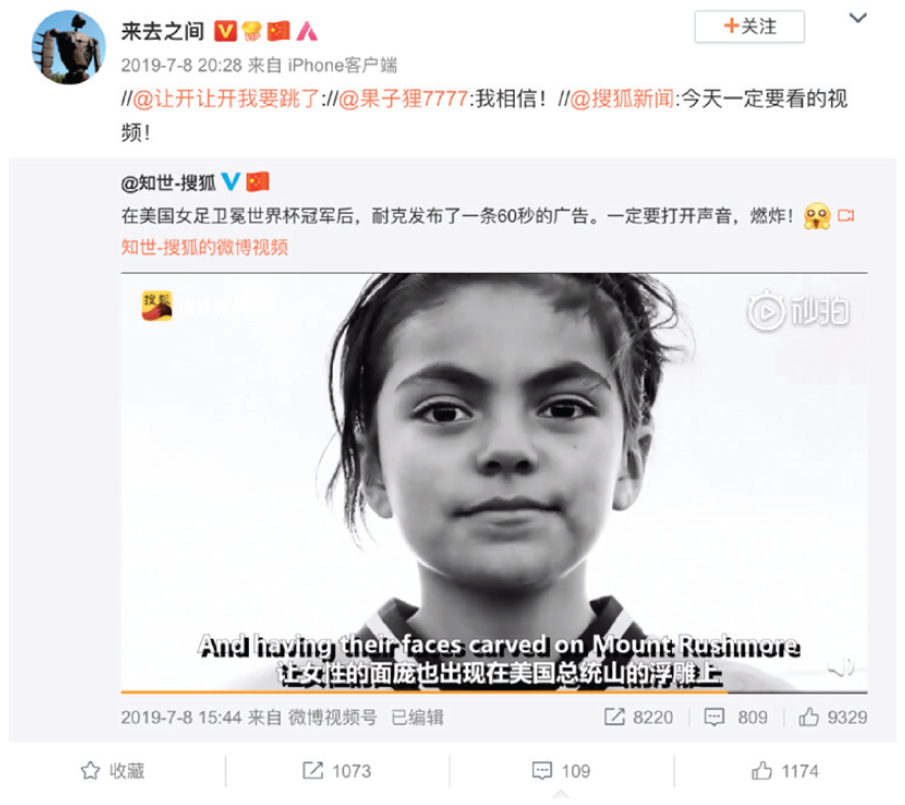
Regarding the reaction of the followers to (a), it achieved the highest E index (9.39) in the PT dimension. This implied engagement with followers was largely driven by the content, especially when it addressed the intangible value of a nation’s brand, such as team spirits, sporting ethics, nationalism and universal soccer value. This observation was reinforced by the post published by Lai Qu Zhi Jian during the 2019 FIFA Women’s World Cup, in which this influencer shared an advertising video of the American national women’s soccer team. It featured the following captions.
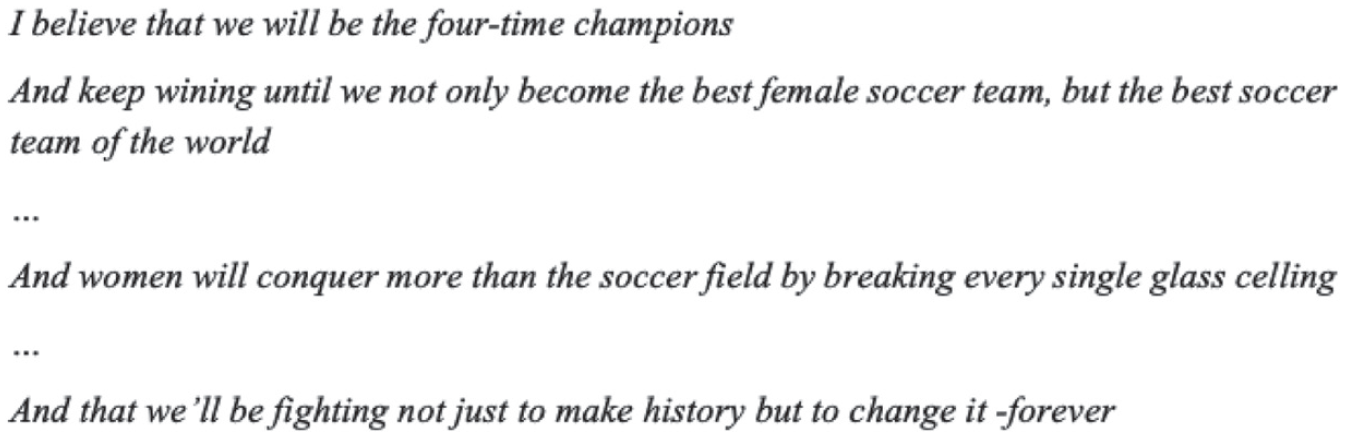
These messages associated the development of American women’s soccer with the status of women’s rights in the American society. It spiked strong responses from the Chinese followers. Below is this post and the reactions it received.
However, the C index was lower than the p and the V index across the three dimensions – PA, FA and pT. Commenting behaviour requires the user to generate content, representing a higher level of interactions between users (Molinillo et al., 2019). This underpinned the lack of interactions between the influencers and their followers, which could be related to the weak emotional tie between the two.
The followers were engaged in the discussion when the influencers utilized (f) interactivity. This was demonstrated by the high E index scoring 7.38, and the C index 1.07. Thereby, an open and interactive online environment allowing followers to exchange their views and their concerns to be discussed in a timely and constructive way was crucial to stimulate the high-level followers’ engagement behaviour – ‘commenting’. This authenticity approach also gained the second largest value of the p (4.32), V (1.96), and the E (7.38) index. It reinforced that the followers tended to like and share interactive posts.
The (b) creativity approach also yielded good public responses, supported by the high E index equalling 5.47. The followers displayed a strong attempt to like, share and comment on the first-hand content created by the influencers, seen through the p (3.42), V (1.04), and the C (1.01) index. Similarly, (d) intrinsic motivation was effective to increase follower engagement with the E index valued at 5.26. Thus, self-driven posts from the influencers triggered by personal emotions/hobbies/views/profession/expertise were welcomed among the followers.
In contrast, the followers gave little response to the posts embedded with (e) expression of integrity and (c) self-disclosure, according to the E index receiving a low value of 1.28 and the smallest value of 0.75, respectively. Hence, sponsored content, selfies and disclosure of influencers’ personal information does not lead to a boost in engagement behaviour by followers. Table 4 summarizes the details.
Follower responses to authenticity.
Discussion and conclusion
This paper probed the role of influencers in nation branding within the context of sports through the lens of authenticity. It examined influencer-follower interactions and the implications for constructing a truthful national brand. Undertaking the mixed method approach building upon content analysis and social network analysis, it analysed the narratives presented by the dominant influencers and the followers surrounding the international soccer tournaments. The research outcomes showed that the majority of these influencers were informational mega-influencers with a focus on portraying the PA dimension of the China brand using a neutral light. They published nationalistic messages to provoke public support for the growth of the national women’s soccer team and showcased the country’s contribution to the international soccer games. Further reading of the PT posts identified the influencers’ intention of advocating a healthy soccer culture and hinting at critical views about state interference in soccer development. From the angle of the followers, they responded well when the influencers focused on using the authenticity techniques of interactivity, creativity and intrinsic motivations in addition to the content devoted to the PT dimension. However, the followers were less engaged in commenting on the influencers’ posts, and the influencer-follower interactivity was limited to ‘speed of response’ and ‘nonverbal information’ without regular exchange of opinions. The gap of the content preference between the influencers and followers, the low frequency of followers’ commenting behaviour, and the static influencer-follower interactivity underpins some degree of the performative nature of authenticity.
The recent studies reveal the commitment of Beijing deploying a purposive government-led participatory approach via soccer in promoting the state-defined national identity (Li & Feng, 2021a; 2021b). Reacting to this, the Chinese state-owned media representing the voice of the CCP endeavours to craft the PT of the China brand, featuring humiliation, world hegemony, trust through responsible governance, and superiority, within which, the history of national humiliation is staged as a rhetorical instrument to rationalize the country’s aspirations in leading the global soccer scene (Li & Feng, 2021b). However, these hegemonic descriptions are nearly absent in the influencer’s texts. In this study, the influencers’ content is not loaded with the deliberate effort to project a credible image of the government and to exhibit the country’s rising superpower status and quest for global hegemony. Despite exemplifying China’s contribution to the global economic realm with nationalistic sentiments penetrating some of the posts, which replicated ‘the soccer contribution frame’ formulated by the state-owned media (Li & Feng, 2021b), the influencers did not enliven the collective memory of national trauma. Instead, they exchanged criticism against the government with followers, while acting as an advocate for the cultivation of a healthy soccer culture. This practice gives the indication of the influencers’ dissonance with the PT of the China brand framed by the state-owned media, pointing to the possible presence of two versions of the China brand designed by the government and the grassroot. Considering the fundamental differentiation of the rhetoric between the influencers and the state-owned media, this article argues using authenticity as a strategic means to mediate the roles between a state propaganda vehicle and an authentic actor connecting with the grassroot public, the influencers performed a balancing act of negotiating the two versions of the China brand. From this aspect, the possibility of influencers resting on the authenticity mechanism to create a national brand airing the voice of the citizens has emerged.
Taking a wider view, we put forth influencers in China could retain a certain degree of independence to articulate their self rather than perform on behalf of the government. This could be driven by the common motivation of influencers fostering a large and sustainable base of followers through the guise of authenticity in an effort to commercialize their fame. Owning to the prevalence of the hybrid mode of internet censorship (Yang, 2018) and the expectation on influencers in promoting the core socialist values (M. Xu et al., 2021), it is important for the influencers to strategically map the relationships with the government, sponsoring brands and followers. This means to engage with a follower in a truthful way, while resisting being converted into a machine to advance the state’s political agendas and/or being blacklisted by the government because of raising a voice against political taboos. This point is reinforced by the findings of the influencers dwelling on the portrayal of the country’s economic might and a benign form of nationalism to construct a sense of aspirational commonality with their followers, which intersected with their critical perspective on the government. This tactic allows influencers to accommodate the state’s expectation (e.g. the construction of national identity) and to build the connection with followers.
As noted by Li and Feng (2021a), social media content echoing users’ experiences, emotions and values often provokes online interaction. Considering this sense, the citizens could be interested in exploring the social meanings of Chinese soccer. This is supported by the followers’ resonance with the tweet generated by Lai Qu Zhi Jian. This tweet in addition to the topics of the posts cast in a negative tone could be the reflection of the true viewpoints of the influencers. In fact, the success of the Chinese national women’s soccer team, which has qualified for the FIFA Women’s World Cup seven times since 1991, has challenged traditional Chinese culture (e.g. gender equality) (Hong & Mangan, 2003). However, most of the influencers described the instrumental rather than social aspects of the team’s performance at the 2019 FIFA Women’s World Cup. Thus, further elaboration on the PT of the nation’s brand would drive influencer-follower engagement, which, in return, can mobilize the followers to participate in the discussions about the brand and amplify the voice of the citizens. This argument highlights content attached to a brand’s PT as the key to improve influence authenticity. Furthermore, according to the authentic stakeholder engagement framework, public responses in the forms of liking, commenting and retweeting help to make national identity inclusive to the people, potentially inspiring ‘collective action and positive relationships benefiting a broad range of stakeholders (especially the citizen group)’ in nation branding (Li & Feng, 2021a, p. 15). Hence, the creation of a representative national brand is dependent on influencers truthfully exercising the authenticity principles in producing valued-based content to engage their followers, and the influence of influencers is determined by the network of influence co-created with followers.
As noted by Hereźniak (2017), the democratic potential of the internet allows the creation and management of a place’s brand to be bottom-up and the popular use of mobile devices by the citizens enables this group to truly co-produce urban reality. Viewed in this light, the influencers who earn the expertise and give the voice of their followers are inclined to establish a peer-to-peer connection with their followers, and thereby endow authenticity to this grassroot version of a nation’s brand. Nevertheless, this process needs to be operated within an ‘ethical, inclusive and collaborative’ communication mechanism (Li & Feng, 2021a, p. 15). As discussed, the expectation from the public and the regulation by the government may infuse influencers’ practices in China, as shown by the evidence of the influencers adopting pinyin characters and political satire to ensure negative sentiments were not filtered by the platform. In addition, the dominance of mega-influencers who were identified as informational influencers rather than opinion leaders or activists underpins the limitation of their influence. Mega-influencers, having bigger reach but smaller engagement rates per each post, are ‘often more famous than influential’ (Eyal, cited in Ismail, 2018). Therefore, the optimistic view about influencers co-creating a nation’s brand with followers through authenticity needs to take into account the socio-political system within which influencers are situated.
The thorough analysis using content analysis with a sample of the dominant influencers, predominantly mega-influencers, identified through social network analysis is helpful to achieve the research aim, specifically to unmask the underlying mechanism that determines to what extent a nation’s brand could be constructed by one type of the identity makers constituted by influencers. This means that it does not aim to generalize the research outcome in a statistical manner. In consideration of the internet censorship and political-social expectations on influencers, further research examining various types of influencers, like macro, micro and nano, which could be marginalized, would produce a comprehensive view about the role of influencers in the space of nation branding. The limitation of this study arises from the nature of using social media data. The possibility of influencers purchasing followers’ comments to improve the influence cannot be excluded. Future studies probing the motivations of influencers being involved in nation branding initiatives via the survey or interview method to collect and analyse the first-hand data, in addition to research about the same topic undertaken in a different cultural context could deepen understanding of the role of influencers in nation branding and the implication for co-creating a representative national brand.
Research Data
sj-xlsx-1-gch-10.1177_20594364221094668 – Research Data for Influenced or to be influenced: Engaging social media influencers in nation branding through the lens of authenticity
Research Data, sj-xlsx-1-gch-10.1177_20594364221094668 for Influenced or to be influenced: Engaging social media influencers in nation branding through the lens of authenticity by Xiufang (Leah) Li and Juan Feng in Global Media and China
Footnotes
Declaration of conflicting interests
The author(s) declared no potential conflicts of interest with respect to the research, authorship, and/or publication of this article.
Funding
The author(s) received no financial support for the research, authorship, and/or publication of this article.

Notes
Author Biographies
References
Supplementary Material
Please find the following supplemental material available below.
For Open Access articles published under a Creative Commons License, all supplemental material carries the same license as the article it is associated with.
For non-Open Access articles published, all supplemental material carries a non-exclusive license, and permission requests for re-use of supplemental material or any part of supplemental material shall be sent directly to the copyright owner as specified in the copyright notice associated with the article.
