




Abstract
Purpose
Climate communication and education (CCE) is increasingly recognized as critical for catalyzing action to address climate change. Indicators can help mobilize climate action by informing and motivating policy change. This article outlines the development of 15 global CCE indicators, created collaboratively through a global partnership project.
Design/Approach/Methods
The processes for engaging a range of partners and stakeholders in indicator development and the benefits of investing in quality indicators are described. The steps taken to identify, evaluate, and select potential data sources are laid out, as are details of the approach taken to transform these data sources into policy-relevant indicators.
Findings
The article discusses the development of indicators from existing and newly created data sources. It emphasizes how collaborations with partners and other stakeholders are key to increasing the quality, variety, and use of CCE indicators.
Originality/Value
The collaborative indicator development approach described herein demonstrates how partnerships can generate robust and reliable data for monitoring and target-setting on global priorities, and can encourage indicator uptake. The resulting suite of CCE indicators enables policymakers, researchers, and organizations to monitor national, regional, and global progress on CCE; identify gaps and priorities going forward; and advocate for increased financial investment for CCE, thereby accelerating climate action.
Keywords
Introduction
While evidence of the profound effects of climate change has been accumulating for decades, climate mitigation and adaptation efforts—and the changes they are meant to foster—have progressed only haltingly and unevenly (Bustamante et al., 2024; Martin et al., 2022). This lack of progress and the resulting temperature increases are already threatening livability for 600 million people (Schaeffer et al., 2025). In many contexts, weak public support, a resulting lack of political will, and inadequate resources have stymied concerted action.
Climate communication and education (CCE) are viewed by many as critical levers to address these obstacles and shift toward greater global climate action (McKenzie et al., 2023; Zhai et al., 2025). Indeed, the value of public communication and education on climate change has been recognized for decades (Crawley et al., 2022). CCE's importance is highlighted in international conventions and declarations, including the United Nations Framework Convention on Climate Change (UNFCCC, 1992), Paris Agreement (UN, 2015), UNFCCC Action for Climate Empowerment Program (UNESCO & UNFCCC, 2016), the 2030 Agenda for Sustainable Development (UN, 2015), UN Transforming Education Summit (UN, 2023), 1 and UNESCO's Greening Education Partnership. 2 Partly in response to these international agreements and programs, many governments and nongovernmental organizations have advanced a growing array of CCE policies, programs, and actions (UNESCO & MECCE Project, 2024). 3
CCE indicators and associated data collection efforts can help advance national and subnational benchmarking, target setting, and policy development; as well as facilitate country-to-country peer learning and inform intergovernmental climate negotiations (Crawley et al., 2022; Kubiszewski et al., 2022; Lehtonen, 2015; Mccool & Stankey, 2004; McKenzie & Benavot, 2022; McKenzie et al., 2024; Mulholland et al., 2018). And yet, despite interest in the potential of CCE for catalyzing greater climate action and a growing recognition of the need for monitoring CCE progress, there has been a lack of international metrics or data gathering mechanisms to support target setting and enable tracking of CCE progress. Thus, the need for independently verifiable and comparable information on CCE has been acute, particularly for metrics aligned with key international conventions and declarations, including the UNFCCC Action for Climate Empowerment's Glasgow Work Programme as well as Targets 4.7 and 13.3 of the UN's Sustainable Development Goals (SDGs).
This article describes a multiyear, collaborative effort that has addressed this evidentiary gap by developing a suite of global CCE indicators and, in doing so, demonstrated the possibilities of partnership models of indicator development. In what follows, we elaborate on the importance of CCE indicators as mechanisms to foster policy initiatives and climate action, as well as the challenges of deploying such indicators. The article reviews existing literature on developing quality indicators and describes the process by which an initial set of 15 CCE indicators was developed. We consider key implications of this collaborative indicator development work and suggest ways to expand and refine CCE indicators going forward.
Background
Need for Global Indicators of CCE
Climate communication and education (CCE) have been shown to expand knowledge, engagement, and capacity for action on climate change (Feinstein & Mach, 2020; McKenzie & Kwauk, 2021; Sabarwal et al., 2024). When successfully implemented, CCE helps increase support for societal climate action, including through placing pressure on politicians and decision-makers to strengthen climate policies (Drews & Van den Bergh, 2016). No matter how well-designed on article, climate policies also require public knowledge and support to enable effective implementation, which CCE can foster (Drews & Van den Bergh, 2016). CCE also encourages the formation of cadres of change agents—in other words, people who allocate time and effort to designing, promoting, and/or leading transformations in policy and practice in response to climate change (Redman & Wiek, 2021), as well as adopting more sustainable behaviors in their own lives (Piscitelli & D’Uggento, 2022). Finally, schools and other programs and settings where CCE is included can themselves play a significant role in fostering climate mitigation and resilience, not only through their internal policies and actions and the fostering of adaptive behaviors in learners, but also through their relationships with local community members (Bieler et al., 2017; Feinstein, 2020; Henderson et al., 2017; Ramos De Robles et al., 2025).
Given CCE's role in strengthening climate action, governmental and nongovernmental entities have urged that the provision of CCE be expanded. For example, when UN Member States adopted the global SDG indicator framework in July 2017, the global indicator for SDG target 13.3 explicitly referenced climate education 4 . Similarly, signatories to the UNFCCC have repeatedly committed themselves to taking action on CCE (e.g., in the original Climate Convention, 1992; in the Paris Agreement, 2015; and in the Glasgow Work Programme on Action for Climate Empowerment, 2021). A review of more than 300 national submissions to the UNFCCC found many examples of national-level support for CCE (McKenzie, 2021; see also UNESCO, 2019a). While many countries acknowledge the importance of CCE, the implementation of CCE still has considerable gaps. For example, in formal education, not only is there relatively low inclusion of climate change content in curricular materials, the subjects that do include climate change tend to focus on conveying facts about climate change, in contrast to more holistic education approaches that also address psychosocial and action components (McKenzie & Benavot, 2024; McKenzie & Kwauk, 2021; UNESCO, 2021a, 2021b).
The development and circulation of globally comparable data on CCE via indicators is an important mechanism for increasing awareness, identifying gaps in its provision, assessing progress, evaluating specific programs and their impacts, and bolstering the development of strong CCE policies (McKenzie et al., 2024). In principle, as proxy measures, indicators can transform complex and interrelated points of information and make them accessible to relevant stakeholders (Kubiszewski et al., 2022). Madden et al. (2020) argued that the absence of robust indicators impedes the integration of CCE in education systems. Likewise, Ma and Chen (2023) suggested that improved reporting and monitoring would help expand CCE globally. Scholars have found that though indicators are often seen as supporting the status quo they can, in contrast, be designed to support policy advocacy, social and political action, and systemic change (Kim, 2023; Lehtonen, 2015). Indeed, global indicators are themselves potentially effective communication and action tools (Janoušková et al., 2018). Publicly available data, along with well-constructed CCE indicators, can therefore help governments and other stakeholders better assess the current status of CCE, measure its progress, identify key challenges, better allocate resources, and learn from successes at home and abroad (Lehtonen, 2015; McKenzie & Benavot, 2022; Mulholland et al., 2018).
Notwithstanding the potential benefits, there have been few global indicators for CCE developed to date. Prior to the current project, the only available global data source on CCE was from UNESCO quadrennial surveys of countries responding to the 1974 Recommendation Concerning Education for International Understanding, Co-Operation and Peace and Education Relating to Human Rights and Fundamental Freedoms, which includes questions in relation to SDG targets 4.7, 12.8, and 13.3. Country self-reported responses to this survey are voluntary and unverifiable; in recent iterations, fewer than 40% of countries submitted survey responses, which varied in quality and completeness (Benavot & Williams, 2023; Brockwell et al., 2022). Benavot and Williams (2023, p. 42) discussed the limitations of this monitoring strategy and found it “unfit for purpose.” They recommended that self-reported survey evidence should at least be supplemented with independently validated and comparable data on CCE.
Another possible reason for the prior lack of global CCE indicators is the rich diversity of education systems and public communication strategies, both within and between countries, which make the development of appropriate international indicators in these fields particularly difficult. One way to reflect diverse education contexts in indicator development is through carefully conceived measurement strategies, which can enhance comparability (Cardoso & Steiner-Khamsi, 2017). Broad country coverage is also important, thereby improving the representativeness and validity of the indicators. Another challenge has been that countries have been reluctant to allocate funds to develop CCE data, indicators, and monitoring infrastructures, seeing such activities as less valuable or effective than other climate efforts. Only in recent years has CCE been prioritized, as more countries realize the need to build public and cross-sector support for climate mitigation and adaptation. While more resources are now being allocated to meet climate targets—for example, at the UNFCCC (Sabarwal et al., 2024)—monitoring data for CCE remains underfunded.
This brings us to the partnership work of the Monitoring and Evaluating Climate Communication and Education (MECCE) Project. The MECCE Project, 5 established in 2020, aims to increase the quality and quantity of climate communication and education, and thereby climate literacy and action globally. In addition to creating 80 country CCE profiles 6 and funding 21 case studies of quality CCE, 7 the MECCE Project has developed 15 global CCE indicators. MECCE Project team members—including UN and civil society organizations, government, academic institutions, and researchers—have established a partnership-based process of identifying and reviewing existing data sources, as well as compiling new data sources to support the development of a suite of global CCE indicators. The goal is to grow a set of CCE indicators so as to improve and diversify CCE monitoring, to support an increase in the quantity and quality of CCE globally.
Aims and Critiques of Constructing Global Indicators
A key purpose of indicators is to distil complex realities into digestible “proxy” data, accessible to diverse stakeholders. What this often means in practice is obscuring certain contextual information about the countries in which actions are taken (Merino-Saum et al., 2020). In the areas of climate and sustainability, the potential communication value of CCE indicators is an important consideration together with the rigor of their development. Easily understood indicators that convey accurate information are more likely to foster effective climate policy and action. That said, the communicative capacity of indicators is neither inherent nor automatic (Lehtonen, 2015). Rather, the communication value of an indicator needs to be consciously considered, beginning with the initial stages of the indicator development process. It is also necessary to recognize that different end users of indicators have different needs, ranging from basic structural information (e.g., whether a country is doing well), to more technical and specialized information (e.g., the extent to which a country's progress has changed over time in comparison to exemplars) (Janoušková et al., 2018). The ability of an indicator to clearly communicate and make accessible potentially complex information is particularly important in the climate arena due to its diverse stakeholders (Janoušková et al., 2018). Interested parties in CCE indicators include policymakers, practitioners, NGOs, young people, communities, and citizens more broadly. CCE indicators therefore need to be evaluated for relevance and ability to meet the needs of diverse groups and individuals with varying degrees of technical proficiency.
The push for global frameworks and indicators reflects a trend toward “the datafication of education” (Grek, 2009; Jarke & Breiter, 2019) and indicators can serve as a legitimizing tool for problematic global educational governance (Davis et al., 2012; Lehtonen, 2015; Unterhalter, 2019). Indicators are value-laden, and their creation can be a source of consideration in policy negotiation (Kubiszewski et al., 2022; Lehtonen, 2015). This is especially true in fields such as sustainability, where concepts and aims are contested (Mccool & Stankey, 2004). Despite the authority vested in their deployment, the process of developing global indicators can be overly technocratic and lack transparency, thereby precluding open debates over the implicit values that the indicators embody (Reid & Rout, 2020). A good example of these contradictory dynamics can be seen in the SDGs and their accompanying global indicator framework. While the formulation of the 17 SDGs and 169 targets was a relatively open and politically inclusive process, the development of global indicators for these targets has been overseen almost entirely by statisticians and other experts who negotiate among themselves over measurement issues and criteria for inclusion (King, 2017; Wulff, 2020). An overly technical approach such as this can result in biased indicators built on Western cultural assumptions, which exclude or minimize non-Western orientations (Reid & Rout, 2020).
Without intentional effort, the process of developing indicators typically results in the prioritization of feasibility and data availability (Pearce-Higgins et al., 2022), which is a problem for several reasons. First of all, many aspects of the target phenomenon end up being ignored due to data challenges regardless of their importance. Secondly, the indicators drive more attention strictly to the measured aspects of the phenomenon and thereby create a situation where authorities respond by funding and focusing on improving just “the numbers” (often referred to as Goodhart's law) (Kim, 2023). To best avoid an overreliance on strictly available data for constructing indicators, researchers need to be aware of these challenges and gather input and feedback from parties across the globe (Eizadirad, 2019). Additionally, they should ensure that the entire process of indicator development is transparent, including clarifying problem framing and describing the relevant systems, as well as measuring, displaying, and interpreting the resulting indicators so that others can discuss, critique, and recommend decisions going forward (Mccool & Stankey, 2004).
Phases in Indicator Construction
A Partnership Governance Approach
The MECCE Project's partnership governance design ensured a participatory approach to indicator development and decision-making. From the outset, the Project aims and activities were developed with different “end users” in mind through a partnership with various stakeholders such as UN organizations, country policy makers, and civil society actors. Inputs from these partners were contributed in one-on-one, expert, and working group team meetings, as well as through written feedback on draft materials at key junctures. Scholars and practitioners outside the project team from different regions were also consulted at later stages, such as during UN Climate Change Conferences and in feedback sessions on indicator use during design and development of the Project's interactive digital platform. 8 These approaches allowed the integration of both expert and citizen voices (Turcu, 2013) and prioritized inclusion of outside input, particularly in generating innovative ideas and ensuring greatest likelihood of uptake by end users (Burford et al., 2016). Collaboration among team members (who ranged from grassroots to global, multilateral organizations) enabled the team to balance top-down and bottom-up elements in indicator design (Hák et al., 2016), and to identify possible biases and concerns.
In what follows, the key phases in the development of global indicators of CCE are described.
Developing an Approach to Indicator Development
To guide the development of a suite of global CCE indicators, the MECCE Project team developed a systematic approach. An extensive review of the literature was carried out, with a focus on relevant principles and frameworks for indicator development that have been shown to successfully balance many of the indicator development challenges mentioned previously. Resulting from this review, a model for the stages and processes of indicator development was designed (Figure 1).
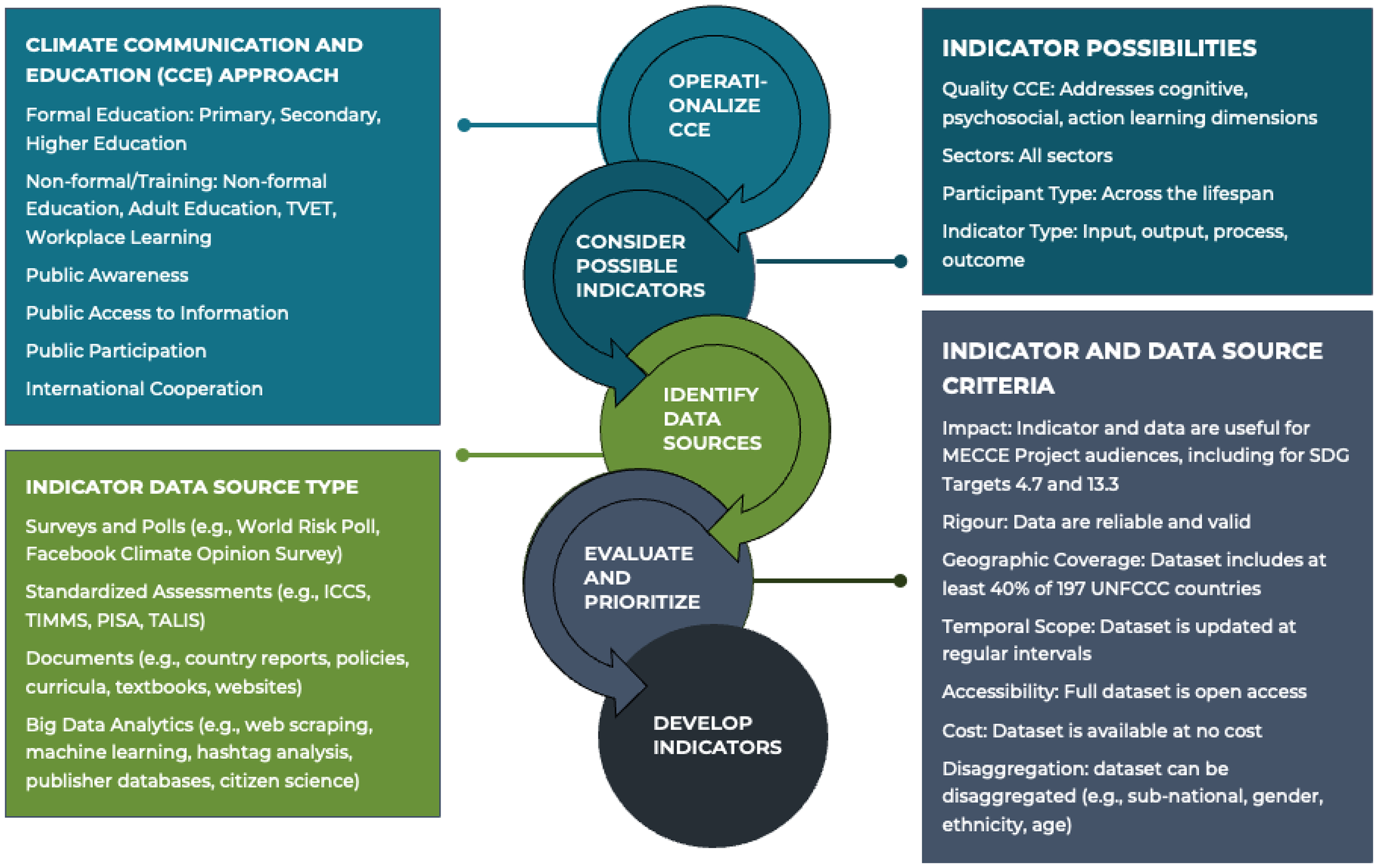
The MECCE project approach to developing CCE indicators.
Conceptual Framework for CCE
Developing a conceptual framework to operationalize CCE to guide the selection of indicators was a critical next step. Indicators are not themselves the objects of interest; rather, they serve as representations or measures of the broader objects of interest (Reid & Rout, 2020). As such, developing a framework of the “objects of interest” was crucial to the MECCE Project indicator development process.
The conceptual framework that structured the indicator development process, was derived from the UNFCCC's Action for Climate Empowerment (ACE) program (UNFCCC, n.d.), which seeks to empower all members of society to engage in climate action. The components of ACE were initially referenced in Article 6 of the Climate Convention (1992) and then again in Article 12 of the Paris Agreement (2015). Countries and nonstate actors are encouraged to act in reference to six ACE “elements”: Education, Training, Public Awareness, Public Access to Information, Public Participation, as well as through International Cooperation in furthering the other five elements. 9 Since the ACE element “Education” spans early childhood to tertiary education, the MECCE Project team split “Education” into K-12 education, on the one hand, and higher education, on the other. Technical Vocational Education and Training (TVET) indicators were included in the Training element. Although the conceptual framework was developed mainly in reference to the ACE program, certain indicators have been developed with other global initiatives in mind, particularly SDG targets 4.7 and 13.3, as well as the Greening Education Partnership. In what follows we will refer to the components of the framework as CCE elements, while recognizing the ways they closely map onto the ACE elements.
Considering Indicator Type
The next phase was to consider how different types of indicators could align with the conceptual framework elements. For example, an indicator of CCE in K-12 education could focus on the classroom (sector), students (participant type), or the nature of the education being offered (quality CCE). The various choices would give different information, and there is a value in diversifying indicator focus (to the degree possible) to provide a more comprehensive understanding of the object of interest. More generally, indicators can be classified into different types. Input-focused indicators (such as how much money is spent on a project) are the easiest to identify and measure, while outcome-focused indicators present many measurement challenges and are often contested (e.g., how much was learned). The MECCE Project team distilled and utilized a typology of four indicator types:
Input indicators: Proxy measures of the policies, resources, or other initiatives that support the provision and implementation of CCE. Process indicators: Proxy measures that assess the extent and way CCE is being implemented. Output indicators: Proxy measures of the fidelity and completion of CCE implementation. Outcome indicators: Proxy measures of the results and/or impacts of the implemented CCE.
Each type of indicator illuminates different important aspects of CCE and have their own strengths and weaknesses. Therefore, to the extent possible, a diverse set of indicator types were developed for each element of CCE.
Identifying Indicator Data Sources
Taking into account the conceptual framework and the different indicator types, the team worked to identify potential data sources from which relevant indicators could be created. The team first cast a wide net to identify all plausible data types that might be relevant to one of the CCE framework elements. These included, for example, surveys and polls, standardized assessments, official government documents, and big data analytics. MECCE Project partners and network members were queried about possible existing CCE data sources, both existing and planned (e.g., large-scale learning assessments by the International Association for the Evaluation of Educational Achievement), in addition to extensive web searches carried out by Project research assistants. Consideration was given to using country reports submitted to UNFCCC authorities (i.e., National Communications), but studies have found this self-reported data is more anecdotal and not suitable for comparative analysis (Benavot & Williams, 2023; McKenzie, 2021). It was decided that, while some country reports on CCE activities are informative, collectively they lacked sufficient consistency to serve as data for global indicators of CCE and they were thus not included as data sources.
The interim result of the search efforts was a comprehensive list of over 150 existing data sources for potential use in indicator development. The MECCE Project applied a standard set of selection criteria to evaluate these data sources (see the “Indicator and Data Source Criteria” in Figure 1). This process yielded 45 data sources as having the potential to act as proxy measures for one or more of the CCE elements in the conceptual framework. Further review of these initial possibilities, utilizing additional criteria (e.g., reliability), whittled them down to a set of 32 data sources for in-depth exploration. A major reason for the elimination of many data sources was limited country coverage, an acute problem in CCE as Project team members have noted elsewhere (Chávez Cosamalón et al., 2023), especially in terms of the representation of countries across all SDG regions. 10
Creating New Data via Partnerships
The review process revealed that most existing data sources were inadequate to cover all elements in the conceptual framework. As a result, the team sought to develop new data sources to fill these gaps. Discussions were held and collaborations established with several organizations with the purpose of creating data sources to support the development of new global CCE indicators. Key partners and a brief description of each collaboration are as follows:
UNESCO: collaborations with the MECCE Project resulted in the building of an extensive repository of education policy and curriculum documents (McKenzie & Benavot, 2024; UNESCO, 2019a, 2019b, 2021a, 2021b). The Project systematically reached out to government entities requesting official documents in three categories: (1) National Curriculum Frameworks; (2) Education Sector Plans; and (3) subject curricula in the sciences and social sciences at three grade levels—3, 6 and 9. At present, the repository includes more than 2,000 documents in more than 40 languages from countries all over the world. UNESCO GEM Report: a collaboration led to the joint creation of 80 country profiles of CCE from which an initial CCE index was developed.
11
The GEM Report team also supported the collection and content analysis of subject syllabi in grades 3 and 6 for the above referenced repository. UNEVOC: a team of MECCE researchers analyzed a dataset of TVET documents collected by UNEVOC to identify relevant laws and policies, as well as collaboratively carrying out new searches. Through this process over 300 TVET documents have been collected and analyzed. Center for Sustainable Futures, Teachers College, Columbia University: co-implemented a multilevel desk research study of organizations involved in CCE. Standardized characteristics of all the organizations were collected and the entries independently verified and validated resulting in a directory of over 5,000 organizations. International Federation of Library Associations and Institutions (IFLA): co-designed a survey with questions related to climate activities, exhibits, and programs. After several iterations with input from experts, including from library representatives and the MECCE Project team, the survey was circulated globally to IFLA member library associations and libraries in four languages and over 600 complete responses were received. Clarivate: utilized its Web of Science database to generate a list of all articles (n > 176,000) from over 21,000 peer-reviewed journals from all disciplines since 1994, which contain references to climate change and related words in article titles or keyword lists. UN CC:Learn: shared records of the number of individuals (n > 90,000 per year) in each country completing one of their 100+ online courses on climate change and sustainability.
These collaborations can be thought of as falling into three categories (see Box 1).
Typology of collaborations for indicator data
The creation of data sources for indicators can be classified into three categories of increasing depth of collaborative partnerships.
Selecting the Data to Use From the Sources
Following the steps of compiling existing data and creating new datasets where none were available, we were then ready to develop indicators. Before constructing the indicators it was necessary to apply both a conceptual and empirical analysis to select the appropriate parts (or items) of the data source to include in the indicator. As already noted, some of the identified data sources were not intended to measure CCE specifically, so the research team selected relevant items within the dataset. For example, the Global Data Barometer, a project of D4D.net and La Iniciativa Latinoamericana por los Datos Abiertos (ILDA), collects data on a wide range of topics related to data governance and transparency. Two of those topics are “the extent to which governments make data available on climate mitigation” and “the extent to which governments make data available on vulnerability to climate change.” Out of all the possible items, these two were selected as most useful to create an indicator for the Public Access to Information ACE element.
In cases where the MECCE Project partnered to create a dataset, experts (from the partners as well as the broader MECCE team) were consulted to review and comment on the decisions around the design and selection of data. An important example of consultation with experts revolved around the list of relevant keywords to be used when analyzing official documents for inclusion of climate and sustainability focus. The selection of a final list of “green” keywords in three clusters—i.e., environment, sustainability, and climate change—in addition to their translations in 40 languages, was validated by academics, linguistic experts, and/or practitioners for the curricular analysis, for example.
Construction of Indicators
Having selected the data we would work with, the Project team then endeavored to craft the best indicator(s) in relation to these data. This meant transforming the selected data from each data source into easily interpretable and communicable indicators that were the best possible proxy measures for the object of concern (i.e., one of the CCE elements). Transformations of the data were in some cases required, in other words converting the raw data into a cleaner and more usable format.
Each CCE indicator presented distinct conceptual and practical challenges in carrying out these transformations. For example, in the indicators based on data from keyword analysis of documents, a determination had to be made about procedures to transform keyword counts. Whenever possible, the Project built on work that had already been carried out. In this case the team used the same procedure to determine keyword counts per million words as had been done in previous UNESCO studies (McKenzie & Benavot, 2024; UNESCO, 2019b, 2021a, 2021b). Another part of the transformations was standardizing the data to allow comparisons across indicators and among countries varying in the relevant population size (e.g., students enrolled in higher education, internet connected adults, or total number of adults in the country). For each CCE indicator, the data were transformed so that the resulting indicator score would be on a scale from 0 to 100. In some cases, such as population surveys, this was straightforward, as indicators were calculated from the weighted response(s) of interest as a percentage from 0 to 100. In others, it involved more complicated transformations such as doing a logarithmic transformation of the standardized keyword counts which resulted in a score between 0 and 100. 12
Communicating the Indicators
The team concurrently built a platform to communicate the indicators to policy makers and other stakeholders that are the key audiences for this work, since, without effective communication the use value of indicators is limited (Janoušková et al., 2018). To that end, a collaboration with software developers resulted in several iterations of an interactive data platform (IDP). 13 The team gathered feedback on the IDP through meetings, one on one interviews, and written responses from partners and stakeholders which were incorporated on a regular basis into the platform. In addition, collaboration between team members developing the indicators, and those developing communications about the indicators, was close and iterative.
Release of the Indicators
By mid-2025, the research team had developed and published 15 global CCE indicators on the IDP. These indicators cover each CCE element from the conceptual framework and represent diverse indicator types, geographic coverage, and data sources (Table 1). There is a balance between “education” (7) and “communication” (7) indicators, along with one indicator that cuts across all the CCE elements. The current suite of indicators includes four input indicators, five output indicators, two process indicators, and four outcome indicators. Of the 15 indicators developed to date, 12 cover over half of the 196 countries that are party to the UNFCCC. Over half of all 196 countries have 9 or more of the 15 indicators; and 77% of the world's population is covered by 11 or more indicators (see Figure 2). Eight countries have data for all 15 indicators: Australia, Brazil, Costa Rica, France, Italy, Lithuania, New Zealand, and Uruguay. Data sources include four from surveys, four from keyword analysis, and three from desk research, among others (see Table 1). Five indicators have more than one time point, offering longitudinal analysis of changes over time. The indicators can be explored in more detail on the interactive data platform, along with further details on the methods and data sources (www.mecce.ca).

The percentage of countries in the world and the percentage of the global population covered by number of indicators (from 1 indicator to all 15 possible indicators).
Overview of the 15 Global CCE Indicators.

Though some regions have better country coverage than others, the global coverage of CCE indicators is strong (see Figure 3 for mean coverage by region). The regional coverage varies from indicator to indicator but over half (8 of 15 indicators) have coverage exceeding 25% in each SDG Region.
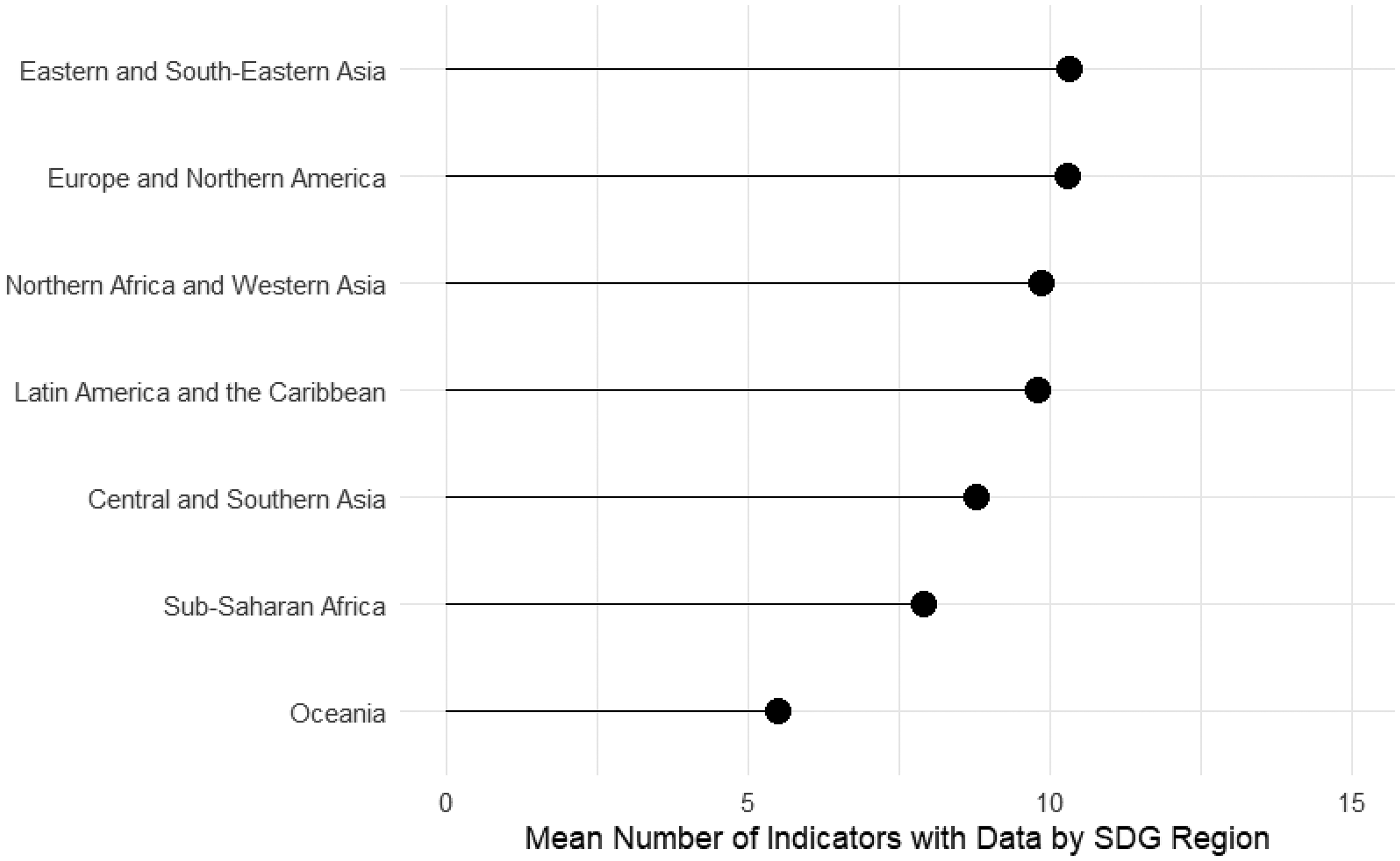
Mean number of indicators with data for countries within each SDG region.
Lessons in Indicator Development
Putting Indicators to Work
Global indicators, such as those whose development is described in this article, can be critical levers for sparking needed policy change. While they can also be problematized in terms of ways in which they reinforce the status quo and oversimplify complex phenomenon, their potential is in providing and communicating accurate and timely data, which can thereby underpin and drive needed CCE polices.
The lack of indicators in CCE has meant that there has been little incentive for governments to prioritize CCE in policy making, nor sufficient information available for citizens and organizations to advocate for CCE. Indicators intended to influence policy have to be designed with that purpose, keeping in mind issues such as the level of policy interest (e.g., country), existing policy frameworks (e.g., UNFCCC's Action for Climate Empowerment), and subjects in which policy can have an impact. Just as importantly as their design, communication on indicators needs to both meet policy stakeholders where they are at, and while also pushing them to increase ambition.
As the indicators described in this article have been developed and shared, their uptake and subsequent impact has already become apparent. Communication and knowledge mobilization are core strategic priorities of the MECCE Project, and the indicators have been made available on an Interactive Data Platform. 14 This enables users to not just find the relevant indicator data, but to visualize and analyze the results, including in relation to other countries in their region and in relation to a range of country characteristics, such as emissions data and GDP. Interviews and discussions with country and multilateral representatives have indicated the importance of having the indicator data easily accessible via the platform. The Project has also gone beyond the typical academic conferences to engage in fora with policymakers. For example, the team was invited to deliver the 2023 ACE Focal Points Academy, 15 an annual part of the UNFCCC process. The organized sessions focused on how national governments could engage and utilize the global CCE indicators and use them as a basis for developing national monitoring efforts. Finally, the indicators are already being utilized directly for the monitoring of CCE by key global actors. The UNFCCC and UNESCO's Greening Education Partnership are using data from the global indicators to monitor and evaluate progress on CCE in participating countries. Most substantially, the MECCE Project collaborated with UNESCO and UNESCO GEMR to synthesize the data from several indicators to produce the Greening Curriculum Indicator which has been adopted as both a thematic and global indicator for Sustainable Development Goal 4.7 (4.7.1b). 16
Data for Indicator Development
As the MECCE Project Team carried out an extensive and systematic review of data sources of CCE, it became clear that a lack of readily available data would be the core challenge of the project's ambition of developing global indicators of CCE. The limited prior efforts to collect global data on CCE has relied on country self-reports; however, such data are unreliable and therefore not suitable for such purposes (Benavot & Williams, 2023). As described in this article, the Project identified novel sources of data, deployed innovative methods, and, most importantly, collaboratively produced new data sources. These experiences, particularly the value of partnerships, provide lessons for those seeking to develop indicators in similarly lacking areas. In what follows, we outline some areas for consideration for future collaborative indicator development initiatives.
Sources of Robust Data
There were several types of data sources used by this project that recommend themselves for similar efforts. The first were official country policy documents, which form the underlying data for four indicators. While published by the entities (i.e., country governments) whose inputs are being measured, official policy documents differ from self-reports in that they are intended to comprehensively establish internal government actions and do not constitute selective reporting of success stories, which is generally the case with self-reports. The Project has also used surveys conducted by reputable international vendors to develop five indicators. These large-scale surveys are systematic ways to represent the views of countries’ populations and are particularly useful for communication-related indicators. Finally, multilevel desk research has been used to create data in areas where none existed and resulted in the development of three indicators. Using a variety of sources, combined with validation by country experts, is critical for building global indicators (Eizadirad, 2019).
Collaborations Are Key
The MECCE Project was foundationally designed and initiated as a collaborative, partnership-based research endeavor. It established a wide range of relationships via in-person meetings prior to the start of the pandemic, strengthened in subsequent meetings, including international meetings such as the Conferences of the Parties (COP), confirming research on the critical nature of such meetings for international policy collaboration around CCE (Stahelin & McKenzie, 2023). These critical in-person connections created the foundation for the later, mostly virtual collaborations. This collaborative philosophy was crucial to developing the current suite of global CCE indicators. These collaborations can be classified into three categories: Public Data, Shared Internal Data, and Co-Produced Data (see Box 1).
Country-Level Coverage
The focus on global, country-level coverage presents a substantial data challenge. Yet it is important to have indicators on the country level because countries are the basic global political and policy unit. In addition, there is substantial variation between countries in many aspects and the understanding of which is critical for translating effective action across borders (Crawley et al., 2022). Unfortunately, many interesting data sources are not structured at the country level. For example, in the higher education sector almost all studies, data sources, and rankings of sustainability and climate change uptake in higher education focus on individual institutions rather than providing a country-level overview. So in the absence of a complete listing of all higher education institutions in each country worldwide, possibilities for developing globally comparable country-level indicators of CEE in higher education are severely limited. In the Project's work, some data sources were developed at the country level, such as the library survey or the organization mapping, but needed additional standardization to account for country or sector size.
Geographic Limitations
One of the aims of the MECCE Project indicator work was to design indicators with sufficient global coverage so that progress can be benchmarked and targets set in all countries and regions of the world. In practice, data in certain regions (i.e., Sub-Saharan Africa and Central and South Asia) are more limited than in others (i.e., the Americas and Europe). Another challenge revolves around obtaining data for the Small Island Developing States (SIDS). These countries are at the forefront of climate change impacts, and their voice (through global indicators) is critical to include. In practice, however, their small populations mean they are often excluded from, or underrepresented in, global surveys and other data sources. The team sought to address these shortcomings first by selecting or creating data sources that were as inclusive of SIDS as possible. For example, in creating country CCE profiles, 17 for inclusion in a CCE indicator, a balanced selection of countries (including SIDS and those in the under-represented regions) was included, even if this made data collection more difficult. Using open data and transparent methods not reliant on specific experts for indicator development is a practice that enables their expansion to more regions as data becomes available (Smits & Huisman, 2024).
Considering the Quality of CCE
Many recent studies of CCE demonstrate that there is not simply a need for more climate communication and education, but rather that CCE of higher quality is crucial (González-Gaudiano & Meira-Cartea, 2010; Hornsey et al., 2016; Monroe et al., 2019; UNESCO, 2019b). The focus of the indicators is to assess primarily the quantity of CCE. The MECCE Project has, outside of its indicator development work, also invested heavily in gathering and synthesizing the evidence of what makes CCE high quality and effective. The existing limitation that the indicators focus primarily on the quantity of CCE is in part due to the fundamental challenge of systematically comparing a concept as nuanced, complex, and context-dependent as “quality CCE” across the entire globe. To address this, the MECCE Project has also funded case studies of what seem to be exemplary CCE in a range of sectors and regions globally, which have led to findings of some commonalities, while emphasizing the importance of cultural and geographic specificity. 18 Another challenge for developing indicators of quality CCE is that what constitutes quality CCE is contextual and not the same across each CCE element. Using smaller samples of countries, several UNESCO studies (McKenzie & Benavot, 2024; UNESCO, 2019b, 2021a, 2021b) undertook close readings of the policy and curricula documents for widely agreed conceptions of quality in climate education, such as the use of multiple learning dimensions. These large text corpora present opportunities in the future for developing indicators that can systematically, and at a sufficient scale, capture more nuanced concepts of quality.
Conclusion
This article describes the process and outcomes of developing global indicators of climate communication and education, which are critically needed to support these areas’ contributions to addressing the climate crisis. Drawing on experiences from the field of Education for Sustainable Development and extensive literature on indicator construction, the research team established several interrelated processes to collaboratively develop rigorous, research-informed indicators through the application of a consistent set of criteria. So far, this has resulted in a robust set of 15 global CCE indicators. This progress points to the value of further investing in and attending to the global monitoring of CCE. The process described here—and the evidence of its success—clearly illustrates a replicable way of developing comparable and useful indicators broadly, not just of CCE. The continuous growth of the MECCE Project's partnerships and the subsequent uptake and utilization of its global indicators by relevant stakeholders at national, multilateral, and nongovernmental levels suggest the usefulness of creating CCE indicators.
That said, substantially more investment and coordination are needed for supporting rapid, scaled-up CCE monitoring. Specifically, there is a need for the data sources underlying the indicators to be maintained and updated on an ongoing basis. Without multiple points in time, indicators cannot effectively be used to monitor progress and to set new and more ambitious targets, by countries or in intergovernmental negotiations or processes. Finding ways to encourage countries and organizations to report relevant data or share documents, while challenging, is critical going forward—not only to maintain this existing set of indicators and expand country coverage in each indicator, but also to construct new CCE indicators of interest. In addition, while this suite of indicators provides a good first view of the state of global CCE, there are many important dimensions that are not yet captured. Additional analysis of existing data or the development and production of new data sources would allow for a more comprehensive examination of quality CCE. Finally, we call on greater coordination and collaboration in the field to maximize the use of limited resources through alignment of data collection and monitoring efforts across the many important CCE efforts worldwide.
Footnotes
Acknowledgments
The work to develop these indicators was an effort of many years with the assistance of many hands. Many thanks to the Monitoring and Evaluating Climate Communication and Education (MECCE) Project team members who collaborated on the development and design of the indicators, particularly members of the Axis 2 Expert and Working Groups and the experts who conducted detailed reviews of the indicators as well as to partners and colleagues at UNESCO, The GEM Report, UNFCCC, UN CC: Learn, Clarivate, IFLA, and many others. Special thanks to Susie Ho, Darren Rabinowitz, Jessica Abbonizio, Patrick Chassé, and Eva-Maria Waltner who contributed substantially to reviews of the literature which set the stage for this effort.
Author Contributions
All authors contributed to research reported in this manuscript. Marcia Mckenzie, the Director of the MECCE project, led the conceptualization and initial direction of the research. Aaron Benavot oversaw the process of developing, revising, and implementing the methodology for each reported indicator, and the collaboration with various partners. Nicola Chopin led the project administration. Aaron Redman led the analysis of the results and the original drafting of the article. All authors worked on reviewing, editing, and finalizing the manuscript.
Funding
The authors disclosed receipt of the following financial support for the research, authorship, and/or publication of this article: This publication draws on research carried out by the Monitoring and Evaluating Climate Communication and Education (MECCE) Project (No. 895-2020-1019, Principal Investigator Marcia McKenzie), supported by a Partnership Grant from the Social Sciences and Humanities Research Council of Canada. For more information, visit  .
.
Declaration of Conflicting Interests
The authors declared no potential conflicts of interest with respect to the research, authorship, and/or publication of this article.