




Abstract
Introduction
Although rehabilitation can improve the quality of life of individuals with Alzheimer’s disease and Alzheimer’s disease-related dementias (AD/ADRD), awareness and acceptance of its benefits vary across healthcare providers and care settings. The aim of this study was to explore the perspectives of healthcare providers on the adoption and utilization of rehabilitation among individuals with AD/ADRD.
Methods
We adopted an exploratory qualitative descriptive study design using semi-structured interviews. Using purposive sampling, ten healthcare providers that provide rehabilitation services for individuals with AD/ADRD were recruited from the Alzheimer’s Disease Research Center (ADRC), University of Pittsburgh and the University of Pittsburgh Pepper Center.
Results
Participants emphasized the substantial potential benefits of rehabilitation for this population. Interview data indicated that several participants viewed rehabilitation services as significantly enhancing the quality of life and wellbeing of individuals with AD/ADRD. Feedback underscored the important role of rehabilitation in optimizing care for individuals with AD/ADRD and highlighted key barriers to its broader implementation.
Conclusions
Overall, the findings suggest that rehabilitation offers meaningful value in the management of AD/ADRD. Although participants identified several barriers, rehabilitation services were consistently viewed as beneficial for individuals with AD/ADRD. Addressing these gaps will be important for strengthening the effectiveness and reach of rehabilitation services.
Introduction
Alzheimer’s disease and Alzheimer’s disease-related dementias (AD/ADRD) have received increased attention as a major public health concern over the last two decades. 1 AD/ADRD is an umbrella term for several forms of dementia, including Alzheimer’s disease, the most prevalent form of dementia. 2 AD/ADRD is an irreversible, degenerative brain condition that gradually damages memory, thinking skills, and the capacity to perform basic tasks. 3 The onset of AD/ADRD is insidious and starts with minor memory loss, which may advance to loss of capacity to communicate and respond to the surroundings. 4 In 2022, over 6.5 million Americans and 55 million people worldwide had Alzheimer’s disease.2,5
Alzheimer’s disease was acknowledged as the seventh-leading cause of mortality in the United States in 2019, and its economic and social impact is enormous. 5 The economic impact of dementia has been estimated to be over $1.3 trillion, which is expected to rise to $ 2.8 trillion by 2030.4,5 Despite these enormous health and socioeconomic impact, currently there is no cure for AD/ADRD. In the United States, despite evidence supporting the effectiveness of rehabilitation services for individuals with ADRD, their use in primary care remains limited. 6 Health system and policy barriers such as low awareness and diagnosis of mild cognitive impairment, limited support for caregivers and workforce, high costs, and disparities in care access persist.4,5 Yet, rehabilitation can improve the quality of life of affected individuals. 6 Rehabilitation services can help people control their symptoms and enhance their capacity to function daily.
According to a World Health Organization (WHO) 2018 report, rehabilitation refers to a series of interventions aiming to enhance functioning and minimize impairment in persons with health issues in their connection with their environment. 7 Current rehabilitation approaches and implementation strategies for AD/ADRD vary widely. Numerous studies, including a randomized control trial highlight the positive impact of tailored rehabilitation programs on cognitive function and functional capacity in daily activities among individuals with ADRD.8,9 Occupational Therapy (OT) interventions designed to address AD/ADRD, in particular, have been well studied. For example, a systematic review of OT interventions have demonstrated improvements in behavioral issues and the Activities of Daily Living (ADL) capabilities of dementia patients. 10 Cognitive training, which involves the repetitive practice of structured tasks aimed at improving or maintaining specific cognitive functions, is another rehabilitation strategy that can be utilized with the AD/ADRD population.11,12 In general, rehabilitation is multifaceted and therefore well suited to address numerous areas of health and function – for example, cognitive training could improve patients’ memory and attention; physical strength and balance via physical therapy; cognition and speech through speech therapy; and self-care and daily living skills through occupational therapy.6,13
Providing persons with Alzheimer’s disease access to rehabilitation services and ensuring that these services are used effectively and in an evidence-based manner is critical to managing the condition and enhancing the quality of life for individuals with AD/ADRD and their families.6,14 It is critical to understand the practices and perceptions of the adoption and utilization of rehabilitation among individuals with AD/ADRD to optimize uptake of impactful rehabilitation services.
Methods
Study Design and Population
We adopted an exploratory qualitative descriptive approach to examine healthcare providers’ perspectives on rehabilitation services for individuals with AD/ADRD. 15 Recruitment and eligibility to participate were based on predefined criteria. Participants were considered eligible if they were adults and specialist healthcare providers (including geriatricians, physicians, physical therapist, occupational therapists, and speech pathologist) who routinely offer or prescribe rehabilitation services to ADRD patients in the Alzheimer’s Disease Research Center (ADRC), University of Pittsburgh and the University of Pittsburgh Pepper Center. Participants were recruited from local healthcare settings, including hospitals, rehabilitation and long-term care facilities, and the ADRC and the University of Pittsburgh Pepper Center. The study instruments such as the interview guide and information and consent forms were collaboratively designed and reviewed by the research team and community collaborators from the University of Pittsburgh Medical Pepper Center. Written informed consent was obtained from each participant prior to data collection according to the University of Pittsburgh Institutional Review Board (STUDY22080160).
Data Collection and Analysis
Interviews were carried out via the University of Pittsburgh Teams software by CAP, JF and IDE who are clinicians and academics and trained qualitative researchers. The interviews which lasted between 30 to 60 minutes were guided by predefined open-ended questions and progressed to specific topical discussion based on participants answer and research objective. 15 Saturation was deemed to have been achieved when no new information emerged from the interviews. 15
All interviews were transcribed verbatim. Afterwards, all transcripts and notes were read numerous times to aid comprehension of the data and to find preliminary patterns. Deductive coding by CAP was used to analyze the completed interview transcripts vertically and axially using a codebook based on predetermined concepts. The codes were discussed with JF and IDE who are the research team members with expertise in qualitative interviews. The study used ATLAS.ti to code and analyze field notes and interview transcripts, applying the Socio-Ecological Model (SEM) as an analytic framework. The SEM was used solely to guide the content analysis (see Figure 1). In addition, inductive codes were generated through in-vivo coding. According to the SEM, health is influenced by the combination of person, community, and environmental factors, which include physical, social, and economic-political components.
16
This model provides a comprehensive perspective by considering the dynamic interactions between individuals and their environment. The socio-ecological framework acknowledges that human behaviours and health outcomes are impacted by several levels of influence.
16
Within this framework, healthcare practitioners’ views on rehabilitation services for ADRD could be investigated by taking into account the larger social and environmental elements that influence their attitudes and actions toward rehabilitation (Table 1). Factors that influence the decision of healthcare workers to offer rehabilitation services for individuals with AD/ADRD Study Participant Characteristics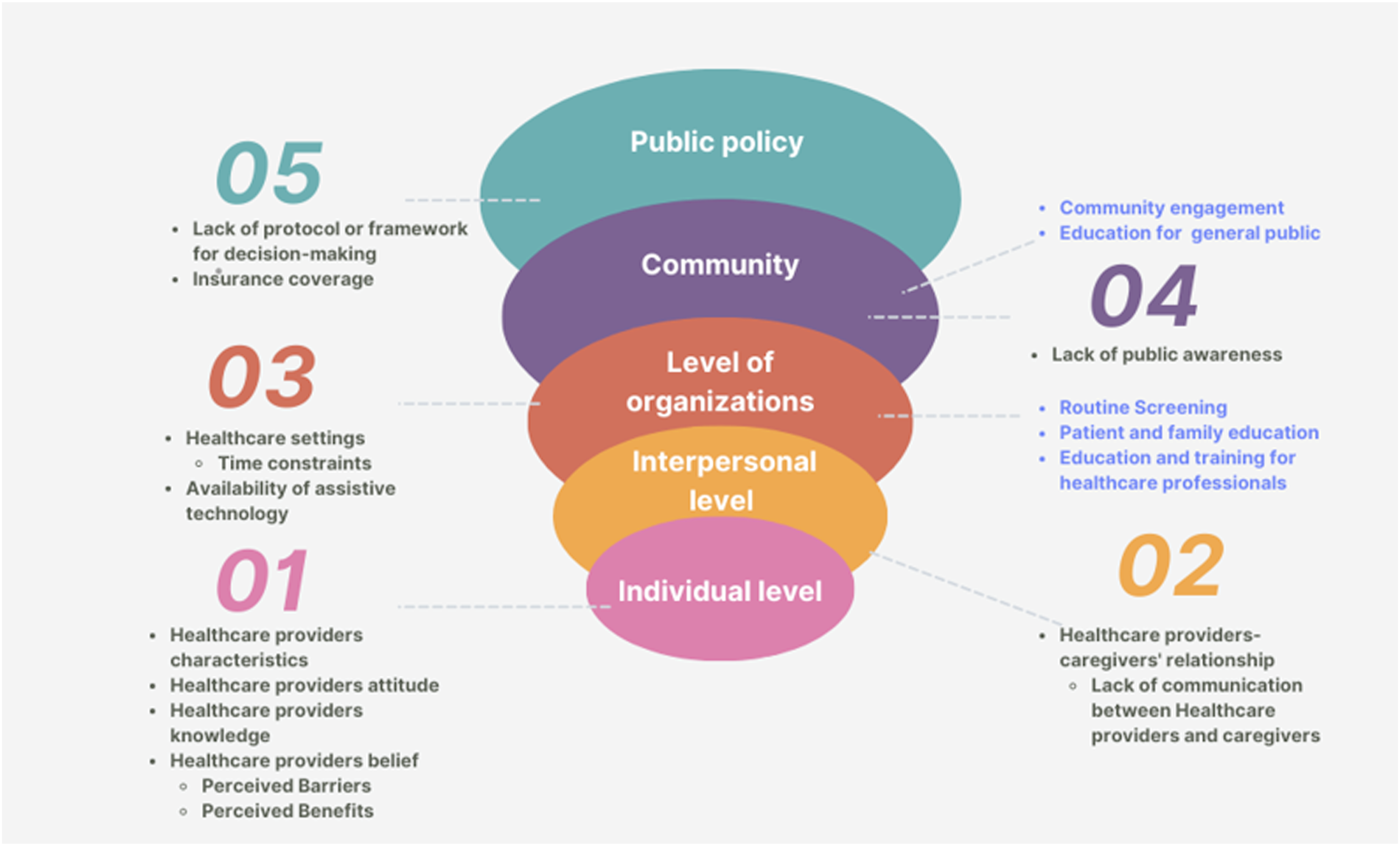

Results
A total of ten participants were interviewed for this study. They were composed of seven females and three males. All of the participants are healthcare professionals (HCPs) who have worked with individuals who live with AD/ADRD in the United States. Participant expertise included geriatricians (n=2), medicine and rehabilitation physicians (n=1), and occupational therapists (n=7).
Rehabilitation Services for Individuals With AD/ADRD: Insights and Perspective From Healthcare Providers
Provision of Rehabilitation as an Integral Component of AD/ADRD Treatment: Types and Implementation Use
Most of the participants were rehabilitation professionals, and many reported that they routinely offer rehabilitation as part of the treatment plans for individuals with AD/ADRD. Rehabilitation recommendations were based on several factors and settings, such as knowledge of the disease, physical constraints, and the progression of the disease. The stage of dementia plays a more prominent role because it is more challenging to have people in the moderate to advanced stages of dementia attend rehabilitation. In general, participants indicated that their goal is to ensure that their patients receive the best treatment available based on their situation. Participants perspective on providing rehabilitative services is given here: “That's something that we routinely recommend for all patients, but it depends on the setting because once people are diagnosed with dementia, their condition has progressed, and learning new things can be very difficult.”- (P6, Female, OT)
However, one of the participants suggested that rehabilitation was a recent development, which is why he did not offer rehabilitation as part of AD/ADRD treatment. He felt that for rehabilitation to be successful, participants must be able to retain health gains, which may be difficult given that AD/ADRD is a neurodegenerative disorder. When asked whether they routinely provide rehabilitative services to their patients with ADRD, one participant responded: “I’ve not routinely offered rehab as part of treatment for individuals with ADRD because it is a relatively more recent development. I think a couple of things got in my way. One was ignorance, not being aware that there were therapists of various disciplines who would be interested and trained in providing that kind of rehab”- (P1, Male, Geriatrician).
There are multiple types of rehabilitation that healthcare providers offer to individuals with AD/ADRD, each tailored to address the patient’s specific needs. According to the study participants, most of the time, physicians, PT, OT, and speech-language pathologists have unique approaches to offer relative to AD/ADRD care: “I think it depends on the setting and your employer's organization of employment as to how prioritized rehab services are for folks with dementia, such as OT, speech pathology, and especially PT.” - (P7, Female, OT)
Benefits of Rehabilitation Services for Individuals With AD/ADRD
A. Overall Benefit
All participants agreed that rehabilitation services are beneficial for individuals with AD/ADRD. Evidence indicates that people with AD/ADRD can experience cognitive gains from rehabilitation, with older adults showing improvements in both functional outcomes and cognition following rehabilitative interventions. This argument is supported in the following quote: “Individuals with dementia and other cognitive impairments definitely benefit from rehabilitation services.” - (P4, Female, OT)
B. Independence
Independence was cited by more than half of the participants as a benefit of rehabilitation for AD/ADRD patients. Participants highlighted that rehabilitation benefits for patients with AD/ADRD are distinct from those of a typical rehabilitation approach emphasizing restoration. Depending on the stage of AD/ADRD, return to a prior level of functioning may not be attenable; nonetheless, rehabilitation can be incredibly valuable in sustaining independence and supporting their ability to stay in the home rather than an assistive living setting. This assertion is supported by an OT, who stated: “It was beneficial for them, so I referred this patient to occupational therapy. Now, two years later, they're still living at home. They're not remembering things, but they're able to do things, have less caregiver support, and just have more quality of life and independence.”- (P3, Female, OT)
Decision-Making Protocols/Frameworks for Rehabilitation in AD/ADRD Facilities
All participants (n=10) stated that no specific protocol or framework is in place for decision-making related to rehabilitation services. One of the participants reported that the framework used for rehabilitation in patients with AD/ADRD is pretty much the same, which is similar for most diseases. Even though there is no specific set of criteria, they all agree that healthcare facilities had to know what insurance the clients had and what the insurance was willing to reimburse for. Typically, participants go in and evaluate a patient, set goals that would be achievable based on their cognition and presentation, and work towards those goals in subsequent sessions. For instance, when a patient comes into the hospital, participants attempt to determine if they require rehabilitative services. They would perform a quick cognitive assessment, which includes following multi-step instructions or completing familiar tasks, observing how patients interact, and taking cues from them to determine their needs and objectives. The patient may resort to more direct interventions and rigorous training as the disease progresses. One participant stated this: “If somebody arrives at the hospital, there is a screening process that's put into place, a referral process. And I've worked all over the country, and it seems that that process is very driven by the regional norms in that area of the country.” - (P6, Female, OT)
Barriers to the Provision of Rehabilitation Services for Individuals With AD/ADRD
Three types of barriers were identified during data analysis: sociodemographic factors, lack of understanding, and insurance coverage. Participants stated that there is a widespread belief among HCPs, families, and the general public that there is little that can be done for people with AD/ADRD [outside of medication]. Therefore, participants may not bother offering this service because of their perception that rehabilitative options may be limited in efficacy.
A. Sociodemographic Factors
Some participants mentioned that socioeconomic factors might impede providing AD/ADRD rehabilitation services. Some participant feedback indicated that individuals in underserved communities are less likely to receive rehabilitation, most likely due to the type of insurance they have or the capacity to provide care at home. These positions were aptly described by an OT thus: “And we know that they’re at a higher risk based on their ZIP code. You know they don’t have access to good food, and they don’t have access to a lot of services there. So, I think that there’s definitely a socioeconomic impact.” (P10, Female, OT).
B. Lack of Awareness
Some participants’ lack of awareness regarding the rehabilitation services for individuals with AD/ADRD was a barrier. According to the participants, even while the research shows that rehabilitation is beneficial, putting that knowledge into practice might be challenging because healthcare professionals do not know how to acquire the relevant information and its availability. On top of that, owing to a lack of information, some individuals believe that once a person reaches a particular degree of impairment, their caretakers will no longer be interested in pursuing rehabilitative services. The following remark made by a geriatrician exemplifies this assertion: “Absolutely, I think so. I mean, there's a lack of understanding of the benefits.” (P2, Male, Geriatrician)
C. Insurance Coverage
Participants unanimously cited insurance coverage as the primary barrier to providing rehabilitation services. Typically, insurance will pay for treatments like positioning and splinting to avoid the formation of wounds. However, they are less likely to pay for therapies that enhance the quality of life or delay the progression of the disease. Our participants reported that most health insurance providers view AD/ADRD as a degenerative illness. Hence, they are unwilling to cover the costs of providing care to patients who are expected to worsen progressively.
Moreover, the participants reported that there is little freedom in the decisions that patients and caregivers make about their levels of care since they are so reliant on what insurance will and will not cover because such treatments are just too expensive to pay for out of pocket. The perspective of one of the OTs on this matter highlights the following points:
“I think the biggest barrier is payment and restrictions on insurance.” (P3, Female, OT)
Challenges Faced by Healthcare Providers in Delivering Rehabilitation Services for Individuals With AD/ADRD
A. Healthcare Settings
Multiple participants stated that providing rehabilitation services in this hospital setting could be difficult because they do not have complete control over the patient’s schedule, which could result in participants being unable to see patients due to environmental issues, time constraints, or other services. One of the participants stated that individuals with cognitive impairments are prone to delirium during hospitalizations, which can impact engagement with rehabilitation. Moreover, due to the unpredictability of the participant’s and patients’ schedules, establishing consistency is difficult. The following quotation by an OT highlights this assertion: “I will say there are some barriers to that in the acute care setting I mentioned and that acute care sessions are fairly short for individuals with dementia.” - (P4, Female, OT)
B. Individual Factors From the AD/ADRD Patients
According to participants, patients with AD/ADRD may have difficulties understanding their deficits due to cognition, cognitive judgment, and memory issues. Additionally, a lack of motivation or understanding can impede the delivery of rehabilitation services for individuals with AD/ADRD, even if the patient can comprehend that they require rehabilitation. In addition, participants also stated that physical limitations and the dementia stage play a larger role, making it more challenging for individuals in the moderate to advanced stages of dementia to undergo rehabilitation. The following remark made by an OT exemplifies this assertion: “Certainly, there are clients who don't want to participate on any given day.” (P7, Female, OT)
C. Lack of Communication Between HCPs and Caregivers
Half of the participants (n=5) indicated a lack of communication between HCPs and caregivers. HCPs and families do not always communicate clearly about rehabilitation benefits, resulting in different expectations regarding what can be done. Moreover, participants reported that sometimes caretakers are only interested in providing AD/ADRD patients with rehabilitation they believe will be beneficial. For example, caregivers did not want cognitive rehabilitation or speech therapy; they were only concerned with gait. One of the participants described this in the following way: “Not explicit communication about the potential for things like cognitive improvement which I feel would most likely come from the doctors to the family or caregivers”- (P4, Female, OT).
Discussion
This qualitative study revealed that healthcare providers perceive beneficial effects of rehabilitation for individuals living with AD/ADRD. An in-depth analysis of the perspectives of healthcare providers revealed that rehabilitation services have a strong potential to positively impact the quality of life and functional capacity of those living with AD/ADRD. According to participants, rehabilitation approaches can aid those with AD/ADRD in preserving functional independence, improving cognitive capacity, and encouraging social engagement. Furthermore, participant feedback indicated that rehabilitative services can also influence caregiver load, enabling caregivers and HCPs to better support and interact with individuals with AD/ADRD. Moreover, based on studies by Cations et al, rehabilitation services have demonstrated promising benefits in delaying cognitive deterioration and enhancing overall cognitive abilities for individuals with ADRD. 17 Participant feedback also emphasized the importance of involving caregivers in treatment planning and considering the full range of available treatment options. The feedback from our study participants on the usefulness if rehabilitation for AD/ADRD differed from the report from Cations et al where clinicians did not consider it a worthwhile investment. 17
In this study, most participants reported providing rehabilitation as a part of the treatment plan for patients diagnosed with AD/ADRD. However, our sample was heavily comprised of rehabilitation clinicians (namely occupational therapists). Therefore, additional widespread insight is needed to truly understand common practices and procedures surrounding rehabilitation provision for those with AD/ADRD across the United States. The study also emphasized that among participants who did have experience implementing rehabilitation services for those with AD/ADRD, they generally perceived these interventions as being beneficial to individuals with AD/ADRD. This study is consistent with the findings of Laver et al, in which most participants demonstrated a good understanding of rehabilitation as a means to enhance independence and quality of life, and regarded this as a fundamental goal of dementia care. 18
Furthermore, insurance coverage emerged as the main barrier to rehabilitation reported by our participant. Access to rehabilitation services for people with AD/ADRD is heavily influenced by insurance coverage, particularly Medicare and private health insurance. Coverage restrictions in the United States might create financial hurdles that obstruct access to important rehabilitative therapies due to restricted sessions, duration, arbitrary coverage limits, reimbursement rates, and restricted eligibility requirements. 19 These restrictions make it more difficult for healthcare practitioners to offer effective, individualized treatment. In addition, healthcare providers may be reluctant to give rehabilitation treatments since reimbursement rates may be insufficient to cover the expenses of providing comprehensive care. 20 Since AD/ADRD is a progressive and currently incurable condition, rehabilitation services that improve functional abilities and slow cognitive deterioration are usually necessary for an extended period. However, according to the study by Amjad et al, health insurance providers view AD/ADRD as a progressive degenerative illness and, as a result, are often unwilling to cover its associated costs. 21
Our research highlights an opportunity to engage clinicians and healthcare providers who may be unfamiliar with rehabilitation’s role in ADRD to enhance holistic care for this population. A report by the Pan American Health Organization and World Health organization indicated that Physiotherapists, occupational therapists, speech and language therapists, rehabilitation doctors (physiatrists), psychologists, and prosthetic and orthotic professionals are the six core rehabilitation Health workforce in the Region of the Americas. 22 The availability of physicians varies by state; for example, although not all parts of Pennsylvania have equal access to physicians, Pennsylvania has 324.5 physicians for every 100,000 inhabitants. 23
The results of this study highlight the need for an established protocol or policy framework for decision-making regarding rehabilitation services for individuals with AD/ADRD. The lack of a standardized decision-making process exacerbates the difficulties that healthcare practitioners experience in determining how best to implement effective rehabilitation treatments for individuals with AD/ADRD. As noted by Schenkman et al, in the absence of specific guidelines or frameworks, healthcare practitioners often depend on their clinical judgment, which may vary enormously, resulting in differences in practice and inadequate outcomes. 24 Therefore, individuals with AD/ADRD may get varying levels of care and lose out on chances to improve their functional independence and quality of life.24,25 The lack of a structured framework limits some healthcare practitioners’ (primary care providers) capacity to make confident recommendations towards rehabilitation services. This underscores the need for greater uniformity in care protocols and policy guidance, alongside personalized approaches, to ensure consistent and effective rehabilitation for individuals with AD/ADRD.
Limitations
Although the research team utilized variation sampling to identify a diverse range of professional perspectives, the sample does not reflect all health professionals who work with persons with AD/ADRD or offer rehabilitation services. A small number of clinicians represented each clinical field, and the study did not include participant from all rehabilitation-related health care professionals who might provide AD/ADRD treatment, so the results are not generalizable to all rehabilitation specialties. Since this study had a larger number of occupational therapists as participants, there’s a chance our feedback might have misrepresented the level of rehabilitation utilization compared to what is typical in routine practice after diagnosis. For example, the perspectives of physical therapists and speech therapists were not captured. Although the use of semi-structured interviews resulted in an in-depth understanding of the perspective of healthcare providers regarding rehabilitation services for individuals with AD/ADRD, the perspectives held by the participants may differ from those held by healthcare providers in other settings or the healthcare system. Despite efforts to minimize interviewer bias, variations in probing and follow-up questions across interviews may have influenced the outcomes.
Conclusions
Overall, the results indicate that most healthcare providers offered rehabilitation services to AD/ADRD patients. The results highlight present gaps in ADRD rehabilitation service delivery. Despite specific highlighted barriers, the findings showed that rehabilitation services are perceived as being beneficial to individuals with AD/ADRD. Therefore, these gaps must be addressed to increase access to rehabilitation services. In addition, future research should focus on the other stakeholder groups (patients and caregivers) to capture all perspectives of the stakeholders involved in utilizing rehabilitative services to support the health and well-being of individuals with AD/ADRD.
Footnotes
Acknowledgement
The authors are grateful to all the study participants and institutions that participated in the study.

Ethical Considerations
The study received ethical approval from the University of Pittsburgh Institutional Review Board (STUDY22080160).
Author Contributions
CAP: Data collection, analysis, writing – review and editing. JF: Supervision, data collection, analysis, writing – review and editing. IDE: Conceptualization, supervision, data collection, analysis, writing – review and editing Data Availability Statement Anonymized data are available from the corresponding author upon reasonable request.
Funding
The authors disclosed receipt of the following financial support for the research, authorship, and/or publication of this article: This study was supported by funding received from Pepper Older Americans Independence Centers (OAIC) small grant program (420064).
Declaration of conflicting interests
The authors declared no potential conflicts of interest with respect to the research, authorship, and/or publication of this article.