




Abstract


Clinical History:
A 76-year-old man with a past medical history of hypertension, dyslipidemia, and urolithiasis underwent cystolithopaxy and transurethral resection of the prostate. Following this, the patient developed a bladder neck contracture (BNC) and underwent two subsequent dilations and transurethral resections to address this. Subsequently, a suprapubic (SP) catheter was placed due to a rapidly recurring BNC, and the patient was referred for further management.
Physical Examination:
Digital rectal examination documented a benign-feeling flat prostate.
Diagnosis:
An abdominal ultrasound documented a 28 mL prostate volume. A diagnostic flexible cystoscopy documented a significant amount of scarring tissue at the bladder neck and a pinhole opening proximal to the verumontanum. Good contraction of sphincter was noted, and no urethral stricture was found.
Intervention:
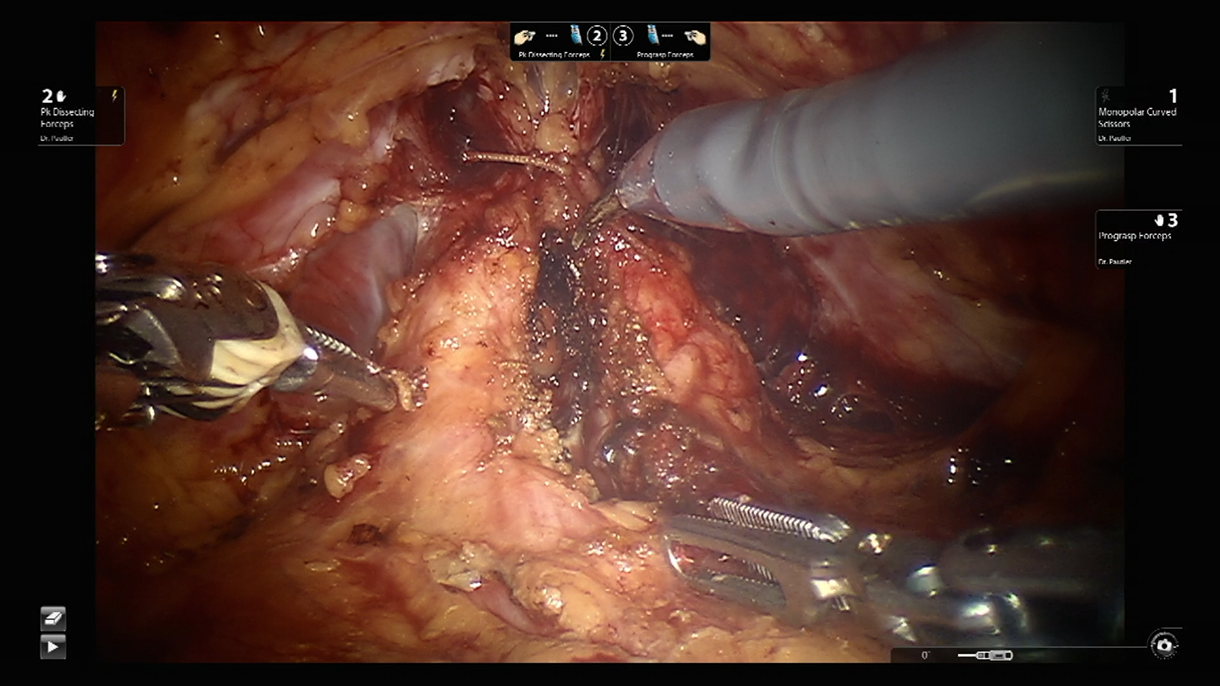
Given the recurrent BNC, adequate sphincter contraction, and a desire to be free from the SP catheter, the patient underwent a robot-assisted laparoscopic Y-V Foley plasty of the bladder.
Follow-Up/Outcomes:
The patient tolerated the procedure with no postoperative complications and was discharged home with a transurethral Foley catheter in place and a pelvic drain on postoperative day 1. A cystogram was performed at his 1-week follow-up and documented no leaks; the transurethral catheter and drain were removed. At 1 month, the patient could void spontaneously (uroflowmetry documented a Qmax of 7 mL/sec with a postvoid residual volume of 74 mL). The 1-year follow-up documented improvement of the voiding, nocturia of 1, and postvoid residual volume of 63 mL; the patient was pleased with his voiding pattern and quality of life.
Patient Consent Statement:
The authors have received and archived patient consent for video recording/publication in advance of video recording of procedure.
The authors have no conflict of interest that may alter the results of this study.
Runtime of video: 04 min 34 sec.