



Abstract
Grounded in the I-PACE model, this study examines the mechanisms linking short-video exposure to addiction, specifically investigating the mediating roles of affective and cognitive reactions, and the moderating influence of inhibitory control and addiction status. A large-scale survey (N = 1,274) was used to test a moderated mediation model of addiction, with its core affective and cognitive variables first defined through focus groups with a strategically selected subsample (N = 169) of addicted and nonaddicted users. Results first revealed two distinct user profiles: an addicted group characterized by high emotional involvement and low control, marked by emotional ambivalence and cognitive inconsistency, and a nonaddicted group defined by low emotional involvement and high control. The moderated mediation analysis then uncovered the complex dynamics underlying these profiles. The role of self-regulation was found to be double-edged, profoundly moderated by inhibitory control. For individuals with low inhibitory control, greater use of self-regulatory strategies was associated with higher addiction severity, suggesting a conditional risk pattern consistent with a possible “backfire effect.” Conversely, for those with high inhibitory control, such strategies were largely redundant. Furthermore, the pathways to addiction diverged by addiction status. The process for addicted individuals was predominantly driven by the pursuit of positive emotions. In stark contrast, for nonaddicted individuals, the crucial battleground was self-regulation, which functioned as a critical defense, highlighting a vital window for early intervention. Together, these findings underscore the importance of inhibitory control, the double-edged nature of self-regulation, and the primacy of positive affective pathways, thereby refining the I-PACE model and offering targeted insights for prevention and intervention.
Keywords
Introduction
An increasing number of studies have documented the prevalence and negative impacts of short-video addiction. Among university students, prevalence rates have reached up to 21.6%, a figure that signals a burgeoning public health concern.1,2 The consequences for individuals are extensive, including cognitive issues such as reduced attention and poor time management, emotional dysregulation, and deficits in academic performance and sleep quality.3–6 At its most severe, this behavioral addiction is associated with neurofunctional changes and an increased risk of suicidal ideation.7,8 These findings underscore the need for further research into the psychological mechanisms that drive the transition from normal use to addiction.
The Interaction of Person-Affect-Cognition-Execution (I-PACE) model provides a comprehensive framework for understanding Internet-use disorders.9,10 It posits that addictive behaviors arise when situational cues elicit specific affective and cognitive responses, which in turn guide the decision to engage in the behavior. The model distinguishes between early- and late-stage mechanisms. Initial engagement is typically goal-driven, regulated by top-down inhibitory control, while later, the behavior becomes habitual and automatic, triggered by conditioned cues, dominated by maladaptive biases, and characterized by a decline in inhibitory control. In the present study, we use the I-PACE model to examine person-level differences in affective reactions, cognitive responses, and inhibitory control under relatively stable platform conditions. This focus does not imply that platform affordances are theoretically unimportant. Rather, short-video platforms are conceptualized as a shared sociotechnical context characterized by algorithmic recommendation, continuous content flow, low-friction use, and emotionally salient audiovisual stimuli. Within this context, the I-PACE model provides a useful framework for explaining why addicted and nonaddicted users may show distinct pathways from short-video exposure to addiction tendency.
The role of exposure in short-video addiction
In addiction science, a fundamental principle is that the amount of exposure is a key risk factor. Prolonged exposure duration is robustly linked to the development of addiction hallmarks, including tolerance and loss of control.11,12 This risk may be especially salient in short-video platforms, where algorithmically persistent personalized recommendations and continuous content flow make disengagement particularly difficult. 13 The design of short-video platforms amplifies this risk by maximizing engagement time, which effectively nudges users from casual browsing into an addiction state, a chronic and cyclical obsession produced by prolonged use and marked by intense craving and persistent psychological-behavioral dependence. 1 Therefore, we posit hypothesis 1 (H1): Short-video exposure is positively associated with short-video addiction tendency.
Affective and cognitive reactions as mediators
The I-PACE model suggests that the link between exposure and addiction is mediated by intervening psychological processes, with affective reactions being core mechanisms. 10 Short-video platforms are highly effective at engaging the affective system, delivering potent emotional stimuli with minimal cognitive effort, creating a reinforcing, low-cost, high-reward state. 14 This generates a complex affective landscape. Users experience positive emotions like pleasure and excitement, which reinforce the addictive cycle. 15 Conversely, negative emotions are multifaceted. Withdrawal-like symptoms, such as irritability and anxiety upon cessation, encourage further use to alleviate distress. 16 However, negative emotions like regret and guilt, arising from metacognitive evaluations of misallocated time, may serve a protective function by inhibiting the escalation from normative use to addiction. Clarifying the distinct roles of these affective pathways in the addiction process is necessary.
Parallel to affect, cognitive processes are also integral to the addiction pathway. The I-PACE model suggests that repeated exposure fosters maladaptive cognitions, such as attentional biases toward platform-related cues and dysfunctional expectancies about the behavior’s utility, which can undermine self-efficacy to disengage. 10 Excessive use can also create cognitive dissonance, where the behavior conflicts with a valued self-concept.17,18 Over time, these state-level reactions may consolidate into relatively stable cognitive tendencies that differentiate addicted from nonaddicted users. To resolve this, individuals may engage in rationality judgments that justify or minimize the behavior, while others may deploy self-regulatory strategies to control its use.19,20 Accordingly, we posit hypothesis 2 (H2): Affective and cognitive reactions mediate the relationship between short-video exposure and addiction tendency.
Inhibitory control and addiction status as moderators
The I-PACE model identifies inhibitory control as a critical top-down factor modulating the addiction process. 10 Inhibitory control, defined as the capacity to suppress prepotent or tempting impulses, is a well-established vulnerability factor across numerous addictions.21,22 Within the model, inhibitory control functions as a crucial gatekeeper, determining whether affective and cognitive reactions triggered by exposure are translated into compulsive action or effectively suppressed. 23 Thus, we posit hypothesis 3 (H3): Inhibitory control moderates the second stage of the mediation, such that the link between risk-promoting reactions and addiction tendency is weaker for individuals with higher inhibitory control.
In addition, the I-PACE model suggests that the psychological dynamics of addicted individuals are qualitatively different from those of nonaddicted users. 10 By directly comparing these two groups, we can test whether the pathways from exposure to addiction are fundamentally different, potentially revealing the mechanisms that mark the transition to pathology. Consequently, we posit our final hypothesis 4 (H4): Addiction status moderates the first stage of the mediation, such that the effect of short-video exposure on affective and cognitive reactions differs between addicted and nonaddicted users.
The present study
The present study tests a moderated mediation model (Figure 1) to delineate the psychobehavioral pathways from exposure to short-video addiction, addressing three interrelated research questions. First, how short-video exposure is linked to addiction tendency through cognitive-affective reactions, we investigate the mediating roles of four cognitive-affective reactions: positive emotions, negative emotions, rationality judgment, and self-regulatory strategy. Second, whether and how this mediation process is contingent on individual differences in inhibitory control, we examine the moderating role of inhibitory control. Third, whether these pathways differ between addicted and nonaddicted users, we further test addiction status as a key moderator. Age and gender were included as covariates in all analyses to control for potential demographic influences. This comprehensive analysis aims to refine the I-PACE model for the short-video context, explain why some individuals develop addiction while others do not, and ultimately identify modifiable targets for intervention.
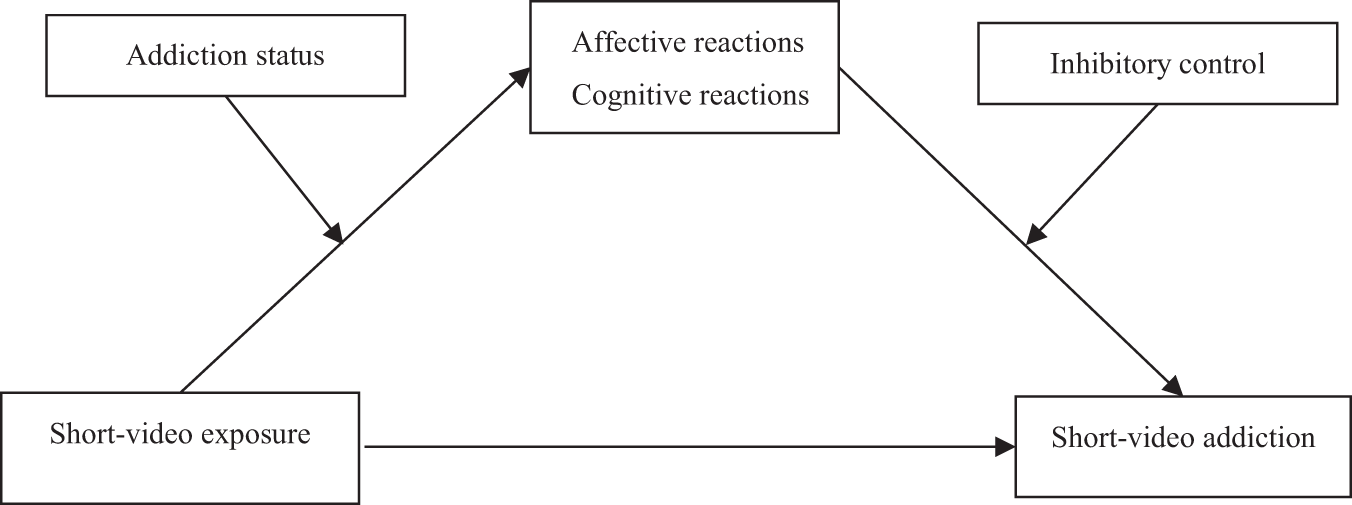
The moderated mediation model of short-video exposure and addiction.
Methods
Participants
The present study recruited 1,274 students from several universities in Shanghai, Jiangxi, and Wuhan, China. Participants’ ages ranged from 17 to 25 years (M = 19.71, SD = 1.48), with 966 females (75.8%) and 308 males (24.2%). The sample had sufficient statistical power to detect even small associations. For linear multiple regression, 1,188 observations are required to detect an effect as small as f2 = 0.02 at 95% statistical power.
Measures
Short-video exposure
A three-item scale was developed to provide a composite measure of exposure. Participants reported their usage history (“How long have you been using short-video apps?”) with options: (1 = <1 year, 2 = 1–2 years, 3 = 3–5 years, 4 = 5–7 years, 5 = >7 years), average daily usage in the past years, and current daily usage on 5-point scales with options: (1 = <1 hour, 2 = 1–2 hours, 3 = 2–3 hours, 4 = 3–5 hours, 5 = >5 hours). This composite index was intended to reflect accumulated exposure to short-video platforms, capturing both experiential duration and habitual intensity. The raw scores for the three items were standardized (Z-scores) and then summed.
Positive and negative emotions
A 10-item scale was developed from thematic analysis of focus group interviews with 60 university students, including 30 addicted and 30 nonaddicted individuals. These participants were part of a pilot study with 169 participants, where diagnoses were made using the Short-Video Addiction Scale, 1 which demonstrated strong internal consistency (α = 0.88) and good construct validity (χ2 = 118.88, χ2/df = 1.75, p < 0.001, RMSEA = 0.07, CFI = 0.94, TLI = 0.92, SRMR = 0.05). It measures positive emotions (e.g., satisfaction, pleasure, happiness, relaxation, belonging) and negative emotions (e.g., anxiety, craving, emptiness, aversion, regret) with high internal consistency (positive emotions, α = 0.88; negative emotions, α = 0.89). Confirmatory factor analysis confirmed the scale’s construct validity, with an acceptable model fit (χ2 = 129.39, χ2/df = 5.17, p < 0.001, RMSEA = 0.05, CFI = 0.99, TLI = 0.98, SRMR = 0.03).
Cognitive reactions
A 6-item scale was derived from the same focus group data. The Rationality Judgment subscale (α = 0.80) includes three items: “My time and frequency of watching short videos are reasonable,” “Using short videos will not have a negative impact on my health or social life,” and “I do not think my frequency of watching short videos is higher than others.” The Self-Regulatory Strategies subscale (α = 0.71) included three items: “I take active measures to limit my time spent watching short videos,” “If I need to learn new knowledge, I prefer long videos over short videos,” and “When I realize that short videos might affect my other tasks, I will actively reduce my usage.” All items were rated on a 5-point Likert scale (1 = not at all to 5 = extremely). Confirmatory factor analysis confirmed the scale’s construct validity, with an acceptable model fit (χ2 = 84.92, χ2/df = 10.62, p < 0.001, RMSEA = 0.08, CFI = 0.97, TLI = 0.95, SRMR = 0.03)
Inhibitory control
The 10-item Self-Regulation Scale developed by Diehl et al. was used to measure dispositional self-regulation, with a focus on attentional control when facing goal-related difficulties. 24 Participants responded on a 4-point scale from 1 (not at all true) to 4 (completely true). The scale demonstrated acceptable internal consistency in the present sample (α = 0.73) and construct validity, with an acceptable model fit (χ2 = 292.37, χ2/df = 9.75, p < 0.001, RMSEA = 0.08, CFI = 0.94, TLI = 0.91, SRMR = 0.05).
Short-video addiction
Addiction was measured using the Short-Video Addiction Scale for College Students. 1 This scale consists of 14 items rated on a 5-point Likert scale, assessing core addiction components such as inability to control craving and withdrawal, and has been widely adopted in empirical research on short-video addiction. The total score was used as a continuous measure of addiction tendency (α = 0.85). The scale also includes a seven-item dichotomous subscale for diagnostic screening based on addiction criteria, which aligns with the present study’s use of addiction status as a key moderating variable. Participants who endorsed four or more of these seven criteria were classified as addicted (n = 593; 46.5%), while the remainder were classified as nonaddicted (n = 681; 53.5%). This grouping variable was used for the moderation analysis. Confirmatory factor analysis supported its hypothesized four-factor structure validity (χ2 = 536.01, χ2/df = 7.77, p < 0.001, RMSEA = 0.07, CFI = 0.93, TLI = 0.90, SRMR = 0.05).
Results
Preliminary analyses
Harman’s single-factor test was conducted to assess potential common method variance. 25 The first unrotated factor accounted for 17.33% of the total variance, below the 40% threshold, indicating that common method variance was not a major concern.
Descriptive statistics and Pearson correlations for all variables are presented in Table 1. Short-video addiction was significantly and positively correlated with exposure, positive emotions, and negative emotions, and negatively correlated with rationality judgment, self-regulatory strategies, and inhibitory control. Correlation analysis of addiction status (0 = nonaddicted, 1 = addicted) revealed that compared to nonaddicted group, the addicted group reported more intense positive and negative emotions, lower rationality judgment, less frequent use of self-regulatory strategies, and lower dispositional inhibitory control. Age and gender were also significantly correlated with several study variables and were therefore controlled for in subsequent moderated mediation analyses. The addicted group is characterized by high emotional involvement and low control, with significant emotional ambivalence and cognitive inconsistency. In contrast, the nonaddicted group is characterized by low emotional involvement and high self-control.
The Descriptive Statistics and Correlations of the Study Variables
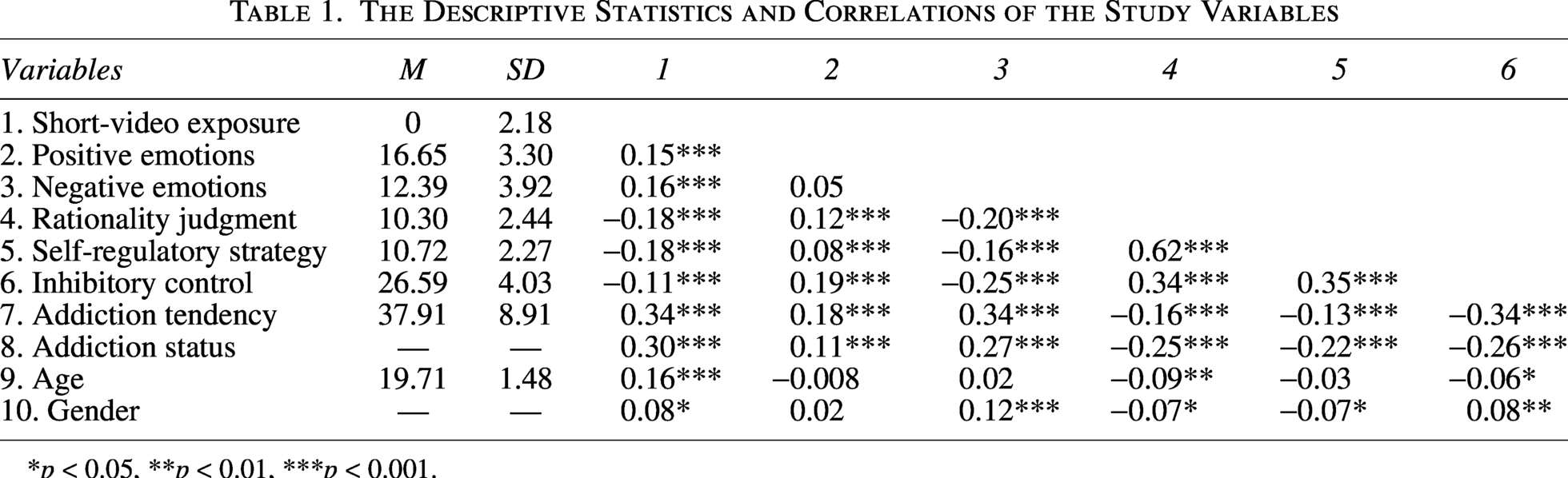
*p < 0.05, **p < 0.01, ***p < 0.001.
To improve the transparency of the short-video exposure construct, we further examined the intercorrelations and separate associations of its three component indicators. The three indicators were positively but moderately correlated (rs = 0.23–0.34, all p’s < 0.001), suggesting that they capture related but distinguishable aspects of short-video exposure. Current daily use had the strongest association with addiction tendency (r = 0.36, p < 0.001) and was also significantly related to all cognitive-affective variables. In regression models controlling for the other exposure indicators, age, and gender, current daily use remained the strongest predictor of addiction tendency (b = 0.30, p < 0.001) and continued to predict key cognitive-affective reactions. Usage history and past daily use also showed meaningful associations with several core variables, suggesting that the three indicators capture related but distinct aspects of accumulated short-video exposure. Detailed results are presented in Supplementary Tables S1 and S2.
The moderated mediation effect analysis
Table 2 reports the results of the moderated-mediation analysis (PROCESS Model 21). 26 Consistent with H1, short-video exposure positively predicted addiction tendency. In addition, addiction status significantly moderated the path from exposure to self-regulatory strategies, affording partial support for H4. Specifically, a significant interaction emerged between short-video exposure and addiction status in predicting self-regulatory strategies. Simple slopes analysis in Figure 2 showed that for the nonaddicted group, increased exposure was significantly associated with a decrease in self-regulatory strategy use (b = −0.23, 95% CI [−0.32, −0.15]), while for the addicted group, this relationship was nonsignificant (b = −0.03, 95% CI [−0.10, 0.05]), suggesting a floor effect.
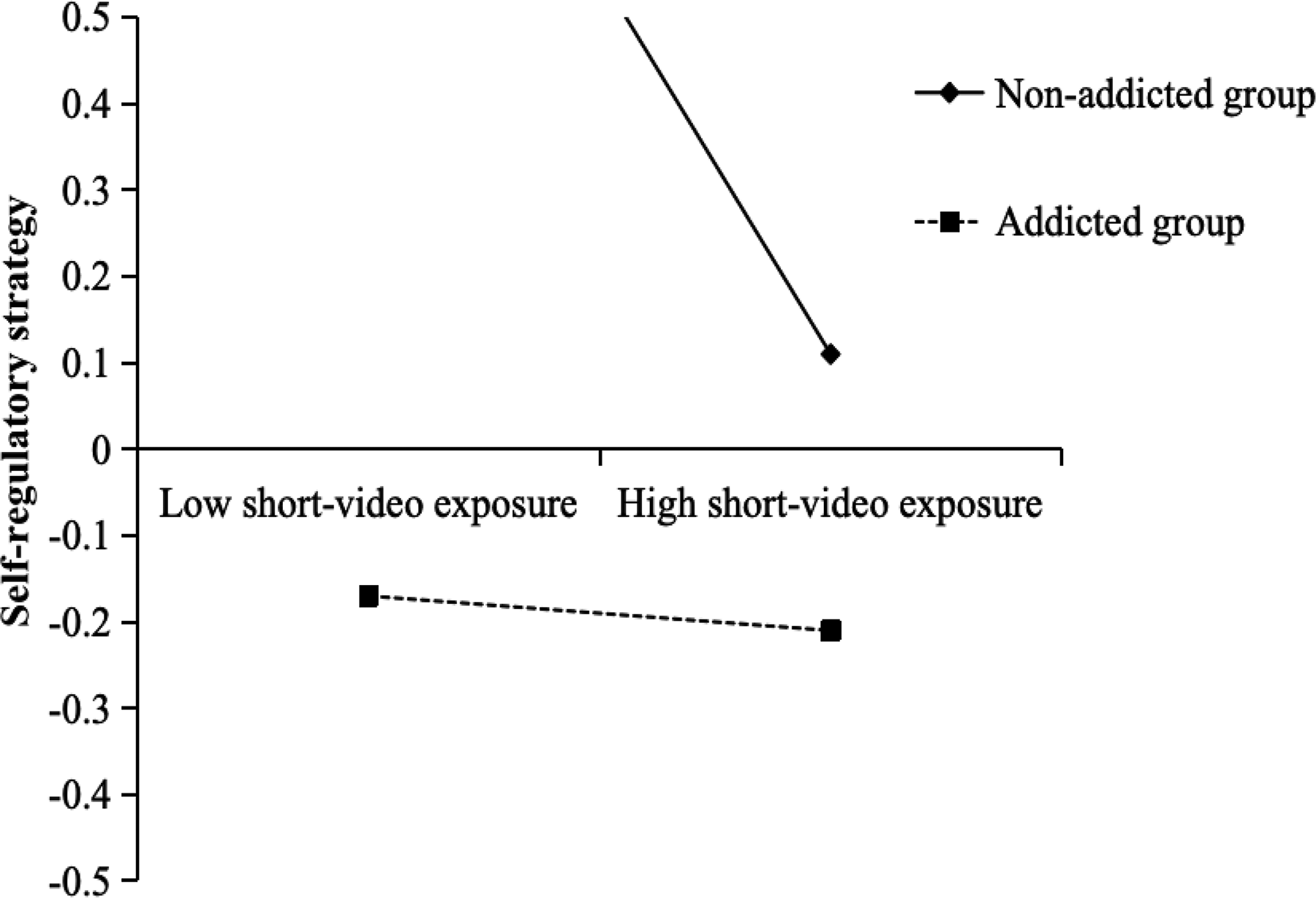
The interaction effect of short-video exposure and addiction status on self-regulatory strategy.
The Moderated Mediation Analysis
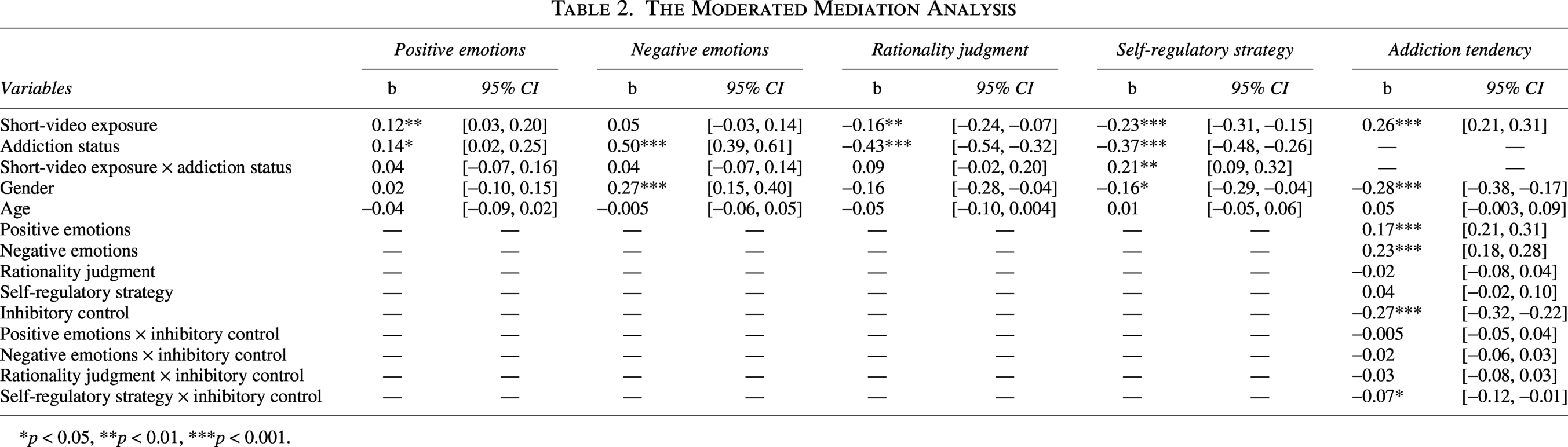
*p < 0.05, **p < 0.01, ***p < 0.001.
A significant interaction emerged between self-regulatory strategy and inhibitory control in predicting addiction tendency, providing partial support for H3. Simple slopes analysis in Figure 3 showed that for individuals with high inhibitory control, addiction levels remained consistently low regardless of self-regulatory strategy use (b = −0.03, 95% CI [−0.12, 0.05]). In contrast, for those with low inhibitory control, greater use of self-regulatory strategies paradoxically predicted higher addiction tendency (b = 0.10, 95% CI [0.02, 0.17]), suggesting a backfire effect.
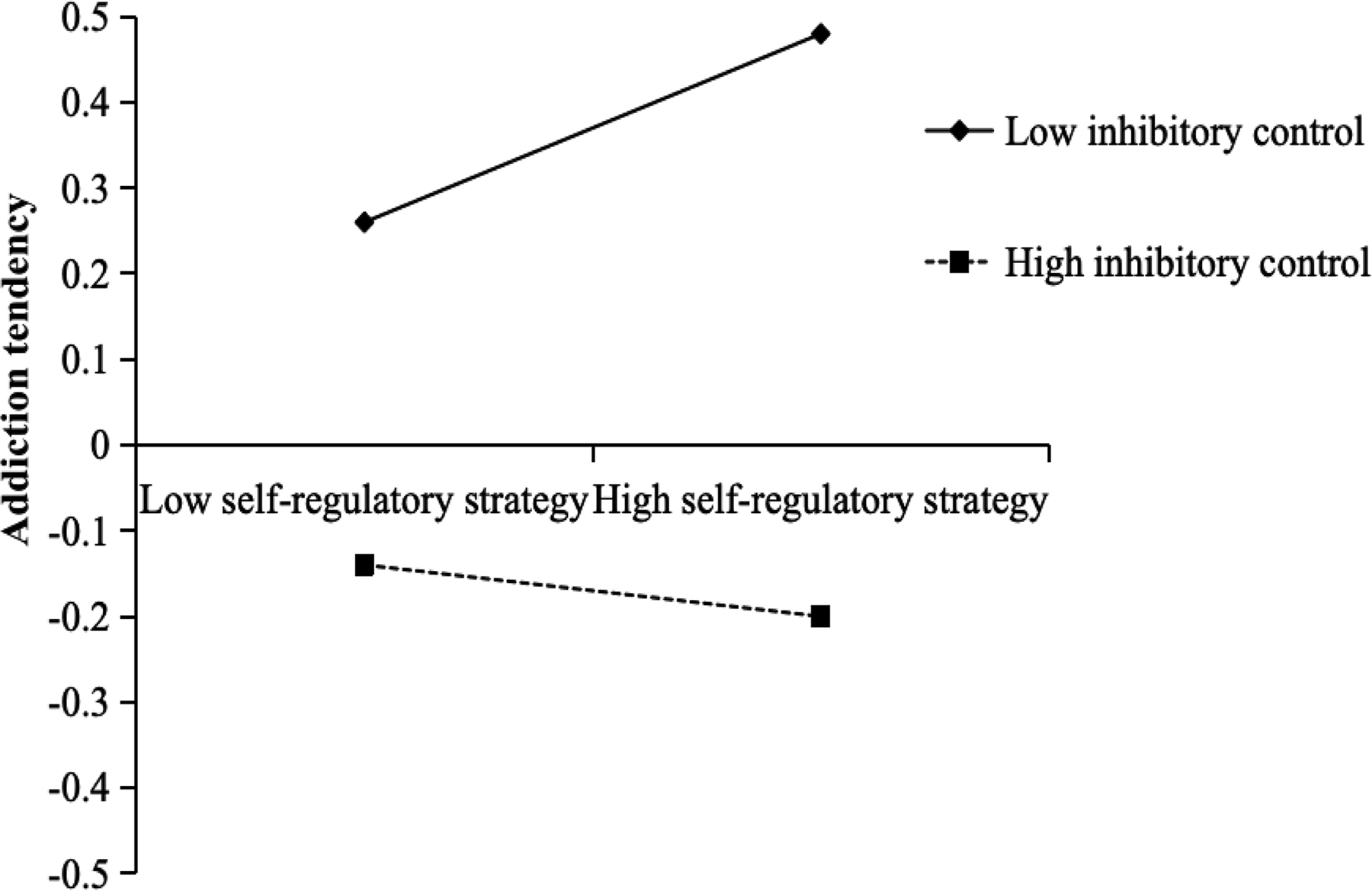
The interaction of regulation strategy and inhibitory control on addiction tendency.
The index of moderated mediation was not significant for the pathway through positive emotions (b = −0.002, 95% CI [−0.005, 0.004]) or negative emotions (b = −0.0006, 95% CI [−0.005, 0.004]). The indirect effect of exposure on addiction through positive emotions was consistently positive and significant across all subgroups (all 95% CIs were between [0.03, 0.05]), indicating its robust role as a primary driver of addiction. The indirect effect through negative emotions was nonsignificant for all groups.
The cognitive pathways were more complex. The index of moderated mediation of rationality judgment was not significant (b = −0.002, 95% CI [−0.01, 0.004]), and its conditional indirect effect did not reach significance in any subgroup (all 95% CIs contained zero). The most nuanced finding concerned self-regulatory strategy. The index of moderated mediation was significant (b = −0.01, 95% CI [−0.03, −0.002]), indicating that the indirect effect through self-regulation was conditional on both addiction status and inhibitory control. Probing this complex effect revealed that the conditional indirect effect was only significant for one specific subgroup: nonaddicted individuals with low inhibitory control (b = −0.02, 95% CI [−0.05, −0.004]). For this specific group, increased exposure led to decreased use of self-regulation, which in turn was associated with slightly lower addiction risk, likely reflecting an avoidance of the “backfire effect.” Consequently, H2 received partial support.
As an additional robustness check, we re-estimated the moderated mediation model using current daily use as the focal predictor, given that current usage intensity may be particularly relevant to state-based cognitive-affective reactions. The results were largely consistent with the main model based on the composite exposure score. Specifically, current daily use positively predicted addiction tendency; addiction status moderated the association between current daily use and self-regulatory strategy; and inhibitory control moderated the association between self-regulatory strategy and addiction tendency. These findings suggest that the main pattern of results was not merely an artifact of the composite exposure index or driven by the aggregation of heterogeneous exposure trajectories. Detailed results are presented in Supplementary Table S3.
Discussion
Our findings illuminate a fundamental dichotomy, delineating two distinct user profiles: an addicted profile characterized by high emotional engagement and low control, versus a nonaddicted profile of low emotional involvement and high control. The cognitive inconsistency in the addicted group—recognizing problematic use but failing to regulate it—points to a breakdown in executive functions where emotional drives overwhelm a compromised control system. 27 This emotional dynamic is further clarified by a counterintuitive finding regarding negative affect. Contrary to our hypothesis, addicted individuals reported significantly more negative emotions. This suggests the protective mechanism for nonaddicted users is not reacting to guilt, but proactively mitigating negative feelings through adaptive coping.28,29 In contrast, addicted individuals appear trapped in a feedback loop where problematic use generates negative emotions they are ill-equipped to manage, thus perpetuating the cycle. 30 This underscores the need for dual-pronged interventions that simultaneously strengthen core executive functions and teach adaptive emotional regulation skills.
Our moderated mediation analysis underscored the pivotal role of inhibitory control, which exclusively moderated the cognitive pathway involving self-regulatory strategies. This aligns with dual-systems theories, which posit that a “cool,” reflective capacity like inhibitory control is best suited to modulate another reflective process rather than override “hot,” automatic affective responses. 31 Most strikingly, this moderation pattern was consistent with a possible “backfire effect.” Among individuals with low inhibitory control, greater use of self-regulatory strategies was paradoxically associated with higher addiction tendency, consistent with the notion that effortful regulation may exceed limited executive capacity.31,32 The resulting frustration can further drive them back to the platform for emotional relief, 33 exacerbating the addictive cycle. This pattern may reflect either ineffective regulation under limited inhibitory-control capacity or reactive but unsuccessful regulation among individuals already at elevated addiction risk. Given the cross-sectional design, the temporal ordering between regulatory effort and addiction tendency cannot be determined. Thus, this finding identifies a conditional association in which self-regulatory strategy use is linked to higher addiction tendency only among individuals with low inhibitory control. It highlights inhibitory control as a boundary condition for the effectiveness of self-regulation and provides a clear target for future longitudinal or experimental tests. In contrast, for individuals with high inhibitory control, addiction levels remained low regardless of regulatory effort, suggesting that strong inhibitory capacity functions as a stable protective buffer rather than relying on specific strategies. Future longitudinal or experimental studies are needed to disentangle whether regulatory failure exacerbates addiction or whether heightened addiction motivates increased but ineffective regulation. Future interventions should focus on strengthening inhibitory control rather than merely encouraging greater self-regulatory effort. Moderate-intensity aerobic exercise and cardiovascular training may help improve prefrontal executive functioning and strengthen the brain’s “braking system,” thereby enhancing resilience in addictive digital environments.34,35 At the platform level, prevention should not rely solely on users’ repeated, effortful self-control. For individuals with limited inhibitory control, social media platforms may provide more effective support by reducing regulatory burden through strategies such as managing repetitive exposure to highly stimulating content, providing real-time usage feedback, simplifying break-taking options, and offering external supports that help users disengage before self-control demands exceed their available capacity.
Our findings highlight a divergent pathway for addicted individuals, where the pursuit of positive emotions becomes the dominant psychological mechanism. This primacy can be understood as a solution to a profound internal conflict arising from both emotional ambivalence and cognitive inconsistency. Emotionally, addicted users experience “ambivalent paralysis”; they are drawn by hedonic rewards while simultaneously feeling negative consequences like regret. This contradiction is cognitively taxing and impairs rational decision-making. 36 Notably, the present measure may have captured diffuse emotional discomfort rather than withdrawal-specific distress, which could account for why negative emotions failed to show significant conditional indirect effects across the four subgroups and lacked the discriminative power to differentiate addiction stages. Cognitively, they face inconsistency, where the knowledge of their problematic use clashes with their continued behavior, creating significant psychological discomfort. In this conflicted and cognitively depleted state, the positive affect generated by the platform serves as a powerful, dual-purpose psychological balm. It offers an immediate escape from the cognitive load of ambivalence while simultaneously acting as a form of self-justification that temporarily quiets the discomfort of dissonance. 13 This justification process may be further strengthened when repeated platform use becomes self-defining, as prior research on IT identity suggests that technologies integrated into one’s self-concept facilitate persistence despite negative consequences, particularly under supportive design features. 37 By contrast, technostress reflects strain arising from technological demands, which may heighten negative affect and increase self-regulatory burden. Future research may examine whether these person-level factors shape affective and cognitive responses to short-video exposure within the I-PACE framework. This dual function explains why the positive affective pathway is not merely a reinforcer but becomes the central, overriding mechanism that both drives and rationalizes the addictive cycle. Future interventions must target the affective core of addiction. Techniques like mindfulness can teach users to observe and accept their intense, ambivalent emotions without acting on them impulsively, thereby uncoupling the link between emotional distress and compulsive use. 38 This finding also provides a more mechanism-specific implication, interventions for high-risk users should not rely solely on generic time-use reminders, but should directly target the affective reward loop that sustains repeated short-video use. Platforms can play a key role in this process by reducing repetitive reinforcement from highly stimulating content, diversifying recommendations during prolonged viewing, and inserting natural stopping cues, strategies that correspond to the positive-emotion pathway identified in this study.
In stark contrast to the affect-driven pathway of the addicted, the journey of the nonaddicted individual is uniquely defined by dynamic regulatory response. At lower levels of exposure, they engaged in more self-regulation, likely representing a successful protective mechanism that keeps their usage in check. However, as their exposure increased, their regulatory efforts declined. This pattern highlights a critical “window of opportunity” for prevention. The initial regulatory effort serves as a vital defense,33,39,40 but this defense may appear to be a depletable resource that erodes under sustained exposure. When regulatory demands exceed individual capacity, nonaddicted users may become vulnerable to a pathological trajectory. Supplementary analyses showed that current daily use was most strongly associated with addiction tendency and cognitive-affective reactions, and the main moderated mediation pattern remained when current daily use was used as the focal predictor. Thus, the composite exposure score should be interpreted as a broad index of accumulated exposure rather than a precise indicator of specific usage trajectories, such as long-term moderate use versus short-term high-intensity use. Such trajectories may have distinct psychological implications and should be examined in future longitudinal research. Our findings caution against a one-size-fits-all approach to teaching self-regulation. For at-risk individuals, particularly those with low inhibitory control, interventions should de-emphasize effortful, in-the-moment resistance (which may backfire) and instead focus on proactive, less depleting strategies, such as situational modification (e.g., leaving the phone in another room) or habit substitution. In parallel, nonprofit organizations and youth-oriented institutions can contribute through digital literacy education, early risk screening, and the provision of accessible support resources for adolescents and young adults. For policymakers, this pattern suggests that prevention should not focus only on already severe or clinically salient users. Instead, early-warning efforts may be especially valuable for identifying users whose exposure is rising while self-regulatory engagement is weakening, as this combination may signal a transition window before more entrenched addiction develops. This extends the practical value of the study from intervention after addiction to prevention before addiction becomes entrenched. Importantly, the nonaddicted group should not be treated as uniformly low risk; weakening self-regulatory engagement under increasing exposure may indicate a critical window in which campus-based education, family support, and platform-supported digital well-being tools can intervene earlier.
In addition, several limitations should be noted. First, although age was controlled in all key analyses and may partially reflect grade-related differences in the Chinese university context, grade level and prior school regulation of phone use were not directly measured. Given the common experience of stricter high-school phone regulation among Chinese university students, past daily use should not be interpreted solely as personal control. Thus, the findings should be interpreted within the university-student context rather than generalized to all developmental or educational groups. Second, our empirical model focused on person-level mechanisms, but individual differences alone may not fully explain short-video addiction. Platform affordances may activate or amplify affective, cognitive, and control-related vulnerabilities, suggesting that addiction risk may emerge from the interaction between platform-level conditions and individual vulnerabilities. Future research should directly measure platform affordances, IT identity, and technostress to clarify how sociotechnical and psychological mechanisms jointly contribute to short-video addiction.
In summary, our findings reveal distinct profiles: a high-emotion, low-control addicted group characterized by emotional ambivalence and cognitive inconsistency, and a low-emotion, high-control nonaddicted group. The role of self-regulation is dual-edged, moderated by inhibitory control; attempts to regulate can exacerbate addiction for those with low capacity, while for those with high capacity, such efforts are less necessary. The addiction process also diverges by user status: the addicted are driven by the pursuit of positive emotions, and for nonaddicted users, self-regulation is a critical but limited defense, underscoring a vital window for early intervention. By revealing divergent pathways for addicted and nonaddicted users, our findings are consistent with a stage-based conceptualization of addiction and support a more dynamic, developmental interpretation of the I-PACE model. However, they should be understood as theory-guided evidence rather than definitive validation of all underlying mechanisms.
Authors’ Contributions
X.L.: Conceptualization, methodology, supervision, formal analysis, writing—review and editing; G.T.: Statistical analysis and writing—original draft preparation; X.C.: Data collection and data curation; Y.L.: Data collection and manuscript revision; H.Q.: Data organization and manuscript revision. All authors have read and agreed to the published version of the article.
Author Disclosure Statement
The author(s) declared no potential conflicts of interest with respect to the research, authorship, and/or publication of this article.
Informed Consent Statement
Informed consent was obtained from all participants involved in this study.
Supplemental Material
sj-docx-1-cyb-10.1177_21522715261464753 — Supplemental material for How Cognitive—Affective Dynamics and Inhibitory Control Diversify Pathways from Short—Video Exposure to Addiction: A Moderated Mediation Analysis Within the I-PACE Framework
Supplemental material, sj-docx-1-cyb-10.1177_21522715261464753 for How Cognitive—Affective Dynamics and Inhibitory Control Diversify Pathways from Short—Video Exposure to Addiction: A Moderated Mediation Analysis Within the I-PACE Framework by Xia Li, Guangming Tang, Xuyi Chu, Ying Liang, and Haoxuan Qin
Footnotes
Data Availability
The data supporting the findings of this study are available on request from the first author.
Funding Information
The project was supported by the 2024 Philosophy and Social Sciences Special Project in Shanghai Universities [2024ZSD017].
References
Supplementary Material
Please find the following supplemental material available below.
For Open Access articles published under a Creative Commons License, all supplemental material carries the same license as the article it is associated with.
For non-Open Access articles published, all supplemental material carries a non-exclusive license, and permission requests for re-use of supplemental material or any part of supplemental material shall be sent directly to the copyright owner as specified in the copyright notice associated with the article.
