




Abstract
Background:
Building Healthy Families (BHF) is an adapted family healthy weight program (FHWP) designed for and implemented in rural areas. To increase the likelihood of the broad dissemination and implementation of BHF to other rural communities, the Nebraska Childhood Obesity Research Demonstration 3.0 project developed the BHF Online Training Resources and Program Package (BHF Program Resources). The BHF Program Resources is a “turn-key” online platform that includes a train-the-trainer system, program materials, and a data portal for use by community-based implementation teams.
Methods:
A community-randomized type 3 hybrid effectiveness-implementation pilot study tested the BHF Program Package only (BHF-PO) with and without an action learning collaborative (BHF-LC) to determine relative implementation fidelity and effectiveness among community-based implementation teams. RE-AIM was used for planning and reporting outcomes.
Results:
The BHF-LC communities demonstrated higher implementation fidelity during the core sessions (90.6% vs. 75.8%, p = 0.076), with greater contact hours (17.8 vs. 14.8, p = 0.096). Adoption and Maintenance were successfully achieved but did not differ by the study condition. Children in the BHF-LC communities attended significantly more sessions (79% vs. 69%, p < 0.05, Reach) and showed a greater change in the BMI z-score (−0.15 ± 0.14 vs. −0.08 ± 0.16, p < 0.05, Effectiveness) by 3 months.
Conclusions:
Rural communities can implement the BHF program with fidelity using online resources; however, adding a learning collaborative may improve early implementation quality and child engagement. These findings warrant further testing in a larger trial.
Introduction
The US Surgeon General, the National Academy of Medicine, and the CDC have all declared the United States to be amid an obesity epidemic, with a fourfold increase in childhood obesity during the past four decades1,2 and a significant spike in BMI during the COVID-19 pandemic.3,4 In rural America, 38% of youth between the ages of 10 and 17 years are living with overweight or obesity, compared with 30% in urban areas.5,6 Furthermore, families living in rural and micropolitan areas (pop. <50,000) are more likely to be from lower income groups (e.g., 127 of 138 US counties with child poverty rates >40% are rural or micropolitan areas 6 ), which also increases the risk of obesity and chronic disease. There is a critical need to develop strategies that specifically address childhood obesity in rural and micropolitan communities.
A large body of literature documents the efficacy of evidence-based interventions for childhood obesity.7–12 Among these, family healthy weight programs (FHWPs) have efficaciously stabilized, reduced, and maintained healthier child weight status,11,13–18 with many adapted from the Traffic Light Diet (TLD) model developed by Epstein and colleagues over 40 years ago.7,16,19–21 However, these programs are typically delivered in urban areas through hospitals or medical centers, limiting access for geographically remote families.
To address this gap, Building Healthy Families (BHF) was developed as an adaptation of the TLD specifically for implementation in rural communities (See Table 1)22–24 and has demonstrated significant and clinically meaningful child BMI z-score (BMIz) reductions (i.e., ≥0.25) along with improvements in fat mass, fat-free mass, systolic blood pressure, and high-density lipoprotein cholesterol in a micropolitan community serving a rural region.22,24 While BHF and other FHWPs tested in micropolitan and rural areas show promise,15,25,26 their broader impact depends on strategies that facilitate dissemination and implementation, aligning with the unique assets and constraints of these contexts. The purpose of this article is to describe the outcomes of the Nebraska Childhood Obesity Research Demonstration (CORD) 3.0 project, designed to address the translational gap in access to evidence-based FHWPs in rural areas.
Building Healthy Families Program Overview
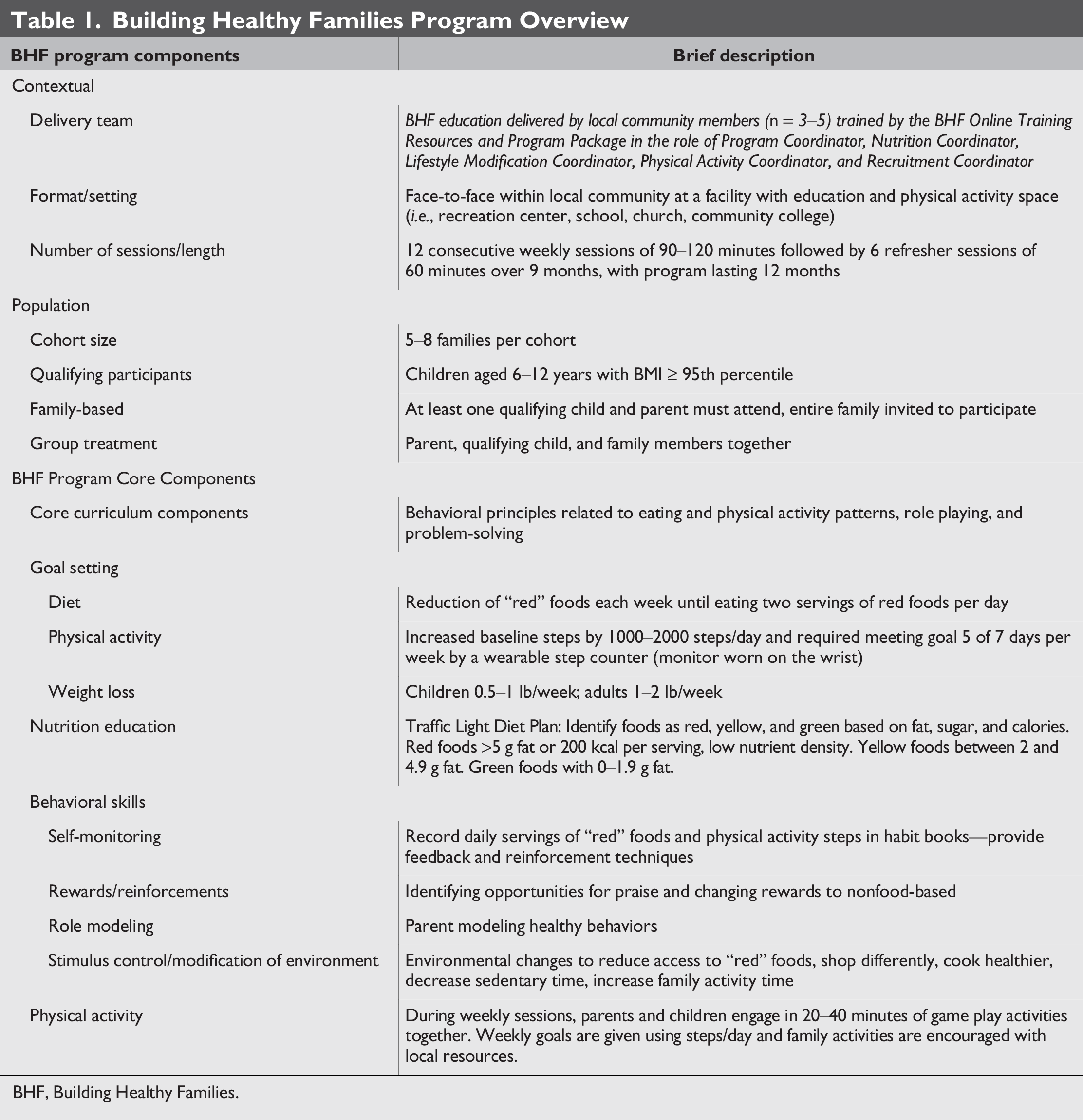
BHF, Building Healthy Families.
Methods
Study Design
The Nebraska CORD 3.0 project was a community-randomized type 3 hybrid effectiveness-implementation pilot study of BHF dissemination and implementation strategies. These included a participatory network weaving approach in the form of a Community Advisory Board (CAB) to guide planning, implementation, and sustainability across all study activities and a fund and contract strategy to facilitate community adoption. The primary aim focused on comparisons between communities randomly assigned to the BHF Resources, which provided comprehensive training, program materials, and data-tracking tools to build local implementation capacity with or without an action learning collaborative. 27 The RE-AIM framework guided the development of the BHF Resources and resulted in a family recruitment module (reach), evidence-based FHWP content (effectiveness), the packaging of program materials into a single resource (adoption), training modules (implementation), and a data portal to demonstrate program success (maintenance). 28 RE-AIM was also used to operationalize outcomes to ensure that dissemination, effectiveness, and implementation outcomes were considered. 27 This article reports on the primary implementation outcome and effectiveness while other RE-AIM indicators have, and will be, reported elsewhere.27–30 Communities selected to adopt BHF were randomized to use the BHF Program Package only (BHF-PO) or the BHF Program Package plus an action learning collaborative condition (BHF-LC). The learning collaborative was designed to bridge the gap between packaged training and real-world implementation, offering just-in-time support, structured reflection, and community-specific guidance to optimize the reach, effectiveness, adoption, implementation, and sustainability of the BHF program. Our primary hypothesis was that the BHF-LC communities would deliver BHF with higher implementation fidelity and be more likely to sustain BHF when compared with the BHF-PO communities. Our secondary hypothesis was that child participants in both conditions would reduce their weight status at 3, 6, and 12 months compared with a matched control cohort, with child participants in the BHF-LC condition experiencing greater reduction in BMI metrics than children in the BHF-PO condition. The study protocol was approved by UNK IRB #121919-1 and registered at Clinicaltrials.gov (NCT04719442). Informed consent was obtained from Community-Based Implementation Team (CIT) members and adult caregivers/parents as well as child assent.
Dissemination and Implementation Strategies
Participatory network weaving
The CAB composed of 12 members—including representatives from public health, education, health care, parks and recreation, and rural community development—was convened to guide the key phases of the project. The CAB met quarterly to provide input on the planning and statewide dissemination of the BHF Resources, reviewed community applications during the fund and contract process, and co-developed implementation supports.
Fund and contract
This strategy was used to recruit eligible rural and micropolitan communities to participate in the pilot trial (detailed elsewhere 29 ). Eight communities applied to participate, and seven communities were selected based on their community readiness assessment and were randomized.27,29 Enrolled communities received a BHF program kit and completed a memorandum of understanding, in which they agreed to assemble a BHF CIT, use the BHF Resources to train CITs, and recruit and deliver BHF to at least two cohorts of families.
BHF Resources
An instructional design process was used to package the BHF program into an online training and resource system, as described by Heelan et al. (2021). 28 The BHF Resources include role-specific training modules for program coordination, nutrition education, physical activity facilitation, and lifestyle modification support. Each module includes interactive content, knowledge checks, and embedded fidelity self-assessments to ensure mastery and promote high-quality delivery. To support consistent implementation, the packaged program also includes ready-to-use presentation slides, lesson plans, handouts, and supplementary materials. CITs across both study arms used the BHF Resources to complete an initial training sequence, which unlocked subsequent weekly session content. The digital platform also included a data portal for local teams to track participant enrollment, attendance, outcomes, and implementation fidelity. Technical assistance was also available on request. This comprehensive packaging was designed to ensure local implementation capacity and maintain fidelity while allowing adaptation to the community context.
Action learning collaborative
Communities randomized to the BHF-LC condition participated in a structured facilitation strategy designed to strengthen implementation quality and support sustainability. Led by the research team and guided by the RE-AIM and Promoting Action in Health Services frameworks,31–33 the BHF-LC condition included quarterly cross-site learning sessions and individual action period meetings with each CIT.
Data Collection
Implementation fidelity
The primary implementation fidelity outcome was calculated as the product of the number of sessions completed and the average percentage of activities completed per session. This was assessed using a structured, multidimensional direct observation tool developed specifically for the BHF program. 30 Trained direct observers attended BHF sessions and completed a standardized fidelity rating protocol. Direct observations were completed for all sessions in cohort 1 and a random selection of six sessions from cohort 2 in each community. The fidelity assessment captured the following domains: (1) participant responsiveness, (2) quality of delivery (preparedness and session management), (3) program differentiation defined as the presence or absence of BHF’s three core content areas, and (4) adherence to protocol based on the number of sessions completed and the percentage of session activities completed. The initial three domains were scored on a 0–2-point scale (0 = not achieved, 1 = partially achieved, 2 = fully achieved).
Child weight status
Anthropometric data were collected at baseline, 3, 6, and 12 months. Children were measured without shoes and heavy clothing, and values were recorded to the nearest 0.1 pounds (weight) and 0.1 inches (height). Data were entered into the secure BHF data portal by CITs and reviewed weekly by the research coordinator for completeness and plausibility. Effectiveness outcomes were based on three standardized indicators: BMIz, BMI as a percentage of the 95th percentile (BMIp95), and BMI as a percentage of the 50th percentile (BMIp50). 34
Sociodemographics
CIT demographic information, including self-reported role and organization, years of service with the organization, and professional credentials (if applicable), as well as self-efficacy for program delivery, was collected through a brief form in the BHF Resources data portal. BHF families completed a family intake form that included questions on race/ethnicity, family income, and a brief food insecurity screener. 35 Family sociodemographic data were applied to each qualifying child.
Matched control cohort
A cohort of children from a rural school district that did not participate in BHF had weight and height data available for comparison. 27 A sample of children matching age, gender, and baseline BMI percentile was used as a 1-year matched control.
Data analysis
Descriptive statistics were used to summarize CIT and family sociodemographic characteristics overall and by the study conditions. Means, standard deviations (SDs), and proportions were calculated for all variables, and group differences were examined using independent-sample t-tests or chi-square tests, as appropriate. Data from direct observation forms were summarized for each fidelity domain, and scores were averaged across sessions within each CIT and aggregated across communities. Implementation outcomes were reported for BHF core sessions (Sessions 1–12), refresher sessions (Sessions 13–16/17–18), and all sessions (Sessions 1–18). Differences in the primary implementation fidelity outcome between the BHF-PO and BHF-LC conditions were tested using independent-sample t-tests, with significance set at p < 0.10, as a pilot study. 36 For child-level effectiveness outcomes, data were analyzed for participants aged 5–13 years and BMI ≥85th percentile at baseline. Change scores across BMI metrics from baseline to 3, 6, and 12 months were computed, and differences between the study conditions were evaluated using independent-sample t-tests, with significance set at p < 0.05. In addition, 12-month change scores were compared between the intervention groups and the matched control cohort. All statistical analyses were conducted using standard procedures in SAS 9.3 or equivalent statistical software.
Results
Sample Characteristics
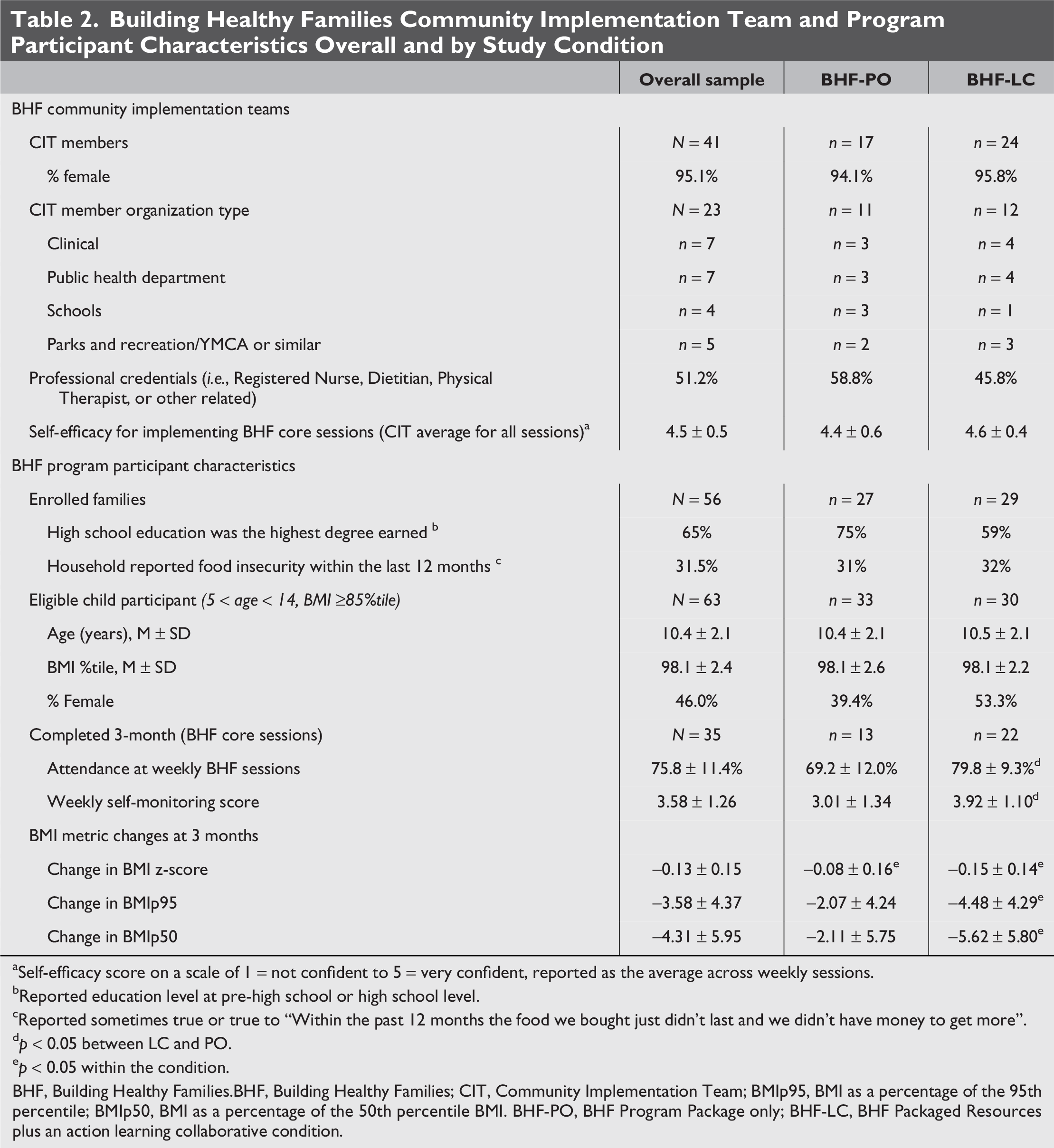
A total of seven communities were enrolled and randomized to the BHF-Program Only (BHF-PO, n = 3) or BHF Learning Collaborative (BHF-LC, n = 4) condition (Fig. 1). As shown in Table 2, CITs included 41 members from diverse sectors, including schools, public health departments, and recreation centers. Most CIT members were female (95.1%) and reported high self-efficacy for delivering the BHF program. There were no differences in CIT composition, professional credentials, or baseline self-efficacy between the study conditions.
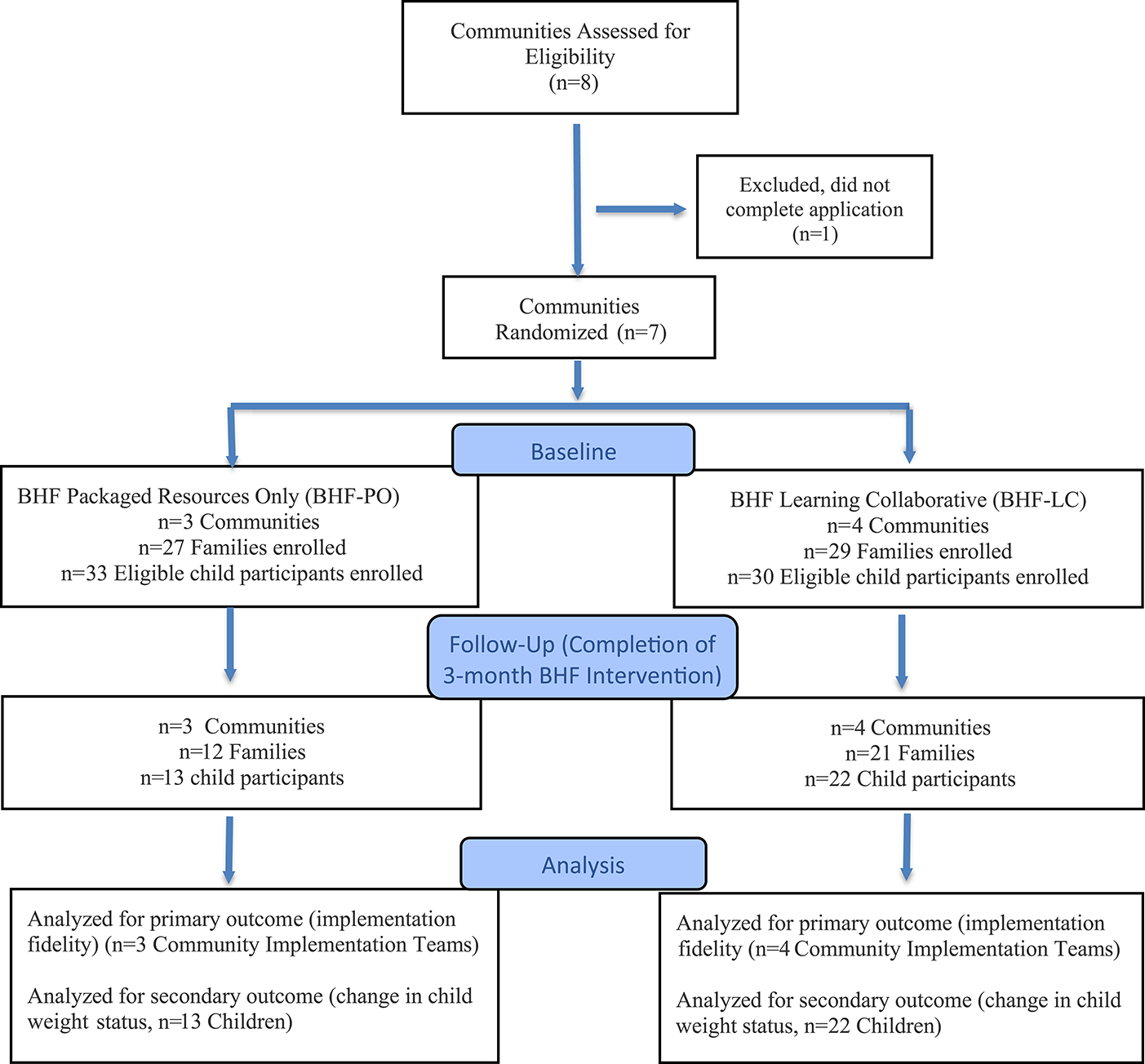
Nebraska Childhood Obesity Research Demonstration 3.0 CONSORT diagram.
Building Healthy Families Community Implementation Team and Program Participant Characteristics Overall and by Study Condition
Self-efficacy score on a scale of 1 = not confident to 5 = very confident, reported as the average across weekly sessions.
Reported education level at pre-high school or high school level.
Reported sometimes true or true to “Within the past 12 months the food we bought just didn’t last and we didn’t have money to get more”.
p < 0.05 between LC and PO.
p < 0.05 within the condition.
BHF, Building Healthy Families.BHF, Building Healthy Families; CIT, Community Implementation Team; BMIp95, BMI as a percentage of the 95th percentile; BMIp50, BMI as a percentage of the 50th percentile BMI. BHF-PO, BHF Program Package only; BHF-LC, BHF Packaged Resources plus an action learning collaborative condition.
Communities enrolled 56 families, with 63 children meeting the eligibility criteria. More than one-third of families reported food insecurity in the last 12 months. Eligible child participants were 10 (±2.1) years old, with 46% being female, and at the 98th (±2.4) percentile for BMI at baseline. There were no significant differences between the study conditions at baseline (Table 2).
Primary Outcome: Implementation Fidelity
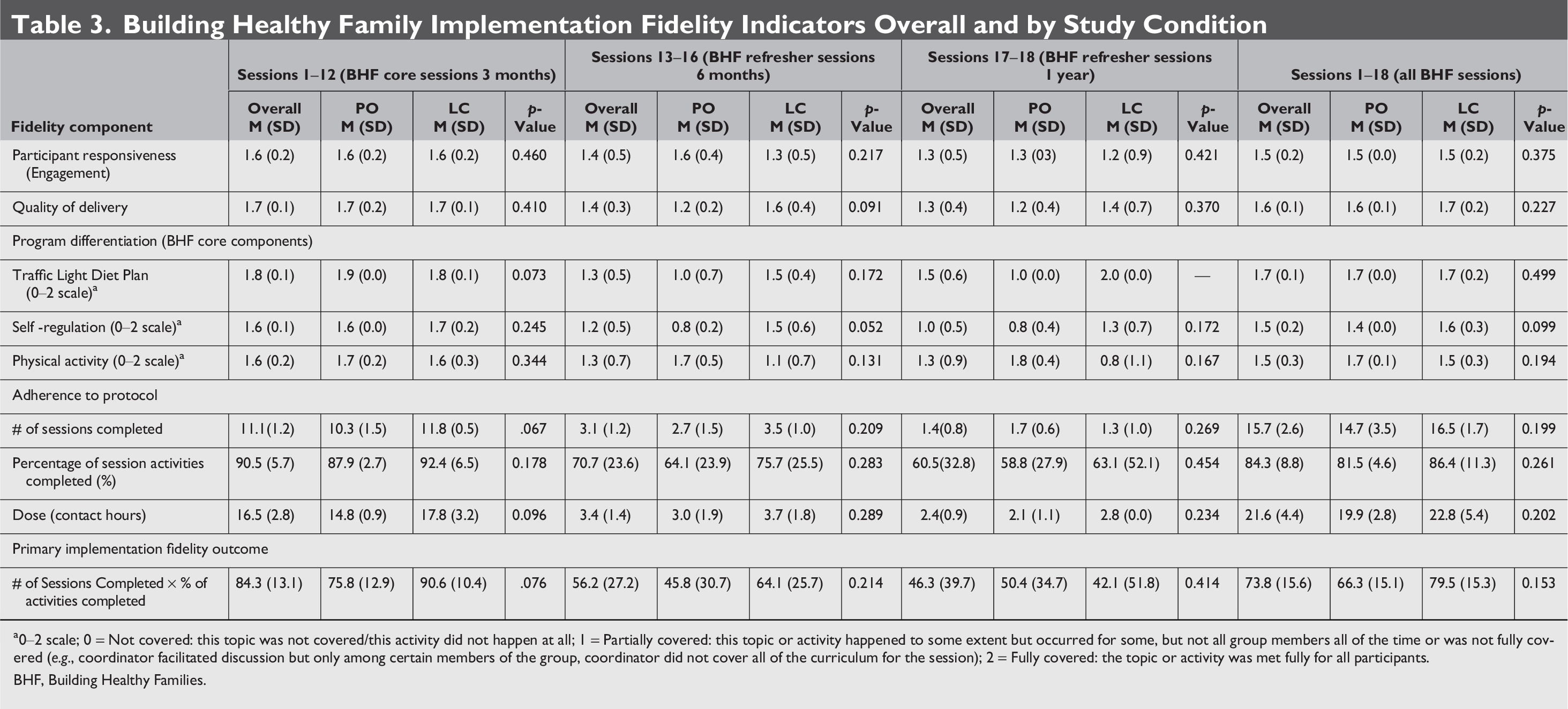
CITs in the BHF-LC condition demonstrated higher fidelity across multiple indicators during the initial implementation phase (Sessions 1–12, Table 3). Specifically, the BHF-LC CITs delivered more sessions (11.8 vs. 10.3) and more total contact hours (17.8 vs. 14.6). The primary fidelity outcome, calculated as the number of sessions completed multiplied by the average percentage of activities completed per session, was also higher in the BHF-LC communities during Sessions 1–12 (90.6% vs. 75.8%, p = 0.076). During the 6- and 12-month refresher periods (Sessions 13–18), fidelity declined in both conditions, and differences between the groups were no longer significant.
Building Healthy Family Implementation Fidelity Indicators Overall and by Study Condition
0–2 scale; 0 = Not covered: this topic was not covered/this activity did not happen at all; 1 = Partially covered: this topic or activity happened to some extent but occurred for some, but not all group members all of the time or was not fully covered (e.g., coordinator facilitated discussion but only among certain members of the group, coordinator did not cover all of the curriculum for the session); 2 = Fully covered: the topic or activity was met fully for all participants.
BHF, Building Healthy Families.
BHF was designed to include a minimum of 26 contact hours with families over 1 year. The BHF-LC CITs provided 22.8 (±5.4) contact hours and 86.4 (±10.4)% of the sessions and activities. In contrast, the BHF-PO CITs provided 19.9 (±2.8) contact hours and 81.5 (±4.6)% of the sessions and activities during the 12-month program.
Secondary Outcome: Child-Level Outcomes
Child participant session attendance was significantly higher in the BHF-LC condition (79.8% vs. 69.2%, p < 0.05). At 3 months, both conditions showed statistically significant reductions in child BMI metrics compared with baseline. The BHF-LC participants showed greater improvements across all metrics, including BMIz [−0.15 (±0.14) vs. −0.08 (±0.16)], BMIp95 [−4.48 (±4.29) vs. −2.07 (±4.24)], and BMIp50 [−5.62 (±5.80) vs. −2.11 (±5.75)] than the BHF-PO participants. Improvements were sustained in the BHF-LC participants at 6 months and remained stable at 12 months (Fig. 2). At 12 months, comparisons with the matched control cohort (n = 35) revealed significantly greater improvements in all BMI metrics among all BHF participants (p < 0.05), whereas the control group showed minimal changes [e.g., BMIz, −0.04 (±0.2); BMIp95, −0.5 (±5.9)] from baseline.
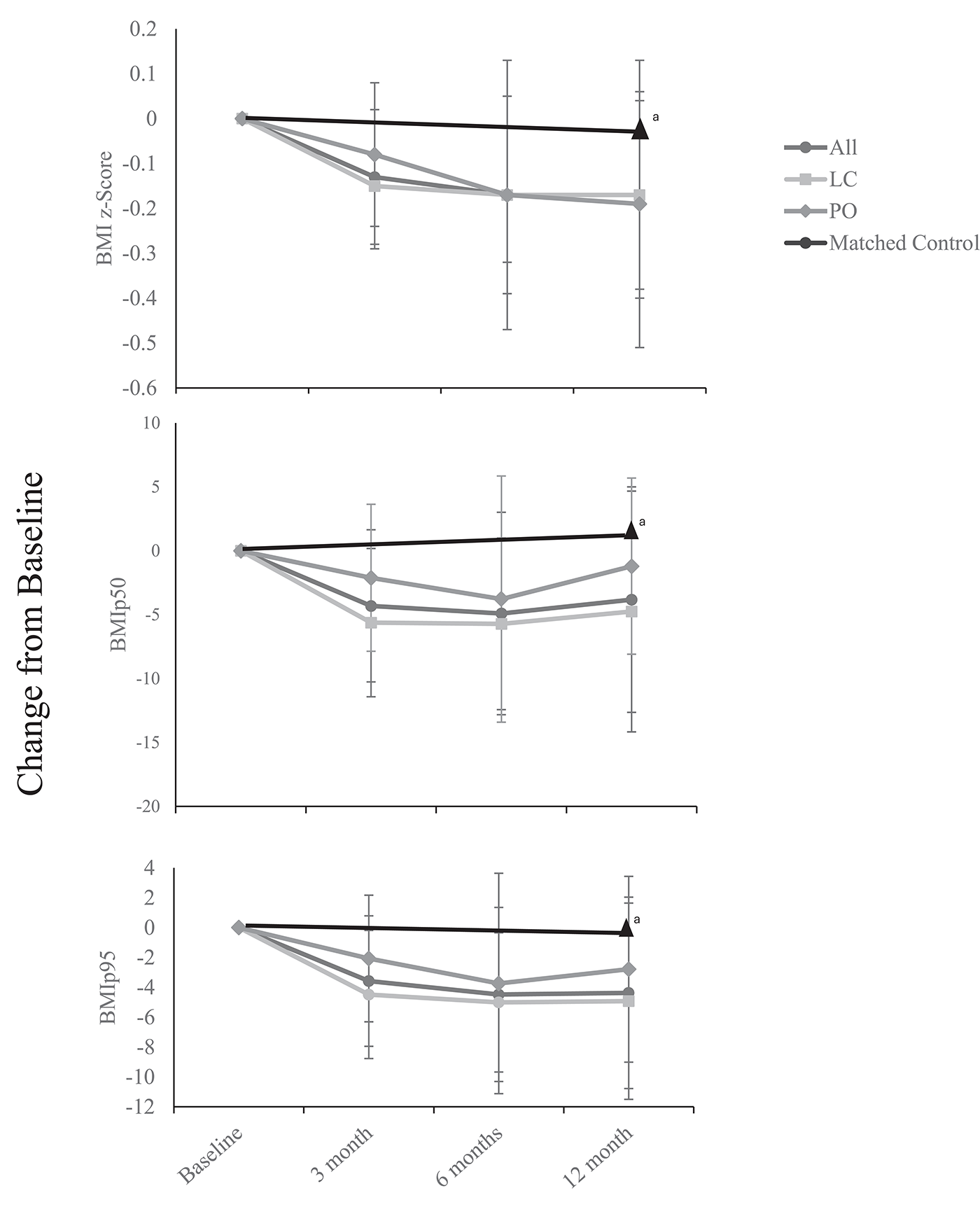
Change in BMI Metrics for Eligible Child Participants at Baseline, 3, 6, and 12-months by Study Condition and Compared to Match Cohort Control.
Discussion
The Nebraska CORD 3.0 project aimed to develop and test the BHF Resources, a “turn-key” online platform for use by local implementation teams to address the limited access to evidence-based FHWPs in rural areas, where childhood obesity prevalence is high. Early project phases focused on designing and applying a set of dissemination and implementation strategies to support rural communities in adopting and implementing BHF.27–29 This article reports the primary and secondary outcomes of a community-randomized type 3 pilot trial, which found that the use of an action learning collaborative improved early implementation fidelity and child BMI metrics.
Implementation fidelity was high across both study conditions. A strength of our approach was the use of a multicomponent direct observation measure, in which trained observers rated implementation fidelity data, thereby overcoming the limitations of self-reported fidelity. 30 Communities assembled CITs from local organizations with a range of backgrounds and skills, which is crucial for rural communities where centralized health care teams are limited. The BHF-LC CITs also delivered more sessions, achieved greater contact hours, and had significantly stronger adherence to the BHF protocol during the initial 12 weekly sessions. The action learning collaborative implementation strategy, characterized by structured facilitation, active problem-solving, tailored support, and peer learning, likely contributed significantly to these differences. However, these differences did not persist through latter session delivery, indicating a potential need to increase the focus on refresher sessions within the BHF Resources and active implementation facilitation support. Although learning collaboratives are posited to improve outcomes for providers, implementers, and potentially patients, there is limited research testing action learning collaboratives as an implementation facilitation strategy compared with a control condition.37–39
The effectiveness of the BHF program was assessed using child weight status, the secondary outcome of this pilot trial. Eligible children in both conditions exhibited significantly improved weight outcomes compared with baseline, but that change was greater among those in the BHF-LC study condition. These outcomes are comparable to the results from other FHWPs in rural areas.26,40 Based on systematic reviews, programs with ≥26 contact hours yield an average reduction in BMIz of approximately 0.20. 41 Over the course of 1 year, the CITs using the BHF Resources achieved comparable outcomes of −0.17 ± 0.23 with 21.6 ± 4.4 contact hours. In the limited number of studies conducted in rural areas, the decrease in BMIz has averaged approximately 0.08—possibly due to the challenges of implementation in under-resourced rural areas.40,42 Our findings suggest that providing online training and a resource blueprint for delivering FHWPs and using a CIT that leverages staff across community organizations can achieve similar outcomes to previous efficacy trials. This finding is consistent with other programs developed for delivery by health educators in community settings, which have also achieved BMIz reductions of 0.17 43 in the range necessary for improving cardiometabolic outcomes. 44
Intensive health behavior and lifestyle treatment (IHBLT) programs, such as BHF and other CORD 3.0 FHWPs, are a part of the current clinical care guidelines for children with obesity. 14 However, achieving the recommended level of contact hours (i.e., >26 hours) with qualified health care providers is often not feasible in rural areas. In this study, the BHF-LC communities provided more contact hours and achieved greater BMI reductions compared with the BHF-PO communities, and earlier BHF evaluations demonstrated meaningful BMIz (−0.26 ± 0.21) and BMIp95 (−8.48 ± 5.74) reductions with 24 hours of contact time over 12 weeks. 24 Bright Bodies, an in-person IHBLT program, demonstrated similar dose–response relationships between contact hours and weight outcomes. 45 In contrast, I Am Healthy, a rural telehealth program, did not find a dose–response relationship. 46 To achieve recommended hours, CITs in both conditions may need to emphasize family engagement, attendance, and relapse prevention, particularly in later weekly sessions (i.e., Months 6–12). In addition to contact time, the format and delivery of programs may influence participation and outcomes, particularly in rural communities. A recent qualitative study finds that rural families may prefer in-person programs; 47 thus, programs such as BHF, which are delivered in an in-person and group-based format, further reinforce BHF’s fit for these communities.
This study has some limitations to note. First, it is a pilot trial with seven enrolled communities; however, the preliminary evidence generated in this trial provides support for a fully powered community-randomized trial. Randomization of communities allowed for the preliminary testing of the action learning collaborative implementation strategy compared with a control condition. The pilot trial was launched during the COVID-19 pandemic, which may have impacted the CIT’s ability to enroll and engage families. After an initial pause, CITs began recruiting and enrolling families following local public health guidelines. However, the number of families enrolled was lower than anticipated and may be due to the pandemic and hesitation in implementing face-to-face community programs. Due to the post-pandemic landscape change and the concerns of families participating in programs, there was an increased focus on recruitment, including the addition of a recruitment coordinator role within the BHF Resources and an additional recruitment-specific training module.
Conclusions
Packaged programs such as BHF are essential to ensure that rural children with obesity and their families have access to the treatment they need. This pilot community-randomized trial demonstrated that rural communities successfully used the BHF Resources to train local implementation teams who delivered the BHF program with fidelity and supported clinically meaningful changes in child body mass. Child participants in both study conditions fared better than children in the matched control comparison. The action learning collaborative facilitation strategy improved implementation fidelity and child-level weight outcomes, suggesting that enhanced training may be a worthwhile investment to support rural communities’ delivery of FHWPs. Future implementation efforts could benefit from more tailored, ongoing collaborative support and improved integration of strategies to maintain community engagement and effectiveness beyond the initial weekly sessions of intervention delivery.
Impact Statement
Rural areas have limited access to family healthy weight programs (FHWPs). This trial demonstrated that community-based implementation teams trained using an online platform can deliver a FHWP with fidelity and improve child BMI metrics. A learning collaborative implementation strategy enhanced the quality of implementation and engagement.
Authors’ Contributions
All listed authors meet the criteria for authorship.
Footnotes
Author Disclosure Statement
No competing financial interests exist.
Funding Information
This study was supported by the CDC (1U18DP006431). This work is solely the responsibility of the authors and does not represent official views of the CDC.