



Abstract
This research draws on longitudinal data from the Project on Human Development in Chicago Neighborhoods (PHDCN) to examine whether African Americans report more trouble with the police than Latinos, Whites, and members of other racial groups after controlling for self-reported offending and other covariates. We tested whether the average self-reports of trouble with the police varied across the neighborhood clusters included within the PHDCN and generated a series of negative binomial models to assess whether African Americans self-reported more trouble with the police than others. The results generated from the unconditional hierarchical model showed that the average self-reports of trouble with the police did not significantly vary across the neighborhoods. The negative binomial results indicate that African Americans report significantly more trouble with the police while controlling for the respondents’ levels of offending, level of impulsivity, levels of anxiety and depression, gang membership, their family’s criminal involvement, whether they or their parents had serious mental health issues, the respondents’ current and expected economic conditions, their racial affinity, as well as other individual characteristics.
A number of studies document that African Americans report more frequent encounters with the police than members of other racial groups. The kinds and scope of these interactions are relatively vast. Scholars have documented them in relation to being pulled over and searched while driving (i.e., Driving While Black) (LaFraniere & Lehren, 2015; Lamberth, 1994; Lundman & Kaufman, 2003), being stopped and frisked as a pedestrian (Fagan & Geller, 2015; Fagan, Geller, Davies, & West, 2010; Gelman, Davies, & Kiss, 2007), being arrested (Andersen, 2015; Huizinga et al., 2007), being subjected to disrespectful treatment (Mastrofski, Reisig, & McCluskey, 2002), and experiencing police use of force (Holmes & Smith, 2012). In addition, a number of researchers employing qualitative methods (e.g., ethnographies) have portrayed the ongoing negative interactions that African Americans have with the police particularly in areas of “compounded deprivation” (Anderson, 1999; Brunson & Miller, 2006; Perkins & Sampson, 2015; Rios, 2011). Indeed, Rios (2011) found that only 11 of the 118 minority youths included in his study of delinquency and criminalization reported any positive experiences with the police. In short, the prevailing evidence suggests that African Americans have significantly greater contact with the police than members of other racial groups.
Yet, researchers have raised methodological issues that question whether the data support the conclusion that African Americans have more contact with the police. Two difficult methodological issues need to be resolved before this conclusion can be drawn. First, there has to be a significant positive relationship between being black and increased levels of police contact. The second, and more challenging issue, is that researchers have to rule out all the other possibilities for why African Americans may report having had more interactions with the police. That is, they have to eliminate omitted variable bias to ensure the relationship is not spurious. As Lindsey, Mears, Cochran, Bales and Stults (2015) point out, researchers cannot conclude that minorities have more contact with the police unless they have ruled out the factors that could account for troubled police-minority contacts.
Explanations for Disproportionate Minority Contact
Scholars have offered multiple explanations for why African Americans have disproportionate minority contact (DMC) with the police. Conflict and social threat theories assert that culturally dissimilar minority groups are perceived as a threat to the established social order, and that the police are employed to control such threats (Blauner, 1972; Liska, 1992; Weitzer & Tuch, 2002; Wortley & Tanner, 2005). Conflict and social threat theories suggest that the social control of racial minorities, including discriminatory police treatment, will increase as the relative size of the minority population increases (Jacobs & O’Brien, 1998). As such, African Americans may be subject to the greatest levels of police discrimination in neighborhoods where they comprise a relatively large or increasing proportion of the population (Stults & Baumer, 2007). Whereas some studies demonstrate support for the social threat hypothesis (Liska, Lawrence, & Benson, 1981; McCarthy, 1991), others have not (Parker & Maggard, 2005; Petrocelli, Piquero, & Smith, 2003).
Research on cognitive and implicit bias provides another perspective useful for understanding DMC. Implicit bias refers to the attitudes and stereotypes that influence our understanding, actions, and decision-making processes in an unconscious manner (Staats & Patton, 2013). Implicit biases are activated unconsciously and without control and may be transmitted or produced through visual media (Weisbuch, Pauker, & Ambady, 2009). Excessive news coverage portraying African Americans as criminal, for example, can lead to the formation of implicit bias (Staats & Patton, 2013). Research with police officers has examined implicit bias in law enforcement settings. Eberhardt, Goff, Purdie, and Davis (2004) presented pictures of white and black faces to police officers and asked the officers to choose which face looked criminal. They found that the officers chose the black faces over the white ones, particularly when the black face had stereotypically black features. Automatic implicit bias has also been found to negatively influence officers’ interpretations of blacks’ behavior (as suspicious or aggressive), and the perception of blacks as more blameworthy, thus meriting harsher sanctions (Graham & Lowery, 2004; Richardson, 2011).
The police deployment model examines the role of structural factors rather than explicit or implicit forms of bias for explaining DMC with the police (Tomaskovic-Devey, Mason, & Zingraff, 2004). According to the deployment model, blacks experience higher levels of contact with the police because they are more likely to reside or spend time in crime-prone neighborhoods, characterized by high calls for police service, and greater levels of proactive policing. Engel, Smith, and Cullen (2012), for example, found drug arrests in Seattle to be highly correlated with police reported crime and citizens calls for service. Thus, blacks may be disproportionately stopped, searched, and arrested by the police because of their increased presence in high crime neighborhoods and exposure to police patrol activities (Warren, Tomaskovic-Devey, Smith, Zingraff, & Mason, 2006).
The most examined explanation for DMC is the differential involvement hypothesis or the warranted thesis. They posit that the disproportionate contact that African Americans have with the criminal justice system is warranted by their disproportionate criminal behavior (Hindelang, 1978; Kirk, 2008). Indeed, Beaver et al. (2013, pp. 31–32) conclude that models that do not include valid measures of offending will likely result in “an upwardly biased race effect that purportedly indicates that African American males are treated more harshly than White males due to a biased criminal justice system.” Therefore, researchers must include in their analyses of racial bias a measure of the extent and seriousness of the person’s criminal behavior.
The differential involvement thesis also requires that researchers include other measures that could account for any observed race effect. Scholars generally approach this issue in two ways. First, they control for other individual-level factors—risk factors—that may account for why African Americans are more likely to have contact with the police. Most often, researchers include demographic controls (e.g., age, gender, measures of poverty) and other risk factors such as gang membership (Tapia, 2012).
A second set of factors that can possibly explain DMC relate to neighborhood context (Anderson, 2015; Kirk, 2008). Evidence suggests that African Americans are more likely to be arrested when they reside or are in neighborhoods with a low concentration of African American residents (Anderson, 2015). Other research suggests that African American encounters with the police are more likely to occur when they live in high crime areas and make a large number of calls for service (Engel Smith, et al., 2012). In addition, Kirk (2008) reports that concentrated poverty and neighborhood tolerance of deviance are related to the frequency of yearly arrests. Together, these findings suggest that African Americans are more likely to have contact with the police if they have an extensive record of offending, are exposed to other risk factors, when they are in neighborhoods with fewer African Americans, when they live in areas of high criminal activity, concentrated poverty, and are in areas with a high tolerance of deviance.
Drawing on three waves of data from the Project on Human Development in Chicago Neighborhoods Longitudinal Cohort Study (PHDCN-LCS) and across four cohorts, we first test, using a hierarchical linear model whether the average self-reports of trouble with the police vary across the neighborhood clusters included within the PHDCN. Second, we examine whether African Americans report more trouble with the police than Latinos, Whites and others while controlling for differential involvement in crime and other relevant covariates. Below we review the research on African Americans and their troubled interactions with police.
African Americans and Contact with the Police
There is a vast body of research that has analyzed various sources of data to assess whether African Americans experience higher levels of police contact than members of other racial groups (Kempf-Leonard, 2007). This research finds that African Americans are more likely to have contact with police in domains including routine traffic stops, pedestrian stops, being stopped and frisked, and arrested when other covariates have been controlled (Andersen, 2015; Crutchfield, Skinner, Haggerty, McGlynn, & Catalano, 2012; Engel, Calnon, Liu, & Johnson, 2004; Fagan & Geller, 2015; Fitzgerald & Carrington, 2011; Huizinga et al., 2007; Piquero, 2008; Schafer, Carter, Katz-Bannister, & Wells, 2006; Sealock & Simpson, 1998; cf. Ridgeway, 2006).
Meta-analyses have also examined the issue of DMC. Kochel, Wilson, and Mastrofski (2011) conducted a meta-analysis across 27 independent data sets. They report that the race coefficient was significant and its effect size was consistent. More specifically, Kochel et al. (2011) found that minorities are 30% more likely to be arrested than Whites while controlling for time and location of study, data collection method, and publication status (published or unpublished). In another meta-analysis, Lytle (2014) examined whether minorities were more likely to be arrested. Lytle (2014) found that African Americans and Hispanics were more likely to be arrested than Whites and non-Hispanics after controlling for encounter characteristics such as the seriousness of offense, the characteristics of the arrestees, the geographic location, and the time of the study. Lastly, Bolger’s (2015) meta-analysis included 12 studies published between 1995 and 2013 and found that the average effect size (.31) for race (n = 42) was significant suggesting that the police were more likely to use force toward minority suspects. However, few studies have analyzed longitudinal data to examine the differential involvement hypothesis.
Longitudinal Assessments of the Differential Involvement Hypothesis
The primary advantage in analyzing longitudinal data sets over cross-sectional surveys is that it allows researchers to construct measures that control for the degree to which individuals engaged in illegal behaviors over time that may warrant their contact with the police. Thus, researchers can create indices of prior offending behavior that can span across waves of data collection. In addition, longitudinal data allow researchers to measure contact with the police across waves of data collection. In sum, researchers analyze longitudinal data sets because it allows them to create measures of offending and contact with the police across the life course.
The most comprehensive assessment of the differential involvement hypothesis was conducted by Huizinga et al. (2007). Their report compiled analyses of three longitudinal data sets, the Pittsburg Youth Study (which generalizes to inner-city neighborhoods in Pittsburg), the Rochester Youth Development Study (which generalizes to the city of Rochester), and the Seattle Social Development Project (which generalizes to high-crime neighborhoods of Seattle). For cross comparison purposes, Huizinga et al. (2007) analyzed only males and focused on three summary delinquency measures: total offenses (a measure including all of the offenses considered), violent offenses, and property offenses (Note that these summary indices were gleaned from the last wave of data.). Their analyses included African American, Hispanic, Asian American, and White youths. The dependent variable was arrest (which includes officially recorded police contact) or police arrest/contact that resulted in court referral, or both.
They controlled for risk indices that summed across a number of covariates. A value of 0 or 1 was assigned to each risk factor. The risk factors included family socioeconomic status, family structure, age of mother at first birth, educational/academic capability and performance factors of offenders, carriage of hidden weapons, gang membership, physical discipline or harsh punishment, low mother or parent education, family member in trouble with the law, lack of guilt, and neighborhood poverty. The measurement and selection of the risk variables varied across the studies. The indices provided a count of the number of risk factors for each youth. A series of reduced-form logistic regression equations (arrest, yes–no) were used to assess the differential involvement thesis. First, minority status was entered, followed by the offending measure, which was finally followed by the index indicating the number of risk factors facing the youths (specific to each city).
In all three cities, Huizinga et al. (2007) found a significant relationship between arrest and race/ethnicity with African American youths having the highest probability of being arrested. They also reported that African American youths have the highest probability of being arrested after controls for summary measures of the last year of offending for the three cities were included. Huizinga et al. (2007) found, with one exception, that the race/ethnicity effect was substantially reduced when both the offense and risk index were included in the regression models but that African American youths were still significantly more likely to have been arrested. In general, they concluded that the disproportionate arrests of African American youths cannot be fully explained by their level of offending and their risk factors.
Tapia (2012) analyzed the youngest of the three age cohorts included within the Longitudinal Survey of Youth (NLSY97) over four waves of data. The youths in this sample were 12–14 years at wave one, maturing to 15–18 years by the fourth wave. Tapia’s (2012) main focus was on whether gang membership increased arrests but he also tested whether African American youths were more likely to be arrested (i.e., the number of new arrests reported by youths in each year, averaged over four waves), relative to Whites, controlling for demographic (i.e., gender, age, interviewer rating of the youths’ socioeconomic status, and urban residency) and the youths’ criminal activity—indicators of minor and serious delinquency (i.e., the number of offenses in the past year) and the youths’ criminal history (i.e., a running total of the arrests accumulated up to each wave prior to the current year’s arrests). Tapia’s (2012) random effects’ Poisson analyses found that gang membership is a salient risk factor and that African American youths are significantly more likely to be arrested after controlling for demographic variables and present and past criminal behavior.
Andersen (2015) also analyzed the NLSY97. Her sample consisted of youths who were aged 12–13 during the first round of data collection who were subsequently followed until their 18th birthday. Andersen (2015) assessed whether minority youths were more likely to be first arrested as juveniles while controlling for gender and prior delinquency and whether disparities are exacerbated by aggregate measures of the relative size of the minority population and minority economic inequality. Andersen’s (2015) measure of offending included self-reported vandalism, theft, assault, other property crimes, and drug sales. In the multivariate analyses, the delinquency measures were treated as time-varying covariates with values varying according to annual reports of participation in delinquent acts.
Andersen (2015) analyzed a multilevel extension of the discrete time interval-censored hazard model and found that African Americans were more likely to report being arrested while controlling for prior offenses and gender. In addition, her analyses revealed that the magnitude of the difference depended upon the racial composition of the population. More specifically, Andersen (2015) revealed that although African Americans have a higher risk of arrest than their counterparts in all contextual climates, racial disparities are magnified in counties with a low concentration of African American residents.
Most closely associated with our research, Kirk (2008) analyzed a subset of youths (drawn from the 12-, 15-, and 18-year-old cohorts) from the full PHDCN sample who consented to have their official criminal records searched in order to assess whether African American youths were more likely to be arrested. Using a multilevel longitudinal research design that included a growth analysis coupled with a nonlinear variant of the Blinder-Oaxaca decomposition methodology, Kirk (2008) investigated whether there are racial differences in arrests after controlling for individual (e.g., age and gender), family (e.g., socioeconomic status and family structure), and neighborhood-level predictors (e.g., concentrated poverty and tolerance for deviance). His measure of self-report offending was limited to the 12-month period prior to the first wave of data collection from a total of 17 items. Notably, Kirk (2008) found that African Americans were significantly more likely to be arrested in comparison to both Mexicans and Whites. Kirk (2008, p. 74) concludes that: “Yet, even after accounting for relevant individual-, family-, and neighborhood-level predictors, substantial residual arrest differences remain between Black youths and youths of other racial and ethnic groups.”
In contrast, Beaver et al.’s (2013) analyses found no evidence that African Americans were treated differentially than Whites in criminal justice processing. They analyzed a sample of African American and White males (that ranged from an N of 1,308 to 3,506) drawn from the National Longitudinal Study of Adolescent Health (Add Health) (NLS). Beaver et al.’s (2013) sample was based on four waves of data with the last wave collected in 2007–2008 when most of the respondents were between the ages of 24 and 32. Beaver et al. (2013, p. 29) argued that researchers must control for offending behavior—lifetime offending—because there is “a good deal of evidence gathered from self-report surveys indicating that African American males commit crimes, including serious types of crimes, much more frequently than White males.” Beaver et al.’s (2013) index of self-reported “lifetime” offending was created by summing across items that measured involvement in acts of serious physical violence that were included in each wave of the data collection. Beaver et al. (2013) also controlled for verbal IQ scores because they argued it is related to both offending and it significantly predicts the likelihood of being arrested and processed by the criminal justice system.
Beaver et al.’s (2013) baseline model showed that African American males were significantly more likely to have ever been arrested and incarcerated and that they receive longer criminal sentences than White males. However, their multivariate regression analyses revealed that the effect of race on the probability of ever being arrested (yes–no), ever being incarcerated (yes–no), and length of sentence (measured in total months) became insignificant after controlling for lifetime violence, verbal IQ scores, and age. In addition, a sensitivity analysis indicated that the models showing no race effect were correctly specified because the results were replicated after controlling for a measure of socioeconomic status. Note that they found that verbal IQ scores were not significant in any of their models.
In summary, the results generated from the research that has analyzed longitudinal data sets are mixed (Andersen, 2015; Huizinga et al., 2007; Kirk, 2008; Tapia, 2012). The majority of the research indicates that African Americans have more contact with the police than others. However, there are studies that have found that the relationship between race and contact is reduced to nonsignificance after relevant covariates are controlled (e.g., “lifetime offending”; Beaver et al., 2013; Huizinga et al., 2007). These mixed results warrant further analyses of the differential involvement hypothesis.
Hypotheses
The PHDCN-LCS provides a unique opportunity to extend the research on whether African Americans report more trouble with the police. We extend the published research in six ways. First, the longitudinal research examining the differential involvement hypothesis has focused on whether African Americans are arrested more often after controlling for other covariates. This narrow focus on arrests has a significant limitation especially when analyzing police contact with juveniles. Police have numerous options other than arresting juveniles, which they can exercise at their discretion. These options include but are not limited to counsel and release, referral to diversion, write a citation, detain for questioning, and being taken into custody (Bell & Lang, 1985; McEachern & Bauzer, 1967; Piliavin & Briar, 1964; Tapia, 2012; Wordes & Bynum, 1995). Thus, just focusing on racial disparities in arrests excludes other ways that African Americans may be differentially treated by the police.
Fortunately, the PHDCN-LCS includes a more expansive measure of police contact than just whether the individuals were arrested. At each wave of the data collection, the respondents were asked whether they have had “trouble with the police.” This question is inclusive of a wide range of police–citizen outcomes including but not limited to whether the individual was arrested, warned and released, and temporarily detained; whether the respondents’ parents or school officials were notified; and whether the individuals were referred for counseling or sent to a treatment program. We examine whether African Americans report that they have had more trouble with police across three waves of data collection while controlling for self-report offending and the other covariates.
The prior research suggests that an analysis of a more expansive measure of police contact—one that goes beyond arrest—is warranted. There is an emerging body of research that suggests troubled encounters with the criminal justice system are a salient risk factor for subsequent offending and can strengthen deviant attitudes (Sherman, 1993; Simons, Chen, Stewart, & Brody, 2003; Slocum, Wiley, & Esbensen, 2015; Tyler, Fagan, & Geller, 2014; Unnever, 2014; Unnever & Gabbidon, 2011; Wiley & Esbensen, 2016; Wiley & Esbensen, 2016; Wong et al., 2003). In fact, research suggests that African American offending is related to the perception of having experienced police discrimination (Unnever, Barnes, & Cullen, 2015).
Second, our analyses include a more expansive measure of offending than the one used by most of the prior longitudinal research. For example, Beaver et al. (2013) only focused on acts of serious physical violence, Huizenga et al.’s (2007) measure was limited to offending over the prior year, and Kirk’s (2008) measure only included the 12-month period prior to the first wave of data collection of the PHDCN-LCS. Our summation measure counts the number of offenses individuals committed including both violent and property crimes based on the Self-Report of Offending protocol, prior to and across the three waves of data collection (Fergusson et al., 2003).
Third, most of the research testing the differential involvement hypothesis focuses on controlling for offending behavior. However, research suggests that there are other salient factors that may impact the outcome of a police–citizen interaction (Huizinga et al., 2007; Wiesner, Capaldi, & Kim, 2012). Based on the prior research, we control for a number of factors that have not been extensively investigated by the prior longitudinal research. For example, Feinstein (2015, p. 175) unexpectedly found in her intensive interviews with 30 male juveniles residing in a correctional facility that a striking reason why African American youths reported more contact with the police was the arresting officer’s awareness of the youths’ family reputations. Police officers were more likely to consistently “jack-up” African American youths because their families were known to have a history of criminal activity (Ti, Wood, Shannon, Feng, & Kerr, 2013). Feinstein (2015, p. 175) concludes that targeting African American “children as potential delinquents before any criminal behavior has occurred perpetuates this cycle of discrimination.” In light of this research, we control for whether any family member has been arrested or has had trouble with the police (see also, Huizinga et al., 2007). Relatedly, research suggests that a critical factor related to police contact is whether the youths are a gang member (Huizinga et al., 2007; Rios, 2011; Tapia, 2012). We control for whether the individuals ever reported that they were a gang member.
Also, studies suggest that characteristics of the individual predict police contact. Key among these characteristics is whether the person is exhibiting erratic behaviors that may draw the attention of the police (Kirk, 2008). Indeed, studies document the problematic nature that police officers have with people with mental health issues and their disproportionate numbers in prisons and jails (Engel & Silver, 2001; Novak & Engel, 2005; Schulenberg, 2016). Consequently, we control for a number of factors related to whether the person has mental health-related issues and therefore should be predictive of whether the individual is likely to exhibit erratic behavior. Our regression models include the individuals’ level of impulsivity, whether they report being anxious, whether the respondents report being depressed, an index of whether the individuals had emotional, behavioral, or drug-related problems, and indices of whether the respondents’ mothers and fathers had drug or alcohol-related problems. In addition, we control for a measure of poverty, the individuals’ future expectations, whether they believe they will be able to support themselves in 5 years, and the individuals’ level of church attendance, religious salience, gender, and age. Furthermore, we include, in the full regression models, whether the respondents had a strong affinity toward their race. Research indicates that African Americans who emphasize the distinctiveness of Black people were significantly less likely to trust the police (Shockley, Wynn, & Ashburn-Nardo, 2016).
Fourth, we test whether neighborhood context makes a difference in the relationship between being African American and contact with the police. As noted earlier, the prior research suggests that neighborhood context may make a difference in police contact particularly if African Americans live in areas that have a large number of calls of service, fewer African Americans, and a tolerance for deviance (Anderson, 2015; Engel et al., 2012; Kirk, 2008). Therefore, we examine, using a hierarchical linear model, whether self-reported trouble with the police varies across the neighborhood clusters included within the PHDCN.
Fifth, Beaver et al. (2013) and others (e.g., Andersen, 2015; Tapia, 2012) have analyzed nationally representative longitudinal data sets. However, most of the research indicates that African Americans are more likely to have contact with the criminal justice system—principally the police—in urban areas (Brunson & Miller, 2006; Gau & Brunson, 2010; Hagan, Shedd, & Payne, 2005; Huizinga et al., 2007; Rios, 2011). The PHDCN-LCS allows us to assess the impact of race on trouble with the police in the third largest city in the United States—Chicago—with an extensive urban minority population. Sixth, we extend the previous research by examining whether African Americans are more likely to have trouble with the police in comparison to Latinos, Whites and others. Based on these six extensions of the prior longitudinal research, we test the following two hypotheses.
Sample
To test these hypotheses, we analyze data from the PHDCN-LCS. The PHDCN-LCS selected a sample of 80 neighborhood clusters, stratified by racial/ethnic composition and socioeconomic status (high, medium, and low), from a total of 343 neighborhood clusters in Chicago (Sampson, Raudenbush, & Earls, 1997). The PHDCN-LCS involved three waves of data collection from seven cohorts of respondents at roughly 3-year age intervals (i.e., age 0 [soon after birth], 3, 6, 9, 12, 15, and 18 years of age at Wave 1). The first wave of interviews was conducted between 1995 and 1997 and the third wave of interviews was conducted approximately 5 years later (from January 2000 to January 2002). Our analyses include data across the three waves of data collection and, therefore, covers the time period from 1995 to 2002.
At the third wave of data collection the respondents included in our analyses—the 9-year, 12-year, 15-year, and 18-year-old cohorts—ranged from ages 12 to 25. We selected these four cohorts because this age range is considered a time period of escalating rates of problematic behaviors and possible police contact (Gottfredson & Hirschi, 1990; Laub & Sampson, 1993; Moffitt, 1997; Sampson & Laub, 2003; Simons et al., 2002).
The race and ethnic identity of the individuals included in the analyses were determined from two questions included in the Personal Identity questionnaire administered at Wave 3. Specifically, each individual was shown a list of racial/ethnic groups and asked, “Would you say that you are a member of only one or more than one of these racial or ethnic groups?” Individuals who indicated being a member of “one” group were asked a follow-up question: “Which of these would you choose?” Our analyses include Native Americans (n = 26), Asians (n = 25), African Americans (n = 630), Latinos (n = 778), Pacific Islanders (n = 8), Whites (n = 276), and others (n = 15). Individuals from the four cohorts who completed the race question were included in the analyses, which yielded a combined total sample of 1,758.
Measures
Dependent variable
The PHDCN-LCS includes a Self-Report Questionnaire of Offending protocol that was administered across the three waves of data collection. Included within the protocol was a question that asked whether the respondents “have had any trouble with the police.” For Wave 1, individuals were asked whether “in your whole life” were you in trouble with the police. For Waves 2 and 3, the respondents were asked: “Now I want you to think of the entire time that has passed since we last talked with you—that is, since [name event], since MONTH of YEAR. Since then, have you had any trouble with the police?” Individuals could answer yes or no at each wave of data collection. Our dependent variable, Trouble with Police, sums the number of times respondents answered yes that they had trouble with police prior to and across the three waves of data. It has four values, 0 (66%), 1 (23%), 2 (8%), and 3 (3%). Individuals who answered that they had trouble with the police prior to and across all three waves are coded 3.
Respondents who answered that they had trouble with the police were asked additional questions. These respondents were first prompted with the question: “As a result of any police contact in your life, have any of the following happened to you?” They were then separately asked each of the following questions. “Were you ever warned and released?” “Were you held in jail for some time?” “Were your parents ever told?” “Were school officials ever told?” “Were you ever referred for counseling?” and “Were you ever sent to a treatment program?” Across the three waves of data collection, the data show that for those who reported that they had trouble with the police (n = 498), 74% were warned and released, 30% were held in jail, 63% had their parents told, 26% had school officials told, 12% were referred for counseling, and 4% were sent to a treatment program. The individuals who responded that they had trouble with the police were additionally asked: “Of all your contacts with the police since MONTH of YEAR, how many times have you been arrested or charged with an offense.” The data indicate that 71% of the respondents who had trouble with the police reported that they were arrested. 1
Key independent variables
African American is a binary measure with African Americans coded 1 and the other combination of groups (Latinos, Whites and others) coded 0. Our measure of offending, Offending, is based on the Self-Report of Offending protocol, which was administered at each wave of the data collection. The self-report of offending questionnaire was adapted from the Self-Report of Delinquency Questionnaire and the Self-Report of Antisocial Behavior Questionnaire to cover ages 7 to adulthood. Similar to our dependent variable, the questionnaire asked the respondents at Wave 1 whether they have ever committed various criminal acts. Subsequently, the individuals were asked whether they had committed the various criminal acts since their last interview. Data on offending across the lifespan included self-report involvement in various delinquent acts or crimes, such as truancy, weapon use, public disorder, arson, theft, fraud, illegal drug use, assault, robbery, forced sex, and traffic violations, were included in the questionnaire (a total of 32 delinquent and criminal behaviors are included in the protocol). Offending is a count of the number of offenses the individuals self-report that they have committed prior to and across the three waves of data collection. It ranges from 0 (38%) to 32 (0.14%).
Control variables
The selection of the control variables was based on the prior research and whether they were asked across the four cohorts and at each wave of data collection. Age is a continuous measure of the individual’s age at the time of the Wave 3 interview. Male is a dichotomous measure with males coded 1. Religious Salience and Church Attendance were created from questions included in the Personal Identity questionnaire completed at Wave 3. Religious Salience is based on a question that asked how important the person’s religious beliefs were with responses ranging from 1 (not at all important) to 4 (very important). The second measure, Church Attendance, was created from a question that asked how often the individuals attended religious services. Responses ranged from 1 (never) to 6 (nearly every day).
We included the following five variables to control for whether the individuals had mental health-related issues. (1) Impulsivity is a measure created by the PHDCN-LCS research team. It combines information from five subscales of the Emotionality, Activity, Sociability, and Impulsivity Temperament Survey (Buss & Plomin, 1975), which was administered to the primary caregivers at wave 1 (see Gibson, Sullivan, Jones, & Piquero, 2010 for a discussion of this scale). (2) Anxiety (1 = yes) is a binary variable created from a question included in the General Anxiety Disorder questionnaire that asked whether the individuals stated that they worry most of the time for a month or longer. (3) Depression (1 = yes) is a dichotomous variable generated from a question included in the Depression questionnaire that asked whether the respondents have been depressed 2 weeks or more in row over the past year. (4) Mental Health is an index based on three questions included in the Mental Health Services questionnaire. The three questions asked: (a) Whether the individual has been seen in the emergency room for emotional, behavioral, or drug problems in the past year. (b) Whether the respondent has been an outpatient for emotional, behavioral, or drug problems in the past year. And, (c) whether the individual has been prescribed medicine for emotional, behavioral, or drug problems in the past year. The Mental Health index was summed across the responses (1 = yes, 0 = no) to the three questions and its values range from 0 to 3 (α = .63) with higher values indicating poorer mental health. (5) Father’s Mental Health is an index based on three questions included in the Primary Male Caregiver questionnaire. (a) Did the primary male caregiver ever have a problem with drinking? (b) Did the primary male caregiver ever have a problem with prescription drugs? And, (c) did the primary male caregiver ever have a problem with illegal drugs? The Father’s Mental Health index was summed across the responses (1 = yes, 0 = no) to the three questions and its values range from 0 to 3 (α = .57), with higher values indicating poorer mental health. (6) Mother’s Mental Health is an index based on three questions included in the Primary Female Caregiver questionnaire. (a) Did the primary female caregiver ever have a problem with drinking? (b) Did the primary female caregiver ever have a problem with prescription drugs? And, (c) did the primary female caregiver ever have a problem with illegal drugs? The Mother’s Mental Health index was summed across the responses (1 = yes, 0 = no) to these three questions and its values range from 0 to 3 (α = .54) with higher values indicating poorer mental health.
We also control for other variables that the prior research suggests may be related to greater police contact. Poverty is a binary variable (1 = yes) constructed from a question included in the Demographic questionnaire that asked whether the individuals could not afford paying their rent during the last 6 months. Future Expectations is a single item generated from a question included in the Personal Identity questionnaire: What are the persons’ expectations of life 5 years from now? Its values range from 1 (unimaginable) to 4 (great). Self-support is a single item constructed from a question included in the Personal Identity questionnaires: Will the respondents be able to support themselves 5 years from now? Its values range from 1 (strongly disagree) to 4 (strongly agree). Racial Identity is an index based on five questions included in the Personal Identity questionnaire: (1) whether the individuals have tried to learn about their ethnic/religious group, (2) whether the respondents think about the effect of their ethnic/religious group, (3) whether the individuals feel like a member of their ethnic/religious group, (4) whether the respondents try to learn from others about their ethnic/religious group, and (5) whether the individuals feel good about being in ethnic/religious group. The responses for each question range from 1 (strongly disagree) to 4 (strongly agree). The values for Racial Identity range from 5 to 18 and its α is .76 with higher values indicating a greater racial affinity (Isom, 2016).
Based on Feinstein’s (2015) findings, we control for whether the individuals had anyone in their family who has had trouble with the police or who has been arrested (excluding routine traffic violations or speeding tickets). Family Reputation is included in the Family Mental Health and Legal History questionnaire and it is a binary variable (1 = yes). Finally, we control for another variable that is a salient predictor of police contact, whether the person was ever a gang member (Tapia, 2012). Gang Member is a dichotomous variable (1 = yes), which is included in the Gangs questionnaire.
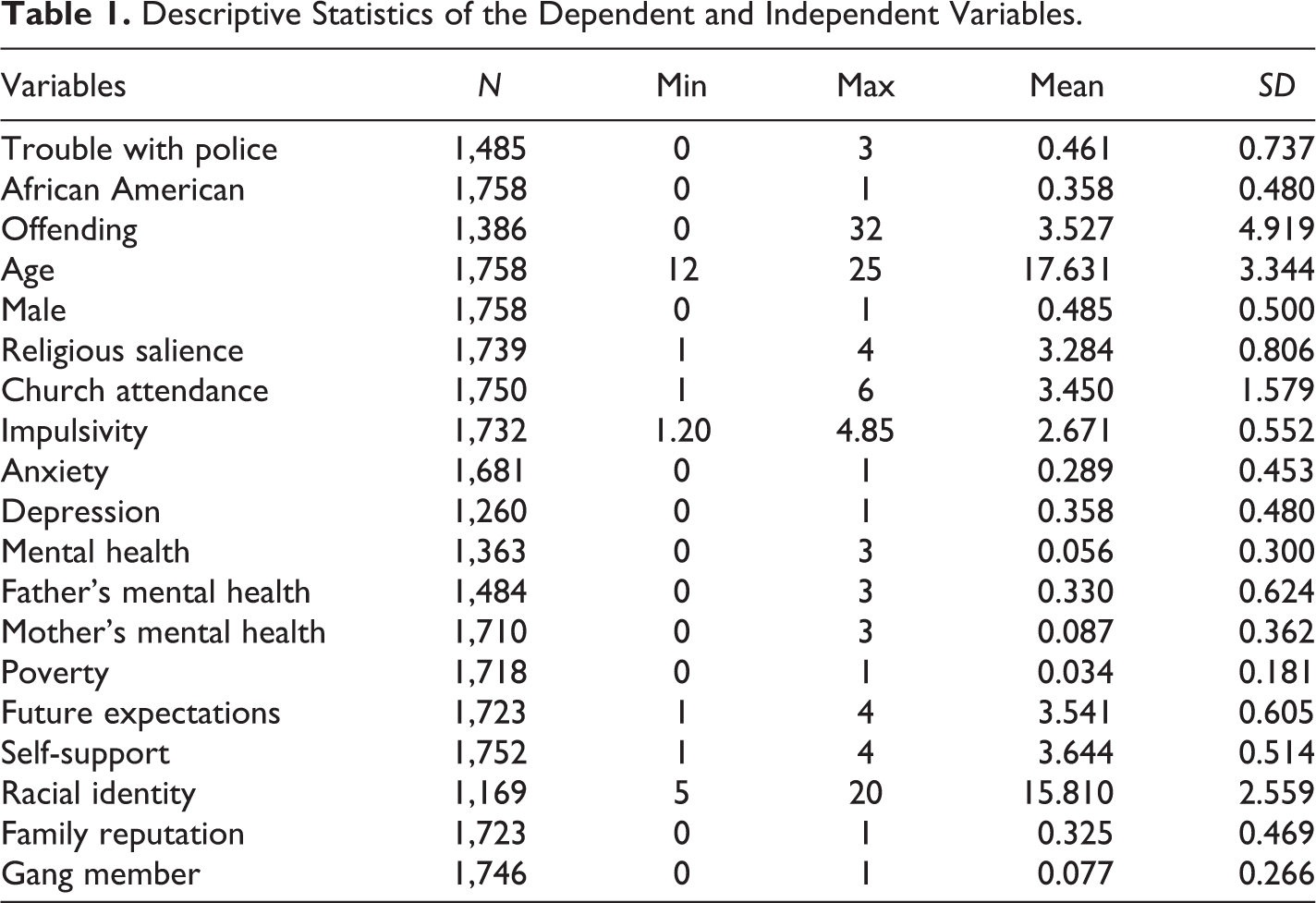
Table 1 reports the descriptive statistics for the dependent variable and the other variables included in the analyses.
Descriptive Statistics of the Dependent and Independent Variables.
Model Estimation
We used Mplus to estimate the negative binomial multiple regression models. We estimated negative binomial regressions because the dependent variable is a count of the number of times the respondents answered yes that they had trouble with police prior to and across the three waves of data collection. Note that the majority of the cases for Trouble with Police were coded 0 (no trouble with police). Mplus has an option to use all the data that are available to estimate the regression equations with a full information maximum likelihood estimation (FIML) procedure. Parameter estimates, missing data, and standard errors are handled in a single step and, under standard assumptions about the pattern of missingness (i.e., that the data meet the assumption of being missing at random) that defines the observed data, parameter estimates are efficient and unbiased under FIML. The negative binomial regression coefficients are presented in Table 2 with their standard errors in parentheses. Two-tailed tests of significance are reported for the regression coefficients even though the direction of African American is predicted to be positive. We also use Mplus to estimate the hierarchical linear model assessing whether trouble with the police varies across the neighborhoods clusters included within the PHDCN-LCS.
Negative Binomial Regression Analyses of Trouble with the Police on Race.

*p < .05. **p < .01. ***p < .001. +p < .10.
Analytical Strategy
We first estimate a hierarchical linear model (the unconditional model), which examines whether the average trouble with the police varies across the neighborhoods clusters included within the PHDCN-LCS estimate baseline models. We then estimate a baseline model that regresses trouble with the police on the race/ethnicity group comparisons, African American/Other, African American/Latino, and African American/White, while controlling for offending, gender, and age. We then estimate full regression equations that include the additional covariates across the three group comparisons. The multicollinearity diagnostics statistics revealed that the maximum value of the variance inflation factor among the independent variables is less than 2. The results from the regression models are presented in Table 2.
Results
Hypothesis 1
Our first hypothesis specifies that the average count of trouble with the police should vary across the neighborhoods included within the PHDCN-LCS. This hypothesis was based on the research that indicates that the likelihood that African Americans will be arrested varies across contextual contexts (e.g., see Andersen, 2015; Engel et al., 2012; Kirk, 2008; Meehan & Ponder, 2002; Stewart, Baumer, Brunson, & Simons, 2009). More specifically, studies have found that arrests vary depending on the percent of African Americans that live in an area, the neighborhood’s level of crime (calls for service), and its tolerance of deviance. Therefore, we conducted a hierarchical linear analysis to ensure that the full regression models presented in Table 2 are not misspecified by omitting neighborhood context.
We used Mplus to assess whether the average expected count of trouble with the police significantly varied across the 343 clusters included in the PHDCN-LCS. The results from the hierarchical two-level unconditional model showed that the average expected (log) count of trouble with the police did not significantly vary across the neighborhood clusters (i.e., we explored whether a multilevel analysis is justified). 2 This analysis reveals that the average trouble with the police did not vary across the clusters included in the PHDCN-LCS and that the full regression models presented in Table 2 are not misspecified by omitting neighborhood context.
Hypothesis 2
Table 2 presents the analyses of whether African Americans are significantly more likely to report trouble with the police prior to and across the three waves of data collection. Column 1 in Table 2 shows the results from the baseline model where we estimate whether African Americans have a greater likelihood of reporting trouble with the police than others while controlling for offending, age, and gender. The results show that African Americans have a significantly greater likelihood of reporting trouble with the police than others while controlling for offending, gender, and age. The coefficient of relationship reveals that the difference in the logs of expected counts is expected to be 0.368 unit higher for African Americans compared to others, when the other variables in the model are held constant. The Incidence Rate Ratio (IRR) for the impact of African American on Trouble with Police was 1.445, meaning that being an African American increased the logs of expected counts of Trouble with Police by 44.5% (i.e., 100 × [IRR–1]). The analysis also indicates that the logs of expected counts of greater trouble with police are significantly related to offending, gender, and age with trouble with police increasing with the number of offenses, being male, and being older.
Column 2 in Table 2 shows the results from the full regression model where we estimate whether African Americans have a greater likelihood of reporting trouble with the police than others while controlling for offending and all of the other covariates. The results reveal that African Americans have a significantly greater likelihood of reporting trouble with the police than others while controlling for offending and the other covariates. The coefficient of relationship indicates that the difference in the logs of expected counts is expected to be 0.262 unit higher for African Americans compared to others, while holding the other variables constant in the model. The IRR for the impact of African American on Trouble with Police was 1.3, meaning that being an African American increased the logs of expected counts of Trouble with Police by 30.0%. The analysis also shows that the logs of expected counts of trouble with police are significantly related to offending, gender, age, church attendance, impulsivity, depression, mental health, self-support, and gang membership. Church attendance decreased the expected count of trouble with police while the other significant covariates increased the expected count of trouble with police.
Columns 3 and 4 in Table 2 examine whether African Americans have a greater likelihood of reporting trouble with the police than Latinos. The baseline model presented in Column 3 reveals that African Americans have a significantly greater likelihood of reporting trouble with the police than Latinos while controlling for offending, age, and gender. The IRR for the impact of African American on Trouble with Police indicates that being an African American increased the logs of expected counts of Trouble with Police by 43.6% in comparison to Latinos. The results from the full regression model presented in Column 4 reveal that African Americans have a greater likelihood of reporting trouble with the police while controlling for all the other covariates. The IRR for the impact of African American on Trouble with Police indicates that being an African American increased the logs of expected counts of Trouble with Police by 31.1% in comparison to Latinos after controlling for all the other covariates. Church attendance, impulsivity, mental health, self-support, and gang membership also are significant with church attendance decreasing and the other significant covariates increasing the counts of trouble with the police.
Columns 5 and 6 in Table 2 examine whether African Americans have a greater likelihood of reporting trouble with the police than Whites. The baseline model presented in Column 5 reveals that African Americans have a significantly greater likelihood of reporting trouble with the police while controlling for offending, age, and gender. African Americans reported (45.9%) more trouble with the police than Whites. The results from the full regression model presented in Column 6 indicate that African Americans have a greater likelihood of reporting trouble with the police than Whites while controlling for all of the covariates in the model. The IRR indicates that African Americans reported 28.5% more trouble with the police than Whites. The person’s poor mental health, mother’s poor mental health, self-support, and gang membership also significantly predicted more trouble with the police.
Sensitivity Analyses
We conducted two sensitivity analyses. First, we created a violent crime index (i.e., carriage of hidden weapon, ever attacked someone with a weapon, ever robbed someone using force, ever been in a gang fight, shot at someone, shot someone, threatened to hurt someone, and had forced sex) and substituted this index in each of the full regression equations included in Table 2 for the more expansive index, Offending, which included property and violent crimes. The results from these analyses show that African Americans are significantly more likely to report trouble with the police than Others, Latinos, and Whites while controlling for violent offending and all the other covariates. Second, we adjusted the standard errors of the regression coefficients to account for the similarity of individuals in the same cluster. We re-estimated the three full negative binomial regression equations that are presented in Table 2. For each of these regression analyses, cluster number (NC) was used as the cluster variable to account for the similarity of individuals in the same cluster. There were 107 cases (over 10% of the sample, N = 926) that were missing on the variable linking the respondents to the 343 neighborhood clusters. The results indicated that African Americans were significantly more likely than others (N = 1,565; p = .004) and more likely than Latinos (N = 1,278; p = .003) to have greater trouble with the police while controlling for offending and the other covariates with the adjusted standard errors and smaller sample sizes. 3
Discussion
This study investigates whether African Americans are more likely to report that they had trouble with the police than Whites and other racialized groups. More specifically, we analyzed four cohorts (9-, 12-, 15-, and 18-year-olds) of individuals across the three waves of data collection included within the PHDCN-LCS to examine whether African Americans are more likely to report that they had trouble with the police. The differential involvement hypothesis or warranted thesis argues that the reason why African Americans have more contact with the police than others is their disproportionate level of offending (Mears et al., 2016). Consequently, we controlled for the respondents’ levels of offending prior to and across the three waves of data collection and other covariates when examining whether African Americans reported more trouble with the police.
This research extended the previous longitudinal research on race and police contact in six ways. First, our dependent variable—trouble with the police—is more expansive than arrests; the focus of the prior research. The frequencies show that the respondents who reported having had trouble were also arrested, warned and released, held in jail for some time, were referred for counseling, sent to a treatment program, and had the police tell their parents or school officials. Second, the PHDCN-LCS allowed us to control for an expansive measure of offending. Our summation measure includes acts of offending based on 32 delinquent and criminal behaviors that the respondents committed prior to and across the three waves of data collection. Third, to reduce omitted variable bias we controlled for a host of factors generally overlooked by the prior research that are likely to cause individuals to have contact with the police. Chief among these were a measure of whether the respondent’s family had a “bad” reputation and whether the individuals were ever a gang member (Feinstein, 2015; Tapia, 2012). In addition, we included factors related to whether the respondents may have drawn the attention of the police because of their erratic behavior. We controlled for the individuals’ level of impulsivity, their level of anxiety and depression, and whether they or their parents had serious mental health issues. Furthermore, we controlled for the respondents’ current (i.e., could they pay their rent) and expected economic conditions (i.e., will the individuals be able to support themselves 5 years from now), their racial affinity, as well as other individual characteristics (e.g., the persons’ expectations of life 5 years from now, church attendance, religious salience, age, gender).
Fourth, using a hierarchical linear model, we tested for whether trouble with the police varied across the neighborhoods included within the PHDCN-LCS. Fifth, the PHDCN-LCS allowed us to assess the impact of race on greater trouble with the police in the third largest city in the US—Chicago—with an extensive urban minority population and a metropolitan area that has not been previously studied. Sixth, we extended the prior research by examining whether African Americans were more likely to report having trouble with the police when contrasted to all the other groups included in the PHDCN-LCS (i.e., Native Americans, Asians, Latinos, Pacific Islanders, Whites, and others), to Latinos, and to Whites while controlling for self-reports of offending and the other covariates (Kirk, 2008).
The prior research reports that African Americans are more likely to be arrested in areas with a lower percentage of African Americans, in areas with higher number of service calls, and in neighborhoods that have a high tolerance for deviance (Anderson, 2015; Engel et al., 2012; Kirk, 2008). Therefore, we estimated an unconditional hierarchical linear model that examined whether trouble with the police varied across the neighborhood clusters included within the PHDCN-LCS. Unexpectedly, the results generated from the unconditional hierarchical model showed that self-reports of trouble with the police did not significantly vary across the neighborhood clusters. This result indicates that individuals were as equally likely to report having had trouble with the police across all the neighborhood clusters included in the sampling frame of the PHDCN-LCS and that our regression results are not misspecified by omitting neighborhood context.
Our baseline regression models show that African Americans have a greater likelihood of reporting trouble with the police than Latinos, Whites, and others across the three waves of data collection after controlling for offending, gender, and age. For example, being an African American increased the logs of expected counts of self-reported trouble with the police by 44.5% when compared to others. Our full regression analyses show that African Americans have a greater likelihood of reporting trouble with the police than Latinos, Whites, and others while controlling for offending, age, gender, religious salience, church attendance, level of impulsivity, anxiety, and depression, whether the respondents and their mothers or fathers had serious mental health issues, a measure of poverty, the respondents’ future expectations, whether the individuals perceived that they can support themselves in the near future, the respondents’ affinity toward their racial group, family reputation, and whether the individuals were ever a gang member. The full regression results reveal that being African American increased the logs of expected counts of self-reported trouble with the police by 30.0% when compared to others. Together, these results suggest that including the controls reduces the impact of being African American on having trouble with the police but that African Americans remain significantly more likely to report having had trouble with the police.
In sum, our results suggest that African Americans are more likely to have troubled interactions with the police within a major metropolitan area—Chicago—that has a racially and ethnically diverse population. The prior research suggests that their greater reporting of troubled interactions may be particularly problematic because encounters with criminal justice injustices are a salient risk factor for subsequent offending and can amplify deviant attitudes (Sherman, 1993; Simons et al., 2003; Slocum et al., 2015; Tyler et al., 2014; Unnever, 2014; Unnever & Gabbidon, 2011; Wiley & Esbensen, 2016; Wiley & Esbensen, 2016; Wong et al., 2003). Indeed, research suggests that police encounters that are perceived by African Americans to be discriminatory may be particularly likely to increase African American offending (Unnever et al., 2015). One way in which discrimination increases offending is through the erosion of citizens’ perceptions of police legitimacy. Kane (2005) found that in neighborhoods suffering from extreme disadvantage, indicators of compromised police legitimacy (misconduct and over policing) positively predicted violent crime. That is, levels of violent crime were higher in neighborhoods where policing practices were likely to reduce perceived police legitimacy. These studies suggest that more research is needed that examines whether a single perceived racist encounter becomes an instance when an African American has a transformative moment and “discovers that he or she is utterly unequal, not accepted as normal but racially circumscribed” (Anderson, 2011, p. 262). In short, future research may wish to explore whether unwarranted interactions with police are turning points in the lives of African Americans, turning points that place them on a racialized pathway toward offending.
The possibility that perceived criminal justice injustices are related to future offending suggests that models that test for DMC and control for offending must try to differentiate out those offenses that were caused by previous perceived racist contacts with the police. That is, measures of lifetime offending by African Americans may include offenses that were caused by their prior encounters with criminal justice injustices (Unnever & Gabbidon, 2011; Wiley & Esbensen, 2016). Thus, we concur with the conclusion by the National Research Council’s panel on measuring racial discrimination that: “Discrimi-nation may well have cumulative effects, and it is therefore better viewed as a dynamic process that functions throughout the stages within a domain, across domains, across individual lifetimes, and even across generations” (Blank, Dabady, & Citro, 2004, p. 11).
There are six lines of research that could address the limitations of this analysis. First, a limitation of our research is that the PHDCN-LCS only includes a count of the number of times the respondents affirmatively answered yes to whether they have had trouble with the police prior to and since the last wave of data collection. Future research needs to include a count of every instance of when individuals had contact with the police. Also the PHDCN-LCS’ measure of trouble with the police does not specify why the respondents reported that they had trouble with the police. Thus, it is possible, for example, that a few respondents may have made a service call that resulted in them perceiving the interactions with the police who responded as troubling. It is also possible that some respondents reported having trouble with the police that stemmed from other sources such as vicarious interactions (e.g., watching someone else being detained). However, we infer that the majority of the individuals who reported that they had trouble with the police had contact with police officers. This inference is supported by the frequencies that show, for example, that 74% of the respondents who reported that they had trouble with the police were warned and released and 71% reported that they were arrested.
Another limitation of the PHDCN-LCS’s measure, which is applicable to arrest data, is that it does not specify whether the individuals who reported that they had trouble with the police perceived their interactions to be unwarranted or unjustifiable. Lastly, it is possible that the significant race differences found may reflect that African Americans are significantly more likely than Whites (and to a lesser extent, Latinos) to perceive the police as racist (Unnever et al., 2015). Therefore, it is possible that the significant race differences found in our analyses reflect differing race-related thresholds that determine whether individuals perceive that they have had trouble with the police. Readers are encouraged, therefore, to interpret findings from the analyses with due caution.
Second, research is needed that further explicates why African Americans—and perhaps other minorities—perceive contacts with the police as racist (see Jones-Brown, 2000; Slocum et al., 2015; Unnever & Gabbidon, 2011). Third, future research may wish to explore whether the link between perceived unwarranted encounters with the police and subsequent offending is particularly problematic for African Americans (Unnever et al., 2015). Unnever and Gabbidon (2011) argue that as a result of centuries of accumulated race-specific encounters with the criminal justice system, African Americans are immersed in a “sea of hostility” or a “reservoir of bad will.” These seas of hostility—that include personal experiences of rage—undermine the moral justifications to obey the law and diminish the deterrent effects of legal proscriptions (Noble, 2006). In short, these “seas of hostility” fuel the anger, negativity, and depressive symptoms that immediately flow from experiencing criminal justice injustices, which in turn may exacerbate the likelihood that some African Americans will offend. Fourth, although we include multiple controls for whether the respondents may have engaged in erratic behavior and other demographic and attitudinal measures, the PHDCN-LCS does not include any measures that assess the individuals’ behavior immediately prior to and during their interactions with the police. We also could not include any measures of the attitudes and behavior of the police officers during their interactions with the individuals included within PHDCN-LCS (Engel, Tillyer, Klahm, & Frank, 2012). Measures that capture the dynamic interactions as they unfold between police and citizens could enrich the research on DMC (Black & Reiss, 1970; Brunson & Weitzer, 2008; Engel, 2003; Weitzer & Brunson, 2009).
Fifth, there is the need to replicate our research findings using more recent longitudinal data collected from other geographical spaces. It is possible that racial disturbances in particular cities may impact the likelihood that African Americans will have negative encounters with the police. Indeed, recent research indicates that fatal shootings of police officers by African Americans suspects may increase the use of police force against African Americans substantially in the days after the shootings, while the use of force against Whites and Hispanics remains unchanged (Legewie, 2016). Other research indicates that well-publicized cases of police violence may reduce the number of calls to the police especially from African Americans neighborhoods (Desmond, Papachristos, & Kirk, 2016). In addition, although we found no evidence that trouble with the police varies across the neighborhoods included within the PHDCN-LCS in Chicago, this finding does not rule out that contact could vary in other places (Anderson, 2015; Engel et al., 2012). We suggest that future research that explores whether contact between police and African Americans varies across other areas includes measures that assess the degree to which there have been and are fractured relations between the criminal justice system and the African American community, the racial/ethnic composition of the police force and its deployment, the degree to which race-based police reform efforts have been implemented, the area’s social and political environments, the operating procedures of the police, the nature of calls for service and offending patterns, and it is sensitive to time-specific events that may impact the likelihood that African Americans will have contact with the police.
Sixth, there is the need for future research to analyze longitudinal data that allows for an assessment of whether perceiving a troubled interaction with the police at Time 1 increases the likelihood of future interactions that are perceived as troubling while controlling for other relevant covariates. Such research could also examine whether negative attitudes toward the police remain constant or are related to the degree to which individuals report troubled interactions with the police across time. In short, there is the need for research that illuminates the dynamic relationships among police contact, perceiving police contact as troubled, and offending across the life course.
In sum, our research indicates that African Americans are significantly more likely to report having had troubled interaction with the police in Chicago. The findings also reveal that the relationships between African Americans and the police may be particularly problematic as African Americans even had higher counts of trouble with the police than similarly situated Latinos. It is likely that this incomparable relationship with the police further solidifies among some African Americans a racialized narrative of what it means to be Black living within a racially stratified society (Bonilla-Silva, 2015; Unnever & Gabbidon, 2011).
Footnotes
Declaration of Conflicting Interests
The authors declared no potential conflicts of interest with respect to the research, authorship, and/or publication of this article.
Funding
The authors received no financial support for the research, authorship, and/or publication of this article.