



Abstract
A punitive legacy of the responses to school shootings in the United States is the expansion of exclusionary discipline. Black girls have disproportionately experienced this form of punishment as compared to white girls and non-Black girls of color. A small, but growing, body of research has examined the patterns and causes of this disparity. Current studies have made suggestions for possible solutions to address this disparity, but these recommendations are not readily accessible in a single location. A catalogue of these ideas could provide a useful foundation for policy development and evaluation. The present research note seeks to generate this resource by conducting a systematic review to identify and categorize recommendations aimed at reducing the discipline disparity experienced by Black girls. Based on this review, four categories emerged that center around: (1) culturally competent school programs, (2) enhanced teacher training, (3) spaces at school for empowering Black girls, and (4) trauma-informed student policies. This research note discusses these categories of recommendations using an intersectional framework and concludes with a summary of next steps to guide future research and policy work to address the disproportionate use of exclusionary discipline against Black girls.
Keywords
One punitive legacy of the responses to school shootings in the United States has been the expansion of exclusionary discipline, specifically out-of-school suspensions and expulsions. Previously reserved for drug and serious violent offenses, exclusionary discipline now is used to address minor rule violations (Addington, 2019; Blake et al., 2011). This change is problematic for a few reasons. One is the increased risk of contact with the juvenile and criminal justice systems for students subjected to exclusionary discipline (Rocque & Snellings, 2018). Another is the lack of empirical support justifying the effectiveness of these sanctions to combat school violence and disorder (American Psychology Association, 2008). Amplifying both of these concerns is the disproportionate manner in which exclusionary discipline is applied across races and genders (Morris & Perry, 2017; Skiba et al., 2002).
Against this backdrop, the experience of Black girls is receiving increased attention. Studies consistently find that Black girls are disproportionately subjected to out-of-school suspensions and expulsions as compared to girls of other races (Crenshaw et al., 2015; US Department of Education, 2018). These patterns remain even in schools that have sought to reduce the overall use of exclusionary discipline (Baker-Smith, 2018; O. Johnson et al., 2019). As a result, advocates recommend work to understand the reasons that underlie the disproportionate punishment of Black girls and then use this information to tailor effective solutions (Crenshaw, 2015; Morris, 2016a). Researchers are heeding this call, although initial efforts tend to emphasize causes for the disparity rather than specific suggestions for ways to address it.
The present research note seeks to continue this work by conducting a systematic review of the literature to identify and categorize current recommendations that address the exclusionary discipline disparity confronting Black girls. Given the growing attention to this issue, now is a useful time to take stock of and gather these ideas in an accessible resource to support future policy development. Before turning to the systematic review and its findings, a brief background is provided to describe the patterns in exclusionary discipline involving Black girls and explanations for the disproportionate rates.
Background
Research across the board finds a disproportionate use of exclusionary discipline involving Black girls (e.g., Hines-Datiri & Carter Andrews, 2020; Smith-Evans et al., 2014). These patterns are observed at the national, state and local levels. At the national level, data collected by the US Department of Education’s Office for Civil Rights illustrate this pattern of disparity. The most recent report found that Black girls constitute 8% of the US student population but 14% of suspensions and 10% of expulsions during the 2015–16 school year (US Department of Education, 2018). Research using state and local disciplinary data finds similar patterns. A study of Kentucky public school students considered office referrals and found Black girls three times as likely to receive a referral as white girls and the same likelihood as white boys (Morris & Perry, 2017). A comparison of Boston and New York City public schools found Black girls disciplined at rates at least 10 times greater than white girls (Crenshaw et al., 2015). For expulsions, the rate for Black girls was 10 times that of white girls in Boston and 53 times that of white girls in New York City (Crenshaw et al., 2015). Overall, these patterns are ubiquitous and observed across school locations and student socio-economic status (Onyeka-Crawford et al., 2017).
Racial disparity also is observed in the rule violations that result in exclusionary discipline. Black girls tend to be disciplined for violating subjective rules such as “dress code violations, disobedience, disruptive behavior, and aggressive behavior” (Morris & Perry, 2017, p. 128). Black girls often receive more punitive punishments including suspension for these minor infractions (Blake et al., 2015). In contrast, racial disparities tend to disappear for offenses that are less subjective such as truancy and possession of weapons or drugs (Morris & Perry, 2017; Smith-Evans et al., 2014). One exception to this pattern is observed for fighting where at least one study found Black girls more likely to receive suspensions for fighting than white girls (Blake et al., 2015).
Explanations for these patterns can be organized using an intersectional perspective. Intersectionality was developed as a theoretical framework to understand the lived experiences and oppression of Black women (Crenshaw, 1991). Intersectionality specifically rejects the traditional consideration of race, gender and class as separate factors and instead emphasizes the need to consider how these social identities combine and interact (Morris, 2007; Murphy et al., 2013). Viewing social identities in this dynamic manner rather than as isolated characteristics more accurately reflects how they interact in real life. In addition to being experienced interactively, these social identities operate within systems of structural oppression (such as sexism and racism) which, in turn, intersect with one another to generate the realities negotiated by Black women and girls on a daily basis (Murphy et al., 2013).
Education researchers have adapted this intersectional framework to explain school discipline disparities. One approach conceptualizes tenets of intersectionality around four domains of power (structural, discipline, hegemonic, and interpersonal) that shape the oppression experienced by Black girls at school (Morris, 2007; Murphy et al., 2013). Structural power is the overarching authority of the school environment, which some also suggest reproduces the structural racism and sexism inherent in society (Morris, 2007). Disciplinary power concerns school rules that regulate Black girls’ behavior and punishes them (Morris, 2007; Murphy et al., 2013). Hegemonic power shapes the subjective expectations of teachers and staff for their female students through dominant culture paradigms that prioritize white, middle class norms of femininity (Morris, 2007; Murphy et al., 2013). Interpersonal power involves individual relationships (especially where an unequal balance of power exists such as teacher-student) that can perpetuate oppression (Murphy et al., 2013). While structural and disciplinary powers are essential for creating an environment where school discipline disparity occurs, these two powers can be considered as constants in explaining particular reasons for this disparity. Hegemonic and interpersonal powers help to frame two explanations for the disproportionate discipline experienced by Black girls. One explanation focuses on how Black girls are seen by teachers and administrators, specifically in their subjective interpretation of behavior and application of rules. A second focuses on the failure to address underlying trauma that might trigger particular behaviors that are subjected to discipline. Each is considered separately below.
One explanation for discipline disparity concerns the subjective interpretation of Black girls’ behavior and the application of school rules. Hegemonic power considers how both racial and gender biases can combine in the unequal enforcement of school regulations and rules. In the context of school discipline, researchers have identified the role implicit bias plays in both shaping views on behavior norms and expectations as well as influencing the interpretation and enforcement of these rules (Morris & Perry, 2017). Implicit biases can be defined as “deep-seated attitudes that operate outside conscious awareness—that may even be in direct conflict with a person’s stated beliefs and values. […] but can undergird discriminatory behaviors—especially when such biases remain unstated and unexamined.” (Carter et al., 2017, p. 215). While implicit bias is frequently discussed with a focus on race, these biases also intersect across race, gender and other social identities (Morris & Perry, 2017). Paradigms of appropriate school behavior rely on standards of femininity drawn on white girls with an emphasis on passive, heteronormative stereotypes (Morris, 2007; Morris, 2016a). In her study of Black schoolgirls, Morris (2016a) identified a consistent theme in the use of discipline for actions that ran contrary to these stereotypes. For example, teachers (especially white teachers) may interpret a student’s behavior as loud or aggressive, but students (especially Black girls) might see their own actions as a routine means of communication. The role of implicit biases in rule interpretation and student discipline is a particular concern given the clashing demographics between a largely white, female teaching profession and an increasingly diverse student body (A. D. Johnson et al., 2018; Welsh & Little, 2018).
A second explanation for these discipline patterns considers the underlying behavior that triggers disciplinary action. Here the focus is on the role of trauma, especially the unique experiences of Black girls (Morris, 2016b). This explanation also can be viewed using the intersectional framework, specifically interpersonal power that maintains oppression by teachers who punish trauma rather than respond with empathy or a referral to counselors. Researchers have identified the role of trauma as an underlying cause for Black girls’ behavior that leads to disciplinary infractions such as fighting. Black girls disproportionately experience sexual and physical violence and are at risk for being exposed to violence in their daily lives (Morris, 2016b). Their behaviors that might be interpreted as aggressive or combative instead may be a way of grappling with their trauma and unmet emotional needs (Crenshaw et al., 2015; Smith-Evans et al., 2014). The problem is compounded by the fact that Black girls, especially those attending underserved, majority minority schools, are unlikely to receive the support of mental health professionals given staffing challenges (Harper & Temkin, 2018; Morris, 2016b; Smith-Evans et al., 2014). Responding with punishment and exclusion may further victimize these students and amplify the harm they have experienced.
Using this intersectional framework to explain the disproportionate impact of exclusionary discipline on Black girls highlights the need for interventions tailored to explicitly include race and gender. Researchers working in this area have started to suggest possible policies to address discipline disparity. Currently, these recommendations are dispersed across studies as well as academic disciplines. An accounting of this growing list could be a useful foundation for future evaluation research and policy development. The present research seeks to provide this resource.
Methodology
In order to identify and categorize policy recommendations, this study relies on a two-step process. The first step involves conducting a systematic review of the current literature. The second step uses the articles identified in the systematic review to code and categorize the recommendations. Each is discussed separately below.
The systematic review examines peer-reviewed studies focusing on exclusionary discipline involving Black girls. The included studies were selected using two strategies. The first (and primary) strategy was a systematic search of four databases: Google Scholar, Criminal Justice Abstracts, Education Resources Information Center (ERIC), and PsychINFO (see Gusenbauer, 2019, for a discussion of the inclusiveness of Google Scholar). These databases were searched using a date range that included an open start date through November 2019. While the search start date was left open, few articles were published prior to 2000. Searches included combinations of the terms: “Black girls” or “African American girls” as well as “exclusionary discipline” and “disproportionate” or “disparate” or “disparity.” Studies were initially screened to identify studies written in English and those published in peer-reviewed journals. Eligible articles could appear in print or in a pre-publication format as long as the article was readily accessible via a journal’s “online first”-type of platform. While no limitations were placed on grade level or auspices of the school, schools needed to be in the United States. Qualifying studies needed to meet two criteria: (1) focus on the disproportionate use of exclusionary discipline against Black girls and (2) provide specific recommendations for addressing this disparity. Studies could use any methodology (quantitative, qualitative, mixed methods and reviews). The second strategy involved conducting a citation check of the qualifying studies identified in the initial database search. This strategy utilized the citation (“cited by”) feature in Google Scholar to ensure that the most current articles were included. All qualifying studies (identified by the first strategy) were searched and all “cited by” publications were considered for inclusion based on the two-part eligibility criteria. The steps and details of the number of articles identified, screened, and included are summarized in Figure 1.
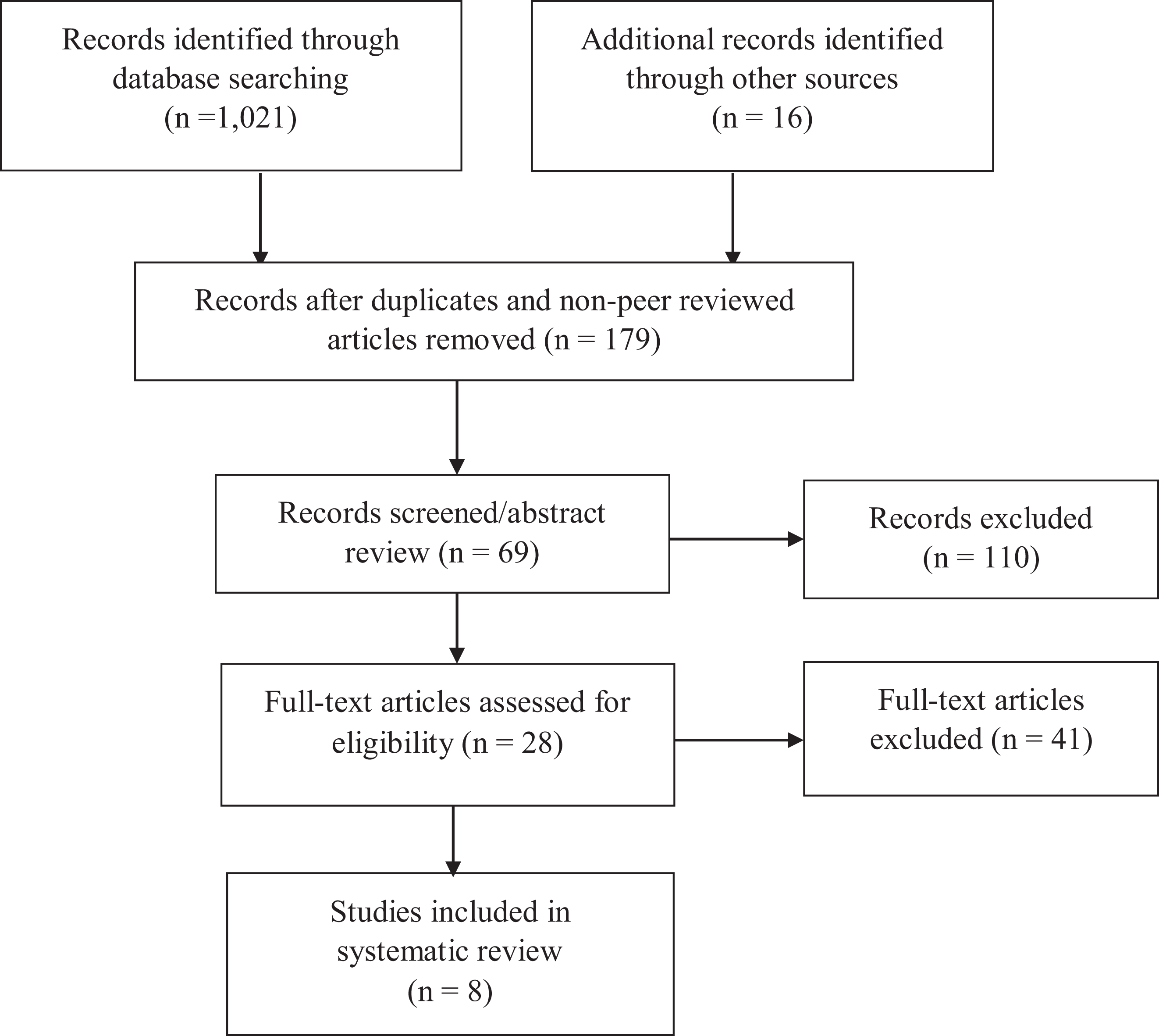
Selection process.
The second step of this study used the articles identified in the systematic review to collect the recommendations described in each article. These recommendations then were coded into categories. This analysis involved listing all of the recommendations and identifying the common themes that emerged to create categories. To identify the themes, this study borrowed traditional qualitative techniques of inductive coding based on an emersion reading of the recommendations (Berg, 2008). This type of analysis is useful for exploratory research like this one that seeks to identify patterns and categorize the information. All work for both the systematic review and qualitative coding for this project was conducted by a single researcher.
Findings
The search across all included databases identified 1,021 publications (Figure 1). After duplicates and non-peer reviewed publications were removed, the abstracts of 179 articles were screened based on the two review criteria. A total of 28 publications received a full manuscript review. The number for full manuscript review includes both articles from the initial database screen as well as those identified from the secondary search of articles citing them (with duplicates and non-peer reviewed publications removed). Of these 28 articles, 20 did not meet the specified qualifications mainly due to not providing any specific recommendations for addressing the discipline disparity. A final total of eight articles were selected for inclusion in this review. Table 1 lists these articles and summarizes the recommendations offered by each.
Summary of Included Studies With Key Recommendations From Systematic Review.

As presented in Table 1, a preliminary review of the selected articles found the following information. The eight selected studies relied on a mix of methodologies: quantitative (3), qualitative (2), mixed methods (1) and critical reviews (2). Three studies included all grade levels and three focused on middle, high school or both. All studies included in the systematic review found that Black girls experience disproportionate rates of out-of-school suspensions, expulsions, or both. The most common reason for this disparity emphasized implicit bias in the enforcement of subjective rules (six of eight studies). Given the focus of the present research on exploring and categorizing the recommendations to address discipline disparities offered by these studies, the remainder of this section discusses these categories.
Results from the second step of the study—the qualitative analysis of recommendations to address discipline disparity—found that they coalesced around four categories: (1) culturally competent programming, (2) training and professional development opportunities for staff and administrators, (3) spaces for empowering Black girls, and (4) trauma-informed polices. Each category is described below. Some recommendations could fall within more than one category, but are included and discussed in the most applicable category.
Culturally Competent Programming
Five of the eight studies included in the systematic review recommend that schools adopt culturally competent programming in order to address disparity in the use of exclusionary discipline (Table 1). Culturally competent programming also is referred to as culturally responsible or culturally conscious programming. In general, these programs involve the “need to explicitly consider issues of culture, race, gender, power, and privilege” (Gregory et al., 2017, p. 254). In the specific context of discipline disparity, culturally competent programs need to not only explicitly acknowledge the social identities of race and gender, but also consider their intersection. Findings from the systematic review indicate that recommendations for culturally competent programs arise from the failure of colorblind programs to reduce the discipline disparity experienced by Black girls. Colorblind programs refer to ones that do not address race but rather seek to treat all students the same (Carter et al., 2017). Two examples of these colorblind school policies that seek to reduce exclusionary discipline are positive behavior programs and restorative justice programs. As noted below, the recommendations suggested that colorblind programs could be adjusted to embrace culturally competent attributes.
Positive behavior programs are popular with schools as a strategy to promote prosocial behavior and reduce the need to address misbehavior with exclusionary discipline. Studies have found that these programs reduce overall rates of discipline but not racial and gender disparities (Baker-Smith, 2018; O. Johnson et al., 2019). The problem arises from their colorblind design. School districts frequently adopt social-emotional programs to support positive school and academic climates such as Positive Behavior Intervention and Supports (PBIS) and School-Wide Positive Behavior Support (SWPBS) (Justice Policy Institute, 2011). PBIS and SWPBS, though, are designed for uniform use across student populations and do not acknowledge variations in cultural backgrounds or lived experiences of the students (A. D. Johnson et al., 2018). Suggestions from the studies included in the systematic review emphasize the need to modify these programs to include a culturally competent perspective that specifically includes race and gender. One study specifically discusses the potential for adapting PBIS/SWPBS as a culturally competent program including training to reduce biases in what constitutes positive behavior and adjusting program materials to define student behavior standards to reduce stereotypes and misconceptions (Blake et al., 2011).
Restorative justice is another strategy adopted by schools as an alternative to exclusionary discipline. In this context, restorative justice typically is used as a reactive intervention to address student misbehavior after it occurs (Lustick, 2017). Examples of reactive restorative justice programs are mediated dialogues between offenders (or responsible parties) and victims (or harmed parties) and healing circles where these conversations are expanded beyond the immediate parties to include the overall community (Wadwa, 2016). Reactive restorative justice programs take a uniform, colorblind approach and result in a disproportionate use with students of color (Anyon et al., 2016). This colorblind approach has particularly troubling implications for Black girls. Black girls subjected to restorative justice programs tend to be referred for subjective rule violations. A key component of mediations and healing circles requires the responsible party (here Black girls) to acknowledge and apologize for their behavior (Addington, 2019; Hines-Datiri & Carter Andrews, 2020). In light of the role of implicit bias in interpreting the behavior of Black girls as violating subjective rules, the use of restorative justice practices is misapplied in requiring the girls to apologize in this context (Addington, 2019). As with positive behavior programs, restorative justice can be implemented with culturally competent attributes. While the paradigm of restorative justice focuses on reactive responses, a more comprehensive view includes a preventative or proactive component where programs work to build understanding, empathy and respect (McCluskey, 2018). Examples include conversation circles that directly confront issues of race and gender (Wadhwa, 2016). Some suggest using the term “restorative approaches” to highlight this proactive component and the need to involve staff as well as students (McCluskey, 2018).
Teacher Training and Professional Development Opportunities
A second category of recommendations offered by four of the eight systematic review studies (Table 1) focuses on the need for training and professional development opportunities to prevent the disproportionate use of discipline to address subjective rule violations. Training recommendations focus on ways to confront implicit bias, and professional development concerns expanding non-punitive tools for addressing classroom and interpersonal conflict.
Training that focuses on issues of implicit bias highlights the role that these biases play in discipline, especially the interpretation of behavior and application of subjective rules. It also recognizes the need to directly combat these biases in order to address discipline disparities. Specific recommendations from the systematic review include developing not just anti-racist and anti-sexist programming, but training that specifically address the intersection of structural racism and sexism (Annamma et al., 2019; Blake et al., 2017). To combat disparity in school discipline, recommendations suggest the need to develop training programs that give teachers strategies for understanding their own biases around race and gender and how these biases influence their enforcement of subjective rules and use of exclusionary discipline.
A second area in this category of recommendations concerns the need for building technical skills, particularly classroom management techniques. These skills can reduce reliance on exclusionary discipline to maintain an orderly learning environment (Hines-Datiri & Carter Andrews, 2020). Paul and Araneo (2019) emphasize the need for professional development to support teachers and their classroom management skills. They note the limited attention given to classroom management as many teachers did not need this skill as part of their certification process. Paul and Araneo (2019) specifically recommend the need to incorporate a culturally competent perspective into classroom management training, which would include providing teachers with a variety of tools to address situations such as ways to de-escalate situations and understanding the role trauma might play in students’ behavior.
Space for Empowering Black Girls
Recommendations from five of the eight studies identify a positive role for schools and teachers in the development of ways to empower Black girls (Table 1). These recommendations include support for mentoring relationships, creation of specific spaces to promote positive racial identity, and collaborative research projects. Mentoring, supporting an appreciation of Black girls, and strengthening student-teacher relationships can promote student engagement and feelings of belonging (Annamma et al., 2019; Blake et al., 2011; Hines-Datiri & Carter Andrews, 2020). These positive relationships can reduce reports of student misbehavior (Blake et al., 2011). Promoting positive racial identity may serve to counteract negative experiences attributable to explicit and implicit racism at school (Hines-Datiri & Carter Andrews, 2020).
Two studies in the systematic review emphasize the need for schools to create specific spaces for Black girls (Aston et al., 2017; Wun, 2018). Aston et al. (2017) describes the Sisters of Nia as a specific example of a culturally relevant program designed to create a sense of community and sisterhood. This type of sister circle provides a space for Black girls to develop a strong sense of racial identity as well as a support system to explore and process issues such as feelings of aggression. Wun (2018) similarly suggests the need for critical spaces where Black girls can support one another as well as share their experiences, including those involving violence and trauma.
Two studies highlight the use of participatory research projects to empower Black girls. Such projects include Black girls as part of the entire process in developing research questions, collecting data, and interpreting the results (Hines-Datiri & Carter Andrews, 2020). Girls also encouraged to use findings from these studies to help identify policy and become advocates for change (Hines-Datiri & Carter Andrews, 2020; Wun, 2018). Wun (2018) illustrates these recommendations with specific community groups that have partnered with Black girls and other girls of color as researchers: such groups include Girls for Gender Equity (New York City), Radical Monarchs (Oakland, California), and Girls Rock Charleston (North Carolina).
Trauma-Informed Policies
The final category of recommendations offered by two of the eight studies addresses students’ underlying anger that can result in the use of exclusionary discipline against Black girls (Table 1). The primary recommendation is to identify ways to incorporate trauma-informed policymaking in schools. These policies include support for teacher training to identify signs of trauma and victimization as well as investment in counselors so that students could be directed to mental health support rather than discipline (Addington, 2019). Paul and Araneo (2019) suggest the use of threat assessment systems. While threat assessment policies typically are associated with the prevention of school shootings, Paul and Araneo take an expansive view of their use. They emphasize the ability of these assessment systems to identify students coping with trauma in order to direct support and treatment rather than punishment for students in crisis.
Discussion
This study sought to identify and categorize previous recommendations of ways to address the exclusionary discipline disparity confronting Black girls. The overall goal of this work is to organize these ideas to support future research and policy development. Four categories of recommendations emerged from the systematic review of the current literature: (1) culturally competent programming, (2) training and professional development opportunities for staff and administrators, (3) spaces for empowering Black girls, and (4) trauma-informed polices. The findings section described each of these categories. To support the overall goal of organizing these recommendations, the following discussion builds upon these descriptions by considering themes across categories using an intersectional framework. This review is then used to suggest next steps for future work.
To identify themes across recommendation categories, this discussion returns to the intersectional framework used earlier to explain patterns of exclusionary discipline. This framework conceptualized intersectionality around four domains of power (structural, discipline, hegemonic, and interpersonal) that shape oppression experienced by Black girls at school (Morris, 2007; Murphy et al., 2013). As hegemony and interpersonal powers explained the reasons for disparate discipline patterns, both are relevant to discussing the categories of recommendations to address these reasons.
In the context of disproportionate school discipline patterns, hegemonic power is reflected in the racial and gender biases that shape the enforcement of school regulations and rules. Recommendations for ways to confront these biases are encompassed in two categories: culturally competent programming and training and professional development opportunities. Culturally competent programming confronts hegemonic power by rejecting colorblind interventions that are susceptible to influence by implicit biases and that maintain discipline disparities. Training and development opportunities challenge hegemonic power paradigms by providing anti-racist and anti-sexist checks on teacher biases and alternative classroom strategies that avoid an over-reliance on punishment. Interpersonal power also explains the discipline disparity and provides another theme of recommendations. Interpersonal power maintains oppression in the context of relationships and arises in the failure to support students affected by trauma. It is illustrated in the category concerning trauma-informed policies and suggestions for investing in mental health professionals and training teachers to identify trauma. By treating trauma with empathy and services rather than amplifying the harm by punishing the behavior, these recommendations challenge the oppression maintained by interpersonal power. Of note is one category of recommendations – spaces for empowering Black girls – does not fit neatly within these themes and specific domains of power. This category, instead, challenges the overall oppression experienced by Black girls at school and provides a space removed from these domains of power. Recommendations in this category include ways to empower Black girls individually through mentoring-type programs and as a group in spaces where positive racial identities are promoted and support systems encouraged.
Considering these recommendations using an intersectional framework helps to guide future work. One area in need of additional work involves developing overall policies and specific programs that explicitly incorporate race and gender to address discipline disparities. The recommendations reviewed in this study presented ideas for future programs. Work is needed to flesh out the specific details of programs and policies to support their implementation. Examples of future programs to be explored are discussed below. As specific interventions are developed, another area of future work concerns the need for a research agenda that prioritizes formal evaluations to determine the effectiveness of these programs.
Given the initial need to develop specific programs, a short discussion of possible examples is offered here. The intersectional framework helps guide this work by emphasizing the dual need for programs that address the power domains that generate school discipline disparity as well as ones that support and empower the Black girls who negotiate these environments and sources of oppression. While specific policies are described in the findings section, they are briefly listed here to illustrate both sets of policies. Examples of specific approaches to confront power domains at school include: (1) generating culturally competent programs by adapting existing programs like PBIS, SWBIS, and restorative justice/approaches, (2) creating anti-racist and anti-sexist training for teachers and staff that specifically address the role of implicit bias in discipline involving Black girls, (3) developing culturally competent classroom management training to provide teachers with skills to de-escalate situations rather than resort to discipline, (4) creating culturally competent training for teachers to understand the role that trauma might play in their students’ behavior, and (5) identifying ways to invest in mental health professionals and supporting partnerships to encourage referrals for students in need of these resources. A second group of programs would focus on empowering Black girls at school. Examples of these programs include: (1) support for mentoring relationships, (2) inclusion of positive racial identity in curriculum, (3) creation of specific spaces to support affinity groups and mutual support, and (4) creation of research spaces that provide Black girls with an advocacy voice. Evaluating these programs will ensure that they effectively reduce the discipline disparity and support Black girls.
Study Limitations
This study sought to provide the first systematic review of recommendations for ways to address the disproportionate rates of exclusionary discipline experienced by Black girls. Although it provides an important initial review, certain limitations need to be acknowledged. One is small body of available studies to review. This area of research is relatively new, which limits the studies that can be included. Given that limitation, a benefit of conducting a systematic review at this time is that it provides an opportunity to organize the work to date and highlight areas in need of attention to focus future research efforts. Another limitation also relates to the early stages of this work. Currently none of the recommendations have been assessed or evaluated, so it is unclear whether any reduce exclusionary discipline or the disparity in its use. As such, policies need to be evaluated to ensure programs are reducing disproportional rates of school discipline and this work needs to be done before any policy can be designed as effective. A final limitation is that the study focuses on published peer-reviewed studies. This specific focus may introduce certain publication biases into the findings obtained.
Conclusion
Black girls experience disproportionate rates of exclusionary discipline as compared to white girls and non-Black girls of color (e.g., Crenshaw et al., 2015; Hines-Datiri & Carter Andrews, 2020; Smith-Evans et al., 2014). A growing body of scholarship is extending these findings by offering explanations and alternative policies. This research note contributes to this work by conducting a systematic review to identify and categorize these recommendations. Four categories emerged: culturally sensitive programs, teacher and staff training, empowering spaces for Black girls, and trauma-informed policies. These categories highlight the need to specifically incorporate race and gender considerations into programs aimed at addressing the disproportionate use of exclusionary discipline against Black girls. Future research and policy development should consider programs that both confront sources of oppression and empower Black girls as well as develop a research agenda that seeks to evaluate these programs.
Footnotes
Acknowledgments
An earlier version of this paper was presented at the second Race in the Marketplace (RIM) conference in Paris, France (June 25-27, 2019). My thanks to the RIM conference organizers and participants for their helpful feedback and support of this project.
Declaration of Conflicting Interests
The author(s) declared no potential conflicts of interest with respect to the research, authorship, and/or publication of this article.
Funding
The author(s) received no financial support for the research, authorship, and/or publication of this article.
