



Abstract
The neighborhood context is considered a key institution of inequality influencing individuals’ exposure and psychological vulnerability to stressors in the work-family interface, including work-family conflict (WFC). However, experiences of neighborhood context, WFC, and its mental health consequences among minority populations—including foreign-born residents—remain unexplored. We address this limitation and draw on tenants of the stress process model to unpack our hypotheses. We further test whether our focal associations vary for mothers and fathers. Using multilevel data from Toronto, Canada (N = 794), we find that neighborhood disadvantage—measured at the census level—increases reports of WFC among all respondents except foreign-born fathers, who report a decrease in WFC as disadvantage increases. Despite this benefit, the WFC of foreign-born fathers in disadvantaged neighborhoods leads to greater distress compared to other respondents. Our findings highlight important gender differences by nativity status in the impact of neighborhood context on individual-level stressors and mental health.
Introduction
North Americans are experiencing increasing difficulty balancing paid work and unpaid family obligations (Aumann, Galinsky, and Matos 2011; Bianchi, Robinson, and Milkie 2006). These competing expectations result in what scholars refer to as work-family conflict (WFC) and present a uniquely modern mental health risk (Frone 2000). Numerous studies have documented the deleterious mental health effects of WFC, including generalized distress, anxiety, depression, and emotive responses, such as anger and guilt (Glavin, Schieman, and Reid 2011; Goh et al. 2015; Michel et al. 2011; Young, Schieman, and Milkie 2016). In fact, a recent meta-analysis out of Harvard found WFC to be the number one predictor of self-reported poor mental health, above unemployment or exposure to secondhand smoke (Goh et al. 2015).
Given the concerning consequences of WFC, it is important that we better understand the structural circumstances that influence such conflict beyond individual-level antecedents. With this in mind, researchers have attempted to understand how context matters for WFC experiences—specifically, the neighborhood context in which one lives and the psychosocial resources or ambient demands this context presents in the face of WFC (Pitt-Catsouphes et al. 2006; Sweet, Swisher, and Moen, 2005; Voydanoff 2007; Young 2015; Young and Wheaton 2013). Yet, this research often excludes vulnerable populations that may experience the neighborhood context differently—affecting exposure and/or psychological vulnerability to stressors such as WFC (Hill and Maimon 2013). Our approach speaks to what Aneshensel (2009:35) refers to as the “ecological model” of neighborhood effects, which “conceptualiz[es] inequality as existing across multiple layers of the social hierarchy . . . [and is] built around the idea that the mental health impact of the neighborhood may be conditional upon the person’s social status, exposure to stress, and access to psychosocial resources.” Mental health is a “social mirror” that effectively reflects the social conditions in which people live (Pearlin, Avison, and Fazio 2007). Moreover, the inequality in individuals’ residential conditions and how these inequalities interact with personal characteristics impact stress exposure and vulnerability, helping us to better understand the complex processes that lead to mental health disparities (Aneshensel 2009; Kessler 1979). Our study is therefore contributory in explaining the complex mosaic of mental health disparities among vulnerable populations.
We draw on core tenants of the stress process model to examine a more nuanced understanding of the association between neighborhood context, WFC, and its mental health consequences among native versus foreign-born residents with the assumption that inequalities at the neighborhood level influence the experience of stressors among these populations differently. Foreign-born residents are the main driver of current and future population growth in industrialized countries, such as Canada. In 2011, immigrants represented 20.6 percent of the total population in Canada—the highest proportion among the G8 countries (Statistics Canada 2013). As the number of foreign-born continues to grow, the significance of their experiences of stressors and emotional well-being for long-term societal “health” becomes increasingly important.
We further test whether our focal associations vary for mothers and fathers. Our ideas here are based on studies that find gender differences in the experiences and consequences of work, family, and neighborhood (Campbell and Lee 1990; Glavin et al. 2011; Naples 1991; Simon 1995). Furthermore, men’s and women’s experiences of immigration, WFC, and its consequences may differ depending on nativity—where the level of gender empowerment may vary (Ruppanner and Huffman 2013).
Based on these ideas, we ask the following research question:
Research Question 1: Does neighborhood context affect WFC and, consequently, mental health differently for native versus foreign-born respondents?
Research Question 2: Does the influence of neighborhood context on immigrants’ WFC and mental health consequences vary for mothers and fathers?
We answer these research questions using individual-level data from the 2009 Neighborhood Effects on Health and Well-being Study conducted in Toronto, Canada, which comprises 50 percent foreign-born respondents. We match these individual-level data to 2006 Canadian census data. We limit our sample to individuals married with children—a demographic most susceptible to WFC (N = 794). We consider both perceived neighborhood disorder as well as objective contextual disadvantage from individual- and census-level data, respectively, similar to previous neighborhood effects studies (Ross, Mirowsky, and Pribesh 2001; Young 2015).
Literature Review
Work-Family Conflict as a Chronic Stressor and Its Mental Health Consequences: The Influence of Neighborhood Context
Our understanding of WFC follows from Young and Wheaton’s (2013) conceptualization of such conflict as a chronic stressor, as defined in the stress process model (SPM) (Pearlin et al. 1981; also see Wheaton et al. 2013). 1 According to Wheaton et al. (2013) chronic stressors have no clear start or end point, are often insidious, and are influenced by the environments in which they are experienced. By approaching WFC in this way, we bring attention to its embeddedness in broader social contexts, including the neighborhood of residence. Following a SPM approach, we examine variants of the neighborhood context to determine which factors might influence WFC and its mental health consequences.
Our ideas here build on a rich literature on neighborhood effects in the study of parents’ and children’s health and well-being (see Aneshensel 2009 for an overview; Ross 2012; Sampson 2003; Sampson and Raudenbush 2004; Sampson, Raudenbush, and Earls 1997; Wheaton and Clarke 2003), social integration (Kawachi and Berkman 2003), and criminology (Sampson 2012, 2013). Neighborhood influences on these outcomes cohere around two typologies: (1) structural conditions and (2) social conditions. The neighborhood structure refers to both the area’s social structure and the physical structure. The social structure is based on aggregate characteristics of the residents in the neighborhoods (Aneshensel 2009; Kawachi and Berkman 2003). So while neighborhoods comprise a variety of individuals, by aggregating these variations, neighborhoods are assigned “attributes that are conceptually distinct from those of individuals” (Aneshensel 2009:37). Social structural characteristics include ethnic composition, poverty rates, percentage of racial minorities (i.e., racial segregation), percentage of female-headed households with children, or other family forms (Aneshensel 2009). The physical structure identifies the presence and quality of buildings, services, and public spaces in the neighborhood and includes the availability of resources, such as adequate food stores and employment opportunities, as well as the absence of risks, such as pollution, hazardous waste, or unsafe housing. These two sets of attributes combine to create overall neighborhood advantage or disadvantage (Aneshensel 2009; Kawachi and Berkman 2003).
Social conditions refer to the interactions and connections between residents, with a focus on the “collective efficacy” of the neighborhood. Collective efficacy is a term popularized by Robert Sampson in his work on neighborhoods, crime, and child well-being (Sampson 2012; Sampson et al. 1997). Collective efficacy goes beyond this understanding of social capital and concerns the presumed investment of residents to help one another maintain the overall safety and security of the neighborhood (Sampson and Groves 1989). Another factor of collective efficacy is the social cohesion among residents, or the working trust among residents in a community. Cohesive residents may hold the same ideals, beliefs, and values, with the assumption that each faces similar experiences and challenges (Sampson etal. 1997). Collective efficacy combines the benefits of social cohesion in addition to a presumed sense of informal social control.
Due to limitations of our analyses, we focus on neighborhood disadvantage as measured by the aggregate social structure only (including concentrated poverty, unemployment, and single parent households) and predict that these aggregate patterns reflect larger ambient stressors that might exacerbate WFC experiences and its mental health consequences while reducing access to resources that might otherwise attenuate such problems (Kowaleski-Jones 2000; Ross et al. 2001; Young 2015).
The way in which neighborhood stressors contribute to WFC reflects what Pearlin (1999) refers to as “stress proliferation”—the process through which a primary stressor (e.g., neighborhood disadvantage) leads to secondary stressors (e.g., WFC) to affect mental health outcomes (e.g., psychological distress). For example, excessive ambient demands associated with neighborhood structural disadvantage, such as unsafe housing, may generate additional concern about one’s home and other family members, increasing the likelihood of WFC experiences. Disadvantaged neighborhoods tend to lack access to safe, affordable child care and community centers, precipitating conflicts between work schedules and child care accommodations (Coulton, Korbin, and Su 1996; Fuller and Liang 1997; Ross et al. 2001; however, see Small and Stark 2005, for contrary findings). The absence of these types of resources and others, like recreational facilities for children’s extracurricular activities or quality grocery stores, may force residents to travel longer distances to access these resources, placing additional time pressures on these individuals (Walker, Keane, and Burke 2010).
Research on this topic also highlights how these structural neighborhood disadvantages—as measured using census data—manifest into perceptions of neighborhood disorder among residents—perceptions that may also be detrimental to residents (Ross et al. 2001). Such perceptions may reduce residents’ confidence in the larger community, generating feelings of mistrust and worry of neighbors that interfere with work or family expectations. The primary process through which this spillover occurs is psychological in nature (Voydanoff 2007). The disorderly conditions that individuals perceive daily may encourage negative emotions, social withdrawal, sleep deprivation, reduced energy, and elevated stress that compromise functioning and inhibit their reactions to other role-related demands (Hill, Burdette, and Hale 2008; Mirowsky and Ross 2003; Voydanoff 2007).
Neighborhood disadvantage and the perceived disorder that results have also been shown to exacerbate the mental health consequences of individual-level stressors such as WFC (Ross et al. 2001; Young 2015), which suggests that such ambient stressors act to moderate WFC’s psychological impact. Previous research suggests that such contextual disadvantage reduces the psychological and social resources individuals might otherwise have to deal with day-to-day role stressors, such as WFC (Young 2015). This process entails what others have referred to as structural amplification in the mental health literature (Ross 2012; Ross et al. 2001). “Structural amplification exists when conditions undermine the personal attributes that otherwise would moderate their undesirable consequences” (Ross 2012:290). In other words, the context in which one finds themselves not only contributes to another stressor but also reduces the resources necessary to minimize the consequences of that very context, thereby amplifying the situation. In accordance with this literature, we test whether neighborhood context exacerbates the mental health consequences of WFC.
Differences between Native and Foreign-born: Important Influences on Work-Family Conflict and Its Mental Health Consequences
A core tenet of the SPM emphasizes the importance of social and demographic statuses in the experience of the “stress process.” We focus on a key yet often overlooked status, especially in WFC and mental health research: nativity. It is important to consider differences among immigrant and native-born populations, especially since these groups experience both neighborhood of residence and WFC in unique ways (Barnette et al. 2003; Booth et al. 2013; Damm 2014; Gryzwacz et al. 2007; Montazer and Young 2017; Olson etal. 2013; Roehling, Jarvis, and Swope 2005; Yu and Haan 2012). To date, few studies have focused on these distinctions, resulting in limited homogeneous conclusions of neighborhood effects (see Barnette et al. 2003; Gryzwacz et al. 2007; Olson et al. 2013; Roehling et al. 2005; for some exceptions, see Del Campo et al. 2011). Even fewer studies have explored the differential effects neighborhood context may have on experiences of the work-family interface and its mental health consequences across these populations. In fact, there are none to our knowledge. Our focus therefore contributes both substantively and theoretically to the subject area.
We hypothesize that the effects of neighborhood context on WFC and its consequences may vary across these two groups for several reasons. First, these populations likely experience work and family spheres uniquely. For example, migrants, at least on arrival, may be subjected to lower quality work environments relative to the native-born, which may exacerbate competing work demands with family expectations (Flippen 2014; Gryzwacz et al. 2007; Montazer and Young 2017). Moreover, foreign-born residents may hold cultural values of work and family that are out of sync or contrary to competing individualistic values predominantly held by North American employers (i.e., familism/collectivism, Olson etal. 2013; leisurism, Malinen and Johnston 2011). These cultural schisms may inhibit migrants’ efforts to balance their presumed family roles with what they perceive as unorthodox work expectations (Olson et al. 2013). Others, however, argue that foreign-born residents from more collectivist cultures may report less work-family conflict and distress since work and family are viewed as interdependent: Hard work and effort contribute to the security of the family unit rather than conflict with it (Gryzwacz et al. 2007; Korabik, Lero, and Ayman 2003). Differences in gender role expectations among foreign- and native-born workers might also influence WFC experiences and its mental health consequences (i.e., traditional vs. egalitarian positions for men and women) (Joplin et al. 2003; Korabik et al. 2003). Empirical research testing these ideas is limited and often contradictory (Flippen 2014; Grzywacz et al. 2007; Malinen and Johnston 2011).
Second, research suggests that foreign- and native-born residents tend to live in different types of neighborhoods. Immigrants, on average, live in more disadvantaged neighborhoods, with less access to social resources and more susceptibility to risks in these environments, compared to the native-born (Booth et al. 2013; Chen, Lin, and Loo 2011; Damm 2014). For example, Booth etal. (2013) find that recent immigrants to Toronto, Canada (the same site as the current study), were more likely to live in low-income areas relative to established immigrants and the native-born. Others provide evidence that immigrants are more likely to suffer physical injuries in these environments (Damm 2014) or find that ethnically homogeneous neighborhoods where immigrants tend to live may be characterized by higher rates of ambient stressors (Fong and Gulia 1996).
Third, native- and foreign-born residents are likely to experience the neighborhood context differently. Immigrants, on average, are more likely to live in neighborhoods with a high percentage of co-ethnics (Massey 1985), which may facilitate successful immigrant adaptation by allowing them to rely on the neighborhood for immediate social networks and resources (Fernández Kelly and Schauffler 1996). Living in ethnically homogeneous neighborhoods may also increase the chances of employment by/or with other co-ethnics (Kanas and van Tubergen 2009), which may increase the centrality of the neighborhood in immigrants’ lives. Research also suggests that irrespective of ethnic concentration, the neighborhood may be a focal context within which immigrants spend a substantial amount of time compared to dual-earner native-born families (Yu and Haan 2012). The additional time and social investment in the community may lead foreign-born residents to be acutely aware of their residential surroundings.
For these reasons, we assume that the influence of neighborhood context on WFC and its mental health consequences will differ for native and foreign-born respondents. The degree or direction of difference is difficult to determine given the dearth of evidence and contradictory results of the existing studies on the topic.
Hypothesis 1: The negative impact of neighborhood disadvantage and perceived disorder on WFC will differ among native and foreign-born respondents.
Hypothesis 2: The negative impact of neighborhood disadvantage and perceived disorder on the mental health consequences ofWFC will differ among native and foreign-born respondents.
Gender Differences
The focal associations between neighborhood context, nativity, WFC, and its mental health consequences may differ by gender for several reasons. First, research demonstrates that women and men continue to experience work and family domains differently as well as the relationship between these domains (Glavin et al. 2011; Nippert-Eng 1996; Simon 1995). Studies suggest that the different meanings men and women attribute to work and family roles influence their experiences and mental health consequences of WFC. Women view work and family roles as independent and therefore experience WFC as pervasive and nonspecific. Men, in contrast, see their work and family roles as interdependent and consequently experience WFC as specific, delimited, and less consuming. These experiences manifest as gender differences in mental health, where women experience more guilt, negative self-evaluations, and distress compared to men.
Second, men and women experience their neighborhood of residence and local community differently. Women are more likely than men to integrate into the social fabric of the community, invest in relationships with others in the neighborhood, volunteer at local organizations, and participate in public gatherings and activities (Campbell and Lee 1990; Kaminer 1984; Naples 1991). Women are also more likely to use publicly available resources, such as child care, social services, and recreational facilities (Bianchi et al. 2006; Hochschild 1997; Ross and Mirowsky 1988). This literature therefore suggests that compared to men, women may be more acutely aware of their structural and social surrounding compared to their male counterparts. These factors could translate into variable experiences of neighborhood context, which may result in gender differences in the overall effect of neighborhood context on WFC and its consequences.
Third, work-family experiences and their mental health consequences among immigrants are also linked to gender (Grzywacz et al. 2005, 2007; Montazer and Young 2017). Men’s and women’s experiences of neighborhood WFC and its consequences may differ depending on nativity (Ruppanner and Huffman 2013). For example, women immigrants, at least initially, may be more likely than their male counterparts to be confined to the domestic sphere (Ataca and Berry 2002; Montazer, Wheaton, and Noh 2016) and thus more aware of their surrounding environment (Campbell and Lee 1990; Naples 1991). Montazer and colleagues (2016) have reported average time to first job in Canada for female migrants to be over 7 years, irrespective of country of origin, versus 1.7 years among native-born Canadian women. Thus, immigrant women, on average, may have at least 7 years of intimate experience of their neighborhood of residence before entering the labor force.
Entrance into the labor force may be beneficial for these women because it can lead to improved life conditions; however, it may also lead to greater “tug of war” between the expectations placed on them at their jobs and those placed on them at home. Furthermore, this conflict between home and work demands will likely be further exacerbated by neighborhood disadvantage and its associated ambient stressors. We consider these possibilities in our analyses.
Hypothesis 3: The negative impact of neighborhood disadvantage and perceived disorder will be greater for foreign-born mothers compared to foreign-born fathers and native-born respondents.
Hypothesis 4: The negative impact of neighborhood disadvantage and perceived disorder on the mental health consequences of WFC will be greater for foreign-born mothers compared to foreign-born fathers and native-born respondents.
Census Measures of Neighborhood Disadvantage Versus Reported Perceptions of Neighborhood Disorder
Our operationalization of neighborhood context follows previous neighborhood effects research by including both objective and subjective measures of neighborhood disadvantage to test our hypotheses. Our measures of neighborhood disadvantage include (a) an objective measure comprising aggregated census reports of poverty rates, unemployment, and female-headed households (averaged into an index) and (b) a subjective measure of respondents’ perceptions of disorder in their neighborhood. Our conceptualization ofWFC as a “chronic stressor” attributes to both objective and subjective components (see Wheaton et al. 2013). It therefore may be likely that the contributors to these dual elements are also objective and subjective in nature. For example, structural limitations in the urban environment (i.e., objective disadvantage) may inhibit parents from finding safe, affordable child care; however, the perceived disorder ensuing in one’s neighborhood (i.e., perceived disadvantage) may increase the assumed risk to one’s child(ren). Previous research on neighborhood effects highlights the importance of considering both objective and perceived components to appropriately disentangle structural realities from individuals’ microcosmic experiences (Ross 2012; Sampson 2012; Weden, Carpiano, and Robert 2008; Wen, Hawkley, and Cacioppo 2006).
Data and Method
Individual-level Data
We use two data sets to test our hypotheses—individual- and census-level data. Our individual-level data come from the Toronto Study on Neighborhood Effects on Health and Well-Being (NEHW). This data set comprises interviews with 2,412 individuals conducted during 2009 and 2011. To select the sample, a three-stage sampling design was used, which aimed to ensure a random and geographically distributed sample of neighborhoods across the Greater Toronto Area (GTA). Using the 140 city-defined neighborhoods of Toronto (as they existed in 2001) as a starting point, the research team employed an innovative method called “serpentine ordering” (Geurder 1984) to order the 140 neighborhoods in the GTA. After the neighborhoods were ordered, the research team randomly selected 50 to be included in the study. However, due to budget limitations imposed by the study funder, the final sample of the neighborhoods was reduced to 47. Face-to-face interviews were conducted with ~20 to 30 respondents in 87 census tracts across the city-defined neighborhoods in Toronto. Eligible participants were between the ages of 25 to 64, felt comfortable speaking and understanding English, and at the date of interview had resided at their current address for at least 6 months. The final sample included an overall response rate of over 80 percent (O’Campo et al. 2015). While the last two criteria may have led to the underrepresentation of very recent immigrants, incorporation of sampling weights based on nativity, gender, household members, and income adjusts for this bias by analytically placing more weight on underrepresented populations (O’Campo et al. 2015).
For the current study, we use missing data imputation techniques for continuous individual-level measures after limiting our sample to working respondents, married or cohabiting with at least one child, based on our subsample criteria (see Allison 2002, for a review of missing data imputation techniques). Our final sample includes 354 foreign-born and 440 native-born respondents.
Individual-level Measures
Psychological distress is measured using a total of 16 items based on Radloff’s (1977) Center for Epidemiologic Studies Depression Scale (CES-D) to tap psychosomatic symptoms of malaise, depression, and anxiety. Respondents were asked how often they thought everything was an effort, felt depressed, felt as though they could not get going, or had less interest in usual activities, for example. Respondents are asked whether they felt symptoms such as these none of the time (1), a little of the time (2), some of the time (3), most of the time (4), or all of the time (5). Factor analyses confirm that the 16 items selected had comparable factor loadings (results available on request). We create an index of these items so that higher scores reflect greater distress (α = .95).
Work-family conflict is measured by four commonly referenced items borrowed from the National Study of the Changing Workforce (NSCW; Aumann et al. 2011; Bond, Galinsky, and Prottas 2003). Respondents are asked about the prevalence of situations, such as: “How often have you not had enough time for your family or other important people in your life because of your job?” and “How often have you not had the energy to do things with your family or other important people in your life because of your job?” Response choices include very often (5), often (4), sometimes (3), rarely (2), and never (1). We generate an index of WFC by averaging responses. Higher scores represent greater conflict (α = .91).
Neighborhood disorder
The scale for perceived neighborhood disorder includes 10 commonly used items about the physical and social problems in a given neighborhood, including, for example, litter or trash on the sidewalks and street, graffiti on building and walls, rundown sidewalks, or drug dealers hanging out. Responses include a serious problem, quite a problem, more or less a problem, a minor problem, or not at all a problem. This item is similar to those used in previous studies of perceived neighborhood disorder (Hill et al. 2008; Ross et al. 2001; Young 2015). Responses were averaged so that higher scores reflect greater problems (α = .87).
Foreign-born respondents were asked whether they were born in a country other than Canada (1) compared to respondents born within Canada.
Additional antecedents of WFC: To effectively model the impact of neighborhood context on WFC, it is necessary to control for external demands that may result in WFC, including:
Work status: Since the sample comprises working individuals only, we dichotomize work hours measure into full-time (1) workers compared to those working only part-time (0), based on whether the respondent works more or less than 30 hours per week, the Canadian standard for part-time work (Statistics Canada 2009).
Job demands, creative work, and job control: The following questions were prefaced with “[i]n your current job, how often . . . ” We use three questions to tap job demands. Respondents were asked (1) “is your job physically demanding and/or tiring?” (2) “have you felt overwhelmed by how much you had to do at work?” (3) “do the demands of your job exceed those doable in an 8-hour workday?” We use two items to tap creative work: (1) “Does your job require you to be creative?” and (2) “Does your job allow you to develop your skills and abilities?” We use one item to tap job control: “Does someone else decide how you do your work?” (R). Responses to all questions include never (1), rarely (2), sometimes (3) or frequently (4). The average from each set of items was constructed to create a scale of demands (alpha = .66), a scale of creative work (alpha = .74), and a one-item measure for job control. These items are similar to those used in other work-family research (Bond et al. 2003; Young 2015).
Domestic chores: Respondents were asked to record the average number of hours spent on 19 domestic tasks per week, such as “preparing family meals,” “washing dishes and cleaning up after meals,” “cutting the lawn,” “taking care of the kids when spouse is home,” “taking care of kids when spouse is gone,” “driving other household members to work,” and so on (Sweet, Bumpass, and Call 1988). Responses were summed to generate total domestic hours per week, including household tasks and child care.
Control Measures
We control for a variety of covariates that may impact our focal associations, including: gender (female = 1; male = 0), respondent’s age (in years), number of children (counted from the household composition), previous mental health—derived from questions on whether the respondent had a mental health problem (yes = 1; no = 0), and ethnicity. We also statistically control for socioeconomic criteria, including household income (a continuous measure presented in thousands of dollars), total number of years of education, occupation, immigration entrance category, and length of residence.
To assess occupation, respondents were asked “What is your job title?” We used the answer to this question to first code each occupation according to 2006 Canadian National Occupation Classification (NOC) system, which was developed in coordination with Statistics Canada and is a comprehensive system that classifies and describes occupations in the Canadian labor market. The NOC codes were then used to create four occupation categories: managerial, trades/service, administrative/clerical, and executive/professional (reference group) (Statistics Canada 2006).
Ethnicity
We control for ethnicity because of its potential significance as an alternate interpretation to the effect of immigration (Montazer and Wheaton 2011). Respondents were asked: “To which ethnic or cultural group do you feel you belong to?” The same question was asked about the participants’ parents. We used the responses to the first question to assign them to the following ethnic/cultural groupings: French, British, Caribbean, West Asian, Latin American, European, African, Arabic, and East Asian, with North American as the reference category. These categories were created from the standard Statistics Canada ethnicity coding (Statistics Canada 2008). Note, we used the questions pertaining to the respondents’ parents if the respondents’ original answer was missing.
We control for immigration entrance category because admittance under different immigration categories may have different connotations for immigrants’ social outcomes (Berry et al. 1987). Immigration entrance category is assessed with the question, “Under which category did you come to Canada?” We created a series of dummy variables out of the following categories: work-visa, landed immigrant (a non-Canadian citizen permanent resident), refugee, and use all other statuses (student visa, visitor’s visa, or other) as the reference category. All native-born respondents are grouped into the reference category as well.
Length of residence (LOR) in Canada was calculated by subtracting the year of arrival from the year of interview. The core tenant of acculturation suggests that with tenure in the host country, immigrants adopt the culture of the host country, including the experience of chronic stressors such as WFC. Although acculturation does not have perfect concordance with LOR (Brondolo et al. 2015), it is important to control for this variable because tenure in the host country is commonly used as a proxy for acculturation (Gee etal. 2006) and because LOR also stands for variation and exposure over time to situational contexts (Hurh and Kim 1990) that may impact immigrants’ experiences of WFC and psychological distress (Cook et al. 2009; Massey 1985; Montazer and Young 2017). Because the native-born do not have a value for length of residence, this variable is coded conditionally on foreign-born status (see Ross and Mirowsky 1992).
Neighborhood-level Data and Measures
We link all personal interviews to the 2006 Canadian census data, available through Statistics Canada. We use these data to measure structural neighborhood disadvantage. We use three common items to measure structural neighborhood disadvantage, including (1) poverty rate, (2) unemployment rate of males over the age of 15, and (3) percentage of lone parents in the neighborhood (Ross and Mirowsky 2001). We standardize and combine these measures to form an index where higher values present greater disadvantage (α = .79). Due to limitations of census data, we are unable to tap community amenities, such as schools, recreation facilities, child care, parks, and so on; however, the standard measure of structural disadvantage used in our study may imply the absence of such resources given that poorer neighborhoods are less likely to have recreational facilities, child care, or quality grocery stores (Coulton et al. 1996; Fuller and Liang 1997; Walker et al. 2010).
Analytic Strategy
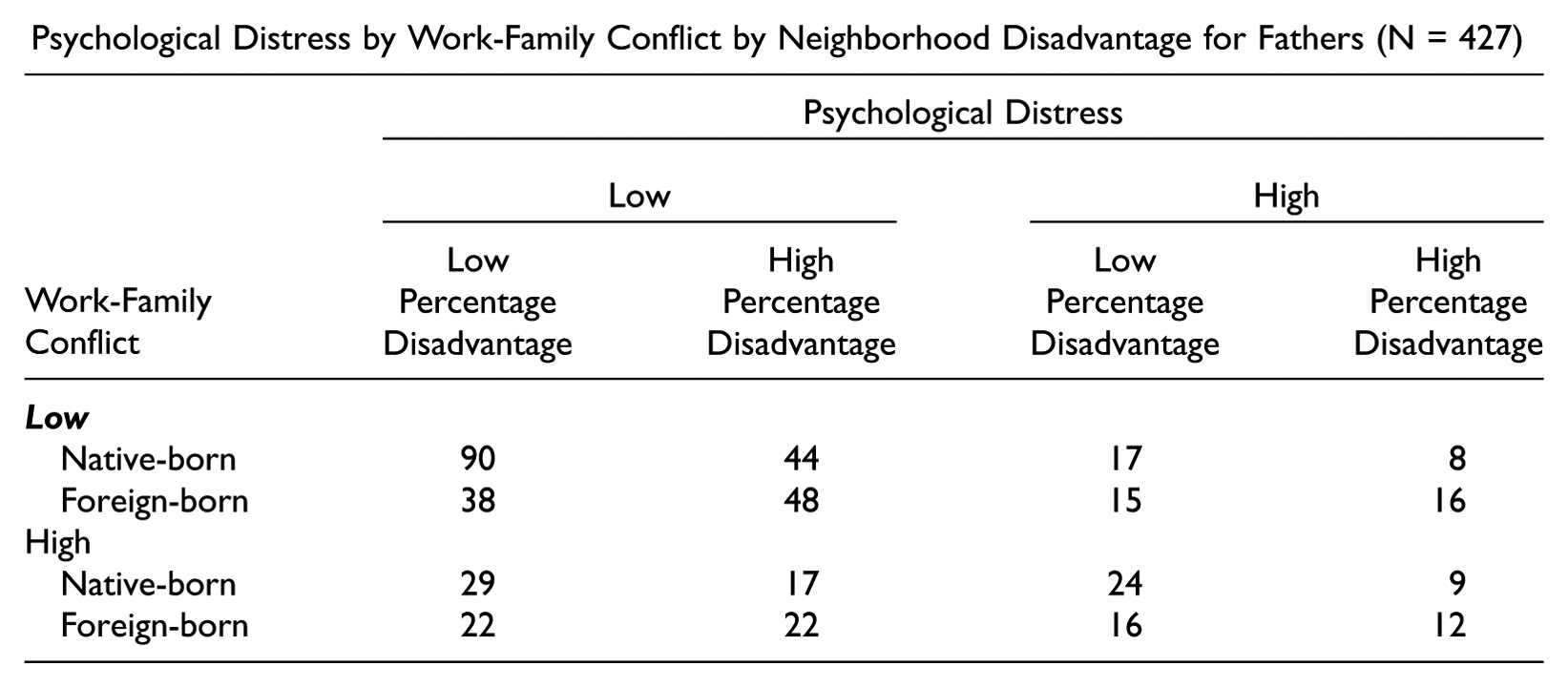
To capture the effect of neighborhood context on WFC, we use hierarchical linear modeling (HLM) (Raudenbush and Bryk 2002). By using HLM, we simultaneously model individual- and neighborhood-level predictors of WFC and psychological distress. This approach also partitions the total variance into two components—individual variance in WFC within neighborhoods and variance across neighborhoods. We group-mean center all individual-level measures so that the model at the neighborhood level is scaled to predict differences in the mean levels of WFC and distress across neighborhoods and to reduce collinearity between measures (Raudenbush and Bryk 2002). Preliminary analyses highlight that several of our focal associations vary for mothers and fathers. We therefore separate our models by gender and discuss these gendered effects in the next section. Please see the Appendix for a breakdown of number of respondents across by gender, nativity, neighborhood disadvantage, WFC, and distress levels.
First, we model WFC as an outcome. We create and test interaction terms between neighborhood disadvantage, perceived disorder, and immigrant status to see whether our results differ across each outcome for foreign- and native-born (e.g., neighborhood disadvantage × foreign-born; see Tables 2 and 3 for mothers’ and fathers’ results). We then model psychological distress as an outcome. We test whether the impact of WFC varies depending on neighborhood disadvantage or perceived disorder for native- versus foreign-born residents (e.g., neighborhood disadvantage × foreign-born × WFC; including all lower order terms). Again, we find that our results vary by gender, so we model all analyses for distress separately for mothers and fathers (Tables 4 and 5, respectively). All analyses are weighted by gender, age, household income, household size, and nativity and control for selected social and demographic covariates. We identify our generic Level 1 formula estimating distress:
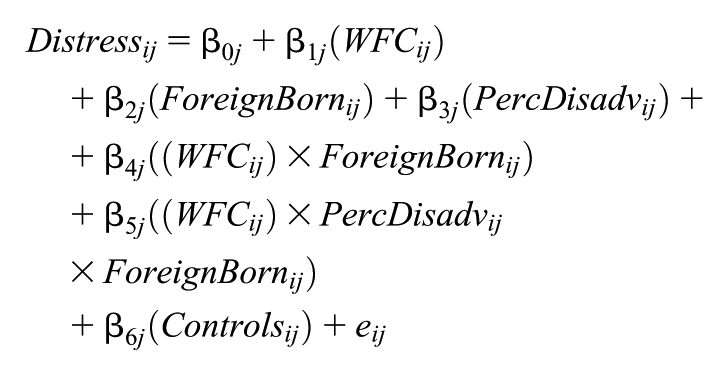
With this model at Level 2:
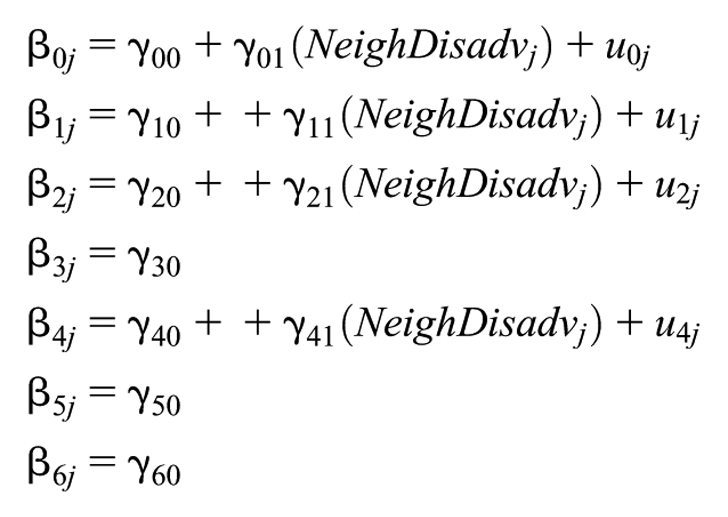
where
Results
Table 1 provides summary statistics for all variables used in the analyses. We include statistics for foreign- and native-born respondents separately and highlight statistically significant mean and proportional differences between the two groups. It is noteworthy that both groups report similar levels of WFC but foreign-born respondents report greater distress (7.85 vs. 8.31) and significantly higher perceptions of disorder compared to the native-born (3.48 vs. 3.75). Foreign-born residents also tend to live in more disadvantaged neighborhoods compared to the native-born, based on our census measure (–.25 vs. .09).
Descriptive Statistics for All Study Measures.

Note. Asterisks present mean or proportional differences between native and foreign-born respondents based on t tests and chi-square tests, respectively. Descriptives averaged across all five imputed, unweighted data sets. Asterisks reflect significant mean/proportional differences between men and women. We present means for continuous variables and percentages for categorical variables.
In thousands of dollars.
Only standardized values are presented since the items in the scale were standardized prior to creating the scale.
p < .05. **p < .01. ***p < .001 (two-tailed test).
Neighborhood Variation in Work-Family Conflict
Prior to testing our focal hypotheses, we consider variation in WFC between neighborhoods by estimating a one-way analysis of variance (ANOVA) with no predictors at either level. We find variation in WFC between neighborhoods (men τ00 = .887, p < .01; women τ00 = 1.32, p < .01). The interclass correlations (ICC) suggest that 9 percent to 14 percent of the variance in fathers’ and mothers’ WFC is between neighborhoods, respectively. We do the same for distress and find significant variation in this outcome across neighborhoods for both men and women (men τ00 = 6.398, p < .05; women τ00 = 4.581, p < .001). We then test whether the effect of foreign-born on WFC varies between neighborhoods and whether the effects of foreign-born and WFC on distress varies between neighborhoods. We estimate these associations with random slopes models. We find that being foreign-born influences WFC differently across neighborhoods (see Tables 2 and 3). Further, we find that WFC’s effect on distress varies across neighborhoods for men only (see Table 5). We allow the slopes for both foreign-born and WFC to vary across all corresponding models with the expectation that the effects of both depend on some unspecified neighborhood characteristic.
Work-Family Conflict Regressed on Individual- and Census-level Neighborhood Disadvantage Measures (Group-Mean Centered) for Mothers (N = 367).
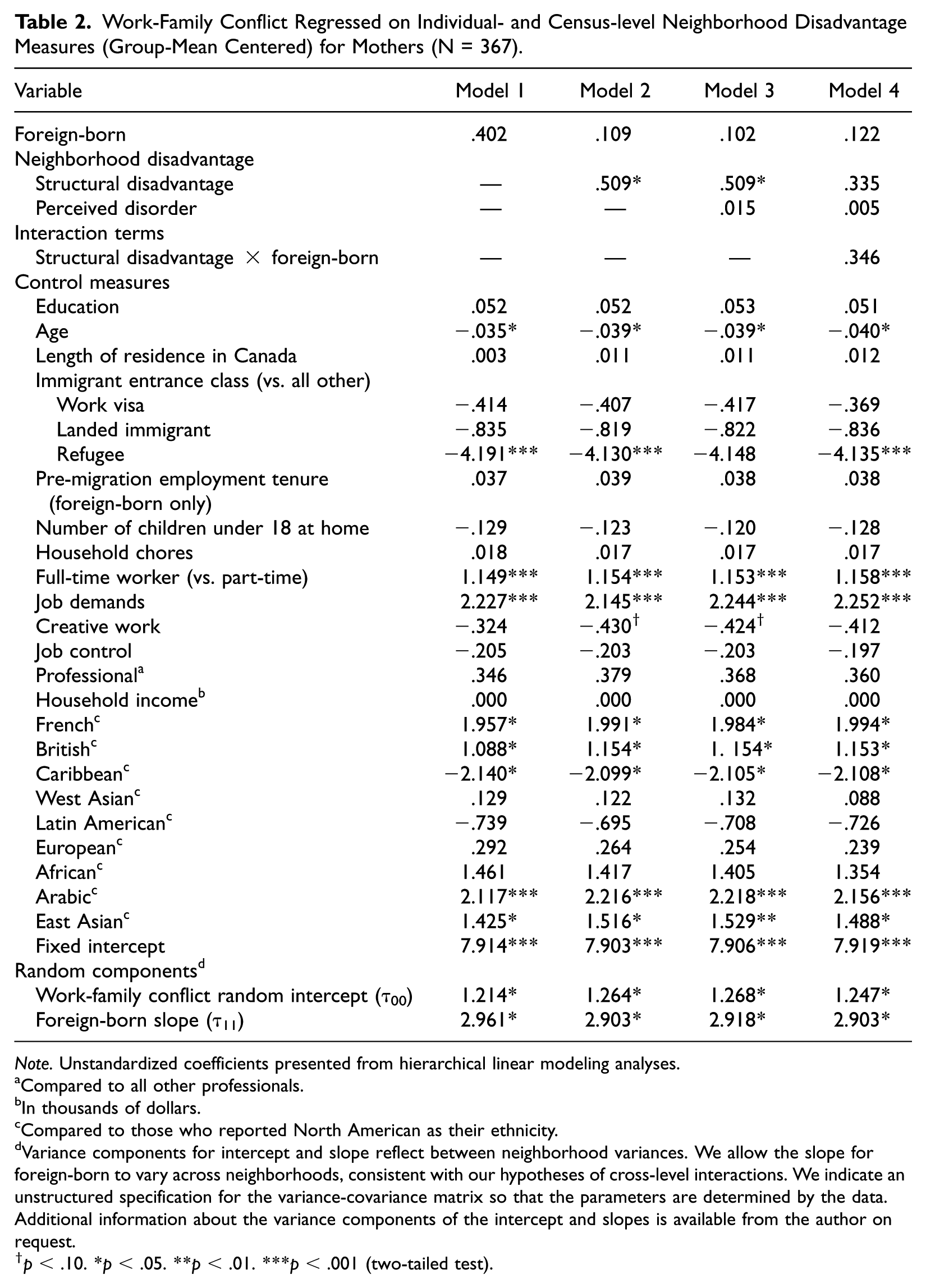
Note. Unstandardized coefficients presented from hierarchical linear modeling analyses.
Compared to all other professionals.
In thousands of dollars.
Compared to those who reported North American as their ethnicity.
Variance components for intercept and slope reflect between neighborhood variances. We allow the slope for foreign-born to vary across neighborhoods, consistent with our hypotheses of cross-level interactions. We indicate an unstructured specification for the variance-covariance matrix so that the parameters are determined by the data. Additional information about the variance components of the intercept and slopes is available from the author on request.
p < .10. *p < .05. **p < .01. ***p < .001 (two-tailed test).
Work-Family Conflict Regressed on Individual- and Census-level Neighborhood Disadvantage Measures (Group Mean Centered) for Fathers (N = 427).

Note. Unstandardized coefficients presented from hierarchical linear modeling analyses.
Compared to all other professionals.
In thousands of dollars.
Compared to those who reported North American as their ethnicity.
Variance components for intercept and slope reflect between neighborhood variances. We allow the slope for foreign-born to vary across neighborhoods, consistent with our hypotheses of cross-level interactions. We indicate an unstructured specification for the variance-covariance matrix so that the parameters are determined by the data. Additional information about the variance components of the intercept and slopes is available from the author on request.
p < .10. *p < .05. **p < .01. ***p < .001 (two-tailed test).
Neighborhood Effects on WFC and Mental Health Consequences by Nativity Status and Gender
We then move on to test our focal hypotheses. To test Hypotheses 1 and 2, we model interactions between (1) our neighborhood measures and foreign-born status in predicting WFC (Hypothesis 1) and (2) our neighborhood measures, foreign-born status, and WFC in predicting distress (Hypothesis 2). We then run a series of models to test Hypotheses 3 and 4 to determine whether neighborhood disadvantage and perceived disorder affect WFC and its mental health consequences differently for mothers and fathers, respectively (results for pooled analyses not shown but available). We find evidence of gender differences in the impact of neighborhood disadvantage by nativity status for WFC as an outcome (Hypotheses 3) and gender differences in the impact of neighborhood disadvantage by nativity status for the distress resulting from WFC (Hypothesis 4). 2 We therefore separate our analyses by gender and present results that support these latter hypotheses.
Table 2 presents our results for mothers with WFC as an outcome. While we find that neighborhood disadvantage—measured at the census level—increases WFC, we do not find that this association varies by foreign-born status. Nor do we find evidence that perceived disorder affects mothers’ WFC depending on nativity. However, we do find somewhat opposite results for fathers. Turning to Table 3, Model 4, we see that neighborhood structural disadvantage impacts WFC forthese fathers, but the extent to which varies for the native versus foreign-born respondents (bdisadv×fb = –.748, p < .05). This finding provides partial support for Hypotheses 1 and 3: Neighborhood disadvantage impacts WFC but differentially by nativity status for fathers only; however, we did not find support for our prediction that there would be a significant interaction between foreign-born status and perceived neighborhood disorder.
The significant interacting association is best reflected visually. We present the results for both mothers and fathers in Figure 1. The difference is apparent between foreign-born men compared to all other groups (the solid grey line compared to the solid black and dotted lines). Foreign-born men actually experience less WFC compared to all other groups as neighborhood disadvantage increases. We discuss this unexpected result in detail in the discussion section.
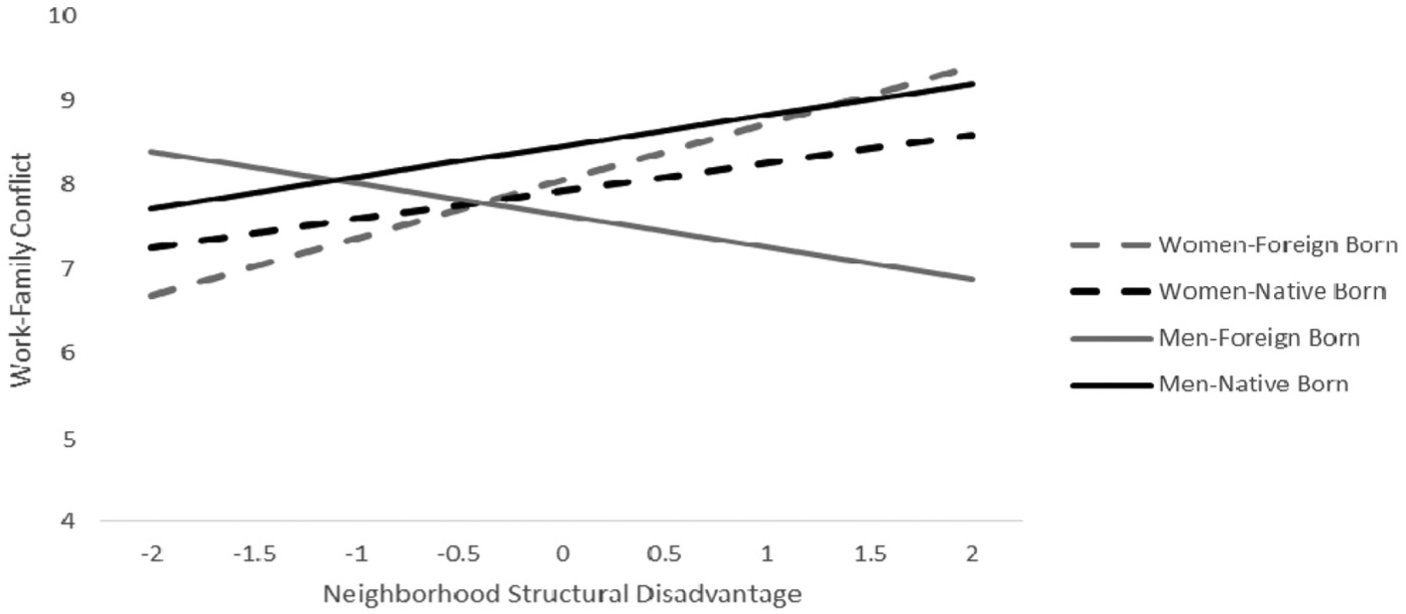
The effect of neighborhood disadvantage (census-level measure) on work-family conflict by nativity status for mothers (N = 367) and fathers (N = 427).
Next, we test whether the combined effects of WFC and neighborhood disadvantage or perceived disorder on psychological distress vary by nativity status (Hypothesis 2). Again, we find gendered effects of these associations and therefore separate our results for mothers and fathers (in support of Hypothesis 4). We do not find conditional effects of WFC by neighborhood disadvantage/perceived disorder by nativity status for the mothers in our sample (Table 4). Once again, however, we find that the effect of WFC and neighborhood disadvantage on distress depends on nativity status for fathers, in support of Hypothesis 4 (Table 5, Model 4, bdisadv×WFC×fb = –.519, p < .05). These results are also presented visually. Figures 2 and 3 present results for mothers and fathers by neighborhood disadvantage and foreign-born status. We are particularly interested in the results shown in Figure 3. The grey dotted line suggests that foreign-born fathers living in more disadvantaged neighborhoods experience higher levels of distress as a result of WFC compared to all other groups of fathers—specifically, foreign- and native-born fathers in more advantaged neighborhoods (represented by the dashed and solid black lines, respectively).
Psychological Distress Regressed on Work-Family Conflict, Nativity Status, and Individual- and Census-level Neighborhood Measures (Group-Mean Centered) for Mothers (N = 367).

Note. Unstandardized coefficients presented from hierarchical linear modeling analyses. WFC = work-family conflict.
Compared to all other professionals.
In thousands of dollars.
Compared to those who reported North American as their ethnicity.
Variance components for intercept and slope reflect between neighborhood variances. We allow the slope for WFC to vary across neighborhoods, consistent with our hypotheses of cross-level interactions. We indicate an unstructured specification for the variance-covariance matrix so that the parameters are determined by the data. Additional information about the variance components of the intercept and slopes is available from the author on request.
p < .10. *p < .05. **p < .01. ***p < .001 (two-tailed test).
Psychological Distress Regressed on Work-Family Conflict, Nativity Status, and Individual- and Census-level Neighborhood Measures (Group-Mean Centered) for Fathers (N = 427).
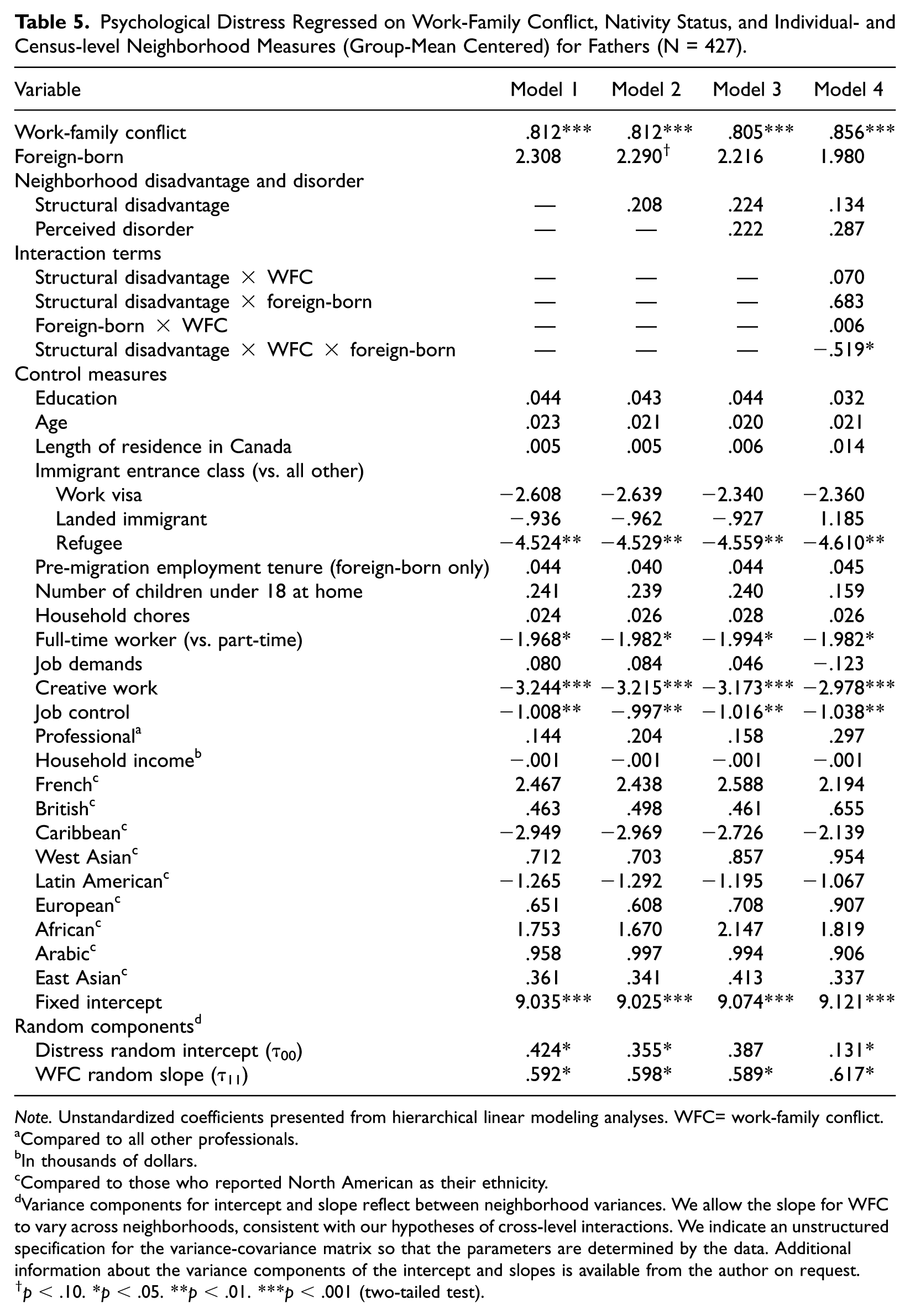
Note. Unstandardized coefficients presented from hierarchical linear modeling analyses. WFC= work-family conflict.
Compared to all other professionals.
In thousands of dollars.
Compared to those who reported North American as their ethnicity.
Variance components for intercept and slope reflect between neighborhood variances. We allow the slope for WFC to vary across neighborhoods, consistent with our hypotheses of cross-level interactions. We indicate an unstructured specification for the variance-covariance matrix so that the parameters are determined by the data. Additional information about the variance components of the intercept and slopes is available from the author on request.
p < .10. *p < .05. **p < .01. ***p < .001 (two-tailed test).

The effect of work-family conflict on psychological distress by neighborhood disadvantage (census-level measure) and nativity status for mothers (N = 367).
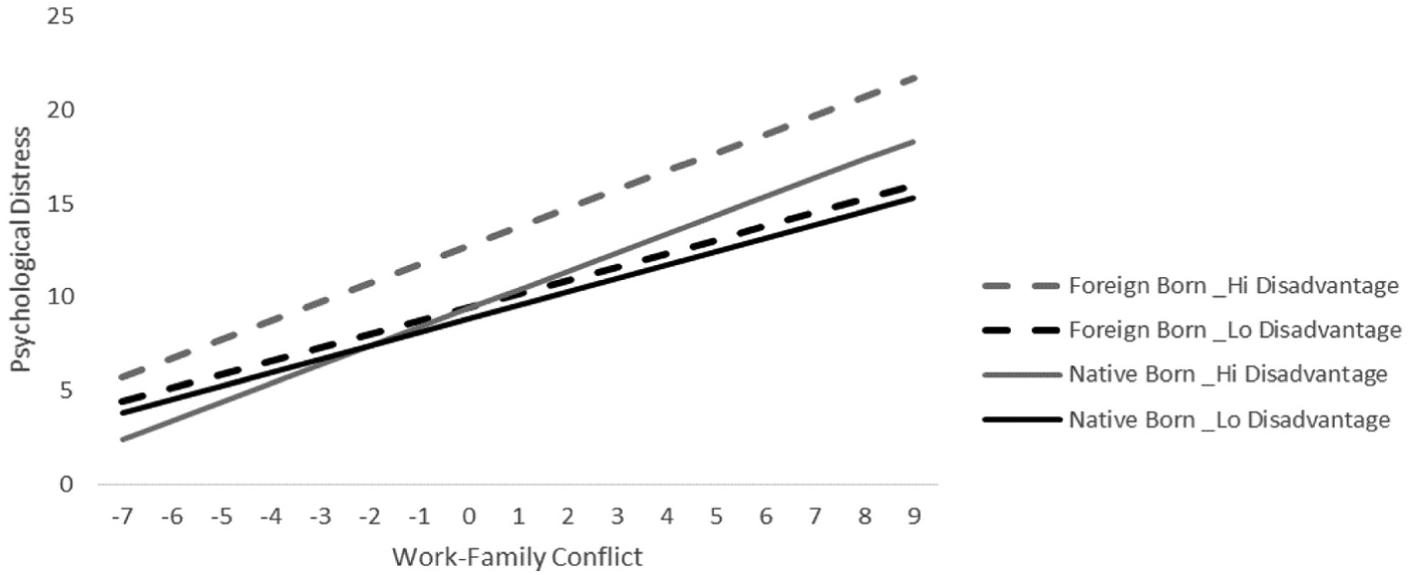
The effect of work-family conflict on psychological distress by neighborhood disadvantage (census-level measure) and nativity status for fathers (N = 427).
These results somewhat contradict our previous findings for WFC: While foreign-born men experience less WFC in disadvantaged neighborhoods, the WFC that they do experience (when living in these neighborhoods) is more distressing compared to other groups. These findings suggest that foreign-born men are not necessarily exposed to more WFC as a result of neighborhood disadvantage; however, they may be more vulnerable to the WFC that they do experience in these disadvantaged neighborhoods. We discuss the implications of these findings within a SPM framework of neighborhood effects.
Discussion
Our study set out to examine the differential impact of neighborhood context on WFC and its mental health consequences among native- and foreign-born residents. We build on previous work-family interface literature by taking a morecontext-based perspective—moving beyond individual-antecedents of WFC and its consequences. Our study advances WFC and mental health research by taking such an approach. We consider both objective markers of neighborhood disadvantage (using a census-level measure) and perceived neighborhood disorder (using an individual-level measure). Further, we introduce a more nuanced understanding of the association between neighborhood context, WFC, and its mental health consequences among native- versus foreign-born residents—an important comparison previously neglected (see Spector et al. 2004). Finally, we test whether the impact of neighborhood context depends on the gender of the respondent.
Our study revealed several noteworthy results. First, our associations between neighborhood context, nativity, WFC, and its associated distress vary by gender. Second, while neighborhood disadvantage increases WFC for mothers, this association does not depend on nativity. We find the opposite for fathers, however. In fact, neighborhood disadvantage decreases reports of WFC among foreign-born fathers relative to all other residents. We discuss these unique findings in turn but underscore that combined, these results highlight the importance of considering how individual and structural features interact to impact mental health disparities among vulnerable populations.
Stress Proliferation Versus Stress Substitution: The Unique Combination of Neighborhood Disadvantage and Work-Family Conflict
We drew on the idea of “stress proliferation”—a core tenant of the SPM—to predict that neighborhood disadvantage and perceived disorder would increase respondents’ experiences of WFC. For foreign- and native-born women and native-born men, we observe patterns of stress proliferation: Greater neighborhood structural disadvantage (measured at the census level) results in higher WFC for these respondents. However, foreign-born fathers in more disadvantaged neighborhoods report less WFC, in contrast to ideas of stress proliferation. These unexpected patterns resonate more so with a process referred to as “stress substitution,” which borrows from the notion of resource substitution—a concept discussed within the sociology of stress and mental health literature.
Mental health scholars describe resource substitution as the process whereby one social or psychological resource becomes more salient and therefore effective in reducing psychosomatic symptoms at lower levels of a second resource (Ross and Mirowsky 2006; Young and Schieman 2012). We borrow from this reasoning to help explain our unique finding among foreign-born fathers: The stressors associated with these residents’ individual-level status combined with ambient stressors of a disadvantaged neighborhood context reduce the salience of other stressors, including WFC. These residents may already have too much on their plate, so to speak, to be aware of role incompatibilities. The same may not apply to native-born residents or foreign-born mothers, whose work and family conflicts become nonspecific and all consuming (see Simon 1995). On average, immigrants who live in socioeconomically disadvantaged neighborhoods are likely to be from poorer origin-countries (Fong and Gulia 1996). Thus, another reason why these men may not view the role incompatibilities between work and family as problematic may be because this incompatibility is still in conjunction with their overall improved life circumstances and reduced deprivation compared to that of friends and family left behind (Montazer et al. 2016). We cannot test these ideas directly given limitations of our data and instead draw on them to help explain our observed associations. Nevertheless, we believe these findings advance ideas of stress proliferation and stress substitution, and therefore the SPM framework, by demonstrating the unique combination of individual and structural factors that may lead to one scenario over the other.
Differential Vulnerability in Disadvantaged Contexts among Foreign-born Fathers
Despite that foreign-born fathers experience less WFC in disadvantaged neighborhoods, the WFC they do experience results in worse mental health for these men compared to other residents living in similar contexts. Our findings here support the differential vulnerability hypothesis—another key hypothesis within the SPM (Pearlin 1999). The differential vulnerability hypothesis suggests that minority or lower status populations may be more susceptible to the deleterious consequences of stressors. This appears to be the case for foreign-born fathers, but—in accordance with the ecological model of neighborhood effects—this association only exists for those who live in disadvantaged neighborhoods. The psychological consequences of the combination of one’s nativity status and individual-level role incompatibilities are exacerbated by the stressors present and absence of resources available in lower socioeconomic neighborhoods among this subpopulation. It may be that these fathers find it particularly difficult to reach out to find support or—if they do reach out—are not able to find support for their circumstances in such contexts, compared to other parents (see Schieman 2005, for similar results with native-born respondents). Our ideas here advance research on differential vulnerability arguments by underscoring the mental health problems that arise among minority populations depend on a unique combination of individual- and contextual-based factors (Aneshensel 2009). Due to limitations in our data, we cannot test the exact causal possibilities for these differences but urge others to examine these explanations in future research.
Unexpected Gender Differences
Contrary to expectations, we find that neighborhood context influences the association between nativity, WFC, and its mental health consequences for fathers but not mothers. We assumed that mothers would be worse off, given their differential experiences of the work-family interface and greater integration into the community compared to their male counterparts (Naples 1991; Simon 1995). We also assumed that being an immigrant would be more detrimental to mothers’ experiences and consequences of WFC and neighborhood context compared to fathers. We did not find evidence supporting our assumptions. Instead, the neighborhood context seems more salient for the foreign-born fathers in our sample. Among mothers, the effect of WFC transcends nativity and neighborhood characteristics, perhaps because these women are often responsible for the lion’s share of the housework and child care, irrespective of employment status (Bianchi et al. 2006; Hochschild 1989). In accordance with the SPM, these findings further underscore the importance of examining the combination of key social statuses in neighborhood effects research. Previous studies documenting gender differences (or similarities) in experiences of the work-family interface and neighborhood context may be misleading if theyneglect to distinguish between native- and foreign-born populations. Future research should unpack these findings using qualitative data aboutimmigrant men’s unique neighborhood experience.
Limitations and Conclusions
Despite the important findings of our study, there are several methodological limitations worth mentioning. First, we use cross-sectional data, which limits our causal assumptions about the impact of neighborhood context on WFC. While our paper articulates the standard theoretically based assumptions of this literature, these data provide only a snapshot, and longitudinal data would be preferable. Second, our sample is limited by location, which may restrict the generalizability of our findings. We use data from residents in Toronto, Canada, only. Toronto, in some respects, is an ideal setting to study neighborhood effects because of its unique demographic and social characteristics. The city is one of the most multicultural in North America, with more than a 50 percent foreign-born population from over 140 different countries (City of Toronto 2012). Furthermore, Toronto’s neighborhoods are less segregated by ethnicity compared to other urban places (Fong and Wilkes 2003; Hulchanski 2007). Because of the reduced level of segregation, we are able to successfully disentangle the effects of neighborhood resources and disadvantage from individual-level characteristics. Nevertheless, the unique nature of the sample does restrict our ability to generalize our findings to other urban cities. Third, the NEHW survey is only offered in English, and participation in this study required respondents to have reasonable skills in English. Thus, our sample may not be fully representative of Toronto’s immigrant communities.
Related to this last point, the design of the study necessitated that the respondents live in their neighborhood for at least six months. This restriction may have attributed to the selection of more established or long-term immigrants in our sample. These might be the best off of immigrants, and perhaps the impact of nativity status on WFC and its consequences in disadvantaged communities would be even worse for non–English speaking, newly arrived residents to Canada. Unfortunately, we cannot test the plausibility of this statement given our data limitations. We attempt to correct for sample biases by using individual-level sample weights in all analyses (O’Campo et al. 2015). Furthermore, we account for immigrants’ length of residence by statistically controlling for these variations across all models. We also tested whether our focal associations vary by length of residence. However, we do not find evidence that this is the case (results available from the authors on request), likely because these immigrants have passed through some of the worst of acculturation stress, as indicated by the average high level of English proficiency in the data. According to previous research, increase in chronic stressors among immigrants occur in the first five years post-migration and tend to stabilize thereafter (Montazer and Wheaton 2017). Future research should explore these associations with data from more recent immigrants who may not feel comfortable speaking English. Future research should also disaggregate the foreign-born by country of origin. It may be that neighborhood disadvantage is an important modifier for mothers as well as fathers but only for those from less developed or more collectivistic countries. These groups of women are more likely to come from traditional cultures (Clark and Clark 2004; Gill and Matthews 1995), which may make the balancing of work and family roles more difficult, particularly in disadvantaged contexts. Our sample was too small to make such distinctions. However, we did control for ethnicity, and our focal associations remained.
Despite these limitations, our study contributes a number of noteworthy findings and theoretical insights to the sociology of mental health and neighborhood effects literature. We document unexplored and unique ways in which neighborhood context impacts WFC and its mental health consequences differently for native- versus foreign-born residents. Using multilevel data from Toronto, Canada, we find that neighborhood disadvantage—measured at the census level—increases reports of WFC among all respondents, except among foreign-born fathers, who actually report a decrease in WFC as neighborhood disadvantage increases. However, the WFC foreign-born fathers in disadvantaged neighborhoods do endure leads to greater distress compared to all other respondents, including native-born fathers and foreign- and native-born mothers. Overall, our study highlights the importance of considering how individual and structural features interact to impact individuals’ experiences of neighborhoods while contributing to explanations of mental health disparities among vulnerable populations.
Footnotes
Appendix
Psychological Distress by Work-Family Conflict by Neighborhood Disadvantage for Fathers (N = 427)
| Psychological Distress | ||||
|---|---|---|---|---|
| Work-Family Conflict | Low |
High |
||
| Low Percentage Disadvantage | High Percentage Disadvantage | Low Percentage Disadvantage | High Percentage Disadvantage | |
|
|
||||
| Native-born | 90 | 44 | 17 | 8 |
| Foreign-born | 38 | 48 | 15 | 16 |
| High | ||||
| Native-born | 29 | 17 | 24 | 9 |
| Foreign-born | 22 | 22 | 16 | 12 |
Funding
The author(s) disclosed receipt of the following financial support for the research, authorship, and/or publication of this article: This research was funded by Canadian Institute for Health Research grant MOP- 84439 and the Social Science and Humanities Research Council grant 410-2007-1499.