




Abstract
In this study, we examined the gender debate within the conservative Dutch reformed pietist community. Using social scientific methods, we conducted an empirical analysis of 65 opinion articles on the platform ‘Biblical Council M/F’, to analyze how theological interpretations of gender and gender diversity functioned in the context of processes of meaning making and construction of group identity. Selected articles referred to either ‘gender ideology’ or ‘order of creation’ (terminology used on the platform). Articles were coded per section in NVivo, in two rounds. Our findings show that, in constructing group identity, authors contrasted people adhering to biblical values with those who did not, or those acknowledging binary categories with ‘postmodernists’. We identified a mixture of biblical and common-sense arguments along the lines of biology, which were used to highlight male-female differences. Furthermore, authors accentuated potential loss of religious freedoms, and employed alarmist language, urging readers to speak up against progressive norms in society. To reinforce this call, authors cited other Christians, but also non-Christians, as they were seen as witnesses to moral ‘truths’. We conclude that used arguments and framings, often negative and politically reactive, are part of a discursive strategy and have implications for the identity and meaning system of community members, particularly for those not conforming to the community’s gender norms.
Keywords
Introduction
Over the past few decades, discussions about traditional family values have been on the rise, both in North America as in Western Europe. A lot of research has delved into the dynamics of ‘culture wars’ (e.g. Balkenhol & van den Hemel, 2019; De Bruijne, 2020; Dowland, 2015): cultural conflicts of progressive emancipatory movements on the one hand, and conservative groups – often of Catholic or Protestant origin – on the other hand. In the Netherlands, a subgroup in society which can be characterized as generally conservative on family values and stances on gender is the reformed pietist (in Dutch: bevindelijk gereformeerde) community, consisting of around 300,000 members, most of them living in a region in the Netherlands often named the ‘Biblebelt’ (Snel, 2007). In 2019 a lot of commotion arose when ministers from this community, alongside some ministers from evangelical and Baptist traditions, re-created a Dutch version of the 2017 Nashville Statement, which took explicit stances on marriage, gender and (homo)sexuality. Research which looked into how and why this Nashville Statement was copied into the Dutch context (Zorgdrager, 2022) hinted that it served not only as a decree to the outside secular world, but also, or even rather, as a statement to inform the in-group about the ‘correct’ or ‘biblical’ stance on issues of gender and sexuality, in effect delineating the boundaries of their theology and, thus, their community. Zorgdrager in her theological assessment notes that the Nashville testimony was first of all for the in-group (Zorgdrager, 2022, p. 94), furthermore explaining its emergence by referring to public theology and the broader neoconservative discourse on family values. A question left unanswered in this study concerns how such processes of identity formation have functioned within the in-group, and through which mechanisms theological narratives on gender and sexuality are constructed by important community figures. Hence, we address this gap in the literature: what exactly do those community figures consider to be the out-group(s) they position themselves against, and what are the driving forces behind the arguments they construct?
In contrast to the theological assessments by Zorgdrager, de Bruijne and other scholars, our current study will provide a more systematic, distanced analysis. By doing so, our study seeks to uncover underlying mechanisms that may also be operative in analogous groups and contexts. We will examine the debate through two lenses: terms that have been increasingly used in the debate on issues of gender and gender diversity since the Dutch Nashville Statement in 2019 (see Section ‘The Use of “Gender Ideology” and “Order of Creation”: Nexis Data’ for more details on the incidence of those terms over the past couple of years, see also e.g. Hogendoorn, 2019; Janse, 2019). When reformed pietists write about issues related to gender diversity, they often describe it as a part of a ‘gender ideology’ (in Dutch: genderideologie). This term refers to an alleged ‘ideological nature of gender theory’, in which biological sex and gender identity are seen as distinct. The term was initially used in feminist and gender studies, referring to a world beyond binary male-female distinctions and patriarchal norms. It was only later that its meaning and connotations were transformed by the global political right, after which the term has been used as a tool or weapon in the culture war around gender and sexuality (Hamlin, 2020; see also Vaggione, 2020).
Another term which, similarly, has often been employed in relation to issues of gender and gender expression, is a so called ‘order of creation’, in Dutch: scheppingsorde, which highlights the importance of division of roles between men and women. The following quote by a reformed minister shows what this term signifies theologically:
The relationship between men and women is not merely a consequence of the Fall, but is inherent in the creation of men and women itself……This is what is known in theology as the order of creation: the man as the head, the woman as the helper. Although this may seem like a dirty expression today……it is directly derived from Genesis; it is also fully confirmed in the New Testament (2 Tim. 2:13). Men and women each have different roles and callings – and this is God’s instruction for all times… (Klaassen, 2022).
Reformed pietist theology has often been characterized as devout and exclusivist, with a particular focus on interiorization of faith (in Dutch: bevindelijkheid), repentance of sin, and predestination (see Hijweege, 2004; Van der Knijff, 2019). Sociologically, this group can be defined by its institutions, such as churches, a political party (Reformed Political Party, in Dutch: Staatkundig Gereformeerde Partij), newspaper (Reformed Daily, in Dutch: Reformatorisch Dagblad), and its own publicly funded schools. It is worthwhile to regard whether, specifically on issues of gender and gender diversity, this sociological demarcation and isolation translates into specific types of narratives created for the in-group, or whether these narratives transcend group boundaries. Some signals hint into that second direction, as it seems that since the publication of the Dutch Nashville Statement in 2019, reformed pietist platforms have strengthened bonds with other Christian traditions and formed alliances leading to a more interdenominational positioning (see later paragraphs for more explanation).
Whereas sociologically, positioning on issues of gender and gender diversity can be a strong demarcation of group identity (Rowatt et al., 2014), it must also be considered that such demarcations have profound psychological impact for individual community members. This concerns members in general for whom feelings of fear and threat may be evoked by how the debate is framed, which in turn can negatively affect those who do not confirm to the community’s dominant gender norms. This also has implications for the functioning of members’ religious meaning system (Park, 2013) and their ability to use negative and positive types of religious coping (Pargament et al., 2013).
As said, there are indications that reformed pietists strengthened bonds with members of different Christian denominations. This is exemplified by the fact that in 2020, an ecumenical platform called ‘Biblical Council M/F’ (translated from Dutch: Bijbels Beraad M/V) was started by the initiators of the Dutch Nashville Statement. The platform states to be a ‘broad interdenominational platform that stands for the biblical perspective on men, women, marriage, and sexuality’ (Bijbels Beraad, 2025). Although the emergence of this platform can be seen in the light of a larger neoconservative campaign, it must be said that hypothesized relationships between strict Christians and neoconservatism (as supposed in Rietveld, 2021) have been deemed ambiguous in the Dutch context, leading scholars to call for more research into the theological reasonings of right-wing political leaders (Peels, 2023). That theology matters was also indicated by other previous research, which found that not all in the relationship between fundamentalism and gender attitudes can be explained away by political conservatism. Evidence was found for independently working direct effects of both political and religious factors on the amount of support for same-sex marriage (Sherkat et al., 2011). In other words: there is a tendency for fundamentalist Christians to be more right-wing or politically conservative, but their religious ideologies and belief systems play a big role in their views on sexual diversity and, arguably, issues of gender and gender diversity as well. Other research in the field of social psychology indicates that part of the link between religion (measured by self-reported level of religiosity) and anti-same sex marriage attitudes is mediated through subsequent pathways of political conservatism and sexual prejudice (Van der Toorn et al., 2017). Van der Toorn et al. furthermore concluded that resistance to change was a more important factor than opposition to equality for the conservative Christians they studied (2017).
As not only religious ideology, but also the sociology and social psychology of group dynamics play a role, we believe that a first step should be to further clarify the way religious ideology is constructed in the first place, and how it functions for the in-group. This construction of religious ideology needs to be contextualized within the existing psychological and sociological processes of meaning making and identity formation, as was argued in previous research (Cinjee, 2026; Cinjee & Schaap-Jonker, 2022; Cinjee et al., 2025).
This is why it is important to focus on leading key figures and ministers, as they serve as both providers of identity and constructors of meaning for their in-group members, functioning as ‘identity agents’ of the community (Cinjee, 2026; Hogg et al., 2012; Van der Knijff, 2019). We will not go into detail regarding the alleged alliances between Christian political parties and right-wing platforms (Rietveld, 2021; Van den Hemel, 2021). Instead, we suggest a systematic, empirical analysis of opinion articles on the platform ‘Biblical Council M/F’, which will firstly follow theoretical considerations, about what group identities, intergroup alliances and important out-groups are perceived by reformed pietist key figures and ministers. This will be operationalized as the group contrasts, see section ‘Group contrasts and Identity’. A second step is to examine the meanings which key figures and ministers describe to the debate, and the content they consider most important to highlight for readers of their articles. This will be reflective of their underlying motives, see section ‘Motives’. Our considerations lead to the following research question:
How do reformed pietist key figures and ministers articulate their views on ‘gender ideology’ and ‘order of creation’ on the Biblical Council M/F platform? What kind of group contrasts and motives do they use and why?
In our final analysis, we will also explore how authors construct their reasonings, by examining patterns in the structures of argumentation – based on combinations of group contrasts and motives identified in our data. By those means, our analysis will also extend beyond the theological particularities of Dutch reformed pietism, and contribute to existing research into interconnections between Christian and other discourses. Furthermore, it sheds light on the many ways in which the gender debate is used by conservative groups to create meaning, reinforce group identity, and respond to perceived societal pressures.
Theoretical Literature
Group Contrasts and Identity
In our first part of the literature review we will delve into theories about religion and identity. The section follows reasoning from intergroup theories, see ‘Religion, Identity and Intergroup Theory’, to distinguish group contrasts which we believe are plausible given the sociology and theology of reformed pietism, see ‘Group Threat and Dichotomous Thinking for Reformed Pietists’, and may now effectively be drawn by reformed pietist community key figures, see ‘Dimensions’.
Religion, Identity and Intergroup Theory
A lot of research has examined religion and intergroup relations (e.g. Altemeyer, 2003; Merino, 2010; Voicu, 2017), often hinting at a causal positive relationship between in-group beliefs and out-group hostility or prejudice (Altemeyer, 2003; Greenwald & Pettigrew, 2014). When we speculate on why conservative Christians – such as reformed pietists – may take a strong position about issues of gender and gender diversity, this could in part be explained by their religious exclusivist ideology, but also by their sociological position as a religious minority in a secularized and increasingly pluralistic society. Earlier research suggested a link between increasing societal diversity and strengthened in-group sentiments (Altemeyer, 2003; Voicu, 2017). LGBT progress could be experienced as a threat to the values of conservative Christians (Wilkins et al., 2022). Furthermore, psychological and cognitive traits relatively common among conservative Christians negatively influence their attitudes toward various specific out-groups (Johnson et al., 2012) such as atheists, gay men, lesbians, liberals and feminists (Brandt & van Tongeren, 2017). Brandt and van Tongeren found that a more generic mechanism of simply having prejudice toward groups which are dissimilar upholds too.
Reflecting further on the general mechanisms at hand, we can consider what is proposed by social identity and social categorization theories (Tajfel & Turner, 2004), namely the human tendency to simplify the world in order to make it more comprehensible than it actually presents itself. People divide the world into categories, to clearly distinct good and evil, or those who can be trusted and those who cannot. This human need to categorize relates to self-identification as a part of one or more social groups. Religion may function as a catalyst of such group identification processes, as it provides a number of in-group versus out-group distinctions as well as ‘information influencing attributes by which people are parsed into categories’ (Rowatt et al., 2014, p. 174). Examples would be: perceiving the world as believers versus non-believers, religious versus secular people, followers of a true God versus followers of false gods, and so on. Religion in this way functions as a meaning system which provides individuals with ‘explanatory models for social phenomena’ (Rowatt et al., 2014, p. 175). Further research suggests (Rowatt et al., 2014, pp. 176–177) direct links between more perceived group threat and in-group favoritism or a stronger sense of community.
Although we can give a broad indication of the psychological workings of us versus them sentiments, these theories do not give us a hint of which group contrasts are prominent in various contexts, nor why those ones, instead of other ones, would be perceived. Based on recent anecdotal evidence, we have reason to believe that the group contrasts drawn by reformed pietist key figures are not constricted to their own community versus the secular context in which they are embedded, but instead extend those boundaries and vary over time. To give an example: whereas reformed pietists have been characterized by their strong antipapist sentiments in the past (Ten Hooven, 2018), nowadays alliances are forged with Catholics on issues of medical ethics, traditional values and gender norms (examples: reformed pietist minister Rev. Klaassen referring to ethics of a Dutch cardinal in a book on biblical sexuality (Klaassen, 2024)). Another example: In 2024, during a national Reformation commemoration, both the former leader of the Dutch Reformed Political Party (SGP) and a well-known Dutch priest spoke. The fact that this happened given the historical tensions between Catholics and the historically antipapist character of the Reformed Political Party is striking. The priest, Antoine Bodar, stated in his speech that Protestants and Catholics with orthodox stances feel a kinship in their shared fight for religious freedom in a liberal progressive society (see Spruyt, 2024).
Concerning issues of gender and gender diversity, there are indications of similar patterns. Whereas in other contexts strong group distinctions between ‘truly reformed’ Christians and others have been made, key figures and ministers now may regard themselves as parts of a larger counter-cultural movement. This process can create new in-groups, as members of separate groups are induced to conceive themselves as a single group (see e.g. Kunst et al., 2014). For instance, a reformed minister from Urk publicly praised a Muslim football player for his tenacity in rejecting to wear a rainbow band during a game. Normally, reformed pietist ministers would refrain from commenting on sports, or giving praise to the moral stances of Muslims (CVandaag, 2022). This anecdote hints to reformed pietist Christians potentially feeling stronger affinity with conservative Muslims than with liberal progressive Christians in regards to this particular topic. Van den Hemel (2021) makes a distinction regarding us versus them contrasts which refers to ‘how the other is seen’ in the Dutch debate on Islam and Christianity and religious freedom, that is: ‘is the other seen as confessionally alien or rather culturally alien’, which also leads to the question how such interreligious relations function in the debate on gender and gender diversity.
Group Threat and Dichotomous Thinking for Reformed Pietists
Historically, orthodox Protestants in the Netherlands have been characterized by their involvement in societal tensions or ‘culture wars’, such as ‘The School Struggle’ (about the equalization of financing for religious schools, until 1917), compulsory health insurance (one of the reasons for the founding of the SGP Reformed Political Party in 1918), vaccinations (such as the polio vaccine in the 1970s), and the exclusion of women within the SGP political party (prohibited by the Dutch Court since 2013). Now, similarly we see for the reformed pietists that they deviate from societal norms on sexuality and gender. Like in the aforementioned historical cases, this may evoke feelings of pressure, or isolation, and induce a fear of losing religious freedom. Whereas the historical cases were quite particular to the Dutch context, and rooted in specific religious objections based on their beliefs, it seems that the current debate on gender relates to a worldwide phenomenon. An increase in global and interdenominational cross-connections may lead to tensions with the general worldview of pietists, in which many dichotomizations are emphasized, most prominently the contrast between the few true believers versus non-believers (Hijweege, 2004). We know from psychological literature that such dichotomous thinking could lead to cognitive tensions and a low tolerance for ambiguity (see e.g. Graham, 2013; James Jones 2016 in Peels and Kinderman, 2024; Sagioglou & Forstmann, 2013), translating to black-and-white thinking concerning all sorts of groups in society. Interestingly, it is also known that perceived threat can lead to an increased sense of alignment with other minority subgroups in society, bringing about enemy-of-my-enemy-is-my-friend mechanisms (e.g. Yancey, 2024), where affinity may be experienced with other Christians and even those belonging to other religions. Recent research into a conservative-Christian majority context for instance indicated that progressive minorities felt akin to racial minorities (Yancey, 2024). Within the Dutch context, it would work the other way around: liberal values have been dominant over the past decades and thus we may expect dynamics in which various conservative or Christian groups could find each other in their stances on gender, traditional values and government interference. Question remains how this precisely relates to the perception of group identity for Dutch reformed pietists, as posing dualisms could thus lead to either a rigid and more localized contrasting of conservative or Christian communities with a hostile Dutch society, or to favoritism toward a larger set of people and international groups that are all aligned on this particular moral axis.
Dimensions
Based on our theoretical literature review, we can construct a few plausible group contrasts which we believe are the most likely to be used in the debate on gender and gender diversity.
First, a basic group contrast between people living according to biblical values, with those following the secular values in society.
- D1A Biblical values versus non-biblical values
Second, a group contrast which is drawn more along theological lines (Rowatt et al., 2014, p. 174), as the most important characteristic in reformed pietist circles is the ‘perceived salvation status’. In this group contrast, authors will distinguish the truly faithful as in-group from those who are not saved by the grace of God and are still blinded by their sins (Hijweege, 2004; Van der Knijff, 2019).
- D1B True believers versus sinners
Third, key figures and ministers may refer to a broader alliance of religious minorities having traditional values on issues of gender and gender diversity. This is also in line with earlier suggested interdenominational, or interreligious, alliances when there is perceived threat from a perceived progressive liberal majority.
- D1C (Multi)religious versus secular
Fourth, a plausible contrast may extend to the existing political sphere, as argued in literature on neoconservative movements regarding gender issues. This is also in line with the proposition of a ‘culture war’ between traditional values and emancipatory liberal values (e.g. Balkenhol & van den Hemel, 2019).
- D1D Traditional values versus progressive values
Fifth, in the literature we studied, we also saw theoretical reasonings of a potential in-group bias of heterosexual Christians toward a sexually diverse out-group. Van der Toorn et al., in their study on religious views on same-sex marriage in the USA, stated that if religious people ‘identify and self-categorize as heterosexuals or believe that truly religious people are heterosexual, their opposition to same-sex marriage could simply reflect the denial of privileges to members of an outgroup’ (2017, p. 1459).
- D1E Heterosexual versus non-heterosexual
We do not regard these five dimensions as exclusionary, but rather as complementary. Therefore we will code multiple group contrasts per Biblical Council M/F article if needed. More categories will be added during our axial coding process, see Section ‘Methods’.
Motives
Our second part of the theory will provide more detail on how authors active on the online Biblical Council platform make meaning regarding issues of gender and gender diversity. We will theorize about plausible ‘motives’ underlying the discourses they employ.
Earlier studies have shown a wide range of theological reasons for Christians to have a critical stance on gender and gender diversity (e.g. Den Hertog, 2019; Sandage et al., 2017). When they regard a certain biblically revealed truth to be at stake, this leads to moral stances which are applied to society as a whole, as fearing God and keeping God’s commandments are perceived as a duty of all mankind (Ecc. 12:13, see also Janse, 2015, pp. 226–228). This is also why in the past reformed pietists have been vocal in the public debate about their moral objections against, for instance, abortion and euthanasia.
In our coding, we will distinguish reasonings which are positively formulated (D2A: Testifying of a biblical truth), from those which are negatively formulated (D2B: Against moral decay, truth is under pressure) to trace underlying sentiments.
- D2A Testifying of a biblical truth
- D2B Against moral decay, truth is under pressure
On the other hand, motives may be more fueled by a general concern of not being freely able to express one’s stances on these issues, see also the earlier section on ‘Group threat’. Concretely, reformed pietists may fear losing certain religious freedoms or the public funding for reformed education (Janse, 2015, pp. 201–228). Developments on gender and gender inclusivity have led to renewed attention to previously gained religious rights and freedoms by religious minorities (Ten Hooven, 2018). Along the lines of earlier research on LGBTQ-views, it could be the case that reformed pietists not only fear for the future of Christian values (e.g. Voicu, 2017; Wilkins et al., 2022), but also that there is no place for their conservative views in society, at school and in the workplace. Motives underlying why authors write about the topic of gender may then thus concern not so much the objected ‘truths’ themselves, but rather the question whether they could be objected to within a secular context. This may lead to a more political-reflective perspective used by authors in their opinion articles instead of a biblical one.
All these considerations translate into the following dimensions, positively formulated D2C: a focus on religious rights and freedoms, and negatively formulated D2D: an emphasis on the fear that Christians will lose their position in society if they speak up – think of the threat of government interference or fear of losing one’s job.
- D2C Religious rights and freedoms
- D2D Loss of position
Data and Methods
Data
In December 2024, a dataset was created in NVivo (Lumivero, 2023) with 144 selected articles found under the theme ‘Gender ideology’ on the Biblical Council M/F website. Title, author, and identifiers were added in the dataset. A further selection of those 144 articles was made; only those with an interpretive nature were selected, mainly opinion articles and news articles with a strong interpretive component added by the author. Book reviews were excluded. We furthermore only selected articles written by authors identifiable as reformed pietists, or the editorial board, excluding authors from other traditions. This led to an N of 68. Most of the authors were ministers, and were referred to as such on the website; the other authors, by virtue of being allowed to publish on this influential platform, were regarded as ‘key figures’ within the context of this research. Twenty more articles were removed because they were deemed too short (<2 min reading time) or were a direct translation of another text not originally written by the Dutch author. We ended up with 48 articles on ‘Gender ideology’. Then, we added 12 articles, the most recently published ones at the moment of data collection, on the topic ‘order of creation’. We again only selected articles written by reformed authors. As of April 2025, five more articles were added, written after the Trump election of Nov 2024; this was to make sure data saturation was ensured, and to capture any potential changes in the discourse during the months after the Trump election.
Coding
We deductively coded our full dataset (N = 65) into two types of dimensions based on our theory: [frame:dimensions1] In-groups versus out-groups and [frame:dimensions2] Motives. Double codes and coding overlap were possible, as we coded in two separate rounds at the level of article sections. This double coding approach allowed to capture multiple facets of the same data, yet, these dimensions cannot be fully separated from another – as, for instance, motives may be fueled by the very posing of group differences– which is why code overlap was retained. In an initial coding round, text in the articles was coded within the theoretically deduced categories (see earlier sections in ‘Theoretical literature’). The theory had led to the main supercodes. New supercodes and subcodes were now added in an iterative process, based on the analyzed articles – if the deductive codes could not be applied, or fell short based on data exploration. The final code tree was formed by axial coding, based on both supercodes from theory as well as inductively added codes. At the level of each article section, the most fitting supercode was selected and applied, after which, when relevant, one of its subcodes was chosen. If multiple supercodes were deemed relevant, this could lead to a section being ascribed more than one code, even within the same dimension. Finally, notable loaded rhetoric and terminology were coded. This jargon was checked for across all articles in the dataset (see Supplemental Materials S.2). Under each article in the dataset, a summary was added of the existing group contrasts, motives and argumentation structure, see Results, section ‘Structures of argumentation’. See Supplemental Materials S.4 for summaries of four example excerpts. Our full coding strategy can be found in Supplemental Materials S.1.
Structure of Results Section
Our results section will be structured as follows: First we will briefly analyze data from Nexis to situate the debate on gender and gender diversity, and regard how often the jargon of ‘gender ideology’ and ‘order of creation’ was used the past couple of years. This method is inspired by the work of Onnekink and Ros (2024). Then, we briefly describe a few basic website characteristics after which we analyze the materials on the website of ‘Biblical Council M/F’. Findings from our data are described first from the perspective of the Group contrasts dimension, and from the perspective of the Motives dimension. In addition, the most common structures of argumentation within the articles are presented. Finally, a comparison between the subsets of articles is added. Relevant exemplary quotes – with the date of original article publication added – are highlighted and dissected in the results text. To enhance transparency, referrals to the codes as presented in coding Table 1 are also added in-text, but mostly in parentheses to ensure readability.
Most Prominent Motives and Group Contrasts in All Files (N = 65).
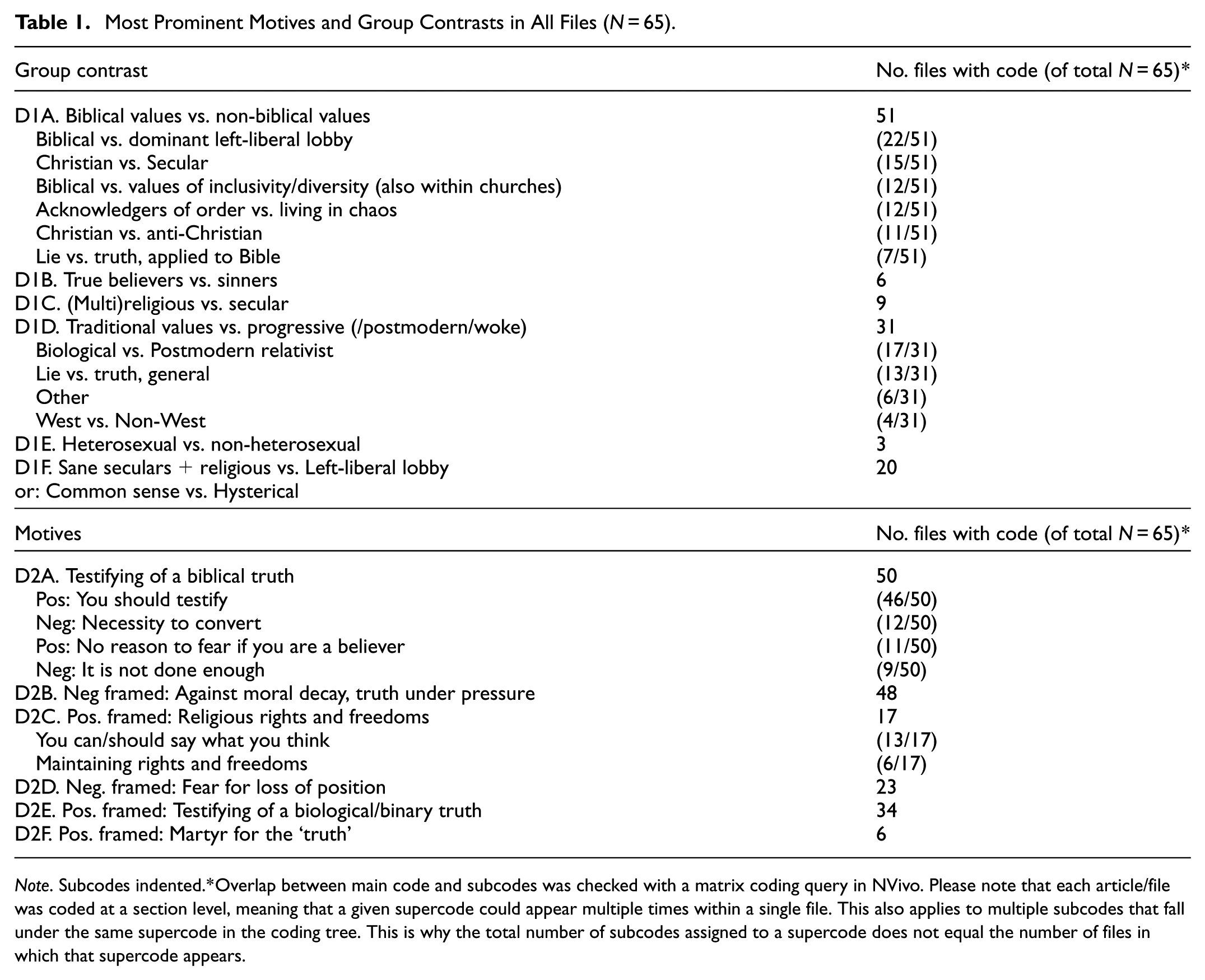
Note. Subcodes indented. *Overlap between main code and subcodes was checked with a matrix coding query in NVivo. Please note that each article/file was coded at a section level, meaning that a given supercode could appear multiple times within a single file. This also applies to multiple subcodes that fall under the same supercode in the coding tree. This is why the total number of subcodes assigned to a supercode does not equal the number of files in which that supercode appears.
Results
The Use of ‘Gender Ideology’ and ‘Order of Creation’: Nexis Data
An analysis on Nexis showed that the term ‘gender ideology’ was used in 920 indexed printed Dutch news articles between 1 January 2012 (first incidence) and 1 June 2025. The highest percentage of articles, 218, were in the ‘Reformed Daily’ newspaper, the Reformatorisch Dagblad (23.7%), followed by 102 news articles (11.1%) in another Christian newspaper, the Nederlands Dagblad. The term ‘order of creation’ (scheppingsorde) was used in 756 indexed printed Dutch news articles between 1 January 1992 and 1 June 2025. 326 of those articles were in the Reformed Daily newspaper (43.1%), followed by 134 news articles (19.0%) in the Netherlands Daily (Nederlands Dagblad), and 55 news articles (6%) in Trouw (a newspaper with protestant roots, but with a broader target audience). Strikingly, more generic terms often used in debates on gender such as masculinity (mannelijkheid) or femininity (vrouwelijkheid) (only 135 articles in total in the ‘Reformed Daily’), have been rarely used in reformed circles. This may indicate that a distinctive jargon is more often used to discuss issues of gender and gender diversity (Figure 1).
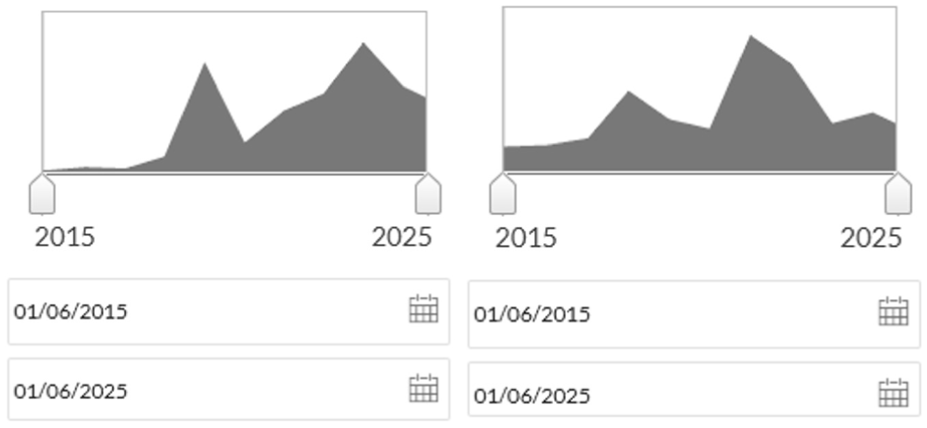
Analysis of Nexis data. Incidence of terms in Dutch news articles ‘genderideologie’ or ‘scheppingsorde’: overview of past 10 years as of 1 June 2025.
Basic Website Characteristics of Biblical Council M/F
When we scanned the website per 1 June 2025, we found a total of 662 articles on the website, which included news, opinion articles, interviews and book reviews. The website has a few distinguished thematic pages: Divorce, Gender ideology, Family, Homosexuality, Marriage, Male, Male and Female, Sexuality, Sexual Abuse, Single, Transgender, Female, Worldview culture and society. For the scope of this paper, we select on the theme ‘gender ideology’ and by a search on the topic ‘order of creation’ across all thematic pages. An overview of all platforms and denominations the website refers to can be found in Supplemental Materials S.3.
Analysis of Content and Framing
Group Contrasts
Main Results
With regard to the group contrasts used [frame:dimensions1], we found considerable variation both within and in between articles. Within articles, multiple group contrasts often co-occurred and were therefore coded per section rather than per file. Below, we describe our main findings.
A first main observation is that 51 of the 65 files included sections in which a distinction was made between an in-group defined by adherence to biblical values (D1A), and an out-group consisting of those wo do not adhere to those values. This out-group was in some of those files clearly defined as a left-liberal lobby (22/51 files) which was seen as a dominating external force:
Quote (16.08.24). It is undeniable: gender ideology is a matter that must be confronted Quote (19.05.23). In the end, no human is capable of limiting or stopping the new developments… Sinful people, without Divine intervention, will not impose any limits. Everything that is ethically conceivable will – if God does not prevent it – happen.
In other files, the out-group was more subtly defined as people embracing values of inclusion and diversity (12/51). This often referred to other Christians or churches who did not adhere to what the author defined as true biblical values concerning gender issues:
Quote (02.02.23), article on conversion therapy. Among Christians, sexual orientation is increasingly seen as a given. This can gradually lead to people starting to live according to that ‘orientation’. It’s a creeping process in which the biblical norm slowly fades—until eventually, a ban on conversion practices no longer even seems necessary.
A second main observation is that 31 files had sections in which an in-group was perceived as those who stand by general traditional values (D1D). This group contrast extends to a larger set of people, namely those in society who acknowledge biological truths versus those who do not. Along the lines of the terminology of Biblical Council M/F, we coded this as the ‘people who adhere to binary biological categories’ (in-group) versus those who were labeled by the platform as ‘postmodern relativists’ (out-group). The use of this particular group contrast within our files often co-occurred with the earlier mentioned distinction of those adhering to biblical Christian values (D1A) versus those not adhering (25 of the 31 files).
Quote (09.02.23). We were wonderfully made, as Psalm 139 tells us. Then sin came, and we started believing lies about ourselves. Gender dysphoria is one of those lies. Denying biological reality is harmful, and it’s a delusion to think you can be born in the wrong body.
As said, across article sections the group contrasts varied, depending on what type of argument was made by the author. In some cases, reasonings were primarily driven from theological sources, while in other cases external scientific or political sources were more prominent or even exclusively used (6 of the 31 files). There were many articles in which other country contexts were used as examples of government interference or oppression against people with conservative stances on gender issues. This brings us to our third main observation: Some of our codes show a contrast between sane seculars and religious people on the one hand (comprising of scientists, feminist, Christians, sometimes non- or other-religious’) versus a left-liberal gender lobby on the other hand (20 files with D1F). The use of this contrast sometimes co-occurred with the frame in which explicit biblical truths were contrasted to secularity (10 files with overlap of D1F and D1A codes). In other words: a mixture of biblical with non-biblical argumentation appears. Non-religious people who rejected ‘diversity policy’ were even used as an example for Christians to speak up for their own ‘truths’:
Quote (21.04.23). There are people who speak up. However, there are many more who remain silent.
As a fourth main observation, we saw that such crossovers or combinations of seemingly incompatible group contrasts (such as the aforementioned D1F and D1A), were also present in other instances. To illustrate: the group contrast ‘lie vs. truth’ (D1D) was found in 13 files, where ‘truth’ referred to biology or binarity of genders. This frame coexisted in 7 files with ‘lie vs. truth’ where ‘truth’ explicitly referred to the Bible (D1A). This is exemplified by the following quote, wherein the in-group is mostly defined along the lines of acknowledgement of biology, but where the concept of ‘truth’ is also being applied to biblical revelation.
Quote (11.11.22). Lobbyists for gay and trans rights believe they are in the right and aim to triumph. Yet, in contrast to the truth revealed in the Bible, their actions represent a lie, one that disconnects and destabilizes society. In doing so, they follow in the footsteps of the great father of lies and adversary of God (John 8:44), seeking, whether they know it or not, to prevent that ‘His counsel shall stand, and He will do all His pleasure’ (Isaiah 46:10).
We will explore more of such crossovers and recontextualizations of concepts when considering the motives by which articles are written, see Results section ‘Motives’.
Other Results
With regard to the lesser applied group contrasts (such as D1B, D1C, D1E and D1F), a few things stood out. First, the group contrast of sane seculars and religious’ versus a left-liberal gender lobby (D1F, 20 files) was more often present than the one of (multi)religious versus seculars (D1C, 9 files), implying that the underlying worldview binding an in-group together did not have to be exclusively religious. More often shared perceptions of ‘truth’– or what authors often referred to as ‘common sense’– served as the binding values. This term ‘common sense’ was explicitly mentioned in 8 files, see Supplemental Materials S.2, wherein regular folk were contrasted with those who have gone ‘mad’ or ‘are hysterical’. In files where both D1C and D1A codes were present, we saw exemplifications of other religious people in their adhere to certain biological binary values and opposition to gender diversity, as exemplified by the following quote:
Quote (21.10.22). Without glossing over all the differences between Muslims and Christians, we can respect this act [of football player Kökçü resisting to wear a rainbow band]. Kökçü has understood something that many Christians today seem increasingly to forget: that principles have consequences. While PerspectieF, the youth wing of the Christian Union party, publicly embraced Coming Out Day last week—rainbow flag included—this Muslim refused to do so past Sunday. Sometimes, you feel closer to Muslims than to your coreligionists…
In a similar fashion, second wave feminists, scientists and others were also used as examples:
Quote (01.02.21). There are non-Christian people who dare to have critical remarks on gender ideology. The American Abigail Shrier is one of them. She wrote a warning and compelling book about the disastrous consequences of gender-transition treatments for teenage girls.
Second, a group contrast which we would expect to find given the particularities of reformed pietist theology (see Hijweege, 2004) was a strong distinction of true believers saved by the grace of God on the one hand versus an out-group of sinners or non-believers on the other hand (D1B). This could however only be explicitly identified in 6 of the 65 files. In the cases where notions of ‘repentance’ or ‘conversion’were mentioned, they were mostly applied to conversion on a higher-than-individual level, such as: a societal conversion of moral sins. The following quotes exemplify this:
Quote (24.03.23). We can not precisely ‘plot’ how the gender revolution will unfold in the coming decades. Things usually turn out differently than we imagined. Moreover, church history shows that there are sometimes Nineveh moments—times of mass repentance through reformations and revivals, brought about by God’s Spirit. In such times, it can feel as if history is reversed. May God raise up Jonahs who call for such a repentance! Quote (09.02.23). There is brokenness, in many lives and in many ways, but [gender-]transition does not solve that problem. Our thinking has been affected by sin – for all of us! Our eyes need to be opened to God’s reality, our minds must be renewed (Romans 12:1-2).
Third, a frame in which the in-group was seen as a heterosexual-exclusive group versus an out-group with multiple sexualities (D1E) was only found in three files. This indicates that the reformed pietist authors on the platform largely do not consider issues of gender and sexuality as something of the outside world, but rather as something which also concerns Christians and the church. Even more often than this contrast we for instance found comparisons of the ‘West vs. non-West (D1A subcode, four files) in which the Western world was described as ‘progressive and secular’ in contrast to a more traditional Global South.
Motives
Main Results
In our second round of coding we focused on explicit motives in the text [frame:dimensions2]. We again highlight our main observations here. The addition of the dimension ‘D2E: Testifying of a biological Truth’ proved to be necessary; it was traced in 29 of the 65 files. The deductively constructed dimension ‘D2A. Testifying of a biblical truth’ appeared to be more prominent (45 files), indicating that the meaning system informing authors in most of their opinion articles was, at least in part, based on their explicit biblical interpretations. When we coded the sections of the files, we mainly focused on the type of discourse from which authors reasoned, what type of arguments were presented, and whether this included biblical references or rather arguments from politics or tradition. This means that again, within one file, multiple codes can co-occur. There was strong overlap between biological and biblical arguments (25 files with overlap of D2A and D2E), which was also sometimes indicated by authors, for instance when discussing the importance of binary categories and the division of roles between men and women:
Quote (24.11.23). Scripture and creation go hand in hand here.
There were also 11 files in which we saw merely a biological reasoning without any biblical applications at all.
A total of 48 of the 65 articles were motivated by the acknowledgement of some form of moral decay (D2B). The used language often had an alarming character, and involved negative framings of actual developments. This concerned for instance the ‘dangers of transgenderism and wokeness’ (in nine files, see Supplemental Materials S.2), gender inclusive policies, or the blurring of differences between men and women.
Quote (27.03.25). The Dutch government and interest groups are pushing the so-called ‘trans rights’ and demand more or less that the public will applaud this transgender lifestyle. Quote (16.02.23). Woke falls into the same trap it warns against. In the deep conviction of its own righteousness, woke does not shy away from the use of coercion and violence. Like Marxism, there is an anarchistic element to it. To achieve the ‘utopian state’ of equality, the use of violence, coercion, and terror is considered justified. Woke people seem to be afflicted with the very thing they accuse others of.
Across all articles, this mention of moral decay (D2B) was in just one file the only assigned code. In this file the overall tone and phrasing remained very negative. Far more often, articles also included – be it sometimes only as a small finalizing section at the end – a biblical alternative, or used moral decay as a starting point to mention the importance of testifying about ‘biological truths’. In some cases, the mentioning of moral decay was connected to the importance of speaking up in general and standing up for religious rights and freedoms. Seven files on religious freedom (D2C) had no D2B codes, indicating that reasonings for religious rights and freedoms did not always included the negative proposition of moral decay and a ‘truth under pressure’ as a trigger. For the negatively framed codes about the fear of losing position in society (D2D), quite some had overlap with D2B, namely 15 files, while 8 files did not. Relatively, D2D co-occurred more often with D2B than D2C, see Figure 2.
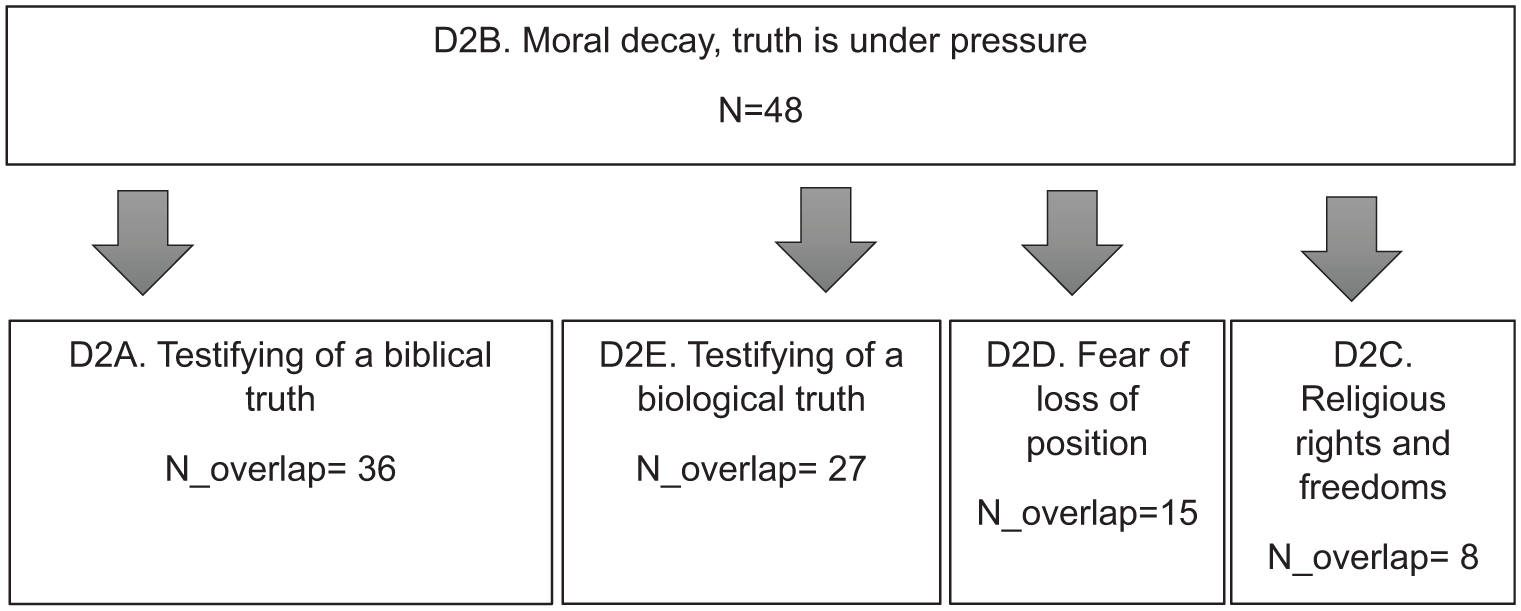
Coding overlap across all files for files with moral decay (D2B) codes.
Other Results
In 23 articles, authors spoke in negative wordings about the fear of government interference, or the fear of losing one’s job (D2D) when for instance not using certain gender pronouns, or accepting trans people with another gender identity than their sex ascribed at birth. These fears were often expressed in an alarming or even alarmist manner, in which potential consequences and societal impact were made explicit in vivid details. There was mentioning of ‘government inspection officials’ who were to intrude Christian Sunday schools in the future, and of new possible laws restricting freedoms of Christian public education. A total of 17 articles had more positively framed formulations, in which authors urged readers to speak up in the public debate and to fight to keep their religious rights and freedoms (D2C). We saw mentions of others-as-example in their ‘courage’ to speak up, and fight a noble and spiritual ‘battle’ or ‘war’, even when they faced a risk of being totally ‘cancelled, silenced or suppressed’. Many articles with those codes mentioned actual examples of famous people in lawsuits, such as Kathleen Stock, Päivi Räsänen, Olaf Latzel and J. K. Rowling. In six articles, the mentioning of people being silenced or arrested was framed in positive terms, in the sense that they were presented as martyrs for a higher truth. Those more extremely formulated cases stood out and were assigned a specific code (D2F).
Structures of Argumentation
While identifying group contrasts, motives, and used jargon (S.2) granted us some pieces of the puzzle, we also examined how the arguments were structured within the coded articles. As there was quite some variation in the argumentation structures, identifying consistent patterns proved to be difficult and hence cannot be presented in a similar systematic fashion. Yet, we can provide three examples of notable structures, each found in at least 10 articles in the data.
Within articles, authors often started by discussing moral decay and ended with a biblical application. Arguments in between tended to also belong to other coding categories. We saw 25 files in which both biblical reasoning, as well as a more general biological reasoning was used, often mixed together. To identify patterns we also took into account where group contrasts and motives occurred in the article files, and how certain framings functioned within their respective contexts. A main result here is that certain terms, such as love, facts and truth, seem to be recontextualized so that they fit both within a biblical frame (D2A) as in a general traditional frame (D2E).
Quote (14.04.23). In the Bible, love is never a feeling in itself. It goes hand in hand with truth. Quote (11.10.24). From a biblical perspective, love and truth can not be separated (Eph. 4:15). A man simply never becomes a woman, and vice versa, in spite of all surgeries and hormones. Isn’t it cruel to affirm people in their confusion and dissatisfaction – in their illusory world?
In the article from the following quote, truth is first biblically contextualized, but later applied to binarity and biology.
Quote (11.11.22). Truth is a virtue in God Himself, and His Word is the Truth……It is essential for a child to grow up in a family where love dwells, and where father and mother understand their responsibility from the marriage covenant. Only then can such a child safely attach and grow up. Let us stand firm in this truth within our community. Understanding that the devil usually does not start with force, but uses a ‘slippery slope’: after the first bumps and a rough start, it gradually goes downhill. All the lobbyists who want to make the lie prevail are afraid of the truth…… Let us plead for them and for ourselves that our walk and steps be grounded in God’s Word and that we are led by His Spirit into all truth…
In Figure 3 we present three types of argumentation structures which include the most often occurring codes (D2A and D2E). Two of those argumentation structures, I and II, were traced quite often in our data. I has a more prominent biblically reasoned argument, whereas in II other Christians or non-Christians are more explicitly used as example figures. III shows a type of biologically reasoned argumentation less often found in our data.
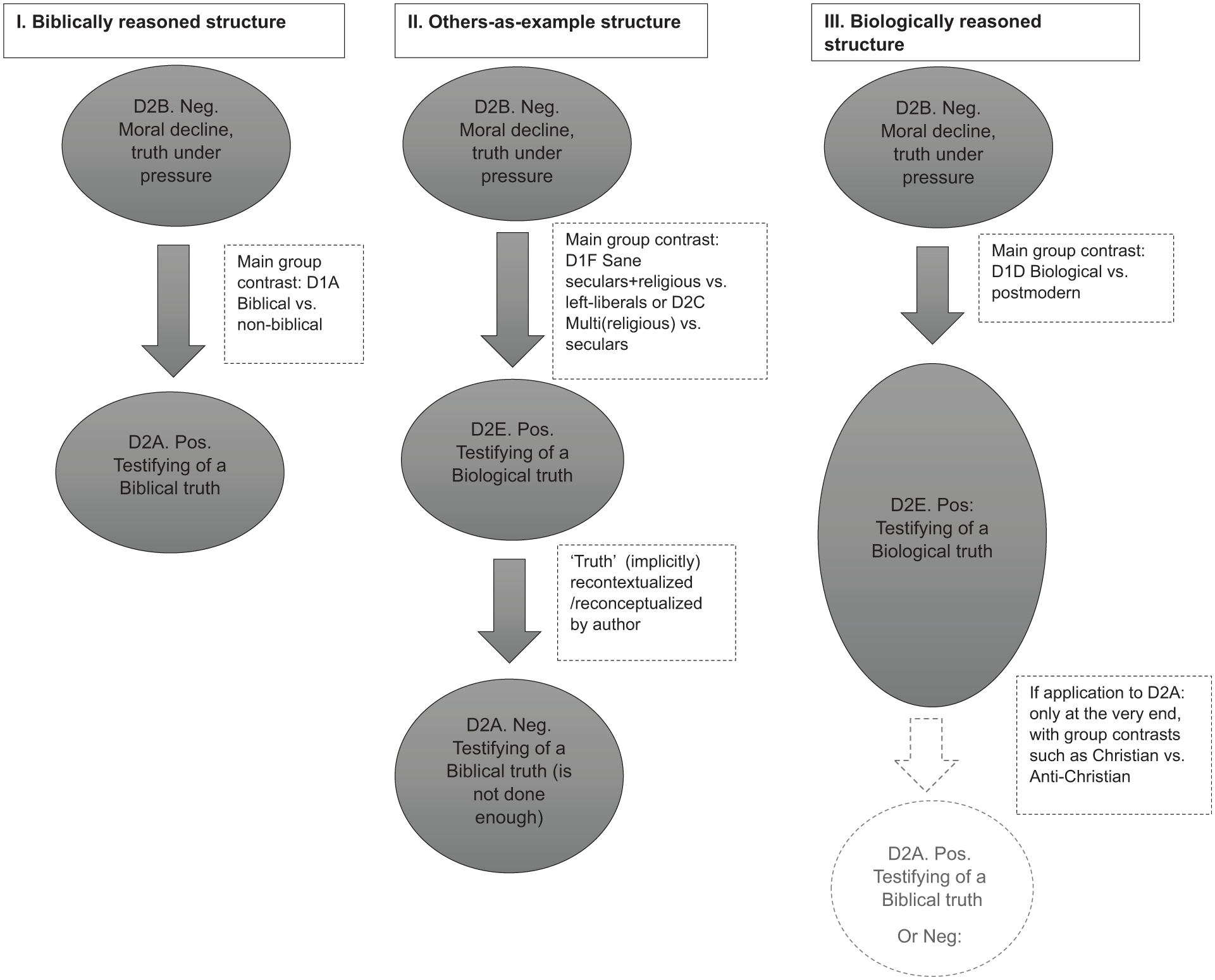
Three examples of structures of argumentation in the data.
Comparison Between Subsets of Articles in Main Data
Finally, we discuss the comparisons between our three subsets of articles. It appeared that in the articles on ‘gender ideology’ (N = 48) there was a prominent theme of biological reality versus progressivism (also: postmodern relativism or ‘woke’) which was in some way being linked to biblical perspectives on sexuality, truth and binarity. The overall narrative concerning ‘order of creation’ (N = 12) was similar but much more inward-focused, as it dealt with issues that are also shifting significantly within the religious community itself, such as the role of women in the family and the labor market, and embodied gender expression (headwear and dresses for women, beards for men). As a result, there were fewer sharp group contrasts, with a greater focus on a specific biblical hermeneutics (all of the 12 files had D1A codes), compared to non-religious arguments from tradition (5 of the 12 files had D1D codes).
In our added articles written after the election of president Trump (N = 5), we saw some small changes in the tone and discourse, but no consistency in response. Some authors wrote generally positive about his re-election, and saw hopeful signs in his policies on gender diversity.
Quote (27.03.25). Whatever the true motive of the Dutch government regarding transgenderism may be, we are seeing encouraging developments on this issue from the new Trump administration. We should be grateful to God for this. This development is uplifting for those who take the Bible seriously.
Another author struck a more moderate tone:
Quote (31.01.25). Christians must stay alert. When [societal] shifts occur, surprising opportunities can arise. These should and may be seized, in prayer. Moreover, God’s thoughts are higher than ours.
In two other articles, negative elements were emphasized such as the increasing acceptance of homosexuality in the United States, Trumps softer views on abortion compared to the 2016 election, and a comparison of the Dutch situation to the United States, as the own country context is considered to be significantly ‘worse off’.
Discussion and Conclusion
Discussion
In this research we have examined the debate on gender and gender diversity among key figures from the Dutch reformed pietist community. We created a dataset with 65 opinion articles from the online platform ‘Biblical Council M/F’, in Dutch: Bijbels Beraad M/V. Our main research question was: How do reformed pietist key figures and ministers articulate their views on ‘gender ideology’ and ‘order of creation’ on the Biblical Council M/F platform? What kind of group contrasts and motives do they use and why?
Of our 65 analyzed articles, 48 were selected on the topic of gender diversity – in the rhetoric used on the platform part of a ‘gender ideology’. We found a mixture of biblical reasonings and reasonings along the lines of biology, which were sometimes framed as common-sense arguments by the authors. These two types of reasoning also co-occurred within articles, leading to seemingly incompatible framings. On the one hand biblical values were contrasted to non-biblical values, but on the other hand, non-Christians were used as exemplary witnesses to biological or binary ‘truths’. The perceived in-groups or broader alliances authors considered themselves and their readers to be part of were not comprised of just (reformed) Christians, but also included second wave feminists, non-Christians and certain scientists. While drawing group contrasts, some elements were highlighted by authors while others were diminished, exemplified by an author who stated that conservative Muslims or non-Christians are more respectable than progressive Christians. Christians who embrace values of gender inclusivity were quite often framed as ‘lukewarm’ or ‘soft’, as they did not speak up against the progressive liberal and – in the eyes of Biblical Council M/F – unbiblical discourse on gender. We found a specific type of jargon in our articles, which aimed to emphasize the alleged ‘hysterical’ or ‘mad’ elements of gender theory and the negative effects of the blurring of male-female differences. To reinforce this, authors contrasted a postmodern relativist worldview with either a biblical or a biologically grounded worldview, in essence leading to an interwoven narrative of the Bible and modernity in response to postmodernity.
It could be argued that the choice of referring to larger sets of people, namely those who ‘stand up for the truth’, would make it harder to also provide specific biblical applications to the readers. Yet we found that authors did this anyway, mainly by recontextualizing the term ‘truth’– which they believe is simultaneously applicable to both biblical and biological truths. The readers of the articles were repeatedly called up to testify about those truth claims, within their church, at their schools and at their workplaces.
The interwovenness of Christian and secular neoconservative discourse in the articles we studied can be understood as a part of a deliberate discursive strategy employed by its authors, a finding that aligns with findings from other research (Balkenhol & van den Hemel, 2019; Dowland, 2015; Tranfić, 2025). Terms such as ‘truth’ are used in multiple ways: both apologetically, incentivizing a call to testify of faith, but also strategically, as a means to suppress gender-inclusive voices perceived as a threat for the group’s identity. Likewise, notions of moral decline or, for instance, the descriptions of ‘gender ideology’ as the work of ‘the great adversary of God’, are in that sense all not only experiential, but also instrumental in the conveyance of messages from leaders to the members. Our findings align with what Elaine Graham stated in her book on public theology, wherein she described identity politics among American Evangelicals as ‘Biblicism which agitates against cultural pluralism’, combined with ‘a vision of Christian public vocation as entailing a personal witness to objective moral truths’ (Graham, 2013, p. 206). Graham, while referencing earlier work by sociologist Stephen Hunt, furthermore noted: ‘Confronted by the rise of secularism and increasing cultural and religious pluralism, the response of many conservative Christians has been to clarify challenging and everchanging moral ambiguities, provide answers to new moral questions, defend traditional view-points and establish fresh boundaries’ (Hunt, 2010 in Graham, 2013, p. 206). From this perspective, the use of alarmist or inciting rhetoric can similarly be a component of a larger strategy (Balkenhol & van den Hemel, 2019, pp. 134–135). When members of a religious community begin to adopt the alleged ‘crisis’ framing of the matters at hand – following the rhetoric of their leaders – they will be even more inclined to seek further clarification and a fitting response (see e.g. Hogg et al., 2012). In that sense, our paper also serves as a case study illustrating the underlying mechanisms by which leading figures within conservative Christian minorities construct their arguments, while also strengthening their own authority and relevance in the gender debate.
When we looked at the content and motives used by authors in the articles, we found a large focus on moral decay, which according to the authors was applicable to both the Church and the Western world. This generally negative worldview is consistent with findings from other research on reformed pietists (Cinjee & Schaap-Jonker, 2021; Cinjee et al., 2025; Hijweege, 2004). Perceiving the world as being in moral decline could lead to spiritual struggle among community members, and may urge them to use active forms of coping to transform such a negative experience into something they can actually do something about (Pargament et al., 2013). This may explain why authors on Biblical Council M/F almost always transform their moral indications into a plea to testify. Still, a large part of the articles covered the negative side, such as the suggestion of losing religious freedom, alleged government interference in Christian schools and the likelihood of losing one’s job when not engaging with inclusive gender pronouns. This may indicate that primary drivers are fear and aversion. Another form of coping with this fear could be seen in the transformation of negative rhetoric into something positive, by either mentioning the Christian importance of suffering for a good cause – as a form of martyrdom – or by accentuating the general importance of speaking one’s mind no matter what backlash will follow.
Whereas the debate on gender diversity was tied to society as a whole and was rarely seen as limited to just the Christian world, our subset of 12 articles on ‘order of creation’ showed a more specific discourse of reformed Christians’ views on gender expression. Here we found a more refined hermeneutics and framings that appeared less externalized and politically charged.
Limitations
This study has a few limitations. First, we focused on a set of opinion articles through the specific lenses of ‘gender ideology’ and ‘order of creation’. Hence, our findings cannot be generalized to the broader mores of reformed pietists with regard to sexuality and family values. Additionally, the analyzed online content may not accurately reflect the ‘offline’ world or the range of views generally accepted within the community. As the Biblical Council M/F platform describes itself as ‘instructive’ and ‘equipping’ for churches and individuals (Bijbels Beraad, 2025), there may be a disconnect between that which happens on the ground in the reformed community and the perspectives propagated by the platform’s authors. Other sources suggest this discrepancy as well (Den Hollander & van der Stelt, 2024; Reformatorisch Dagblad, 2023). The insights of this research thus mainly reflect the theological frames and sociological boundaries as they are established by community key figures, in accordance with our study aims. Future research could further explore the dynamics of those frames clashing with deviating views within the community. Another limitation is that we coded only explicit motives and group contrasts, while article authors also used subtle subtext. Capturing this would be more tricky and require critical close reading techniques, which did not align with the more distanced, systematic approach we opted for in this paper.
Conclusion and Implications
In conclusion, a few overarching observations can be made about the construction of narrative on the topics of gender and gender diversity and its sociological, theological and psychological implications for community members. In the narrative on gender diversity, biblical and biological arguments appeared to be frequently interwoven, and the boundaries of the perceived ‘in-group’ on this theme were often stretched far beyond the Dutch Christian context. The debate seemed to function primarily counter-culturally, wherein the repeated use of alarming language and the strong emphasis on ‘truths’ and ‘rights’ being under pressure seems to, at least in part, serve as a discursive strategy to enhance a sense of urgency and crisis among community members, and to establish fresh moral boundaries. The framing of the debate is clear and well-defined, and it seemed that the structure of argumentation used did not need to be purely theological – as long as it culminated into a call to action and some form of biblically justifiable application for the reader.
Although our conclusion points toward engagement with a broader neoconservative discourse on issues of gender and gender diversity, the choice for such a broad frame is not without consequences. From a sociological perspective, distancing oneself from more inclusive-minded Christians will have polarizing effects, and cuts off the road to a common space for hermeneutical reflection. It affects the perceived distance toward non-Christians as well, as ideological foes now have become allies on this particular moral axis. There are also some theological implications. Within their espoused theology, reformed pietists typically focus on the importance of repentance, a devout lifestyle and introspection (see Hijweege, 2004; Van der Knijff, 2019), but in their societal reaction to the gender discourse, these narratives of repentance, applied on the individual level, play little or no role, and when they do occur they are – in contrast to findings from earlier studies (Cinjee & Schaap-Jonker, 2021; Cinjee & Schaap-Jonker, 2022; Cinjee et al., 2025)– applied on the level of society as a whole. This incongruence may complicate the functioning of individual community members’ meaning system. A similar remark can be made regarding the connection of biblically revealed truths with what are considered to be ‘common-sense truths’: this may impede the functioning of the religious meaning system with regard to beliefs in the special – not so common-sense– revelatory character of God’s Word and the Holy Spirit (Eph 1:17–19). Finally, there are also psychological implications. As our study lacks lived-experience data, it does not allow for direct empirical inference regarding this psychological impact. Rather, the findings point to potential effects that may be considered in light of existing literature. First and foremost, reformed pietists who do not conform to the rigid gender norms may be seriously affected or harmed by the harsh rhetoric used on the platform. The tone of the analyzed articles was rarely pastoral, but rather politically reactive – although this may partly reflect a selection bias, as we focused solely on interpretive opinion articles. Recent research indicates that such negative religious community discourse, or high social pressure for religious conformity, can negatively affect the mental well-being of sexual or gender minorities (e.g. Hamblin & Gross, 2013; Lefevor et al., 2023; van Droogenbroeck & Spruyt, 2020). Pressure from influential community figures, combined with strong emphasis on what is considered ‘right and wrong’, hinders individual’s religious identity exploration, as was found in research on reformed pietist youth by De Bruin-Wassinkmaat et al. (2021). Furthermore, the language employed in these articles could evoke fear and aversion among community members in general, which can lead to avoidant behavior toward individuals in their local circles who do not fit the mold. This means that vulnerable community members may experience a double burden in this regard. Hence, we argue that respectful and open dialogue between community leaders and their members – especially members holding different views – offers a more constructive path than alarmist or inciting rhetoric, which ultimately causes psychological harm and deepens division.
Supplemental Material
sj-docx-1-sgo-10.1177_21582440261429676 – Supplemental material for Constructing Meaning and Group Identity Through the Gender Debate: The Case of Dutch Reformed Pietists on the Platform ‘Biblical Council M/F’
Supplemental material, sj-docx-1-sgo-10.1177_21582440261429676 for Constructing Meaning and Group Identity Through the Gender Debate: The Case of Dutch Reformed Pietists on the Platform ‘Biblical Council M/F’ by Tobias Cinjee, Hanneke Schaap-Jonker and Peter-Ben Smit in SAGE Open
Footnotes

Ethical Considerations
The Research Bureau of the Vrije Universiteit Amsterdam, School of Religion and Theology, waived the need for ethical approval, as the required data only involved open access news articles and freely accessible opinion articles. No data scraping techniques were used.
Author Contributions
Tobias Cinjee: Conceptualization, data curation, investigation, formal analysis, methodology, writing – original draft, writing – review & editing; Hanneke Schaap-Jonker: Conceptualization, methodology, writing – review & editing; Peter-Ben Smit: Conceptualization, methodology, writing – review & editing
Funding
The authors disclosed receipt of the following financial support for the research, authorship, and/or publication of this article: This research received no government or university funding. The authors would like to thank the Catharina Halkes Fund for its financial support.
Declaration of Conflicting Interests
The authors declared no potential conflicts of interest with respect to the research, authorship, and/or publication of this article.
Data Availability Statement
The full dataset and coding schemes can be sent by the authors upon request. A summarized coding overview is included in the paper.
Supplemental Material
Supplemental material for this article is available online.
References
Supplementary Material
Please find the following supplemental material available below.
For Open Access articles published under a Creative Commons License, all supplemental material carries the same license as the article it is associated with.
For non-Open Access articles published, all supplemental material carries a non-exclusive license, and permission requests for re-use of supplemental material or any part of supplemental material shall be sent directly to the copyright owner as specified in the copyright notice associated with the article.
