




Abstract
This paper evaluates a learning intervention that was designed, developed and delivered in South Australia to high school students who, for whatever reason, had disengaged from mainstream school. The intervention was designed pre-covid, as a response to the 2015 statistic that 25% of Australian students are dropping out of high school without completing their education. The intervention is a fully online learning experience, combining a digital learning platform with facilitation by teachers, which allows students to complete their high school certificate through an alternative means to attending mainstream school. The intervention has its own pedagogical approach, its own bespoke technology platform, a lightly gamified user experience, and supports a self-paced, negotiated approach to achieve a standardised high school certificate outcome, allowing students to progress to University, work or other outcomes. This study was undertaken to evaluate the student experience of a programme which has achieved 95% retention and completion rates over 5 years of operation, with students who would otherwise not be in school or education. The evaluation took the form of a survey of all students who had engaged in the programme during its first 5 years of operation. The paper offers insights into how and why digital personalised learning (DPL) can work, but also highlights the ongoing role of the teacher in achieving successful education outcomes, positing that while DPL and online learning may change the means by which a teacher fulfils their role, their role as a teacher remains pivotal to student learning in the 21st century.
Plain Language Summary
This paper outlines the design of an education system for high school students who have disengaged from mainstream school. It uses a different way of teaching that is delivered online in a manner that personalises the experience to each student. The teacher remains the most important element of the process.
Introduction
Back in 2010, the late Sir Ken Robinson (2010) highlighted that the school system was designed for a 19th century, batch produced, industrial paradigm and that we were educating children for the past not the future. Like many countries, Australia still has an industrial model of school education that reflects a 20th century aspiration to deliver mass education to all children. This model is focused on trying to ensure that millions of students attain specified learning outcomes for their grade and age before moving them in lock-step to the next year of schooling, despite the difference between the least and most advanced students in a classroom being 5 years difference (Masters, 2013). It is not designed to differentiate learning or stretch all students to ensure they achieve maximum learning growth every year, nor does it incentivise schools to innovate and continuously improve (Gonski et al., 2018). Not surprisingly then, 25% of students are dropping out of high school between years 8 and 12 (Longbottom, 2015).
The Inventorium was developed to try to address this dropout rate. It started as a research project looking at why students disengaged from school, and then whether it was possible to build something to address these issues. The intervention is a fully online experience, combining a digital learning platform with facilitation by teachers. It has its own pedagogical approach, its own bespoke technology platform, a lightly gamified user experience, and supports a self-paced, negotiated approach to achieve a standardised high school certificate outcome outside of mainstream provisions.
Blass (2018) summarised the issues that needed addressing in a ‘White Paper for a 21st century education system,’ and this underpinned the design of the pedagogic approach. The White Paper was based on research, mainly in Australia, focussing on why young people drop out of school, and on what future skills will be required for people to be employable. The White Paper drew similar conclusions to a US study carried out by Feldman et al. (2017) which explored the lived experiences of young people who had dropped out of school in America and built on a previous Australian study (Smyth et al., 2000).
This paper seeks to evaluate the intervention, the Inventorium, that emerged as a response to this research. It led to the design of a pedagogic approach and delivery process to address the issues that lead to school disengagement. As it is now 5 years on from its introduction, this paper reviews whether the intervention is realising the brief it set out to achieve.
Design Principles
The White Paper identified the following requirements of an education system for the 21st century:
Assessment Outcomes: These will be criterion referenced and allow for differentiation of levels of mastery, encouraging further learning and the development of personal expertise and a differentiated portfolio skillset (Blass, 2018, p. 129).
Assessment Process: This will recognise multiple means of assessment as appropriate to the learner and the outcomes they are seeking to achieve and allow them to demonstrate mastery at a range of levels as they progress and gain experience over time (Blass, 2018, p. 130).
Teaching: This will be facilitated by a teacher supporting learners in their quest for knowledge and development, and guiding them through learning processes as a facilitator, coach, mentor and networker; supporting the lifelong learning habit of inquiry, the quest for new knowledge, and the search for and evaluation of evidence (Blass, 2018, p. 130).
The Curriculum: This will be an ever-evolving, responsive curriculum base that responds to the needs and challenges that society and individuals face, providing a foundation for building the skills, dispositions, knowledge and application required to succeed in the pursuit of a goal (Blass, 2018, p. 131).
Achieving the Purpose: A 21st century education system requires learners to be motivated to succeed; it requires learners to have aspiration and vision; and it requires them to be open to change (Blass, 2018, p. 132).
The Inventorium pedagogic design utilises the Habits of Mind outlined in the ‘4-6-1 model’ developed by Claxton et al. (2010) in their work titled Bodies of Knowledge (see Figure 1). This is then delivered through a framework based on the IDEAS approach, developed as part of the EU-funded FUTURA project by Guàrdia and Maina (2018):
Intelligent pedagogy is an approach to teaching in which technology is used to enhance the learning experience (i.e. the Inventorium bespoke platform).
Distributed pedagogy refers to shared or distributed ownership of different elements of the learning journey by different stakeholders in the process (i.e. the students, the parents, future employers, etc.).
Engaging pedagogy is an approach to curriculum design and delivery in which learners are encouraged to actively participate in the learning process (i.e. the Inventorium pedagogic approach and philosophy).
Agile pedagogy refers to flexibility and customisation of the curriculum and the student experience (i.e. the personalisation of curriculum and assessments).
Situated pedagogy encompasses the idea of contextualisation of learning and emphasises the need for curricula with real-world relevance (i.e. building assessments around the students’ context and situation).
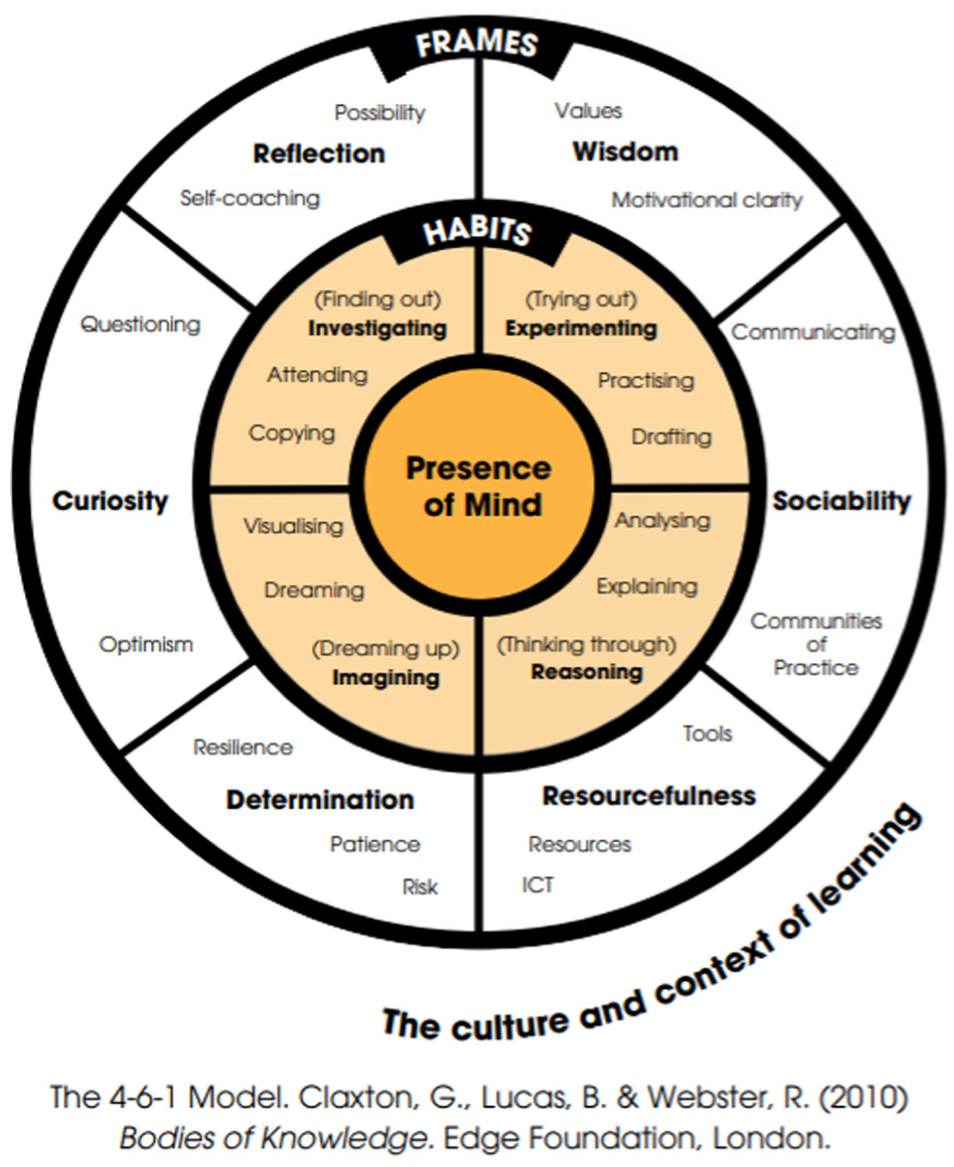
The 4-6-1 model.
The outcome of this combination shifts the delivery of school education from a standard pedagogy to a capabilities approach to learning, more normally applied to adult learners (Broek et al, 2023). This is based on the conception of capabilities by Sen (1993, p. 31) that represents ‘the alternative combinations of things a person is able to do or be – the various ‘functionings’ he or she can achieve.’
In order to facilitate the achievement of all the tenets posited for a 21st century education provision in a single offering, the Inventorium team designed the system to be online. The pedagogic approach focused on developing the students’ learning capabilities as self-directed learners, and their academic motivation, through personalising the curriculum and assessments to their needs. These characteristics underpin successful engagement in online learning (see, e.g., Li et al., 2023; Wong, 2020). Online learning is seen to present additional risks regarding student preparedness for learning, the need for engaging curriculum, and the reduction in social factors supporting learning (see, e.g., Lau & Jong, 2023; Yates et al., 2020) although it is important to note that most of the evaluative studies regarding online education in schools were conducted as a result of Covid lockdowns and forced online learning which is a different context from that which the Inventorium was developed. The Inventorium cohort chose an online mode of learning as part of their decision to study whereas participants in the evaluative studies did not; also, the pivot to online learning during Covid had not been prepared for in terms of organisational structure of teacher training. So, the cautionary findings about online learning during Covid should not be assumed to apply to the different context of the Inventorium programme.
Methodology
A survey was designed to collect evaluative data around the student experience overall and the extent to which the pedagogy was achieving the desired student outcomes in line with the actual academic/assessment outcomes achieved. The academic and assessment outcomes data was collected from 2019 to 2024 as students completed and/or left the programme.
The design comprised a questionnaire designed to generate two types of data in addition to outcome and cohort data. Likert scale questions were used to produce the quantitative data appropriate for establishing the extent to which desirable academic outcomes were achieved by students. Open questions were used to allow students to give free form answers of their choice generating richer data of unexpected perspectives and deeper understanding of student perceptions of the nature of the programme, their experience of and responses to it. The combination of these two forms of data provided a breadth and depth that is valuable in programme evaluations such as this.
The design of the constructs to ensure validity (Cronbach & Meehl, 1955) was based on the literature which underpinned the design of the Inventorium in terms of it achieving its purpose and the appropriateness of the pedagogic approach, combined with the expertise of the academics, prior to piloting and refining. The design was also reviewed against Messick’s (1998) unified theory of construct validity to ensure the evaluation results would meet the requirements for generalisability.
We ordered the questions so that the focus was on outcomes first, then the open student experience questions followed by the ranking questions so that the ranking questions did not influence the open responses. Psychometric practice is to keep item statements short and simple using language familiar to the respondents (Hinkin, 1998). We finished with a final open comments space for any additional comments students wanted to make. The survey instrument was piloted with three current students to ensure clarity and accuracy in the questions. Minor amendments were made to wording.
The sampling strategy was to include all students who had been subscribed to the Year 10 to 12 platform over their first 5 years of operation in Australia. This sample consisted of an initial cohort that was limited to 10 students, then 20 the following year as it was felt a staged approach involved less risk and allowed experience-based programme enhancement in this early phase. Subsequent expansion was rapid, increasing to over 200 students in 2023. All the students in the first 2 years were registered as ‘homeschooled’ as they were not attending school, and hence had no means by which they would complete a high school certificate in their current position. Subsequently, schools with chronic non-attenders referred students to the Inventorium, while they were still enrolled at the school. The students covered a vast geographical area, were evenly split by gender, and 70% neurodiverse or with some cognitive diagnosis.
The online survey was carried out at the end of the Australian school year in December 2023 as a web survey. The survey was sent to the students, not their parents, as the students’ email addresses were the only identifiable records held on the platform. Given the focus of the Inventorium on student agency, it also seemed appropriate to survey the students directly and without parental consent, particularly given the student age range of 16 to 18. This point was accepted following extensive discussion with the university ethics committee. The ethical considerations around asking students who were still studying on the programme, as well as asking the students themselves who were classified as minors, were discussed and justified to the ethics committee. The anonymity of the survey was assured so no student could be penalised for the nature of their responses or not responding, and students were made aware of this, although misperceptions of this could lead to positive bias in responses. The survey instrument was provided to the ethics committee to demonstrate that there were no questions that could be seen to impact on an individual’s outcome or identify them in any way through their responses. For this reason, questions about teachers were specifically avoided although some students chose to mention teachers in their open responses.
The population sample over the 5 years was 243 enrolments into the programme platform. Of these, 11 had changed their email addresses since graduating and hence were not contactable. Of the 232 who received the email inviting them to complete the survey, 72 responded giving a response rate of 31%. In their meta-analysis of web survey response rates, Daikeler et al. (2020) reviewed 114 experimental comparisons between web and other survey modes and found web surveys yielded lower response rates than other modes (on average 12 percentage points lower). We were also careful, for ethical reasons, not to use additional recruitment means such as teachers encouraging students to complete it but they did alert them to check their emails for the survey as many do not review their emails regularly or might have thought the email was spam (Dillman et al., 2014). A follow-up reminder was sent once, as again we did not want the students to feel pressured into responding.
Of the students who did respond, 73% were still studying with the Inventorium and 27% had completed their studies. This is disproportionately skewed to those still studying suggesting that students who have completed their studies were less motivated to respond as they had moved on. However, given the growth in enrolments year on year from 10, to 20 to 40 etc., the number of students who had the time to complete would be representative in comparison with continuing students. The sample was representative with regards to gender and cognitive diagnosis.
The qualitative responses were analysed utilising thematic analysis (Ryan & Bernard, 2000). The data was initially sorted into groups of responses that had common word usage, and these categories were then allocated themes. Where students had made comments relating to more than category, these were duplicated and represented in the multiple categories allowing for students comments to contribute to all the areas they covered rather than being allocated one theme only. Once categorised, the similarity in responses on the themes became apparent so the need for additional layers of analysis was not necessary. The data set was also reviewed by an external third party to check inter-rater reliability of category allocation.
Limitations
The sample self-selected to complete the survey, as it was anonymous, and hence there is the possibility of response bias, and for it to be overly positive (or overly negative). Given the nature of the cohort, this bias may over-represent the views of the most positive or successful students, while those less successful did not engage in sharing their views. This could skew the themes emerging from the data to focus on areas were specifically appreciated by those feeling most positive, areas which may not have been important to those feeling less positivity to the experience.
While this may be true for the qualitative questions and rankings, it would not impact the outcomes data which was recorded separately to the survey. The survey was designed to explore and understand the outcomes data in terms of the student experience. Even if it only represented the views of the more positive students, this would still give insight into what successful design for learning looks like as it would represent the views of those for whom the design worked. What it misses though is the features that impacted the students for whom the design did not work, and it may have been the same features having the opposite effect. However, it is still worth noting that those who perhaps were not motivated to complete the survey still achieved destination outcomes indicating the provision did indeed have a positive impact, even if they did not complete the survey or have an overly positive experience.
Findings
Evaluating Assessment Outcome Design
The White Paper suggested that Assessment Outcomes will be criterion referenced and ‘allow for differentiation of levels of mastery, encouraging further learning and the development of personal expertise and a differentiated portfolio skillset’ (Blass, 2018, p. 129). In order for this to be meaningful to the student, the Inventorium seeks to define the desired outcome for a student with that student and their parents, and their partner mainstream school that has referred them to the Inventorium (if the student is not home schooled). This may range from preparing students to return to mainstream once a health or other issue has resolved; to achieving basic literacy and numeracy if the student has missed years of learning; to achieving a high school certificate to gain entry to tertiary education; or to gain a permanent employment opportunity that allows them to transition from school to work.
Outcome data analysis from the Inventorium’s largest school partnership shows achievement across a number of outcome choices (Table 1; 2019–2024: copied with permission from a confidential analysis). Note this data includes an additional year of completion data to the sample included in the survey. (This additional year is included as the 3 year enrolment period meant that over half the students completed in this final year compared to the earlier years and hence increased the volume of data substantially).
SACE is the South Australian high school certificate that is awarded at the end of year 12 if students have met the assessment conditions of a mix of compulsory, stage 1 and stage 2 subjects. All stage 2 subjects have externally assessed elements (either exams or common assignments) and all other assessed elements are moderated across schools and centrally to ensure the validity of the assessment process.
Outcome or Destination Post Inventorium (2019–2024).

Note. SACE is the South Australian Certificate of Education which is the high school leaving certificate in South Australia; NDIS is the disability pension provider; aged out means the student reached their 17th birthday and chose to leave education; TAFE is vocational education.
The Inventorium student population has all withdrawn from mainstream schooling, over 70% reported a cognitive diagnosis and all were experiencing some form of mental health issue such as anxiety, depression or an eating disorder. They would not obtain any school education outcome within the normal school age timeframe had they not joined us.
There is a body of evidence indicating that standardised learning can have a direct and lasting negative mental health effect on both the most and least academically inclined students in public schools (see e.g., Zembylas, 2022). Studies during Covid 19 show that self-directed, self-initiated online learning can improve academic outcomes (Sari, 2022), but this positive effect may be limited by the parental expectations of the students (Nash, 2023). Inventorium students would hit the combination of self-directed online learners with parental expectations being low at the time they join us. This may allow for an improvement in the students’ mental health which in turn impacts positively on academic outcomes and performance. This trifactor combination (pedagogy, student readiness for online learning and parental expectations) could underpin the outcomes reported.
In terms of designing for online, Gee (2011) suggests there are lessons to be learnt from online gaming and the creation of online affinity groups to inform how the Inventorium might better organise our work around student’s interests and passions utilising online platforms.
Evaluating Student Outcomes
The students who had not yet completed their studies were asked what they thought they would do when they finished their studies with the Inventorium. The results are set out in Figure 2.

Articulated desired outcomes from students enrolled at the Inventorium who had not yet completed their studies.
Those who had completed or left the Inventorium were asked what they were now doing. Responses to this question are set out in Figure 3.

Outcomes of survey respondents who had completed the Inventorium.
The two most common outcomes for students who exited the Inventorium were returning to a mainstream school or entering the workplace. Some had progressed to tertiary education of some form. Returning to a mainstream school could be viewed as a success in that the Inventorium had re-engaged the student in learning and education to a point they felt ready and able to return to mainstream provisions that they had previously rejected. Alternatively, it could be that the experience of the Inventorium highlighted for them what they were missing out on from the mainstream provision and want to return. Whether it was the positive or the negative driver, the fact that students returned to mainstream provisions may be regarded as a positive outcome as it is a young person back in education who had previously dropped out.
Of those still with the Inventorium, tertiary education and work are the two most popular aspirations for programme outcome – each requiring vastly different skills sets. Tertiary education requires students to be study ready; work requires students to be employable and work ready.
The survey asked students to rate the extent to which they agreed with a number of outcome-based statements. The results showed that 63% of respondents felt the Inventorium helped them think about their future in terms of who they wanted to be, and also in terms of what they wanted to do. Sixty percent felt more confident about their future having studied with the programme, and 66% felt their mental health and wellbeing was better than when they started. Sixty-seven percent were confident that they were employable and 65% felt ready to join the workforce. Given that this is a cohort of students who would otherwise not have been at school, some of the students who enter this programme are years behind their peers in terms of the school benchmark outcomes when joining. These statistics indicate that the programme has gone some way at least in engaging a significant number of students in this cohort to consider their future, enabling them to aspire to a range of outcomes.
Personalised Learning and Assessment
According to the White Paper, the assessment process should recognise multiple means of assessment as appropriate to the learner and the outcome they are seeking to achieve, and allow them to demonstrate mastery at a range of levels as they progress and gain experience over time (Blass, 2018, p. 130). This is the core of the Personalised Learning approach at the Inventorium, which utilises Assessment for Learning (AfL) through formative learning tasks co-designed with the student, until such time as the student decides they wish a piece of work to be submitted for summative assessment.
Feldman et al. (2017) recommend the use of supportive assignment and grading practices in response to their study of young people who had dropped out of school, and the need to restructure grading practices to motivate and support learning. Repeatedly receiving failing grades internalised negative judgements on the students’ abilities in their study, and this then led to a downward spiral of behaviour leading to dropping out. They advocate for more formative assessment and proficiency-based grading to evaluate learning and programme outcomes.
Personalised learning (PL) is defined differently in almost every context in which it is employed. Van Schoors et al. (2021) have a broad definition based on a range of personalisation characteristics that can be applied in digital tools:
various learner characteristics are considered,
different aspects of a learning environment can be adapted,
personalisation can be driven by the teacher, learner or tool itself and
teachers might enhance personalisation through the use of learner data visualised by the tool.
Such Digital Personalised Learning (DPL) has been shown to have a mixed impact on student outcomes depending on the student-centred teaching methods and the degree of students’ voice and choice (Schmid et al, 2022). Therefore it is not simply the DPL, but the teaching utilising the DPL that affects its success.
In the Inventorium pedagogic model, these four personalisation characteristics are embodied in the approach to assessment, and yet the Inventorium records results against standardised testing models – so how does it do this? First, most standardised assessment methods have some form of special provision for learning disabilities, and at least 70% of the Inventorium have clinically assessed cognitive diagnoses. This allows for modifications to be made to the tool itself if needed. Secondly, because the Inventorium works with students on a one-to-one basis, the teachers can write an assessment tool to bridge the assessment criteria in a manner that is suited to that particular student. While the use of AI (artificial intelligence) may allow such personalisation to occur at scale in a classroom, Tabora et al. (2024) carried out a systemic review of AI in personalisation of learning in high schools and found that while promising, AI personal learning systems face challenges such as the need for empathetic AI systems and comprehensive teacher training if they are to realise their full potential. While acknowledging the inherent limitations of empathetic AI (Holmes & Tuomi, 2022), this could, however, indicate a means by which the Inventorium’s one-to-one assessment design approach could be leveraged by teachers in a mainstream, large classroom setting.
This leads to the third element, that personalisation is driven by the teacher, the learner and the tool itself. The Inventorium avoids examinations where you have the hidden surprise of what someone else has written as an assessment. They utilise standard qualification outcomes that are either competence based, or assignments, practical tasks, demonstrations, or role plays (coursework). Students rarely engage in time bound assessments, or anything that causes anxiety through the process itself. They learn to explore, be curious, practice, try things out, and then when they think they’ve completed, they nominate that as their summative submission. Bernacki and Walkington (2018) found that personalising a curriculum around students’ interests improves both interest and achievement in their study utilising standardised maths tests as the assessment process. This raises the question around the need for the Inventorium to personalise the assessment process as simply personalising the content to reach the assessment may suffice in achieving the assessment outcome. While the SACE (South Australian High School Certificate) has standardised assessment requirements in terms of rubrics and assessment types, it is very flexible as to how these can be met. The Inventorium utilises the flexibility offered in this SACE environment, but a more broadly based test of its success might be to apply it to a more rigid standardised assessment process, whether this was examinations or coursework outcomes that were specified by others rather than negotiated.
Van Schoors et al. (2021) also found that there seems to be a gap for teachers between their optimal learning environment (perceptions and expectations) and their daily practice (behaviour) when implementing DPL, and so the transition for teachers is not an easy one. While the teachers appreciated the analytic dashboards and the adaptability of the tools, the authors concluded that if the teachers’ needs (in addition to students ‘needs) were catered for in the design process, they were far more likely to have a successful implementation. The personalised learning design theory presented by Bernacki et al. (2021) in Figure 4 encapsulates the multiple components at play, representing ‘academic outcomes’ as one of many learning outcomes. Testing the Inventorium against each of these might be a research project for the future to establish exactly which elements impact upon the student outcomes and how.

Personalized Learning Design Theory.
Evaluating the Student Experience
When asked the open question ‘what is the best thing about the Inventorium programme,’ 59 students responded and their answers have been categorised as follows (Figure 5):
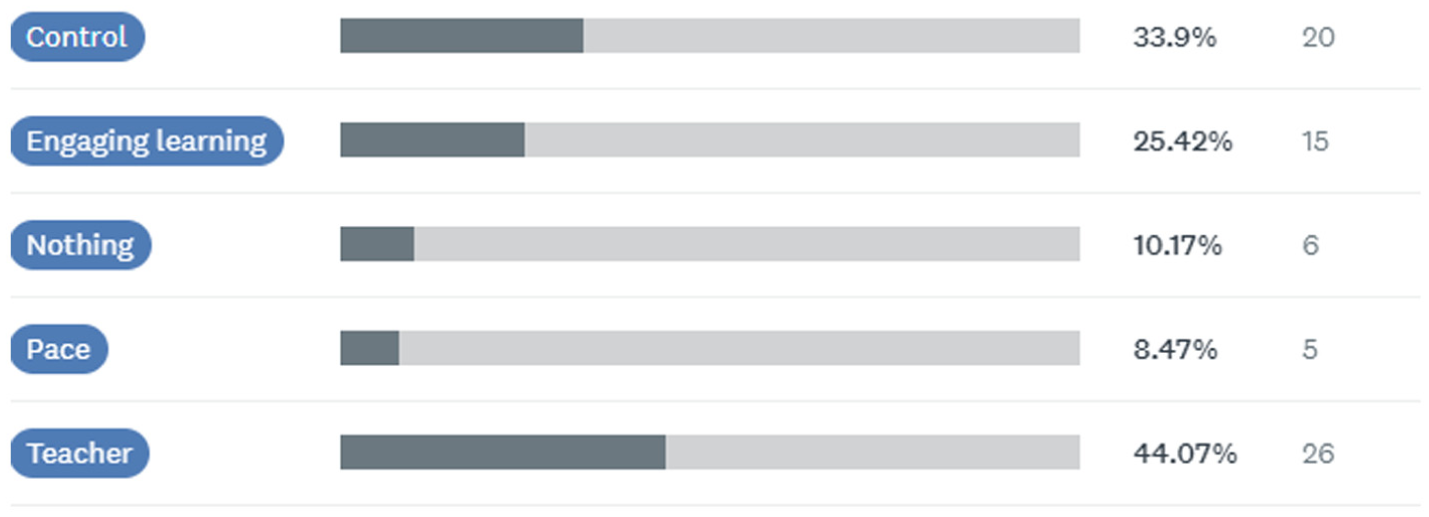
Best features of the Inventorium Programme.
Responses under the heading of ‘control’ comprised of comments such as the flexibility of what they did, being in control of their learning, or controlling what they did and when:
Being able to do the work when it suits me and being flexible with my study times. Flexibility and the ability to adjust learning plan Being able to do the work when it suits me and being flexible with my study times.
The pace of learning was specifically highlighted by 8.47% of students. This may be seen as aligning with, possibly even as result of, students’ control of learning in that their ability to control the time they allocate to learning. In addition, having control of the time of day at which they choose to learn, and for how long each day, means that it is they who determine the pace at which they progress through the programme and develop their learning.
‘Engaging learning’ included comments about the content being engaging and relevant to their needs and interests. This aspect of the programme may be associated with students’ ability to control what they choose to learn, co-constructing with teachers the focus of their learning, noting that students’ often referred here to ‘real-life’, and hence their ability to make meaning of the learning in their immediate life context: the core subjects focus on things i (sic) will use in my real life consistently. How it can be tailored to your interests/needs and the learning is easily applicable to real-life situations. The option to choose what you want to study, and a wider range of subjects than in mainstream schools.
Comments in the category of ‘Pace’ referred specifically to students setting the pace at which they worked and submitted assessments:
I do like how you’re allowed to do everything at your own pace. The ability work at your own pace and have understanding, compassionate teachers.
It allows me to do the schooling I can without pressure when I am not coping. If I had to do a fixed mainstream programme, I would not feel safe enough to learn. The biggest factor has been that my teacher understands how hard learning is for me and understands how my anxiety/disability impacts my ability to learn. By giving me autonomy on my learning pathway, I have been able to stay engaged with my teacher weekly. I want to continue my education at a pace I am ready for.’
Tullis and Benjamin (2011) note the gap in research into the effectiveness of self-paced learning in their own experiment where they compared student self-paced versus teacher-controlled pace of learning in the context of teaching language. They found the advantage of self-pacing was dependent on students allocating more study time to normatively difficult items and concluded that self-pacing can improve memory performance, but only when appropriate time allocation strategies are used. This suggests that the self-pacing alone might not be so successful if the teacher mediator role is not present.
Finally, the students commented about the teachers and the strong bond they developed with the teacher as they got to know and understand them over the year(s) of learning together, and how they personalised everything to their needs. Comments included descriptors such as teachers being ‘amazing’ and show the importance of teachers-pupil relationships:’
Relationship built with the teacher The teachers were absolutely amazing and helped out a lot, and also were able to be more personal with students. That connection matters a lot when trying to teach. Teachers modify the curriculum to suit my interests when it comes to school. The teachers are also very kind.
If we were to meta-tag these categories into one heading, it would be personalisation or the tailoring of the learning provision to the student. The relational effect of the teacher on the success of online learning was also recorded by Guan et al. (2024) in their study of online learning in China during Covid.
Evaluating the Teaching
Of the respondents to the survey, 82% had a teacher provided by the Inventorium with the remainder being taught by their parents, and as noted in the results above, 44% of respondents named their teacher as the best thing about the Inventorium in an open, unprompted question. When it comes to the teaching itself, the Inventorium recruits teachers who are prepared to work with students across all subjects and follow any direction that the student wishes to pursue. As the students only have one teacher, the evaluation concentrated on the value the teacher-student relationship added and did not cover subject expertise, or any subject based construct.
The value of this role of the teacher being dependent not on academic expertise but, rather, on their ability to support the student in building their independent learning skills and self-efficacy for learning is supported by the research of Kim et al. (2018) who studied teacher personality factors and their impact on student outcomes. They found that the teacher personality characteristic of conscientiousness (being hardworking and detail minded) led to students feeling more academically supported; high agreeableness (being sympathetic and kind) led students to feeling more emotionally supported; and high emotional stability (having fewer negative emotions such as anxiety) led to students having higher expectations of their own academic performance. These characteristics can be seen as more important than the academic ability of the teachers themselves, a view in line with social-cognitive theory (Bandura et al., 2001) with which independent learning is commonly associated
While discussions rage at the moment about the role of AI in online teaching (see, e.g., Pratama et al., 2023), the human element of the student – teacher relationship is more than that of the teaching simply being a learning aid. This relationship is established through the co-creation of a learning path to support the student to achieve their preferred outcome, and the willingness to pivot with the student if they change their mind or direction. While the judgement-free approach adopted by the teachers might be replicable by AI, and AI may be able to provide content feedback, the holistic element of authentically getting to know students and caring about their future, on a journey where they both learn together is core to the process, and arguably should not be replaced by a bot (see, e.g., Chan & Tsi, 2023; Felix, 2020).
In the Inventorium delivery model that was surveyed here, the students only get 1 hr per week with a teacher, which is on a 1:1 basis, and that teacher covers every subject or topic the student might want to learn. This is very different to a mainstream high school where students have different teachers for different subjects. It was a deliberate design feature responding to the drop-out research that suggested students do not have a good connection with teachers in high school because they have so many different teachers compared to their earlier school experiences.
When considering online learning design and how this impacts the role of the teacher, Rapanta et al. (2020, p. 929) note:
The design of an online course is a strongly student-centred approach. The teacher role is more focused on facilitation and on the student support regarding competences development. The student role is to be the owner of his/her learning process and being more autonomous. Online learning allows self-paced learning and reflection…. In this sense, a student-centred approach is more focused on evidence-based learning and continuous assessment. The face-to-face model is still too much teacher-centred.
Vanbecelaere and Benton (2021) note that although technology-mediated personalised learning has been the goal of many innovative projects, to date research has mainly focused on the technological implementation, often neglecting the pedagogical perspective. This gap has since been addressed by a range of studies conducted during the Covid pandemic lockdowns in which schools closed, and students were mandated to learn online from home. However, the Covid context was one of high anxiety, enforced online delivery and teachers having little or no time to adapt and prepare teaching materials for online delivery. While there are lessons to be learnt from what can be considered a global online learning experiment, the context needs to be considered to mediate the applicability of the lessons more broadly with regards to pedagogy.
For example, the Inventorium evaluation shows that the learner being at a physical distance from the teacher is key in establishing a trusting and strong relationship between the student and the teacher. This is somewhat counter-intuitive and may not be the case for mainstream school cohorts. The initial cohorts of students engaging with the Inventorium are all students who, for a number of reasons, disengaged from attending mainstream school. As part of the Inventorium enrolment interview process, it is found that most applicants have been traumatised from school experiences of bullying of some form (either by students or teachers) and the safety felt through the ‘distance’ provided by being online cannot be understated.
Platz (2021, p. 689) describes ‘trust’ in the teacher – student relationship:
A student who trusts their teacher is optimistic that the teacher will act in a certain way even though the student does not know whether the teacher will do so. If the student knew that this would occur, no trust would be necessary.
Students in the Inventorium cohort have either rejected or been rejected from mainstream schools, and so the establishment of this characteristic of trust is of paramount importance in re-engaging the student in learning. The key to the Inventorium pedagogic approach is to give the student full-agency over the process so that they set the pace, choose the content and set the agenda for the meetings, and over time as the trust builds, the teacher can start to guide the student to fill gaps that emerge that might otherwise not be addressed. Note that teacher-student trust is not the same thing as reliance (Budnik, 2018), but is a characteristic of a two-way relationship, something that is much easier to achieve in a one-to-one relationship than it is for a teacher to achieve in a class of 20 plus students.
The extent to which the lessons from the Inventorium can hence be applied more broadly back to a mainstream education provisions is questionable if the argument is that the students’ environment is so important to the success of the model. The issue of students disengaging from a mainstream provision is not going to go away and is also not unique to Australia (although it is particularly high in Australia). Leduc et al. (2024) report school refusal alone as being 15% across North American and European countries, and studies are also emerging in China (see e.g. Liu, 2021), and Japan (see e.g., Yamazaki, 2017).
Evaluating the Curriculum Focus and Purpose
According to the white paper, the curriculum should develop from an ever-evolving base that responds to the needs and challenges that society and individuals face, providing a foundation for building the skills, disposition, knowledge and application required to succeed in the pursuit of a goal (Blass, 2018, p. 131). Feldman et al. (2017) note a common refrain amongst the participants in their US study of how boring and irrelevant students found the curriculum, and that students suggested that more project-based learning and choice would have kept them engaged. The need for the students to be able to apply the lessons from the curriculum to their context and experiences is fundamental in sustaining engagement for this cohort of students. Giving the student the agency around what to study (within parameters), and how and where to apply that learning in their lives, is fundamental to the Inventorium pedagogy. That said, the Inventorium is not a blank page, and core skills around financial literacy, digital literacy, and employability skills which are all considered fundamental to surviving ‘life after school’ are all developed within the intervention.
Choice is similarly important to Solari et al. (2023) who studied the characteristics of learner interest with regards to personalised learning and conceptualised the framework in Figure 6:
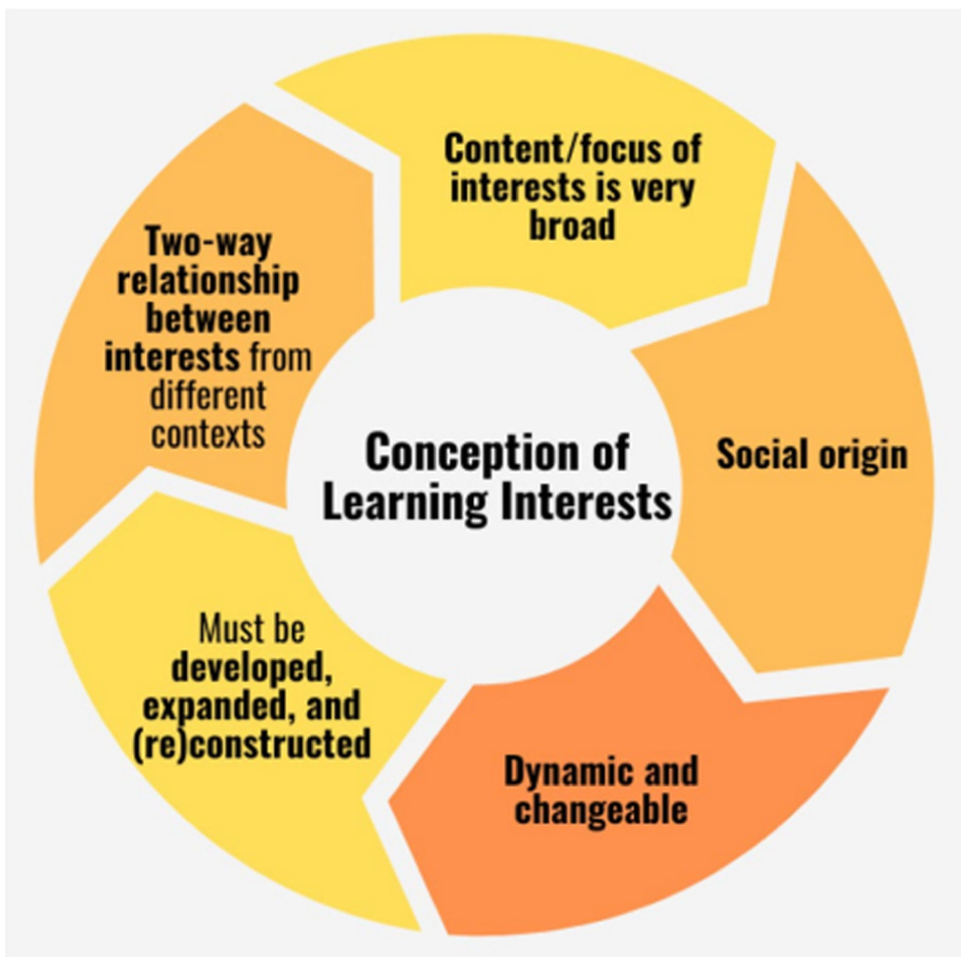
Characteristics of learning interests.
The relationship between the student and the curriculum is complex, but key in ensuring that students' learning interest is sustained. The student brings their social context, their willingness or reluctance to change, and their interests, while the curriculum needs to be adaptable to cater for their contexts and interest. The Inventorium operationalises this through its platform that has multiple areas of content, and the content is structured utilising the Claxton et al. (2010) Habits of Mind, so that the student is engaged in imagining, investigating, experimenting and reasoning. Once they develop these skills, they tend to follow projects and ask questions that take them away from the platform itself and create their own pathway to achieve the qualification outcomes they desire. The teacher’s role is to construct the journey, building a bridge between the students’ learning interests and the qualification assessment criteria. This can result in every student having their own bespoke version of assessments tailored specifically to their interests which are assessed against a standardised set of assessment criteria. In this way the pedagogy holds the interests of the learner by rotating through the element of the model and catering for their learning interests.
Major et al. (2021) did a meta-analysis of technology-supported learning and personalised learning in low and middle income countries to ascertain if it did in fact provide benefit. Overall, technology-supported personalised learning was found to have a statistically significant, if moderate, positive effect. Meta-regression reveals how more personalised approaches which adapt or adjust to learners’ level led to significantly greater impact than those only linking to learners’ interests or providing personalised feedback, support, and/or assessment (Major et al, 2021). This reinforces the value of the Inventorium’s approach to personalising curriculum and assessments, working with the student at the level they are at rather than where they are assumed to be given their age or cohort.
The purpose of the Inventorium, however, is not to provide technology-mediated personalised learning per se – that is the mechanism through which it achieves its purpose. The purpose of the Inventorium is to provide high school education (primarily online) to young people who are not suited to mainstream provisions, to enable them to have equal access to the education they need for the future they aspire to.
To what extent does it achieve its purpose? As indicated in Table 2, over 60% of students agreed or strongly agreed that the Inventorium helped them to think about their future both in terms of who they wanted to be and what they wanted to do. As a result, 60% felt more confident about their future having studied with the Inventorium than they had beforehand, with 10% feeling less confident. In comparison, only 19% of students felt confident about their career plans in the 2023 Beyond the ATAR survey carried out in Australia, and 28% felt unprepared for their future when leaving school (Walker, 2023).
Students’ Responses Regarding the Curriculum and Their Futures.

The survey results regarding the student’s consideration of themselves and their future were as follows:
Over 60% of students agreed or strongly agreed that the Inventorium helped them to think about their future both in terms of who they wanted to be and what they wanted to do. As a result, 60% felt more confident about their future having studied with the Inventorium than they had beforehand, with only 10% feeling less confident. In comparison, only 19% of students felt confident about their career plans in the 2023 Beyond the ATAR survey carried out in Australia mainstream schools, and 28% felt unprepared for their future when leaving school (Walker, 2023).
Over 80% of students agreed or strongly agreed that they enjoyed learning in the Inventorium, with only 1% disagreeing. In addition, 94% said they would recommend the Inventorium to others, with 4 giving qualified ‘no’ answers stating it would depend on the circumstances of the student involved. Given that the Inventorium was created to re-engage the cohort of students who had disengaged from mainstream education, these results indicate that it is largely successful in achieving this aim. Despite the plethora of publications in the field of disengaged learners and reviews of specific interventions, we could not find a study that indicated another programme had had comparable success in re-engaging students in learning and/or their future after school. The closest is a study by Davies et al. (2011) which quotes a European study and intervention that achieved a similar re-engagement rate, although at far greater financial cost, but this does not provide measures of success post-intervention, or for the strategies they employed and reviewed.
This may be because the scalability and sustainability of alternative models has been questionable. Small scale pilots can have very positive results for the outcomes of the small cohorts involved, but they are designed as small scale interventions, are resource heavy in their delivery, and hence are expensive to run (see e.g. Kendall & Maujean, 2015; Nicholson & Putwain, 2015) or based on specific interests such as a particular sport (Owen-Boukra et al., 2025) which may, or may not, transfer more generally. The Inventorium appears at first sight to have fewer of these limitations. It is delivered at the same cost as mainstream high-school provision, and is succeeding with students who are disengaging for multiple reasons, and don’t benefit from the bonding effect of a shared interest in sport, for example. While the sample number is still small, and ongoing research is required to provide a broader evidence base, the initial results are encouraging.
Discussion and Potential Impact
The Inventorium was designed to build an education system fit for purpose for the 21st century on the premise that the current mainstream system was designed in the 19th century and prepares students for the 20th century at best. To date it has only been tested with a student cohort who have disengaged from the mainstream system. It could be argued that this is highly representative of a 21st century need as the reasons for disengagement are relevance, pace and interest (Feldman et al., 2017) which have failed to be accounted for in curriculum changes. It could be argued that this cohort is not a good sample as their level of disengagement could make them biased to a ‘new solution’ on the basis of them responding positively to anything that isn’t the mainstream offering they have rejected. The reality is probably somewhere in the middle. The cohort is probably highly representative of students seeking a ‘21st century learning solution,’ and they are probably biased to accepting a solution that is not the offering they rejected. The student cohort had a high number of diagnoses, often indicating complex needs through multiple diagnoses. The cohort had rejected a mainstream school offering and would not physically attend a school, so their propensity to accept school coming to them at home may be greater than for a student who is happy in a mainstream classroom. This cohort seem to be increasing in number in most Western countries and education provisions.
Increasingly we see education policy initiatives alluding to student agency (OECD, 2019), personalisation of learning (Gunawardina, 2022), and student-centred learning (Erwin et al., 2022) but these have had limited practical application in a traditional mainstream education system applying the traditional and high stakes measures of success that require students to fit into silos and year groups for attainment standards. There is this limited evidence of how these approaches work with students of high school age.
The Inventorium has enacted these principles with some success, as indicated in the findings above. Most notably, 95% of students who would not otherwise be at school continue with the programme until they reach their desired education qualification outcome – an outcome higher than the 75% reported by mainstream schools that initiated the research and development. (Data calculated from ACARA – National report on schooling data portal, accessed 28/8/24; calculations attributed to Nigel Howard, Flinders University). There are two other significant measures of student satisfaction worth considering in the context of examining the applicability of the principles upon which the Inventorium is based. First that 94% said they would recommend the Inventorium to others. Second, that 44% nominated their teacher as the best thing about the Inventorium despite meeting their teacher for 1 hour per week. This can be seen as a reminder that despite the hype about potential of technological innovations including AI, the teacher still has a key place in the learning process.
The findings of the USA study published by Feldman et al. (2017) reached similar conclusions as to what is needed from an education system in order to keep a cohort of students at risk of dropping out of school. The role of teachers is absolutely central to the engagement of students in the USA and cannot be underestimated both in their ability to motivate and demotivate students. Teaching large classes of diverse children is incredibly difficult and complex, and it is virtually impossible for teachers to be able to cater for every child in these circumstances. The Inventorium model of teaching students one-on-one in a way that facilitates personalised learning and student agency appears to increase retention. There is some evidence from higher education that retention is similarly supported by student co-construction of the curriculum (Bond et al., 2020; Brook et al., 2020; Sims et al., 2017) and the flexibility in adapting to students’ learning preferences (Zepke et al., 2006). Of course higher education works with far fewer contact hours than schools, and the contact hours in the Inventorium are also far fewer than those experienced in a mainstream school setting – and hence the need for the digital element in the DPL model
Nicholson and Putwain (2015) interviewed students who had re-engaged through an alternative schooling provision and found the explanations for student re-engagement to be similar to those outlined in this paper. However, their provision was a high cost, low enrolment provision and it is not clear how many of the students actually re-engaged. Policy makers will be interested that the principles upon which the Inventorium are based can be enacted at less cost than of the traditional (Western) school model and can be scaled up. The use of technology is key to facilitating this affordability and accessibility, and differentiates the Inventorium from other alternative learning provisions for this cohort of disengaged students.
Conclusions
The Inventorium platform has been designed as a bespoke student-centred platform. That is, the platform is designed around the student to support and facilitate the personalised learning agenda and pathway. All areas of study are interdisciplinary and focus on subjects as constructed in schools. For example, there is ‘who am I?’ and ‘Investigative Insights’ and ‘money, money, money’ instead of personal development, research methods or maths. The assessments are written with the students to build their motivation to complete them. The platform is lightly gamified to reward effort and time on task. Nevertheless, nearly half the students said the teacher was the most important element of the experience.
Noteworthy for teachers and those interested in teacher development, is that it is the teacher’s ability to support learning rather than their knowledge of a subject that is the important part of their role in this context. Inventorium teachers cover all subject areas a student wishes to explore regardless of whether they have any expert knowledge in that area of not. This potentially shifts the role of the teacher in the future to more of a learning facilitator than a teacher of a subject. The development of AI to support access to subject knowledge available through the Internet has the potential to support the development of at least some teachers as a facilitators of learning rather than subject specialists.
Can this evaluation conclude that the Inventorium meets the requirements set out in the White Paper for a 21st Century Education System? While the sample is small, the results to date suggest that it may provide one model for working with disengaged students (as this is the focus of the evaluation) and a potential blueprint of founding principles to be considered when reimagining education for the future. The Inventorium model has been seen to be broadly successful in meeting its aims at this stage. However, it has only been tested on students who voluntarily opted for this one-to-one alternative programme as an alternative to mainstream schooling and hence has not been tested in conditions that emulate the realities of compulsory, mass mainstream schooling. Indeed, it operates solely with the cohort that reject the mass mainstream compulsory model. To that extent, it may be seen as a disruptive model, in that its principles and practice are fundamentally different from those of mainstream schools. The next stage of the continuing research into this model is to test the scalability of the model, and its transferability beyond the shores of Australia to other education jurisdictions.
Footnotes

Ethical Considerations
University of Hertfordshire ethics committee approval: SHE/SF/UH/06026.
Consent to Participate
Informed consent was obtained from all participants as a gateway to the survey tool. The nature of the research did not pose a risk of potential harm to participants. The benefit to society was deemed to be the outcome of the evaluation of a pilot of a new education model.
Funding
The authors received no financial support for the research, authorship, and/or publication of this article.
Declaration of Conflicting Interests
The authors declared the following potential conflicts of interest with respect to the research, authorship, and/or publication of this article: Professor Eddie Blass is the Founder and CEO of the Inventorium, as well as a visiting researcher at the University of Hertfordshire.
Data Availability Statement
Due to the sensitive nature of high school student data and records, the data from which this paper is produced is not available to share.