




Abstract
Conceptual questioning promotes deep thinking by supporting students’ transition from procedural to conceptual understanding. This study investigates the ability of pre-service elementary mathematics teachers to transform routine questions into conceptual ones within a problem-solving strategies course. The participants were 70 senior pre-service teachers who were asked to reformulate four routine questions at a conceptual level, and the resulting questions were evaluated using a rubric to determine overall performance. The findings indicate that structured problem-posing activities effectively supported the development of conceptual question-posing skills, although participants experienced challenges related to creativity, clarity, and solvability. These results highlight the importance of integrating systematic conceptual question-creation activities into teacher education programs to enhance pre-service teachers’ instructional competence.
Plain Language Summary
This study examines the conceptual questions formed by pre-service elementary mathematics teachers based on routine questions. The study was conducted with 70 senior mathematics pre-service teachers enrolled in a problem-solving strategies course. As a data collection tool, the pre-service teachers were given 4 routine questions and were asked to reformulate them at a conceptual level. Each question created by the pre-service teachers was scored according to a rubric, and the overall success levels of these questions were determined. As a result, participation in problem-posing activities within the context of the problem-solving strategies course proved effective in enabling pre-service teachers to create conceptual-level questions.
Introduction
Questioning is a fundamental component of mathematics education, as it plays a critical role in developing students’ thinking capacities and supporting their ability to address problems encountered in daily life. Although questioning has long been examined in mathematics education research, conceptual questions have gained increasing attention due to their contribution to mathematical reasoning and problem-solving processes. While questioning may often function as a routine instructional practice, the construction of conceptual questions requires substantial subject-matter competence and pedagogical awareness (Mason, 2003). Therefore, teachers are expected not merely to ask a large number of questions, but to pose high-quality conceptual questions that promote deeper understanding. The significance of questioning in mathematics education has been consistently emphasized in previous studies (Black, 2001; Coffey et al., 1993; McComas & Abraham, 2004), highlighting the need for pre-service teachers to engage in sustained practice during their teacher education programs in order to develop this competence (Zhang & Patrick, 2012).
Research on teacher education has extensively documented the educational value of creating conceptual questions. Prior studies have shown that conceptual questions support the development of conceptual understanding (Stoyanova, 2005), enhance critical thinking skills (Nixon-Ponder, 1995), strengthen pedagogical content knowledge (Kılıç, 2017; S. Y. Lee, 2021), reveal students’ misconceptions (Y. Lee et al., 2018; Tichá & Hošpesová, 2010; Toluk-Uçar, 2009), and foster creativity (Matsko & Thomas, 2015; Van Harpen & Sriraman, 2013). Engaging pre-service teachers in activities focused on creating conceptual questions enables them to design original and cognitively demanding problems (Davis, 2012) and equips them with the skills necessary to effectively support students’ mathematical learning (Y. Lee et al., 2018). Accordingly, providing pre-service teachers with systematic opportunities to construct conceptual questions is considered essential for developing their ability to pose high-quality questions (Crespo, 2015; Crespo & Sinclair, 2008).
Given the central role of conceptual questions in teacher education, the present study aims to examine the contextual and cognitive characteristics of non-routine conceptual questions created by pre-service elementary mathematics teachers through the transformation of routine questions. The originality of the study lies in its focus on the process of transforming routine questions into conceptual questions and in presenting concrete examples that may serve as a guide for future research and instructional practice. Specifically, the study seeks to answer the following research questions:
(1) How proficient are pre-service elementary mathematics teachers in transforming routine que stions into conceptual questions?
(2) What difficulties do pre-service teachers encounter during the process of creating conceptual questions?
Framework
Conceptual Questions
Questioning is an indispensable component of teaching and is a strategy teachers employ in almost every lesson (Dyer, 2008). Teachers use both planned and spontaneous questions at different stages of instruction to guide learning and assess students’ understanding (Chin, 2004; W. Wilen, 1991). While questions are commonly classified as open-ended or closed-ended, mathematics education research frequently distinguishes between routine and non-routine questions (Işık & Kar, 2011; Kaya & Kablan, 2018). Routine questions generally involve the repetition of a skill or the recall of factual knowledge, whereas non-routine questions require deeper analysis, reasoning, and reflection (Dündar, 2015; Yenilmez & Yaşa, 2007). As such, non-routine questions stimulate thinking and reasoning rather than simple recall (Martino & Maher, 1999). Although routine questions are effective for developing basic arithmetic skills, non-routine questions encourage the use of conceptual knowledge, prompting students to move beyond fixed procedures and employ diverse strategies (Bulgar et al., 2002). Therefore, a balanced use of routine and non-routine questions is essential for fostering students’ critical thinking and reasoning skills.
The distinction between routine and non-routine questions parallels that of routine and non-routine problems; however, questions constitute a broader category that includes teachers’ verbal prompts and statements. For instance, expressions such as “Is 3 a prime number?” or “Which of these numbers are prime?” function as questions rather than full problems. Similar to non-routine problems, non-routine questions require students to analyze situations deeply and engage in higher-order thinking, whereas routine questions primarily support the recall and application of rules and procedures (Burns, 1985). In this sense, non-routine questions emphasize a conceptual dimension, aligning them closely with conceptual questions. For clarity and explanatory purposes, both terms are used in this study, with conceptual questions representing the cognitive depth inherent in non-routine questioning.
When systematically integrated into instruction, conceptual questions enable students to explore multiple solution paths, develop mathematical understanding, identify misconceptions, and engage in reasoning beyond procedural execution (Aizikovitsh-Udi & Star, 2011; Ellis, 1993; Kress, 2017). In contrast to routine questions, which often lead directly to solutions through basic operations such as addition, subtraction, multiplication, or division, conceptual questions require students to draw on conceptual understanding rather than apply predetermined formulas or methods. Consequently, non-routine conceptual questions promote creative thinking and strategic flexibility (Schuster & Anderson, 2005; Sullivan & Lilburn, 2002).
Based on the literature, non-routine conceptual questions typically exhibit the following characteristics (Frager, 1979; Mason, 2020; Tarasenkova et al., 2023; W. W. Wilen, 1992):
They promote conceptual thinking and support meaning-making in mathematics.
They are open-ended and allow for multiple solution strategies.
They help reveal and address students’ misconceptions.
They encourage connections and generalizations beyond specific rules or procedures.
They stimulate curiosity and motivate students to pose new questions.
From this perspective, conceptual questioning involves generating creative and original questions by reinterpreting existing information. Accordingly, the present study focuses on the conceptual quality of questions created by participants and asks pre-service teachers to transform routine questions into non-routine conceptual questions. Unlike previous studies that primarily emphasized problem construction within predefined topics, this study foregrounds the thought-provoking and conceptual nature of the transformed questions. By examining how routine questions can be restructured to support conceptual thinking, the study highlights its unique contribution to the literature on conceptual questioning in mathematics education.
Transforming Questions
Questioning is one of the indispensable tools of teaching, and teachers rely heavily on questions throughout their lessons (Clegg, 1987; Dyer, 2008; Gall, 1984; W. Wilen, 1991). However, the primary purpose of questioning should extend beyond assessing learned knowledge to fostering conceptual learning. Research indicates that questions requiring only simple calculations may limit students’ opportunities to think deeply, particularly when they are used routinely and solved mechanically, leading to rote memorization (Bellido et al., 2005; Moyer & Milewicz, 2002). In contrast, conceptual questions encourage students to reflect on why a mathematical idea works and how it might be approached differently, thereby supporting deeper understanding (Franke et al., 2009). Consequently, recent studies emphasize conceptual questioning as a critical pedagogical competence and highlight the need to systematically develop teachers’ questioning skills in this direction (Kreide et al., 2015; Özaltun-Çelik & Bukova-Güzel, 2016; Tanışlı, 2013; Weiland et al., 2014).
Conceptual questions play a key role in promoting conceptual learning by eliciting students’ reasoning and revealing how they construct mathematical ideas (Franke et al., 2009; Sigel & Saunders, 1977). Rather than guiding students toward predetermined answers, such questions foreground students’ thinking processes and make their conceptual structures visible (Fusco, 2012). This enables teachers to identify learning difficulties and misconceptions more effectively and to facilitate meaningful conceptual learning (Özaltun-Çelik & Bukova-Güzel, 2016). By preventing lessons from becoming routine, conceptual questions increase students’ engagement and motivation while addressing gaps in conceptual understanding.
Although posing conceptual questions may appear straightforward, it is in fact a cognitively demanding process that shares strong similarities with problem posing (Ulusoy & Kepceoğlu, 2018). Silver (1994) identified three key characteristics of problem posing that are also relevant to conceptual question generation: generating original questions from given mathematical expressions, reorganizing solved problems, and modifying problem conditions to produce new situations. Despite the prevalence of routine, calculation-based questions in classrooms (Morgan & Saxton, 1994; Zhang & Patrick, 2012), such questions rarely prompt students to explore new concepts or engage in sustained reasoning (Bellido et al., 2005). Conceptual questions, by contrast, encourage deeper thinking through prompts such as explaining reasoning, justifying chosen strategies, considering alternative solutions, or predicting subsequent steps. In addition to asking “how” and “why” questions, transforming routine questions into conceptual ones represents a powerful approach to eliciting higher-order thinking. Accordingly, the present study aims to provide illustrative examples that guide teachers and researchers in transforming routine mathematics questions to support conceptual thinking.
The lack of a clearly defined conceptual framework for conceptual question generation has been identified as a major limitation in the literature (Çakmak, 2009). Although studies focusing directly on the transformation of routine questions into conceptual questions are limited, related research on problem posing offers valuable insights into relevant processes and stages. Several studies have proposed phase models for problem posing, including five-stage models (Pelczer & Gamboa, 2009), seven-stage models with detailed evaluation criteria (Özgen et al., 2019; Yazgan & Ülger, 2023a), and categorization systems distinguishing free, semi-structured, and structured posing (Baumanns & Rott, 2022). The structured approach, which involves modifying an existing problem, closely aligns with the process of conceptual question generation examined in this study. Across these models, flexibility, originality, elaboration, and cognitive deepening emerge as central components of high-quality conceptual questions. Similarly, Beghetto (2017) emphasized creativity, originality, and depth as essential in transforming routine tasks into non-routine forms.
Across these models, flexibility, originality, elaboration, and cognitive deepening consistently emerge as defining features of high-quality conceptual questions. Similarly, Beghetto (2017) emphasized creativity, originality, and depth as essential in transforming routine tasks into non-routine forms. These shared characteristics provide a theoretical basis for evaluating the quality of conceptual questions and informed the development of the scoring framework used in the present study.
The dimensions used in the scoring rubric—flexibility, originality, elaboration, and depth—are grounded in established theories of problem posing and mathematical creativity. Flexibility reflects the ability to generate multiple solution strategies, a key indicator of divergent thinking (Silver, 1994). Originality aligns with creativity frameworks emphasizing novelty and cognitive risk-taking (Beghetto, 2017). Elaboration corresponds to the clarity and structural quality of mathematical expression (Sheffield, 2000), while depth captures the extent to which a question promotes conceptual reasoning and cognitive engagement (Mason, 2020). Together, these dimensions operationalize the theoretical constructs discussed in the literature and allow for a systematic examination of conceptual question generation.
Supporting this perspective, Mapinogos and Salimaco (2025) demonstrated that strategic and reflective questioning plays a central role in promoting deep understanding, engagement, inclusivity, and the assessment of students’ understanding and misconceptions in secondary mathematics classrooms. Building on these findings, the present study focuses on reframing single-solution arithmetic questions into conceptual questions that allow for multiple strategies, multiple representations, and the integration of additional information. By highlighting the complexity of conceptual question generation and the challenges faced by pre-service teachers, the study underscores the importance of systematic training aimed at developing the skills required to transform routine questions into high-quality conceptual questions.
Method
Research Design
The overall structure of the research is based on a descriptive case study. In a case study, as Yin (2003) also points out, the aim is to examine a phenomenon in depth. In this study, the process of expressing routine questions in a non-routine manner as part of problem formulation efforts has been examined in detail. In a study, when participants’ success in performing an action is supported by emotions, thoughts, and perceptions, it gains more meaning (Cresswell, 2013). The descriptive role of the study is highlighted by the rating and description of quotes from participants and the inclusion of their views in the process.
Participants and Procedure
The sample of the study consists of 70 pre-service teachers in the final year of the Elementary Mathematics Teacher Education program at a public university in eastern Turkey. The study was conducted as part of the “Problem Solving in Mathematics” course offered at the university. The participants also had the opportunity to apply what they learned with students in a natural setting as part of the “Teaching Practice” course. All participants are final-year students and have gained experience in this context for the first time through this course. Thus, the students who participated in this course were naturally accepted as participants in the study. In this context, the “convenience sampling” model was adopted, as it involves selecting available, accessible, and easily reachable individuals (Cohen et al., 2002).
In the Mathematics Problem Solving course, pre-service teachers have learned about problem solving, the steps of problem solving, problem-solving strategies, problem formulation, and conceptual questioning. The course was conducted over 14 weeks, with 2-hr sessions per week. The first 8 weeks focused on theoretical and practical knowledge of problem solving and formulation, while the last 6 weeks concentrated on problem formulation and conceptual questioning. During this period, pre-service teachers engaged in exercises and applications related to the theoretical structure of problem formulation and conceptual questioning, conducting problem formulation activities with students. Completing this course indicates that the pre-service teachers have sufficient experience in problem solving, problem formulation, and conceptual questioning.
In the study, the last 6 weeks have focused extensively on “Modification of Routine Questions: Conceptual Question Asking,” which constitutes the core structure of this work. The data collected in relation to the study are closely related to this topic. In the context of conceptual question asking, both conceptual and non-conceptual question examples have been examined, and efforts have been made to transform non-conceptual questions into conceptual ones. The key topics covered in the course, which consists of a total of four lesson hours, are summarized in the Table 1 as follows:
Lesson Contents Provided in the Implementation.
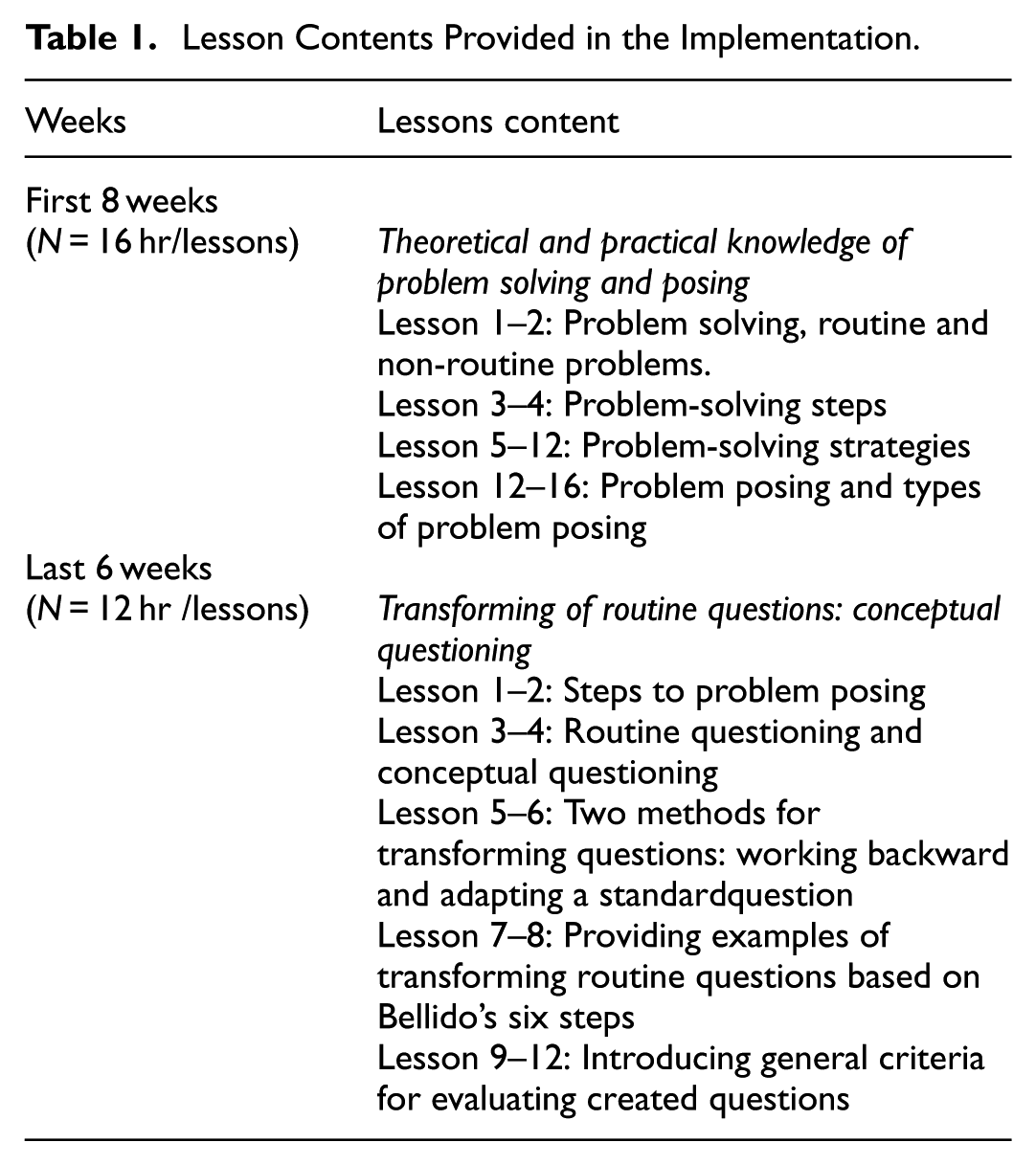
According to Table 1 lessons 3 to 4 focused on providing various examples of re-asking a given question in a thought-provoking manner, while lessons 5 to 6 involved engaging in different practice activities related to the topic. In lessons 7 to 8, participants practiced transforming questions according to a six-step framework. Finally, during lessons 9 to 12, general criteria for evaluating the created questions—such as solvability, contextuality, complexity, originality, mathematical language, and clarity of language and expression—were introduced.
By providing theoretical and practical knowledge on problem-solving and problem formulation, this focus has enabled pre-service teachers to better understand the relationship between conceptual and non-conceptual questions and to create more examples in these areas. Therefore, the foundation of the knowledge that forms the basis of this study is closely related to the topics covered since the beginning of the term. In this way, theoretical knowledge on problem-solving, problem formulation, and question asking has been supported by practical applications, concluding the term.
Data Collection
In this study, data were collected in two ways: written tasks from participants and interview forms. Written tasks were used to assess pre-service teachers’ success in modifying routine questions at a conceptual level, while the interview form included participants’ feelings and thoughts about the process.
First, pre-service teachers were given 4 routine questions and asked to rewrite them in a non-routine manner as part of modifying routine questions. The questions were based on the study by Bellido et al. (2005), which focused on the art of asking thought-provoking questions in mathematics classes through a six-step process for transforming routine questions into non-routine ones. This study was designed around the art of asking thought-provoking questions in mathematics lessons, focusing on transforming a set of routine questions into non-routine ones through a six-step approach. Each step involved modifying questions to serve different purposes. These steps were: common errors, adapting a rote-memory question, modifying a basic arithmetic question, asking for a qualitative answer, inverting a calculation, and extra data. In this study, similar steps were used; however, four steps were considered instead, and routine questions were developed accordingly. Steps 2, 3, and 4 were merged into a single step, as they served the same purpose. In other words, the steps of “adapting cognitive memory questions, modifying simple arithmetic questions, and asking questions that require detailed responses” aimed to make questions involving simple arithmetic operations more challenging through certain interventions and, therefore, served the same purpose. For this reason, all three were presented under the same category. The newly created steps are as follows: preventing common errors, increasing cognitive level, reversing the calculation, and providing extra data. The details of each step and the expected behaviors from the participants are outlined below.
Preventing Common Errors: The aim is to modify a problem that is prone to misinterpretation and easy mistakes so that it prevents students from making these errors and simultaneously enhances their thinking. For example, in the question “What is the average speed of a vehicle that travels the first half of the distance at 40 km/h and the second half at 80 km/h?,” students often make the mistake of calculating (40 + 80)/2.
Increasing Cognitive Level: The goal is to modify a problem that represents the information and comprehension levels of cognitive domain steps to include application, analysis, and synthesis levels, thus allowing for more qualified responses from students. For example, the question “What is the area of a rectangle with a short side of 3 cm and a long side of 4 cm?” is cognitively low-level and does not require students to provide high-quality or elaborated responses.
Reversing the Calculation: The intention is to modify a problem that requires simple calculations to encourage students to think in reverse. For example, while the question “What is the arithmetic mean of the numbers 3, 4, and 5?” requires direct computation, the question “What is the maximum possible value of the smallest number among three numbers whose average is 4?” encourages students to think in reverse.
Providing Extra Data: The objective is to modify a problem with simple data and requiring basic arithmetic operations by adding extra data to make it complex, prompting students to perform different complex operations. For example, while the question “If the price of 5 shirts in a store is 300 TL, how many shirts can be bought for 900 TL?” can be elevated to a higher level by adding extra information, it can be reformulated as: “A store offers one free shirt for every five shirts purchased. With 900 TL, how many shirts in total can be obtained, including the free ones?”
A set of routine questions was posed to students based on these steps. While designing these questions, the analysis steps were taken into account.
In the preventing common errors step, a routine question in which students frequently make mistakes was selected.
In the increasing cognitive level step, a question requiring only a simple calculation was included.
In the inverting a calculation step, a question requiring students to think in reverse was chosen.
In the providing extra data step, a question that could be made more complex by adding additional information was used.
Each question was carefully selected to fulfill the objectives of its respective step. For instance, a question designed to prevent common errors could not be easily adapted for reverse thinking. During the preparation process, student textbooks were reviewed, and special attention was given to ensuring that the questions remained routine. To determine whether a question was truly routine, its solution was checked, several students’ solution steps were analyzed, and expert opinions were consulted. Guidelines were provided on how to modify these routine problems at each step. Pre-service teachers created new problems by modifying each question according to the given guidelines. The pre-service teachers were asked to respond to a question in the guidelines about why they think the questions they created belong to the non-routine problem group. They were given 1 week to create and submit their questions in writing. The questions posed to the pre-service teachers, along with the instructions, are included in the Appendix 1 (See Appendix 1).
Secondly, the pre-service teachers’ feelings and thoughts about the difficulties they faced during the process of modifying routine problems were addressed. In this context, pre-service teachers were asked, “What difficulties did you experience in the process of asking conceptual questions?” Pre-service teachers were required to answer this single question based on the difficulties or challenges they encountered throughout the term.
Role of the Researcher
The researcher is a faculty member at a university and was the instructor of the course “Problem Solving in Mathematics” in which the study was conducted. Within the scope of this course, a 14-week instructional process was implemented with the participating pre-service elementary mathematics teachers. During this process, the researcher first provided instruction on problem-solving strategies and subsequently introduced theoretical and practical aspects of problem posing. This was followed by activities focused on transforming routine problems into non-routine ones. At the end of the instructional process, a form designed to elicit participants’ ability to transform routine problems into non-routine problems was administered by the researcher. The data obtained from participants’ responses to this form constituted the basis of the study, and the decision to conduct the research emerged from the instructional experiences and data generated during the course.
Data Analysis
The participants’ success in modifying routine questions was assessed through the rating of questions they formulated conceptually. A new scoring rubric was developed based on the scaled scoring keys developed by Sheffield (2000) and Yazgan and Ülger (2023a). Yazgan and Ülger (2023a) used a scoring rubric with seven dimensions: relatedness, fluency, flexibility, originality, elaboration, generalization, and extension. Since relatedness, fluency, generalization, and extension were not aligned with the study content, they were not used. To reflect the content of the study, the dimensions of flexibility, originality, and elaboration were retained, and a new dimension, deepening, was added to align with the study’s focus. The final dimension was created based on Sheffield’s (2000) work. In this context, a new scoring rubric encompassing these four dimensions was developed. These dimensions are flexibility, originality, elaboration, and depth. Flexibility indicates the number of different solutions for the formulated questions, while originality shows the distinction of the question from previously solved questions. Elaboration refers to the quality of expression of the questions posed, and deepening reflects the power of the question in developing student thinking. Again, scoring criteria were established to determine the extent to which each dimension was achieved, and these criteria were based on the works of Sheffield (2000) and Yazgan and Ülger (2023a). Accordingly, each criterion has a score ranging from 1 to 4, and each participant’s problem formulation success score ranges from 4 to 16. Reliability was ensured by having an expert in the field re-score 10 randomly selected answer sheets, and the difference between the coders’ scores was examined. Since there was no difference in the scoring between the two experts, it was concluded that the scoring rubric was reliable. The created dimensions and scoring criteria are summarized in the Table 2 as follows:
The Scoring Rubric Used for Transforming Routine Questions.

The increase in the assigned scores according to these criteria is directly proportional to the quality of the created conceptual question. As in the studies of Yazgan and Ülger (2023a), assigning scores to determine the extent to which the created questions meet the established criteria plays a key role in revealing how well the given task has been carried out. Similarly, in many problem-posing studies, a scoring rubric has been used to determine the quality of the created problems (e.g., Özgen et al., 2019). This is because the created problem contains characteristics such as originality, depth, and clarity. The assigned scores serve an important function in determining how closely or distantly the problem aligns with these features. For example, if the score is close to 4 according to all criteria, it indicates that the created question is original, thought-provoking, solvable by different strategies, and understandable. For instance, the question created by Pre-service Teacher 20 (PT20) for the first routine question and the related codings are given in the Figure 1 as follows:
“Mr. Hasan, the manager of a shopping mall, purchased clothes with a 25% discount off the retail price. Later, he put the clothes up for sale in the mall with an additional 10% discount, and noticed that he was losing 25 liras at the cash register for each sale. Upon examining the data, it became clear that the issue arose because Mr. Hasan applied a 10% additional discount on the discounted price he had purchased the clothes for, instead of using the original retail price. In this case, when Mr. Hasan corrected his mistake by selling the clothes with a 10% discount off the original retail price, the following questions arise:
Given that he suffered a loss of 25 liras, what is the retail price of the clothes?
What is the current profit percentage he has achieved?”

Coding example for the transformed question (Routine Question 1).
According to Figure 1, the question created by ÖA20 by transforming Routine Question 1 can be solved using two distinct strategies. Therefore, it was coded with 2 points for flexibility, 4 points for originality due to its unique structure, 3 points for elaboration as it includes correct mathematical expressions but lacks multiple representations, and 3 points for deepening because it promotes advanced thinking. This question, prepared by the pre-service teachers, is conceptual because it requires understanding the relational structure of successive discounts, distinguishing between discounts applied to the original price and the discounted price, and reasoning about profit and loss rather than merely performing routine percentage calculations.
In contrast, the question created by ÖA36 for Routine Question 3 and the related codings are given in the Figure 2 as follows:
 A cube with an edge length of 3 units is divided into 1-unit cubes, as shown in the figure. In this cube, the faces of the cubes that are visible with 3 faces are painted yellow, blue, and red; the faces of the cubes that are visible with 2 faces are painted blue and red. The cost of painting an area of 1 square unit blue is 4 liras, painting it yellow is 5 liras, and painting it with blue, yellow, and red is 7 liras. What is the total cost of this painting process?

Coding example for the transformed question (Routine Question 3).
According to Figure 2, the question created by ÖA36 through the transformation of Routine Question 3 can be solved using a single strategy. Therefore, it was coded with 1 point for flexibility, 2 points for originality as it resembles familiar problems, 1 point for elaboration due to the presence of unclear expressions, and 2 points for deepening because the question lacks sufficient clarity to promote deeper thinking. This question, prepared by the pre-service teachers, is conceptual because it requires spatial reasoning to classify cube faces, integrate geometric structure with numerical relationships, and coordinate multiple representations rather than applying a single procedural formula.
Ethical Considerations
Ethical approval for this study was obtained from the Scientific Research and Publication Ethics Committee of A Public University in Turkey (Decision No: 106, Date and Number: 07.11.2025-218871). The study was conducted in accordance with ethical standards and principles for research involving human participants. All procedures performed in this study were in line with institutional and international ethical standards. Participation in the study was voluntary, and informed consent was obtained from all participants prior to data collection. Participants were informed about the purpose of the study, and they were assured that their responses would remain confidential and would be used only for research purposes.
Participants were informed about the purpose of the research, the process, and their right to withdraw at any time without any consequences. Anonymity and confidentiality of the participants were ensured. Potential risks to participants were minimal, as the study was conducted within the scope of a regular course and involved standard educational practices. No physical or psychological harm was anticipated. The potential benefits of the study include contributing to the professional development of pre-service teachers and improving conceptual questioning practices in mathematics education, which outweigh any minimal risks involved.
Findings
The findings were presented in two sections within the framework of the research questions. Accordingly, the first section addresses the question, “(1) How proficient are pre-service elementary mathematics teachers in transforming routine questions into conceptual ones?” while the second section seeks to answer the question, “(2) What difficulties do pre-service teachers face in the process of creating conceptual questions?”
Research Problem 1: How Proficient Are Pre-service Elementary Mathematics Teachers in Transforming Routine Questions Into Conceptual Ones?
This section presents the four routine questions directed to the pre-service teachers within the study, as well as examples of conceptual questions obtained by modifying these questions. The modified questions are rated according to different criteria and presented in tabular form, along with relevant comments.
Prevention of Common Mistakes
Some questions are open to misinterpretation by students, who can easily repeat the same mistakes. To prevent students from making errors and simultaneously enhance their thinking skills, pre-service teachers were asked to modify the routine question provided below.
Routine Question 1: A seller buys a product at a 25% discount off the label price and sells it at a 10% discount off the label price. What is the seller’s profit percentage?
In this question, a common mistake is that many students mistakenly calculate the total profit by subtracting 10 from 25 and finding it to be 15%. However, this is an incorrect solution. For students to find the correct solution, they need to set a fixed list price and perform the calculations based on this list price. To prevent such errors, pre-service teachers reformulated the question. Some pre-service teachers preferred to make the question clearer by assigning explicit values to prevent students from making mistakes, while others emphasized the error in the question and asked students to identify where the mistake was. For example, some questions included phrases like “Why is the profit margin 20% instead of 15%?” This approach either prompted students to think or facilitated a clearer resolution of the problem. Additionally, some questions provided direct numerical values and questioned procedural knowledge. Some of the questions were inconsistent in meaning and deviated from the purpose. The general characteristics of the created questions are presented in the Table 3 as follows.
Modification of a Question That Constitutes a Common Error.

According to Table 3, a flexibility score between 1 and 2 indicates that the questions created can be solved with at most two strategies. A score close to 3 in originality suggests that the style of the questions is quite similar to the original ones. A score close to 2 in the context of detailing shows that the questions are moderately effective in using storytelling and multiple representations, while a score above 2 in depth indicates progress in prompting students to think critically. Some problems showed deficiencies in language and expression, which hindered their understanding. Some excerpts from the questions created by pre-service teachers are given in the Table 4 as follows:
Conceptual Question Examples Generated by Modifying the First Question.

When Table 4 is examined, it can be seen that the transformation of the first question was carried out in two different ways by the pre-service teachers. In the first approach, pre-service teachers attempted to conceal the error within the question and asked students to identify where the mistake was. Looking at the first two sentences of the question, the expression “explain the reason” actually implies that the mistake is embedded within the question, and students are expected to find where the mistake lies. The other type of question is related to making the question clearer by directly providing values. When the routine question is examined, it is observed that only percentage expressions are used, which may cause confusion for students. To eliminate this confusion, pre-service teachers have tried to prevent potential misunderstandings by using direct values in the newly created questions. Looking at the questions created by the pre-service teachers, it can be said that they are more complex and thought-provoking compared to the routine question. When pre-service teachers were asked, “Why is the question you created a conceptual question?” responses like “I made them infer, and to avoid confusion, I ensured that the question was both clear and thought-provoking” clearly indicate why the transformed questions created by the pre-service teachers are conceptual.
Increasing Cognitive Level
It is often observed that simple arithmetic questions, which require short answers, do not necessarily stimulate students to think deeply. We need to ask questions that require students to engage in cognitive activities such as interpreting answers, drawing meaning, and reaching new understandings. In this way, we aim to address different cognitive levels such as application, analysis, and synthesis. Pre-service teachers are asked to modify the following question, which requires simple arithmetic operations, to elicit more qualitative responses from students.
Routine Question 2. Find the surface area of the shape given below.

In this question, pre-service teachers were presented with a routine question that could be solved at the knowledge and recall level. Pre-service teachers then reformulated the question to elicit more thoughtful solutions from students and to encourage them to approach the problem with different cognitive activities. By examining the understanding behind the original problem, the goal was to facilitate higher-level thinking through activities such as interpreting answers in various ways, drawing meaning, and reaching new understandings. The questions created by the pre-service teachers generally require the use of skills such as combining, placing, changing edge lengths, and creating patterns. For example, these skills include assembling cubes to form a new cube, placing smaller cubes inside a larger cube, estimating the area or volume of a cube with altered edge lengths, and creating patterns from cubes. The general features of the questions created are given in the Table 5 as follows:
Asking Questions That Require Detailed Answers.

According to Table 5, the moderate level of flexibility indicates that the questions created can be solved using one or two strategies. Other features suggest that the questions are close to a level of 3 and are of good quality. The pre-service teachers have provided opportunities for students to think more deeply in the questions they created. For example, one question asks students to design a large cube using 50 smaller cubes, which shows that they are approaching the problem from different perspectives. However, in some questions, the processing level did not extend much beyond basic rules and was prepared solely based on applying specific rules. Additionally, although some questions are expected to enhance higher-level thinking, certain issues with the wording have led to difficulties in understanding the questions. The average score of about 3 in terms of deepening and detailing indicates that the pre-service teachers have made an effort to pose complex questions that encourage thoughtful responses. Below are some excerpts from the questions created by the pre-service teachers are given in the Table 6 as follows.
Conceptual Question Examples Created by Modifying the Second Question.

When Table 6 is examined, it can be seen that the questions transformed by the pre-service teachers for the second routine question are analyzed in 4 parts. In the first approach, pre-service teachers have created large shapes by combining different cubes and asked questions related to the new shape formed. As can be understood from the rationale, the goal here is to develop skills such as prediction and control. The other type of question created is related to placement. In these types of questions, pre-service teachers indirectly asked students to find the surface area. Another type of question created involved changing edge lengths, where pre-service teachers encouraged students to develop trial-and-error or prediction skills and guided them toward forming and solving equations. Another type of question involved pattern recognition, where pre-service teachers made students predict the next step. As for the rationale, the candidate explained that students should analyze the steps and see the relationships between them.
Reversing the Calculation
In many questions, performing simple arithmetic operations like addition and subtraction may prevent students from engaging in deeper thinking. At this point, providing the result and asking for different variables mentioned in the question can encourage students to think in reverse, view the problem from different perspectives, and consider different approaches. The goal was to reformulate a routine question that requires simple calculations so that it requires thinking and calculating in reverse. In this sense, pre-service teachers were asked to modify the following routine question, which involves calculations, to enable students to think in reverse.
Routine Question 3: What is the arithmetic mean of the numbers 10, 12, 15, 17, and 21?
In this question, the arithmetic mean of the given three numbers is 15, which is based on a simple calculation. However, to make this problem more thought-provoking, the result can be provided and the focus can be shifted to the given variables. Therefore, students can determine one of the numbers or guess which numbers are involved based on the result. This approach transforms the question from being simple and straightforward, focusing thought in different directions. In this sense, the modified questions created by the pre-service teachers utilize various cognitive activities such as guessing, adding, and finding given values. For example, guessing the given variables based on the result is an activity that requires high-level thinking. Additionally, seeing how the result changes by adding or subtracting from the given variables and finding the unknown variable based on the result indicate that the created questions are evaluated as non-routine. The general features of the questions created by the pre-service teachers are given in the Table 7 as follows:
Reversing the Calculation.
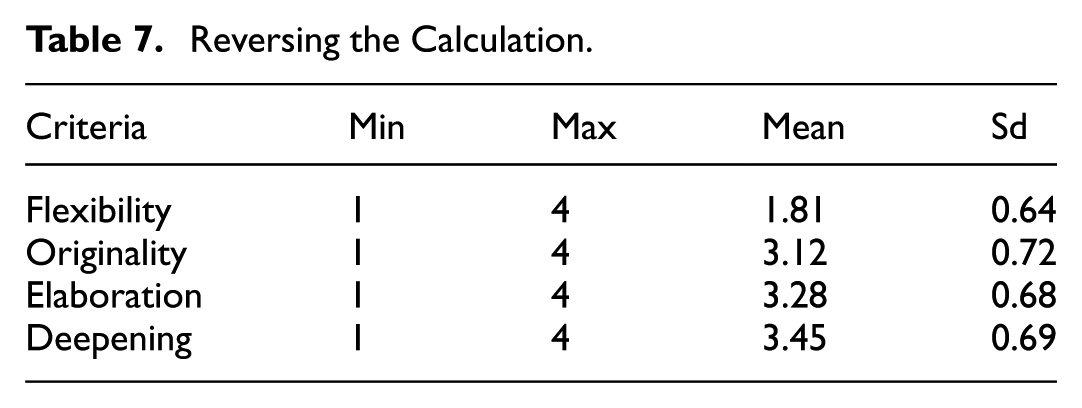
According to Table 7, although the created questions address one or two strategies in terms of solution strategies, the results are above average in terms of detailing and deepening. This indicates that the pre-service teachers were successful in generating original problems. The questions created are quite original as they allow students to solve them by providing different values and going through guessing and checking processes. Most of the questions created are evaluated as non-routine because they involve reasoning skills and seek cause-and-effect relationships. Additionally, there are questions that emphasize procedural aspects but also give importance to narrative and detail. Some questions stand out as those that can be solved using guessing strategies and have a strong reinforcing component. Some excerpts from the questions created by the pre-service teachers are given in the Table 8 as follows.
Conceptual Question Examples Created by Modifying the Third Question.

When Table 8 is examined, it can be seen that the questions transformed by the pre-service teachers for the third routine question are analyzed in three categories. First, in the prediction category, pre-service teachers encouraged students to look at the problem from the opposite perspective, prompting them to make predictions about the given information. In the addition category, pre-service teachers altered the given data and aimed to have students predict how the result would change. In the category of finding the given, pre-service teachers tried to create a different mystery in the question by embedding the unknowns into stories. Looking at the questions transformed by the pre-service teachers, it is understood that beyond performing direct calculations, they encouraged students to derive different meanings from the stories and prompted them to think in reverse.
Providing Additional Data
Most routine questions involve basic arithmetic operations, such as calculating a percentage or determining profit or loss. However, it is possible to go beyond these simple operations by incorporating additional information into the question. Examples of this include promotion and waste-related questions. For instance, a question that requires calculating profit directly can be modified to include calculating the desired profit in conjunction with loss, which involves using different cognitive activities and more careful thinking. In this sense, pre-service teachers were asked to modify the following routine question by adding extra information to enable students to perform different complex operations beyond simple arithmetic calculations.
Routine Question 4: At what price should eggs, purchased at 60 kuruş each, be sold to achieve a 50% profit?
In this question, a simple multiplication operation leads to the solution. However, by making certain modifications to the question, it is possible to introduce different and more complex calculations. For example, additional information such as breaking the eggs or offering one free egg with the purchase of two can make the question more thought-provoking. In the questions modified by the pre-service teachers, stories involving waste and promotions are commonly included. The general characteristics of the questions created by the pre-service teachers are given in the Table 9 as follows.
Providing Additional Data.

According to Table 9, the problems created are of moderate level in terms of solution strategies, similar to others, but are quite strong in terms of deepening. This indicates that attention has been paid to detailing and originality in the created questions. Below, it is observed that the created questions are of good quality in terms of detail, depth, and originality in the Table 10.
Conceptual Question Examples Created by Modifying the Fourth Question.

WhenTable 10 is examined, it can be seen that the questions transformed by the pre-service teachers for the fourth routine question are grouped into two categories. In the first group, pre-service teachers complicated the data in the question by using terms like broken, damaged, or defective, turning it into a waste question. In such questions, the selling price needs to change to maintain the same profit margin, which can be somewhat confusing. The other group, on the other hand, added promotions to the question by using terms like gift, free, and complimentary, making the question more complex. In both types of questions, pre-service teachers encouraged students to perform additional and thought-provoking operations by providing extra data, rather than relying on direct arithmetic calculations.
Comparison of Modified Questions
In this section, each question has been rated according to the given criteria, and relevant comments and means are provided in the Table 11 as follows.
Comparison of Modified Questions According to Criteria.

According to Table 11, when comparing themes, it can be noted that each question has both the highest and lowest values. The medium level of flexibility across all questions indicates that the created questions can be solved using 1, 2, or sometimes 3 strategies. The near-three scores for originality in all questions suggest that the questions are similar and notable in terms of creativity. The lowest success in detailing is found in the first question, while the highest success is in the third question, reflecting a significant difference in expression quality among the questions. In terms of deepening, the lowest value in the first question suggests that this question is relatively weaker in terms of developing students’ thinking compared to others. Conversely, the values in the third and fourth questions are closer to the upper limit, indicating that these questions are more successful in enhancing thinking. Overall, the table shows that pre-service teachers are inclined to create creative problems and pay attention to detailing and deepening.
Research Problem 2: What Difficulties Did Pre-Service Teachers Face in the Process of Creating Conceptual Questions?”
In this section, a general description of the difficulties pre-service teachers faced during the process of asking conceptual questions is provided. The responses to the question “What kind of difficulties did you experience in the process of asking conceptual questions?” were analyzed through content analysis and categorized into specific themes. These themes were then tabulated with numerical data. The results are reflected in the Table 12 as follows:
Difficulties Experienced in Asking Conceptual Questions.

According to Table 12, it appears that pre-service teachers experienced the most difficulty with creativity during the process of asking conceptual questions. Clarity and solvability are also among the subsequent difficulties they faced. It can be said that these difficulties align with the pre-service teachers’ performance in question creation. Appropriateness for the level, experience, relevance to everyday life, and decision-making on the solution path are among the other encountered difficulties.
Pre-service teachers reported that they struggled to find suitable stories for creativity, leading them to produce questions similar to those they had seen before. Issues such as not being able to create a narrative structure and not knowing how or which data to use posed challenges for their creativity. The lack of extensive prior experience in this area has made these difficulties more pronounced.
PT33: I had difficulty finding creative ideas and tended to create problems similar to ones I had seen before. I also struggled to adapt the data in an appropriate manner.
PT5: I faced difficulty thinking about the narrative structure of the problem. I believe this is due to having not created many problems before.
While trying to be creative, balancing the clarity, logical consistency, and solvability of the created sentence often caused difficulties for the pre-service teachers.
PT1: Sometimes, while trying to create a creative problem, the solvability of the problem was lost, and I had to modify it to make it solvable.
PT16: Generally, when creating a problem, it was challenging to ensure that the numbers and the logical consistency of the problem made sense, and to construct sentences that supported each other. I try to avoid errors in expression.
Pre-service teachers also faced difficulties in making sure the questions were appropriate for the student’s level. Deciding what and how to present to the student brought with it the concern that they might not be able to solve the question.
PT21: I tried to pay attention to cognitive levels when creating problems, and I struggled with what exactly to aim to provide the student in this problem, as thinking about and doing this is truly exhausting and demanding.
Additionally, establishing a connection between the created questions and everyday life was also challenging for the pre-service teachers. The more related the questions were to everyday life, the more interesting and appealing they would be for students. The sensitivity pre-service teachers showed regarding language and expression, clarity, and relevance to everyday life focused them on the need to consider multiple factors in question creation.
PT15: When creating problems, it is necessary to balance mathematics, the topic, and language. It is important to correctly use mathematical rules and operations, choose problems from real life and interesting contexts, and write the problems in an understandable and clear manner. This means one needs to be proficient in both mathematics and language.
PT41: Creating problems helps develop various competencies such as mathematical thinking, creativity, critical thinking, and communication. Some of the difficulties I experienced in the problem creation process included approaching problems from different perspectives, adapting problems to everyday life, simplifying and complicating problems according to different grade levels, accurately defining the problem, selecting data appropriately, and determining solution paths correctly.
Discussion and Conclusion
Overall, the findings indicate that pre-service elementary mathematics teachers demonstrated a moderate to high level of proficiency in transforming routine questions into conceptual ones. This proficiency was measured through rubric-based evaluations of the questions they reformulated, focusing on four dimensions: flexibility, originality, elaboration, and depth. The results show that while participants were generally successful in enriching routine questions, their performance varied across these dimensions, revealing both strengths and persistent challenges.
In terms of flexibility, pre-service teachers exhibited relatively strong performance. Many of the reformulated questions allowed for more than one solution strategy, such as combining arithmetic reasoning with algebraic representations. This indicates that participants were able to move beyond single-solution procedural thinking. However, flexibility was often limited to two solution approaches, suggesting that although pre-service teachers were aware of alternative strategies, their strategic repertoire remained restricted. This finding aligns with previous studies indicating that teachers’ knowledge of problem-solving strategies directly influences the diversity of questions they are able to pose (Kılıç, 2017; Leavy & Hourigan, 2020; Ünlü, 2017).
Regarding originality, participants attempted to differentiate their questions primarily through contextual changes, such as embedding problems in real-life scenarios or narratives. While these efforts contributed to surface-level novelty, many questions retained the same underlying mathematical structure as the original routine problems. This suggests that originality was often achieved at a contextual rather than structural level. Similar difficulties have been reported in the literature, where problem posers tend to rely on familiar schemas and previously encountered problems when generating new questions (Koichu, 2020). As a result, originality emerged as one of the more challenging dimensions for pre-service teachers.
Elaboration was the strongest dimension across all question sets. Most participants constructed questions that were clearly stated, linguistically coherent, and logically organized. Many demonstrated strong storytelling skills and preferred embedding mathematical ideas within detailed narratives rather than presenting questions in a purely symbolic form. This strength indicates that pre-service teachers were highly attentive to clarity and comprehensibility—key components of well-formulated problems. However, despite this strong elaboration, the richness of expression was not always accompanied by increased conceptual demand.
In contrast, depth (deepening) remained a relatively weak dimension. Although many questions were well-expressed and solvable, they often failed to prompt higher-order conceptual reasoning, such as justification, generalization, or relational thinking. In several cases, questions could still be solved using routine procedures despite their enriched presentation. This finding suggests that while pre-service teachers were successful in modifying the form of questions, they faced difficulties in transforming the cognitive demand of those questions. Similar observations have been reported in studies emphasizing that generating conceptually demanding questions requires explicit experience with conceptual questioning practices (Mason, 2020; Yazgan & Ülger, 2023a).
An examination of performance across different question types revealed that pre-service teachers were most proficient when working with routine problems grounded in everyday numerical contexts, such as percentage and rate problems. These contexts appeared to support higher levels of flexibility and elaboration. In contrast, questions involving spatial reasoning or geometric representations posed greater challenges, particularly in terms of originality and depth. This suggests that the nature of the mathematical content influenced the extent to which routine questions could be transformed into conceptual ones.
Although creating problems and asking conceptual questions may appear similar, the findings highlight an important distinction between these practices. In problem creation, emphasis is often placed on clarity and solvability, whereas conceptual questioning prioritizes advancing students’ thinking to higher cognitive levels. While most questions created by pre-service teachers met criteria for clarity and solvability, many did not sufficiently differ from routine problems in terms of originality and depth. This supports claims in the literature that problem-posing studies frequently focus on the quantity of generated problems, while fewer address the quality and conceptual richness of those problems (Koichu & Kontorovich, 2013; Yazgan & Ülger, 2023b).
The difficulties reported by pre-service teachers further illuminate these findings. Participants frequently described challenges related to creativity, deepening, and ensuring that questions genuinely promoted conceptual thinking. These difficulties were more pronounced in tasks requiring structural transformation of the original problem rather than contextual modification. The limited experience of pre-service teachers with conceptual question posing may help explain why originality and depth often remained at moderate levels.
Taken together, the findings suggest that pre-service teachers possess considerable potential in terms of elaboration and flexibility but require further support to enhance originality and depth in conceptual question posing. Expanding opportunities for systematic, dimension-focused practice—particularly targeting deepening and structural originality—may enable pre-service teachers to develop stronger competence in conceptual questioning. Future research may extend this work by examining in-service teachers’ conceptual questioning practices in classroom settings and by investigating the long-term impact of targeted professional development on teachers’ questioning proficiency.
Limitations and Directions for Future Research
This study has several limitations that should be taken into consideration when interpreting the findings. The research was conducted with senior pre-service elementary mathematics teachers enrolled in a single university located in the Eastern Anatolia Region of Turkey. This sampling structure limits the transferability of the findings to pre-service teachers from different universities, geographical regions, socio-cultural contexts, or class levels. Therefore, future studies designed to include participants from diverse regions and teacher education programs may enhance the transferability of the results.
In addition, the fact that the participants consisted exclusively of senior pre-service teachers may indicate that their problem-posing skills—particularly in transforming routine problems into non-routine ones—were already developed to a certain extent. Consequently, the findings may not be directly applicable to pre-service teachers at earlier stages of teacher education. Future research examining similar instructional practices across different class levels or stages of pre-service education could provide a more comprehensive understanding of the developmental aspects of these skills.
Moreover, as the study was conducted within the context of a course, participants may have approached the activities in line with course requirements or assessment-related expectations. Future studies implemented in out-of-class settings or through longer-term instructional interventions may yield more naturalistic and in-depth data regarding pre-service teachers’ problem-posing processes.
Finally, the study focused on the transformation of a limited number of routine problems. Incorporating a wider range of problem types, greater contextual diversity, and extended implementations in future research may contribute to richer insights into pre-service teachers’ non-routine problem-posing skills.
Footnotes
Appendix 1

Ethical Considerations
Ethical approval for this study was obtained from the Scientific Research and Publication Ethics Committee of Muş Alparslan University (Decision No: 106, Date and Number: 07.11.2025-218871). The study was conducted in accordance with ethical standards and principles for research involving human participants. All procedures performed in this study were in line with institutional and international ethical standards.
Consent to Participate
Informed consent was obtained from all participants involved in the study. Participation was voluntary, and participants were informed about the purpose of the research, the process, and their right to withdraw at any time without any consequences. Anonymity and confidentiality of the participants were ensured.
Author Contributions
The sole author was responsible for the conception and design of the study, data collection, analysis and interpretation of the data, and the writing and revision of the manuscript.
Funding
The author received no financial support for the research, authorship, and/or publication of this article.
Declaration of Conflicting Interests
The author declared no potential conflicts of interest with respect to the research, authorship, and/or publication of this article.
Data Availability Statement
The data supporting the findings of this study are available from the corresponding author upon reasonable request.