




Abstract
This quasi-experimental study examines the impact of integrating Artificial Intelligence (AI) into graduate engineering education in Bangladesh, focusing on student learning outcomes. The study compares two groups: a treatment group that uses AI tools and methodologies in its curriculum and a comparison group that follows traditional teaching methods. The sample consists of graduate engineering students from a public university in Bangladesh, and ethical approval has been obtained for the study. Pre- and post-tests were administered to assess changes in knowledge and skills over an academic semester. A survey was conducted to gather students’ perceptions regarding the AI tools used in their classrooms. Statistical analysis, including independent and paired-sample t-tests, was performed in SPSS 26 to evaluate AI’s effectiveness. Qualitative data from interviews with students and faculty were analyzed using NVivo to explore their experiences with AI in the classroom. The results indicate significant improvements in learning outcomes for the treatment group, suggesting that AI integration may positively impact educational effectiveness. However, the study also highlights challenges related to the accessibility of technology and the adaptation of AI tools, which may limit their impact. The findings provide valuable insights into the potential of AI to enhance graduate engineering education in Bangladesh, though the study’s limitations include its non-randomized design and focus on a single institution. Future research should explore AI integration in diverse educational settings to refine implementation strategies and broaden its applicability.
Plain Language Summary
This study explores how artificial intelligence (AI) can improve engineering education in Bangladesh. We compared two groups of graduate engineering students over one academic semester. One group used AI tools such as automated feedback systems, simulation software, and writing assistants as part of their learning, while the other group followed traditional teaching methods. We measured students’ learning progress through tests and surveys and also interviewed teachers about their experiences. The results showed that students who used AI tools improved more in their learning outcomes than those who followed traditional methods. Most students felt that AI helped them understand complex topics, stay motivated, and manage their studies more effectively. Teachers also reported that AI supported lesson planning and provided faster feedback to students. However, the study also found challenges, including unequal access to technology, the need for better training for teachers, and concerns about privacy and fairness. Overall, the findings suggest that AI has strong potential to enhance engineering education in developing countries, but successful adoption requires careful planning, training, and support to ensure that all students benefit equally
Introduction
The term AI was first used as a discipline in 1956 and has since gained increasing attention (Miao et al., 2024). AI has begun to produce innovative teaching and learning scenarios, with engineering among the fields that benefit greatly. AI-enhanced personalized learning frameworks have shown effectiveness in increasing learner engagement across disciplines. Artificial Intelligence tools are helping engineering systems increase the likelihood of achieving goals. This has led engineering educators to raise students’ awareness about the potential usage and benefits of AI. It is equally important to teach students both the fundamentals and applications of AI tools in the best possible way. While global studies demonstrate the growing influence of AI across engineering education, these developments have not been uniformly realized across all national contexts. Graduate engineering education in Bangladesh faces several challenges, including limited access to modern educational resources, outdated curricula, and a shortage of trained faculty with expertise in cutting-edge technologies (Fauzi et al., 2019; Islam et al., 2024; Zawacki-Richter et al., 2019). These challenges hinder students’ ability to acquire the skills necessary to meet the demands of a rapidly evolving global workforce. As Bangladesh strives to improve its education system, addressing these barriers is critical for achieving the Sustainable Development Goals (SDGs), particularly Goal 4 (Quality Education), which aims to ensure inclusive and equitable quality education and promote lifelong learning opportunities for all.
At present, the impact of AI on engineering education is evident, and the term “artificial intelligence-aided engineering education” has been introduced to describe this development (Nunez & Lantada, 2020). The integration of AI into engineering education could mark the beginning of a new era of more effective, efficient, accessible, and inclusive technical institutions. AI, when used effectively, holds the potential to advance sustainable education and the idea of “engineering education for all.” Incorporating the Technology Acceptance Model (TAM; Davis, 1993) further emphasizes the significance of AI’s integration into education. According to TAM, the perceived usefulness and perceived ease of use of AI tools play a critical role in their acceptance and effectiveness in educational settings. In engineering education, students’ willingness to adopt AI-based tools and their positive engagement with these tools will depend on how useful and user-friendly they find them. As Artificial Intelligence continues to evolve, educators and institutions must consider these factors to successfully integrate AI into curricula. Therefore, understanding how students perceive the usefulness and ease of AI tools can guide effective implementation strategies, such as targeted faculty training, curriculum alignment with AI-supported learning outcomes, phased integration of AI tools, and the provision of adequate technical and ethical support, ensuring that AI contributes to more engaging, personalized, and impactful learning experiences. Artificial Intelligence research primarily explores various components of intelligence, including learning and reasoning, language use, perception, and, most importantly, problem-solving (L. Chen et al., 2020). When it comes to the applications and processes of AI tools, they thrive on data. The bigger the datasets, the more potential there is for data mining, which means creating or discovering more patterns and relationships for a variety of results. This way, AI can be applied in four dimensions (See Figure 1).
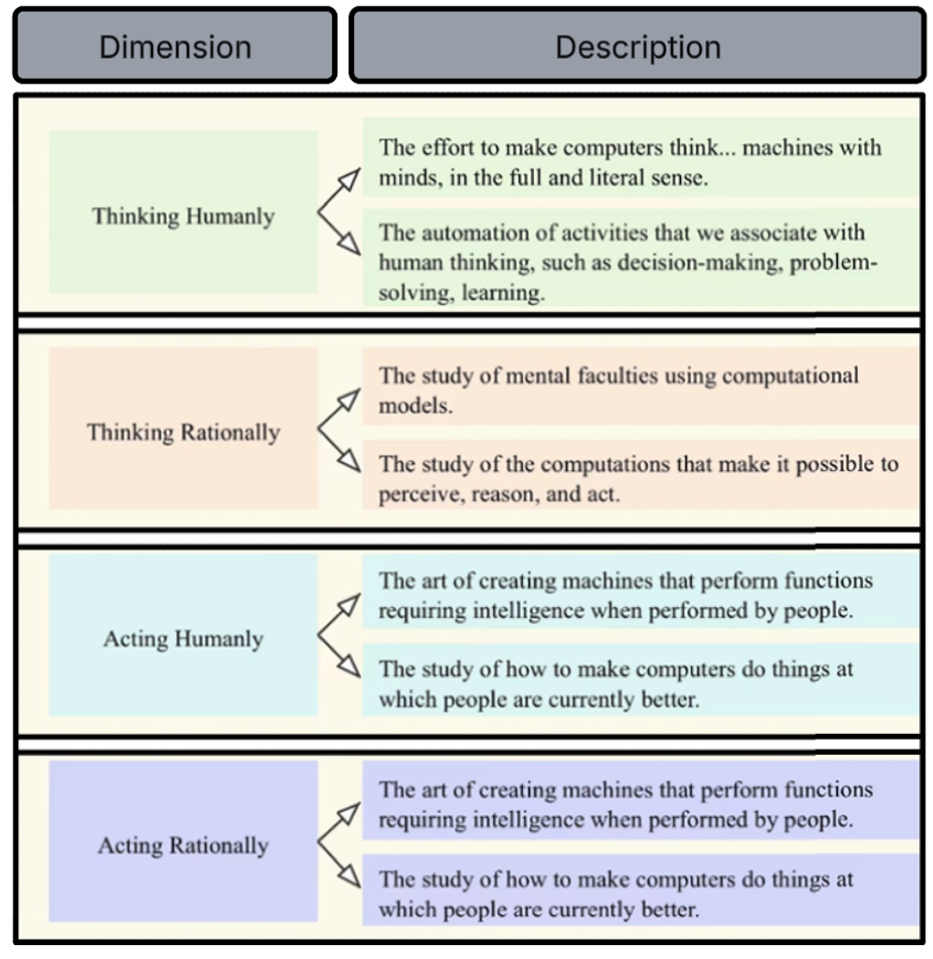
Four dimensions of artificial intelligence.
Artificial intelligence in engineering education presents both challenges and opportunities for sustainable development, and there is a need for empirical research that examines its impact in comparison with traditional instructional approaches, such as lecture-based teaching, textbook-centered learning, and instructor-led problem-solving activities. To address this gap, the present study employs a mixed-methods design. Quantitative data were collected to examine whether AI integration enhances learning outcomes compared to traditional teaching methods (e.g., lecture-based instruction, textbook-centered learning, and instructor-led problem-solving activities), while qualitative data provide deeper insights into the practical benefits, challenges, and classroom experiences associated with AI use.
Research Objectives and Questions
The study incorporates three objectives:
To assess the impact of AI integration on graduate engineering students’ learning outcomes and engagement compared to traditional teaching methods in Bangladesh.
To examine students’ and faculty members’ perceptions of AI tools in terms of usefulness, ease of use, and overall effectiveness in supporting teaching and learning.
To identify key challenges and propose sustainable strategies for equitable, ethical, and scalable adoption of AI in graduate engineering education.
To attain the research objectives, the present study responds to three research questions:
What effect does AI integration have on graduate engineering students’ learning outcomes and classroom engagement compared to traditional methods?
How do students and faculty perceive the usefulness and ease of use of AI tools, and how do these perceptions influence their adoption in education?
What challenges and barriers hinder effective AI integration in graduate engineering education, and what strategies can support sustainable, ethical, and inclusive implementation?
Literature Review
The widespread use of computing technologies in education has been facilitated by next-generation educational tools that enable personalized learning, curricular enhancement, and more effective student assessment (Chiu, 2021; Zawacki-Richter et al., 2019). In engineering education, AI is increasingly recognized not only as a pedagogical support tool but also as a domain of study in its own right. However, the benefits, challenges, and local contexts of adoption require critical synthesis rather than descriptive listing. Accordingly, the following subsections synthesize global empirical findings with evidence from Bangladesh by comparing patterns of implementation, identifying contextual constraints, and highlighting points of convergence and divergence across studies.
AI as a Supporting Tool for Educational Practice
A core theme in the literature is AI’s potential to personalize learning and optimize instruction. Global studies highlight how AI-driven analytics can tailor content delivery, enhance engagement, and automate feedback systems (Abedi et al., 2023; Celik et al., 2022). This aligns with Butler et al.’s (2018) assertion that AI is reshaping pedagogical practices by reducing routine workloads for instructors and enabling greater student support. However, while these findings are well-established in high-income contexts, existing research from well-resourced higher education systems demonstrates that AI has been successfully integrated into pedagogical practices through adaptive learning platforms, AI-supported assessment and feedback systems, and data-driven instructional decision-making, resulting in improved student engagement and learning outcomes (Celik et al., 2022; X. Chen et al., 2022; Zawacki-Richter et al., 2019). Emerging local work (Sarker et al., 2025) shows that AI-enabled learning management systems are being piloted in Dhaka-based engineering universities, with early results indicating improved assessment efficiency but uneven student access. Compared to Western contexts where infrastructure is more mature, the Bangladeshi experience highlights a dependence on donor-funded digital infrastructure and teacher training programs, suggesting structural limitations in realizing AI’s full potential. In Bangladesh, AI’s application in education remains nascent. An online report by Talukder and Bin Ahsan (2025) examined the role of artificial intelligence in student engagement within Bangladesh’s higher education sector, highlighting both emerging opportunities and concerns related to over-dependence and data privacy (Sarker et al., 2025; Talukder & Bin Ahsan, 2025).
Teaching-Learning Experiences Involving AI: Trends and Good Practices
Another recurring theme is AI’s role in enhancing active and project-based learning. Studies in China and the U.S. show that AI simulations enable engineering students to experiment with real-world scenarios, thereby building problem-solving and design skills (X. Chen et al., 2022). Similarly, intelligent tutoring systems foster collaborative learning by connecting students in peer-to-peer networks (Dwivedi et al., 2020). Yet, such general claims must be contextualized. In Bangladesh, the deployment of AI to replicate industry-specific problem scenarios is still in a pilot phase. For example, a study at Bangladesh University of Engineering and Technology (BUET) integrated AI-based simulation tools in a civil engineering course, which significantly improved teamwork and creativity but required substantial instructor mediation (Islam et al., 2024). This contrasts with some international implementations in which AI systems are designed to operate in a semi-autonomous manner. That is, they perform specific functions such as content recommendation, formative assessment, or feedback generation with limited real-time instructor intervention. Empirical studies indicate that instructors and researchers across both Western and non-Western contexts share similar concerns regarding pedagogical alignment, ethical risks, transparency, and over-reliance on automated systems (Celik et al., 2022; Wang & Cheng, 2021; Zawacki-Richter et al., 2019). Hence, while the pedagogical benefits of AI are evident, their realization in Bangladesh requires substantial human facilitation due to infrastructural and cultural constraints. Research conducted outside Bangladesh provides relevant insights, showing that the integration of AI in engineering education is shaped by cultural and institutional factors such as instructors’ preferences for teacher-centered pedagogy, concerns about loss of academic authority, student expectations of direct instruction, and institutional norms that prioritize examination-oriented learning (Celik et al., 2022; Wang & Cheng, 2021; Zawacki-Richter et al., 2019). A recent study assessed ChatGPT, Gemini, and Copilot on mechanical engineering exam questions, reporting varying levels of accuracy and offering guidance for responsible integration of generative AI tools into engineering curricula (Akolekar et al., 2025).
Challenges and Proposals for AI-Aided Engineering Education
Despite the enthusiasm around AI, multiple studies highlight systemic challenges. Globally, concerns about algorithmic bias and ethical dilemmas, particularly in the use of student data, remain unresolved (Celik et al., 2022; Machmud et al., 2021; Zawacki-Richter et al., 2019). In engineering education, AI underpins intelligent tutoring systems and virtual laboratories that enhance curriculum delivery (Subramanian, 2024). Infrastructure barriers are especially acute in Bangladesh, where many universities lack adequate computing facilities or reliable internet connectivity (Fauzi et al., 2019). This contributes to a digital divide that risks exacerbating educational inequalities. Bangladeshi researchers (Al-Ahmad et al., 2024) further emphasize that without capacity-building, faculty may resist AI integration, perceiving it as a threat to traditional teaching roles. To address these issues, scholars propose targeted capacity-building initiatives, ethical frameworks for data use, and industry–university collaborations (Mangera & Supratno, 2023). In the Bangladeshi context, government partnerships with private technology firms, such as initiatives led by the Information and Communication Technology (ICT) Division, show promise for narrowing resource gaps, though long-term sustainability remains uncertain. While global research confirms AI’s transformative potential, Local Bangladeshi studies suggest uneven adoption of AI in engineering education, with challenges related to infrastructural limitations and socio-economic disparities (Sarker et al., 2025; Talukder & Bin Ahsan, 2025). Thus, the literature underscores the need for comparative, context-sensitive approaches that integrate global evidence with local empirical insights to design scalable, equitable AI interventions in graduate engineering education.
Theoretical Framework
TAM, developed by Davis (1993), is the core framework for this study. TAM has been widely applied to examine how users adopt and interact with technology, focusing on two key factors: perceived usefulness (PU) and perceived ease of use (PEOU). According to TAM, individuals are more likely to accept and engage with a technology if they perceive it to be both useful and easy to use. These constructs provide a strong foundation for understanding how students and educators perceive AI tools in graduate engineering education.
The concept of perceived usefulness refers to the extent to which a person believes that using a particular technology will enhance their performance or experience. In the context of AI in engineering education, PU pertains to how students perceive AI tools as improving their learning experience, making learning more personalized, providing valuable feedback, and supporting better study planning. A technology is more likely to be adopted when it is seen as contributing positively to the learning process.
Perceived ease of use refers to the degree to which a person believes that using a technology will be free from effort. For AI tools to be adopted in educational settings, they must be user-friendly and accessible. When students and educators find AI tools intuitive and easy to navigate, they are more likely to integrate them into their learning and teaching practices.
The integration of TAM into this study provides insights into the psychological factors that influence technology adoption, such as the motivation to use AI tools and the willingness to embrace new teaching and learning methods. These psychological factors are crucial because they help explain why certain students and educators perceive AI tools as useful and easy to use, while others may resist them. This aligns with the study’s objectives, which aim to assess how perceptions of AI influence engagement and adoption in engineering education. The model’s emphasis on perceived usefulness and perceived ease of use aligns with the key factors that influence whether students and faculty will engage with AI technologies. When AI tools are perceived as both useful and easy to use, they are more likely to be integrated into educational settings, leading to improved learning outcomes. This framework highlights the importance of addressing both PU and PEOU in the effective implementation of AI technologies in engineering education (Celik et al., 2022; X. Chen et al., 2022).
Research Design
This study employed a quasi-experimental mixed-methods design to evaluate the role of AI in graduate engineering education in Bangladesh. The design followed a sequential explanatory approach, with quantitative analysis conducted first and qualitative exploration second. This structure allowed statistical findings to be contextualized through participants’ perceptions, thereby providing both breadth and depth of understanding (Rasool et al., 2024). The quantitative phase compared student performance and engagement between an experimental group (an AI-enhanced classroom) and a control group (a traditional classroom). The qualitative phase involved faculty interviews to capture pedagogical perspectives, challenges, and opportunities. Integration occurred during interpretation, ensuring triangulation between performance metrics and lived experiences.
Participants
Participants were recruited through purposive sampling to ensure that only individuals with relevant experience in AI-supported education were included. The participants were divided into a treatment group exposed to AI-based learning and a control group following traditional learning methods. The study surveyed 244 graduate students, a sample size based on previous research in similar contexts and logistical considerations. An a priori power analysis was conducted using G*Power to determine the minimum required sample size for detecting statistically significant differences between groups. Assuming a medium effect size (d = 0.50), an alpha level of .05, and a desired statistical power of .80, the analysis indicated a minimum required sample of 128 participants (64 per group) for independent-samples t-tests. The final sample of 244 students therefore exceeded the minimum requirement and provided adequate statistical power for the planned analyses. Efforts were made to maintain baseline equivalence between the two groups regarding prior familiarity with AI tools. In addition, 15 faculty members actively engaged in graduate engineering education participated in the study to provide qualitative insights into teaching practices and institutional perspectives. Eligibility criteria required participants to be enrolled or employed in a graduate engineering program, to have prior exposure to AI or other digital learning tools, and to be willing to commit to the full study duration. Individuals with no prior exposure to AI tools or those unable to complete the entire semester were excluded from the study. The participants were informed about the study details and upon agreement, written consent forms were obtained from all participants prior to study.
Students and teachers were selected based on specific eligibility criteria, including their involvement in graduate engineering programs and prior exposure to AI tools. The aim was to ensure that all participants had similar baseline experiences with AI tools to minimize variability. Participants were carefully assigned to the treatment and control groups, ensuring that both groups had comparable levels of familiarity with AI tools. This approach enabled an in-depth analysis of the impact of AI on learning outcomes while controlling for prior technology exposure. While the non-randomized design may limit generalizability, this targeted selection helped create a homogenous group with sufficient experience in AI tools, making the study suitable for exploring the specific research questions (See Tables 1 and 2).
Demographic Information of Student Participants (Enrolled in Graduate Engineering Programs).

Demographic Information of Teacher Participants.

Although a large proportion of participants fell within the 18 to 20 age range, all participants were enrolled in graduate-level engineering programs at the time of the study. In the Bangladeshi higher education context, students often enter graduate engineering programs at a younger age through accelerated or integrated pathways immediately following undergraduate study. Therefore, age should not be interpreted as an indicator of undergraduate status in this context.
Study Procedure
Table 3 outlines the procedural timeline of the study, showing the key activities and their associated time frames. The pre-test, administered at the beginning of the semester (March 2025), assessed students’ initial knowledge and problem-solving skills. The implementation phase, lasting for the entire semester (March 2025–May 2025), involved the experimental group using AI-enhanced teaching tools, while the control group followed traditional teaching methods. At the end of the semester (May 2025), post-tests were conducted to assess learning outcomes, followed by a teacher survey and interviews to gather qualitative data on their perceptions of the AI tools.
Procedure of the Study.

AI-Based Instructional Intervention
In the experimental group, six AI-supported tools were integrated as part of the instructional intervention to enhance student learning. AI-based tutoring systems like Carnegie Learning and Knewton personalize learning by adapting to students’ strengths and weaknesses, offering adaptive learning paths and instant feedback, as seen in studies by Celik et al. (2022) and VanLehn (2011). Automated grading systems such as Gradescope streamlined the grading process, providing efficient and accurate assessments, particularly for complex engineering assignments (Hershkovitz & Arbelle, 2020). Natural Language Processing (NLP) tools, including Grammarly and ProWritingAid, helped students improve technical writing and communication skills by offering real-time grammar, style, and structure suggestions, as demonstrated by González-Calatayud et al. (2021) AI-powered simulation software, such as ANSYS (Analysis System) and MATLAB (Matrix Laboratory), was used to conduct engineering simulations, optimize models, and predict results, as reported in Liu et al. (2024). Additionally, an AI-enhanced Learning Management System (LMS), Moodle, was utilized to provide personalized course recommendations, track student progress, and suggest additional learning materials based on individual performance, as shown in the study by Zawacki-Richter et al. (2019). These tools collectively aimed to support personalized learning, enhance assessments, and improve student engagement in the curriculum. Both the experimental and control groups received the same instructional content, which covered core graduate-level engineering topics including fundamental engineering concepts, analytical problem-solving, data analysis, system modeling, and application-based design tasks aligned with the course syllabus. The instructional content was delivered through lectures, assigned readings, problem-solving exercises, and coursework assessments; however, only the experimental group engaged with AI-supported tools during these activities, while the control group completed them using traditional, non-AI-based methods.
Instruments
Multiple data collection instruments were used in this study. These included (a) a researcher-developed engineering knowledge and problem-solving test administered as both a pre-test and post-test, (b) a 5-point Likert-scale survey was used to measure students’ perceptions of AI integration. The survey items were adapted from previously validated TAM instruments developed by Li (2023) and Chai et al. (2020) and were modified to fit the context of graduate engineering education in Bangladesh, and (c) a semi-structured interview protocol used with faculty participants.
To ensure reliable and valid findings, a researcher-developed pre-test and post-test were designed to assess the effectiveness of AI integration in improving students’ learning outcomes. This instrument measured students’ knowledge and problem-solving skills in the context of graduate engineering education, with a focus on the impact of AI-enhanced learning. The test items were developed in alignment with the existing graduate curriculum and reviewed by three subject-matter experts, all of whom were faculty members in graduate engineering programs with research and teaching experience in engineering education and applied AI to establish content validity. A pilot study was conducted with 30 students outside the main sample, and item analysis (difficulty and discrimination indices) was performed to refine the test. Reliability testing indicated acceptable internal consistency (Cronbach’s α = .81), confirming the instrument’s internal consistency.
In addition, a 5-point Likert scale survey was developed to measure students’ perceptions and experiences of AI integration in their curriculum. The survey was grounded in the Technology Acceptance Model (Davis, 1993) and adapted from validated instruments used in prior studies on AI in education (Li, 2023; Chai et al., 2020). Items addressed multiple dimensions, including PU, PEOU, personalization, study planning, engagement, and feedback accuracy. Content validity was ensured through expert review by two educational measurement specialists, and a pilot test with 25 graduate students led to minor revisions for clarity and contextual appropriateness. Reliability analysis demonstrated strong internal consistency across the subscales: PU (α = .87), PEOU (α = .84), and learning effectiveness (α = .89). The overall survey achieved excellent reliability (α = .90), meeting established standards for educational research (DeVellis, 2016). These steps confirm that the instrument was both valid and reliable for capturing students’ perceptions of AI-enhanced learning. The English versions of the pre- and post-test items and survey instruments are available from the corresponding author upon reasonable request.
Finally, in-depth semi-structured interviews were conducted with 15 faculty members to capture qualitative insights into their experiences, perceptions, and challenges in integrating AI into engineering education (Appendix 1). The interview data collected through 12 semi structured questions, were analyzed using thematic analysis following the six-phase framework proposed by Braun and Clarke (2006). Following Braun and Clarke’s (2006) approach, the analysis proceeded through six phases: (1) familiarization with the data through repeated reading of transcripts, (2) generation of initial codes, (3) searching for themes, (4) reviewing themes, (5) defining and naming themes, and (6) producing the report. NVivo 14 software was used to support systematic coding, organization, and retrieval of qualitative data. To ensure qualitative rigor, several strategies were employed. Credibility was enhanced through investigator triangulation, whereby two independent researchers coded a subset (20%) of the interview transcripts and discussed discrepancies until consensus was reached. Inter-coder agreement indicated substantial reliability (Cohen’s κ = .82). Dependability was supported by maintaining a clear audit trail documenting coding decisions and theme development. Confirmability was strengthened by grounding interpretations in direct participant quotations and by minimizing selective reporting through frequency-based thematic comparison. Researcher reflexivity was addressed by acknowledging the researchers’ positionality as scholars in education and technology-related fields, which may have influenced data interpretation. To mitigate potential bias, reflexive memos were maintained throughout the analysis process, and analytical decisions were discussed among the research team to challenge assumptions and ensure interpretations remained closely grounded in the data.
Data Collection
Data collection and analysis were carried out in two complementary phases, combining quantitative and qualitative approaches to ensure a comprehensive understanding of the study objectives. In the quantitative phase, data were collected from students’ pre- and post-test scores and from faculty responses to a Likert-scale survey. Responses falling into the neutral category (i.e., the midpoint option “Neither agree nor disagree” on the 5-point Likert scale) were excluded from percentage-based analyses. This approach was adopted to reduce ambiguity associated with neutral responses and to highlight clearer attitudinal trends. For descriptive analysis, Likert-scale responses were collapsed into two categories: agreement (Agree and Strongly Agree) and disagreement (Disagree and Strongly Disagree). The frequencies and percentages of responses in each category were then calculated and reported. The analysis was performed using SPSS 26, in which paired-samples t-tests were used to assess within-group improvements and independent-samples t-tests to compare differences between the experimental and control groups. Additionally, effect sizes (Cohen’s d) were calculated to capture both the relative and absolute magnitude of performance changes. In the qualitative phase, semi-structured interviews were conducted with 15 faculty members, each lasting 30 to 60 min, focusing on their experiences with AI adoption, perceived benefits, challenges, and future directions. The qualitative interview data were analyzed systematically using NVivo 14, following a hybrid coding approach that combined deductive codes drawn from the study objectives and the Technology Acceptance Model with inductive codes emerging from the transcripts. The coding process progressed through three stages: open coding to capture initial concepts, axial coding to group related ideas into categories, and selective coding to refine these into overarching themes. The final node structure consisted of four parent themes: AI as a Supporting Tool, Toward Standard Universities, Teaching–Learning Experiences, and Challenges and Proposals, each with multiple sub-nodes reflecting specific aspects such as personalization, feedback, accreditation, project-based learning, equity, ethics, and training. NVivo 14 frequency queries revealed that AI as a Supporting Tool accounted for 36% of coded references (134 mentions), Teaching–Learning Experiences 27% (102 mentions), Challenges and Proposals 24% (89 mentions), and Toward Standard Universities 13% (49 mentions), indicating the relative emphasis across faculty perspectives. To ensure reliability, two independent coders analyzed 20% of the transcripts, achieving substantial agreement (Cohen’s κ = .82). Representative quotations were included to illustrate these themes, while a frequency-weighted analysis minimized the risk of selective reporting and ensured that the findings were systematic and representative of participants’ views.
Findings
The data collected from pre- and post-tests, surveys, and interviews were analyzed using both quantitative and qualitative approaches. For the quantitative analysis, SPSS 26 was used to conduct statistical tests evaluating the impact of AI integration on learning outcomes. Descriptive statistics were used to summarize baseline characteristics of both the treatment and comparison groups. Independent- and paired-sample t-tests were used to compare students’ performance in both groups before and after the intervention. For the survey data, Likert-scale responses were analyzed using measures of central tendency (mean and standard deviation) to assess students’ perceptions of AI-based tools used in their classrooms. Reliability analysis was performed to ensure internal consistency of the survey instrument. In the qualitative analysis, the interview data were analyzed using thematic analysis following the framework proposed by Braun and Clarke (2006). NVivo 14 software was used to identify recurring themes related to the perceived benefits and challenges of AI in the educational context. These themes were triangulated with the quantitative findings to provide a comprehensive understanding of the impact of AI integration on both learning outcomes and user experiences. The combined analysis of quantitative and qualitative data provided robust evidence supporting the conclusion that AI integration significantly improved learning outcomes for the treatment group.
A paired-samples t-test showed that student scores improved significantly from pretest (M = 58.65, SD = 9.76) to posttest (M = 66.08, SD = 11.23), t (239) = 5.20, p < .001, Cohen’s d = 0.71, 95% CI [4.48, 10.37], indicating a large effect (see Table 4).
Mean Difference Between Pretest and Posttest.

Pretest and posttest scores were strongly correlated (r = .87, p < .001), suggesting consistency across measures (see Table 5).
Pretest and Posttest Correlations.

The standard deviation of 3.34 indicated some variation in the control group’s score improvements. However, the values are relatively close to the mean (See Table 6). The experimental group had a larger standard deviation, meaning there is more variation in how much individual students improved. The overall standard deviation of 5.42 reflected the variation in score improvements across all students. The mean score improvement for the experimental group (10.78) was notably higher than that of the control group (4.08).
Differences in Score Improvement Between Control and Experimental Groups.

Table 7 presents result from an analysis of variance (ANOVA) to determine whether there was a statistically significant difference in the dependent variable (pretest-posttest score difference) between the control and experimental groups. Group membership (experimental group vs. control group) had a significant effect on the difference between pretest and posttest scores (F = 147.80, p = .001). A one-way ANOVA confirmed that group membership had a significant effect on learning gains, F (1, 238) = 147.80, p < .001, η2p = 0.38, indicating a large effect size.
ANOVA Results for Group Differences in Learning Gains.

The analysis revealed significant improvements in student learning outcomes across different comparisons. A paired sample t-test showed a significant improvement from pretest to posttest scores (t = 5.20, p < .001, Cohen’s d = 0.71), indicating a large effect size. When comparing the experimental and control groups, an independent-samples t-test revealed a significant difference in learning outcomes (t = 6.56, p < .001, Cohen’s d = 1.57), indicating a very large effect size. Additionally, an ANOVA analysis confirmed that AI integration led to significantly greater improvements in learning outcomes compared to traditional teaching methods (F (1, 238) = 147.797, p < .001, η2p = 0.38), indicating a large effect size. These findings demonstrated the substantial impact of AI tools on enhancing learning outcomes, with strong evidence for both statistical and practical significance.
Descriptive statistics and agreement percentages for student perceptions of AI as a supporting tool for educational practices, as measured by survey items, have been presented in Table 8. A large majority of students felt that AI helped personalize their learning experience; about 80.4% believed that AI tools supported their study planning and management, with only 12.1% in disagreement. Nearly 80% of students found AI assessments provided accurate and useful feedback. The highest agreement (83%) came from students who felt AI made complex topics easier to understand, with only 12.9% disagreeing. These findings suggested that students perceive AI as having a largely positive effect on their learning experience, particularly in terms of personalization, study management, feedback, and understanding complex topics. While the majority were in favor of AI’s benefits, a small proportion of students remained skeptical or feel that AI didn’t contribute as much as they would have liked in these areas.
AI as a Supporting Tool for Educational Practice.

Table 9 summarizes students’ perceptions of AI integration in teaching and learning experiences, focusing on aspects such as personalization, support for study management, feedback accuracy, understanding complex topics, and engagement. Students generally felt that AI made learning more personalized, though a small percentage (13.7%) disagreed. It suggested that while AI is seen as beneficial, some students did not perceive a personalized learning experience. AI-driven assessments were considered to provide accurate and useful feedback by 79.2% of students, though 14.6% disagreed. This shows a generally positive view, but with some reservations about the quality of feedback. The highest agreement was with the statement that AI enhanced understanding of complex topics, with 83% of students agreeing and only 12.9% disagreeing.
Teaching-Learning Experiences Involving AI: Trends and Good Practices.

The data showed that students generally perceive AI integration in their coursework as beneficial, particularly for personalizing learning, supporting students’ study planning, organization of learning tasks, and time management, providing useful feedback, making complex topics more understandable, and maintaining engagement. However, a small but noticeable minority of students did not experience these benefits as strongly.
Table 10 presents students’ responses regarding challenges and proposed improvements related to AI integration in engineering education. A majority (78.9%) of students felt confident in using AI tools independently after receiving adequate training in their courses, with only 9.8% disagreeing. It suggested that training is generally effective, though a small percentage of students may still need additional support. Students felt that sufficient resources were available to help them use AI effectively, while they believed that AI integration should be expanded to include more aspects of the curriculum; however, 15.2% expressed reservations, possibly due to concerns about challenges or difficulties in using AI. A striking result was that only 5.9% of students reported encountering significant challenges or difficulties with AI, while 89.5% disagreed. It indicated that most students did not experience major obstacles in using AI tools in their studies. However, some students felt that more resources and support are needed, and a small minority remains cautious about expanding AI into more areas of the curriculum.
Challenges and Proposals for AI-Aided Engineering Education.

Qualitative Analysis
Data collection was conducted through semi-structured interviews, and the resulting transcripts were analyzed using NVivo 14 to support coding and thematic analysis. The interview data provided qualitative insights into teachers’ perceptions and experiences with AI in engineering education, categorized into four major themes: AI as a supporting tool, toward standard universities, Teaching-learning experiences involving AI, and Challenges and proposals for AI-aided engineering education (See Table 11). Teacher participants of the study were coded as TP. (Teacher participant 1 = TP 1)
NVivo Node Structure and Frequency of References.

AI as a Supporting Tool
Many teachers shared their opinions on the personalized experience they get when using AI-based tools in their classrooms. According to them, they noticed a visible improvement in their students’ performance when they used AI tools. TP 3 said,
AI has really helped me improvise my students’ learning experience. I feel like the tools understand my students’ strengths and weaknesses, and that’s been crucial in improving their overall understanding of complex subjects.
Another important aspect highlighted by some teachers was that they witnessed AI integration supporting educational and curricular planning. It has become much easier for them to plan their classes, taking individual needs into consideration. As TP 8 shared,
Using AI tools, I’ve been able to better manage my lesson plans. It’s almost like having a personal assistant that helps me stay on track with assignments and deadlines.
The most significant help, teachers shared, was the assistance AI tools provide with student assessment. It is quick, effective, and time-saving. It gives teachers more space to focus on other academic tasks, allowing students to plan. TP 13 said,
I’ve found that AI-driven assessments give much quicker and more accurate feedback on students’ work. It’s helps me understand where they need to improve almost immediately.
Teachers with a passion for innovation in the classroom also feel pleased when they integrate AI into their classes, since it empowers their abilities and enhances classroom learning. TP 11 shared,
I think AI tools have also made teachers more effective. They can use the data gathered from AI systems to better understand how students are performing and adjust their teaching accordingly.
Toward Standard Universities
Teachers were of the view that the introduction of AI-assisted instruction and intelligent teaching programs has clearly made the learning environment interesting and effective, even if the topic is less engaging; AI-based tools make it worth learning. Also, teachers perceive AI-supported courses as a means of improving instructional efficiency and student learning outcomes. TP 2 said,
Some of the AI-based programs we use in class are quite advanced. They adapt to the needs of the student, which I think has made the learning process smoother for everyone. The tools streamline the learning process, reducing repetitive tasks and allowing students to focus on the more challenging aspects of the curriculum.
With AI, online courses can operate almost entirely on their own, providing content, grading assignments, and even offering personalized feedback. The findings suggest that AI integration is perceived by faculty as contributing to a broader transition toward more automated and technology-supported educational practices. Not only the teaching and learning process but also the quality and management departments are being supported by AI.
Teaching-Learning Experiences Involving AI
For engineering students, it is not always possible to create a model in a real-world situation. AI has given many ways to create a virtual model to test the reliability and durability of any engineering model (e.g., structural, mechanical, or system-level models). Project-based learning focused on intelligent systems. TP 7 elaborated,
My students do a lot of projects where AI plays a central role. It’s fascinating to see how these intelligent systems can solve real-world problems, and it’s made the projects much more engaging.
Sometimes it is difficult for a few teachers to use technology frequently and easily, as it requires practice and basic technical knowledge. Some teachers said that not only do their students feel challenged while using AI, but it is also challenging for teachers. TP 11 said,
It’s not always easy to use AI tools, though. Sometimes there are technical issues, or it’s hard to get the hang of how the system works. It can be a bit frustrating at times, but overall, it’s a valuable learning experience.
Challenges and Proposals for AI-Aided Engineering Education
AI-aided engineering education presents both promising opportunities and significant challenges. On the one hand, Artificial Intelligence has the potential to revolutionize traditional learning methods by offering personalized learning experiences, automating routine tasks, and enabling simulations that enhance problem-solving skills. However, the adoption of AI in education also brings several hurdles, including the need for significant infrastructure investment, the risk of deepening the digital divide, and concerns about data privacy and the ethical use of AI tools. Additionally, the rapid pace of AI development means educators must continuously adapt, often without adequate training or support. TP 1 said,
One of the big challenges I’ve noticed is that not all my students have equal access to AI technology. It’s something that needs to be addressed to ensure that everyone can benefit from these tools.
Constructing the future with data from the past underscores the transformative role of historical data in shaping forward-looking strategies and innovations in engineering. By leveraging vast datasets accumulated over time, engineers can uncover patterns, trends, and insights that inform more accurate predictions, optimize processes, and guide decision-making. In fields such as engineering, medicine, and urban planning, historical data provides a rich foundation for creating smarter systems, improving efficiency, and anticipating future challenges. TP 15 described,
We are using AI to analyze data from previous years to improve our current learning experiences. It’s incredible to see how past data can shape the future of education.
The integration of AI in engineering education raises critical ethical issues that must be addressed to ensure equitable and responsible use of technology. Ethical concerns also extend to privacy, data security, and the transparency of AI algorithms used in educational settings. To create an inclusive and fair learning environment, it is essential to develop AI systems that actively counteract these biases, promote diversity, and uphold ethical standards. TP6 said,
AI brings up some ethical concerns, especially when it comes to bias in the systems. There’s also the issue of gender representation—more needs to be done to ensure that AI tools aren’t reinforcing old stereotypes.
Training engineering educators for AI-aided education is crucial to successfully integrating advanced technology into the learning environment. As AI tools become more prevalent in engineering education, instructors must be equipped with the knowledge and skills to effectively use these technologies. Without proper training, the potential benefits of AI in education could be undermined by ineffective implementation. Therefore, providing comprehensive, ongoing professional development for engineering educators is essential for fostering a dynamic, AI-enhanced learning experience. TP 3 expressed,
Teachers also need training to effectively use AI. It’s a learning curve for them too, and sometimes some of us struggle to integrate these tools in the best way possible.
The teachers’ interview responses reveal a generally positive perception of AI in engineering education, with a strong emphasis on its potential to enhance personalization, streamline learning, and support both students and faculty. However, challenges remain, particularly regarding access to technology, ethical concerns, and the need for better educator training. The responses suggest that students believe AI can play a transformative role in the future of education.
Discussion
The findings from the pretest-posttest results, surveys, and interviews highlight a clear positive impact of AI integration in graduate engineering education in Bangladesh, aligning with broader trends in educational technology. The treatment group, which had AI tools embedded in its learning process, demonstrated significantly greater gains in knowledge and skills than the control group. This suggests that AI can effectively enhance learning outcomes, helping students grasp complex topics more easily and providing timely, personalized feedback (Celik et al. (2022). The high correlation between pre- and posttest scores (.87) confirms that the intervention significantly influenced students’ academic performance.
The positive learning gains observed in the AI-enhanced classroom align with prior empirical research demonstrating the effectiveness of AI-supported instruction in higher education and engineering contexts (L. Chen et al., 2020; X. Chen et al., 2022). Similar to findings reported by Celik et al. (2022), students in this study perceived AI tools as particularly valuable for personalizing learning and improving feedback quality. However, unlike studies conducted in highly resourced educational settings, the present findings highlight infrastructural and equity-related challenges that shape AI adoption in Bangladesh. This suggests that while AI’s pedagogical potential is globally recognized, its implementation remains highly context-dependent, reinforcing the need for localized and equity-sensitive adoption strategies.
Survey results further reflect broad acceptance and positive perception of AI’s role in education, which can be explained using TAM (Davis, 1993). In particular, PU was strongly evident, as over 79% of students reported that AI made learning more personalized and supported their study planning and engagement. AI tools were also viewed as effective in simplifying complex topics, improving understanding, and enhancing overall learning experiences, reinforcing the PU dimension of TAM (Chai et al., 2020). Similarly, PEOU contributed to adoption, as most tools were seen as user-friendly.
Despite these benefits, some challenges remain. A minority of students (13–16%) expressed concerns about inadequate support and difficulties adapting to AI tools. This suggests a gap between perceived ease of use and actual experience, emphasizing the need for proper training, resource allocation, and continuous technical support (Li, 2023). Moreover, qualitative interviews highlighted barriers such as unequal access to technology, steep learning curves, and resource constraints for students from disadvantaged backgrounds. Ethical considerations also emerged, with students voicing concerns about algorithmic bias, data privacy, and the potential marginalization of certain groups. These findings highlight that successful AI adoption in education must account not only for technical efficiency but also for equity, inclusivity, and ethical safeguards.
In addition, challenges related to faculty readiness and curricular constraints cannot be overlooked. Previous studies have shown that insufficient professional development and limited digital competence among instructors can hinder the effective integration of AI into higher education curricula (Celik et al., 2022; Zawacki-Richter et al., 2019). Faculty members require sustained training and institutional support to meaningfully embed AI tools into pedagogical practice, rather than using them as superficial add-ons. Moreover, rigid curricula and assessment structures may limit instructors’ flexibility to adopt innovative, AI-supported teaching approaches, particularly in resource-constrained contexts such as developing countries (Fauzi et al., 2019; Wang & Cheng, 2021).
To move from isolated experiments to broader adoption, higher education institutions should consider phased implementation strategies, pilot programs, and partnerships with educational technology providers. Prior research suggests that gradual adoption allows institutions to identify context-specific barriers, refine implementation practices, and build institutional capacity for sustainable AI integration (Mangera & Supratno, 2023; Subramanian, 2024). Industry–university collaborations and government-supported digital initiatives have also been identified as effective mechanisms for strengthening infrastructure, aligning curricula with industry needs, and ensuring long-term sustainability of AI-enhanced education, particularly in developing-country contexts (Talukder & Bin Ahsan, 2025; Zawacki-Richter et al., 2019).
Limitations
This study is not without limitations. It employed a quasi-experimental design at a single public university in Bangladesh, limiting the generalizability of the findings. The relatively small sample size may also limit the robustness of statistical generalizations. Because participants were selected through purposive sampling and group assignment was non-random, the study may be subject to selection bias and limited generalizability. Future studies should consider probability sampling and/or randomized designs across multiple institutions to strengthen causal inference and broader applicability. Additionally, the study focused primarily on student perspectives, while faculty and administrators’ experiences with AI integration were not systematically explored.
Future Research Directions
Future research should expand the scope by conducting longitudinal studies to assess the long-term impact of AI integration on learning outcomes, retention, and employability. Comparative studies across different cultural and institutional contexts would also help identify factors influencing adoption in diverse educational environments. Moreover, cost–benefit analyses are needed to determine the financial sustainability of AI adoption in resource-constrained universities. Further inquiry into ethical implications, bias mitigation strategies, and faculty adaptation would also strengthen the evidence base for policy and practice.
Conclusion
The integration of AI into graduate engineering education in Bangladesh has led to significant improvements in student learning outcomes, as demonstrated by the higher posttest scores in the treatment group. Students perceive AI as a valuable tool for personalizing education, simplifying complex concepts, and providing useful feedback. While most students reported positive experiences with AI, a small number faced challenges, particularly in accessing resources and adapting to AI tools. The study’s findings support the continued expansion of AI in engineering education, with a focus on addressing the challenges of equity, training, and ethical concerns. Ensuring that all students have access to adequate support and resources will be critical for maximizing the benefits of AI integration. Additionally, universities should invest in faculty training and professional development to ensure effective AI implementation in the classroom. AI’s potential to revolutionize engineering education is clear, as it moves institutions toward greater intelligence, adaptability, and responsiveness to student needs. As AI continues to evolve, it holds the promise of enhancing not only academic outcomes but also the overall student experience. For this transformation to be sustainable, however, institutions must carefully balance technological advances with considerations of equity, ethics, and resource allocation. The findings reveal a significant improvement in learning outcomes for the treatment group, suggesting that AI integration enhances educational effectiveness. Notably, the study’s results can be examined through the lens of TAM. Students’ perceived usefulness and perceived ease of use of AI tools played a critical role in their acceptance and engagement with the technology. Positive correlations were found between these TAM constructs and improved learning outcomes, indicating that when students find AI tools beneficial and easy to use, their learning is enhanced.
Footnotes
Appendix 1
Acknowledgements
We would especially like to thank all the teachers and students who participated in the study.
Ethical Considerations
The researchers took into account the ethical considerations raised by  . Thus, after notifying the school administration about the goal of the study and obtaining an ethical approval letter, the researchers made sure that participant participation in the data collection was voluntary. We also let them know that the information was solely to be used for research. To maintain participant identity, we employed codes (numbers) for direct quotes throughout the data processing process
Author Contributions
Zhen Yin conceived and designed the study, conducted the main experiments, analyzed the data, and wrote the first draft of the manuscript. Ena Bhattacharyya contributed to data interpretation and manuscript revisions. Xiangbing Zhou assisted in the experimental setup and provided technical support. Qingwei Zhou contributed to the literature review and manuscript editing. Shufan Li supervised the research, provided critical feedback, and revised the manuscript for important intellectual content. All authors read and approved the final manuscript.
Funding
The authors disclosed receipt of the following financial support for the research, authorship, and/or publication of this article: This work was supported in part by the Local Scientific and Technological Development Funding Projects for Central Guidance in Sichuan under Grant 2023ZYD0148, the Sichuan Science and Technology Program of China under Grant 2023YFG0130, and the Sichuan Transfer Payment Application Program of China under Grant R22ZYZF0004.
Declaration of Conflicting Interests
The authors declared no potential conflicts of interest with respect to the research, authorship, and/or publication of this article.
Data Availability Statement
The data that support the findings of this study are available from the corresponding author upon reasonable request.*