



Abstract
This study investigates the development of Content and Language Integrated Learning (CLIL) research through a large-scale bibliometric analysis spanning nearly three decades (1994–2022). Although CLIL has achieved widespread adoption in educational systems, previous reviews are fragmented by timeframe, educational level, or pedagogical focus, which restricts a systematic understanding of the field’s evolution across diverse contexts. To address this limitation, the study reviewed 842 peer-reviewed journal articles indexed in the Web of Science (WoS) using keyword co-occurrence, reference co-citation, and bibliographic coupling techniques. The findings demonstrate a distinct developmental trajectory in CLIL research, evolving from early theoretical foundations to a mature and increasingly diversified field. The analysis identifies three interrelated thematic dimensions structuring CLIL scholarship: language-content integration, teacher training and pedagogical mediation, and technological as well as translanguaging-oriented initiatives. The results further indicate a strong European dominance during the initial stages, followed by the gradual expansion of CLIL research into regions such as Asia and other non-European educational contexts, accompanied by a shift toward digital and more inclusive pedagogies. This study provides a comprehensive overview of the evolution of CLIL research across educational contexts by integrating analyses of temporal, thematic, and intellectual structures. The findings contribute to a clearer conceptualization of CLIL as an evolving pedagogical paradigm and offer guidance for future research, teacher education, and policy development in bilingual and multilingual education.
Plain Language Summary
Introduction: Content and Language Integrated Learning (CLIL) is an educational approach in which students acquire subject knowledge through an additional language. In recent decades, CLIL has been widely implemented internationally, resulting in a substantial body of research. Previous reviews have typically concentrated on specific aspects, such as technology integration or particular educational levels, which has limited comprehensive understanding of the overall development of CLIL research across time and contexts. Method: To address this gap, a large-scale bibliometric analysis was conducted on CLIL research published between 1994 and 2022. Data were collected from peer-reviewed journals indexed in the Web of Science, and publication trends, key themes, influential authors, and inter-study relationships were examined. Bibliometric methods, including keyword co-occurrence, reference co-citation, and bibliographic coupling, were employed to systematically map the evolution of the field. Results: The analysis indicates that CLIL research has experienced consistent growth over nearly thirty years, with significant expansion in Europe and increasing contributions from non-European regions in recent years. The findings demonstrate that CLIL research is organized around three principal dimensions: integration of language and subject content, the role of teachers and pedagogical mediation, and pedagogical innovation, including technology use and translanguaging practices. Over time, the focus of research has shifted from initial theoretical discussions to a broader range of practice-oriented topics, such as teacher training, digital tools, and inclusive classroom strategies. Implications: Future research should pursue more balanced investigations of both language and content learning across diverse contexts. Teacher education programs are encouraged to enhance support for pedagogical mediation and multilingual classroom practices.
Keywords
Introduction
Content and Language Integrated Learning (CLIL) has seen widespread adoption in schools globally. This pedagogical approach involves the simultaneous instruction of subject content and a foreign language, with individual institutions determining the degree of language integration (May, 2017). CLIL originated in the United States in the early 1960s as part of educational policies that incorporated immigrant students’ languages alongside English, thereby promoting educational equity (Cervantes-Soon et al., 2017; García & Lin, 2017).
An effective CLIL program preserves students’ identities and promotes linguistic equality and cultural understanding, rather than enforcing assimilation into mainstream society. Additionally, such a program should align with students’ prospective employment opportunities (Ferguson et al., 1977). A recent British Council evaluation indicates that CLIL contributes to narrowing socioeconomic status (SES) gaps among students and enhances motivation for all learners (British Council, 2017). Dalton-Puffer (2011) observes that CLIL employs a foreign language or lingua franca, rather than a second language (L2). Although CLIL programs may utilize languages such as Spanish, French, German, or Chinese (Zheng et al., 2023), English has emerged as the predominant language of instruction since the mid-1990s, especially in Europe, South America, Asia, and the Middle East (Bower et al., 2020). The European Commission and the Council of Europe have adopted CLIL to foster bilingualism and multilingualism, promoting the use of English alongside students’ native languages and supporting robust academic outcomes (Coyle, 2010; European Commission, 2006).
Driven by the objectives of reinforcing national identity and increasing global competitiveness, countries and territories such as Singapore, Malaysia, and Taiwan have adopted CLIL in their educational systems (Dixon, 2003; Gill, 2014; National Development Council, 2018). The term English as a Medium of Instruction (EMI) emerged alongside these initiatives. EMI refers to the use of English to teach academic subjects in contexts where English is not the primary language for most of the population (Dearden, 2014). This approach is primarily implemented in higher education settings where students demonstrate adequate English proficiency. Distinguishing EMI from CLIL is essential. Dalton-Puffer (2011) explains that CLIL lessons are typically structured as content-based subjects, such as biology and music, while the target language is taught separately by language specialists. Typically, less than 50% of the curriculum is delivered in the target language, such as English. CLIL is generally introduced after students have acquired literacy skills in their first language (L1) and is more commonly implemented at the secondary rather than the primary education level. Thompson and Mckinley (2018) further illustrate the EMI continuum in practice, as depicted in Figure 1.

The EMI continuum in practice.
Figure 1 illustrates that the left end of the continuum emphasizes content, while the right end emphasizes language. The EMI approach utilizes English primarily as a medium for teaching subject matter, rather than for language development. In contrast, CLIL occupies a central position, aiming to advance both content knowledge and language proficiency. This dual focus makes CLIL particularly suitable for lower levels of education.
Two primary challenges in CLIL implementation have been identified: English proficiency and the selection of appropriate teaching models. In expanding circle countries, English is predominantly regarded as a foreign language and is not commonly used in daily communication (Bezborodova & Radjabzade, 2022; Ozaki, 2023). Its adoption is largely driven by economic imperatives and the complexities of multilingual environments (Galloway et al., 2020; Iwaniec & Halbach, 2024). Consequently, improving English proficiency among teachers and students remains a significant challenge. Many CLIL programs have introduced strategies to address proficiency gaps. For instance, the emphasis on exam-oriented study and test-driven instruction can hinder program effectiveness (Chou & Ching, 2012). To address this, essential exam materials should be provided bilingually, and the translation of teaching resources into English should be prioritized (Sánchez et al., 2022). Roberts (1995) has proposed several instructional models to support non-English speaking students in developing both general and content-specific English skills, including the Submersion Model, ESL Pullout Model, Transitional Bilingual Education Model, Maintenance Bilingual Education Model, Enrichment Model, Two-Way Model, Developmental Bilingual Model, and Dual-Language Immersion.
Several reviews have examined CLIL from general or methodological perspective. Hidalgo and Ortega-Sánchez (2023) conducted a systematic analysis of methodological approaches in bilingual and CLIL classrooms, reviewing 19 articles published in 2021 and indexed in WoS and Scopus. Their findings indicate that most CLIL programs prioritize the development of students’ linguistic repertoire over content learning, suggesting that research on content integration remains limited. Similarly, Poveda-Garcia-Noblejas and Antropova (2024) carried out a PRISMA-guided systematic review of CLIL research in school settings, analyzing 142 studies published between 2018 and 2022 and reporting that research attention has largely centered on communication, whereas cognition remains comparatively underexamined.
With the increasing digitalization of education, a growing number of reviews have focused on the intersection between CLIL and technology. Martínez-Soto and Prendes-Espinosa (2023) systematically reviewed the role of ICT (Information and Communication Technology) in CLIL in compulsory education based on 22 studies published between January 2017 and February 2022 and highlighted both the increasing integration of digital tools and the persistent challenges related to resources and teacher preparation. More recently, Hu et al. (2025) synthesized evidence on technology-enhanced CLIL (TECLIL) through a systematic review and meta-analysis of 20 SSCI (Social Sciences Citation Index) empirical studies published between 2014 and 2023, identifying commonly used technologies and reporting a small effect on content learning and no substantial effect on language achievement.
Several reviews have investigated CLIL within more narrowly defined parameters. For instance, Pittas and Tompkins (2024) systematically reviewed CLIL programs implemented in languages other than English, with a focus on student learning outcomes in languages other than English contexts. Further skill- and subject-specific analyses include Idris et al. (2025), who systematically reviewed CLIL and English as a Foreign Language (EFL) writing development in secondary education, and Gil-López et al. (2021), who conducted a systematic review of CLIL implementation in physical education. Narrative syntheses have also been conducted in disciplinary contexts such as science education (Piacentini, 2021). Furthermore, bibliometric studies have begun to map the CLIL knowledge base, including a bibliometric analysis of CLIL research over three decades (Yongli, 2025) and a bibliometric mapping using VOSviewer and CiteSpace (Liang, 2025).
Despite the growing number of systematic and bibliometric reviews on CLIL, existing syntheses remain fragmented by timeframe, educational level, or pedagogical focus. Prior reviews have consistently reported a dominance of language-related outcomes over content, cognition, and affective dimensions (Hidalgo & Ortega-Sánchez, 2023; Hu et al., 2025; Poveda-Garcia-Noblejas & Antropova, 2024), while recent bibliometric studies have largely focused on publication trends without integrating these findings into a coherent conceptual model of CLIL development (Liang, 2025; Yongli, 2025). Consequently, the long-term intellectual evolution and paradigm shift within CLIL research, including the emergence of technology-enhanced and translanguaging-oriented approaches, remain insufficiently mapped. To address this gap, the present study adopts a large-scale bibliometric and content-analytic approach to systematically examine nearly three decades of CLIL scholarship, aiming to reveal its thematic structure, developmental trajectories, and emerging research directions.
Bibliometrics is a field that uses bibliographic data to quantitatively analyze academic literature (Ding & Yang, 2022). With the advancement of bibliometric analysis and information visualization software, it is now possible to examine acquired data quantitatively and objectively to explore the development trends and research directions within a particular discipline (C. C. Hsieh et al., 2023b). The study addresses the following three questions to achieve its objectives:
What is the volume and growth trend of peer-reviewed journal literature related to CLIL research?
What are the main topics explored by scholars in the CLIL research field?
Which authors and works have had the most significant impact on CLIL-related research?
Conceptual Frameworks in CLIL
Conceptual Framework
Depending on educational purposes or political or economic strategies, many countries may choose how to implement CLIL, for example, to target boosting global economic and academic competition (Baker & Hüttner, 2017; Bezborodova & Radjabzade, 2022; Galloway et al., 2020). CLIL is widely defined as an educational approach that integrates subject learning and additional language development through a dual-focused curriculum (Dalton-Puffer, 2011). CLIL has been shown to foster biliteracy, enhance cultural awareness, and improve academic achievement (Yeban, 2023). While early conceptualizations of CLIL emphasized bilingual exposure and language immersion, subsequent scholarship has increasingly recognized CLIL as a complex pedagogical and research domain shaped by evolving educational goals, policy contexts, and instructional practices. The conceptual framework of this study is designed not to assess CLIL’s effectiveness, but to conceptualize the long-term development and intellectual structure of CLIL research. Drawing on previous theoretical backgrounds and empirical syntheses, CLIL research is framed here as an evolving field centering on three interrelated dimensions: language–content integration, teacher training and pedagogical mediation, and technological integration and innovation.
Language–Content Integration
The defining principle of CLIL lies in the integration of disciplinary content learning with language development. The 4Cs framework (Content, Communication, Cognition, Culture) conceptualizes this integration as a deliberate pedagogical design in which language functions both as a learning objective and as a medium for constructing subject knowledge (Coyle, 2007, 2010). However, multiple review studies have reported that CLIL research has disproportionately focused on language-related outcomes, with comparatively limited attention to content learning and cognitive development (Hidalgo & Ortega-Sánchez, 2023; Poveda-Garcia-Noblejas & Antropova, 2024). This imbalance suggests a persistent conceptual tension within the field between CLIL’s integrative intent and its empirical operationalization. As such, language–content integration represents a foundational yet contested dimension structuring CLIL research trajectories.
Teacher Training and Pedagogical Mediation
A second key dimension of CLIL research concerns the role of teachers and pedagogical mediation in classroom implementation. CLIL requires educators to manage subject instruction and language scaffolding simultaneously, making teacher competence, instructional design, and assessment practices central to successful implementation (Dalton-Puffer, 2011; Pérez-Cañado, 2012a). From a sociocultural perspective, learning in CLIL contexts can be understood as mediated action, where language serves as a cognitive and interactional means for disciplinary participation (Vygotsky, 1978). Teacher preparation and professional development were identified as major constraints affecting CLIL outcomes and research directions (Bruton, 2011; Martínez-Soto & Prendes-Espinosa, 2023). Accordingly, teacher training and pedagogical mediation have constituted a key dimension through which CLIL research has expanded and diversified over time.
Technological Integration and Innovation
More recently, CLIL research has entered an innovation-oriented phase characterized by the integration of digital technologies and translanguaging practices. TECLIL employs tools such as online platforms, telecollaboration, multimedia, and digital storytelling to support interaction and access to content (Hu et al., 2025). The translanguaging approach reconceptualizes bilingual learning as the strategic use of learners’ full linguistic repertoires, offering a more inclusive alternative to rigid language separation models (García & Lin, 2017; García & Wei, 2014). Fuster and Bardel (2024) found that translanguaging is preferred in Swedish education because it enhances content learning among bilingual students. Prilutskaya (2021) found that pedagogical translanguaging enhances classroom learning, with teachers viewing it as a facilitator since a bilingual student can switch between their mother tongue and the language of instruction (e.g., English) to better understand a concept or clarify meaning. Despite growing interest, evidence regarding the impact of technological integration remains inconsistent, with recent meta-analytic findings reporting limited effects on language achievement and only modest gains in content learning (Hu et al., 2025). This dimension thus captures both innovation-driven expansion and ongoing empirical uncertainty within CLIL research.
Framework Alignment with the Present Study
Together, these dimensions provide a coherent conceptual lens for interpreting the bibliometric patterns examined in this study. They align directly with the thematic trajectories identified in the analysis—namely, language–content integration, teacher training, and technological innovation—and respond to the fragmentation observed in prior reviews, which have typically examined these strands in isolation (Liang, 2025; Yongli, 2025). By framing CLIL research as an evolving intellectual domain structured around these dimensions, the present framework supports the study’s aim of systematically mapping CLIL’s evolvement across educational contexts over nearly three decades.
Methodology
Identification of Sources and Analytic Software
There are no human participants in this article, and informed consent is not required. The study collected data based on the Preferred Reporting Items for Systematic Reviews and Meta-Analyses (PRISMA) guidelines (Moher et al., 2010) for screening and selecting the reviewed documents in CLIL (Figure 2). The Web of Science (WoS) database was utilized to collect data for the study. First, on March 11, 2025, the keywords “CLIL” or “Content and language integrated learning” were entered into the search fields under the “Topic” category in the “DOCUMENTS” section. The search yielded 2,750 records spanning 1994 to 2025. Since the study aimed to enhance the quality of the literature, only peer-reviewed journal articles were selected (C. C. Hsieh et al., 2023a). The search was limited to articles within the “Education Educational Research” category in SSCI, A&HCI, and SCI-EXPANDED databases. This process excluded 1,908 records from books, book chapters, and conference proceedings, resulting in 842 eligible records, which were then exported for analysis. VOSviewer 1.6.20 (Van Eck & Waltman, 2023) was used to generate knowledge maps for keyword co-occurrence, reference co-citation, and document bibliographic coupling analysis (Zupic & Čater, 2015). First, the study began with the publication counts for each year (to track research quantity over time). Then, the data obtained from the software were screened in Microsoft Excel for clusters, most co-occurring keywords, and influential works, to ensure accuracy. Finally, tables and article downloads were used to ensure correct attribution to reinforce the results shown in the visual maps.
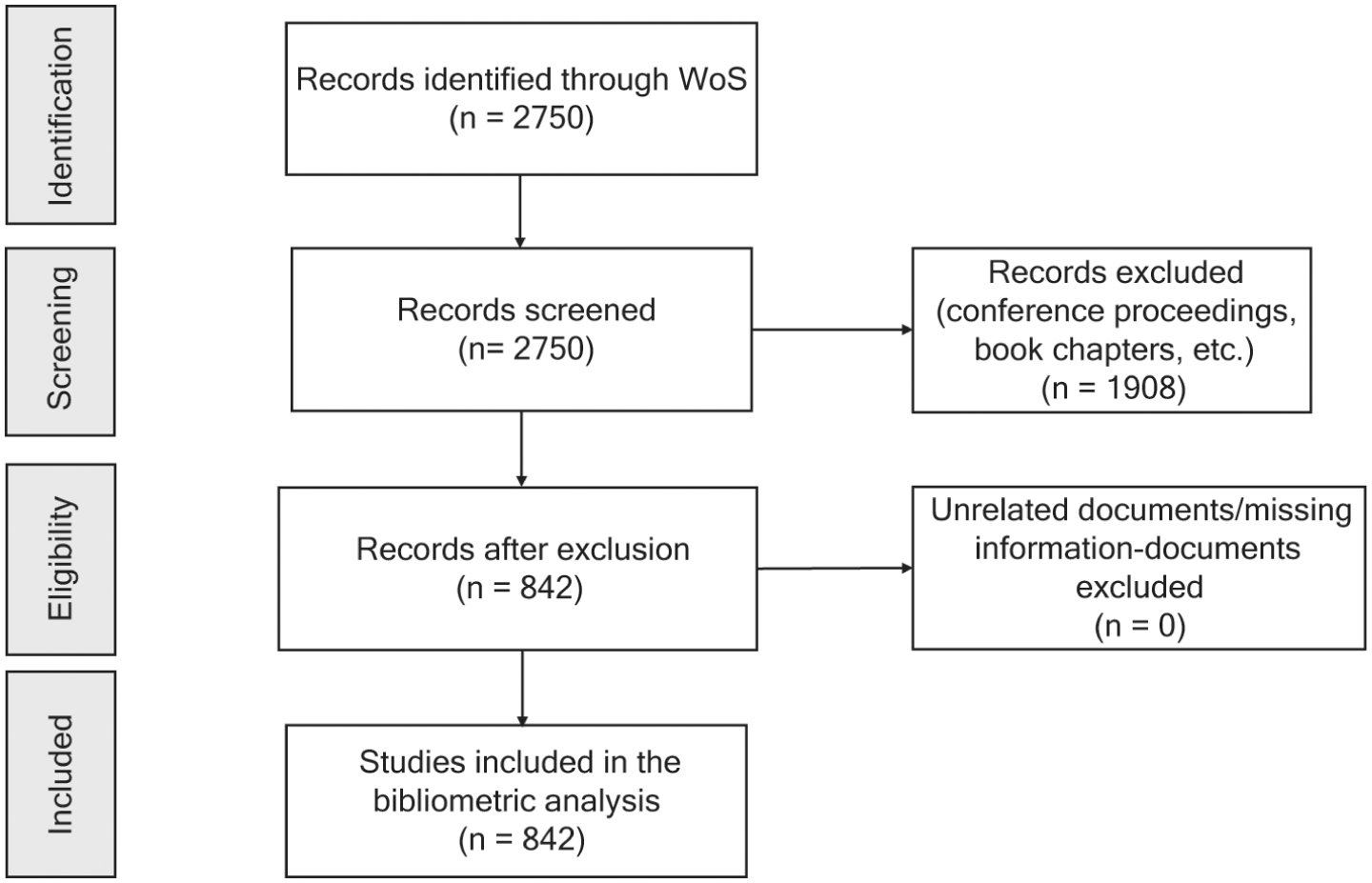
PRISMA flow diagram detailing steps in the identification and screening of sources for this review of research on bilingual education.
Data Analysis
This study primarily employs bibliometric review and content analysis methods of the top influential works and the most frequently occurring keywords in CLIL research. Zupic and Čater (2015) outlined several key bibliometric methods, including citation analysis, co-citation analysis, bibliographic coupling, co-author analysis, and co-word analysis, all of which are essential for describing, evaluating, and monitoring published research. This study employs techniques such as counting publications to gage scholars’ interest in the field. Moreover, to further answer the research questions, the study applied analyses of keyword co-occurrence, reference co-citations, and document bibliometric coupling. When selecting clusters for our study, we followed the advice of C. C. Hsieh et al. (2023b). They noted that generating too many clusters reduces their significance. Based on this, our study tested various thresholds for these three types of analyses: keyword co-occurrence, bibliometric coupling, and reference co-citation to identify a manageable number of clusters with key information and the output of the visualization figure. Finally, content analysis (H. F. Hsieh & Shannon, 2005) was applied to examine the literature on three highly influential works and authors to gain a more comprehensive understanding of CLIL research themes and trends (C. C. Hsieh & Li, 2024). Previous studies, for example, C. C. Hsieh et al. (2023b) and C. C. Hsieh and Li (2024), also focus on each cluster’s three most influential works for analysis.
Keywrod Co-occurrence
Dong et al. (2022) explain that the co-occurrence method involves calculating the total link strength for each keyword pair and selecting the pairs with the highest total link strength. Keyword co-occurrence analysis helps identify relationships between keywords, contributing to the knowledge structure and mapping of a specific scientific field (Radhakrishnan et al., 2017).
Biliometric Coupling
Bibliographic coupling occurs when two publications cite the same third publication; it examines the shared references of two documents, indicating a connection based on common sources even if those documents are not cited together in subsequent literature (Martínez-López et al., 2018). The extracted data was used in bibliographic coupling analysis to reduce citation bias and identify emerging research fronts (C. C. Hsieh et al., 2023a). Bibliographic coupling may provide delayed or static information, and since two articles could reference unrelated topics, co-citation analysis is often used alongside it to offer insights into subject similarity (Ferreira, 2018).
Reference Co-citation
Bibliometric studies employ co-citation analysis to map knowledge landscapes and identify key research trends (Leydesdorff & Rafols, 2009). Liao et al. (2018) described co-citation as the relationship between two items (such as articles, journals, or authors) cited in a citation list; it looks at whether two documents are cited together in other works, indicating a relationship between them. Through network analysis of co-citations, researchers can cluster the identified papers to gain insights into the structure and evolution of a specific research topic (Martins et al., 2022).
Results
Yearly Quantitative Distribution of Literature
Figure 3 presents the number of publications on CLIL over time, revealing a growth cycle with distinct phases. The introduction stage (1994–2005) was characterized by minimal annual publications (typically 1–2), reflecting the nascent status of CLIL and limited academic attention. The growth stage (2006–2015) demonstrated increasing publication numbers (rising to 7–20 per year by 2015), which suggests expanding academic interest and initial recognition of CLIL as a significant research area. The maturity stage (2016–2020) was marked by a substantial increase in research output, with 79 publications in 2018 and 99 in 2020. The stabilization and fluctuation stage (2021–2025) followed, during which publication numbers remained elevated but variable, peaking at 104 in 2024 and declining to 18 in 2025, likely due to incomplete data. These trends indicate that CLIL has evolved from an emerging topic to a mature and established academic field, although recent years have shown some variability in research output.
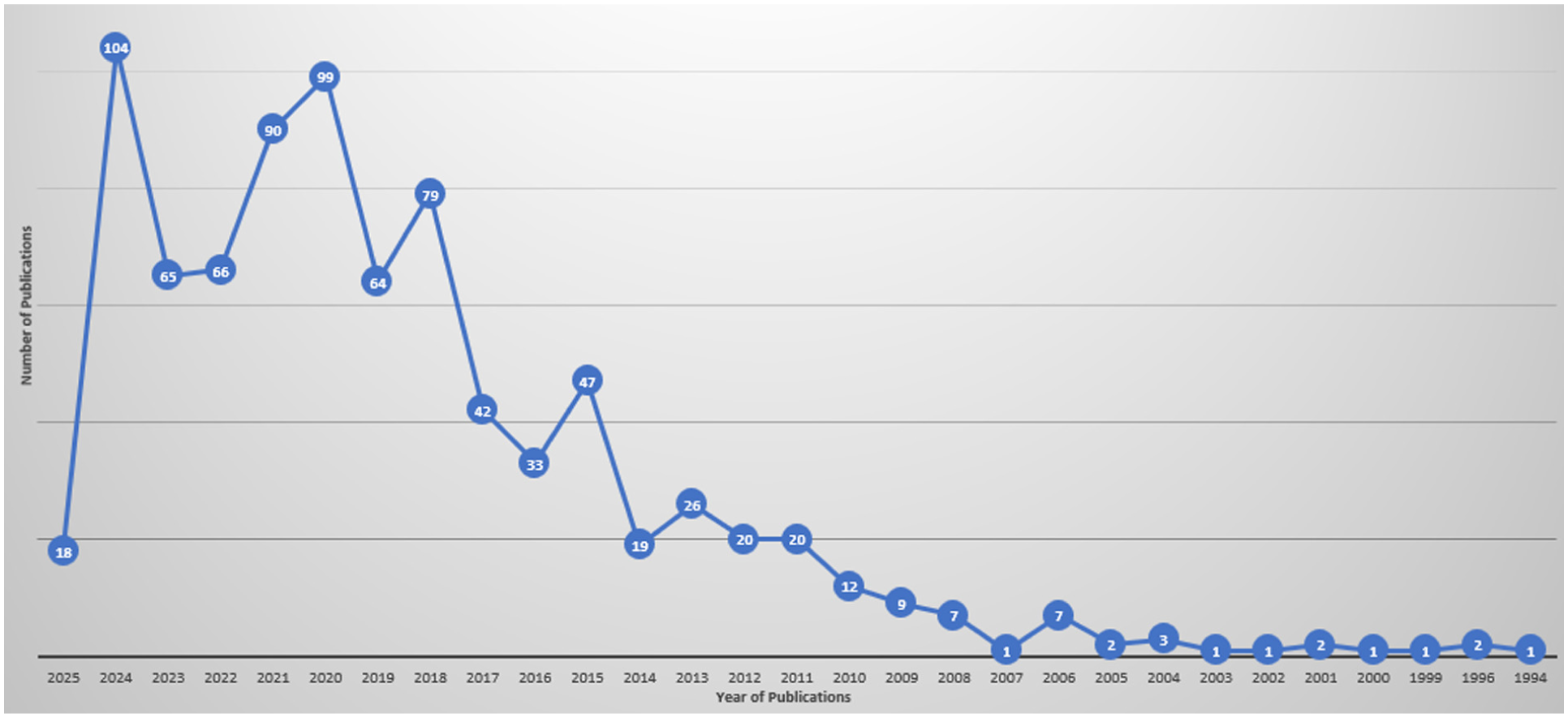
Number of publications on CLIL overtime.
Significant Publications in Different Development Stages
Trends in CLIL Research (Research Question 1)
CLIL has evolved through the contributions of multiple authors across distinct phases. In the early phase, Harklau (1994), with 111 citations, emphasized the integration of responsive language instruction, particularly English, with content teaching. The study demonstrates that English as a Second Language (ESL) learners benefit from curricula that combine subject content and language learning, especially when English is the medium of instruction. The research further recommends collaboration between language and subject teachers to align content and language objectives effectively. During the same period, Stoddart et al. (2002), cited 164 times, introduced inquiry-based methods in science education, contending that such approaches facilitate language acquisition. Their findings underscore the reciprocal relationship between science learning and language development, providing evidence that integrated instructional strategies support English Language Learners (ELLs) and align with CLIL principles. The assessment rubric developed in this study offers a framework for CLIL instructors to evaluate and improve the integration of language and content teaching. Additionally, Christian (1996), with 79 citations, highlighted the adaptability of two-way immersion programs to local needs and contexts, including variations in language instruction allocation, such as 90% instruction in one language during early grades or a balanced 50/50 model. This work supports the CLIL approach by advocating for the concurrent teaching of language and content to promote both language proficiency and subject knowledge.
During the growth stage, Pérez-Cañado (2012a), with 265 citations, examined the impact of CLIL on educational practices in Europe and found that the approach was rapidly adopted across the continent. CLIL addresses the need for improved foreign-language competence and supports multilingualism in Europe. The study also reports increased academic and professional satisfaction among teachers, as well as positive effects on student motivation and engagement in bilingual education. Lasagabaster and Sierra (2010), with 173 citations, compared immersion programs and CLIL, noting that both aim to teach content through a second language but differ in key aspects. CLIL typically employs a foreign language as the medium of instruction, often one not widely spoken in the region, while immersion programs usually use a language commonly spoken locally. Immersion programs focus on achieving native-like proficiency, whereas CLIL programs aim to enhance language proficiency for academic and professional purposes, often with more limited exposure. Bruton (2011), with 172 citations, critically re-examined the purported benefits of CLIL, particularly in studies from Spain. The analysis indicates that CLIL may not be as universally beneficial as often claimed. Some studies reveal inconsistencies and raise questions about the validity of conclusions regarding language-learning outcomes. Bruton further contends that CLIL may be more selective than universal, as students are often pre-selected based on motivation and academic ability. Additionally, many studies lack pretesting, control groups, and clear comparisons, which undermines the validity of their findings.
In the maturity stage, Lin (2019), with 168 citations, raised concerns regarding the frequent implementation of CLIL programs without adequate teacher preparation or curriculum planning. Lin underscores the necessity for research to guide policymakers and educators in integrating students’ familiar languages alongside the target language in CLIL classrooms. The study highlights the significance of translanguaging and trans-sanitizing in content-based education, enabling students to utilize all linguistic and semiotic resources to co-construct knowledge (Creese & Blackledge, 2010). Hwang et al. (2017), with 150 citations, advocate for the use of problem-based gaming in language learning to reduce anxiety and improve English listening skills. Their findings indicate that problem-based English listening games result in higher achievement, increased motivation, and more complex learning behaviors, particularly among students with elevated English anxiety. Lin and Lo (2017), with 134 citations, support translanguaging and dialogic teaching approaches in CLIL classrooms. Teachers can employ both L1 and L2 to connect students’ everyday experiences with academic language, fostering deeper understanding of subject matter. The study demonstrates that combining languaging and translanguaging strategies creates more dynamic and interactive classroom environments, enhancing both content comprehension and language acquisition in CLIL contexts (Creese & Blackledge, 2010).
In the stabilization and fluctuation stage, Wen (2021), with 63 citations, advocated for the use of augmented reality technology to enhance cognitive engagement in language learning. Augmented reality overlays digital content, such as images, sounds, or information, onto the real world through devices such as smartphones, tablets, or specialized AR glasses. Wen found that activities designed for learner-generated content foster more active and constructive student interactions, enabling better understanding and retention of vocabulary through hands-on, context-based experiences. Yang et al. (2022), with 100 citations, supported the use of Digital Storytelling (DST) as an effective instructional tool for improving both English speaking skills and creative thinking. They recommended DST’s interdisciplinary approach, integrating English language and computer literacy courses in which students collaborate to create digital stories. This approach resulted in significant improvements in English speaking proficiency and creative thinking compared to traditional Presentation-Practice-Production instruction.
Keyword Co-occurrence Analysis (Research Question 2)
Cluster selection followed the recommendations of C. C. Hsieh et al. (2023b), who observed that an excessive number of clusters diminishes their interpretive value. Accordingly, various thresholds were tested to determine a manageable number of clusters containing key information, as demonstrated in the visualization output. The analysis utilized the full counting method and considered all keywords as the unit of analysis, with a minimum keyword occurrence threshold set at 20. Twenty-two keywords satisfied this criterion and were organized into three clusters. Figure 4 presents the network diagram generated from the co-occurrence analysis, and Table 1 lists the top three publications within each cluster.
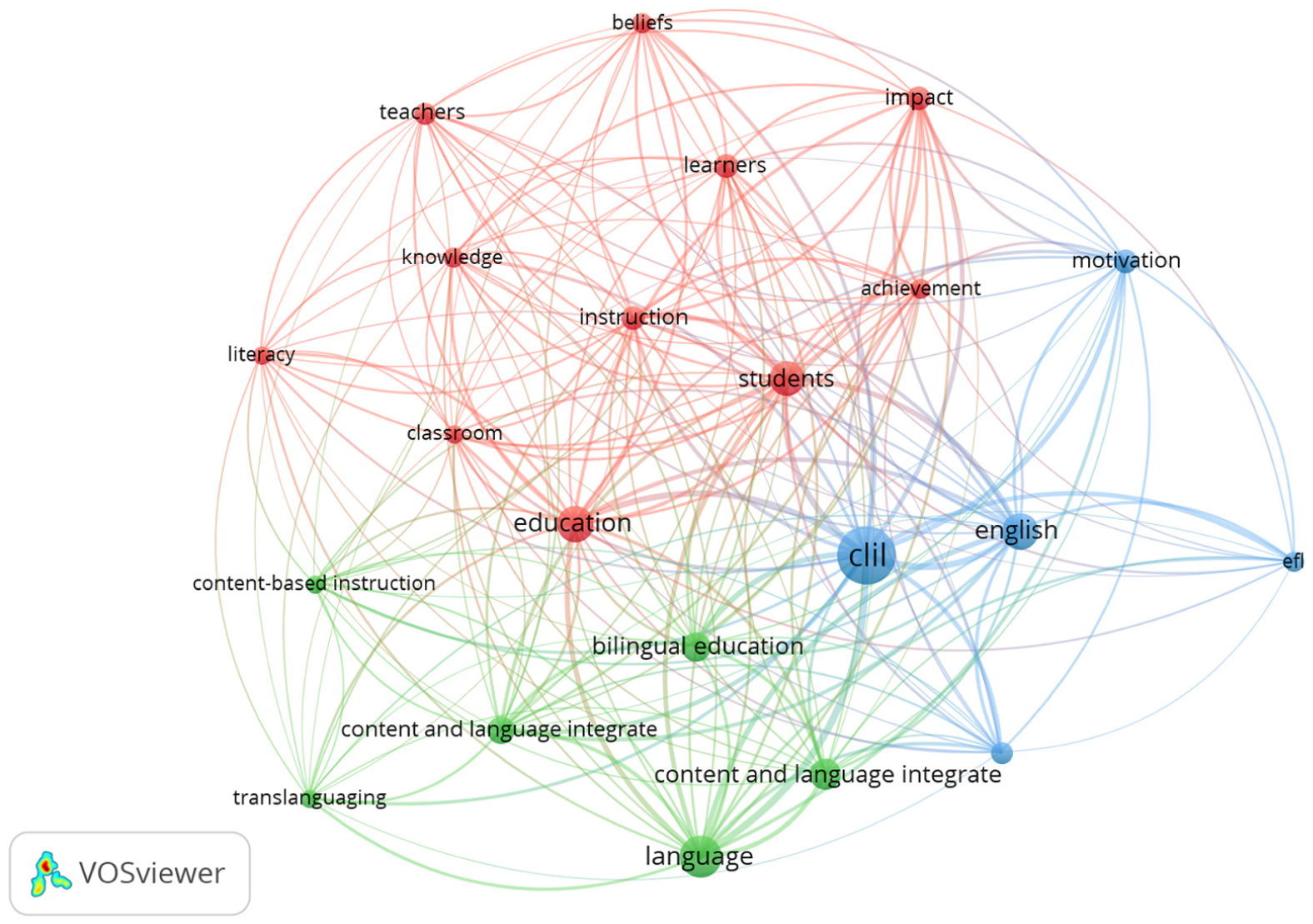
Network visualization of keyword co-occurrence analysis on CLIL.
Significant Keywords from Keyword Co-occurrence Analysis.
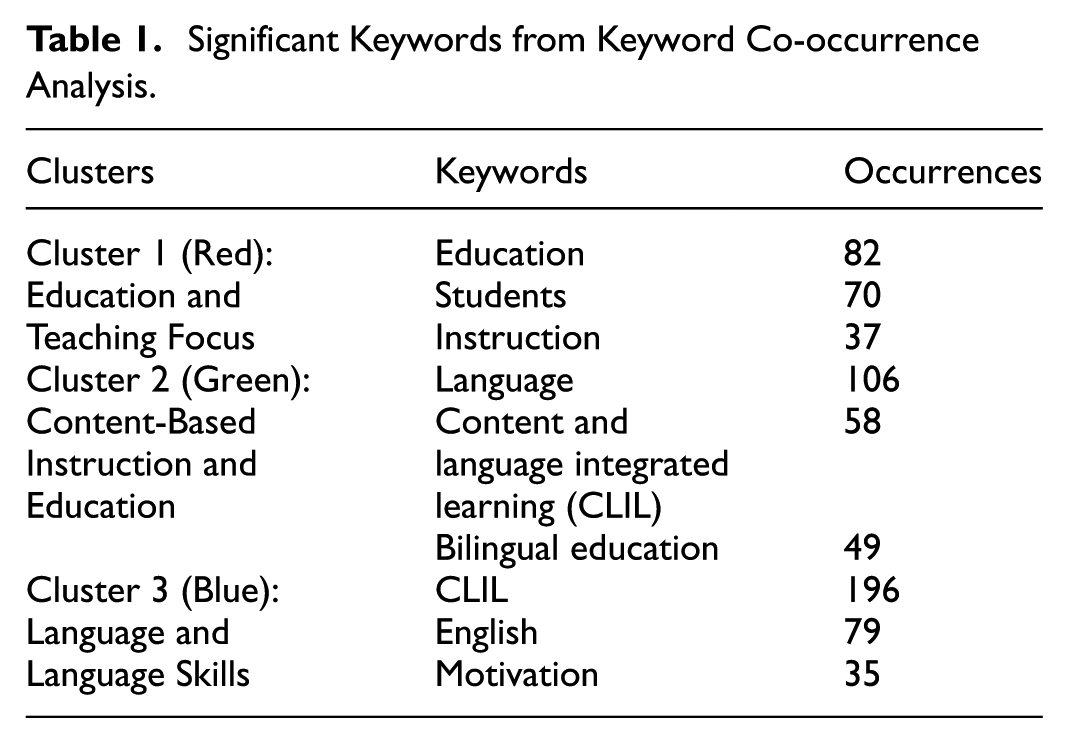
Figure 4 illustrates three clusters, represented in red, green, and blue. The figure depicts a network of co-occurring keywords, with connections indicating the frequency of their co-occurrence within the dataset. Each cluster comprises a group of related terms. Cluster 1 (red) centers on general education and teaching-related concepts, including “education,”“students,” and “instruction.” These keywords are closely linked, reflecting their frequent co-occurrence in educational discourse. Cluster 2 (green) highlights content-based instruction, featuring terms such as “content-based instruction,”“bilingual education,” and “CLIL.” This cluster forms a cohesive group around pedagogical approaches that integrate content and language. Cluster 3 (blue) focuses on language learning and skills, with keywords such as “CLIL,”“English,” and “motivation” demonstrating strong interconnections, which suggests an emphasis on language acquisition and motivational factors.
Table 1 presents the results from Figure 4, tracking keywords, their occurrence counts, and cluster formation.
This table lists the number of occurrences for each keyword in the clusters to complement this visual representation. The term “education” is centered in Cluster 1 in the visualization map, corresponding to its 82 occurrences shown in Table 1. Cluster 2 focused on the term “language,” which also appears prominently (106 times), making it one of the key terms in this cluster. The result shows a strong association between language and methods such as CLIL and bilingual education, in which language is used as a tool for content delivery. It becomes even more evident that “CLIL” stands out with a high frequency of 196 occurrences. This highlights how central CLIL is to discussions of language learning and teaching methodologies.
Document Bibliographic Coupling Analysis (Research Question 3)
The study employed the full counting method, designating documents as the unit of analysis. A minimum citation threshold of 50 was established, resulting in a dataset of 60 documents. Link strengths for bibliographic coupling were calculated, and those with the highest values were selected for further analysis to identify significant research fronts. Figure 5 presents five distinct clusters identified through bibliometric coupling analysis. These clusters represent groups of closely related documents based on shared references. Proximity between documents in the network is determined by bibliometric coupling; documents sharing numerous references are more likely to form a cluster. Each cluster corresponds to a specific theme or subfield within the broader CLIL research domain. Several influential research works are strongly interconnected, particularly within the context of CLIL. Pérez-Cañado (2012a), Bruton (2011), and Dalton-Puffer and Smit (2013) constitute a central cluster, underscoring their significant contributions to CLIL research, especially in bilingual education and teaching methodologies. Furthermore, the works of Lin (2019) are closely associated, indicating a focus on innovative strategies and developments in the CLIL approach.
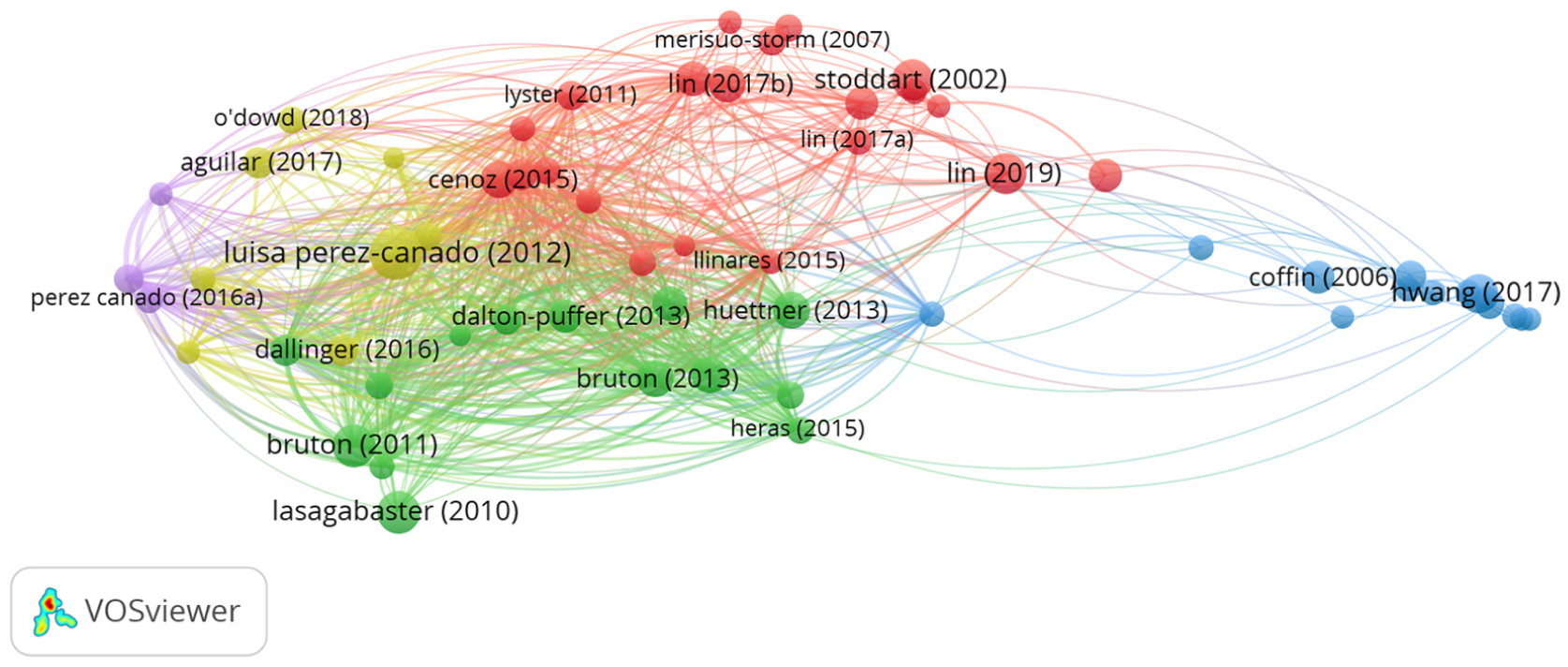
Document bibliographic coupling network on CLIL research.
Table 2 details the results shown in Figure 5, including the documents and their citations, total link strengths, and cluster formation. In addition, the titles of the three most influential documents are provided.
Significant Publications in Each Cluster of Document Bibliographic Coupling Network on CLIL.
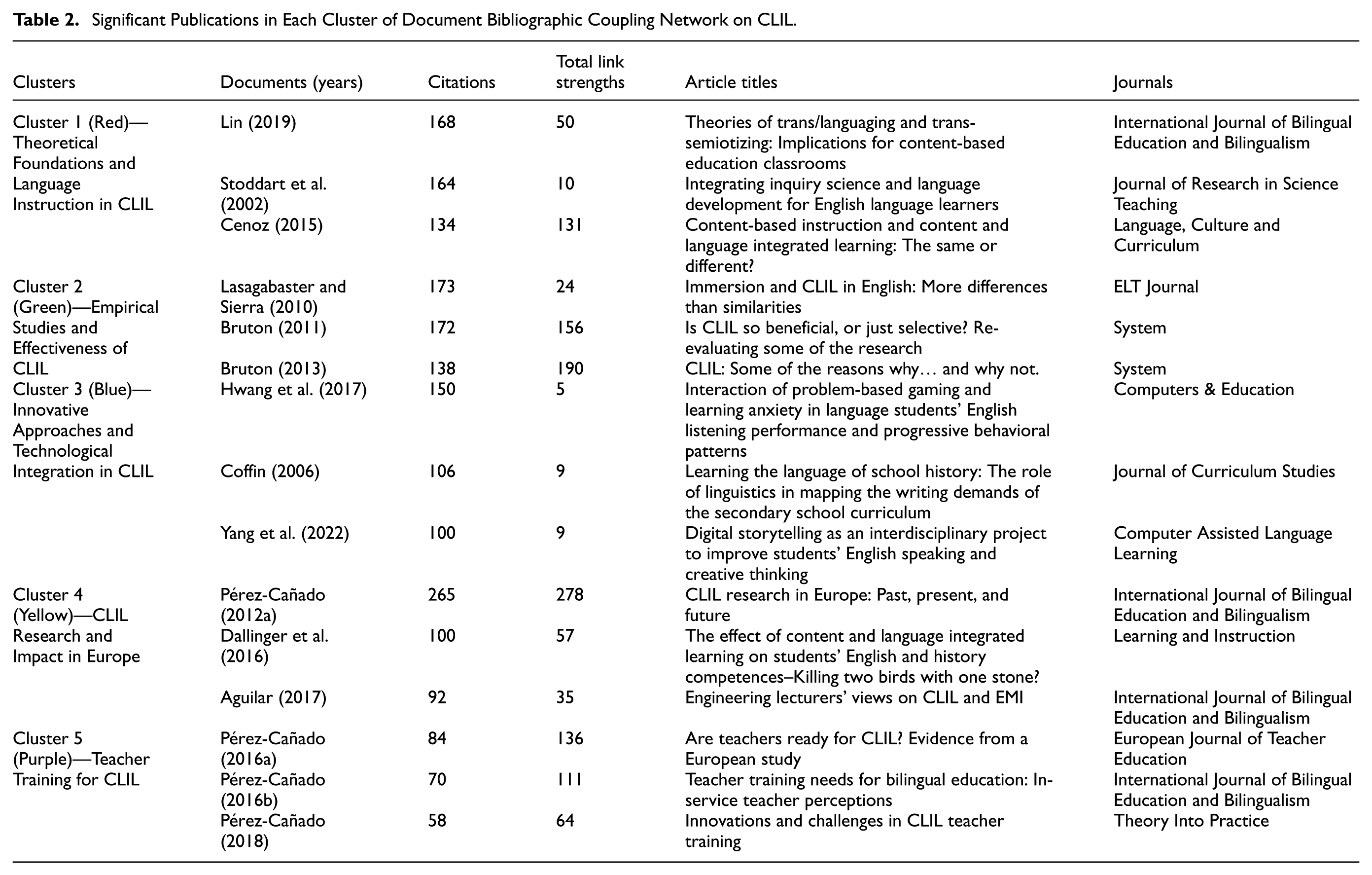
Cluster 1 focuses on theoretical perspectives in CLIL, such as translanguaging and content-based education. Key works in this cluster include Lin (2019), Stoddart et al. (2002), and Cenoz (2015), indicating that these works have strongly influenced research on the theoretical foundations of CLIL, particularly related to language acquisition and content integration.
Cluster 2 tends to mention empirical studies and the effectiveness of CLIL. Bruton (2011, 2013) and Lasagabaster and Sierra (2010) emphasize that CLIL’s success is context dependent. Bruton (2011) discusses how CLIL may not be equally effective across all educational settings, mainly when teacher preparation or language proficiency is inadequate. Lasagabaster and Sierra emphasize the distinction between immersion and CLIL, suggesting that CLIL’s success may depend on the context in which it is implemented, including the content being taught, students’ language level, and the learning environment.
Cluster 3 explores innovative approaches and technological integration within CLIL. Hwang et al. (2017) and Yang et al. (2022) emphasize interactive learning and language development through methods such as problem-based gaming, which reduces learning anxiety and improves English listening skills, and digital storytelling, which enhances English speaking abilities and creative thinking. In contrast, Coffin (2006) examines the linguistic demands of subject content, particularly in disciplines requiring specialized vocabulary and discourse structures, such as history. Collectively, these works provide a comprehensive perspective on how CLIL can advance language learning through both content integration and methodological innovation.
Cluster 4 focuses on CLIL research and its impact in Europe, as evidenced by the works of Pérez-Cañado (2012a), Dallinger et al. (2016), and Aguilar (2017). This cluster investigates the historical development, current state, and future directions of CLIL, as well as its effects on students’ skills in disciplines such as history and language.
Cluster 5 addresses teacher training and preparedness for CLIL, highlighting the challenges that educators encounter. The works of Pérez-Cañado (2016a, 2016b, 2018) underscore the necessity of professional development and the persistent challenges present in CLIL teacher education.
Reference Co-citations (Research Question 3)
The analysis was performed using the “full counting” method, with “cited references” as the unit of analysis. A citation threshold of 20 was set, and 52 cited references met this criterion. The total co-citation link strength between these references was calculated, and the highest-strength links were selected for further analysis. Figure 6 illustrates three color-coded clusters. Based on the reference co-citation network, several key documents are strongly interconnected, indicating their centrality in CLIL and related educational research, such as the works of Coyle (2007), Dalton-Puffer (2011), Dalton-Puffer and Smit (2013), and Lasagabaster (2011) form a dense cluster, reflecting their significant contributions to the development of CLIL, particularly regarding content and language integration. These documents are frequently co-cited, showing their foundational bases in shaping the theoretical and practical understanding of CLIL in bilingual and multilingual educational settings.
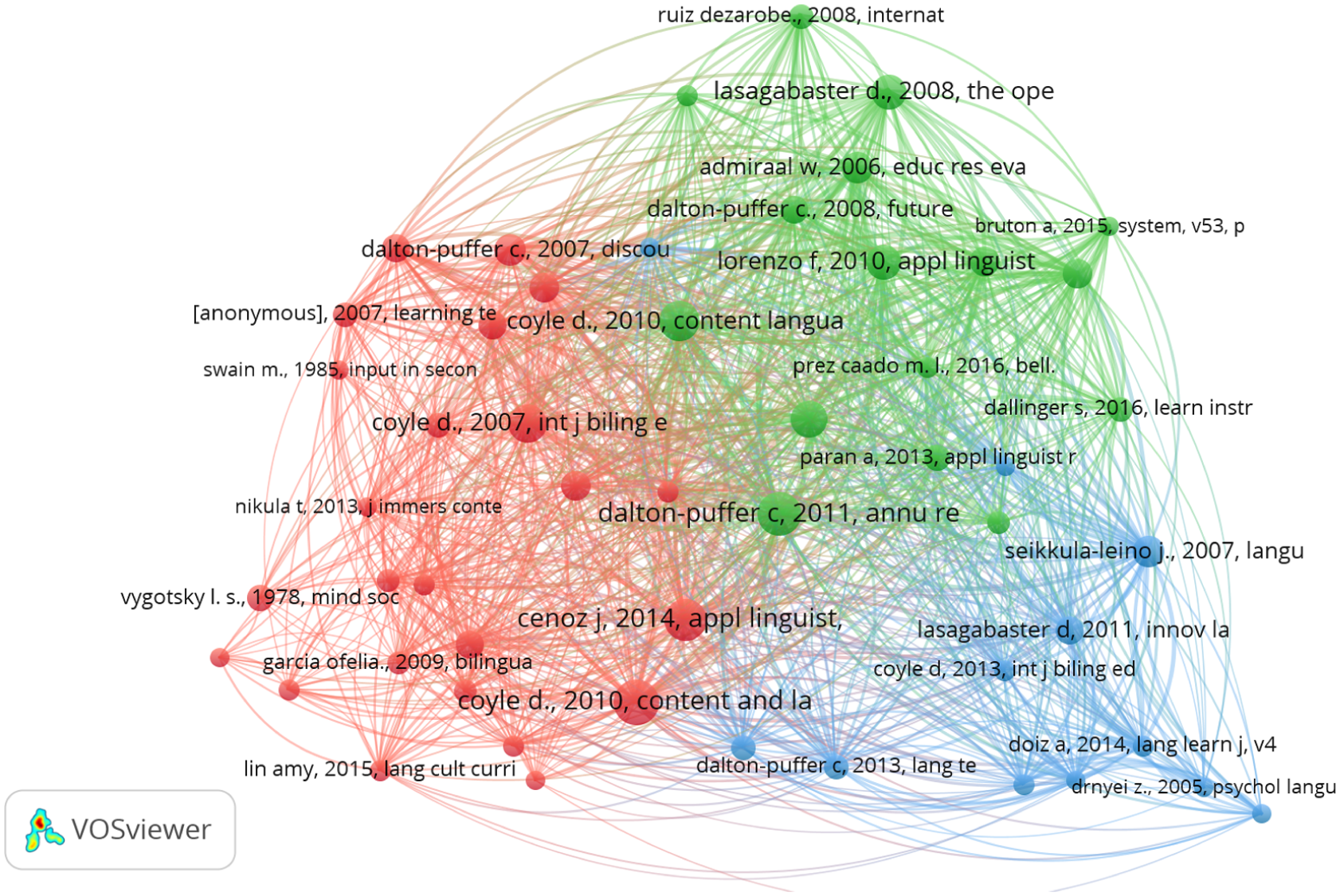
The reference co-citation network of CLIL.
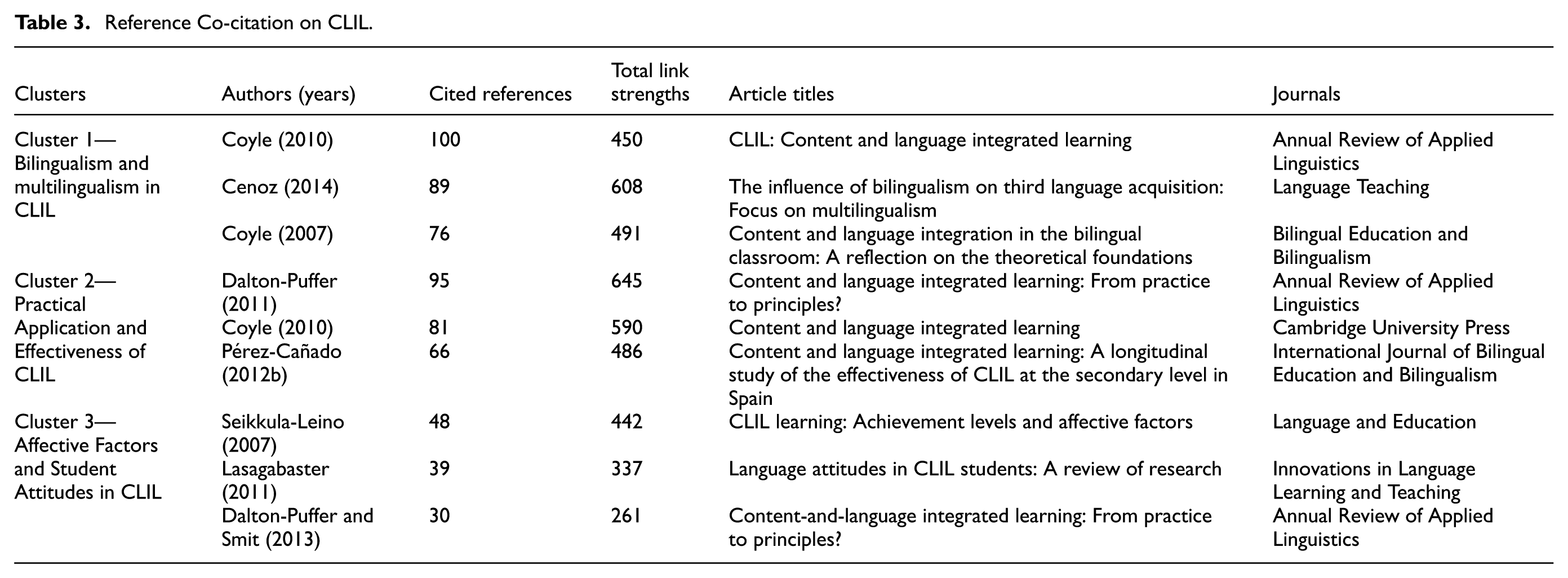
Table 3 details the results shown in Figure 6, including the authors and their cited references, total link strengths, and cluster formation. Additionally, the article titles of the three top influential authors are also provided.
Reference Co-citation on CLIL.
Discussion
Regarding the first research question, our study revealed that CLIL research has grown significantly since its introduction, with a noticeable phase of growth from 2006 to 2020, consistent with trends identified in previous work (Hidalgo & Ortega-Sánchez, 2023; Yegizbayeva et al., 2025). Nonetheless, our study also shows an increase in research interest in non-European contexts in 2024 to 2025, driven by the growing interest in global bilingual education programs. The publication trend reflects the natural evolution of CLIL from its early theoretical foundations, with influential works by Harklau (1994) and Stoddart et al. (2002), to broad adoption and practical application in the growth stage, where scholars like Pérez-Cañado (2012a) and Lasagabaster and Sierra (2010) contributed to the expansion of CLIL in Europe. This was followed by a period of maturity focusing on innovative methodologies and teacher training, as seen in the works of Lin (2019) and Hwang et al. (2017), who emphasized translanguaging and problem-based learning in CLIL classrooms. The most recent decline in publications may signal a shift toward specialized, technology-enhanced, or niche topics within the CLIL field, such as those explored by Wen (2021) and Yang et al. (2022), who incorporated augmented reality and digital storytelling into language learning.
Regarding the second research question, keyword co-occurrence analysis identifies relationships between terms by examining how frequently they co-occur in each context, helping uncover underlying patterns and themes within the data. In this current analysis, there are three main themes within CLIL: Language and Teaching, Student-Centric Education, and Motivational Aspects. The term “language” appears 106 times, and “CLIL” has the highest frequency of 196 occurrences, underscoring the CLIL approach’s centrality in language and teaching. Second, the Student-Centric Education focus is evident, as the terms “students” (70 occurrences) and “education” (82 occurrences) underscore a strong emphasis on student-centered educational frameworks and instructional strategies. Lastly, Motivational Aspects are also highlighted, albeit with less frequency. The term “motivation” appears 35 times, underscoring its importance for understanding what drives students to engage in language learning, particularly in CLIL contexts. These three themes reflect CLIL as the dominant approach favored in many countries (Bower et al., 2020; Dixon, 2003; Gill, 2014; National Development Council, 2018). At the same time, methodology is seen as an interesting theme in CLIL, as emphasized by Roberts (1995), who recommended various bilingual models to enhance academic performance among bilingual students. Also, motivation is another important theme to consider in CLIL (British Council, 2017).
Regarding the third research question, in bibliometric coupling, we look at linked documents because they share references. The stronger the link, the closely related the two documents are in the references they use. By analyzing the content of these documents, we can interpret how they connect and the significance of those connections in the context of CLIL research. Pérez-Cañado (2012a). CLIL research in Europe is important for understanding CLIL’s evolution and future directions in European education systems. Its high link strength indicates that this work is widely integrated into CLIL-related studies, especially those examining the long-term effects and policy implications of CLIL across Europe. Bruton (2011), with its high link strength, indicates its significant role in the critical discussions of CLIL’s pros and cons, especially its selectivity and context-dependent success. Cenoz (2015) suggests that the link strength here is widely referenced in studies comparing CLIL to other content-and-language learning models. This contributes to debates about theoretical similarities and differences between CBI and CLIL. Hwang et al.’s (2017) document explores problem-based gaming and its effect on language learning anxiety and listening performance in language students. Its interdisciplinary approach to CLIL, incorporating gaming as an educational tool, suggests it influences innovative methodologies and could be a key resource for researchers looking into interactive, technology-based learning within CLIL. Yang et al. (2022) explored the use of digital storytelling to enhance English speaking skills and foster creative thinking through CLIL. This work focuses on innovation through digital storytelling, suggesting a shift toward integrating technology into CLIL classrooms.
In addition, reference co-citation examines the relationships between documents based on how frequently they are cited together. Documents that share references are considered linked with the strength of their connection measured by the number of co-citations. This method helps identify the interconnections between key research works and reveals the dominant themes in a particular field, in this case, CLIL. Coyle’s (2010) work is central to CLIL research. Its citations and link strength highlight its significant role in establishing CLIL as a pedagogical framework that bridges language acquisition and content learning. Cenoz (2014) explored the relationship between bilingualism and third-language acquisition. The high total link strength suggests that this document is significantly integrated into discussions of CLIL’s role in multilingual education, suggesting that multilingualism enhances the effectiveness of CLIL in fostering language development. Coyle (2007) reflected on the theoretical foundations of CLIL, which have provided valuable insights into how CLIL operates in bilingual classrooms and connect it to broader bilingual education frameworks.
Dalton-Puffer (2011) is a key document in bridging the theoretical and practical aspects of CLIL. It examined how CLIL is applied in classrooms and the connection between CLIL’s principles and actual teaching practices. Its high link strength indicates that this work is foundational for understanding how CLIL functions in real-world educational settings. Coyle (2010) also emphasized practical methods for integrating language and content in classrooms. The strength of the link indicates its widespread use in practical CLIL research. Pérez-Cañado (2012b) provided an empirical study on the effectiveness of CLIL at the secondary level in Spain, asking for more empirical evidence of CLIL’s long-term impact on students’ learning outcomes.
Finally, Seikkula-Leino’s (2007) document examined achievement levels and affective factors in CLIL learning, focusing on how emotional and motivational factors influence student performance. Although it has fewer citations than other CLIL documents, its strong link strength indicates its influence on CLIL research and its impact on student success through affective engagement. Lasagabaster (2011) investigated language attitudes in CLIL students and how these attitudes can shape students’ success in language acquisition. Despite having a lower citation count, the link strength highlights its importance in discussions of the role of student perceptions in CLIL success. Although not as frequently cited, Dalton-Puffer and Smit’s (2013) document adds value by emphasizing the connection between student motivation and teacher beliefs in CLIL practices and suggesting factors that may affect CLIL implementation.
As seen, Pérez-Cañado (2012a) and Bruton (2011) significantly influenced the field with their early theoretical and empirical contributions to CLIL. However, our analysis also identified newer contributions from authors such as Yang et al. (2022) and Wen (2021), who explored digital storytelling and augmented reality in CLIL classrooms, reflecting the growing integration of technology into language and content teaching.
Compared with previous review work, this study has provided a broader range of results for CLIL. Yegizbayeva et al. (2025) and Hidalgo and Ortega-Sánchez (2023) provided insights into CLIL development. However, their research goals are restricted to authors, journals, and countries, scopes, and timeframes. For example, Yegizbayeva et al. (2025) examined CLIL for primary education (2007–2023), so it is limited to a broader, historical development of CLIL research across different educational stages and regions, such as having provided earlier foundational research or shifts in the theoretical landscape over the past few decades, as seen in this current one. Hidalgo and Ortega-Sánchez (2023) conducted a systematic review of the pedagogical effectiveness of CLIL, focusing on bilingual classrooms and their impact on language acquisition and content learning, particularly in the Spanish context. However, it did not delve into the most updated CLIL research or how trends have shifted over time. This review presented key global milestones (e.g., the rise of digital tools and translanguaging in CLIL classrooms), which previous reviews did not address in depth.
Implications
The findings yield several theoretical implications. First, CLIL should be conceptualized as an integrative approach to content and language learning rather than as a language-dominant pedagogy. Second, CLIL theory should incorporate an additive bilingualism perspective (Cenoz & Genesee, 1998). Third, theoretical models of CLIL must explicitly address contextual variation in relation to pedagogical innovation and adaptation. Fourth, given the inclusivity of the translanguaging approach, it should be established as a core theoretical principle in inclusive CLIL education (García & Lin, 2017).
Several practical recommendations emerge from the study. First, translanguaging practices should be systematically integrated, particularly in early CLIL education. Second, CLIL lesson design should be informed by established pedagogical frameworks such as the 4Cs (Coyle, 2007). Third, digital tools, such as DST should be purposefully aligned with CLIL pedagogical objectives to enhance program effectiveness (Wen, 2021; Yang et al., 2022). Fourth, the evaluation of CLIL program effectiveness should extend beyond symbolic bilingual labels. Fifth, CLIL teachers require targeted professional development to scaffold content learning, manage multilingual classrooms, and adapt language use according to learners’ proficiency levels. Sixth, at higher educational levels, increased use of the target language is appropriate, but content-specific language support courses should be available for students who experience difficulties. Finally, policymakers should ensure that students attain functional bilingual or multilingual competence before claiming program effectiveness.
Limitations
This review presents several limitations. While the WoS is a reputable and reliable repository of peer-reviewed articles, exclusive reliance on this platform may omit relevant research available in other databases (C. C. Hsieh et al., 2023a; C. C. Hsieh & Li, 2024). To strengthen future research, studies should consider incorporating additional databases such as Scopus, EBSCO, and ERIC, and employ supplementary analyses, including co-authorship and full-text analysis. The exclusion of books and other types of publication may also narrow the literature scope, potentially omitting influential works that provide broader theoretical frameworks, historical context, or comprehensive analyses not typically present in journal articles. Moreover, the selection of thresholds for keyword co-occurrence, reference co-citation, and document bibliographic coupling (e.g., minimum citation or occurrence thresholds) can substantially influence the findings (Martínez-López et al., 2018). Employing VOSviewer in conjunction with other analytical tools, such as HistCite and Sci2, may further enhance the bibliometric analysis and illuminate the intellectual development within CLIL research. Additionally, the analysis may overlook significant trends due to the time lag in citation accumulation, particularly for more recent publications. Finally, restricting the review to articles published in English may limit the representation of non-English studies, thereby affecting the global comprehensiveness of the analysis.
Conclusion
Over the past two decades, research on CLIL has grown significantly. This result well reflects its critical role in the integrating world; primarily, its implementation has been influenced by political and educational strategies in many countries. The review has revealed an increase in publications, with key contributions from scholars such as Coyle, Dalton-Puffer, and Pérez-Cañado helping to establish theoretical and practical foundations. Thematic trends point to an evolving focus—from foundational models and bilingual education to newer interests in student engagement, translanguaging, and digital tools in the classroom. Seminal works have shaped how CLIL is implemented in different regions and raised important questions about teacher preparedness, assessment, and equity in language learning. As the field continues to mature, future research will benefit from cross-contextual studies and innovations that bridge language learning with meaningful content delivery.
Footnotes
Acknowledgements
We gratefully acknowledge the support of the time and facilities provided by Tra Vinh University (TVU) for this study.

Ethical Considerations
There are no human participants in this article and informed consent is not required. The research used the public data collected from Web of Science.
Author Contributions
All authors contributed to the study conception and design. Material preparation, data collection and analysis were performed by Khau Hoang Anh and Nguyen Thi Phuong Nam. The first draft of the manuscript was written by Khau Hoang Anh and both authors commented on previous versions of the manuscript. Then, both read and approved of the final manuscript.
Funding
The authors received no financial support for the research, authorship, and/or publication of this article.
Declaration of Conflicting Interests
The authors declared no potential conflicts of interest with respect to the research, authorship, and/or publication of this article.
Data Availability Statement
The data supporting the findings of this study are available on request from the corresponding author.*