




Abstract
In the fourth quarter of 2025, a press release announced the approval of the eighth small interfering RNA (siRNA)-based therapeutic. Redemplo (plozasiran), developed by Arrowhead Pharmaceuticals, is the third oligonucleotide-based medicine approved for the treatment of patients with familial chylomicronemia syndrome targeting apolipoprotein C-III. This approval represents the seventh approved siRNA drug based on GalNAc-mediated hepatocyte delivery and introduces the third distinct flavor of this delivery architecture to the clinic.
Familial Chylomicronemia Syndrome and Apolipoprotein C-III
Familial chylomicronemia syndrome (FCS) is a rare genetic disorder affecting approximately 1–2 individuals per million worldwide, including an estimated 6,500 individuals in the United States. 2 FCS is an inherited condition most commonly caused by loss-of-function mutations in the lipoprotein lipase (LPL) gene, which is essential for the clearance of triglyceride-rich lipoproteins from the bloodstream.3,4 In addition to LPL mutations, pathogenic variants can also occur in related genes, such as APOA5, APOC2, LMF1, or GPIHBP1, which are required for normal LPL activity and can produce a similar clinical phenotype. 5 As a result of impaired triglyceride metabolism, circulating triglyceride levels can rise to 10–100 times above normal. 2 Although strict dietary management may partially control the disease, patients frequently experience recurrent episodes of acute pancreatitis caused by triglyceride accumulation, which can be severe and life-threatening.6,7
Apolipoprotein C-III (APOC3) was first recognized as a regulator of triglyceride metabolism in the early 1970s, when Brown and Baginsky demonstrated that APOC3 inhibits LPL, thereby impairing clearance of triglyceride-rich lipoproteins. 8 Subsequent studies by Havel and colleagues showed that APOC3 also delays hepatic uptake of triglyceride-rich remnants, contributing to hypertriglyceridemia. 9 Decades later, large-scale human genetic analyses confirmed the causal role of APOC3 in lipid metabolism and cardiovascular disease, demonstrating that individuals carrying loss-of-function mutations in APOC3 have markedly lower triglyceride levels and reduced risk of ischemic cardiovascular disease. 10 These combined mechanistic and genetic findings established APOC3 as a compelling therapeutic target.
Redemplo is a hepatocyte-targeted small interfering RNA (siRNA) designed to silence APOC3 mRNA via RNA interference (Fig. 1). 1 By reducing APOC3 expression, LPL-mediated triglyceride clearance is enhanced, lowering circulating triglyceride levels. This is consistent with human genetic data showing favorable metabolic profiles in individuals with reduced APOC3 activity. While Redemplo is currently approved only for FCS, its mechanism suggests potential benefit in broader forms of hypertriglyceridemia; however, clinical efficacy in these populations remains to be established, and insurance coverage for off-label use is uncertain.
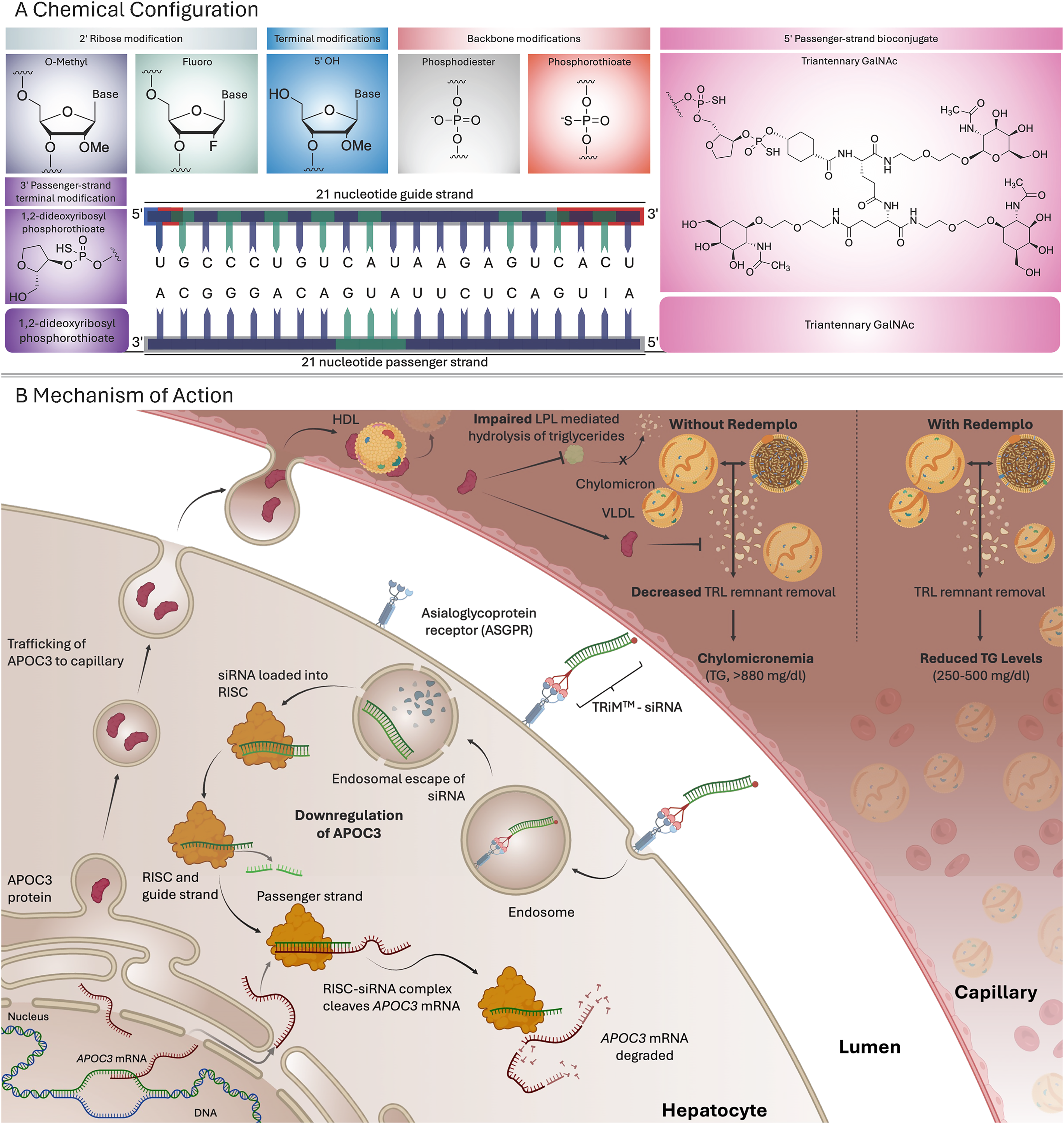
Chemical structure and mechanism of action of Redemplo (plozasiran).
APOC3-Targeting Oligonucleotides
Redemplo is the first siRNA and the third oligonucleotide therapeutic approved to target APOC3, following two antisense oligonucleotides developed for the same indication. Waylivra (approved by EMA in 2019 but not in the United States due to safety concerns), an early-generation antisense oligonucleotide, is administered weekly via subcutaneous injection (approximately 285 mg weekly) and is associated with frequent injection-site reactions and clinically significant thrombocytopenia, necessitating regular platelet monitoring. 11 Tryngolza (approved in the United States in December 2023) is a next-generation antisense oligonucleotide with GalNAc conjugation, enabling less frequent dosing, typically 50–80 mg monthly, and shows a decreased but still present risk of platelet reductions and injection-site reactions. 12 Redemplo (approved in November 2025) is a GalNAc-conjugated siRNA administered at a low dose of 25 mg once every 3 months, offering greater convenience for patients. 13 It is generally associated with milder side effects, such as injection-site reactions, headache, and metabolic effects, with no prominent platelet liability reported to date.13,14 While currently available data suggest improved potency and safety for siRNA compared with antisense oligonucleotides targeting APOC3, real-world clinical experience will be required to more clearly define a class hierarchy for this target and indication.
Many of the foundational intellectual property barriers surrounding siRNA and ASO technologies have expired; however, this development is independent of the recent acceleration in clinical timelines. Rather, the shortening of development timelines is primarily driven by a deeper understanding of oligonucleotide design, improved chemistry, better delivery platforms, and more predictive clinical readouts. The first clinical studies of Waylivra were initiated in the early 2000s (with results published in 2013 15 ), and it ultimately took more than a decade to achieve partial regulatory approval. In contrast, contemporary programs benefit from accumulated mechanistic insight and validated regulatory pathways, enabling more efficient clinical development. As comparative data across oligonucleotide classes in hepatocyte-directed indications continue to emerge, it remains to be seen whether both modalities will be advanced in parallel for additional liver-targeted diseases. In fact, recent publications from Ionis show extensive chemical optimization of siRNA leads against ApoC3, moving away from the company’s decades-long commitment to antisense and potentially signaling a broader shift in the field. 16
GalNAc-Conjugated siRNA Therapeutics Realizing the Promise of the Informational Drug Concept
All currently approved siRNA therapies target the liver, with seven based on a shared technological concept that uses multivalent GalNAc conjugation and extensively chemically stabilized siRNAs to enable efficient delivery to hepatocytes. Although the 2018 approval of Onpattro (patisiran) marked a major clinical milestone for siRNA medicines, subsequent experience demonstrated that fully stabilized GalNAc-conjugated siRNAs provide superior liver delivery and durability. This is reflected in the more recent approval of Amvuttra (vutrisiran), which has replaced Onpattro for targeting transthyretin in the treatment of transthyretin amyloidosis. 17
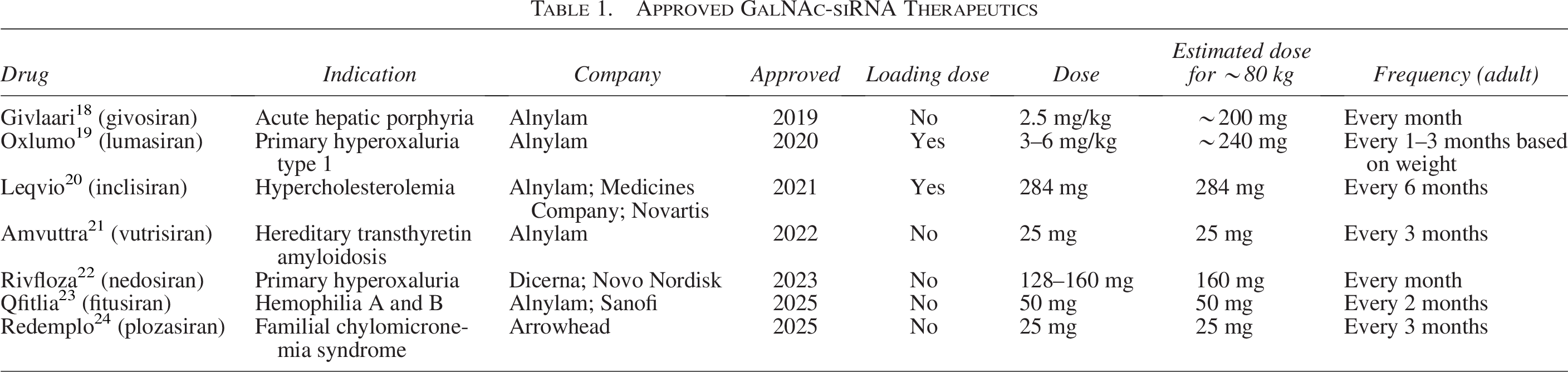
Table 1 summarizes dosing recommendations for currently approved GalNAc-conjugated siRNA therapeutics, including loading requirements, dose ranges, and frequency. Earlier drugs, as well as those with pediatric indications such as Oxlumo, use weight-based dosing expressed as mg per kg, sometimes with different recommendations across weight ranges. 19 To enable cross-drug comparison, the table also estimates doses for an 80 kg patient, used here as an approximation of the average adult body weight in the United States. Across approved siRNAs, estimated doses range from approximately 25–284 mg, with dosing frequencies spanning monthly to twice yearly, and quarterly administration being the most common. Redemplo falls on the more potent and longer-lasting end of this spectrum, requiring 25 mg quarterly administration in conjunction with dietary management.
Approved GalNAc-siRNA Therapeutics
Different Approved GalNAc-Conjugate Chemical Flavors
There are currently three distinct GalNAc chemical architectures represented among approved siRNA therapeutics: GalNAc-ESC (Alnylam), TRiMTM (Arrowhead), and GalXCTM (Dicerna, now Novo Nordisk; also used in some Eli Lilly programs). Figure 2 illustrates the exact chemical architectures that represent these three GalNAc “flavors.”
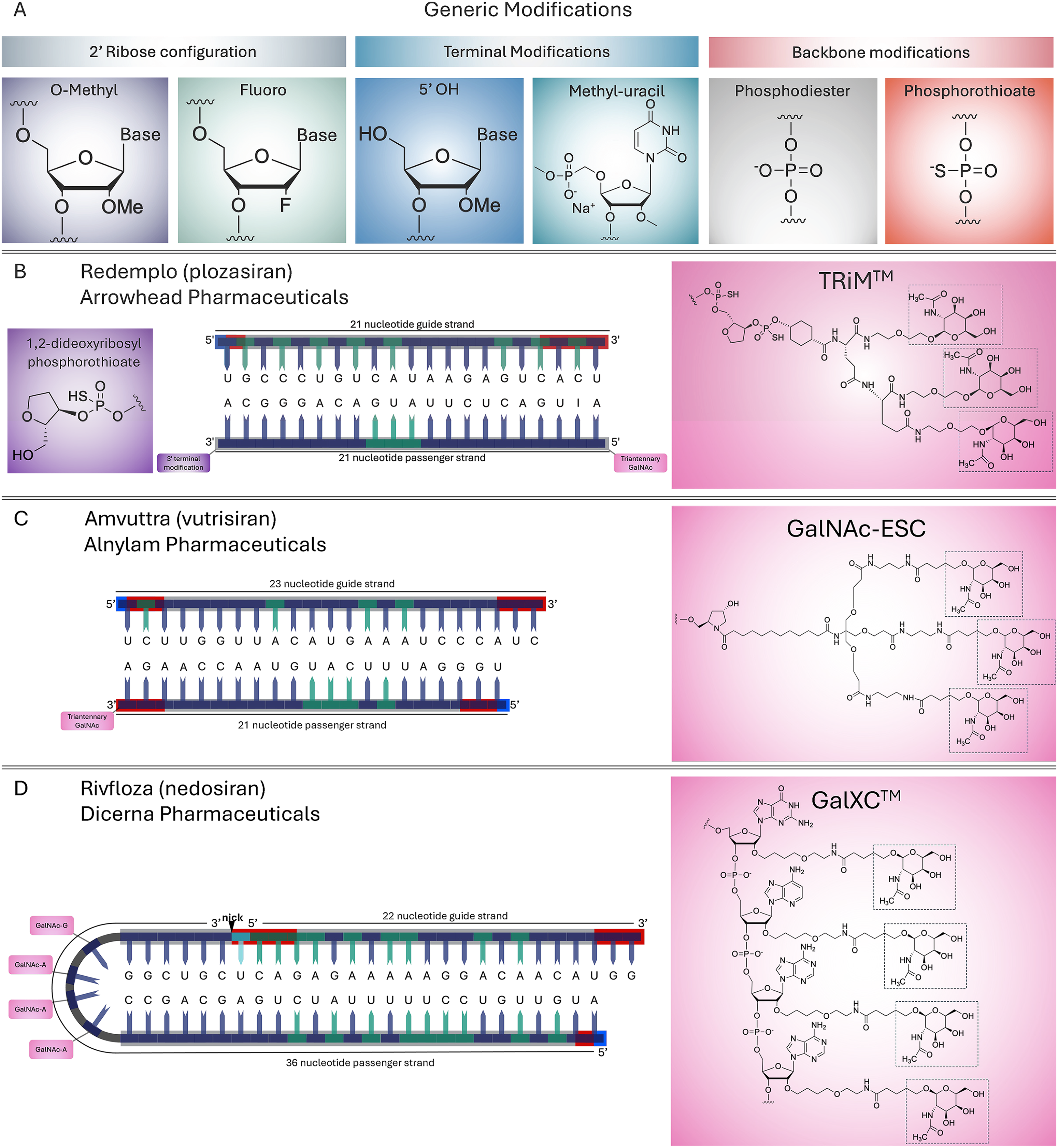
Varying chemical “flavors” of the three main GalNAc-siRNA platforms: TRiMTM, GalNAc-ESC, and GalXCTM.
Despite their differences, these platforms share several core features. All use a double-stranded siRNA composed of passenger and guide strands in which essentially all ribose units are modified with combinations of 2′-O-methyl and 2′-fluoro substitutions. All employ multivalent GalNAc conjugation for hepatocyte targeting and include phosphorothioate linkages at terminal positions to provide exonuclease stability (ranging in numbers from one to three, with two to four termini modified). The number and placement of GalNAc units differ: three GalNAc residues are attached at the end of the siRNA strands in Amvuttra (GalNAc-ESC) and Redemplo (TRiMTM) platforms (3′ for Amvuttra and 5′ for Redemplo), whereas in the Rivfloza (GalXCTM) design, four GalNAc residues are integrated into nucleotides in an extended stable GAAA loop structure.21,22,24,25
Additional differences arise from the precise chemical modification patterns, including the positions and relative numbers of 2′-O-methyl and 2′-fluoro residues. Some commonalities appear to be driven by RNA-induced silencing complex (RISC) preferences, such as the presence of 2′-fluoro residues at specific positions of the guide strand (for example, positions 2 and 14). 26 The platforms also differ in duplex structure and size: Amvuttra employs a canonical 23/21 duplex, Redemplo uses a blunt 21/21 duplex, and Rivfloza utilizes a self-looped passenger strand with a separate 21-mer guide strand, reflecting the historical evolution of its technology from Dicer substrates.13,17,27
A major distinguishing feature is the structure of the 5′ phosphate on the guide strand. In Amvuttra and Redemplo, the 5′ end is left as a hydroxyl group, relying on intracellular phosphorylation for RISC loading. In contrast, Rivfloza introduced a unique architecture in which the phosphate is methylated and the phosphate linkage is formed through a rearranged carbon–oxygen connectivity to the sugar. 22 This design is expected to provide enhanced resistance to phosphatases, although detailed peer-reviewed mechanistic studies are still limited.
Redemplo also incorporates an additional moiety at the 3′ end of the passenger strand. This is rational, as 3′-end degradation can be substantial, specifically as Redemplo lacks stabilizing phosphorothioate backbones at this location. 28 In the GalNAc-ESC platform, GalNAc is conjugated to the 3′ end of the passenger strand with no additional 5′ moiety for protection.
While these architectures describe currently approved drugs, further evolution is evident from disclosed chemical compositions of named compounds in development. For example, within the Dicerna (GalXCTM) platform as further developed by Eli Lilly, some newer compounds include an additional hydroxyl associated with the methylated phosphate. 29 Novo Nordisk disclosures suggest that some newer designs are moving away from the hairpin precursor toward configurations that more closely resemble traditional Alnylam (GalNAc-ESC)-like architectures. 30 Conversely, newer Alnylam designs include two deoxy-T residues at the 3′ end of the guide strand, potentially enhancing stability during systemic distribution, as well as substitution of the 5′ phosphate with an (E)-vinylphosphonate, a metabolically stable phosphate analog locked in a preferred MID-domain binding conformation.30,31 This information is derived from the WHO-named drug databases, which are known to contain occasional errors and should therefore be interpreted with caution. In summary, Redemplo’s TRiMTM platform represents a distinct GalNAc “flavor” that performs on par with other platforms and is characterized by several unique features, including GalNAc conjugation at the 5′ end rather than the 3′ end of the passenger strand with additional 3′ end stabilization and the first fully blunt duplex architecture lacking overhangs, an aspect that was the subject of intense scientific debate early in the evolution of siRNA technology. 32
It remains unclear whether any single GalNAc architecture is inherently superior. Rather, clinical dose and dosing frequency are likely determined by a combination of factors, including siRNA sequence/site potency, the extent of chemical stabilization and resulting durability of effect, target mRNA expression levels, and the level of knockdown required to achieve clinical benefit.
Conclusions
The approval of Redemplo represents both an important therapeutic advance for patients with FCS and a broader milestone in the maturation of GalNAc-conjugated siRNA medicines. With seven GalNAc-siRNAs now approved, hepatocyte-targeted RNAi has emerged as a reliable platform capable of supporting multiple chemical architectures. Redemplo’s success highlights that while GalNAc-mediated delivery provides a unifying framework, meaningful chemical diversity exists beneath this shared strategy. As clinical experience continues to accumulate, subtle architectural differences may increasingly influence durability, dosing frequency, and therapeutic index. Redemplo, therefore, stands not only as Arrowhead’s first marketed RNAi medicine, but also as a clear example of how ongoing innovation in nucleic acid chemistry continues to shape the next generation of informational drugs.
Footnotes
Author Disclosure Statement
A.K. is a founder of Atalanta Therapeutics and Comanche Biopharma; serves on the Scientific Advisory Board of Aldena Therapeutics, Prime Medicine, Alltrna, Advirna and Evox Therapeutics. J.F.A. serves on the Scientific Advisory Board of Vect-Horus. A.K. and J.F.A. are advisors and hold financial interest in several early-stage RNA therapeutics companies. A.K., K.Y.G., and J.F.A. are listed as inventors on RNAi technology patents and patent applications.
Funding Information
No funding was received for this article.