




Abstract
The increasing aging population is driving the development of digital solutions to promote active and healthy aging. However, the adoption of these technologies depends on their alignment with users’ needs and expectations. One way to enhance the adoption of these solutions—including those incorporating interactive elements such as games—is to foster the active participation of older adults and other stakeholders in their development. Thus, the objective of this study was to adapt, through a stakeholder-driven co-design process, an institutional digital health platform to community-based use by independently living older adults, with a focus on promoting active and healthy aging. A qualitative study was conducted based on three co-design moments involving individuals aged 55 and older, nurses, and policymakers. During the co-design moments, participants explored the digital resource and proposed improvements. Data were analyzed using content analysis techniques. The co-design process explicitly addressed concepts of reuse and sustainability, focusing on how existing institutional digital resources could be adapted to meet the needs of older adults living independently. Participants emphasized accessibility, social interaction, and content individualization as key factors. The most frequently mentioned improvement suggestions included integrating physical activity features, individualized reminders, and a communication network. The adaptation of digital resources based on stakeholder suggestions reinforces the importance of active user involvement in developing solutions for health promotion and active aging. The study’s main contribution lies in demonstrating how institutional resources can be transformed into community-based digital health tools addressing the gap between institutional digital health innovation and real-world community implementation.
Introduction
The increasing longevity of the global population presents both challenges and opportunities for promoting older adults’ health and quality of life. The World Health Organization (WHO) identifies population aging as a major global priority, estimating that by 2030, one in six people worldwide will be aged 60 years or older. 1 In response, the WHO defines active and healthy aging as “the process of developing and maintaining the functional ability that enables well-being in older age.” 2 Functional ability encompasses multiple domains, including autonomy, decision making, mobility, social relationships, and participation in society, providing a comprehensive framework for interventions aimed at supporting aging in place.
Within this context, digital health resources have been increasingly explored as strategies to promote health, autonomy, and social participation among older adults.3,4 Digital platforms that incorporate interactive and game-based components have shown particular promise in fostering motivation, cognitive engagement, and social connection, which are key elements of well-being in later life. 5 However, the effectiveness of these resources depends not only on their technological features but also on their alignment with older adults’ capabilities, preferences, and everyday living contexts.
To address this challenge, co-design approaches have gained prominence in digital health research. Co-design emphasizes the active involvement of end users and other stakeholders in shaping digital solutions, with the aim of improving accessibility, acceptability, and relevance for diverse aging populations. 6 Studies involving older adults in participatory design processes have demonstrated benefits in the development of digital tools that support self-care and aging in place, while also highlighting methodological and ethical challenges that require structured facilitation.7–9
Despite their potential, the adoption of digital health technologies by older adults remains uneven. Evidence consistently points to barriers related to usability, contextual fit, and acceptability, which limit sustained engagement.4,10 Importantly, many digital health technologies targeting older adults are originally designed and implemented in institutional or semi-institutional contexts, such as long-term care facilities or organized programs, where use is supported by professionals, structured routines, and predefined organizational infrastructures.4,7,8 When these technologies are transferred to community and home-based settings, this contextual support is no longer present, often resulting in a mismatch between design assumptions and the realities of independent daily use by older adults.7–10
This institutional-to-community transition frequently exposes unmet needs related to personalization, sustained motivation, reminders, opportunities for social interaction, and support for maintaining healthy routines. 7 While such needs may be less critical in institutional environments characterized by daily structure and professional supervision, they become central to successful engagement and sustained use in autonomous, community-based contexts. Addressing these challenges requires not only appropriate technological features but also structured processes that support the adaptation of existing digital resources to real-world living conditions.
Nola Pender’s Health Promotion Model provides a relevant theoretical framework for understanding how individuals adopt and maintain health-promoting behaviors. The model highlights the role of self-efficacy, prior experiences, and interpersonal influences in shaping engagement with health-related behaviors and tools. 11 Applying this framework to digital health interventions may help explain how adapted digital resources can support motivation, autonomy, and sustained engagement among older adults living in the community.
Although the use of co-design in digital health has increased, recent reviews indicate a persistent gap in the systematic adaptation of institutional digital platforms to support aging in place. 12 This gap is particularly relevant in public health contexts, where resource constraints often make the repurposing of existing tools more feasible and sustainable than the development of new technologies. By shifting the use of a digital platform from institutional to independent home settings, this study addresses an underexplored area of digital health research, where innovation has largely focused on usability in controlled environments.
While this study does not involve the development of a digital health technology from scratch, it results in a novel digital health solution achieved through the structured, stakeholder-driven adaptation and reconfiguration of an existing institutional platform for autonomous, community-based use by older adults. Accordingly, the objective of this study was to adapt, through a stakeholder-driven co-design process, an institutional digital health platform to community-based use by independently living older adults, with a focus on promoting active and healthy aging.
Methods
Study design
This study adopted a qualitative approach using co-design to adapt a digital resource previously used in institutional settings. Co-design was chosen as the methodological framework because it allows active participation from end users and other stakeholders in the adaptation of technological solutions to meet their needs and preferences. 13 This approach ensures that the development of the resource is user centered, improving its acceptance, impact, and overall effectiveness.9,10
The co-design was operationalized as a structured, three-phase process aimed at supporting the systematic adaptation of an existing digital health platform for community use. Each phase employed specific participatory techniques to elicit, refine, and prioritize stakeholder input. This approach ensured that adaptation decisions were directly informed by stakeholder priorities, consistent with established co-design principles emphasizing participation, iteration, and shared decision making.
Description of the existing digital resource
The Sioslife tablet solution 14 is a digital platform designed to promote active and healthy aging. Its features include cognitive stimulation—embedded serious games and interactive activities for memory training and user engagement; access to multimedia content—news, music, films, and cultural activities; and interaction with caregivers and health care professionals—support for well-being monitoring and communication with care teams.
Currently, this platform is implemented in institutional settings and is primarily used by institutionalized older adults. At the time this study was conducted, the Sioslife system had already reached more than 500 partners and over 16,000 users. 14 Thus, this study aimed to adapt this digital solution for community settings, ensuring its applicability and acceptance by individuals living independently in their own homes.
Participants
A purposive sampling strategy was used to select three groups of stakeholders with relevant expertise for the adaptation of the digital resource:
Procedures and co-design moments
This study was approved by the Ethics Committee of the Research Unit in Health Sciences: Nursing, at the Coimbra Nursing School (Approval No. P975_10_2023). The study followed the principles of the Declaration of Helsinki (as amended) and complied with data protection regulations. The GRIPP2 checklist 15 was followed for reporting. The level of co-design adopted in this study can be characterized as a collaborative and consultative approach focused on adaptation priorities, rather than full-cycle co-creation or prototyping. To clarify the level of co-design adopted, the process was structured in three participatory moments, corresponding, respectively, to the typical co-design phases of exploration, ideation, and prioritization. Although no prototyping or usability testing of a modified version was conducted, the iterative process allowed stakeholders to contribute directly to identifying and prioritizing adaptation needs.
In the first moment (Exploration phase), participants were introduced to the resource and then interacted autonomously with the existing digital platform for 30 minutes. Their reflections on usability and applicability were gathered through open feedback, spontaneous comments, and researcher field notes. The second moment (Ideation phase) consisted of a structured group discussion to identify perceived barriers and needs for home use. Suggestions were grouped into categories collaboratively, stimulating ideation based on lived experiences (from older adults) and clinical/policy perspectives (from nurses and policymakers). The third moment (Prioritization phase) involved reviewing the suggestions and organizing them using the MoSCoW technique (Must Have, Should Have, Could Have, Won’t Have). Within the co-design process, the MoSCoW technique functioned as a participatory decision-making tool, enabling stakeholders to collaboratively prioritize features based on perceived relevance and feasibility for community-based use.
No formal usability scales were used; instead, usability and applicability were assessed qualitatively, through thematic content analysis of participants’ perceptions and suggestions, following Bardin’s method and framed by Nola Pender’s Health Promotion Model. 11 This approach enabled us to interpret stakeholder feedback based on self-efficacy, motivation, and social influences.
These three co-design moments were conducted in a face-to-face setting and organized as follows:
Introduction to the study and its objectives. Demonstration of the current features of the digital resource, focusing on its use in institutional settings. Participants explored the digital resource autonomously for 30 minutes, recording initial perceptions regarding its usability and applicability in home settings. First impressions, identified barriers, and spontaneous suggestions were documented.
Guided discussion on the suitability of the digital resource for daily use by individuals living at home. Identification of barriers to its adoption. Reflection on factors that facilitate or hinder the adoption of digital technologies by individuals aged 55 and older. Organization of suggestions into thematic categories to guide the adaptation process.
Presentation of the key suggestions collected in the previous moment. Proposal of adjustments to the interface, structure, and content, considering different user profiles.
Data analysis
The collected data were analyzed using Bardin’s content analysis method, 16 following a deductive approach. The predefined categories were established according to Nola Pender’s Health Promotion Model, 11 which guided the coding and interpretation of participants’ contributions regarding the adaptation of the digital resource.
The analysis was supported by ATLAS.ti software. To ensure the reliability of the coding process, two researchers independently coded the full dataset. Intercoder agreement was achieved through iterative comparison and consensus discussions. Discrepancies were discussed collaboratively, and validation was performed jointly to ensure consistency with the theoretical model and fidelity to participants’ perspectives.
The study adhered to the principles of reliability, credibility, confirmability, and transferability. 17 Reliability was ensured through detailed descriptions of the study context, participants, and methods; credibility was validated by confirming the content analysis results with four study participants; confirmability was verified by presenting the findings to two external experts in the field who were not involved in the study; and transferability was ensured through an external review by a researcher with experience in qualitative research and by comparing the findings with the existing literature.
Results
Participants’ sociodemographic profile is presented in Table 1.
Sociodemographic Characteristics of Participants
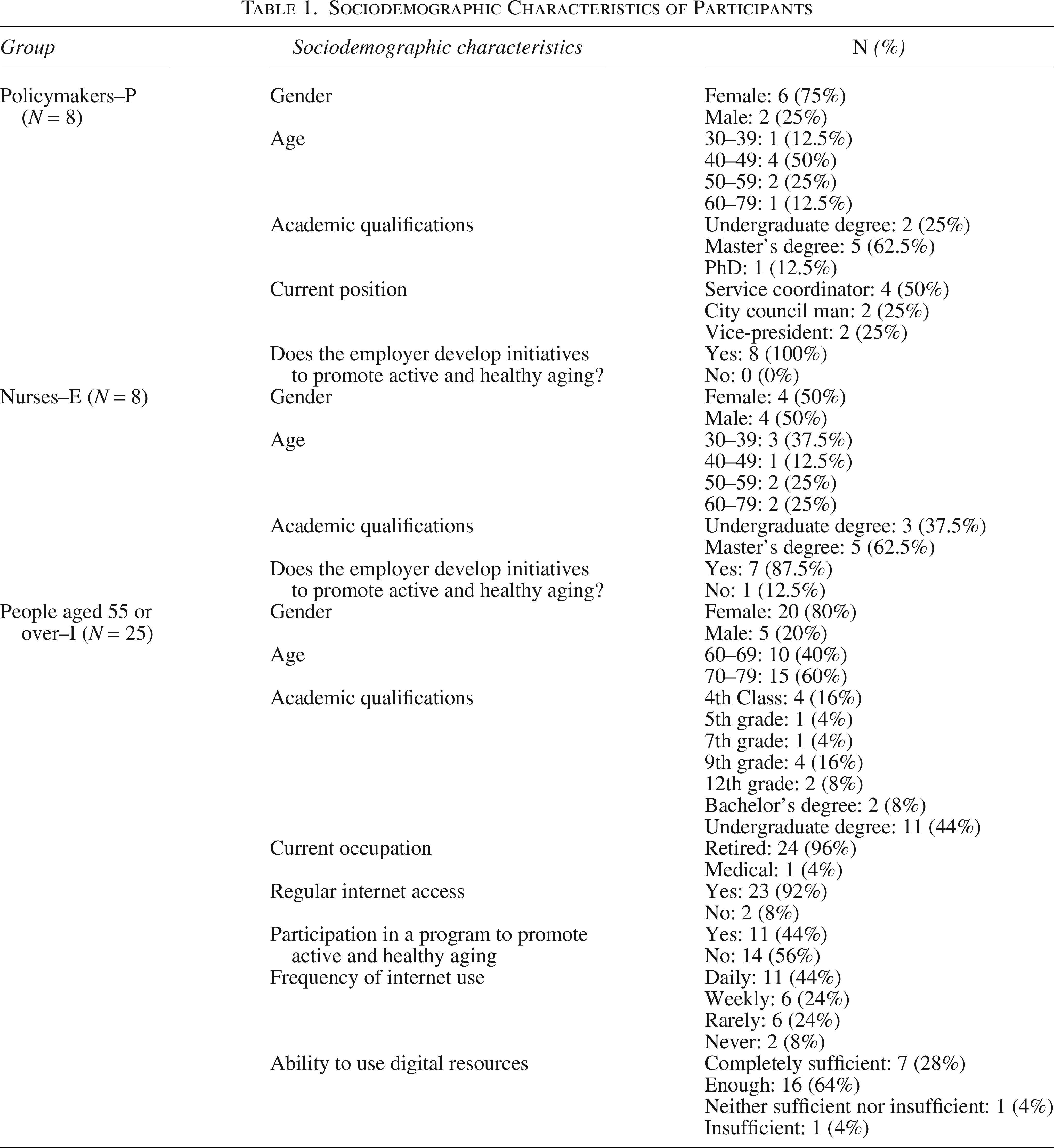
Policymakers (P; N = 8): Mostly female (75%), aged between 30 and 79 years. The majority held a master’s degree (62.5%), and all confirmed that their employing organizations implement active and healthy aging initiatives.
Nurses (E; N = 8): Equal gender distribution (50% female, 50% male). Most (87.5%) worked in organizations that promote projects related to active and healthy aging.
Individuals aged 55 and older (I; N = 25): Mostly female (80%), aged between 60 and 79 years. Educational backgrounds varied from fourth grade (16%) to a university degree (44%). The vast majority were retired (96%), and nearly all (92%) had regular internet access.
Based on data analysis, categories and subcategories were defined, as presented in Figure 1. Subsequently, we conducted an in-depth analysis of each category and subcategory, considering the recording units of each subcategory and the frequency and distribution of words. Additionally, word clouds were generated as a complementary tool to facilitate the visualization of lexical patterns and support data interpretation.

Categories and subcategories. Source: ATLAS.ti.
Analysis of the recording units corresponding to each subcategory and participant group
Initial impression of the digital resource
The analysis of the “Initial Impression” category identified three subcategories: “Accessibility,” “Promotes social interaction,” and “Individualization.” Stakeholders indicated that the presented digital resource could benefit individuals with limited accessibility, providing them with companionship or engagement opportunities. The findings suggest that the digital resource has the potential to serve as a tool to reduce loneliness. The ability to individualize activities and available content within the digital resource was also highlighted as a key feature. This individualization could support healthy lifestyle promotion and stimulate individual capabilities, allowing interventions to be tailored to each person’s specific needs and interests. Stakeholders also commented positively on the existence of interactive games, recognizing their potential to increase motivation, support cognitive activity, and provide a sense of enjoyment in daily routines.
Ease of use
The analysis of the “Ease of Use” category identified two main subcategories: “Intuitive” and “Useful Resource.” Stakeholders highlighted the ease of access, the intuitive nature of the resource, and its visually appealing design. They emphasized the importance of images and the organization of information in enhancing usability.
Suggestions
Most of the suggested features emerged from stakeholders’ recognition that the platform’s existing configuration, while adequate for institutional use, did not fully support independent use in home settings. In the absence of professional supervision and structured routines, participants emphasized the need for features that could sustain engagement, autonomy, and continuity of healthy behaviors.
The analysis of the “Suggestions” category identified eight subcategories: Audio, User Profile, Physical Activity Component, Continuity of Care, Interface, Reminders, Communication Network, Videos/Group Classes. Stakeholders provided recommendations for improving the existing digital resource. Notably, they proposed the inclusion of muscle-strengthening exercises and a communication network to facilitate social interaction, either through a chat function or group classes to encourage physical activity and social engagement. The importance of an event schedule and a health journal, allowing users to receive daily activity reminders, was also highlighted. Additionally, stakeholders valued and suggested the availability of educational resources focused on healthy lifestyles. Another key recommendation was the inclusion of a tutorial to facilitate resource use. Furthermore, stakeholders emphasized the need for contact with health care professionals to ensure continuity of care and proposed the availability of audio content as an additional accessibility feature.
Table 2 presents selected recording units corresponding to each subcategory and participant group.
Recording Units, Corresponding to Each Subcategory and Group of Participants
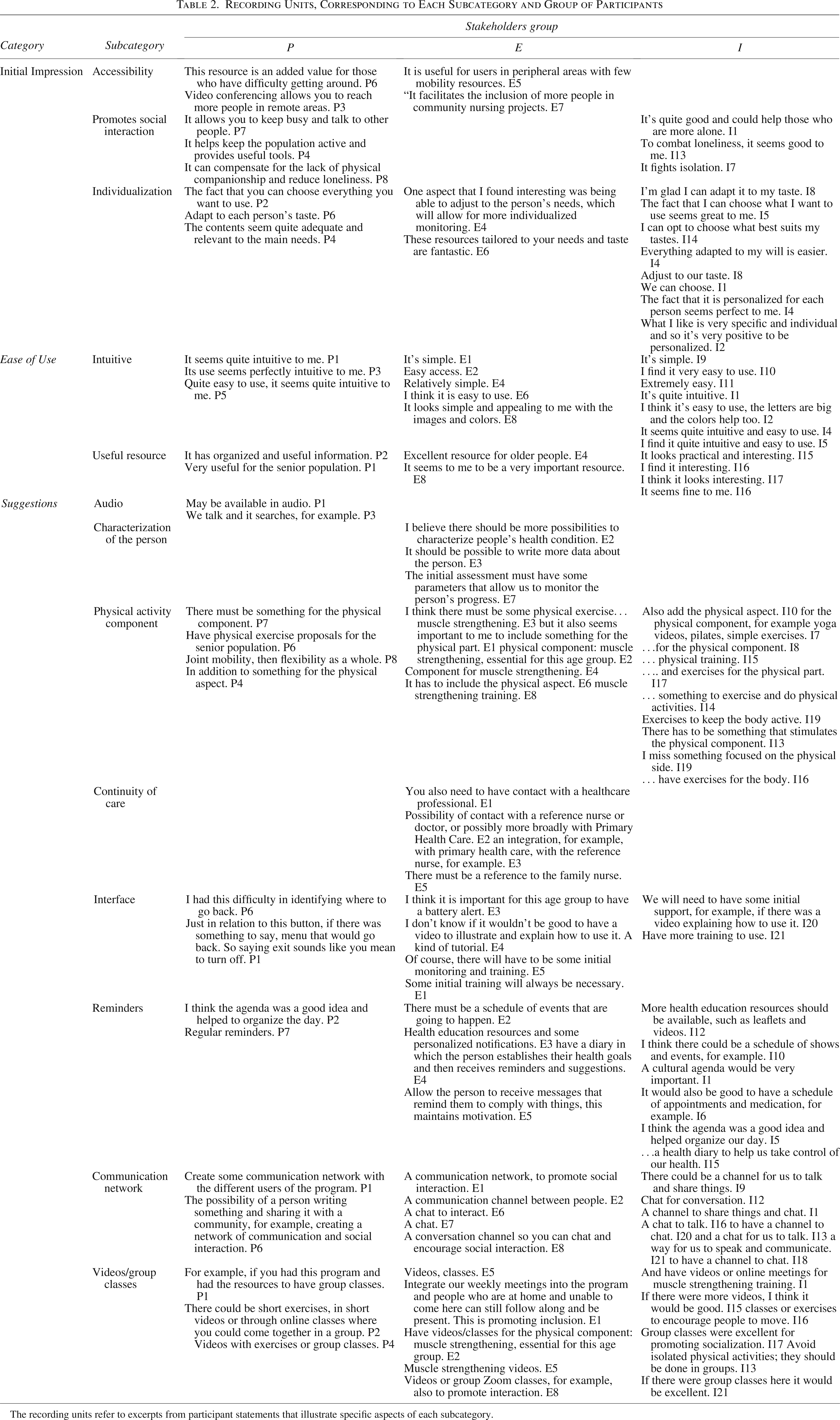
The recording units refer to excerpts from participant statements that illustrate specific aspects of each subcategory.
Frequency of subcategories
Initial impression of the digital resource
Regarding the frequency of subcategories, Table 3 shows that “Accessibility” was mentioned four times in total, with two references by policymakers and two by nurses. “Promotes social interaction” was mentioned six times in total, with three references by nurses and three by individuals aged 55 and older. “Individualization” was the most frequently mentioned subcategory, with 23 references in total—6 by policymakers, 6 by nurses, and 11 by individuals aged 55 and older.
Frequency of the Subcategories
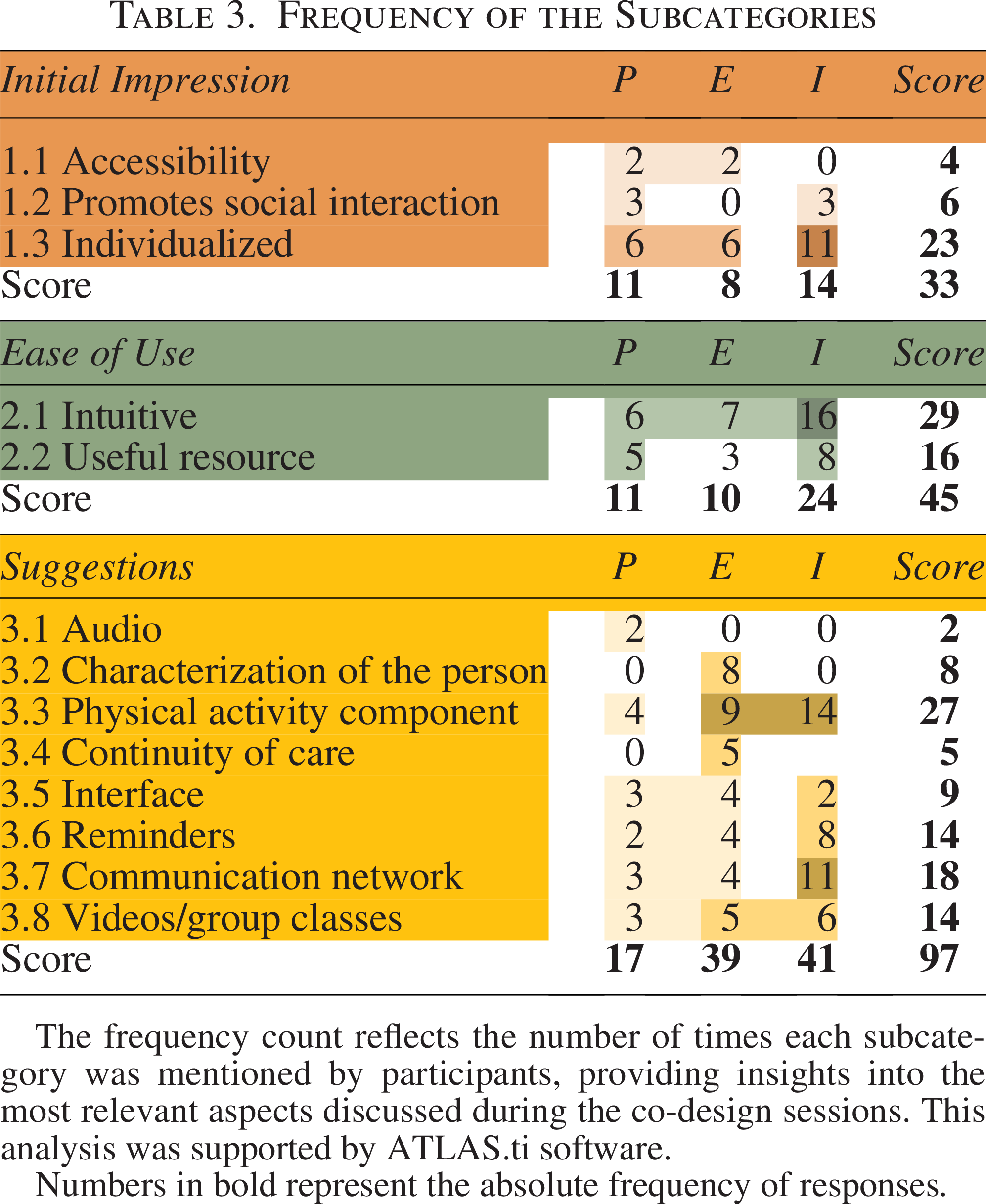
The frequency count reflects the number of times each subcategory was mentioned by participants, providing insights into the most relevant aspects discussed during the co-design sessions. This analysis was supported by ATLAS.ti software.
Numbers in bold represent the absolute frequency of responses.
This indicates that individualization and the diversity of available content are considered advantages by all stakeholders. It was the most frequently mentioned and valued aspect.
Ease of use
Regarding the frequency of subcategories, Table 3 shows that the “Intuitive” subcategory was mentioned 29 times in total, with 6 references from policymakers, 7 from nurses, and 16 from individuals aged 55 and older, while the “Useful resource” subcategory was mentioned 16 times in total, with 5 references from policymakers, 3 from nurses, and 8 from individuals aged 55 and older.
Suggestions
Regarding the frequency of subcategories, Table 3 highlights that the Physical Activity Component was the most frequently mentioned aspect, with 27 references in total—identified as a key priority by all stakeholder groups. Other highly cited subcategories included the Communication Network (18 mentions), emphasizing the importance of social interaction features, and the Reminders (14 mentions), reinforcing the need for scheduling tools and personalized notifications. These findings suggest that stakeholders prioritize features that promote engagement, connectivity, and support for maintaining healthy behaviors.
Word cloud about each category
The word cloud presented in Figure 2 visually represents the most frequently mentioned words across the three main categories identified in the content analysis: Initial Impression, Ease of Use, and Suggestions. This visualization was generated through frequency analysis of participants’ responses, highlighting the most emphasized aspects during the co-design moments. Larger words indicate higher frequency, reflecting key themes discussed by stakeholders.
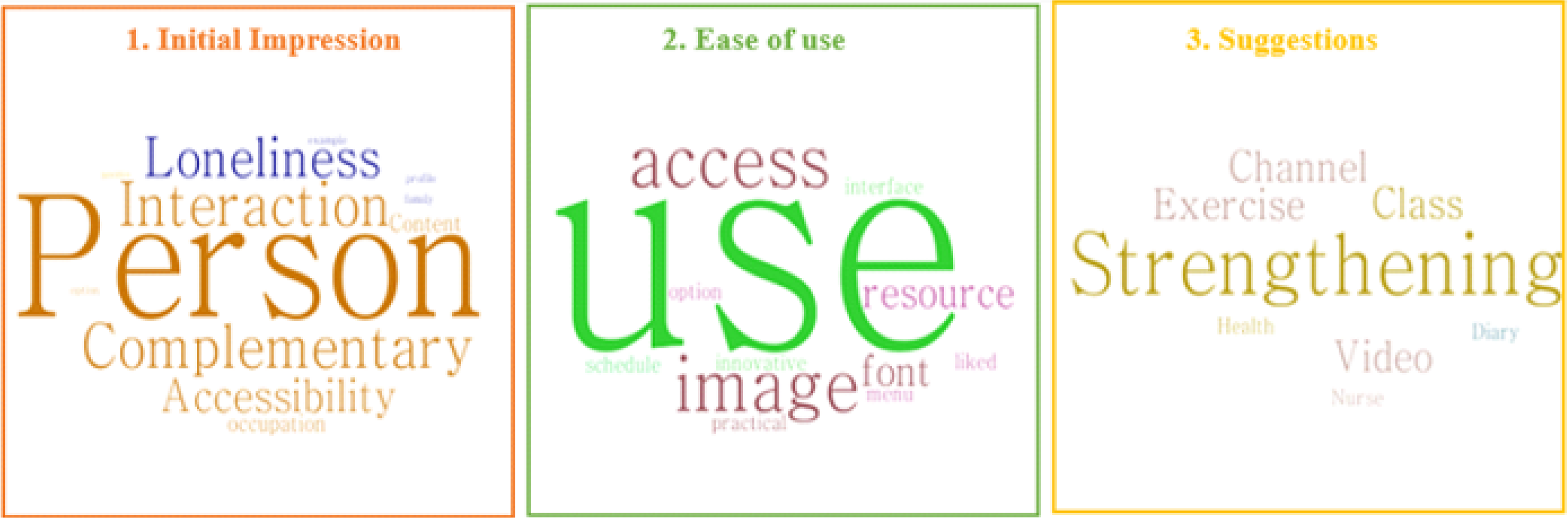
Word Cloud. The word cloud represents the most frequently mentioned terms across the three main categories identified. Larger words indicate terms that appeared more frequently, reflecting the most emphasized aspects by stakeholders. This analysis was supported by ATLAS.ti software.
Initial impression of the digital resource
The word cloud generated from the analysis of the “Initial Impression” reflects the key points identified by stakeholders regarding their first contact with the digital resource.
The most prominent word is “person,” highlighting the emphasis on individualized adaptation. Terms such as “complementary” and “content” suggest that the resource is perceived as a tool to complement individual needs and provide relevant materials. Additionally, words like “interaction,” “loneliness,” and “accessibility” indicate that stakeholders acknowledge the resource’s potential to foster social interaction and reduce loneliness.
Ease of use
The analysis of the “Ease of Use” category highlights the most frequently mentioned terms. Among the most prominent terms are “use,” “image,” “access,” “resource,” “font,” and “interface.” Stakeholders valued the ease of use of the digital resource, considering it intuitive and visually appealing. They emphasized the importance of having a practical and well-organized interface, which facilitates access and navigation. The term “image” refers to visual elements, which were regarded as fundamental. The inclusion of words such as “schedule,” “option,” and “menu” reflects the flexibility and customizable features of the resource, aspects that stakeholders also valued. Words like “liked,” “innovative,” and “practical” demonstrate a positive reception, suggesting that the resource meets expectations and could significantly contribute to improving the quality of life of older adults. The emphasis on “font” highlights the importance of a clear and legible typeface, ensuring that information is easily readable and understandable. In summary, the word cloud reinforces that stakeholders perceive the digital resource as useful and intuitive, with a visually appealing and user-friendly interface.
Suggestions
The word cloud illustrates the key suggestions from stakeholders regarding improvements to the digital resource. Among the most prominent terms are “Strengthening,” referring to the inclusion of physical exercises, particularly for muscle strengthening. “Exercise,” highlighting the importance of physical activities in promoting health. “Video” and “Class,” which emerged from suggestions for group classes to encourage social interaction and physical activity. “Channel,” indicating the need to create communication channels, such as chats, to facilitate social interaction. “Health,” related to promoting well-being, particularly through educational resources. “Nurse,” emphasizing the importance of contact with healthcare professionals to ensure continuity of care. “Diary,” referring to the suggestion to create a health journal, which would include daily activity reminders.
To consolidate the findings from the co-design process and better illustrate how the digital platform features support active and healthy aging, Table 4 summarizes the key functionalities valued by participants and maps them to the corresponding WHO domains of functional ability. 2
Key Functionalities of the Platform and Their Potential Contribution to Active and Healthy Aging
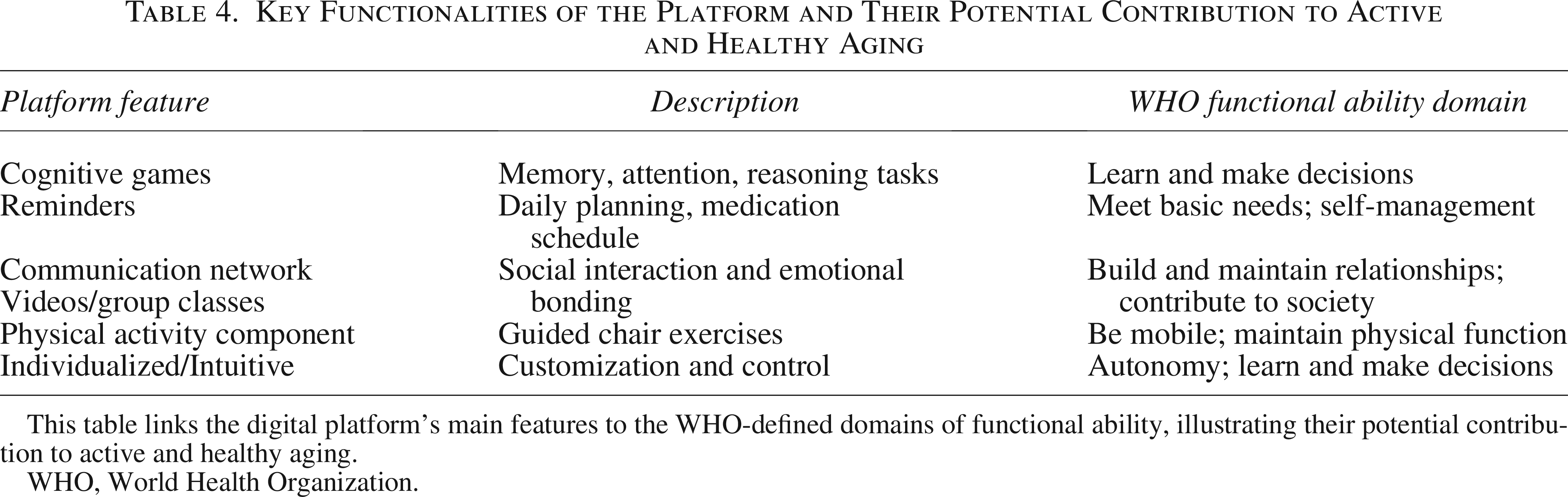
This table links the digital platform’s main features to the WHO-defined domains of functional ability, illustrating their potential contribution to active and healthy aging.
WHO, World Health Organization.
The results reinforce the relevance of past experiences and interpersonal influences in adopting digital health solutions, as proposed by Nola Pender’s Health Promotion Model. 11 The emphasis on individualization, social interaction, and reminders suggests that participants value digital resources that support autonomy while integrating social and behavioral components. This aligns with the model’s perspective that health-promoting behaviors are influenced by both individual motivation and environmental factors. These findings will be further discussed in light of the theoretical framework and implications for practice.
These findings are also consistent with the WHO’s framework on functional ability and the principles of active and healthy aging. 2 The components of the digital resource most valued by participants—namely, cognitive games, reminders, and tools for social interaction—align closely with the key domains of functional ability: decision-making, autonomy, mobility, and social connectedness. The platform’s integrated and adaptable nature reinforces a person-centered approach to aging in place, in line with both the WHO framework and the Health Promotion Model.2,11
Discussion
The involvement of stakeholders was essential for the co-design process in this study. Presenting the existing and available resource, 14 along with its objectives, helped establish a trusting environment and motivated active stakeholder collaboration in the research.
By focusing on the adaptation of an already established platform and employing a structured co-design process, the proposed model can be applied across different community contexts without the need for extensive technological redevelopment.
This study advances current literature by showing how institutional digital health platforms can be repurposed for community-dwelling older adults through a structured co-design process. While prior work has predominantly focused on creating new tools,7,8 our approach emphasizes adaptation, offering a pragmatic alternative for extending proven institutional technologies into community environments.
These findings reinforce that innovation in digital health is not limited to creating new solutions. Equally important is the strategic adaptation and reuse of existing resources, which can optimize investments, support sustainability, and facilitate the scalable implementation of effective technologies in aging in place contexts.
Findings were interpreted considering Nola Pender’s Health Promotion Model, which highlights the role of self-efficacy, past experiences, and interpersonal influences in adopting health-promoting behaviors. The emphasis that participants placed on individualized interventions, reminders, and social engagement aligns with this model, reinforcing the importance of addressing both individual and social factors in digital health adoption.
Stakeholder contributions were prioritized using the MoSCoW technique, which enabled a structured distinction between essential, important, and desirable features. This prioritization strengthened the co-design process by aligning resource development with stakeholders’ lived needs while ensuring feasibility within available resources. 18 Thus, the application of the MoSCoW technique enabled the prioritization of stakeholders’ suggestions based on the number of times they were mentioned (Table 3), ensuring that the process adhered to co-design principles. 9
Prioritization of essential features (must have)
During the co-design moments, stakeholders identified the physical activity component as an essential feature to be included in the digital resource. This functionality was classified as “Must Have,” ensuring it would be prioritized in the resource development.
Empirical knowledge shows that, with aging and reduced physical activity, aspects related to the physical domain tend to decline. Therefore, regular physical exercise is vital for active and healthy aging. 2 Research indicates that individualized interventions through digital resources can be effective in improving functional capacity and quality of life. 18
Identification of important features (should have)
Interactive functionalities, such as a communication network, group classes, educational resources, a health journal with reminders, and a tutorial on how to use the resource, were considered important by stakeholders. The MoSCoW technique helped classify these features as “Should Have,” allowing their implementation based on available resources without compromising the inclusion of essential features.
Our findings align with studies that emphasize social interaction and reminders as facilitators of technology adoption.10,12 In contrast, Backåberg et al. 8 highlighted challenges in remote participation, whereas our face-to-face sessions mitigated these barriers and fostered inclusivity. Similarly, Laver et al.19–21 underscored the importance of environmental adaptation for aging in place, and our work builds on this evidence by engaging diverse stakeholders to guide the adaptation process.
Additionally, digital inclusion has been recognized as an important approach to ensuring that everyone has access not only to digital resources but also to the means to learn how to use them.4,13 In our study, stakeholders also valued these aspects, specifically the need to include educational resources and a tutorial explaining how to use the resource.
Consideration of desirable features (could have)
The ability to integrate contact with healthcare professionals and improve user characterization (including personal and health history) was identified as desirable but not urgent. By classifying these functionalities as “Could Have” using the MoSCoW technique, we ensured that these enhancements remain under consideration for future development.
This functionality is particularly relevant because coordination and continuity of care require collaboration with healthcare professionals, especially in primary care settings. A deeper understanding of the user’s profile allows health care professionals to provide better guidance and follow-up. 12
Features for future consideration (won’t have this time)
Some features, such as audio-based content, were considered less of a priority and classified as “Won’t Have This Time.” This decision allowed us to focus on the most frequently mentioned functionalities while leaving the possibility of incorporating this feature in future updates.
Since the adoption of digital resources is often limited by health, social, and cultural inequalities, it is key to minimize these disparities to ensure an inclusive and sustainable ecosystem. 9
Continuous communication and collaboration with stakeholders throughout the process proved essential to ensure that the digital resource reflected real user needs. This reinforces the importance of ongoing stakeholder engagement in co-design.
Thus, the MoSCoW technique proved to be a valuable strategy in the co-design process, ensuring that the most relevant contributions were prioritized and that the digital resource was developed in a more appropriate and sustainable manner. Furthermore, the prioritization of features through the MoSCoW technique highlights the alignment between stakeholders’ preferences and the principles of Nola Pender’s Health Promotion Model. 11 The strong emphasis on the physical activity component (Must Have) supports the idea that self-efficacy and previous experiences shape health-promoting behaviors. Additionally, the identification of social interaction and reminders as important features (Should Have) reinforces the role of interpersonal influences in sustaining engagement with digital health resources. These findings suggest that digital solutions should not only be accessible and intuitive but also actively support users’ motivation, autonomy, and sense of social connectedness. Our findings resonate with previous literature suggesting that older adults value digital interventions that foster playfulness, autonomy, and social engagement.
This aligns with recent findings by Laver et al., 19 who found that older adults can meaningfully engage in co-design processes to adapt their own environments for successful aging at home. Furthermore, the value of supporting autonomy, learning, and personalization was emphasized in studies involving digital health development in home settings.7,8
The study 5 demonstrates that game-playing can serve as a vehicle for cognitive stimulation and personal expression in later life and also 6 emphasizes that participatory and iterative design processes are essential for ensuring that game-based technologies are responsive to the preferences, values, and capabilities of older individuals.
Recent studies reinforce the role of interactive and game-based digital tools in promoting health behaviors among older adults. For instance, one study 22 demonstrated that digital game-like interventions designed to prevent falls improved user adherence and cross-sector engagement. Similarly, another study proposed a conceptual framework for serious games targeting cognitive rehabilitation in older adults, highlighting the importance of adaptivity, personalization, and social interaction—features aligned with those prioritized by stakeholders in our study. 23
Our work contributes not only methodologically—through a three-stage co-design process involving diverse stakeholders—but also conceptually, by proposing a structured process for translating institutional technologies into community-based solutions. This addresses a gap highlighted in recent reviews. 12
Study limitations
The study sample was purposive, comprising a specific group of stakeholders (policymakers, nurses, and individuals aged 55 and older). This limits the generalization of findings to other populations or contexts.
Although the MoSCoW technique was effective for prioritization, it has limitations, such as the subjectivity involved in categorizing features.
The time and resources available for co-design moments may not have been sufficient to explore all opinions and suggestions comprehensively, potentially limiting the resource’s innovation potential.
Conclusion
This study addresses a relevant gap in digital health and aging research by demonstrating how an institutional digital health platform can be systematically adapted for autonomous, community-based use by older adults through a structured, stakeholder-driven co-design process. Rather than developing a new technology, the study highlights the value of adaptive reuse as a pragmatic and sustainable strategy for supporting aging in place.
The findings show that involving older adults, nurses, and policymakers throughout the adaptation process enabled the identification of features that are particularly relevant in community settings, namely, individualization, physical activity support, reminders, and opportunities for social interaction. These priorities reflect the specific demands of independent living, where professional supervision and structured routines are absent, and reinforce the importance of aligning digital health solutions with real-world contexts of use.
The use of a structured co-design process, supported by participatory prioritization techniques, ensured that adaptation decisions were grounded in stakeholder perspectives while remaining feasible within existing technological and organizational constraints.
Future research should build on these findings by evaluating the usability, acceptability, and long-term engagement associated with the adapted platform, as well as exploring its integration into broader community and primary care networks. Such work will be essential to determine how adapted digital health resources can effectively support active and healthy aging at scale.
Footnotes
Acknowledgments
The authors would like to express their gratitude to Sioslife for their support and collaboration in this study. They also extend their appreciation to all stakeholders, including older adults, nurses, and policymakers, whose valuable insights and participation significantly contributed to the co-design process.
Author Disclosure Statement
The authors declare no conflicts of interest.
Funding Information
Work carried out within the scope of a doctoral project funded by the Foundation for Science and Technology through research grant (reference no.