



Abstract
This study explored the postsecondary transition experiences of young women who were deaf and hard of hearing (DHH) at a higher education institution in the Kingdom of Saudi Arabia (KSA). Data were collected using semi-structured interviews with 17 undergraduate women who were DHH and enrolled in a higher education institution in the KSA. The data were analyzed thematically and inductively using qualitative analyses software. Eight themes emerged from the data analysis. These themes reflected a wide range of transition experiences among students who were DHH, including their previous experiences in high school, their current experiences in higher education, and preparation to make the transition from college to work. Implications for future research and practice are discussed and include further exploration about the impacts of postsecondary education programs in supporting positive outcomes and working to close the gaps between policy and practice.
There is increasing global interest in higher education due to its role in helping individuals acquire skills and knowledge required in the 21st century, which can then lead to economic progress and improved social welfare (Tremblay et al., 2012). The importance of seeking postsecondary education is also apparent in that obtaining a college degree has become the basic requirement for employment in livable-wage jobs (Shaw & Dukes, 2013). This is particularly salient for young women with disabilities who have been shown to face a unique set of transition barriers, such as limited career experience, options, and support to prepare them for postsecondary settings (Lindstrom et al., 2012). For students who are deaf and hard of hearing (DHH), obtaining a higher education degree allows them to develop many skills that will help them meet the demands of the labor market and compete in it, which is especially important given the constantly changing levels of requirements for many jobs today (Scheetz, 2011). The importance of postsecondary education is also evident in its influence on other transition outcomes. O’Brien (2015) pointed out that successfully transitioning to postsecondary education would lead to successful employment outcomes for students who are DHH, which would ultimately facilitate their ability to live independently.
However, students who are DHH still face a number of barriers to achieving positive postsecondary transition outcomes in education (Luft, 2014). They also need to develop different skills to achieve positive transition outcomes in employment and independent living (Luft, 2012). The challenges they face in their transition beyond high school may reflect their limited preparation for this stage of life (Scheetz, 2011). Previous studies have shown that students who are DHH are often not prepared to fulfill postsecondary education requirements (Nagle et al., 2016) and may have limited skills for achieving employment and independent living outcomes (Luft, 2012). To overcome such challenges, services and programs can support skills that have been shown by research to support postsecondary education success. For example, these may include literacy skills (Luft, 2014), social skills, and self-determination skills (Punch & Duncan, 2020). However, efforts for supporting students in their transition to postsecondary education should extend beyond their enrollment and include support in achieving success and obtaining jobs after graduation (Shaw & Dukes, 2013).
Supporting students who are DHH in joining institutions of higher education has become an area of interest in many countries. The Kingdom of Saudi Arabia (KSA) is among those countries that support students who are DHH in completing their postsecondary education, which is in line with the Convention on the Rights of Persons with Disabilities (CRPD)—of which the KSA is a party (United Nations Human Rights, 2007). Support for these students is also in line with the Individuals with Disabilities Care System in the KSA, which was enacted in 2002. The second article of this system emphasizes the provision of educational opportunities at all levels and forms for individuals with disabilities in proportion to their needs and abilities, including higher education (King Salman Center for Disability, n.d.). Students who are DHH in the KSA receive their education in day institutes, where all of the students are deaf, or in mainstreaming programs that are provided in a regular school setting (Ministry of Education, 2016).
Students who are DHH in the KSA have had the opportunity to enroll in postsecondary education after high school since the approval of the Saudi Council of Ministers in 2001, which included providing these individuals with the necessary support to complete their postsecondary education according to their abilities and preferences (Alturki, 2005). Since that time, many postsecondary education programs for students who are DHH have emerged at different higher education institutions in the KSA (e.g., Arab Open University, College of Telecom and Information, King Saud University). However, despite the variety of postsecondary education programs that are now available to these students, little is known about their postsecondary transition experiences. Accordingly, there is a need to further explore such experiences among those students in the KSA (Almotiri, 2017). This is especially important given that there is a dearth of secondary transition services in the KSA (Alquraini, 2013). Although such services represent an essential part of the Saudi Regulations of Special Education Programs and Institutes (RSEPI; Ministry of Education, 2016), prior research has shown the “transition programs and rehabilitation” section of the RSEPI was the area of lowest adherence by institutes and programs serving students who are DHH (Alsalamah, 2016). Given these contexts, the aim of this study was to explore the transition experiences of students who are DHH and enrolled at higher education institutions in the KSA. This study is based on a constructive viewpoint that suggests individuals build knowledge in an accumulative manner and that their understanding of the world varies according to their views and experiences (Saldaña & Omasta, 2018). The guiding research questions are as follows:
Method
Research Design
For the purpose of this study, a qualitative narrative research design was applied to address the research questions and explore the transition experiences of young women who are DHH. A narrative design was used because it allows researchers to document the experiences that the participants share about their lives, reflecting a temporal progression (Ary et al., 2010). Such a design made it possible for the participants to share their postsecondary transition experiences in a manner that covered different time periods. These students shared their previous experiences in secondary education and their transition from that stage to higher education in a way that showed the various changes they went through in addition to their future aspirations and preparations for the transition from university to work.
Context and Participants
This study took place at a large university in Riyadh, in the KSA, where students who are DHH are receiving various supports from a postsecondary education program designed specifically for them. To date, undergraduate education is free for all students enrolled in this university, including students who are DHH. Students also receive free health services and monthly financial support. All students who are admitted to this program begin with a qualifying year that is intended to help them intensively develop their Arabic language skills and prepare them for university life. Once they have passed the qualifying year, they enroll in a preparatory year with their hearing peers, which ranges from one to two semesters according to each student’s path. After they complete all requirements, they enroll in the academic majors available to them at the university. Supports that are available to students who are DHH throughout their program include sign language interpretation services, note-taking, academic tutoring, and psychological and social support services by the program’s specialists.
Participants in their third and fourth years were purposely selected for this study, as they were expected to have a wide range of transition experiences. Due to the gender-segregated education system in the KSA, all participants were females. After the study was reviewed by the Human Research Protection Program and declared exempt, participant recruitment began by contacting the identified students who were in the third and fourth years of university. Out of a total of 24 young women, 17—10 of whom were hard of hearing (HH) and seven of whom were deaf—participated in this study. Table 1 provides demographic information about participants. The number of participants (n = 17) was determined based on reaching saturation during data collection, at which point recruitment stopped as additional interviews did not provide new information (Guest et al., 2006). The researchers reached this point when they noticed that additional interviews were not providing new information regarding the postsecondary transition experiences of these young women. Participants’ ages ranged from 20 to 27 years. They also differed in the age at which their hearing loss was identified, which ranged from birth to age 7. Eight participants indicated that they had one or more family members who are DHH. Most participants in this study graduated from public school, and only three graduated from a private institution. The participants differed in terms of their academic year at university. Nine were in the third year, seven were in the fourth year, and one was in the fifth year. All participants had completed most of their general courses and were taking courses related to their majors.
Participant Demographics.

Note. HH = hard-of-hearing; HL = hearing loss; PS = public school.
Data Collection
To collect the necessary data to address the research questions, semi-structured interviews were conducted with the participants. Table 2 lists the semi-structured interview questions. The first author—who is fluent in Saudi Arabian Sign Language (SASL)—scheduled and conducted individual interviews with each participant virtually via Zoom. Each participant was interviewed once, and each interview lasted between 45 and 80 min. The first author worked to prevent potential barriers associated with a virtual environment using a virtual platform that matched the preferences of each participant (e.g., Zoom, Skype), and the author ensured that, throughout their interviews, they were speaking clearly, using an interpreter when appropriate, and checking for understanding. They also supported the participant in finding a quiet place for the interview. Given cultural factors that prevent videotaping, each interview was voice-recorded. For the students who were HH, the recorded voice was that of the participant. For the students who were deaf, and who primarily communicated via SASL, sign language interpreters were requested from the program at that university; as such, the recorded voices were those of the sign language interpreters. After completing the interviews, the first author, whose first language is Arabic, converted the recorded audio content into Arabic transcriptions, and then translated these transcriptions into English. A fluent Arabic speaker with experience in special education reviewed the translations to ensure accuracy.
Interview Questions.
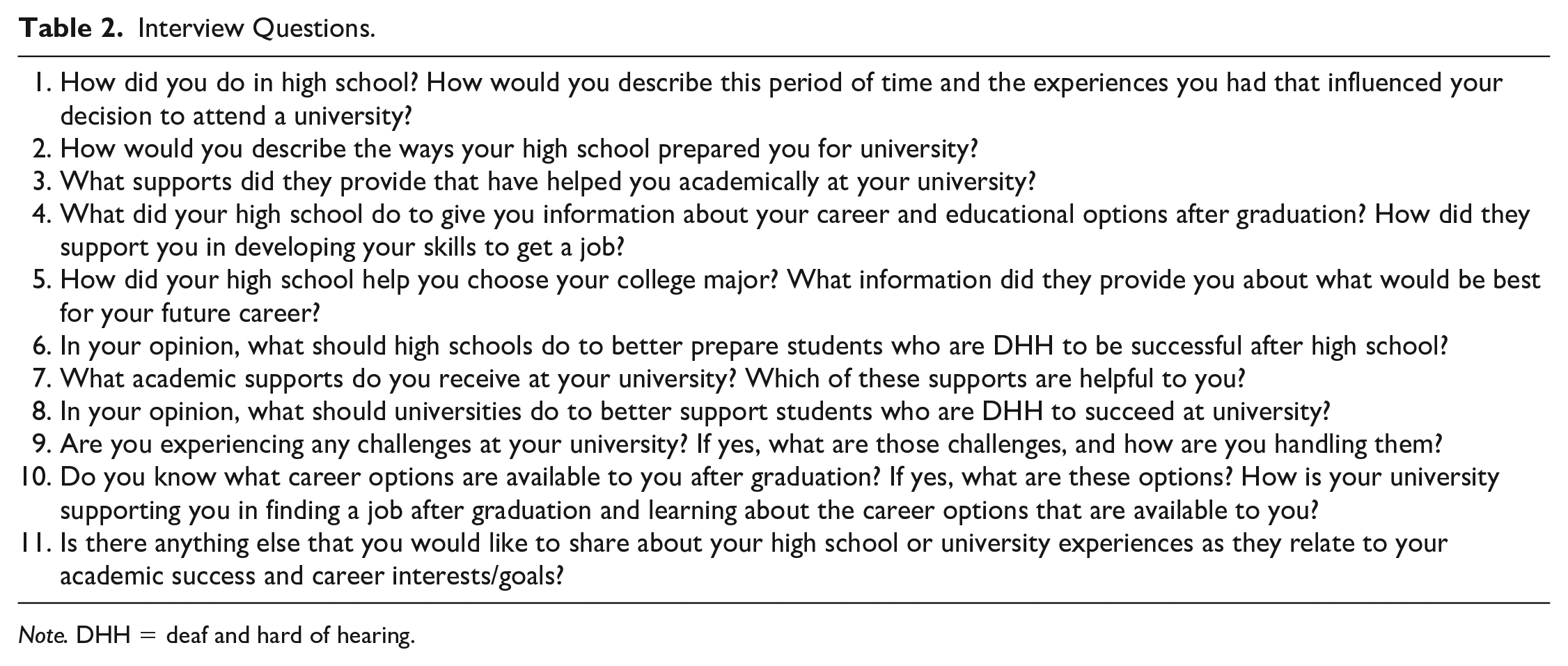
Note. DHH = deaf and hard of hearing.
Data Analysis
Thematic analysis was used to analyze and document the interview data. An inductive approach was used in the analysis and coding of the raw data. This approach included generating themes from the data set, so that the themes arose directly from the data content (Gale et al., 2013). The qualitative software, NVivo (QSR International Pty Ltd, 2020), was used to analyze the data following six phases proposed by Braun and Clarke (2006): (a) reading the interview transcripts, (b) generating codes, (c) sorting the codes into themes, (d) reviewing the generated themes, (e) ensuring that the themes are clearly identified and reflect the content, and (f) writing a report on the final analysis. Within these six phases, two stages of coding as described by Saldaña (2016) were integrated into analysis: (a) first cycle coding and (b) second cycle coding. Saldaña’s proposed methods for first cycle coding were integrated into Braun and Clarke’s second phase (generating codes), and Saldaña’s second cycle coding was used to complete Braun and Clarke’s third phase (sorting the codes into themes). This integration of approaches was used because Saldaña (2016) provides more concrete methods to generate codes and sort them into themes than Braun and Clarke (2006).
The first phase included reading the interview transcripts and taking notes to refer to later as necessary. The second phase included using first cycle coding to generate an initial list of codes that would later be sorted into themes. First cycle coding included both descriptive and in vivo coding. Descriptive coding included codes that described the content being coded, using short phrases (Saldaña, 2016) such as “secondary school influence on university” and “impression about jobs.” In vivo coding, was used to reflect the participants’ voices on the topics being discussed using their own words (Saldaña, 2016), such as “like normal girls” and “I feel very alienated,” which were words some of the participants used when expressing their feelings regarding their social integration within the hearing community. The third phase of analyses including using second cycle coding to generate themes. During this phase, some of the codes were renamed or merged, and those that seemed inappropriate were removed (Saldaña, 2016). In doing so, pattern coding was used, which is a second cycle coding method; pattern codes are an illustrative type of code used to summarize the codes and organize them within a few categories before developing the main themes (Miles et al., 2014). An example of the categories that were used in the data analysis included “school’s role in preparing students for transition, knowledge about the future,” which were under a theme labeled “secondary transition preparation experiences.” In the fourth phase, the themes from the previous phase were reviewed to ensure their appropriateness, and some codes were reorganized under some categories. In the fifth phase, the themes were clearly identified, and some were revised by renaming them to ensure their clarity in reflecting the content. Finally, in the sixth phase, a report in which the data were presented and related to the literature was produced (Braun & Clarke, 2006).
Trustworthiness
To ensure the trustworthiness of the qualitative data, some of the methods suggested by Hanson et al. (2011) were applied, through which the credibility and dependability of this study were ensured. To ensure credibility, sufficient data were gathered to understand the studied phenomenon by conducting semi-structured interviews with 17 students who were DHH. To ensure dependability, two methods were applied: namely, peer debriefing—where the ideas that emerged when collecting and analyzing the data are discussed with another researcher (Hanson et al., 2011)—and member checking using synthesized and analyzed data (Birt et al., 2016). There were no requests from participants to change or add anything during member checking.
Findings
This qualitative study was conducted to explore the postsecondary transition experiences of students who were DHH and enrolled in higher education institutions in the KSA. Eight themes emerged from analyzing each of the 17 interviews: (a) Theme 1: general secondary school experiences, (b) Theme 2: secondary transition preparation experiences, (c) Theme 3: suggestions regarding school reform, (d) Theme 4: school-to-college transition experiences, (e) Theme 5: experience at the university, (f) Theme 6: college-to-work transition preparation, (g) Theme 7: self-determination, and (h) Theme 8: integration with the hearing community. Themes 1 through 3 provided answers to RQ1 (secondary experiences). Themes 4 through 6 provided answers to RQ2 (postsecondary experiences). Themes 7 and 8 provided answers that transcended both research questions.
Secondary Experiences
General secondary school experiences
The participants shared their general high school experiences—especially those with different school subjects. Participants reported that different factors influenced their preferences for a subject, including that subject’s content or teacher. For example, some of the participants claimed that mathematics was one of their favorite subjects, while others said it was not, for a variety of reasons, including the subject’s difficulty. In addition, the participants reported preference for subjects based upon teachers’ characteristics, such as their proficiency in sign language, use of educational aids, and ability to provide clear explanations of the content. When students who were DHH talked about their general experiences in high school, some referred to their schools’ educational settings. A few of them shared positive experiences related to their educational setting. A student who was deaf and attended an institute compared the institute and mainstreaming schools: “[T]he institute is better because the teachers are all fluent in sign language. It is better than mainstreaming schools; I feel that it is my second home, and I am among my family” (Participant 17). Among those who attended a mainstreaming school, a student who was HH talked positively about her experiences with mainstreaming teachers (special education teachers). She said, “If I go through difficulty or any problem, I go to the mainstreaming teacher, and she communicates with the subject teacher and they help me” (Participant 4). Another student who was HH shared her unsatisfactory experience in mainstreaming schools: “I did not know how to study, I did not know how to answer, I did not know the words ‘getting a high GPA,’ and I didn’t participate by the way; the girls and I were not participating” (Participant 2).
Secondary transition preparation experiences
All participants in this study reported their experience with secondary transition preparation. When students who were DHH were asked whether their high schools prepared them for the transition to postsecondary education, most of the participants said yes, and when they were asked what kind of support their schools offered them, a student who was deaf and who graduated from a mainstreaming school said as follows: “They [the school] prepared me in advance with information about universities, entry into them, exams and interviews, and expression” (Participant 15). Students who were DHH were also asked about what the high schools had done to give them information about their educational and career options after graduation. Most of the participants said that their high schools did not provide them with information regarding postsecondary education options. However, there were students who indicated that they had obtained information on postsecondary education options. Importantly, a few of them said they obtained this information through a school-coordinated visit to the university. However, most of the students who reported having obtained information about educational options after high school indicated that the school had only informed them about one of the available options. Furthermore, when asked about the nature of the information they had obtained, most of the students said it was only general. In addition, most of the students who were DHH said they were not provided with information about their career options after graduation, while the few students who said they received such information from their high schools highlighted that the information they received was not detailed. Furthermore, all the participants in this study pointed out that their schools did not help them choose their college majors. Only a few of the students said their schools informed them about the available university majors but also reported that they were not provided with any opportunities to explore how these different majors may or may not relate to their career goals.
Through the experiences in preparing for the transition to college that students who were DHH shared, there were noticeable indications of a lack of individual support from the schools. If any support was provided, it was offered to all students in general. It was also clear that some of the students did not have clear future goals when they were in high school. Some of them were also planning their futures in high school without individual support. For example, a student who was deaf said she wanted to join many scientific majors even though she was on the literary path in high school.
When they recalled their experiences in high school, some participants, especially those who were HH, pointed out that they had low expectations in the school environment, whether regarding their expectations for themselves or others’ expectations of them. A student who was HH shared her experiences in high school: “Originally, I wasn’t thinking that I was going to go to college; I did not expect that I am a university [student]” (Participant 8). When asked if she received support from her high school to join the university, another student who was also HH said, The teachers some of them helped me and some of them said no, I mean, they did not expect that I would enter the university, so they said because I am HH and I need someone to help me with the service in the study and such. (Participant 3)
Some participants also mentioned that when they were in high school, they had the belief that they would not get the support they needed in their future at universities or workplaces. Concerning a university education, some students believed that they would not get the support they needed and that university studies would be difficult for them. Regarding students’ concerns about their future careers, those who shared their thoughts often talked with the expectation that there would be a lack of support in the workplace.
When sharing their transition experiences, the majority of the participants often referred to the continued support they received from their families and friends. Most of them mentioned how their parents helped them overcome challenges, encouraging and supporting them to enroll in a university. They also referred to their friends as a source of support in making decisions, in obtaining information about universities, and in overcoming academic challenges.
Suggestions regarding school reform
All the participants in this study provided some suggestions on what high schools should do to better prepare students who are DHH to be successful in their postsecondary transition. These suggestions included modifying curriculum content, considering the use of educational aids, and reconsidering the extent of the content density provided to students who are DHH compared to their hearing peers. Many of them mentioned that they were being provided with nonintensive materials when they were in high school. Some of the participants said that to prepare for postsecondary education, students who are DHH should not be accustomed to studying from simple materials that provide them with summaries or highlights from books. In considering this, a student who was deaf commented as follows: “They [students who are DHH] will be educated in advance and prepared for the future, and it will be easy for them when they enter a university” (Participant 15).
The participants also highlighted the importance of high school students who are DHH developing many skills. The related suggestions they provided differed based on their respective experiences. However, some of the participants said that skills related to the Arabic language were important skills that should be developed before they graduate from high school. A student who was deaf provided a suggestion based on the issue of unemployment among individuals who are deaf: Develop different skills, not the traditional skills that are saturated in the labor market; is it necessary to be computer computer computer skills . . . NO! This means that they [the school] are not limited to certain skills; that is, they have the flexibility to teach them skills that are appropriate and new. (Participant 9)
From another perspective, a few students who were HH indicated the importance of possessing social skills that would help them integrate into the hearing community, particularly those related to forming friendships with their hearing peers. In addition, some of the participants indicated that high schools should provide more information about postsecondary options to students who are DHH. Emphasizing the importance of such information, a student who was HH commented as follows: They [high school] are supposed to teach us what will happen if we graduate from high school and what things we need to do, how to arrange our goals, and how to achieve our ambitions so that we do not feel lost after high school. (Participant 2)
Postsecondary Experiences
School-to-college transition experiences
Most of the participants held more positive attitudes toward their university than toward their high school. Through their experiences in high school and university, the participants highlighted the importance of students who are DHH knowing how to depend on themselves to prepare for study at the university level. Students who were DHH also pointed out the difference between universities and high schools in terms of the difficulty of course materials. A few of them indicated that the course materials at the university were different from what they were accustomed to in high school, pointing out their dissatisfaction with what teachers were doing at the secondary stage by reducing the difficulty of the subject materials for them, as this negatively affected their preparation for the university stage. They also expressed the shock they experienced when they entered the university as a result of not being prepared for this stage. A student commented: “I hope the teachers do not help the HH by highlighting books at school so that they get used to the university’s system” (Participant 8).
Although many students who were DHH indicated that they were shocked when they joined the university and that they faced some difficulties in the beginning, they indicated that they had surpassed that. A student spoke positively about her university experience compared with her high school experience: “For me, high school did not benefit me very much, but the university changed many things for me.” She added, “Qualifying year, major, and everything, I mean, it even expanded my acquaintances” (Participant 7). Another student who was deaf talked positively about her experiences at the university, referring to the qualifying year: “a big benefit; I benefited from it more than I did from school” (Participant 17). The participants also described how high school had influenced their current academic performance at the university. Most of them pointed out different ways in which they think high school prepared them for the university. Some of the participants mentioned the preparation they had received in learning necessary Arabic language skills. In addition, a few of the students referred to specific people (e.g., a sign language interpreter and one of the subject teachers) in high school who helped them prepare for the university through their own efforts. This was either by developing their Arabic language skills or by providing them with information about postsecondary education.
Experiences at the university
The participants’ responses showed that many students who were DHH enrolled in the university without any prior knowledge of the major they wanted to pursue. Most of the students who were DHH talked about their experiences in choosing their majors. Only a few of them mentioned that they had certain majors in mind when they joined the university, while the rest chose their majors after enrolling. When asked about the academic support they received at the university, all the participants said the university provided them with that support. Students referred to different types of services they received at the university, including coordinating their study schedules, coordinating with faculty members in case the exams conflicted, providing them with the necessary documentation to disclose their disability, and sign language interpretation. Most of the participants listed the qualifying year as among the services that they benefited from at the university. This is a year in which students enroll in their first year of university and which is devoted to developing Arabic language skills for students who are DHH. A student who was HH described how this year prepared her to transition to the university: It prepared me psychologically before I got ready for the preparation year, and it does the same thing for the mind. I learned how to put together a sentence, how to ask for help without being ashamed. (Participant 2)
The majority of the participants shared some of their positive experiences at the university. These experiences were related to the university in general and the services provided, the program for students who are DHH and the support they provided, or the courses and the support provided by faculty members. Furthermore, through their discussions, students who were DHH clearly described the role of their families and friends as encouraging and supporting them, whether that support came when they decided to enroll in the university or after their enrollment. They also referred to the supportive role of their friends, for example, in their choice of a major or in obtaining information about the university and its services. Even though the participants shared positive experiences, they also indicated that they experienced some challenges at the university. Some of them reported facing difficulties in course assignments and exams, especially when they included writing requirements. Other challenges in academic courses included the density of course materials; some indicated that this was due to the fact that they were not used to such intensity when they were in high school. Most of the participants also shared some of the challenges they were currently facing with distance learning (as a result of COVID-19), including difficulty hearing voices and their lack of clarity, in addition to some professors’ lack of use of presentation slides, difficulty in concentration and participation, and technical issues. For students who were deaf, the challenges they shared were related to the difficulty of focusing when there were presentation slides and a sign language interpreter at the same time, as well as when some faculty members used some video conferencing programs that did not allow them to appear on the same page with the interpreter, which forced the students to use two programs or devices to follow both the faculty member and interpreter. Difficulty in participation was also another challenge; some explained that while they were still following the interpreter, hearing students had already participated or answered the lecturer’s questions. Finally, some of the participants mentioned the lack of majors available for students who are DHH as another challenge.
During the interviews, the participants were asked to share their opinions on what universities should do to better support students who are DHH to succeed at higher education. These recommendations included that professors should offer test alternatives, replace essay questions with objective questions, offer an alternative to class participation, provide options for the assignments that include writing, and use presentation slides during lectures.
College-to-work transition preparation
All participants, who represented different majors, assured that they know what career options were available to them after graduation from the university. They named some of these career options and explained the nature of the jobs. Most of the participants indicated that they had the information about career options after graduation from the courses they attend in their fields of study, and had acquired the information from the course materials (such as books), course requirements (such as field visits), or faculty members who provided information about the majors. Some of them also gained such information through meetings that some department heads held with students, exhibitions held by the university, or friends. Others indicated that they had searched for this information themselves, either through Google or social media. A student who was deaf and studying tourist guidance said, The faculty members, told us that you, as deaf, have excellent sign language. For example, foreign deaf tourists from all over the world will come to you—Chinese, American, and Spanish. They told us about the jobs that fit our major and that suit us as deaf. (Participant 9)
The participants also provided information on the university’s role in their preparation to transition to work. Most of them said that the university prepares them for jobs after graduation by providing information about available jobs and their future careers, through either the courses or specific professors. Some also indicated that the university prepared them for jobs by coordinatoring field visits, or by encouraging them to take courses/workshops related to their field of study. One student explained: “they’re [the courses] in the university, and they also bring us advertisements for courses outside the university that target tourism” (Participant 9). However, the responses of the participants about the nature of the support provided to them differed due to their different experiences, majors, and whether they were at the beginning or the end of the semesters in which they began taking courses in their majors.
Themes That Transcended Both Research Questions
Self-determination
The experiences that the participants shared in high school and university reflected self-determination skills that they possessed or those which were limited. The concept of self-advocacy emerged from the participants’ experiences in disclosing their disability to others, as well as in seeking help when they need it. This appeared in some of the answers of participants who were HH. A few of them said they would seek help from university when faced with some challenges, but that was not the case when they were in high school. Furthermore, the participants’ problem-solving skills were also shown when they spoke about some of the problems they have faced and solved. Although most of these students stated that they were dealing with challenges by talking with the subject teacher or professor, a few of them indicated that they did not do so. One student who was HH indicated that she was facing difficulty due to the lack of clarity of sound in lectures during distance learning. When she was asked if she had tried to solve this problem, she responded: “No, I did not try because this is my hearing level” (Participant 5). Another student, who was deaf, indicated that she preferred seeking help from her family instead of communicating with the professor.
Many of the participants’ responses reflected their own self-efficacy. This was expressed by most of the students who were DHH, either with regard to their ability to overcome difficulties or ambitions that they seek to achieve. In expressing her ability to do various things, one of the students who was HH said, “I’m not telling you that I am perfect, but give me work. I will not tell you no; I will do my research, and I will work” (Participant 10).
In addition to the different previously mentioned concepts of self-determination, most of the students who were DHH were often reminded of the importance of self-reliance and independence. A student who was HH expressed her appreciation for her high school, which supported her in becoming self-reliant: “The nice thing was that they let me depend on myself. They did not have that system where you are treated special because you are HH” (Participant 7). However, comments on high schools and their role in preparing students for self-reliance were not all positive. A student who shared her experience in high school indicated that they had not given her the opportunity to rely on herself, which affected her negatively, as she was not able to improve academically. She commented: “If I had relied on myself in high and middle schools and if I knew how to overcome the difficulties [I could have improved academically]” (Participant 2). From another point of view, a student who was HH described the concept of self-reliance as not depending on the encouragement of others, especially at university. She explained that “I feel that there is a battle ahead of us in the future, and we are looking for someone to motivate us” (Participant 3).
Integration with the hearing community
Social challenges emerged in experiences shared by students who were DHH in high school and at university. Such social challenges emerged clearly among some of the participants, who shared their experiences in and feelings toward integrating with hearing students. One student who was HH described her experiences with hearing students in a mainstreaming school: “They stare at us. They may think that we do not understand or that we are stupid.” She added that they were supposed to know how to make friends with hearing students, but she commented: “We used to say this, ‘if she became my friend, I would not expect her to want me because I am HH” (Participant 2). A few other participants described their experiences at university when meeting hearing students for the first time. A student who was deaf said, “Because I studied at an institute, all of them were deaf, and when they integrated us with hearing students at the university, I got a little strange feeling” (Participant 17). When asked if it was difficult for her to introduce herself, she said, “I am okay, but for example, they see me using sign language; how do they feel?” She added, “If she comes to me, I am welcoming, and if she does not approach me, I do not go to her because I do not know how she feels about me” (Participant 17). The other student who was HH described her feelings when integrating with hearing students as alienated. She explained: “I was not used to sitting with hearing girls; there were no HH and deaf students” (Participant 5). In the same context, a few students who were HH talked about hearing students using terms such as “normal girls” or “ordinary girls.” A HH student commented: “We do not have something in us; we are like normal girls” (Participant 1). It was noticeable that students who were deaf, on the contrary, used the sign for “hearing” when talking about their hearing peers.
Discussion
The different experiences that participants shared showed a gap in the role of high schools in preparing students who are DHH for postsecondary transition. Their transition preparation indicated an absence of transition planning. This was apparent in the absence of individual support provided to these students, as many had unclear future goals and were planning their futures on their own. Their experiences also suggested that (a) students’ preferences in subjects were influenced by teacher characteristics, (b) there was a paucity of information available to them about postsecondary options while they were in high school, and (c) what was available was often general information provided to all students who were DHH regardless of the student’s individual characteristics and needs. These findings highlight the importance of building educators’ professional skills and knowledge to support students who are DHH (Luft, 2016). Limited information about postsecondary education while in high school was a key concern for participants. Providing information and transition supports to students who are DHH is important to facilitate their transition to higher education. With this support, students who are DHH in the United Kingdom (e.g., Saunders, 2012) have demonstrated a level of satisfaction with their preparation for the transition to higher education and the services provided to them.
Interviews with students who were DHH revealed some of the social challenges they face in integrating with hearing students in high school and higher education. Such challenges have also been experienced by students who were DHH in previous studies, such as at an Australian university (e.g., Hyde et al., 2009) and a New Zealand higher education institution (e.g., Powell et al., 2014), where some students who were DHH expressed a sense of social isolation. To overcome these challenges and promote these students’ inclusion in higher education, it is necessary to provide them with opportunities to interact with their hearing peers in these settings (Powell et al., 2014).
Our findings also suggest that it is necessary to better prepare students for the density and rigor of university curricula while they are in high school. Many of the participants claimed that teachers simplified and modified the curriculum materials for them, which affected their preparedness to engage with more rigorous and academically challenging university curricula. To ensure that students who are DHH are better prepared for postsecondary education, students must be held to high expectations, and the rigor of high school courses offered to these students and their suitability to student needs must be considered (Newman et al., 2016).
Furthermore, the results from this study suggest that promoting students’ self-determination during high school could better prepare them for success in a postsecondary environment. For instance, although almost half of the participants demonstrated some self-advocacy skills, some indicated that, although they seek help at the university if needed, this was not the case in high school. In fact, self-advocacy skills are among the most important skills that individuals with disabilities should acquire in general, as these skills help them understand their rights, know their needs, and properly ask for the help they need (Hengen & Weaver, 2018). Others also drew attention to the importance of developing problem-solving skills. Although most of the participants stated they were dealing with the challenges they face by talking to the persons concerned, some indicated that they did not do so. Possessing self-determination skills, including problem-solving, are important for students with disabilities because these skills support their success in postsecondary education settings (Ju et al., 2017).
Despite the difficulty for students who were DHH to make the transition from high school to university, we noticed that most of the participants held generally more positive attitudes toward their university compared with their high school. The participants described a variety of experiences in higher education in the KSA. In terms of the different support services they received, the participants claimed that the most useful services were sign language interpretation and the qualification year in the Arabic language. Indeed, the fact that these students received support services to meet their needs is one of the factors that may support their persistence at the university. In this regard, Newman et al. (2020) found that students with disabilities receiving general college support demonstrated a high rate of college persistence.
The university experiences of students who were DHH were not without challenges. One of the main challenges the students mentioned was difficulty using the Arabic language, especially in writing to complete exams and assignments. To overcome such challenges, students in this study who were DHH suggested that faculty members allow alternatives to writing when completing exams or assignments. This need could be met through the implementation of Universal Design for Learning (UDL) principles, especially the principle of multiple means of expression, which includes providing students with a set of options and assessment methods through which they can show what they have learned (Izzo et al., 2008). In addition, our findings shed light on challenges that students who are DHH face with distance learning, which is one of the recent issues that has emerged as a result of COVID-19. The results showed that students who were DHH faced challenges in distance learning. For students who were deaf, these challenges related to the difficulty of following the sign language interpreter and the class presentations at the same time. In fact, when more than one source of information is provided, it may be difficult for students who are deaf to focus and follow the information simultaneously (Marschark et al., 2005). For students who were HH, the challenges related to the difficulty of hearing the instructor voices and their lack of clarity in providing the information as well as difficulty following the lecture. To overcome such challenges, faculty members could consider improving the accessibility of the course content using a speech-to-text service that presents captioning in real time to facilitate these students’ access to information and class discussion (Stinson et al., 2017). They could also apply other strategies, such as making slides and other course materials available to students before class, speaking clearly, and recording class sessions.
Finally, contrary to the students’ ambiguous views of their careers when they were in high school, students who were DHH and enrolled in postsecondary education demonstrated a clear knowledge of their career options. Most of the participants indicated that the university provided them with information about career options related to their field of study. It is also notable that the practical activities and opportunities that students experienced, such as field visits and field practicums, helped shape their knowledge of the available career options and the nature of related jobs. It is worth noting that the work experiences obtained by students with disabilities will help them acquire knowledge about work-based experiences, which will support their achievement of successful employment outcomes (Luecking & Buchanan, 2012).
Limitations of the Study
There are limitations that should be taken into account when considering the results of this study. The study was qualitative and limited to students who were DHH at a single Saudi university, and results should not be generalized, as they do not reflect the experiences of all students who are DHH in higher education institutions in the KSA or other areas of the world. Interviewing students who are DHH and enrolled in other postsecondary education settings might reveal different experiences, and other more confirmatory methods may reveal different findings. Another limitation is that the study’s sample was entirely female, as they were the sample that the first author could access due to the segregated educational system in the KSA. Despite prior research suggesting that young women face unique barriers to achieving positive postsecondary outcomes (e.g., Lindstrom et al., 2012), the young women who were interviewed in this study did not discuss their experiences as being unique to their gender identity. Interviewing male students who are DHH, or asking specific questions about gender experiences, might yield different experiences and should be further explored. In addition, the study sample represented students enrolled in the third and fourth years of university and excludes those in their first years, who may have had different experiences. Another limitation is that the researchers relied only on one data collection method, namely, semi-structured interviews.
Implications for Future Research
This study explored the postsecondary transition experiences of students who were DHH in the KSA. This type of research is important, as little is known about these students’ postsecondary transition experiences in the KSA, especially given the shortcomings in providing transition services for students with disabilities in special education programs and institutions in the KSA (Alquraini, 2013). Therefore, the results of this study could lead to efforts to develop programs and transition services for students who are DHH in high schools, as well as in institutions of higher education in the KSA. Future research should expand on these findings to determine their generalizability across other institutions of higher education in the KSA and throughout other areas of the world.
The results of this study showed a gap in the provision of transition services for students who are DHH in high schools in the KSA. It also appeared, from the high school experiences the students shared, that transition planning was absent. Such a gap in providing transition services to these students indicates a lack of commitment by schools and institutes to follow what is stated in the RSEPI, which has a section that regulates transition programs and rehabilitation (Ministry of Education, 2016). These results demonstrate the need for further research to identify factors that may hinder the implementation of the regulations related to transition in high schools. Furthermore, given the importance of professional development in implementing these regulations and in the effective provision of transition services, future research should explore areas of training that high school staff need to better prepare students who are DHH for transition in the KSA. Further research is also needed to discern the difference between the two educational settings (i.e., institutions and mainstream schools) in terms of the readiness of students who are DHH for the postsecondary transition. The experiences shared by these students showed the positive role of the qualifying year in developing students’ Arabic language skills and acclimating them to university life. Future studies should expand on the role of the programs designed for students who are DHH in higher education, and look into how such programs can support those students, especially with regard to their developing social, self-determination, and other skills that they need to succeed in higher education. Future studies should also identify the extent to which family and friends contribute to supporting students who are DHH in their postsecondary transition. In addition, with the current shift to distance learning, more research is needed to (a) explore the challenges faced by students who are DHH in fully accessing distance learning experiences and (b) identify appropriate solutions to the barriers faced in accessing distance learning. Finally, future research is required to explore the role of higher education institutions in preparing and supporting students who are DHH in their transition to work.
Implications for Practice
Based on the results of the current study, several implications for practice are suggested to improve the postsecondary transition experiences of students who are DHH. While some of these implications are specific to the KSA contexts, many are consistent with the lived experiences of students who are DHH in other parts of the world, such as the United States. Within the KSA, the gap between transition-related policy and practice must be filled by better supporting the development of professional skills and knowledge (Alquraini, 2013). Johnson (2020) notes that the role of preservice preparation programs should be considered when preparing practitioners to provide appropriate transition services, as highlighted in the United States. In addition, Johnson explains that service providers should receive professional development training on an ongoing basis to keep them informed of updates in the field of transition. Carter et al. (2021) point out that some of these updates may have taken place after service providers completed preservice preparation programs. According to Carter et al. (2021), this may include any updated requirements in relevant legislation, such as the mandated provision of pre-employment transition services for students with disabilities in the United States. The results also suggest the importance of reviewing curricula and how curricula are presented to students who are DHH in high schools, especially because the students in this study often indicated that they were not provided rigorous materials, which did not help them prepare for postsecondary education. The suggestion for a more rigorous high school curriculum for students who are DHH is also supported in the United States. Newman et al. (2016) pointed out that for students who are DHH to achieve successful postsecondary transition outcomes, the rigor of high school courses must be considered to ensure students can learn the required skills and knowledge.
With the challenges that students who are DHH generally face in the KSA concerning the Arabic language and given that most of the students in the current study indicated they had benefited from the qualifying year in the Arabic language, consideration should be given to generalizing such an experience in all higher education institutions in the KSA. In addition, the participants in this study suggested that consideration should be given to developing Arabic language skills among students who are DHH while they are in high school to prepare them better for higher education in the KSA. Such a suggestion should be considered also for students who are DHH in the United States, as these students also face language challenges that may limit their postsecondary success (Luft, 2014). The results of this study also showed the importance of promoting the access of students who are DHH to the curriculum, whether in high school or in higher education. To do so, educators may consider implementing the UDL framework, as it is an effective practice for promoting access to the content for all learners with their different needs (Capp, 2017).
The results of this study could help direct efforts to develop transition programs and services for students who are DHH in secondary schools and institutions of higher education, not only in the KSA but also in other regions of the world. The need to address gaps in transition services, the misalignment between those services and policies, professional knowledge and skills, and curricula are themes that emerged from the data, which have implications that extend beyond the KSA contexts and to other parts of the world, such as the United States.
Footnotes
Authors’ Note
This manuscript was extracted from the doctoral dissertation of the first author at Washington State University.
Declaration of Conflicting Interests
The author(s) declared no potential conflicts of interest with respect to the research, authorship, and/or publication of this article.
Funding
The author(s) received no financial support for the research, authorship, and/or publication of this article.
