




Abstract
Based on the idea that the political success of the anti-doping movement might be reflected in an increasing moralization of media discourses, the article traces long-term trends in the German doping discourse. Thus, a unique text corpus covering the period between 1950 and 2009 is analyzed using a corpus linguistic (CL) approach. It is shown that attention for doping has heavily increased and that doping has been marked as a persistent and widespread problem subject to permanent efforts of mitigation. However, there is little evidence for more alarmist moralizations. While quantitative CL techniques proved useful for tracing long-term changes in language use, assessing the role of media within the political economy of the moral regulation of doping requires a more ambitious mix of quantitative and qualitative methods. Nevertheless, the use of CL by scholars of sport communication is recommended, as CL methods are able to process large amounts of digitized data and are quite flexible in theoretical terms.
Introduction
Although doping appears to be a global phenomenon endemic to high-performance sport, Germany occupies a special place in the history of doping due to the existence of a large-scale clandestine doping program in East Germany during the Cold War, which included doping of minors without their notice (Franke & Berendonk, 1997). The revelations about these practices, which were largely unknown until German reunification in 1990, facilitated the political process resulting in the creation of the World Anti-Doping Agency (WADA; cf. T. M. Hunt, 2011).
By now, tighter anti-doping efforts have become a central issue in German sport policy making. Recently, the German government presented a legislative draft proposing imprisonment of doping athletes (Federal Government, 2015). The use of criminal law marks a significant policy shift from the noninterventionist approach, which had dominated West German sport policy making before (Meier, Reinold, & Rose, 2012).
Research presented here interprets these policy changes as an example of moral regulation (A. Hunt, 1999) and asks whether this rise in moral regulation is reflected in a moralization of media discourse. In order to provide a tentative answer, a unique text corpus covering the period between 1950 and 2009 is analyzed using corpus linguistic (CL) methods. Thus, a second aim of the article is to explore potentials of CL for research on sport communication.
Moral Regulation, Moralizations, and Spirals of Signification
Anti-Doping Policies and Moral Regulation
The persistent efforts to mitigate performance enhancement in sport can be interpreted as a project of moral regulation, “which involve[s] practices whereby some social agents problematize some aspect of the conduct, values or culture of others on moral grounds and seek to impose regulation upon them” (A. Hunt, 1999, p. ix). “Doping” does not refer to a transhistorical entity or a clear-cut harmful syndrome but to a complex social and institutional construction advanced by moral entrepreneurs (Goode, 2011, p. 11). Thus, what has been defined as representing unfair doping has considerably changed over time. Early anti-doping activists did not only oppose nutrition supplements but characterized even applause as some kind of “psychological doping” (Heitan, 1931). In the 1950s, many sport bodies resorted to “moral bans” demanding an ethical reflection on performance enhancement (Reinold & Meier, 2012). After these “regulations” failed, enumerative lists of forbidden substances were adopted, which primarily included stimulants against which amateurs had objected since the end of the 19th century (Gleaves & Llewellyn, 2013). However, innovations in performance enhancement required permanently amending these lists (Houlihan, 2002; T. M. Hunt, 2011).
The justifications for anti-doping regulations are problematic and inconsistent (Goode, 2011). Although doping is endemic and widespread in certain high-performance sports, in particular professional cycling (Brewer, 2002), a public health perspective would suggest to focus on mitigating substance use in popular sports, as a much larger population is affected. Moreover, given substantial health risks and disparities in competitiveness in high-performance sport, the common ethical justifications for anti-doping, that is, athletes’ health and fairness, defy a thorough philosophical scrutiny (Kayser, Mauron, & Miah, 2007). Therefore, doping regulations have to be understood as “the product of the dominant values and attitudes within the contemporary sport community rather than the product of abstract principle” (Houlihan, 2002, p. 147). Nevertheless, the anti-doping movement increasingly radicalized over time shifting doping from a health issue to “a serious moral crisis” (Dimeo, 2007, p. 93).
A. Hunt (1999) has characterized moral regulation as distinct political and discursive practicing involving “the deployment of distinctively moral discourses which construct a moralized subject and an object or target which is acted upon by means of moralizing practices” (p. 6). Accordingly, research presented here asks whether the unquestionable political success of the anti-doping movement is reflected in an increasing moralization of media discourses on doping.
The question how media coverage and projects of moral regulation are related has been most influentially addressed in moral panic research (Cohen, 2002; Goode & Ben-Yehuda, 1994, 2009; Hall, Critcher, Jefferson, Clarke, & Roberts, 1978). Notwithstanding the controversies surrounding the moral panic framework (David, Rohloff, Petley, & Hughes, 2011), the concept is still useful as heuristic tool (Critcher, 2008): First, the debates about theoretical and empirical shortcomings are relevant for discussing the limitations of the approach applied here. Second, the framework has inspired an empirical application by linguists to public discourse, which seems most promising when it comes to developing a methodological approach for longitudinal studies of public moralization.
Moral Panics and Media Discourse
The moral panic concept has been originally introduced to the sociological debate by Cohen (2002) in 1972 who claimed that: Societies appear to be prone, every now and then, to periods of moral panic. A condition, episode, person or group of persons emerges to become defined as a threat to societal values and interests; its nature is presented in a stylised and stereotypical fashion by the mass media [ . . ] (p. 1)
While these definitions have been criticized for being too generic (David et al., 2011; Thompson & Greek, 2012), in particular the idea of disproportionate response poses severe epistemological problems, since moral panic researchers adhere to a social constructionist perspective according to which any social problem is socially constructed (Garland, 2008; Partington, 2010; Ungar, 2001). In the present context, it is more relevant that Cohen’s (2002) framework suggests that media represent key agents of moral panics (Critcher, 2008).
Cohen (2002) pursued an interest-oriented explanation according to which moral panics are fabricated by elites, but the media serve to exaggerate the scope of perceived threats and to construct deviant groups. Hall, Critcher, Jefferson, Clarke, and Roberts (1978) took on the idea of “deviance amplification” but characterized media more strictly as only a secondary disseminator of primary definitions of capitalist elites (Hier, 2008). In contrast, Goode and Ben-Yehuda (1994) deny that manipulating agents are needed for initiating moral panics and stress their grassroots character, but they perceive media’s role as passive.
These ideas inspired a vibrant research, which has stressed the need for more complex concepts. First, scholars have pointed to the fact that the idea of broad-scale moral panics involving a cohesive or monolithic public response is questionable. The media landscape has become more pluralistic and fragmented. Moreover, counterpublics have been established (Garland, 2008; McRobbie & Thornton, 1995). There are also “important differences between types of media: local and national, press and television, upmarket and downmarket” (Critcher, 2008, p. 1136). Furthermore, the moral panic concept ignored that media have their own agenda (Critcher, 2002) although they are “primed for panic” (Critcher, 2008, p. 1129), as sensationalist reporting on deviance fits into media routines and normal practices of newsmaking (Critcher, 2008; Denham, 2008). Finally, the moral panic framework “implies erroneously that the audience believes and acts upon the messages it receives from the media” (Critcher, 2008, p. 1137). What is needed, in contrast, is awareness for audience reactions and interpretations (David et al., 2011).
As the moral panic framework relies on simplifying assumptions, scholars have stressed the need to place the framework into broader theoretical perspectives and to develop a more complex political economy of moral regulation in which the relations between power, material interests, and culture are explored (Critcher, 2009, 2011). Thus, Ungar (2001) has argued that social anxieties and fears should be better studied by building on Beck’s (1992) concept of the risk society in which safety becomes a central social and political goal. However, this account follows the proposal of Hier (2008, 2011) to view moral panics as volatile manifestations of the ongoing project of moral regulation. Moralizations are interpreted as “a routine feature of social life” involving “myriad discourses, symbols, feelings, actors, and truth-claims [ … ] in which certain people/groups are subjected to the practices and processes involved in moralization” (Hier, 2008, p. 181). Accordingly, Hier (2008) emphasizes the multifaceted relationships among diverse social agents, fragmented media, representation, and reality. Moreover, the analyses have to be extended beyond episodes in order to assess the broader foundations that give rise to and sustain ongoing processes of moral regulation and result in resonance among audience members (Hier, 2011; Hier, Lett, Walby, & Smith, 2011).
These ideas are relevant because they imply that empirical investigations focusing solely on media discourses do not allow examining the broader political economy of the moral regulation. However, studying media discourse remains crucial for understanding moral regulation as “most contemporary political strategies are media strategies” (Hier, 2008, p. 177). Thus, the idea that moral regulation involves “distinctively moral discourses” (A. Hunt, 1999, p. 7) implies that attempts to moralize a certain social practice should be reflected in media discourse. In order to trace such moralizations, the account presented here proposes to make use of CL.
In contrast, previous German research on media coverage of doping has employed different techniques of content analysis. Scholars built mainly on the influential account of Bette and Schimank (2006), who claimed that media either ignore doping or that media prefer moralizing and personalizing coverage neglecting the deeper social causes of doping. Actually, scholars found some support for these ideas (Ihle & Scharf, 2007; Schneider, 2012). However, while journalists have admitted ignoring doping (Kautz, 2010; Steinbrecher, 2009), the coverage of doping has increased and became more critical over time (Dresen, 2010; Philipp, 2002). To some extent, comparing these works with the results derived here allows examining the validity of CL techniques.
Detecting Moralizations in Language Patterns
The use of linguistic methods has become increasingly popular among scholars rooted in critical discourse analysis (cf. Baker, 2010b). CL uses corpora, that is, large, principled collections of naturally occurring texts which are stored in electronic form. For detecting linguistic patterns, CL relies on computer-assisted techniques in order to handle the large amount of data (Conrad, 2002, pp. 77–78). The popularity of CL techniques results from the fact that CL methods are able to uncover ideologies and to detect evidence for disadvantage. Furthermore, CL does not represent a theory but a method (Gabrielatos & Baker, 2008). However, many critical discourse analyses employing CL techniques rely on a specific premise concerning the impact of discourse on the audience, which can be characterized as “incremental effect of discourse” (Baker, 2006, p. 13). Accordingly, exposure over time to repeated associations or concepts will act as a kind of mental trigger for the audience (Baker, 2010a). Yet, as CL is still not linked to a powerful and cognitively valid theory (Baker, 2010a), the account presented here avoids strong assumptions concerning the impact of moralized discourse on media audiences and operates on the much more modest premise that language patterns reflect social practices as well as social values and views of the world (Bubenhofer, 2009).
In order to trace the moralization of media discourse on doping, the use of CL methods applied here follows McEnery’s (2006) suggestion on how to detect moral panics in linguistic patterns. Thus, once more, the moral panic framework proves its usefulness as a tool for starting an analysis (Critcher, 2008, p. 1138). Building on moral panic research (Hall & Jefferson, 1976; Hall et al., 1978), McEnery (2006) first notes that discourses surrounding moral panics are obsessive, moralistic, and alarmist. Moreover, Hall and Jefferson (1976) have claimed that moral panics use “spirals of signification” (p. 77) to increase a perceived threat. In particular, this is achieved by linking different activities “in a process of signification as to implicitly or explicitly draw parallels between them” (Hall et al., 1978, p. 223). Therefore, McEnery (2006) has argued that “spirals of signification” represent the key linguistic devices to moral panics. They are characterized by a “process of convergence” during which associations between a certain form of a perceived threat and other, not necessarily related deviant behaviors, are drawn (McEnery, 2006, pp. 91–92). Based on these ideas, research presented here asks to what extent media discourse on doping in Germany has been shaped by increasing moralistic and alarmist language use and spirals of signification. However, in contrast to McEnery (2006), the focus is on lasting changes in language patterns.
Research design: Corpus and Methods
Methods
CL encompasses a great variety of approaches for studying language use (Conrad, 2002, p. 75). Here, a methodologist or “corpus-as-method” stance is adopted according to which CL techniques “can be applied in different fields of language study, and within different theoretical frameworks” (Hardie & McEnery, 2010, p. 386). CL methods avoid the pitfalls of many qualitative approaches, that is, arbitrary selection of texts and a small number of analyzed text segments. In contrast, CL allows for processing large amounts of text data and enables a higher degree of objectivity. CL can also pinpoint areas of interest for further/closer analysis by identifying emerging patterns and leading to the examination of concordance (Gabrielatos & Baker, 2008, p. 6; cf. Bachmann, 2011).
Here, basic CL methods are employed. Thus, the development of the word family “doping” is traced in order to analyze alarmist language use. Then, quantifications are explored. As stressed by several scholars, certain quantifications and the use of metaphors for natural disasters, such as, “floods” or “water,” symbolize a loss of control over a social issue. This can result in a particular negative representation of outsiders (Baker & McEnery, 2005; Gabriolatos & Baker, 2008) and create a sense for the urgency of remedies (KhosraviNik, 2010). Moreover, colligations around “und” (and) are examined. The basic idea is that colligations equal two evils and therefore serve to amplify perceived threats (McEnery, 2006). Furthermore, collocations are determined. Collocations are defined as the above-chance frequent co-occurrence of two words within a predetermined span on either side of the word under investigation (the node). According to CL scholars, collocates of a word contribute to its meaning and allow for its semantic analysis (cf. Baker et al., 2008; Gabrielatos & Baker, 2008). Here, we use the mutual information (MI) score (Baker, 2010b; McEnery, 2006). Applying the MI score enables to analyze collocates regarding their “strength of relationship” (Baker, 2010b, p. 24). Words that have a statistically significant (MI score over 3) relationship with the word doping are of interest because those words most substantially indicate “subtle meanings and connotations” (Baker, 2010b, p. 25).
Finally, based on the idea that the revelations about the East German clandestine doping program might have represented a major shock resulting in substantial changes in language use, the corpus has been partitioned into a prereunification (1950–1989) and postreunification subcorpus (1990–2009), and keywords for both subcorpora were determined. In CL, keyness is defined as the statistically significantly higher frequency of particular words or clusters in the corpus in comparison with another corpus. The purpose of keyword analysis is to determine the “aboutness” of a text or homogeneous corpus (Baker et al., 2008).
The Corpus
The analyzed corpus consists of 1,147 articles of the two weekly publications Der Spiegel and Die Zeit from the period between January 1950 and December 2009. This selection followed a cascade model of communication (cf. Entman, 2004, pp. 9–10) according to which elite media serve as opinion leaders. Spiegel and Zeit belong to the small circle of upmarket fact-corrected media, which are consumed by German elites (Jarren & Donges, 2006, p. 185). A pragmatic reason for choosing these two publications was that they were already digitized and could be easily accessed online. However, the exclusion of tabloids implies a lower degree of moralization. Furthermore, the sample is insofar biased as both, Spiegel and Zeit, represent rather left-liberal periodicals, and the German “new left” has been highly critical of high-performance sport (Bette, 2010, p. 62). Moreover, as suggested by Denham’s (2004) work on nationalism in doping coverage, there is a potential anti-East German bias because East German publications were not included, as they were subject to strict censorship under communism and do not belong to the circle of elite media.
From the two chosen publications, all articles containing the lexeme doping were retrieved. Consequently, the primary corpus represents a complete sample of the doping-related articles published and consists of a total of 1,349,218 text words. On average, an article includes 1,176 words. The sampling potentially excludes articles on performance enhancement in sport not employing the lexeme. However, measurement distortion appears limited, as the reception of the term doping in German was strongly related to questionable methods of performance enhancement. The term migrated to Germany via equestrian sports at the beginning of the 20th century. In human sports, the term doping remained vague but was used to refer to any ethically questionable practice providing competitive advantage (Beckmanns Sport Lexikon, 1933; Graf von Norman, 1928; Grimm & Grimm, 1983).
Historical Context
As a period of 60 years is covered, a short account of historical context is needed for interpreting the empirical results.
1950s
The Soviet Union’s first Olympic participation in 1952 triggered the “sporting cold war” (Dimeo, 2007, p. 75), which facilitated the use of anabolic steroids. Sport policy in divided Germany took a different trajectory. Communist East Germany followed the Soviets and used sport as a tool to gain diplomatic recognition and to prove communism’s supremacy (Balbier, 2007). The West Germans tried to act as Olympic model students and adopted a moral ban on doping after a scandal in 1952 (Reinold & Meier, 2012).
1960s
The death of Danish cyclist Knud Enemark Jensen at the Rome Olympics of 1960 forced the International Olympic Committee (IOC) to introduce doping controls against stimulants. Also, public authorities, such as, the Council of Europe, started addressing doping. Nevertheless, anabolic steroids rapidly spread as they could not be detected (T. M. Hunt, 2011). In West Germany, anti-doping legislation was discussed after cyclist Tom Simpson and a German professional boxer died from amphetamine use in 1967 (Meier et al., 2012). However, political elites pressurized on the West German sport movement to improve competitiveness with the East Germans at the upcoming Munich Olympics of 1972 (Balbier, 2007).
1970s
East Germany became a sporting superpower. The communist party implemented a centralized large-scale doping program effectively circumventing doping controls in 1974 (Franke & Berendonk, 1997). In West Germany, debates about anabolic steroids and questionable practices during the Montreal Games of 1976 forced the West German sport movement to adopt an anti-doping declaration in June 1977 (Meier & Reinold, 2013).
1980s
The 1980s saw increasing political distrust in the commitment of the sport bodies to mitigate doping. Eventually, the positive doping tests of Ben Johnson at the 1988 Seoul Olympics catalyzed more determined anti-doping efforts (Houlihan, 2002; T. M. Hunt, 2011). In West Germany, the death of heptathlete Brigit Dressel in 1987 revealed persistent doping practices (Singler & Treutlein, 2000) and facilitated implementation of out-of-competition tests (Meier et al., 2012).
1990s
German reunification in the 1990 ended the sporting cold war but confronted the reunified sport movement with East Germany’s doping legacy. Moreover, sprint star Katrin Krabbe became suspected of doping in 1992. In 1999, the affair around middle-distance runner Dieter Baumann and anti-doping activists caused public controversies about liability for doping test results. After the Festina doping scandal during the 1998 Tour de France revealed the failure of incumbent anti-doping policies, public authorities enforced the creation of WADA (Hanstad, Smith, & Waddington, 2008).
2000s
The German doping debate was still focused on East German state doping, as the main trial against officials took place in 2000 and convinced the federal parliament to compensate doping victims in 2006. The WADA Code of 2003 harmonized international anti-doping stipulations in an unprecedented manner. However, the affair involving Spanish sport physician Eufemiano Fuentes in 2006 revealed the scientific and global character of doping networks. Germany was affected as the cycling team Telekom and Tour de France winner Jan Ulrich were implicated.
Results
Figure 1 displays the development of doping-related contributions in Zeit and Spiegel in relation to all sport-related contributions. 1 The figure illustrates the heavily increased importance of sport in these two weekly publications, which do not primarily focus on reporting sport results. While only 50 articles in Zeit and Spiegel were related to sport in 1950, the number had risen to 600 in 2009, which indicates an increase by the factor 12. Unmistakably, this trend points to the growing cultural significance of sport. On the other hand, the number of doping-related articles increased even more. While the word doping appeared only in 1 article in 1950, 87 articles included doping in 2009. The peak number of 102 articles was reached in 2007, which implies that readers of Zeit and Spiegel were confronted with doping in almost every issue.
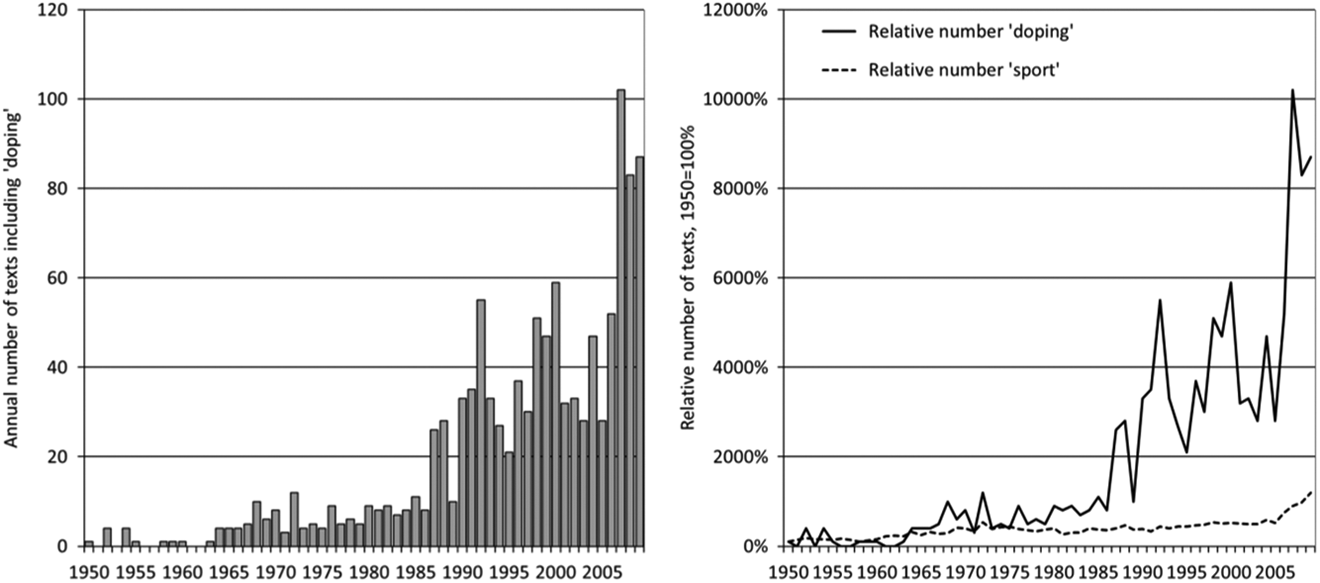
Texts including “doping” in Zeit and Spiegel: 1950–2009.
Thus, doping has made a career from a rather marginal subject to a permanent issue. It seems that the frequency of doping-related articles shows a cyclical pattern, which appears to be related to the Olympic Games. In addition, peaks seem to correspond with some incisive doping scandals (1987: Dressel; 1988: Johnson; 1991: Revelations on East-German doping; 1998: Festina scandal; and 2007: Jan Ullrich scandal).
In order to trace trends in the use of the word family of doping, all composites consisting of doping and another constituent found in the corpus were analyzed. For example, the composite “Dopingsünder” consists of the two constituents: “Doping” and “Sünder” (sinner). First, the development of the number of composites per decade has been traced. Then, composites with the prefix “anti-,” occasionalisms or ad hoc composites, and composite adjectives were given particular attention. While the absolute numbers are of interest, the relative tokens (per hundred words [phw]) for a 100,000-word corpus were calculated in order to allow for comparisons (Perkuhn, Keibel, & Kupietz, 2012). The analyses reveal substantial changes in language usage over time (cf. Table 1).
Frequencies of Tokens.
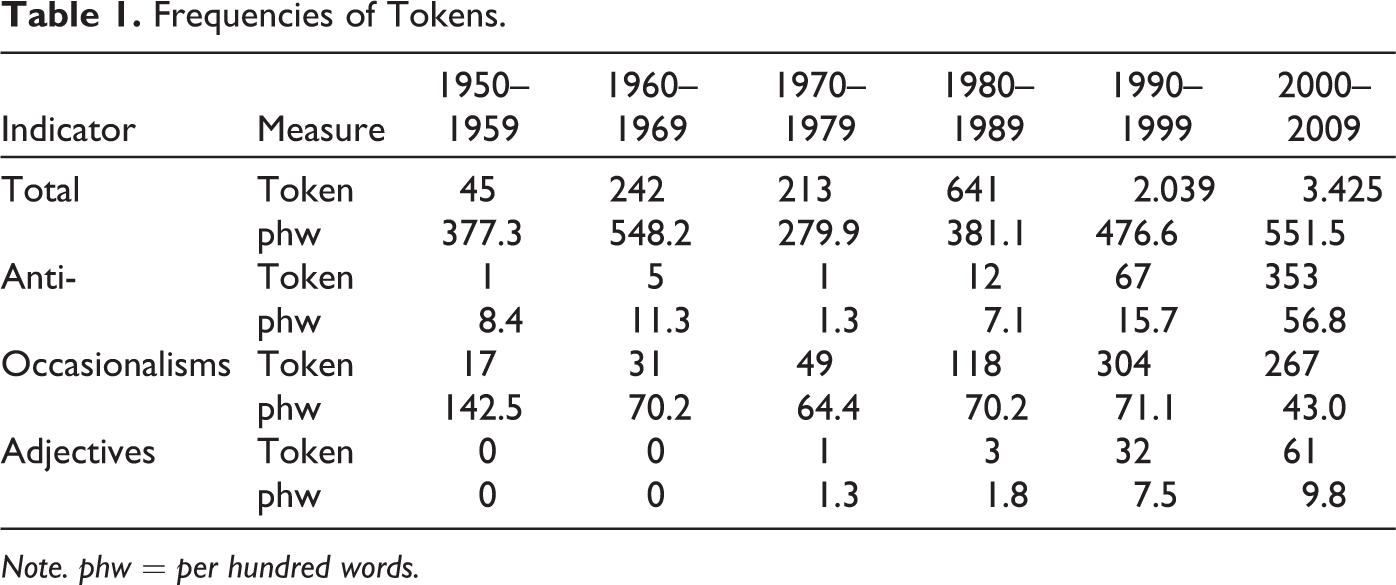
Note. phw = per hundred words.
The absolute number of doping composites has steadily and substantially increased. Maybe due to major scandals at the international and national level and the fact that the IOC had to acknowledge doping as Olympic problem, the 1960s represented a first step toward a more intense debate but the public attention for doping has increasingly grown since the 1980s. Furthermore, the public discourse about doping has assumed a more elaborated character. The usage of adjectives including doping as constituent has substantially increased (by the factor seven) and resulted in the creation of new words, such as, “dopingfrei” (free of doping). Additionally, the use of composites including the prefix “anti,” such as “Antidopinggesetz” (anti-doping law), has steadily increased since the 1970s. Again, the phw values show an increase by the factor 7 from the 1950s (phw = 8.4) to the 2000s (phw = 56.8). The increase reflects the growing influence and visibility of the anti-doping movement and its institutionalization. Finally, the relative number of occasionalisms decreases over time, and the trend becomes most evident with the transition from the 1990s to the 2000s. The increase corresponds with the creation of WADA, which facilitated a global harmonization of anti-doping stipulations and organizations, which might have served to institutionalize language use. While occasionalisms generally indicate linguistic productivity and the social need for exchange about a certain subject, the decreasing number of occasionalisms found suggests that the growing intensity of the public doping debate has resulted in the establishment of certain composites within public language use (cf. Rose, 2013).
Results for the most frequent composites of doping demonstrate again the high productivity of doping as token frequencies heavily increased. However, the list of most frequent composites remained relatively stable. The most visible changes appeared in the 2000s, since composites referring to institutional changes in anti-doping occupy the list of most frequent composites.
Research on moral panics has placed particular emphasis on how problems and deviants are named. Accordingly, the use of natural disaster metaphors for naming doping has been traced (cf. Figure 2).
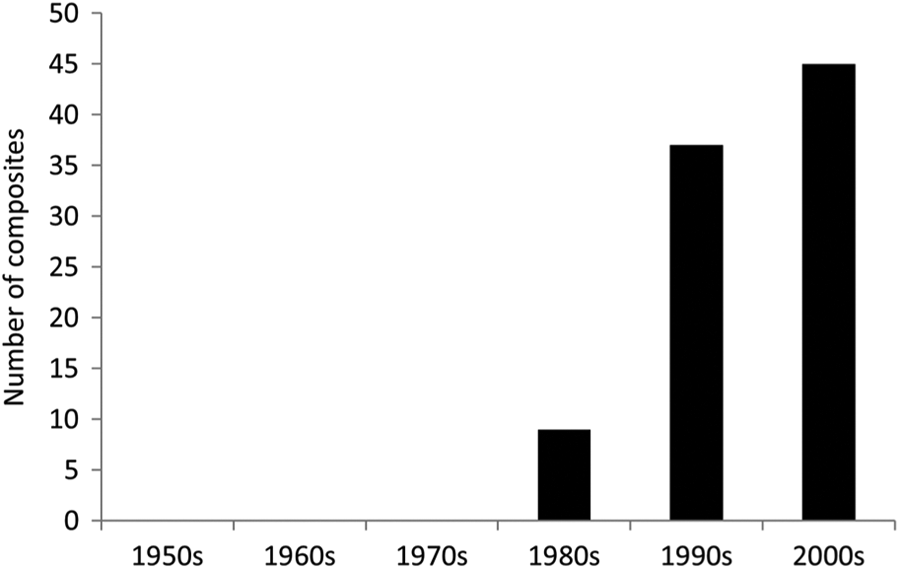
Composites referring to doping as social problem.
The problem naming employs from the 1980s on metaphors for natural disasters, epidemic diseases, and pollution, indicating a perceived loss of social control. However, more prevalent is the presence of composites referring to the clandestine East German doping system, which hints to the public shock about the revelations. In order to trace whether language use for naming involved actors has become more alarmist, composites referring to actors involved in doping were coded whether they referred to the religious or the criminal domain (Figure 3).
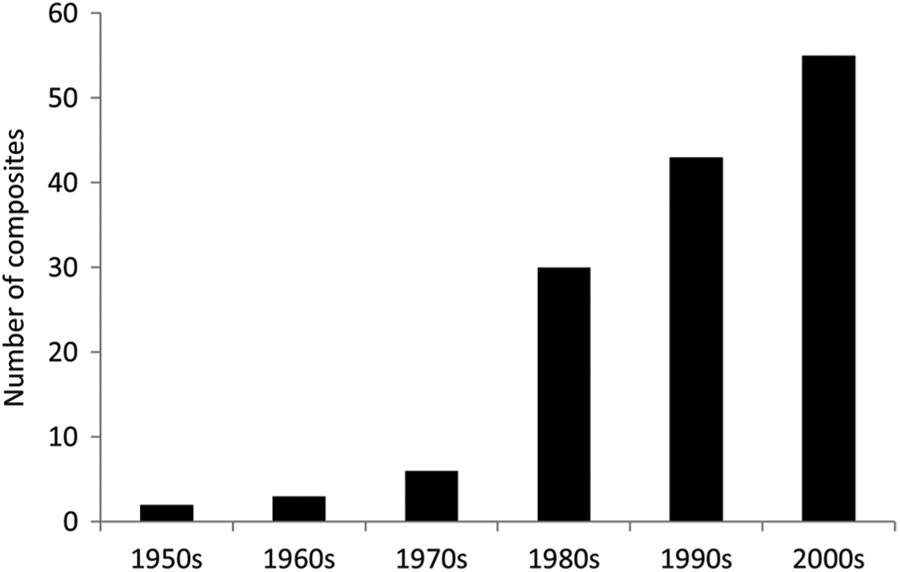
Composites referring to doping athletes.
Since the 1990s, the notion of “doping victims” or “doping damaged” appeared. This language use is again closely related to East German doping practices, where minors were administered performance enhancing substances without their knowledge or informed consent. The composite “doping sinner” (Dopingsünder) appeared first in the 1960s and has been used with an increasing frequency. However, the relative frequency of the token is highest during the 1980s before it decreases continuously. The following quote illustrates the use of the composite: Nahezu alle großen Radrennfahrer, die Deutschen Rudi Altig und Dietrich Thurau ebenso wie Hinaults Vorgänger Anquetil und Merckx, wurden als Almost all great road cyclist, the Germans Rudi Altig and Dietrich Thurau as well as Hinault’s predecessor Anquetil and Merckx, have been caught as Es hilft aber, wenn man schon mal Parksünder, Temposünder, Steuersünder oder wenigstens Kaloriensünder war. (Zippert, 2005) It helps if you have already been a parking sinner, speed sinner, tax sinner or calories sinner. (Translation) Alle Radrennfahrer dopen. (Hacke, 2005) All bike racers are doping. (Translation) In der DDR wurde systematisch und menschenverachtend gedopt, in der Bundesrepublik nur menschenverachtend. (Bürer & Klawitter, 1998) In the GDR it has been systematically and inhumanely doped, in the FRG only inhumanely. (Translation) 99 Prozent dopen, und 100 Prozent haben die Gelegenheit dazu. (Die Kontrollen sind ineffizient, 1998) 99 percent are doping, and 100 percent have the opportunity to do so. (Translation)
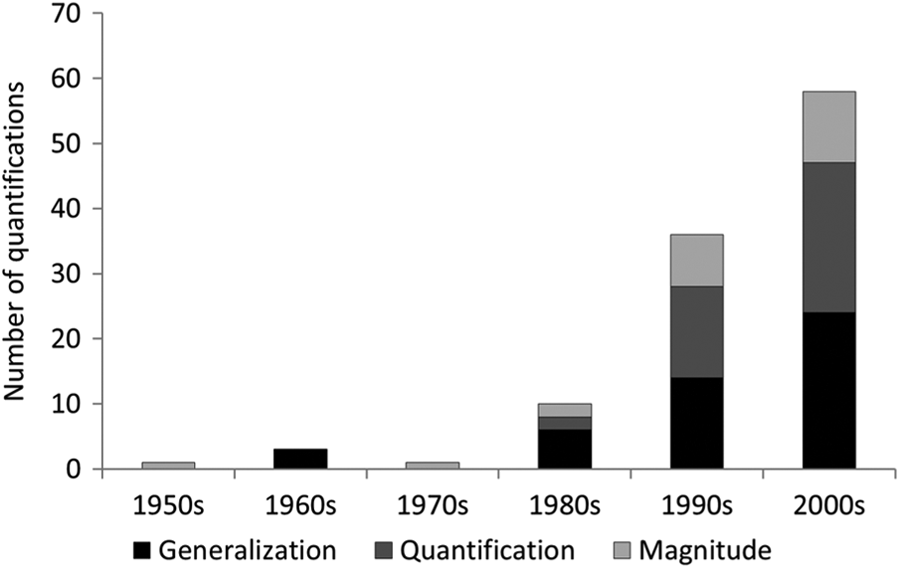
Quantifications of doping as social problem. Results of “dopen*” (are doping) and “gedop*” (are doped or have been doped) have been merged.
In order to trace how doping has been categorized by equating doping with other forms of deviance, we examined colligations, that is, phrases “Doping und *” (doping and *) and “* und Doping” (* and doping). Among others, the corpus included the following colligations: “Doping und Kindesmißbrauch” (Doping and child abuse) “Doping und Wettbetrug” (Doping and betting fraud) “Stasi und Doping” (Stasi and doping) “Drogensucht und Doping” (Drug addiction and doping)
CL scholars assume that collocates of a word contribute to its meaning and allow for its semantic analysis. To calculate collocations properly, a span of three words left and three words right of the lexeme doping was predetermined. In addition, only collocates that have a combined frequency higher than 20 were considered to be essential due to the rather small size of the corpus. Thus, collocates with low frequencies and simultaneous high MI score, which are of insufficient interpretational value to this study, were excluded.
Table 2 displays the 30 highest ranked collocates according to the MI scores. The higher the score the higher is the probability that the respective words “usually occur together and rarely occur apart” (Baker, 2010b, p. 24) within the corpus. Furthermore, a high MI score indicates a strong contextual relationship, which facilitates semantic interpretations of the word under scrutiny. Most of the high-ranked collocates of doping relate to a “fighting against” character. Collocates, such as “anti” (anti), “kontrolle(n)” (control(s)), “fahnder” (investigator), and “kampf” (fight), are strongly connoted with attempts to mitigate doping. Approximately 57% of the listed collocates can be subsumed under the category “fighting against” or “opposing” doping. Thus, doping in most contexts is denoted with processes and actions that are directed toward its erasure. While other listed collocates hint to specific doping cases (“radsport” [cycling] or “telekom” [telekom]), to state doping (“stasi” [stasi] or “system” [system]), these collocates only insufficiently foster semantic generalizations of doping.
Collocations for “Doping.”
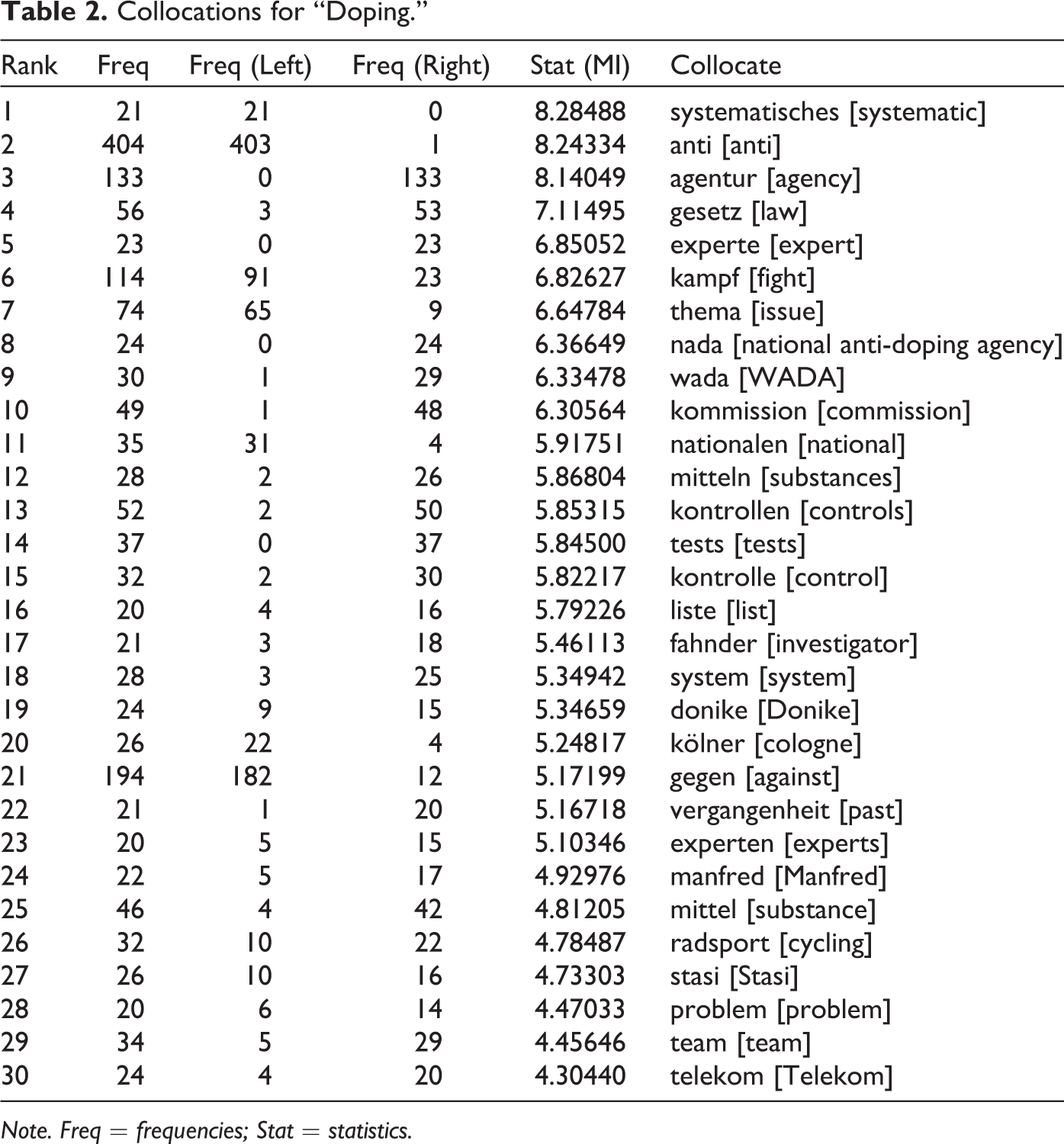
Note. Freq = frequencies; Stat = statistics.
As referred earlier, in order to trace whether the revelations about East German doping left a decisive impact on media discourse, the corpus was split into two subcorpora, that is, a 1950–1989 prereunification corpus and a 1990–2009 postreunification corpus, and key words were determined (Table 3).
Keyword Analyses for Two Subcorpora.
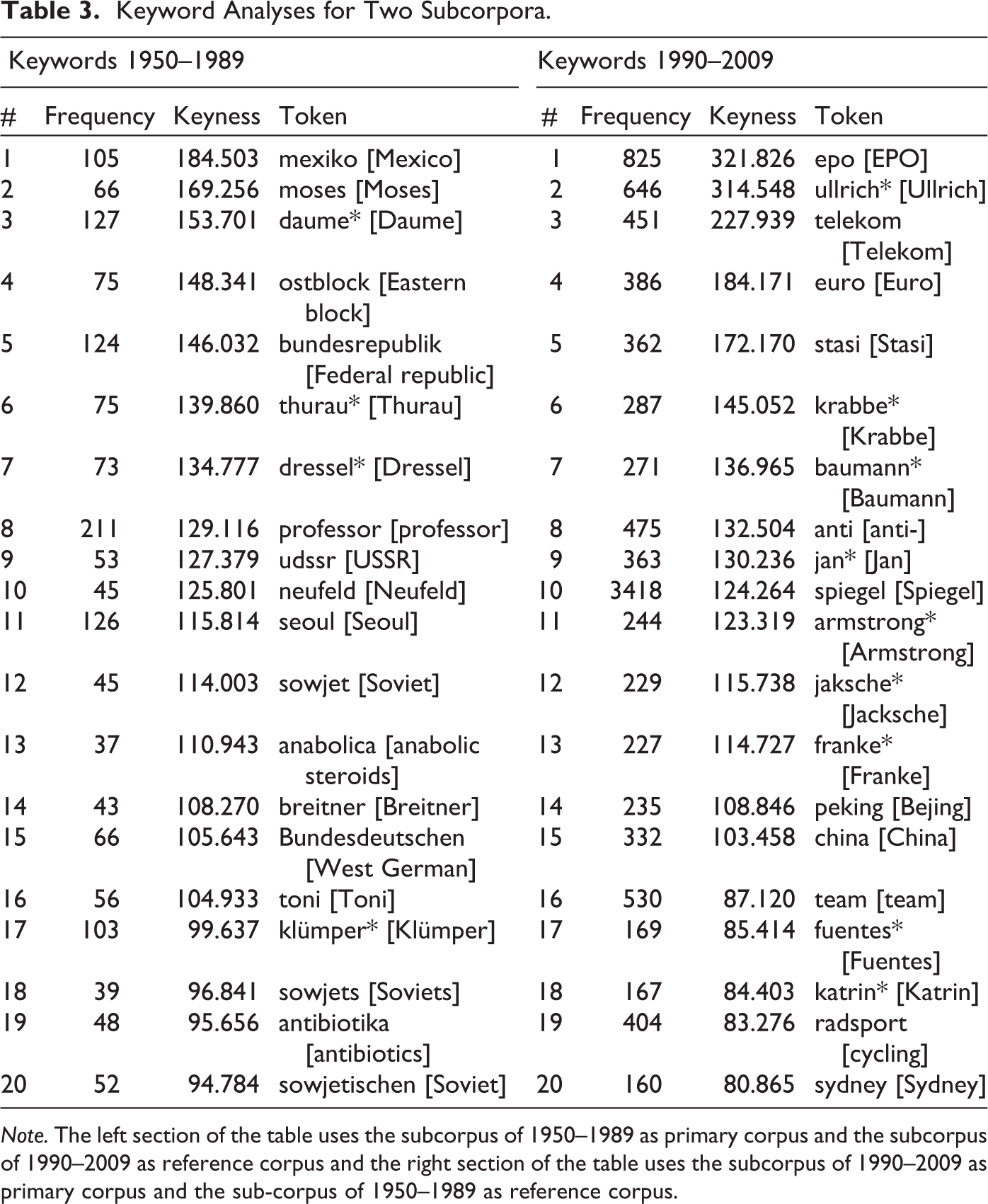
Note. The left section of the table uses the subcorpus of 1950–1989 as primary corpus and the subcorpus of 1990–2009 as reference corpus and the right section of the table uses the subcorpus of 1990–2009 as primary corpus and the sub-corpus of 1950–1989 as reference corpus.
The results defy the idea that East German doping had a lasting impact on the aboutness of the doping discourse. In contrast, the high number of proper names of actors involved in doping (marked with *) indicates the strong personalized character of the doping debate and reflects the most notorious doping scandals in the two periods. Only one key word—“stasi” (East German secret service)—is clearly related to East German doping practices. Surprisingly, the subcorpus 1950–1989 includes more key words indicating that doping was highly associated with communist countries (ostblock [Eastern block], udssr [USSR], and sowjet [Soviet]).
Discussion and Conclusion
Moral Regulation and Changes in Language Use
The central question addressed here has been whether the political success of the anti-doping movement is reflected in an increasing moralization of media discourses on doping as indicated by moralistic and alarmist language use. The findings are, however, complex.
In accordance with previous research, it could be demonstrated that attention for doping has heavily increased over the period examined. However, increased media attention might not only reflect the success of the anti-doping movement’s project of moral regulation but also changed media agendas. As investigative journalism faces cutbacks due to the newspaper crises, even upmarket publications might resort to sensationalist and scandalizing journalism (Critcher, 2011). This idea is supported by the substantially higher attention given to more recent doping scandals. Moreover, some of the increased media attention appears to be related to the legacy of East German doping and the subsequent attempts to deal with it.
Ultimately, the idea that the political success of the anti-doping movement is reflected in a substantially moralized media discourse received only limited support. There is evidence for alarmist language associating doping with natural disasters. Usually, such metaphors indicate a loss of social control and urgency of remedies. Yet, the idea of a spirals of signification according to which doping becomes equated with other social evils was not supported. However, composites and collocations indicate that the increasingly strict moral regulation of doping has left its impact on language use, as doping has been marked as a persistent and widespread problem subject to permanent efforts of mitigation, which reflects social realities insofar correctly as stricter anti-doping efforts did not erase doping but induced technology races between performance enhancement and test methods. Again, changes in language patterns could indicate as much successful moralization as changes in social practices resulting from the institutionalization of anti-doping policies. Accordingly, it can be concluded that the long-term project of moral regulation of doping has left its impact on language use. However, the approach applied contributes little to understanding the dynamics between social problems, moral entrepreneurs, and media coverage.
Limitations of the Current Approach
First of all, the limitations result from the sample used because tabloids seem to be more prone to resort to moralizations. Moreover, the text sample was rather small restricting the opportunity to derive statistical significant results and to identify triggering events. However, as CL methods seemed to support previous findings on media coverage of doping as personalized and focused on scandals, they might be able to substitute for more costly and time-consuming methods of hand coding. Nevertheless, the use of purely quantitative CL methods poses substantial limitations.
While CL allows tracing long-term changes in language use, the methods applied do not allow drawing conclusions on causal relationships. For understanding the political economy of the moral regulation of doping in a fine-grained process, studies on volatile panic episodes are indispensable. Studying the complex interactions of diverse social agents, the media, representations, and social reality requires a mix of quantitative and qualitative methods in the tradition of moral panic research. As Denham (2004) has demonstrated, media can serve as agenda setters of anti-doping policies. However, sport officials have also managed to effectively resist public pressures (Meier et al., 2012). Accordingly, more fine-grained research on changing media agendas and political opportunity structures is needed. Above that, the enormous linguistic productivity of doping invites speculations why the subject resonates so well in media discourse. However, for understanding why performance enhancement figures so strong in capitalist societies, different methods addressing the broader ideological foundations are needed. Finally, CL does not allow for inferences on audience reactions. Thus, marking doping as an endemic and widespread problem might not per se invoke moral outrage or distrust.
Perspectives for Future Research
Notwithstanding these limitations, CL might offer scholars of sport communication new perspectives, given the fact that almost all forms of print media publications are now available in digital form. Moreover, CL methods are quite flexible in theoretical terms. Thus, CL techniques can offer new perspectives for studying sport-specific language or the use of sport metaphors (Segrave, 2000; Shields & Bredemeier, 2011). As the works of Bubenhofer on language use in Alpinist publications demonstrate, CL techniques reveal the professionalization of sport journalism and changes in language use point also to changes in motivation of mountaineers (Bubenhofer & Schröter, 2012). Ultimately, CL approaches open new perspectives for doing comparative research, as CL provides cross-linguistic techniques (Taylor, 2014).
Footnotes
Declaration of Conflicting Interests
The author(s) declared no potential conflicts of interest with respect to the research, authorship, and/or publication of this article.
Funding
The author(s) disclosed receipt of the following financial support for the research, authorship, and/or publication of this article: Research presented here was partially supported by a grant from the Federal Institute for Sport Science (Bundesinstitut für Sportwissenschaft – BISp) for the project ‘Doping in Germany from 1950 until 2009’ [grant number IIA1-081903A/09-12].
