




Abstract
This study investigates the effects of the Houston Astros’ first World Series win on locals who were affected by the natural disaster, Hurricane Harvey. Approaching the topic to understand whether organizational identification has similar positive outcomes to basking in reflected glory, this study specifically measures whether Houston residents were able to cope better and whether their meaning in life increased. After distributing surveys to Houston residents who reported being impacted by the hurricane, the findings indicated stronger organizational identification with the Houston Astros led to stronger reflected glory. Additionally, fans who felt reflected glory were more able to cope with tragedy, and self-efficacy toward overcoming the disaster partially contributed to this relationship. Lastly, fans who coped with the disaster felt a greater meaning in life. Theoretically, our study makes new connections between organizational identity and reflected glory, while tying reflected glory to coping outcomes. The relationship between coping and meaning in life is also explored. Our findings demonstrate how a city hit by tragedy could potentially see positive outcomes when their local professional team achieves major successes, such as winning the World Series.
Introduction
On Sunday, August 27, 2017, the path of Hurricane Harvey triggered catastrophic flooding in the city of Houston. The hurricane was declared as one of the costliest storms in America (Amadeo, 2018), and a multitude of nonprofit organizations began to donate and help victims of this natural disaster, garnering a lot of media coverage as people tried to find credible institutions to donate money, clothes, and food (CNN Impact Your World Team, 2017; Samuels & Platoff, 2017; Wamsley, 2017). Coincidentally, as the city of Houston began its recovery efforts, its Major League Baseball (MLB) team was also in a position to win its first ever World Series.
Three months after the natural disaster, the Houston Astros won its first World Series. The victory played a unique role in lifting the spirits of Houston locals who had just endured one of the worst natural disasters in U.S. history. The Astros players and its organization recognized this unprecedented opportunity, as Astros second baseman and World Series Most Valuable Player (MVP) Jose Altuve said in an interview with Sports Illustrated: I saw a lot of people there who told me they lost their homes, lost everything they had. I felt bad. But in the middle of all that disaster we were able to still see smiles on their faces. I said to myself, These people are going through a really tough time, and they’re still able to smile. And you’re able to give them hope [emphasis in original] (Verducci, 2017).
However, this study does acknowledge the critical view of sports organizations as saviors. Like any other business, sports organizations are businesses, and they must meet their bottom lines. Caring for the community through charitable initiatives or corporate social responsibility agendas is still part of any organization's bottom line (Coombs & Holladay, 2012; L’Etang, 2013). This study investigates only the Astro’s response to Hurricane Harvey while acknowledging recent issues the organization has faced in addressing problematic behavior in its clubhouse, including the 2019 playoff incident involving an assistant general manager and his professionalism toward female reporters (Apstein, 2019) and recent accusations of cheating during the 2017 playoffs (Sanchez & Sterling, 2019). However, this study takes the opportunity to investigate a unique coincidence to understand how the series of events surrounding the 2017 World Series may have impacted a local community recovering from tragedy.
Thus, through the lens of reflected glory, the study demonstrates how a sports team’s success may help a community emotionally cope with recent tragic events, particularly those impacting potential fans. While previous research has demonstrated the impact of a team’s success on fans’ emotions such as overall mood and self-esteem (Keaton, Gearhart, & Honeycutt, 2014; Knoll, Schramm, & Schallhorn, 2014; Wann, Inman, Ensor, Gates, & Caldwell, 1999), this study seeks to understand whether the impact of the Astros’ World Series win impacted local’s feelings of coping with a recent natural disaster. Although some studies have looked at team identification and coping (e.g., Inoue, Wann, Funk, Yoshida, & Nakazawa, 2015), a paucity of research exists in sports media effects evaluating the relationship of a team’s success and coping; thus, it is important to address this gap in the research. The current study will expand our knowledge of the psychological impact sports teams might have on communities that suffer tragedy. This will in turn help professional sports organizations further understand their obligations and impact on their fan base and locals, specifically the role they can play in natural disaster recovery efforts.
Literature Review
Organization Identification
Organizational identification is the “perception of oneness with or belongingness to an organization, where the individual defines him or herself in terms of the organization in which he or she is a member” (Mael & Ashforth, 1992, p. 104). This concept emerged out of social identity theory to explain a specific kind of identity relating to a person’s affiliation with an organization, such as one’s alma mater. Identity also goes beyond simply reflecting beliefs of a group to defining self in terms of a “social classification” (Mael & Ashforth, 1992, p. 105). One internalizes membership in the group as a discerning characteristic of self (Mael & Ashforth, 1992; Wann, 2006). Organizational identity can predict behavioral support for the organization such as giving funds (Drezner, 2009; Mael & Ashforth, 1992; Tidwell, 2005), advising others become members of the same group, and participating in events specifically for group members (Mael & Ashforth, 1992). Volunteers who identified with the nonprofit they volunteered for also demonstrated higher levels of satisfaction and commitment to the nonprofit (Tidwell, 2005).
Sports fans are another group of individuals who identify deeply with specific organizations (Bhattacharya & Sen, 2003). Sports fandom can be considered organizational identification because fans classify themselves as members of a specific sports organization (Bhattacharya & Sen, 2003). Identification goes beyond simply following a team to “personal commitment and emotional involvement…with a sports organization” (Sutton, McDonald, Milne, & Cimperman, 1997, p. 15). The term sports team identification incorporates elements of Mael and Ashforth’s (1992) organizational identification to the sport’s context to signify when fans feel oneness with the team and other fans (Branscombe & Wann, 1991; Carlson, Donavan, & Cumiskey, 2009; Gkorezis, Bellou, Xanthopoulou, Bakker, & Tsiftsis, 2016; Wann, 2006). These fans seek a sense of belonging to a group, bond with other fans of the same team, and classify themselves according to this group (Wann, 2006). Gwinner and Swanson’s (2003) Team Identification Scale is Mael and Ashforth’s (1992) Organizational Identification Scale modified for a sports context by simply changing “organization” to “football team.”
Sports team identification has been linked to positive emotional outcomes such as higher levels of self-esteem and social connectedness (Wann, 2006), emotional well-being, and lower feelings of social alienation (Branscombe & Wann, 1991). Higher team identification has also been linked to behavioral outcomes such as watching more of the team’s games, team-related retail spending (Carlson et al., 2009), and purchasing products from the team’s sponsors (Madrigal, 2000). Negative team performance may even adversely affect work performance when fans deeply identify with their teams (Gkorezis et al., 2016).
Team success may or may not be a necessary component to increase feelings of organizational identification. Success may contribute positively to organizational identity with that team through perceptions of organizational prestige (Carlson et al., 2009). While team success was not related to the degree of identification with the team, fans living geographically distant from their team did tend to show greater identification when the team was successful (Branscombe & Wann, 1991). In purchasing a team sponsor’s products, team success may be more influential for fans low in organizational identity (Ngan, Prendergast & Tsang, 2011). Thus, Houston Astros’ World Series win may increase feelings of organizational identity for fans living farther from the Houston area or those with moderate or low levels of team identification.
This study seeks to better understand the role of organizational identification in the context of sports, especially given the nature of the Houston Astros’ situation in 2017. Previous literature connects organizational identification to sports team identification (e.g., Gkorezis et al., 2016; Gwinner & Swanson, 2003), and the residents’ connection with the Houston Astros as an organization is paramount to our understanding of their reactions to the natural disaster. Given the work the team did in the community (as cited in the Introduction) and the team's “Houston Strong” public relations campaign, the connection between city residents and the Astros' call to action goes beyond fandom to feeling connected to the organization for all it was doing in the community at the time. While fandom is certainly important—given previous research on the topic—measuring organization identification may provide additional clues as to how residents felt about the organization itself and its role in recovery efforts, both through charitable actions and through winning a championship. Thus, our study seeks to apply Mael and Ashforth’s (1992) organizational identification to the sports context, following previous sports research (e.g., Gkorezis et al., 2016; Gwinner & Swanson, 2003).
Reflecting in the Glory of the Astros’ World Series Win
Disposition theory of sports spectatorship contends that fans’ emotional feelings of enjoyment are dependent on the affective dispositions they form toward individual teams and athletes (Raney, 2009; Zillmann, Bryant, & Sapolsky 1989; Zillmann & Paulus, 1993). Essentially, a fan’s emotional investment and commitment leads to a continuum of feelings from intense disliking through indifference to intense liking. The more passionate fans are, the more their enjoyment increases as they view favorable outcomes for their identified team and the opposite emotional effect takes place for their disliked team (Raney, 2009). Emotional affiliations that fans hold for teams and athletes allow fans to experience feelings of enjoyment and basking in reflected glory (Raney, 2009; Zillmann, 1991, 1994).
Basking in reflected glory (BIRGing) explains the psychological route fans use to boost their well-being and enhance their social identity by associating with successful groups (Doosje, Ellemers, & Spears, 1999; Roccas, 2003; Wann, 2006). In the context of sports, fans attempt to improve their social and team identity through BIRGing or “increasing association with successful others” of a sports team’s success (Cialdini, et al., 1976; Dalakas, Madrigal, & Anderson, 2004; Wann & Branscombe, 1990). Fans higher in team identification tend to BIRG more and are less likely to cut-off reflected failure (CORF), or distance themselves from the team when it is unsuccessful (Wann & Branscombe, 1990). Additionally, a preponderance of research has demonstrated that fans who BIRG and CORF are emotionally and behaviorally affected, including their moods and outlook upon unrelated events (see Table 1; Berument, Ceylan, & Onar, 2013; Hirt, Zillmann, Erickson, & Kennedy, 1992; Keaton, et al., 2014; Knoll, et al., 2014; Schweitzer, Zillmann, Weaver, & Luttrell, 1992; Wann, 2006).
Reflected Glory Effects.
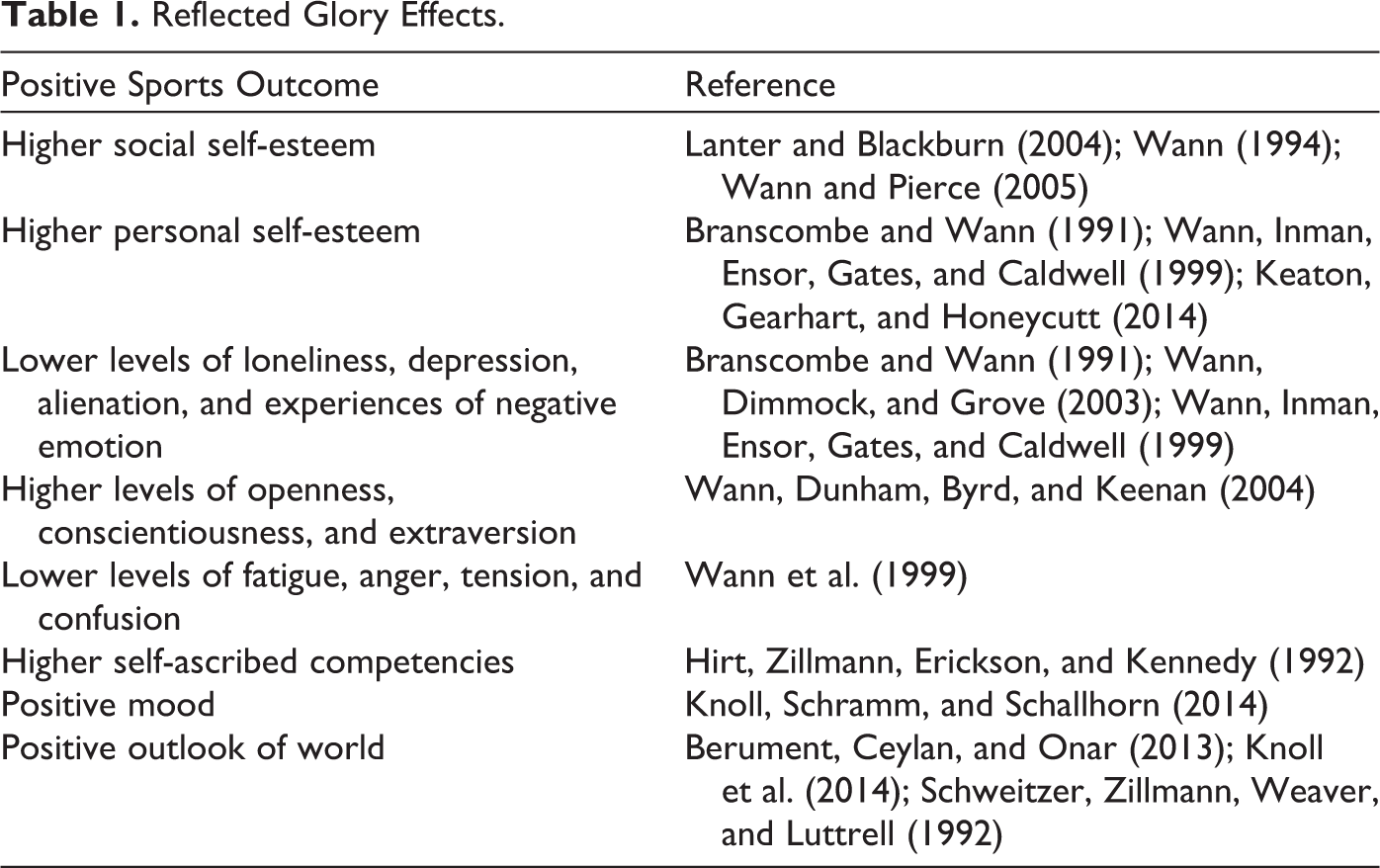
BIRGing is most often studied in conjecture with sports team identification; however, it is possible organizational identification might lead to BIRGing or CORFing. While organizational identification has been applied in strategic communication literature by measuring positive outcomes for the organization that include positive perceptions and benefits (i.e., donations or recruitment; Carlson et al., 2009; Drezner, 2009; Mael & Ashforth, 1992; Tidwell, 2005), it is possible people are self-associating themselves with the organization’s success, and the prior literature was possibly measuring potential BIRGing outcomes. Specifically, organizational identification can lead to BIRGing in the sports context. Thus, those who identify highly with the Astros organization likely experienced BIRGing more in the team’s 2017 World Series win, leading to our first hypotheses:
BIRGing and Coping After Hurricane Harvey
The effects of sports team identification and BIRGing leading to outcomes unrelated to the sporting event have been documented internationally (Berument et al., 2013; Knoll et al., 2014; Wann, Dimmock, & Grove, 2003). As a seemingly universal psychological processing, the positive outcomes from BIRGing align with the success of one’s team. For example, if one’s team wins, a fan’s positive outcome might include overall mood increases (Knoll et al., 2014), higher self-ascribed competencies (Lanter & Blackburn, 2004; Wann, 1994; Wann & Pierce, 2005), higher self-esteem (Keaton, et al., 2014; Wann et al., 1999), and other effects (see Table 1). Likewise, if one’s team “fails” or “loses,” there are negative outcomes such as a negative outlook on the world (Berument et al., 2013; Knoll et al., 2014; Schweitzer et al., 1992) or higher levels of loneliness, depression, or other negative emotions (Wann, et al., 2003; Wann et al., 1999).
The relationship between team identification and BIRGing leading to these various emotional and behavioral outcomes are well documented; however, it is possible that there are also positive outcomes for sports fans as a result of their identification with the organization (Madrigal, 2000; Ngan et al., 2011). Furthermore, BIRGing could potentially affect one’s coping strategies. For example, Lanter and Balckburn (2004), Wann (1994), and Wann and Pierce (2005) found that BIRGing often leads to higher levels of social self-esteem and social well-being, which are constructs related to coping strategies (Kim, Han, Shaw, McTavish, & Gustafson, 2010).
Participating in sports may help with disaster coping in children (Ekanayake, Prince, Sumathipala, Siribaddana, & Morgan, 2013; Henley, 2005; Kirkley & Medway, 2003), and leisurely sports participation may be an important, positive way for disaster victims to “escape” the realities of the experienced trauma related to natural disasters (Rung, Broyles, Mowen, Gustat, & Sothern, 2011). For spectators, team identification contributes to postdisaster social well-being, particularly when fans perceived the team to be providing emotional support to the disaster recovery (Inoue et al., 2015). While not specifically testing BIRGing, Inoue, Wann, Funk, Yoshida, and Nakazawa (2015) demonstrated the impact of well-being for fans high on team identification having greater perceptions of emotional support following adversity. Regardless the support of team identification in helping spectators cope with tragedy, this study seeks to understand whether organizational identification leads to similar outcomes as team identification. As a result, we propose the following hypothesis:
Given the positive impact of BIRGing on self-esteem (Branscombe & Wann, 1991; Keaton et al., 2014; Wann et al., 1999), it is possible self-efficacy could mediate the relationship between reflected glory and coping with tragedy. Self-efficacy is one’s belief about their capability to produce or achieve an activity in order to complete or cope effectively with stressful situations (Bandura, 1977; 1997). Prior literature has identified self-efficacy’s role in the regulation of stress, self-esteem, and well-being (Bandura, 1997; Bisschop, Knegsman, Beekman, Deeg, 2004; Karademas, 2006), some of which are documented outcomes of BIRGing in sports context (Keaton, et al., 2014; Wann, et al., 2003; Wann & Pierce, 2005). Additionally, Hirt, Zillmann, Erickson, and Kennedy (1992) did not specifically measure self-efficacy but found fans to have higher self-ascribed competencies, which is one of many components of self-efficacy. Thus, the authors to predict the following hypothesis:
Future Outlooks for Houston After the World Series
Lastly, a multitude of BIRGing research identified aspects of well-being such as lowered levels of loneliness, depression, anger, and negative emotions (Banscombe & Wann, 1991; Wann, et al., 2003; Wann et al., 1999). These findings point to the possibility that BIRGing could lead to higher coping strategies, which in turn we believe could lead to higher levels of meaning in life. Meaning in life is a construct that describes an individual’s cognitive and behavioral activity to comprehend themselves and their unique fit within the world and to identify their own life goals (Steger, Kashdan, Sullivan, & Lorentz, 2008).
Often well-being and meaning in life are connected due to the association to those with higher positive signs of mental health. Research on meaning in life has specifically demonstrated its association with enjoyment (Bonebright, Clay, & Ankenmann, 2000), life satisfaction (Chamberlain & Zika, 1988), and happiness (Debats, van der Lubbe, & Wezeman, 1993): concepts that have also been linked to well-being (e.g., King, Hicks, Krull, & DelGaiso, 2006; Mascaro & Rosen, 2005; Reker, 2005; Steger & Frazier, 2005; Steger, Frazier, Oishi, & Kaler, 2006; Urry et al., 2004). Unfortunately, a paucity of scholarly research has identified a connection between coping mechanisms and the possibility of people’s positive outlook of the world. Given this gap in the literature, the authors sought to investigate whether there was an impact on better coping mechanisms leading to positive emotional outcomes such as meaning in life. The existing literature demonstrating positive outcomes such as higher levels of social self-esteem and social well-being when BIRGing (Lanter & Blackburn, 2004; Wann, 1994; Wann & Pierce, 2005) and Hypothesis 2 connecting coping with tragedy directs our final hypothesis of positive outcomes possibly experienced through coping strategies:
Method
Participants
Participants were recruited through snowball sampling of people in the researchers’ personal networks and via Amazon Mechanical Turk (MTurk), an online task-completion system in which individuals can request others to perform a task and pay them online. MTurk has increasingly become a viable alternative for collecting quality results in social science research (Buhrmester, Kwang, & Gosling, 2011). Some specific advantages to collecting data through MTurk include demographically diverse samples; spanning a wide range of age, ethnicity, socioeconomic status, language; and (if desired) country of origin (Ross, Irani, Silberman, Zaldivar, & Tomlinson, 2010). Overall, MTurk has shown to accrue an equally reliable data collection as other online survey methods (Buhrmester et al., 2011; Mason & Suri, 2012).
Participants received 50 U.S. cents for their participation. Participants were required to be at least 18 years of age and to be from the United States. To ensure a high quality of responses, attention checks were placed randomly throughout the survey. Specifically in the MTurk description, those who were impacted by the hurricane were asked to partake in the study. The total number of responses collected was 776 participants. Of these participants, only 19 were recruited using snowball sampling, so the vast majority were recruited through MTurk. All 757 MTurk participants were paid because they completed the survey before the researchers screened them out; one participant of the snowball sample was randomly drawn to receive a $50 Amazon gift card as an incentive. A final sample of 249 (N = 249) was finalized after eliminating those who did not consent or said they were not impacted by the hurricane via their personal home or business through screening questions. Only three of these final participants were recruited using snowball sampling.
The average participant in this study was 33 years old, White (60.6%), had a 4-year college degree (37.8%), and has lived in the Houston area for about 10.5 years (Min = 0, Max = 55, SD = 11.64). As for income, 25.7% of participants (the highest group) were within the $50,000–74,999 income range, slightly above the City of Houston’s population average of $50,000. There were slightly more females (51.4%) than males, while African Americans (18.5%) and Caucasians (60.6%) were overrepresented in the sample and Hispanics underrepresented (6.4%) according to Houston demographics (City of Houston, 2017). Overall, the obtained sample matches the U.S. population in several Census metrics but does not completely match the City of Houston’s population (see Table 2).
Comparison of Study Sample and U.S. Population.
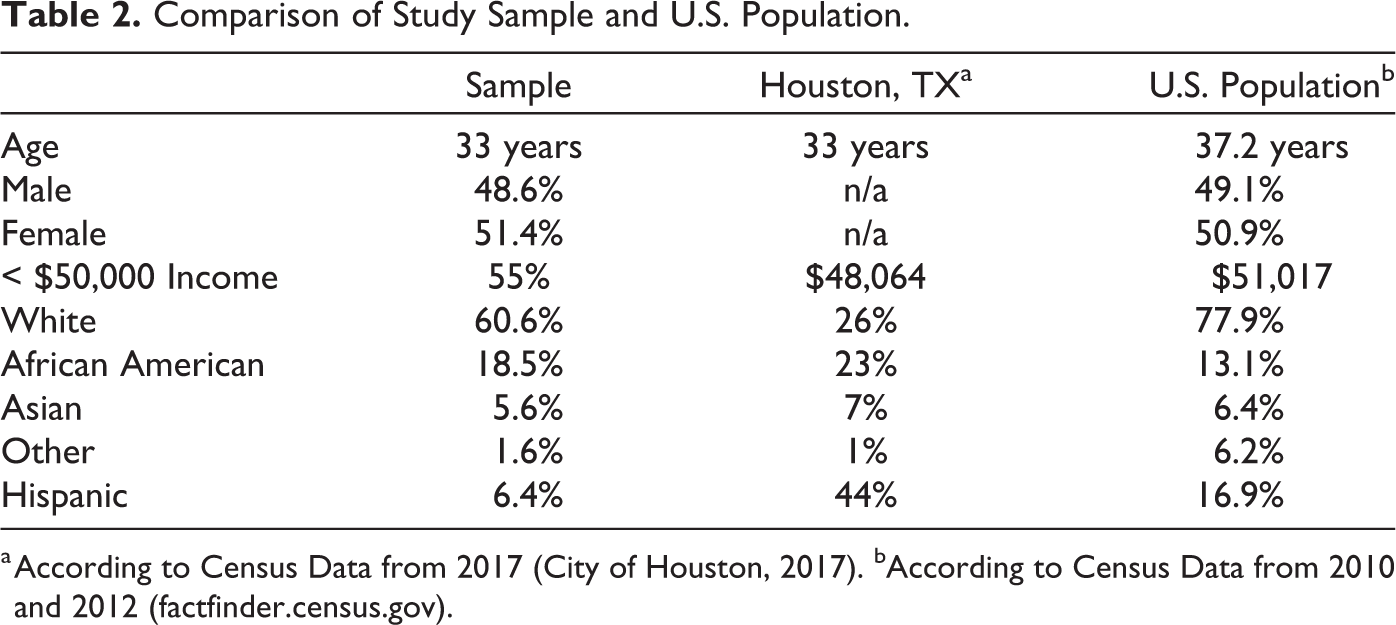
a According to Census Data from 2017 (City of Houston, 2017). bAccording to Census Data from 2010 and 2012 (factfinder.census.gov).
Procedure
This survey was distributed on MTurk with a description asking for participants who were impacted by Hurricane Harvey to participate. A series of impact questions were included in the survey to screen those who were not impacted by the hurricane. This was done because the authors only wanted to survey the effect of people who were actually impacted by Hurricane Harvey. Thus, if someone lived in Louisiana and was impacted by the hurricane, they were still included in the sample; they did not need to live in the Houston city proper as fans can also be geographically dispersed (e.g., Branscombe & Wann, 1991). Additionally, two measurements of fandom were included to verify that the sample considered themselves fans of the Astros, such as “How would you describe yourself as a Houston Astros fan?” and “How much did you care about the Houston Astros winning the MLB World Series this year?” Responses were measured on a Likert-type scale.
Measures
Impact of hurricane
Due to collection via MTurk, we designed filter questions to sort those who live in the area by asking “Please indicate the number of years you have lived in the Houston, TX, area.” Additionally, we asked whether they were personally impacted by Hurricane Harvey. Questions included: “Was your home or personal property damaged by Hurricane Harvey?” “Do you own a business? If you own a business, was your business damaged by Hurricane Harvey?” and “Did you have to evacuate your home as a result of Hurricane Harvey?” If participants answered yes to the questions that indicated if they lived in the Houston area and were personally impacted by the hurricane, they continued to an intensity measure rating on a scale from 1 being no damage to 10 being total damage. Questions included: “How much damage did your home or personal property suffer as a result of Hurricane Harvey?” and “How much damage did your business suffer as a result of Hurricane Harvey?”
Impact of Event Scale
Horowitz, Wilner, and Alvarez’s (1979) Impact of Event Scale included 15 items that assess the emotional impact which a traumatic event causes by looking at intrusive thoughts, emotional numbing, and avoidance. The scale included items such as “I tried to remove it from memory” and “Any reminder brought back feelings about it.” Responses were recorded on a 7-point scale (M = 4.38, SD = 1.07, Cronbach’s α = .90).
Self-Efficacy Scale
A 23-item scale developed by Sherer et al. (1982) was used to measure an individual’s sense of self-efficacy. The dimensions of this scale include general self-efficacy including items such as “When I make plans, I am certain I can make them work,” and social self-efficacy including items such as “It is difficult for me to make new friends.” Responses were recorded on a 7-point scale (M = 4.19, SD = 0.72, Cronbach’s α = .75).
Reflected Glory Scale
An 11-item scale developed by McCullough, Emmons, and Tsang (2002) was used to measure one’s sense of awe, gratitude, and life reflection. The scale included items such as “I felt small or insignificant” and “I felt a sense of appreciation.” The analysis of Cronbach’s reliability for this study presented satisfactory results overall α = .873. Responses were recorded on a 7-point scale (M = 4.56, SD = 1.11, Cronbach’s α = .87).
Organizational Identification Scale
A 6-item scale was used to measure a form of social identification in which the individual defines themselves in terms of their membership with an organization (Mael & Ashforth, 1992). The scale included items such as “When someone criticizes the Houston Astros, it feels like a personal insult” and “I am very interested in what others think about the Houston Astros.” Responses were recorded on a 7-point scale (M = 3.69, SD = 1.58, Cronbach’s α = .92).
Meaning in Life Scale
A 10-item scale was used to measure the meaning in life (Steger et al., 2006). The scale included items such as “I understand my life’s meaning.” and “I am looking for something that makes my life feel meaningful.” Responses were recorded on a 7-point scale (M = 4.48, SD = 1.06, Cronbach’s α = .84).
Results
Hypothesis 1 stated that organizational identification would significantly predict participants’ reflected glory. A multiple linear regression was calculated to predict participants’ reflected glory on identification with the organization (see Table 3). When reflected glory was predicted, it was found that organizational identification (β = .37, p < .000) was a significant predictor. A significant regression equation was found, F(1, 247) = 40.05, p < .000, R2 = .14.
Regression Analysis for Hypotheses 1.

Hypotheses 2a and 2b predicted self-efficacy would mediate the relationship between reflected glory and coping with tragedy. The mediation analysis was conducted using a PROCESS macro developed by Hayes (2013). This mediation analysis was perceived to be advantageous because it used bootstrapping procedures to create a model of the data with 95% confidence intervals (CIs) for direct and indirect effects (Atwell Seate & Mastro, 2017). This analysis used Model 4 with 5,000 bootstrapped samples. The mediation analysis determined that the model was significant, F(1, 247) = 28.39, R2 = .103, p < .000 (see Figure 1). Also as predicted, self-efficacy had a positive indirect effect on reflected glory, b = .06, 95% CI [.01, .14]. Complete mediation was not present, as reflected glory still had a positive direct effect on coping with tragedy, b = .37, 95% CI [.26, .49]. Hypotheses 2a and 2b were partially supported.
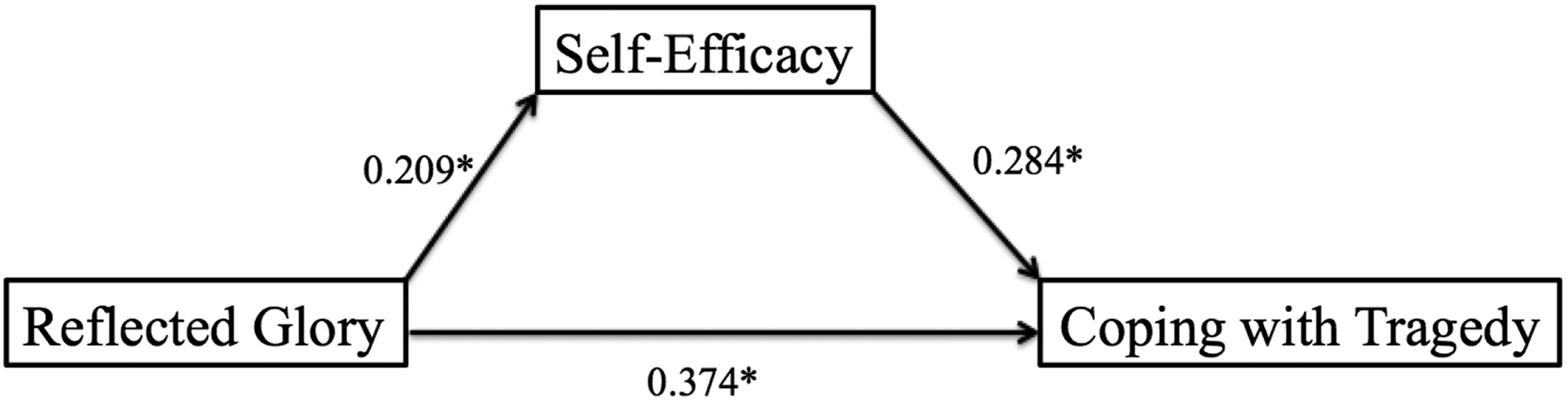
The standardized regression coefficient between reflected glory and self-efficacy was statistically significant as was the standardized regression coefficient between self-efficacy and coping with tragedy.
Hypothesis 3 stated that coping with tragedy would significantly predict meaning in life. A single linear regression was calculated to predict participants’ meaning in life on coping with tragedy. Coping with tragedy predicted meaning in life (β = .37, p < .000). A significant regression equation was found, F(1, 247) = 39.26, p < .000, R2 = .14 (see Table 4). Coping with tragedy was a significant predictor of meaning in life, supporting Hypothesis 3.
Regression Analysis for Hypotheses 3.

Discussion
Houston faced one of the costliest hurricanes in American history when it hit on August 27, 2017 (Amadeo, 2018). Under 12-1 odds to open the divisional series round of the 2017 World Series playoffs, which was the second worst of the four remaining teams (Rosenstein, 2017), the Astros won their first championship in front of a home crowd. Out of tragic happenstance of a city hit by a natural disaster receiving its first World Series win months later, this situation presented a unique opportunity to study the impact of reflected glory recovering from a natural disaster.
Theoretical Implications
Organizational identification and reflected glory
Our study specifically looked at the contribution of organizational identity to emotional fan outcomes like BIRGing. A propensity of sports literature supports team identification and reflected glory leading to positive outcomes (Branscombe & Wann, 1991; Keaton et al., 2014; Wann et al., 1999), and this study strictly was interested in the locals’ reflected glory regarding their MLB team winning its first World Series. Previous research found that teams losing had implications on fans’ job performance, while winning did not have positive implications (Gkorezis et al., 2016). Our study was able to make the connection between organizational identification and positive emotional outcomes: Winning allowed Astros fans to BIRG despite having been affected by a natural disaster. Given the paucity of research on sports’ roles in natural disaster recovery, this study may be one of the first to make this connection specifically to a natural event.
This study’s findings reveal the complicated nature in measuring fans’ feelings about successful mega-events such as championships and open doors for future sports researchers to distinguish fans with high identification with the sports team from bandwagon fans using the success of a sports team championship to boost self-esteem and well-being (Doosje et al., 1999; Roccas, 2003; Wann, 2006). Because our study tested organizational identification separately from team identification, results are able to build upon research in the organizational identification context. Because organizational identification and team identification are wholly separate feelings from fandom (Gkorezis et al., 2016; Gwinner & Swanson, 2003), the current study further illustrates the importance of understanding how identification with a sports organization is important to eliciting BIRGing. Thus, fandom alone may not be enough to elicit BIRGing effects, and perhaps identification with the sports organization captures this team–individual relationship better.
Additionally, this research highlights organizational identification as a key predictor in reflected glory. Given the origins of organizational identification (Mael & Ashforth, 1992) and team identification (Tajfel & Turner, 1986) stemming from social identity theories, it is not surprising that our measure of organizational identification predicted reflected glory. Organizational identification is about feeling a part of an organization itself rather than simply being a fan of it. Our study adds to sports fandom literature by suggesting that people may also feel a part of the Astros organization, which may be above and beyond simply being a fan, ideas supported by previous work on team identification (Gkorezis et al., 2016; Gwinner & Swanson, 2003). Given the humanitarian efforts launched by the Astros organization in the wake of the disaster (Pulsinelli, 2017), people may feel close ties to the organization itself by considering themselves members of the Astros organization as a result of interacting with the team in the wake of the disaster. More research should be conducted to see how organizational identification contributes to or affects feelings of reflected glory and other emotional outcomes for highly identified individuals.
Self-efficacy and coping
A preponderance of research supports that reflected glory leads to higher social self-esteem (Lanter & Blackburn, 2004; Wann, 1994; Wann & Pierce, 2005) and higher personal self-esteem (Branscombe & Wann, 1991; Keaton et al., 2014; Wann et al., 1999), but little sports fandom research investigates the role of self-efficacy or coping mechanisms. One study shows reflected glory impacts higher self-ascribed competencies in the future (Hirt et al., 1992), but this does not measure self-efficacy. However, given Hirt et al.’s (1992) study on the boost of confidence and self-ascribed competencies in which sports fans are experiencing due to reflected glory, it makes theoretical sense that one’s sense of self-efficacy is also impacted and mediated the relationship leading to coping skills. Support of this mediator effect demonstrates that viewing the successes of one’s self-identified organization can increase one’s sense of self-efficacy, ultimately leading to increased competent behaviors and emotional outcomes.
This finding in the second hypothesis is very important, as it implies that not only are people positively impacted emotionally (Knoll et al., 2014) but that self-efficacy can also assist with coping skills, specifically in the case of coping with the tragedy of a natural disaster. This research expands previous findings about team identification and coping with tragedy (Inoue et al., 2015) to demonstrate the role of reflected glory and self-efficacy in facilitating coping with disasters. Research on sports and reflected glory indicates that stronger team identification and team success lead to lower levels of negative emotions such as loneliness, depression, anger, and alienation (Branscombe & Wann, 1991; Wann et al., 2003; Wann et al., 1999). This study demonstrates a mega-event’s impact through reflected glory and provides community members a sense of ability to accomplish a goal, which in turn helps them cope. Given the positive impact of reflected glory and how it lowers negative emotions, it theoretically makes sense that it may also help with coping mechanisms, as this study supports.
Meaning in life
Given neither coping nor meaning in life had previously been connected to reflected glory and sports media effects research, our study sought to make previously uncommon theoretical connections. Our hypothesis connecting coping skills and meaning in life stemmed from the propensity of evidence impacting predictions of future outcomes (Berument et al., 2013; Hirt et al., 1992; Knoll et al., 2014; Schweitzer et al., 1992), and this study found that the World Series win provided a sense of hope or self-reflective thoughts, measured by the construct meaning in life. Given this finding, it is possible that Houston locals who are more positively coping with a tragedy are also experiencing more positive mental health (Bonebright, Clay, & Ankenmann, 2000) and are more reflective of themselves (Steger et al., 2008). This finding supports the connection between coping skills and meaning in life and deserves further exploration to understanding how coping skills lead to positive emotional outcomes, similar to that of meaning in life.
Future Research
While past research has looked at general populations and their sense of reflected glory after a team’s win or loss, few studies have looked at specific populations impacted by recent tragic events. This study adds to the body of sports fandom literature by introducing new constructs such as coping with tragedy, self-efficacy, and meaning in life as potential outcomes of organizational identification. Given the existing literature on reflected glory leading to positive emotional and behavior outcomes and more positive future predictions, it seems that constructs such as coping strategies, self-efficacy, and meaning in life would fit within the theoretical framework of reflective glory creating a positive halo effect. Future research should investigate how sports help people cope with other forms of tragedy. This study specifically uses coping with a natural tragedy, but perhaps reflected glory could also impact social and psychological troubles such as parental divorces, bullying, depression, or Obsessive Compulsive Disorder (OCD). While negative coping strategies can also be associated with escapism behavior such as watching sports, it is important for future researchers to distinguish the positive or negative coping strategies audiences use.
One interesting aspect of this study that future research can investigate is the role of gender as a moderator. Our first hypothesis saw a moderating relationship with gender as organizational identification predicting reflected glory. Common gender differences in sports consumption could be a factor in this finding (Gantz, 2013; Hardin, 2013), but it does not explain why gender did not moderate the other hypotheses presented. Further research should be done to investigate this interesting relationship.
Self-efficacy took a mediating role between reflected glory and coping strategies. Future studies could investigate not only people’s perception of future performance (Hirt et al., 1992; Knoll et al., 2014) but also test their performance and how reflected glory impacts one’s self-efficacy. Finally, meaning in life was a new and interesting construct to include in this study. The authors felt if the sporting events helped people cope with tragedy, they might also have a more positive outlook on life as prior research suggests (Berument et al., 2013; Hirt et al., 1992; Schweitzer et al., 1992). Given the support of this hypothesis, it is imperative to continue investigating how sporting events and identification with sports teams help people determine their meaning in life. Perhaps future research could incorporate psychological well-being concepts that are connected both to reflected glory (Doosje et al., 1999; Roccas, 2003; Wann, 2006) and to meaning in life (Steger et al., 2008) to determine a more concrete relationship between the two.
Additionally, organizational identification was measured to successfully predict one’s sense of reflected glory in a team’s win, which has previously been applied to the sports context in limited ways. For example, Gkorezis, Bellou, Xanthopoulou, Bakker, and Tsiftsis (2016) used a version of Mael and Ashforth’s (1992) original scale to test spillover effects of losing on job performance. The current study builds upon this research by also using Mael and Ashforth’s scale to understand how organizational identification impacts fans’ emotions in other ways. Given the devastation of Hurricane Harvey, the Houston Astros organization itself was heavily involved in the community, and our study helps to see how organizations themselves contribute to positive fan outcomes in this context. Future research should continue to examine the role of sports organizations in disaster recovery and how organizations’ work in recovery may help to build positive emotional outcomes for fans via reflected glory.
Overall, this study demonstrates the need for more research in a variety of areas. Past research has investigated the role of organizational identification with sports consumption (Carlson et al., 2009; Madrigal, 2000), but reflected glory had yet to be directly studied in this context. A preponderance of positive emotions is associated with reflected glory, but coping mechanisms rarely have been studied in the sports fandom context, particularly for populations impacted by tragedy. And lastly, the newly found relationship between coping with tragedy leading to meaning in one’s life stands as groundwork for future studies to investigate the positive outcomes of coping strategies.
Limitations
This study cannot claim causation but merely correlation, as data were only collected post-Hurricane Harvey. A future study that can demonstrate causation of reflected glory on natural disaster victims would prove valuable; the present study sought to focus on the lived experiences of people currently experiencing disaster recovery. This reality would be sacrificed in designing a laboratory experiment. Despite this limitation, the current findings are still regarded as relevant and valuable to explain the questions posed. Similarly, generalizability beyond the single context of Hurricane Harvey and the Houston Astros’ 2017 World Series win also cannot be made because questions and analysis focused on this single situation. However, this unique context provided a launching point for understanding the questions posed, and hopefully, the specific study here will inspire additional research in this area.
Additionally, local Houston demographics were provided to demonstrate the proportions of diversity of this study. Unfortunately, the racial diversity of the city of Houston was not well represented in the study; however, the sample did represent the general U.S. population (as MTurk studies generally show, e.g., Buhrmester et al., 2011). Also, because we relied on self-reports to screen for hurricane victims, error always exists in capturing an accurate self-report sample. However, because the survey asked a number of screening questions and did not indicate the nature of the study, the authors feel that the sample accurately represents Hurricane Harvey victims.
The final limitation was the measure of the length of time participants had been residents of Houston. This measure was based on the number of years the participant had lived in the Houston area, and some of the final sample included participants who had lived there for less than a year (anywhere between a day to 11 months). These participants, however, were kept within the participant pool because they were still affected by the hurricane.
Conclusion
It is not uncommon to hear heroic stories of sports teams bringing a community together through tough times and tragedy. Countless movies such as Miracle, Remember the Titans, and We Are Marshall depict sports team’s powerful influences. This study sought to investigate how the Astros' winning their first World Series ever impacted community members coping with having their home hit by a costly tragedy, and found that stronger organizational identification led to stronger reflected glory. A separate analysis demonstrated reflected glory led to better coping strategies assisted by higher sense of self-efficacy. A third and final analysis found that Houston residents higher in coping strategies were also experiencing more meaning in life.
Footnotes
Authors’ Note
Virginia S. Harrison is also affiliated with Clemson University, Clemson, SC, USA.
Declaration of Conflicting Interests
The author(s) declared the following potential conflicts of interest with respect to the research, authorship, and/or publication of this article: The authors certify that they have no affiliations with or involvement in any organization or entity with any financial interest (such as honoraria; educational grants; participation in speakers’ bureaus; membership, employment, consultancies, stock ownership, or other equity interest; and expert testimony or patent–licensing arrangements) or nonfinancial interest (such as personal or professional relationships, affiliations, knowledge, or beliefs) in the subject matter or materials discussed in this article.
Funding
The author(s) received no financial support for the research, authorship, and/or publication of this article.
