



Abstract
Online abuse directed toward elite athletes is a recognised problem, with research beginning to document its gendered impacts. While much of the debate about online abuse in sport focuses on identifying abusive behaviours, the perspectives of athletes themselves remain under examined. This article investigates the experiences of professional and elite women’s sport athletes exposed to online harm, with the aim of understanding their experiences and foregrounding athlete voice. Survey (n = 138) and in-depth interview (n = 8) responses were thematically analysed to understand how Australian athletes competing in women’s sport experience and respond to online harm and its effects. Taking an approach informed by feminist theories of embodiment, we identify several major areas of concern raised by athletes, including the extent of online harm, reporting pathways, and limited support. Findings indicate that online harm is a serious workplace issue with impacts on the wellbeing, performance and economic opportunities for athletes competing in women’s sport. We advocate for greater inclusion of athlete voice for improving supports and protections for athletes experiencing online harm.
Research has identified digital technology as a key feature in the targeting and dissemination of abuse towards athletes (Kavanagh & Mountjoy, 2024). Industry reports and scholarly research note the gender-based nature of abuse received on social media by athletes competing in women’s sport (Kavanagh et al., 2019; MacPherson & Kerr, 2020; Plan International, 2019; Signify, 2021, 2023). An analysis of player social media accounts during the WNBA 2021 season showed that four out of five received “sexually explicit or harassing content” (Signify, 2021, p. 15), while online monitoring of the 2023 FIFA Women’s World Cup tournament reported almost one in five players being targeted with predominantly homophobic abuse (Signify, 2023). Online abuse towards women sport fans and journalists is also growing (Antunovic, 2019; Doehler, 2024; Fenton et al., 2024). These trends are commensurate with studies showing that women who obtain success and visibility in public areas traditionally dominated by men face considerable online backlash (Jane, 2018; McGrane, 2022).
A wide range of abusive and discriminatory content has been documented in online sport forums and social media including hate speech, harassment, cyberbullying and misinformation (Kearns et al., 2023), with scholars arguing that online platforms perpetuate racism, sexism, homophobia, transphobia and ableism in sport (Burch et al., 2024; Litchfield et al., 2018) and their intersections (Kavanagh & Mountjoy, 2024; Krieger et al., 2022). Much of the scholarship exploring online abuse in sport examines comments made about athletes on social media. Because this approach relies on secondary sources (data generated by online users) to analyse content, themes and framing, it can tell us little about how athletes targeted by online abuse experience this phenomenon. This leaves open for investigation the ways in which athletes competing in women’s sport constitute, understand and respond to online harm and its impacts.
The purpose of this study is to explore elite women’s sport athletes’ experiences of online harm. The professionalisation of women’s sport has brought with it enhanced media opportunities, with social media a powerful enabler for increasing visibility and reach. Women’s sport athletes are using social media to promote their achievements, connect with audiences, advocacy, employment and sponsorship opportunities (Toffoletti et al., 2022). Many are expected to engage digital media as part of their paid work (Toffoletti et al., 2024). While the constructive aspects of using social media are well documented, athletes’ perspectives remain under-considered in studies of online abuse. This is important to explore because increased online visibility brings increased public scrutiny making women the target of “toxic and often markedly misogynistic e-bile” (Jane, 2012, p. 542), with implications for athlete welfare and workplace safety (Jane, 2018; Kavanagh & Mountjoy, 2024). Referred to by a range of terms including gender trolling (Mantilla, 2013); networked misogyny (Banet-Weiser & Miltner, 2016), technology facilitated sexual violence (Henry & Powell, 2018) and online misogyny (Ging & Siapera, 2018), it is characterised by the undermining of women through gender stereotypes, attacks on physical appearance, explicit language and imagery that is often objectifying, sexually violent, degrading and/or threatening in nature, and through actions such as surveillance, stalking, coercion, doxxing and image-based abuse (Henry & Powell, 2018; Jane, 2012; Kavanagh et al., 2019). In this paper, we employ a language of online harms to encompass the diverse range of risks and impacts athletes experience through online interactions and behaviours (World Economic Forum, 2023).
Taking up the call of Kavanagh et al. (2019) and Kearns et al. (2023, p. 420) for “greater use of primary research techniques” to understand online abuse in sport and its effects, in this paper we provide an empirical account of women’s sport athletes’ experiences of online harm. This is achieved through a survey of 138 elite Australian athletes competing in women’s sport competitions, supplemented by 8 in-depth interviews to generate deeper qualitative insights. Sport is at the cultural centre of Australian life and sports such as cricket, Australian rules football and rugby league remain male-dominated, despite the recent introduction of women’s competitions (Bevan et al., 2021). Associations between men and sport have functioned historically to limit women’s participation and, despite the increase in women’s sport, male-dominated systems, structures, and cultures remain (Timperley & Phillips, 2025). Coded as a man's domain, sport functions as a site for the performance of hegemonic forms of masculinity that involve degrading, diminishing and undermining women, as is evident in online sport fan communities, contributing to the maintenance of gender hierarchies (Doehler, 2024). With online misogyny becoming a common feature of social media discourse about women’s sport, and women and minority groups being subject to higher rates and severity of online harassment (Banet-Weiser & Miltner, 2016; Signify, 2023), it is vital to include elite women sport athletes’ perspectives.
To this end, our research moves beyond studies exploring gendered online abuse taken from public comments directed toward high profile athletes (Litchfield et al., 2018), or in the context of a particular sport (McCarthy, 2022; Phipps, 2022), to map the athlete experience across a range of sports (individual and team, mainstream and alternative, traditionally masculine coded and feminine coded) and to include the perspectives of athletes who may not be celebrities but compete at their sports’ highest level. By centering the athlete perspective, our aim is to understand their experiences of online harm using a feminist embodiment approach. We adopt this approach to develop new insights into the meaning and impact of social media use on athletes, the challenges they encounter when subject to online abuse, and to support athlete welfare and safeguarding. Investigating the gendered dimensions of online harm is of feminist and sociological importance to understanding the perpetuation of gender inequality in sport and in online spaces. Our study is guided by two primary research questions: First, how do athletes competing in women’s sport experience and respond to online harm? Secondly, what are the effects on athletes experiencing online harm?
Cyberabuse in Sport: Gendered Dimensions
It is well understood that abuse of athletes competing in women’s sport is rife on social media, with content analysis studies identifying types of sexist, misogynist and gender-exclusionary language directed at high-profile athletes (Kavanagh et al., 2019; Kavanagh et al., 2021; Krieger et al., 2022; Lichfield et al., 2018; McCarthy, 2022). For example, in their study of Facebook and Twitter commentary about the top five-seeded women tennis players at Wimbledon, Kavanagh et al. (2019) identified the proliferation of “threats of physical violence, sexualization that focused on female physical appearance, sexualization that expressed desire and/or proposed physical or sexual contact, and sexualization that was vile, explicitly, and threateningly violent in a sexual or misogynistic manner” (Kavanagh et al., 2019, p. 552). McCarthy (2022) found that YouTube commentary on women’s skateboarding videos include sexist and sexualised comments by men. Conceptualised as “virtual manhood acts”, they function to delegitimise women’s participation in skate spaces, police gender boundaries and reify gender hierarchies. McCarthy notes that these forms of gendered online abuse raise issues for the safety and well-being of skaters and “risks shaping negative perceptions of skateboarding and attitudes to women’s presence” in the wider community (McCarthy, 2022, p. 374). Studies of image-based platforms such as Instagram further highlight the prevalence of sexual and sexist language to comment on athletes’ appearance as a mechanism for objectifying and degrading women, and policing norms of femininity (Krieger et al., 2022; Rahbari, 2019; Toffoletti & Thorpe, 2018).
In addition to sexualised and appearance-based commentary and threats of physical violence, studies have noted the prevalence of discriminatory language that reinforces gender norms through gender questioning and the belittling of athletic achievements (McCarthy, 2022). In social media posts, gendered expressions of violence are often homophobic (Krieger et al., 2022) and/or intersect with race, as identified in Lichfield et al.’s (2018) netnographic study of abusive and discriminatory comments about tennis player Serena Williams during the 2015 Wimbledon Championships. Their intersectional analysis demonstrates a “simultaneous overlapping of multiple forms of oppression encountered by Williams, reinforcing the notion of the black female athlete as ‘other’ in virtual spaces” (Litchfield et al., 2018, p. 154). This occurs through the characterisation of Williams in online comments as masculine, hypersexual and animalistic, which frames her relationally as ‘other’ for not meeting standards of white femininity. Their work highlights the importance of thinking intersectionally to explain the different social experiences of women discriminated against because of race and gender. Methodologically, the above-mentioned research is based on content analysis of publicly accessible user comments and reactions (e.g. likes, emojis, hashtags) in social media environments like Instagram and Twitter. While explorations of user posts contribute important insights into the social practices that perpetuate gender inequality in sport, less is known about the effects on athletes of such practices. Moreover, studies that detect and categorise abusive messages directed towards athletes on social media often leave unexamined a range of private interactions that are not publicly available to researchers.
A body of scholarship is emerging that documents how women’s sport athletes experience online harassment abuse (Geurin, 2017; Kavasoğlu et al., 2023; Phipps, 2022; Pocock & Skey, 2022; Rahikainen & Toffoletti, 2022). It uses in-depth interviews to identify the types of gender-based violence women athletes encounter on social media, thereby supporting previous research, while also considering the specific sport cultures and socio-political contexts informing athletes’ experiences online. For instance, Phipps’ interviews with 13 strength sport athletes from the USA and UK indicate “gender-based violence linked to their appearance, alongside accusations of steroid use due to their muscularity” in a male dominated sport where the “building of muscularity for women [is] traditionally considered the antithesis of femininity” (Phipps, 2022, p. 14). The study also noted “women’s achievements being trivialised through unsolicited advice and concerns around their safety” (Phipps, 2022, p. 14). Kavasoğlu et al.’s (2023) examination of 15 Turkish student athletes notes that the cyberviolence they experience manifests at the intersection of religo-conservative and patriarchal gender norms. Participants spoke about the online policing of their bodies “on the basis of concepts such as morality and honour” by both men and women (Kavasoğlu et al., 2023, p. 13). Aware that their online interactions posed an increased risk of abuse offline, athletes posted pictures that complied with codes of honour and chastity (e.g. in clothing that covered their bodies) to circumvent pressure and violence from family members and coaches in physical settings. These studies highlight the context-specific ways in which online sexism and misogyny is influencing athlete decision-making on social media.
Within this literature, some consideration has been given to the strategies athletes develop when using social media to protect themselves from sexualised comments and unwanted direct messages, which include self-censorship (Phipps, 2022), maintaining a “non-controversial demeanour” (Rahikainen & Toffoletti, 2022) and “appropriate distance” (Pocock & Skey, 2022), closing accounts, setting up multiple accounts, blocking and reporting users (Geurin, 2017; Kavasoğlu et al., 2023). Athletes also employ strategies online to protect their safety offline, such as disabling geolocative features, and being careful not to post images that may identify their location to potential stalkers (Toffoletti et al., 2023; Kavasoğlu et al., 2023). The efforts of athletes to manage online hate have been theorised as a form of gendered digital labour in response to systemic issues of gender inequality in sport (Toffoletti & Thorpe, 2018; Kavasoğlu et al., 2023; Rahikainen & Toffoletti, 2022) and highlight the disciplining function of hostile online exchanges to reproduce sport’s gender hierarchies.
From these studies, a picture is emerging of the consequences for athletes subjected to gender-based online abuse, with some changing their sport routines in response to online stalking and the threats of violence (Kavasoğlu et al., 2023) and others identifying increased stress and anxiety (Rahikainen & Toffoletti, 2022). There is a need to further understand athletes’ experiences and perceptions of online harm in relation to the growth of women’s sport and broader cultural shifts in digital media engagement, including the use of digital platforms for workplace communication and income-earning activities (Toffoletti et al., 2024). In this paper, we make an important empirical contribution to this nascent body of research and, in doing so, address the “dearth of primary data on online hate in sport” (Kearns et al., 2023, p. 421). This research extends current thinking about gendered online abuse in sport by identifying the wellbeing, performance and economic impacts for athletes competing in women’s sport. Additionally, it broadens the lens of investigation around athlete online abuse by paying attention to online harms and impacts that cannot be detected through secondary data collection and analysis methods.
Method
This research employed a mixed method approach to explore the experiences and impact of online harm for elite athletes competing in women’s sport. Due to the sensitive nature of the subject, data were collected using two complementary methods: online anonymous survey using open text responses and in-depth semi-structured interview. This multimodal approach allowed participants to choose the format that best suited their comfort level and availability, thereby enhancing the depth and authenticity of the data.
Prior to data collection, ethical approval was obtained from the Deakin University Human Research Ethics Committee (DUHREC 2022-313). All participants provided informed consent before participating. Pseudonyms are used in this study and any specific identifiable details from stories relayed were removed from all files and transcript files.
Recruitment was via social media and network organisations for the online survey. For the interviews, recruitment was via social media (Twitter and LinkedIn), network organisations, direct emails, newsletters, snowballing and survey participants who were provided a separate link to register an expression of interest. The topic presented recruitment challenges, resulting in data being collected over an extended period, and ethical challenges where discussions had the potential to cause further harm or trauma for participants. As such, supports were offered to participants pre- and post-survey and interviews.
Participant Age and Sport (Primary)
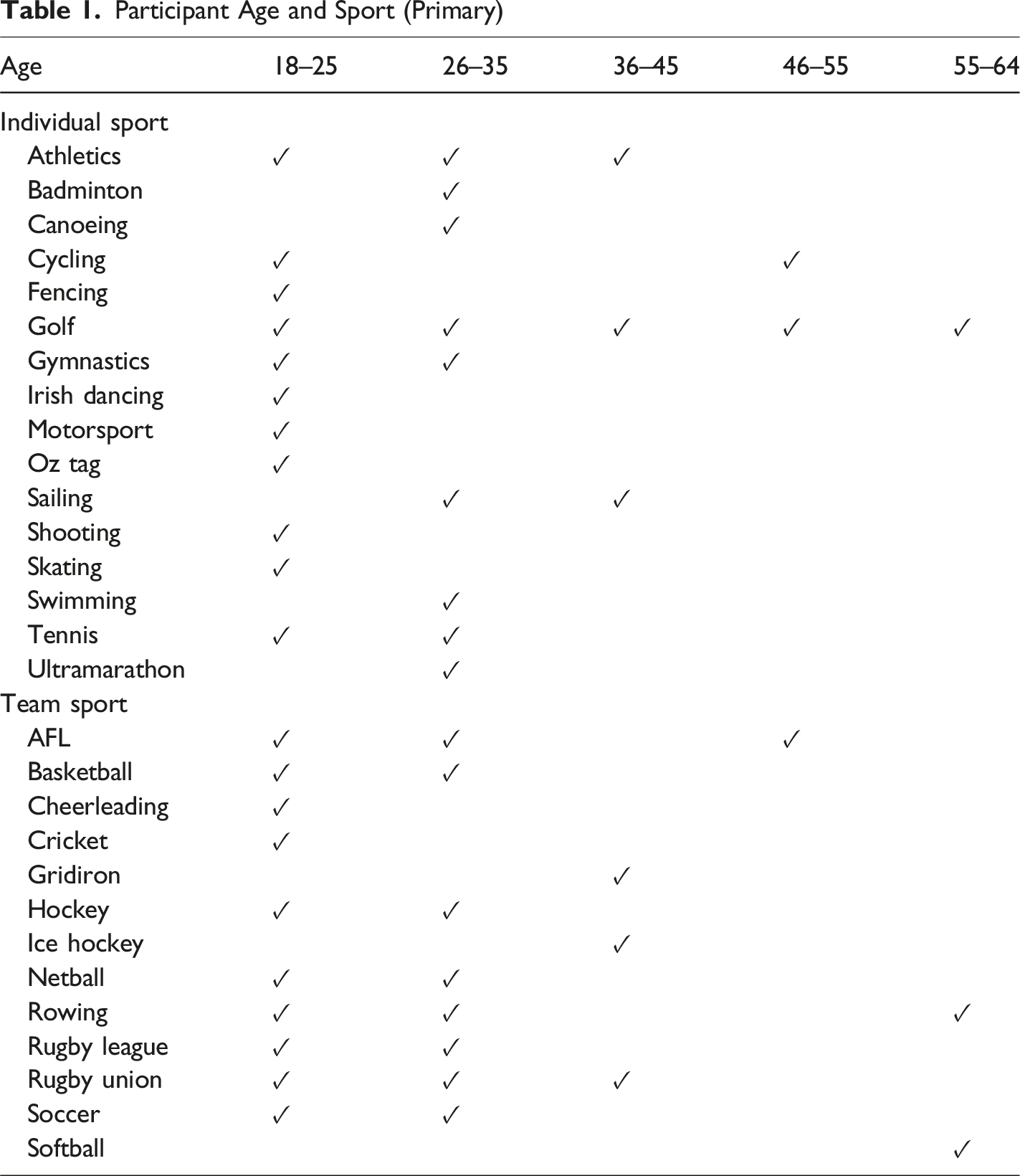
Data were collected via the online anonymous survey from January to July 2023 and interviews subsequently took place during June and July 2023. The interviews were conducted via Teams and completed at a time that suited the participants, with each interview lasting 30–60 minutes. All interviews were audio recorded, with participant consent, although the recording was turned off from time to time as requested by the participant (for example, when providing background about their sport) and transcribed for the purpose of analysis.
The in-depth interviews followed a semi-structured format using a guide that was open-ended and explored the interviewees’ experiences participating in sport, their social media usage as an athlete and their experiences online. Participants were also asked to reflect on their online experiences that were public and private related to being an athlete and the experiences of others where they had witnessed positive and negative online experiences. Whilst the athletes were Australian based, their experiences of online harm occurred both locally and internationally. In some instances, detailed examples of online harm, its impact, support provided, and reporting mechanisms were explored. The survey captured demographic information and participants’ experiences and perceptions of social media usage, experiences online and the impact of the experiences on their wellbeing, performance and employment. The open-ended responses provided rich qualitative insights and explored examples of the types of harassment experienced or witnessed, complaint processes and handling, and feelings of safety for the athletes.
Quantitative data from the survey were analysed using descriptive statistics, including frequencies, means and percentages. Segmentation analysis was employed to explore patterns across different demographic groups, enabling a more nuanced understanding of sport and intersectionality within the participant cohort (Creswell & Creswell, 2023).
Comprising of interview transcripts and open-ended survey responses, the qualitative data were analysed using thematic analysis following Braun and Clarke’s (2006) six-phase approach: (1) familiarisation with the data, (2) generating initial codes, (3) searching for themes, (4) reviewing themes, (5) defining and naming themes, and (6) producing the report. Themes were developed inductively and reflect patterns across the dataset. To support the organisation and coding of qualitative data, NVivo software was used. This facilitated systematic data management, coding consistency, and development of thematic maps. The integration of open-ended survey responses with the interview data enabled triangulation, which strengthened the credibility and enhanced the depth of the findings by drawing on multiple data sources (Denzin, 2012).
We take an embodied approach to the data, as a means for understanding how athletes’ online experiences are lived and felt. An embodied perspective derives from feminist epistemologies of knowledge production and understands ways of knowing the world through lived experiences (Allen-Collinson, 2011; Jaggar & Bordo, 1989). It rejects Western knowledge claims based in reason, whose aims are to achieve objective neutrality and uncover universal truths, and which separate knowledge of the mind from experiences of the body (Braidotti, 1994). Feminists have contested the mind/body dualism (and its masculine bias) and sought to reclaim the body as a conduit of knowledge about the social world, prompting Barbour (2018) to describe embodiment in terms of: a person’s biological (somatic), intellectual, emotional, bodily, artistic and spiritual experience, within their cultural and geographic location. Embodiment is not completely arbitrary—it includes recognition of individual difference in terms of race, gender, sexuality, ability, history and culture. ‘Embodiment’ thus indicates the holistic experiencing, living subject and avoids the tendency to reinscribe the biological/cultural distinction (p. 220).
In understanding the body as a key site of knowledge formation, feminist theorists have long emphasised the centrality of the body to women’s sport experiences (Allen-Collinson, 2011; Pavlidis et al., 2025; Young, 1980). While embodiment has been applied to understanding women’s movement experiences, we extend this approach to theorising virtual encounters in order to emphasise the interconnectedness of online/offline worlds. Starting from the basis that knowledge is grounded in lived experiences, an embodied perspective allows us to consider how harm and inequality in virtual domains are felt, acknowledged and responded to in material worlds by drawing attention to the effects elicited by athletes’ technological encounters. Taking an embodied perspective can help us understand participants’ (in)ability to respond to online hate/harm, as well as elucidate the cultural forces and organisational arrangements that dismiss or render invisible experiences of online harm for athletes competing in women’s sport.
Results
Experiencing Online Harm
In this section, we document a range of online harms experienced by our study participants (Figure 1), centring athletes’ everyday realities as the basis of knowledge (Jaggar & Bordo, 1989). Consistent with types of gender-based commentary previously identified on social media that objectify athletes and undermine their capabilities through sexualised language and gender role stereotypes (Krieger et al., 2022; McCarthy, 2022) participants noted receiving comments such as “juniors can kick further”, “go home and wash the dishes and raise a child”, and “Trashy whore”. Athletes described being attacked online about their appearance, noting “body shaming” accusations such as “uniform dresses being too short, showing too much, not for [their] body type, not attractive” (survey respondent, 18–25 year-old netballer), through to death threats and violent messages such as “kill yourself”, “wishing cancer for both you and your family” and being “told that I deserved to be physically abused by my ex”, confirming findings documented elsewhere (Kavanagh et al., 2019). Survey data identifies the presence of homophobia and racism towards women athletes in online forums, with one in five athletes experiencing racism and one in four homophobia in addition to gender-based harassment, adding weight to industry reporting that queer and racialised women are disproportionately targeted (Signify, 2023). Types and prevalence of harassment experienced (survey data)
Participants expressed a desire to make known the extent of the problem, which went far beyond gender-based insults and threats on social media, raising many instances of gendered online abuse that are less documented in studies of athlete cyberharm because they cannot be detected through secondary data collection and analysis methods (Kearns et al., 2023). Anna described “getting hacked a lot”, raising fears for her security. Direct messaging (DM), which allows messages to be sent privately to public social media accounts, was mentioned by participants as a platform feature that enabled threatening sexual contact (Kavanagh et al., 2019). For instance, a survey respondent (26–35 year-old golfer) disclosed “I have had a man stalking me for the last 6 years. Frequently get sent disgusting messages and photos sent to me via direct message. Have had photos of myself sent around my peers”. Interviewee Camila, when playing in an international soccer league, described how she was stalked online by a coach who made his presence felt by tagging her in online comments and posts, which may look benign to outside observers but made her feel deeply uncomfortable. Camila experienced his constant online presence as a form of intimidation.
The DM feature and video conferencing tools were also identified by study participants as a way they received unwanted sexually explicit images. For instance, Camila elaborated on the behaviour of the coach who sent “obscene semi-nude photos of himself to one of my teammates. He also exposed himself to her during a Zoom call”, also noting “two of the younger girls in the in the group, received these kind of messages, explicit photos and videos… pornographic content.” Izzy, a former professional swimmer, spoke about being subject to image-based abuse “...a certain individual would constantly message me. He actually got hold of my mobile number somehow and silly me when I was young, when I really didn’t realise what social media platforms could do and he was requesting nude images.” In her study of the social media use of women Olympians Guerin (2017) notes “unwanted direct messages” as a challenge raised by these athletes. The experiences recounted by athletes in this study go further by demonstrating that unwanted DMs can constitute a form of gender-based violence (Kavanagh et al., 2019). Camila and Izzy’s comments highlight how athletes’ experiences of gender-based violence are occurring on a wider array of platforms and apps than indicated in the existing literature, where the predominant focus is on social media platforms as facilitating online abuse.
Another type of online harm that was raised in interviews was neither sexual nor explicit but involved athletes being misrepresented in online communications intended to promote women’s sport, including the official accounts of sport clubs. These were distinct from hostile comments of online trolls undermining women’s sport (McCarthy, 2022) and examples of technology facilitated gender-based violence as discussed by Camila and Izzy. Emma, a former Australian Football League Women’s (AFLW) player, described the reputational damage she experienced when her own club’s media unit posted on their official social media account that she had been dropped from the squad, despite leaving football to pursue another career: “...I didn’t get dropped. I stepped down and I’m not playing football at all anymore. So that was like a really upsetting experience”. Emma’s recollection offers an example of how digital technologies used in work settings can undermine athletes through inaccuracies and mischaracterisation and deny them agency in crafting their sporting identity. This matters in a media context where athletes competing in women’s sport are routinely misrepresented and suggests that social media can be used to perpetuate these harms (Toffoletti & Thorpe, 2018), rather than grant athletes greater control of their image. Such harms often go unrecognised because they do not meet the threshold of online abuse as defined by law enforcement agencies and digital platforms, hence cannot be reported through these channels.
To date, there has been limited documented evidence of hacking, stalking, image-based abuse and private messaging used to harm athletes. Extending on existing studies that focus on social media platforms as the site for these forms of violence (Guerin, 2017; Kavasoğlu et al., 2023; Pocock & Skey, 2022), our findings show how they are perpetuated by workplace technologies such as official social media accounts, videoconferencing tools and group messaging platforms. Our participants’ lived experiences, as recounted through disclosures of virtual sexual violence, harassment and misrepresentation, indicates that these are forms of gender-based workplace harm. The occurrence of online harms while athletes are at work indicates a need to strengthen organisational understanding of diverse forms of online harm. Recommendations from other workplace contexts including politics (McGrane, 2022), journalism (Posetti & Shabbir, 2022) and academia (Kavanagh & Brown, 2020) highlight the holistic, preventative, multifactorial responses required to address gendered online harms in the workplace. Posetti and Shabbir (2022) segment their recommendations to various stakeholders—a similar approach to women’s sport would help ensure effective athlete safeguarding. As evidence about athlete experiences of online harm is still emerging, we outline in the conclusion how further research could take up workers’ rights approaches in sports contexts. In the remaining sections we explore athletes’ responses to these harms, noting their embodied, felt and material consequences.
Reporting and Responding to Online Harm
A key area of concern for athletes was around reporting online harm. Participants cited a lack of follow-up and accountability that made them feel frustrated and unheard. For interviewee Anna, who was worried about being identifiable because her sport has a small cohort of participants, she had made several reports about online harm after experiencing multiple incidents. As she recalls, “I nearly got in contact with the police at one stage ‘cause I was getting hacked a lot… I also had to change my account, so I’ve reported to [the Office of the] eSafety [Commissioner]”. While Anna found formal reporting mechanisms through Australia’s eSafety Commissioner accessible, the advice she received focused on how she could change her own behaviour to stop privacy breaches. Such advice, while useful with respect to addressing the harm currently taking place, can do little to prevent harm or change social attitudes towards women’s sport. Moreover, reporting online harm puts the onus on athletes to respond appropriately to harm, who risk facing stigma for making ‘bad’ online choices, rather than offering interventions targeting perpetrators to stop them from harming women online (Cole, 2015).
Many athletes felt strongly about wanting to respond publicly to harmful online posts that perpetuated social division along the lines of sexism, racism, homophobia and ableism. Yet participants like former rugby player Sarah were constrained in their advocacy efforts by organisational policy, having been told in social media training “don’t be controversial … if you do wanna make a statement about something, put it through the social media team. We can help you say what you want to say without being too offensive without putting sponsors offside”. Social media training directed at athletes to minimise engagement can perpetuate the censoring and silencing of women and minority groups in digital publics and leave uncontested damaging social stereotypes (Ging & Siapera, 2018). Athletes told us that being advised to mute, filter, block or delete harmful content was unhelpful as it fails to recognise the privileging of organisational power, whose interests are aligned with upholding white, patriarchal and corporate privilege in sport, over the alternative knowledges produced by athletes’ through their everyday experiences of injustice in sport (Pavlidis et al., 2025). Participant Sarah expressed their frustration in the face of organisational silencing by asking “why do we as the athletes or the people on the receiving end, why do I have to be the bigger person?” The strategy of online self-censorship observed in other studies (Phipps, 2022; Rahikainen & Toffoletti, 2022) was rejected by several of our participants, who were instead looking for their employer to better support them in speaking out publicly in digital spaces.
At the same time, some athletes told us their club or league was responsive to their reports of online harm. One anonymous survey respondent said, “The governing body of our sport takes care of the harassment made by these people and works out who they are or if they are fake accounts to proceed with police”. These instances are encouraging and demonstrate that some sporting clubs or organisations have created environments where reporting is supported. However, not all athletes may feel safe reporting to their sport integrity unit or police. Given the history of policing black and brown bodies in sport (Lichfield et al., 2018) reporting environments may not feel safe for athletes who are culturally and racially marginalised, and/or have experienced backlash from calling out racism: “Myself and teammates stood up to racism and sexism at our club expecting a change … some of the girls received more personal threats and even someone from the club’s public NYE message mentioned one of the girls by name in a negative way” (survey respondent aged 26–35, AFL and Soccer). In calling out racism and sexism online, First Nations players and allies resist organisational silencing (Pavlidis et al., 2025) and expose the limits of sports organisational knowledge about the harms of racism and sexism to athletes. The club’s negative response to player resistance online indicates an inability to register distinct experiences of discrimination at the intersections of race and gender, creating emotional and bodily responses such as fear and uncertainty for racialised athletes in predominantly white elite sport environments. Unfortunately, our research suggests that positive reporting experiences are the minority and are dependent on individual sports having policies, budget and resources to address complaints, as well as leadership that acknowledges different ways of being and experiencing the world (Barbour, 2018; Jaggar & Bordo, 1989).
Participants expressed concern over a lack of accountability or action after reporting, which made them feel disillusioned and that process of reporting was futile because “you won’t get anywhere with it” (Anna). Former AFLW player Emma said, “I just find it really frustrating that there’s no accountability or regulation with those comments like I know isn’t online bullying illegal?… I think it’s meant to be illegal, but I mean who’s regulating that? It’s just ridiculous.” For Emma, the supposed illegality of online harassment 1 made her feel frustrated when reports were not dealt with appropriately. However, as scholars have identified, seeking legal recourse to online harm is incredibly challenging given the tensions between corporate power and government regulation (Powell & Henry, 2017; Smith et al., 2024).
Indeed, the tension between corporations, governments and social norms was highlighted by interviewee Sarah who said, There’s been a number of times that I’ve reported people for comments. And the comment either gets taken down or they say ‘ohh, it actually hasn’t violated any of our community standards’. And so that comment is allowed to stand. But I just get to report the comment, I don't actually get an opportunity to say why I feel like it didn't make the standards.
Sarah’s quote draws attention to the ways in which online harms are embodied—in this case a lack of transparency in reporting mechanisms resulting in athletes feeling disempowered by the process and like their experiences were being dismissed and ignored. As feminist scholar Sara Ahmed (2021) writes on complaint, to complain is to be perceived as a nuisance and a cause of problems. We can extend this conceptualisation to reporting online harm to social media platforms because the platform becomes the arbiter of harm, not the person to whom the harm was done, which denies the embodied knowledge of lived experience and renders the complaint unacknowledged. For Emma, Sarah and other women’s sport athletes, reporting mechanisms do not ipso facto result in a measurable improvement in safety or wellbeing. Our survey results support this finding, with 80% of respondents noting that they did not feel any safer after reporting (Toffoletti et al., 2024).
Participants in the survey were asked about their knowledge of where to report gendered online harm and their likelihood to disclose. Athletes identified a range of reporting pathways, as shown in Figure 2, however approximately a quarter of respondents did not know where to report or would not report, which suggests that complaint processes both inside sporting bodies and through authorities can be improved. Regardless of the outcome of reporting—or not—athletes reported a fear of stigma and a lack of support after making a complaint about online harm. Knowledge about where to make a complaint (survey data)
Support
Athletes described feeling embarrassed, unsupported and alone when experiencing online harm. Over half of survey participants (53%) who experienced online gendered harm stated that they did not seek support. By support, we are referring to formal and informal networks or resources including friends and family, sporting organisations or governing bodies. Seeking support after experiencing online harm can be a complex and fraught process, especially in a context where, as outlined above, reporting harm can feel disempowering (Veletsianos et al., 2018). Of the survey participants who did seek support, athletes were most likely to turn to a friend or family member or a fellow athlete. Figure 3 indicates the support sought by survey participants who experienced online gendered harm. Seeking support following the harassment and where (survey data)
While some athletes described being supported by their clubs or governing sporting organisations when reporting harm, others reported that the harm was done to them by their clubs, meaning they couldn’t safely or easily access supports or make a complaint. For instance, former AFLW player Becky said the lack of support during her experience of being delisted made her feel embarrassed and isolated. After the public announcement on social media, “[her] phone had blown up with notifications” and the only support she received was a text from the club’s wellbeing officer asking, “how are you going?” Becky’s experience highlights how clubs have a responsibility to support current and former players when their name and image are being shared publicly.
Access to athlete-specific supports at a sporting organisational level highlights the uneven terrain of funding for women’s sport, and speaks to broader tropes around the perceived (il)legitimacy of women’s sport. Athletes reported difficulties accessing appropriate and effective support without buy-in from social media platforms. For instance, professional soccer player Camila said, The [players’ association] does what they can. But I think until the social media platform is also doing something to protect especially public figures better, I think it’s gonna be difficult for player associations really to do anything on their own. And even the leagues..., I think there’s a few that have started to filter comments and things like that on their posts. But that’s not everyone.
The differential approaches to addressing online harm within sporting governance bodies as well as uneven availability of funding in women’s sport can mean that some athletes are better supported than others. This was highlighted by participant Anna who said “because I’m in a non-Olympic sport. I’m actually not eligible for a lot of the governing services”. Athletes described feeling let down by inadequate planning as women’s sport rapidly expands. As Emma put it, “I think because the system is growing so fast, a lot of people have been left or fell through the cracks of these negative experiences and have had to deal with it themselves”.
As athletes move through the sport ecosystem, the lack of support some athletes experience from official channels highlights the importance of informal networks. For instance, rugby player Sarah said “there’s been times where I’ve talked to players from within my own team as a coach that have potentially been on the receiving end. So I’ve been a sounding board for them”. For swimmer Izzy, who felt supported by her colleagues in the aftermath of online harm, it was the strength of her network that made stability and safety possible. As she said, “I think [being so supported] came down again to the long-standing relationships with people, everybody knew me [where I trained]”. Having the opportunities to build and maintain connections across time as an athlete can be critical to feeling supported.
These findings suggest that organisations need to do more to support athletes experiencing online harm. Not all sports have the finances and resources to tackle this issue, so it is imperative that sport bodies work collectively to ensure that athletes from across all women’s competitions have equal access to supports and protections. There is no ‘one size fits all’ solution and athletes would benefit from being offered a range of supports. Not all athletes receive comparable investment in their safety and wellbeing from their organisation, league or club, so the sport sector must work collaboratively and collectively to address this issue.
Impact
The impacts of online harm extended to athletes’ online behaviour, economic opportunities, athletic performance and wellbeing, with their responses indicating that these harms are embodied, material and affective. Participants noted how online abuse changed their online activities. While 53% of survey participants brushed it off or used personal strategies to deal with online harm (for instance, taking breaks from social media), others (47%) changed their online behaviour by closing social media accounts, avoiding certain platforms, posting less frequently, censoring their posts and avoiding some topics to minimise backlash. These actions demonstrate an embodied response to online harm in that both survey respondents and interview participants described diminishing their participation in the online public sphere following online harm. As Anna describes, the negative comments and judgements she received on her posts made her increasingly “hesitant to share things” on social media, leading her to drastically limit her social media profile and engagement: “I used to have an athlete specific account...but I no longer have an athlete account whatsoever. It’s only personal and it’s set to private”. Athletes self-censored their speech and removed themselves from online space as a result of feeling threatened simply for playing women’s sport in public. More than adaptive responses to online sexism (Kavasoğlu et al., 2023; Pocock & Skey, 2022; Rahikainen & Toffoletti, 2022), these techniques of self-surveillance have gendered effects, working alongside patriarchal surveillance of women’s appearance and actions in online spaces to regulate women’s online presence (Gill, 2019).
Curtailing online engagement and visibility in response to online harassment has economic and therefore material impacts for those competing in women’s sport. For Anna, who described using social media to “promote the things that I do in sport” and for “fundraising”, the harms she experienced online made her “more reluctant to doing that”. In Anna’s case, the embodied effects of online harm are felt as a limited capacity to promote women’s sport events and raise funds to compete. Without protections to ensure athletes can engage safely in online spaces, digital media environments risk exacerbating sport’s gender inequalities. Being unable to access appropriate funding can be considered a continuation of the “economic vandalism” that aims to curtail women’s economic achievements in precarious workplace contexts (Jane, 2018).
The effects of online harm on employment and economic opportunities for women’s sport athletes are echoed in the survey findings. For participants who both experienced and witnessed online harassment, they believed it to have the greatest impact on their employment, sponsorship and economic opportunities −45% (see Figure 4). Athletes who participate in an individual sport were twice as likely to state that online harassment affected (a “great deal” or “a lot”) their employment, sponsorship or economic opportunities (40%) as compared with athletes who participated in team sports (21%). The results indicated that athletes who participated in sports historically coded masculine (e.g. AFL, rugby, golf, cricket) overall were more likely to cite a substantial impact (a “great deal”) of the online harm to their wellbeing, athletic performance and economic opportunities as compared with athletes who participated in sports like netball, cheerleading and gymnastics, historically coded as feminine. Impact of online harassment (survey data)
The majority (77%) of survey participants who experienced online harm reported that it impacted their athletic performance (Figure 4), and 71% of participants who witnessed online harm, but were not targeted personally, also stated that it impacted their athletic performance. Negative online encounters moved participants into a state of physical hypervigilance and awareness of their actions that affected their performance in training and competition. As noted by Anna “I’ve been reluctant to actually compete further and train” as a result of scrutiny on social media after events, contributing to “a loss of confidence” and feelings of “embarrassment” about her abilities. Fear of being attacked in online comments for their on-field actions and appearance can stifle athletes’ ability to be ‘in the moment’ and unselfconsciously move one’s body while competing. These accounts suggest that for athletes competing in women’s sport, their bodies absorb the hurt of online harm, which carries across to their physical performance. Any hesitancy in women’s “manner of moving”, as Young (1980, p. 139) argues, is not a limitation of biology or anatomy, but results from gender norms and surveillance that make women self-conscious about moving their bodies, therefore restricting women’s corporeal capacity and freedom. Diminished performance due to gendered public scrutiny of their bodies indicates that mind and body cannot be separated as athletes come to internalise gendered discourses and organisational structures that position them as inferior (Pavlidis et al., 2025; Young, 1980). As the survey results show, impacts on performance were evident mainly for athletes competing in historically masculine coded sports (see Figure 4) where women’s bodies have been conceptualised as “women first, athlete second”, reinforcing the gendered inequality of public conceptions of women’s sport (Krieger et al., 2022).
Overall, exposure to online harms took a toll on the vast majority of survey respondents, with 95% of athletes who experienced it stating their wellbeing was impacted. As stated by Anna “My physical or mental health declined a lot from it”. Further, Izzy’s reflections indicate that athletes may carry the effects of online harms for many years, as she referred to the ongoing “shame” associated with having been subject to image-based abuse as a young athlete: “I was saying to my colleague this morning … I was actually having this interview and I was a bit panicky about it”.
Conclusion
By foregrounding the voices and experiences of elite women’s sport athletes, this article advances sociological and feminist investigations of cyberabuse and online harm by accounting for its effects. Drawing on athletes’ embodied experiences as the basis of knowledge, it raises several areas of concern that have received limited attention in previous explorations of athletes’ experiences of online abuse, thereby extending empirical and theoretical insights into this phenomenon. Through surveys and interviews, it identified athletes’ experiences of digital harm beyond misogynistic and sexist commentary, with participants describing technology facilitated gender-based violence such as stalking and image-based abuse, as well as other harms that are not gender-based but indicate that digital technologies are being used in workplace contexts to marginalise and undermine elite athletes competing in women’s sport. Participants described the ways in which current mechanisms for reporting online harms and inadequate institutional support further contributed to their marginalisation in a sport system where women’s experiences and contributions are devalued (Kavanagh et al., 2019; Krieger et al., 2022; MacPherson & Kerr, 2020).
This study has identified online harm as a serious workplace issue with impacts on athlete wellbeing, performance and economic opportunities. A feminist embodied approach requires us to listen and respond to the emotions that are generated through the experience of online harm and subsequent institutional inaction. Acknowledging athletes’ feelings of disillusionment, frustration, fear and anger is necessary for developing responses to online harm that are attentive to its gendered impacts to improve the athlete experience. Online harms can undermine elite athletes’ competence and confidence, resulting in withdrawal from digital spaces and limiting opportunities for media exposure and sponsorship for women’s sport, as well as silencing their critiques of unjust sport systems that are gender inequitable. In this regard, our findings highlight the ways in which athletes’ encounters with harmful digital content is shaping how they come to know, relate to, and experience their bodies as gendered; and how they consider themselves valued institutionally—as unseen, unheard and unsupported.
The findings from this study have implications for sport organisations. First, they indicate a need to strengthen organisational understanding of the diverse forms of online harm and its impacts on the wellbeing, performance and economic opportunities for athletes competing in elite women’s sport. Second, they suggest a need for more organisational support and avenues for reporting different types of online harm without fear of judgement or repercussions. To address this, further research with groups of athletes from specific sports can illuminate the gendered cultural norms and organisational arrangements shaping how online harm is experienced, understood and responded to within their particular sport contexts.
More research is needed to consider the impacts of online abuse on women and non-binary people working across the sport ecosystem in leadership, administration and media. It should also assess the impacts of witnessing harm on those engaged with women’s sport in digital settings. This includes people employed by sport and media organisations to read and filter online abuse (see Sherwood, 2024), as well as recreational sport participants who may be negatively impacted by witnessing online abuse of athletes competing in women’s sport. Research with welfare officers in sport organisations could help to better understand how to build trust between athletes and sport organisations to increase disclosure of online harms. Future studies should evaluate reporting pathways for online abuse, as well as existing programs to address online harms (detection and monitoring tools, social media education programs). Taking an intersectional approach is crucial to explore in greater depth the impacts and effects of online harms experienced by athletes in women’s sport with a disability, who identify as queer, trans and/or non-binary and who are culturally and racially marginalised.
Footnotes
Acknowledgements
We wish to thank Gender Equity Victoria and acknowledge the organisations that aided participant recruitment. Sincere thanks to all the athletes who took part in the project.

Ethical Considerations
This study received ethics approval from the Deakin University Human Research Ethics Committee (DUHREC 2022-313).
Consent to Participate
All participants provided informed consent prior to participation.
Funding
The authors disclosed receipt of the following financial support for the research, authorship, and/or publication of this article: This research received funding from Victorian Government Office for Women, Department of Families, Fairness and Housing.
Declaration of Conflicting Interests
The authors declared no potential conflicts of interest with respect to the research, authorship, and/or publication of this article.
Data Availability Statement
To preserve participant anonymity, data from this study is not publicly available.