



Abstract
We examined whether the influence of adolescents’ sexual partnerships, both dating and casual, carried over to affect emerging adults’ relationship satisfaction and experiences of intimate partner aggression. Analyses of longitudinal data from the Toledo Adolescent Relationships Study (n = 294) showed that net of control variables (delinquency, depression, family violence, relational and sociodemographic characteristics), adolescents’ number of dating, but not casual, sexual partners led to greater odds of intimate partner aggression during emerging adulthood. Further, relationship churning (breaking-up and getting back together) and sexual nonexclusivity during emerging adulthood mediated the influence of adolescents’ number of dating sexual partnerships on intimate partner aggression. The positive effect of dating sexual partnerships on intimate partner aggression was stronger for women compared with men. These findings confirm the long reach of adolescent experiences into emerging adulthood.
Prior research has explored romantic and sexual experiences that occur during the adolescent period, and theory and research focusing on emerging adulthood have emphasized the importance of intimate relationships for this phase of the life course. Limited research, however, has examined how these experiences may be connected. Much of the early research on adolescent sexuality has emphasized the problematic aspects of sexual involvement (e.g., Jessor & Jessor, 1977), but research has shown that sexual experience becomes increasingly normative across this developmental period (e.g., Joyner & Udry, 2000). Thus, it is important to explore whether variability in the context of these experiences aids our understanding of the character of relationships formed later on in emerging adulthood.
In the current study, we focused on the number of sexual relationships adolescents reported and further assessed the relationship context within which sexual activity occurred. Thus, we distinguished adolescents’ reports of casual sexual relationships and sex that occurred within dating contexts. Some scholars have suggested that casual sexual liaisons may be particularly problematic, while others have focused more attention on dating relationships and have emphasized that dating a variety of partners may be important to relationship skill building. We examined the association between number of dating and casual sexual partners during adolescence and two dimensions of young adult relationships—relationship satisfaction and the presence of serious conflicts (intimate partner aggression). These two outcomes are especially critical because (a) maintaining satisfying intimate relationships is a key developmental task during emerging adulthood (Arnett, 2004) and (b) the life stage of emerging adulthood is associated with particularly high rates of intimate partner aggression (Halpern, Spriggs, Martin, & Kupper, 2009; Johnson, Giordano, Manning, & Longmore, 2015).
Drawing on prospective, longitudinal data from a community sample, the Toledo Adolescent Relationships Study (TARS; n = 294), we first examined whether the number of casual and dating sexual partners was related systematically to these features of emerging adult relationships and subsequently explored potential mediators. Although it is somewhat intuitive to expect that reporting a greater number of partners, particularly dating partners, could have a positive effect on later relationship dynamics, an alternative hypothesis is that this pattern may reflect instability and greater odds of what has been called “relationship churning” as well as an increased likelihood of infidelity (overlapping relationships). In turn, multiple breakups with the same partner (Vennum, Lindstrom, Monk, & Adams, 2014) and infidelity (Blow & Harnett, 2007) are associated with lower relationship satisfaction, and both dynamics are known risk factors for intimate partner aggression (Giordano, Copp, Longmore, & Manning, 2015; Halpern-Meekin, Manning, Giordano, & Longmore, 2013a).
Background
Adolescents’ interest in and formation of romantic relationships is important for building intimacy skills (e.g., Fincham, 2012; Furman & Collibee, 2014; Furman & Simon, 1999; Hartup, 1986; Young, Furman, & Laursen, 2011). Conceptually, Laursen and Jensen-Campbell (1999) conveyed this idea of relationship skill building in the following manner: “Brief romantic encounters provide adolescents with opportunities to practice exchange rules and refine personal resources prior to initiating relationships that entail commitment and reproduction” (p. 64). Furman and Simon (1999) also argued that romantic relationships allow adolescents to develop important skills that help them to understand partners’ motivations and behaviors. Yet, rather than highlighting the continuity between adolescence and emerging adulthood, most studies of adolescent development have considered romantic relationships as an end point of research. Similarly, studies of emerging adulthood often have focused on relationships as constituting a set of experiences that uniquely influence and structure this life-course stage. These depictions can lead to the premature conclusion that the relationships that define the life stage of emerging adulthood are unaffected by previous relationships and experiences.
Reviews (e.g., Collins, Welsh, & Furman, 2009; Furman & Rose, 2014) of the limited body of literature that empirically examined connections between adolescents’ and emerging adults’ intimate relationships, generally, have emphasized that adolescents’ dating plays a positive role in subsequent social and emotional development. Meier and Allen (2009, p. 309) argued, for example, that adolescents’ intimate relationships provide “developmental currency” for young adult relationship formation. Similarly, Giordano, Manning, Longmore, and Flanigan (2012) suggested that teen dating may enhance young adults’ relationship quality, as these earlier experiences provide opportunities to learn “how to do” romance, and these experiences may be especially important for young men’s transitions to emerging adulthood.
Although some scholars have emphasized the importance of adolescents’ romantic relationships for skill building, nevertheless, other researchers have reported associations between adolescents’ dating and delinquency (e.g., Cui, Ueno, Fincham, Donnellan, & Wickrama, 2012), substance use (e.g., DiClemente, Santelli, & Crosby, 2009; Furman & Collibee, 2014), depressive symptoms (e.g., Joyner & Udry, 2000; Mendle, Ferrero, Moore, & Harden, 2013), unprotected sexual intercourse (e.g., Tu, Lou, Gao, Li, & Zabin, 2012), and relationship violence (e.g., Halpern et al., 2009). These early experiences may influence the formation and qualities of subsequent young adult relationships. Emphasizing the notion of “timing,” Furman and Collibee (2014) examined longitudinal data from a community-based sample and found that having a romantic partner was associated with adolescent risk behaviors, such as delinquency. In contrast, romantic involvement during young adulthood was associated with positive adjustment, suggesting that precocious dating can be problematic for some individuals.
Additionally, some researchers (e.g., Cui et al., 2012; Sabia & Rees, 2012) have expanded their focus beyond whether adolescents are dating and have examined the number of dating partners as an indicator of risk behavior that may have negative consequences for the next phase in the life course, emerging adulthood. Cui, Ueno, Fincham, Donnellan, and Wickrama (2012), analyzing the Longitudinal Study of Adolescent to Adult Health (Add Health), found that the cumulative number of romantic relationships from adolescence to emerging adulthood was associated with antisocial behavior even after controlling for prior delinquency and sociodemographic characteristics. Similarly, Madsen and Collins (2011) examining the Minnesota Longitudinal Study of Parents and Children reported that a greater number of dating partners in mid-adolescence led to poorer quality romantic relationships in emerging adulthood as evidenced by shared negative affect among partners and a lack of smooth relationship functioning.
Implied in the number of dating partners is the number of sexual partners because in contemporary American society, dating most often provides the context for sexual activity (Manning, Giordano, & Longmore, 2006; O’Sullivan, Cheng, Harris, & Brooks-Gunn, 2007). Moreover, the majority of American adolescents have dated. Drawing on the 1994–1995 Add Health sample, Carver, Joyner, and Udry (2003) reported that 69% of male and 76% of female adolescents had dated someone by age 18. Similarly, based on the 2011 Monitoring the Future data, 66% of high school seniors reported that they had ever dated (Child Trends, 2013). Examining the second wave of the Add Health, O’Sullivan et al. (2007) found that the normative pattern among adolescents was to date first, which would then lead to sexual intimacy. Nevertheless, not all dating partners become sexual partners. Based on the TARS data, estimates of the average number of dating partners with whom teens have had sex was two, although the range was 0–13, with male adolescents, on average, reporting more partners (Manning, Longmore, Copp, & Giordano, 2014). Thus, from these prior studies, we concluded the following: (1) about three quarters of teens date; (2) not all daters are sexually active with partners; and (3) among daters who are sexually active, on average, they are sexually active with two dating partners.
It is also important to consider that adolescents’ and young adults’ sexual encounters may occur outside of dating relationships. Based on the Add Health, for example, researchers (e.g., Ford, Sohn, & Lepkowski, 2001; Manning, Longmore, & Giordano, 2005) have estimated that about half of sexually active teens have had sex with individuals with whom they were not dating, with young men more often than women reporting casual sexual experiences. Drawing on the National Survey of Family Growth (e.g., Abma, Martinez, & Copen, 2010), as well as the TARS data (e.g., Manning et al., 2014), researchers have reported that over one third of sexually active adolescents have had more than one casual sexual partner. Further, Manning, Giordano, and Longmore (2006) reported that the majority of sexually active adolescents were involved in dating as well as casual sexual partnerships. In a recent review, Garcia, Reiber, Massey, and Merriwether (2012) concluded that casual sexual hookups would likely continue to be an important relational context for teens and young adults. As such, a goal of the current study was to examine whether adolescents’ cumulative number of casual as well as dating sexual relationships led to lower relationship satisfaction and higher odds of intimate partner aggression during emerging adulthood, and whether these associations differed for men and women.
Although studies have compared the influence of relationship context (i.e., dating vs. casual sex) for adolescents’ depressive symptoms (e.g., Mendle et al., 2013), few studies have compared the relationship context of adolescents’ sexual activity for young adult outcomes. One exception is Raley, Crissey, and Muller’s (2007) study, based on the Add Health, in which they found that adolescent sexual experience in “romantic” or dating relationships was associated with greater odds of marrying or cohabiting, whereas casual sexual behavior increased the odds of cohabiting only. Yet whether the number of relationships and the underlying mechanisms by which adolescents’ cumulative sexual partnerships influenced future relationships were not examined.
Regarding mechanisms, we concur with Hartup (1986) who stated that adolescent relationships “serve as important templates or models that can be used in the construction of future relationships … [Thus] consequences of earlier relationships can frequently be detected in later ones” (p. 2). Vasilenko, Lefkowitz, and Welsh (2014) also stated that adolescents’ sexual behaviors influence subsequent relationships by providing “models of interactions within relationships and a context for practicing intimate behaviors” (p. 11). Vasilenko et al. further argued that it is important to examine relational processes that connect teens’ sexual behaviors to future relationship outcomes. In this vein, Furman and Collibee (2014) compared a life-course approach, emphasizing normative experiences associated with age-appropriate social roles, and developmental task theory, emphasizing “soft” developmental stages. They concluded that precocious romantic involvement (even if normative) undermines subsequent healthy development. Thus, Furman and Collibee provide a provocative explanation for the association between adolescent romantic relationships and young adult risk outcomes by emphasizing the timing of dating. Yet, they did not address whether variation in the relationship context (casual vs. dating) and frequency of adolescents’ sexual relationships influenced emerging adults, and whether there are gender differences. We suggest that subsequent patterns of (a) sexual nonexclusivity and (b) relationship instability may link teens’ sexual relationships with young adults’ relationship outcomes including satisfaction and intimate partner aggression. Examining these two potential mediating pathways will contribute to theoretical and empirical understandings of adolescents’ relationship context and emerging adults’ outcomes.
Potential Mediators: Young Adult Patterns of Nonexclusivity and Relationship Instability
Although most young adults are in intimate relationships, often uncertainties characterize these relationships. For example, substantial numbers of emerging adults are in relationships in which one or both partners have been sexually nonexclusive. Examining the Add Health, Joyner, Manning, and Bogle (2013) found that 35% of young adults in dating and 28% in cohabiting relationships either were not, or their partners were not, sexually exclusive. Relevant to the current study, based on a variety of data sets, researchers (e.g., Bogaert & Sadava, 2002; Feldman & Cauffman, 1999; Maddox Shaw, Rhoades, Allen, Stanley, & Markman, 2013; McAlister, Pachana, & Jackson, 2005; Treas & Giesen, 2000) have found that multiple sexual partners during adolescence increased the odds of sexual nonexclusivity in adult relationships. Moreover, men were more likely to report being sexually nonexclusive (Giordano et al., 2015; Maddox et al. 2013; Schondelmyer, 2014). In other words, the cumulative number of sexual partnerships during adolescence may affect subsequent relationship functioning by its association with higher odds of sexually nonexclusive relationships during emerging adulthood, and effects may differ by gender. Further, sexual nonexclusivity among young adults is associated with self-reports of lower relationship satisfaction (Blow & Harnett, 2007) and higher odds of intimate partner violence (Giordano et al., 2015). Thus, a potential linking mechanism between number of teens’ relationships and emerging adults’ outcomes is a pattern of sexual nonexclusivity.
Additionally, emerging adult relationships are often unstable as evidenced by multiple breakups with the same partner. More than 40% of young adults in the TARS sample, for example, experienced relationship churning or cycling, both breaking up and getting back together with their current, most recent, or ex-partners (Halpern-Meekin et al., 2013a; Halpern-Meekin, Manning, Giordano, & Longmore, 2013b), and multiple partners during adolescence is associated with churning in emerging adulthood (Manning et al., 2014). Churning reflects lower relationship satisfaction. Vennum, Lindstrom, Monk, and Adams (2014), examining retrospective data from cohabiting and married individuals, found that the frequency of cyclical or churning persisted into cohabitation and marriage and led to lower relationship satisfaction. Churning is also associated with increased odds of experiencing intimate partner aggression (Halpern-Meekin et al., 2013a). Moreover, Treas and Giesen (2000) argued that access to many ex-partners provides individuals with more sexual opportunities, which is indicative of relationship churning as well as providing greater opportunities to be sexually nonexclusive.
Current Investigation
Although some scholars have stressed the developmental importance of adolescent dating for learning intimacy skills, and the increasing role of casual sexual activity, some researchers have concluded that many sexual partners may have negative consequences. Additionally, the influence of adolescents’ number of casual sexual partners on emerging adults’ relationships is not clear. Our goal was to determine whether, and how, the influence of adolescents’ sexual experiences might carry over into emerging adulthood. Our initial research question asked whether the cumulative frequency of involvement in adolescent sexual relationships was associated with lower relationship satisfaction and higher odds of intimate partner aggression during emerging adulthood.
Additionally, we asked whether the type of adolescent sexual relationship, dating versus casual, was differentially associated with relationship satisfaction and/or intimate partner aggression, and whether these effects differed by gender. It is important to examine how precursors such as adolescents’ cumulative number of sexual relationships may influence relationship satisfaction and getting along with intimate partners without resorting to aggression because these outcomes involve skill sets with lifelong implications.
We hypothesized that the cumulative number of dating as well as casual sexual partnerships during adolescence would affect young adults’ reports of relationship satisfaction and intimate partner aggression through greater involvement in relationships characterized by patterns of sexual nonexclusivity and instability (churning). We expected that these patterns would mediate the effect of adolescents’ number of sexual partnerships on emerging adults’ relationship functioning. Thus, this mediation model suggests that the cumulative number of adolescents’ sex partners is associated with relational patterns, which in turn predispose individuals toward lower satisfaction and increased odds of intimate partner aggression. Yet, it is unclear whether the effects of casual, compared with dating, sexual relationships on the outcome variables differ. Thus, we compared the influence of these two contexts for sexual activity on the outcome variables.
We also examined whether the effects of teens’ casual and dating sexual partnerships, and emerging adults’ sexual nonexclusivity and relationship churning, differed for women and men. We build on research demonstrating that young men are more sexually permissive (Sprecher, Treger, & Sakaluk, 2013), as evidenced by reporting higher numbers of dating sexual partners, being more likely to engage in casual sex, and reporting higher numbers of casual sexual partners. Additionally, during emerging adulthood, men reported higher odds of sexual nonexclusivity (Manning et al., 2005) and relationship churning (Halpern-Meekin et al., 2013a, 2013b). Higher numbers of partners, both dating and casual, greater odds of sexual nonexclusivity, and relationship churning are more normative for men compared with women, and perhaps less stigmatizing for men. Yet it is unclear whether the effects of these relationship experiences on the outcome variables would differ for women compared with men, so we tested these conditional effects.
We included in our multivariate models antecedent variables found in prior studies to influence both relationship satisfaction and intimate partner aggression. Involvement in antisocial activities during emerging adulthood and prior depressive symptoms are associated with lower quality relationships (Longmore, Manning, Giordano, & Copp, 2014) and increased odds of intimate partner aggression (Johnson, Giordano, Longmore, & Manning, 2014). Witnessing parental violence and/or experiencing coercive parenting while growing up is associated with lower relationship satisfaction (Kaura & Lohman, 2007) and increased odds that young adults experienced violence in their intimate relationships (Ehrensaft et al., 2003; Herrenkohl et al., 2004). Union status (e.g., dating, cohabiting, and married) influenced both relationship satisfaction (Kamp Dush & Amato, 2005; Zimmer-Gembeck, Arnhold, & Connolly, 2014) and intimate partner aggression (Brown & Bulanda, 2008; Cui, Gordon, Ueno, & Fincham, 2013). Longer duration may indicate higher satisfaction, as unsatisfying relationships likely have ended (Zimmer-Gembeck et al., 2014); yet, longer duration is associated with increased odds of intimate partner violence (Kenney & McLanahan, 2006). Teen parenthood is associated negatively with adults’ relationship satisfaction (Levenson, Cartensen, & Gottman, 1993) and positively with intimate partner aggression (Leaman & Gee, 2008). Thus, we controlled for these variables in our models predicting emerging adults’ relationship satisfaction and higher odds of intimate partner aggression from adolescents’ sexual partnerships.
Method
Data
The TARS is a longitudinal data set that focuses on dating and sexual relationships from adolescence to emerging adulthood. We focused on an age subgroup of the data set: Respondents who were in seventh grade in 2001 and followed to the fifth interview in 2011/12 when they were, on average, age 23. We drew the initial sample from a stratified, random sample of adolescents in Lucas County, OH, in the year 2000, devised by the National Opinion Research Center, which included oversamples of Black and Hispanic adolescents. We also interviewed a parent or caregiver separately. The geographic area of Lucas County is similar to U.S. Census data (2010) on the national population with regard to race and ethnicity, family income, and education. Because we interviewed outside of the school setting, respondents did not need to attend classes to be in the original study. These data were well suited for our research because they included in-depth measures of both adolescent and emerging adult sexual and dating relationships along with key control indicators measured in early adolescence.
Our analysis relied on adolescents’ reports of their cumulative number of sexual and dating partners at the fourth interview (2007–2008) when they were ages 18–19. The emerging adult experiences were from the fifth interview (2011–2012) when respondents were between ages 22 and 25 (on average 23). The broader age range for emerging adults was due to a time lapse between the fourth and fifth interviews of 4–5 years depending on the exact date of interview. Our analytic sample consisted of 294 respondents who provided information on a current or most recent relationship at the time of the fifth interview with 132 men and 162 women. The prospective, panel design permitted an assessment of intimate experiences based on self-reports at each interview rather than relying on a single retrospective report. Additionally, we included family and background measures asked in early adolescence. Thus, an asset of this study is that longitudinal, compared with cross-sectional, data minimize retrospective bias.
Measures
Relationship satisfaction
Relationship satisfaction (Rust, Bennum, Crowe, & Golombok, 1986), assessed during emerging adulthood, average age 23 (fifth interview), included Likert-type responses to the following 9 items: (1) “I really appreciate his/her sense of humor”; (2) “He/she doesn’t seem to listen to me” (reverse coded); (3) “If he/she left me, life would not be worth living”; (4) “We both seem to like the same things”; (5) “I often have second thoughts about our relationship” (reverse coded); (6) “I enjoy just sitting and talking with him/her”; (7) “We become competitive when we have to make decisions” (reverse coded); (8) “I wish there was more warmth and affection between us” (reverse coded); and (9) “He/she is always correcting me” (reverse coded; α = .76). Responses were (5) strongly agree to (1) strongly disagree.
Intimate partner aggression
Intimate partner aggression, measured during emerging adulthood, average age 23 (fifth interview), included responses to 12 items from the Revised Conflict Tactics Scale (Straus, Hamby, Boney-McCoy, & Sugarman, 1996). These included how often the respondent had done the following: (1) “thrown something at”; (2) “twisted arm or hair”; (3) “used a knife or gun”; (4) “punched or hit with something that could hurt”; (5) “choked”; (6) “slammed against a wall”; (7) “beat up”; (8) “burned or scalded on purpose”; (9) “kicked”; (10) “pushed, shoved, or grabbed”; (11) “slapped in the face or head with an open hand”; and (12) “hit” in reference to experiences with the current/most recent partner (α = .94). An identical set of questions assessed the respondent’s victimization experiences. Responses ranged from (1) never to (5) very often. We created a composite score by adding the number of different acts experienced, including both perpetration and victimization. Responses ranged from 0 to 20. To correct for skewness, we logged the score in multivariate analyses.
Number of sex partners
We measured the number of casual and dating sexual partnerships during late adolescence, ages 18–19 (fourth interview). The initial prompt stated, “When we refer to sex in the next questions, we mean vaginal sex. In your lifetime, how many sex partners have you had?” Number of casual sex partners referred to the question: “How many different people of the opposite sex have you had vaginal sex with that you weren’t really dating or going out with?” Number of dating sex partners was the difference between the total number of sex partners and the number of casual sex partners.
Relationship churning
Relationship churning was a three category variable (fifth interview). Following Halpern-Meekin, Manning, Giordano, and Longmore (2013a, 2013b), we characterized respondents as churning if they broke up and got back together with their current or most recent partner or had sex with their ex-dating partner. The second category, stably together, included respondents in a current relationship who never broke up with this partner. The third category, stably apart, included respondents who reported on a prior relationship in which they only broke up once and did not get back together.
Sexual nonexclusivity
Sexual nonexclusivity referred to respondents’ self-reports of their own and/or their partners’ nonexclusivity and/or involvement in sexually nonexclusive relationships measured in emerging adulthood (fifth interview). The second category, sexually exclusive, indicated that neither partner had sex with someone else during the relationship.
Antisocial behavior
Antisocial behavior was the mean of a 10-item self-reported scale (Elliott & Ageton, 1980) measured at the time of mid-adolescence (ages 15–16 at the third interview). It included the following items: (1) “drunk alcohol,” (2) “stolen (or tried to steal) things worth $5 or less,” (3) “stolen something worth more than $50,” (4) “carried a hidden weapon other than a plain pocket knife,” (5) “damaged or destroyed property on purpose,” (6) “attacked someone with the idea of seriously hurting him/her,” (7) “sold drugs,” (8) “been drunk in a public place,” (9) “broken into a building or vehicle,” and (10) “used drugs to get high” (α = .91). Responses ranged from (1) never to (9) more than once a day.
Depressive symptoms
Depressive symptoms, measured in mid-adolescence (ages 15–16 at the third interview), were from the 6-item version of the Center for Epidemiological Studies Depressive Symptoms scale (Radloff, 1977). We asked how often each symptom occurred in the past 7 days: (1) “could not get going,” (2) “could not shake off the blues,” (3) “had trouble keeping your mind on what you were doing,” (4) “felt lonely,” (5) “felt sad,” and (6) “had trouble getting to sleep or staying asleep” (α = .77). Responses ranged from (1) never to (7) 6 days a week.
Prior family violence
We included two measures of prior family violence. Witnessing parental violence was the respondent’s retrospective response, at the fifth interview, in which we asked, “How often did either one of your parents:” “throw something at the other”; “push, shove, or grab the other”; “slap the other in the face or head with an open hand”; and “hit the other” (α = .92). Due to the skewed nature of the responses, we dichotomized scores (1 = yes) to indicate any parental violence. Coercive parenting, measured in early adolescence (ages 12–13), asked the following: “When you and your parents disagree about things, how often do they push, slap, or hit you?” Responses ranged from 1 (never) to 6 (2 or more times a week). Due to skewness, we dichotomized this variable to indicate any reports of coercive parenting (1 = yes).
Relationship indicators
We measured the relationship indicators at the time of the fifth interview. Union status, based on relationship histories, included dating (comparison group), cohabiting, and married. Current relationship indicated that respondents reported on their current versus most recent relationship. Relationship duration, measured in years, ranged from .08 (about a month) to 10 years. Teen parent referred to whether the respondent had children by late adolescence (18–19 years old at the fourth interview).
Sociodemographic indicators
We assessed the sociodemographic indicators at the time of the first interview in early adolescence (ages 12–13). Gender, a dichotomous variable, indicated whether the respondent was female. Age was the difference between date of birth and the fourth interview date. Race/ethnicity consisted of three self-reported categories: White (comparison group), Black, and Hispanic. Family structure during adolescence, from the respondent’s first interview asked, “During the past 12 months, who were you living with most of the time?” Respondents selected 1 of the 25 categories, which we collapsed into four categories: two biological parents (comparison group), single parent, stepparents, or “other family” including living with other family members or foster care. Mother’s education, a proxy for social class background, was from the parent interview, and response categories included less than high school, high school graduate (comparison group), some college, or college or more.
Analytic Strategy
Table 1 presented a correlation matrix, including means/percentages for all variables in the multivariate analysis. We used these data to provide a descriptive portrait of the sample. We used ordinary least squares to model multivariate associations with relationship satisfaction and frequency of any intimate partner aggression, respectively. We showed results for relationship satisfaction in Table 2 and intimate partner aggression in Table 3. In the multivariate analyses, Model 1 included the association between number of casual sex partners and the dependent variable controlling for the known correlates including antisocial behavior, depression, family violence, relationship characteristics, and demographic background. In Model 2, we substituted number of dating for number of casual sex partners. Model 3 added the mediating variables, relationship churning and sexual nonexclusivity, to Model 1. Likewise, Model 4 added relationship churning and sexual nonexclusivity to Model 2. We performed nested F tests to examine the model fit following the inclusion of additional parameters. We examined cross-product terms of adolescent dating sexual partnerships and gender in a model and casual sexual partnerships and dating in a separate model. Further, we interacted churning and gender as well as gender and sexual nonexclusivity in separate models. We presented significant interactions in Table 4.
Correlation Matrix for Study Variables With Means/Percentages for the Full Sample.a
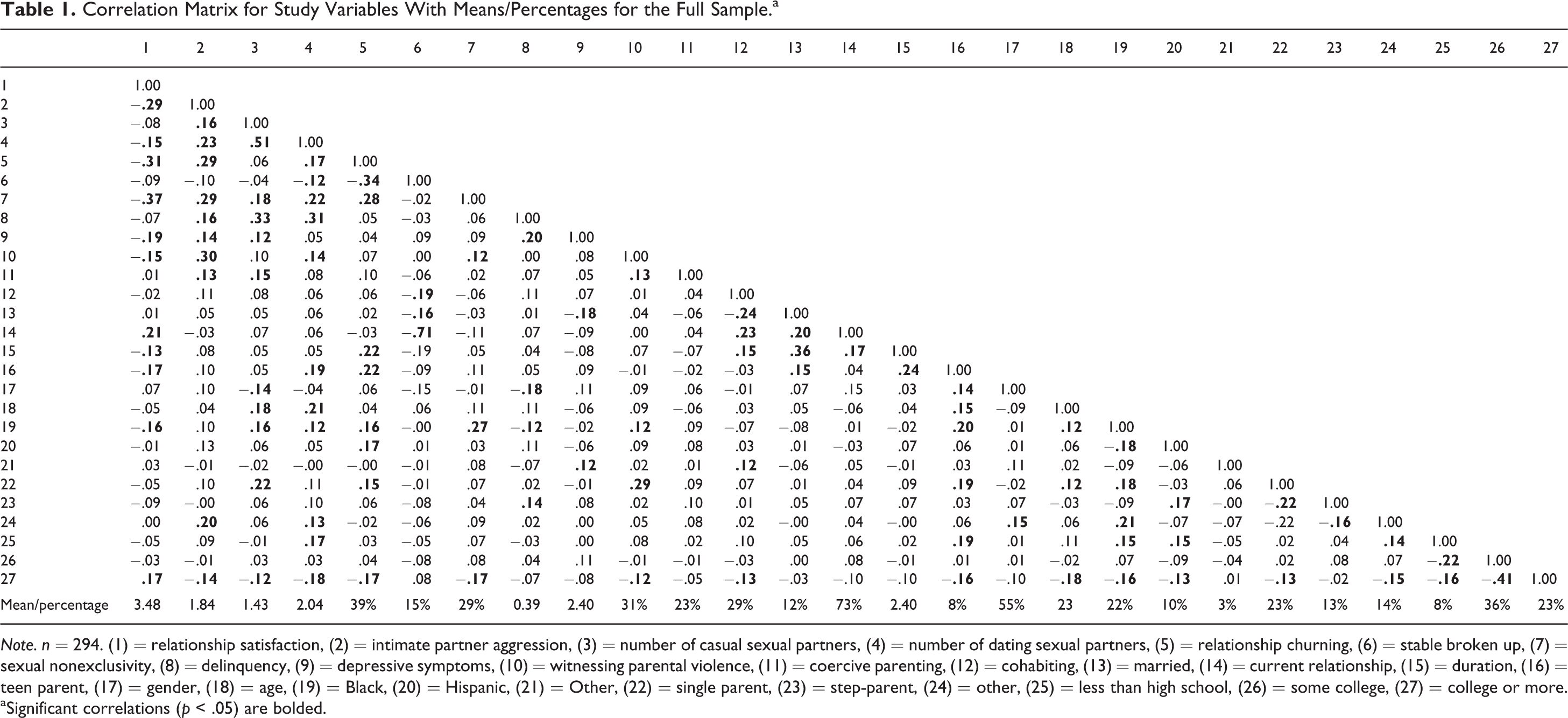
Note. n = 294. (1) = relationship satisfaction, (2) = intimate partner aggression, (3) = number of casual sexual partners, (4) = number of dating sexual partners, (5) = relationship churning, (6) = stable broken up, (7) = sexual nonexclusivity, (8) = delinquency, (9) = depressive symptoms, (10) = witnessing parental violence, (11) = coercive parenting, (12) = cohabiting, (13) = married, (14) = current relationship, (15) = duration, (16) = teen parent, (17) = gender, (18) = age, (19) = Black, (20) = Hispanic, (21) = Other, (22) = single parent, (23) = step-parent, (24) = other, (25) = less than high school, (26) = some college, (27) = college or more.
aSignificant correlations (p < .05) are bolded.
Coefficients for the OLS Regression of Adolescent Sex Experience and Young Adult Relationship Patterns on Relationship Satisfaction in Emerging Adulthood.ab
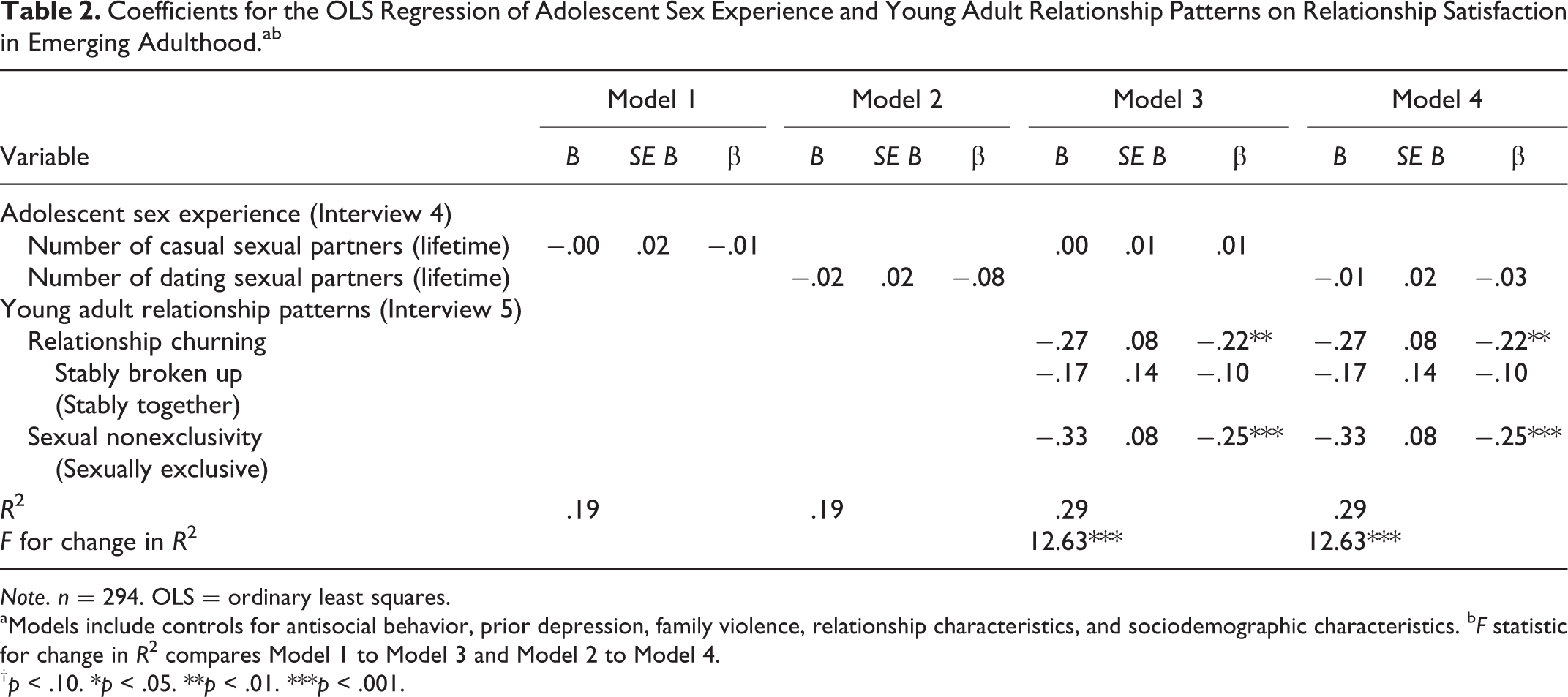
Note. n = 294. OLS = ordinary least squares.
aModels include controls for antisocial behavior, prior depression, family violence, relationship characteristics, and sociodemographic characteristics. b F statistic for change in R 2 compares Model 1 to Model 3 and Model 2 to Model 4.
† p < .10. *p < .05. **p < .01. ***p < .001.
Coefficients for the OLS Regression of Adolescent Sex Experience and Young Adult Relationship Patterns on Intimate Partner Aggression in Emerging Adulthood.ab
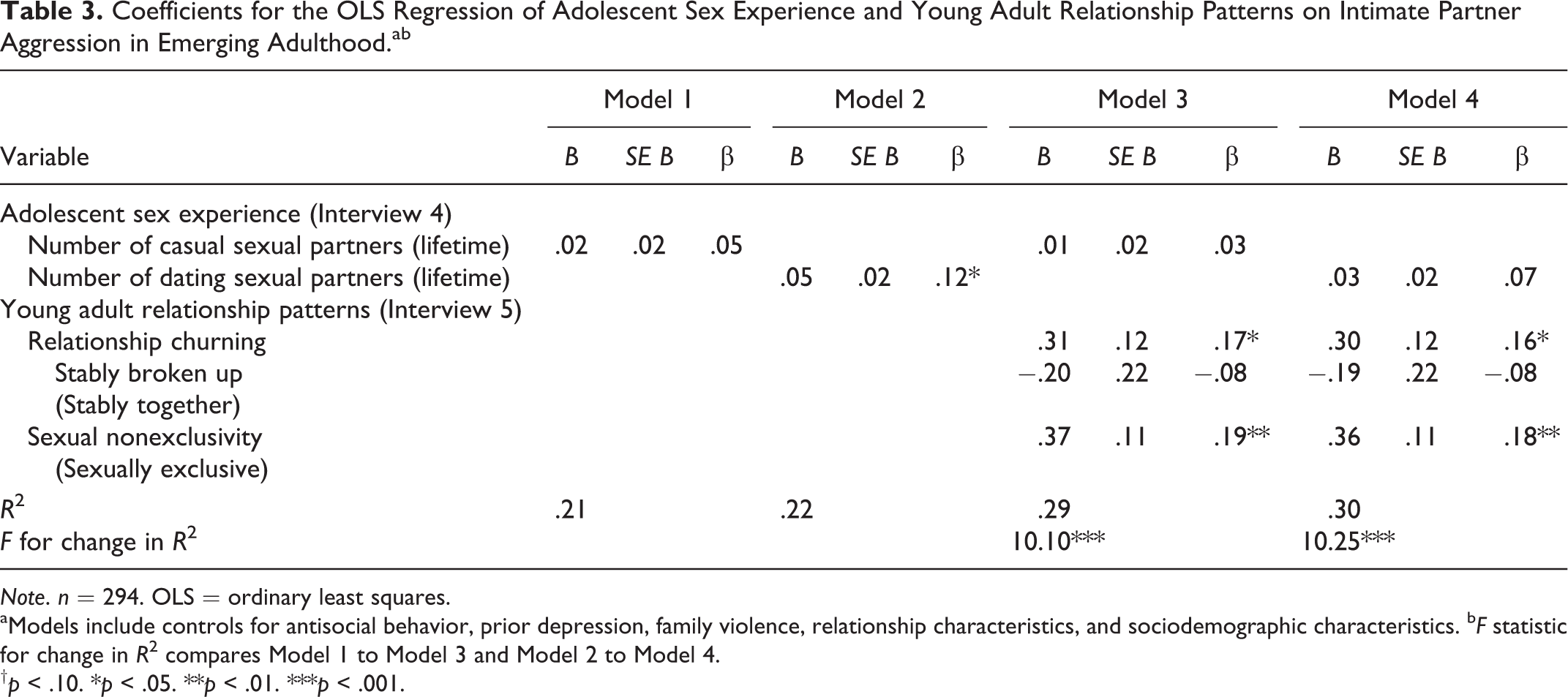
Note. n = 294. OLS = ordinary least squares.
aModels include controls for antisocial behavior, prior depression, family violence, relationship characteristics, and sociodemographic characteristics. b F statistic for change in R 2 compares Model 1 to Model 3 and Model 2 to Model 4.
† p < .10. *p < .05. **p < .01. ***p < .001.
Coefficients for the OLS Regression of Adolescent Sex Experience and Young Adult Relationship Patterns on Intimate Partner Aggression in Emerging Adulthood: Tests for the Moderating Effect of Gender.a
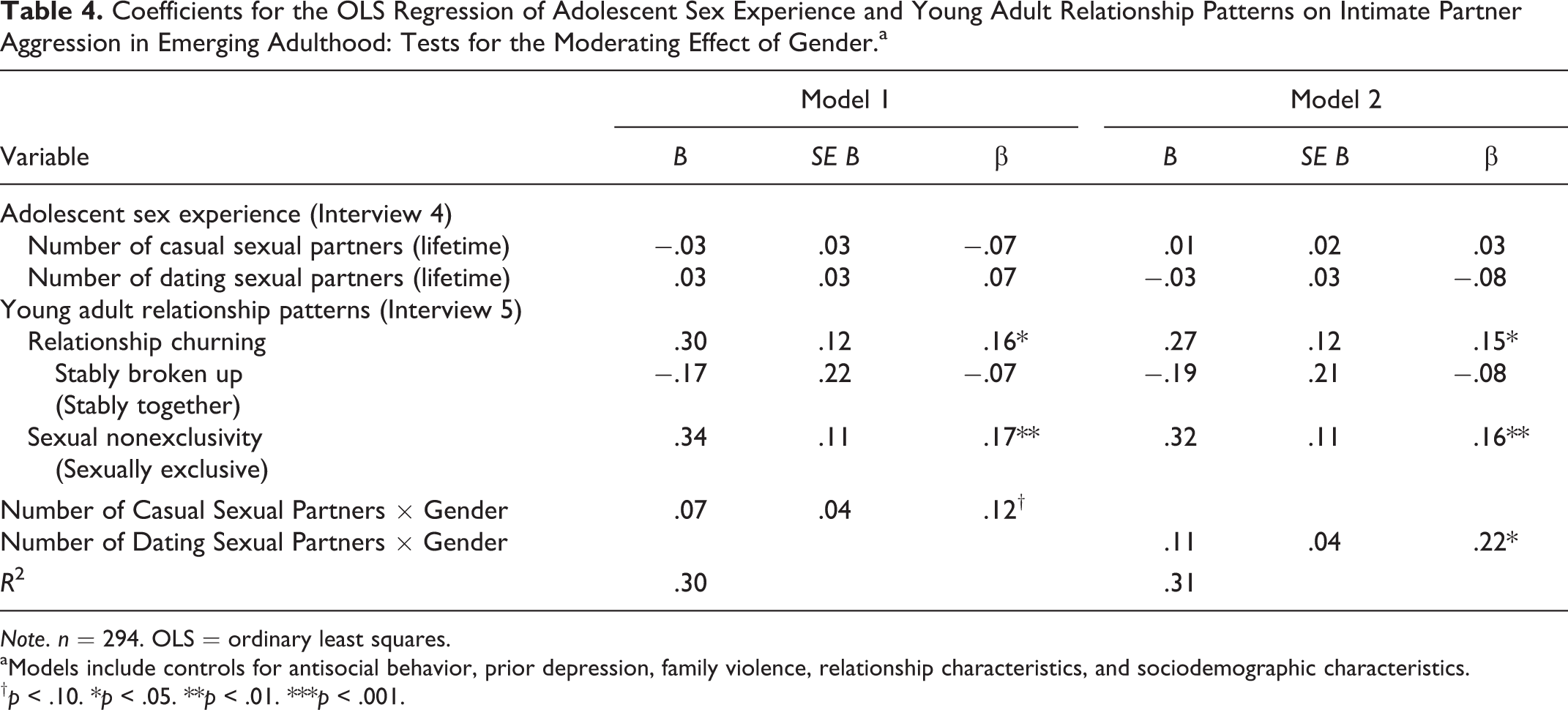
Note. n = 294. OLS = ordinary least squares.
aModels include controls for antisocial behavior, prior depression, family violence, relationship characteristics, and sociodemographic characteristics.
† p < .10. *p < .05. **p < .01. ***p < .001.
Results
Among emerging adults, the average level of relationship satisfaction on the Rust, Bennum, Crowe, and Golombok (1986) scale was 3.48 (range = 1–5) with a standard deviation of 0.60, indicating moderate levels of satisfaction across the sample as a whole (Table 1). Relationship satisfaction was not significantly different for men and women (not shown). About 25% of the sample reported any intimate partner aggression, which is consistent with estimates among young adults employing other data sets, such as the Add Health (e.g., Halpern et al., 2009). The percentages of men and women who reported any intimate partner aggression were not significantly different, although women reported slightly more frequent aggression (not shown). Thus, emerging adults on average reported moderate relationship satisfaction, but about one fourth also reported relationship violence.
Regarding lifetime number of sexual partnerships, when respondents were ages 18–19, the average number of casual and dating sexual partners was 1.43 and 2.04, respectively. We note this is limited to vaginal sexual intercourse and that the levels likely would be higher with a more expansive definition of sexual activity. Although male and female teens did not report a significant difference in number of dating sexual partners, male compared with female teens reported on average more casual sex partners (1.88 vs. 1.17; not shown).
Nearly two fifths (39%) of emerging adults reported relationship churning, and a similar percentage of female (41%) compared with male (36%) respondents reported breaking up and getting back with their partners. A higher percentage of men (22%) compared with women (10%) reported being in stably broken up relationships, and similar percentages of men (43%) and women (48%) reported being in stable relationships (not shown). Nearly one third, 29%, of emerging adults reported that they were in sexually nonexclusive relationships; the majority, 71%, reported that their current or most recent relationship was sexually exclusive. The percentage of men and women who reported being sexually exclusive was not significantly different (not shown).
Relationship Satisfaction
In Table 1 (correlation matrix), the cumulative number of dating, but not casual, sexual partners was associated with lower levels of relationship satisfaction during emerging adulthood. The bivariate correlation between number of casual sexual and number of dating sexual partners was .51. Consistent with expectations, relationship churning and sexual nonexclusivity were associated with lower relationship satisfaction at the bivariate level.
In Table 2, Model 1, we examined the cumulative frequency of adolescents’ casual sex partnerships on emerging adults’ relationship satisfaction controlling for antisocial behavior, depression, prior family violence, relationship characteristics, and sociodemographic characteristics. Similar to the bivariate results, teens’ number of casual sexual partners was not a significant influence on subsequent relationship satisfaction with the inclusion of the other correlates. In Model 2, the frequency of dating sexual partners during adolescence was not associated with relationship satisfaction net of the control variables. Regarding our initial research questions, with the inclusion of the control variables, neither casual nor dating sexual relationships influenced subsequent relationship satisfaction during emerging adulthood.
In Models 3 and 4, we added relationship churning and sexual nonexclusivity. Relationship churning and sexual nonexclusivity were associated with lower satisfaction. In Models 3 and 4, as in Models 1 and 2, numbers of casual and dating sexual partners during adolescence were not associated with relationship satisfaction in emerging adulthood, controlling for other factors. Thus, regarding the second research question, we found only partial support for mediation. Whereas many approaches to testing mediation hypotheses do not simultaneously examine multiple mediators or account for the effects of other covariates, an advantage to our approach is that we estimated the path coefficients in a multiple mediator model adjusting all paths for the potential influence of study covariates not proposed to be mediators in the models (Preacher & Hayes, 2008). The association between frequency of casual sexual experience in adolescence was not associated with later relationship satisfaction at the bivariate level, and formal tests of mediation confirmed that relationship patterns did not mediate the effect of the number of casual sexual partners on relationship satisfaction. The effect of dating sexual experience, however, was partially mediated by churning (z = −1.82, p < .05) and sexual nonexclusivity (z = −2.36, p < .01). Furthermore, the observed relationship patterns (i.e., churning and sexual nonexclusivity) were associated with lower relationship satisfaction in emerging adulthood.
In supplemental analyses (not shown), we tested a series of interactions in separate models. We found that teens’ cumulative number of dating and casual sexual partners and emerging adults’ patterns of relationship churning and sexual nonexclusivity were related similarly to relationship satisfaction for men and women. Thus, with regard to our research questions about gender, the effects of dating and casual sexual partnerships, relationship churning, and sexual nonexclusivity on relationship satisfaction did not differ significantly between young men and women. With respect to some concerns that casual sex is especially detrimental for women, we did not find evidence to suggest that greater frequency of casual sexual experiences during adolescence had more adverse consequences for young women’s compared with men’s relationship satisfaction.
Intimate Partner Aggression
The bivariate information presented in Table 1 indicated that the cumulative numbers of adolescent casual and dating sexual relationships were each associated with higher odds of experiencing intimate partner aggression in emerging adulthood, and the effect was stronger for dating sexual partners. At the bivariate level, relationship churning and sexual nonexclusivity were associated with greater odds of intimate partner aggression.
In Table 3, we presented multivariate results for the association between adolescent sexual partnerships, young adult relationship patterns, and any intimate partner aggression. In Model 1, we examined the influence of adolescents’ casual sexual experience on the odds of intimate partner aggression. Net of the control variables, number of casual sexual experiences during adolescence was not a significant influence on the odds of intimate partner aggression during emerging adulthood. Results in Model 2, in contrast, showed that number of dating sexual partners increased the odds of intimate partner aggression. Thus, with regard to our initial research questions, only number of dating sexual partners increased the odds of intimate partner aggression.
The next two models in Table 3 included the patterns of churning and sexual nonexclusivity. In Model 3, the cumulative frequency of casual sexual partners during adolescence was not associated with the odds of experiencing intimate partner aggression during emerging adulthood with the inclusion of relationship churning and sexual nonexclusivity, both of which were significantly associated with intimate partner aggression. Model 4 showed that with the inclusion of relationship churning and sexual nonexclusivity, number of dating sexual partners during adolescence was no longer significantly associated with intimate partner aggression. Thus, the patterns of relationship churning and sexual nonexclusivity developed in emerging adulthood explained some of the association between adolescent dating sexual experiences and intimate partner aggression.
Similar to the procedure outlined above, we estimated a multiple mediator model accounting for other key covariates. After adjusting all paths for the influence of the control variables, the direct path between casual sex partners and intimate partner aggression was attenuated. Net of controls, the number of dating sex partners continued to exert a positive influence on the odds of intimate partner aggression. Supplemental analyses revealed that patterns of relationship churning and sexual nonexclusivity in emerging adulthood mediated the link between dating sexual partners and intimate partner aggression (specific indirect effects = 1.818 and 2.188 [p < .05], respectively).
In Table 4, we presented the significant interactions by gender. Consistent with the models predicting relationship satisfaction, the influence of relationship churning and sexual nonexclusivity on intimate partner aggression was similar for men and women. Gender moderated the associations between adolescent sexual experiences and intimate partner aggression. Specifically, results in Model 1 indicated that the influence of number of casual sexual partners on the odds of intimate partner aggression was stronger for women. Further analyses indicated that although the association between casual sexual partners and the odds of intimate partner aggression is significantly different for men and women, the number of casual sexual partners is not associated with intimate partner aggression for either men or women. A similar pattern emerged for the cross-product of number of adolescent dating sexual partners with gender. That is, controlling for other factors, the association between number of adolescent dating sexual partners and intimate partner aggression was stronger for women. The number of dating partners was not associated with intimate partner aggression for men (b = −0.03, p > .10), but among women, the number of dating sexual partners was positively (b = 0.08, p < .05) associated with intimate partner aggression (results not shown). Thus, the number of adolescent sexual relationships was more strongly associated with physical aggression in emerging adulthood for women than men.
Discussion
We began this article by reviewing prior research on adolescents’ sexual partnerships and their potential influences on emerging adult outcomes. The longitudinal framework of the current study enabled us to examine specific consequences of variations in the nature of these earlier sexual experiences for later satisfaction and involvement with relationships characterized by intimate partner aggression. One way that our work moved beyond prior studies was by distinguishing adolescents’ sexual experiences into those that occurred in dating and casual relationships. This distinction is important because young men compared with women report more casual sexual partnerships (Manning et al., 2014), and based on prior literature, it is unclear whether casual sexual partnerships have greater negative implications for women (e.g., Fielder, Walsh, Carey, & Carey, 2014) or comparable effects for young men and women (e.g., Lyons, Manning, Giordano, & Longmore, 2013). Additionally, there is a tendency to view dating sexual partners somewhat more positively, as these experiences are thought to be associated with relationship skill building (e.g., Raley, Crissey, & Muller, 2007) and model adult relationship progression. Initially, at the bivariate level, adolescent sexual experiences (i.e., number of casual sexual partners and number of dating sexual partners) were associated with lower levels of relationship satisfaction and higher odds of any intimate partner aggression during emerging adulthood. We found, however, that in the multivariate models that included other known correlates, the number of dating sexual partners, but not the number of casual sexual partners, was associated with increased odds of intimate partner aggression. Thus, it may be starting and ending dating sexual relationships that shape future relational trajectories rather than the traditionally, negatively, viewed casual sexual relationships.
We also considered the influence of emerging adults’ relational patterns as a mediating link between cumulative numbers of casual and dating sexual partnerships during adolescence and relationship functioning during emerging adulthood. Recognizing the complex dynamics of intimate relationships, these relational pathways included sexual nonexclusivity and relationship churning. Our findings contributed to the literature by emphasizing that although the cumulative frequency of dating sexual partnerships were associated with increased likelihood of experiencing physical violence in models that just included the control variables, the frequency of dating sexual partnerships was not significant in models that included sexual nonexclusivity and relationship churning. Specifically, the cumulative number of dating sexual partners influenced emerging adult relationship outcomes through relationship churning and sexual nonexclusivity. The relationship context of sexual activity did not directly matter, but rather influenced relational patterns in emerging adulthood. Experiences with a greater number of dating sexual partners may be a form of “relationship baggage” that manifests itself in patterns of sexual nonexclusivity and relationship churning during emerging adulthood. This also suggests, however, that in those cases where these early sexual experiences do not connect to the churning pattern or later sexual nonexclusivity, it does not appear that such experiences inevitably foster detrimental adult relationship dynamics (i.e., less satisfying relationships or heightened risk for intimate partner aggression).
Based on prior work indicating that men are more sexually permissive, we examined whether adolescent sexual relationships would influence emerging adult relationship outcomes in different ways for men and women. It appears that the cumulative number of adolescent sexual partners (dating or casual) was similarly associated with relationship satisfaction for men and women. In contrast, adolescent sexual partnerships were associated more strongly with intimate partner aggression among women than men. Furthermore, among women, it was the number of dating, and not casual, sexual partnerships that was associated with greater odds of intimate partner aggression, which is consistent with Klipfel, Clazton, and van Dulmen’s (2014) finding that nearly twice as many of their respondents reported some form of intimate partner aggression in dating compared with casual sexual relationships. Based on these findings, we conclude that rather than being associated with relationship skill building, the cumulative number of dating sexual relationships can be associated with negative outcomes during emerging adulthood. In a set of three studies examining growth following the most stressful event they had encountered in the past year, the dissolution of a romantic relationship was the most common traumatic event cited by the sample (Park, Cohen, & Murch, 1996). Our conclusion is also consistent with Furman and Collibee’s view that precocious dating (or in our case a greater frequency of dating sexual relationships), although normative may not be developmentally appropriate; as such, there can be negative implications.
Although our work moves beyond prior studies, there are a few limitations. First, the data are drawn from one regional area (Lucas County, OH), although basic comparisons indicate that the large metropolitan area we focused on is similar to the United States as a whole on several basic demographic characteristics, including estimates of race and ethnicity, family status, income, and education. These results should be replicated with a nationally representative data source. Second, our analyses do not provide a comprehensive explanation for why the cumulative number of adolescents’ dating sexual relationships affects emerging adults’ relationships. That is, frequency of involvement captures little of the quality of dating relationships. For example, we did not examine whether violence occurred in these prior relationships. Moreover, there may be other mediating variables not examined and that would alter our conclusions about which variables most strongly mediate adolescents’ sexual activity. We also did not consider potential reciprocal relationships between the two mediators. Third, our indicator of casual sexual activity included prior sexual partners and friends; it is unclear whether effects would differ if we focused exclusively on casual sex with strangers. Bersamin et al. (2014), for example, found that sexual activity with individuals known less than a week had negative implications for emerging adults’ mental health. Fourth, researchers have begun to pay attention to the possibility that some observed differences in adolescents’ sexual activity reflect preexisting differences (e.g., Mendle et al., 2013). Fifth, although we did include depressive symptoms (e.g., Sandberg-Thoma & Kamp Dush, 2014), we did not examine the extent to which a wider range of prior psychological characteristics might explain why teens, sexually active with dating partners, might fare worse in emerging adult relationships. Sixth, we focused on vaginal sexual intercourse, and to be sure, there are other sexual experiences that are relevant (anal and oral sex), especially with regard to casual sexual behavior as well as sexual nonexclusivity. A related issue is that the study was limited to heterosexual relationships. We expect a similar pattern of findings among same-sex couples but do not have sufficient sample sizes to empirically examine this issue. Finally, we created our explanatory model within a specific social and historical context; as such, the precise risks associated with dating sexual relationships perhaps would differ at a different time.
Despite these limitations to our conclusions, the results of our analyses have implications for the broader theoretical literature on the implications of adolescents’ sexual behavior for emerging adults’ relationship satisfaction and use of physical aggression in intimate relationships. The current findings are potentially useful, as they suggest that some conventional wisdom about sexual and dating experiences during adolescence may not provide an accurate portrait of some consequences of these experiences for emerging adulthood. Moreover, the high levels of relationship churning and sexual nonexclusivity among emerging adults require theories and approaches that acknowledge the links between adolescents’ and emerging adults’ experiences. Our findings suggest that prevention programs directed to address issues of teen sexuality and safe sex practices will need to confront that although dating experiences may be associated with positive meanings (e.g., Giordano, Longmore, & Manning, 2006), they are also associated with heightened risk later in the life course including intimate partner aggression. The longer window of assessment provided by longitudinal data showed that effects of casual sex were not consistent with an ominous portrait of negative sequelae of casual sexual experience. Yet, some associations (the link between number of sexual partners and any intimate partner aggression with partner) provide a more complex picture, highlighting the need for additional research that captures qualitative differences in the character and impact of these relationship experiences.
Footnotes
Authors’ Note
The opinions, findings, and conclusions or recommendations expressed in this publication/program/exhibition are those of the authors and do not necessarily reflect the official views of the Department of Justice or National Institutes of Health.
Authors' Contribution
Monica A. Longmore substantially contributed to conceptualization and/or design; contributed to data collection, analysis, and/or interpretation of data; drafted the manuscript; critically revised the manuscript for important intellectual content; gave final approval; and agrees to be accountable for all aspects of work ensuring that questions relating to the accuracy or integrity of any part of the work are appropriately investigated and resolved. Wendy D. Manning contributed to conception and design; contributed to acquisition, analysis, and interpretation; drafted the manuscript; critically revised the manuscript; gave final approval; and agrees to be accountable for all aspects of work ensuring integrity and accuracy. Jennifer E. Copp contributed to conception and design; contributed to acquisition, analysis, and interpretation; drafted the manuscript; critically revised the manuscript; gave final approval; and agrees to be accountable for all aspects of work ensuring integrity and accuracy. Peggy C. Giordano contributed to conception and design; contributed to acquisition, analysis, and interpretation; drafted the manuscript; critically revised the manuscript; gave final approval; and agrees to be accountable for all aspects of work ensuring integrity and accuracy.
Declaration of Conflicting Interests
The author(s) declared no potential conflicts of interest with respect to the research, authorship, and/or publication of this article.
Funding
The author(s) disclosed receipt of the following financial support for the research, authorship, and/or publication of this article: This research received support from the Eunice Kennedy Shriver National Institute of Child Health and Human Development (HD036223 and HD044206), the Department of Health and Human Services (5APRPA006009), the National Institute of Justice, Office of Justice Programs, U.S. Department of Justice (Award Nos. 2009-IJ-CX-0503 and 2010-MU-MU-0031), and the Center for Family and Demographic Research, Bowling Green State University, which has core funding from the Eunice Kennedy Shriver National Institute of Child Health and Human Development (R24HD050959).