



Abstract
The current study examines the impact of perceived academic support from closest same-sex friends and romantic partners on two indicators of academic success: GPA (reported by the registrar’s office) and student engagement. Utilizing a longitudinal, daily-diary design, we investigate whether perceived academic support from closest same-sex friends and perceived academic support from romantic partners are unique constructs. Longitudinal path models also test the associations between academic support, student engagement, and GPA. Participants were emerging adults attending college (N = 246) at a large, Midwestern U.S. university, who were in a committed romantic relationship for at least 4 months. Results suggest academic support from friends and academic support from romantic partners are unique constructs. Academic support from friends, but not romantic partners, is positively associated with student engagement, which subsequently predicts GPA. These findings build upon work demonstrating the importance of close relationships in undergraduate student engagement and achievement.
The proportion of emerging adults enrolled in a 4-year college or university has been rising consistently (if slowly) in the last few decades (see Arnett, 2016 for review). In 2019, 30.4% of 18–24-year-olds were enrolled in a 4-year college or university (NCES, 2021). The increase in the number of emerging adults pursuing a 4-year college degree is not surprising. College graduates earn more money on average (approximately $1 million more over a lifetime), are less likely to face unemployment, and are more likely to experience job satisfaction as compared to individuals who do not obtain a college degree (Pew Research Center, 2016; Tamborini et al., 2015; U.S. Bureau of Labor Statistics, 2019). In addition to these academic and career pursuits, American 4-year universities provide a unique opportunity for emerging adults to engage in identity exploration, consider alternative viewpoints, and explore new possibilities in their love lives without the demands of adulthood (Arnett, 2016). The college experience for these emerging adults offers opportunities for personal, individual, and social growth (Arnett, 2016). As such, friendships and romantic partnerships are a key component of their college experience.
However, not all emerging adults successfully complete their 4-year college degree. Only 63.8% of college students who enroll in bachelor’s programs at age 18 graduate within 5 years (Bustamante, 2019). Many factors may hinder their ability to graduate and create stress in their everyday lives. For most 4-year college-attending emerging adults, this the first time they are making decisions about what classes to take, when to study, and how to spend their free time without the constant supervision of their parents (Thompson, 2008). Furthermore, students believe their college classes are more difficult, faster paced, and that their professors are not as readily available to support them with coursework, as compared to their teachers in high school (Thompson, 2008). These issues are concerning because enrolling in college but not completing a degree – or taking longer than anticipated to complete a degree – can lead to insurmountable debt for these emerging adults. Thus, it is important to better understand what factors lead to their academic success, so we can support their college endeavors.
Many emerging adults seek support from close others as they pursue their 4-year degree. Indeed, much empirical research has demonstrated that social support from close others (i.e., the extent to which students felt they were close to others and could rely on them for support) is associated with higher levels of academic success (e.g., Deci et al., 1991; Dennis et al., 2005; Hardre & Reeve, 2003; Wilks, 2008; Wilks & Spivey, 2010). Reeve’s (2012) work on self-determination theory and student engagement explains students need supportive relationships to promote student engagement, which promotes academic achievement (i.e., grades/GPA). As such, the current study focuses on better understanding these two related indicators of college-attending emerging adults’ academic success: student engagement and GPA. Given the social context provided by 4-year institutions (Arnett, 2016) and the developmental significance of friendships and romantic relationships during emerging adulthood (Collins & van Dulmen, 2006), we investigate the relative impact of academic support from same-sex closest friends and romantic partners on student engagement and GPA during college.
Academic Success
A recent literature review demonstrates that GPA is the most commonly used measure of academic success (York et al., 2015). GPA reflects the weighted mean of grades from courses taken and is considered an objective measure of academic success (Richardson et al., 2012). GPA is a consistent a predictor of retention and graduation, as many colleges require students to achieve above a “C” average (i.e., GPA above 2.0) to graduate, (e.g., Barbera et al., 2020; Delaney, 2008; Jesse & Ellersieck, 2009; McGrath & Braunstein, 1997). As such, a large body of research examines correlates of undergraduate GPA. For example, demographic factors including socioeconomic status (SES) (e.g., Rodríguez-Hernández et al., 2020; Westrick et al., 2015) and mothers’ educational attainment (e.g., Pishghadam & Zabihi, 2011) are associated with undergraduate GPA. More recently there has been a shift toward understanding the psycho-social factors that predict undergraduate GPA, such as social support (e.g., Richardson et al., 2012; Robbins et al., 2004), which we discuss below.
Though GPA is often considered a more objective indicator of undergraduate success, recently researchers have focused on student engagement in academics. Student engagement reflects behavioral, emotional, and cognitive engagement (Fredricks et al., 2004). Behavioral engagement refers to behaviors that engage the student in course material, such as studying for class. Emotional engagement refers to the emotional reactions to the school environment. Cognitive engagement refers to the willingness to put mental effort into understanding the material (Fredricks et al., 2004; Handelsman et al., 2005). Student engagement is essential to investigate as it is linked to academic success. Students who are more engaged are more likely to have higher satisfaction with their academic experience, earn higher GPAs, obtain a college degree, and complete their degree in a shorter amount of time (Svanum & Bigatti, 2009; Webber et al., 2013). Furthermore, there are certain components of student engagement, such as class attendance, that are particularly predictive of college GPA, even after accounting for standardized test scores, high school GPA, and study skills (see Credé et al., 2010 for a meta-analytic review). Given the positive association between student engagement and academic success, researchers have investigated antecedents of student engagement, including support from close others (Fredricks et al., 2004; Reeve, 2012).
Reeve’s (2012) self-determination theory perspective on student engagement argues students need supportive conditions to flourish. Guided by this work on self-determination theory and student engagement (Reeve, 2012), we focus on how support from close others can be used as a tool for student engagement and subsequent achievement (i.e., GPA). Given the stressful developmental period of emerging adulthood, it is important to identify factors that can promote college-attending emerging adults’ academic success, which can inform future interventions. In the current study we explore the impact of academic support from closest friends and romantic partners on college attending emerging adults’ student engagement and GPA.
Support for College Students
Despite the consensus that students benefit academically from the support of close others, additional specification in the definition and provider of social support are needed to identify the specific ways in which various social partners have positive effects on students’ academic outcomes (Wentzel & Wigfield, 2007). For college attending emerging adults, various social relationships are important. They are engaging in identity exploration in the realm of love and intimacy while also prioritizing the new friendships and social experiences of college (Arnett, 2016; Arnett et al., 2014). Thus, social support from close friends and romantic partners may be particularly salient for college attending emerging adults.
Social support is a multifaceted concept, including the support network, perceived support, and the actual support exchange (Barrera, 1986). Here, we focus specifically on perceived support, which refers to an individual’s perceptions of the general availability of support (Sarason et al., 1990). We do this because it is one’s subjective perceptions of social support that is associated with improved outcomes (Barrera, 1986; Haber et al., 2007). Furthermore, we are considering one’s perceptions of support within a specific context: the academic context. As such, we narrow our focus on perceived academic support. Academic support is associated with other types of social support but is considered a unique type of support (Mazer & Thompson, 2011). This terminology clarifies that we are focusing on support that is a) perceived and b) within the academic context. For example, in the current study, perceived academic support includes perceiving that a close other encourages and provides positive feedback when doing schoolwork. Because many college students do not perceive academic support to be readily available from parents, professors, or the institution at large, they often look for alternative ways to get the support they need, including their close friends and romantic partners.
Peers as Sources of Perceived Academic Support
An extensive body of research demonstrates that various aspects of peer relationships are associated with academic functioning (see Wentzel, 2005; 2009 for review). Though much of this work demonstrates a positive association between peer support and academic success during childhood (e.g., Furrer & Skinner, 2003) and adolescence (e.g., Gallardo et al., 2016; Liem & Martin, 2011), there is growing attention to the role of peer support for college students’ success. Swenson Goguen and colleagues (2010) show trusting and sharing common interests with friends are predictive of undergraduate GPA. Catling et al. (2013) findings show support from peers is a significant predictor of college students’ failure rate and average grades. Moreover, Thoits’ (2011) theoretical argument proposes that the effectiveness of support can vary depending on the source. If a relationship is high in connectedness and commitment (i.e., close friends) support is more effective (Thoits, 2011). In summary, this work reflects the theoretical and empirical consensus that support from close friends should be considered when examining academic outcomes.
In addition to seeking general support, research suggests many students seek out peer support specific to academics (Mazer & Thompson, 2011; Thompson, 2008; Thompson & Mazer, 2009). In the current paper, we refer to this type of support that is specific to academic-related issues as “perceived academic support”, which is considered a unique type of support (Mazer & Thompson, 2011). For example, when seeking academic support, students reach out to fellow peers to increase their own motivation for schoolwork, to vent about their frustrations with certain classes, to improve their self-esteem related to coursework, and to get hands-on support, such as having a peer explain a certain concept in greater detail (Thompson, 2008; Thompson & Mazer, 2009). Although research suggests academic support from peers is common, perceived to be useful, and associated with certain predictors of academic success, such as academic self-efficacy (Altermatt, 2019), no empirical research to our knowledge has examined whether it is related to student engagement and undergraduate GPA. However, given that social support and academic support are related, but unique constructs (Mazer & Thompson, 2011), we would expect perceived academic support to also be positively associated with student engagement and undergraduate GPA.
The existing literature largely focuses peer relationships more generally, rather than focusing on specific, close relationships within the peer network, such as one’s closest friends (i.e., best friends). Given that peer support is perceived to be more useful and effective when the student considers that peer to be a friend (as friends are more invested in each other’s success and thus make a greater effort to help one another out; Thompson, 2008), this study investigates the role of students’ closest friends (i.e., best friends). These friendships, in addition to romantic relationships (discussed below) are particularly important during emerging adulthood and highly related to each other (e.g., Collins & Laursen, 2004; Collins & van Dulmen, 2006). In particular, we focus on academic support from best same-sex friends. Though emerging adults’ expectations of same-sex and cross-sex friends do not appear to differ, cross-sex friendships appear quite complex and may serve as a “bridge” to a future romantic relationship for heterosexual individuals (Fuhrman et al., 2009). To distinguish between academic support from best friends and academic support from romantic partners (especially in our predominantly heterosexual sample), we focus on closest same-sex friends. Thus, this study examines whether perceived academic support from same-sex best friends is associated with emerging adults’ academic success, as indicated by undergraduate student engagement and GPA.
Romantic Partners as Sources of Perceived Support
Examining the impact of romantic partners is particularly important during emerging adulthood, as romantic relationships are developmentally significant during this time. College students spend more time with their romantic partners as compared to friends and family (Reis et al., 1993). For emerging adults, romantic relationships grow in importance during the college years, becoming more intimate and serious as compared to when they were in high school (Arnett, 2000; Collins & Laursen, 2004). Moreover, romantic relationships become more salient, longer lasting, and impactful as adolescents transition to adulthood (Collins et al., 2009). These changes lead many emerging adults to integrate their romantic partners into their academic and career paths (Shulman & Connolly, 2013). Indeed, emerging adults commonly identify romantic partners as their closest friend (Pahl & Pevalin, 2005) and view their partners as providing similar or greater support than parents (Furman & Buhrmester, 1992; Helsen et al., 2000). However, it is important to note that romantic partners may not always promote academic success. Some emerging adults feel romantic partners may distract them from their schoolwork (Manning et al., 2009). Thus, examining the role of romantic partners in undergraduate academic success is warranted due to their developmental relevance and varied nature.
Although various researchers have examined the role of romantic partners in the college context broadly (e.g., how romantic partners impact academic trajectories, whether romantic partners similarly prioritize goals for their relationship and academics; Barth et al., 2016; Manning et al., 2009) less work has examined the role of romantic partners in providing academic support. Of the limited research in this area, the focus has primarily been on romantic relationship status (rather than characteristics of the relationship). For example, Schmidt and Lockwood (2017) found romantic relationship status was not associated with GPA. However, those in a romantic relationship were 200% more likely to miss class (Schmidt & Lockwood, 2017). Similarly, Field and colleagues (2012) demonstrate romantic breakups may negatively impact students’ concentration, test performance, and grades. Moreover, most studies that examine the impact of romantic relationships on academic achievement (of which there are few) primarily focus on adolescence (Schmidt & Lockwood, 2017). Given the limited research in this area, Lombardi and colleagues (2016) call for future research to examine the impact of romantic partners’ support on college students’ academic outcomes.
Manning and colleagues (2009) argue romantic partners may provide academic-related support by encouraging class attendance or pushing their partner to work harder in school. In fact, recent work (AUTHOR CITATION) has shown that college-attending emerging adults turn to their romantic partners on a daily basis when they experience academic stress. When they are satisfied by that support, they also report more student engagement (AUTHOR CITATION). To address an important gap in the literature, this study investigates how perceptions of romantic partners’ academic support impacts college attending emerging adults’ engagement and GPA. Furthermore, we investigate the relative contribution of students’ perceptions of same-sex closest friends’ and romantic partners’ academic support, as it is not clear if one source of support is more influential than the other.
The Current Study
Given undergraduate enrollment in the United States has increased 27% since 2000, but only 60% of first-time, full-time students graduate within 6 years, it is important to understand predictors of undergraduate student success (McFarland et al., 2019). As such, many researchers have investigated predictors of academic success, such as the beneficial role of support from parents and friends (Dennis et al., 2005). Although this support is perceived to be beneficial, there is a lack of empirical research examining associations between perceived academic support from close friends and romantic partners and undergraduate student success. It is important to examine close friends and romantic partners as sources of academic support because college attending emerging adults are attending universities that offer a wealth of opportunity for exploration in friendship and romantic relationships (Arnett, 2016; Arnett et al., 2014). As such, the current study examines the impact of perceived academic support from closest same-sex friends and romantic partners on two indicators of academic success: self-reported student engagement and GPA (as reported by the university registrar’s office). The current study also focuses on 4-year college-attending emerging adults. Our study addresses several gaps in the existing literature. Moreover, we utilize a longitudinal, daily-diary design which allows us to examine student engagement during a 7-day period surrounding midterm exams, and end-of-semester GPA.
The current study has four aims. First, we examine whether perceived academic support from closest same-sex friends and perceived academic support from romantic partners are unique constructs. Consistent with previous research (Jenkins et al., 2013), we expected them to be positively related constructs. However, because effectiveness of support varies according to the source (Thoits, 2011) we hypothesized them to be unique constructs.
Second, we examine whether and how perceived academic support from closest same-sex friends and romantic partners are associated with college-attending emerging adults’ academic student engagement during a 7-day period surrounding midterm exams. We hypothesized 4-year college-attending emerging adults’ perceived academic support from both friends and partners would be positively related to daily student engagement and GPA. Though there a limited and mixed findings in previous research we expected perceived academic support from romantic partners to be more strongly associated with outcomes because of how salient they are during this developmental period (e.g., Collins et al., 2009; Shulman & Connolly, 2013).
Third, we examine the long-term impact of perceived academic support from closest same-sex friends and romantic partners on participants’ end of semester GPA. We expected perceived academic support from friends and romantic partners to be positively related to GPA.
Finally, we examine a longitudinal model to test whether perceived academic support from closest same-sex friends and romantic partners longitudinally predicts college-attending emerging adults’ academic student engagement (during a 7-day period surrounding midterm exams), which subsequently predicts GPA at the end of the semester. We expected perceived academic support from friends and romantic partners to be positively related to students’ daily student engagement, which would then be positively related to GPA. Furthermore, we expected these associations to hold above and beyond control variables and known covariates (age, gender, mothers’ educational attainment, and ACT scores).
Method
Participants
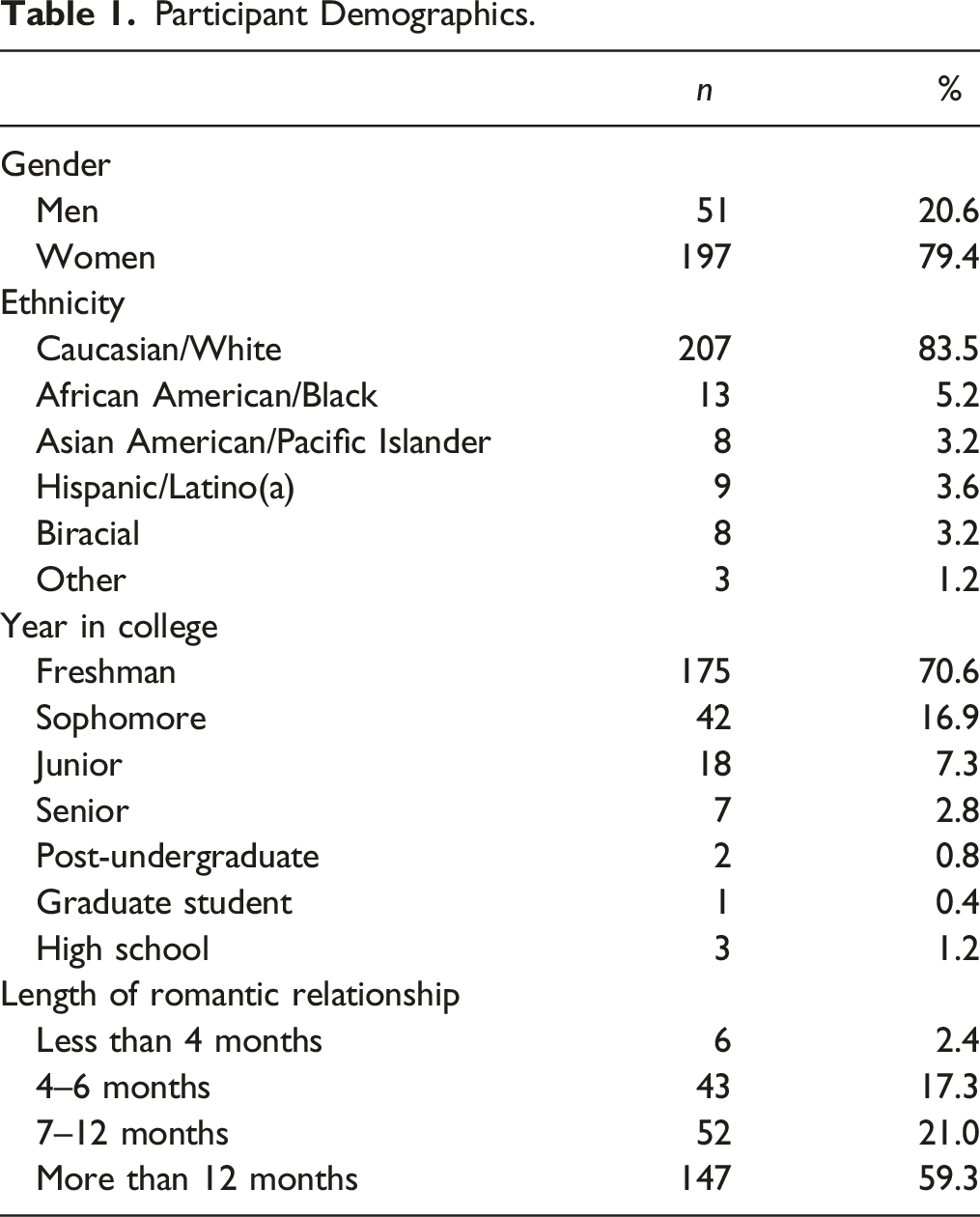
Participant Demographics.
Correlations and Descriptive Statistics.
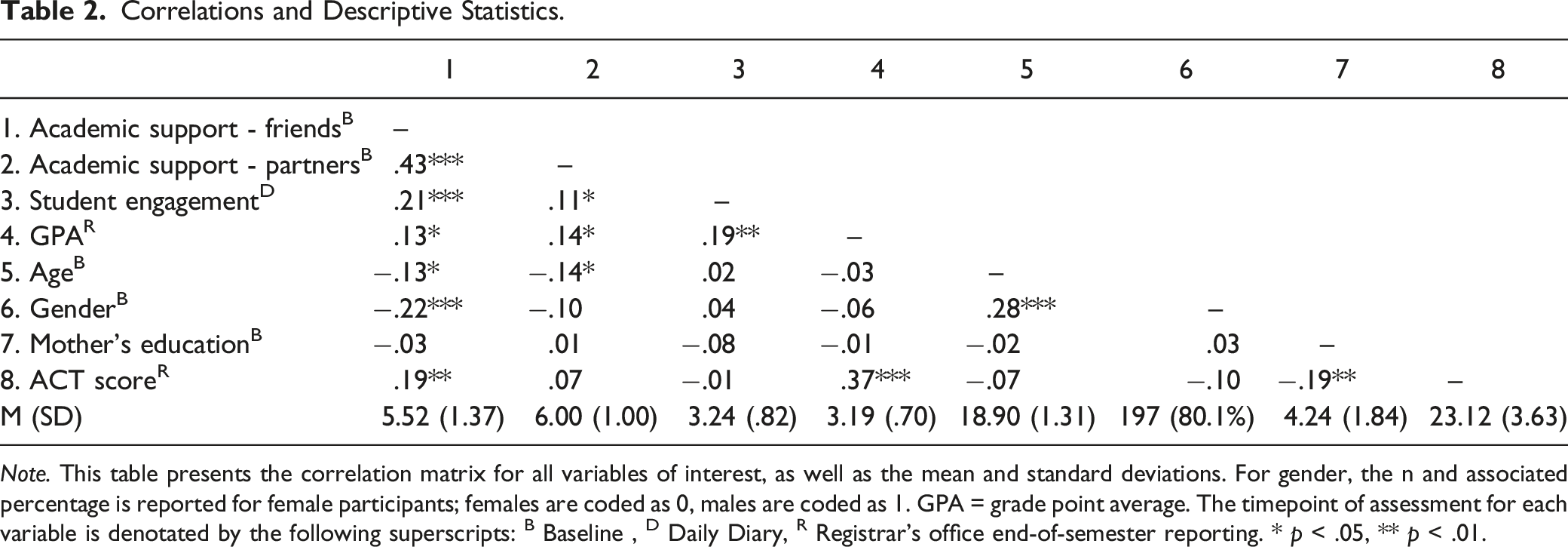
Note. This table presents the correlation matrix for all variables of interest, as well as the mean and standard deviations. For gender, the n and associated percentage is reported for female participants; females are coded as 0, males are coded as 1. GPA = grade point average. The timepoint of assessment for each variable is denotated by the following superscripts: B Baseline , D Daily Diary, R Registrar’s office end-of-semester reporting. * p < .05, ** p < .01.
Measures
Perceived Academic Support from Same-Sex Friends and Romantic Partners
During the baseline assessment, perceived academic support was assessed using 12 items. These items were adapted from the perceived autonomy support scale for exercise settings (PASSES; Hagger et al., 2007), which was originally designed for exercise settings and has indicated good internal consistency for a variety of sources across cultures. The scale was revised for the current study to assess perceived academic support from closest same-sex friend and romantic partner. Example items include “My closest same-sex friend/My partner encourages me to do schoolwork” and “My closest same-sex friend/My partner provides me with positive feedback when I do schoolwork.” Participants responded using a 7-point Likert scale (1 = Strongly disagree, 7 = Strongly agree). In the current study, these items demonstrated high levels of internal consistency when assessing perceived academic support from closest same-sex friend (α = .96) and romantic partners (α = .93). Α mean score was used for all analyses to reflect perceived academic support from closest same-sex friend and perceived academic support from romantic partners.
Student Engagement
During the daily diary assessment, participants completed an adapted version of Handelsman et al.’s (2005) measure of college student course engagement, which has demonstrated convergent and discriminant validity. 15 items were used to assess student engagement. Example items include “I put effort into my class work today” and “I took good notes in class today.” Participants responded using a 5-point Likert scale (1 = Strongly disagree, 5 = Strongly agree). These items demonstrated high levels of internal consistency across all 5 days of the daily diary assessment (α ranged from .93–.97). These items were combined using a mean score to reflect average student engagement during the daily diary period (ranges across daily diary: M = 3.07–3.33; SD = 0.96–1.16).
GPA
Through collaboration with the university’s ethics board, we obtained end-of-semester GPA for all participants in the study. Specifically, we sent the university registrar’s office a list of participants names, and they provided the GPA’s once grades were finalized for the semester (all lists of names were encrypted and shared through a secure platform).
Control Variables
We controlled for differences in academic success based on age, gender, mother’s educational attainment, and ACT scores (see descriptive data in Table 1). Mother’s education attainment was assessed using a single item during the baseline assessment: “What is the highest level of education obtained by your mother.” Response options included: a Doctoral/Professional degree (n = 8, 3.0%), Master’s degree (n = 42, 15.5%), 4-year college degree (n = 75, 27.7%), 2-year college degree (n = 38, 14.0%), some college (n = 40, 14.8%), Trade school (n = 12, 4.4%), High school (n = 45, 16.6%), and did not graduate high school (n = 11, 4.1%). Individual ACT scores for English, Math, and Reading were reported by the university’s registrar’s office. We created a composite score for each participant by averaging these individual test scores, which is consistent with the explanation from the ACT testing services website.
Procedure
Data were collected as part of a larger, recurring study, the Close Relationships and Academic Functioning among Young Adults study (CRAFYA). CRAFYA was ongoing for the Spring 2016, Fall 2016, and Spring 2017 semesters, with a pilot study conducted during the Fall 2015 semester. CRAFYA participants were asked to complete an online, baseline survey at the beginning of the semester to assess demographics, relationship functioning, psychosocial functioning, and academic factors, including perceived academic support from friends and romantic partners. Next, participants were emailed daily diary surveys during the 7 days surrounding their General Psychology midterm exams. The 7-day daily diary surveys began 4 days prior to the General Psychology midterm, included the day of the midterm, and concluded 2 days after the midterm. Daily diary dates were scheduled depending on each participant’s section of General Psychology (syllabi were collected from General Psychology instructors at the beginning of the semester to schedule these dates). At this university, midterm exams for all classes are generally concentrated within the same time frame but some classes’ schedules may vary. The daily diary surveys were emailed each day at 5:00 p.m. and participants were instructed to complete them before they went to bed. These daily surveys assessed stress, relationship functioning, student engagement, and psychosocial functioning. Finally, participants completed a follow-up assessment at the end of the semester, roughly 1 month after General Psychology midterms, which assessed any change in romantic relationship status, relationship functioning, psychosocial functioning, and academic factors. After all grades were finalized for the semester, the registrar’s office provided the GPA’s of all students. The current study only uses measures from the baseline and daily diary portions of the larger study, as well as the GPAs provided by the registrar’s office.
Analysis Plan
To examine whether perceived academic support from same-sex friends and perceived academic support from romantic partners were two unique constructs, a Confirmatory Factor Analysis (CFA) was conducted in Mplus v8.0 (Muthén, & Muthén; 2017). A two-factor model was tested against a one-factor model (Aim 1). For these CFAs, we employed a maximum likelihood estimator for the data’s variance-covariance matrix. We report standard fit indices (X2, RMSEA, CFI, SRMR). AIC and BIC are also reported as comparative measures of fit and parsimony.
All subsequent hypotheses were tested using a series of path analysis models in Mplus v8.0 (Muthén, & Muthén; 2017). Path analysis models allow us to test our interrelated hypotheses with manifest variables, and model within-time associations between variables (i.e., perceived academic support from friends and romantic partners reported at baseline). Prior to testing the relative impact of perceived academic support from friends and partners, we first tested their independent associations with student engagement (Aim 2) and GPA (Aim 3). Specifically, for Aim 2 we first conducted two regression analyses wherein average student engagement across the daily diary period was regressed on to (i) academic support from same-sex closest friends and (ii) academic support from romantic partners. Next, we conducted a path analysis model which simultaneously modeled perceived academic support from friends and romantic partners predicating average student engagement across the daily diary period. A correlation was included between academic support from friends and romantic partners to account for the potential shared variance between the two constructs. Age, gender, mother’s educational attainment, and ACT scores were included as control variables.
Similarly, for Aim 3, we first ran two regression analyses wherein GPA (reported by the registrar’s office) was regressed on to (i) academic support from same-sex closest friends and (ii) academic support from romantic partners. Next, the path analysis model was conducted. This model included perceived academic support from friends and romantic partners predicating GPA. A correlation was included between academic support from friends and romantic partners to account for the potential shared variance between the two constructs. Age, gender, mother’s educational attainment, and ACT scores were included as control variables.
Finally, an integrated model was tested to examine the longitudinal associations between perceived academic support from friends and partners, student engagement, and GPA (Aim 4). End-of-semester GPA was regressed on to average student engagement across the daily diary period, which was regressed on to perceived academic support from friends and romantic partners during the baseline assessment. This model was first tested without control variables, then with the control variables. All missing data were estimated using full information maximum likelihood. Daily diary response rates were 61% on average, though they ranged from 50.7% on day seven to 69.7% on day two.
Results
Aim 1: Confirmatory Factor Analysis
As a first step, we conducted a confirmatory factor analysis (CFA) to determine whether perceived academic support from same-sex closest friend and perceived academic support from romantic partners were two unique latent factors. Specifically, we modeled two correlated latent factors of perceived academic support, both measured by their respective 12 items. The two-factor model demonstrated reasonable model fit (X2 (251) =1232.07, RMSEA = .13, CFI = .82, SRMR = .06, AIC = 16,469.01, BIC = 16,724.30). As a comparison, we also tested a single-factor CFA (i.e., all 24 items were used to estimate one latent academic support variable). However, this single-factor model fit the data poorly compared to the two-factor model (X2 (252) = 2877.50, RMSEA = .21, CFI = .53, SRMR = .19, AIC = 18,112.44, BIC = 18,364.24). This evidence supports our hypothesis, as it suggests perceived academic support from same-sex closest friend and perceived academic support from romantic partners are unique, though related constructs.
When examining the factor loadings for each item only item 1 (“I feel that my romantic partner/same-sex best friend provides me with choices, options, and opportunities about whether or not to study or do school work”) loaded poorly onto its respective factors (.54 for same-sex closest friend, and .34 for romantic partners). All other items loaded well onto their respective latent factors (.76–.89 for same-sex closest friend and .69–.88 for romantic partner latent factors). Based on this information we tested whether removing this item from both latent factors would improve model fit. However, model fit indices demonstrated little change from the original two-factor model (X2 (208) = 1087.88, RMSEA = .13, CFI = .84, SRMR = .06, AIC = 14,603.05, BIC = 14,837.36). Because all loadings were above .32, indicating more than 10% of the variance was explained by the variable (Pituch & Stevens, 2017), all items were used to estimate mean-levels in subsequent analyses.
Aim 2: Perceived Academic Support and Student Engagement
Results of Models Predicting Student Engagement.

Note. Model 1 examines whether academic support from same-sex closest friends and academic support from romantic partners predict student engagement, and Model 2 builds on Model 1 by controlling for participants’ age, gender, mothers’ educational attainment, and ACT scores. Both models include the correlation between academic support from same-sex closest friend and romantic partners. Standardized betas are reported, with standard errors in parentheses. The timepoint of assessment for each variable is denotated by the following superscripts: B Baseline , D Daily Diary, R Registrar’s office end-of-semester reporting. +p < .10, * p < .05, ** p < .01, *** p < .001.
Aim 3: Perceived Academic Support and GPA
Results of Models Predicting GPA.

Note. Model 1 examines whether academic support from same-sex closest friends and academic support from romantic partners predict GPA, and Model 2 builds on Model 1 by controlling for participants’ age, gender, mothers’ educational attainment, and ACT scores. Both models include the correlation between academic support from same-sex closest friend and romantic partners. Standardized betas are reported, with standard errors in parentheses. The timepoint of assessment for each variable is denotated by the following superscripts: B Baseline , D Daily Diary, R Registrar’s office end-of-semester reporting. +p < .10, * p < .05, ** p < .01, *** p < .001.
Aim 4: Longitudinal Associations between Perceived Academic Support, Student Engagement, and GPA
Aim 4 examined whether perceived academic support from friends and romantic partners during the baseline assessment was associated with average student engagement across the daily diary period, which then longitudinally predicted end-of-semester GPA. We first tested the model without control variables. Like our Aim 2 findings, perceived academic support from friends (ß = .18, p = .01), but not romantic partners (ß = .05, p = .49), was associated with average student engagement. Both types of support were significantly associated with each other (ß = .44, p < .001). Student engagement was then associated with GPA (ß = .20, p = .002). Once control variables were added, perceived academic support from friends remained a significant predictor of student engagement, which in turn longitudinally predicted end of semester GPA (see Figure 1). Consistent with Aim 3 findings ACT scores were the only control variable significantly associated with GPA. This model accounted for a significant amount of the variability in participants’ GPA (R2 = .19, p < .001). Path Analysis Model for Academic Support, Student Engagement, and GPA. Note. This figure depicts the longitudinal analysis for Aim 4. Standardized betas are reported, followed by standard errors in parentheses. The timepoint of assessment for each variable is denotated by the following superscripts: B Baseline , D Daily Diary, R Registrar’s office end-of-semester reporting. * p < .05, ** p < .01, *** p < .001.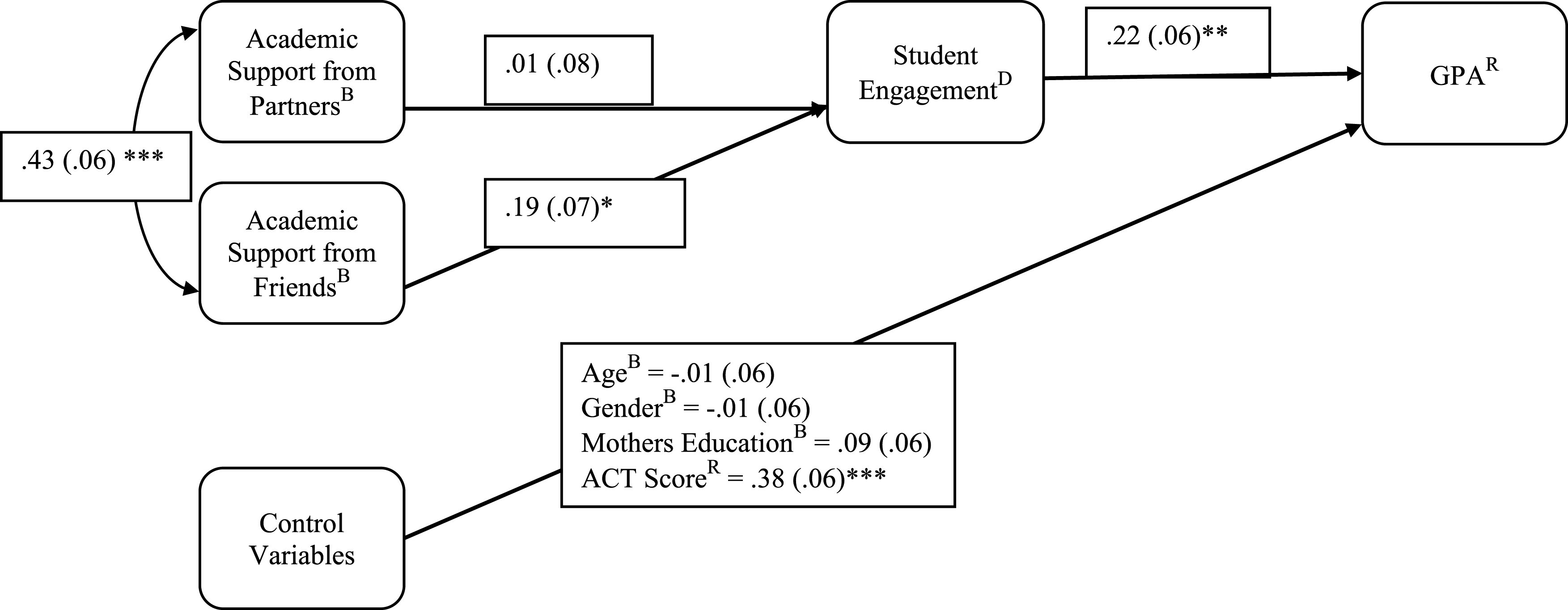
Discussion
The number of emerging adults enrolling in 4-year universities is growing at a consistent rate (NCES, 2021). However, less than two-thirds of emerging adults complete their degree within 5 years (Bustamante, 2019). As such, the current study examined the role of academic support from close others in predicting academic success of college attending emerging adults (as indicated by student engagement and GPA). The findings from the current study build upon previous studies demonstrating general social support is important for undergraduate student engagement (e.g., Li et al., 2018) and GPA (e.g., Robbins et al., 2004). Our findings extend the research by investigating how one specific type of support (i.e., perceived academic support) from developmentally-salient sources (i.e., closest same-sex friends and romantic partners) can increase student engagement and GPA for college-attending emerging adults. These findings offer a more nuanced understanding and highlight support specifically related to college academics.
Given the substantial evidence that general support from close others is positively linked to academic success, the current study sought to build upon this work by examining a more specific type of support, perceived academic support, from developmentally-salient close others: closest same-sex friends and romantic partners. We examined the impact of perceived academic support from same-sex friends and romantic partners on two important indicators of undergraduate success: student engagement and undergraduate GPA. In partial support of our hypotheses, our results suggest perceived academic support from closest same-sex friends, but not romantic partners, is positively associated with student engagement of college-attending emerging adults. Moreover, student engagement longitudinally predicted GPA. However, perceived academic support from same-sex friends and romantic partners were not directly associated with GPA of college-attending emerging adults. These findings offer a more nuanced theoretical understanding of the role of support in college-attending emerging adults’ academic success. They also have practical implications for how to promote academic success for college-attending emerging adults.
Our findings are consistent with Thompson and Mazer’s (2009) work of college-attending emerging adults, which shows that peers are an important and frequent source of academic support. However, our findings extend their work by showing perceived academic support from closest same-sex friends is associated with higher levels of student engagement. Although perceived academic support from closest same-sex friends did not directly impact GPA, it may be that perceived academic support from friends indirectly impacts GPA through student engagement. In addition to demonstrating the positive consequences of perceived academic support from closest same-sex friends, these findings reinforce that support from peers remains a consistent predictor of student engagement even after adolescence, as students transition to college. As Dennis and colleagues (2005) remark, peers may be uniquely able to provide support that is instrumental to academic success in college. College students report peer support as the most helpful strategy for dealing with academic problems, as students work on assignments and form study groups with their peers (Dennis et al., 2005). It is possible that these collaborative activities result in a stronger association between perceived academic support from closest same-sex friends and student engagement.
Surprisingly, perceived academic support from romantic partners was not associated with student engagement or GPA. This finding contradicted our hypotheses, as we expected romantic partners to have a more profound influence on academic success than friends due to the growing importance of romantic relationships across the transition to adulthood (Collins et al., 2009). Even though participants perceived high mean-levels of academic support from romantic partners, it was not directly related to academic success. This perceived academic support may be viewed by participants as more general support from their partners, which has an impact on psychosocial outcomes, such as life satisfaction (e.g., Kumar & Mattanah, 2016), rather than academic outcomes. Alternatively, the impact of romantic partners on academic success may vary based on relationships characteristics, such as commitment, satisfaction, or frequency of communication. Perhaps perceived academic support from romantic partners is positively related to academic outcomes for those who are in a satisfying, committed relationship, but negatively related to academic outcomes for those in a controlling, unsatisfying relationship. The impact of romantic partners on academic success may also depend on the partner’s academic orientation and engagement. In other words, the association between perceived academic support from romantic partners and academic success may be stronger for those with romantic partners who show strong academic orientations and high levels of engagement. While examining these possibilities is beyond the scope of this paper, these relationships features may explain for whom and under what circumstances (if ever) academic support from romantic partners is associated with student engagement or GPA.
Findings from the current study are also consistent with previous work showing the association between student engagement and GPA (e.g., Svanum & Bigatti, 2009). Our findings and the existing body of work highlight the need to promote student engagement to improve academic success (discussed below). Our findings also provide evidence for the longitudinal, temporal associations between perceived academic support from peers, student engagement, and GPA. Though previous cross-sectional work demonstrated that relationships with friends are positively associated with engagement and academic performance for adolescents (Liem & Martin, 2011), our work demonstrates with longitudinal data that friends continue to promote academic success later in life, for college-attending emerging adults.
Implications
The findings from this paper build upon the existing work examining predictors of undergraduate success and offer important implications for instructors and colleges. These findings demonstrate the importance of promoting peer support for emerging adults attending 4-year institutions. Peer support can be promoted inside and outside the classroom by creating the opportunity for supportive relationships to form. This recommendation is consistent with a large body of more applied educational research, demonstrating how peer-assisted learning and peer study sessions are associated with higher average grades, retention, and graduation rates (Dawson et al., 2014). More generally, instructors are encouraged to promote peer interaction by establishing an accepting environment and nurturing a cooperative, collaborative spirit in the classroom (Fredricks et al., 2004). Both recommendations may increase the opportunity for college-attending emerging adults to perceive academic peer support, as they encourage more interactions with peers. Increasing opportunity for peer support and higher levels of perceived support from peers may be particularly important for first generation college students because research suggests first-generation college students perceive less social support from peers (and parents) than their non-first generation counterparts (Jenkins et al., 2013), and they may not have parents who can provided academic support (Dennis et al., 2005).
The present study also found that student engagement has a direct connection with academic performance (GPA) of college-attending emerging adults. This finding is not surprising given the established link between youths’ student engagement and academic achievement (e.g., see Appleton et al., 2008; Fredricks et al., 2004 for review). Moreover, this finding supports Svanum and Bigatti’s (2009) stance that student engagement can have far-reaching positive consequences for students. As discussed by Fredricks et al. (2004), engagement seems to be an important predictor of academic success, and thus should be promoted in the classroom and larger school context. Moreover, our work is consistent with Martin and Dowson’s (2009) trilevel framework for relatedness practices that support student motivation, engagement, and achievement.
Limitations and Future Directions
The present study extends previous work on social support and college-attending emerging adults’ academic success. However, it is important to consider the study’s limitations while interpreting these findings. First, our sample was limited to heterosexual, mostly white, women in emerging adulthood attending a 4-year university in the United States. The homogenous nature of our sample limits the generalizability of our findings. Our findings may not generalize to individuals who identify as sexual minorities. Considering our focus on same-sex best friends, it is possible the nature of these associations may differ for sexual minorities. In addition, the associations between sources of perceived academic support, student engagement, and GPA may differ based on type of college (e.g., community college, technical college, public, private, and for-profit institutions). Similarly, those attending college later in life (i.e., after emerging adulthood) may not experience as strong of an effect for perceived academic support from peers if they are significantly older than their classroom peers. Though our study provides an important first step in understanding the association between perceived academic support and academic success, replication and much further research is needed.
All constructs (other than GPA) were assessed using self-report data. Thus, our findings can only speak to individual’s perceptions of the constructs of interest. Attempts to also assess the constructs from other sources (e.g., peer’s and partner’s reports of providing academic support, teacher’s reports of student engagement) would provide a more nuanced understanding of these constructs. Future research should strive to incorporate multiple informant data, which would also provide the opportunity to examine both perceived and received academic support. That said, given the existing research demonstrating that one’s own perceptions of social support matters more than assessing specific supportive behaviors (e.g., Haber et al., 2007), our observations are an important first step in understanding the associations between perceptions of friends’ and romantic partner’s academic support and student outcomes.
The current study only examined two sources of perceived academic support (same-sex best friends and romantic partners). Though this is the first study to our knowledge to examine the relative impact of perceptions of same-sex friends’ and romantic partner’s academic support on student outcomes, our study could have assessed additional sources of support. For example, Liem and Martin’s (2011) research on an adolescent sample shows that that the quality of both same-sex and opposite-sex peer relationships facilitate adolescents’ school engagement. Although their study demonstrated the quality of opposite-sex peer relationships appear to have a weaker influence on student engagement for adolescents, this may not be the case for college students. Cross-sex peer relationships play an important part in emerging adults’ social lives, but these relationships are also complex and emerging adults have varied expectations for cross-sex peer relationships depending on their romantic relationship status (see Fuhrman et al., 2009 for review). Future research should further clarify our findings by examining whether same-sex and opposite-sex peers provide similar levels of academic support, and whether this support differentially impacts student engagement. Relatedly, we did not assess multiple dimensions of same-sex friend or romantic relationships. Given that research shows that the quality of peer relationships is associated with student engagement (Collie et al., 2016), future research should strive to disentangle whether various features of different peer relationships show unique and specific associations with academic outcomes or moderate the association between perceived academic support and academic outcomes.
Conclusions
The current study examined how emerging adults attending a 4-year college perceived academic support from closest same-sex friends and romantic partners. In addition, we examined the impact of these sources of academic support on student engagement and GPA. Findings suggest perceived academic support from closest same-sex friends is positively related to student engagement. Moreover, student engagement is positively associated with GPA. In contrast, academic support from romantic partners is not significantly associated with student engagement or GPA. Taken together, these findings suggest perceived academic support from friends is more important than perceived academic support from romantic partners for the academic success of emerging adults attending a 4-year institution. Future research is needed to determine for whom and under what circumstances these associations exist. These findings highlight the need for promoting peer-to-peer engagement in the classroom and creating a supportive community to increase student engagement and subsequent academic success for emerging adults.
Footnotes
Declaration of Conflicting Interests
The author(s) declared no potential conflicts of interest with respect to the research, authorship, and/or publication of this article.
Funding
The author(s) received no financial support for the research, authorship, and/or publication of this article.
Open Practices
The raw data, analysis code, and materials used in this study are not openly available but are available upon request to the corresponding author. The data collection and analysis were not pre-registered.
