




Abstract
Racial discrimination-related stress is assumed to be inherent in the frequency of the experience; consequently, few studies have examined individual differences in its appraisal. The current study addresses this gap by investigating racial discrimination distress, measured as reported appraisal and frequency, to improve the assessment of race-related risk. The interaction effect of racial discrimination distress and ethnic-racial socialization (ERS) on dimensions of psychological well-being for African American emerging adults was examined. Using a sample of 442 African American emerging adults (Mage = 18.66, SD = 1.05, 80% women), path analyses revealed that racial discrimination distress predicted lower self-esteem and higher depressive symptoms. Racial pride and egalitarian messages were protective against the adverse relationship between racial discrimination distress and psychological well-being. The findings support the importance of race-related risk measurement and the role of ERS in models of normative development for African American emerging adults.
Keywords
Introduction
Emerging adulthood is a period of psychosocial development where young adults explore in the process of solidifying their identities; it is marked by opportunities to engage in positive or negative activities that may alter their life course (Arnett, 2006; Masten et al., 2006). Emerging adulthood is associated with changes in dimensions of psychological well-being, including self-esteem and depressive symptoms, due to the malleable nature of this period (Berry, 2004; Chung et al., 2014; Galambos et al., 2006; Kuwabara et al., 2007). For African American emerging adults, this period maintains similar identity issues as other youth; however, these identity issues are complicated by simultaneously grappling with the realities of racial discrimination, often for the first time independently (Arnett & Brody, 2008; Syed & Mitchell, 2013). The context of racial discrimination burdens African American young adults as they navigate this transitional developmental period with the potential to negatively impact their normative developmental trajectories (Hope et al., 2015).
Previous research suggests that racial discrimination frequency is associated with poorer self-esteem and depressive symptoms (Hope et al., 2015; Lee et al., 2020; Seaton & Yip, 2009), two dimensions of psychological well-being deemed important in this developmental period (Baggio et al., 2016; Galambos et al., 2006). Although research identifies the negative role of racial discrimination frequency on psychological well-being for African Americans (e.g., Lanier et al., 2017; Seaton et al., 2011; Volpe et al., 2019), there is limited research on how discrimination distress, or the negative emotional state associated with racial discrimination (American Psychological Association, n.d.), is associated with adverse outcomes for African American emerging adults. Focusing on racial discrimination frequency may limit researchers’ and practitioners’ understanding of how racial discrimination impacts psychological well-being for African American emerging adults. Improving the assessment of race-related risk (discrimination distress) provides a critical foundation for exploring culturally grounded protective factors, like ethnic-racial socialization. Parents may provide ethnic-racial socialization messages that range from discrimination-focused, to cultural pride-focused, to equality-focused. The current study, thus, assessed how racial discrimination distress is associated with dimensions of psychological well-being (i.e., self-esteem, depressive symptoms) for African American emerging adults and how ethnic-racial socialization promotes well-being despite this distress.
Racial Discrimination
Racial discrimination is defined as unfair or prejudicial treatment of individuals based on their perceived racial characteristics (American Psychological Association, 2013), where more frequent experiences are associated with a range of negative psychological (Barnes et al., 2012; Neblett et al., 2008; Priest et al., 2013; Sellers & Shelton, 2003), physiological (Lewis et al., 2013), and social outcomes across the lifetime (Benner et al., 2018; Greene et al., 2006). Research suggests that racial discrimination can negatively affect the mental health of African Americans, where frequent racial discrimination has been negatively associated with dimensions of psychological well-being, including decreased self-esteem and increased depressive symptoms (Benner et al., 2018). Studies indicate frequent experiences of individual racial discrimination are associated with increased depressive symptoms across adolescence and into emerging adulthood (Assari et al., 2017; Benner et al., 2018; English et al., 2020; Lanier et al., 2017; Lee et al., 2020; Volpe et al., 2019). Research also identifies a negative relation between discrimination and self-esteem for Black youth and young adults (Helms, 2013; Johnson, 2020; Nadal et al., 2014; Paradies et al., 2015; Schmitt et al., 2014; Seaton, 2010; Yang et al., 2019).
Racial Discrimination Distress
The research literature on the impact of racial discrimination on the health and well-being of African Americans most often considers the rate (i.e., how often did I experience discrimination?) of these experiences. It typically implies the negative appraisal of the situation (i.e., how stressful was my experience?) in the conceptualization of the impact of these events. According to frameworks of everyday racism and stress and coping, the effect of racism is not based solely on the frequency with which individuals experience discrimination (Essed, 1991; Lazarus & Folkman, 1984). The damage to well-being may be more accurately attributed to distress, the cumulative effect of racial discrimination frequency and assessment as stressful. Racial discrimination distress is conceptualized as the interaction between an environment (i.e., frequency of discriminatory experiences) and the person (i.e., appraisal of a situation as stressful) resulting in a negative emotional state. Individuals who experience frequent racial discrimination but do not internalize the experiences as stressful may report similar outcomes to those who experience infrequent racial discrimination but internalize the experiences as stressful. Racial discrimination distress, thus, can capture how the frequency and the appraisal of racial discrimination as stressful together impact psychological well-being, advancing our assessment of the experience (Kirkinis et al., 2018). Research finds racial discrimination distress, the cumulative frequency and stress appraisal, is associated with decreased psychological and academic well-being (Chao et al., 2012; Scott & House, 2005). Consequently, understanding racial discrimination distress, or how the frequency and stress of these experiences work in tandem, may support a greater understanding of related psychosocial outcomes (Iwamoto et al., 2022; Krieger et al., 2011).
Limited research has considered racial discrimination as the cumulative impact of the frequency and stress of the events. A handful of studies agree that racial discrimination distress is negatively associated with well-being (Beagan & Etowa, 2009; Carter & Reynolds, 2011; Donnay, 2016; Odafe et al., 2017). However, some of these studies were limited in examining the role of stress and frequency by relying on a measure that did not disentangle the role of stress and frequency (Carter & Reynolds, 2011; Hunter et al., 2017; Odafe et al., 2017). Given these findings, the current study used these frameworks to assess the appropriateness of racial discrimination distress, the negative emotion state, being the culmination of the rate and evaluation of the experience using independent measures of racial discrimination frequency and racial discrimination stress. Examining racial discrimination distress as the culmination of the frequency and reactivity in response to racialized events may allow greater understanding of how these experiences are associated with psychological well-being for African American emerging adults.
Ethnic-Racial Socialization as a Buffer to Discrimination
Racial discrimination, however, is not the only factor influencing psychological well-being. Research suggests a range of culturally grounded factors, including ethnic-racial socialization, support psychological well-being despite racial discrimination (Murry et al., 2018). Ethnic-racial socialization (ERS) includes the messages parents use to teach children of color how to interpret their status, opportunities, and restrictions related to living in a racialized America (Bowman & Howard, 1985). The introduction of additional racialized experiences during emerging adulthood (Arnett & Brody, 2008) may increase the importance of parental communication about race for African Americans entering this developmental period. While most of the current literature on ERS focuses on its impact on normative development in adolescence, there is growing evidence of the impact of parental ERS messages on psychological well-being in emerging adulthood.
For African American emerging adults, studies report that racial prides messages, which teach the importance of one’s racial/ethnic history and culture (Hughes et al., 2006; Lesane-Brown, 2006), are associated with fewer depressive symptoms (Banerjee et al., 2015; Liu & Lau, 2013), less aggressive behaviors (Banerjee et al., 2015), resilience (Brown, 2008), prosocial behavior (Maiya et al., 2021), improved academic adjustment (Anglin & Wade, 2007), and stronger racial identity (Reynolds et al., 2017) for African American emerging adults. Racial barrier messages, which warn and prepare children for prejudices faced due to their race (Hughes et al., 2006), are associated with increased depressive symptoms (Banerjee et al., 2015; Liu & Lau, 2013) and increased aggressive behaviors (Banerjee et al., 2015). However, racial barrier messages are also associated with increased prosocial behaviors for Black emerging adults (White-Johnson, 2015). While the literature is limited, Barr and Neville (2014) examined the parental egalitarian messages’ (those that encourage youth of color to co-exist within the majority society) influence on mental health; the study found these color-blind racial attitudes associated with negative mental health outcomes.
Research on the relationship between ERS messages and self-esteem is mixed. Studies evaluating the relationship between racial pride messages and psychological well-being suggests that more frequent messages that promote pride in one’s history and culture are associated with higher self-esteem (Constantine & Blackmon, 2002; Davis & Stevenson, 2006; Harris-Britt et al., 2007). In studies examining the relationship between racial barrier messages and self-esteem in the context of racial discrimination, results indicate negative (Hughes et al., 2009) and null associations (Davis & Stevenson, 2006; McHale et al., 2006); while one study showed the benefit of racial barrier messages on self-esteem when delivered at moderate frequencies (Harris-Britt et al., 2007). Though there is a lower prevalence of egalitarian messages in the research literature, the preliminary findings indicate the messages may serve an important function (Hughes et al., 2016; Umaña-Taylor & Hill, 2020) where study findings suggest that egalitarian messages promote higher self-esteem (Constantine & Blackmon, 2002; Villegas-Gold & Tran, 2018).
Racial pride messages also demonstrate a protective nature for depressive symptoms, where African Americans who report receiving frequent racial pride messages report lower depressive symptoms (Davis & Stevenson, 2006; Neblett et al., 2008). Consistent with self-esteem, racial barrier messages also demonstrated mixed findings in relation to depressive symptoms. Saleem and Lambert (2015) found that frequent racial barrier messages moderated the relationship between racial discrimination frequency and depressive symptoms. Other studies, conversely, find that racial barrier messages predict higher depressive symptoms (Liu & Lau, 2013; Nelson et al., 2018). Egalitarian messages also have mixed findings in association with depressive symptoms. Specifically, Davis and Stevenson (2006) found a positive association between egalitarian messages and depressive symptoms, while Barr and Neville (2014) found no association with depressive symptoms for Black young adults.
Current research suggests that ERS messages have the potential to protect against the adverse consequences of racial discrimination on psychological well-being in African American youth and young adults. However, most of this research has focused on adolescent populations and on racial discrimination frequency. Research examining the protective role of ERS has yet to examine how these messages protect from racial discrimination distress. ERS messages are conceptualized as part of the teaching of emotional adaptation to racial discrimination (Dunbar et al., 2015). Thus, examining how ERS messages interact with racial discrimination distress is essential to understand better how this culturally grounded factor protects well-being despite these adverse experiences.
Gender and Racial Centrality (covariates)
Previous research suggests that demographic and individual differences are contextual factors influencing reported racial discrimination, ethnic-racial socialization, and dimensions of psychological well-being. Specifically, women report receiving more racial pride messages (Bowman & Howard, 1985; Hughes et al., 2006) and increased depressive symptoms than men (Hargrove et al., 2020; Kessler et al., 2003). However, the impact of racial discrimination on psychological well-being is greater for African American men (Assari et al., 2017). Racial centrality, defined as the degree to which an individual identifies their race as a core part of their identity, is considered both a risk and protective factor of mental health in response to racial discrimination (Yip, 2018; Yip et al., 2019), where it is associated with increased perceptions of racial discrimination (Banks & Kohn-Wood, 2007). Consequently, gender and racial centrality were included as covariates in the current study.
Current Study
The present investigation aimed to better understand the independent roles and cumulative assessment of racial discrimination on dimensions of psychological well-being of African American emerging adults (Figure 1). Based on previous research (Ong et al., 2009; Scott & House, 2005), it was hypothesized that higher levels of racial discrimination distress would be positively associated with depressive symptoms and negatively associated with self-esteem. The literature suggests that, despite experiences of racial discrimination, African American emerging adults continue to experience healthy normative development, where more frequent ERS messages buffer the association between racial discrimination distress and psychological well-being. However, research has yet to assess how reported ERS messages (i.e., racial pride, racial barrier, and egalitarian messages) buffer against the potential adverse consequences of racial discrimination distress on psychological well-being. Conceptual model of the relation between racial discrimination distress and psychological well-being dimensions moderated by ethnic-racial socialization messages.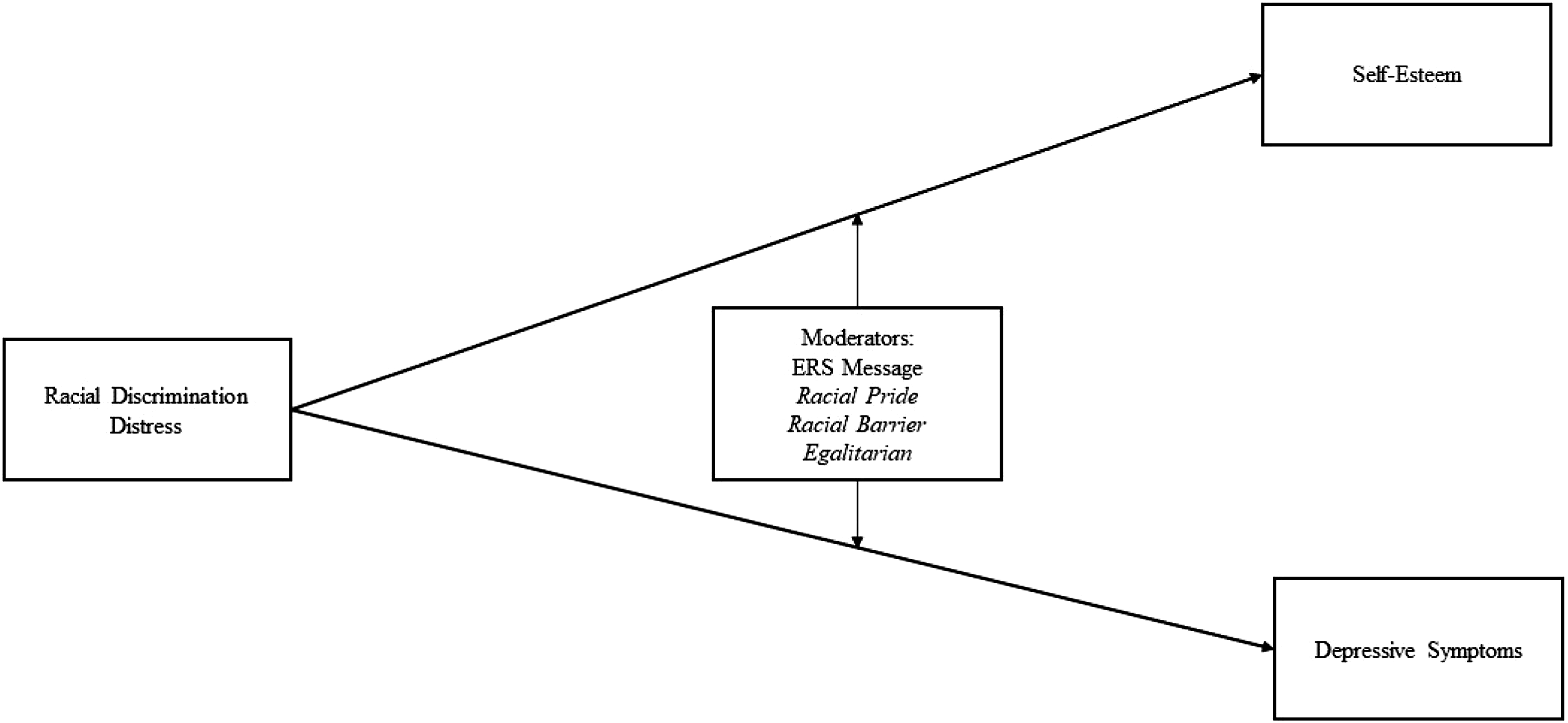
It was hypothesized that racial pride messages would buffer these relationships, where, at high levels of racial pride messages, there would not be significant associations between racial discrimination distress and self-esteem and depressive symptoms, but, at low levels of racial pride messages, the negative relationship would be present (e.g., Constantine & Blackmon, 2002; Davis & Stevenson, 2006; Harris-Britt et al., 2007). Though previous research examining egalitarian messages is limited, preliminary reviews suggest that they may serve a protective function for parts of psychological well-being (i.e., self-esteem; Constantine & Blackmon, 2002; Umaña-Taylor & Hill, 2020; Villegas-Gold & Tran, 2018); consequently, they were included in the current study. As contemporary literature lacks consistent findings on the relationship between racial barrier messages and psychological well-being, no a priori hypotheses were proposed about the moderating effect of the ERS message. It was hypothesized that egalitarian messages would moderate the relationship between racial discrimination distress and self-esteem but not significantly moderate the relationship for depressive symptoms.
Method
Participants
Data for the current study were collected within a larger study of African American/Black emerging adults at a large, racially diverse public university in the Southeastern United States between the fall 2016 and spring 2018 academic semesters. The initial sample pool included African American and non-African American Black participants (n = 618). The ERS measure used in the current analyses, validated on African American samples, demonstrated significant mean differences for African American and non-African American Black participants in the overall sample. Consequently, those identifying as non-African American Black (n = 156) were excluded from final analysis in the current study. An additional 19 participants were excluded due to missing data on study predictor variables. The final study sample included 442 African American undergraduate students between 18 and 25 years (Mage = 18.66, SD = 1.05, median age = 18). Most identified as cis-gender women (80%).
Procedures
Researchers recruited participants through the university’s psychology research subject pool for students enrolled in introductory psychology courses after receiving institutional review board approval. Potential participants were screened for those who met the study inclusion criteria, including identifying as African American/Black and between 18 and 25 years. Those meeting inclusion criteria read and provided their consent before completing an online survey through Qualtrics. The survey contained demographic questions and measures related to the research questions of the larger study on the health and academic success of African American/Black college students. Participants received course credit for their participation in the study.
Measures
Racial Discrimination Distress
The Racism and Life Experiences Scale-Daily Life Experiences Scale (DLE; Harrell, 1997) is a 20-item self-report measure that assesses how frequent and bothersome experiences of various everyday racial discrimination were in the past year. Participants were asked first to report how frequently they experienced each type of discrimination on a 6- point scale (0 = never, 1 = less than once a year, 2 = a few times a year, 3 = once a month, 4 = a few times a month, 5 = once a week or more). Participants then reported how “bothersome”—stressful— they perceive each of the events to be on a 6- point scale (0 = has never happened to me, 1 = doesn’t bother me at all, 2 = bothers me a little, 3 = bothers me somewhat, 4 = bothers me a lot, 5 = bothers me extremely). Subsequently, to calculate racial discrimination distress (M = 3.81), the mean for racial discrimination frequency and racial discrimination stress for each participant were multiplied, representing the racial discrimination distress of the experience (Beagan & Etowa, 2009; Donnay, 2016). Cronbach’s alpha for the current sample was .95 (discrimination frequency) and .95 (discrimination bother).
Self-Esteem
Rosenberg’s (1965) Self-Esteem scale was used to assess participants’ perceptions of the positive or negative attitudes taken toward themselves. The self-report scale is ten items and uses a 4-point scale (1 = strongly disagree to 4 = strongly agree) (alpha = .85, M = 3.20), sample item: “I take a positive attitude toward myself.” Total scores were averaged across items, where higher scores represented higher self-esteem.
Depressive Symptoms
The Center for Epidemiologic Studies Depression Scale (CES-D; Radloff, 1977) was used to assess participants’ symptoms of depression. The 20-item scale used a 4-point response scale (1 = rarely to 4 = most of the time) to measure symptoms, including depressed mood, feelings of worthlessness and guilt, helplessness and hopelessness, psychomotor retardation, loss of appetite, and sleep disturbances (alpha = .83, M = 3.70). Sum scores were calculated where higher scores indicated more symptoms of depression. Scores ranged from 0 to 60, where scores between 16 and 26 suggest mild depression, and scores greater than 27 indicate major depression.
Ethnic-Racial Socialization
Lesane-Brown et al’s. (2005) Racial Socialization Questionnaire- Teen (RSQ) assessed the frequency participants recall receiving ethnic-racial socialization messages from their parents. A 3-point response scale (1 = never, 2 = once or twice, 3 = more than twice) was used. The current study included three subscales from the larger measure: racial pride (3-items, alpha = .79, M = 2.52), sample item: “Told you that you should be proud to be Black; ” racial barrier messages (3-items, alpha = .86, M = 2.51), sample item “Told you that some people may dislike you because of the color of your skin” and egalitarian messages (3-items, alpha = .77, M = 2.20), sample item: “Told you that you should try to have friends of all different races.”
Covariate
Racial Centrality
The Multidimensional Model of Racial Identity-Teen (MIBI-T; Scottham et al., 2008) examined the strength of racial identity. The measure has previously been used with emerging adult populations (Glover & Li, 2021). The current study included the 3-item racial centrality subscale, which measures the degree to which being African American is central to an individual’s perception of oneself (alpha = .52, M = 5.43). A 7-point response scale was used (1 = strongly disagree to 7 = strongly agree), sample item: “I feel close to other Black people.”
Statistical Analysis
Descriptive statistics and correlations were estimated using SPSS version 25. Path analyses were conducted using Mplus version 8 statistical software (Muthén & Muthén, 2021) with maximum likelihood estimation to estimate the associations between discrimination distress, ERS messages and indicators of psychological well-being. Preliminary analyses examined the added value of examining racial discrimination distress over frequency or stress independently. After confirming the utility of examining racial discrimination via distress, we conducted three path analyses to address the hypotheses. Path models allowed us to test the independent effects of each predictor on the two outcome variables simultaneously after controlling for the potential influence of other predictors (Kline, 2015). Path models regressed self-esteem and depressive symptoms on the covariates (gender and centrality) and racial discrimination distress; each ERS message (racial pride, racial barrier, and egalitarian) served as the moderator independently in the three models. We assessed model fit using the following indices and fit statistics cutoffs, χ2 > .05, RMSEA < 0.08, CFI > 0.90 (Kline, 2015). Simple slope analyses examined significant interactions between racial discrimination distress and ERS messages at one standard deviation above and below the mean (Aiken & West, 1991). Participants with missing data on all predictor variables were excluded from analyses (n = 19).
Results
Descriptive Statistics
Descriptive Statistics and Correlations for Study Variables.

Note. *p < .05; **p < .01.
Path Analyses
Regression Coefficients.

Note. *p < .05; **p < .01. Table represents three independent path analysis conducted.
Additional preliminary path analyses were conducted assessing the moderation effect of ERS messages and discrimination frequency controlling for stress, χ2(0) = 0.00, p < 0.01; CFI = 1.00; RMSEA = 0.00. The interaction between egalitarian messages and racial discrimination frequency was not significant on self-esteem. No interactions between discrimination frequency and racial pride (esteem: β = 0.04, p = .38; depressive symptoms: β = −0.06, p = .23) or racial barrier (esteem: β = 0.05, p = .30; depressive: β = −0.02, p = .67) messages on dimension of psychological well-being were significant while controlling for stress. The interaction of discrimination frequency and egalitarian messages on depressive symptoms was significant (β = −0.10 p = .02). Simple slopes analyses demonstrated a significant positive relationship between discrimination frequency and depressive symptoms at low (b = 0.20, p < .01) but not at high levels (b = 0.02, p = 0.76).
Next, path analyses assessing the moderation effect of ERS messages and discrimination stress, controlling for frequency, were conducted (χ2(0) = 0.00, p = < 0.01; CFI = 1.00; RMSEA = 0.00). No interactions between discrimination stress and racial pride (esteem: β = 0.03, p = .56; depressive: β = −0.05, p = .26) or racial barrier (esteem: β = 0.02, p = .68; depressive: β = −0.01, p = .86) messages on were significant while controlling for frequency. The interaction of discrimination stress and egalitarian messages on self-esteem was significant (β = 0.10 p = .03). Simple slope analyses demonstrated a significant negative relationship between discrimination stress and self-esteem at low (b = −0.11, p = .01) but not high (b = .04, p = .41) levels of egalitarian messages. The interaction of discrimination stress and egalitarian messages was also significant on depressive symptoms (β = −0.10 p = .02). Simple slope analyses demonstrated a significant positive relationship between discrimination stress and depressive symptoms at low (b = 0.15, p < .01) but not high (b = 0.00, p = .99) levels of egalitarian messages. Across analyses, when frequency was significant, stress was also significant. This suggests that both frequency and bother were similarly predictive of the psychological impact of racial discrimination in this sample. Thus, further analyses examining discrimination distress were conducted.
Racial Pride Messages
The hypothesis was tested that racial pride messages would buffer the adverse consequences of racial discrimination distress on psychological well-being. Model result (χ2(0) = 0.00, p = < 0.01; CFI = 1.00; RMSEA = 0.00) found that the interaction of racial discrimination distress and racial pride messages on self-esteem was not significant (β = 0.02, p = .10). In contrast, the interaction of racial discrimination distress and racial pride messages on depressive symptoms was significant (β = −0.10, p = .04). The simple effect of racial discrimination distress among low and high frequencies of racial pride messages (1 SD above/below the mean) was assessed to interpret this interaction. At low frequencies of racial pride messages, the slope of racial discrimination distress and depressive symptoms was significantly different than zero, β = 0.08, p < .01, where high levels of racial discrimination distress were related to increased depressive symptoms. However, the slope was no longer significantly different from zero at high levels of racial pride messages, β = 0.02, p = .13 (Figure 2). Taken together, while racial pride messages did not buffer the relationship between racial discrimination distress and self-esteem, frequent racial pride messages buffer the negative association between racial discrimination distress and depressive symptoms. Racial pride messages moderating racial discrimination distress on depressive symptoms.
Racial Barrier Messages
In evaluating the moderating effect of racial barrier messages in the relationship between racial discrimination distress and self-esteem and depressive symptoms (χ2(0) = 0.00, p = < 0.01; CFI = 1.00; RMSEA = 0.00), results indicated that the interaction of racial discrimination distress and racial barrier messages did not significantly predict self-esteem (β = 0.05, p = .32) or depressive symptoms (β = −0.04, p = .35). In fact, racial barrier messages were not related to either self-esteem (β = .03, p = .53) or depressive symptoms (β = −0.02, p = .64).
Egalitarian Messages
The third model assessed the moderating effect of egalitarian messages in the relationship between racial discrimination distress and self-esteem and depressive symptoms, χ2(0) = 0.00, p = < 0.01; CFI = 1.00; RMSEA = 0.00. The interaction of racial discrimination distress and egalitarian messages on self-esteem was significant (β = 0.02, p = .03). racial discrimination distress was related to lower self-esteem at low frequencies of egalitarian messages, β = −0.05, p < .01. However, at high egalitarian message frequency, the slope was no longer significantly different from zero, β = −0.001, p = .90 (Figure 3). The interaction of racial discrimination distress and egalitarian messages on depressive symptoms was also significant (β = −0.02, p = .03). racial discrimination was related to increased depressive symptoms at low frequencies of egalitarian messages β = 0.06, p < .01. In contrast, at high levels of egalitarian messages, the slope was no longer significantly different from zero, β = 0.2, p = .06 (Figure 4). Egalitarian messages moderating racial discrimination distress on self-esteem. Egalitarian messages moderating racial discrimination distress on depressive symptoms.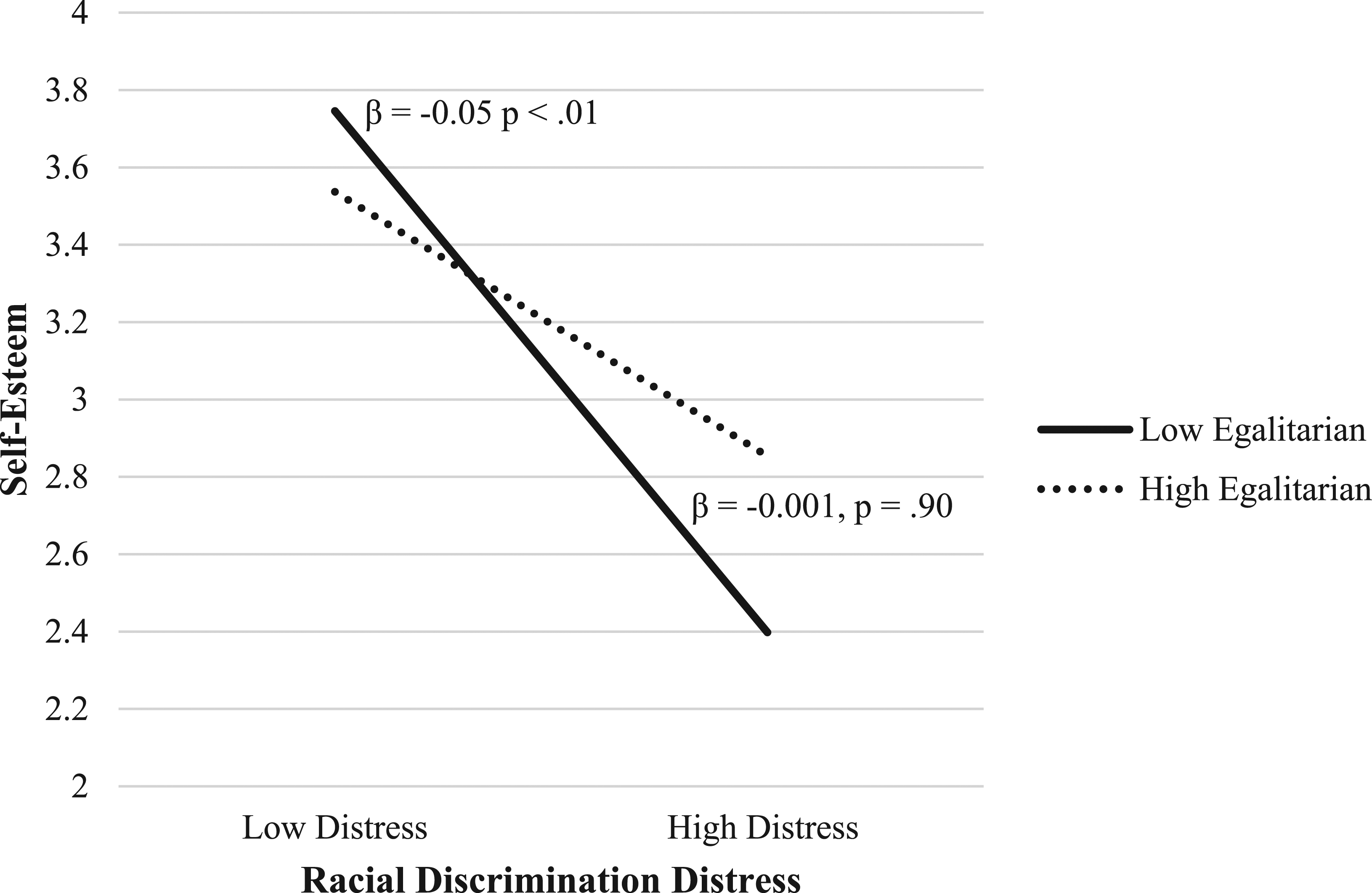

Discussion
This study aimed to build upon the current research on racial discrimination distress and its impact on psychological well-being. The primary goal of the paper was to examine the role of discrimination distress on psychological well-being. The approach to measuring distress associated with discrimination experiences intended to assess the lived experiences of Black emerging adults more accurately in the study. Results suggest that measuring racial discrimination distress as the multiplied term of mean racial discrimination frequency and stress captures the negative emotional state prompted by the appraisal of negative racialized events as stressful. Across analyses, racial discrimination distress was associated with decreased self-esteem and increased depressive symptoms.
The second goal of the current study was to investigate the role that ethnic-racial socialization messages (ERS) plays in buffering the negative relationship between racial discrimination distress and dimensions of psychological well-being. The hypothesis that racial pride messages would protect against racial discrimination distress was partially supported, where frequent racial pride messages protected against increased depressive symptoms. Additionally, findings demonstrated that egalitarian messages protected both self-esteem and depressive symptoms against racial discrimination distress.
Discrimination Distress
This study conceptualized racial discrimination distress as the cumulative impact of the frequency and stress of discriminatory experiences. Preliminary analyses demonstrated that frequency and stress were similarly predictive of dimensions of psychological well-being, suggesting that measuring racial discrimination distress would capture the psychological impact of racial discrimination in the sample. Consistent with the hypotheses, findings revealed that racial discrimination distress predicted lowered self-esteem and increased depressive symptoms in African American emerging adults. In comparison, analyses using racial discrimination distress versus frequency or stress resulted in a significant interaction for pride messages on depressive symptoms that was not present when measuring just the rate or the appraisal. These findings suggest the strengths of examining racial discrimination distress rather than the frequency and stress independently. Research supports that the frequency and stress of racial discrimination are associated with decreased psychological well-being (Chao et al., 2012; Fisher et al., 2000; Scott & House, 2005). By examining the individuals’ distress, or negative emotional state, in response to discrimination, the current study provided a more advanced assessment of racial discrimination (Kirkinis et al., 2018). This advance in the measurement of racial experiences may help clarify the processes through which discrimination is associated with African American emerging adults’ mental health and well-being.
Ethnic-Racial Socialization as a Buffer
The expectation that ERS messages would serve as a buffer of the racial discrimination distress of Black emerging adults was partially supported. Results indicated that frequent racial pride and egalitarian messages, independently weakened the positive association between racial discrimination distress and depressive symptoms. Additionally, frequent egalitarian messages attenuated the negative association between racial discrimination distress and self-esteem. Contrary to our hypotheses, racial pride messages did not moderate the relationship between racial discrimination distress and self-esteem. Adding to a robust literature on the protective nature of racial pride messages (Hughes et al., 2006; Reynolds & Gonzales-Backen, 2017; Wang et al., 2020), those who received more of these messages reported fewer depressive symptoms despite experiencing higher levels of racial discrimination distress. This suggests that messages that promote knowledge of one’s culture are powerful in protecting against the internalization of the negative narratives embedded in racial discrimination.
Consistent with previous null results, our findings revealed that racial barrier messages were not protective in the relationship between racial discrimination distress and dimensions of psychological well-being (Davis & Stevenson, 2006; McHale et al., 2006). These results add to an inconclusive body of research related to the impact of discrimination-focused messages on psychological well-being for African Americans; expressly, that this message type has positive, negative, and null associations with psychological well-being (e.g., Davis et al., 2017; Evans et al., 2012; Umaña-Taylor & Hill, 2020). Unmeasured contextual factors may have influenced the null finding reported in the current study, including parenting, familial, and neighborhood contexts, which are demonstrated to influence the relationship between racial barrier messages and psychosocial adjustment for Black youth (Umaña-Taylor & Hill, 2020).
Previous research indicates that racial centrality can both exacerbate and protect against the negative impact of racial discrimination on psychological well-being in emerging adulthood (Yip, 2018). Consequently, racial centrality may have masked the impact of racial pride and racial barrier messages on dimensions of psychological well-being. Further research is needed to examine whether racial pride, racial barrier messages and racial identity centrality are working in tandem to promote or block psychological well-being in the face of racial discrimination distress for African American emerging adults. The results of this study add to a body of literature that suggest the imprecise influence of racial barrier messages, and indicate the need for continued exploration of contexts and content of racial barrier messages in their association with the psychological well-being of African American youth and young adults (Harris-Britt et al., 2007; Hughes et al., 2006; Wang et al., 2020).
Study results supported predictions that those reporting frequent egalitarian messages had higher self-esteem and fewer depressive symptoms despite increased racial discrimination distress. This result adds to a small literature on the correlates of egalitarian messages and positive psychosocial outcomes (Yasui, 2015; Wang et al., 2020). Messages that promote mainstream values and norms may allow individuals to take a broader perspective when faced with racial discrimination distress, buffering the adverse consequences (Neblett et al., 2006; Villegas-Gold & Tran, 2018). Consequently, further research is warranted to explore the emerging trend in research on egalitarian messages, which indicates these messages may be necessary for youth adjustment despite racial discrimination (Umaña-Taylor & Hill, 2020).
The results echo the negative influence that racial discrimination have on the psychological well-being of African American emerging adults. Moreover, the study suggests the importance of including distress assessments of racial discrimination experiences, which may more accurately capture the individual differences in the emotional impact of these events based on the frequency and appraisal. The moderation analyses suggest the positive effect of racial pride and egalitarian messages on psychological well-being despite racial discrimination distress for African American emerging adults. Future research may integrate the examination of vicarious and systemic racial discrimination in the consideration of negative racialized events, including several settings and perpetrators of racial discrimination to investigate if these differences are related to varying levels of self-reported distress and associated mental health outcomes.
Limitations
Although this study contributes to understanding the mechanisms underlying the impact of racial discrimination and ERS on psychological well-being for African American emerging adults, there are limitations to consider. While the proposed measure provides value in identifying the cumulative influence of the frequency and stress of discriminatory events, additional examination of the proposed measure is needed to further distinguish individual differences in the importance of the frequency or stress of the experiences in how the constructs work in tandem to create distress for African American emerging adults. Furthermore, the study asked emerging adult participants to report the frequency and stress of interpersonal racial discrimination. Research, however, suggests that interactions with institutional and vicarious racial discrimination may also impact the psychological well-being of African Americans (Bravo et al., 2021; Manns-James et al., 2021; Moody et al., 2022; Volpe et al., 2020). As such, distress is not limited to interpersonal discrimination and warrants further investigation. Additionally, non-African American Black emerging adults were excluded from the study, limiting the ability to examine the heterogeneity in the influence of ERS messages on psychological well-being within the racial group. Finally, the study sample was primarily women. While we controlled for gender in the analyses, gendered differences were noted in reported racial pride message frequency and depressive symptoms. Secondary exploratory gendered analyses conducted with only women were consistent with current findings. Nonetheless, the study results may more closely reflect university attending African American emerging adults women.
Study Significance
These findings have implications for research and clinical practice. The current study proposed an alternative method of measuring racist events. Findings support the examination of racial discrimination distress as the negative emotional state, measured as the cumulative impact of the average frequency and stress of these experiences. Understanding individual variability in how racial discrimination distress impacts both positive and negative psychological functioning in emerging adulthood will support a greater appreciation of proximal events and culturally grounded factors which influence trajectories during this developmental period.
This investigation provides evidence of the importance of ERS messages for African American emerging adults clinically. Given the findings, it will be important for clinicians to be aware of and open to discussions regarding negative racialized experiences for African American emerging adults to explore the distress experiences in the safe space. Further, clinician may consider exploring the range of ERS messages, including egalitarian and racial pride messages, that African American children and young adults receive. Doing so may help clinicians understand the context upon which the clients draw in their conceptualization of negative racialized experiences.
Finally, results indicate important educational implications for college-attending African American emerging adults. The findings offer university programs the opportunity to address the needs of African American students, by emphasizing ways to improve the psychological well-being of this group. These programs may consider integrating ERS into their designs, noting the importance and need to balance preparation for bias with messages about equality and racial pride in the promotion of psychological well-being. Such interventions may support the positive adjustment and psychological well-being of African American college students.
Conclusion
The study underscores the centrality of both the frequency and perceived stress in understanding how the emotional distress of racial discrimination impacts African American emerging adults’ psychological wellbeing. Results indicated racial discrimination distress predicted lower self-esteem and higher depressive symptoms. Further, the study highlights the protective nature of sharing racial pride messages and egalitarian messages with African American children through emerging adulthood in support of psychological well-being despite experiencing racial discrimination.
Supplemental Material
Supplemental Material - Racial Discrimination Distress and Psychological Well-being: The Moderating Role of Ethnic-Racial Socialization in African American Emerging Adults
Supplemental Material for Racial Discrimination Distress and Psychological Well-being: The Moderating Role of Ethnic-Racial Socialization in African American Emerging Adults by Aisha Jimenez and Ciara Smalls Glover in Emerging Adulthood
Footnotes
Declaration of Conflicting Interests
The author(s) declared no potential conflicts of interest with respect to the research, authorship, and/or publication of this article.
Funding
The author(s) received no financial support for the research, authorship, and/or publication of this article.
Transparency and Openness Statement
The raw data, analysis code, and materials used in this study are not openly available but are available upon request to the corresponding author. No aspects of the study were pre-registered.

Supplemental Material
Supplemental material for this article is available online.
Author Biographies
References
Supplementary Material
Please find the following supplemental material available below.
For Open Access articles published under a Creative Commons License, all supplemental material carries the same license as the article it is associated with.
For non-Open Access articles published, all supplemental material carries a non-exclusive license, and permission requests for re-use of supplemental material or any part of supplemental material shall be sent directly to the copyright owner as specified in the copyright notice associated with the article.
