




Abstract
Self-concealment refers to intentional concealing of personal thoughts, feelings, or behaviours from others. This study explored the experiences and motivations behind self-concealment among UK-based emerging adults (18–29 years), with a focus on concealment from parents. We aimed to identify what young adults report hiding from their parents and why. A qualitative survey design was used. In total, 146 participants completed the closed-ended question, and 63 provided written responses for qualitative analysis. Structured Tabular Thematic Analysis (ST-TA) was used to analyse the brief textual data. Findings indicated that 76% of participants engaged in self-concealment from their parents. Concealed content spanned mental health, romantic relationships, academic difficulties, finances, and substance use. Motivations included protecting parents from worry or disappointment, avoiding conflict, cultural expectations, and maintaining privacy or independence. The study highlights the relational and developmental functions of self-concealment and suggests implications for promoting open, trusting communication between emerging adults and their parents.
Self-concealment is the habitual tendency to intentionally conceal thoughts, feelings, and behaviours from others (Carvalho et al., 2024; Su et al., 2024; Wismeijer, 2011). Commonly concealed behaviours include sexuality, infidelity, and substance abuse, whereas concealed feelings include distressing emotions and poor mental health (Bedrov & Gable, 2023; Geng et al., 2023). Self-concealment may involve secrecy or lying, but differs from them in that it reflects a motivated, strategic pattern of behaviour maintained over time. Although self-concealment has been researched extensively using quantitative methods, the hidden content, and the motivations for concealing it, remain comparatively underexplored, particularly during emerging adulthood. The present study addresses this gap by qualitatively examining both the content of self-concealment and the motivations underlying concealment specifically within parent–emerging adult relationships. By focusing on concealment from parents during emerging adulthood, this study illuminates how self-concealment functions within a key developmental relationship characterised by ongoing dependence, increasing autonomy, and shifting relational boundaries.
Conceptualisations of Self-Concealment
One theory that helps explain and interpret self-concealment is the theory of the persona, which originated with Jung (1966). A persona is a structured social mask used to fit into different social groups, which may involve concealment of aspects of the self that are considered unsuitable for certain social contexts, and providing false or partial information to others to achieve approval or job progress (Robinson & Smith, 2010). Employing a persona can be functional and helpful in environments where full disclosure is problematic for impression management (Leary & Allen, 2011). However, if personas are used across all social contexts, then emotions, values, and goals become chronically concealed, which can lead them to a dissociative state, as the authentic self becomes repressed or displaced (Querstret & Robinson, 2013; Robinson & Smith, 2010). Querstret and Robinson’s (2013) mixed methods study found a range of motives for using a persona, including perceived protection from nefarious others, suppression of emotions, self-preservation and creating a good impression. Querstret and Robinson’s participants reported emotional exhaustion being linked to self-concealment from their own parents.
The use of a persona and corresponding self-concealment may link to early experience. When parents fail to acknowledge, validate, or respond to emotional needs, the foundation of trust necessary for secure attachment is undermined, which in turn may be associated with emotional withdrawal and suppressive strategies in adulthood (Jin et al., 2023; Kumar & Srivastava, 2024). Perceived parental disapproval stemming from early attachment experiences can be argued to prompt emerging adults to engage in self-concealment to maintain an idealised image and to mitigate against the perceived possibility of parental abandonment. Parental influences also shape self-concealment tendencies in adolescence, with evidence showing that adolescents engage in self-concealment if they perceive conditional parental support, and parental reactions can reinforce these behaviours, perpetuating a cycle of dysfunctional communication (Finkenauer et al., 2005; Harter et al., 1996; Shaffer et al., 2013).
Larson et al. (2015) also suggest that self-concealment is typically a result of childhood trauma, fear of rejection and insecure attachment orientation. For example, Criddle et al. (2022) found that high self-concealment has been linked to experiences of childhood abuse. Sease et al. (2021) also studied the association between self-concealment and childhood abuse, and their results suggest a positive association between self-concealment and childhood abuse, with negative automatic thoughts mediating this relationship. Initially, self-concealment may function as a protective strategy, helping the child manage interactions with an abuser when talking to them (Criddle et al., 2022). However, excessive self-concealment may be used later in life to cope with stress, stigma, and trauma (Chung & Chen, 2022).
Correlates of Self-Concealment
The correlates of self-concealment are varied. Chronic self-concealment is related to negative emotions and thoughts such as suicide ideation, anxiety, depression and guilt (Cramer, 1999; Davis, 2024; Edmonds et al., 2014; Larson & Chastain, 1990; Potoczniak et al., 2007; Sease et al., 2022). It is also associated with the experience of physical pain (Geng et al., 2023; Hogge et al., 2023). Self-concealment also predicts low self-esteem and low relationship quality (Davis et al., 2020; Hogge et al., 2023). Previous research highlights that self-concealment may have particularly adverse effects for those in emerging adulthood (Hogge & Blankenship, 2020; Su et al., 2024). For example, Friedlander et al. (2012) found that suicidal behaviour in young adults was positively correlated with self-concealment, but this correlation was not present in older adults.
Self-Concealment in Emerging Adulthood
Emerging adulthood is a period during which young adults experience an ambiguous sense of adult status allied to varied opportunities for identity exploration and self-expression across areas such as love, work, and worldview. During these years of the lifespan, self-expression and the establishment of authentic and intimate relationships are central concerns (Melendro et al., 2020; Robinson & Smith, 2010; Shulman & Connolly, 2013). However, emerging adults face complex social demands as they transition out of education and towards full independence from parents (Arnett, 2023; Salvatore, 2018; Wood et al., 2018). This can lead to the development of one or more personae to conceal or distort some aspects of the self in social contexts (Robinson & Smith, 2010). Self-concealment can therefore be viewed as a coping strategy developed in relation to the social conflicts and stressors of this life stage. As a coping strategy, it is a problem-focused strategy aimed to minimise perceived emotional invalidation or imagined abandonment (Nguyen et al., 2022), but it may create barriers to developing a coherent and stable sense of self in which inner and outer self are congruent (Robinson & Smith, 2010).
There are also potential adaptive benefits of self-concealment in adolescence (Finkenauer et al., 2002), and these may extend into emerging adulthood. Research suggests that selective concealment from parents can support individuation by allowing young people to establish psychological boundaries and manage increasing autonomy during relational renegotiation (Finkenauer et al., 2002; Pfeifer & Berkman, 2018). Within emerging adulthood, a period characterised by identity exploration and shifting parent–child dynamics, selective non-disclosure may serve a regulatory function by enabling emerging adults to manage discrepant expectations while preserving relational stability (Arnett, 2023; Nguyen et al., 2022). From this perspective, concealing certain aspects of one’s life from parents may facilitate the development of a private inner world that supports agency, self-definition, and perceived control. However, these potential benefits are likely context-dependent and may become maladaptive when concealment is rigid, pervasive, or motivated by fear rather than autonomy.
During emerging adulthood, the intersection of identity exploration and increased independence often leads to higher rates of substance use (Arnett, 2023). Furthermore, marginalised groups within this demographic, such as lesbian, gay, bisexual, transgender, and other sexual and gender minority (LGBT+) emerging adults, may face unique challenges with regards to identity development given the heightened risk of stigma or exclusion, which may in turn intersect with substance abuse (Krueger et al., 2022). Correspondingly, sexuality in LBTQ + individuals is reported to be regularly concealed while living with parents (Dees, 2025). Disclosing one’s sexual orientation increases the likelihood of conflict, abuse, neglect, and rejection by one’s family (DeChants et al., 2022; Martin & Hetrick, 2010). Furthermore, alcohol, drug and cigarette usage is also frequently concealed from parents. Young adults have reported concealing smoking behaviours from their parents for fear of disappointing them because of the known implications of smoking on the body (Stanley & Pitts, 2019).
Young adults high in self-monitoring are particularly attuned to societal expectations and may be more likely to engage in self-concealment (Ellemers et al., 2002; Kohler et al., 2022). Similarly, introverts, who often find social interactions more cognitively and emotionally demanding, may also engage in self-concealment as a means of preserving psychological energy and avoiding social scrutiny (Snyder, 1979; Tuovinen et al., 2020; Uysal, 2020).
Relationships with parents are central to psychological well-being in emerging adulthood. Emerging adults who perceive parents as warm, involved, and supportive, and who provide behavioural and psychological freedom, tend to show better psychological adjustment (García Mendoza et al., 2019). Conversely, self-concealment is a function of the quality of the relationship between parent and emerging adult. Emerging adults who experience inconsistent support or validation from their parents may be more likely to engage in self-concealment as a protective mechanism, potentially hindering their ability to establish secure attachment relationships (Jin et al., 2023).
Aims and Research Questions
Our primary aim was to investigate what emerging adults conceal from their parents and their motives for doing so, using qualitative methods. The academic context for this investigation is one in which there are many quantitative studies on the correlates of self-concealment, and on demographic differences in self-concealment levels, but very few have used qualitative methods to examine the specific content of self-concealment in emerging adults, and even fewer have explored the motivations underlying concealment from parents. A qualitative survey design was chosen as it is well-suited to eliciting open-ended qualitative data while offering participants full anonymity (Terry & Braun, 2017). This is particularly helpful for eliciting data on self-concealment, as concealed material is often considered both socially sensitive and/or laden with shame. Written texts in online surveys offer rich and illuminating texts despite their relative brevity (Terry & Braun, 2017). The study by Querstret and Robinson (2013) shares some similarities with the present work in its qualitative exploration of the persona, but it used interviews and focused on persona usage across all social contexts (rather than just with parents) and in a wider age range (20–40 years old) than the current study. We focused on the UK as a sample given the authors’ cultural and geographical location in the UK. Evidence suggests that the UK has a relatively high levels of emotional suppression compared with other cultures (Chen et al., 2025), therefore, the UK provides a salient culture in which to explore the topics and motivations of self-concealment. Specifically, we sought to answer the following research questions. (1) What proportion of a convenience sample of UK-based emerging adults report concealing information or behaviours from their parents? (2) What experiences do UK emerging adults report of concealing thoughts, feelings, and behaviours from their parents? (3) What motivations do UK emerging adults report for concealing thoughts, feelings, and behaviours from their parents?
Method
Participants and Sampling
The criteria for participation were UK citizens aged from 18–29 years who had been in contact with two parents/carers within the past year. All data were collected in 2025. The final sample of N = 146 consisted of 89 females and 48 males. 111 reported self-concealing from parents, of which 63 provided qualitative data (45 female, 18 male). The remaining 74 participants provided responses to the closed-ended questions only. Participants ranged in age from 18 to 29 years old (M = 24, SD = 3.70). The sample comprised various ethnic groups: White British (76%), Asian/Asian British (8.2%), Black/Black British/African/Caribbean (7.5%), mixed ethnicity (4.8%) and five participants (3.4%) stated their ethnicity did not fall within the above categories. The sample included full-time students (55.5%), part-time students (6.2%) and non-students (38.4%). There was no compensation provided for completing the study.
Data Collection and Procedure
Individuals were invited to take part in the open-ended anonymous online survey on Qualtrics. This was advertised using SONA systems and on media platforms, including LinkedIn and Instagram. Participants were presented with a consent form and advised to thoroughly read the form prior to consenting to participation. Those who consented to participate were asked to create a six-digit participation number, which they could present to the researcher to withdraw their data. Participants were asked demographic questions: age, gender, ethnicity and occupation. After this, participants were asked whether they had concealed any behaviours, thoughts or feelings from their parents within the past year. Those who responded ‘No’ were directed to the debrief form, while those who responded ‘Yes’ were directed to two further questions where they were asked to write a short text about what behaviours, thoughts and feelings they self-concealed from their parents and what were their motives for self-concealing these behaviours, thoughts and feelings. The wording of these questions was as follows: “Have you concealed any feelings, thoughts or behaviours from your parents over the past year? Participants who answered yes were then asked to write two brief texts in response to the following open questions: (1) “Describe in summary what you have concealed from your parents over the past year. Please write a full paragraph and write for about 5 minutes.” (2) “Describe your motivations for concealing these thoughts, feelings or behaviours from your parents. Write a full paragraph about why you self-conceal from them in this way and what you think would happen if you didn’t. Write for about 5 minutes.”
The writing instructions were carefully structured in order to generate sufficient data for the form of analysis employed. Sixty-three participants provided textual information about their self-concealment. For the first question, the average length of response was 63 words. For the second question, the average length of response was 80 words.
Analysis
The data from the short open-ended questionnaire will be analysed using Structured Tabular Thematic Analysis (ST-TA) (Robinson, 2022, 2025). ST-TA is designed to analyse data in the form of brief text, making it ideal for use with open-ended questionnaires and larger sample sizes (Robinson, 2022). It differs from reflexive thematic analysis in its more explicit focus on theme frequencies, and its critical realism epistemological ethos. Critical realism is premised on the idea that there is a real world that can be studied through empirical research and is beyond any individual perspective, but that linguistic and logical limitations of any written theory mean that all theories are partial and limited. The inductive form of ST-TA, which was used here, is conducted on Microsoft Excel or other spreadsheet software. The theme development process as outlined below was conducted separately on the two texts participants provided. Codes and themes were allocated to units of meaning, typically at the sentence or clause level, rather than individual words. Coding was generally mutually exclusive, although some units of meaning overlapped, resulting in themes being applied in more than one place. The analytic process followed the phases below. (1) Familiarisation – Textual data in a spreadsheet was repeatedly re-read to increase familiarity with the content of the texts, and initial notes were made. (2) Developing codes – We identified codes that emerged as points of potential recurrence or low-level conceptual generality. (3) Developing themes – Codes were clustered into semantically similar groups, and these clustered then provided the semantic core of the eventual themes. (4) Tabulation – Texts and themes were cross-tabulated so that where themes were present in a text, this was indicated in the table with a “1”. (5) Agreement checking – Two analysts (first and third author) who were both involved in the design and administration of the study) independently coded a subgroup of 20 texts to themes, then met to discuss disagreements and agreements, and themes were refined through this process until a high level of inter-analyst consensus was achieved and agreed. There were some thematic label revisions subsequent to that that were agreed by the team. These refinements did not require any re-coding, and an audit trail was maintained. (6) Frequency Calculation – We calculated the prevalence of each theme in the sample.
We adhered to standards of quality for qualitative research as set out in Yardley (2011); (1) Sensitivity to context (by situating findings in a UK context), (2) commitment and rigour (by adhering to recognised and rigorous methods), (3) coherence and transparency (by ensuring coherence of theory, method and reporting standards), and (4) impact and importance (by focusing on a topic with important applied potential).
Results
A substantial majority (N = 111, 76% of the sample) of participants reported engaging in self-concealment from their parents. Of this group, 63 provided written textual data. The data from this group of 63 participants were analysed using Structured Tabular Thematic Analysis.
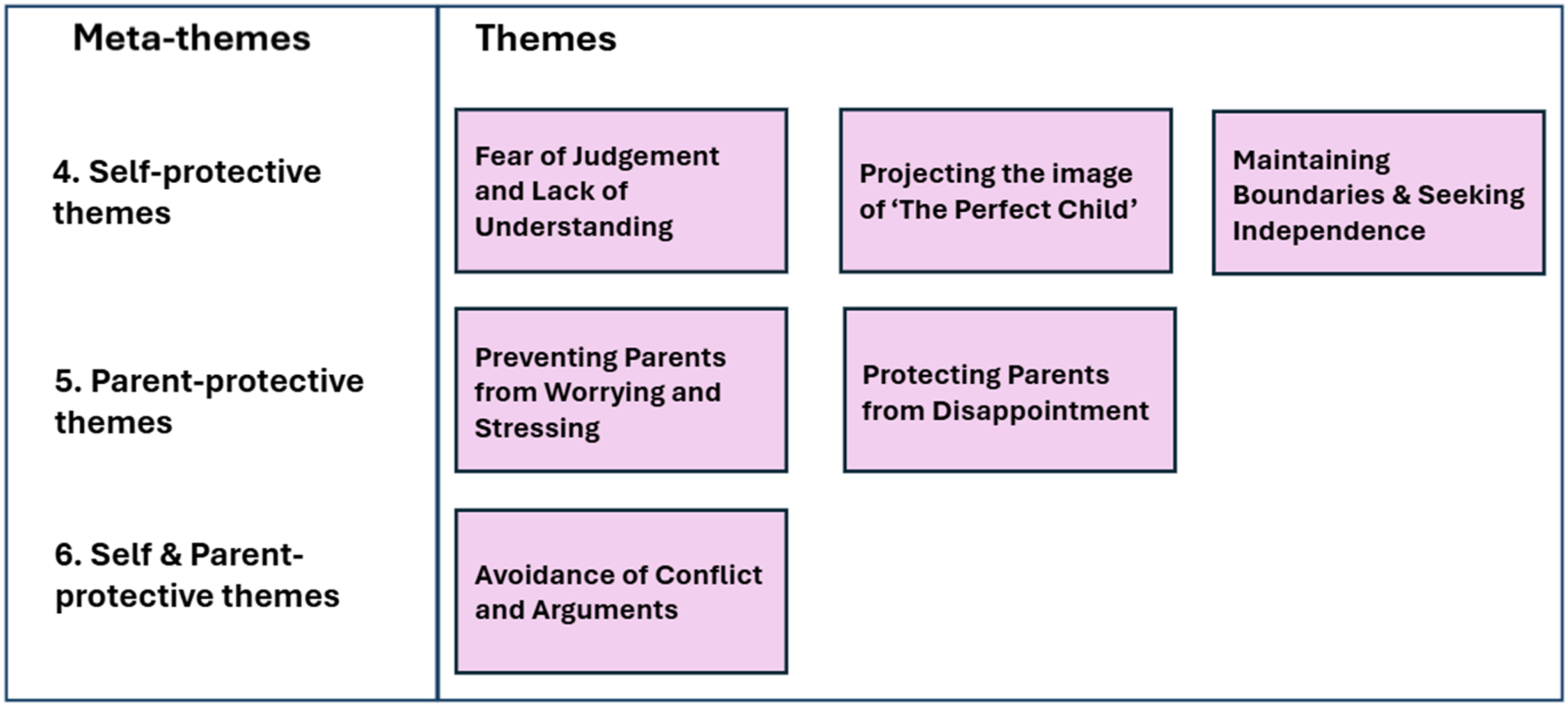
Across participants’ accounts, concealment functioned as relational boundary work to maintain autonomy while preserving the parent–child bond. Content domains often co-occurred with specific motives: for example, health-related and study/finance concealments were frequently framed as parent-protective (preventing worry or disappointment), whereas romantic/sexual and friendship concealments more often reflected self-protective aims (privacy, fear of judgement, boundary-setting). A recurrent cross-cutting mechanism was impression management — presenting oneself as a ‘competent’ or ‘acceptable’ child — typically through selective omission rather than overt deception. These linkages suggest a coherent process in which perceived parental sensitivity, cultural expectations and the emerging adult’s autonomy goals jointly shape what is hidden and why. Figures 1 and 2 present a visual summary of the key themes identified for each research question. Meta-themes and themes for Research Question 1 (what is concealed) Meta-themes and themes for Research Question 2 (motivations for concealment)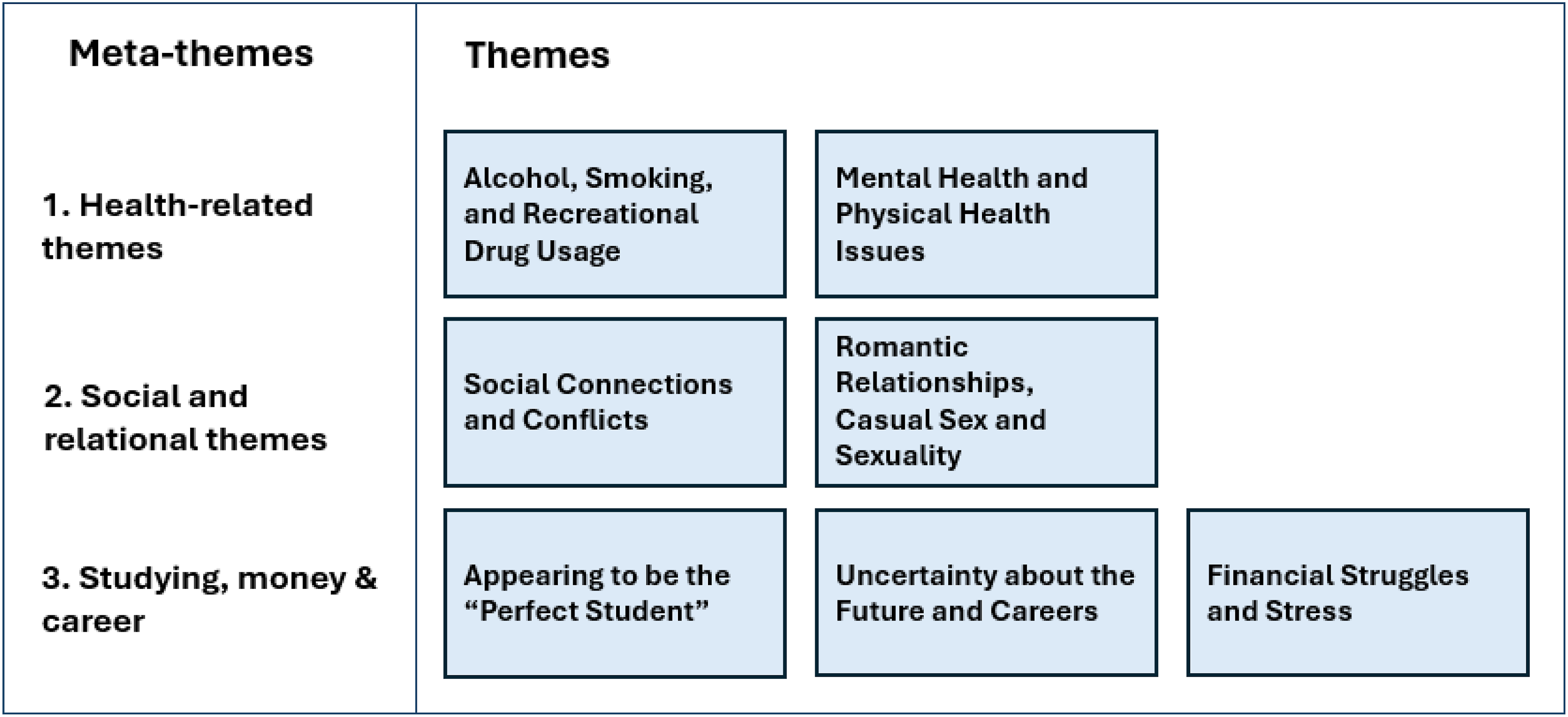
Domains of Self-Concealment With Parents
Meta-Theme 1: Health-Related Themes
This meta-theme captures forms of concealment related to participants’ physical and psychological wellbeing, encompassing both internal distress and health-related behaviours that were perceived as sensitive or potentially concerning for parents.
The theme Mental Health and Physical Health Issues (Percentage of participants who endorsed the theme; N = 13%) was the most endorsed theme within the health-related meta-theme. Although other domains of self-concealment were endorsed more frequently across the dataset, health-related concealment was prominent within participants’ accounts of wellbeing and vulnerability. Specifically, this theme refers to participants’ concealment of an array of mental health and physical health difficulties from their parents. Mental health issues that were concealed included anxiety, depression, overeating, poor body image and self-harm urges, as well as loneliness and low mood. Furthermore, participants also stated that they concealed the fact they were accessing support from medical professionals, therapy and medication to support their mental health: “I have actively concealed my struggles with my mental health and the impact that it has had on me, masking my emotions and directing conversation away from focus on myself. I don't speak with them about the lows I experience, my interactions with doctors and medication, and keep conversation casual.” (Female, 26 years-old).
Physical health issues such as injury and illness were also self-concealed from parents, for example: “Since my brother passed away I will often not tell my mother when I am sick, injured or generally unwell…” (Male, 28 years old)
In addition, as part of this health-related meta-theme, Alcohol, Smoking, and Recreational Drug Usage (N = 28%),respondents disclosed self-concealing their behaviours regarding drinking alcohol, using recreational drugs, smoking cigarettes and vaping. With regards to alcohol, the concealed information generally concerned the quantity of alcohol consumed rather than the consumption of alcohol per se. This participant uses self-concealment to manipulate his parents’ understanding of his usual alcohol and smoking intake and tolerance: “Sometimes I smoke a tiny bit or have 1-2 pints and pretend that’s a significant amount for me to throw them off the scent, so they don’t realise how much I smoke or drink.” (Male, 20 years old)
Multiple participants stated that their decision to engage in unhealthy behaviours related to alcohol, drugs and cigarettes was directly related to social activities that they had chosen to get involved with, which were intimately linked with drug or alcohol use: “…I have concealed lots of late-night activities from both of my parents, these include heavy drinking, drugs use, one-night stands and traveling around the UK to attend illegal raves. (Female, 18 years old)
This link between health-related issues and social relationships segues to the next meta-theme, Social and Relational themes.
Meta-Theme 2: Social and Relational Themes
This meta-theme reflects concealment within participants’ social and relational lives, including information about friendships, conflicts, romantic relationships, and aspects of sexuality that were managed selectively in interactions with parents.
Under the theme Social Connections and Conflicts (N = 36%), respondents mentioned that they concealed a variety of facts about their social relationships, in terms of who they spend time with, as well as when and where these interactions happen. For example: “I have concealed details about my social-life and relationships from my parents. These include details like who I spend my time with, what I get up to in their company and often our location… (Female, 21 years old).
Conflicts or arguments with friends were also described as information that had been concealed from parents.
The other domain of social-relational concealment was in the theme Romantic Relationships, Casual Sex and Sexuality (N = 34%) whereby participants stated they self-concealed their romantic relationships, casual sexual relations (including one-night stands) and their sexuality from their parents. Regarding romantic relationships, some participants decided to conceal their relationships in the dating stage or for the first couple months while others stated they had no intention of telling their parents about their ongoing romantic relationships. Furthermore, multiple participants stated they concealed breaking up with their romantic partners from their parents; for example, one respondent had been cheated on and had not expressed this to their parents: “…I didn’t tell them the real reason why I wanted to move out, the reason why was that I found out my boyfriend had another girlfriend during our relationship, and I need some time and space just to be alone…” (Female, 24 years old)
Participants also referred to not telling their parents about their one-night stands or their casual sexual relationships. This male respondent stated he felt uncomfortable disclosing this to his mother but feels at ease when addressing this topic with his father: “I also don’t mention girls to my mum as I feel like she might find sex without a relationship to be a bad habit and might assume that I’m being a dickhead however with my dad we can talk about it easily…” (Male, 20 years old).
Two respondents reported concealing their sexuality from their parents. One respondent stated they know their parents are supportive of LGBT + however they still feel uncomfortable disclosing they are pansexual. Another participant stated she is currently lying about her sexuality by diverting questions: “I have largely hidden my sexuality from my parents, omitting details, dismissing questions as 'not interested in relationships/dating right now for career/education reasons', or lying…” (Female, 20 years old).
Meta-Theme 3: Studying, Money and Career
Meta-theme 3 concerns concealment related to studying, future careers, and finances, including student-related money matters. , within the theme Appearing to be the “Perfect Student”(N = 25%),respondents stated they were concealing information about studying and their university life including low attendance, having exams/assessments, grades/results and general activities while at university. The following text states intentionally hiding exam and assessment results: “I have hidden results from exams and assessments from my parents. I did this by purposely not telling them the results or making them aware of when the results came out… (Female, 19 years old).
Furthermore, in the theme Financial Struggles and Stress (N = 23%) participants described a range of financial struggles, including debt, reluctance to ask parents for money due to feeling like a burden, spending too much money, hiding the true amount of money in their bank account, salary issues and struggling to find a part-time role to improve their financial position. The following text expresses how the individual is experiencing financial struggles and feels unable to ask her parents for more financial support due to not wanting to feel like a financial burden: “I feel hesitant to ask for more support, fearing I’ll become a burden. I’ve been trying to find a part-time job to ease the strain, but it’s been difficult, and the financial pressure is constantly on my mind…” (Female, 22 years old).
Uncertainty about the Future and Careers (N = 11%) involved respondents stating that they were self-concealing feelings of uncertainty and troublesome thoughts about the future. These thoughts and feelings were focused on future living situations, educational journeys and careers, for example: “Feeling lost about the future - specifically in careers/living situations. Whether or not I will move out in the next few years after university finishes or if I will or will not be able to do further education… (Female, 21 years old).
Feelings of doubt and anxiety about the future can be seen throughout responses, along with not feeling good enough and questioning whether their future will be established in the ways they hoped.
Motivations for Self-Concealment From Parents
Meta-Theme 4: Self-Protective Themes
These themes all pertain to the matter of protecting the self against possible negative outcomes or emotions associated with disclosing sensitive aspects of the self. Fear of Judgement and Lack of Understanding (N = 34%) included comments stating that respondents self-concealed due to fearing their parents’ judgement and the lack of understanding of their thoughts, feelings or behaviours. Such lack of understanding was explained due to generational differences, culture, religion, different levels of emotional intelligence and strong views on unhealthy behaviours. This respondent stated they believe the generational gap causes discomfort in conversations about mental health: “…I don't feel that they would understand or have empathy towards me and would rather process and deal with the feelings myself. The generational gap also has a big impact on this, as speaking about mental health is still a taboo subject for my father in particular, and so it isn't something that I would approach with him.” (Female, 26 years old).
One respondent stated that if they did not self-conceal, they would be disowned by their parents “Because it’s not something they accept culturally and religiously. They will disown me if they find out about things.” (Female, 22 years old).
The theme Projecting the image of ‘The Perfect Child’ (N = 18%) pertains to respondents wanting to uphold a good impression to maintain a sense of being loved, admired, and to avoid rejection. They stated that they wanted to be faultless, ensure their parents’ efforts did not go to waste, make their parents feel like they had done a good job and desire to be viewed as a good child, which in turn relates to a fear of what would happen if they were to convey their whole self to parents, and the sense of reward that comes with conveying a sense of being faultless to parents. Responses also relate to the individual feeling glorified by parents when their parents think they are a perfect child: “I like my mum/dad viewing me as the perfect child as it boosts my ego (Male, 20 years old).
The other theme that emerged as a self-protective motivation also that captured the positive side of self-concealment, which was Maintaining Boundaries and Seeking Independence (N = 27%). Respondents stated they self-concealed due to wanting time to themselves and prioritising independence when dealing with certain behaviours, thoughts and feelings. The following participant states she does not care for others’ opinions and feels she can resolve emotional conflicts on her own without the influence of others, as she is an adult: “I have chosen not to share my thoughts. Nonetheless, I just can't be asked about the long, tedious conversation that follows such thinking. I do not like to explain myself to anyone, and to be quite frank, I'm not interested in family opinions, particularly regarding my mental health. I am an adult. Therefore, I will manage my emotions and life as I see fit.” (Female, 26 years old).
Ensuring clear boundaries were mentioned as part of this motivation for independence. This relates to reports of boundaries being violated or overstepped throughout childhood, adolescence and now adulthood, influencing a desire for privacy in emerging adulthood. For example: “My mum seems to think I'm something she can talk to her friends and other members of the family about, such as how much I earn, where my mental health is currently at, who I'm seeing, all of which is private to me and I've expressed that but it gets ignored and discussed anyway…I no longer tell her now because I don't want the whole street and family to know and I don't want her telling me what I should do about it.” (Male, 29 years old).
Meta-Theme 5: Parent-Protective Themes
The themes within this meta-theme pertain to the perceived protection of parents, by way of ensuring avoidance of conflict, argument, worrying and disappointment.
The theme Protecting Parents from Disappointment (N = 48%) was the most common motivation theme of all. It pertains to protecting the parents from perceived potential disappointment from the negative perception of their child. It relates to both protection from being disappointed through the child’s behaviours, as well as the child protecting themselves using impression-management. One male participant stated that hiding information from his parents was due to concerns that their parents would be disappointed and see him as irresponsible: “Worried they’d be disappointed that I’d spent the majority of my free time drinking and going out, rather than being a responsible adult and dealing with stress in a productive way” (Male, 24 years old).
Preventing Parents from Worrying and Stressing (N = 32%) relates to respondents’ motivation that is selfless, attempting to manage the effects of their behaviours to prevent their parents from emotional suffering. “I wouldn’t want them to have any additional stressors on their life, even though I am aware they stress over my life so I conceal more negative sides of life from them. I easily share the positives. I am not sure what would happen if I am more open.” (Female, 27 years old)
The main theme in these respondents is feelings of guilt. They want to prioritise their parents’ health by self-concealing so they can manage the possible worry and stress their parents’ experience.
Meta-Theme 6: Self-and-Other Protective Themes
This meta-theme encompasses motivations for concealment that were simultaneously oriented towards protecting the self and protecting the parent-child relationship, particularly by minimising conflict, emotional escalation, or relational strain.
Avoidance of Conflict and Arguments (N = 38%) emerged as a motivation for self-concealment that was aimed at minimising the perceived emotional and relational damage emerging from conflicts and arguments. The self-protective motivations included not being lectured to or being drawn into argumentative interactions with their parents, particularly where there was felt to be a power imbalance or the possibility of emotional manipulation. For example: “I think if I didn’t self-conceal these feelings my parents would have a different view on me and I would have more arguments with my parents which I don’t want to do as I don’t get to spend much time with them…” (Female, 20 years old).
Other participants stated that avoidance of conflict and argument was aimed at preventing distress in the parents, given that this might conflict with aforementioned ‘perfect child’ image that many emerging adults in our sample were keen to maintain.
Taken together, the findings outline a two-track logic of concealment. When participants anticipate parental emotional costs (worry, disappointment), they preferentially conceal vulnerable content (mental health, financial stress) to buffer parents and to stabilise the relationship. By contrast, when they anticipate identity or boundary threats (judgement, intrusion), they conceal personally defining content (relationships, sexuality, social life) to protect autonomy. Avoiding conflict operates across both tracks as a short-term stabiliser but may entrench longer-term secrecy. This integrated account clarifies how concealment serves both self- and relationship-maintenance in emerging adulthood.
Discussion
Our study found that a substantial majority (76%) of UK-based emerging adults reported concealing thoughts, feelings, or behaviours from their parents over the past year. This preponderance of self-concealment points towards broad support for prior research showing that emerging adulthood is a time of struggle in achieving a stable sense of authenticity, partly due to the pervasive use of personae across social contexts (Robinson & Smith, 2010), challenging parent–child relationships (Renk et al., 2007), and the common use of secrecy and self-concealment (Murray & Knudson, 2023), and a time where independence is sought, which may involve self-concealment where it is felt that it may support being independent from parents. In terms of what kinds of information or behaviour is concealed, participants described concealing negative emotions and feelings such as anxiety, depression, and loneliness. They also concealed behaviours and the impacts of these behaviours in spheres such as studying, romantic relationships, sexual identities, money management, and substance use/abuse. These domains show that both private emotional experiences and more public behaviours are subject to concealment from parents which often require considerable strategising to maintain secrecy (Pfeifer & Berkman, 2018).
When discussing their motivations for concealment, participants described motivations aimed at protecting themselves and at protecting their parents. Self-protective motivations included projecting the image of a ‘perfect’ child, maintaining independence and clear boundaries and avoiding perceived unfair judgement arising from parental misunderstanding of their situation and/or generation. Parent-protective motivations involved shielding parents from worry, stress, disappointment, or the emotional strain associated with conflict. Overall, our findings link closely to findings showing concealment to be a protective strategy, used to set boundaries and preserve relational stability (Pfeifer & Berkman, 2018; Robinson & Smith, 2010), and to manage the risk of emotional disclosure in light of a variety of relational concerns such as the possibility of shame, ostracism or conflict (Candel, 2022; Green et al., 2024). The motivational patterns we observed also align with attachment theory (Bowlby, 1969); participants who felt unsupported or invalidated tended to conceal more vulnerable aspects of their lives, and this aligns with the tenets of attachment theory that imply insecure parental attachments lead to a lack of trust and intimate sharing.
Some of our findings are consistent with earlier studies, while others diverge. Prior research has shown that the secrets kept for self-concealment are usually negative (Hogge et al., 2023), which was the same case with our sample too. A previous study by Bedrov and Gable (2023) noted that common secrets included substance abuse, mental health, infidelity, and sexuality. All of these topics also emerged in our study (although infidelity appeared only once). Bedrov and Gable’s (2023) wider age range (18–70 years), and their non-student sample, may explain their higher proportion of infidelity-related secrecy.
The results are consistent with Larson et al.’s (2015) self-concealment motivational model, particularly around anticipated shame and managing uncertain outcomes. Several motivations reported by the participants reflect this. Participants mentioned they concealed information to avoid arguments or feared uncertain outcomes. This was reflected in themes relating to avoiding arguments, confronting difficult emotions, and managing uncertain outcomes. Other participants mentioned that they did not want to be judged or negatively affect their parents’ emotions, which was represented in the themes of bad relationships and being judged by parents and avoiding affecting parents’ feelings and emotions.
In terms of the relationship between our findings and the theory of emerging adulthood, our findings support the view of this life stage as a time of personal and relational instability during which relationships with parents are often challenging and conflicted, and are typically renegotiated into a new form suitable for adult-to-adult communication. Arnett (2023) highlights that a key developmental task in emerging adulthood is the shift from a parent–child relationship to a more adult-to-adult footing, which depends on open and honest communication in an atmosphere of mutual trust, while simultaneously accepting that some concealment is likely in both directions. Arnett (2023) highlights the shift towards an adult-to-adult footing; our findings suggest that this shift is supported not only by openness but also by clearer privacy boundaries. As EA social networks widen (peers, partners, colleagues, siblings), some topics migrate away from parents without implying relational dysfunction. The optimal middle ground is likely context-dependent: selective disclosure that maintains trust while respecting autonomy.
Limitations and Future Research
The qualitative survey approach used in this study prioritises brevity and breadth of textual responses rather than depth. Brief written texts benefit from anonymity, but this approach does not elicit the depth of information achievable through interviews, thus future research using targeted interviews with emerging adults on the process of self-concealment with parents will be a positive future step. Such interviews could explore the complex motivations behind self-concealment and how these motivations interact, as well as longer written text disclosures about their experiences of self-concealment and how these relate to childhood experiences with their parents. Future research could also explore the relationship between concealed content and motivations for concealment, to explore any systematic links.
A further limitation is that the qualitative results were based on a self-selecting sub-sample of the concealers, potentially leading to bias in thematic representation. Forty-three per cent of those who admitted to self-concealment did not provide textual data, perhaps being hesitant to disclose this generally concealed information. This means that our findings reflect the experiences of a specific self-selecting group who were willing to share in a written format, rather than representing the full range of concealment experiences. It might be that the most distressing or stigmatised forms of concealment might be underrepresented in the final themes because some participants chose not to provide texts about these.
With regards to sampling, we accessed participants via social media channels and university channels that will mean it is unlikely to be a representative sample. Platform-specific demographics likely shaped who saw and responded to the study (e.g., LinkedIn skewing towards employed/students; Instagram towards actively online users), potentially under-representing young adults not in education, employment or training. We offer our findings as information that could be confirmed in large studies with resources to recruit stratified, a nationally representative sample. Another limitation concerns the cultural specificity of the sample, which restricts the generalisability of the findings. Our research focused on UK nationals in emerging adulthood. As such, the findings may not reflect the experiences of emerging adults from different cultural or socio-economic backgrounds. Future studies could address this limitation by conducting cross-cultural and cross-gender comparisons to identify both commonalities and divergences in self-concealment practices. Furthermore, longitudinal research could explore how self-concealment evolves over time, as well as examine the impact of interventions such as parent-child communication training or peer support networks. The UK has a relatively high levels of emotional suppression compared with some cultures, which may contribute to patterns of self-concealment (Chen et al., 2025). This underscores the need for more diverse sampling methods to ensure representation across a wider range of backgrounds. Exploring self-concealment among individuals from non-academic or lower socio-economic contexts would provide a more comprehensive understanding of how these behaviours manifest in different life circumstances.
Future research could also build upon these findings by investigating the role of peer networks and forms of professional support in mitigating the psychological impacts of self-concealment. Existing evidence suggests that support systems beyond the family can buffer against the emotional toll associated with concealment (Kiekens & Mereish, 2022). Examining the interplay between peer support and parental influence may help future studies develop a deeper understanding of the mechanisms that drive and sustain self-concealment in emerging adulthood.
Implications and Conclusion
The high levels of self-concealment among emerging adults shown in this study have implications for support and intervention strategies. Interventions aimed at reducing excessive concealment should prioritise creating environments where full self-disclosure is encouraged but not pressured. Training supporters in active listening, non-judgemental communication that helps build trust to convey secrets and concealed information is essential (Jiménez et al., 2019). Additionally, integrating anonymous or indirect forms of support — such as digital platforms, journaling, or art-based expression — may also offer alternative pathways for engagement (Robinson et al., 2021; Zapf et al., 2023).
On a broader level, interventions aimed at parent communication in emerging adulthood should aim to normalise emotional transparency and challenge cultural narratives that equate vulnerability with weakness. Campaigns that highlight shared experiences and promote mental health literacy may reduce stigma and encourage help-seeking behaviour. Ultimately, addressing self-concealment requires a nuanced, empathetic approach that respects individual boundaries while fostering connection and trust within families and social networks.
In conclusion, this study deepens the current understanding of self-concealment in UK emerging adults, drawing attention to the complexity of self-concealment as a relational and developmentally situated phenomenon. The findings suggest that self-concealment often functions as a motivated protective mechanism aimed at preserving both personal identity and familial relationships. As such, it warrants greater attention in both psychological research and practice, particularly in developing supportive interventions that encourage open communication and emotional validation during this transitional life stage.
Supplemental Material
Supplemental Material - Self-Concealment From Parents in Emerging Adulthood: A Qualitative Survey Study of Experiences and Motivations
Supplemental Material for Self-Concealment From Parents in Emerging Adulthood: A Qualitative Survey Study of Experiences and Motivations by Oliver C. Robinson, Oindrila Dutta, Erin Collins, Charlie Whiffing, Karen Carey in Emerging Adulthood
Footnotes

Funding
The authors received no financial support for the research, authorship, and/or publication of this article.
Declaration of conflicting interests
The authors declared no potential conflicts of interest with respect to the research, authorship, and/or publication of this article.
Transparency and Openness Statement
Supplemental Material
Supplemental material for this article is available online.
Author Biographies
References
Supplementary Material
Please find the following supplemental material available below.
For Open Access articles published under a Creative Commons License, all supplemental material carries the same license as the article it is associated with.
For non-Open Access articles published, all supplemental material carries a non-exclusive license, and permission requests for re-use of supplemental material or any part of supplemental material shall be sent directly to the copyright owner as specified in the copyright notice associated with the article.
