




Abstract
Personality is linked to important health outcomes, but most prior studies have relied on self-reports, making it possible that shared-method variance explains the associations. In the present study, we examined self-reports versus informant-reports of personality and multimethod outcomes. World Trade Center (WTC) responders and informants, 283 pairs, completed five-factor model personality measures and multimethod assessments of stressful events, functioning, mental disorders, 9/11-related treatment costs, body mass index (BMI), and daily activity across 3 years. Self-reports were uniquely related to stressful events and functioning. Both self-reports and informant-reports showed incremental validity over one another for mental disorder diagnoses and treatment costs. For objective outcomes daily activity and BMI, informant-reports showed incremental validity over self-reports, accounting for all self-report variance and more. The findings suggest that informant-reports of personality provide better validity for objective health outcomes, which has implications for understanding personality and its role in mental and physical health.
Keywords
Personality traits are important predictors of life outcomes (Ozer & Benet-Martínez, 2006; Roberts et al., 2007; Smith et al., 2015; Soto, 2019). World Trade Center (WTC) responders show chronic physical and mental disorders related to the 9/11 disaster, and personality is a potential maintenance factor (Cleven et al., 2021; Lowell et al., 2018; Waszczuk et al., 2018; Wisnivesky et al., 2011). Unfortunately, most research on personality and life outcomes relies on self-report questionnaires to assess both personality and outcomes despite shared-method variance that inflates correlations between constructs. Informant-reports provide a unique assessment of personality that eludes self-report biases, such as socially desirable responding or lack of insight (Vazire, 2006). Furthermore, objective outcome measurements provide a real-world criterion free from self-report bias, and the facet level of personality measurement can provide more specific insights into the relations between personality and external criteria (Oltmanns & Widiger, 2021; Ready & Clark, 2002; Vainik et al., 2019). The purpose of the present study is to examine both self-reports and informant-reports of personality at the facet level in WTC responders and their associations with interview and objective measurements of health criteria.
Self–Other Agreement on Personality
Self–other agreement on five-factor model (FFM) personality traits (extraversion, agreeableness, conscientiousness, neuroticism, and openness) is usually between r = .30 and r = .50 (Connelly & Ones, 2010). The self–other knowledge asymmetry model postulates that the self is more knowledgeable about less observable traits (e.g., neuroticism) and that others are more knowledgeable about more observable (e.g., extraversion, conscientiousness) and evaluative (e.g., socially desirable, agreeableness) traits because others can be more objective in evaluating and observing the target (Funder & Dobroth, 1987; Vazire, 2010). Self–other agreement on the FFM trait domains varies as a result of observability and ability to evaluate such that agreement is generally higher on the more observable traits and lower on evaluative traits. However, agreement increases in closer relationships, for example, in romantic partnerships (Connelly & Ones, 2010).
Self–other agreement on personality traits is often taken as validation evidence for informant-reports of personality traits. But agreement does not provide the answer to the question of which report is more “correct.” Criterion-validity studies can shed light on this question (e.g., Which type of report best predicts an outcome?). A growing body of research indicates that informant-reports of personality are useful for predicting certain criteria—at times even better than self-reports (Smith et al., 2008; Wright et al., 2022). Yet this literature is still limited. More studies comparing self-reports versus informant-reports in associations with objective outcomes are needed.
Personality and Life Outcomes
Studies indicate associations between personality and stressful life events (SLEs). One study of more than 7,000 twins found that self-report neuroticism significantly predicted assault, divorce, and financial problems and that informant-reports of neuroticism predicted future marital problems and financial problems (Kendler et al., 2003). Neuroticism, conscientiousness, agreeableness, and the facet of impulsiveness have since been associated with SLEs in other large, longitudinal studies (Iacovino et al., 2016; Löckenhoff et al., 2009; Mitchell et al., 2021). All self-report facets of neuroticism (e.g., angry hostility, depressiveness) and informant-reports of agreeableness (uniquely) have predicted more stressful events (Iacovino et al., 2016).
Few studies have examined personality traits specifically in relation to everyday functioning. However, conscientiousness and neuroticism identify independent functioning (Damian et al., 2022) and also relate to functional ability (Gogniat et al., 2020) and self-reported physical functioning (Jaconelli et al., 2013). To our knowledge, there are no studies on everyday functioning and informant-reports of personality or at the facet level.
Personality has robust connections to interview ratings of mental disorder. In meta-analyses of 175 studies, anxiety, depression, posttraumatic stress disorder (PTSD), and substance use disorders were associated with high neuroticism, low conscientiousness, and often low extraversion (Kotov et al., 2010). However, the overwhelming majority of studies relied on self-reports of personality, only a few studies used informant-reports, and most were at the domain level. Informant-reports of personality have shown unique relationships with depression (Galione & Oltmanns, 2013; Klein, 2003; Shin & Newman, 2019) and predicted substance use uniquely from self-reports (Ready & Clark, 2002).
Few studies have examined personality and treatment utilization, and to our knowledge, none have used informant-reports or examined mental or physical health-treatment costs. In patients with mood, anxiety, or alcohol use disorder, self-reported traits related to neuroticism predicted increased mental health utilization (McWilliams et al., 2006). Self-reported FFM conscientiousness and openness domains have predicted number of therapy sessions over and above global functioning, depression, anxiety, and personality disorders (Miller et al., 2006). Self-reported FFM personality traits have predicted psychotropic medication use and use of clinical services (Miller et al., 2006) and mental-health-service utilization (DeViva et al., 2016), sometimes over and above global functioning and Axis I psychopathology (Hopwood et al., 2008). Personality traits generally also predicted length of couples and family therapy (Thalmayer, 2018).
Self-reported personality has been associated with physical activity measured using body-mounted accelerometers (devices that measure motion; Artese et al., 2017; Cˇukić et al., 2019; Kekäläinen, Laakkonen, et al., 2020). At the facet level, self-reported Depressiveness and Impulsiveness from neuroticism, Activity from extraversion, Tender-Mindedness from agreeableness, and most facets from conscientiousness showed associations with physical activity (Artese et al., 2017; Kekäläinen, Terracciano, et al., 2020). To our knowledge, no studies have examined informant-reports of personality and activity measured using daily accelerometer data, and no studies have presented effects in terms of actual steps.
Personality has been linked to body mass index (BMI): neuroticism and extraversion positively, agreeableness and conscientiousness negatively, and openness more inconsistently (Hampson et al., 2006; Jokela et al., 2013; Sutin et al., 2011; Sutin & Terracciano, 2016; Vainik et al., 2019; Wright et al., 2022). At the domain level, conscientiousness shows the strongest relationship to BMI (negatively), and neuroticism has a consistent positive relationship with BMI. The facet of Activity within extraversion, the facet of Impulsiveness within neuroticism, and several facets of conscientiousness, including Order and Self-Discipline, are consistently linked to BMI (Sutin et al., 2011; Terracciano et al., 2009; Vainik et al., 2015, 2019). One study provided a tangible effect size in terms of BMI points: Sutin et al. (2011) found that high and low scorers on impulsivity had a 2-point BMI difference at age 30 and 5-point BMI difference by age 90.
Unfortunately, few studies have examined the relationship between informant-reports of personality and BMI. However, one study found that informant-reports of Warmth and Self-Discipline correlated with BMI, whereas self-reports of these facets did not (Vainik et al., 2015). At the domain level, informant-reports of conscientiousness and neuroticism have predicted BMI over and above self-reports (Wright et al., 2022).
The Present Study
Informant-reports of personality often demonstrate unique predictive utility from self-reports, indicating they could improve the validity of assessment and the ability of clinicians to predict life outcomes. Furthermore, research indicates that facet-level personality traits more readily explain relationships between personality and external criteria (Vainik et al., 2019). In the present study, we examined the relationship between facet-level self-reports and informant-reports of FFM personality traits and several important major health outcomes measured via non-self-report questionnaire methods. In the present study, we interpret effect sizes in terms of steps and weight in addition to traditional statistical guidelines. The focus is on WTC responders, who, despite having access to free treatment resources, are seeing an increasing burden stemming from exposure to the events of 9/11 (Bromet et al., 2016; Lowell et al., 2018).
Several hypotheses based on the reviewed literature were preregistered (https://aspredicted.org/vw4ui.pdf). It was expected that extraversion and conscientiousness would show the highest self–other agreement (Connelly & Ones, 2010). It was expected that self-report neuroticism would correlate positively with treatment costs, mental disorders, stress, and BMI and negatively with daily activity and that extraversion and conscientiousness would correlate with the criteria in the opposite manner. It was also hypothesized that informant-reports would correlate with the criteria in a similar pattern as self-reports but show significant incremental validity to the prediction of the outcomes over self-reports. All facet-level analyses were considered exploratory.
Method
Procedure
Data were collected as part of the longitudinal WTC Personality and Health (WTC-P&H) study, which began in 2017. Participants were recruited from the larger WTC Health Program (Dasaro et al., 2017) Stony Brook site, established by the National Institute for Occupational Safety and Health to monitor the medical and psychiatric health of responders to the WTC disaster. To qualify for the program, responders were required to have had a significant exposure to the disaster. Patients were recruited for the WTC-P&H study following an annual health-monitoring visit to the Health Program. To obtain a sample representative of the program, the only exclusion was inability to complete study procedures because of either limited comprehension of the English language or major cognitive impairment.
Self-reports of personality were collected across three waves in the WTC-P&H study 1 year apart. Responders were asked to identify someone who knows them best who would be willing to complete personality questionnaires about them as well. Informant-reports (N = 283) of personality were collected once, beginning at Wave 1; the majority were collected in Year 1 (n = 193), some were collected in Year 2 (n = 93), and fewer were collected in Year 3 (n = 19). We used self-reports of personality that corresponded to the wave at which the informant-reports were completed. Because informant-reports were collected across the study, we conducted cross-sectional analyses comparing self-reports and informant-reports with averages of the outcome variables from across the 3 years of the study.
Participants
The WTC-P&H sample consisted of 283 WTC responder/informant pairs. Responders were 55.4 years old on average (SD = 8.7 years), 89% were male, and 90.8% were White (6.9% were Black, 1.7% were Asian, and 0.6% were “other”); 6% identified Hispanic ethnicity. The majority of participants worked in law enforcement on 9/11 (65%), whereas the other responders were primarily construction workers, electricians, and paramedics. Most responders reported completing some college (43%); others reported college graduation (28%), high school graduation (11.7%), advanced degree (7.8%), professional academy graduation (4.3%), some graduate school (3.9%), and less than high school graduation (0.7%). Informants were 70% spouses, 20% other family members, and 10% other (e.g., friends). The sample of informants was also mostly White (88.7%); the remainder of the sample consisted of 6.4% Black, 2.8% multiracial, 1.1% Asian, and 0.4% American Indian or Pacific Islander respondents. Ten percent of informants reported Hispanic ethnicity.
Measures
Personality
Self-reports and informant-reports of personality were collected on the Faceted Inventory of the Five-Factor Model (FI-FFM; Watson et al., 2019) and the Big Five Inventory-2 (BFI-2; Soto & John, 2017). A subset of scales was administered in the WTC-P&H study to minimize participant burden. The FI-FFM contains 207 items, each rated on a 5-point scale: 0 (strongly disagree), 1 (disagree), 2 (neutral or cannot decide), 3 (agree), and 4 (strongly agree). The FI-FFM contains 22 facets, 15 of which were used in the WTC-P&H: three for neuroticism (Anxiety, Depression, Anger Proneness), four for extraversion (Positive Temperament, Sociability, Ascendance, Venturesomeness), three for agreeableness (Empathy, Trust, Straightforwardness), and five for conscientiousness (Self-Discipline, Dutifulness, Deliberation, Achievement-Striving, and Order). The BFI-2 contains 60 items, each rated on a 5-point scale: 1 (disagree strongly), 2 (disagree a little), 3 (neutral; no opinion), 4 (agree a little), and 5 (agree strongly). The BFI-2 contains 15 facets, and three were used in the present study to assess openness: Intellectual Curiosity, Aesthetic Sensitivity, and Creative Imagination. Each contains four items. Facet scores were computed as means of corresponding items. Domain scores were computed as means of corresponding facets. Both the FI-FFM and BFI-2 self-report versions have shown strong evidence of construct validity and internal consistency (Soto & John, 2017; Watson et al., 2019). Average interfacet correlations for the self-reports ranged from r = .44 (Agreeableness) to r = .63 (Neuroticism) and had a median of .52. Internal consistency of the informant versions in the present study ranged from α = .71 (Curiosity) to α = .95 (Anger Proneness) and had a median of .85.
SLEs
The Stressful Life Events Schedule (SLES; Williamson et al., 2008)—Adult Version 3.0 was adapted to include events common in the WTC-responder population, resulting in a list of SLEs that may have occurred for the responder. The events are grouped into different categories: crimes, deaths, education, health, housing, money, romantic relationships, other relationships, and work. Objective threat of each event is rated on a 5-point scale (0 = no, 1 = little, 2 = some, 3 = moderate, 4 = great effect) based on how such an event would affect an average person. To avoid self-report biases, ratings were decided on the basis of details of the event in consensus meetings of at least three trained interviewers. SLES score is a total of ratings for events in the past year. The SLES was administered at Waves 2 and 3, and scores were averaged across the two waves of data collection.
Everyday functioning
The Range of Impaired Functioning (RIFT) interview (Leon et al., 1999) assessed functioning in six domains (family, social network, friends, household duties, recreation, and life satisfaction) in the past month. Multiple probes were used to gather information about each area. For example, in employment, information is asked about how many hours were worked and how many sick days were taken, and open-ended questions asked about satisfaction with work during the past month. In consensus meetings, a group of at least three interviewers rated functioning in each domain on 5-point scale (1 = severe impairment; 2 = moderate impairment; 3 = mild impairment; 4 = no impairment, satisfactory level; 5 = no impairment, high level). The RIFT total score is a mean of six domain scores. The RIFT was administered at Waves 2 and 3, and scores were averaged across the two waves of data collection.
Psychiatric diagnoses
The Structured Clinical Interview for DSM-IV (SCID; First et al., 1997) was completed at all three study waves and administered to the responders by research-assistant interviewers trained by C. Ruggero and R. Kotov. Previous administrations of the SCID in this population by our team have shown good interrater agreement (κ = .82; Bromet et al., 2016). The modules were administered for past-month PTSD, major depressive disorder (MDD), panic disorder, and 2-year persistent depressive disorder (PDD). Analyses compared responders who received the corresponding diagnosis at any wave with responders who did not meet criteria.
9/11-related treatment-utilization costs
Treatment costs were calculated from the WTC Health Program visits, procedures, and medication costs. For WTC responders, significant disaster-related conditions include respiratory symptoms, gastroesophageal reflux disease, cancer, and PTSD (Dasaro et al., 2017). Visits and procedures were separated into two scores: one for physical health and one for mental health. The mental and physical health costs (for visits and medications) were summed across the entire study period—from 2017 to 2020—and divided by study duration to obtain mean annual cost. The scores contained large positive skew and were therefore standardized and winsorized at +3 SD before analysis.
Activity
Participants were instructed to wear the ActiGraph WGT3X-BT monitor device across a 14-day period to quantify human movements. It is a triaxial accelerometer and is worn on the waist, secured with an elastic belt to the right hip bone. The device was initialized at a sampling rate of 30 Hz, and the participants were instructed to wear it at all times except while bathing, immersed in water, or sleeping. Data were downloaded using ActiLife 6 software and were integrated into 60-s epochs. Wear time was validated using timings of associated morning and evening surveys, and periods when the accelerometers were not worn were excluded. Number of steps per day was averaged across the 2-week period. Steps scores were averaged across the three waves of data collection (one 2-week period at each wave).
BMI
BMI was calculated from height and weight measurements taken at in-person visits and averaged across the three waves of data collection.
Data analyses
Correlations were used to examine zero-order associations. Hierarchical regression was used to examine the unique associations between self-reports and informant-reports of personality and the criteria variables. Sex and age covariates were entered in Step 1, self-reports of a given personality trait were entered in Step 2 (either at the domain level or the facet level), and informant-reports of the same personality trait were entered in Step 3. An α of p < .01 was used to reduce Type 1 error, and results are interpreted largely by effect size. Results were interpreted according to rules of thumb for effect size provided by Cohen (1992).
Results
Descriptive statistics for personality variables are presented in Table S1 in the Supplemental Material available online. Informant-report mean values were significantly lower than self-reports in extraversion (d = −0.24), agreeableness (d = −0.37), conscientiousness (d = −0.28), and openness (d = −0.49) and significantly greater in neuroticism (d = 0.30); absolute-value effect sizes of the mean differences ranged from d = 0.03 (Ascendance) to d = 0.55 (Aesthetic Sensitivity). This indicates that informants provided a less-positive description of the responders than the responders provided about themselves. Descriptive statistics for criteria variables are presented in Table S2 in the Supplemental Material. Six percent to 8% of the responders were diagnosed with past-month panic, PTSD, or major depression, and 10 percent were diagnosed with past 2 years PDD. On average, responders took 6,134 steps per day (SD = 2,522). Average BMI was 31.54 (SD = 5.6). Annual 9/11-related mental health-care costs ranged from $0 to $64,055.67, with an average of $1,799.21 (SD = $5,784.26). Annual 9/11-related physical health-care costs ranged from $0 to $190,185.28, with an average of $2,527.98 (SD = $12,053.49).
Correlations
Self–other agreement on personality
Correlations between personality variables are presented in Tables S3 and S4 in the Supplemental Material. Convergent correlations between domain-level personality variables were moderate to large: Self–other agreement was moderate to high for extraversion (r = .54), agreeableness (r = .43), conscientiousness (r = .52), neuroticism (r = .59), and openness (r = .40). Hypotheses regarding extraversion and conscientiousness were confirmed, but high agreement on neuroticism was contrary to hypotheses and likely due to the close relationships between the responders and informants (Connelly & Ones, 2010). Table S4 in the Supplemental Material presents the correlations among the personality facets. Median self–other agreement correlation at the facet level across all FFM domains was r = .45; the range was from r = .32 (Empathy and Creative Imagination) to r = .61 (Orderliness and Depressiveness). Median absolute-value discriminant correlation at the facet level across all FFM domains was r = .16.
Correlations with criteria
Personality was significantly correlated with all criteria (see Tables S5 and S6 in the Supplemental Material). Domain-level self-reports of personality showed maximum large effect-size relations with functioning and stress and moderate relationships with mental disorders (see Table S5 in the Supplemental Material). Informant-reports showed maximum moderate relations with functioning, stress, and mental disorders. Maximum correlations for self-reports were between neuroticism and stress (r = .53) and for informant-reports were between neuroticism and both PDD and PTSD (rs = .33). Correlation sizes with objective criteria (health-care costs, daily activity, and BMI) were small to moderate for both self-reports and informant-reports. Informant-reports showed significant correlations with BMI, whereas self-reports did not. The maximum correlation between self-reports and objective criteria was r = .51, and the maximum correlation between informant-reports and objective criteria was r = .48 (both maximum correlations were between neuroticism and Mental health-claim costs).
The largest and most frequent significant correlations with criteria at the facet level were within neuroticism, extraversion, and conscientiousness self-reports and neuroticism, conscientiousness, and agreeableness informant-reports (see Table S6 in the Supplemental Material). Informant-reports showed more significant correlations with daily steps and BMI than self-reports. Self-report Depressiveness, Anxiousness, and Positive Temperament had the largest median associations across all criteria (moderate effect sizes; rs = .42, .35, and .33, respectively). Informant-report Depressiveness and Positive Temperament also had moderate-sized median associations across all criteria (rs = .33 and .30, respectively). Four self-reports had moderate-sized median correlations with interview-rated criteria, whereas only one informant-report did. For objective criteria (health costs, daily steps, and BMI), only informant-report Positive Temperament had a moderate-sized median association across all outcomes (median r = .33).
Regressions
Interview-based outcomes
Functioning
Self-reports of all domain-level scores were significantly associated with functioning and ranged from small to large effect sizes (see Table S7 in the Supplemental Material). All domains were associated with better functioning except neuroticism, which was associated with worse functioning. Self-report extraversion and neuroticism domain and facet scores had the strongest absolute-value associations with functioning (at moderate effect sizes), in particular Positive Temperament, Sociability, Depressiveness, and Anxiousness. Informant-reports of personality did not add significant variance over self-reports. Sex and age were not significantly related to functioning.
Life stress
Self-reports of extraversion, conscientiousness, and neuroticism were significantly associated with stressful event severity and ranged from small to moderate effect sizes (see Table S7 in the Supplemental Material). Self-report neuroticism and facets Depressiveness and Anxiousness showed moderate effect sizes. Six other self-report facets were significant predictors of stress. Informant-reports of personality did not add significant variance over self-reports. Sex and age were not significantly related to stress.
Mental disorder diagnoses
All personality domains were associated with mental disorder diagnoses. Self-reports of extraversion and neuroticism were significantly related to almost all mental disorder diagnoses (Table 1). Self-reports of neuroticism were associated with 8 times higher odds for PTSD and 5 times higher odds for major depression, which translate roughly to large effect sizes of d = 1.16 and d = 0.88, respectively, using the conversion method by Chinn (2000). Informant-reports of agreeableness and conscientiousness were associated with lower odds for depressive disorders and panic disorder, translating to effect sizes ranging from d = 0.34 (agreeableness with major depression) to d = 1.08 (conscientiousness with major depression). Informant-report Depressiveness also contributed unique variance to PTSD above self-reports. In general, self-report facets of extraversion and neuroticism were related to mental disorder diagnoses above informant-reports, and informant-report facets of agreeableness and conscientiousness were related to mental disorder diagnoses above self-reports.
Hierarchical Regression of Mental Disorder Diagnoses on Self-Reports and Informant-Reports of Personality

Note: Displaying Step 3 statistics. Step 1 consisted of sex and age covariates. Step 2 entered self-reports. Step 3 entered informant-reports. Sex and age covariates were never statistically significant. Bold = p < .01. S = self-report; I = informant report; PTSD = posttraumatic stress disorder; MDD = major depressive disorder; PDD = persistent depressive disorder; OR = odds ratio.
Objective outcomes
Mental health-claim costs
Overall, self-reports of extraversion and neuroticism and informant-reports of agreeableness and conscientiousness were each incrementally associated with mental health claims over one another, both at up to moderate effect sizes (Table 2). However, both each also explained significant variance in domains that were better explained generally by the other perspective: Informant-report Depressiveness, Anxiousness, and Positive Temperament explained unique variance over and above self-reports in neuroticism and extraversion, and self-reports of Trust and Achievement-Striving were associated with mental health costs above informant-reports in agreeableness and conscientiousness, respectively.
Hierarchical Regression of Claim Dollars on Self-Reports and Informant-Reports of Personality
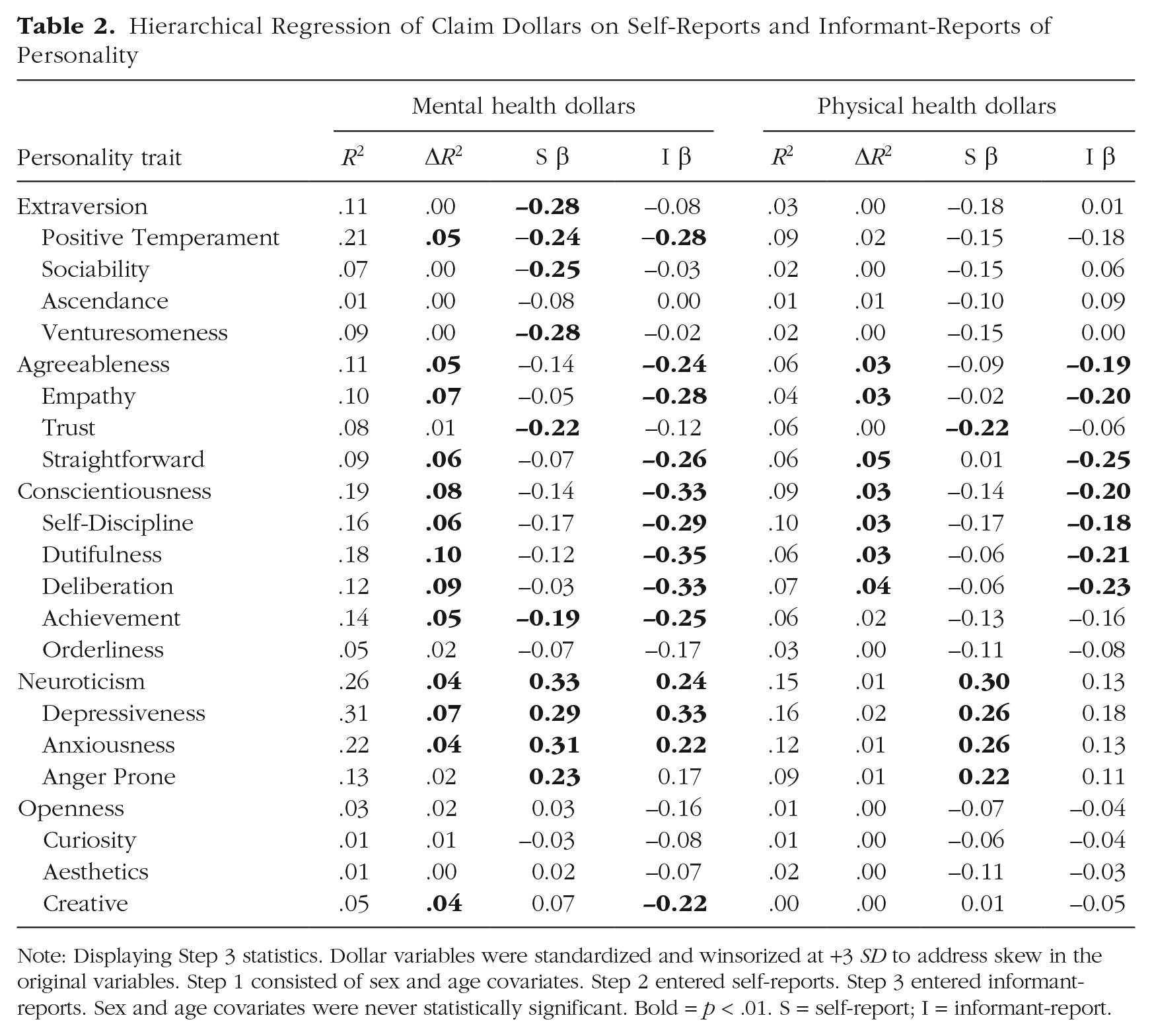
Note: Displaying Step 3 statistics. Dollar variables were standardized and winsorized at +3 SD to address skew in the original variables. Step 1 consisted of sex and age covariates. Step 2 entered self-reports. Step 3 entered informant-reports. Sex and age covariates were never statistically significant. Bold = p < .01. S = self-report; I = informant-report.
Physical health-claim costs
Associations with physical health costs were fewer, but again, self-reports of neuroticism were incremental over informant-reports, and informant-reports of agreeableness and conscientiousness were incremental over self-reports (Table 2). Self-reports of extraversion were not significantly associated with physical health costs, as they were with mental health costs. Informant-reports of neuroticism were not incrementally related to physical health costs over self-reports, as they were for mental health costs.
Accelerometer daily steps
Only informant-reports significantly related to daily steps, and effect sizes were small to moderate (Table 3). Effects were dispersed across the domains of conscientiousness (e.g., Achievement-Striving), extraversion (e.g., Positive Temperament), neuroticism (Depressiveness), and agreeableness (Empathy). Unstandardized coefficients indicated, for example, a 1 SD increase in informant-reported conscientiousness was associated with an extra 616 steps per day, holding all else constant. Informant-report Positive Temperament was associated with an extra 781 steps per day, holding all else constant, which was equal to a moderate effect size. Figure 1 displays the significant relationships between personality scales and daily steps.
Hierarchical Regression of Daily Steps on Self-Reports and Informant-Reports of Personality
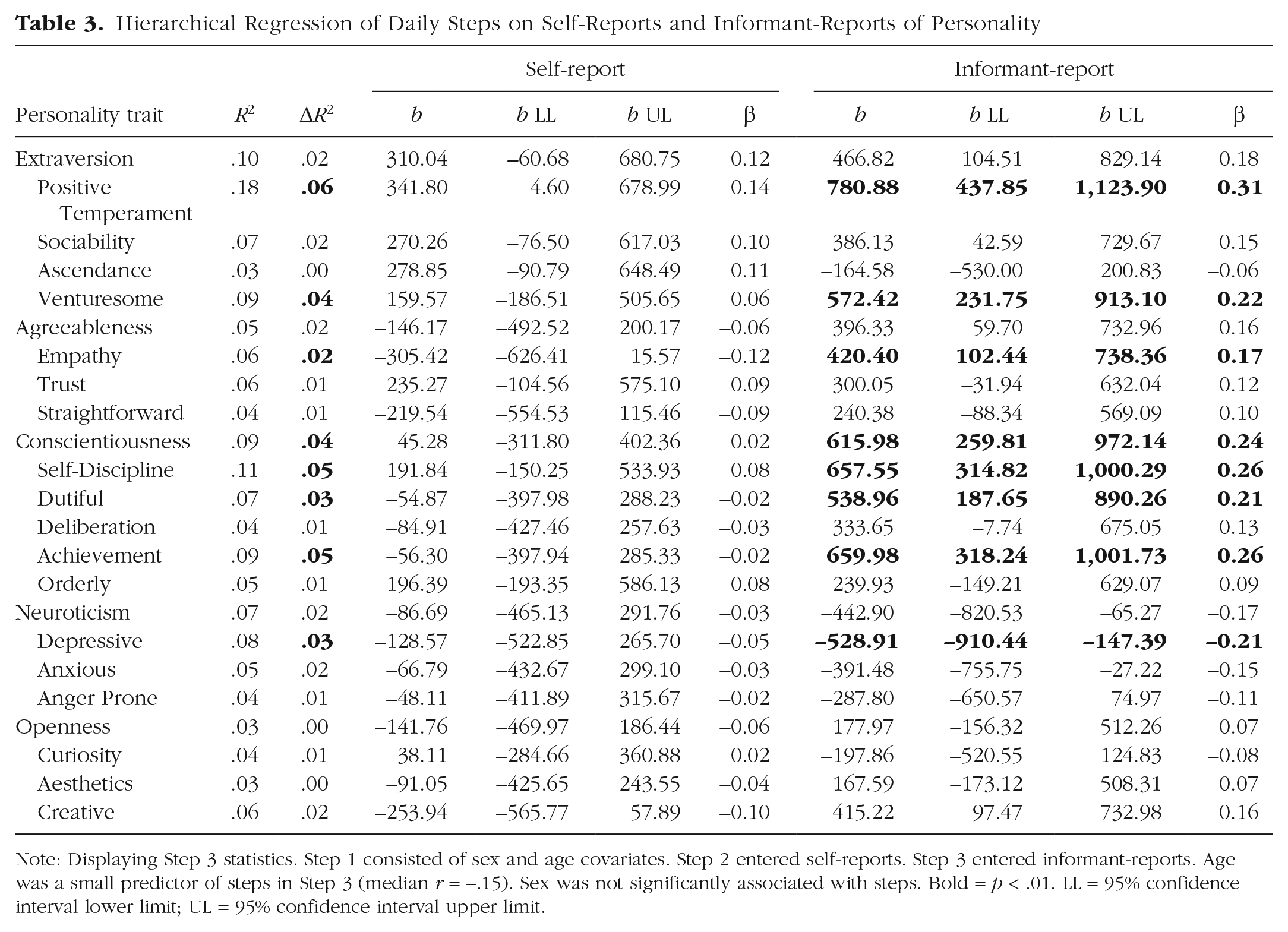
Note: Displaying Step 3 statistics. Step 1 consisted of sex and age covariates. Step 2 entered self-reports. Step 3 entered informant-reports. Age was a small predictor of steps in Step 3 (median r = –.15). Sex was not significantly associated with steps. Bold = p < .01. LL = 95% confidence interval lower limit; UL = 95% confidence interval upper limit.
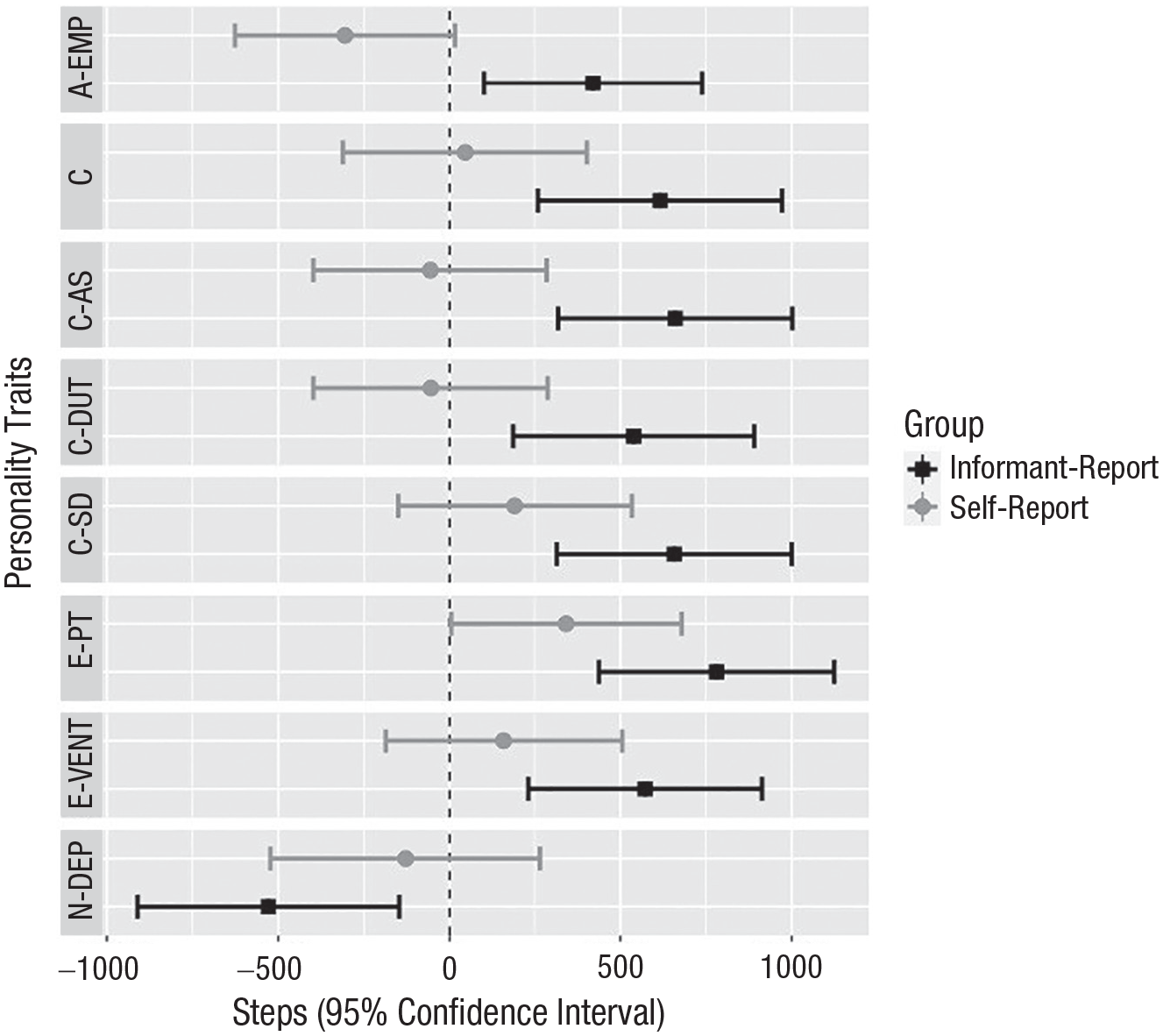
Personality and daily steps. All informant-reports are statistically significant. Self-reports are not statistically significant. A-EMP = Empathy; C = conscientiousness; C-AS = Achievement-Striving; C-DUT = Dutifulness; C-SD = Self-Discipline; E-PT = Positive Temperament; E-VENT = Venturesomeness; N-DEP = Depressiveness.
BMI
Only informant-reports were significantly associated with BMI, at small effect sizes (Table 4). Effects were concentrated in conscientiousness (Self-Discipline and Orderliness) but spread to extraversion (Positive Temperament) and openness (Creative Imagination). Unstandardized coefficients indicated that a 1 SD increase in informant-report conscientiousness was associated with a decrease of 1.30 BMI, holding all else constant. Figure 2 displays the significant relationships between personality and BMI.
Hierarchical Regression of BMI on Self-Reports and Informant-Reports of Personality
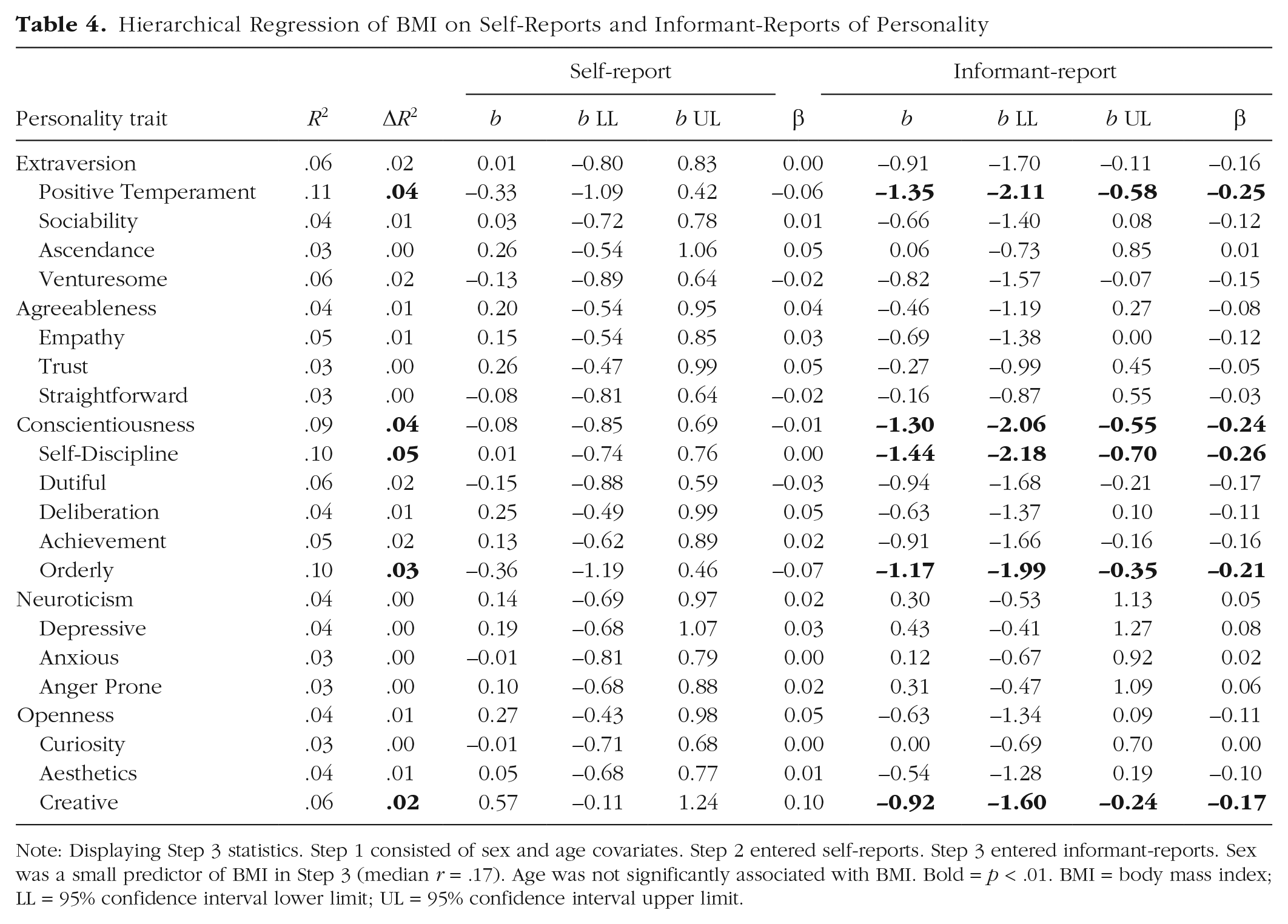
Note: Displaying Step 3 statistics. Step 1 consisted of sex and age covariates. Step 2 entered self-reports. Step 3 entered informant-reports. Sex was a small predictor of BMI in Step 3 (median r = .17). Age was not significantly associated with BMI. Bold = p < .01. BMI = body mass index; LL = 95% confidence interval lower limit; UL = 95% confidence interval upper limit.
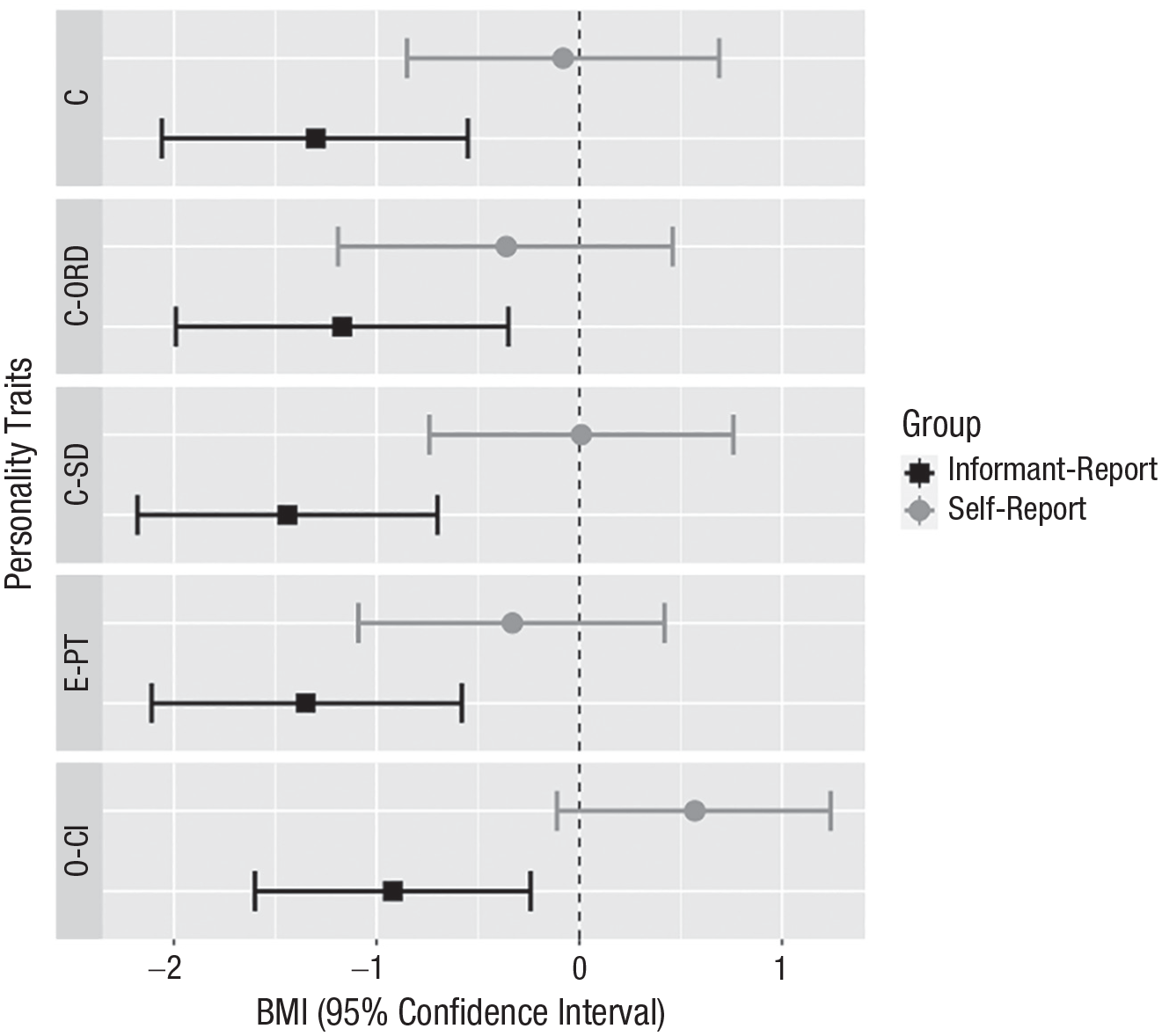
Personality and body mass index (BMI). All informant-reports are statistically significant. Self-reports are not statistically significant. C = conscientiousness; C-ORD = Orderliness; C-SD = Self-Discipline; E-PT = Positive Temperament; O-CI = Creative Imagination.
Incremental validity
Table S8 in the Supplemental Material displays the comparative incremental validity of self-reports versus informant-reports for associations with the criteria measures. In functioning and stress, self-reports had dominant incremental validity over informant-reports, explaining all variance accounted for by informant-reports and more. In claim costs, both types of reports had incremental validity; self-reports of extraversion had more incremental validity for mental health dollars, and informant-reports of conscientiousness had more incremental validity for both mental and physical health costs. For daily steps and BMI, informant-reports had dominant incremental validity over self-reports, explaining all variance in the outcomes explained by self-reports plus more—effects that were dispersed across all domains.
Discussion
Research has demonstrated that personality traits are associated with important life outcomes (Ozer & Benet-Martínez, 2006; Roberts et al., 2007; Soto, 2019). The present study advances the literature by comparing self-reports versus informant-reports of personality; objective outcome variables, such as treatment costs, daily steps, and BMI; and a WTC-responder sample. Hypotheses were largely confirmed, and results support prior research indicating the connection between personality traits and important life criteria. Responders’ self-reports had greater utility for self-report interviews about stress and functioning (especially in neuroticism and extraversion), but informant-reports also had incremental validity for the prediction of mental disorders (especially in agreeableness and conscientiousness). Informant-reports outperformed self-reports in associations with objective outcomes (especially in daily steps and BMI). Results provide insight into effect size: For example, a 1 SD increase in informant-reported conscientiousness was associated a responder taking an extra 616 steps per day—when self-reports of conscientiousness did not significantly predict steps per day at all. Results support prior findings that informant-reports of personality have unique associations with important clinical-health outcomes.
Importance of the facet level
Results show how the facet level of personality provides a richness not available at the domain level. Within extraversion, WTC responders’ self-reports of Positive Temperament, Venturesomeness, and Sociability were important for mental disorders and 9/11-related mental-health-care cost. Within the agreeableness domain, informant-reports of Empathy and Straightforwardness were particularly important for mental disorders. Within the conscientiousness domain, informant-reported Dutifulness and Self-Discipline showed consistent associations with the objective outcomes. Informant-reported Orderliness showed a unique relationship with BMI. Informant-report Venturesomeness, associated with 572 steps per day measured by accelerometer on the responder’s body, provides strong construct validation evidence for this personality trait, which theoretically should be associated with more daily steps. These specifics of personality and life criteria associations will be important to continue to study to better understand relations between personality and life outcomes, inform treatment and prognosis, and make better predictions in the future.
Links to prior literature
Associations between personality and mental disorders were similar to a prior meta-analysis (Kotov et al., 2010). However, informant-reports of agreeableness were more important for mental disorders here than self-reports, partially replicating Shin and Newman (2019), and informant-reports of conscientiousness were more important than self-reports for PTSD, panic disorder, and PDD. The present findings also indicate that despite the overpowering effect of self-reported neuroticism on mental disorders, there may be unique incremental value to be gained in prediction of PTSD from informant-reports of Depressiveness (d ≈ 0.50) about WTC responders. Prior links between self-report neuroticism and stress were supported in the present study. In contrast, prior associations between informant-reports of agreeableness and SLEs were not replicated here. With regard to health-care costs, almost all traits had been linked previously and were linked in the present study (excluding openness). Informant-reports showed dominant incremental utility in agreeableness and conscientiousness as well as unique additional validity in neuroticism. The present study replicated links of conscientiousness with mental health care (Miller et al., 2006) but extended the literature by showing the informant-report was more valid than the self-report in WTC responders. Likewise, the present study replicated self-report agreeableness predicting mental health care but found that only the self-report agreeableness facet of Trust was significantly associated with mental health care, whereas informant-report agreeableness facets of Empathy and Straightforwardness were associated with mental health care over and above self-reports. This further demonstrates the utility of facet-level traits.
The present study replicated correlational associations between self-reports of extraversion and daily steps but not neuroticism and conscientiousness. In hierarchical regression, self-reports did not have unique predictive utility of daily steps over informant-reports. Informant-reports in four out of five domains outperformed self-reports, being significantly associated with daily steps, whereas self-reports were not. This is a striking finding, indicating that for an important objective outcome such as daily activity, informant-reports explained all variance of self-reports and more. Prior associations between personality and daily activity were replicated here but from informant-report and not self-report (Artese et al., 2017; Kekäläinen, Terracciano, et al., 2020). Likewise, the present study replicated prior correlational findings between personality and BMI—but only from the informant perspective. Within conscientiousness, informant-report Self-Discipline replicated prior studies from both self-reports and informant-reports (Vainik et al., 2015), whereas Order did not. This means that in several areas here, prior self-report findings of relationships with criteria were replicated, but these relationships were fully and incrementally explained by informant-reports.
Looking to criteria for validation
There is a focus on self–other agreement on personality as validation evidence for informant-reports of personality. However, studies have shown that informant-reports are associated with real-world outcomes that self-reports themselves are not (Galione & Oltmanns, 2013; Klein, 2003; Smith et al., 2008). The present study supports this evidence and extends it to daily steps and BMI, for which self-reports showed few significant associations with the outcomes, whereas informant-reports showed several in each area. Researchers should continue looking to outcomes to triangulate validation of informant-reports instead of focusing only on self–other agreement. If self-reports do not predict objective measures that they theoretically should, then the level of self–other agreement should not be the primary validation evidence for the informant-report. Furthermore, researchers should continue to build knowledge about which outcomes are predicted best by self-report versus informant-report. Eventually, these findings could be important for clinical assessment and prediction.
A note on effect size
Effect sizes were on par with the prior literature on personality’s effects on more objective life outcomes, ranging for the most part from small to moderate (Ozer & Benet-Martínez, 2006; Roberts et al., 2007; Soto, 2019; in terms of traditional recommended guidelines for interpreting effect sizes, Cohen, 1992). However, the present study provides evidence to help interpret effect sizes outside of standardization. Effects labeled “small” statistically indicate that 1 SD difference on certain traits was associated with hundreds of steps per day in daily activity and over 1 full BMI point (the “healthy” BMI range is only 6 points). These would appear to be rather important effects with real-world implications for health and economics. This dovetails with the recent discussion by Funder and Ozer (2019), who provided evidence that even very small effects can have important ramifications when aggregated across the population. When possible, effect sizes should continue to be interpreted not only by statistical rules of thumb but also by interpretable units of real-world outcomes.
Limitations
The present study provides new information in multiple areas, including personality in WTC responders, informant-reports, facet-level effects, and objective values of interpretable real-world outcomes. However, it is not without limitations. The present study is limited by cross-sectional analyses, and longitudinal analyses will be needed to disentangle and examine potential causal effects. This would require a larger sample size and longer follow-up than is available in the present study. However, criteria in the present study are averaged across three waves of yearly data collection, providing more robust information than a truly cross-sectional, single time-point study. Another limitation is that because of study design, the self-report personality-predictor variables were completed closer in time to some outcomes, in particular, the self-report outcomes (because the in-person assessments were completed at the same time as the self-reports and informant-reports came after). This would, however, be a disadvantage to the informant-reports, which still showed significant and better utility for objective outcomes than self-reports. The present study is also limited in its generalizability to WTC responders because a majority of the responders were police at the time of the disaster. It is possible that results may differ for WTC responders with other occupations on 9/11. Findings here are most likely generalizable to samples of mostly older adult, White, male, mostly police WTC responders and mostly spousal target–informant relationships and need to be replicated in more settings with more diverse populations.
Conclusion
The present study provides replication and extension of effects of personality on real-world life outcomes. Findings indicate that personality in WTC responders is linked to stress, functioning, and mental illness, measured by self-report interview and also objective measures, such as health-care utilization, daily steps, and BMI. Furthermore, findings provide evidence that informant-reports of personality in WTC responders are potentially better predictors than self-reports for some more objective life criteria, especially for agreeableness and conscientiousness. In several areas, self-report personality traits found to be significant predictors in past studies were outperformed by informant-reports, indicating that there is much value to be added to assessment of personality by extending assessment to reports by spouses, close friends, and family, in addition to self-reports. This study supports growing evidence that use of only self-reports of personality is a limitation to a full understanding of personality and its correlates. Psychologists have much to gain in areas such as assessment, treatment, and prognosis from the implementation of informant-reports of personality. An example is provided in child and adolescent psychology, which regularly implements and benefits from the use of informant-reports (De Los Reyes & Kazdin, 2005).
Supplemental Material
sj-docx-1-cpx-10.1177_21677026221132552 – Supplemental material for The Role of Personality in the Mental and Physical Health of World Trade Center Responders: Self-Reports Versus Informant-Reports
Supplemental material, sj-docx-1-cpx-10.1177_21677026221132552 for The Role of Personality in the Mental and Physical Health of World Trade Center Responders: Self-Reports Versus Informant-Reports by Joshua R. Oltmanns, Camilo Ruggero, Jiaju Miao, Monika Waszczuk, Yuanyuan Yang, Sean A. P. Clouston, Evelyn J. Bromet, Benjamin J. Luft and Roman Kotov in Clinical Psychological Science
Footnotes
Acknowledgements
J. R. Oltmanns is now at Xavier University, School of Psychology.
Transparency
Action Editor: DeMond M. Grant
Editor: Jennifer L. Tackett
Author Contribution(s)
Correction (March 2023):
Article updated to include the Open Data and Preregistration badges and the Open Practices statement.

References
Supplementary Material
Please find the following supplemental material available below.
For Open Access articles published under a Creative Commons License, all supplemental material carries the same license as the article it is associated with.
For non-Open Access articles published, all supplemental material carries a non-exclusive license, and permission requests for re-use of supplemental material or any part of supplemental material shall be sent directly to the copyright owner as specified in the copyright notice associated with the article.
