



Abstract
Background:
This study aimed to investigate the effects of acupuncture on preoperative anxiety and perioperative hemodynamic parameters in patients scheduled for bariatric surgery.
Methods:
Sixty patients (30 control, 30 acupuncture group) aged 18 years or older who underwent bariatric surgery were enrolled. The control group received standard care, while the acupuncture group additionally received acupuncture. Anxiety was assessed using the State–Trait Anxiety Inventory (STAI-I) and the Amsterdam Preoperative Anxiety and Information Scale (APAIS) before and after intervention. Hemodynamic parameters were recorded at baseline and 20 min after the intervention in the preoperative period, and intraoperatively at 0, 5, 15, 30, 60, and 120 min.
Results:
Baseline APAIS and STAI-I scores were similar between the groups. After intervention, the acupuncture group had significantly lower APAIS and STAI-I scores than the control group (p = 0.004 and p < 0.001, respectively). The heart rate (HR) and mean blood pressure (MBP) at 20 min postintervention also decreased significantly in the acupuncture group (p = 0.002 and p < 0.001, respectively). There were no statistically significant differences in intraoperative HR and MBP values between the two groups.
Conclusions:
Acupuncture is a safe, low-cost, and effective method for reducing preoperative anxiety and improving hemodynamics in bariatric surgery patients.
Introduction
Anxiety is a psychological state characterized by worry, fear, stress, and a sense of being overwhelmed, typically triggered by uncertain situations or potential threats of unknown origin. When anxiety arises as a result of a patient’s current illness, hospitalization, or upcoming surgical procedure, it is referred to as preoperative anxiety.1–3 This type of anxiety may begin as soon as the surgical procedure is planned, tends to increase over time, and reaches its maximum level at hospital admission. 4
According to the literature, the prevalence of preoperative anxiety ranges from 44% to 92%.1,5 A research on patients undergoing bariatric surgery revealed a considerable clinical anxiety prevalence of 44%. 5 Untreated or inadequately treated preoperative anxiety may cause physiological and pathological effects such as tachycardia, arrhythmias, or hypertension. This may lead to undesirable consequences such as increased need for anesthesia and increased risk of postoperative complications. 6
Various approaches have been used to treat and prevent these conditions. Anxiety-relieving interventions are generally classified into two main categories: pharmacological and nonpharmacological. Therefore, sedative and anxiolytic agents should be used with caution in patients with limited functional reserves. Obese patients are especially sensitive to sedative medications. Therefore, respiratory depression and hypoxia may develop rapidly due to sedation. In addition, problems in airway management, such as difficult mask ventilation and difficult intubation, may occur due to increased body mass index (BMI) and oropharyngeal soft tissue. For all these reasons, respiratory depression that develops outside the operating room may be fatal in obese patients. 7 Nonetheless, nonpharmacological methods, which typically carry fewer side effects, are gaining popularity, and an increasing number of studies are exploring their efficacy.8–10 Acupuncture, which is a medical practice based on the principle of stimulating certain points in the body using very thin needles, has been investigated as a nonpharmacologic method to reduce anxiety. The mechanism of alleviating anxiety symptoms is thought to be related to the release of modulators, including β-endorphin, serotonin, and substance P.11–15 In traditional Chinese medicine, the Yintang, HT7, and DU20 acupoints are utilized for signs of anxiety and depression. Studies and meta-analyses have shown that preoperative acupuncture is a rapid and effective way to treat anxiety.10,11,13–16
Given the increased sensitivity to sedative agents and the potential difficulties in airway management among obese patients, the significance of nonpharmacological strategies for managing preoperative anxiety becomes even more pronounced.4–6 Acupuncture, which has been proven to effectively reduce preoperative anxiety, stands out as a suitable nonpharmacologic approach for obese patients scheduled for bariatric surgery.10,11,14–18
This study aimed to evaluate the effect of acupuncture on preoperative anxiety levels in patients scheduled for bariatric surgery. The primary outcome was the level of preoperative anxiety, while the secondary outcomes included perioperative hemodynamic parameters. To the best of our knowledge, this is the first study in literature to examine the effects of acupuncture on both preoperative anxiety and perioperative hemodynamics in bariatric surgery patients.
Materials and Methods
This study was conducted as a single-center, prospective, randomized controlled trial in a tertiary hospital between November 01, 2022, and June 01, 2023. A total of 60 patients aged 18 years or older, classified as American Society of Anesthesiologists (ASA) physical status I–III, who were scheduled for laparoscopic bariatric surgery, were included.
Patients with contraindications to acupuncture—such as inflamed or infected skin, coagulation disorders, metal allergy, lack of cooperation, or refusal to undergo treatment—were excluded from the study. Additional exclusion criteria included age under 18 years, the presence of psychiatric illness, and receipt of acupuncture within the past month.
Participants were randomly assigned to either the acupuncture group or the control group using the sealed-envelope technique (Fig. 1). The researcher responsible for pre- and postintervention measurements was blinded to group allocation. However, the practitioner who administered the acupuncture treatment was not blinded.
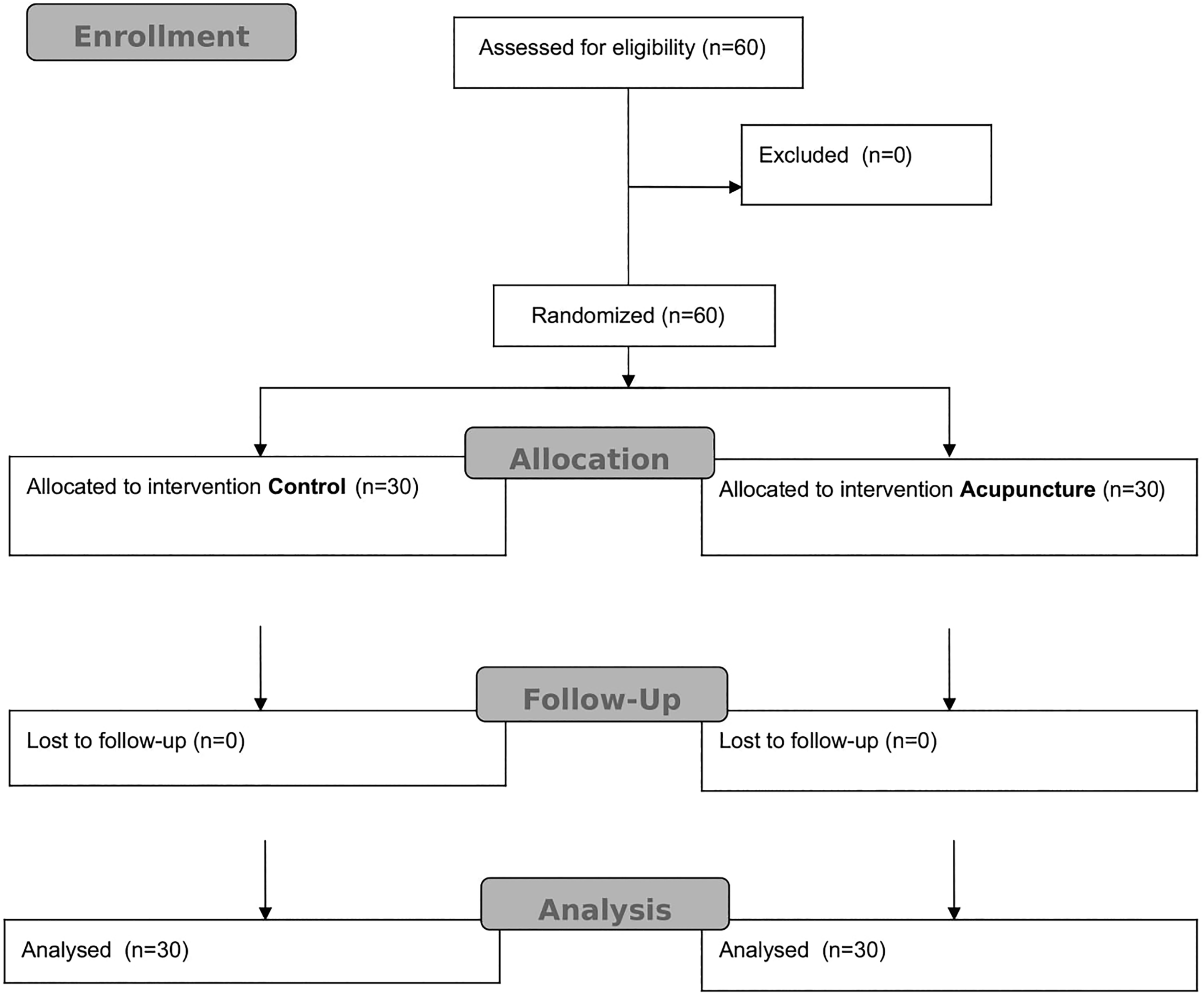
Study flowchart.
Demographic data—including age, gender, BMI, and comorbidities—were recorded. Heart rate (HR) and mean blood pressure (MBP) were monitored in the preoperative waiting room, and baseline values were documented. Baseline anxiety levels in both groups were assessed using the State–Trait Anxiety Inventory (STAI-I) and the Amsterdam Preoperative Anxiety and Information Scale (APAIS), both of which have been validated for use in the Turkish population.19–22
The STAI is a widely used tool for assessing preoperative anxiety. Developed by Gorsuch and Spielberger in 1964, it measures both state and trait anxiety. The STAI consists of two subscales, each containing 20 items: STAI-I (State Anxiety Scale) and STAI-II (Trait Anxiety Scale). STAI-I, also known as the State Anxiety Scale, is used to evaluate the individual’s current level of anxiety.
The APAIS is another widely used instrument for assessing preoperative anxiety. It consists of six items related to surgical procedure and anesthesia. Each item is rated on a five-point Likert scale ranging from 1 to 5, where 1 indicates “none” and 5 indicates “extreme.” The total score is used to quantify the patient’s level of preoperative anxiety.
Data collection
Control group
The anxiety levels of patients in the control group were assessed using the STAI-I and APAIS scales upon their arrival in the preoperative waiting room. Following this assessment, they received standard care. After a 20-min observation period, the STAI-I and APAIS forms were completed again, and anxiety levels were reevaluated. HR and MBP were recorded at baseline (T0) and at the 20th minute (T1) prior to surgery.
Acupuncture group
Patients in the acupuncture group received treatment at the Yintang and DU20 acupoints—known to be effective in anxiety reduction—using 0.25 × 25 mm acupuncture needles (Fig. 2). The procedure was performed by an experienced anesthesiologist certified in acupuncture. The needles remained in place for 20 min during the preoperative period. At the end of the intervention, the STAI-I and APAIS forms were readministered, and anxiety levels were recorded. HR and MBP values at T0 and T1 were also documented.
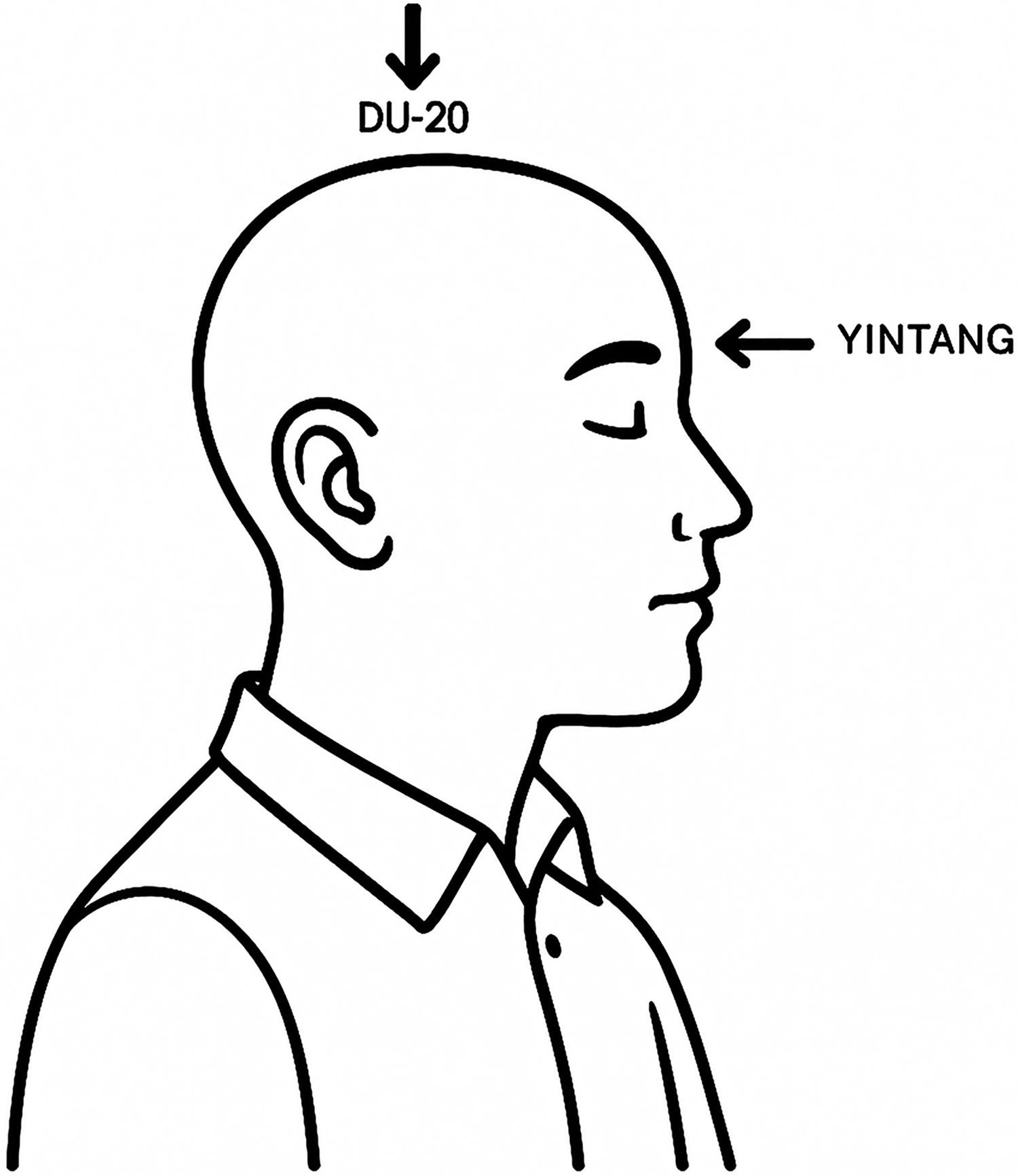
Acupuncture points.
In both groups, patients were monitored following admission to the operating room, and a standardized general anesthesia protocol was administered by the same anesthesia team. All patients underwent laparoscopic sleeve gastrectomy, performed by the same surgical team from the general surgery department.
Intraoperative HR and MBP values were recorded at 0, 5, 15, 30, 60, and 120 min.
Sample size and data analysis
The sample size calculation was based on a recent meta-analysis that demonstrated a 37% reduction in STAI scores following acupuncture, confirming its effectiveness in reducing preoperative anxiety. 18 It was determined that 29 patients per group (58 in total) would be required to achieve a statistical power of 80% with a significance level of 5%. To account for potential data loss, the final sample size was increased to 30 patients per group.
Continuous variables were expressed as mean ± standard deviation, and categorical data as number and percentage. The homogeneity of continuous variables within the group was tested by the Kolmogorov–Smirnov Goodness of Fit Test. Student’s t test was used for comparisons between two groups for data fitting the normal distribution, and the Mann–Whitney U test was used for comparisons of data not fitting the normal distribution. Repeated measures ANOVA test (post hoc: least significant difference test) was used to analyze more than two repeated measurements in within-group comparisons. Chi-square test and Fisher’s exact test were used to compare categorical data. Analyses were performed with IBM SPSS Program version 26.0 (SPSS Inc., Chicago, IL, USA). Statistical significance level was considered as p < 0.05.
Results
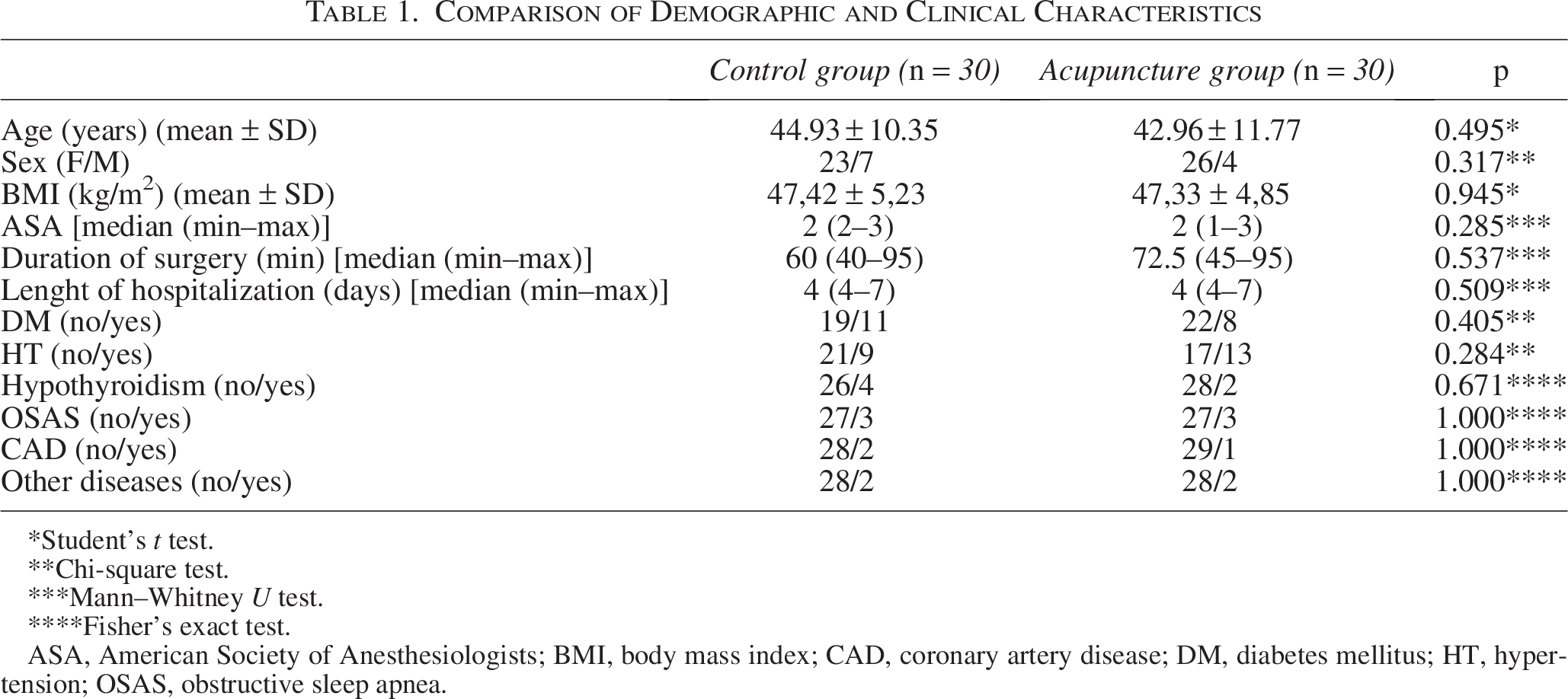
There were no statistically significant differences between the groups in terms of age, gender, BMI, comorbidities, ASA classification, operation time, and length of hospital stay (p > 0.05) (Table 1).
Comparison of Demographic and Clinical Characteristics
*Student’s t test.
**Chi-square test.
***Mann–Whitney U test.
****Fisher’s exact test.
ASA, American Society of Anesthesiologists; BMI, body mass index; CAD, coronary artery disease; DM, diabetes mellitus; HT, hypertension; OSAS, obstructive sleep apnea.
Primary outcome: Comparison of APAIS and STAI scores
At baseline, there were no statistically significant differences between the groups in APAIS and STAI-I scores (p = 0.335 and p = 0.964, respectively). However, in the second measurement, both APAIS and STAI-I scores were significantly lower in the acupuncture group compared to the control group (p = 0.004 and p < 0.001, respectively) (Table 2).
Comparison of APAIS and STAI-I Scores

*Student’s t test.
**Paired samples t test.
APAIS, Amsterdam Preoperative Anxiety and Information Score Scale; STAI-1, State–Trait Anxiety Inventory.
In within-group comparisons, no significant change was observed in APAIS scores between the first and second measurements in the control group (p = 0.170). In contrast, the acupuncture group showed a statistically significant decrease in APAIS scores following the intervention (p < 0.001).
Regarding STAI-I scores, a statistically significant increase was observed in the control group at the second measurement compared to the first (p = 0.001), whereas a statistically significant decrease was found in the acupuncture group after the intervention (p < 0.001) (Table 2).
Secondary outcome: Comparison of patients’ physiological responses
At baseline (T0), preoperative HR values were higher in the acupuncture group than in the control group, although the difference was not statistically significant (p = 0.610). At T1, HR values were lower in the acupuncture group compared to the control group, but without statistical significance (p = 0.084). Similarly, MBP values at T0 were higher in the acupuncture group than in the control group (p = 0.161). However, at T1, MBP values were significantly lower in the acupuncture group compared to the control group (p < 0.001) (Table 3).
Comparison of Preoperative Hemodynamic Parameters Between Groups

*Student’s t test.
**Paired samples t test.
HR, heart rate; MAP, mean arterial pressure.
In within-group analyses, HR values increased from T0 to T1 in the control group, but the change was not statistically significant (p = 0.125). In contrast, the acupuncture group showed a statistically significant decrease in HR from T0 to T1 (p = 0.002). MBP values in the control group increased significantly at T1 compared to T0 (p = 0.023), whereas a statistically significant decrease in MBP was observed in the acupuncture group over the same period (p < 0.001) (Table 3).
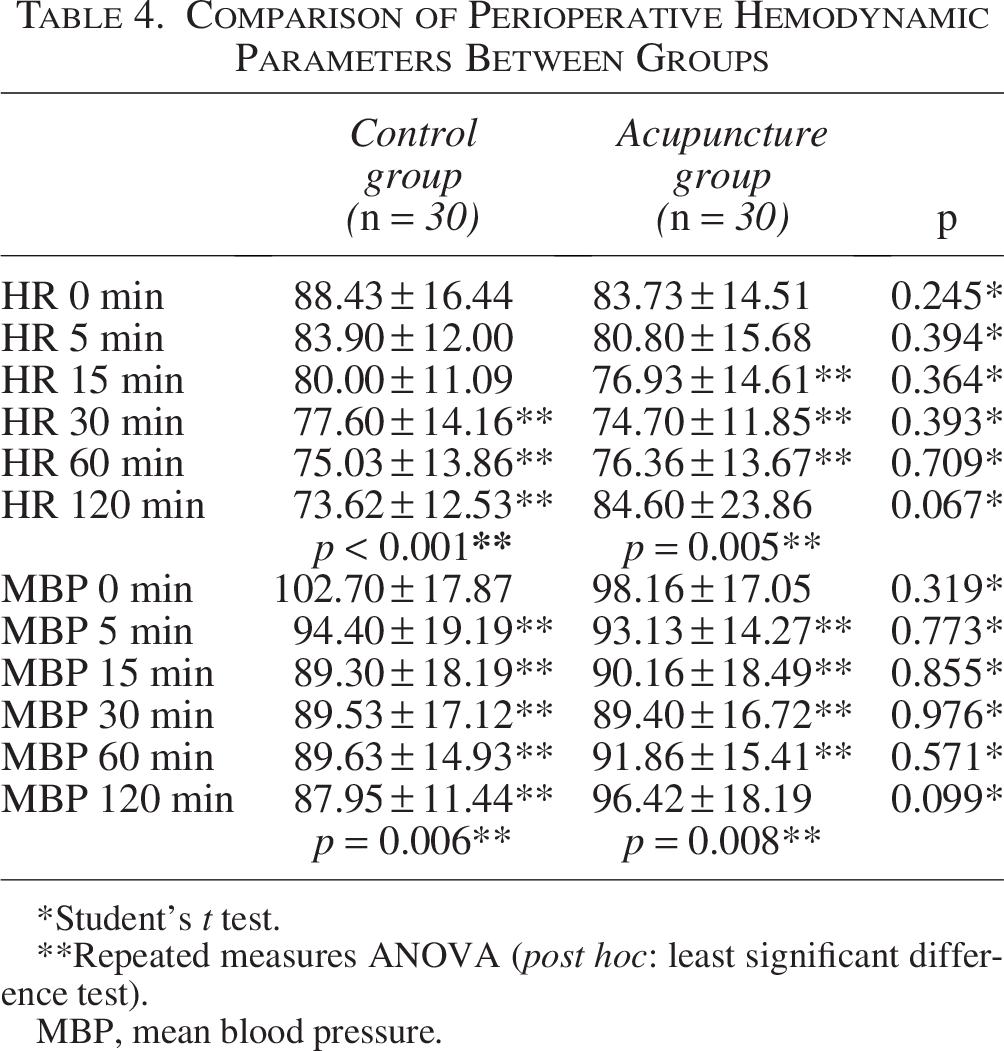
There were no statistically significant differences in intraoperative HR and MBP values between the two groups at 0, 5, 15, 30, 60, and 120 min (p > 0.05) (Table 4).
Comparison of Perioperative Hemodynamic Parameters Between Groups
Student’s t test.
Repeated measures ANOVA (post hoc: least significant difference test).
MBP, mean blood pressure.
Within-group analysis revealed that, in the control group, intraoperative HR values at 30, 60, and 120 min were significantly lower compared to baseline (minute 0) (p < 0.001). In the acupuncture group, HR values at 15, 30, and 60 min showed a statistically significant reduction compared to baseline (p = 0.005).
Regarding MBP, the control group exhibited statistically significant decreases at 5, 15, 30, 60, and 120 min relative to baseline (p = 0.006). Similarly, in the acupuncture group, MBP values at 5, 15, 30, and 60 min were significantly lower than baseline (p = 0.008).
No adverse effects or complications were observed in any of the patients.
Discussion
In this prospective, randomized controlled study involving 60 patients scheduled for bariatric surgery, the effect of preoperative acupuncture applied to the Yintang and DU20 points for 20 min was evaluated. The results demonstrated that anxiety scores, as measured by APAIS and STAI-I, decreased significantly in the acupuncture group. Additionally, a significant reduction in HR and MBP was observed 20 min after the intervention in the acupuncture group. However, there were no statistically significant differences between the groups in intraoperative HR and MBP values. These findings suggest that acupuncture may be an effective nonpharmacological approach for reducing preoperative anxiety in patients undergoing bariatric surgery.
Various acupuncture protocols have been studied in the literature. Zanella et al. prospectively compared acupuncture with pharmacological treatment for the management of preoperative anxiety in patients undergoing cholecystectomy and extraperitoneal hernia repair. 23 One group received no anxiolytic treatment, another received intravenous midazolam, while two other groups were treated with either body or auricular acupuncture. The study showed that preoperative STAI scores decreased in all treatment groups, with both body and ear acupuncture found to be more effective than pharmacological treatment. In the present study, we chose to apply body acupuncture based on its demonstrated efficacy in literature. Different acupoints can be targeted in body acupuncture to alleviate anxiety, including the Yintang point, located between the eyebrows, which is traditionally associated with mental balance in Chinese medicine. A review of the literature reported that acupuncture applied to the Yintang point in the preoperative setting significantly reduced anxiety levels in patients.24–26
Comparable to our findings, previous studies have evaluated the effectiveness of the Yintang acupoint on preoperative anxiety. For example, Wiles et al. demonstrated that acupuncture applied to the Yintang point for 30 min in patients awaiting neurosurgical procedures resulted in a significant reduction in preoperative anxiety levels. 27 In our study, we also utilized the Yintang point, along with the DU20 point, based on their established anxiolytic effects in traditional Chinese medicine. Our findings showed that, in the control group, APAIS scores remained unchanged in the second assessment, while STAI-I scores significantly increased. In contrast, the acupuncture group exhibited a 29.8% reduction in APAIS scores and a 25.6% reduction in STAI-I scores following the intervention compared to baseline values.
Wunsch et al. applied auricular acupuncture to patients scheduled for gynecological surgery in order to manage preoperative anxiety. Their study reported a decrease in anxiety levels following acupuncture performed the evening before surgery, while anxiety levels increased in the control group between the initial and final assessments. In addition to psychological measures, the study also evaluated preoperative HR, blood pressure, and serum cortisol levels, and found no significant differences between the groups. 28 Similarly, our study observed a significant reduction in anxiety scores following acupuncture administered prior to surgery. These findings support the effectiveness of acupuncture applied at various time points in the preoperative period. However, in contrast to Wunsch et al., we found differences in hemodynamic parameters between groups, which may be attributed to the timing of acupuncture application relative to the surgical procedure.
The timing of acupuncture application appears to play a critical role in its effectiveness on both anxiety and physiological parameters. In a study by Sajadi et al., sham acupuncture was used in the control group while the intervention group received auricular acupuncture immediately before coronary angiography. The authors recorded and compared anxiety scores and physiological parameters before and after the intervention. Their results showed significant reductions in HR, blood pressure, respiratory rate, and anxiety scores in the acupuncture group. 29 While both Sajadi et al. and Wunsch et al. applied ear acupuncture,28,29 the outcomes regarding hemodynamic changes differed. These discrepancies may be attributed to differences in the timing of acupuncture administration. In both our study and that of Sajadi et al., acupuncture was applied shortly before the procedure, potentially mitigating the anxiety-related sympathetic surge that typically elevates HR and blood pressure. These findings underscore the importance of not only the method of acupuncture but also its timing in achieving optimal anxiolytic and physiological effects.
The anxiolytic and physiological effects of acupuncture have been demonstrated in several clinical settings. In a recent study involving patients scheduled for open-heart surgery, acupuncture was applied at Yintang (EX-HN3), Shenmen (HT7), and Fengchi (GB20) points over 2 consecutive days, while the control group received sham acupuncture. As a result, while no statistically significant change was observed in the sham group, the researchers found that anxiety scores, systolic blood pressure, and HR values decreased significantly in the acupuncture group. 30 The findings revealed significant reductions in anxiety scores, systolic blood pressure, and HR in the true acupuncture group, whereas no statistically significant changes were observed in the sham group. Consistent with the literature, our study demonstrated that acupuncture significantly reduced preoperative anxiety scores, as well as HR and blood pressure. These findings reinforce the evidence that both auricular and body acupuncture are effective in reducing anxiety-related sympathetic activation in surgical patients.
Supportive results are also obtained from studies with the acupressure technique. In a study of patients undergoing abdominal surgery, acupressure at real points (Yintang and Shenmen) led to greater reductions in anxiety and HR than placebo stimulation at sham points. 31 Although both groups showed reductions in anxiety and HR, the improvements were more pronounced in the group treated at true acupuncture points. These findings suggest that acupressure, when applied at validated acupoints, may have clinically meaningful effects in reducing anxiety before surgery. Consistent with these results, our study also demonstrated significant decreases in anxiety scores and HR following acupuncture. According to the findings of Valiee et al., sham acupuncture—similar to placebo pharmacological interventions—can yield partial improvements; however, true acupuncture appears to be substantially more effective in mitigating anxiety and suppressing sympathetic activation. 31
Surgical procedures, anesthesia, and endotracheal intubation are inherently stressful for the body and may trigger a hyperdynamic cardiovascular response during surgery. 32 Preoperative anxiety is also closely associated with fluctuations in blood pressure and HR following the induction of anesthesia.
In the present study, we investigated the effects of acupuncture on preoperative anxiety and its potential secondary influence on intraoperative hemodynamic parameters. Although we observed significant reductions in anxiety levels prior to surgery, no statistically significant differences in blood pressure or HR were found between the groups during the intraoperative period. These findings suggest that while acupuncture may effectively reduce preoperative anxiety, it does not appear to exert a significant impact on intraoperative hemodynamic responses. To date, there are no published studies specifically examining the influence of preoperative acupuncture interventions on intraoperative cardiovascular dynamics.
Meta-analyses evaluating the effects of acupuncture—including needling, acupressure, and electroacupuncture—at various points for preoperative distress support its overall efficacy.8,30,33 Nevertheless, further high-quality studies are warranted to clarify its effects on intraoperative physiological outcomes.
Strengths and Limitations
The main strength of our work is its originality. To our knowledge, no previous randomized controlled trial has specifically investigated the effects of acupuncture on preoperative anxiety in patients scheduled for bariatric surgery. In addition, the fact that all patients underwent the same type of surgical procedure performed by the same surgical team, and that both groups were demographically comparable, increases the internal validity and reliability of the statistical comparisons in our study.
Nevertheless, several limitations should be acknowledged. First, the study did not include a sham acupuncture group. Although sham acupuncture is often used to control placebo effects, some studies have shown that it may produce direct physiological effects as well, which complicates interpretation. 33 Based on these findings, we chose not to include a sham group in this study. Second, multiple intraoperative factors may affect hemodynamic parameters, including depth of anesthesia and fluid management. The absence of bispectral index monitoring and lack of fluid balance tracking may therefore limit the interpretation of intraoperative outcomes.
Conclusion
This study demonstrated that acupuncture is effective in reducing preoperative anxiety in patients scheduled for bariatric surgery. It also appears to attenuate the anxiety-related increases in HR and MBP observed prior to surgery. Acupuncture may be particularly advantageous in obese patients, in whom pharmacological sedation carries increased risks. As a nonpharmacological method, acupuncture is easy to apply, low-cost, well-tolerated, safe, and clinically effective.
We believe that the integration of acupuncture into preoperative care may improve hemodynamic stability and facilitate safer anesthesia management by reducing the need for sedative medications. Given its simplicity and safety, acupuncture may be implemented by trained nurses or physicians as part of routine preoperative protocols. We recommend the inclusion of such nonpharmacological interventions in nursing and medical education to enhance the quality of perioperative patient care.
Authors’ Contributions
Ö.G.: Conceptualization (equal), conducted the project (equal), investigation (equal), and writing—original draft (equal). B.K.: Conceptualization (equal), methodology (equal), resources (equal), and investigation (equal). M.A.B.: Conceptualization (equal), methodology (equal), data analysis (lead), and writing—original draft (equal). H.B.: Conceptualization (equal), methodology (equal), resources (equal), recruited patients, and performed the surgery. N.D.: Conceptualization (equal), methodology (equal), resources (equal), supervision (equal), and writing—review and editing (equal). H.S.: Conceptualization (equal), methodology (equal), supervision (equal), and writing—review and editing (equal). M.B.: Conceptualization (equal), methodology (equal), investigation (equal), conducted the project (equal), and writing—original draft (equal). All authors approved the final version of the article.
Footnotes
Acknowledgments
The authors thank to all participants who allowed them to collect the data.
Author Disclosure Statement
No competing financial interests exist.
Funding Information
No funding was received for this article.
Ethical Considerations
Ethical approval for the study was obtained from the Traditional and Complementary Medicine Ethics Committee of Ankara Gülhane Education and Research Hospital (Approval No: 2022/5, dated October 21, 2022). Written and verbally informed consent was obtained from all participants. The study was conducted in accordance with the principles outlined in the Declaration of Helsinki.
Data Availability
All data presented in this study are available on reasonable request from the corresponding author.