




Abstract
There is an expansion of nuclear power plant control room simulator use beyond traditional operator training. Modern simulator designs require more robust capabilities to serve the diverse needs of multiple user groups including researchers and educators. A common framework for evaluating simulator features to support training, research, and education is critical to ensure future simulators enable research for immediate and future plant modernization and advanced reactor deployment needs. An initial framework comprised of 8 feature categories was developed by reviewing published simulator-based research and analyzing simulator features against research objectives and results. Future research will focus on evaluating the suitability of this framework in characterizing and differentiating simulators across training, research, and education use cases.
Keywords
Introduction
The nuclear industry suffered significant setbacks at the end of the twentieth century following several high-profile nuclear accidents negatively swaying public perception towards nuclear power, and the low cost of alternative and flexible electrical generators such as combined-cycle natural gas plants. However, now the unique capabilities of nuclear power to provide clean energy are promising, especially given the heightened awareness of carbon emissions and their direct impact on climate change. Furthermore, the rising cost of fossil fuels in the face of increasing electricity demands due to economic growth drives the search for alternative sources of cost-efficient energy.
The US has recently enacted policies to combat the global warming crisis to achieve a hundred percent clean energy future with a goal of net-zero greenhouse gas emission by 2050. One of the six sector-specific benchmarks to achieve the greenhouse gas emission target is the generation of 100 percent clean electricity by 2050 (Podesta et al., 2019). President Joe Biden established a more aggressive 2035 deadline (Waldman, 2021). Nuclear energy is the largest source of carbon-free electricity in the US, and nuclear power utilities have a critical role to play in actualizing the carbon-free electricity target set for 2035 (Ulrich et al., 2021).
Aging Nuclear Power Plants
With most of the US commercial nuclear fleet approaching or exceeding their end of life, the US Nuclear Regulatory Commission (NRC) granted license extensions from the original 40 years to 60 years to allow the fleet to continue to operate (Boring et al., 2013). Life extensions require the enhancement of some existing technologies and outright replacement of others. The US Department of Energy (DOE) Light Water Reactor Sustainability (LWRS) program actively supports broad plant license extension research. Therefore, digital instrumentation and control technologies are expected to play a major role in plant modernization.
The Need for Plant Modernization Research
Enhancing safety and efficiency is the imperative goal of plant modernization. Commercial utilities have four paths to upgrade from analog to digital control systems (Naser et al., 2004): piecemeal approach, behind-the-boards modernization, partially modernized, and fully modernized. Fears of a sunk cost and other associated concerns led utilities to adopt a piecemeal approach to control room upgrade (Electrical Power Research Institute, 2005), an approach most unlikely to realize some of the vital benefits of digitalization due to limited scope of digital functionalities known as “digital islands” (Boring et al., 2013). To realize the full benefit of plant modernization, there is a need for a significant amount of human factors research into digital instrumentation and controls (I&C) in conjunction with human-machine interaction (HMI) and human performance.
The US Nuclear Regulatory Commission’s NUREG-0711, The Human Factors Engineering Program Review Model (O’Hara et al., 2012), outlines the process of analyzing human factors issues in the design and evaluation phases of control room interfaces. Simulators support rapid design, usability testing, and verification and validation that are mandated to meet the NUREG-0711 review requirements for a license amendment submission. Therefore, control room simulator-based research is an efficient and expedient strategy to shorten design timelines for digital I&C and allows for flexible iterative development and validation. The remainder of this paper focuses on the use of nuclear power plant (NPP) control room simulators.
Types and Classification of NPP Control Room Simulators
A simulator mimics real processes in part or in full using devices to represent the physical, dynamic, operational, and decision-making elements of the modelled system (Stanton, 1992). Three common characteristics of simulators include an attempt to represent, control, and omit non-essential elements of a real system (Gagne, 1962). There are five major types of simulators based on the degree of representation of the real-world (Clymer, 1981:
Replica simulator
A replica simulator is an exact and full representation of the HMI of a specific NPP control room with its corresponding multisensory environmental components. Replica simulators presents a faithful replica of the HMI, control boards and consoles found in the referenced plant, hence they are also called plant-specific, full-scope, full-scale, or full-task simulators. Training simulators across NPPs in the US are typically of the replica type in line with federal regulations for training simulators.
Generic simulator
A generic simulator is one that represents one of the several general plant designs but is not a replica of any specific NPP control room. Cost and time are some of the greatest considerations driving the choice of generic simulators. For example, GSE Solutions’ Generic PWR (GPWR™) nuclear plant simulator model provides high-definition, real-time simulation that can be used outside of the utility to support public research with less restrictions due to the removal of any proprietary or nuclear safeguarded details.
Eclectic simulator
Eclectic simulators are closely representative of a specific NPP control room but integrate non-representative features. Hence, they are commonly referred to as other-than-full-scope simulators. The HAMMLAB simulator at the Norwegian Institute for Energy Technology is an example of an eclectic simulator due to its integration of advanced digital instrumentation and controls beyond the scope of the referenced plant (Skjerve & Bye 2011). It is used for research on advanced HMIs.
Part task simulator
A part task simulator represents only specific tasks relevant to aspects of a given plant operational system.
Basic principles simulator
A basic principles simulator is a generic and/or part-task simulator which omits many details in the interest of economy and simplicity. Basic principles simulators depict high level system functions via plant overview displays that show operating modes of the main plant systems only, with little or no detailed representation of underlying subsystems. An example of a basic principles simulator is Rancor microworld (Ulrich et al., 2017).
Another way to classify simulators on a wholescale is based on their utility. Generally, simulators are either used for training or research purposes. For a long while, simulators maintained their traditional use for training purposes only, hence their association with the term “training simulator”. Research simulators are used to conduct studies in human performance and HMI, and to validate new plant designs, models, and concept of operations.
Research Simulator in Control Room Modernization
The use of control room simulators for research emerged as analog technologies grew obsolete, necessitating control room modernization activities. Some research was performed using on-site training simulators provided by collaborating utilities, but due to overburdened training simulator schedules, the need for dedicated control room simulators to support research and development activities emerged.
Glasstop simulators offered a promising solution in which virtual analog bays representing the physical control boards can be digitally displayed (Boring et al., 2013). Armed with virtual digital emulation afforded by modern computing, human factors researchers demonstrated the use of simulators as testbeds for validating new plant models, digital control systems, and concepts of operations that might prove difficult (or impracticable) to test in training simulators.
The Halden Man-Machine Laboratory (HAMMLAB) perhaps has the longest history of hosting a full-scope research simulator. The nuclear renaissance of the early 2000s and the onward drive to develop advanced reactors made it more appealing to invest in simulators for research and development purposes. A few notable research institutions with full-scope research simulators in the US include the Idaho National Laboratory’s (INL) Human System Simulation Lab (HSSL; Boring 2020), and the Center for Advanced Engineering Research’s (CAER) Reconfigurable Main Control Room Simulator (RMCRS). Furthermore, NuScale Power’s small modular reactor (SMR) simulator facilitates limited research into plant control room automation (Office of Nuclear Energy, 2022).
Considering the increase in new advanced control room designs in the regulatory approval pipeline, and expansion of NPP control room simulator user groups to include researchers and educators, modern simulator designs are required to possess more robust capabilities to serve the broad needs of multiple user groups. A common framework for evaluating simulator features to support training, research, and education is critical to ensure future simulators enable research and development to support immediate and future plant modernization and advanced reactor deployment needs.
The aim of this study is to identify essential simulator features for both applied control room modernization and more broadly for psychological and human error theoretical research and development. Users’ needs were identified via a systematic literature review of published simulator studies. In general, the literature review sought to answer the following questions:
What are the common features of simulator user groups (i.e., operators, researchers, and educators)?
What capabilities support the common features of simulator user groups?
The literature results were analyzed to derive a simulator feature framework.
Methods
The literature review focused on two types of nuclear power plant simulator studies: experimental studies and report papers. Experimental studies assess the performance of a human operator and/or system(s) using an NPP simulator. Report papers delineate the features, functionalities and supporting capabilities of simulators developed for training, research, and educational purposes.
Inclusion and Exclusion Criteria
Articles were included if they met any of the following criteria:
Describe an experiment conducted using an NPP control room simulator and licensed operators as participants.
Describe an experiment conducted using an NPP control room simulator and novice operators as participants.
Describe an NPP simulator developed (or in development) to support training, research, or educational needs of users.
An article was excluded if it was published before year 2000, given the nuclear renaissance of the early 2000s. Articles written in any other language other than English were also excluded.
Search Procedure
The search queries were developed using a combination of terms from two broad categories of human performance and control room simulator (Table 1). Terms in the human performance and control room simulator categories were combined using the operators “OR” and “AND”.
Search queries by categories.

The search was conducted in three stages starting with querying electronic directory, followed by expert input and grey literature search, and ended with gathering relevant articles identified in the first two stages. Initial search using the query terms was conducted on Google Scholar and other grey literature searches were carried out on “OSTI.GOV”. Expert inputs and other relevant reports were provided by colleagues within the Idaho National Laboratory (INL), University of Idaho, and NuScale Power.
Results
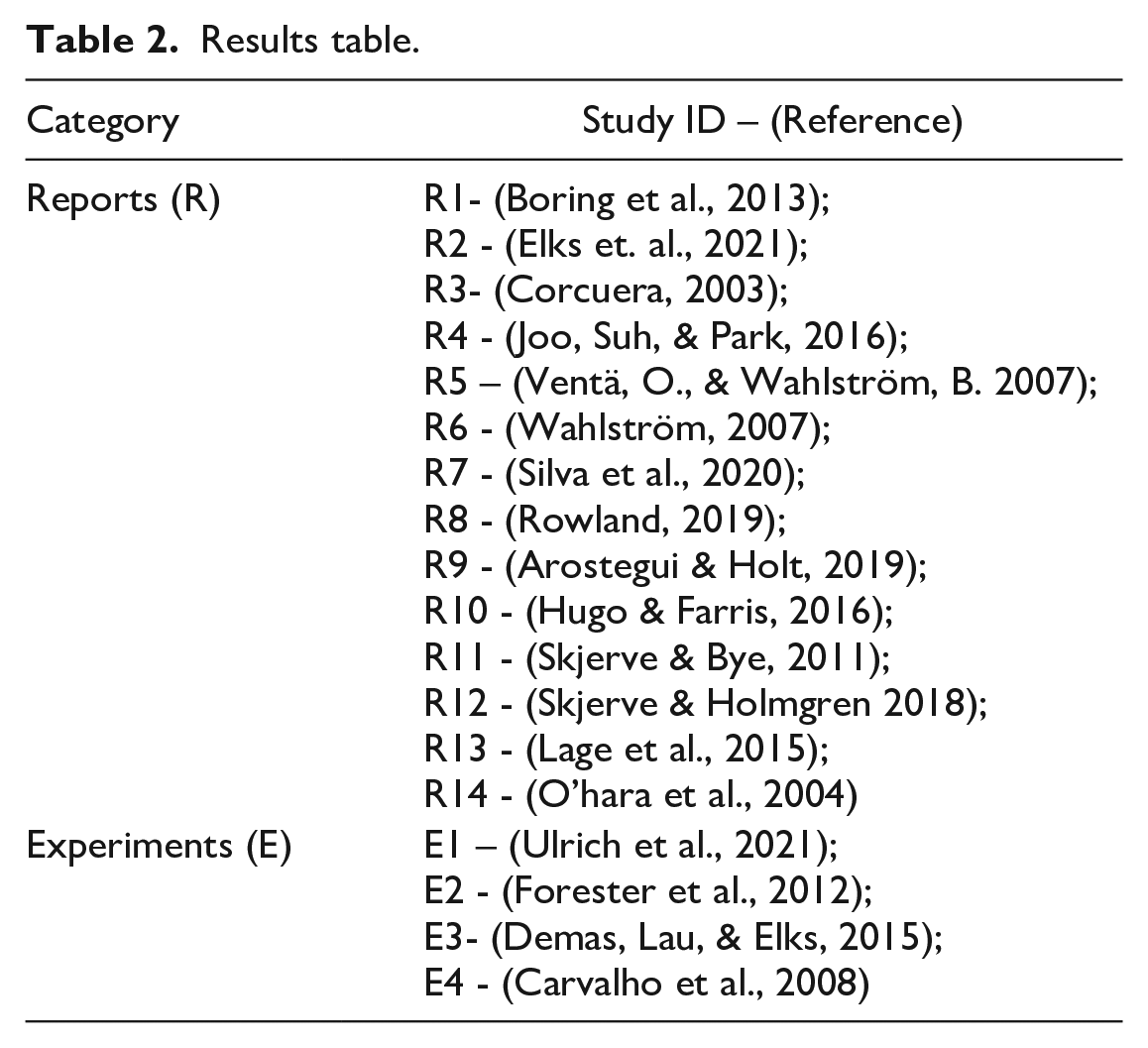
Results from the initial search on Google scholar was limited to the first five pages of output and yielded a total of 106 articles. The grey literature search on OSTI.GOV yielded 37 publications, and 9 internal reports were recommended by experts. Abstracts of all articles generated were screened using predefined selection criteria to arrive at a total of 18 relevant publications (14 report papers and 4 experimental studies). The full text of shortlisted articles (Table 2) was retrieved and studied.
Results table.
Simulator Features & Capabilities that Support User Requirements
Eight simulator features and supporting capabilities required for training, research and education were identified and used to develop a simulator feature framework (Table 3).
Simulator features capability framework.

Reconfigurable simulator software
External validity and ecological validity are of paramount importance to the generalizability of control room simulator studies. The high degree of variability in crew organization and dynamics is a major challenge to the generalizability of control room simulator research findings conducted using replica simulators. Therefore, a reconfigurable simulator software that offers the ability to switch between control room panels of different plant vendors and models is an important requirement for simulator research and education.
Some essential supporting capabilities required to facilitate a reconfigurable simulator software function: digital control and display systems (DCS) of control room panels; client-server software architecture; and server virtualization. The HSSL at INL is an example of a reconfigurable simulator equipped with glasstop to digitally display of plant’s analog control boards using glasstop touch-sensitive panels. The simulator has a client-server architecture where the server stores files and databases of different plant models, and the client device sends a service request to the server over the network. Virtualization of the server enables the user to develop a server environment that can be used to support different plant simulators on a single hardware server (Boring et al., 2013; since expanded with additional features).
Open-source software development model
There are two opposing paradigms in software development—proprietary software and open-source software. An open-source software (OSS) is one with its source code readily available for use, distribution, and modification by the public. Several motivations driving the upward trend in OSS adoption include quality, maintainability, and reliability of the software (Ventä & Wahlström, 2007).
Strong arguments have been presented in favor of OSS in the nuclear industry (Ventä & Wahlström, 2007). The Coordinated Research Project (CRP) of the IAEA on computer security includes the use of non-proprietary, non-restricted and non-confidential data in the designing its research simulator (Silva et al., 2020). Several factors make OSS a critical requirement for control room simulators. First, the high reliability requirements of systems in an NPP requires access to both source code and development history of underlying software for cybersecurity research and reliability studies. Second, larger adoption of open-source software widens the sample size to collect evidence on the performance of software underlying computer-based systems, many of which are still in development and validation stages. Lastly, digital I&C efforts could benefit from reuse of development history of OSS in control room modernization and advanced reactor development efforts.
Integrated human performance measurement system
The ability to collect and integrate real time quantitative and qualitative data on human performance under different conditions is a crucial requirement for control room simulator studies and operator training (Elks et al., 2012). An integrated performance measurement system would enable researchers to set coding schemes for marking behavioral events of interest and integrating measurements from multiple sources (Elks et al., 2012) to give a holistic and meaningful picture of operator performance.
Supporting capabilities required for the effective functioning of an integrated human performance measurement system include: an observation gallery for researchers, process experts, trainers and students to monitor operator activities; multiple measurement systems for eye tracking, physiological measurements, and/or video recording; ability to acquire and integrate complex qualitative and quantitative human performance data; and the ability to synchronize measurements from different sources on a continual basis throughout the experiment. The RMCRS at the University of Virginia’s CAER is equipped with the Noldus XT Observer software system for synchronizing human performance measurements (Elks et al., 2012).
Remote access
Due to huge implementation costs, a single simulator often serves the user needs across multiple institutions. For example, NuScale Power’s SMR simulator laboratory at the Center for Advanced Energy Studies (CAES) in Idaho Falls, Idaho, serves the research and educational needs of CAES members across three universities. Distance may pose a limitation to their effective access to and use of simulators. Also, there is an increase in the extension of non-traditional candidate courses via distant learning as an aftermath of the COVID-19 pandemic (Kang, 2021). Remote access to the simulator is a vital requirement to configure simulator systems, access, and review data for research, training, and teaching purposes. Security is a major capability to support remote access hence, the need for secure virtual private networks and the use of secure appliances.
Cybersecurity support
There is a paucity of research on cyber-attacks and the awareness level of control room operators in identifying, assessing, and mitigating potential cyber threats to NPP operation (Elks et al., 2012). The operator’s ability to detect, assess, and mitigate such cyber-attack threats is an important requirement of modern simulators.
Three essential supporting capabilities are required to enable cyber security research functions in control room simulators: simulation of selected sensors and actuators to model network traffic communication across controls; ability to tag all relevant signals uniquely to enable replacement of simulated block with a physical counterpart to allow hardware-in-the loop (HIL) studies; cyber-attacks scenario configuration for simulating adversarial hijack, for data collection, and network sniffing. Asher NPP Simulator (ANS) is the first coordinated project on nuclear facility cyber security developed to assess physical consequences of cyber-attacks on the plant control systems and the coupling effect of the same on other related controllers (Rowland, 2019).
Representation of advanced concepts of operation
There is a need for conducting proactive research to provide sufficient evidence of the feasibility and safety of advanced operating concepts. Therefore, the ability to represent advanced reactor operating concepts is a vital simulator feature.
Research demonstrating thermal power dispatch (TPD), an advanced concept of operation which seeks to diversify thermal energy produced by nuclear power plants for other industrial use to generate electricity was conducted at HSSL (Ulrich et al., 2021). The ability to model other advanced operational concepts related to the versatility of thermal energy, passive safety, digital instrumentation and control are essential capabilities required to support this feature category.
Human reliability analysis
uman reliability analysis (HRA) is a probabilistic means of determining and quantifying chances of human failure events (HFEs) in complex operating environments. In NPP operations, HRA enables examining the likelihood of operator error across all plant operational states. In traditional HRA, two categories of HFEs are modeled and quantified namely: pre-initiator events, failure to appropriately restore equipment after tests or maintenance, or miscalibration during routine plant operations; and post-initiator events, failure resulting from operator response.
The ability to model cognitive aspects of operator performance under diverse plant operational context, and the potential impact of performance shaping factors may further enhance the accuracy of HRA research. An immediate potential application area of empirical HRA is to study operator performance within the complexities of control room modernization and the likelihood of errors under different plant scenarios.
Scenario configurability across all plant operational states
The main role of the control room operators is to ensure plant safety during all operational state. The operation of a NPP can be categorized into three states: normal operation, outages, and emergencies (Skjerve & Holmgren 2018). The job of control room operators is a highly cognitive task which requires vigilance, attention, memory, decision making and teamwork. Therefore, the ability to configure scenarios across all plant operational states is an essential requirement for operational training, and operator-in-the-loop studies to understand operator performance under different scenarios.
Conclusion
There is an expansion of NPP control room simulator use groups beyond traditional operator training. The need for modern simulator designs to possess more robust capabilities to serve the broad needs of multiple user groups is of the essence. The Simulator Feature Framework provides a common framework for evaluating simulator features to support training, research, and education to support immediate and future plant modernization and advanced reactor deployment needs. Future work to evaluate the suitability of the framework in characterizing and differentiating simulators across training, research and education use cases should be conducted.