



Abstract
As nature is increasingly encountered on screens, we examine how an unscripted slow-TV wildlife livestream, Den Stora Älgvandringen (The Great Moose Migration, DSÄ), supports restoration, well-being, and human–nature connection. In 2024 we fielded an online survey (N = 2,011) and combined reflexive thematic analysis with logistic regressions on theme mentions. Seven themes emerged: Unpredictability/Live, Sensory Immersion, Format Appreciation, Calmness, Authenticity & Realness, Social Engagement, and Well-Being. Viewers described folding DSÄ into daily routines for micro-restoration and companionship; high-fidelity soundscapes and unedited visuals underpinned immersion, while live chat and shared rituals fostered communal co-presence. Modelling indicated modest demographic and attitudinal correlations of theme mentions (e.g., age, access to nature, environmental concern), consistent with multifactorial social phenomena. Together, the findings suggest that slow-TV nature cultivates attentional ease, perceived authenticity, and shared meaning-making that complement direct nature contact. We outline design principles for digital nature content that preserves ecological integrity, supports slow attention, and enables inclusive access.
Introduction
In recent years, the benefits of nature for psychological restoration have received increasing scientific and societal recognition (Bratman et al., 2019). Psychological restoration is an umbrella term (Van Den Berg & Joye, 2019), referring to a multidimensional recovery process in which diminished emotional, attentional, physiological, and social resources are renewed through exposure to particular environmental configurations (Hartig, 2021). These restorative processes include reductions in stress and improve the capacity to direct attention and regulate emotions, contributing to mental well-being and supporting everyday functioning. Yet access to physical nature is unevenly distributed and often limited, particularly in urban and technologically saturated societies. A lack of direct nature contact is often framed as a crisis of experiential extinction that can affect people across the life course, including younger generations with limited access to biodiverse environments (Soga & Gaston, 2016). However, the phenomenon also involves substantial change, as digital technologies increasingly mediate interactions with the world and symbolic, representational, and virtual encounters with nature become more prevalent (Truong & Clayton, 2020). While such experiences may lack the multisensory depth of direct exposure, they can nevertheless foster emotional resonance, reflective engagement, and a sense of ecological awareness (Calogiuri et al., 2018) and therefore contribute to psychological restoration.
Technology-Mediated Experiences of Nature
Technology-mediated experiences play a growing role in shaping perceptions and interactions with nature (Lundquist et al., 2025; Silk et al., 2021). From biodiversity apps and wildlife webcams to immersive gaming environments, digital platforms offer symbolic and vicarious routes into environmental engagement. Augmented reality tools such as PlantNet and Merlin Bird ID facilitate situated learning and interactive encounters with more-than-human life (Truong & Van Der Wal, 2024) and support species-identification learning across age and experience levels, including among adult beginners with little prior knowledge (Pankiv & Kloetzer, 2024). Even when nature is not the explicit focus, the presence of vegetation in video games has been shown to evoke affective and restorative responses across age groups, indicating that symbolic representations can carry emotional and psychological weight (Truong et al., 2018).
Nature documentaries and livestreams add another layer to this mediated landscape. High-profile productions like Our Planet reach global audiences and use compelling narratives to raise conservation awareness (Jones et al., 2019), blending aesthetic immersion with ecological messaging while remaining relatively passive in interactivity. Slow TV diverges significantly from these models by offering real-time, minimally edited footage without scripted narration or dramatic commentary, allowing for prolonged sensory attention and presence (Puijk, 2024). High production values, including multi-camera setups and environmental soundscapes, support a contemplative mode of engagement structured around anticipation and rhythm (Kroon & Nilsson, 2023). In contrast to short-form, fast-paced media, slow TV foregrounds unhurried observation and a non-intrusive way of engaging with the world, inviting viewers to dwell in the present.
Restorative Digital Nature
There is mounting evidence that technology-mediated nature experiences can activate psychological restoration processes similar to those associated with physical environments. Two well-established theoretical frameworks underpin this research: Attention Restoration Theory (ART) and Stress Recovery Theory (SRT). ART posits that environments support recovery from attentional fatigue when they provide soft fascination, a sense of being away, internal coherence, and compatibility with individual inclinations (Kaplan, 1995). Soft fascination refers to a gentle, non-demanding mode of attention that allows cognitive resources to replenish while leaving room for reflection and mental ‘housekeeping’ (Basu et al., 2019). Although originally developed in relation to physical settings, ART has been shown to apply across a wide range of environments. A systematic review confirmed its relevance in diverse real-world contexts (Ohly et al., 2016), and more recent work demonstrates that indirect and symbolic forms of nature, such as photographs or curated digital representations of green space, can evoke comparable restorative dimensions (Wilkie et al., 2020).
SRT emphasises affective and physiological mechanisms through which exposure to nature supports stress recovery, mood regulation, and parasympathetic activation (Ulrich et al., 1991). Here, too, soft fascination plays a role: sustained but non-taxing attention can lower arousal and promote emotional regulation, particularly when paired with self-transcendent emotions such as awe, gratitude, or a felt sense of connection to nature (Basu et al., 2019; Lumber et al., 2017). These emotional responses have been linked not only to subjective well-being but also to pro-environmental orientations and behaviour.
Recent studies suggest that mediated environments designed with these qualities can produce restorative outcomes comparable to those observed in physical nature exposure. Immersive virtual forest environments have been associated with psychological restoration on par with real-world forest experiences when multi-sensory inputs are present (Mattila et al., 2020). Similarly, digital nature environments combining high-quality visual realism with coherent natural soundscapes have been shown to enhance positive affect, perceived vitality, and connection to nature (Calogiuri et al., 2018). The restorative potential of such environments appears to be strengthened by multi-sensory fidelity and ecological richness, including layered soundscapes, dynamic visual cues, and indications of biodiversity, which together support presence, attentional ease, and feelings of being away (Schebella et al., 2020; Stevenson et al., 2018). While these experiences may not replace direct nature contact, they can provide meaningful supplements, particularly for audiences with limited access to physical green space, such as older adults, children with restricted opportunities to roam, or urban residents without easy access to biodiverse environments. However, little is known about how such mediated experiences unfold in everyday life outside of controlled research settings.
Research Rationale
Despite this growing body of evidence, digital nature remains underexamined in terms of its nuanced psychological outcomes and experiential dimensions. Much of the current literature focuses on short-term lab-based studies using controlled simulations or VR environments. Less is known about how longer-form, ambient, and unscripted nature content, such as livestreams or slow TV, contributes to everyday experiences of restoration, well-being, and human–nature connection. Especially in a time when nature (Díaz et al., 2019) and direct nature experiences are under strain, while environmental concern and feelings such as climate anxiety are increasingly common (Lutz et al., 2023), it becomes important to understand how mediated forms of nature engagement function. Few studies have examined how different facets of psychological restoration (e.g., attentional recovery, emotional regulation, sensory presence, and social resonance) are experienced in real-world media settings by diverse audiences.
This raises a broader question: how do slow, immersive digital nature formats contribute to psychological restoration and well-being in lived, everyday contexts? What dimensions of experience are most salient to viewers, and how do these relate to individual backgrounds, motivations, and human–nature relationships?
To investigate these questions, we focus on Den Stora Älgvandringen (The Great Moose Migration; DSÄ hereafter), a flagship example of slow TV adapted to a live ecological phenomenon. Produced by Sweden’s national public service broadcaster SVT, DSÄ has aired annually since 2019, documenting the spring migration of moose through a boreal landscape in northern Sweden. In this programme, the slow-TV format is translated into a seasonal wildlife event, characterised by real-time, minimally edited footage and the absence of scripted narration or dramatic commentary (Kroon & Nilsson, 2023). Rather than compressing time or guiding interpretation, DSÄ foregrounds duration, anticipation, and ecological rhythms.
Although moose crossings form the programme’s focal moments, much of the broadcast consists of extended intervals of ambient observation. During these periods, viewers encounter a biologically rich landscape and multispecies presence unfolding without narrative orchestration. Here, immersion refers not to simulation or virtual enclosure but to a sustained attentional and emotional presence within an unscripted natural environment over time (Lee, 2025). DSÄ has grown steadily in popularity, reaching over nine million streaming hours in 2024, and is widely framed by viewers as a seasonal ritual organised around patience, waiting, and shared attention.
A defining feature of the Swedish broadcast is its participatory infrastructure. Alongside the continuous livestream, DSÄ incorporates curated daily highlights, live chat, quizzes, public contests, and Q&A sessions with scientists and the production team. These features foster a shared viewing culture and collective rituals around wildlife encounters (Kroon & Nilsson, 2023). While international versions have extended the programme’s reach, they typically lack the full integration of livestream, interactivity, and community dynamics found on the Swedish platform. In this study, we examine what viewers of DSÄ find most enjoyable about the programme and how these reported experiences relate to established psychological and relational benefits of nature exposure. Specifically, we ask:
RQ1: What experiential dimensions of DSÄ do viewers most appreciate and recall?
RQ2: To what extent do viewers experience psychological restoration, and which dimensions of restoration are most salient in their descriptions?
RQ3: How do these experiences connect to viewers’ broader sense of the human–nature relationship, as captured through indicators of nature connectedness?
By investigating these questions, we aim to deepen current understandings of restorative digital nature and highlight the potential of ambient livestream formats to support well-being and ecological connection in contemporary media ecologies.
Method
Survey Distribution and Procedure
To explore viewers’ experiences of psychological restoration, well-being, and human–nature connection during DSÄ, we designed an anonymous online questionnaire. The survey was distributed during the 2024 broadcast season through social media, the DSÄ live chat, and nature-focused online communities, and was open to adults who had watched DSÄ for at least one season.
Participation was voluntary, and no personally identifiable or sensitive data (e.g., health status or location) were collected. In line with the GDPR and the Swedish Data Protection Act (SFS, 2018), all procedures adhered to ethical standards outlined by the Swedish Ethical Review Authority. Respondents were informed of their rights, including the ability to withdraw or modify their data at any point, and consented to the use of their responses for research purposes.
Measures
The survey included both closed- and open-ended questions designed to assess viewers’ motivations, experiences, and environmental attitudes.
Respondents
A total of 2,011 respondents participated in the study. Most identified as female (74.8%), followed by male (23.7%), with 1.44% identifying as non-binary or undisclosed. The sample was skewed towards older viewers, with 40.2% aged 65 or over and 24.7% aged 55–64.
In terms of education, most respondents had completed secondary or further education (59.1%), while 19.5% held a bachelor’s degree, 11.1% a master’s degree, and 2.7% a doctorate. Most participants reported spending time in nature weekly (41.1%) or daily (38.7%). Easy access to nature was considered ‘very’ or ‘extremely’ important by 93.6% of respondents. Self-reported environmental concern was generally low (M = 1.26, scale 1–5).
Qualitative Analysis
We analysed responses to the open-ended question ‘What specific aspects of The Great Moose Migration do you find most appealing or different from other nature television programmes and other nature or wildlife-related content?’, using reflexive thematic analysis (Braun & Clarke, 2022) from a critical-realist perspective. This approach is suited to identifying rich experiential patterns in large, naturally occurring datasets.
In line with reflexive thematic analysis, coding was conducted by a single researcher. Within this framework, themes are understood as interpretive outputs of situated analytic engagement rather than objective entities requiring inter-rater consensus (Braun & Clarke, 2022). The emphasis is therefore on reflexive depth and conceptual coherence rather than coder agreement. To enhance analytic rigour, coding decisions were documented through iterative memos, and the development and refinement of themes were discussed with co-authors to support critical dialogue and reflexive challenge.
Coding was iterative and guided by both theory and reflexive engagement with the data. We began with a deductive frame informed by ART, SRT, and recent work on digital nature and psychological restoration (Wilkie et al., 2020). This framework informed four preliminary analytical dimensions that structured the early stages of coding: Emotional Well-Being (reduced stress, relaxation, cognitive clarity, and mood); Individual Well-Being (emotional uplift, companionship, and personal routines); Sensory Immersion (ambient sound, scenic visuals, seasonal change, and moose movement); and Social Engagement (viewer interaction, shared viewing rituals, chat, and broadcast participation).
Through iterative coding and refinement, these preliminary dimensions were reorganised and clarified in response to patterns emerging from the data. Distinctions within the well-being-related dimensions led to the renaming of Emotional Well-Being to ‘Calmness’, capturing stress reduction and attentional settling, and Individual Well-Being to ‘Well-Being’, reflecting broader eudaimonic and relational meanings. The remaining dimensions evolved into their final thematic forms as reported in the Results section.
Exploratory, inductive coding surfaced three additional themes not fully captured by the initial frame but related to characteristics of the show: Authenticity/Realness (perceived genuineness, absence of staging), Unpredictability/Live (appeal of uncertainty and anticipation), and Format Appreciation (enthusiasm for the slow-TV structure and technical approach).
Throughout the analysis, decisions were documented in analytic memos to support transparency and traceability. While coding was not cross-checked by multiple coders, theme development and interpretation were discussed with coauthors, providing critical feedback and supporting analytic reflexivity resulting in more accurate themes. The final thematic structure comprised seven interrelated themes. Each response was then coded for the presence or absence of each theme to create binary indicators for subsequent quantitative analysis. We also examined co-occurrence patterns to explore how themes clustered across responses.
Quantitative Analysis
Themes Predictors
We performed binary logistic regressions (Python: statsmodels 0.12.2; SciPy 1.6.2) in order to assess whether individual characteristics predicted mentioning each of the seven themes. Each theme (0 = not mentioned, 1 = mentioned) was modelled separately as the dependent variable. Predictors were age (Age), gender (Gen), education (Edu), frequency of nature visits (FreqNat), ease of access to nature (AccNat), Inclusion of Nature in Self (INS), and environmental concern (EnvCon). Gender was recorded via the survey platform in multiple categories. For regression analyses, it was recoded as a binary variable (0 = female [reference], 1 = male) to model the contrast between women and men. The non-binary/other category represented a very small proportion of the sample and was therefore not included as a separate predictor in regression analyses to avoid unstable parameter estimates. Interaction terms (Age × EnvCon, FreqNat × AccNat) were included where theoretically justified. Model selection used likelihood-ratio tests and the Akaike Information Criterion (AIC) to favour parsimony, defined as selecting the simplest model (fewest predictors) whose fit is comparable to more complex alternatives (Vandekerckhove et al., 2015).
Model diagnostics included Q–Q and residual-fitted plots, which indicated adequate fit, and variance inflation factors (all < 3) to check multicollinearity. Explained variance was summarised using Nagelkerke’s pseudo-R2, which adjusts the Cox & Snell R2 to allow a maximum value of 1. This rescaling facilitates interpretability on a 0–1 scale and is widely adopted in applied social science research (Bo et al., 2006).
We also performed chi-square tests to examine the association between motivation to watch DSÄ for relaxation/escapism and restoration outcomes, and between INS (recoded as below average vs above average) and restoration outcomes.
Results
Qualitative Analysis
Thematic Analysis
Across the 2,011 survey responses, 81% (n = 1,630) included at least one of the seven identified themes, confirming their relevance and coverage. Most participants mentioned a single theme (49%), while a substantial proportion referred to two (23%) or more (9%) themes.
This was the most frequently mentioned theme. Viewers appreciated the suspense and thrill of not knowing what would happen next, describing DSÄ as offering ‘the unexpected’ and the chance to witness ‘what is happening in our nature right now’. Several noted the appeal of ‘unforeseen events’ unfolding live, which created a sense of immediacy and heightened anticipation.
Many viewers praised the sensory richness of DSÄ, especially the natural soundscape and visuals. The absence of narration or music allowed them to ‘hear the different sounds of nature well’ and feel as though they were ‘sitting in the forest by [themselves]’. Some described the experience as so immersive that ‘you can smell the rain or fir or pine’, while others felt that ‘I get the feeling of being there myself’.
Respondents valued ‘Slow TV’ and ‘having an active control room’. They praised that ‘the production team is interacting with viewers and keeping us up to date’. They also valued the unhurried pace and technical setup.
Restoration was linked to calmness, peace, and relief from stress. Viewers described the broadcast as ‘very soothing’ and ‘a kind of therapy’, with comments such as ‘everything is quiet and peaceful’, and ‘very calming when you are stressed’.
Authenticity was tied to the sense that events were undirected and unedited. Respondents valued ‘real nature’ and ‘undirected nature’, noting ‘nothing is rigged’ and appreciating the chance to ‘discover your own favourite animals and behaviours, rather than having them chosen for you’. The live format made it feel ‘as if you’re experiencing it here and now’.
Social engagement captured the community dimension, especially through chat and shared rituals. Viewers spoke of ‘feeling a sense of belonging with like-minded people’ and described the chat as ‘lovingly supportive without hate’. Some felt ‘with the chat it almost feels as if you are one of the team that really cares for animals, nature, and the environment’, while others appreciated ‘the social media that unites so many people’.
Although less frequent, explicit well-being comments highlighted joy, uplift, and comfort. Viewers wrote, ‘I have never been part of anything like this and I love it’, ‘I just feel good watching it’, and ‘Excited and thrilled, like being out in nature live from the couch at home’. Others spoke of ‘the joy of watching nature’ and feeling they ‘want to contribute’.
Co-Occurrence of Themes
A heatmap of theme co-occurrence (Figure 1) illustrates where multiple experiential themes were mentioned within the same responses. The strongest overlap occurs between Restoration and Sensory Immersion (113 responses), reflecting how calm and mental relief are often tied to the programme’s soundscape and visual qualities. Unpredictability and Format Appreciation also show substantial overlap (151 responses), indicating that live uncertainty is frequently described alongside the slow-TV structure. Social Engagement overlaps notably with Unpredictability (61 responses), suggesting that anticipation of live events is often framed in a shared social context. In contrast, Well-Being shows fewer overlaps, indicating that explicit expressions of happiness and joy were most often articulated as stand-alone remarks.
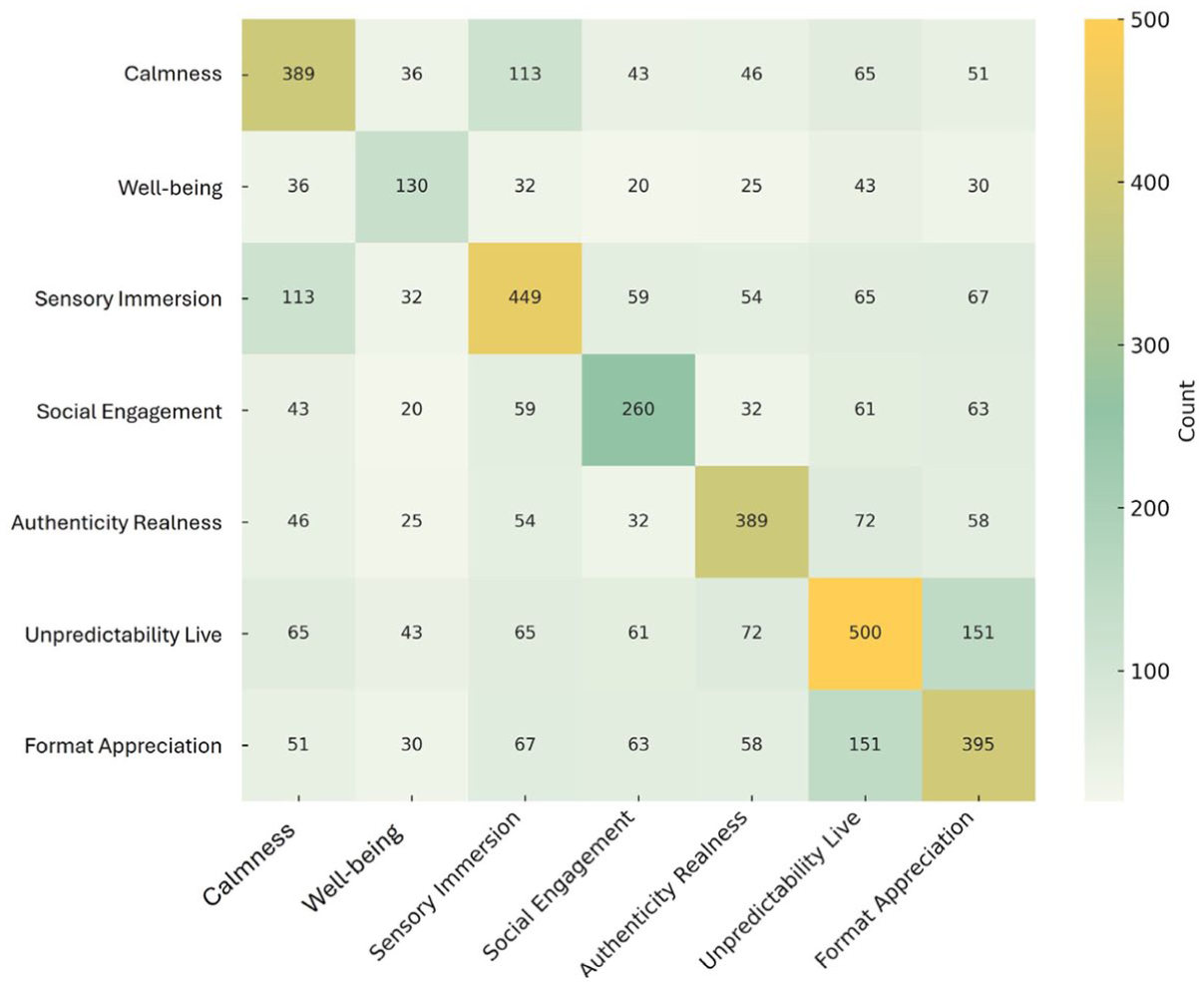
A heatmap of theme co-occurrence.
Quantitative Findings
Descriptive Statistics
Descriptive statistics for key predictors are reported to contextualise the regression analyses. The age variable (coded in six brackets from 18–24 to 65+) was skewed towards older participants (M = 4.70, SD = 1.43). Frequency of nature visits was generally high, with respondents reporting regular contact (M = 1.89, SD = .91, scale 1–5). Ease of access to nature was rated as highly important (M = 4.37, SD = .64). Environmental concern was relatively low on the 1–5 scale (M = 1.65, SD = .89). The mean Inclusion of Nature in Self (INS) score was 5.26 (SD = 1.27) on a seven-point scale.
Theme Predictors
We examined the individual predictors of each thematic experience using separate binary logistic regression models, selecting the most parsimonious model in each case based on AIC and theoretical fit. All predictors were mean-centred, and robust standard errors were used (see Table 1 for details).
Binary Logistic Regression Models Predicting Whether Each Coded Theme Was Mentioned in Viewers’ Free-Text Responses.
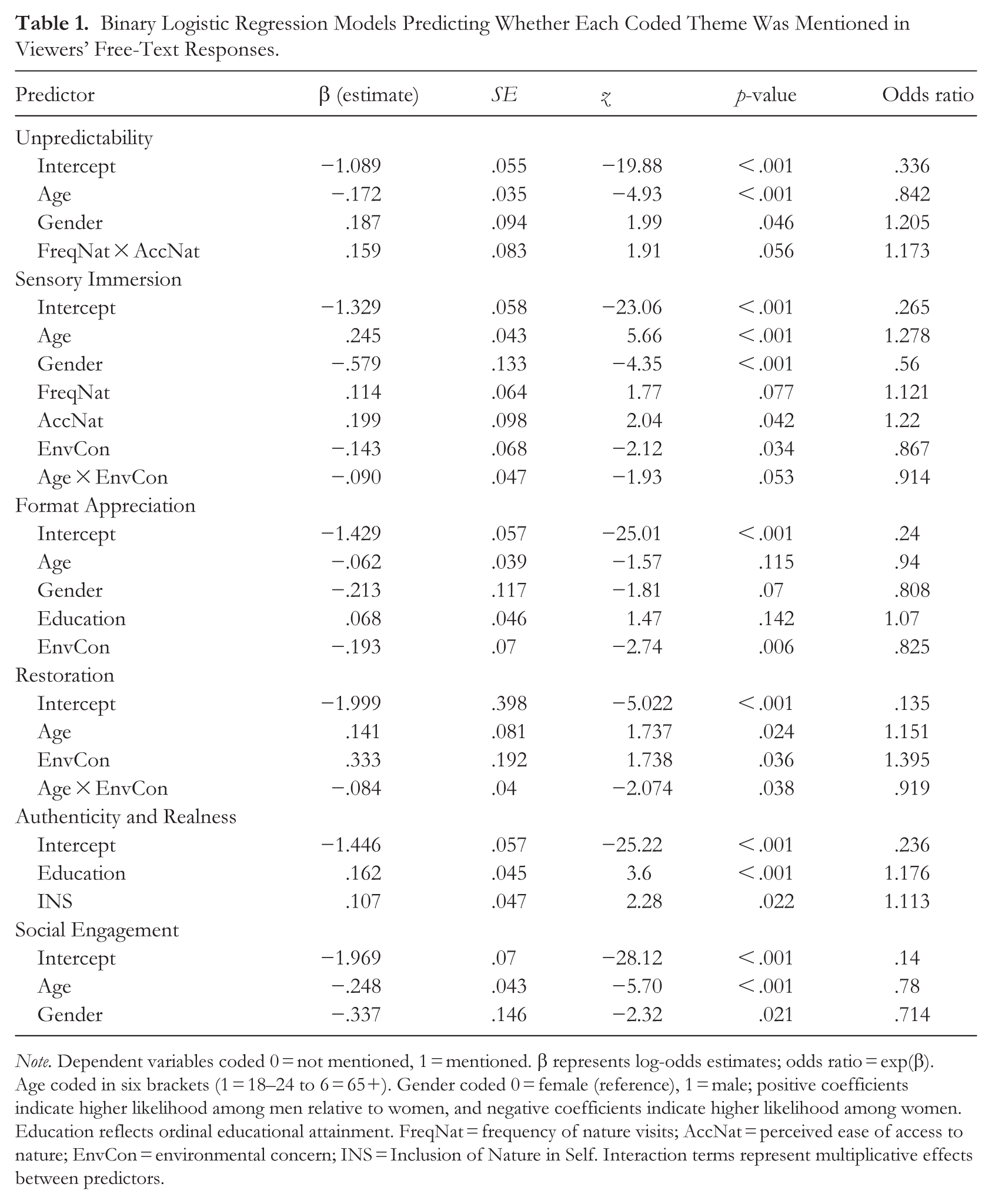
Note. Dependent variables coded 0 = not mentioned, 1 = mentioned. β represents log-odds estimates; odds ratio = exp(β). Age coded in six brackets (1 = 18–24 to 6 = 65+). Gender coded 0 = female (reference), 1 = male; positive coefficients indicate higher likelihood among men relative to women, and negative coefficients indicate higher likelihood among women. Education reflects ordinal educational attainment. FreqNat = frequency of nature visits; AccNat = perceived ease of access to nature; EnvCon = environmental concern; INS = Inclusion of Nature in Self. Interaction terms represent multiplicative effects between predictors.
Discussion
Interpretations below are grounded in theme frequencies and associations observed in the data; the models indicate likelihood of mentioning themes rather than strength or universality of effects. Figure 2 illustrates how key experiential and structural elements of DSÄ combine to support attentional, emotional, sensory, and social dimensions of restoration.
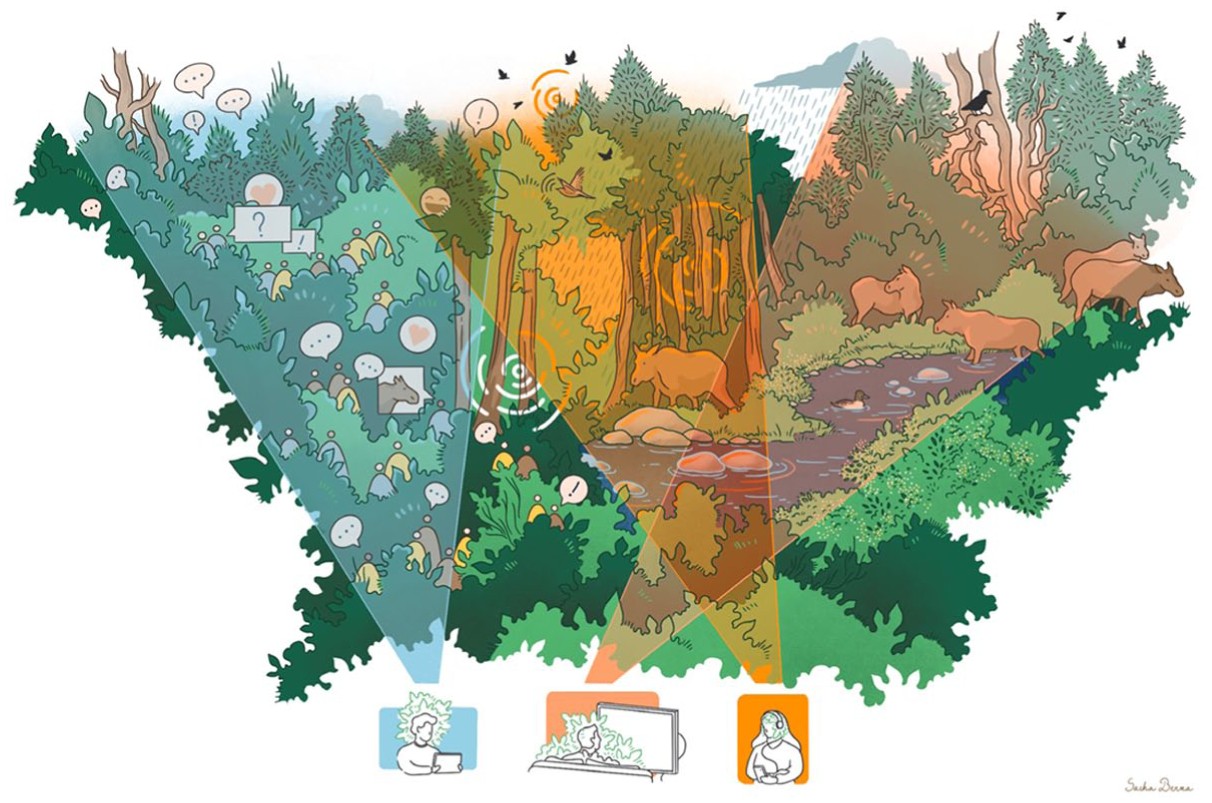
Illustration of how key experiential and structural elements of DSÄ combine to support attentional, emotional, sensory, and social dimensions of restoration.
Temporal Openness, Unpredictability, and Authenticity
A Pleasurable Tension of Waiting
Viewers frequently described DSÄ as an experience structured by what we might call ‘the thrill of maybe’. Long stretches of stillness were not interpreted as uneventful but as imbued with the possibility that something might happen: a moose emerging, a bird call piercing the silence, a change in the weather or on the river’s surface. This form of unpredictability may be central for some viewers, who described the stream as relational or even restorative. As Costikyan (2013) argues in the context of games, uncertainty is not merely tolerated: it is the very structure that makes an experience compelling and meaningful. In DSÄ, respondents often described unpredictability as prompting more attentive and engaged viewing, drawing them into a sense of co-presence with the landscape and wildlife. Crucially, this engagement is made possible by DSÄ’s temporal openness: its refusal to compress or edit time like conventional media do. By aligning with the slow rhythms of the environment rather than the pacing of a narrative arc, DSÄ’s format may foster a mode of alert receptivity that, for some viewers, could feel like inhabiting time differently (Couldry & Hepp, 2017). Rather than undermining immersion, the uncertainty of animal appearances was often described as heightening attentiveness and embodied anticipation. This quiet suspense resonates with what game design researchers term narrative anticipation, a forward-looking engagement that emerges when outcomes remain unknown but meaningful (Weech et al., 2020). Such experiential uncertainty, particularly when tied to subtle environmental cues, can foster cognitive investment and emotional engagement by inviting interpretation rather than scripting response (Power et al., 2019). In DSÄ, this possibility is ecological rather than engineered; it draws its power from the viewer’s shared dependence on time, weather, and the rhythms of more-than-human presence. It may be precisely this lack of narrative control, and the absence of scripting or guaranteed payoff, that renders the experience emotionally credible. In contrast to highly edited nature documentaries, DSÄ’s open-ended pacing supports what scholars describe as perceived authenticity, a key factor in fostering trust, attentional depth, and affective engagement in both media experiences (Rose & Wood, 2005) and restorative encounters with nature (Collado & Staats, 2016). This emotional investment was often described as emerging through waiting, watching, and attuning to the contingencies of a living landscape. The strong co-occurrence between Unpredictability and Format Appreciation indicates that DSÄ’s slow-TV structure is integral to sustaining this tension. By embedding viewers in a temporality that mirrors ecological rhythms, the programme may reinforce a sense of ‘being away’ and ‘soft fascination’ central to ART and SRT, while offering the suspense and attentional stability of a live event unfolding in real time.
Logistic models show that respondents with higher education and stronger nature connectedness (INS) were more likely to mention authenticity as an appealing or distinctive feature of DSÄ. This pattern suggests that credibility judgments may be shaped by both cognitive appraisal and identity resonance, particularly among viewers who see nature as part of the self. This finding directly addresses RQ3 by indicating that viewers with stronger nature connectedness may experience DSÄ not only as credible media but as a format that resonates with their embodied ways of perceiving and inhabiting the natural world (Clayton, 2003; Lumber et al., 2017). These findings should be interpreted as differences in expressed theme salience, not as differences in how much those themes ‘mattered’ to individuals.
In this sense, perceived authenticity is not only a feature of the stream but a co-construction shaped by viewers’ expectations, values, and sensory fluency in reading nature’s cues. This sensory immersion also correlates with frequency of nature experiences, indicating resonance between DSÄ and direct nature encounters.
Media Temporality as Ecological Pedagogy
By adopting the pace of ungulates and boreal spring, DSÄ invites viewers to recalibrate their sense of time, potentially countering algorithmic acceleration and digitally conditioned immediacy. As Odell (2019) argues, resisting the attention economy involves cultivating alternative modes of time rooted in relational presence and bioregional awareness. DSÄ’s slow unfolding may enact such a shift by reorienting viewers towards the durational rhythms of a living landscape, offering time not as a resource to optimise but as something to be shared with other beings. DSÄ can be understood as a form of temporal rewilding that nudges viewers towards perceptual modes attuned to seasonal shifts, quiet waiting, and a sense of deep time beyond digital immediacy. Such an ecological pedagogy of time cultivates patience, sustained attention, and tolerance for uncertainty, capacities increasingly recognised as foundational to ecological awareness and psychological restoration (Richardson et al., 2021). Slowness here can be read not as a lack of action but as a form of temporal ethics, inviting viewers to meet nature on its own terms rather than conforming it to human expectations. This resonates with Van Dooren’s (2014) reflections on the ethical importance of slowing down as a mode of multispecies attentiveness unfolding within ‘the rhythms and ways of life of others’ (p. 6). In his work on extinction and care, van Dooren links temporal deceleration to the possibility of being affected and entering deeper entanglements with the lives of other beings, a sensibility mirrored in DSÄ’s patient, open-ended temporality.
Psychological Restoration Through Digital Nature Experiences
Mental Breathing Room
A substantial proportion of respondents mentioned experiences consistent with calm, clarity, and ‘mental breathing room’ while watching DSÄ. These experiences resonate core mechanisms of ART, particularly soft fascination and being away (Basu et al., 2019; Kaplan & Kaplan, 1989). Others pointed to mood uplift, relaxation, and stress relief consistent with affective and physiological pathways emphasised by SRT (Ulrich et al., 1991).
Everyday Restoration and Routinised Unpredictability
For many viewers, DSÄ’s benefits were embedded in daily routines, short ‘check-ins’ over coffee, between tasks, or before sleep, where live uncertainty worked less as a spectacle and more as a gentle, always possible maybe. This glanceable unpredictability may make restoration feel practicable in brief windows for some viewers. Because nothing is scheduled or forced, even a visit of a few minutes can provide soft fascination and a felt sense of being away, with longer sessions deepening the effect as attention settles into the coherent soundscape and extended shots (Basu et al., 2019; Stevenson et al., 2018). Respondents who watched ‘for relaxation and escapism’ were more likely to mention restoration and sensory immersion, consistent with everyday stress regulation rather than occasional escape. The format’s minimal narration and steady audio allow the stream to sit in the background without demanding continuous focus, so viewers can drift in and out as domestic and work rhythms permit, an accessible practice of attentional resetting that resists the acceleration of digital life (Couldry & Hepp, 2017).
Sensory Immersion and Coherence
Restorative responses were closely tied to the stream’s immersive sensory qualities. Viewers frequently highlighted the unbroken soundscape of birdsong, wind, and flowing water, alongside long, uninterrupted visual takes that allowed them to settle into the environment. This resonates with experimental evidence showing that multi-sensory fidelity, understood as the coherent presentation of visual, auditory, and temporal cues, enhances restoration (Schebella et al., 2020). DSÄ’s unedited pacing and perceptual coherence may therefore support soft fascination, defined as a gentle, undemanding form of attention that leaves mental bandwidth available for reflection (Basu et al., 2019). The absence of narration, music, or rapid edits was often described as reinforcing a strong sense of presence, with viewers reporting that they were watching with rather than at the environment. Responses coded under sensory immersion frequently extended beyond visual and auditory inputs to include imagined tactile and olfactory sensations, such as the ‘feel’ of wind or the ‘smell’ of spring in the forest.
Eudaimonic Well-Being
While many viewers described restorative outcomes aligned with ART and SRT, such as mental calm, reduced stress, and attentional relief, a smaller subset articulated eudaimonic well-being, a deeper, more reflective sense of meaning, vitality, and personal resonance. These responses went beyond momentary mood improvement or cognitive recovery. Instead, they emphasised how DSÄ offered emotional uplift, existential comfort, and a sense of grounding in one’s life, aligning with literature showing that nature experiences, including mediated ones, can support not only hedonic relief but also eudaimonic flourishing through reflection, awe, belonging, and identity reinforcement (Capaldi et al., 2017; Lumber et al., 2017).
Viewers frequently mentioned how DSÄ provided companionship during solitude, served as a ritual anchor in their day, or restored a sense of connection to the wider world. This pattern reflects how the programme becomes embedded in everyday routines and contributes to feelings of stability and connectedness (Von Essen & Truong, 2025). These remarks suggest that the programme’s impact extended beyond attentional restoration into dimensions associated with psychological resilience and existential support, especially among older adults or those with limited mobility. The positive association between age and the likelihood of mentioning well-being outcomes indicates that older participants were more inclined to articulate such experiences in their responses, without implying differences in the underlying intensity of well-being itself. Rather than replacing direct nature contact, DSÄ may serve older viewers as a complementary source of emotional nourishment and continuity that maintains a sense of relational presence within seasonal ecological cycles when mobility diminishes.
Empirically, eudaimonic well-being was the least frequently mentioned theme (130 of 2,011 responses) and showed the lowest co-occurrence with other themes, indicating that these experiences were often expressed as stand-alone meanings rather than in restorative terms. This pattern may reflect value alignment between DSÄ’s multispecies framing and viewers’ environmental worldviews. That environmental concern predicted well-being but not restoration suggests that some viewers experienced DSÄ less as a calming stream and more as a meaningful ecological presence resonating with ethical commitments, with meaning-focused and collective coping supporting well-being without reducing concern (Chawla, 2020; Ojala, 2016).
This divergence may point to a vocabulary gap, in which participants report emotionally significant experiences without using terms common to nature-and-health discourse. Alternatively, it may indicate that for some viewers, DSÄ’s affective power lies less in stress reduction than in its resonance with deeper life meanings. These findings support calls to broaden how we conceptualise the psychological benefits of nature beyond recovery or restoration, towards more life-integrated models of well-being, in which nature, even when mediated, contributes to emotional orientation, ethical values, and existential anchoring (Ives et al., 2017; Rosa et al., 2020). DSÄ’s ambient structure, slow pacing, and multispecies focus may support these outcomes by offering space for both attention and meaning-making. Here, some viewers appear not only calm but also moved or grounded, and in a few cases suggest experiences that may reflect quiet transformation.
Environmental Concern as a Double-Edged Filter
Environmental concern was slightly negatively associated with sensory immersion and showed a dampening interaction with age in predicting restoration, suggesting that higher concern did not consistently amplify restorative responses. Rather than indicating disengagement, this pattern may reflect competing cognitive or emotional processes. A more evaluative or worry-oriented stance towards environmental conditions may interfere with the open, embodied attention that supports immersion and restoration, particularly among older viewers. DSÄ’s recurring, seasonal format may also heighten awareness of ecological change over time. Viewers may notice shifts in species presence, soundscapes, or migration timing, experiences that can evoke emotions such as nostalgia, solastalgia, or anticipatory grief alongside moments of calm and meaning. In 2025, for example, the broadcast season was brought forward in response to earlier snowmelt, a change that surprised both viewers and producers and may become more common under climate change. Such layered emotional responses align with emerging work on ecological grief, which emphasises that concern, loss, and attachment can coexist with moments of comfort and connection rather than displacing them (Pihkala, 2024).
Demographic Patterns and Access to Nature
These patterns were not uniform across viewers. Age moderated both restorative and immersive themes, with older participants more likely to mention these responses, which aligns with evidence that ageing can increase appreciation for slower, contemplative, and emotionally resonant nature engagement (Stevenson et al., 2018). Ease of access to nature in everyday life positively predicted mentioning sensory immersion, indicating an association between everyday exposure and reporting immersive impressions. Women were, on average, more likely than men to mention sensory immersion in their responses. This pattern is consistent with previous research showing that women often engage with natural environments through more affective and sensory-attuned modes that emphasise emotional resonance and felt presence rather than predominantly goal-directed or instrumental orientations (Nurse et al., 2010; Yang et al., 2024). However, our models speak only to differences in expressed themes, not to underlying experiential differences or their causes. Such patterns are also not fixed: studies among children and adolescents show mixed evidence, underscoring the importance of developmental stage, cultural norms, and life context (Basten et al., 2021).
Social Dimensions of Digital Nature Connection
Shared Anticipation and Co-Presence
Social Engagement appeared in 260 responses and most often referred to the live chat and shared viewing rituals around crossings. In the regression models, Social Engagement was more likely mentioned among younger participants and women, with a marginal negative effect of environmental concern and a trend-level association with watching for relaxation and escapism. Effects were modest, suggesting variation in social use rather than a wholesale shift in experience. Co-occurrence with Unpredictability was notable (61 responses), indicating that collective waiting and real-time alerts intensified the pleasurable tension of live uncertainty through a form of mediated co-presence experienced together rather than alone (Couldry & Hepp, 2017). In practice, viewers posted ‘moose crossing alerts’ in the broadcast chat and in Facebook fan communities, and commented on other species, near misses, weather shifts, and camera changes, which turned indeterminate time into a shared activity (Kim et al., 2019). These practices may have helped link exciting moments with quieter intervals, shaping a sense of communal occasion, reinforcing a sense of being there together, and helping to stabilise attention across the day (Jodén & Strandell, 2022). Alongside these peak moments, many viewers also described DSÄ and its chat as a form of light-touch company during work, chores, or evenings. The steady audio and minimal narration allowed them to drift between solitary activity and social co-presence without cognitive overload. This ambient sociability complemented everyday micro-restoration and, for some, supported eudaimonic outcomes such as feeling anchored, accompanied, and connected to a wider seasonal world.
Taken together, these results suggest that DSÄ’s social affordances contribute to restoration by providing social resources within our four-dimensional framing. While classic ART and SRT emphasise individual perceptual mechanisms, our data indicate that co-presence, shared rituals, and light-touch companionship can scaffold attentional settling and mood regulation. We therefore interpret these social dimensions as integral to restorative experience and as support for extending restorative accounts towards relational and social–ecological understandings. Here, digital nature experiences are not only individual perceptual encounters but also socially co-created events, embedded in shared rituals, mediated co-presence, and collective meaning-making.
Limitations and Future Work
Our conclusions rest on self-reported, cross-sectional data, and we did not measure physiological stress markers or track long-term behavioural change. The sample skews towards highly engaged viewers who self-selected via chat and social media, potentially inflating positive sentiment and underrepresenting more casual viewers. The sample was predominantly aged 55 and above, with limited representation of younger adults. As a result, the findings cannot be generalised across age groups, and future research should examine how younger audiences engage with slow media and mediated nature experiences. While this study focused on the Swedish broadcast with the most developed participatory features, comparative research is needed to examine how more stripped-down formats (e.g., RTL+, YLE) shape experiential, social, and restorative dimensions. Across models, Nagelkerke R2 values ranged from approximately .02 to .10, values that are modest but typical for logistic regression in social and psychological research where outcomes are shaped by multiple unmeasured factors. The results should therefore be read as evidence of association rather than strong prediction. This indicates that additional factors, such as personality traits, baseline mental health, or prior experience with slow media, likely contribute to the observed patterns. Given that mediated nature experiences relate to direct nature experiences in their capacity to foster restoration and influence broader orientations towards the natural world, further research is needed to examine how these forms of experience interact over time to shape human–nature relationships, connectedness with nature, environmental concern, and coping with environmental degradation. Future research could also explore how anticipated grief, nostalgia, and awareness of biodiversity loss manifest in viewers’ experiences, and how these emotions intersect with moments of joy, comfort, and continuity. Relatedly, while we coded ‘well-being’ as a thematic category, future work could disentangle its subdimensions – hedonic, eudaimonic, and relational – to clarify what kinds of well-being are most supported by slow-TV nature formats, and for whom.
Conclusive Thoughts
This study shows that DSÄ offers a distinctive form of technology-mediated nature connection, characterised by temporal openness, ecological authenticity, and a blend of individual and social engagement.
In relation to RQ1, viewers most frequently emphasised unpredictability, sensory immersion, and format appreciation as defining aspects of the programme. These findings indicate that DSÄ’s appeal lies not merely in wildlife visibility but in its slow temporality, live uncertainty, and ecological presence. The stream’s open-ended pacing and refusal to compress time appear central to how viewers differentiate it from conventional nature documentaries.
Regarding RQ2, reported experiences align strongly with psychological restoration, particularly calmness, attentional settling, and stress reduction. Sensory immersion, supported by high-fidelity soundscapes and extended, unedited visual sequences, appears to scaffold restorative processes consistent with ART and SRT, including soft fascination and the experience of being away. At the same time, the findings suggest that restoration in this context is not purely individual or perceptual but unfolds within relational and temporal structures that sustain attention and invite ecological attunement.
Concerning RQ3, individual differences in nature connectedness (INS) and environmental concern predicted distinct experiential framings, particularly authenticity and eudaimonic well-being. Viewers with stronger relational orientations towards nature were more likely to interpret DSÄ as meaningful, credible, and identity-relevant. These patterns indicate that mediated nature does not operate uniformly; rather, it resonates differently depending on how individuals position themselves in relation to the natural world.
Taken together, the findings suggest that the appeal of digital nature is not reducible to visual spectacle alone. Its restorative and meaningful qualities emerge through temporal coherence, ecological unpredictability, multisensory immersion, and socially scaffolded attention. These elements allow viewers to experience mediated environments as atmospheres to dwell within rather than content to consume.
From a research perspective, the results underscore the need for further examination of ambient, unscripted digital nature formats, which remain underexplored relative to virtual reality and simulation-based interventions. Longitudinal and ecologically grounded studies are particularly needed to assess how such formats operate in everyday life, especially among older populations who may face barriers to direct nature access. Expanding restorative theories to incorporate communal, relational, and ecological dimensions may offer a richer framework for interpreting digitally mediated nature experiences.
For practice, the findings suggest that broadcasters, public service media, and conservation communicators might design digital nature content that preserves ecological integrity while supporting slow and inclusive engagement. Design features such as high-fidelity soundscapes, species diversity, temporal openness, and carefully moderated social affordances may help sustain attentional depth and ecological curiosity without undermining the contemplative qualities many viewers value.
Ultimately, as encounters with nature increasingly occur through screens, understanding formats such as DSÄ becomes important for shaping a digital ecology that complements rather than replaces direct experience – supporting attentional depth, relational connection, and ecological imagination in an era of environmental strain.