



Abstract
This study aims to test the validity and reliability of the Indonesian version of the Smartphone Addiction Proneness Scale (SAPS) in the adolescent population. This study involved 252 adolescents aged 12–18 years from various high schools in Indonesia. Construct validity test was conducted using exploratory factor analysis (EFA) and confirmatory factor analysis (CFA). Sampling adequacy was confirmed with a Kaiser–Meyer–Olkin (KMO) value of 0.745. While reliability was measured through Cronbach's alpha coefficient, average variance extracted (AVE) value, and composite reliability (CR). EFA identified a two-factor structure. CFA demonstrated acceptable model fit. The Cronbach's alpha value of 0.799 indicates good internal consistency. The Indonesian version of SAPS demonstrates satisfactory validity and reliability for assessing smartphone addiction proneness among adolescents. These findings suggest that the Indonesian version of SAPS can be used as an early screening tool in educational and mental health settings.
Introduction
Problematic smartphone use has emerged as a significant behavioural concern among adolescents, a developmental period characterized by heightened vulnerability to addictive behaviours and difficulties in self-regulation. Excessive smartphone use has been associated with impaired academic functioning, sleep disturbances, emotional dysregulation, and increased psychological distress (Akhtar et al., 2023; Dresp-Langley & Hutt, 2022; Manzoor & Akhtar, 2024; Marta et al., 2020; Pasetyo et al., 2025). These adverse outcomes highlight the importance of early identification of adolescents who are prone to developing problematic smartphone use.
To address this concern, several instruments have been developed to assess smartphone addiction and related behaviours. One of the most widely used instruments for adolescents is the Smartphone Addiction Proneness Scale (SAPS), developed by Kim et al. (2014). SAPS conceptualizes smartphone addiction as a multidimensional construct encompassing impaired adaptive functioning, virtual life orientation, withdrawal, and tolerance. The original Korean version demonstrated strong psychometric properties and has been widely used as a screening tool in adolescent populations.
Evidence from cross-cultural validation studies indicates that the factor structure of SAPS may vary across different cultural contexts. For example, studies conducted in Malaysia (Chan et al., 2022), Thailand (Thawinchai, 2022), and Iran (Fallahtafti et al., 2020) reported modified factor structures, including three-factor and single-factor solutions, rather than the original four-factor model. These findings suggest that cultural and contextual factors may influence the manifestation and measurement of smartphone addiction, underscoring the importance of validating SAPS within specific populations.
In Indonesia, several studies have validated instruments related to smartphone addiction, such as the Smartphone Addiction Scale (SAS) (Arthy et al., 2019) and the Smartphone Application-Based Addiction Scale (SABAS) (Nurmala et al., 2022). However, these instruments differ conceptually from SAPS and do not specifically assess smartphone addiction proneness based on functional impairment, withdrawal, and tolerance as proposed in SAPS. To date, the psychometric properties and factor structure of the SAPS have not been comprehensively examined among Indonesian adolescents, representing an important methodological gap.
Therefore, the present study aims to evaluate the psychometric properties of the Indonesian version of the SAPS in an adolescent population. Specifically, this study examines the construct validity, factor structure, and reliability of SAPS using exploratory and confirmatory factor analyses. The present study addresses the research question whether the Indonesian version of SAPS demonstrates adequate validity and reliability among adolescents.
Methods
Participants and Sample
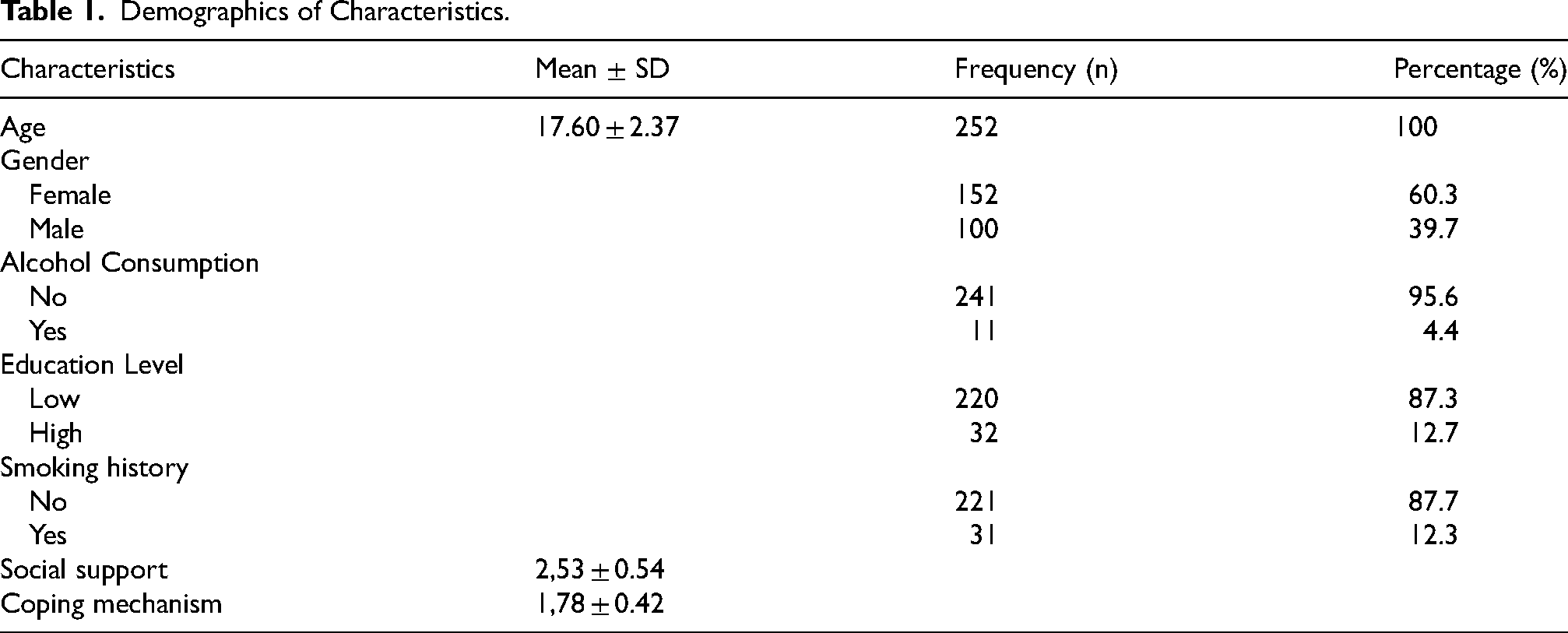
Initially, 300 participants were recruited through convenience sampling from several senior high schools in Indonesia. After data screening, 48 responses were excluded due to incomplete data, resulting in a final sample of 252 adolescents included in the analysis. The final sample consisted of adolescents aged 12–18 years, in accordance with the World Health Organization definition of adolescence. Participants older than 18 years were excluded to maintain developmental homogeneity and consistency with the study title. Convenience sampling was used due to accessibility considerations. Detailed demographic characteristics of the participants, including age, gender, and educational level, are presented in Table 1.
Demographics of Characteristics.
The required sample size for factor analysis was determined based on established methodological guidelines. (Hair et al., 2019) recommends a minimum of 5–10 participants per item for adequate factor analysis stability. Given that the SAPS consists of 15 items, the recommended minimum sample size ranges from 75 to 150 participants. Therefore, the sample size of 252 adolescents used in the present study exceeds these minimum requirements and can be considered statistically adequate for both EFA and CFA. Moreover, previous validation studies of the SAPS in cross-cultural contexts have also used sample sizes ranging from 200 to 350 participants (Chan et al., 2022), further supporting the adequacy of the current study's sample size.
Instrument of the Smartphone Addiction Proneness Scale (SAPS)
The SAPS was originally developed by Kim et al. (2014) and consists of 15 items rated on a 4-point Likert scale. The translation and cultural adaptation process followed standard guidelines. Two bilingual experts conducted forward translation from English to Indonesian. An independent translator then performed a backward translation. An expert panel reviewed the translated version for semantic and cultural equivalence. A pilot test involving adolescents (n = 30) was conducted to ensure clarity and comprehensibility of the items. No major modifications were required.
Confirmatory factor analysis (CFA) was conducted using maximum likelihood estimation. Model fit was evaluated using multiple indices, including CFI, TLI, IFI, and RMSEA.
Statistical Analysis
The study used AMOS version 18 and SPSS version 26 and descriptive statistics were employed in this study's data analysis to evaluate the features of every item on the Indonesian version of the SAPS. The mean, standard deviation (SD), skewness, kurtosis, and lowest and maximum scores were used to assess each item. The four-point Likert scale, which is frequently used in psychometric research to gauge respondents’ degree of agreement with particular assertions, was utilized in this instrument, as seen by the lowest and maximum scores for every item, ranging from 1 to 4 (Boone Jr & Boone, 2012).
Reliability
The Indonesian version of the SAPS was tested for construct validity and reliability. The AVE (average variance extracted) and CR (composite reliability) values were used to verify construct validity, whereas item-total correlation and Cronbach's alpha value were the two primary methods used for reliability testing. Additionally, the instrument's temporal stability was assessed using a test-retest test with the intraclass correlation coefficient (ICC) value. Test-retest reliability is considered satisfactory to very good when the ICC score is more than 0.6 (Koo & Li, 2016). Regarding convergent validity, CR assesses the internal consistency of indicators inside a concept, whereas AVE assesses the amount of variance of a construct that can be explained by its measuring items (Shiau et al., 2019).
Factor Structure of SAPS
Items from the Indonesian version of the SAPS were subjected to exploratory factor analysis (EFA). Finding the latent or underlying structure of the construct of smartphone addiction in teenagers and assessing the degree to which SAPS items cluster into theoretical factors were the primary goals of this investigation. The level of sample adequacy for EFA was confirmed through the Kaiser-Meyer-Olkin (KMO) value, indicating that the data were suitable for factor analysis. In general, a KMO above 0.70 is considered very adequate to proceed to the EFA stage. Maximum likelihood for the extraction method and the Promax rotation method.
Items were evaluated based on commonly used retention criteria in exploratory factor analysis. Items with factor loadings below 0.40 or showing substantial cross-loadings across factors were considered for removal (Hair et al., 2019). Based on these criteria, Items 5, 10, and 13 were excluded from the final factor structure. From a theoretical perspective, items 10 and 13 are reverse items, which are known to introduce method bias and increase cognitive burden, especially in cross-cultural contexts. This may lead to inconsistent responses and reduce construct clarity. Moreover, item 5 was considered conceptually redundant with other items measuring functional impairment, which is may decrease the parsimony of the scale. Therefore, removing item 5 improved the overall construct validity, reliability, and factorial structure of the questionnaire.
Construct Validity
CFA is used to test whether the factor structure obtained through exploratory analysis (EFA) is in accordance with the existing data and is theoretically consistent. CFA is the main statistical technique in structural equation modeling (SEM) which functions to test the construct validity of a psychological measurement tool (Brown, 2015). Other fit indices also support the suitability of the model: NFI (Normed Fit Index) = 0.90, IFI (Incremental Fit Index) = 0.93, TLI (Tucker-Lewis Index) = 0.90, and CFI (Comparative Fit Index) = 0.93. All of these values are at or above the recommended threshold (≥ 0.90), the RMSEA (Root Mean Square Error of Approximation) value of 0.06 indicating that the proposed factor structure adequately represents the observed data. Based on the convergence of these fit indices, the measurement model can be considered acceptable and suitable for assessing smartphone addiction proneness among Indonesian adolescents.
Result
Table 1 showed the mean age of this study was 17.60 with a standard deviation of 2.37. Most of the participants are female, about 60.3%. 95.6% No alcohol consumption. And most of the participants have a low education level. 87.7% no smoking history.
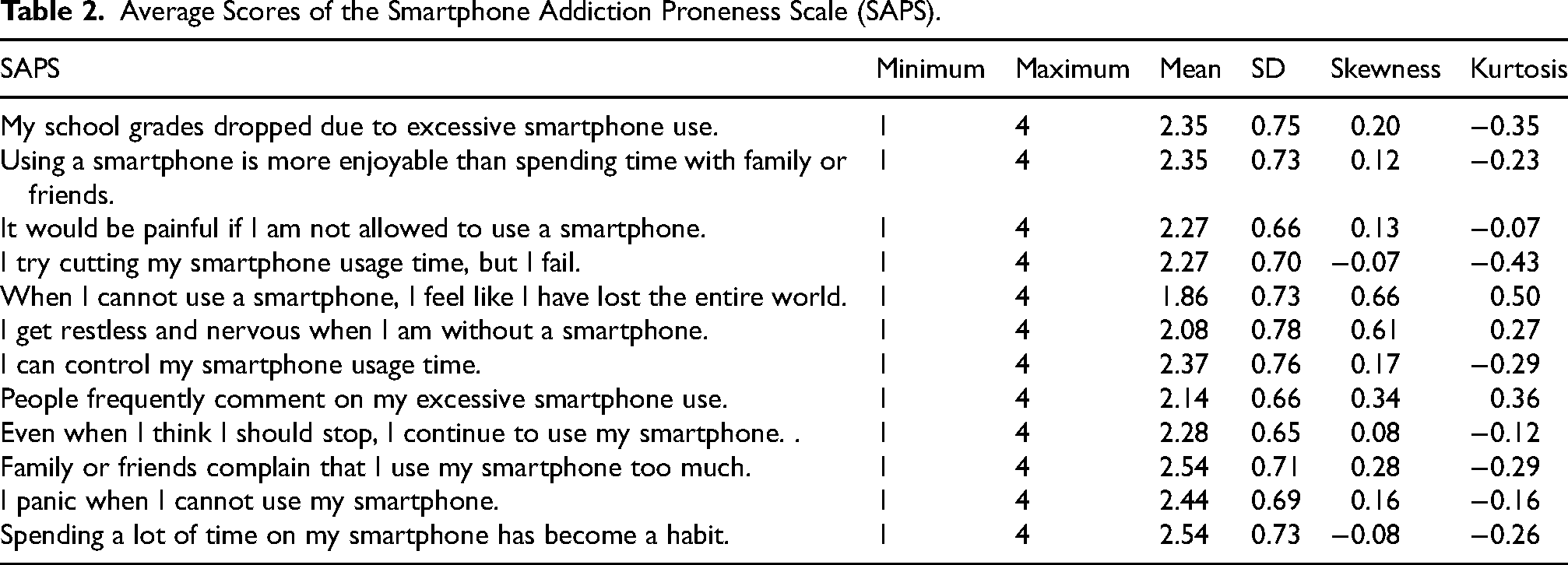
Table 2 shows the mean scores of each item on the SAPS. The highest mean scores were found in the statements “Family or friends complain that I use my smartphone too much” and “Spending a lot of time on my smartphone has become a habit” which had a mean value of 2.54, with standard deviations (SD) of 0.71 and 0.73, respectively. This indicates that the habit of excessive smartphone use that causes complaints from people around is the dimension most experienced by respondents. In contrast, the statement with the lowest mean was “When I cannot use a smartphone, I feel like I have lost the entire world” with a mean of 1.86 and SD of 0.73, indicating that the aspect of emotional loss due to not being able to access a smartphone was not very prominent in this sample. The skewness value shows a value close to zero for most items. The kurtosis value ranges from −0.43 to 0.50.
Average Scores of the Smartphone Addiction Proneness Scale (SAPS).
Reliability and Convergent Validity
Table 3 shows the results of the reliability and convergent validity analysis for SAPS. Internal reliability for the two SAPS factors is considered good with an overall Cronbach's alpha value of 0.799. Factor 1 shows an ICC value of 0.770 with 95% Confidence interval of 0.724 to 0.811. Factor 2 of 0.698, with 95% confidence interval from 0.634 to 0.753 Convergent validity is measured through the AVE and CR (composite reliability) values. AVE values of factors 1 and 2 were 0.35 and 0.40, respectively. And the results of CR 0.80 and 0.70.
Reliability Analysis and Convergent Validity.

Factor Structure of SAPS
The EFA results revealed a two-factor structure, differing from the original four-factor model proposed by Kim et al. (2014). This finding is consistent with several cross-cultural validation studies that also reported modified factor structures.
Table 4 showed the factor loading of SAPS, the result product two factors. Factor 1 consists of 7 items (items 6, 7, 8, 11, 14, and 15), and factor 2 consists of 5 items (items 1, 2, 3, 4, and 12).
Factor Loading of Smartphone Addiction Proneness Scale (SAPS).
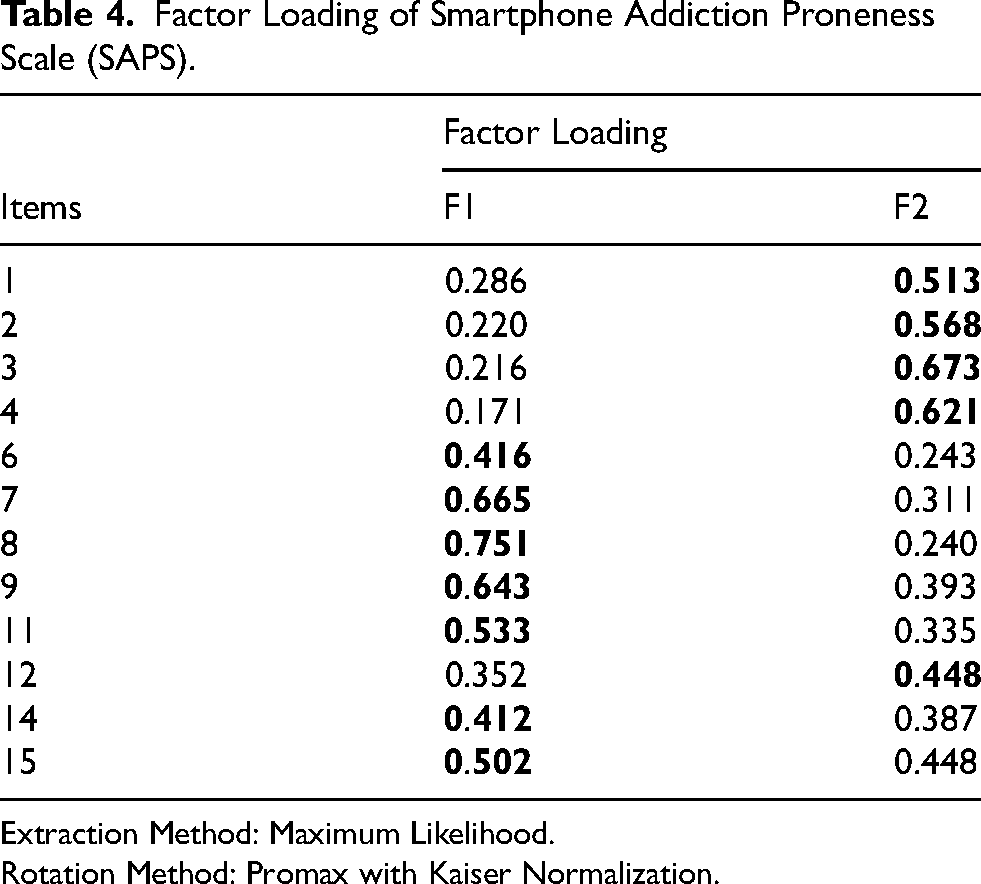
Extraction Method: Maximum Likelihood.
Rotation Method: Promax with Kaiser Normalization.
Construct Validity
The model structure's goodness-of-fit is shown in Figure 1 with Chi-square/df (CMIN/DF) value of 2.089, NFI of 0.90, RFI of 0.82, 0.90, CFI of 0.92, Tucker-Lewis Index (TLI) of 0.90, and RMSEA of 0.06. The emergence of a three-factor structure instead of the original four-factor model does not necessarily indicate a loss of construct validity but rather reflects cultural and contextual differences in the manifestation of smartphone addiction. Previous cross-cultural validation studies have reported similar deviations from the original structure, including three-factor and single-factor solutions (Chan et al., 2022; Fallahtafti et al., 2020; Thawinchai, 2022). In the Indonesian context, several theoretically related dimensions of the original model, such as tolerance and withdrawal, appear to converge into broader constructs representing habitual use and emotional responses to smartphone unavailability. The retention of strong factor loadings, acceptable model fit indices, and adequate convergent validity (AVE and CR) supports the construct validity of the two-factor solution identified in this study.
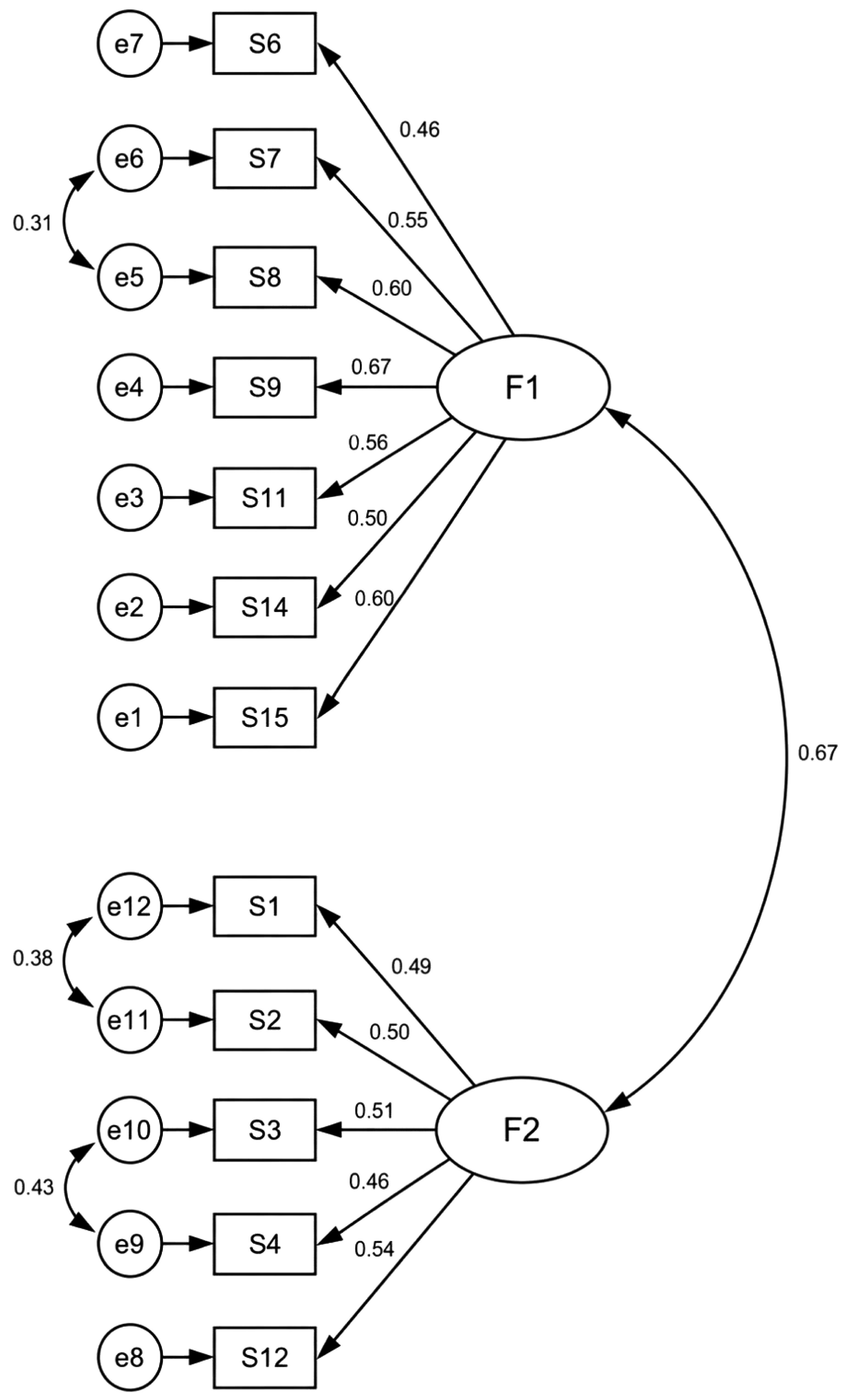
Factor structure of smartphone addiction proneness scale (SAPS). X = 104.473, df = 50, p < 0.001, NFI = 0.90, RFI = 0.82, IFI = 0.92, TLI = 0.90, CFI = 0.92, RMSEA = 0.06, CMIN/DF = 2.089.
Discussion
The present study examined the psychometric properties of the Indonesian version of the SAPS among adolescents. The findings indicate that the scale demonstrates acceptable construct validity and reliability, with a two-factor structure emerging from both exploratory and confirmatory factor analyses. These results suggest that the Indonesian version of SAPS is suitable for assessing smartphone addiction proneness in adolescent populations, while also reflecting contextual and cultural variations in how problematic smartphone use is manifested. Although several items were removed during the exploratory analysis, theoretical examination indicated that the retained items adequately represented the conceptual dimensions of smartphone addiction proneness. The removal of several items did not substantially compromise content validity, as the retained items continue to adequately represent the core dimensions of smartphone addiction pronenesss scale.
The original SAPS was developed by Kim et al. (2014) proposed a four-factor structure consisting of tolerance, withdrawal, virtual life orientation, and impaired adaptive functioning. In contrast, the present study identified two factors: habitual smartphone use, social and self-control disturbance, and emotional reactions to smartphone unavailability. This difference suggests that some dimensions of the original model may overlap or merge when applied to Indonesian adolescents. In particular, elements related to tolerance and withdrawal appear to be captured within broader behavioral and emotional constructs, rather than emerging as distinct dimensions.
Such structural deviations from the original model have also been reported in cross-cultural validation studies of SAPS conducted in Malaysia, Thailand, and Iran, indicating that cultural context and developmental characteristics may influence how smartphone addiction is conceptualized and measured (Chan et al., 2022; Fallahtafti et al., 2020; Thawinchai, 2022). These findings support the view that modifications in factor structure do not necessarily undermine construct validity but instead reflect contextual specificity.
The first factor, habitual smartphone use, reflects repetitive and automatic patterns of smartphone engagement that interfere with daily functioning. This finding is consistent with the notion that habitual use represents a core behavioral component of smartphone addiction among adolescents (Altundağ et al., 2019; Kim et al., 2014).
The second factor, social and self-control disturbance, highlights the impact of excessive smartphone use on interpersonal relationships and self-regulatory capacities. This dimension appears particularly salient in adolescence, a developmental period characterized by heightened social sensitivity and ongoing maturation of self-control. These factors also capture emotional reactions to smartphone unavailability, reflecting affective dependence on smartphone use. Similar emotional response dimensions have been identified in previous studies examining withdrawal-like symptoms associated with problematic smartphone use (Dresp-Langley & Hutt, 2022; Manzoor & Akhtar, 2024). Furthermore, it represents emotional reactions to smartphone unavailability.
The AVE values are below the recommended threshold of 0.50, but the composite reliability (CR) values exceed 0.70, indicating acceptable internal consistency. Following Hair et al. (2019), Convergent validity can still be considered adequate when AVE is below 0.50, but CR is above 0.60.
Overall, the findings support the use of the Indonesian version of SAPS as an early screening instrument for smartphone addiction proneness among adolescents. At the same time, the modified factor structure underscores the importance of conducting rigorous cross-cultural validation when adapting psychometric instruments (DeVellis & Thorpe, 2021). One limitation of this study is the use of convenience sampling, which may restrict the generalizability of the findings, as the sample may not fully represent the broader adolescent population, particularly across diverse socio-demographic backgrounds. Additionally, the cross-sectional design limits the ability to establish causal relationships between variables. Despite these limitations, the study provides important initial evidence regarding the psychometric properties of the Indonesian version of SAPS. Future studies are recommended to use more representative sampling techniques and longitudinal designs to enhance the robustness and generalizability of the findings.
Conclusions
In conclusion, while the Indonesian version of SAPS demonstrates acceptable psychometric properties, the observed differences from the original four-factor model highlight the culturally embedded nature of smartphone addiction constructs. These findings extend the original instrument and contribute to the growing literature on culturally sensitive assessment of technology-related behavioral problems.
Footnotes
Acknowledgements
Thanks to Universitas Muhammadiyah Malang and Taipei Medical University

Ethical Considerations and Informed Consent Statements
This research was approved by the Ethics Research Committee of the Faculty of Health, University of Muhammadiyah Malang, Indonesia, on July 18, 2024 (approval number: E.4.d/009/KEPK/FIKES-UMM/VII/2024). All participants voluntarily agreed to participate in this study after receiving adequate information.
Authors’ Contribution
HDS, MHC contributed to the data analysis, interpretation, and drafting of the manuscript, and FA contributed to the data collection and analysis, interpretation, and drafting of the manuscript.
Funding
The authors received no financial support for the research, authorship, and/or publication of this article.
Declaration of Conflicting Interests
The authors declared no potential conflicts of interest with respect to the research, authorship, and/or publication of this article.
Data Availability Statement
Data shared by request.