



Abstract
Background
Chronic kidney disease (CKD) is a worldwide health concern that may advance to end-stage renal disease, frequently necessitating haemodialysis or alternative renal replacement therapy. This ailment substantially impacts quality of life; however, consistent exercise can assist in managing numerous issues associated with it. Nonetheless, views on the advantages and obstacles of exercise significantly influence exercise behaviour.
Objective
This study sought to investigate the perceptions of benefits and barriers to exercise among CKD patients undergoing haemodialysis in India.
Method
A cross-sectional survey was performed involving 323 haemodialysis patients, who were evaluated using the Dialysis Patient-Perceived Exercise Benefits and Barriers Scale. Descriptive statistics were employed for the analysis of data.
Results
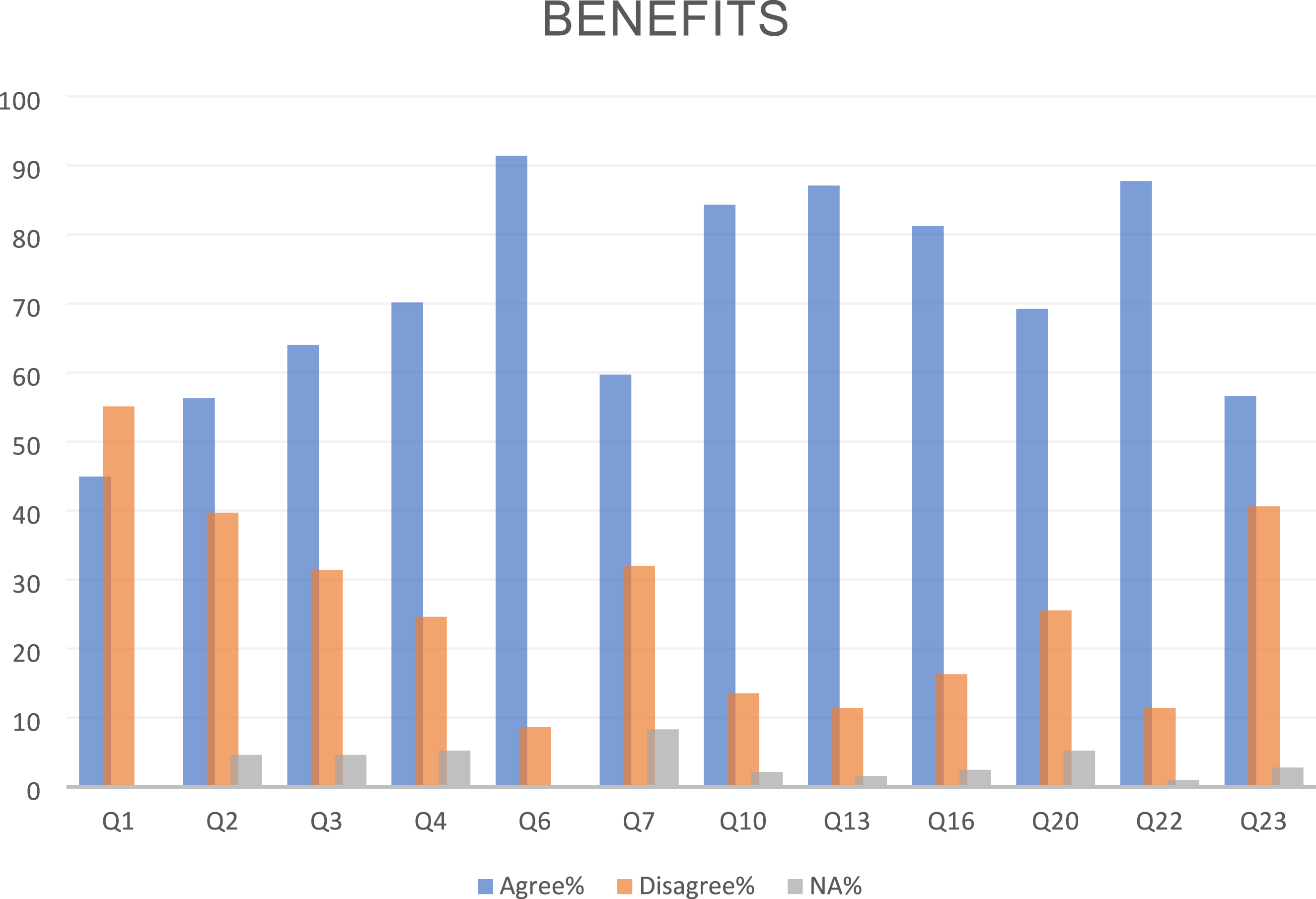
The findings indicated that the most commonly cited advantages of exercise included mood enhancement (91.38%), enhanced self-care abilities (87.69%), motivation for an active lifestyle (87.08%) and heightened appetite (84.31%). The predominant hurdles identified were lower extremity muscle weariness (63.69%), apprehension regarding heightened thirst (64%), persistent fatigue (73.23%) and insufficient information regarding exercise (65.54%).
Conclusion
Although acknowledging the advantages, the majority of patients did not participate in consistent physical activity. The study showed that although CKD patients undergoing haemodialysis recognise the beneficial effects of exercise, such as enhanced mood and self-care capabilities, obstacles such as exhaustion, thirst and insufficient exercise knowledge hinder their ability to integrate it into their daily routine.
Introduction
Chronic kidney disease (CKD) is defined as ‘either kidney damage or a decreased glomerular filtration rate (GFR) of less than 60 mL/min/1.73 m2 for at least 3 months’. It is characterised by a gradual decrease in renal function leading to renal replacement therapy. 1 It is considered a serious public health issue globally, and its prevalence is higher in economically developing nations when compared to developed nations. According to the SEEK India cohort study conducted in 2013, CKD was found to be prevalent in 17.2% of people, with 6% being in third stage or above. 2
CKD is classified into five stages depending on the glomerular filtration rate (GFR) which is as follows. • ‘Stage 1: Kidney damage with normal or increased GFR (>90 mL/min/1.73 m 2) • Stage 2: Mild reduction in GFR (60–89 mL/min/1.73 m 2) • Stage 3a: Moderate reduction in GFR (45–59 mL/min/1.73 m 2) • Stage 3b: Moderate reduction in GFR (30–44 mL/min/1.73 m 2) • Stage 4: Severe reduction in GFR (15–29 mL/min/1.73 m 2) • Stage 5: Kidney failure (GFR <15 mL/min/1.73 m 2: requires dialysis)’.
3
Globally, CKD is primarily caused by diabetes mellitus and hypertension, but in many poor countries, glomerulonephritis, infection and exposure to biological hazards such as airborne pollutants, herbal medications and insecticides are also considered to be contributing factors. In India, 40%–60% of cases of CKD are caused by diabetes and hypertension. 4
An irreversible decline in kidney function in CKD patients eventually leads to end-stage renal disease (ESRD) requiring Renal Replacement Therapy (RRT). ESRD has an age-adjusted incidence rate of 150 per million population in India, and over 100,000 new patients enter renal replacement therapies (RRTs) or programs each year. 2
RRT encompasses all the approaches that provide artificial mechanical support for renal function and it includes peritoneal dialysis, haemodialysis, hemofiltration and renal transplantation. The most desired form of RRT is renal transplantation, but it can be difficult to find a suitable kidney donor. The most frequent method of therapy is haemodialysis, which assists the kidney in two of its vital functions: toxin elimination and fluid balance. 5
Haemodialysis can help people with ESRD live longer and reduce their uraemic symptoms, but it does not stop the disease from progressing. As a result, patients suffer from various complications, such as reduced cardiovascular endurance, reduced muscle strength and function, depression and an increase in the risk of falls. This results in lack of physical activity, more hospital stays and higher costs for both patients and healthcare providers. Eventually, these detrimental effects impair the QOL of haemodialysis patients. 6 Patients with CKD are restricted in every aspect of life including physical, emotional and social due to its treatment and other comorbid medical conditions.
Physical activity levels of CKD patients are considerably low, with just 6% being sufficiently ‘active’ among haemodialysis patients despite its tremendous benefits. 4 One of the key factors influencing dialysis patient’s exercise behaviour is their perception of the benefits and barriers to exercise. Dialysis patients may have different beliefs about the benefits and barriers of exercise due to its clinical course and treatment. The Perceived exercise benefits and barriers are defined as ‘various beliefs regarding positive outcomes of exercise patients’ negative beliefs that prevent them from engaging in exercise and -physical activities’, respectively. 7 The Dialysis Patient-Perceived Exercise Benefits and Barriers Scale (DPEBBS) is a questionnaire that was developed by Jing Zheng and others to measure how exercise benefits and barriers are perceived by the dialysis patients. The questionnaire consists of 24 questions, and the responses are evaluated based on a Likert scale with four points. The overall score ranges between 24 and 96, with a higher number suggesting high perceived exercise benefits and less perceived exercise barriers. 8
Perception of exercise benefits and barriers in patients with CKD who are on haemodialysis has been explored in few countries such as China, Italy, Canada, England, Korea, Jordan and Iran.5,9–12 However, the perceptions and Beliefs may vary in an ethnically and racially diverse population like India and also there is scarcity of data available regarding the perceived benefits and barriers of exercise in patients with CKD undergoing haemodialysis in India. Higher perception of exercise benefits is likely to result in increased engagement in exercise, whereas increased perception of barriers to exercise may discourage people from engaging in exercise. 9 Therefore, it is important to understand the perception of exercise benefits and barriers by CKD patients undergoing haemodialysis in India.
Methodology
A cross-sectional study was conducted at Ramaiah hospitals in Bengaluru which spanned over a period of 11 months between July 2022 and June 2023, with an objective to determine the benefits and barriers of exercise perceived by patients with chronic kidney disease undergoing haemodialysis. A total of 323 participants both male and female aged between 18 and 70 years were recruited based on the sample size calculated with reference to a study carried out by Mansour Ghafourifard et.al based on an estimated ratio of 0.3, a desired precision estimation of 0.05 and a confidence level of 0.95. 5 Patients with significant physical limitations were excluded from the study. Informed consent was taken, and the perception of exercise benefits and barriers was evaluated using the Dialysis Patient – Perceived Exercise Benefits and Barriers Scale (DPEBBS).
Participant recruitment:
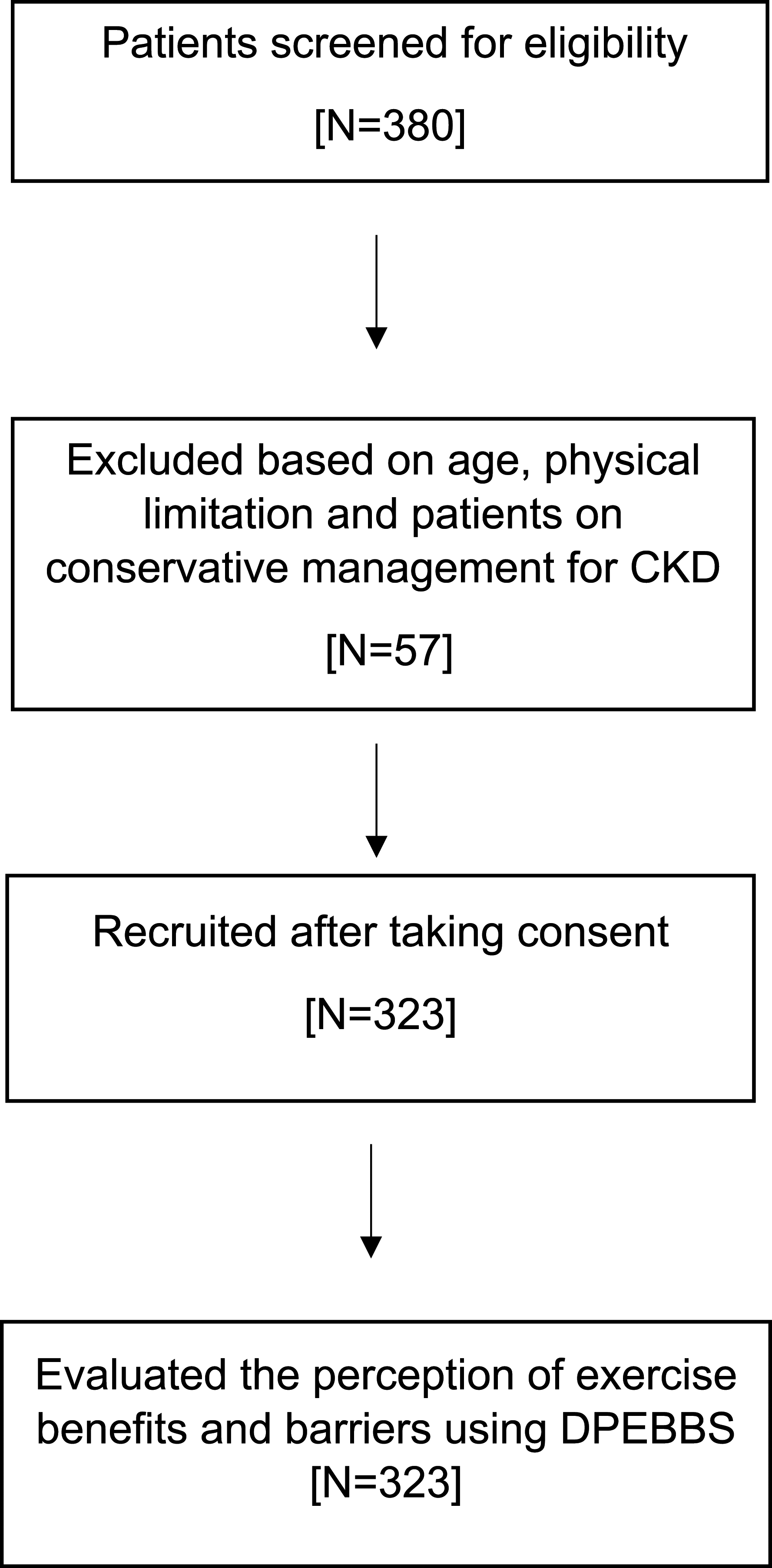
Flowchart of participant recruitment
Statistical analysis
Statistical software SPSS Version 2.0 was used for analysis. Microsoft word was used to generate tables and Excel was used to generate figures. Parametric test (Student t test) was used to analyse the data. The findings of the study were analysed using descriptive statistical methods. Text cloud was made using Microsoft word to represent the open-ended questions.
Results
Descriptive results
Gender distribution.


Distribution of gender.
Duration of CKD and HD
Duration of CKD and HD.

Frequency of dialysis
Dialysis frequency.

Percentage of exercise participation
39% agreed that they exercise regularly, whereas the remaining 61% do not exercise regularly as shown in Figure 2. Participation in regular exercise.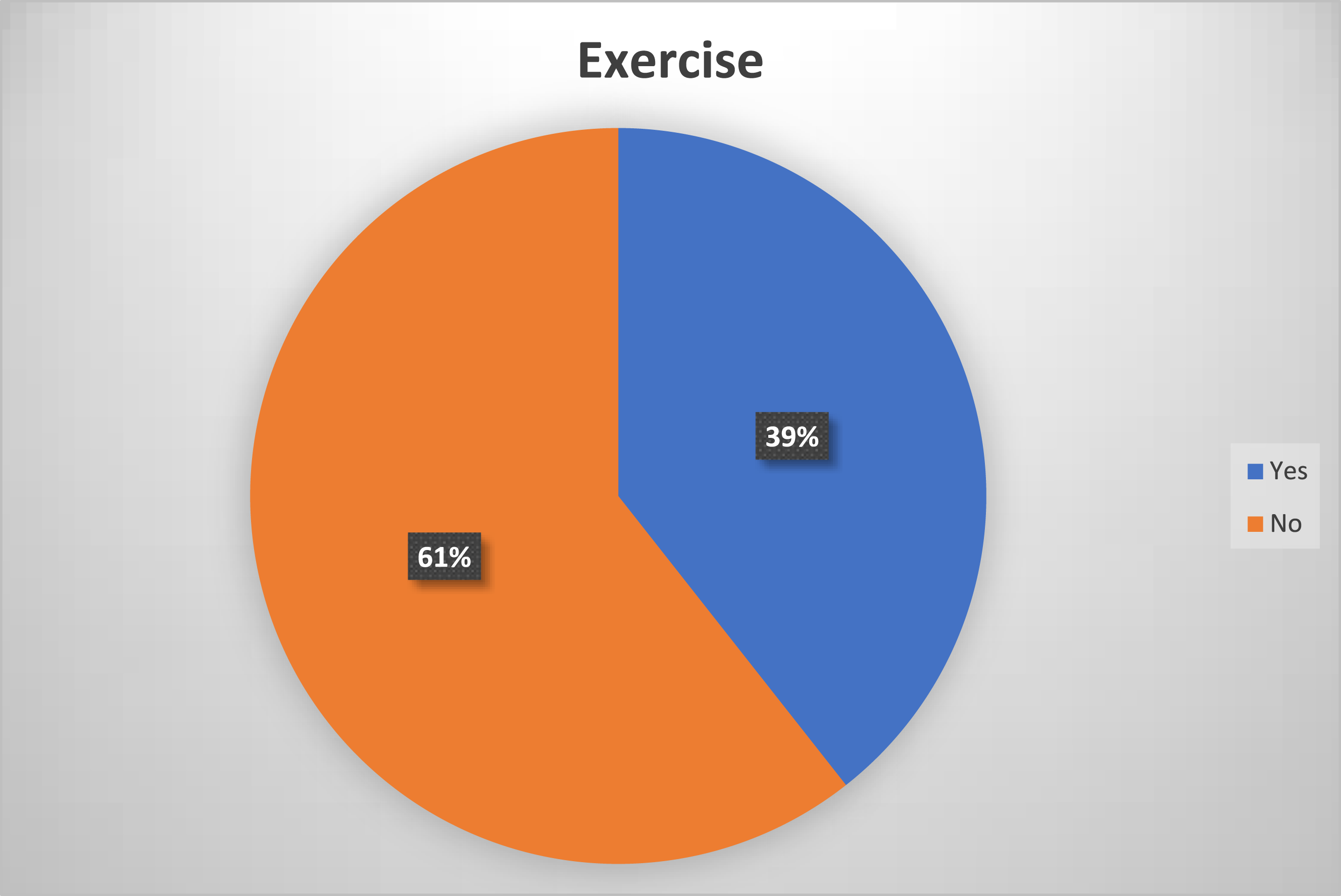
Perception of exercise benefits
The four most frequently perceived benefits of exercise are as follows (Figure 3): 1. Exercise improves my mood: −91.38%. 2. Exercise helps enhance my self-care abilities: −87.69%. 3. Exercise helps me lead an optimistic and active life: 87.08%. 4. Exercise improves appetite: 84.31%. Perception of benefits.
Perception of exercise barriers
The four most frequently perceived barriers of exercise are as follows (Figure 4): 1. Frequent tiredness impedes my exercise participation: 73.23%. 2. Lack an understanding of the knowledge on how to carry out exercise: 65.54%. 3. Worry that exercise might make me feel thirsty: 64%. 4. Frequent lower extremity muscle fatigue impedes my exercise participation: 63.69%. Perception of barriers.

The open-ended question about perceived benefits is represented in text cloud and the reported benefits were improves overall health, fitness, strength, flexibility, digestion and appetite as well as reduces stress, body pain and breathlessness and results in mind relaxation and helps to lead a happy and active life (Figure 5). Text cloud of perceived benefits.
The open-ended question about perceived barriers is represented in text cloud and the reported barriers were pain usually in knee, lower back and legs, tiredness, breathlessness on exertion, weakness, muscle cramps and lack of time (Figure 6). Text cloud of perceived barriers.
Discussion
CKD is a serious worldwide health issue with a growing incidence due to its associated risk factors such as hypertension, diabetes mellitus and hyperlipidaemia. A progressive decline in kidney function eventually leads to ESRD which requires renal replacement therapy such as haemodialysis. Haemodialysis can help people with ESRD live longer and reduce their uraemic symptoms but does not have any effect on the disease progression and leads to several complications such as decreased muscle strength, aerobic capacity and an increased risk of falls which ultimately results in poor quality of life. All these complications can be controlled with regular exercise but physical activity is considerably low in patients. One of the important factors that influences exercise behaviour is their perception of exercise benefits and barriers. In this study, the perception of exercise benefits and barriers was evaluated using the Dialysis Patient Perceived Exercise Benefits and Barriers Scale (DPEBBS). The most frequently reported benefits of exercise were improved mood (91.38%). This result is in accordance with the findings of the study done by Heiwe and Jacobson et al which showed that exercise interventions improved quality of life and psychological well-being. The mood enhancing effect of exercise is linked to the release of endorphins and improved social interaction during group activities. 13 It also enhances self-care abilities (87.69%), helps to lead an optimistic and active life (87.08%) and improves appetite [84.31%]. This result is in accordance with the findings of the study done by Cheema et al which demonstrated that resistance training led to significant improvements in muscle mass and strength in patients undergoing haemodialysis. This enhanced physical functioning contributes to better self-care abilities and a more active lifestyle. 14 The study done by Johansen et al in 2006 reported that the exercise interventions were associated with better nutritional status and increased lean body mass in CKD patients. 15
Improved overall health, fitness, increased muscle strength and flexibility along with improved digestion, relieved stress and reduced body pain were the other benefits reported when asked as an open-ended question. The findings of this present research are consistent with results of previous studies done in Iran by Mansour Ghafourifard et al and in Australia by Jayaseelan et al where exercise improving mood and appetite were the frequently perceived benefits.5,16 A study done by Painter et al in the year 2000 found that exercise training improved peak oxygen uptake and cardiovascular function in haemodialysis patients, which is associated with reduced morbidity and mortality. 17 The current study’s findings also suggest that more than 50% of the patients agreed for the other remaining benefits of exercise mentioned in the DPEBBS questionnaire except for reduces total medical cost (44.92%). The reason for patients not perceiving reduction in total medical costs as a benefit of exercise can be attributed to dialysis cost and travelling expenditure to hospital for dialysis. This study suggests that patients with CKD on haemodialysis have a favourable opinion about the benefits of exercise.
However, most of them (61%) reported that they did not engage in exercise regularly and the 39% who agreed that they exercised regularly considered walking as a form of exercise and reported walking as the type of exercise they do regularly. The reason for not engaging in exercise despite a positive perception about exercise could be attributed to barriers of exercise. The most frequently perceived barriers in the present study were frequent tiredness (73.23%), lack of knowledge on how to carry out exercise (65.54%), worry about feeling thirsty (64%) and lower extremity muscle fatigue (63.69%). The other reported barriers were body pain particularly in legs, back and knee, breathlessness on exertion, muscle cramps, weakness and lack of time. The findings of this present research are consistent with results of previous studies conducted in China by Jing Zheng et al, in Iran by Mansour Ghafourifard et al and Muhammad W. Darawad et.al in Jordan where they found tiredness as the most frequently perceived barrier.5,9
As substantial number of patients (65.54%) agreed that they lack understanding about how to exercise, educating them about the appropriate frequency, intensity, duration and type of exercise recommended for CKD patients on haemodialysis could help in increasing their exercise participation. This finding is in accordance with the study done by Delgado and Johansen et al in 2012 where they found that lack of knowledge and safety and effective exercise can be a significant barrier. 18 Therefore, greater exercise participation can be facilitated by promoting the benefits perceived and by addressing the barriers perceived.
Conclusion
Even though the patient know that exercise has many benefits, like making them feel better, enhanced self-care abilities and increase appetite, most people with CKD who are on haemodialysis do not do it regularly. This lack of participation is partly due to the most common observed barriers, such as being tired all the time, not knowing how to exercise, being worried about getting thirsty and tired muscles in the lower limbs. Targeted treatments are needed to get rid of these problems, and the study shows that patients need to be taught about safe and effective ways to exercise. Health care professionals can get this group of people to exercise more by pointing out the benefits and removing the obstacles. This could improve their general quality of life.
Limitation
The study is based on data that individuals report about themselves, which can be influenced by biases such as the tendency to present oneself in a socially desirable manner and the potential for memory inaccuracies. Patients may have an exaggerated perception of the benefits of exercise or may not accurately report the obstacles they face in engaging in exercise. Furthermore, the study is conducted exclusively at a solitary tertiary care institution, thus restricting the applicability of the findings to a broader population. The study fails to consider potential confounding variables, such as the severity of comorbidities, socioeconomic position and support systems, that may impact patients’ views of the advantages and barriers of exercise. The study is based on data that individuals describe about themselves, which can be influenced by biases such as the tendency to present oneself in a socially desirable way and the potential for errors in remembering past events. Patients may have an exaggerated perception of the benefits of exercise or may not accurately report the obstacles they face in engaging in exercise. Additionally, the study was conducted exclusively at a single tertiary care institution, which could potentially restrict the applicability of the study’s findings to a broader population. The study fails to consider potential confounding variables, such as the severity of comorbidities, socioeconomic position and support systems. These factors have the potential to affect patients’ views of the advantages and limitations of exercise.
Footnotes
Ethical approval
The proposal was submitted for ethical approval to the ethical committee of the institute after getting approval from the committee via reference number MSRMC/EC/PG-01-2022.
Funding
The author(s) received no financial support for the research, authorship, and/or publication of this article.
Declaration of conflicting interests
The author(s) declared no potential conflicts of interest with respect to the research, authorship, and/or publication of this article.