Abstract
This article aims to present an analysis to develop a deep understanding of the concept of balanced scorecard (BSC) as a tool for strategy mapping, alignment and measurement of performance in a leading firm in power distribution sector. The BSC model was developed to address the problems and limitations of relying only on financial measures for creation of strategy and measuring organizational performance in companies whose intangible assets played a pivotal role in creating value for stakeholders. This article provides an understanding into the development of globally competitive firms from emerging economies that have successfully adapted contemporary performance measurement and management tools in strategy implementation. The theory of the article has been substantiated with inputs of the target firm based on information collected from interviews and access to the firm’s internal procedures, articles from journal and other publicly available sources. The article provides an understanding into the process of development and implementation of strategy, and subsequent advantages drawn from the use of BSC at Tata Power-Delhi Distribution Limited, winner of the international Palladium Balanced Scorecard Hall of Fame award-2008.
Introduction
According to Harvard Business Review, balanced scorecard (BSC) is one of the most powerful business ideas of the past 75 years. The BSC approach is being used by more than half of major companies in the USA, Europe and Asia and is fast becoming popular in the Middle East and Africa (Balanced Scorecard Institute, 2017). The BSC has been listed sixth on top 10 widely used management tools around the world by a recent global study conducted by Bain & Company (Rigby & Bilodeau, 2015). The BSC appeared as the top scorer and was concluded to be the most influential management tool in the performance measurement and management field, in a citation analysis done by Marr and Schiuma (2003).
In the year 1992, introduction of the BSC revolutionized the prevailing performance metrics. The authors proposed that in order to enhance the management of their intangible assets, there was a strong need to measure the performance of these assets and integrate it in the overall measurement process (Kaplan & Norton, 1992). Over the next 15 years, as all kinds of organizations—public, private and not for profit—adopted this tool, the concept was stretched and widened into a management tool for detailing, sharing and putting strategy into effect. In the current article, BSC has been examined as a tool for strategy formulation, cascading and alignment of performance with the help of a case study on Tata Power-DDL. Tata Power-DDL has been awarded the international Palladium Balanced Scorecard Hall of Fame award-2008 (Corporate Profile, 2016). The award has put Tata Power-DDL in a set of highly exclusive and select group of 106 companies worldwide who have also been awarded.
Background: The Indian Power Distribution Sector
Power is one of the most important aspects of infrastructure which affects economic growth and development of a country. Reliable and economical power is extremely important for a nation’s sustainable development in all aspects. In order to maintain the current GDP growth rate of 8–9 per cent, the power sector has to provide a strong and uninterrupted support.
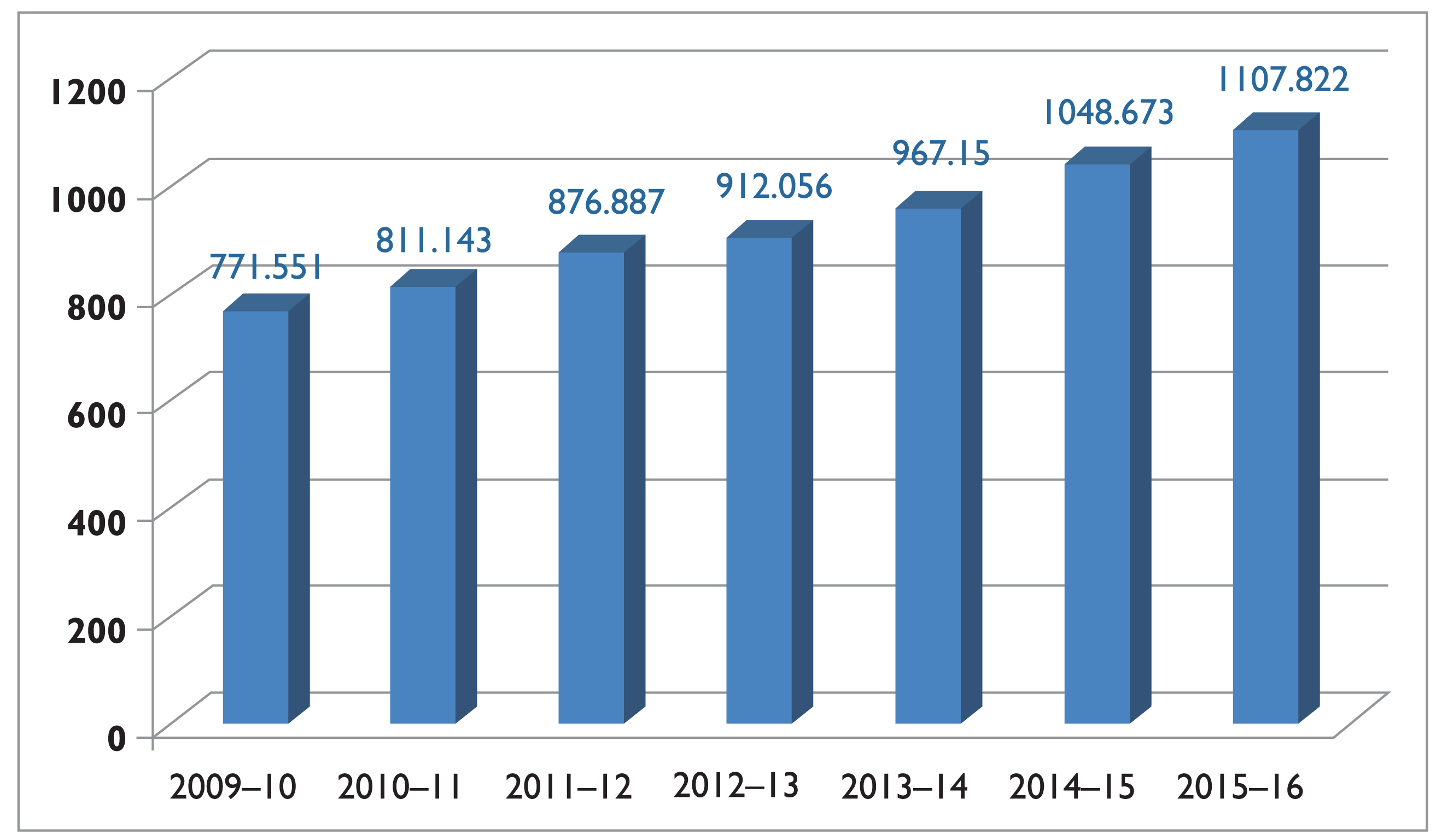
The electricity sector in India is growing at rapid pace. Actual power supply position in terms of energy requirement in comparison to energy availability during the year 2015–2016 is 1,114,408 MU and 1,090,851 MU, respectively, which leads to a deficit of 23,557 MU, that is, −2.3 per cent. Average per capita consumption of India is around 950 units while that in Delhi is around 1300 units. Over the years, various measures taken by the government have increased power generation in the country and reduced the deficit. Figure 1 shows the power generated in the country year on year from 2009–2010 to 2015–2016. This is a result of various reforms introduced in the sector. These reforms have helped at introducing competition and increasing participation in the sector. The government has tried to provide level playing field to all the players, public and private, by introducing such regulations that providing opportunities in areas that were earlier not available to the private sector.
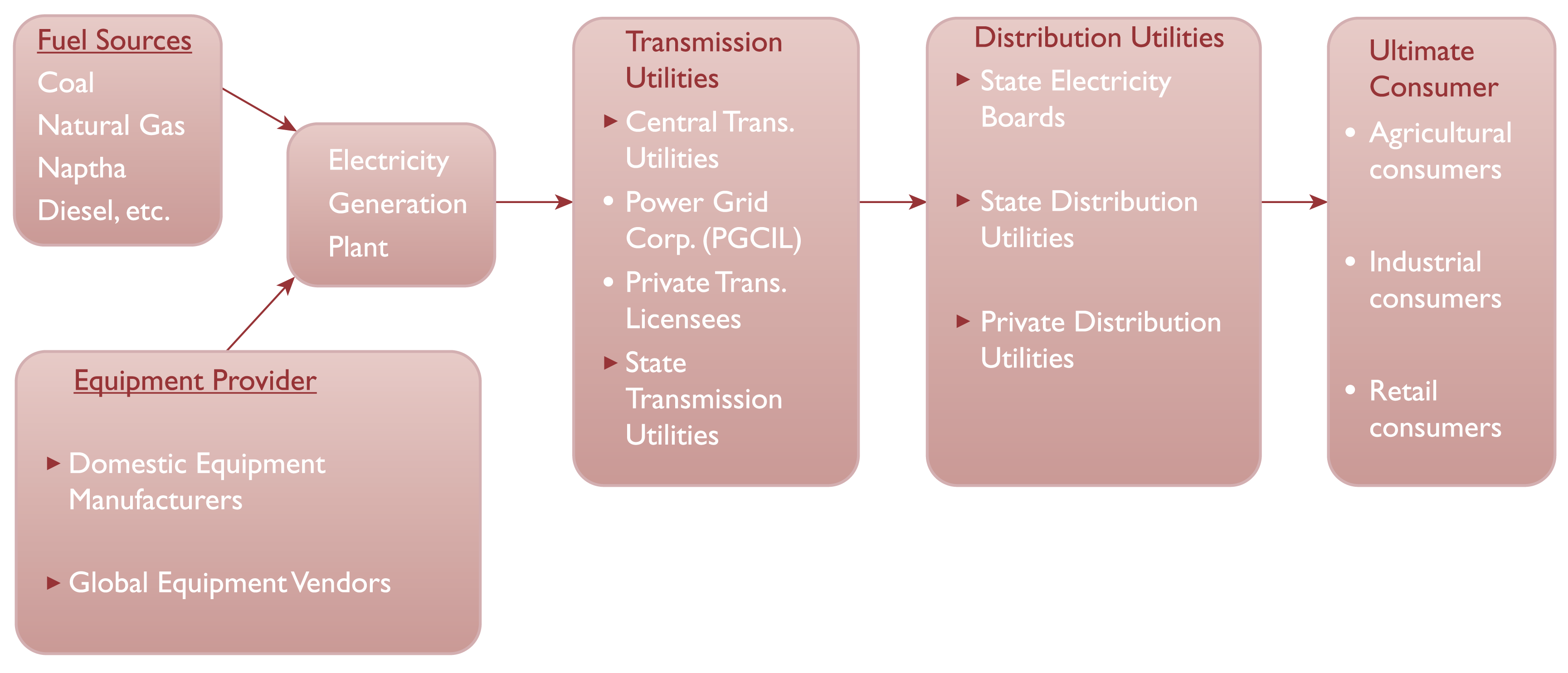
Power generation, transmission and distribution are three major pillars of a power sector. India has worked rigorously on all three to provide a strong infrastructural support to the industry and also meet the requirements of agricultural and retail consumers. Figure 2 depicts the supply chain of the power sector. Distribution, being the most significant activity in the complete value chain and the only link between consumers and utilities, is the only revenue generating process for the entire sector. According to Constitution of India, power is a concurrent issue, and the duty for the distribution and supply of electricity to urban and rural consumers lies with the states. Distribution is a licensed activity under the EA 2003. SERCs are responsible for awarding distribution licence. Eighty-five per cent of distribution sector is largely dominated by state-owned electricity boards.

According to the Thirteenth Financial Commission, the electricity sector is associated with high technical and commercial losses, irrational electricity tariffs and inefficient distribution and transmission infrastructure in most states, leading to enormous losses. The TFC report states that most state public utilities (SPUs) have negative financial flows and subsidies for the electricity sector are the largest component of state government subsidies.
A Planning Commission report on the power sector for the 12 Five-Year Plan says that the total borrowings of state distribution companies was ₹1.77602 trillion as on 31 March 2010 and total interest charged from state utilities during 2009–2010 was ₹156.51 billion.
The Government of India supports the states through various centrally funded schemes to improve the distribution sector. Integrated Power Development Scheme (IPDS) approved on 20 November 2014 with a total expense of ₹326.12 billion, which includes a financial support of ₹253.54 billion from Government of India. The objectives of the program are to strengthen sub-transmission and distribution networks in urban areas; metering of distribution transformers/feeders/consumers in urban areas; IT activation of the distribution sector and strengthening of the distribution network. Deen Dayal Upadhyaya Gram Jyoti Yojana (DDUGJY) approved on 20 November 2014 with a total expense of ₹440.33 billion, which includes a financial support of ₹334.53 billion from Government of India. The objectives of this scheme are the separation of agricultural and non-agricultural feeders; strengthening transmission and distribution networks in rural areas; metering of distribution transformers/branches/consumers in rural areas and rural electrification (Overview, 2016).
Tata Power-Delhi Distribution Limited—Formation
To tide over huge losses and to improve power supply position, the Government of National Territory of Delhi (GoNCTD) privatized the electricity distribution at Delhi with a Public-Private-Partnership (PPP) model in July 2002. Tata Power-DDL is a DISCOM formed by a joint venture of Tata Power and Govt. of NCT of Delhi (51:49) (TPDDL Excellence Journey, 2016). It is licensed for distribution of power in North and North-West Delhi. Tata Power-DDL (Distribution) is regulated by Delhi Electricity Regulatory commission (DERC) which is responsible for determination of tariffs chargeable to consumers (Figure 3).
Initial Challenges
In June 2002, when Tata Power-DDL started its operations, almost all functional areas were bleeding and needed immediate attention. The power sector was down with huge losses and the government was saddled under huge subsidy and AT&C loss level was touching a massive 53 per cent. The organization was facing burgeoning problems. Regular power cuts, blackouts and brown-outs of 4–6 hours were rampant. Distribution network was on the brink of meltdown and consumers were highly dissatisfied due to wrong billing, poor fault management system and inadequate problem redressal mechanism. Customer database was erroneous and there existed a backlog of 1,00,000 billing complaints and 20,000 new connections. There was a workforce of more than 5,600 employees with a narrow skill set and a distorted mindset. The system was in a sorry state with no management and digitization at any level.
Tata Power-DDL took each problem head-on and started to resolve them one by one. By the year 2004, the situation of power distribution in North and North-West Delhi was beginning to improve. Some of the immediate problems like revamping the entire network through Tata Power-DDL’s run-repair and replace policy were addressed; also, re-engineering of the entire revenue cycle management was done along with upgradation of IT and automation infrastructure.
One of the major challenges lied in the HR area. It was of utmost importance to create an environment of mutual trust and understanding with all levels of employees which would inculcate a sense of assurance in the ability of the senior management. It was imperative to build a sound strategy and orient the workforce towards vision of the organization and make them understand their contribution to the achievement of organizational goals.
BSC at Tata Power-DDL
Initially, in a bid to promote workforce competition and align it with the organizational objectives a three-tier performance management system was designed. Performance data from the entire organization was collected through the use of a management information system. However, it was observed that the PMS was serving the simple purpose of collection of data and there was a clear lack of coherence between individual functions and organizational objectives. It seemed as if separate entities were working towards achievement of their individual goals and there was no common ground to help them align with each other and strategic goals of the organization. There was a sincere need for cascading the organizational strategy effectively to all levels of the organization and aligning the short-term and long-term objectives of departments and individuals with it.
Organizations across the world face a similar difficulty—creation and development of strategy is one thing and communicating it to the length and breadth of the organization and checking if it is being implemented in the right manner is a completely different ball game. Introduction and implementation of BSC as a strategic management tool in organizations proved to be highly beneficial in terms of creating a business strategy, connect objectives to long-term targets, set and track Key Result Areas (KRAs) for all levels, facilitate organizational change and enhance understanding of vision and mission of the organization.
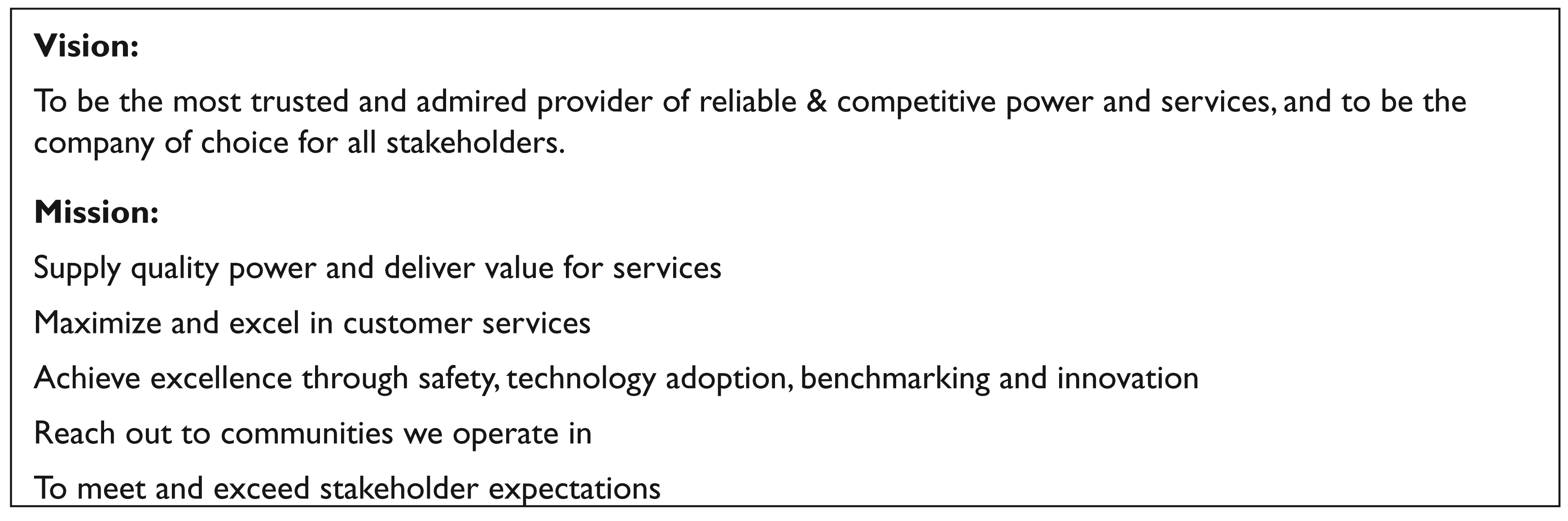
Tata Power-DDL adopted the BSC in order to align the entire organization towards organizational objectives which were drawn from the mission and vision statement.
Strategy Alignment through BSC
The vision parameters were united to form the corporate BSC which included the strategic objectives.
Tier 1—Organization performance management system: The strategic objectives were converted into functional scorecards in the relevant target disciplines, priorities and initiatives, such as planning, operations, trade and technology.
Tier 2—Departmental performance management system: The functional objectives of the various departments were coordinated with their annual functional quality improvement plans.
Tier 3—Individual performance management system: Here, the functional quality improvement plans were further set in individual targets. The strategic leadership team (SLT) focused on action plans and planned results through corrective and preventive measures (CAPA) against discrepancies identified during periodic reviews which, if recognized, would be addressed through revision/updating of initiatives throughout the company.

The organization used BSC for the driving strategy across all levels. Strategic objectives in all four perspectives of finance, customer, business processes and learning and growth were identified with their interdependency/causality effects and made into a strategy map. The performance and objectives for the fulfilment were then set up as a corporate BSC. Subsequently, various strategic initiatives were then undertaken to achieve these objectives.
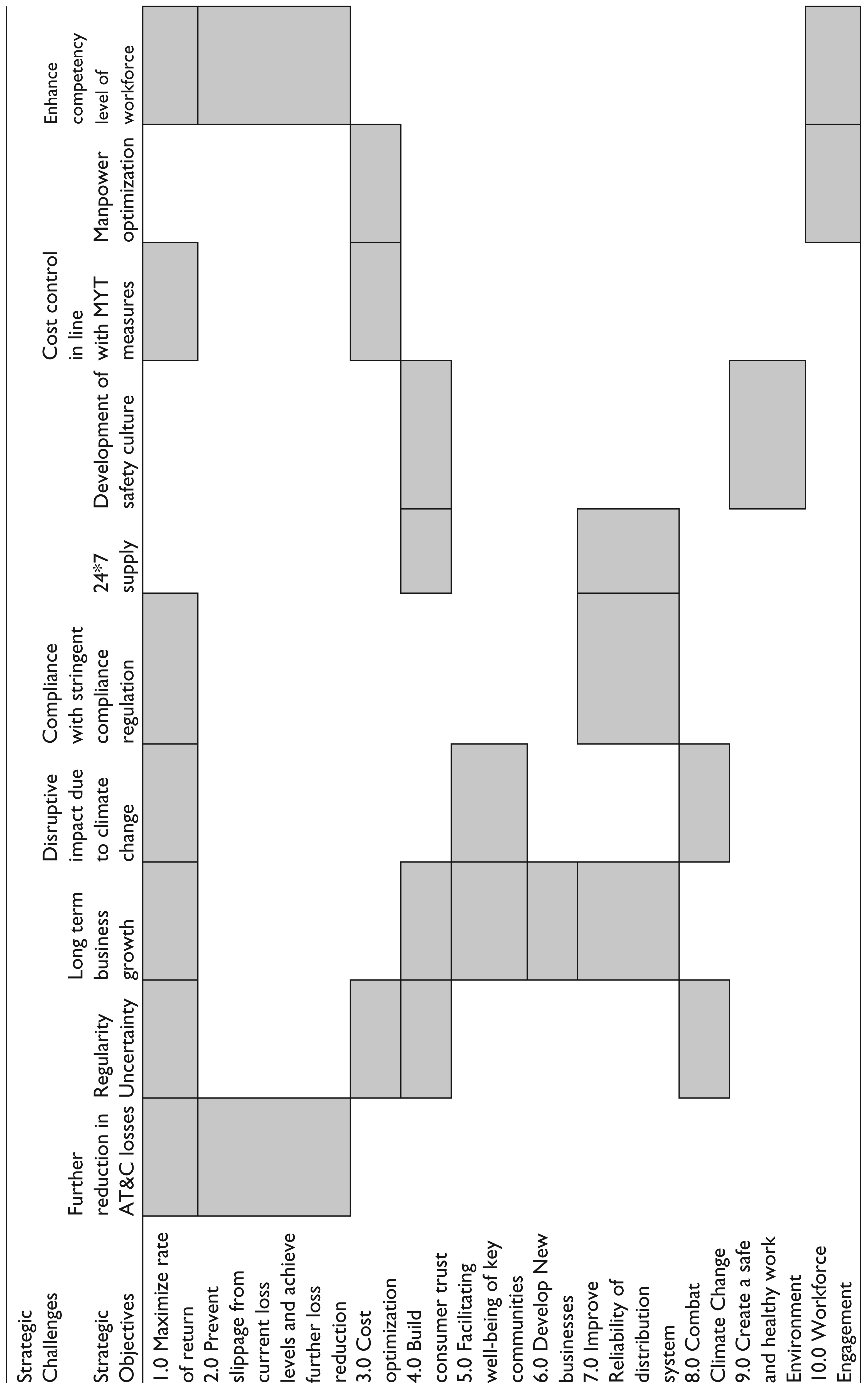
The strategy deployment process at Tata power is done in such a way that the enterprise strategy gets translated into each employee’s daily work. The first step is translating the board approved corporate strategy into corporate BSC. The development of metrics for BSC is a detailed process which starts with the identification of the strategic challenges done through analysis of internal and external environment of the organization. Tata Power-DDL identified many strategic challenges, such as further reduction in AT&T losses, regulatory uncertainty, long-term business growth; compliance with stringent performance regulations lay down by the government, etc., and grouped them into three heads, namely business, operational and HR (Figure 4). Optimum utilization of human resource and enhancing their competency levels, in the long run, were the major strategic challenges faced by the organization.
Gathering information on strategy implementation and analysis of its success rate is an ongoing process; while deployment is an annual exercise. Annual strategy workshop is conducted as a part of ‘Set Direction’ phase, where senior leaders and young high potential employees brainstorm and revisit the organization’s vision, mission, values and strategic intent. Well before the workshop, a thorough bottom-up and top-down ‘SWOT’ analysis is carried out so as to clearly see the strategic advantages and challenges in the light of existing circumstances. The business units prepare their business plans, simultaneously, for a 3-year period after discussion with senior leaders.
Next, the strategy team and business excellence team engage in discussions with business heads and their teams on their strategic objectives, the measures that will help them track progress towards the outcomes and the initiatives required to meet new metrics as well as stretch targets. This engagement leads to the development of BSC of each division. Similarly, the scorecards of each corporate function such as accounts, HR, procurement are developed. The BSCs are cascaded down from the higher levels with inputs from the operating divisions. In the ‘plan’ phase, the annual business plan (ABP) is approved by the board. After this, the ‘deploy’ part of the strategy deployment process begins.
Role of BSC at Tata Power-DDL
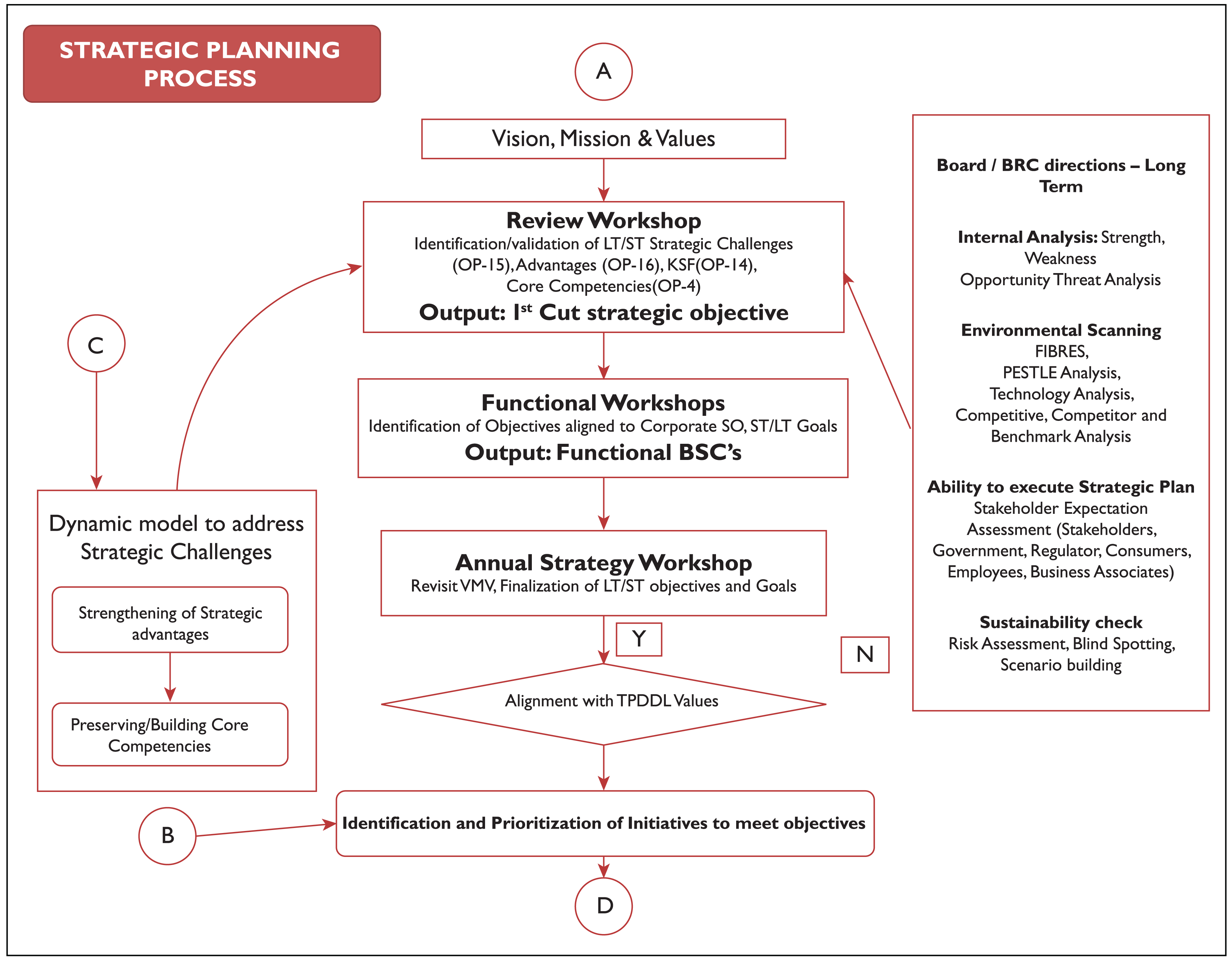
Strategic planning process had to address the challenges and also help the organization achieve its objectives. Identification of the right initiatives to be undertaken in order to strengthen the strategic advantages and preserve or build core competencies remained the focal point of the entire process. The SPP started with the review workshop where key process owners revisited and validated long-term and short-term strategic challenges and advantages, analysed the key success factors and core competencies of the organization. All this is done in the light of input from Business Resource Centre (BRC) which is actively involved in internal analysis and environmental scanning through SWOT analysis, PESTLE analysis, technology analysis, competitive, competitor and benchmark analysis. It also takes note of stakeholder expectations from the organization and sustainability check. This review workshop results in the development of first cut strategic objectives. These objectives serve as input for functional workshops which help in identification of functional level objectives aligned with corporate strategic objectives broken down into short- and long-term goals. They also capture human resource requirements and financial assistance required for the short term and long term along with a rolling 5-year roadmap aligned with the corporate scorecard.
This is followed by annual strategy workshops which revisit vision, mission and values of the organization and finalize the long- and short-term objectives and goals and ensure a top-down, bottom-up and horizontal integration (Exhibit 1). Long-term targets serve as a guiding light to create roadmaps for critical areas, whereas short-term targets are used as input for the formulation of the annual operating plans. The strategic planning process covers all aspects of the organization beginning with identification of the challenges, setting up of strategic objectives and also ensured their alignment with the organizational values (Exhibit 2).
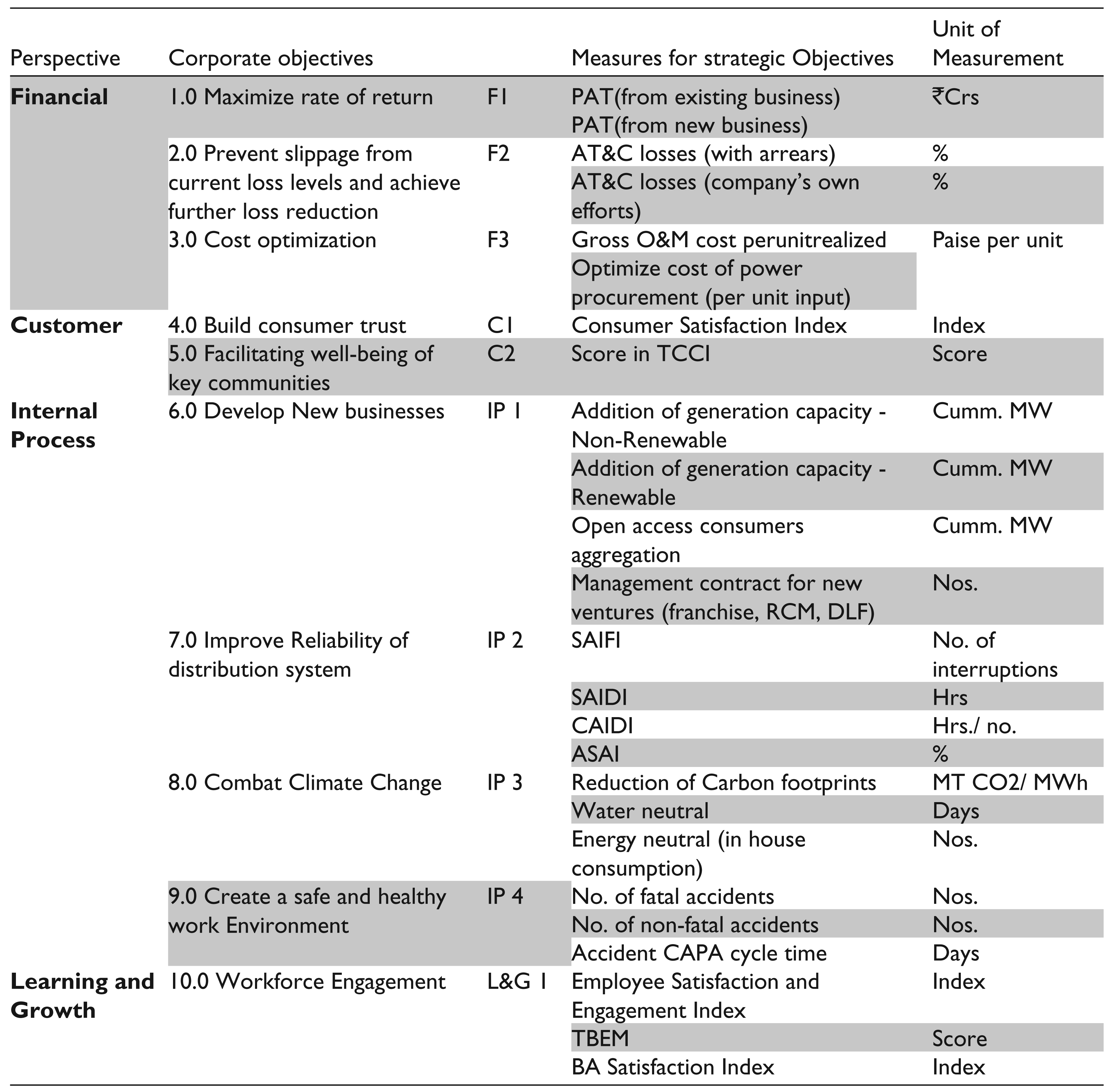
Each strategic objective is grouped under the four perspectives of the BSC, that is, learning and growth, internal process perspective, customer satisfaction perspective and financial perspective (Exhibit 3). When the objective setting and grouping process is undertaken; a balance between the four perspectives is maintained. Also, each objective is matched against a strategic challenge which should be mitigated by the achievement of the said objective. It is taken care that one strategic challenge is marked against more than one objective, that is, achievement of an objective leads to partial mitigation of the strategic challenge (Exhibit 4).
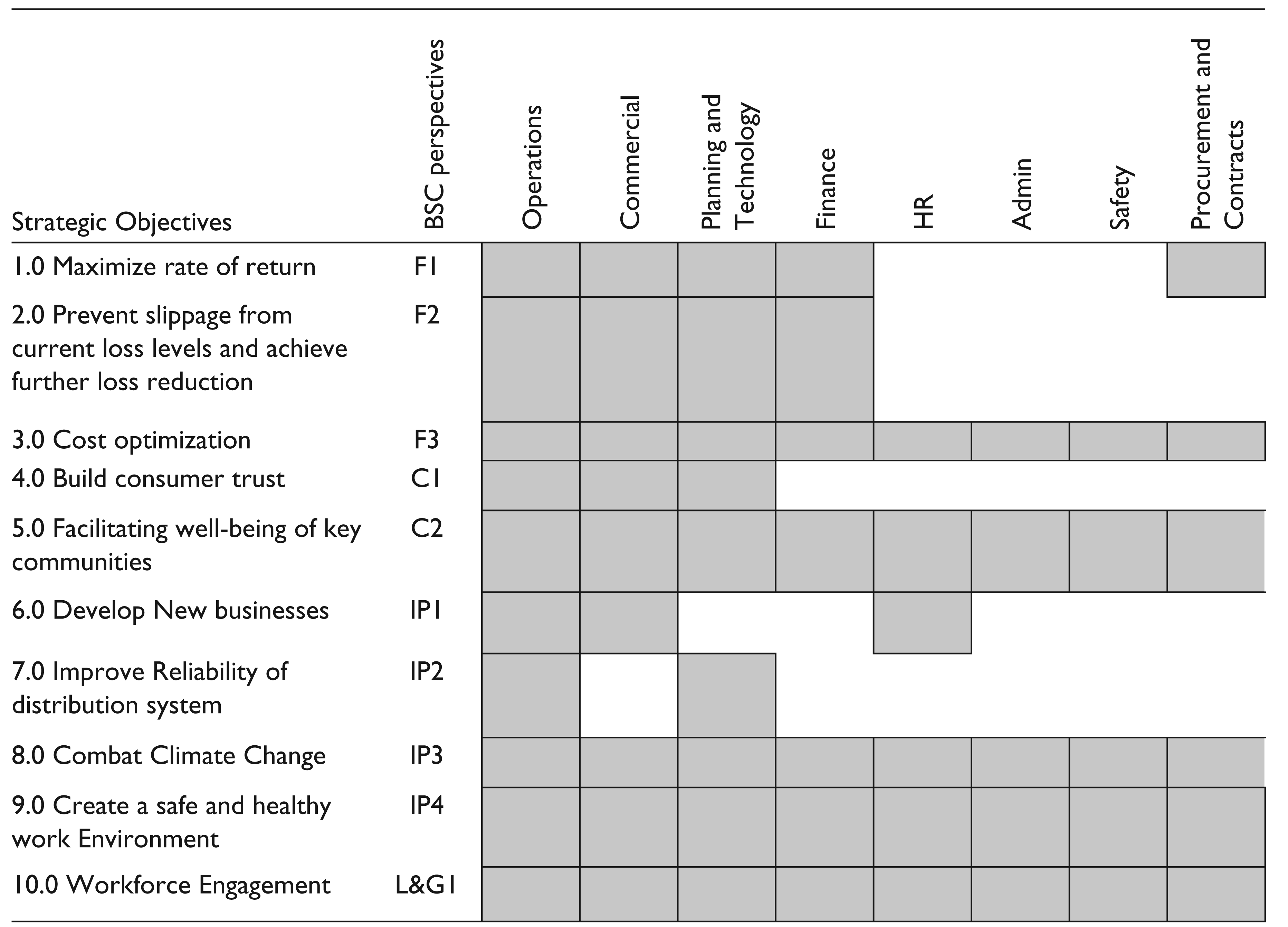
Balance in the system is achieved and maintained by supporting all the objectives by multiple functions. Every objective in the scorecard affected various functional domains leading to effective results, which are mapped along the BSC perspectives.
A corporate BSC is designed for the top level and eight functional BSC are created at the departmental level. All the departmental BSCs are connected to the objectives of the corporate scorecard. All the aspects of the BSC were taken care of by the respective departments which had a role to play in the objective fulfilment process.
It is then cascaded down to the entire organization and reaches every employee in the form of KRAs (deliverables of each position) (Figure 5). The process involves mapping of strategy to every single employee’s day-to-day work in order to create synergy and apply unidirectional effort to achieve the strategic intent, for example, corporate objective of ‘Improving Reliability of Supply’ cascades down to the Zonal manager as reduction in response time to attend breakdowns.

The most important advantage of using BSC as a tool for strategy building and cascading is mapping organizational strategic objectives with environmental challenges in order to gauge the effect of achievement of these objectives. Metrics of BSC comprise of these corporate objectives which have been framed after identification of strategic challenges. Mapping the challenges against the objectives ensures that each metric highlights the right measures to gauge the impact of objective achievement on the intended challenge (Exhibit 5).
The results of the BSC are reviewed at regular intervals through which alignment of the functional and departmental objectives with the strategic objectives was maintained. The review process is done quarterly for corporate BSC, bimonthly for functional, monthly for departmental and weekly/fortnightly for operation level.
Evaluating the ‘Scorecard’
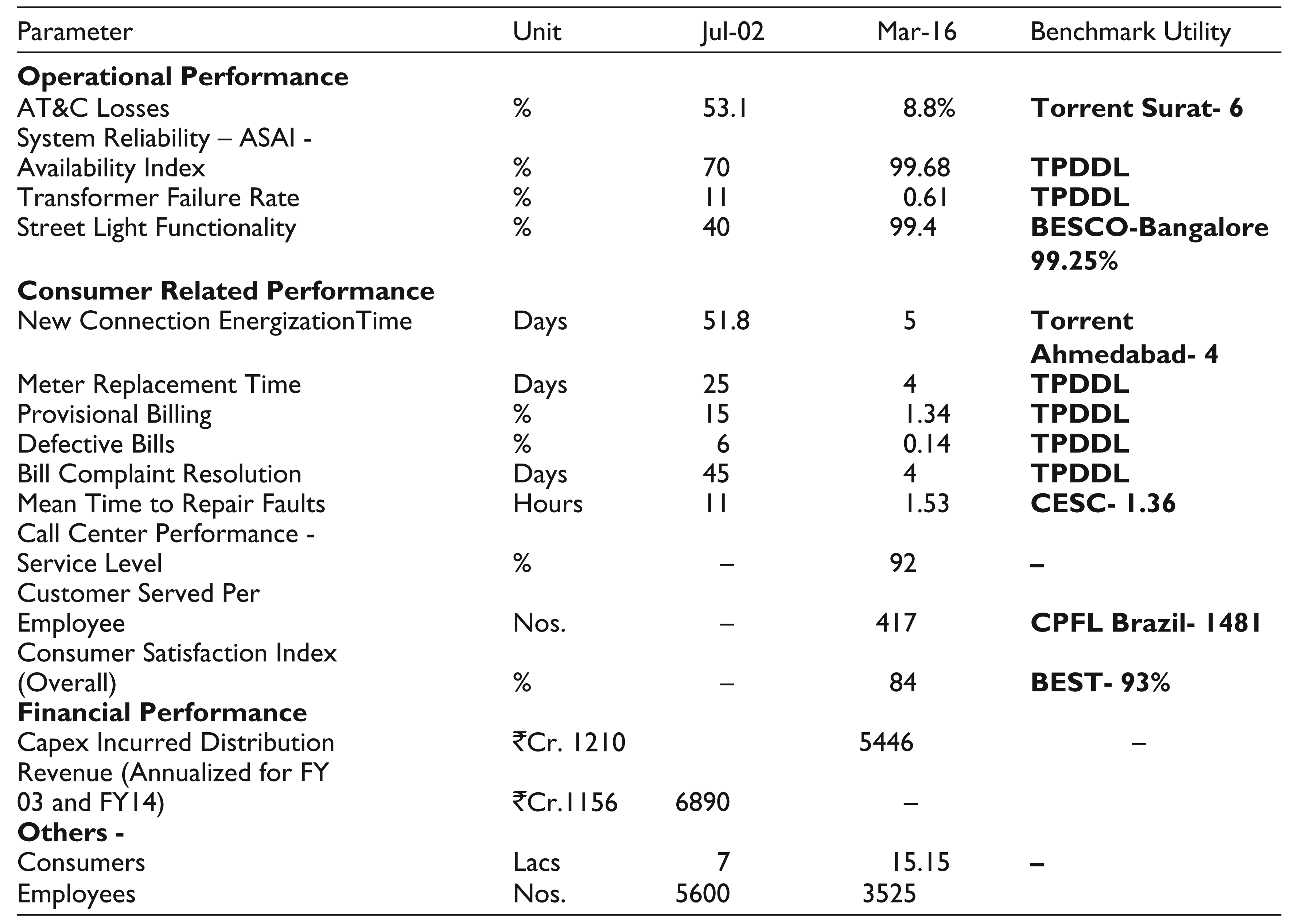
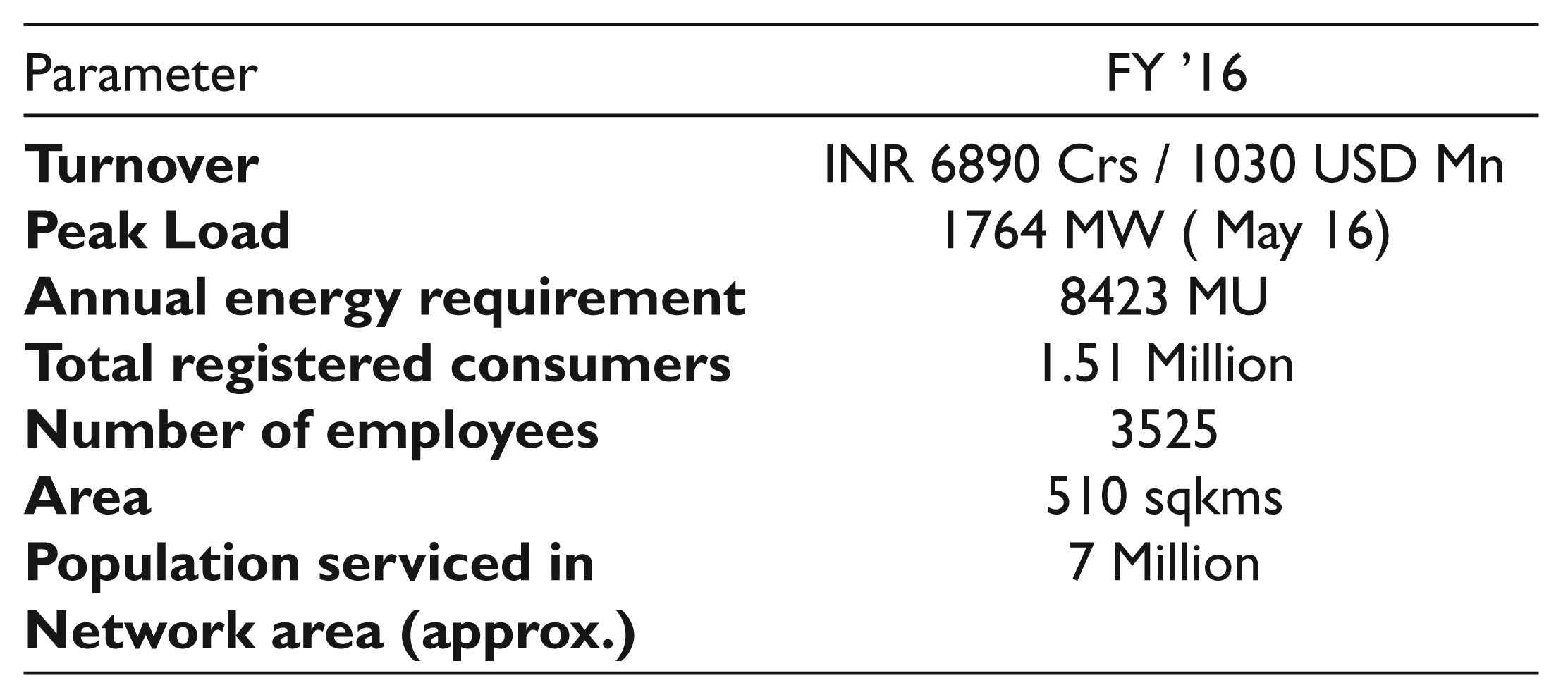
The alignment of individual activities with departmental and hence strategic objectives achieved through the BSC led to significant performance improvements. There was a marked improvement seen in all the major performance parameters (Exhibit 6). The organization has diligently followed the BSC approach since then and has been able to perform immensely well in its industry. In the year 2002, when Tata Power-DDL came into existence, AT&C losses were more than 50 per cent, electricity supply system needed a major overhaul in terms of management of assets and running, there was a lack of performance orientation and no interface of consumer service and IT existed. By March 2016, AT&C losses reduced to 8.8 per cent, system reliability increased from 70 per cent to 99.68 per cent, Transformer failure rate had gone down from 11 per cent to 0.61 per cent, street light functionality increased from 40 per cent to 99.4 per cent. Exhibit 7 gives a detailed comparison between what TPDDL inherited and has achieved till March 2016.
In line with the strategic planning process, various other initiatives like replacement of previous electromechanical meters with new accurate electronic meters which helped in controlling the theft rate, energy audit up to distribution level was now conducted, collaboration with NGOs for awareness in slums regarding the dangers of direct tapping of electricity from live wires, were also undertaken at Tata Power-DDL, which were extremely helpful in plugging the leakages.
Consumer satisfaction index is now touching 84 per cent and the company is now serving 1.515 million consumers in comparison to 700 thousand consumers in the year 2002. All this has been achieved by a long and consistent effort at all levels of the organization.
Continuous Learning
Designing a BSC for the organization was a big and difficult task. The macro-environment was turbulent and beyond control but affected the organization in numerous ways. The company had to function in a closed and controlled web of the government and the various stakeholders, with conflicting interests. Another key aspect of BSC implementation was taking the employees of Tata Power–DDL under confidence and making them believe and observe the mutual benefit of growing together. It is to be noted that the employees were a diverse group of people as many of the workers were previously employed with Delhi Vidyut board and were shifted to Tata Power-DDL. In the beginning, the major focus of the scorecard was to plug the loose ends and make the organization stand on its own feet by removing road blocks. Once this was achieved, other aspects were also included, and BSC was updated and changed according to the changes in the society; corresponding changes were brought about within the organization, for example, combat climate change was included as an objective and appropriate measures were devised to control it in the later scorecards.
The BSC construction and implementation at Tata Power–DDL has been a learning experience. The scorecard is reviewed and modified according to the changes in the micro- and macro-environmental factors and the needs of the changing times. Some of the key issues required for successful implementation which have been observed by the organization have been enumerated below:
Correct blueprinting—identifying what to measure. Adhere to the review schedule. Individual activities linked back to the corporate objectives (I know why I do what I do). Balance in the measures (Each corporate objective supported by as many functions as possible). Balance between lead and Lag measures. Gradually, all MIS should converge to BSC. Linked initiatives to BSCs and vice versa.
The Road Ahead
Tata Power–DDL has come a long way, crossed some major landmarks and achieved a state of stability in the last few years. All the major performance parameters have shown positive movement and hence are indicative of the company’s correct moves. However, the organization is now standing at a point where the biggest challenge is growing it any further. Delhi is now saturated and the company has achieved a lot, but moving ahead from here, very little growth could be achieved. There is scope of extending the PPP to other states, but a huge challenge is convincing the state governments to adopt it.
Some serious setbacks that have long been affecting the power sector are non-cost reflective tariff, higher power purchase cost and liquidation of regulatory overhang. Tata Power-DDL has been able to partially overcome these challenges due to operational efficiency and financial judiciousness. In the present context, the biggest challenge is in sustaining what the company has achieved. The AT&C losses have been tremendously reduced, and any more reduction will be extremely difficult. Introduction of new initiatives, such as smart metering and technical loss reductions, may be helpful in further loss reduction.
Tata Power-DDL has a huge workforce and to keep them motivated, it is necessary that they look for new opportunities. In the last 10 years, Tata power–DDL has created many innovative features and services and implemented some of those management practices, some of which are not available even in developing countries. Hence, the focus should be on consolidating this learning and utilizing it in other areas.
With the agreement on Sustainable Development Goals (SDGs), the world now has a new objective to achieve in which clean energy is one of the main focus areas. The organization has modified its BSC in light of the changing environmental and societal needs. But, with this increased focus, BSC, in its original form, may not be able to provide the right emphasis on this new perspective of ‘Sustainable development’ and may require a major overhaul. The company needs to answer some major questions before it can leap-frog to the next level of development.
Vision and Mission Statement
Balanced Scorecard
Mapping the Challenges and Objectives
Balancing the scorecard
Performance of Tata Power-DDL in FY 2016
Tata Power-DDL Turnaround Snapshot