




Abstract
The case is about EnviGreen Biotech which produces an alternative to plastic bags that is 100 per cent organic, biodegradable and recyclable. The case focuses on how the concept of sustainability is being incorporated into the organization. Currently, the EnviGreen bags are manufactured in India and are being exported to South East Asian and Middle East countries. Along with this, the company has also started manufacturing bags for the organized retailers in India, but still to enter into the retail consumer market. The case ends up with the discussion that whether EnviGreen Biotech should enter into the B2C market in India or not as the products are costlier than plastic bags and price sensitive nature of Indian consumers is a major concern.
Introduction
It is a world free from moth and rust and full of color, a world largely built up of synthetic materials made from the most universally distributed substances, a world in which nations are more and more independent of localized naturalized resources, a world in which man, like a magician, makes what he wants for almost every need out of what is beneath and around him. (Yarsley & Couzens, 1945)
The benefits of plastics and their diverse applications were anticipated 70 years ago by Yarsley and Couzens in their book, Plastics, but what was not told where the problems associated with waste plastics. Plastic, no doubt, is a versatile material—it is inexpensive, strong, durable, require little energy to produce, are lightweight and bio-compatible, corrosion-resistant, with high thermal and electrical insulation properties (Sivan, 2011; Thompson, Swan, Moore, & Frederick, 2009). However, the over-consumption of plastics, discarding and littering have become lethal to the environment. Plastic debris has accumulated in natural habitats from the poles to the equator (Barnes, Galgani, Thompson, & Barlaz, 2009) and has created a serious dent in the environment across the globe, India notwithstanding. According to a survey conducted by the Ministry of Environment and Forests (2016), Government of India, ‘15,000 tonnes of plastic waste is generated every day, out of which 9,000 tonnes are collected and processed, but 6,000 tonnes of plastic waste is not being collected’. 1 Against this background, it is prudent to understand that waste management of plastics is the key to a healthier and sustainable environment.
Today plastic bags are non-chalantly used worldwide (Miller, 2012) because they are very cheap, durable, resistance to degradation by any chemical, bacteria and sunlight and lightweight (Sivan, 2011). Though they are convenient to use, they are responsible for the environmental degradation (Sivan, 2011; Thompson et al., 2009). Non-biodegradable in nature, plastic bags decompose very slowly and can last up to 1,000 years in the soil inhibiting the breakdown of biodegradable materials around or in it (Stevens, 2001). Of all the hazardous litters in the sea, plastic is the greatest threat (Gall & Thompson, 2015; The Guardian, 2007). Marine organisms and seabirds get affected by entanglement and ingestion of these plastic bags which find its way to the ocean (Gall & Thompson, 2015). The plastic bags swallowed unintentionally by the terrestrial animals remain in their gut and cannot be digested or excreted thus inhibiting food digestion. This leads to a very slow and painful death. Plastic has much impact on our environment, land and aquatic life (Joseph, Kumar, Majgi, Kumar, & Prahalad, 2016).
The present case focuses on an environment-friendly organization named EnviGreen Biotech, which is providing a substitute to plastic bags which is 100 per cent organic, biodegradable and recyclable thus helping this world to become a better place to live. EnviGreen’s mission is to make the world plastic free. The company is breaking new grounds by integrating the concepts of sustainability and marketing. According to one school of management thinkers, the concepts of sustainability and marketing cannot be integrated because sustainability focuses on reduction in consumption, whereas marketing induces higher consumption (Jones, Clarke-Hill, Comfort, & Hillier, 2008). However, this is not completely true as in the last two decades sustainability has emerged as a new marketing paradigm (Kumar, Rahman, Kazmi, & Goyal, 2012) bringing marketing and sustainability much closer (Baldassarre & Campo, 2016). The present case of EnviGreen will show the connection between these two concepts by emphasizing on the concept of sustainability marketing—a way to build relationships with consumers while letting them know that they are important and so are future generations.
About EnviGreen
The ban of plastic bags in many cities of India was welcomed with great enthusiasm. However, with the passage of time, this sudden decision began to obstruct the daily life of commoners as there was no substitute for plastic bags. The shoppers were required to either carry their own bags or purchase expensive reusable bags. But for commoners who cannot afford alternatives like cloth bags, jute bag, paper bags or forget to bring them to the market were put to inconvenience (Times of India, 2017). It was this problem faced by ordinary people that pushed Ashwath Hegde, a Mangalore 2 -born, Qatar 3 -based non-resident Indian (NRI) 4 entrepreneur to establish a company, EnviGreen that produces 100 per cent organic, biodegradable and eco-friendly bags.
The journey began in 2012 when the city corporation of Mangalore (now Mangaluru) banned the use of plastic bags. Hegde along with scientists and environmentalists formed a team in Europe to search alternative for plastic bags and finally developed biodegradable carry bags. Further, Hegde shifted his base to Qatar and EnviGreen launched its first biodegradable shopping bags in Qatar on 26 February 2016, the country’s National Environment Day. With their initial operations in South East Asian countries 5 and Middle East, 6 EnviGreen operates from its corporate head office in Bengaluru 7 and very soon planning to expand its market in India.
About the Products
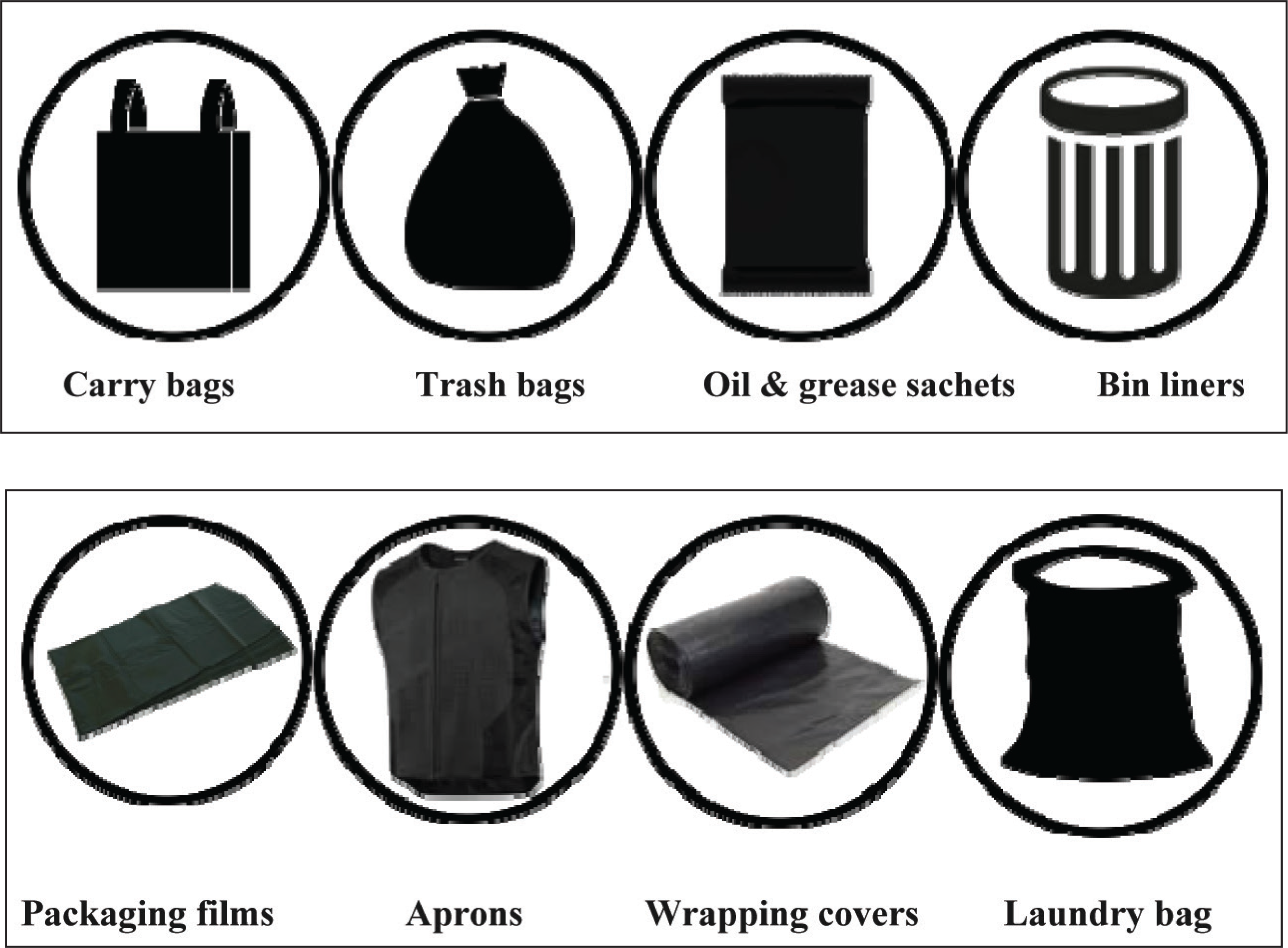
EnviGreen’s products range from carrying bags, trash bags, bin liners, oil and grease sachets, packaging films, aprons, wrapping covers and laundry bags (see Figure 1). Though EnviGreen bags look strikingly similar to the plastic bags available in the market, these bags contain no plastic (Expert Skip Hire, 2017; Sustainability Outlook, 2016). These products are made from natural starch, vegetable oil derivatives and vegetable waste and are non-toxic to the environment, animals and plants. Further, EnviGreen also arranges customized products to meet the diverse needs.
Prior to release of these organic bags, various national and international certifying bodies such as Karnataka State Pollution Control Board, Central Institute of Plastic Engineering, TUV-SUD South Asia and Sriram Institute for Industrial Research conducted tests like boiling water test, burning test, hot iron test, edible test and strength test to prove its authenticity and the products passed all the tests.
Manufacturing Process and Production Cost
EnviGreen is procuring raw materials, that is, vegetable wastes from farmers’ associations of Karnataka, thereby, providing a source of alternate income for the farmers (Sustainability Outlook, 2016; The Hindu, 2017). The waste, which otherwise has been thrown, is now being used in a constructive manner. The project has empowered farmers in rural Karnataka by making them the suppliers of raw materials for EnviGreen. The company is now planning to distribute seeds to the farmers so that they produce the number of raw materials required to make the bags (Expert Skip Hire, 2017; Sustainability Outlook, 2016).
EnviGreen, during its research on compostable plastics promoted by some companies, realized that making 100 per cent cornstarch-based bags is not feasible. It was further revealed that companies add hazardous materials like tar, calcium carbonate, etc. to reduce its manufacturing cost and sell them as environment-friendly bags (Times of India, 2017). EnviGreen produces bags using patented technology that includes 12 ingredients such as potatoes, tapioca, corn, natural starch, vegetable oil, banana, flower oil, etc. which are then liquefied and taken through a six-step chemical-free process. The paints used for printing the bags are also natural and organic (Sustainability Outlook, 2016; Times of India, 2017).
The bags, thus created using the patented technology degrade naturally in approximately 180 days, and the process can be reduced to a single day when placed in water under normal temperature. If kept in boiling water, these bags take only 15 seconds to get dissolve (Expert Skip Hire, 2017; Sustainability Outlook, 2016). Hegde mentioned that Bengaluru suffers situation like artificial floods during the rainy season because of blockage caused by plastics. EnviGreen products would not cause such blockage and can prevent this problem (The News Minute, 2017). These bags do not emit toxic fumes even if burned that make it totally safe for the environment. The natural contents, make these bags entirely edible, therefore, harmless to animals that might eat the discarded bags (Sustainability Outlook, 2016). To show that the bags are completely edible and easy to ingest with no side effects, Hegde put one bag into boiling water and then gulped it down during an interview (One Green Planet, 2017). Further, Hegde also mentioned that they are not recommending people to eat these bags, but even if they consume, there is no harm (The Guardian, 2017). The technology provides bags to be had an electric deceptive feature which makes it suitable for electronic warping. Along with this, the EnviGreen bags are grease/oil resistance (Business Line, 2016). The EnviGreen bags are 100 per cent organic, biodegradable and recyclable (see Figure 2).

The cost of producing EnviGreen bag is about 35 per cent more than that of a plastic bag, but 500 per cent less than that of a cloth bag. One EnviGreen bag measuring 13 inches by 16 inches costs ₹3, 8 while a plastic bag with the same dimensions costs ₹2 (Expert Skip Hire, 2017). Though the cost of the plastic bag is less than EnviGreen bags, the hazards associated with its use are innumerable.
As EnviGreen is a startup, investing money on advertising in the beginning may not be cost effective. Hence, it is promoting its eco-friendly products through posting videos on YouTube, participating in conferences and talk shows. The company is also posting videos related to the negative impacts of plastic on the environment and how biodegradable products from EnviGreen can provide a solution to this problem. Further, EnviGreen is extensively using its Facebook page to promote its products and create awareness about making India a plastic free nation (Figure 3).

Initially, EnviGreen was dealing directly with the business markets in India, but with the growth in demand, it has involved channel members to reach the industrial consumer markets. Two level channels-state level distributors and zonal/district level distributors, are involved between the EnviGreen and industrial/business consumer markets (Envigreen.in, 2018). EnviGreen emphasizes on educating people and making them aware that their bags are 100 per cent bio-degradable and decomposable under natural condition without human intervention (IBEF, 2017). In the beginning, it was little difficult to convince the business consumers to buy bags that are 35 per cent costlier than plastic alternatives, but government regulation to partially/fully ban the plastic in several cities of India increased the prospects of EnviGreen biodegradable bags. Now, people were compelled to use jute/cloth bags which were 500 per cent costlier than plastic bags and which they cannot carry these bags everywhere, every time with them (Singh, 2016). The ban on plastic bags and a very high cost of alternatives available was sufficient enough for EnviGreen Biotech to crack the business deals with business/industrial consumers.
Considering the limited manufacturing output, as EnviGreen is still at its nascent stage, the company has focused its business mainly in the southern states of India, mainly Andhra Pradesh and Karnataka restricting to business markets only. Hegde wants to establish enough production facilities before moving to consumer markets (individual consumers and local shop owner) and other metro cities of India (The Hindu, 2017).
Success Till Date
The EnviGreen bags are getting a very good response in the United Arab Emirates (UAE). These eco-friendly bags have become successful and popular among the masses and the Environment Ministry of Qatar has appreciated the EnviGreen team. The EnviGreen has been successful in selling it bags to most of the top stores in the United Arab Emirates (Startup Journey, 2017). The innovation of EnviGreen bags has also led them to get orders from Metro, Reliance, Loreal and several other businesses in India. Further, the EnviGreen team is also in talks with Karnataka Milk Federation in India for getting a contract of milk packets to distribute milk in it.
Future in Mind and Challenges Ahead
Hegde and his team are already producing 1000 metric tonnes of EnviGreen bags every month in a new factory based in Bengaluru (Expert Skip Hire, 2017; Sustainability Outlook, 2016; The Hindu, 2017). Considering only Bengaluru alone, people consume over 30,000 metric tonnes of plastic bags every month, so Hedge wants to set up enough production facilities before starting the distribution of EnviGreen bags to individual customers and local shop owners (Expert Skip Hire, 2017; Sustainability Outlook, 2016; The Hindu, 2017). Corporate retail chains like Metro and Reliance have already placed orders with the company and will start using the bags from the beginning of the year 2018 (Expert Skip Hire, 2017; Sustainability Outlook, 2016). Further, Hegde is also planning to set up manufacturing units of 1,000 metric tons capacity in other metro cities in India such as Mumbai and Delhi along with Bengaluru. The focus will be on ‘Make in India’ and export it to the European market and Middle East (Business Line, 2016). Talking about the prospects at the global level, currently, biodegradable bags have covered up around 10per cent–15 per cent of the total plastic market and is supposed to increase 25 per cent–30 per cent by 2020 (Economic Times, 2017). Once available for use, EnviGreen bags will help consumers strike the balance between their concern for the environment and ways of making their daily lives more comfortable. However, the price of the EnviGreen bags will be a major concern for consumers in India as they are price sensitive and it will be interesting to see whether they will be willing to pay 35 per cent higher prices for the EnviGreen bags or not. Further, environmental awareness among the general population is still an issue to ponder upon. In the coming year, it will be interesting to see the EnviGreen strategies for their bags, whether they will limit themselves to B2B sales in India and exporting to foreign nations or they will also try to enter into the retail consumers market.
Declaration of Conflicting Interests
The authors declared no potential conflicts of interest with respect to the research, authorship and/or publication of this case.
Funding
The authors received no financial support for the research, authorship and/or publication of this case.