



Abstract
While head lice continue to be a worldwide health issue, there remains a dearth of scholarship detailing how various organizations are developing different products to deal with this problem. In this case study, the authors ponder upon a novel entrepreneurial idea developed by the students to tackle the lice issue in Pakistan. A team of students developed Repelolicer, an ultrasonic wave-emitting hairband to stop lice infestation among younger-aged girls. The Repelolicer team developed various strategies to target the Pakistani market. However, due to inadequate knowledge of the external market, the entrepreneurial idea failed to succeed.
Research Objective:
This case study aimed to explore challenges faced by an entrepreneurial venture using the first-mover strategy while penetrating the lower strata market via a product, which had a stigmatized effect.
Link to Theory:
In the extant scholarship, first-movers are considered to have strategic advantages against new rivals. In this study, we explore the disadvantages of first-mover in a complex Pakistani market situation through the lens of the resource-based view (RBV) and industrial organization (IO) perspective.
Phenomenon Studied:
This case study focuses on exploring the reasons behind the failure of tech-based first-movers (i.e., Repelolicer) in the Pakistani market scenario. The study also elucidates various external factors—a new venture should explore before launching a product in a Pakistani market situation.
Case Context:
The context in this case study is the lice problem among younger-aged girls in Pakistan’s lower strata market.
Findings:
The study participants unveiled that despite Repelolicer having competitive advantages because of internal factors, the Repelolicer team could not fully understand invisible forces in the external market. This lack of understanding led to their product failure. The Repelolicer team was also unable to comprehend how the product design might have further escalated the stigma attached to lice in society. Lastly, their pricing and promotion strategy was incompatible with the complex market situation.
Discussions:
This study adds to the limited knowledge about first-movers’ disadvantages in developing countries, such as Pakistan. The study results revealed that being a first-mover, even with all the adequate resources, is not always advantageous. The new ventures can especially face disastrous consequences for being the first-mover due to their lack of experience and knowledge of the local market. The study results also showed that new ventures should take the IO perspective with the RBV approach to succeed in a complicated market situation. The theoretical and practical implications of the case study have been outlined.
Introduction
One of the ongoing debates among strategic management scholars has been pertaining to how new entrepreneurial ventures can attain a first-mover advantage. Bamford and Bruton (2019) underscored that the success of a new entrepreneurial business idea not only depends on its novelty but also on whether the idea can prevail in the dynamic business environment. Lambing and Kuehl (2014) argued that a business idea relies on entrepreneurs’ belief and motivation to make the magic transpire at the right moment. The magic is to transform the novel idea into a unique product and develop a market demand (Fynn et al., 2016). Hence, market demand creation remains the primary goal of a new entrepreneurial venture. Scholars have previously highlighted that first-movers or market pioneers are better positioned to capture the market demand because they can create barriers for other organizations who want to enter the market (Lieberman & Montgomery, 1998; Zhao et al., 2012).
Nevertheless, new ventures should be careful in deciding when to enter a market because of their limited resources and lack of market experiences (Zhao et al., 2012). The timing to enter a market is also critical for any business success (Feng et al., 2020; Lilien & Yoon, 1990). Moreover, the decision about when to enter a market becomes crucial for tech-based companies because their competitors can easily imitate their products (Frynas et al., 2006; Ulhøi, 2012; Zhao et al., 2014). The business environment’s complexity can also affect an organization’s market entry decision (Kerin et al., 1992; Suarez & Lanzolla, 2007).
Hussain (2014) argued that targeting various segments via products needs a comprehensive strategy, especially in developing countries. This is because of the volatile market situation and lack of governmental policies in safeguarding businesses’ rights in developing countries (Hussain, 2014). For example, market players regularly break piracy laws in the Pakistani market without consequences (Khan, 2016). Scholars have suggested that new ventures should be extremely cautious about entering a market where product imitations are easy (Narasimhan & Turut, 2013). Generally, researchers have claimed that the first-movers have the advantage of entering the market (Zhao et al., 2012). Nevertheless, there remains a dearth of scholarship about how first-movers can face disadvantages to enter a market with a product having stigmatized effect among their consumers in the Pakistani context.
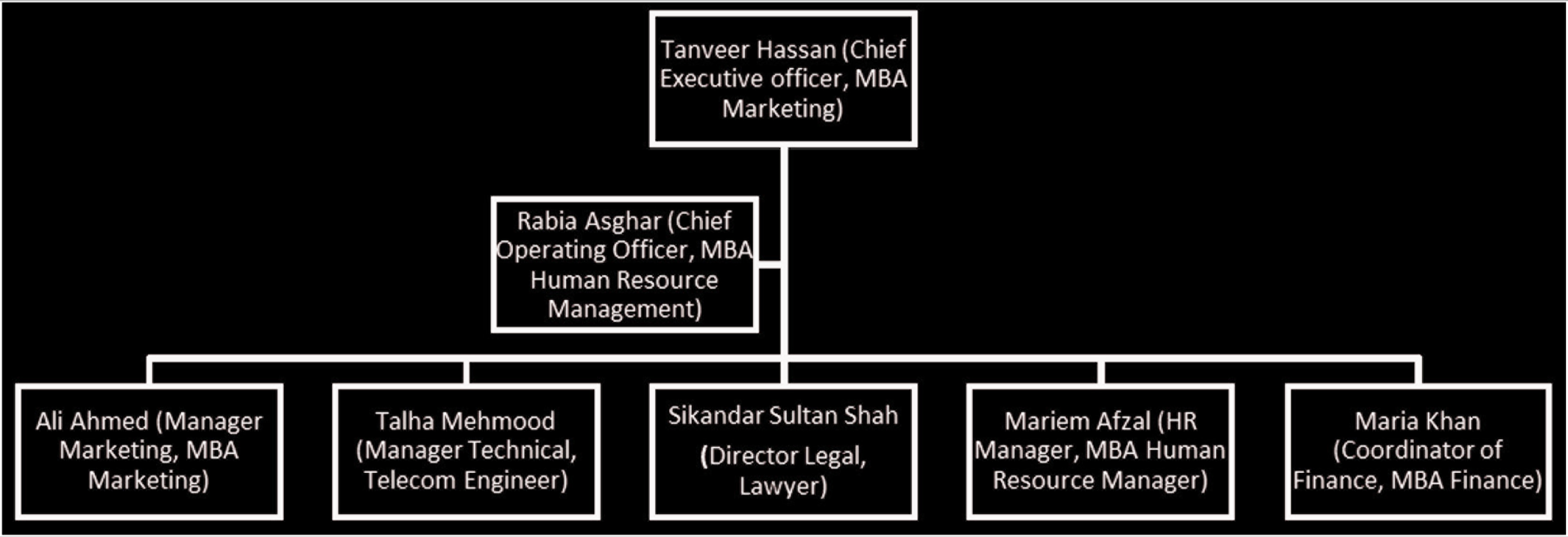
The purpose of this case study was to explore the reasons behind the failure of tech-based first-mover products in a Pakistani market scenario. To achieve the study purpose, we took in-depth interviews from the management of Repelolicer (See Figure 1). We also analysed internal reports, such as the firm’s income statement and balance sheets. The Repelolicer (same as the company name) is a product that repels lice in long hairs. This product idea was presented by a group of seven university students at an annual business idea competition organized by the Rawalpindi Chamber of Commerce (i.e., one of the oldest business chambers in Pakistan). The Repelolicer team won the first prize while competing with 15 other universities in Pakistan. Out of the seven team members, six students had a business education background. Initially, the product circuit was designed and developed by an electrical engineer, Talha Mehmood. However, he left the team because of internal rifts within the entrepreneurial venture.
The basic Repelolicer idea was to create a hairband that would prevent head lice from attacking an individual’s scalp. The hairband was developed to emit ultrasonic waves from the circuit. The circuit’s frequency range was from 20 to 55 kHz (i.e., ultrasonic waves). This range is not audible to humans (Fletcher et al., 2018). The team agreed to develop the hairband with a pinkish Barbie color theme so that younger girls can be attracted to the product (see Figure 2). The original band design was copied from the Prada headband 1 design. Repelolicer, as a newly established venture, faced various challenges while trying to introduce the product into the market, such as a disorganized team, funding issues, external environmental issues, lack of proper launch strategy and first-mover problems. The project ended after few months of its launch.

Theoretical Background
First-mover advantages and disadvantages have been studied in various realms, such as negotiations (Loschelder et al., 2016), corporate sustainability (Uşar et al., 2019), political science (O’Brien, 2017) and nanotechnology (Sabatier & Chollet, 2017). After the seminal work of Lieberman and Montgomery (1988) on first-movers using organizational strategy perspective, first-mover behavior has received a lot of attention in the strategic management scholarship. Many researchers claim that being a first-mover aids in forming market demand (Fynn et al., 2016; Lambing & Kuehl, 2014; Lieberman & Montgomery, 1998). Lieberman and Montgomery (1998) elucidated that first-movers have three primary sources of advantages: technological leadership, preemption of assets and buyer switching costs. Researchers further identified other categories of first-mover advantages (Casson, 2010; Fynn et al., 2016; Lieberman & Montgomery, 1998). For example, being the first-mover can allow a firm to get the cost benefits (Agarwal & Gort, 2001). The first-movers do not encounter explicit fierce competitive rivalry (Fynn et al., 2016). The first-movers also can make inaccessible vital value chain segments that might preclude new entrants (Stokes et al., 2010). Lastly, the first-movers are in a superior position to build up a positive brand image.
Sometimes due to a privation of in-depth strategic planning, the first-movers can fritter their advantages (Boulding & Christen, 2014; Lieberman & Montgomery, 1998). For example, other companies can emulate the first-movers’ technology (Loschelder et al., 2014). The organizations that come after the first-movers may also have better insights into customer satisfaction (Hannagan, 2002). For example, Reynold was once the first-mover in the ballpoint pen industry but lost its first-mover advantage owing to its organizational issues.
The other drawback of first-movers could be that they have a scarcity of information concerning the possible size of the target market and about the degree to which the market will expand in the future (Boulding & Christen, 2014; Hannagan, 2002). The demand ambiguity makes it very problematic for the first-movers to assess the market size (Lieberman & Montgomery, 1998). Nevertheless, the demand ambiguity has applied implications for new project outcomes, as both undervaluing and overrating demand can adversely impact the performance of the new entrepreneurial venture (Rayna & Striukova, 2009). Overall, in the extant scholarship, there remains a paucity of scholarship detailing the disadvantages of being a first-mover tech-based firm in the developing countries market scenario, especially from the South Asian region.
In the strategic management literature, to understand first-mover advantages and disadvantages, numerous researchers have separately used resource-based view (RBV) (Finney et al., 2008; Lieberman & Montgomery, 1998) and industrial organization (IO) (Siachou & Ioannidis, 2009) perspective. For example, Finney et al. (2008) developed a conceptual framework by linking first-movers advantages with the RBV perspective to explore why so limited firms upheld their first-mover advantages in a market scenario. On the other hand, Siachou and Ioannidis (2009) employed Porter’s (1980, 1985) five forces framework to explore the positive consequence of external knowledge transfer on first-movers monetary performance. Nonetheless, a scarcity of strategic management literature remains to explore the disadvantages of using RBV perspective separately without IO perspective in an actual market scenario. In this case study, we endeavored to explore how using only the RBV perspective in an actual organizational (Repelolicer) scenario can result in disastrous outcomes for first-movers.
The Resource-Based View against Industrial Organization Perspective
In the realm of strategic management, two theoretical paradigms have been vastly disputed: RBV against IO perspective (Gellweiler, 2018). The IO advocates claim that companies’ strategic decisions should be grounded on external factors (Porter, 1980, 1985). IO is a market-oriented approach (Gellweiler, 2018). IO advocates, such as Porter (1980, 1985), generally do not ponder upon the significance of internal means in attaining an advantage over the competitors in the market (Gellweiler, 2018). Porter (1980, 1985) originally presented a five forces model to explore how firms can get a competitive advantage over others in an external market situation. The five forces identified by Porter (1985) were the negotiating power of buyers, the negotiating power of suppliers, competitive rivals, new entrants threat and substitute products threat. Porter (1980, 1985) emphasized that organizations could develop a competitive advantage by focusing on five forces. Hence, IO is an external to internal approach (Gellweiler, 2018).
In contrast, RBV advocates argue that companies should focus on internal elements to advance a competitive advantage and capture the market, especially the first-movers (Barney, 1986, 1991; Mahoney & Pandian, 1992). Barney (1991) accentuated that firms must exploit external prospects utilizing prevailing resources rather than creating a new set of resources for each prospect (Barney, 1991; Mahoney & Pandian, 1992). Therefore, the RBV approach is an inside-out perspective of how businesses can advance successfully in a market based on internal resources (Barney, 1991).
Barney (1991) claimed that organizational resources include all assets, capabilities, processes, routine work, active and tacit knowledge, and other vital elements, offering a firm an opportunity to devise its strategies. Barney (1991) further underscored that there are in-total three types of resources: physical capital resources (e.g., apparatus and technology), human capital resources (e.g., capability) and organizational capital resources (e.g., the hierarchy of a firm). In addition, a resource needs to be valuable, rare, imitable and non-substitutable (VRIN) to offer benefits to an organization in a competitive business environment (Barney, 1991). Resources are valuable if they help exploit penetration of prospects’ base and provide strategic value to an organization or diminish the market threats (Barney, 1991). Resources must be rare or scarce, denoting it must not be accessible for everybody in the market (Barney, 1991).
Barney (1991) also underlined that resources should be imperfectly imitable. This means that competitors fail to copy as they do not perfectly understand the process, which is the source of competitive advantage. Finally, the non-substitutability of resources suggests that alternate resources cannot supplant the organization’s essential resources (Barney, 1991). Although RBV offers a robust theoretical underpinning to explore how internal resources can give an organization a competitive advantage, it lacks to contemplate upon how an ever-changing dynamic external situation can impact the application of internal resources. In this case study, we argue that taking the IO perspective with the RBV approach could help researchers understand how firms can follow the VRIN criteria and achieve sustainable competitive advantages in a dynamic business environment. Otherwise, only following the RBV approach can have disastrous consequences.
Context: Issue of Lice in School-Going Girls
Pediculosis humanus capitis (botanical name of head lice) infestation is a communal issue across the globe (Hodjati et al., 2008). The extant literature shows that younger girls from economically challenged backgrounds are utmost influenced by the lice infestation (Ilhan et al., 1997; Mohammed, 2012). For instance, Mohammed (2012) argued that the lice mostly impacts girls from marginalized groups in Jordan’s rural areas. This is due to most girls having long hairs compared to boys and the unhealthy environment where the economically weaker section of any society live (Mohammed, 2012). Similar trends are seen in various other developing countries (Al-Bashtawy & Hasna, 2012; Falagas et al., 2008). Lice is one of the most bothersome difficulties confronted by younger school-going girls from rural areas of developing countries, especially those living in an unhealthy environment (e.g., rural areas of Pakistan). In the extant scholarship, there is a dearth of literature detailing different strategies used by the organizations to target the young girls’ market who are being affected by lice, especially in the developing countries where lice infestation is denoted as a ‘stigma’.
Repelolicer team introduced a frequency-emitting hairband to counter the issue of lice among younger-aged girls from Pakistan. The focus of the Repelolicer team was to develop a unique product in the market scenario and give them a first-mover advantage. The Repelolicer team thought that a rare and valuable product could create market demand. Hence, the Repelolicer team was using the VRIN approach to enter the Pakistani market. To understand what should be the target market, the Repelolicer team conducted a market survey. The market research was done by the Repelolicer team in the capital of Pakistan (i.e., Islamabad), which also showed that school-age children from ages 3–14 are more prone to have a lice infestation. To cater to the needs of girls aged from 3 to 14, the Repelolicer team selected mothers as a target market. Despite conducting an external market survey and focussing on internal competencies, the product failed. This product failure provides an interesting case to study how focusing only on product competencies (VRIN) is not beneficial for first-movers in complex market scenarios.
Methodology
In this case study, we used Eisenhardt’s (1989) theory-building approach via a single case study. Eisenhardt (1989) underscored that it is vital for a researcher to follow an iterative process in the case study research methodology. Thus, researchers should continuously go through data and the current scholarship to see how the phenomenon can add to the body of knowledge (Eisenhardt, 1989). Additionally, Eisenhardt (1989) argued that a researcher should be close to the phenomenon to understand the patterns and shape meanings of data patterns based upon results.
Data Collection and Credibility
The first author made primary contact with the management of the study. Data was collected via semi-structured interviews with seven members of the Repelolicer team. The interviews were bilingual (Urdu and English). The interviews were translated per meaning (Hussain & Cunningham, 2020). The details of the seven members are provided in Figure 1. The members were the pioneer team of Repelolicer. We gave pseudonyms to the participants. Data was collected in 2017–2018. We asked each member about the challenges they faced while launching the product and the product failure reasons. The interview sessions with each Repelolicer team member were around 30–45 minutes. The Repelolicer team also shared with us financial reports, such as the pro forma income statement and the balance sheet of the company. Lastly, the final results of the study were shared with the Repelolicer team to get their further input on the topic (Hussain & Cunningham, 2020).
Data Analysis
Data analysis started after the first interview, and we collected data till we reached the saturation point. Faulkner and Trotter (2017) defined saturation point as a limit after which no additional information is found in data analysis. Hence, we collected data till the point where we found redundancy in results. The interview data and internal reports were synthesized using Elo and Kyngäs’s (2008) qualitative content process method. We did the interpretative content analysis, as we aimed to understand the phenomenon from data. The following procedure was used for obtaining themes from data: first, from interviews, open codes were obtained (Corbin & Strauss, 2014). The open codes were merged together to form sub-themes (Corbin & Strauss, 2014). Lastly, sub-themes were merged to get the final themes (Corbin & Strauss, 2014). The thematic analysis is presented in Table 1. Overall, we found 17 open codes, 8 sub-themes and 3 themes (see Table 1).
Open Codes, Sub-Themes and Themes

Findings
After the Repelolicer product launched in 2016–2017, only 150 products were sold in the first quarter. In comparison, the target sales for reaching the breakeven point was 10,000 products. The venture closed within one year after its launch. The Repelolicer management revealed that it is crucial to follow a balanced approach of understanding the organization’s internal strength and external market characteristics for any new venture in the Pakistani market. For instance, Tanveer said, ‘How much an excellent business idea with an excellent team do you have… If you do not have the know-how of market situation, your product is destined to doom…so an organization needs a balanced approach’. The management of Repelolicer claimed that their organization had all the internal factors, which made them unique per the RBV approach. However, they were not able to understand the external environmental factors.
The Internal Strengths–Product Mix Strategy
Product
Repelolicer management team disclosed that their product’s major strength was its technological superiority as compared to other products in the market. For instance, Rabia said, ‘Our product had a life expectancy of ten years with 99.99% efficiency. While the other products offered in the market were approximately 50% efficient. This made our product idea unique and valuable.’ The company was using a hand-operated circuit with a 12-V battery that had solar panels attached to the circuit. Thus, the product got charged through the solar panel. These elements made the product rare and valuable (RBV approach).
In the Pakistani market, various products such as lotions, oils and shampoos are available as a solution to head lice, in addition to the traditional lice hair comb. According to Tanveer, ‘The existing products in the market with time become less effective, as lice develop resistance to such products or medicines in three to five years. Also, using products, such as shampoos and lotions, would not adequately ensure that the lice would go away.’ Therefore, the concept of Repelolicer was given to compete with products in the market as preventive care, whereas the other products are used to remove lice once an individual is infected. The products offered in the market also were not tech-based. The Repelolicer team thought that the current market rivals could not imitate their product. For instance, Tanveer disclosed that, ‘When this idea was presented, we said to ourselves that this product could not be copied in the short-term, because we do not have any technological-based competitors in the current market, so it will succeed easily.’ Thus, the Repelolicer product had all elements of VRIN per the RBV approach (Barney, 1991).
Price
The price set for the Repelolicer product was $1.85 (financial statements of the company). Rabia said, ‘The target market was individuals below the poverty line, so we wanted an affordable price for our users’. The prices of competing products are given in Figure 3. To compete with the rivals, the team of Repelolicer suggested giving $0.06 per product margin to the retailer (Tanveer). The team also decided that they would increase the product’s price once awareness in the market was developed. However, Ali Ahmed (marketing manager) had doubts about this pricing strategy. For example, in one of the board meetings, Ali said, ‘Lowering the price means that customers will start to believe that our product quality is low’. Rabia (COO) replied, ‘Our target market is the poor people of Pakistan. We have to think about our target market; we can always increase the price once people start to know about our product’. Tanveer (CEO) and other members decided to follow Rabia’s advice. Therefore, Repelolicer used the RBV approach to employ a price-skimming strategy to launch its product. Repelolicer considered this strategy as their major strength as a first-mover. However, after the failure of the venture, Tanveer elucidated, ‘Low price strategy for such technological-based product seemed unreal to the market we are targeting, they might have considered our product as some snake oil. Why will they buy a product like this when a hair comb is available? The team never thought about it; we never thought how low price of a technological-based product is perceived in the lower-income market.’

Place
The Repelolicer team launched the product in the major cities of Pakistan (i.e., Islamabad, Lahore, Peshawar, Karachi, Faisalabad and Quetta). In the second phase, they planned to target Pakistan’s rural areas. The company distributed the product in local stores. This was done because most of the parents buy their daily goods from local stores, rather than multiplexes or supermarkets. Tanveer revealed, ‘Launching in various cities the product at the same time, we thought would give us an advantage in the market’.
Promotion
Repelolicer’s promotion strategy was marketing through schools. It was proposed to initiate marketing campaigns in various schools that would uncover the issue of lice in younger girls by sensitizing the school management to lice infestation. This would motivate the school management to opt for the solution (Repelolicer) of lice for children enrolled in their institutes. In turn, they could direct the answer to the respective parents, especially mothers (i.e., the target market of the Repelolicer), and motivate the children as well to buy the products. Rabia revealed, ‘We targeted public girls’ schools, where many economically challenged girls enroll’. Repelolicer members had close contact with some schools’ management. Therefore, the Repelolicer team believed that this strategy would work effectively (Rabia and Tanveer).
Internal Weaknesses
Team Issues
The major issue with the team was the lack of technical staff. For example, their sole engineer left the new venture at the start of the project. Rabia underscored that, ‘We have the best business strategy minds, but our team lacked technical skills. This affected how we launched the product. Lice are considered a stigma, and giving girls a hairband to wear further stigmatize them. We needed someone who can change the product from hairband to something else.’
Funding Issues
The start-up cost analysed by the team showed that the total amount initially needed for the project was $494,132.18 (financial documents). ‘One investor promised to give us $308,832.61’ (Tanveer). Tanveer proposed to raise the rest of $185,299.56 through a bank loan. The bank loan was 10 years with quarterly payable installments, which included interests on the payment. Rabia revealed that, ‘We had an overly ambitious target of selling 10,000 products in the first quarter. This was the single means that we could have paid the first installment.’ Similarly, Tanveer said that, ‘Our strategies were made based upon our product strengths without thinking if the product is launched how it would be perceived in the external market’.
Understanding the External Market
Stigmatized Product in the Lower Strata Market
The Repelolicer management also revealed that the biggest challenge was to penetrate the lower-income market of younger girls from an economically challenged background. For instance, Rabia uncovered, ‘I guess hitting the younger girl market needed a better strategy; lice are considered a stigma, and mostly friends would make fun of you if they get to know you have lice. This was our biggest mistake as we did not think about how girls wearing hairband would be perceived negatively, and marketing through schools would be a disaster.’ Further, Ali disclosed, ‘When I used to go to schools and tell about lice issue, even school management used to laugh. You know louse is a stigma, and no one wants to talk about this stigma. This is the reason we failed. We were not able to understand how stigmatized products can be sold in a lower-income market.’
Invisible Forces and Lice Cultural Value
The management revealed that their biggest rivals were not lotions or oils but hair combs available in the market. For instance, Tanveer said, ‘The product was designed somehow to satisfy the needs of a mother who does not have to use hair-comb now, and it will save their time. However, we forgot that most of the mothers of those children from poor backgrounds do not go to work. So, on Sunday, taking their children’s lice off from hands or hair-combs was more a social thing for mothers. It was like a cultural phenomenon which we never realized.’ Overall, results revealed that Repelolicer was not able to understand hidden forces in the market.
Discussion
The study results offer many useful insights. First, Repelolicer had a sound strong product idea but lacked external market information. For example, in various parts of Pakistan where marginalized segments live, mothers taking lice off from children’s heads via hands or hair combs during the weekend are considered a social happening. Mothers oil their children’s hairs on weekends, and before children going for a shower, mothers take lice off children’s hairs via hands or hair combs. This social happening offers mothers time to talk to their children and a way to socialize. Second, the Repelolicer team was not able to understand how pricing strategy can affect their product brand image. Third, the Repelolicer team could not comprehend how products associated with certain stigma are perceived in the local market. Fourth, though Repelolicer looked a very promising product, the team was overambitious about its outcomes. Lastly, the team lacked experience and technical skills.
Most of these issues highlighted above were because Repelolicer was the first-mover, who did not have previous information about the market. For instance, Repelolicer did not know how lice products that are tech-based are perceived in the localized market. Next, because of being a first-mover, Repelolicer was not able to explore the current market demand. The team calculated the breakeven point (selling 10,000 products) over ambitiously. This was one of the vital reasons for their downfall.
Conclusion
In summary, we argue that any new entrepreneurial business, despite having an excellent business idea, requires a thorough understanding of the external market and customer needs. The first-movers with new entrepreneurial ideas sometimes cannot understand the external market and customer needs because of their lack of previous market knowledge and experience through the product.
Theoretical Implications
The study results have valuable theoretical implications. First, this study contributes to the limited knowledge about first-movers disadvantages in the Pakistani market. Second, we add to scholarship by highlighting that small tech-based ventures should take both RBV and IO perspectives while developing their organizations’ strategies. Third, organizations targeting lower income or people from humble backgrounds via their product should understand market cultural and social aspects. Lastly, organizations trying to resolve issues pertaining to certain stigma need to develop and market their products so that stigma does not enhance due to their product.
Practical Implications
This case study also provides some meaningful implications for practice. First, organizations seeking to resolve the lice issue in Pakistan should understand the social importance connected to mothers taking lice off their children’s heads on weekends. Second, in the future, organizations should be aware of how their products targeting the issue of lice stigma would be perceived in a certain market. Third, organizations should carry external market research before launching a product in sensitive markets. Overall, this case study offers managers an overview of what challenges (external and internal) small ventures can face in a complex Pakistani market situation while launching a new product idea.
Footnotes
Declaration of Conflicting Interests
The authors declared no potential conflicts of interest with respect to the research, authorship and/or publication of this article.
Funding
The authors received no financial support for the research, authorship and/or publication of this article.