




Abstract
Parle Products has been one of the foremost pioneers of the biscuit and confectionery industry in India. Since its inception in 1929, Parle has been synonymous with quality, nutrition, taste, and affordability in India. Having more than 40 brands across different product categories in its portfolio, Parle Products has come a long way. Due to the enormous success of brand Parle-G, the mother brand Parle has been associated with values of affordability and quality. Parle has always been a strong player in the value segment and thus customers associate all brands of the company as being the affordable brand with quality. While the industry peers such as Britannia and Indian Tobacco Company (ITC) have positioned themselves as a champion of premium segments, Parle Products is still known as an affordable or budget brand among Indian masses. Considering the increasing demand for premium biscuits among the new generation of consumers, Parle Products has introduced the new division Parle Platina in 2017. But the transformation of “value” or “budget” brand into the luxury and premium brands is not easy, as the legacy of value brand among the masses is not easy to shake off. This becomes more difficult and challenging in a highly fragmented, competitive, and price-sensitive biscuit market like India. Another problem for the Parle Products is to hit the sweet spot between the mass market and the premium demographic which the brand is currently missing out in a highly fragmented and competitive Indian biscuit market.
Introduction
The launching of the ambitious Parle Platina division in 2017 to manage its premium brands has put it into the limelight in the highly fragmented biscuit industry.
The imperative of legacy brands like Parle shifting toward premiumization is caused partly by fierce competition in the mature mass biscuit market and partly by the changing consumer behavior of customers. The rising disposable income, increasing standard of living, urbanization, exposure to the mall culture, consumerism, exposure to the overseas living, and return of the expatriates to the home country tilted the balance toward the premium biscuits and cookies. Hence, it becomes necessary for Parle to grow via premiumization to generate sales growth and to address and engage the consumers with varied tastes and preferences. Thus, the decision to launch Parle Platina (a premium division of Parle Products) has been heralded as a bold and innovative strategy by many, but left it with humungous challenges in converting a “value” or “mass” Parle brand into a premium brand. Although the brand recall of Parle is high, it is still known for its “value for money” brands and still possesses the “mass brand” image among the consumers. The success of the premium Platina division will be entirely dependent on the shedding of a mass brand image at the shortest possible time, without compromising the revenue being generated by the mass brands such as Parle G biscuits. Moreover, being dependent on mass brands such as Parle G brand as a revenue generator and heavily spending on the advertisement and promotion of Platina division will confuse the consumers and the positioning of the brands too while rivals are very much settled and categorize leaders in the premium segment. Hence, Mr Mayank Shah 1
Mayank Shah, 43, Category Head (at Parle Products Pvt. Ltd., Mumbai, Maharashtra, India) is responsible for marketing and promotional strategies for Parle Products Private Limited.
Indian Biscuit Industry: A Profile
Unlike the biscuit industry in the United States and Europe, the biscuit industry in India is still at its nascent stage and is just around 80 years old. Indians in those days of the early part of the twentieth century were not enthused to consume factory-made food products including biscuits, as a result the entry of biscuit as a consumable food item made its entry bit late in India when compared with other countries. The reason is that biscuit was considered to be a sick man’s diet in those days. The first biscuit factory was established by Parle in 1938 and this is the year Parle launched its most successful and iconic brand Parle Gluco. Since 1938, the perception and attitude of Indian consumers toward biscuits have seen a total transformation as present biscuit consumption is popular among different age groups. The maximum demand for biscuits is from industrial states such as Andhra Pradesh, Karnataka, Maharashtra, and Uttar Pradesh, where the working-class population would like to start their day with the consumption of biscuits along with tea.
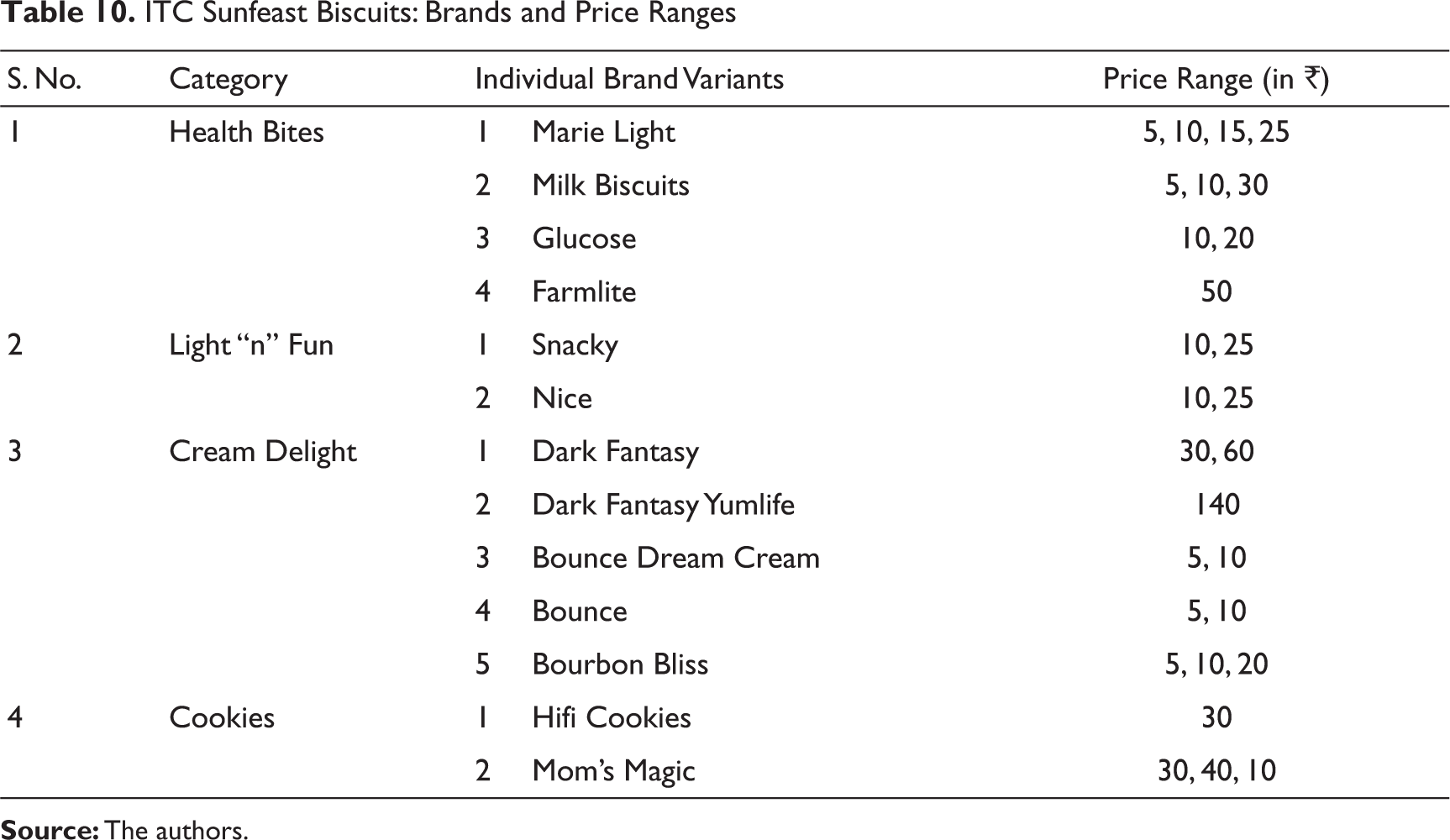
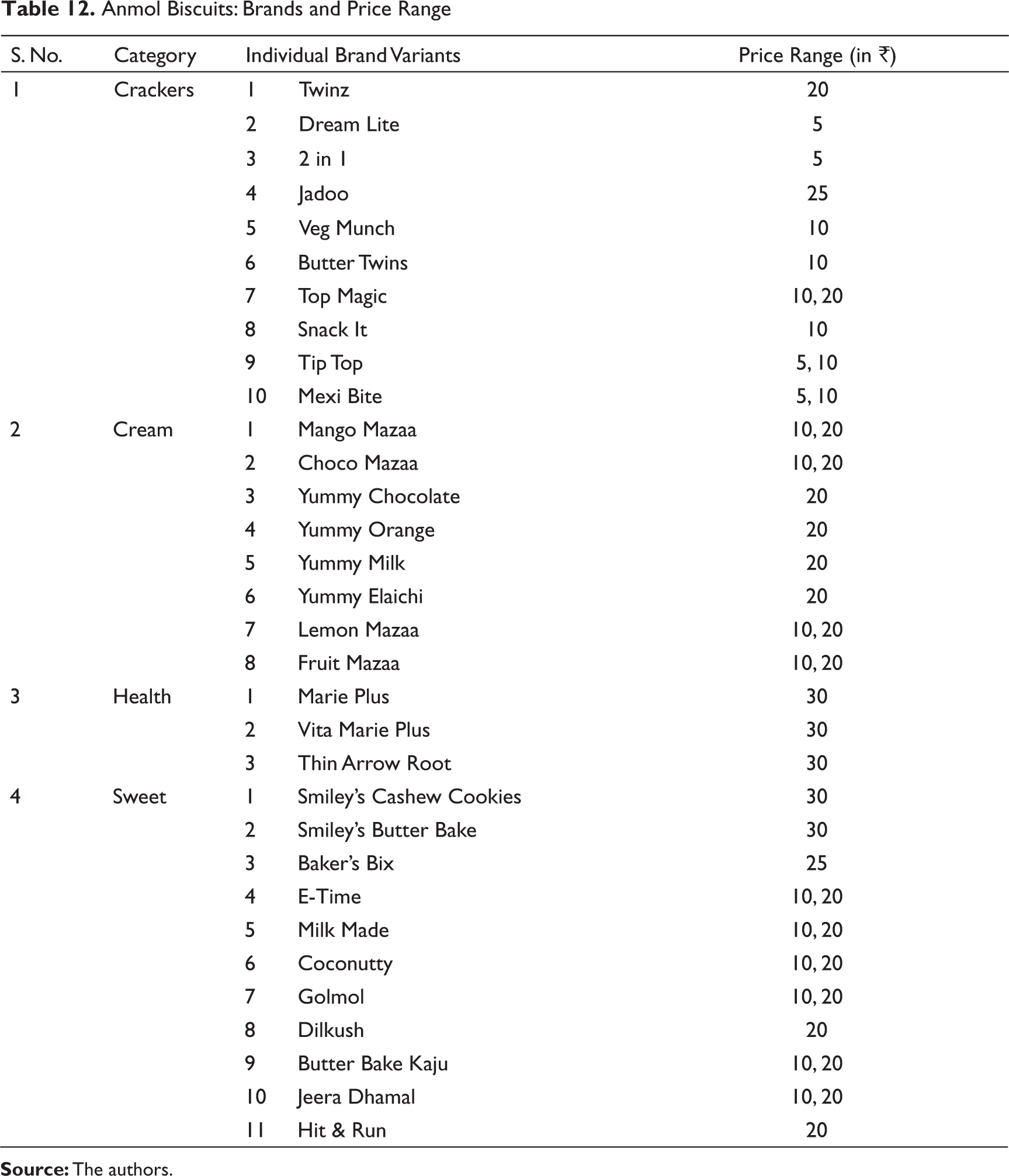
The organized biscuit sector is dominated by Parle Products, Britannia, and Indian Tobacco Company (ITC), which cover almost 70 per cent of the market share in the Indian biscuit market. Apart from these three dominant players, there are minor but important players such as Bakeman’s Champion, Priya, SmithKline Consumer, Kellogg’s, Sara, Heinz, Excelsia (Nestle), and United Biscuits (Table 1 and 7–16). On the other hand, the unorganized sector consists of small bakery units, cottage, and household-type manufacturing of biscuits and confectionaries without brand and packaging and serving the needs of the local market. The Indian biscuit industry was valued at around US$4 billion in 2016 and expected to grow to a double digit for the next few years. The Indian biscuit market is expected to be valued at around US$7.25 billion in the year 2022.
Market Size, Growth, and Segmentation
The Indian biscuit and cookies industry has been growing at an impressive rate of CAGR of 10 per cent since 2015.
India is currently the world’s third largest biscuit-consuming country in volume.
The highest market share among biscuits is held by glucose biscuits with 25 per cent.
Unlike other FMCG products that lack penetration in both urban and rural areas, biscuits and cookies have one of the highest penetration percentages among the FMCG goods (94 and 83 per cent, respectively).
The Indian biscuit market is 80 per cent organized and 20 per cent unorganized. The North and Eastern part of India is driving the maximum consumption of biscuits in India.
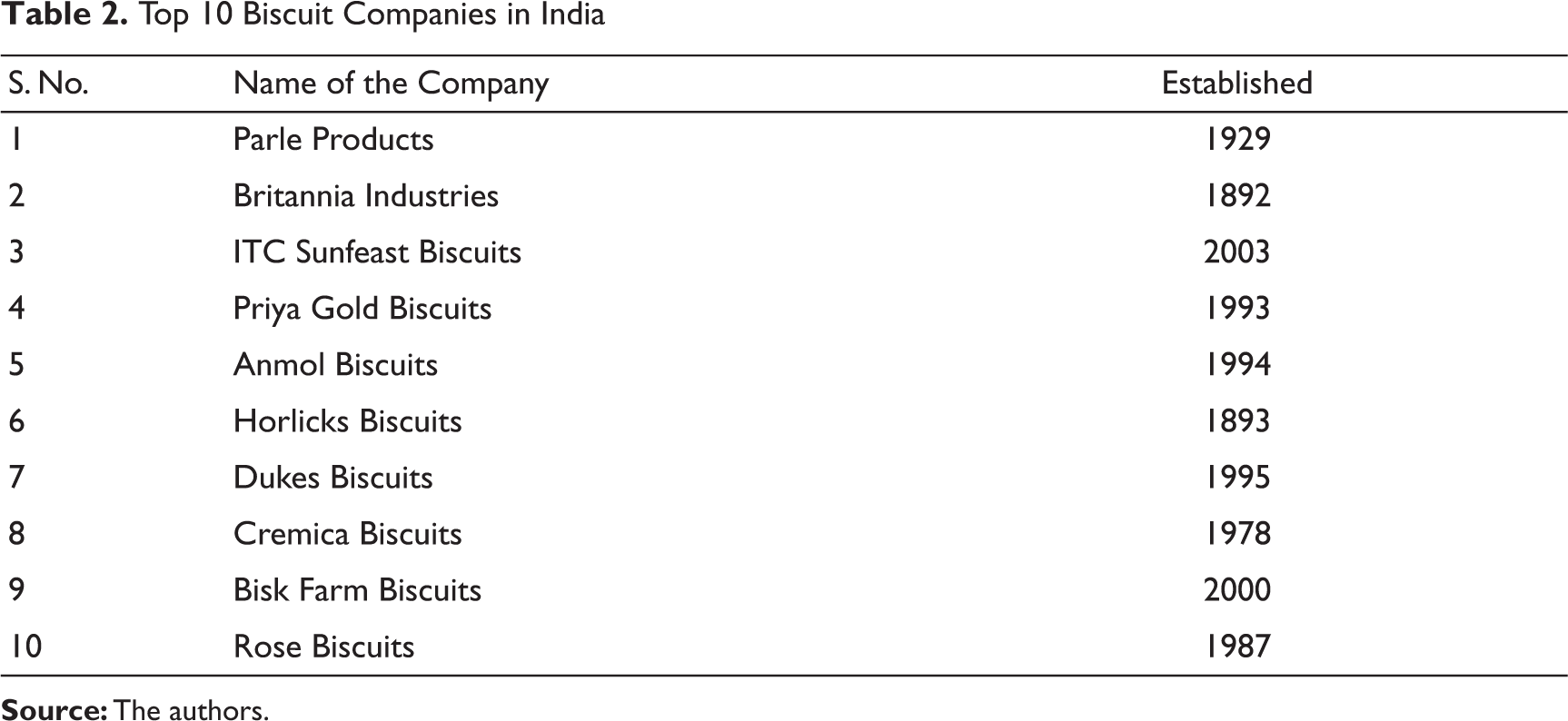
Parle Products, Britannia, ITC, Surya Foods, and Agro are the dominant players in the Indian biscuit industry (Table 2).
Table 1 . Market Share in Biscuit Industry of India: 2018
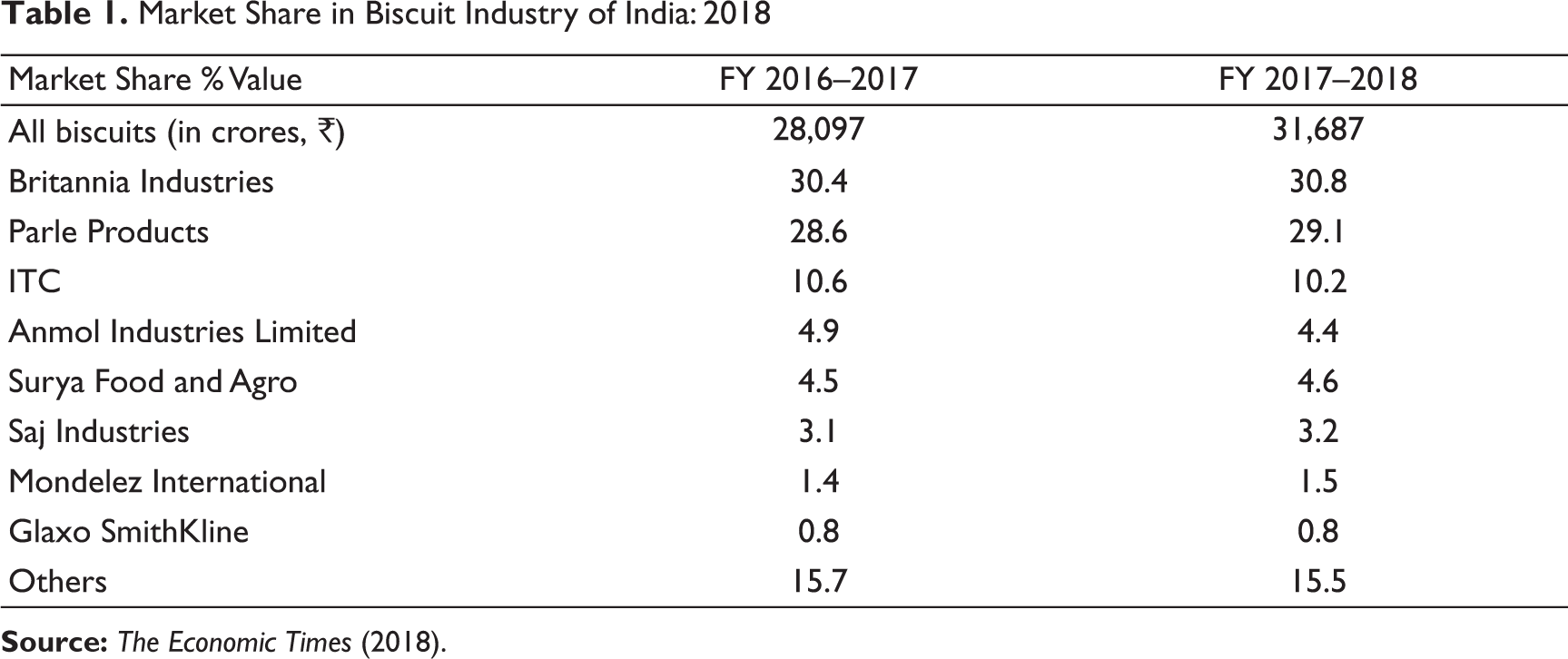
Table 2 . Top 10 Biscuit Companies in India
Recent Trends and Opportunities in the Indian Biscuit Market
Biscuit industry in India has been growing at an impressive rate but still the per capita consumption of biscuits is one of the lowest in the world. The average per capita consumption of biscuits in India is just 2.1 kg against more than 10 kg in the developed part of the world such as the United States and Europe. But enabled by the rising income levels, burgeoning middle classes, rapid urbanization, and exposure to the lifestyles abroad, biscuit consumption in India is increasing slowly but steadily. This rise in the consumption of biscuits is more visible in the case of luxury and premium biscuit segment which is growing at a rate of 15–16 per cent for the last few years. Irrespective of the impressive growth rates recorded in the Indian biscuit industry, this sector is not without its own set of challenges and problems to face. The ever-rising prices of raw materials, changing government tax rules and regulation, highly fragmented market, the intensity of competition, and increased selling costs are some of the challenges being faced by the biscuit manufacturers in India.
The rising level of disposable income, urbanization, change in lifestyles, and exposure to the lifestyles in abroad are triggering the demand and growth of the premium biscuit segment in India.
Biscuit manufacturers in India too are trying to meet the need for new and younger customers by experimenting with new flavors, ingredients, and packaging to attract their attention and increase their market share (Table 7–16).
The rise of the health consciousness among upper-middle-class and lower-middle-class consumers contributing to the popularity and demand for healthy biscuits and cookies such as high fiber biscuits, digestive biscuits, etc.
One new trend to be witnessed in the Indian biscuit market is the popularity and demand for organic foods and organic ingredients and this opportunity in the market is readily exploited by the biscuit manufacturers in India.
Critical Success Factors of the Indian Biscuit Industry
The next wave of growth in the biscuit industry is going to arise from rural India aided by the lower-class and upper-middle-class consumers.
The Indian biscuit market is going to witness lots of investment and expenditure in the distribution in rural India and advertising in urban India. This fragmented and highly competitive market is going to witness the launching of lots of newer brands and products.
The growth of premium and luxury biscuits and cookies is going to increase in both urban and rural areas of India.
Although e-commerce is on the rise in the Indian market, standard grocers are still the main and pivotal distribution channel for biscuit manufacturers in India. The sales of biscuits through e-commerce are still negligible but set to increase their share in the coming years.
Challenges of Indian Biscuit Industry
The imposition of 18 per cent of Goods and Services Tax (GST) on all biscuit segments in 2017 is the biggest challenge for all the biscuit manufacturers in India. This higher tax rate is going to affect their final pricing, demand, and net profit in the long run.
The highly fragmented and fiercely competitive market.
Too many brands and none of the brands have achieved that kind of critical mass to be a successful brand.
Higher advertising and selling costs due to increasing competition.
Parle Products Private Limited
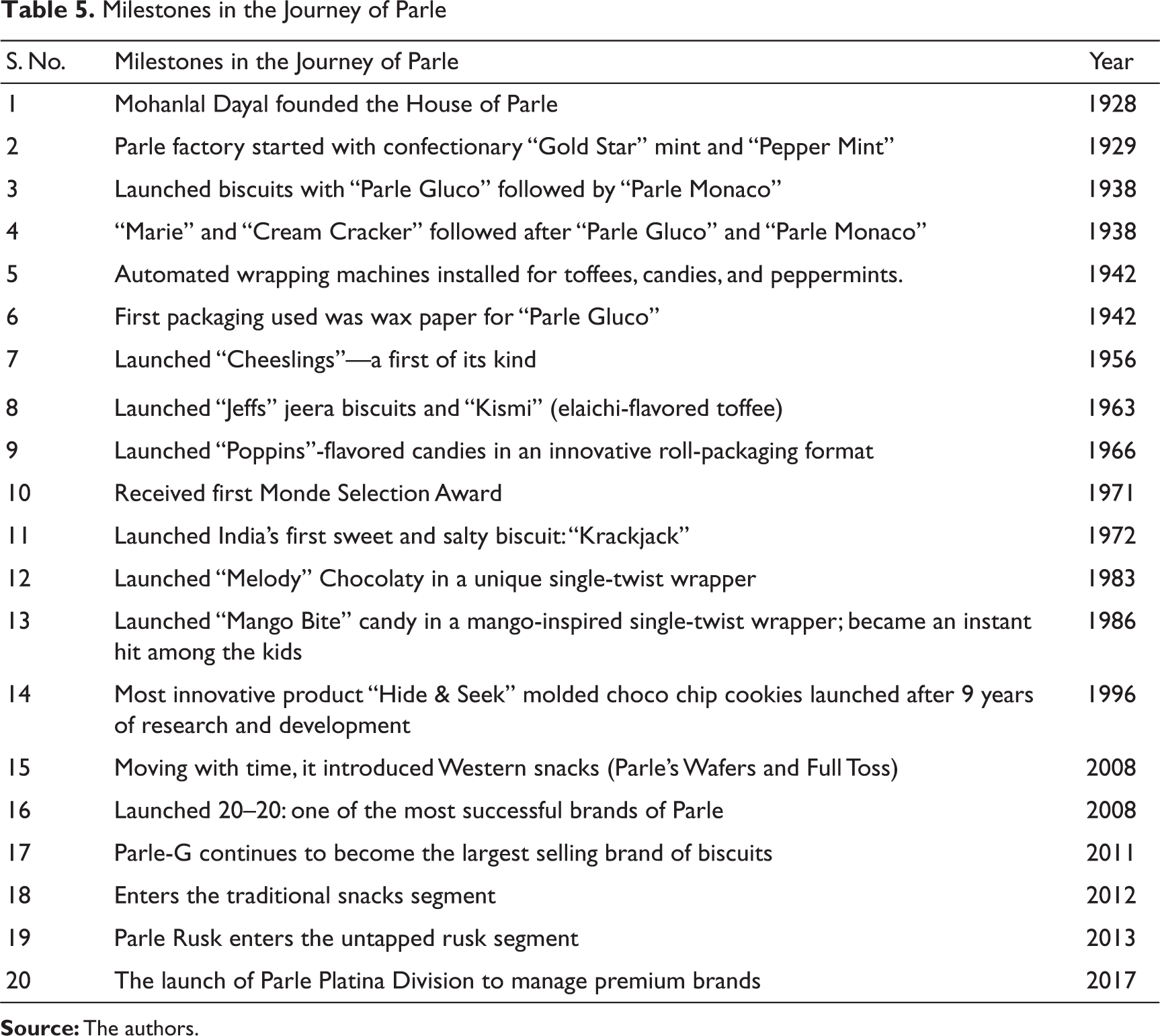
The House of Parle was established by Mr Mohanlal Dayal Chauhan in 1928 and it started its first factory in 1929 with just 12 employees making confectionaries. The iconic biscuit Parle-G was first baked in 1938, and initially it was named as Parle Gluco (Table 5). This was the pioneer and first Indian company to introduce biscuits in the Indian market. Initially, its main customer base was British expats than the local Indians who were reluctant in eating factory-made products due to lack of familiarity with them. After independence, which is barely 9 years later, Parle Gluco had established itself as a strong brand among Indian consumers.


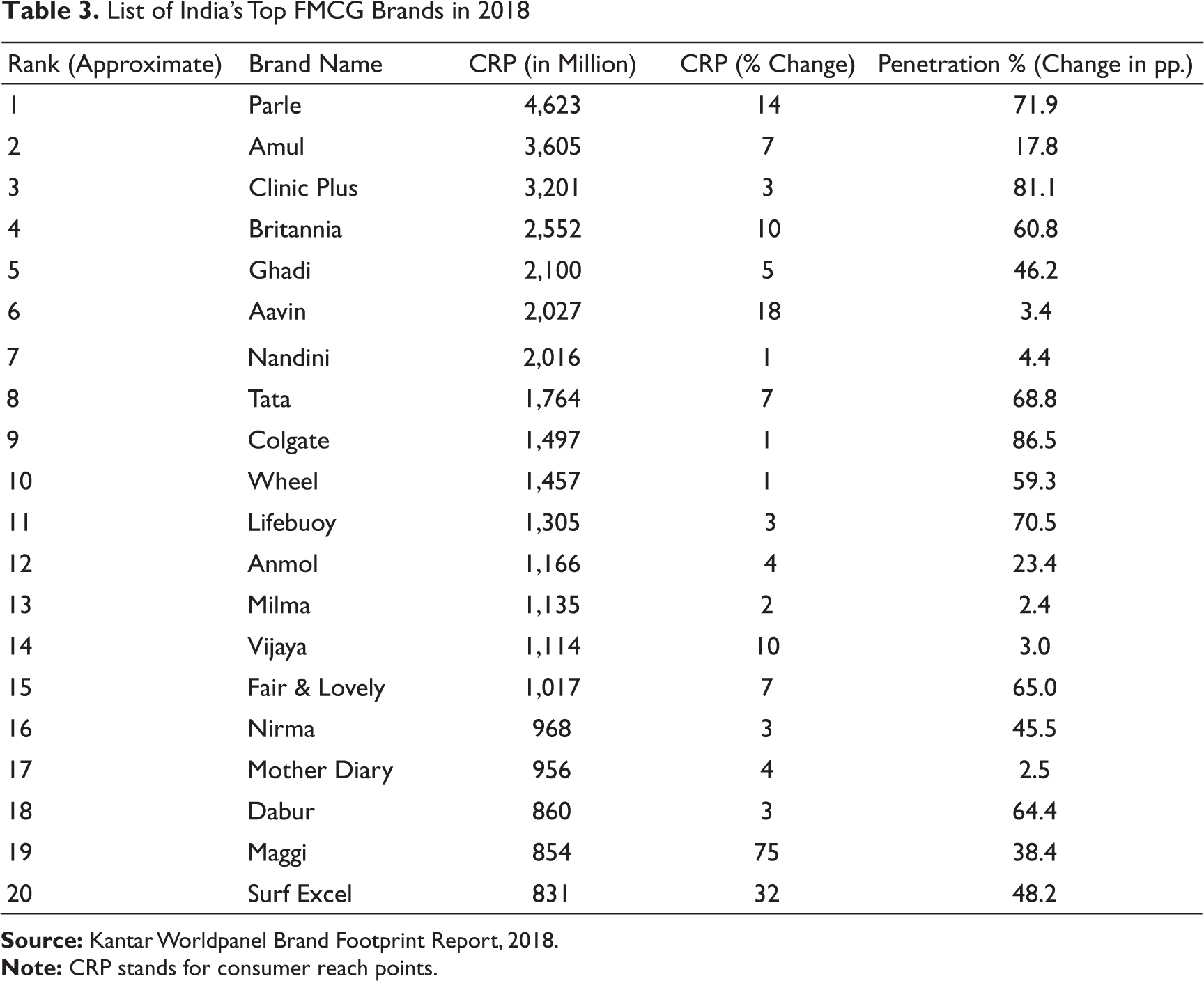
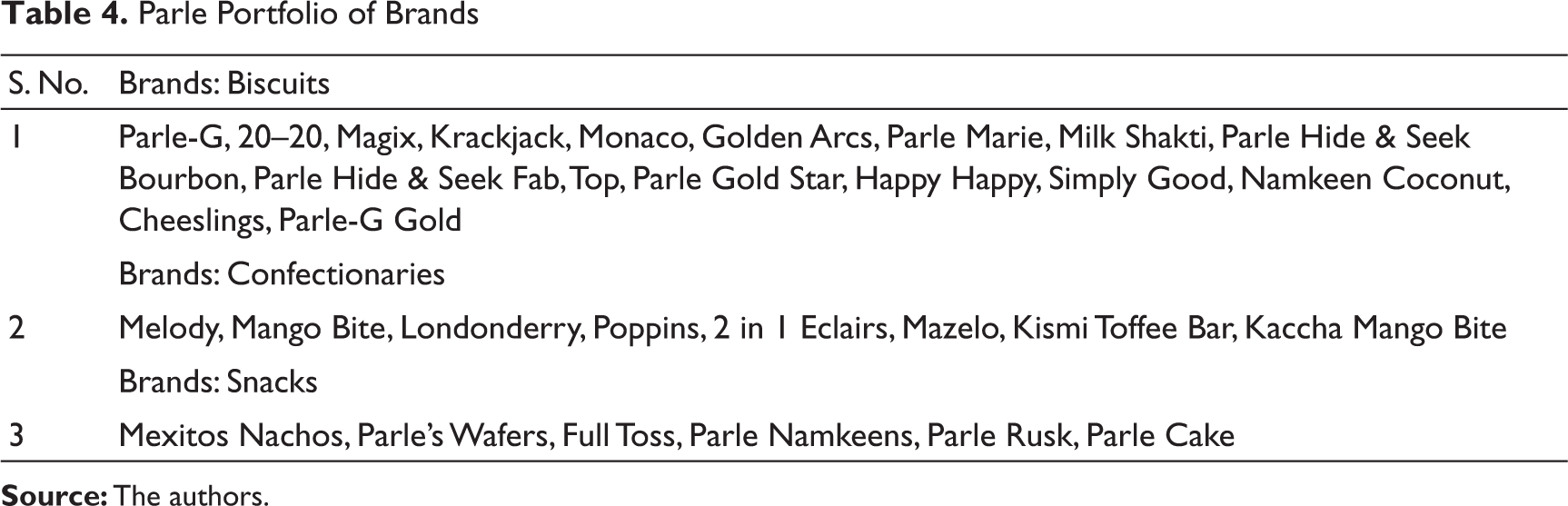
After the independence of India, Parle still retained its pioneering position in the Indian biscuit industry (Figures 1 and 2; Table 3). Apart from manufacturing biscuits and confectionaries, Parle now owns more than 40 brands across different product categories (Table 2). Many of the successful brands from the stable of Parle are category leaders in different product categories such as biscuits, confectionaries, healthy snacks, rusks, and chocolates (Table 4). At present, Parle owns around 45 per cent of the market share of the biscuit industry and 15 per cent of the confectionery market in India (Table 6). In 1950, 1960, and 1970, Parle was split into Parle Products (led by Mr Vijay Chauhan, Mr Sharad Chauhan, and Mr Raj Chahuan), Parle Agro (led by Mr Prakash Chauhan and his daughters Ms Schuhana, Ms Nadia, and Ms Alisha), and Parle Bisleri (led by Mr Ramesh Chauhan), respectively. After conquering the Indian market, Parle has made its entry into the international market, gaining fast acceptance and popularity across South Asian, Southeast Asian, US, and European markets.
Table 3. List of India’s Top FMCG Brands in 2018
Parle Portfolio of Brands
Milestones in the Journey of Parle
Trivia about Parle-G

Platina Division of Parle Products Private Limited
In the last one decade, the Indian biscuit industry has witnessed a metamorphosis as there has been steady and impressive growth in the demand for premium biscuits and cookies, triggered by the increased disposable income, urbanization, exposure to the global lifestyles by frequent globe trotters. Across the world, consumers are gradually seeking for a taste of an extravagant life with more and more brands seeking to “premiumize” their products. The brands aligning themselves with the new cultural rendering of premiumness are experiencing strong sales growth in many markets around the world. As consumers move upward in the economic ladder, their affinity to premium brands grows to achieve a certain level of success. They buy premium products for both rational and emotional reasons, but the latter resonates more strongly in emerging markets where ambitions for status and achievement are high. Premium biscuits have seen an overhaul over the years due to consumers’ increased standard of living and rapid urbanization. They also look for more variants and quality products because of their overseas exposure and become Westernized in their behavior. Therefore, mainstream brands have a ripe opportunity space to provide premium products that are still affordable.
This premium segment of biscuits is growing at an impressive rate of 15–20 per cent per annum and currently account for 60 per cent of the Indian biscuit market and set to grow faster. As a result, many of the Indian and foreign biscuit companies in India have set up their own premium divisions to launch a premium brand of cookies and biscuits. This shift by the Indian and foreign biscuit companies is logical as the premium variants of biscuits, cookies, and snacks keep up the profitability and drive the growth in revenue and market share. For example, Britannia, the first one to make a foray into the premium segment, earned a net margin of 9.81 per cent in the year 2016 and Parle net margin stood at just 5.3 per cent. Therefore, to get a foothold and get a bigger market share in the ever-growing premium segment, in the year 2017, Parle Products Private Limited has formed a new division called Parle Platina that will handle its premium products.
The logic behind the launching of the new division is stemmed from the fact that Parle Products is known for its “value-for-money” brands, whereas the new, indulgent, premium, and aspirational brands are needed to be handled and marketed differently. The aim of the new division is to establish a strong foothold in the premium segment by consolidating indulgent and aspirational products from Parle’s current portfolio including Hide & Seek biscuits, Milano cookies, Mexitos Nacho chips, and Simply Good range of nutritious products (Table 7 and 8). Speaking about the newly launched Parle Platina division, Shah, Category Head said that Parle Platina stemmed from the extensive research that showed that Parle needed a rejuvenated approach to reach consumers in the premium segment. While the products in this range exude our core values of trust and great quality, they also offer indulgence, premium taste, and a feeling of aspiration. The products in the Platina division contain ingredients that are carefully selected and sourced from around the world, making every bite a delight. Through this campaign, we want consumers to recognize that Parle caters to consumers with varying and evolved tastes and preferences. The company is also aiming to step up the investment for increasing the distribution of its premium products. The premium products currently provide 15 per cent of the total revenue and are expected to provide at least 25 per cent of the total revenue at the end of the fiscal year.
Parle products are ramping up the direct distribution of the Parle Platina product range to about 2 million outlets from the current 1.4 million outlets in the top 30–40 metros across the country. Apart from this investment, Parle Products also makes investments on distribution and brand building initiatives for the Parle Platina range of products. The setting up of the Parle Platina division has made Parle Products more ambitious in the premium and luxury biscuit segment as it intends to grab 50 per cent of the super-premium biscuit market in the next 1 year. At present, the premium biscuit segment is dominated by Britannia, Parle, and ITC.
The Launch of Nutricrunch Range under Platina
Parle Platina also recently launched Nutricrunch-a healthy range of biscuits with an array of offerings like Nutricrunch Digestive, Nutricrunch Honey & Oats, Nutricrunch Lite Cracker. The launch of a healthy range of products is inspired by the growing demand for healthy snacking options among Indian consumers. Parle Platina’s Nutricrunch range of biscuits is made from the finest wholesome ingredients and the goodness of natural produce. Nutricrunch Digestive is one of the only biscuits in India that is enriched with superfood jowar offering multiple health benefits like high fiber content, high antioxidants count and diabetes management. Additionally, Parle’s extensive research prior to the launch resulted in each Nutricrunch pack incorporating the unique health benefits of the respective variant prominently on its face. This has been designed to ensure that consumers have easy access to the information they often seek while buying healthy foods. Nutricrunch range of biscuits, priced at ₹20 per 100 g offers consumers yet another innovative offering through Parle Platina and set to reshape the healthy snacking category in India.
Speaking about the launch of the Nutricrunch range of biscuits, Shah commented It is a well-established fact that Indians are getting extremely health conscious and are constantly looking for wholesome products that offer multiple nutritional benefits. With Nutricrunch, we plan to offer consumers a healthy snack that is not just high in fiber but also aids multiple lifestyle issues prevalent in today’s fast-paced world like weight management, sugar control, cholesterol management, and nutrient deficiency. With its quality ingredients and unique taste, Nutricrunch epitomizes a quality living and is Parle’s promise of health and wellness to its customers
Parle Products Price Range

Table 8 . Product Categories and Brands Under Parle Platina Portfolio

Britannia Biscuits: Brands and Price Range
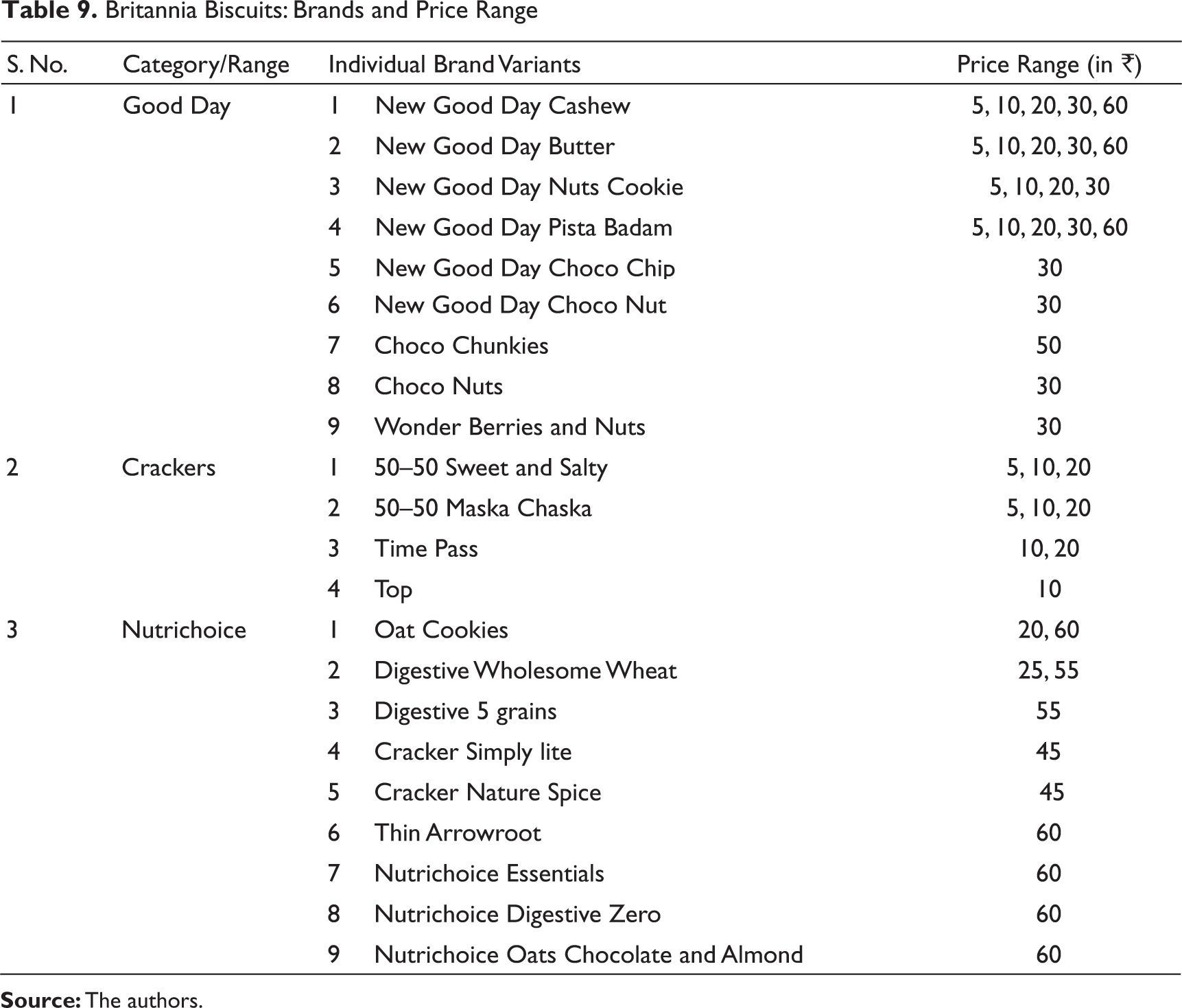
ITC Sunfeast Biscuits: Brands and Price Ranges
Priya Gold Biscuits: Brands and Price Ranges

Anmol Biscuits: Brands and Price Range
Dukes Biscuits: Brands and Price Range

Cremica Biscuits: Brands and Price Range

Biskfarm Biscuits: Brands and Price Range

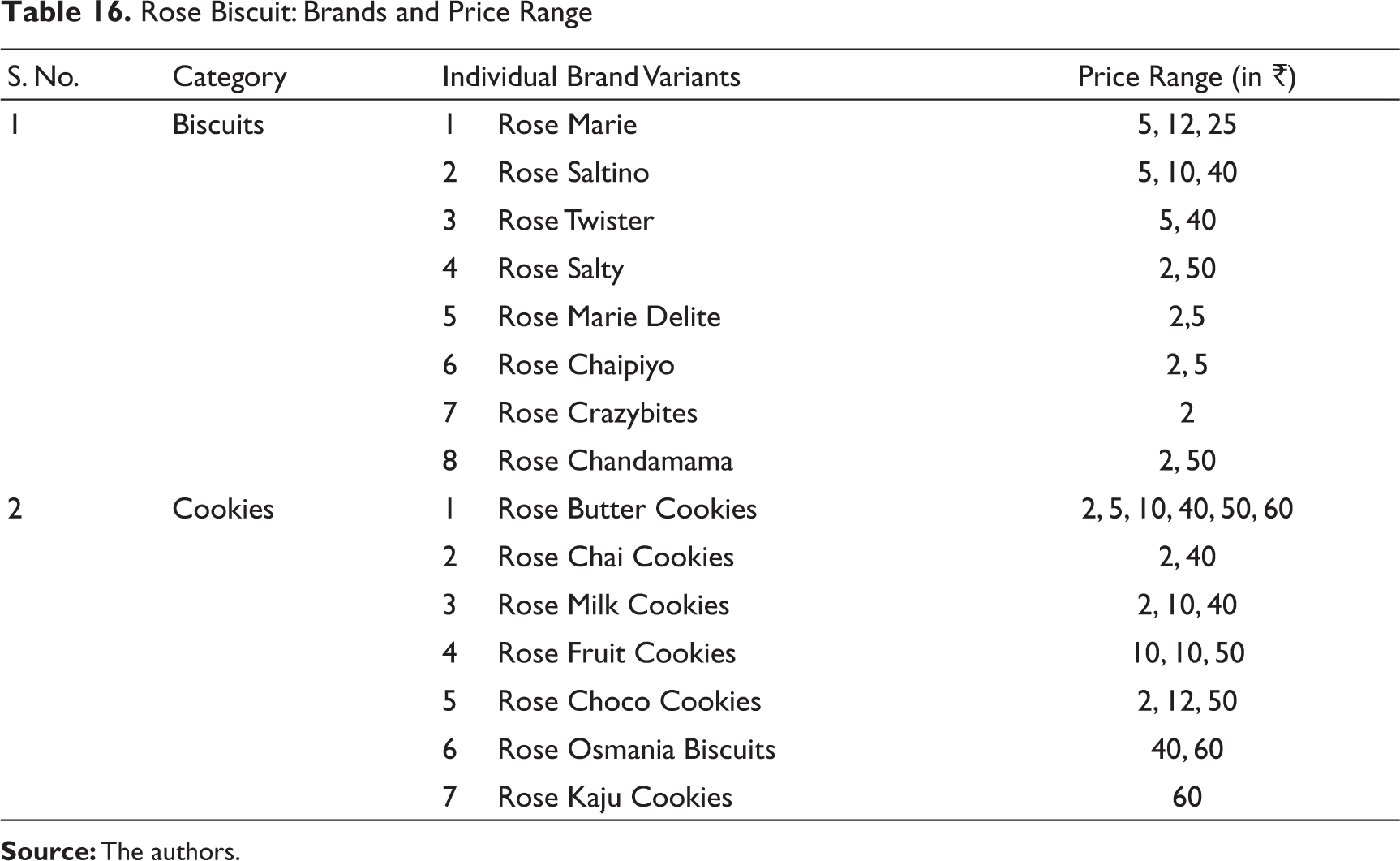
Rose Biscuit: Brands and Price Range
Challenges Ahead
Although the optimism exhibited by Shah is valid, the acceptance of such premium biscuits is very less in rural India wherein Parle is still known as mass or value-for-money brand and its loyal customers are highly price sensitive, despite their higher disposable income when compared with the last few decades. Whereas, in the urban markets where premiumization of the biscuit market is on the ascendancy, Parle is a late entrant when compared with its rivals who are well entrenched themselves as first movers in the premium segment of biscuits and cookies. On the other hand, the other bigger challenge before Shah is that their coveted market share in the mass biscuit market is also under threat due to rising prices of raw materials and rising taxes on the biscuit industry. Likewise, the image of the Parle brand in the mind of customers is mass and, in short, “relevant for all.” For a mass brand such as Parle to go through the transformation of premium brand demands huge costs, change of imagery, a carve of nice in the premium category of biscuits. As premium brands are not built overnight, this process of transformation from mass to premium brand demands the provision of emotional attributes and aspirational benefits to the customers and it could be a long-drawn process. The shedding of the mass brand image involves lots of costs in terms of promotion and advertisements affecting the profitability of a company such as Parle. So what is the way forward for Shah? Should he be content and in the comfort zone of being a market leader in the mass biscuit market? Should he chase the premiumization dream through Platina division?
Teaching Note
Case Synopsis
Parle products have been one of the foremost pioneers of the biscuit and confectionary industry in India. Since its inception in 1929, Parle has been synonymous with quality, nutrition, taste, and affordability in India. Having more than 40 brands across different product categories in its portfolio, Parle Products has come a long way. It is a brand that has made Indians habituated for consuming biscuits. The biscuits business of Parle Products contributes to around 84 per cent of its business today. The name Parle is always synonymous with its iconic brand Parle G and has always been closely associated with the Indian masses for around 80 years. Due to the enormous success of brand Parle-G, the mother brand Parle has been associated with values of affordability and quality. Parle has always been a strong player in the value segment and thus customers associate all brands of the company as being the affordable brand with quality. While the industry peers such as Britannia and Indian Tobacco Company (ITC) have positioned themselves as a champion of premium segments, whereas Parle Products is still known as an affordable or budget brand among Indian masses.
Considering the increasing demand for premium biscuits among the new generation of consumers, Parle Products has introduced the new division Parle Platina in 2017. But the transformation of “value” or “budget” brand into the luxury and premium brands is not easy, as the legacy of value brand among the masses is not easy to shake off. This becomes more difficult and challenging in a highly fragmented, competitive, and price-sensitive biscuit market like India. Another problem for the Parle Products is to hit the sweet spot between the mass market and the premium demographic which the brand is currently missing out in a highly fragmented and competitive Indian biscuit market.
Case Teaching Objectives and Placement
This case is written to help the students to understand the perils and challenges involved in premiumization when a brand like Parle, which is known for its value for money and affordability, attempts to premiumize its offerings to move up in the value chain. Specifically, this case attempts to make students understand the importance of having a long-term branding strategy in a highly competitive biscuit market dominated by strong domestic and foreign competitors. This case can be used in MBA, undergraduate, and executive education courses on strategic management, marketing strategy, and branding strategy.
Teaching Objectives
The following are the objectives of this case:
This case offers insights into the theory of premiumization, how to spot the opportunities for creating premium brands, strategies for the creation of premium brands, how to move up in value chain by creating premium brands and pricing decisions.
This case offers varied arguments in favor and against companies pursuing “low cost” versus “premiumization” in the context of the biscuit industry in India.
This case provides a detailed narration about the challenges and perils of mass brands trying to become premium brands.
This case highlights the importance of having a long-term branding strategy for biscuit companies in a highly competitive, fragmented, and dynamic biscuit market in India.
This case provides a deep analysis of the advantages and disadvantages of adopting volume (affordability)-based growth and value (premiumization)-based growth in the Indian biscuit industry.
Assignment Questions
Is Parle still largely perceived to be a “mass” brand?
Is premiumization suitable for a legacy brand like Parle?
Can Parle shake off its “mass” and “budget” image and transform itself into a Premium Brand?
Will consumer perceive Parle brand as premium and worth a higher price?
Is the creation of Parle Platina as a new division will pay off in the long run?
Overview of Classroom Discussion
0–5 min: Introduction
5–15 min: Readings Discussion
15–25 min: Question 1: Is Parle still largely perceived to be a “mass” brand?
25–35 min: Question 2: Is premiumization suitable for a legacy for a brand like Parle?
35–45 min: Question 3: Can Parle shake off its “mass” and “budget” image and transform itself into a Premium Brand?
45–55 min: Question 4: Will consumer perceive Parle brand as premium and worth a higher price?
55–65 min: Question 5: Is the creation of Parle Platina as a new division will pay off in the long run?
65–90 min: Wrap up and Conclusion
Discussion Plan
Is Parle Still Largely Perceived to be a “Mass” Brand?
The name Parle is always synonymous with its iconic brand Parle-G and has always been closely associated with the Indian masses for around 80 years. Due to the enormous success of brand Parle-G, the mother brand Parle has been associated with values of affordability and quality. To shun off its “mass” image and “value” brand, Parle has made series of efforts and launched a premium version of its biscuits. For example, “Parle G Magix” in double tastes of “Cocoa” and “Cashew” was launched in 2002 and in the same year; “Parle G Milk Shakti” was also launched for the southern markets with the flavors of honey and milk. But Parle could never shake off the “mass or budget brand” image attributed to it by the masses and is still considered to be a low-cost product targeted toward the general population. Parle has always been a strong player in the value segment and thus customers associate all brands of the company as being the affordable brand with quality. While the industry peers such as Britannia and ITC have positioned themselves as a champion of premium segments, Parle Products is still perceived to be a “budget or mass” brand.
To shake off the “budget or mass image,” Parle has launched an advertising campaign “Naam to Suna Hoga” aligning all its existing premium brands with the mother brand Parle. The idea behind the advertising campaign was to let the equity of the mother brand rub off on bigger and premium brands. It was followed up with an advertising campaign for the confectionery range with the campaign title “Naam Toh Yaad Rahega” to align its confectionary range of brands to align with the mother brand “Parle.” These two advertising campaigns have resulted in an increased advertising budget up to 15 per cent and almost around ₹ 20 crores were spent on its new luxury and premium division, Parle Platina. However, this change in image is creating a lot of challenges for the company entering into the premium segment. For example, Hide & Seek is finding it difficult to slot itself between economy and premium brands. Even in terms of advertisements, Hide & Seek, which was earlier known as an economy brand, is unable to get slotted into the premium brand portfolio. Therefore, it is safe to say that Parle Products still earns its maximum revenue from its flagship brand Parle-G and Parle Products name is synonymous with its flagship brand Parle-G and still continues to be perceived as “mass” brand.
Is Premiumization Suitable for a Legacy Brand like Parle?
The only way for a legacy brand to be relevant to the changing times and consumers is to evolve with their customer by contemporizing and renovating their brand portfolio. One of the most tools of contemporizing for the legacy or heritage brand is to premiumize its brand portfolio. Premiumization is an attempt in upgrading the perceived or real quality of its offerings to the new age and new band of the customer base. But this premiumization is a double-edged sword for the legacy brands, as it can cut both ways. Legacy brands achieve different and multiple meanings based on their usage, consumer perceptions, perceived value, and real value in the minds of the consumers. Some of these traits of legacy brands can work for premiumization and some may work against the process of premiumization, such as having a reputation as the “mass” brand or “budget” brand. This kind of image for a brand can be a liability for the legacy brand aiming to be the premium brand. Moreover, it was empirically proven by various studies that premiumized legacy brands do not generate the level of interest viral word of mouth that brands born premium do.
In the case of Parle Products, they have chosen the middle path as they have launched a new division, Parle Platina, to manage and grow a portfolio of luxury and premium brands. They have also smartly launched timely advertising campaigns to popularize their new luxury division in the much popular Indian Premium League (IPL) Cricket Championship. Moreover, unlike stand-alone legacy brands trying to become an overnight premium brand, Parle Products has launched new brands under its new luxury division and shrewdly leveraged the legacy of “mother brand” Parle Products in their advertising campaigns. Moreover, the newer and younger premium brands are being shielded from the “budget” or “mass” image of Parle-G by the Platina division. Therefore, consumers will gradually accept Parle as a premium brand pays the higher price than any other contemporary premium brands of biscuits (Figures 1 and 2; Table 3).
Can Parle Shake Off Its “Mass” and “Budget” I mage and Transform Itself into a Premium Brand?
Parle Products has dominated the mass market like a colossal in the Indian biscuit market. Its affordable price and high-quality biscuits helped the company to ward off competition for nearly 80 years since its inception. But in the last few years, consumer preference saw a sharp switch as they were looking for premium offerings aided by their increasing disposable income and rapid urbanization. According to the Nielsen, Global Premiumization Report 2016, 54 per cent of consumers define premium products by their high quality, 52 per cent of consumers say buying premium makes them feel good, and 42 per cent of consumers will pay a premium for organic or all natural ingredients. The industry peers such as Britannia and ITC have taken the first initiatives and positioned themselves in the leadership position in the premium category. For some point of time, it seemed like Parle Products was unable to understand the changing behavior of consumers and not able to connect with the new, young, and discerning consumers.
Buoyed by the surging premium segment, which is growing at 15–20 per cent and with the intention of meeting the demands of the new, young, and discerning consumers, Parle has launched a new division, i.e., Platina to establish a strong foothold in the premium segment. Parle Platina was spun off from Parle Products as a separate division to get a strong foothold and later increased its market share in the premium segment. Four of Parle’s 40 plus brands have been incorporated into the Platina range. These include Hide & Seek, Milano, Mexitos, and Simply Good Health range of products in different variants. Being bullish on the growth of the new division, Parle has allotted 50 per cent of its marketing budget to Platina and made significant investments in special distribution projects centered in metros and big cities across India. Encouraged by the positive feedback among the consumers and masses about its advertising campaign and good feedback received on its new brand launches, Parle is hoping to acquire 50 per cent of market share in the super premium biscuit market in the next 1 year, that is, 2019.
Parle Products by launching a separate division Parle Platina dedicated to managing the premium brands has shown prudence in separating the value or mass brand Parle-G from the premium brands in its portfolio. On the other hand, Parle has roped in Ms Twinkle Khanna as brand ambassador for Platina Range and the advertisements use humor to drive home the message. The enrollment of Khanna as a brand ambassador is expected to hit a chord with the urban-working professionals and millennials, a segment Parle Products is trying to attract for its Platina range of products (Figures 1 and 2; Table 3).
Will Consumer Perceive Parle Brand as Premium and Worth a Higher Price?
It is a well-known fact that conventionally Indian consumers are very price conscious and bargain hunters but the newfound prosperity, the rise in disposable income, rapid urbanization, and traveling and exposure to the different parts of the world have made them aware of luxury and premium categories of products and services. Hence, a sizeable section of the Indian masses is willing to experiment with premium and luxury goods and services. As a result, the share of money spent on premium and luxury brands is increasing continuously across all categories of products including the premium biscuits. For example in the case of the biscuit category, 45 per cent of all biscuit buyers purchase both a discount as well as a premium biscuit. At present, premiumization is also not limited to only the upper affluent consumer, with rising aspirational and increasing disposable incomes. We do see premium variants reaching the basket of lower-middle and upper-middle-classes consumers although the penetration levels might not be as high as an upper affluent consumer.
Since that Parle Products has established a separated dedicated new division Parle Platina, granted a separate advertising budget for investing in the distribution channels and brand building activities, a newly appointed brand ambassador (Khanna) to deliver the brand messages to the targeted customer base, and a new whole range of newer brands with the superior quality ingredients and packaging (e.g., Hide & Seek, Milano, Nutricrunch, Mexitos, and Friberg range of chocolates) will definitely evoke a sense of premiumness among the consumers. Moreover, the newer and younger premium brands are being shielded from the “budget” or “mass” image of Parle-G by the Platina division. Therefore, consumers will gradually accept Parle as a premium brand and will be ready to pay the higher price just like for any other contemporary premium brands of biscuits.
Is the Creation of Parle Platina as a New Division will Pay Off in the Long Run?
The creation of Parle Platina is definitely going to pay off in the long run as the Indian biscuit industry is already witnessing a metamorphosis and consumers are moving toward from budget products to the premium and luxury products aided by the higher prosperity and disposable incomes. At present, the Indian biscuit market demonstrates a highly fragmented and sluggish market for glucose biscuits but presents an exciting growth opportunity for premium product players such as Britannia and ITC. KV Sridhar, veteran adman, founder, and CCO at Hyper Collective, observes that while there is a brand affinity for Parle Products even today, “if a legacy brand does not reinvent, it runs the risk of remaining merely as a legacy.” Harish Bijoor, brand guru and founder, Harish Bijoor Consults, said, “A company which has grown into a behemoth of more than 10,500 crores in terms of size, faces many challenges. One among them that Parle was facing is that it was seen as an old company with a set of tried and tested products, which the new generation considered jaded.”
Therefore, the company had to reinvent for a robust future. Both Bijoor and Sridhar opined that Parle Products should have made this split much earlier. They added that with the strong manufacturing, distribution, and market understanding, Parle Products has nothing to worry about. The company has over 100 manufacturing facilities across India and access to about 7 million outlets.
Footnotes
Declaration of Conflicting Interests
Funding
The authors received no financial support for the research, authorship, and/or publication of this article.
Web links