



Abstract
The role of individually perceived and contextual factors on green purchase behavior (GPB) with a focus on the dimensions of consumer perceived value has been evaluated in this research. The basis of the model is a stimuli–organism–response (SOR) 1 framework, and the theory of planned behavior and the theory of consumption values have been combined. The research has been conducted on Iranian green consumers with green purchase experiences. It is an empirical study using the questionnaire survey method. Structural equation modelling (SEM) is utilized to measure the research framework. It has been revealed that individually perceived factors have more impact on GPB than contextual factors in this research. On the other hand, contextual factors do not affect the GPB of Iranian consumers. In addition, perceived social value had less effect on GPB than perceived emotional value. Therefore, the present study was likely proposed to fill the gap of previous studies, deprived of categorized factors affecting GPB focusing on internal and external approaches.
Keywords
Introduction
In recent years, concerns about environmental problems derived from daily consumptions have been extensively noticed by consumers (Kumar et al., 2021). Regarding the growth of environmental awareness in societies, regular green behavior can not only assist the environment to recover the damages but also provide a fertile ground for businesses. Researches indicate that being green-oriented results in higher profit, more extensive market share, higher levels of employee commitment, and much more customer loyalty for companies (Moser, 2015). Furthermore, companies and organizations have already been affected by environmental concerns. Various industries face increasing pressure to become eco-friendlier (Yadav et al., 2016). Business managers have concluded that shaping consumers’ behavioral intentions is more feasible by developing strategies based on their beliefs (Moon, 2021).
Due to the recently emerging green market in Iran and the increase in consumers’ environmental concerns, marketers should consider establishing some novel strategies for green product development. Stimuli for consuming these products should be ascertained before establishing strategies. Persuading several customer segments to make green purchases is feasible through recognizing the primary stimuli of green responses among green customers. Therefore, comprehensive research regarding the factors provoking GPB is required for launching new green strategies.
This research is focused on segments of customers who have environmental concerns and who frequently purchase green products. It has been proposed that the green customers of Bamika store branches of Tehran are the sample of the survey. Bamika Market was initiated in 2006 as a simple fruit and vegetable stand. Today, Bamika has achieved recognition as a green industry leader. There are several branches of Bamika stores in the metropolitan city with numerous products such as green fruits and vegetables, green foods, and recyclable goods such as bags, dishes, and other goods. Located in several locations of Tehran, Bamika stores have promulgated green consumerism culture as a pioneer business in the market.
Despite the soaring prices of organic food compared to other products in Iran, demand for them has not plummeted. More concentration on ecological studies and consumer behavior is required in Iranian society to trace the origins and the beliefs. Consumers believe that organic food is healthier than industrial or processed food (Talwar et al., 2021). It would be elucidated by depicting the current statistics on how much gap exists between the supply and demand of green products in Iran. Regarding the statistics of Iran Organic Association (IOA), there are only 53 green stores in Iran (Ahangarkolaee & Gorton, 2020). Thus, despite the recent inclination of consumers to buy organic products and the influx of customers in green stores, there is not enough supply for ecological products. Moreover, there is a deficiency of extensive models in the academic literature.
Therefore, the stimulants of green consumers can be distinguished by developing extensive models. Consequently, reinforcing these stimulations in non-green consumers would be fruitful for improving green consumerism in Iran. Iran is a contaminated country, and the environmental and health problems rates are becoming inferior every year. Contamination in large cities such as Tehran is extensive (Shafiei & Maleksaeidi, 2020). Studying the motivation of old and recent customers of green stores in such a polluted city would assist in diminishing the environmental problems by propagating green consumerism in society. Tehran is the most populated city of Iran with various cultural and economic strata, and it can be a rational sample for assessing the green consumerism in this country.
Several factors’ direct and indirect impact on green purchase intention (GPI) has been measured to acquire an exhaustive model. It has been postulated that GPI could be a principal predictor of GPB. However, investigating perceived value dimensions have almost been neglected in previous green marketing studies in Iran. In this article, factors affecting GPB are divided into two categories: individually perceived factors and contextual factors. This study is the initial research where factors are categorized into two groups of individually perceived and contextual, focusing on the mediating role of consumer perceived value dimensions in the stimuli–organism–response (SOR) framework. Some offers would give marketers superior insight into consumers’ demands by dividing the factors in a more delineated way. Most previous studies have reviewed the effect of contextual factors’ role (Nair & Little, 2016) and the marketing mix on customer GPB (Davari & Strutton, 2014). To delve more into it, they mainly concentrate on the impact of organizational roles regarding marketing mix in developing green products in the market.
In this sense, a series of hypotheses linking the individual and contextual factors with the mediating role of perceived value dimensions and GPI are put forward. It aims to partially fill the theoretical gap among the past studies that partially evaluate the influential factors of GPB. In most cases, proposing a framework to focus on the stages of decision-making in purchase behavior with the mediating role of a dimensional value-based model has been neglected in past studies. Distinguishing the psychological states of consumers’ minds while purchasing green products is attainable through such a model.
Literature Review and Hypotheses Development
Stimuli–Organism–Response Framework
An SOR framework is proposed to examine the behaviors (responses) by distinguishing the internal states of mind (organism) that have been activated by environmental factors (Mehrabian & Russell, 1974). Mehrabian and Russell suggested that SOR is applicable in evaluating the environmental effect on customer behavior. Several research in retailing proposed SOR as a framework. A structured framework is provided to distinguish the impact of environmental stimuli on consumers’ emotional and cognitive states of mind and their responses to purchase behaviors (Liu & Zheng, 2019). Plenty of research has been done utilizing the SOR framework to evaluate purchase behavior in various industries; however, the influence of the model proposed by Mehrabian and Russell had never been gainsaid (Goi et al., 2014).
Regarding the utility of SOR in academic research, researchers have seldom applied the SOR in sustainability and green marketing, for example, Gil and Jacob (2018), who applied the SOR and theory of planned behavior to investigate the relationship between green perceived quality and GPI. In studying the sustainable purchase intention by an SOR framework, Chang and Jai (2015) proposed consumer perceived value as organism and general purchase intention and sustainable purchase intention as responses of the model. Furthermore, the SOR framework has been applied to two groups of external and internal factors as stimuli in measuring their effects on green product buying as a response (Piligrimienė at al., 2020). A research model was developed by applying the SOR framework in an earlier study to explore the relationship between stimulus (perceived information technology and social presence) derived from online reviews and the response (purchase intention) (Zhu et al., 2020).
Few researchers have applied the SOR framework to sustainability models and green marketing issues. Studying the design of green buildings, Mansour and Radford (2014) suggested that the SOR model could foster more positive attitudes and behaviors toward a sustainable environment. Chang and Jai (2015) applied the SOR framework to develop sustainable strategies for fast-fashion retailers. The attribute and benefit approach as stimuli and perceived price value, perceived corporate social responsibility (CSR) efforts, and perceived brand equity as organisms have been examined. Sustainable purchase intention was hypothesized as the response in their model (Chang & Jai, 2015).
Contextual and individually perceived factors have been hypothesized as the stimuli of the SOR framework, and perceived consumer value was postulated as the organism categorized into emotional and social dimensions. Therefore, GPI is defined as the response. In past research, consumer perceived value dimensions, including social and emotional value, were defined as organisms of the SOR to investigate consumer online purchase intention (Fan et al., 2012). In addition, recent research has postulated that green buying behavior has responded to several stimuli and organisms (Tandon et al., 2021).
Green Purchase Behavior
Individually, environmental behavior is a protective behavior derived from the environmental consciousness. Purchase motivation is provoked by the ecological consciousness of consumers (Rejikumar, 2016). GPB is the consumption of recyclable products that are beneficial to the environment (Dagher & Itani, 2014) and the acquisition of goods and services that have a minimal effect on the environment. It is often followed by the GPI of consumers who are willing to spend money on such products (Zaremohzzabieh et al., 2020). It has been proved in a study in Gilan province of Iran that GPI has a positive and meaningful relationship with GPB (Vazifehdoust et al., 2013).
The significant effect of individually perceived factors, including perceived consumer responsibility (PCR) and perceived consumer effectiveness (PCE), on GPB has been measured in past research (Dagher & Itani, 2014).
Green Purchase Intention
The probability that a consumer desires to have an organic product resulting from his/her environmental necessities is called GPI (Kong et al., 2014). It has been studied numerously in past research. In this study, GPI is proposed as the predictor of GPB regarding the indispensable effect of green behavioral intention on GPB (Silva et al., 2021). Moreover, it is suggested that consumer perceived value dimensions could affect GPI. According to the literature, the purchase intention is an example of probability and the consumer decision-making process is a principal framework for the relations between individually perceived factors, contextual factors, and values known as situational factors. Values indicate what is meaningful, correct, profitable, and pleasant for people in their lives and can be defined based on their culture (Afroz et al., 2015). Culture is defined as a situational factor in the consumer decision-making process model.
H1: Green purchase intention has a positive effect on green purchase behavior.
Consumer Perceived Value
Value orientation is defined as following the fundamentals regarding desired situations and outcomes by affecting people’s feelings concerning many entities around them (Chi & Kilduff, 2011). In the past studies, consumer perceived value has been developed to include several dimensions because the concept of a trade-off between perceived value and perceived monetary sacrifice was somehow superficial and not elaborated adequately (Chi & Kilduff, 2011). Therefore, consumer perceived emotional value and consumer perceived social value dimensions are selected in this research. An individual’s motivation to do activities, choices, and judgments are based on his/her values. The values of most consumers are based on individual psychology, sense of self, and social (subjective) norms. Hence, values are a collection of beliefs that are in line with personal and social interests (Wesley et al., 2012). Consumer perceived emotional value is a perceived utility that can cause emotional motivation (Candi & Kahn, 2016).
Even though not much attention has been paid to the impact of value orientation on GPB, products are not always bought by people for the welfare of their nature or health. Instead, customers buy goods for the sake of their feelings (Quoquab et al., 2020). Therefore, evaluation of the impact of value dimensions should be considered to trace these feelings engendering ecological buying behavior; furthermore, GPI is affected by perceived value dimensions (Watanabe et al., 2020). In past papers, the impact of some internal and external factors on the purchase intention of smartphones was argued with the mediating role of Consumer perceived value among Malaysian working professionals (Haba et al., 2017). Regarding the past literature, emotional and social value dimensions are postulated as the mediating variables between internal and external factors and GPI.
H2: Perceived emotional value has a positive effect on green purchase intention. H3: Perceived social value has a positive effect on green purchase intention.
Individually Perceived and Contextual Factors
Engaging the recently emerged green marketing with fast-growing activities undeniably influenced consumers’ knowledge and led them to ecological purchases. This evolution in individual behavior and attitude toward consumption consequences can result from internal or external pressures (Delafrooz et al., 2014). Factors affecting GPI have been divided into internal and external factors (Chu, 2018).
Some researchers suggested that it is impossible to predict behavior without considering contextual factors and social situations (MacLean, 2015). Therefore, evaluating the relationship between contextual factors and behavioral intention engendering green product consumption with the mediating role of perceived value dimensions was conducted with the theory of consumption values in the past (Biswas & Roy, 2015).
Individual factors assumed to affect GPB have been examined by measuring demography or personality characteristics as constructs of the models. This study aimed to focus on individually perceived factors because most of the past studies demonstrated that behavior is substantially related to the psychological element of perception. Perception is the process of choosing, organizing, and interpreting individual stimuli and motivations. Perception is based entirely on our requirements and expectations, and is different from one person to another (Nguyen & Gizaw, 2014). Accordingly, subjective (social) norms have been postulated to be in the external division, and perceptive factors were assumed as internal factors in the past studies (Chu, 2018).
Regarding the definition given further, social (subjective) norms and environmental visibility (EV) are the factors that are related to the basic concept of society and public affairs. Because of the recently emerged green market in Iran, primary factors have been chosen in this study. These factors are from the customers’ points of view, and not the product aspects or the company’s perspective.
Perceived Consumer Responsibility
PCR is personal respect for environmental issues that contribute to improving environmental quality. It considers being emotionally involved in environmental issues and protecting the environment by taking some personal responsibilities (Kumar & Ghodeswar, 2015). According to other definitions, it is defined as the extent of people’s feelings to mitigate the damage to the environment (Jaiswal & Bihari, 2020). Additionally, perception is an individual, internal, and unique affair. Hence, PCR is a perceptual factor. PCR is an intrinsic and individual type of social responsibility. It has been confirmed in past studies that social responsibility has a strong effect on emotional, social, and functional dimensions of consumer perceived value. These three dimensions can be increased or decreased by social responsibility (Green & Peloza, 2011). Based on the SOR framework, PCR has been assumed as a stimulus and an internal factor in distinguishing its effect on GPB (Piligrimienė et al., 2020). Furthermore, the significant and positive relationship between PCR and GPI has been confirmed (Lu et al., 2014).
It has been proved in a study that the customers’ perception toward CSR has a notable effect on perceived values (Servera-Francés & Piqueras-Tomás, 2019).
H4: Perceived consumer responsibility has a positive effect on perceived emotional value. H5: Perceived consumer responsibility has a positive effect on perceived social value.
Perceived Consumer Effectiveness
PCE has defined the extent of consumers’ beliefs that the ecological behaviors would contribute to preserving health and the environment from severe damages (Rahman et al., 2020). PCE modifies individual behaviors, and it can be connected to the purchase intention of organic products, which contributes to environmental affairs.
People would be persuaded to engage more in environmental activities with noticeable effects, perceiving more effectiveness. Consumers will buy green products if the belief that their purchase behavior will help preserve the environment is entrenched in their minds. It has been estimated that a positive and meaningful relationship exists between PCE and GPI (Kabadayi et al., 2015). According to the structure of this study, PCE has been assumed as a stimulus and an internal factor in distinguishing its impact on GPB (Piligrimienė et al., 2020). Furthermore, preceding studies on GPB revealed that PCE had a positive effect on values. In the theory of value-attitude-behavior, PCE has a significant impact on values (Tan, 2011). In past studies, the positive impact of PCE on GPB in Bangladesh has been found with the mediating role of GPI (Rahman et al., 2020). Likewise, it has been estimated that PCE is a predictor of GPI (Rahman et al., 2020).
H6: Perceived consumer effectiveness has a positive effect on perceived emotional value. H7: Perceived consumer effectiveness has a positive effect on perceived social value.
Social (Subjective) Norms
Social norms (SN) are defined as social pressure affecting the decision-making and the execution of a particular behavior (Zahan et al., 2020). In other words, social (subjective) norms are the interpretations of the behaviors that affect other persons’ gain. The norms have no effect when only one person is involved in a decision-making process. SN and consumer motivations prioritize the impact of family, friends, and acquaintances on individuals’ behaviors. Were it not for the persuasion of family and friends to consume green products, most individuals would not be convinced to consume them. SN is the pressure resulting from society and an assortment of beliefs accepted by reference groups. Results of the research exhibited a meaningful relationship between SN and GPI of organic fast food (Othman & Rahman, 2014). Likewise, past studies have confirmed the impact of SN on GPI (Zahan et al., 2020).
H8: Social (subjective) norms have a positive effect on perceived emotional value. H9: Social (subjective) norms have a positive effect on perceived social value.
Environmental Visibility
EV has been defined as the availability of observing environmental activities done by other people in society. In this study, EV has been proposed as the consumer observation and awareness of other people engaging in environmental activities. It is suggested that the visibility of ecological solutions will make them perceptible and valuable. The more environmental activities are conducted by people, the higher the resulting EV. As a consequence of augmenting the visibility of ecological activities, the GPI will also increase (Wang, 2014). Preceding research has considered EV a social factor affecting GPI and has a positive relationship (Wang, 2014). Extending the visibility of environmental activities would result in more people buying green products (Ghouri & Haq, 2018).
H10: Environmental visibility has a positive effect on perceived emotional value.
H11: Environmental visibility has a positive effect on perceived social value.

Research Methodology Data Collection
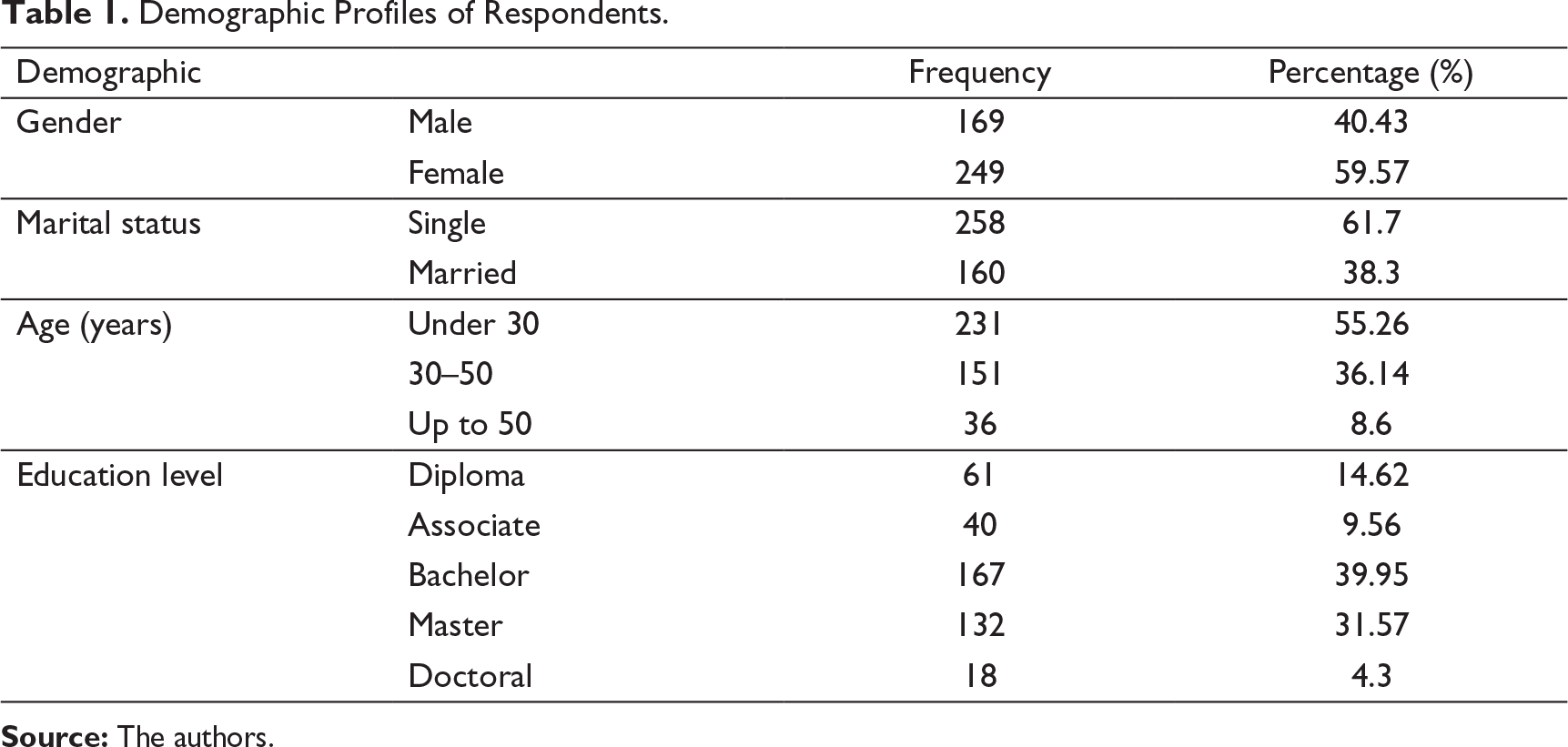
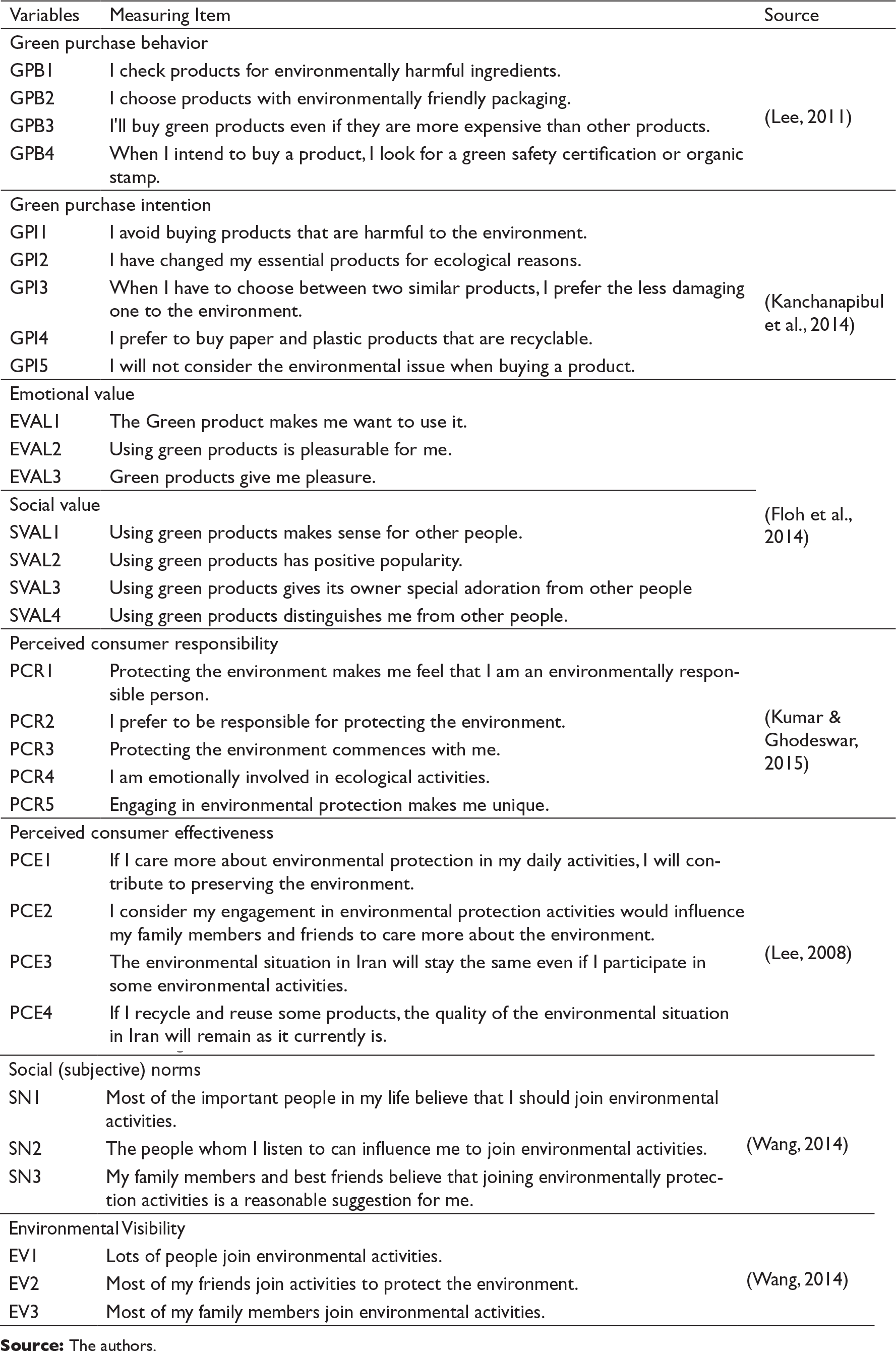
For the questionnaire, all measuring variables and their items were extracted from the preceding valid literature. A convenient sampling method was used to gather data. Hence, five of the store branches of the Bamika store had been selected randomly from different areas of the city, and customers who buy goods from each store were randomly provided with a questionnaire. The variables, their measuring items, and the sources are provided in the questionnaire are provided in the appendix. A total of 450 people were contacted, and 418 valid questionnaires were gathered for 35 days approximately. Table 1 provides the respondents’ demographic data, including sex, marital status, age, and educational level.
Demographic Profiles of Respondents.
Data Analysis
A one-factor confirmatory factor analysis (CFA) has been done to validate the model constructs (Jaiswal & Bihari, 2020). None of the items had been deleted because the factor loadings were more than 0.3. Besides, the fitness index had been achieved. Therefore, the measurement model is effective for the research purpose, and the items confirm the constructs. A pilot evaluation of Cronbach’s alpha index had been conducted to assess the validity of the variables before the questionnaires were distributed. The result of the pilot experiment for 50 respondents was more than 0.7, which is valid. Then Cronbach’s alpha index for all variables was 0.912. The SPSS 20 software was utilized for the analysis of the reliability of data. Structural equation modelling (SEM) was measured with Lisrel 8.80 software. SEM is a statistical technique that distinguishes the relationships by measuring the regression weights (Rahman et al., 2020). Compared with other regression methods, this approach measures direct and indirect path analysis on complicated models (Quoquab et al., 2020). SEM is known for the simultaneous analysis of the relationship between constructs. It is a multivariate analysis technique for psychological and behavioral studies. CFA can be measured by this approach (Zahan et al., 2020). SEM has some advantages over other multivariate methods: (a) evaluation of measurement errors, (b) calculation of latent variables via observed variables, and (c) model testing done as the model fits the data (Byrne, 2011).
Additionally, to assess the reliability and validity of the constructs, composite reliability (CR) has been measured, which should have a value of more than 0.7, and the average variance extracted (AVE) should be more than 0.5 (Kim et al., 2018). According to Table 2, the discriminant validity was also deemed to be achieved because the square root of each constructs’ AVE was more significant than the highest correlation with other constructs (Adrita & Mohiuddin, 2020).
Convergent Validity, Composite Reliability and Discriminant Validity.

Results
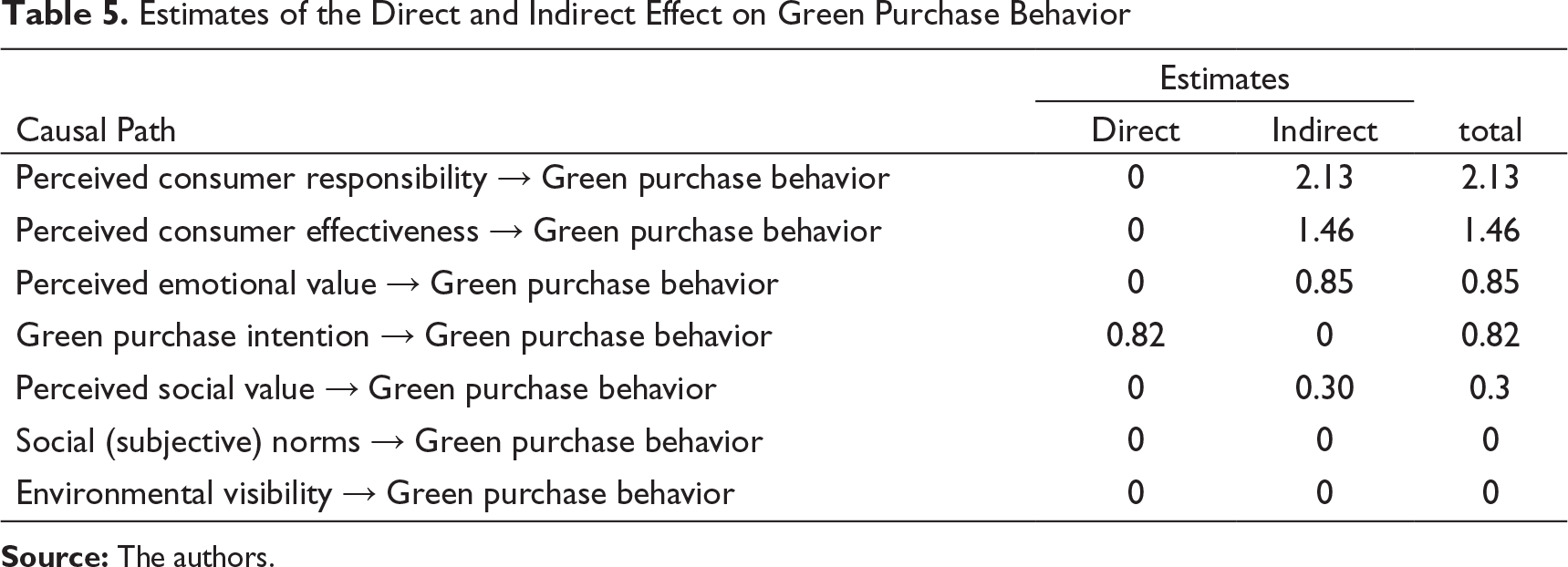
A structural model analysis was called on to create the covariance-based structural equation model. Lisrel provides model fitness indexes for determining model fitness. According to the results, the model and the data were excellent fitted when x2/df < 3, GFI > 0.90, AGFI > 0.90, RMSEA < 0.080, CFI > 0.90, PNFI > 0.5, TLI >0.9 , SRMR< 0.080, and PGFI > 0.5 (Adrita & Mohiuddin, 2020). Table 3 presents the summary of the goodness of fit statistics. Adjusted Goodness of Fit (AGFI) and Goodness of Fit (GFI) were marginally below the desired values because of sample size limitations; however, most fit indices met the standards. The results of the model in this research are demonstrated in Figure 2 and Table 4. Table 4 includes the direct effects of one variable on another variable. As a result, the data of Table 4 was proposed to calculate the indirect effects of individually perceived and contextual factors on the GPB of consumers (Table 5).

Fit Indexes.

Assessment of Research Hypotheses.
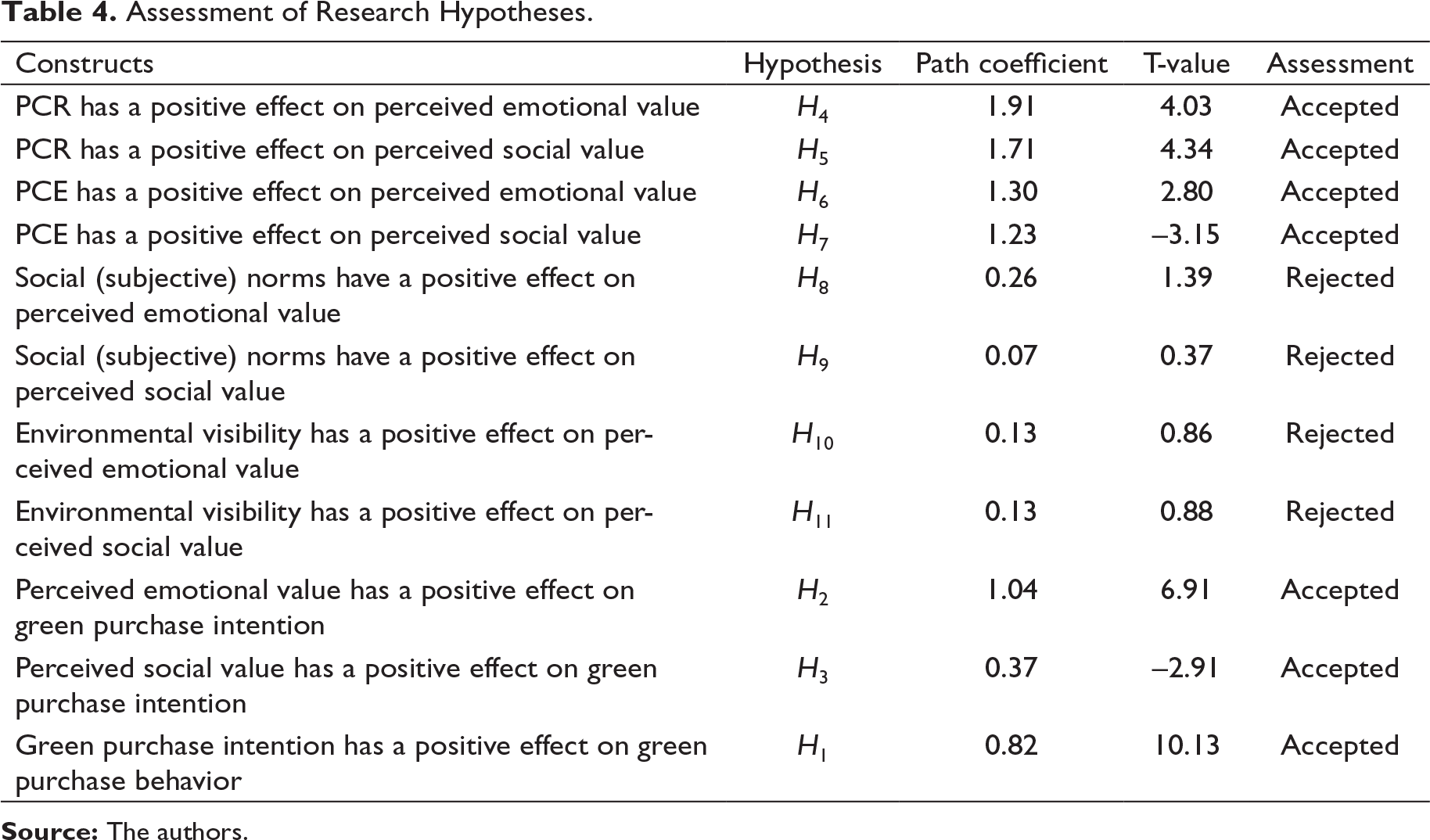
According to T-value and path coefficient, both dimensions of consumer perceived value are considerably affected by PCR. It determined 1.91% and 1.71% of perceived emotional and perceived social value, and owing to the value of path coefficient, the relationship was strong.
Likewise, both dimensions of consumer perceived value are considerably affected by PCE. Since the path coefficients were more than 0.6, the relationship between PCE and perceived emotional and perceived social value was remarkably strong. PCE was the second predictor of consumer perceived value dimensions in our model. The effect of subjective norms on perceived emotional and perceived social value was weak and rejected.
The relationship between perceived emotional value and GPI had a T-value higher than 1.96, and because the path coefficient was higher than 0.6, it was a meaningful path. Perceived emotional value determined 1.04% of GPI, and a noticeable relationship in the model has been found. The relationship between perceived social value and GPI was accepted; however, this relationship was moderately weak due to the path coefficient. GPI greatly impacted GPB, and it determined 82% of the latent variable.
According to T-value, the relationships between EV and consumer perceived value dimensions were rejected. T-values with both perceived value dimensions were only 0.13, and both hypotheses (H10 and H11) were rejected.
Table 5 indicates the direct and indirect effects of independent variables on GPB. The variables have been arranged in order. The most effective factor influencing GPB was PCR with a total impact of 0.36, and the following was SN with an overall effect of 0.23. EV, PCE, and perceived social value had no total impact on GPB. Individually perceived factors affecting GPB, including PCR and PCE, were probably more efficient than contextual factors, including SN and EV. Contextual factors did not affect the green consumption patterns of Iranian green consumers having green purchase experiences.
Estimates of the Direct and Indirect Effect on Green Purchase Behavior
Discussion
PCR was the foremost practical factor with a total effect of 2.13, and this result is consistent with the results of the studies of Dagher and Itani (2014) and Jaiswal and Bihari, (2020). It is shown that the emotional aspects have an essential role in strengthening the sense of perceived responsibility toward environmental problems. Therefore, as a stimulus, augmenting PCR would increase consumer commitment behavior in environmental activities.
According to the path analysis results, PCE appeared to be the succeeding stimulus factor with the total effect of 1.46 on GPB. The finding is supported by the studies done by Zheng and Chi (2014) and Wesley et al. (2012). In addition, according to the loading factors, PCE has undeniable relationships with both dimensions of consumer perceived value as organisms in the SOR paradigm. This result demonstrated that the environmental effects of purchase behaviors could firmly bear on GPI and GPB. Therefore, this variable was likely to be a proper predictor of consumer perceived value dimensions.
GPB was not virtually affected by social (subjective) norms, and it was not supported by the findings of (Joshi & Rahman, 2015) and (Kim et al., 2013). Inconsistent with the study of (Vassallo et al., 2016), the impact of family members, friends, and influential people in persuading consumers to buy green products is unavailing. It indicated that the social and emotional values of green consumers were not affected by SN. In this study, Norms were not a suitable predictor of consumer perceived value dimensions and GPI and behavior.
GPB was not affected by EV, and the hypothesis was rejected in this article. Having a total impact of almost zero on GPB, EV was not an effective predictor of GPB. It was not supported by previous studies such as Wang (2014). EV is not a strong stimulus in the SOR framework of this research.
Regarding the SOR framework, SN and EV are not the actual stimuli because the value-oriented organisms would not be activated and do not result in a purchasing response. The rejection of these two variables ought to be a probable indicator that external stimuli arising from the context do not provoke environmental activities in Iranian green consumers. Beliefs and internal states play more indispensable roles while choosing products rather than the effects of the activities conducted by other people. The ecological law in Iran is in its rudimentary states, and this can be an underlying cause for the fragility of contextual factors’ impact on society. Hence, the care respecting the quality of individual life and environmental preservation is almost derived from personal perspectives. In addition, ecological beliefs have been recently entrenched among the youth, and the early generation does not have such a transparent point of view around environmental activities. No such solid SN refer to the eco-friendly lifestyle being accepted among various strata of society and following these norms or doing visible activities is not perceived as values, either emotional or social. These facts have been mirrored in the results of this study.
With a total effect of 0.82 on GPB, GPI is a noticeable factor in this study. Findings are compatible with the results of Kumar et al. (2017) and Wei et al. (2017). Additionally, this result supports the theory of planned behavior. Further, perceived emotional value is a robust mediating variable between observed variables and GPI with a total effect of 0.85. It indicated that perceived emotional value as an organism of SOR, influences GPI significantly. This result supports the results of the study done by Biswas and Roy (2015). It revealed that consumers are almost self-oriented, and less attention would be paid by them to social values during purchase behaviors. Indirect and total effect of perceived social value on GPB was 0.3.
Implications
Some implications are provided based on the results for marketers who wish to develop the market segments of green products and to increase their sale rates. Regarding the salient influence of PCR, people can be attracted by utilizing popular social networks and developing content marketing techniques to accentuate the individual duties to preserve the planet. Moreover, emotional marketing is utilitarian to inform people of the seriousness of environmental problems because commitment to ecological activities would be augmented by evoking emotions (Piligrimienė et al., 2020). The fourth factor of this model variable would be utilitarian because it would rekindle the sense of responsibility toward the environment. Commitment and responsibility toward sustainability must be declared publicly by a company. Being forthright and reporting sustainable progress can be advantageous for companies. It is not sufficient to only announce the store or company as eco-friendly by providing green products; they must follow some actions.
Moreover, energy conservation policies and waste reduction by changing heating and lighting systems or diminishing the unnecessary packaging can be put into practice by eco-friendly stores. These efforts should be communicated to the consumers to indirectly expose the company’s genuine commitment and responsibility to the environment beyond making a profit and gaining market share. Following that, a green logo on the delivery vehicles should create the image of an eco-friendly entity of a store like Bamika. It would persuade consumers or even initiate the inquiry of leads in the long term.
According to the results, focusing on the peer opinions and green activities of family members should be considered by marketers. Because of the significant impact of the second factor (PCE2) of PCE, consumers’ perceived effectiveness is likely to be affected by the cooperation of family members and friends. Therefore, online or offline campaigns would be planned by marketers to attract groups of consumers to participate with their families and friends. Moreover, because of the significant impact of the initial factor (PCE1) of PCE, achieving superior results from campaigns is attainable through aiming at daily purchases. It has been proved in preceding studies that even small changes in daily environmental activities would significantly impact the consumption of natural resources (Xu et al., 2020), which can be entrenched in the consumption culture, edifying campaigns and programs.
Moreover, a portion of the profit could be donated to an environmental cause by companies, making customers satisfied with their ecological purchases. Furthermore, this is almost an acceptable way to generate awareness regarding the environmental issue and instantly exhibits the upshot. The positive impact of using social media for strengthening the GPI by allocating extra budget to launch promotional programs has been proved in the past studies (Bedard & Tolmie, 2018). Using promotional programs via social media to exhibit the results of these ecological donations deriving from GPB would be an intelligent choice. Such charity activities could generate goodwill for the green brand. People are more affected by stories than by abstract massages. Story-telling techniques can convey the effectiveness of environmental activities such as green purchases via social media or by providing positive testimonials from actual consumers. As an illustration, a narrative advertisement can illustrate the supply chain cycles of their green products to conclude that none of these cycles is harmful to the environment and human health.
A paucity of the impact of EV and social (subjective) norms on GPB could be a new insight for green marketers and researchers who study similar samples or similar variables. The notion striking the mind is that there is no necessity to increase the visibility of their products in society with identical samples. The study indicated that individually perceived factors have a significant effect compared to contextual factors. As a result, sharing ecological knowledge and tutorial practices can strengthen the ecological perceptions and motivate green consumers. For this purpose, any media that can be best tailored toward the audiences’ needs could be deployed by them.
Conclusion
The purpose of this study was to determine the factors influencing GPB. The factors were divided into two groups—individually perceived and contextual factors—with the mediating roles of consumer perceived value dimensions. The effects of the two groups of factors on GPB were evaluated in the SOR framework. Individually perceived and contextual factors are the stimuli that proceed to consumer perceived values as the organisms of the SOR framework. GPI and GPB were likely to be the predicted responses that the consumer gave to the stimuli. It was concluded that Individually Perceived factors appeared to be more efficient than contextual factors in persuading green consumers to buy more green products. In addition, perceived social value had less effect on GPB than perceived emotional value. The gap in previous studies, which were deprived of categorized factors affecting GPB with a focus on internal and external approaches, was filled in this article. A framework for identifying the stimuli of the green response to eco-friendly products were provided. It was indicated that individual stimuli and emotional dimensions appeared to be decent predictors of ecological purchase among green consumers of Bamika store branches in Tehran. Contextual stimuli did not affect green consumption patterns. It was concluded that consumers purchasing green products from Bamika store branches are not affected by the SN of the society and by visiting the ecological activities of others. Purchase intention and behavior were stimulated by the psychological states of the consumers; minds as stimuli of the research model. Consumers would be more likely to buy green products by augmenting the internal stimuli.
Appendix
Questionnaire Items and Sources
Footnotes
Declaration of Conflicting Interests
The authors declared no potential conflicts of interest with respect to the research, authorship and/or publication of this article.
Funding
The authors received no financial support for the research, authorship and/or publication of this article.