



Abstract
The study intentions to examine the result of getting financial education through the workshop on the financial wellness of people during the COVID-19. Primary data are collected from the participants of a Financial Education workshop in India. The study contained 996 respondents for research using the Personal Financial Well-Being Scale (PFWS) questionnaire from the respondents before and after participating in the workshop. Using Hayes’ macro process model and SPSS, the study tested mediation (financial behavior) and moderation (financial education). All the independent variables were encouraging effect on financial wellness by taking the financial behavior and participation of the respondent as the mediator and moderator variables. The independent variables of subjective aspects such as financial stress, situation, and condition have a more significant effect on financial wellness. This study indicates that policymakers and financial regulatory institutions should improve FE to improve financial behavior and wellness during a crisis for individual and economic well-being.
Keywords
Introduction
Individuals’ financial wellness is a critical determinant during the COVID-19 pandemic (Camitan IV & Bajin, 2021). Financial wellness (FW) has been considered a significant problem in filling needs such as food, shelter, and healthcare (Lin & Hsieh, 2022). FW is well-defined as a person’s awareness, education, literacy, and habit of making decisions to achieve various goals (Ng et al., 2022; Purohit et al., 2022). Various researchers have explained financial wellness in conceptual and empirical studies (Ismail & Zaki, 2019; Malkowska et al., 2022; Mohd Zain et al., 2019; Purohit et al., 2022). FW is linked with financial education (FE), financial literacy (FL), and financial distress (FD) (Hannon et al., 2017; Henager & Wilmarth, 2018; Narges & Laily, 2013; Prawitz & Cohart, 2016). The various independent variables, such as financial stress (FS), financial condition (FC), financial availability (FA), financial emergencies, financial literacy (FL), and financial planning (FP), were used to measure the FW (state of financial well-being) of the respondent (Camitan IV & Bajin, 2021; Garman et al., 1999; Hsu et al., 2021; Jiang et al., 2020; Krische & Mislin, 2020; Morgan & Long, 2020; Zhang et al., 2021). People changed their financial behavior due to the COVID-19 pandemic. People faced financial crises such as job loss, decreased business revenue, a lack of funding sources, and the need for emergency funds (Barrafrem et al., 2021; Kurowski, 2021). People’s outlooks on their FS or FA are proposed as the eventual measure to evaluate financial health (FH). FW as a subjective matter collapses the facets of anxiety about current financial options and financial security about one’s future financial situation (Barrafrem et al., 202; Campbell et al., 2020; Lind et al., 2020; Strömbäck et al., 2020; Talwar et al., 2021). FW is affected by factors outside of an individual’s control. It can also indicate how an individual can make the best out of the given monetary circumstances (Bureau, 2015). In the previous studies, 35% of households reported feeling financially secure and about 50% of households reported feeling anxious about their finances in developed countries like the UK (Fitzpatrick et al., 2020; Kempson & Evans, 2020). Hence, people change their FB, such as increasing savings, minimizing financial risk, and finding various sources to meet financial emergencies. Mahdzan et al. (2020) stated that Malaysian households’ overall financial well-being is poor due to the pandemic (Mahdzan et al., 2020). Research is needed to increase people’s FW through FB and better FE (Fan & Henager, 2022). During the COVID-19 pandemic, this study aims to assess the impact of financial education on individuals’ financial wellness, considering both objective and subjective aspects. Financial behavior is examined as the mediating variable, while the participation in financial education workshops is investigated as the moderating variable.
This study considers financial behavior as a mediator variable by examining three research questions: How do the other variables impact the FB of the participants? Second, what would be the impact of FB on FW? Third, how would FB (the mediator) and FE (the moderator) contribute to FW? The study proposed a model which describes the various determinants related to FB and FW. This study also regards FE as a moderator to improve the respondents’ FB and FW. There is a lack of a comprehensive perspective on various contributors to FW, such as FE and FB. As a result, this research considers various factors that contribute to financial well-being. The Personal Financial Well-Being Scale (PFWS) was used to assess financial well-being before and after participating in the FE workshop in the study during COVID-19.
The current study shows the novelty because it advances the knowledge of the academic and corporate worlds of financial wellness. The study adds to the theory of FW and well-being by assessing the impact of FE on FW during a crisis. The proposed model extends the association of variables in the FW theoretical framework developed by Joo (2008), which is enhanced via the effect of FE. Using Hayes’ macro process model and SPSS, the study tested mediation (financial behavior) and moderation (financial education). This is the first research which added the impact of objective and subjective aspects with the mediation and moderation effect on the FW of the people. The study provides the results of the impact of FE on the FW of the respondents with FB.
The current study contributes to both the literature and practice elements of the FW theoretical framework by (a) adding the view of the theory of financial wellness and the theory of social wellness; (b) expanding relationship of variables in the FW theoretical framework developed by (JOO, 2008), which improves through the impact of FE. Increase the impact of demographic and socioeconomic factors on the FW scale by adding more determinants to the financial wellness scale; (c) the individual, employer, and policymakers consider the determinant to improve FW.
The rest of the study discusses the literature on financial well-being and its determinants to construct the hypothesis. The next part summarizes the research methodology and data collection technique. The results and discussion of the proposed hypothesis and conclusion are described in the following section.
Literature Review
Definition of Financial Wellness
According to Consumer Financial Protection Bureau, FW is described as having control over day-to-day finances, being able to withstand financial shocks, pace on achieving objectives, and having options in the pleasure of life (‘Financial report of the consumer financial protection Bureau’, 2012). This definition favors a subjective view of FW. FW can be achieved by following personal financial management best practices (Sukumaran, 2021). FW refers to a person’s or family’s ability to live comfortably. FW is not worrying about money (Iramani & Lutfi, 2021). Personal Financial Wellness (PFW) refers to the lack of money-related stress and the consequence of good spending habits (Digital, 2021). Understanding the importance of financial stability is the first step towards FW for our short-term and long-term goals.
Importance of Financial Wellness During the COVID-19 Pandemic
The COVID-19 pandemic and economic lockdown have touched many individuals, hurting their revenue and assets. Stocks and mutual funds have reduced savings and investments a crisis. FL helps individuals and families by fostering solid financial practices. It refers to one’s capacity to handle money effectively (Rath et al., 2010). Hence, an individual must live within their means, be prepared for emergencies, access financial information, and have a long-term financial strategy.
As a consequence, financial soundness focuses on financial stability. The COVID-19 scenario is the ideal time to evaluate individuals’ FW and take the required steps to rectify any imbalances. FL is essential in financial decisions to improve FW (Kawamura et al., 2021). Financial knowledge positively impacts technology usage in financial transactions (Andreou & Anyfantaki, 2020). FL was linked to timely loan repayment, stock market participation, and portfolio allocation (Fong et al., 2021), improving financial inclusion & savings (Morgan & Long, 2020). It affects job development, pays, and effective interpersonal interactions to enhance FW (Krische & Mislin, 2020). After a shock, families with varying risk attitudes and financial knowledge make smoother spending choices (Zhang et al., 2021). According to the National Endowment for FE (NEFE) study in April 2020, nine out of 10 Americans were stressed about their finances because of the COVID-19 pandemic (Park et al., 2020). FW assists individuals in reducing financial stress during times of crisis.
Need for Financial Wellness in Low-Middle Income Countries (LMIC) Like India During a Pandemic
People’s responsibility for their financial well-being is becoming more critical as institutions and society emphasize FL (Gallego-Losada et al., 2021). Those with more excellent financial knowledge have an increased chance of having savings in official and informal forms (Morgan & Long, 2020). Financial certainty increases the desire to negotiate, and financial understanding enhances negotiation (Krische & Mislin, 2020). Investing performance is strongly impacted by advanced financial knowledge (Jiang et al., 2020). Individuals and families benefit greatly from FE. FW is achieved by managing family assets, obligations, income, and spending (Sukumaran, 2021). FE could change participants’ knowledge, financial abilities, behavior, and overall FW, among other things (Segre et al., 2021). A person with extensive financial expertise is to manage their assets and income. FW improves with money management expertise (Sabri et al., 2012). Several studies have found that financially educated people have more financial knowledge, proper management of financial resources, and less stress about their financial situations (FS) (Garman et al., 1999; Pangestu & Karnadi, 2020; Steen & MacKenzie, 2013). PFW is related to all aspects of household finance (Zemtsov & Osipova, 2016). Previous studies (Akhter, 2016; Tuwai et al., 2015) have stated that FE improves the FW of an organization’s employees. Few of the researchers have examined the effectiveness of a FE program with the attendance of the participants and stated that the program had affected the increasing savings among participants (Huston, 2009).
Financial Wellness Determinants
Financial Stress (FS)
Financial Stress arises when a faces unfavorable events, such as changes in an existing financial situation or comforts and the emergency need for a quantity of money raised (Brubaker, 1990; J. Kim et al., 2006). Foreclosures, significant losses in savings, and legal issues were three major causes of FS (Prawitz et al., 2006). Yates (2007) mentioned that a lack of resources caused FS and not accomplishing basic financial requirements to maintain a certain quality of life. Those with lower earnings may be more vulnerable to psychological health hazards when faced with FS because they feel embarrassed about their situation (Starrin et al., 2009). FS negatively affects individuals’ FW (Mahdzan et al., 2019) while directly correlating with people’s income and reflecting their financial wellness (Hertz-Palmor et al., 2021).
H1: Lower financial stress results in better financial wellness.
Financial Situation (FS1)
Financial situation refers to satisfying one’s income, capacity to manage financial emergencies, debt load, savings level, and money for future requirements (Hira & Mugenda, 1998). FW relies on how a person sees objective characteristics of their financial position after comparing them to specific criteria (Porter, 1990). Financial satisfaction means being happy with their financial situation (Baek & DeVaney, 2004). Financial services and credit ratings, savings, assets, and consumer mortgage loans are included in family balance sheets. Indebtedness may also harm a family’s financial situation (Boshara, 2012). Financial experience, financial understanding, financial position, and marital status all directly influence FW (Iramani & Lutfi, 2021)
H2: Better financial situation results in better financial wellness.
Financial Condition (FC)
The FC is the status and position of FW regarding individuals, which mainly considers the person’s financial risk (strategiccfo, 2021). The FC shows the comfort of the individual with their present situation. FW is measured by overall contentment with one’s financial position (Van Praag et al., 2003). Financial satisfaction is to be happy with their financial condition. Objective and subjective financial status indicators are intertwined. They reflect different aspects of FW in the lives of older people (W. Kim et al., 2017). Subjective financial conditions also reflect older people’s present demands and life aspirations. Furthermore, as people age, their needs, expectations, and circumstances may change due to health issues or other significant life events (Arber et al., 2014).
H3: Better financial condition results in better financial wellness.
Financial Behavior (FB)
Financial behavior are acts, responses, or performances carried out in a particular manner concerning money management (Gorham et al., 1998). Individuals participate in daily FB such as managing cash, credit, and savings, which eventually influence their FW (Dew & Xiao, 2011). FB includes keeping financial records, tracking cash flow, setting spending limits, paying utility bills on time, and avoiding overusing credit cards and savings accounts (Xiao, 2008). Spending more than you make, bad debt management, and late bill payments are all signs of poor financial behavior (Xiao et al., 2009). The links between consumer FB and financial happiness in the United States claim that customers who engage in desired FB would have better FW (Xiao et al., 2014). Individuals’ FB positively relates to their FW (Mahdzan et al., 2019).
H4: Good financial behaviour leads to a high level of financial wellness.
Financial Availability (FA)
Increasing FA may impact the wealth of people and families, as well as their financial stability and well-being, among other things (Sabri & Zakaria, 2015). Educated people have the sufficient financial knowledge that affects their financial satisfaction and Financial Wellbeing leads the people for achieve their practical demand (Borg et al., 2008; Ho et al., 1995; Smith et al., 2005). One’s interest in making the decision depends on having the limited availability of financial resources (Grady, 2009). A person with good FA can influence others and empower them to achieve their financial goals and build their FW (Keltner et al., 2003). Working hours increase some families’ spending and calorie consumption (Carvalho et al., 2016; Mastrobuoni & Weinberg, 2009). Variation in financial resources impacts the person’s transitory expectations and, maybe as significantly, is anticipated to be temporary (Mani et al., 2013).
H5: Higher financial availability results in better financial wellness.
Financial Planning (FP)
FP is one of the essential components of financial wellness, which includes the individual’s financial skills and attitude (Australian Securities and Investments Commission, 2014). Financial skills include financial knowledge, which leads the individual toward FP. Financial knowledge is a significant component of FP. The capacity to comprehend and analyze monetary alternatives, prepare for the future, and react appropriately to different economic circumstances is a high degree of financial knowledge (Fong et al., 2021; Huston, 2010). Financial objectives are more likely to be accomplished with proper FP (Howlett et al., 2008). Personal finance improves the capacity to handle day-to-day financial issues. It reduces the long-term repercussions of bad financial choices (Delafrooz & Paim, 2011). Individual FW is negatively related to financial planning (Mahdzan et al., 2019).
H6: Higher financial planning results in better financial wellness.
Financial Emergency (FE)
A financial emergency occurs when a person cannot meet his financial requirements or uplift his FS (Friedman, 1991). Saving the fund will help the individual offset the living expenses during the financially devastating situation (Garman & Forgue, 2014; Keown, 2019). FE are often accompanied by negative financial feelings such as worry and anxiety, making it difficult for individuals to make constructive adjustments to obtain new employment and improve their capacity to manage their finances (Joseph et al., 2012). Individuals might use their savings to attain financial goals, cover substantial irregular expenses, and deal with emergencies (Garman & Forgue, 2010; Prawitz & Cohart, 2016).
H7: Higher acceptance of financial emergency results in better financial wellness.
Financial Literacy (FL)
With a rise in financial literacy, more people will participate in the stock market (Yamori & Ueyama, 2021). High levels of FL are associated with taking on too many risks, overborrowing, and exhibiting unsophisticated attitudes. High FL individuals are more prone to be risk-takers and responsible for certain financial matters (Kawamura et al., 2021). Financial interest has a considerably additional significant effect on risk tolerance than FL (Hermansson & Jonsson, 2021). The personal finance course has shown a statistically significant improvement in FL, which improved FK, financial attitude, and FB (Paraboni & da Costa, 2021). It usually indicates that informed, educated, and financially competent individuals make better financial decisions (Stolper, 2018). The previous study provided a sensible relationship between FE with FW (Porter & Garman, 1992). Their comprehensive study addresses both objective and subjective metrics in addressing FW. While income and family size are objective indications, contentment with savings and quality of life and an individual’s evaluation of characteristics such as expectations, ambitions, and so on contribute to the subjective component. Financial experience, understanding of the position, marital status, etc., influence the well-being of individuals (Iramani & Lutfi, 2021). More financially literate people seek financial help from professionals to improve FW (H. H. Kim et al., 2021).
H8: Higher financial literacy results in better financial wellness.
Financial Behavior as a Mediation Variable and Financial Education as a Moderator Variable
Individual FE has increased FB by providing more financial alternatives (Kaiser et al., 2021). FE increases the participants’ financial confidence and knowledge, leading to more bargaining habits (Krische & Mislin, 2020). FB requires FE (Gray et al., 2021), which improves saving and investment decisions (Ghafoori et al., 2021; Gilenko & Chernova, 2021) and positively affects investors’ investment decisions (Hsu, 2021).
H9: Financial behaviour mediates the relationship between independent variables and financial wellness.
Carpena and Zia stated that proper FL leads to better FB, and appropriate FE leads to better FL (Carpena & Zia, 2020). FE shows a significant mediating effect between FE and the FB of individuals (Lim et al., 2018). FE will lead to better financial decisions (Balasubramnian & Sargent, 2020).
H10: Financial education positively moderates the relationship between independent variables and financial behaviour.
H11: Financial education positively moderates the relationship between financial behaviour and financial wellness.
Financial Wellness With the Demographic and Socioeconomic Factors of the Population
High income and good education relate to improved FL (Noviarini et al., 2021). FE and FL are supported in reducing the gender gap in risky assets. Women participate less in risky assets, while men have greater self-attribution, the illusion of control, and confirmation biases than women (Hsu et al., 2021; Stolper, 2018). Women have a lower FL than men (Jiang et al., 2020). Males with better education, cognitive abilities, or a higher yearly income have a higher degree of FL (Shimizutani & Yamada, 2020). The measuring and structural models that assess FL are invariant between men and women. Both groups have significant regression coefficients, but the FE construct does not affect male FL (Potrich et al., 2015). Demographic factors such as education, family structure, employment, and FL affect the individual’s FW (Clark et al., 2021). FW is independently associated with the income of the people (Sawadogo & Semedo, 2021) and generally in the mid-age (Arber et al., 2014). FL significantly impacts financial management, increasing students’ reported FW (Sabri & Falahati, 2012).
Conceptual Framework
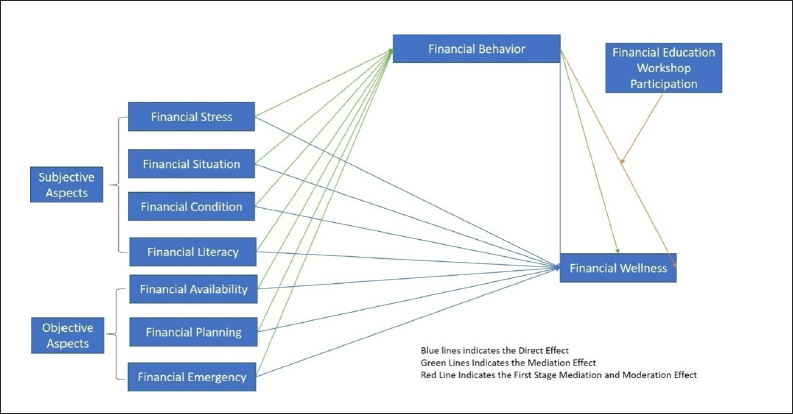
This study attempts to provide an integrated examination of the determinants of FW by establishing a structural framework that incorporates subjective and objective aspects. The PFW theoretical framework was developed by Joo (2008) and was accepted by Adam et al. (2017), Brüggen et al. (2017), Gerrans et al., (2014a), Gutter & Copur (2011), Oseifuah (2010), Robb and Woodyard (2011) and Sivaramakrishnan et al. (2017). Four elements of PFW were proposed by Joo (2008), including objective elements such as status, financial satisfaction, and financial behavior, and subjective elements such as financial stress, financial behavior, financial condition, financial literacy, and financial availability. They are also referred to as predictors of financial wellness.
FS (Iramani & Lutfi, 2021), FP (Mahdzan et al., 2019), and FE (Garman & Forgue, 2014; Keown, 2019) are other predictors of FW (Joo, 2008). FB is a significant component that measures the potential for change in PFW. Therefore, authors have mediated the FB in this study to analyze the mediating effect of FB on the FW of the respondents. Participation in the workshop was considered moderate, and FB was used as the mediation variable to measure the response variable of FW.
Figure 1 shows the conceptual framework of financial wellness from the related literature(Iramani & Lutfi, 2021; Joo, 2008; Kaur et al., 2021; Li et al., n.d.; Nielsen, 2010).
Method
The research utilizes a quantitative research design and employs the Likert scale measurement to examine the influence of financial education (FE) on the financial well-being (FW) of respondents in Gujarat, India. The design includes a pre-workshop and post-workshop assessment using a closed-ended questionnaire utilizing the PFWS, a self-report measure developed by Joo (2008). The primary data for this study were collected through workshops conducted in various regions of Gujarat. A total of 20 workshops were held, with 50 participants in each workshop, resulting in a sample size of 1,000 respondents. However, four samples were excluded from the data analysis, leaving 996 respondents for the study. The PFWS was used as a measurement instrument to assess the perceived financial security (FS) and financial wellness (FW) attributes of respondents. The scale was administered before and after the financial workshops to capture changes in financial well-being.
The respondents were selected from different cities in Gujarat, including Rajkot, Ahmedabad, Patan, Mehsana, Surat, Vadodara, Palanpur, Valsad, Bhuj, Anand, Himmatnagar, and Junagadh. The sampling strategy involved convenience sampling, where participants were chosen based on their availability and willingness to participate in the workshops. The data collection process involved administering a closed-ended questionnaire to the respondents before and after the financial workshops. The same questionnaire was used for both the pre-workshop (June 2020) and post-workshop (November 2020) data collection. The collected data were analyzed using regression analysis and Hayes’ macro process to measure the direct, mediation, and moderation impact of variables on the respondents’ financial well-being. Financial behavior (FB) was considered as a mediator variable, and financial education (FE) was considered as a moderator variable. The changes in FE before and after participation in the workshops were analyzed based on studies by Balasubramnian and Sargent (2020), Carpena and Zia (2020) and Kaiser et al. (2021).
Result and Discussion
Valid scale measurements are achieved when researchers perform the required actions and accurately measure the intended variables. Conversely, when scale measurements are invalid, researchers face limitations in both measurement and action-taking, impeding their ability to derive meaningful benefits from the study. Reliability testing is utilized to assess the precision, consistency, and accuracy of a measurement instrument. In studies, one commonly employed method for measuring reliability is Cronbach’s Alpha. In this particular study, the obtained Cronbach’s Alpha value is 0.811, indicating an acceptable level of reliability. It is worth noting that a Cronbach’s Alpha value of 0.60 or higher is typically considered indicative of a dependable variable.
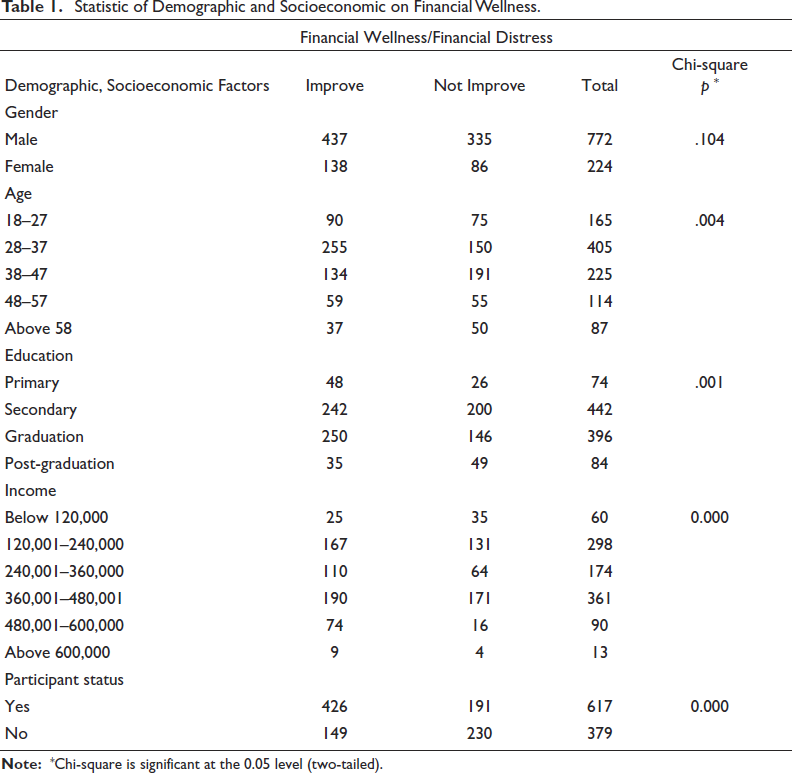
Table 1 reports the descriptive statistics for the dependent and independent variables. The total number of respondents for the study was 996. The 617 number respondents participated in the workshop, while 379 had not participated in the workshop. Authored measured the effects of all the independent variables on the FW of the respondents. It noted the improvement in the FW of the respondents. Of the total respondents, 772 were male, and 224 were female. It has been found that 437 males and 138 females have improved financial wellness. Thep value is (p > .005). There is no significant difference in FW based on gender. The previous researchers stated that men have more FW and a high level of FL (Jiang et al., 2020; H. H. Kim et al., 2021; Stolper, 2018). There are significant changes in FW based on age, education, income, and participation in the FE workshop. The level of education, income level, and age group affect FW (Arber et al., 2014; Clark et al., 2021; Sawadogo & Semedo, 2021). FW is for people after receiving the knowledge and education of FP and FL (Gerrans, 2021). The reliability of the PFW Scale is 0.782, which is acceptable for the accuracy and consistency of the study (Hair Jr et al., 2021; Iramani & Lutfi, 2021).
Statistic of Demographic and Socioeconomic on Financial Wellness.
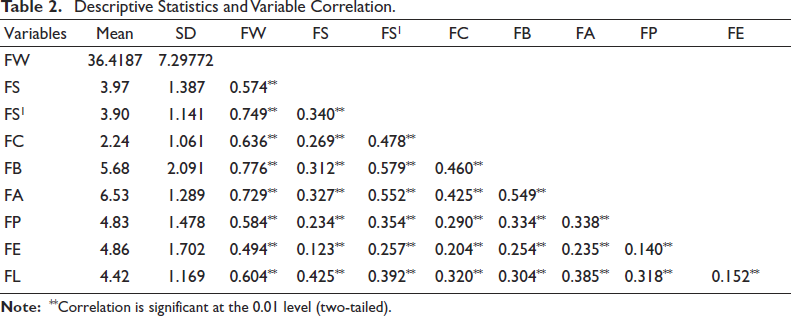
The association between FB and FW is positive, with a coefficient of 0.776 shown in Table 2. All the other variables have a positive correlation with financial wellness. The correlation coefficient between the variables is still less than 0.850, suggesting that discriminant validity is not an issue (Fornell & Larcker, 1981; Henseler et al., 2015; Voorhees et al., 2016).
Descriptive Statistics and Variable Correlation.
Financial Wellness Model
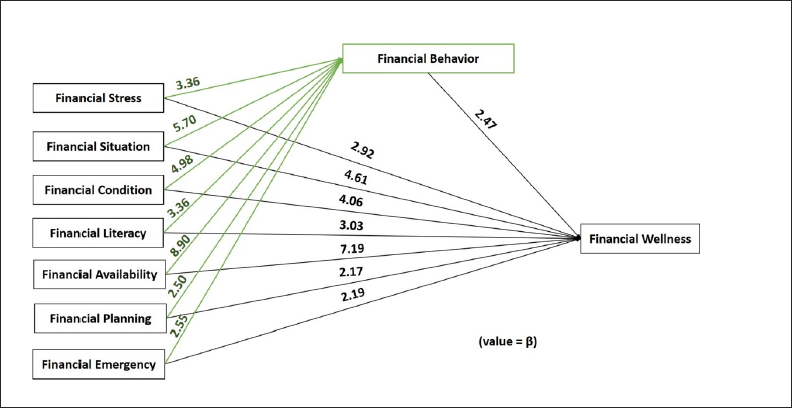
Table 3 shows the basic model analyzing the direct effect of all independent variables on FW. The measures of all the variables are taken before the workshop. From the basic model, all the independent variables of FW have a positive effect. The result shown in the Figure 2 supports (Gerrans et al., 2014; Mahdzan et al., 2019; Nielsen, 2010) that all the objective and subjective factors influence the individual’s financial wellness. R Square shows how much of the variance in FW can be explained by the independent variables. In the basic model, FB has the highest variance of 57.6% on financial wellness, and FP has the lowest variance of 19.5%. The sound model contains FB as the mediation variable. All the independent variables of FW impacted positively, with FB as the mediation variable. FA has a higher variance of 88.1%, and FE has a lower variance of 28.5% on Financial Wellness. Table 4 and show the result of analyzing the FW model. The basic model shows the effect of the independent variables on FW. In the second model, FB was used as a mediator variable. In the third model, participation was considered a moderator variable. The study provided independent variables of subjective aspects, such as a FS significantly influencing FW. Independent variables of objective aspects, such as FA, had a more significant impact on FW in a basic model of Table 4.
Statistic of Financial Wellness Model Pre-Financial Education Workshop.
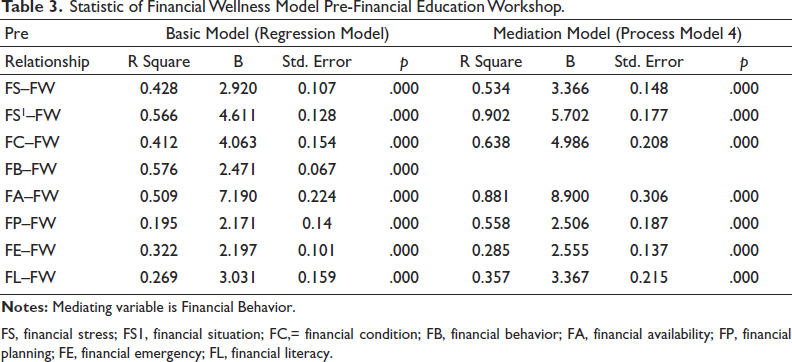
The Basic Model and Mediation Model for Pre-Financial Education Workshop.
Statistic of Financial Wellness Model Post Financial Education Workshop.
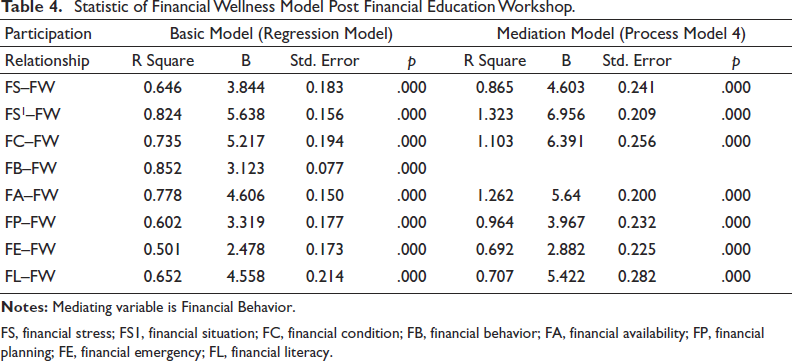
In the basic model, all the independent have a significant positive effect on FW. The result of the study agrees with (Gerrans et al., 2014; Mahdzan et al., 2019; Nielsen, 2010) that all the objective and subjective factors influence the individual’s financial wellness. The independent variables’ variance increased after conducting the financial awareness workshop. FB has the highest variance of 85.2% on the FW scale, and FE has the lowest variance of 50.1%. The results support the study (Falahati & Sabri, 2015; Lewis et al., 2008). FA, FS1, and FC help individuals manage their FW. Individuals who own adequate assets are satisfied with their present FC. Respondents feel comfortable with their FS1 and position with the proper availability of finance to accommodate their needs.
Thus, H2, H3, H5, H9, H10, and H11 are accepted and positively affect FW. FP is based on an individual’s FE. FE is the essential individual capital that affects FW. Henager and Mauldin (2015) stated that inflation, interest rates, time value of money, savings, credit, insurance, and investment ideas might motivate people to save and invest. Overall, FE improves happiness and lowers stress (Falahati & Sabri, 2015). Thus, the study supports that FP increases FW and accepts our H6. Individuals with more monthly income and wealth have a better chance of avoiding FS. In addition to everyday necessities, such families have substantial emergency funds for hospitals and children’s education. The study supports (Gerrans et al., 2014; Strömbäck et al., 2017) that FE and stress significantly affect financial wellness, and the study accepts H1 and H7. FL shows that an individual should have the ability and confidence to make the proper financial decisions. The study supports (Jiang et al., 2020; H. H. Kim et al., 2021; Sukumaran, 2021) that FL significantly affects FW and acceptance of H8.
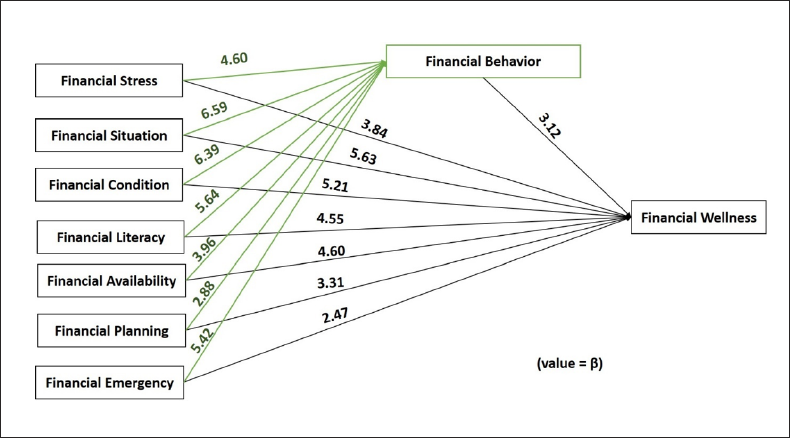
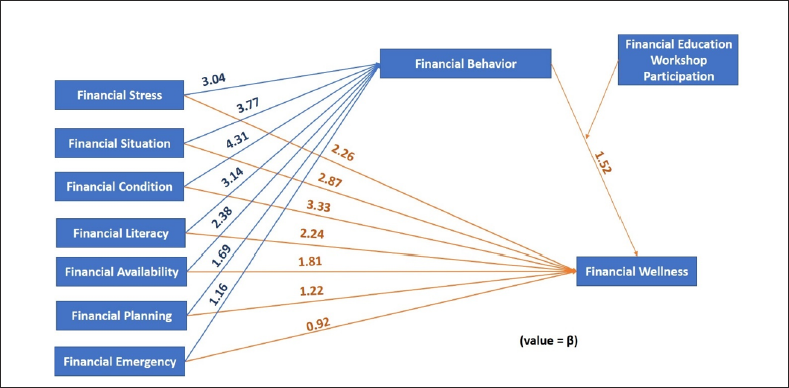
In the sound model, FB is considered as a mediating variable shown in Figure 3. The variable significantly mediates all the variables in FW. All the independent variables impacted positive FW, taking FB as the mediation variable. FB mediates this influence. FP encourages individuals to develop saving habits (Henager & Mauldin, 2015) and to plan for retirement (Bucher-Koenen & Lusardi, 2011; Lusardi & Mitchell, 2011). Appropriate FB makes the individual wealthier (Behrman et al., 2012; Iramani & Lutfi, 2021). This study’s findings are consistent with previous research indicating that FB is a mediator of FW (Gutter & Copur, 2011; Iramani & Lutfi, 2021; Joo & Grable, 2004). FB boosts the perception of FW, such as feeling at peace with one’s financial situation and fulfilling regular or emergency life requirements (Shim et al., 2009). In the model 14 of Table 5, the respondent’s participation in the workshop has been taken as the moderating variable and positively affects all the variables on FW. Thus, the study supports (Kim et al., 2021; Steen & MacKenzie, 2013) that participation in FE increases the individual’s FW. In the fourth model, the FB and the respondent’s participation are the mediation and moderation variables in Figure 4. The study shows that the independent variables of subjective aspects significantly influenced FW more than objective aspects in a mediation and moderation model (Table 5). According to the study, respondents’ participation in the financial workshop influences their FB and FW. Table 5 shows that all independent variables significantly affect FW with the mediation and moderation variables. Thus, the study supports previous researchers who mentioned that FB and participation in FE influence FW (Gutter & Copur, 2011; H. H. Kim et al., 2021; Steen & MacKenzie, 2013).
Statistic of Financial Wellness Model Post FE Workshop with Direct Moderation Model and Mediation-Moderation Model.

FS, financial stress; FS1, financial situation; FC, financial condition; FB, financial behavior; FA, financial availability; FP, financial planning; FE, financial emergency; FL, financial literacy.
The Basic Model and Mediation Model for Pre-Financial Education Workshop.
Moderation Direct Effect and Mediation & Moderation Effect.
Conclusion, Limitations, and Implications of the Study
The present research aims to examine the financial well-being of 996 respondents before and after their participation in a financial education workshop. The study explores the impact of participation and financial practices on financial wellness. It is found that all independent variables have a positive influence on financial well-being, both before and after the workshop. The mediator variable, financial behavior (FB), exerts a significant positive effect on all aspects of financial well-being. The results suggest that the improvement in financial well-being is mediated through the respondents’ financial behavior and engagement.
However, there are two key limitations to this study. First, the research sample consists of 996 individuals from various districts in Gujarat, limiting the generalizability of the findings. Second, the research was conducted during the COVID-19 pandemic, which may affect the generalizability of the results beyond this specific context. Future studies should consider incorporating socioeconomic and demographic characteristics to gain a deeper understanding of financial well-being.
This research provides valuable insights into the effectiveness of financial education initiatives in enhancing financial well-being. The findings highlight the importance of individuals managing their expenses and increasing savings to improve their financial well-being. Furthermore, from a regulatory perspective, the study emphasizes the need for the government and financial authorities to continue improving financial literacy (FL) and inclusion measures, as residents of Gujarat exhibit insufficient FL and inclusion. Policymakers and financial organizations should prioritize the promotion of public financial education to address these challenges.
Ethics Statement
There is no requirement for ethical approval, as the study involves fieldwork for the respondent’s participation in the FE workshop organized.
Appendix I:
The below questionary has been distributed to the participants before the workshop and the same questionary was given to them after the completion of workshop.
Sociodemographic details of the respondents:
Name:
Gender: Male Female
Age: 18–27 28–37 38–47 48–57 Above 58
Education: Primary
Secondary
Graduation
Post Graduation
Annual Income: Below 120,000
120,001 to 240,000
240,001 to 360,000
360,001 to 480,000
480,001 to 600,000
Above 600,001
Workshop Participation: Yes No
Questionnaire based on Personal Financial Well-Being Scale on 1 to 10 point likert scale:
Q.1 How much financial stress do you have today?
Q.2 How satisfied are you with your present financial situation?
Q.3 How frequently do you acquire financial and livelihood income?
Q.4 How many times have you been unable to cover your living expenses?
Q.5 How do you judge your present financial situation?
Q.6 How frequently do you fulfil your daily financial expectation?
Q.7 How many times are you willing to pay Rs. 1 lakh for a financial crisis?
Q.8 How often do you manage your finances during a crisis?
Footnotes
Declaration of Conflicting Interests
The authors declared no potential conflicts of interest with respect to the research, authorship, and/or publication of this article.
Funding
The authors received no financial support for the research, authorship, and/or publication of this article.