



Abstract
The rising complexity of modern life has beset us with stress. Students of various professional institutions are increasing beleaguered with this problem. The purpose of this study is to identify the prevalence of stress, its antecedents, and consequences among the students of a newly established engineering institute in India. Specifically, the study aims to investigate environmental, social, psychological, and academic causes of stress and its behavioral consequences. The study sample consists of 339 undergraduate, postgraduate, and doctoral students. The data were collected through a self-designed questionnaire followed by semi-structured interview. The overall stress in the sample was found to be low and the academic factors were identified as the major cause of stress. However, no major unwanted behavioral consequences of stress were observed. Findings and implications are discussed.
Introduction
Stress has become a common phenomenon in our daily lives, which certainly has positive as well as negative influence on human behavior. The feeling of stress is never pleasant but a little stress is a prerequisite to make a man productive or to achieve outstanding success (Gmelch, 1993). When it crosses certain level, it complicates the daily activities in our lives and forces individuals to deviate from the normal social life. Gradually it leads them toward utter frustration and anxiety, which in later years causes physiological as well as psychological problems.
Stress is defined as “pressure or worry caused by problems in somebody’s life” (Hornby, 2010). It mainly arises when an individual fails to cope with the environment or surroundings due to sudden placement of extraordinary demands on him/her (Lazarus & Folkman, 1984). It can also be called maladaptive response to a situational demand. It arises when a person has high expectation (Fairbrother & Warn, 2003) which often does not match with his capability. Even a challenging task with uncertainty associated with it can bring stress within the performer. When there are limited opportunities and the ambition is unrealistic, it can become a major cause of stress among the performers.It comes from anxiety, frustration, pressure, and the role conflict or role ambiguity in an organization.
In the twenty-first century, students are indirectly becoming the victims of globalization and its challenges. Parental relationship, love failures (Blain & McArthur, 1961), poor economic background (Gotlib & Wheaton, 1997), day-to-day hassles (Carr & Umberson, 2013), and academic burden are the major causes of stress among students. Further, teaching and learning strategy and teacher– student relation in the classroom are some of the other causes of stress among students (Sarita, 2015). Sometimes indifferent attitude of teachers toward students while taking classes has also been reported as another cause of frustration among students (Kahlon, 1993). It has also been reported that teachers lack pedagogical knowledge and come to the class with inadequate learning materials which make the class monotonous and hampers the learning process of the students (Shah, Hasan, Malik, & Sreeramareddy, 2010). Students gradually feel bored in the class, which leads them toward stress. When students are stressed, they acquire the tendency to complete the given task quickly, which might degenerate quality of the task. If students are overburdened with tasks, they feel insecure with the academic burden which brings a sense of anxiety among students (Wan, 1992). Gradually, they try to finish the work in utter frustration and heavy mental pressure, which in later stage in life creates psychological (depression, anxiety, frustration) and physiological problems (blood pressure, sugar, cardiovascular diseases, etc.) (Selye, 1956). Prolonged stress can disrupt a student’s normal social behavior and force him to lead a life in disruption and social segregation (Cacioppo, Hawkley, & Berntson, 2003). Students feel threatened with the academic pressure and grade competition which gradually leads them toward traumatic life (Thoits, 2010). At the end of the day, they reach their abode being frustrated and burnt out (D’aurora & Fimian, 1988). When students fail constantly to secure good marks in examination, they start developing negative self-esteem, which increases the suicidal tendency among them. According to the WHO (2014) report, suicide rate is quite high among adults due to academic pressure. It has been reported that 5,857 students committed suicide because of the exam stress in India (Desai, 2006). The National Crime Records Bureau has stated that 2,471 students have committed suicide in 2013 due to failure in examination in India. Further, The Times of India’s Survey (September 10, 2014) has estimated that 11 percent of the college goers and 7–8 percent school goers have attempted suicide and out of every three suicide, there is one youth who belongs to the age group of 15–29 years (According to Ministry of Health).
The above-mentioned factors are very much prevalent among students in institutes of higher education which is leading them toward stressful life. Getting a seat in top educational institutes is a matter of pride for both students and their families. Highly competitive work environment and intense pressure to obtain better grades and placement packages than peers to meet parents’ expectations and career aspirations is a very common scenario in such top notch institutes. Apart from these, staying away from family and new hostel life away from home further adds to the problem of stress in college students.
To promote educational excellence in the country, the Government of India is coming up with more and more institutes of academic excellence. However, dynamics of stress in such newly established institutes can be completely different as most of these institutes are still in the development phase and lack proper infrastructure and other facilities. Lack of proper sports facilities, inadequate laboratory equipment, congested living space, little opportunity for recreation further aggravate the problems for students resulting in frustration and stress. Above this, the hectic time schedule of the classes, heavy burden of curriculum, short semester span, exams, assignments, projects, and workshops make lives of students more complex and stressful.
Studying is a cognitive process (Vygotsky, 1998) and it requires calm and cool environment. Studies have proved that students’ learning behavior is significantly influenced by affective factors. Joyful environment has been reported to enhance learning capacity (Dewey, 1938). When students work in stressful environment, it hampers their creative thinking and makes them less productive. The learning environment which is stressful brings down their academic performance as well (Stark & Brookman, 1994). Consequently, there is an urgency to design appropriate stress interventions to deal with this ever increasing problem of stress among students. In this direction, we could find only a limited number of studies in engineering institutes, where there is an increasing trend of suicide among the students. The present study aims to fulfill the above research gap by making an effort toward measuring the level of stress, identifying the stress causing factors, and determining the consequences of stress among the students of a newly established engineering institute in India. Through this study, we aim to help the students in dealing with stress effectively and avoiding untoward cases of suicides. Further, this study by bringing out the major stress-triggering factors might help the administration to turn around the academic and environmental problems by making the environment more creative, productive, and vibrant. Hence, the study makes a positive contribution toward betterment of educational culture in engineering institutes of India.
The literature identifies various antecedents and consequences of stress among students as presented next.
Literature Review
Alva and Reyes (1999) in their study on ninth-grade students from Los Angeles, California, reported a positive correlation between anxiety and psychological stress. Stressful life events are the fundamental cause of psychological stress which in the long run create anxiety and depression among the students. The psychological stress has an adverse effect on academic achievement and grades. It was reported that gradually students started questioning their self-competency. Sarita (2015) in her conceptual research on school children in India has reported social factors, family factors, and school factors as the dominant sources of stress among school goers. School factors such as burden of homework, examinations, high expectation of the teachers, preparation for test, and heavy burden of curriculum were reported as the pivotal causes of stress. According to her, teachers often create stress among the students. Their irrational rules in the classroom, inappropriate teaching strategies, producing inadequate learning material in the classroom, indifferent attitude toward students, excessive burden of subject-related projects, inconsistency in feedback, poor teacher–student relation are major sources of stress among students in the classroom. Family factors like parental pressure, lack of mutual support, and excessive expectation from their children lead a student toward stress. Social factors like peer relation in the school and interpersonal conflict are the fundamental causes of stress among the students. Although the paper talked about various sources of stress, it did not describe social factors of stress clearly. Also the paper is limited by lack of information about sample size.
In an extensive research among bachelor level dental students at the University of Malaya, Ahmad, Yusoff, and Abdul (2011) reported examination, grading system, fear of failure, burden of home assignment, complexity of class works among the major stress causing factors. Apart from these, they also reported social and gender problems as the cardinal cause of stress among the students. These stressors were gradually found to effect physiological and psychological health and as a result, students started acquiring unhealthy habits. Elani, Bedos, and Allison (2013) again in their experiment on dental students reported academics as the major cause of psychological distress among students. The major limitation of the paper was that it focused on academic sources of stress and ignored other salient stress causing factors as identified above. Further, the paper remained silent on the strategies for coping with the identified sources of stress. Again, Murphy, Gray, Sterling, Reeves, and DuCette (2009) identified academic burden, faculty relation with the students, heavy financial burden, and family and personal problems as major causes of stress among the undergraduate dental students in northeastern part of the United States. More specifically, huge amount of assigned coursework, lack of time to complete the assignments, fear of failure, grade anxiousness, and heavy workload were reported among the prime reasons for academic stress. Murphy et al. also reported that teaching strategy often affects students’ efficacy. Most of the time teaching styles become abusive to the students and as they belong to lower strata in the power hierarchy in an academic institution, they remain helpless. Even the subjective bias of the teachers at the time of evaluation hampers students’ professional competency. Personal problems like home atmosphere, adjustment problems, and little time for relaxation were also identified to cause stress among these students. Interestingly, this study found that women were more stressed than men. However, the study ignored the financial problems that may lead a student toward depression.
In a research among high school students in Wisconsin, Armacost (1989) highlighted social conflict, environmental influence, and interpersonal aggression as the major stressors. In an academic environment, work pressure and lack of support from teachers creates stress among the students. The newcomers in school face the difficulty to involve in the classroom activity. Even the students who belong to ethnic minority were reported to find the same problem. The study reported that two-third students found group performance stressful. Additionally, parent’s expectations, their comparison with others, and lack of care were also reported among the other cause of stress among these students. Crocker and Luhtanen’s (2003) in a longitudinal study among college students reported negative experiences in life, academic incompetence, financial problems, and self-deprecating attitude as the major causes of stress. Negative experiences included failure in romantic love relation, conflicts with friends and betrayal by them, aversion by the peers, social rejection, and isolation. Among the financial factors, heavy debt and financial conflicts with family members were the dominant stressors. In their study, they also highlighted correlation between academic incompetence and self-deprecating attitude. Lower academic performance was found to diminish students’ self-esteem and they started feeling worthless in the society. In the long run, students were found be stressed in their personal lives.
Lundhal, Nelson, Dyk, and West, (2013) did a ground work on children aged between 8 and 11 years, and identified various psychosocial stressors. They reported that lower economic status compelled students to borrow money from their peers and created conflict among family members lead a student toward stress. Stress was found to tremendously affect students’ health and physical activity including sleep deprivation, fatigue, and anxiety. Sandhu and Asrabadi (1994) in a study among undergraduate students reported homesickness, racial discrimination, language barriers, cultural shock, social rejection, and sense of alienation as the primary causes of stress among students. Students found it difficult to settle in a new work environment away from home and they perceived the environment as a factor of stress. Students were found to report that absence of dear ones and their support leads them toward extreme stress. Students from various cultural backgrounds felt lonely and segregated from their culture. Their feeling of uprootedness gave them a culture shock. They remain tangled between old values and new norms, which brings mental conflicts and anxiety in them. Even, the verbal and nonverbal communication, modes of behavior differ from culture to culture. Hence, communication problem in a new environment initially was also reported in their study to lead toward stress.
Coffman and Gilligan (2002) in a study among first year students of a Southeastern University explored relationship between life satisfaction and stress. They reported that students with lower level of stress enjoy higher level of life satisfaction. The students who received higher level of social support found their lives more satisfactory than those who did not get. In this direction, Rayle and Chung (2008) in an experiment on 533 undergraduate college students explored the relationship between friends and family support and academic stress. Students who were well treated by their friends, family members, and social circle were likely to manage their stress better than those who were deprived of it. This support was reported to bring positive attitude toward life. Further, students who received higher level of social support perceived less academic stress and were more productive than others. Zajacova, Lynch, and Espenshade (2005) examined the relationship among self-efficacy, stress, and academic performance. They reported that students with high self-efficacy exhibited lower level of stress when compared to students with low self-efficacy beliefs. They argued that students with low self-efficacy and hence, higher level of stress found it difficult to interact with others in the school and perform tasks in the class. They even felt unconfident to manage their tasks at home and school. They also reported that students with high self-efficacy are likely to get better grade in examination.
Based on the above review of literature, the present study aims to measure and identify psychological, environmental, social, and the academic factors of stress and its behavioral consequences among student of a newly established engineering institute in India.
Methodology
Participants and Procedure
The participants for the present study consisted of 399 students from various departments of a newly established engineering institute in India. Among them, 354 (88.7%) were males and the age range for the sample varied from 18 to 32 years. Seventy percent of the students were from BTech, 11.5 percent from MTech, 0.3 percent from MSc, and 17.6 percent were doing PhD. All the students were hostlers and resided in the campus only. Data were collected using a self-designed online questionnaire. The questionnaire was sent to all the students using their institute email ids in the beginning of academic year 2016–2017. As a follow up, a reminder email was sent after two weeks. In total, 418 responses were received out of which 339 were found usable and constituted the final sample for the study.
Measure
The study uses self-designed questionnaire comprising 35 questions to assess the stress level, the factors causing stress and its behavioral consequences. Items were adapted from Depression Anxiety Stress Scales (DASS-21) by Henry and Crawford (2005), Maslach Burnout Inventory—Student Survey by Schaufeli, Leiter, Maslach, and Jackson (1996), and Perceived Stress Scale by Cohen, Kamarck, and Mermelstein (1983). Major stressors were divided into four categories: psychological, environmental, social, and academic. Some of the example items of the questionnaire are “I find it easy to concentrate in the classroom,” “In my life, I am worried about my success and failure,” and “I feel depressed regarding my environment and surrounding.” Responses were taken on a four-point frequency-based scale ranging from 1 (Never) to 4 (Always). The questionnaire was found to reliable with a Cronbach alpha value of 0.921.
Descriptive Statistics and Inter-correlations among Study Variables
**Correlation is significant at 0.01 level.
Stress Based on Gender

Results
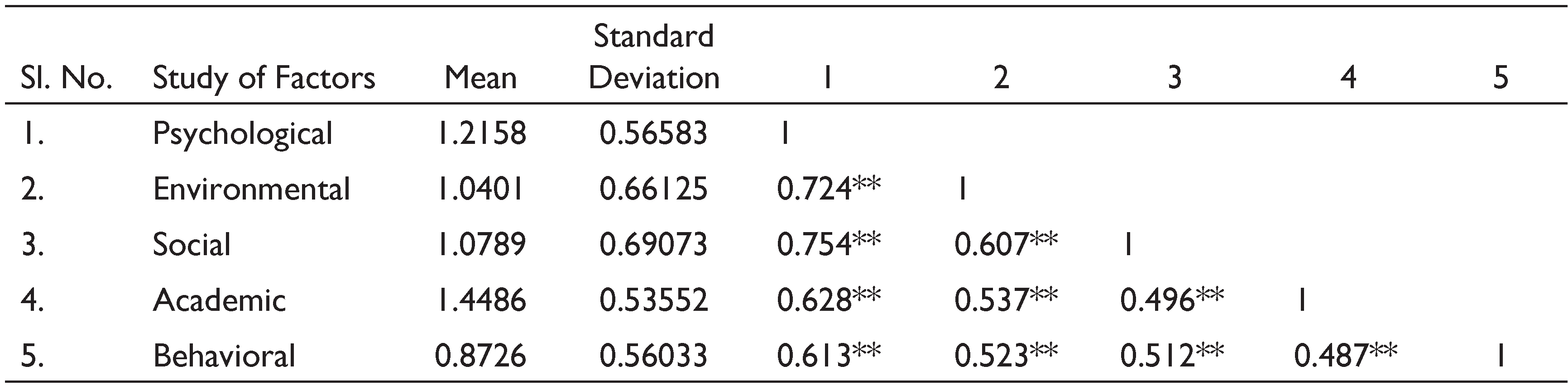
Mean, standard deviation, and inter-correlations among study variables are reported in Table 1.
Significant correlation was found between the antecedents and consequences of stress. All correlations were in low-to-moderate range ruling out the possibility of construct overlap. As can be seen, the mean value of various stress causing factors ranged between 1.04 and 1.45 indicating only a low-to-moderate level of stress among the sampled students. The unwanted behavioral consequences of stress were also found to be very low.
Gender-wise analysis of the responses showed that men and women did not differ significantly in terms of their perception of stress, its causes, and consequences. Results of t-test are shown in Table 2.
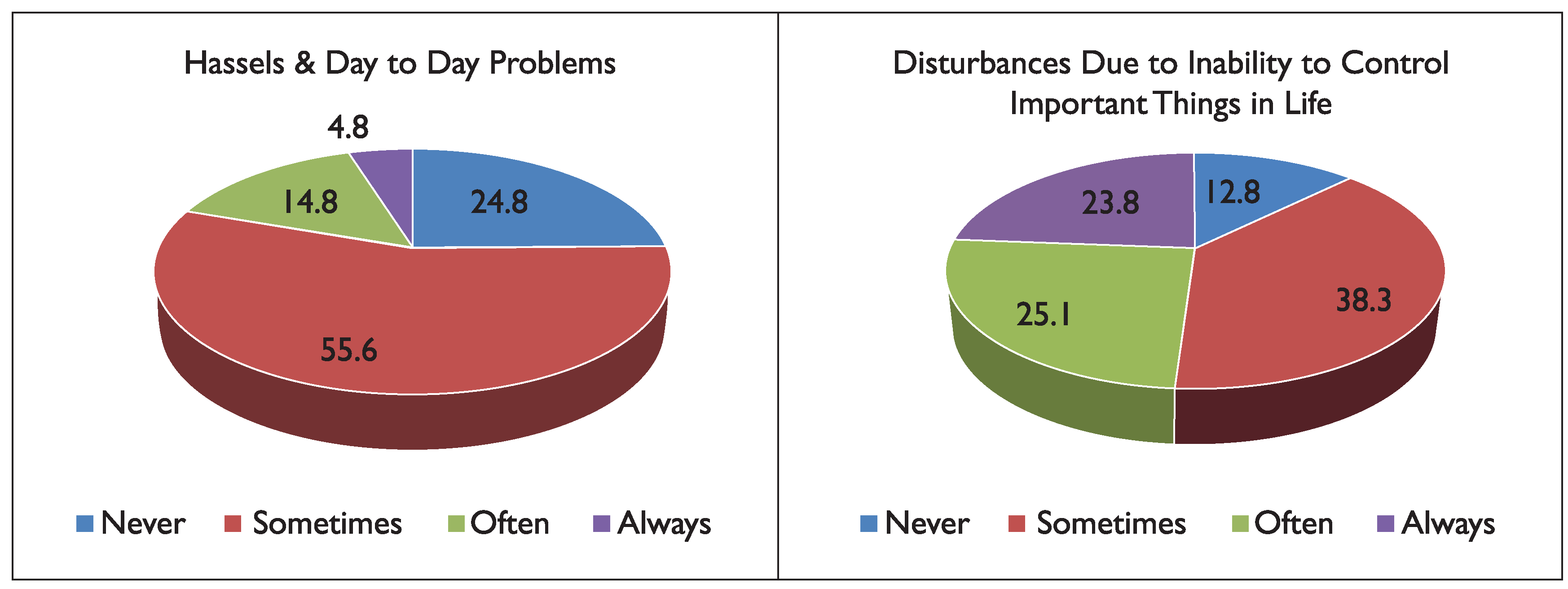
To measure degree of stress among students, various psychological indicators of stress like daily hassles, anxiety, depression, frustration, and disturbances in lives were used. Students were asked how often they experienced these indicators in their lives. When asked how often they find daily hassles or day to day problems as stressful, ninety-nine students (24.8%) said never, while two hundred and twenty-two students (55.6%) said sometimes, fifty-nine students (14.8%) often and nineteen students (4.8%) students always felt stressed out of daily hassles.
When the students were asked how often they feel disturbed in their lives due to inability to control important thing in their lives, 51 students (12.8%) said never, 153 students (38.3%) felt it sometimes, 100 students (25.1%) felt it often, and 95 students (23.8%) always felt disturbed.
The students reported high level of anxiousness regarding success and failure in their lives when they were asked about it. One hundred and five students (26.3%) reported that they always felt anxious while 120 students (30.6%) felt it sometimes, and 103 students (25.8%) felt it often. The results also suggest that students felt above average level of stress regarding their future prospect.
Stress Due to Daily Hassles and Inability to Control Important Things in Life
Stress Due to Success and Failure Anxiousness and Unforeseen Incidents in Life
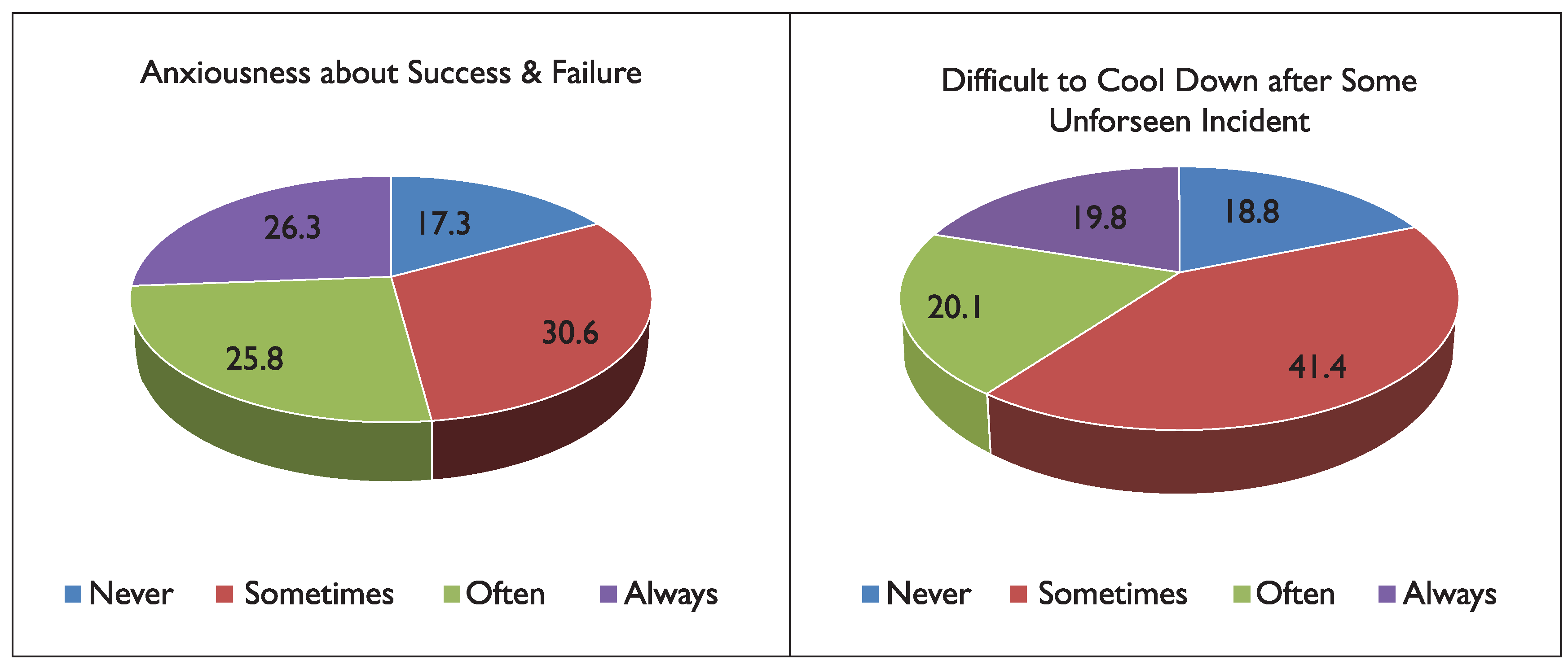
When the students were asked how often they find it difficult to cool them down after something upsets them, 75 students (18.8) reported never while the majority 165 students (41.4) reported sometimes they find it difficult to calm themselves down after some uneventful incidents upset their lives.
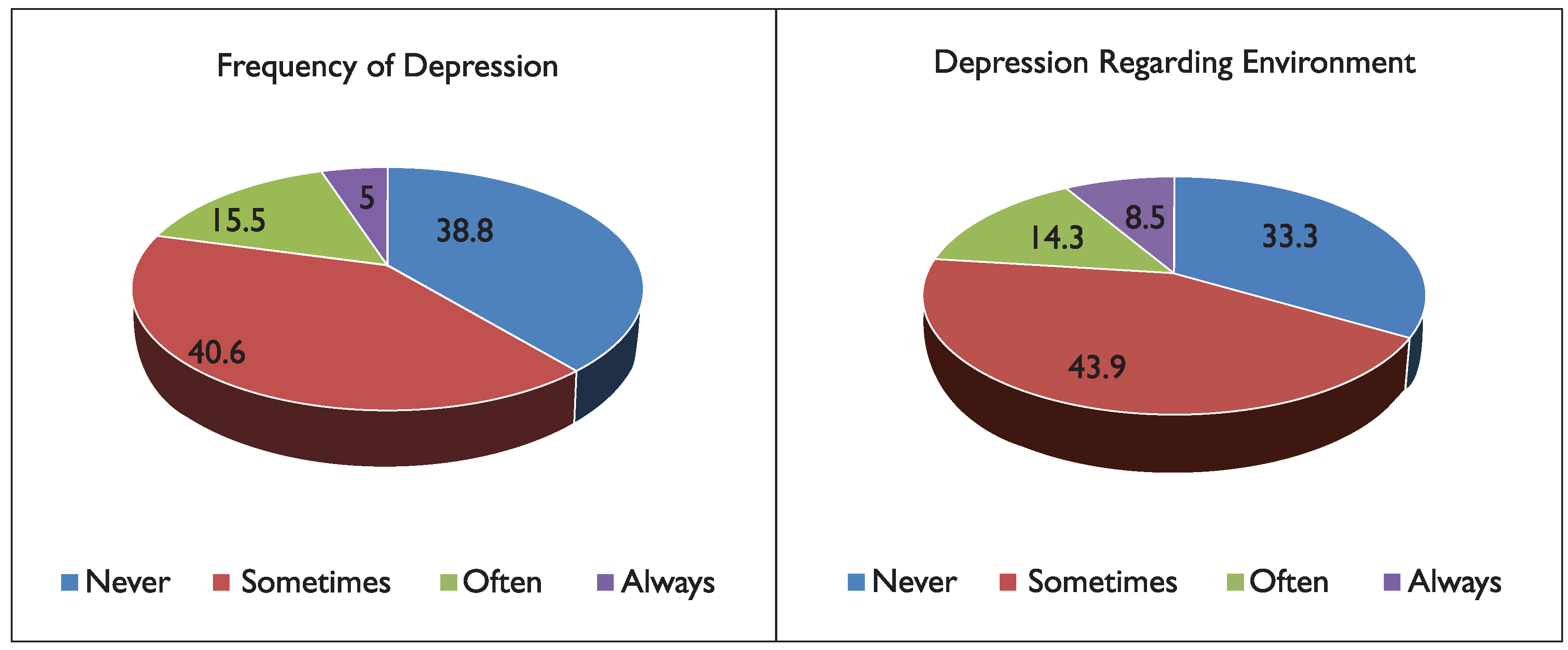
Our research also found that sampled students feel very low level of depression. Only 20 students (5%) felt depressed always while 62 (15.5%) students felt it often. On the other hand, the majority students belonged to never (38.8%) and sometimes (40.6%) category.
The above results suggest that stress as reflected in the form of anxiety, depression, and disturbance was not a major problem among the students. The level of stress varied from low to moderate as majority of the students belonged to never and sometimes categories when they were asked about frequency of occurrence of these indicators.
The second objective of this research was to identify the major causes of stress. In this direction, we tried to examine environmental, social, and academic factors of stress. To find the major environmental factors of stress, the researchers took into account the factors like adaptability with the changing situation, unusual events, and surroundings, etc. When the students were asked about their adaptability with the changing environment, only 34 students (8.5%) reported that they always found the environment stressful while 175 students (43.9%) felt it sometimes, and 57 students (14.3%) felt it often. On the other hand, 133 students (33.3%) never found the work environment stressful. The mean of stress due to environmental factors was found to be 1.04 which shows environmental factors do not contribute much to the stress level among the students.
Frequency of Depression and Depression due to Environment
To examine the social causes of stress, we identified family background, self-esteem, sociability as the major factors. We found that only a few students were stressed due to their family background (small income, family health, parental support). In this direction, only 47 students (11.8%) perceived their family backgrounds as problematic while 46 (11.1%) students found it problematic often, 93 students (23.3%) sometimes, and 213 students (53%) never found it a cause of their problem.
Stress Due to Family Background, Peers and Friends
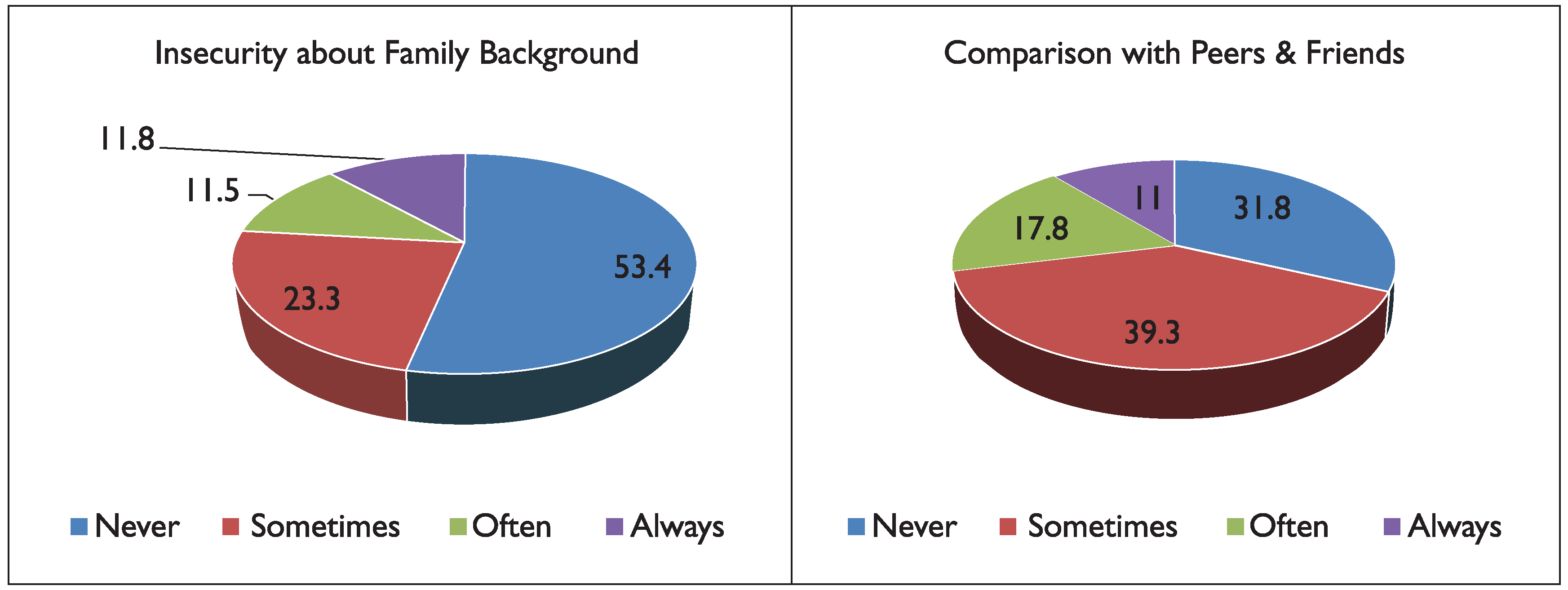
Generally, students belonging to same age group have a tendency to compare themselves with peers. Keeping this in mind, we asked students how often they compare themselves with peers and feel stressed. Only 44 students (11%) in the sample always compared themselves with their peers and feel stressed while 71 students (17.8%) felt it often, 157 students (39.3%) felt it sometimes, and 127 (31.8%) students never felt comparison as cause of stress. The mean value of stress due to social factors was found to be 1.08. Hence, social factors also do not contribute to the explanation of stress among students.
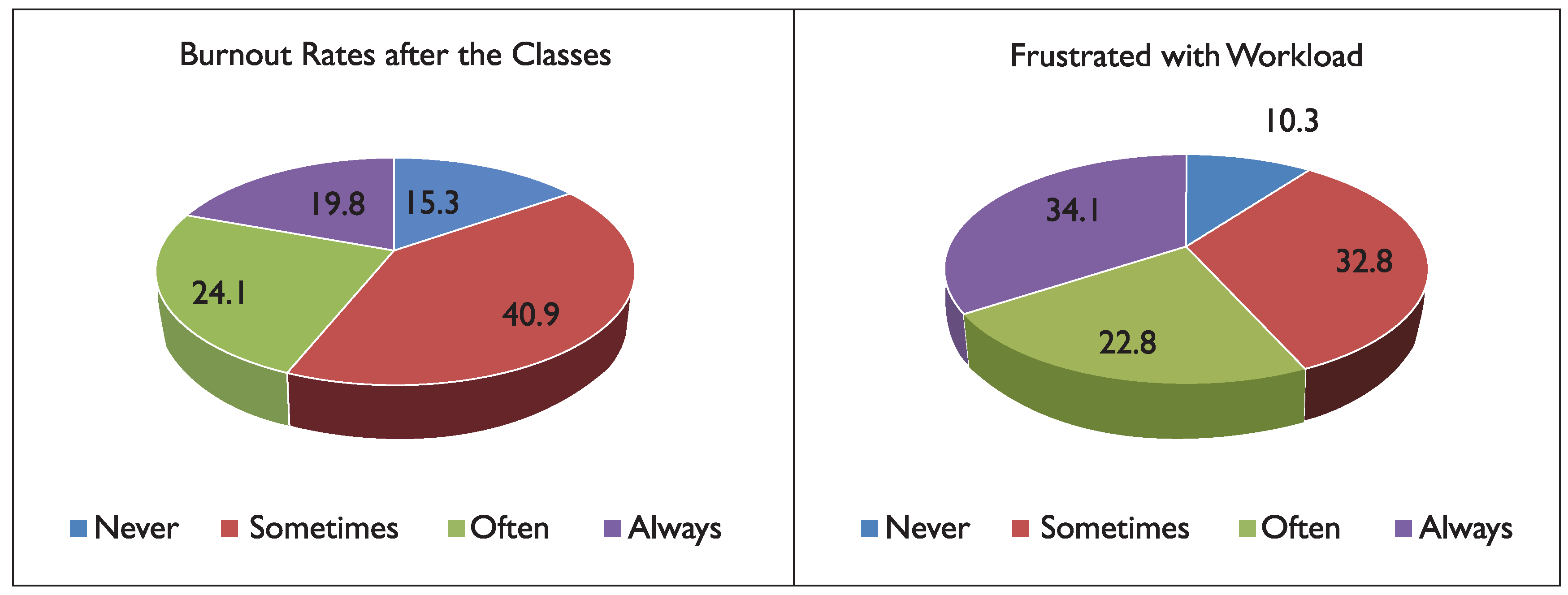
A set of variables were examined while we were trying to find the academic factors of stress. Among all other factors of stress studied in the article, academic factors were found to show highest stress score of 1.45. We found out that heavy work load, duration of class, and physical and mental exhortation after the classes were the main academic reasons for stress. While assessing the burnout rates among the students, we found that 61 students (15.3%) never felt it after the classes, 163 students (40.9%) felt it sometimes, 96 students (24.1%) felt it very often, and 79 students (19.8%) always felt burnt out after classes.
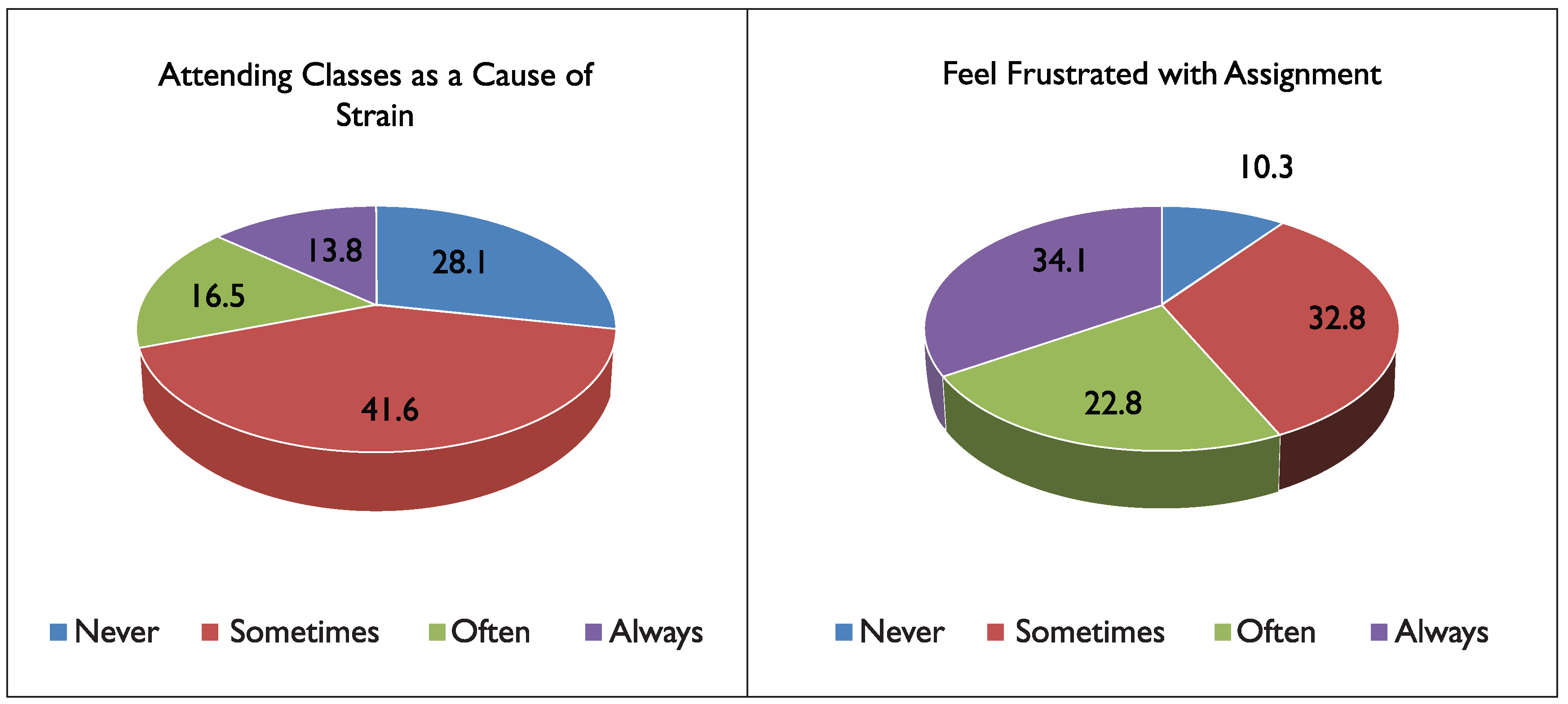
When the students were asked how often they remain frustrated with their workload, 41 students (10.3%) of the total population replied that they never found their workload as stressful, while 131 students (32.8%) felt it sometimes, 91 students (22.8%) felt it very often, and 136 students (34.1%) perceived workload as a reason for stress.
When we asked the students about their frustration regarding the assignments, 136 (34.1%) students reported that they always find themselves stressed with assignments, while 41 students (10.3%) never felt so. The mean value of this question shows that it is the only cause of stress which the institutional authority need to take care of before it becomes a major problem. When asked about the duration of the class hours, 56 (13.8%) students always and 66 (16.5%) students often felt the class hours as reason for their stress. On the other hand, 166 students (41.6%) find it stressful sometimes and 112 students (28.1%) replied that they never felt stressed because of the long duration of the class hours.
To examine the behavioral consequences of stress, a set of variables like smoking habit, extortion, and health condition degradation were included in the questionnaire. The study has found out that 336 (84.1%) students never smoked in their life time, while 31 (7.8%) students smoked sometimes, 12 (3%) students smoked often, and only 20 (5%) students smoked always. However, these findings are to be interpreted with caution as there is high chance of occurrence of social desirability bias while responding to the smoking habits. Further, while exploring whether students perceive stress to be taking a toll on their health, we found that 138 (34.6%) of the students felt stress is causing negative influence on their health, while only 27 (6.8%) students felt it always.
Burnout and Frustration with Workload and Classes
Stress Due to Classes and Assignments
Behavioral Consequences of Stress
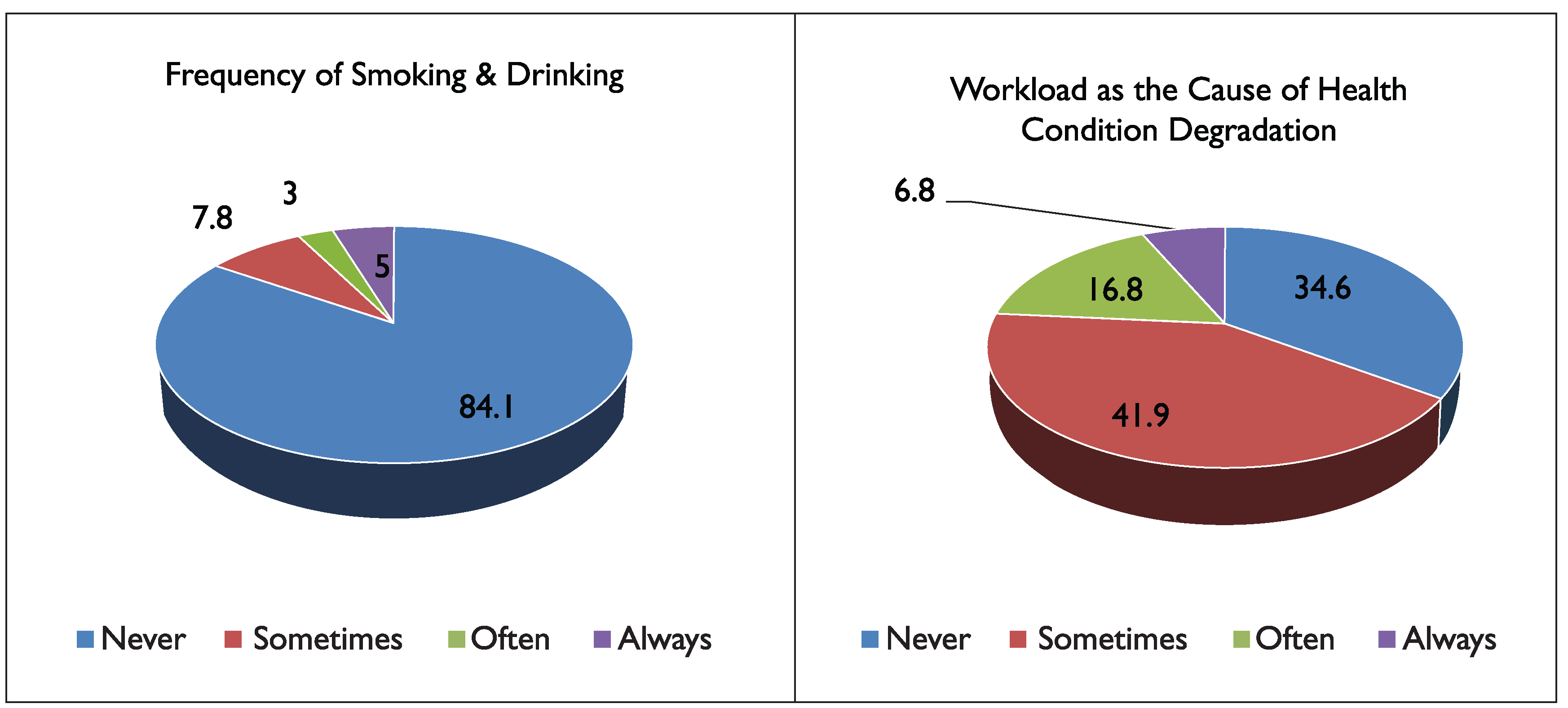
As the stress due to all the above-mentioned factors considered in the study was below average, the researchers did not find any major behavioral consequences of stress among the students.
Discussion and Recommendations
Results of the study suggest that there are a number of factors which cause stress among the students of engineering institutes in India. If we talk about psychological stress, we found that students of this institution face little-to-moderate level of anxiety, depression, and frustration. Day-to-day hassles and challenging tasks also contribute very minimally to the stress level of students in the present sample. After data collection through survey followed by personal interviews, we found that majority of the students do not find their environment as stressful. The students in this engineering institute come from heterogeneous social background. Hence, we assumed that social background might be an important factor to consider in the study. However, results show to the contrary as we found that it rarely leads students toward stress. We found that very few students faced stress due to economic insecurity and lack of parental support, etc. Most of the students did not report social factors as a major cause of their stress. As academic is the core concern of any educational institution, we tried to find out the major academic causes of stress among the students. In this direction, we took into account class schedules, working hours, assignments, exam preparation, etc. More than 56 percent of students reported that hectic assignments made them exhausted severely at the end of the day but most of them also admitted that studying is not at all burden to them. While we tried to figure out the behavioral consequences of stress, the findings reveal positive results and it was found that stress is not causing any harmful behavioral consequence among the students. Although instructional method as a cause of stress was not the part of the survey, it emerged out as cause of dissatisfaction among the students while interviewing the students. In this regard, it was found that teaching assistants helped teachers by taking lab classes in the sampled educational institute. But most of the time students found their instructions as confusing. Hence, it is recommended to give proper training for one or two weeks to these assistants where they can be taught the norms of facilitating the classes. This can help both the teaching assistants and the students.
Implications
The results of this study carry certain important theoretical and practical implications. As evident from the literature review, there has been limited research on determining the stress level among engineering students in India. The present research by identifying the major stress causing factors and its consequences among students of one of a newly established engineering institute aimed to fill the knowledge gap in the area. This research can be helpful in upgrading the academic environment and making it stress free for the young talents of India. Also, while framing the curriculum of the engineering students, institutes should take the psychological, social, and academic stressors into consideration to avoid untoward instances of student suicide in future. On the other hand, it will make the teaching–learning process more holistic and make the classroom discourse more effective as the students will be stress-free in the academic environment. Thus, results of the study contribute toward enhancing the academic quality of engineering institutions in India. It is suggested that these institutes can open the counseling cell for the students where they can occasionally meet and seek help from professional counselors when they face such problems in their lives. To conclude, this study provides a new empirical perspective to the study of stress and various factors related to it. These factors helped us to identify major stress issues in an academic institution which are incredibly important in enhancing the quality of the academic environment in India.
Limitations
As the study makes use of self-report measures, common method bias could be a concern. To stem out the concerns of social desirability bias, we ensured the confidentiality of the responses by keeping the survey anonymous. Further, Harman’s single-factor test (Podsakoff, MacKenzie, Lee, & Podsakoff, 2003) did not support any single factor explaining the majority of the variance. Hence, common method bias was not a problem in the study. Also, the study is restricted to collecting data from one of the IITs. Future studies focusing on other engineering institutes may help in generalizing the study findings. Though the personal interview has revealed teacher’s behavior as a cause of dissatisfaction among students, the questionnaire does not include teaching strategy and teacher’s behavior as the cause of stress or dissatisfaction among students. Hence, further research might explore this area.
Footnotes
Acknowledgements
We would like to thank Ms Anuja Akhouri, Mr Sandeep Sharma, Ms Chinmay Panda, and Ms Nusrat Begum for their kind help in data collection.