



Abstract
The outbreak of COVID-19 has emerged as the biggest threat to human life. It has changed the entire lifestyle of human beings concerning their emotional stability and cognitive development. Enjoyment is one of the emotions and acts as a positive stimulus that a consumer used to feel and seeks for a balanced life. Since the nationwide lockdown was implemented on March 25, 2020, people have turned restless about how to enjoy themselves at home, as all of their options of going out were being shattered. It was the time when continuous innovations in the form of digital content through over-the-top (OTT) platforms flourished and provided an affordable and diversified entertainment source to consumers. These OTT services help consumers to view the contents via the Internet directly. Furthermore, it has drastically changed people’s preferences toward diversified content based on their choices. This study aims to explore the various determinants affecting consumer satisfaction toward the OTT platforms amid COVID-19 crisis in India. The study’s main findings revealed that among the demographic variables, age group of the consumer largely influences their satisfaction toward OTT platforms. Moreover, work from home, affordability, convenience, and content quality are the significant determinants affecting consumer satisfaction levels toward OTT platforms. The study is relevant to the current marketing scenario, as it provides useful insights for the content developers of the major OTT platforms such as Amazon Prime, Netflix, Disney+ Hotstar, Voot, and many others to enhance the consumer satisfaction in the terms of digital content consumption.
Introduction
In this contemporary world, the Internet has brought radical changes in the entertainment industry. Whatever is needed is presented to us at our fingertips, whether it is for any critical advice or a source of entertainment for recreation. The Internet has really helped us in making our mundane life better. Due to the affordable plans and introduction of Jio technology, Internet has reached widely among consumers from the lower middle class. The period from 1995 to till date has seen the rising trend of mobile phones and laptops usage and how they have made our life easier. The Internet has really been an important invention in the field of information dissemination.
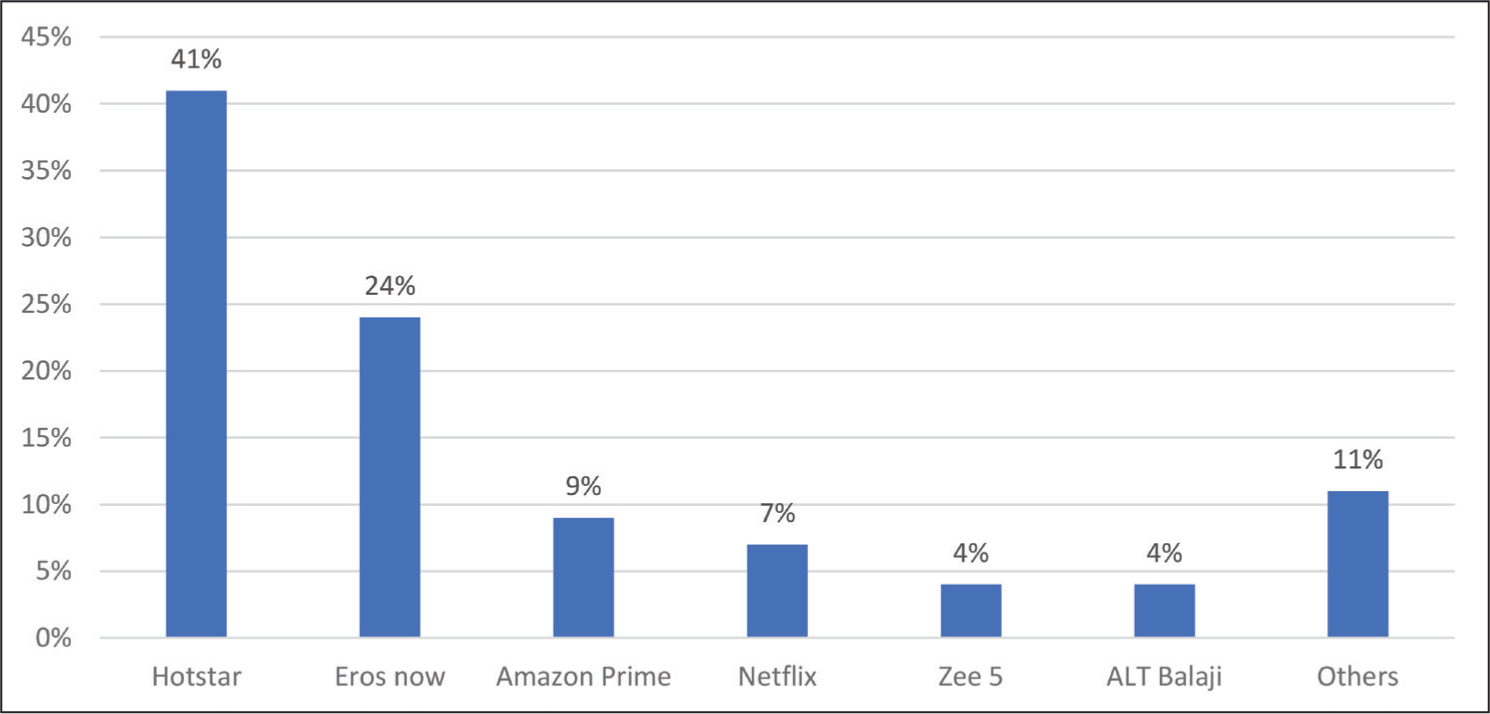
Over the top (OTT) is a name that has quickly made a bigger spot in our hearts in recent times. The services provide different content to view for consumers where the content provider does not have any administrative control over the content. In addition, OTT platforms offer media services directly to viewers via the Internet and do not require the use of cable wires like traditional broadcasting platforms. This platform has made the life of a consumer more joyous and a bit easier especially during the lockdown phase when people had nothing to do except sitting in their homes. The usage of OTT platforms has been on the upper scale even before the nationwide lockdown was imposed in India. OTT platforms are the “IT” thing for the millennials. However, when nationwide lockdown started on March 25, 2020, in India, even the baby boomers found comfort in this newfound media-streaming platform. Many content creators are harnessing this opportunity to showcase different art forms and cultures, which have made the world more globalized. Therefore, it has created a win–win situation for viewers as well as creators. OTT platforms have quite become popular among people of age groups that it has started replacing popular cable, broadcast, and satellite television platforms. India has currently 40 OTT platforms streaming in different regional languages. The top 10 OTT platforms in India such as Amazon Prime, Netflix, Disney+ Hotstar, Voot, ZEE5, Sony LIV, MX Player, ALT Balaji, Eros Now, and Arre are the major key OTT players attracting consumers through their diversified content (The Mobile Indian, 2022). With the help of artificial intelligence (AI), these platforms are running and consumers are given the choice to choose among many contents based on their history of streaming. These platforms run on the model namely Trail or FREEMIUM. Each OTT platform has its charm, starting from Netflix to Eros Now. Netflix has become home to some of the big-budget foreign films, whereas Amazon Prime has become popular because of telecasting the premier on the same day of the latest Bollywood film release. Hotstar is known to live telecast the famous sports such as Cricket and IPR. Alt Balaji attracts consumers by showing them the fresh global content and as such, Eros Now is popular for streaming music and Bollywood content at the same time. Media revenue from OTT is expected to surpass $210 billion by 2026. This is nearly double the amount of revenue in 2020, which was $106 billion (Digital TV Research, 2022) (Figure 1). As per the latest reports by London-based Omdia’s India, it is found that Star India-owned video streaming platform Disney+ Hotstar leads the subscription by having 41% of Indian online video subscription market. Closely following Disney+ Hotstar is Eros Now with a 24% share followed by Amazon Prime Video (9%) and Netflix (7%). ZEE5 and ALT Balaji both had a 4% share of the market followed by Sony LIV, which has a 3% market share. Apple TV+, YuppTV, and Voot Select had a similar market share at 1% (Figure 2).

OTT Versus Traditional Television Media
Ever wondered if there would have been a war or a debate between these two-common modes of mediums. Who is going to win? The answer is quite tough to answer. The childhood of the Indian consumers was filled with so many television programs. They were made to finish their homework just to watch their favorite show airing on Pogo on time. Nowadays, everything is available at our fingertips with convenience everywhere we like. However, people are shifting to cordless/cable-less medium. The reports reveal that in the year 2018, there were only 68% of people subscribed to cable in a country like the United States. The numbers have quite gone down as compared to the previous numbers. Furthermore, according to Telecom Regulatory Authority of India (TRAI), there has been a big decline in the subscriber base from 72.44 million to 54.26 million. The basic difference between OTT and direct to home (DTH) is that the signals in OTT are received from the satellite and the contents in OTT are received from the Internet and are connected through digital devices like laptops and smartphones. There are certain reasons why OTT platforms are better than DTH connection. First, the consumers have a liberty to pause and replay the contents whenever they like. Second, the OTT platforms are largely affordable when compared with other entertainment mediums such as DTH. The consumers can view contents from home while commuting even during their office breaks and OTT services allow consumers to skip the advertisements after paying a premium fee. The OTT platforms provide multiuser facility to the consumers and as such, college students or hostellers are using these services on a sharing basis. Some of the OTT platforms, such as Amazon Prime, can be used by different consumers with only one subscription at the same time on different devices. Therefore, with the advent of technology, OTT platform has become the basic need of a consumer to satisfy himself in the form of content consumption and enjoyment. OTT services are of three types, that is, Subscription video on demand (SVOD), AVOD, and TVOD. SVOD allows users to view any number of contents as long as you stably pay a subscription. This subscription fee can be paid with debit or credit card, online banking, or any UPI option. Netflix and Amazon Prime are the common examples of this kind. AVOD is the abbreviated form of ad-supported video on demand. Here, digital contents are viewed with many supported advertisements. Clearly, the revenue is earned from such advertisements. Sling TV and Fubo TV are the popular ones. TVOD means transactional video on demand where the contents are viewed on the basis of pay-per-click. That means if you really want to watch any video, you have to first pay for it. However, the contents you watched will be saved in a digital locker. It is a kind of buy-and-rent service. Google Play and iTunes are the common examples.
Literature Review and Hypotheses Development
OTT platform is one of the media services, which reach the viewer directly through the Internet. It breaks the monopoly of cable, broadcast, and satellite television platforms. OTT platforms were introduced in India in the year 2008 when the first platform BIGFlix was launched by reliance entertainment, but it gained much popularity during COVID-19. During the pandemic when box offices were shut, OTT platforms survived the Indian media and entertainment industry. In light of the above discussion, it is evidently clear that the patterns in media consumption among consumers are shifting from traditional cable and satellite TV to online-video streaming platforms. Therefore, it has become imperative to understand the key catalysts that play an important role in driving consumer satisfaction toward OTT platforms to increase consumer value, which is important for the long-run survival of service providers.
Although the past studies, which were conducted to understand the factors affecting the consumer’s satisfaction toward OTT platforms, have provided an exhaustive list, which includes work from home, affordability, consumer engagement, quality of service experienced, attitude of consumers, convenience, content quality, availability and uninterrupted services (less or no advertisement), and so on. This study undertakes only a few antecedents, which are linked with the onset of COVID-19 pandemic such as work from home, affordability, convenience, content quality, availability, and uninterrupted services. A brief description of these constructs is discussed below.
Work From Home
Also, a study conducted by Business Standard (2020) suggested that during the lockdown phase, as more and more organizations were switching to “work from home” mode, people were getting the opportunity to stay at home, which makes them view more content online. Most of them prefer watching it on television compared with their mobile phones. Madnani et al. (2020) conducted a research study on the impact of COVID-19 on OTT platforms in India and found some interesting insights. The study concludes that people working from home are using these platforms more than ever because of their stay at home. Similarly, Sadana (2021) also concludes that the viewing behavior of consumers was changed during COVID-19, as people got more time to spend on their interests due to flexi work hours.
Affordability
The adaptability of online content viewing is gaining grounds in India. Although, the rate of adoption is slow as compared to other developing countries. Still, with an improvement in Internet connectivity with 4G and upcoming 5G networks, various online streaming services have become accessible and affordable (Moochhala, 2018). Similarly, the study conducted by Gangwar et al. (2020) states that OTT usage has been on the rise ever since pandemic, but this smooth way of living in this pandemic is only possible because of some of the factors playing behind it—those are high Internet speed, low data plans, presence of technological gadgets, and so on. In another study conducted by Madnani et al. (2020) to study the impact of COVID-19 on OTT platforms in India found that people working from home are using these platforms more than ever because of their stay at home and they found it affordable, they are ready to spend ₹100–300 for paying the monthly charges for these applications. On the other hand, the study conducted by Mehta et al. (2020) states how crucial it is to analyse consumer’s behavior to bring the correct offerings to consumers. The study concludes that lockdown has changed people’s behavior to a great extent. People’s spending was limited only to essential items ranging from medicine, food, and so on. Brand image and status was less thought of as compared to others. Nijhawan (2020) conducted an in-depth analysis about the great evolution of OTT from the beginning, how it has changed the consumption of content viewing in India across all the generations, and how the pandemic had aided in this rising number game.
Convenience
The impact of the OTT platforms on the consumers during lockdown was analysed by Anand and Srinivas (2020), where they found that more than 70% of Gen Z are using OTT platforms due to their flexible time schedule they got at home because everything went online starting from studies to work schedule. In addition, Indians are the highest consumer of digital contents, 60% of the Gen Z are using these contents through smart television. The study comes up with the interesting finding that ease of use and affordability are the most important factors, which play a significant role in satisfaction toward OTT platforms among youth. In addition to this study, Bhavsar (2018) analyses how people’s consumption on the digital media has changed rapidly leading to the challenge faced by the traditional television and advertising industry. This study was conducted before lockdown but revealed that views on the contents of the OTT and VOD services kept increasing and will increase more in the coming year. In the study, it was projected that India being the country with the highest youth population is going to be the leading country in terms of digital content consumption. This change in preferences has signaled the marketers to re-examine their marketing plans (Bhavsar, 2018). Yi conducted a similar study Chen (2019), which suggested that people preferred OTT television more than traditional television based on seven dimensions with convenience rating highest out of all the seven dimensions. Still, some similarity was seen between the two in terms of ease of use and entertainment options. Platforms like Netflix have played a pivotal role in shifting people’s choices from traditional to this new television option. In addition, people have started to watch it while commuting from the office to their home (Sujata et al., 2015); therefore, there has been an increase in the usage of these platforms. In addition, respondents recalled that multiscreen content viewing and high usage of smartphones have made them get closer to such media (Kesavan & Bharathi, 2021).
Content Quality
The quality of the content drives consumers toward the product if it meets their needs and wants. The study confirms that content quality of new technology makes consumers switch from their traditional mode to the newer avenues such as e-commerce websites (Dehning et al. 2004). While working on the antecedents of satisfaction, Bansal et al. identified that loyalty or stickiness of the consumer toward online services depends heavily on the characteristics of the website, that is, its relevance. Bhullar and Chaudhary (2020) conducted a study to identify the factors leading to the transformation of this new media platform from the traditional medium. The study consists of 500 samples drawn from three North Indian cities: Chandigarh, Mohali, and Panchkula. The study suggested that the content quality available on the OTT platforms is the most important factor-determining user’s adoption toward such platforms. The study conducted by Dastidar (2021) compare the pre-COVID and post-COVID scenarios and explored people’s preferences regarding the consumption of OTT platforms. The study found that the subscription rate and adoption rate have been increased due to reasons like high quality contents, variety of contents, and flexibility. In addition to this, Lee et al. (2020) found that there has been tough competition between cable TV and OTT platforms of who is going to take the market share. The study concludes that before acquiring consumers, it has become really important to understand what are the exact needs of the consumers. After doing so, we can customize the products and services according to their needs and arrange certain advertising techniques to reach them.
Availability (on Demand)
Kaur et al. (2020) conducted a study suggested that how technology has helped us evolve over the changing world scenario especially after COVID-19 pandemic. Many of the sectors are transferring from offline to online mode. If there were no smartphones or Internet services, then surviving this pandemic would not have been possible. In addition to this, perceived enjoyment is also found to be an important factor influencing consumers toward OTT platforms as people feel at ease and relax while using such OTT platforms, as their favorite program is available on a simple search button (Pan & Cho, 2022; Yousaf et al., 2021). The study was conducted by Khadia and Awasya (2020) added significant contribution to the literature and has drawn important conclusions by suggesting that youth nowadays are becoming really impatient, and they do not have much time to wait for any show or movie to premiere on the television, so they choose this platform, especially during the lockdown period.
Less Advertisement (Uninterrupted Services)
The study conducted by Blasco et al. (2020) in Spain, one of the countries that were badly hit by this lockdown, revealed that Info-Show television shows were more preferred as compared to traditional ones. People did not rely much on the Internet, print media, radio, and information from relatives; therefore, the popularity of OTT certainly increased during the pandemic. In addition, it was observed that the majority of consumers of OTT platforms are young millennials and they go for multiscreen for viewing. They prefer to switch from one screen to another in case of advertisement (Kesavan & Bharathi, 2021). Similarly, another study conducted by Nagaraj et al. (2021) state that features, such as skip ads or choice to prefer ad-free viewing, play a significant role in consumer satisfaction toward OTT platform.
Thus, from the literature review, it may be concluded that a number of studies have been conducted on identifying the determinants affecting consumer’s preferences toward OTT platforms. As such, each study’s results differ from others regarding consumer preferences. An ample of studies have been found in the literature, which talks about the consumer’s preference toward OTT platforms from technological and digital content consumption point of view. A very few studies have been conducted till date, which can study the behavioral patterns of consumers toward the consumption of OTT platforms in India.
Objective
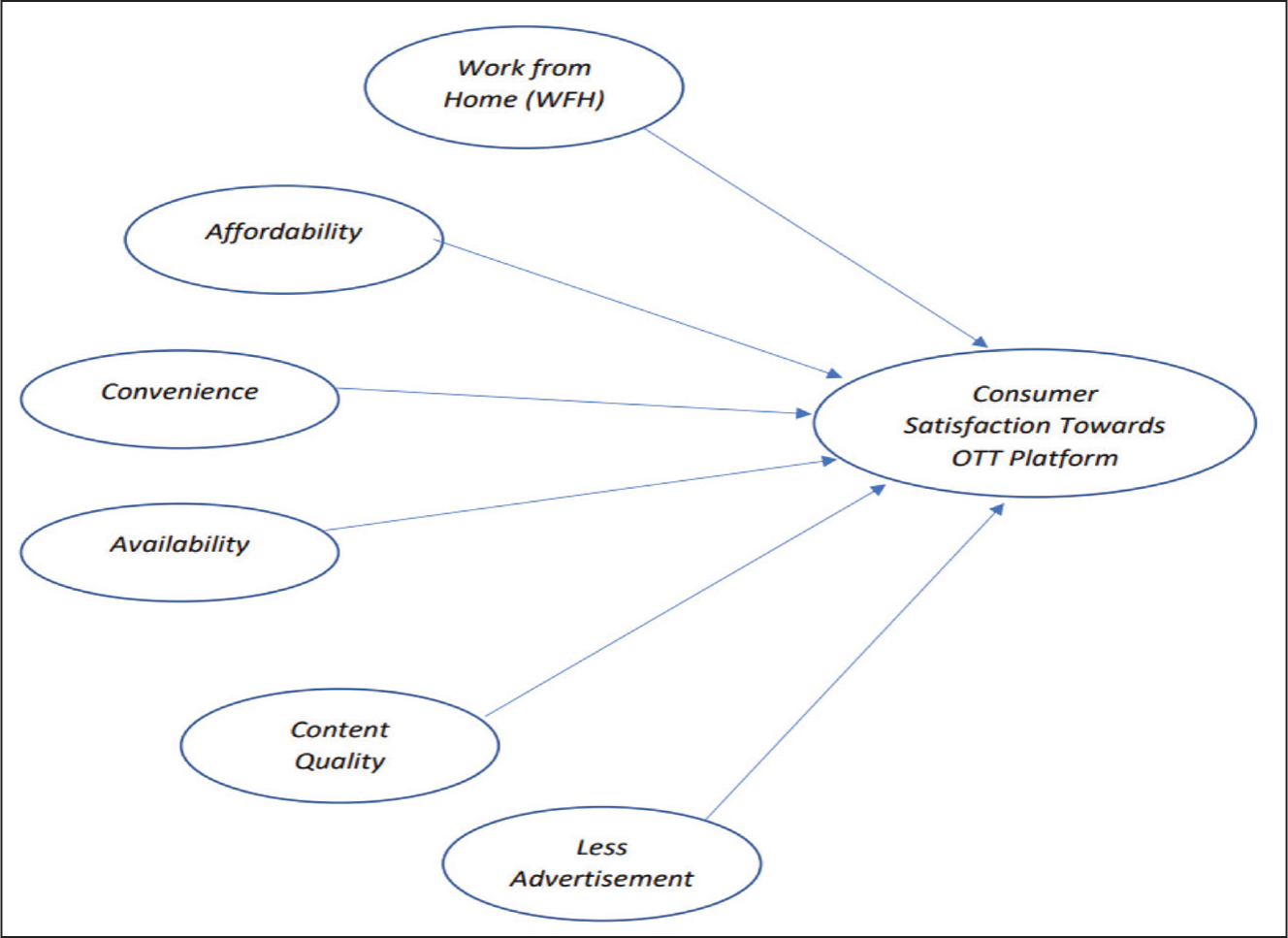
To analyse the key determinants affecting consumer’s satisfaction level toward OTT platforms amid lockdown in India (Figure 3).
Conceptual Model for Factors Affecting Consumer Satisfaction Toward OTT Platform.
Research Methodology
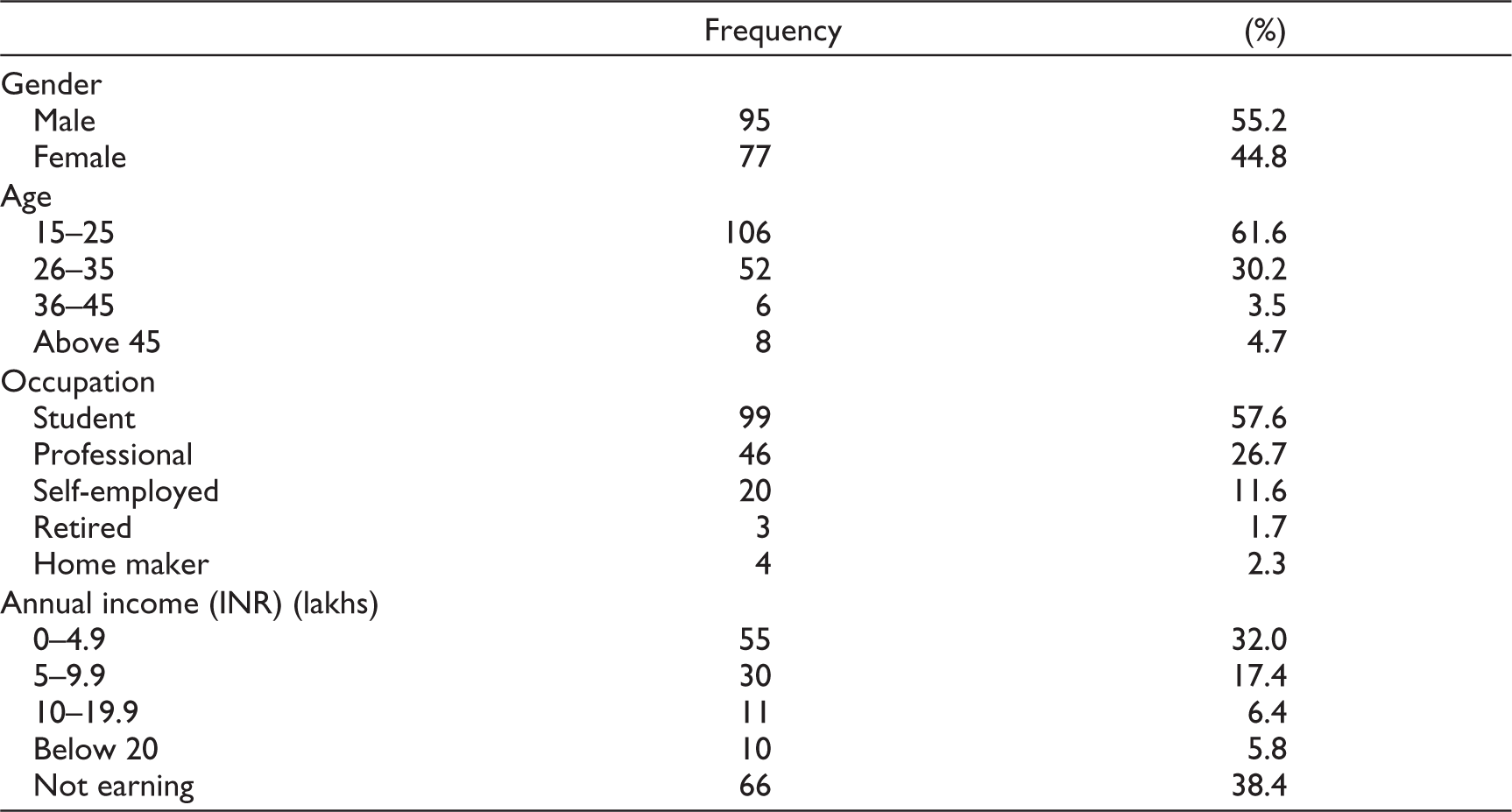
This study investigates the impact of various factors such as work from home, affordability, convenience, availability, content quality, and less advertisement on consumer satisfaction toward OTT platforms in India during COVID-19 lockdown. This study is based on descriptive research design. It follows a primary research approach where the preliminary data were collected through self-administered structured questionnaire. An online survey was conducted among the OTT platform users of various age groups and income levels. The respondents were students, professionals, businessmen, and house makers of different cities. The demographic characteristics of the respondents (N = 172) is being depicted in Table 1.
The survey was widely spread through various social media platforms such as Facebook, Instagram, LinkedIn, and WhatsApp. The questionnaire consisted of statements on Likert five-point scale ranging from “1—Strongly Disagree to 5—Strongly Agree.” A sample size of 172 respondents were selected for administering the questionnaire. The formulae used for calculation of sample size for infinite population is being adopted from Cochran (1977)14, which is as follows:

z = 1.64 for 95% confidence interval.
P = percentage population proportion (0.85 is used here).
e = 0.05, Here e is the margin of error.
Sample size = 172.
Demographic Characteristics of the Respondents (N = 172).
Statistical Tools Used
The collected primary data were analysed using various statistical and mathematical tools. The formulated hypotheses were tested using SPSS version 21.0. A stepwise regression analysis was being conducted to examine the relationship between dependent and independent variables.
Reliability Analysis
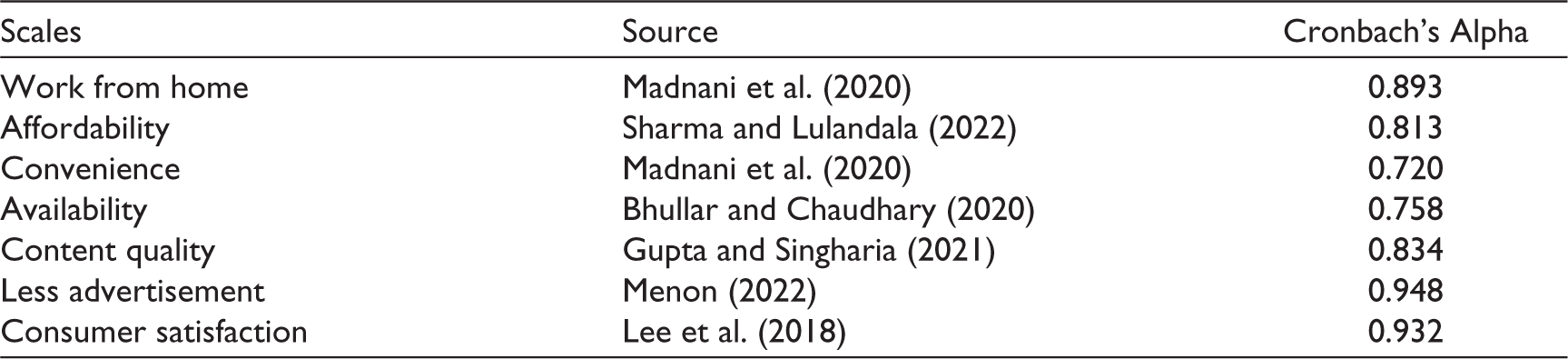
The reliability coefficient Cronbach’s alpha values of the constructs have been calculated. Cronbach’s alpha value of more than 0.70 or above is acceptable. Table 2 depicts the results of reliability analysis.
Operationalization of Constructs and Reliability Analysis.
Data Analysis and Interpretation
This study is being conducted to analyse the key determinants affecting consumer satisfaction toward OTT platforms in India. A stepwise regression method was being used to analyse the relationship between independent variables such as work from home (WFH), affordability, convenience, availability, content quality, and less advertisement and dependent variable such as consumer satisfaction. During stepwise regression technique, statistically significant independent variables were being identified. This process is continued until all significant variables were included in the regression equation and the ones that are not significant are removed automatically. Table 3 depicts the descriptive scores of the respondents where the mean and standard deviation for the dependent and independent variables were being illustrated.
Descriptive Statistics.
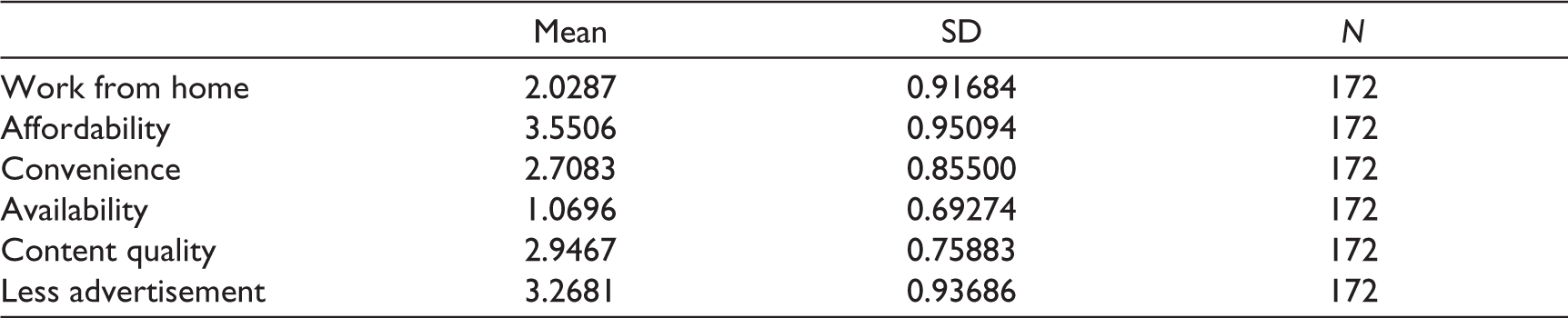
Table 4 depicts the results of stepwise regression analysis. It shows that the key independent variables that were found to be significant by the regression model were WFH, affordability, convenience, and content quality. Furthermore, it suggests that availability and less advertisement are not found to be the significant predictors in affecting consumer’s satisfaction level by the regression model. The final model shows that the value of multiple correlation coefficient is found to be 0.741. The value of adjusted r2 is also found to be 0.550, which suggests that 55% of variation in consumer satisfaction is being explained by the five exploratory variables. The Durbin-Watson value is found to be 1.841, which is near to the value 2 which shows that for the present regression model, no autocorrelation exists (Durbin, 1950).
Model Summary.

Dependent variable: consumer satisfaction.
The ANOVA results are being illustrated in Table 5, which shows that the value of R2 is significant as statistics for F (5,161) = 40.150, p < .005. Table 6 shows the excluded variable from the regression model. Furthermore, it states that there is no significant relationship exists between availability (t = 1.697, p > .005), less advertisement (t = 1.101, p > .005) with respect to consumer satisfaction toward OTT platforms in India.
ANOVA Explained for Variables.

Dependent variable: consumer satisfaction.
Excluded Variables from Final Regression Model.

Predictors: work from homea, affordabilityb, conveniencec, content qualityd.
Dependent variable: consumer satisfaction.
VIF, variable inflation factor.
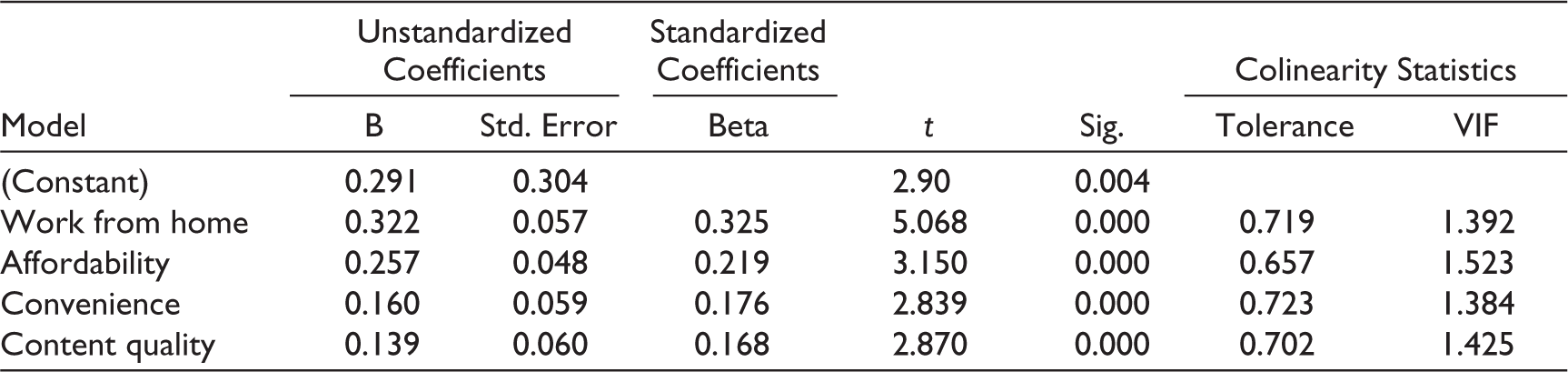
Table 7 shows the regression model of the study where the standardized and unstandardized β values are being depicted. The β values indicate that to what degree each predictor affects the final regression model. Table 7 shows that WFH (p < .005, β = 0.325) is found to be the most significant determinant in influencing consumer satisfaction toward OTT platforms in India followed by affordability (p < .005, β = 0.219), convenience (p < .005, β = 0.176), and content quality (p < .005, β = 0.168). To address the problem of multicollinearity, collinearity statistics was also conducted in Table 6, which depicts that the variable inflation factors (VIFs) for all the explanatory variables are below 2 and, hence, multicollinearity is not a problem for the present regression model. Finally, the unstandardized coefficients (B) obtained in Table 7 were used to formulate the final regression equation, which is as follows:
Y = 0.291 + 0.322X1 + 0.257X2 + 0.160X3 + 0.139X4. Y = Consumer satisfaction toward OTT platforms. X1 = work from home. X2 = affordability. X3 = convenience. X4 = content quality.
Regression Coefficients.
Dependent variable: Consumer satisfaction.
Discussions
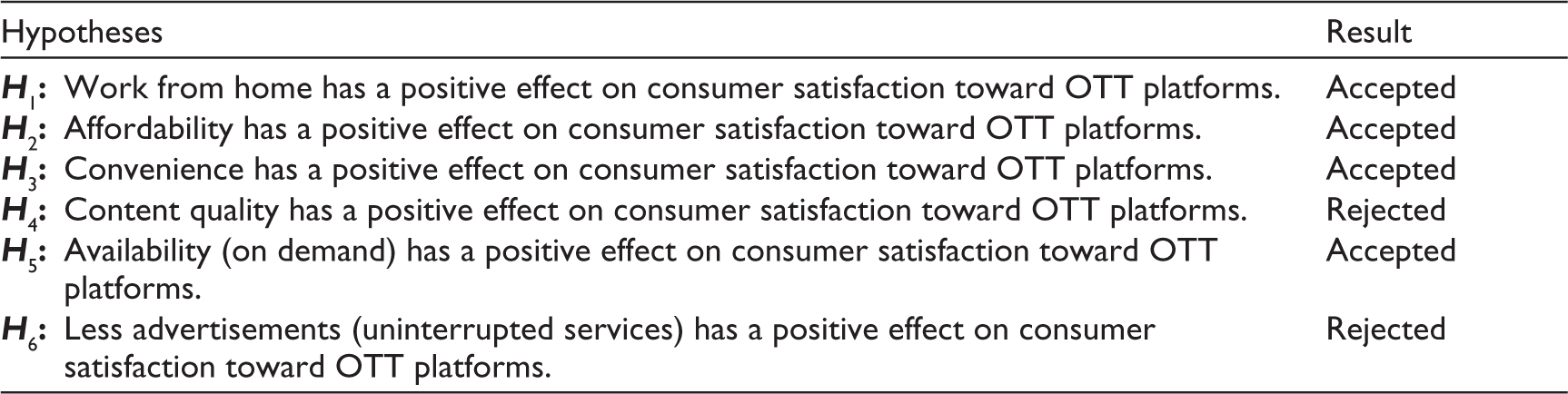
The above-formulated hypotheses were tested by conducting a stepwise regression analysis in which four hypotheses out of six were found to be supported. The results of the stepwise regression analysis revealed that WFH, affordability, convenience, and content quality are the key determinants affecting consumers’ satisfaction toward OTT platforms in India. Thus, H1, H2, H3, and H5 are accepted. Furthermore, it has been found that availability and less advertisement have no influence on consumers’ satisfaction toward OTT platforms in India and thus H4 and H6 are rejected. The probable reason could be that availability (on demand) is common these days, as OTT industry is growing at a very fast pace with a number of key players. The content is easily available on the OTT platforms and one can easily get the access by just subscribing the particular platform. Furthermore, the study reveals that there is no significant relationship found between less advertisements (uninterrupted services) and consumer satisfaction regarding OTT platforms. The reason behind this finding could be that the various OTT platforms gave the option to the user to access the ad-free content by paying some additional nominal fees. Also, many of the OTT platforms are offering ad-free services to the users during the subscription phase of the user interface. The results of hypotheses testing are being illustrated in Table 8.
Results of Hypotheses Testing.
Conclusion and Suggestions
Due to the nationwide lockdown implemented because of COVID-19 pandemic, people have turned restless, as their fast-track life comes to a standstill. There were no parties, outings, and vacations. Having locked at their homes, they found technology as their best companion. Consumption of online contents through OTT platforms, like Netflix, Amazon Prime, ZEE5, and so on, had saved people from their boredom during lockdown. OTT platforms are among the services that have gained remarkable acceptance among consumers of all age groups. With an aim to understand the probable reasons for shift in consumer attitude toward these online platforms amid the lockdown, a study was conducted among a section of the society. The main aim of this study was to analyse the key determinants affecting consumer satisfaction levels toward OTT platforms in India. The study revealed that the OTT platforms have been consumed largely by many audiences irrespective of their age groups, occupation, and income level. When asked about their time spent on OTT platforms during lockdown, 44.80% of the respondents said that they spent usually 2–4 hours of their time daily on OTT platforms during lockdown; 6.70% of the respondents have subscribed to new OTT platforms in the lockdown, which is a sign that lockdown acted as the catalyst in increasing the number of users of OTT platforms; 59.20% of the respondents are willing to spend ₹0–300 monthly on the OTT platforms followed by 31.60% of the respondents willing to spend ₹301–500; and 80.50% of the respondents agreed that their OTT consumption has increased during the lockdown. A maximum of the people either use Netflix (29.89%) or Amazon Prime (28.80%) followed by Disney+ Hotstar (25.27%). Nowadays people focus more on the content quality than on the people acting. OTT platforms bring to us many contents from all over the world. This has indeed helped us to learn above other’s cultures, like learn the good and forget about the bad ones. In the third place is WFH. People were made to WFH to stop the virus’s spread. So, more and more people were getting attracted to this platform because their commuting time is getting saved from this. In a way, they are viewing more content from different platforms and getting satisfied.
Theoretical and Managerial Implications
The research outcomes of this study have highlighted the pivotal role of the several determinants affecting the consumer satisfaction regarding OTT platforms in India. The study has made several significant theoretical contributions to the existing literature available on OTT platforms. First, the current study has validated a holistic model based on several determinants such as WFH, affordability, convenience, content quality, availability, and less advertisement and their interactional relationship with consumer satisfaction regarding OTT platforms. This study contributes to the extent of literature by clarifying that availability and less advertising do not influence consumers’ satisfaction regarding OTT platforms. In contrast, WFH, affordability, convenience, and content quality do. This study has provided several managerial implications to the management of OTT platforms to get insights about the impact of COVID-19 on OTT platforms and to analyse the consumer needs accordingly. The study is relevant to the current marketing scenario, as it provides useful insights for the content developers of the major OTT platforms such as Amazon Prime, Netflix, Disney+ Hotstar, Voot, and many others to enhance the consumer satisfaction in the terms of digital content consumption.
Footnotes
Declaration of Conflicting Interests
The authors declared no potential conflicts of interest with respect to the research, authorship and/or publication of this article.
Funding
The authors received no financial support for the research, authorship and/or publication of this article.