



Abstract
This study aims to examine the factors influencing the intention to use digital lending among users by extending the technology acceptance model (TAM) framework. Specifically, the study focuses on the perceived usefulness and perceived ease of use of the TAM model with the addition of perceived security and perceived risk as the key factors influencing the intention to use digital lending. The study uses a quantitative research design and collects data from a sample of mobile banking users who are willing to borrow through an online survey. The researcher analyzed the data with a structural equation model using Smart PLS 4.0 to test the hypotheses, including the relationships of all latent variables. The findings suggest that perceived usefulness, perceived ease of use, and perceived security influence are positively associated with the adoption of digital lending. In contrast, perceived risk was found to be an insignificant predictor in this area. The study also provides insights for bankers and policymakers to design effective strategies to boost the adoption of their services.
Keywords
Introduction
Digital lending has been gaining significant traction in India in recent years. It refers to the process of providing loans to borrowers through digital platforms, using technology to simplify the loan application, approval, and disbursement processes. According to a report by the Boston Consulting Group, the digital lending market in India is expected to reach $1 trillion by 2023. This growth is fueled by the increasing adoption of digital payment systems, the rise of alternative lending platforms, and the expansion of credit to underserved segments of the population. The Reserve Bank of India (RBI) established a new regulatory framework for digital lenders in India on August 10, 2022, with immediate effect. According to the new criteria, digital lending operations can only be conducted by entities regulated by the central bank or those authorized by law, and all loan disbursements must be made in cash. Repayments must be made directly between the borrower’s bank account and the RBI-regulated companies (REs), not through a third party. As a result, these principles provide safeguards to borrowers within the framework, as well as ensure that borrowers’ interests are protected and increase consumer confidence in the digital lending ecosystem.
The adoption of digital lending in India has been driven by several factors, including the increasing use of smartphones and the internet, the growing demand for quick and easy access to credit, and the emergence of innovative FinTech companies that are leveraging technology to disrupt the traditional lending industry.
Digital lending has also been instrumental in promoting financial inclusion in India. Traditional lenders often require borrowers to provide collateral or have a high credit score, which makes it difficult for many individuals and small businesses to access credit. Digital lending platforms, on the other hand, use alternative data sources and machine learning algorithms to assess creditworthiness, enabling them to provide loans to a wider range of borrowers.
However, the adoption of digital lending in India is not without its challenges. The lack of a regulatory framework to govern digital lending has led to concerns about data privacy and borrower protection. Additionally, the use of alternative data sources and machine learning algorithms in credit assessment raises questions about transparency and fairness.
There is some recent research on digital lending, Internet lending, and P2P online lending market abroad, but there is little related research in India. Considering the gap in the literature, the goal of this study is to improve knowledge of the user’s intention as a person in adopting a digital lending system. Understanding user behavioral intents by taking into account all of the contributing elements is crucial in refining and building a platform as well as the marketing approach. The technology acceptance model (TAM) was used in this study to better understand the impact of certain variables on individual adoption of new technology (Davis, 1985). TAM outperformed the theory of planned behavior and UTAUT (the unified theory of acceptance and use of technology) among the models used to study technology adoption by end-users (Rahman et al., 2017). Furthermore, TAM is a flexible model that may be adjusted or expanded with additional criteria to suit the aims of this study, such as perceived security and perceived risk.
The following is how the rest of the article is organized: the second section introduces the literature review, describing the conceptual framework and hypotheses, as well as the rationales; the third section describes the methodology, namely the data collection and instruments development; the fourth section describes the results and presents the discussion: the fifth section discusses the implication of the study, and the sixth section describes the limitations and future scope of the study.
Literature Review
Digital Lending
The finance sector has been utilizing the progress of information technology all around the world, culminating in an invention known as financial technology or FinTech (Das, 2019). It is a rapidly changing and dynamic industry with distinct business tactics (Dorfleitner et al., 2017) and it has also changed the way financial institutions operate and interact with their customers. This shifts the paradigm of traditional financial services, causing major disruption (Carmona, 2018). Digital lending provides benefits to MSMEs who have traditionally been deprived of funding by banks and NBFCs. The new age of digital lending could be the key to unlocking the potential of the MSME segment in India (Damodaran et al., 2019).
Hypotheses Development and the Proposed Model
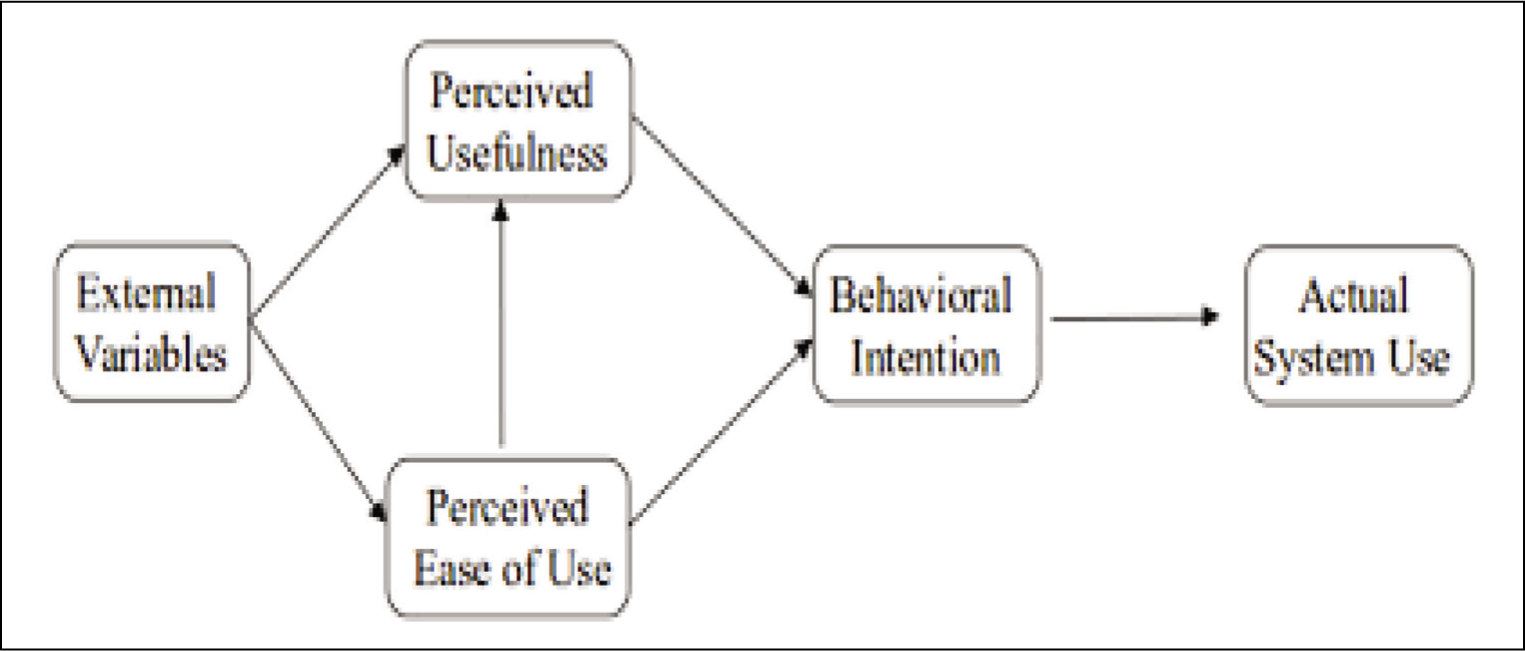
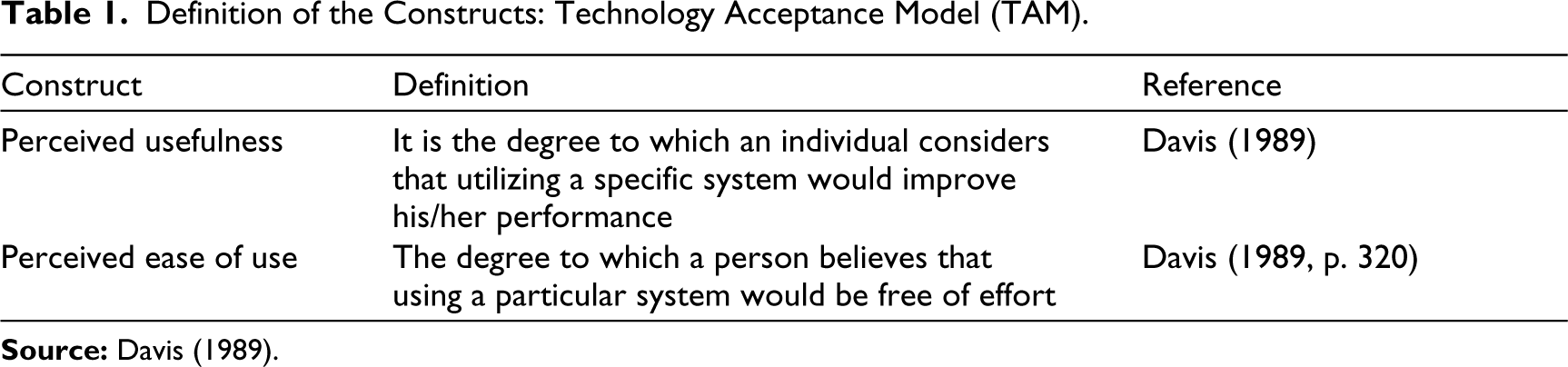
Davis (1989) created the TAM, which is a new technology adoption model. This model is primarily used to investigate consumer acceptance and utilization of information systems. Consumers’ attitudes toward using certain technology were explained by perceived usefulness and perceived ease of use. This model also explained consumers’ intention and usage of new technology through their attitude toward using it. Davis (1989) empirically examined this model and discovered that, when compared to perceived ease of use, perceived usefulness was the strongest predictor of the model. Figure 1 and Table 1 show the directional path among the constructs in the TAM model, as well as the construct definitions.
Technology Acceptance Model (TAM) by Davis (1989).
Definition of the Constructs: Technology Acceptance Model (TAM).
The TAM has become one of the most extensively used models in the field of information technology adoption research because it performs an excellent job of describing the difference in consumer propensity to adopt information technology and may be enhanced and specified based on the analytical problem (Zhang et al., 2018). The essence of FinTech services is to use the new generation of information technology tools for financial innovation; therefore, the TAM has a high adaptability in this article. Although the TAM is widely used for technical adoption in areas such as e-commerce mobile payment, the unique nature of FinTech services (e.g., privacy and security challenges, and government encouragement) results in a significant difference in the application process between the TAM and traditional e-commerce information technology adoption (Stewart & Jürjens, 2018).
Perceived Ease of Use
Perceived ease of use is another important factor in the TAM, which is defined as the degree of effort involved in using this new technology (Davis, 1985). In this research, PEOU refers to the degree to which customers are at ease and willing to learn how to borrow through digital lending platforms. Several other studies (Davis, 1985, 1989) have found that PEOU can influence PU since, all else being equal, the easier the technology is to use, the more valuable it can be. Lien et al. (2020) analyzed the factors that influence customers’ intention to use FinTech services and found that PEOU has a significant positive impact on intention to use FinTech services in the banking sector. It has been suggested that if a valuable technology innovation, such as that provided by FinTech lenders, is difficult to use, its potential clients may not accept it (Setiawan et al., 2021; Singh et al., 2020). The positive influence of perceived ease of use significantly influences the intention to adopt FinTech adoption (Nugraha et al., 2022). A study that attempted to assess the perspectives of P2P lending mobile application users discovered that PEOU had a beneficial effect on the attitude toward using P2P lending mobile applications.
Therefore, based on the above literature the hypothesis is formulated below:
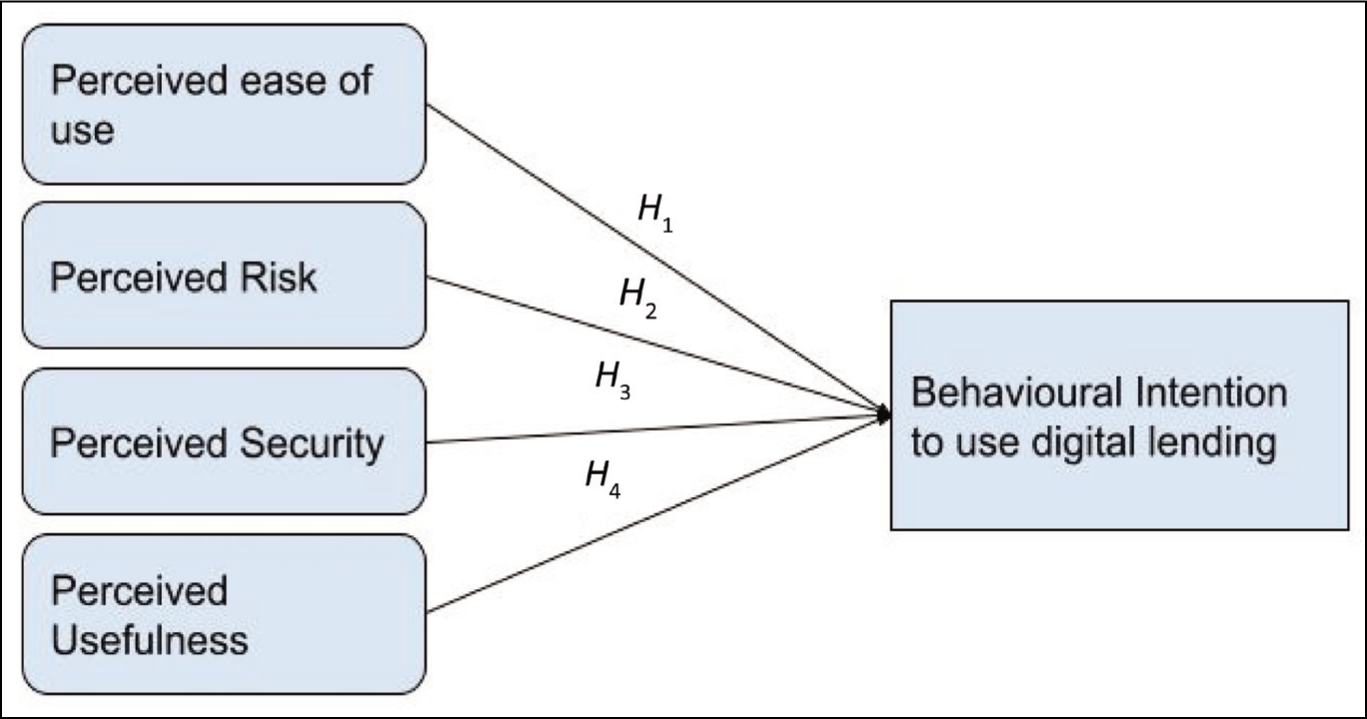
H1: PEOU has a positive impact on behavioral intention to use.
Perceived Risk
Perceived risk is a type of lack of trust, and most scholars feel that perceived risk is the primary factor influencing technology adoption (Fu et al., 2006; Kesharwani & Bisht, 2012; Sikdar & Makkad, 2015). In this study, PR refers to the perceived privacy risk that beneficiaries see when using digital lending, such as personal data leaks, transaction data, and other personal information. Khedmatgozar and Shahnazi (2018) considered that the degree of risk perception is the most critical element influencing e-service adoption. In E-commerce, perceived risk reduces users’ intentions to exchange information and complete transactions (Pavlou & Gefen, 2005). FinTech services typically utilize technology such as big data, the Internet of Things, and cloud computing, therefore users may face some risks as a result of obtaining the service (Zhou et al., 2010). Furthermore, when banks deliver financial services to users by technical means, bank clients are frequently required to submit their private information in order to complete the entire evaluation of services, which reduces users’ faith in bank services (De Oliveira Malaquias & Hwang, 2018).
Based on the above pieces of literature, the following hypothesis is formulated below:
H2: PR has a negative impact on behavioral intention to use.
Perceived Security
Given the rising concern over security, while borrowing through digital mode, this study explores the effect of consumers’ perceived security on the intention to use digital lending. Security is regarded as the most critical technological attribute that influenced public perception of FinTech use (Singh et al., 2020). Security is more important when doing online financial transactions if we compared this with brick-and-mortar financial services providers (Grewal et al., 2004; Reichheld & Schefter, 2000). Stewart and Jürjens (2018) identified and analyzed the important aspects influencing FinTech adoption in Germany, such as confidentiality, organizational reliability, data security, and privacy. The security of online transactions, as well as the reputation of the service provider, are important variables in affecting trust in financial transactions (Pavlou, 2003). Because of the absence of face-to-face interactions borrowers feel a great risk and uncertainty. Many previous empirical investigations incorporated security into the TAM (Adapa, 2008; Laukkanen et al., 2008).
Based on the above pieces of literature, the hypothesis is formulated below:
H3: PS has a positive impact on behavioral intention to use.
Perceived Usefulness
It is the degree to which an individual considers that utilizing a specific system would improve his/her performance (Davis, 1989). In this research, PU refers to the fact that consumers prefer to utilize the service if they believe that borrowing through digital lending platforms will have a positive impact. The most significant influence of perceived usefulness suggests that FinTech service providers should focus more on improving interface features to reduce task redundancy, faster information availability, and less need for service intervention to improve the user experience. Singh et al. (2020) found that there is a significant and positive impact of PU on the behavior intention to use FinTech services. In the context of mobile banking services, the positive influence of perceived usefulness on behavior intention is empirically examined (Priya et al., 2018). Extensive empirical research on the use of information technology over the previous decade has indicated that PU may have a positive influence on customer intention toward FinTech and banking (Lien et al., 2020).
Based on the above kinds of literature, the hypothesis is formulated below:
H4: PU has a positive impact on behavioral intention to use.
Research Methodology
Variable Measurement and Questionnaire Design
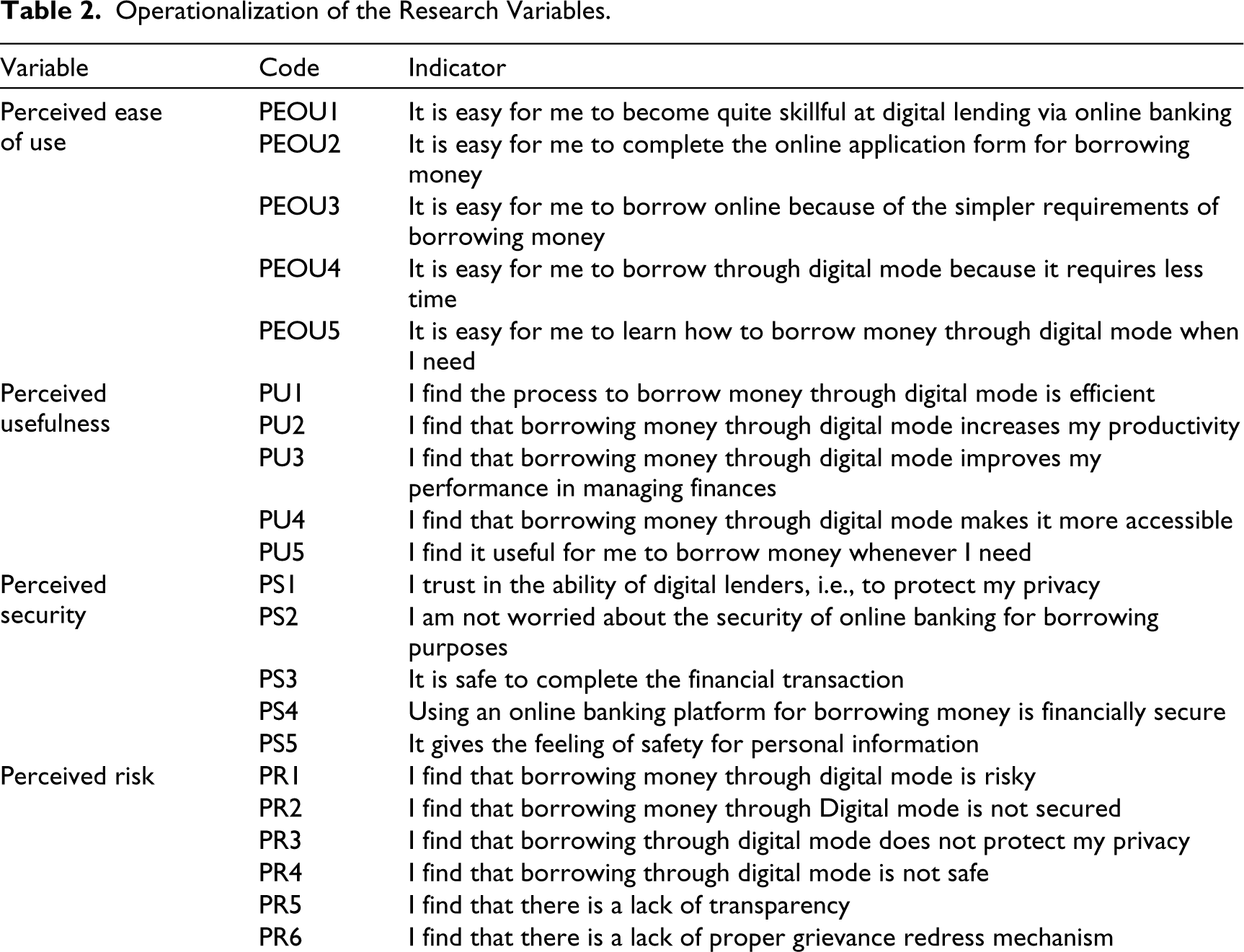
All constructs of our model (Figure 2) are estimated by using multiple items (Table 2) in reflective measurement models (Sarstedt et al., 2016). The selection of items for each measurement model follows the theoretical considerations and empirical substantiations presented in prior publications. The 5-point Likert scale is used to determine whether individuals agree or disapprove on a scale: (1) strongly disagree, (2) disagree, (3) neutral, (4) agree, and (5) strongly agree.
Conceptual Model.
Operationalization of the Research Variables.

Data Collection Process
This study employs a quantitative method because there are multiple hypotheses to be investigated. This research is of the descriptive research design. The survey’s subjects are purposely selected who have used mobile banking. The digital platform was used to distribute the questionnaire through the Google platform. The data collection through a survey was conducted online. Google Form questionnaires were distributed to 140 respondents. Following the first round of elimination, faulty surveys with insufficient response times and random filling were removed, leaving 105 acceptable responses with an effective response rate of 75%. Based on the information that has been collected through a Google Forms survey, the researcher wants to identify whether perceived ease of use, perceived risk, perceived security, and perceived usefulness influence the mobile banking user’s intentions to use digital lending.
In accordance with (Hinkin, 1995), sample size recommendations of an item-response ratio of between 1:4 and 1:10. We need to calculate that recommended sample size for our questionnaire with 25 items, we use the same item-response ratio provided by Hinkin (1995) of between 1:4 and 1:10. Let us perform the calculation:
The lower bound (1:4) of the item-response ratio:
Sample size = number of items × 4 Sample size = 25 × 4 = 100 Upper bound (1:10) of the item-response ratio: Sample size = 25 × 10 = 250
So, based on Hinkin’s recommendations, our questionnaire with 25 items should have a sample size of between 100 and 250 respondents for it to be considered adequate. Therefore, 105 was finalized for our analysis.
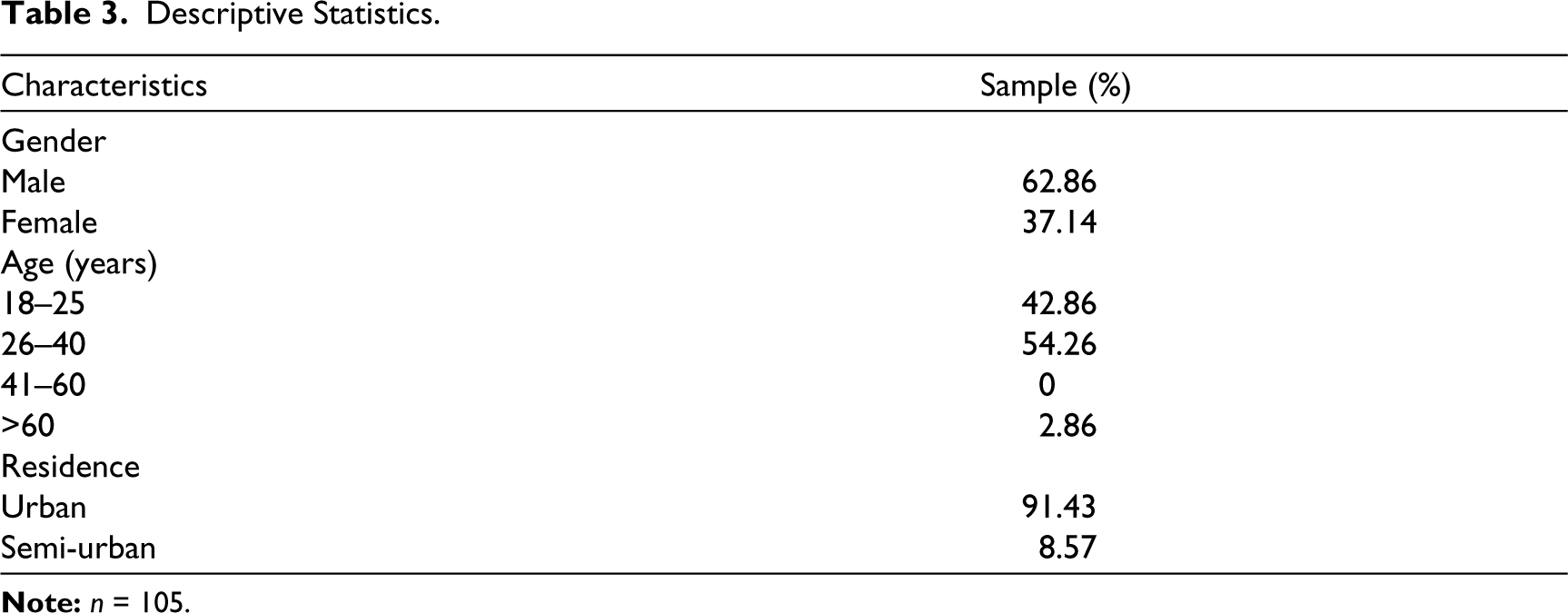
Table 3 summarizes the descriptive statistical findings of surveys that investigated demographic parameters such as gender, age, and mobile banking users’ residence.
Descriptive Statistics.
Result and Discussion
To evaluate our conceptual model (Figure 1 and Table 4), we used the PLS-structural equation modeling (SEM) method (Lohmöller & Lohmöller, 1989; Sarstedt et al., 2017). This multivariate data analysis method is well-established in the social and behavioral sciences (Hair et al., 2019), including information systems research (Roldán & Sánchez-Franco, 2012) and general management research (Richter et al., 2016). Therefore, this article uses a partial least squares (PLS) SEM tool called Smart PLS 4.0 and the bootstrapping estimating method to calculate the load of each factor and the path coefficient.
Pre-test Validity and Reliability Test Results.
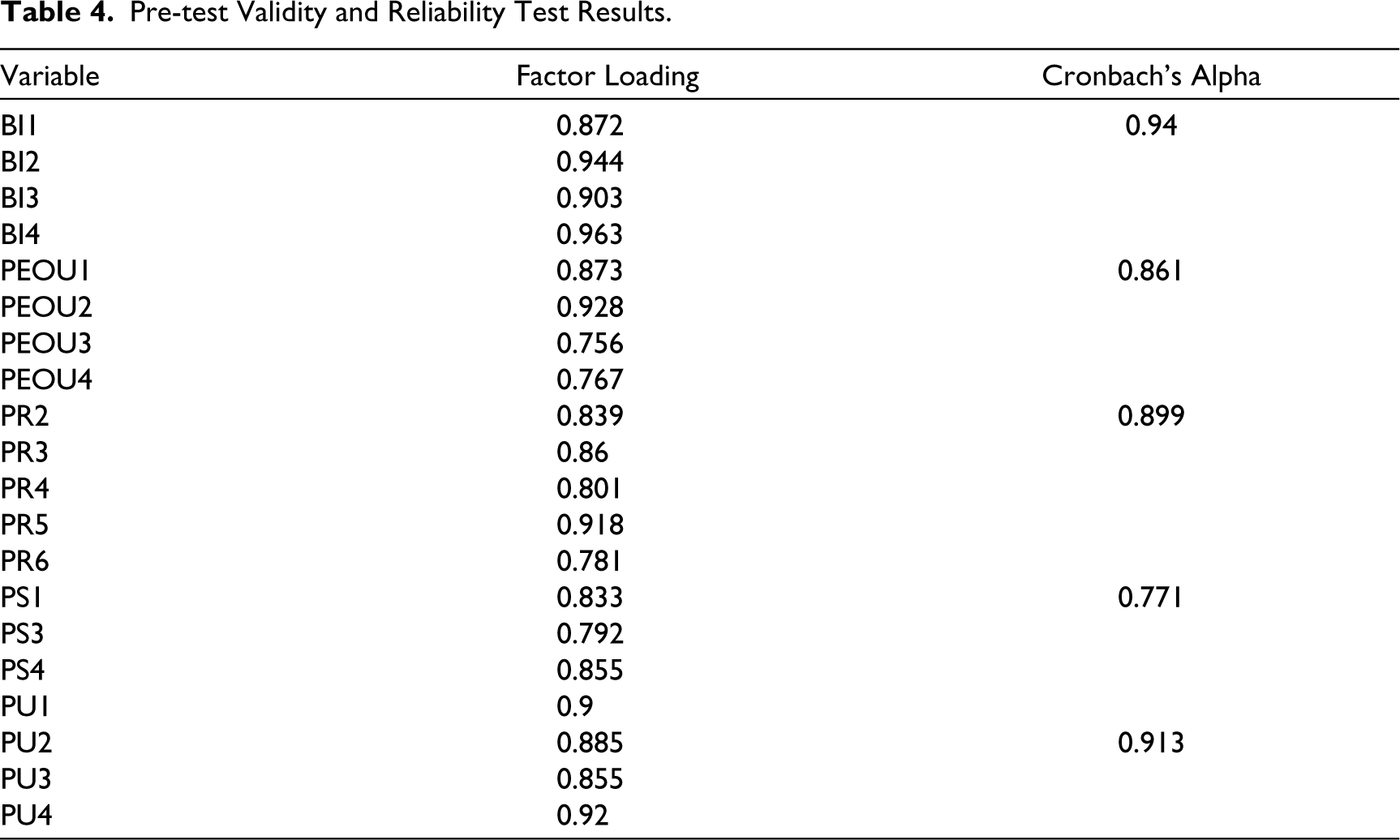
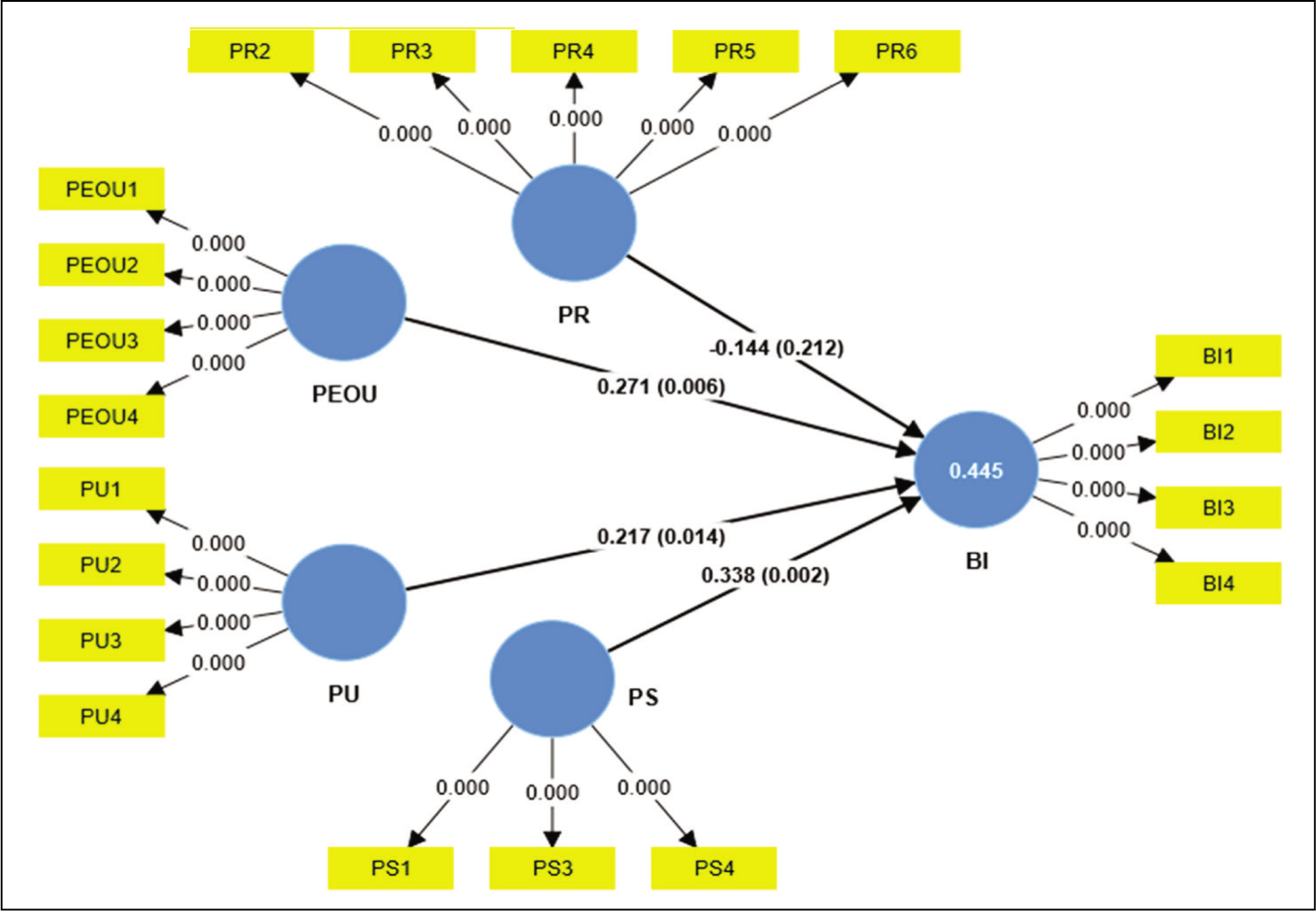
Validity and reliability tests were done using Smart PLS 4.0 software with a reflective model (Figure 3). According to the validity test result, there are 20 valid questionnaire items with factor loading >0.6, which are 4 for ease of use, 5 for perceived risk, 3 for perceived security, 4 for usefulness, and 4 for behavioral intention. Five items are considered not valid because the factor loading is below 0.6. All items are considered reliable because all of Cronbach’s alpha is above 0.7.
Smart PLS Output.
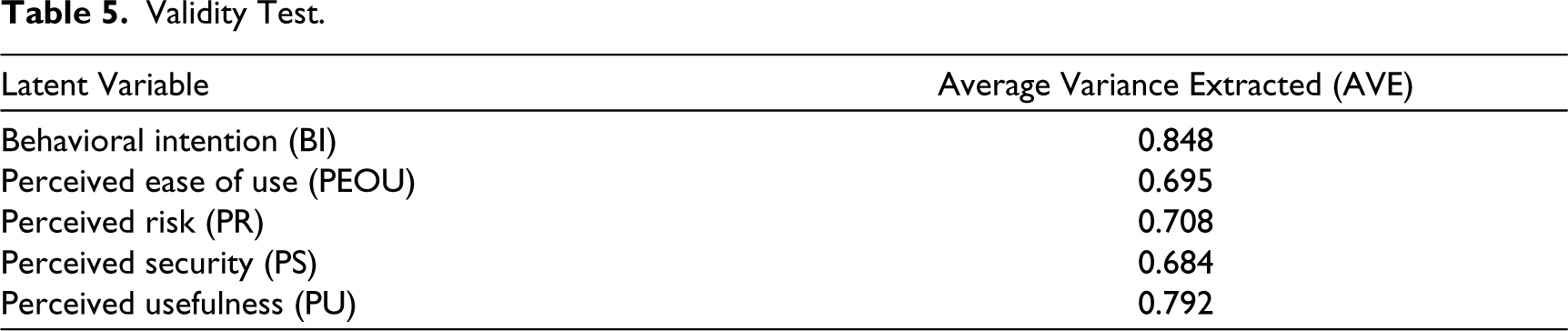
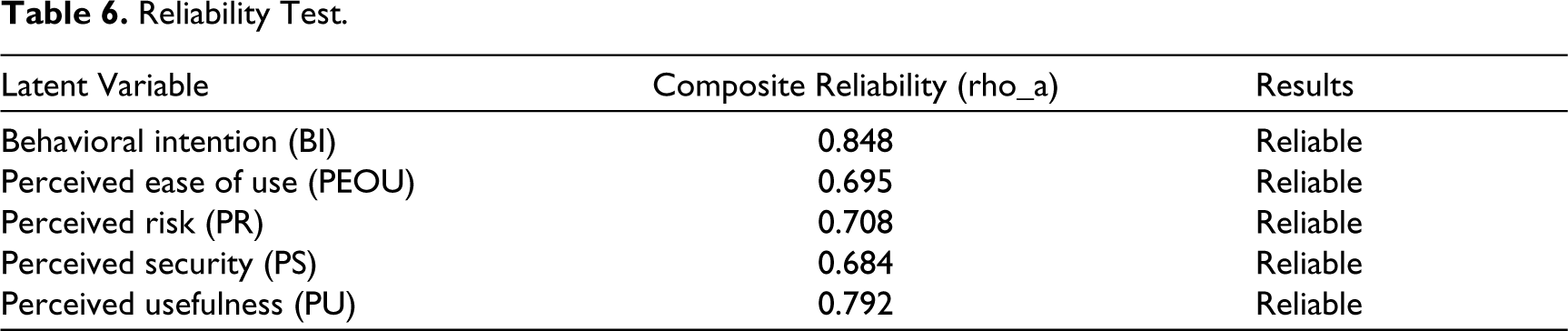
Based on Table 5, it can be stated that all latent variables have an average variance extracted value of >0.5, so it can be concluded that all latent variables are valid. After that, a reliability test was carried out using composite reliability values. Based on Table 6, the composite reliability value of each latent variable has a value of >0.7 so it can be stated that the internal consistency reliability of each variable is reliable.
The hypothesis of this study was tested using the bootstrapping function in the Smart PLS 4.0 software. Hypothesis testing can be seen from the t-statistical value (1.96) and the probability value, namely the alpha value of 5%. The criteria for the hypothesis are accepted or Ha is accepted when the t-statistic is >1.96 and the p value is <.05.
Validity Test.
Reliability Test.
The bootstrapping feature of the Smart PLS 4.0 program was used to test the study’s hypothesis. The alpha value, or the probability value of 5%, and the t-statistical value (1.96), both indicate that hypothesis testing was performed. When the t-statistic is more than 1.96 and the p value is less than .05, the criteria for the hypothesis are accepted. The outcomes reveal that PEOU (beta = 0.006, t > 2), PS (beta = 0.002, t > 2), and PU (beta = 0.014, t > 2) were accepted as significant influencers of BI. However, PR (beta = 0.212, t < 2), was rejected. The R2 of 0.445 indicates a 44% variation in the BI to adopt digital lending (Table 7). The results attained through this investigation confirm that PEOU, PU, and PS are related to the BI to use digital lending among mobile banking users. The existence of this relationship is supported by the TAM model with the inclusion of two constructs (PS and PR) espouse by Linck et al. (2006) and Sunardi et al. (2021). Perceived risk is the only factor portraying an insignificant relationship with regard to the attitude toward digital lending. The vast majority of the research’s conclusions agree with those of past studies.
Multiple Regression Test.
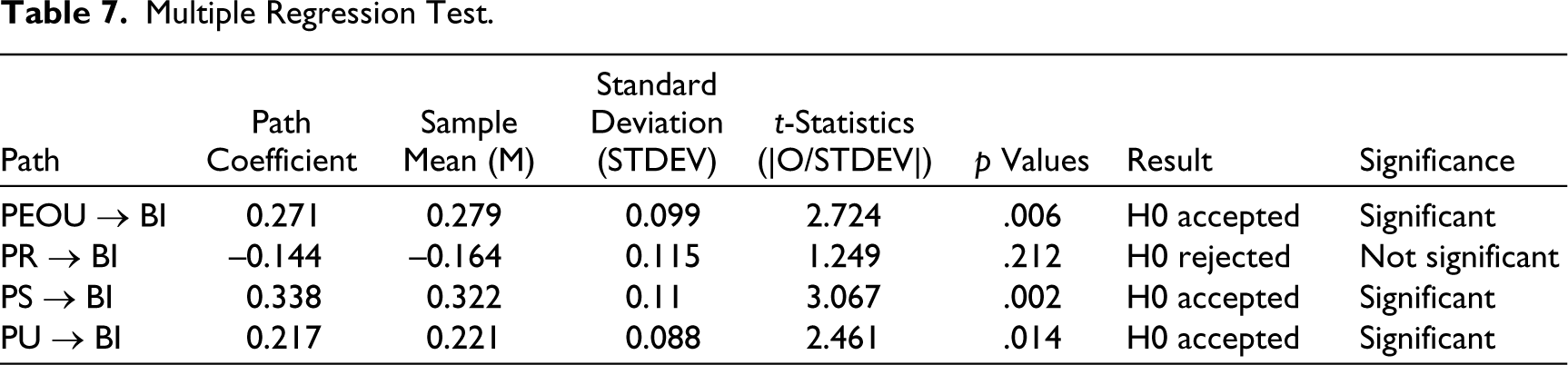
Therefore, based on the outcomes of bootstrapping in Smart PLS 4.0 software, in hypothesis 1. We uncovered a significant relationship between PEOU and BI, which is supported by the studies conducted by the researchers (Hoque & Sorwar, 2017; Kurniadi & Hendityasari, 2021; Saxena & Janssen, 2017). This finding is that PEOU has a positive strong relationship that the PEOU mobile banking will strongly encourage beneficiaries to borrow through digital mode. According to this study, PEOU has the second most impact on a user’s decision to employ digital loans when using mobile banking. Users of mobile banking must show proof of increasing productivity and effectiveness as learners when using technology if they consider that technology is simple to use. This incorporates time savings, meeting an urgent financial need, and making the requirements for borrowing money simpler.
It is important to enhance security while borrowing through digital mode. In hypothesis 3, Our research showed that PS significantly affects BI as well. This assertion is closely related to (Linck et al., 2006). Hence, the proposed hypothesis can be confirmed, and in hypothesis 4, PU plays an important role in the TAM model. Our investigation disclosed an important effect of PU, on BI to use digital lending, concerning mobile banking users. This statement is strongly aligned with (Dias et al., 2022; Hu et al., 2019; Sunardi et al., 2021).
Implications
Theoretical Implications
The present study worked on the framework of the technology adoption model and incorporated perceived risk and perceived security in the digital lending context. Perceived security and perceived risk are the key factors while borrowing loans through digital platforms so incorporating these two factors in the TAM model will give a better insight into the existing literature on TAM. The empirical findings demonstrate that employing perceived security would be a worthwhile extension of the TAM in the digital lending context. A primary contribution of this study is that it highlights the perceived security in the context of digital lending. Although plenty of research is available in the P2P lending literature, few have used the extension version of TAM including the construct perceived security, also few studies done in India. Prior research on P2P lending examined the impact of PEOU and PU on the behavioral intention to use (Dias et al., 2022). Thus, this study contributes to the literature on TAM research by confirming that perceived security can influence behavioral intention to use in the context of digital lending.
Managerial Implications
The results of this study contain several implications for the bankers, users, and regulatory point of view. The study helps the bankers to develop their mobile banking platform in accordance with users’ expectations so that the users can easily attract. The study also assists the policymakers to enhance security and reduce the risk faced by customers while using mobile banking platforms for borrowing purposes so that the customers can easily rely on the platform and encourage them to use digital lending. The findings of our study are valuable for refining platform marketing strategies and achieving strategic goals; understanding user behavioral intentions while taking influencing elements into account is crucial when developing a platform in the digital era.
Conclusions
This article aims to explore the determinants of the adoption of digital lending among mobile banking users. Based upon an extended TAM model, this article analyzed the relationship between perceived usefulness, perceived ease of use, perceived security, perceived risk, and behavioral intention to adopt digital lending. The research data was collected from 105 mobile banking users via an online questionnaire and analyzed using Smart PLS 4.0 statistical software.
The finding identified that almost all variables, namely, perceived usefulness, perceived ease of use, and perceived security, have a direct and significant impact on behavioral intention to adopt digital lending, except perceived risk. The research findings also show that perceived security was the most significant determining factor when people switch to digital lending, perceived security are significant factors considered, and perceived usefulness contributed the least to behavioral intention to digital lending adoption.
Limitations and Future Scope
There are a few limitations in this study, first, this research concentrates only four constructs, mainly PEOU, PU, PS, and PR on the BI to use digital lending among mobile banking users; Furthermore, other factors may be responsible for digital lending acceptability, and hence this work is limited in terms of the applicability of accepted theories as it is drawn upon by TAM. As a result, future studies may employ additional related theories, such as unified theory of technology acceptance and usage (UTAUT1 and UTAUT2).
Second, this study used a purposive sampling technique to include mobile banking users who were willing to borrow through digital mode, thus limiting the scope of generalizability to only mobile banking users. Future research can be done by checking the moderating effect of gender, age, and income and the mediating effect of attitude of the mobile banking users and the use of other technology.
Footnotes
Declaration of Conflicting Interests
The authors declared no potential conflicts of interest with respect to the research, authorship, and/or publication of this article.
Funding
The authors received no financial support for the research, authorship, and/or publication of this article.